

Pollinator Post 2/27/25 (1)
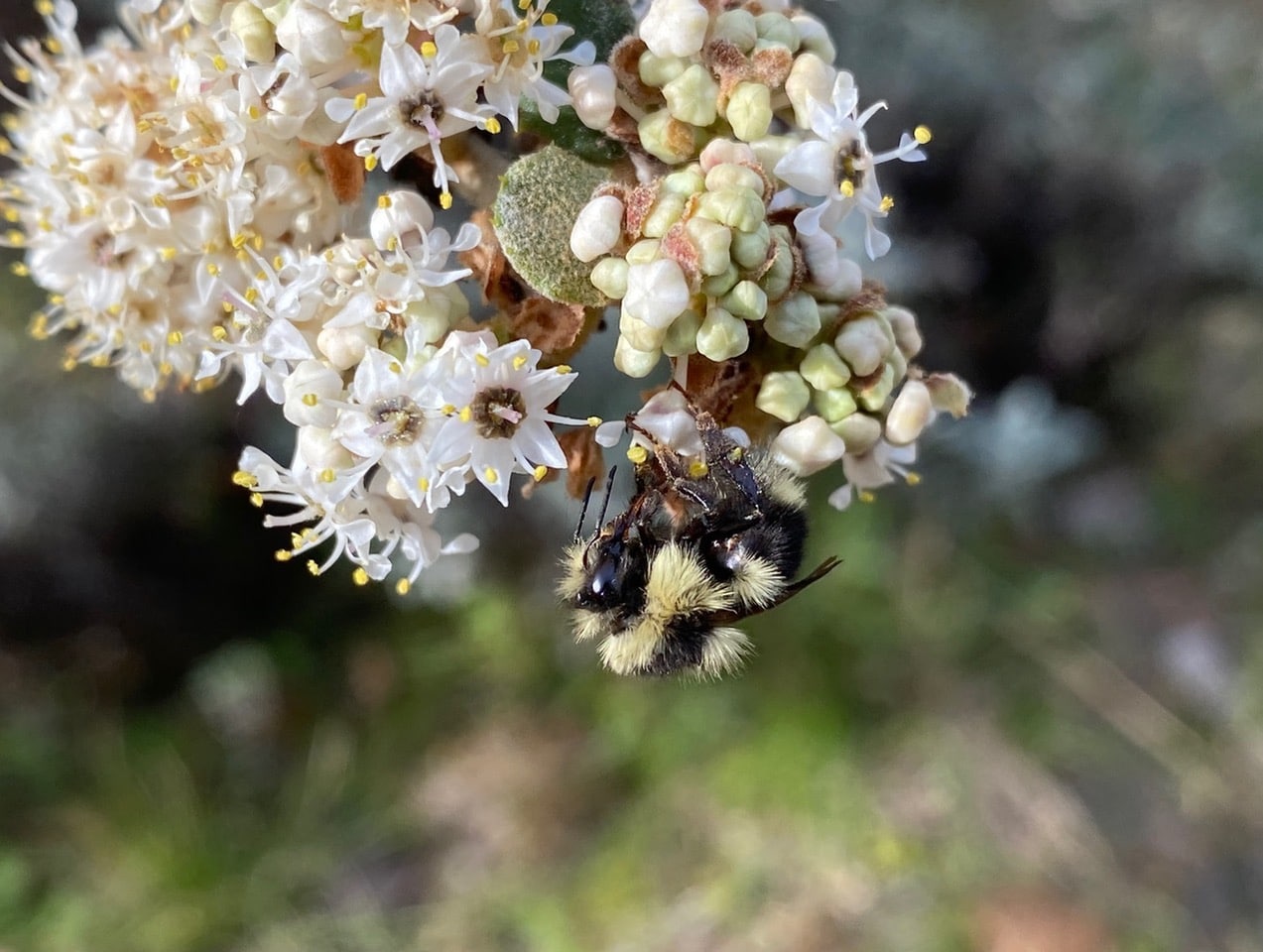
I visit the Regional Parks Botanic Garden today.
Near the front gate, a Buckbrush, Ceanothus cuneatus is blooming profusely, sending a heavy perfume into the air. A swarm of bumble bees buzz around the flowers enthusiastically. They all seem to be worker Black-tailed Bumble Bees, Bombus melanopygus (family Apidae).
Bumble bees are social and live in colonial hives. Many of the large individuals seen early in the season are queens. They are the only members of their colony to survive the winter, hibernating until the days begin to warm and their host plants are in bloom. These queens have mated before they went into hibernation. Now their first order of business is to each find a nesting site (usually an abandoned rodent burrow), lay eggs, brood and nurture the first batch of workers. There after, the queens stay behind in the hive to concentrate on laying eggs while the workers take on hive duties and foraging.
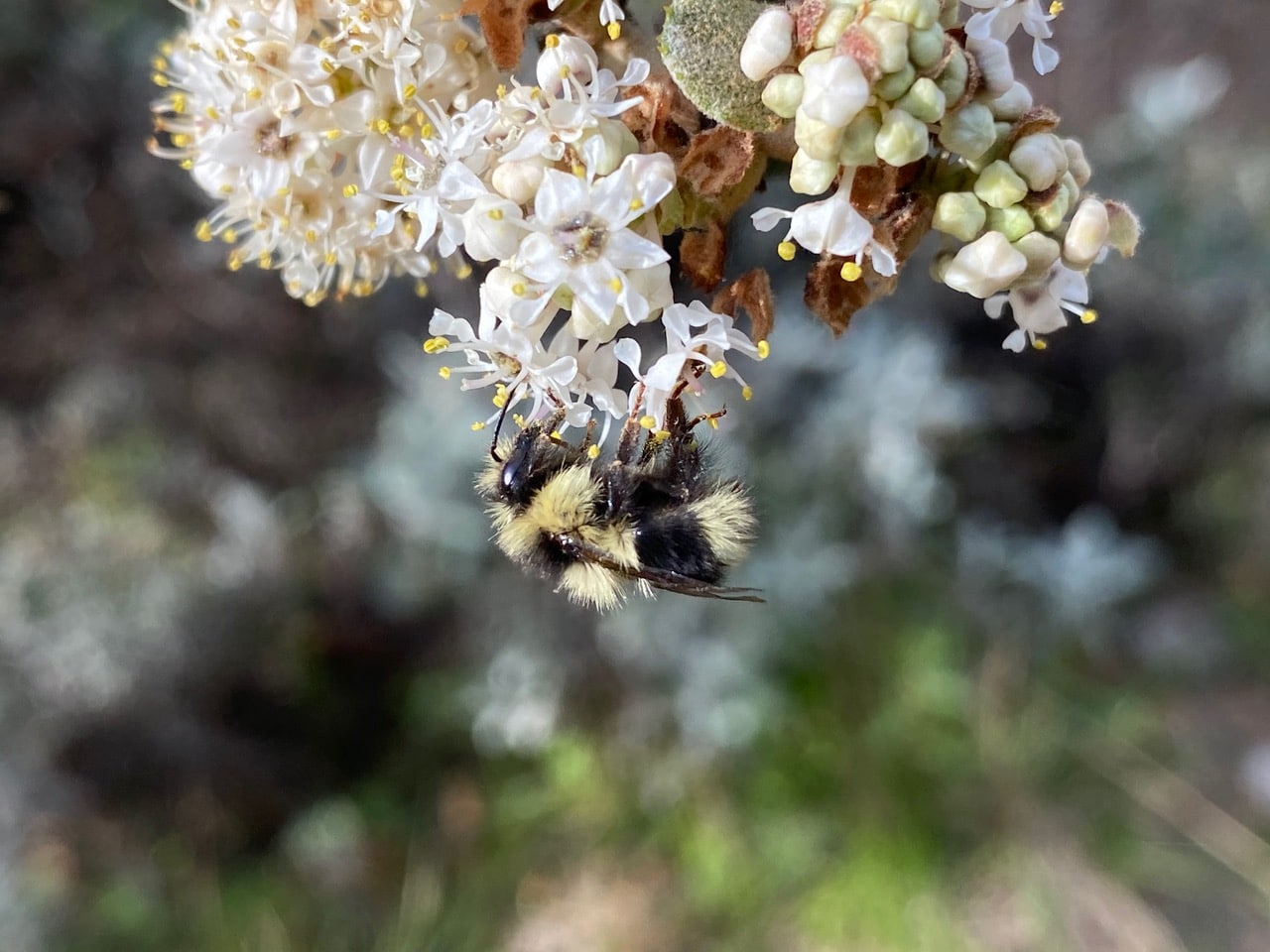
Bombus melanopygus is a species of bumble bee native to western North America, widely distributed from the Pacific to the Rocky Mountains, and from Alaska to Baja California. The species is found in various habitats, including agricultural and urban areas. The bees feed on many types of plants, including manzanitas, Ceanothus, golden bushes, wild buckwheats, lupines, penstemons, rhododendrons, willows, sages, and clovers. They nest underground or aboveground in structures.

The other social bees, the Honey Bees, Apis mellifera (family Apidae) are foraging on the ceanothus too.
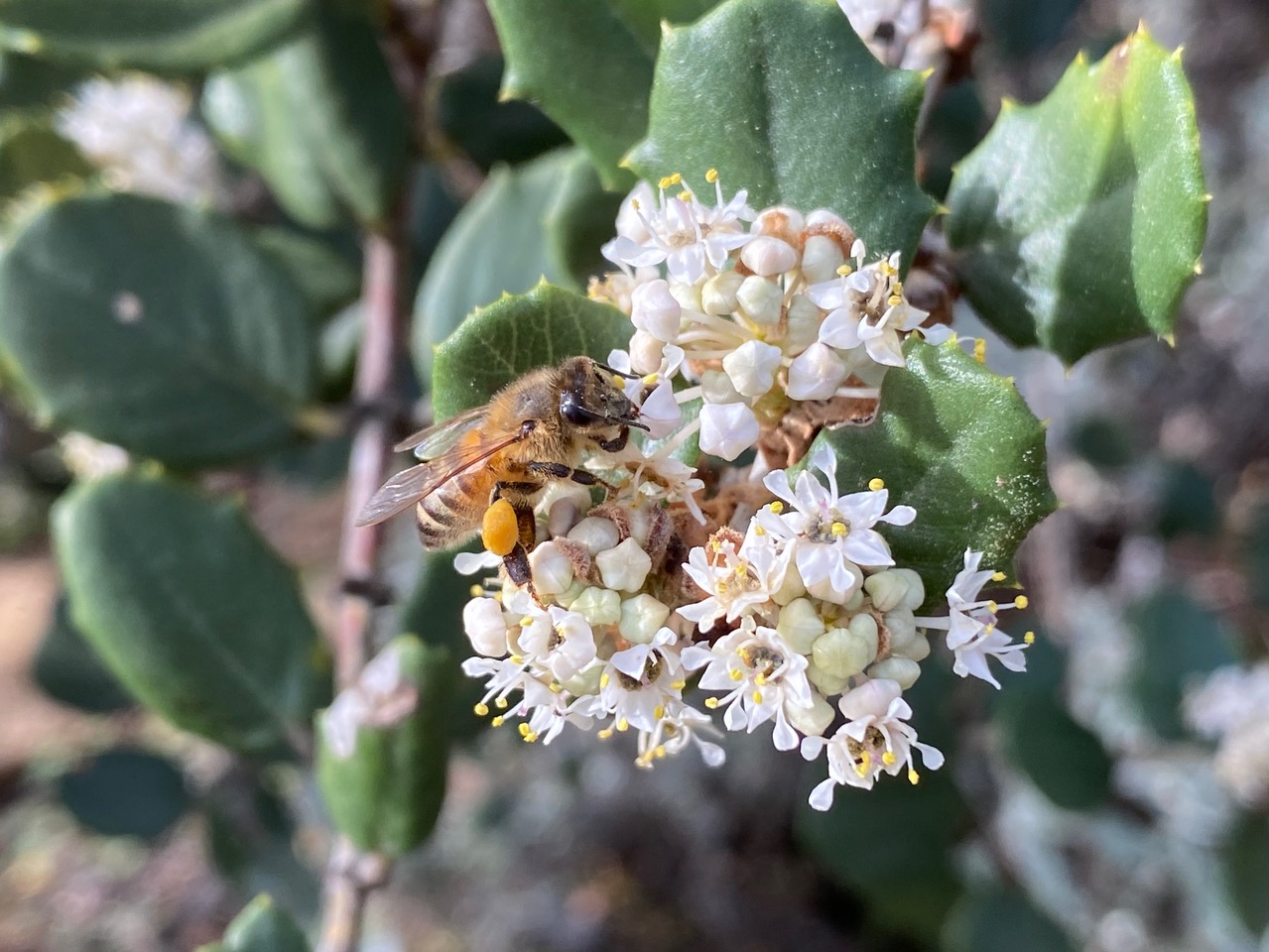
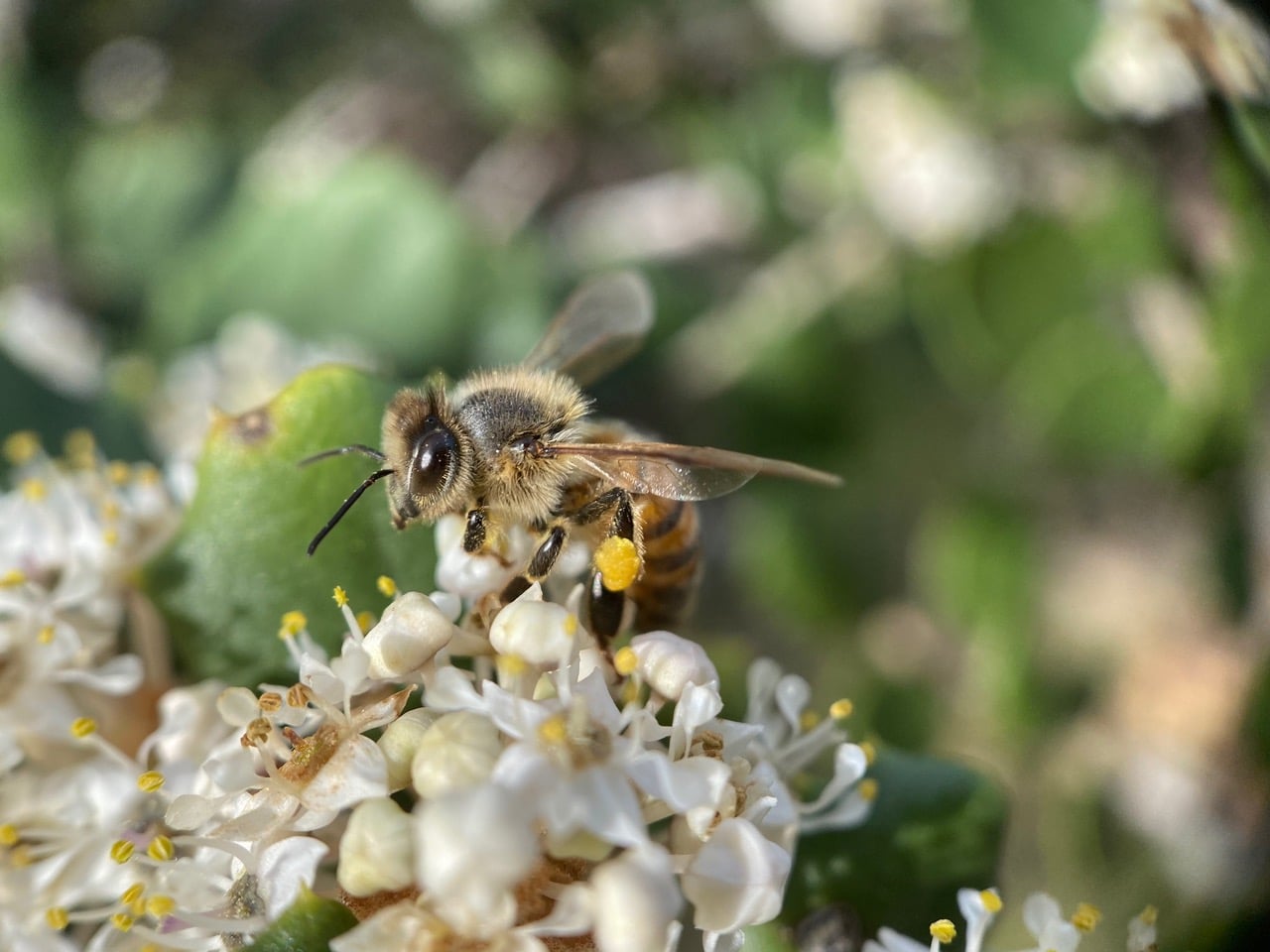





This Honey Bee has a sizable load of pollen in her pollen baskets.
The pollen collecting apparatus in Apidae bees, which include honey bees and bumble bees, is commonly called a “pollen basket” or corbicula. This region is located on the tibia of the hind legs and consists of hairs surrounding a concave region. After the bee visits a flower, she begins to groom herself and brushes the pollen down toward her hind legs and packs the pollen into her pollen basket. A little nectar mixed with the pollen keeps it all together like putty, and the stiff hairs surrounding the pollen basket hold it in place. Remarkably bees are able to fly while carrying up to a third of their body weight in pollen.
.jpg)
Honey Bees have fine hairs all over their bodies, including on their eyes, to help them collect pollen. The hairs on their eyes are closely spaced enough to balance pollen at the tip, avoiding contact with the eyes, and facilitating easy removal. Honey Bees have a hard-wired routine for cleaning their eyes, which involves swiping them with their forelegs. No surface is wasted for the gathering of pollen!


A male Western Calligrapher, Toxomerus occidentalis (family Syrphidae) is foraging on a cluster of ceanothus flowers.
Toxomerus is a very large genus of Hover Flies. They are found in North and South America. The majority of species are only 6-9 mm in length. They are notable for their mimicry of stinging Hymenoptera to avoid predators. Their unique abdominal patterns are diagnostic at the species level within the genus. There is marked sexual dimorphism – the females have a broader abdomen with lighter coloration and pattern. Most larvae feed on soft bodied insects, such as aphids; a few feed on pollen. Adults feed on the pollen of a wide range of flowers. A female can lay up to hundreds of eggs at a time and will place them where prey or pollen food sources are readily available. They can be found in a wide variety of habitats, often in dense ground cover.
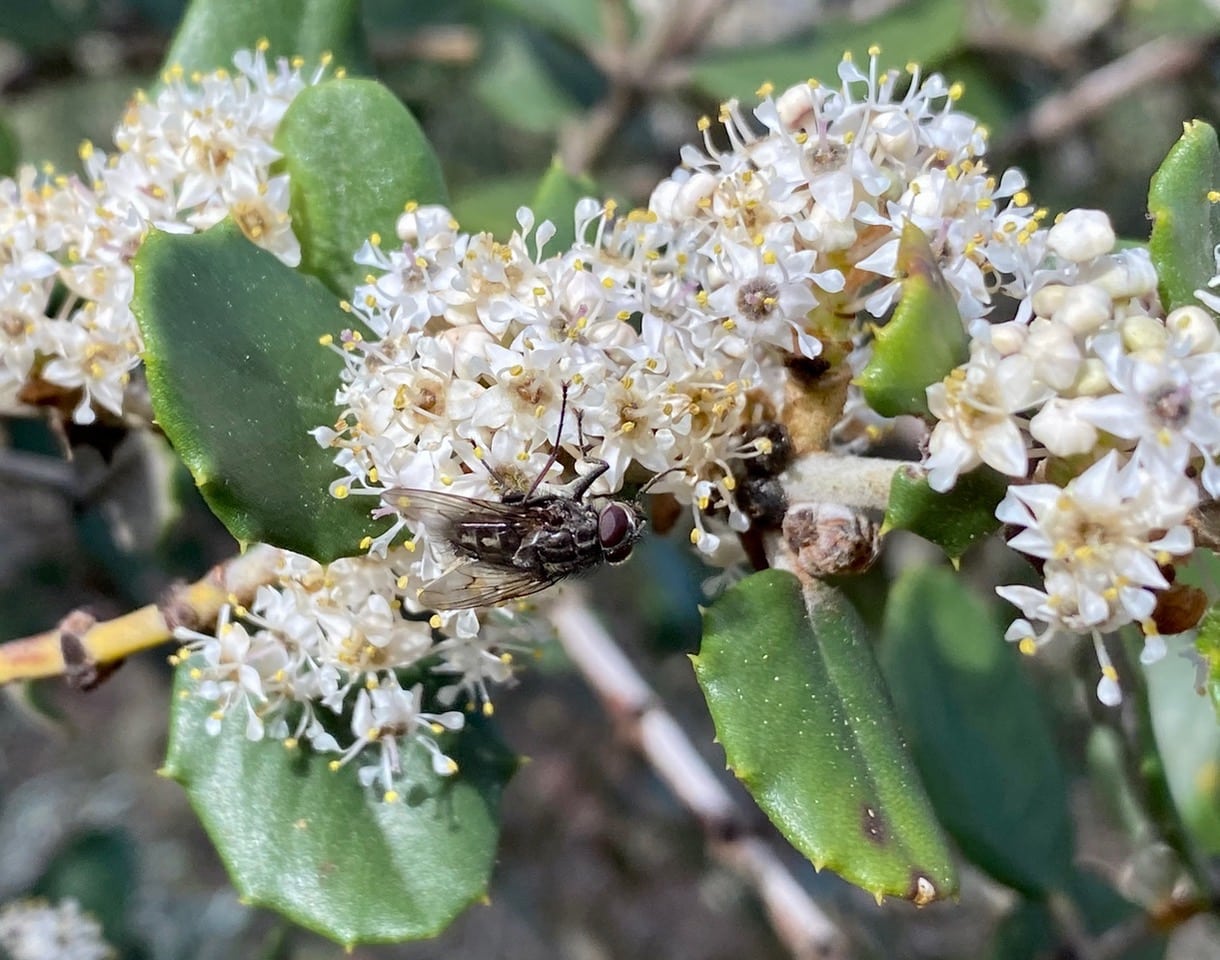
An unidentified fly is foraging on a cluster of ceanothus flowers. It has black-and-gray stripes on the thorax and a checked pattern of the same colors on the abdomen, akin to those of Flesh Flies (family Sarcophagidae).
Close-up of the same fly. Hmm, somehow the face doesn’t compute as a Flesh Fly.
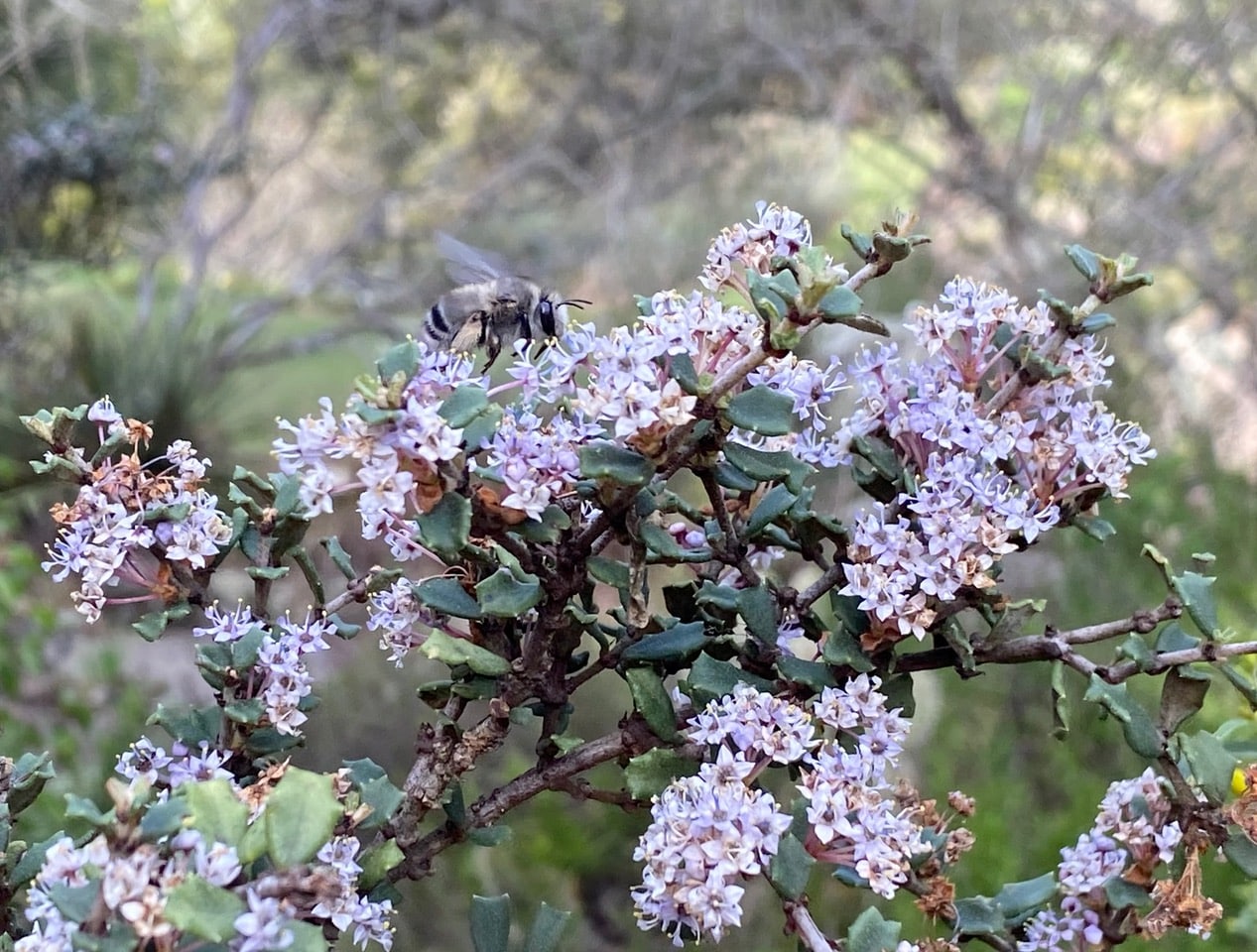
A Digger Bee, Anthophora sp. (family Apidae) is flying noisily among another Ceanothus in bloom. It appears to be a female bearing scopae on her hind legs. Scopae are special hairs on bees used for collecting pollen. Males do not collect pollen, and do not have these hairs.
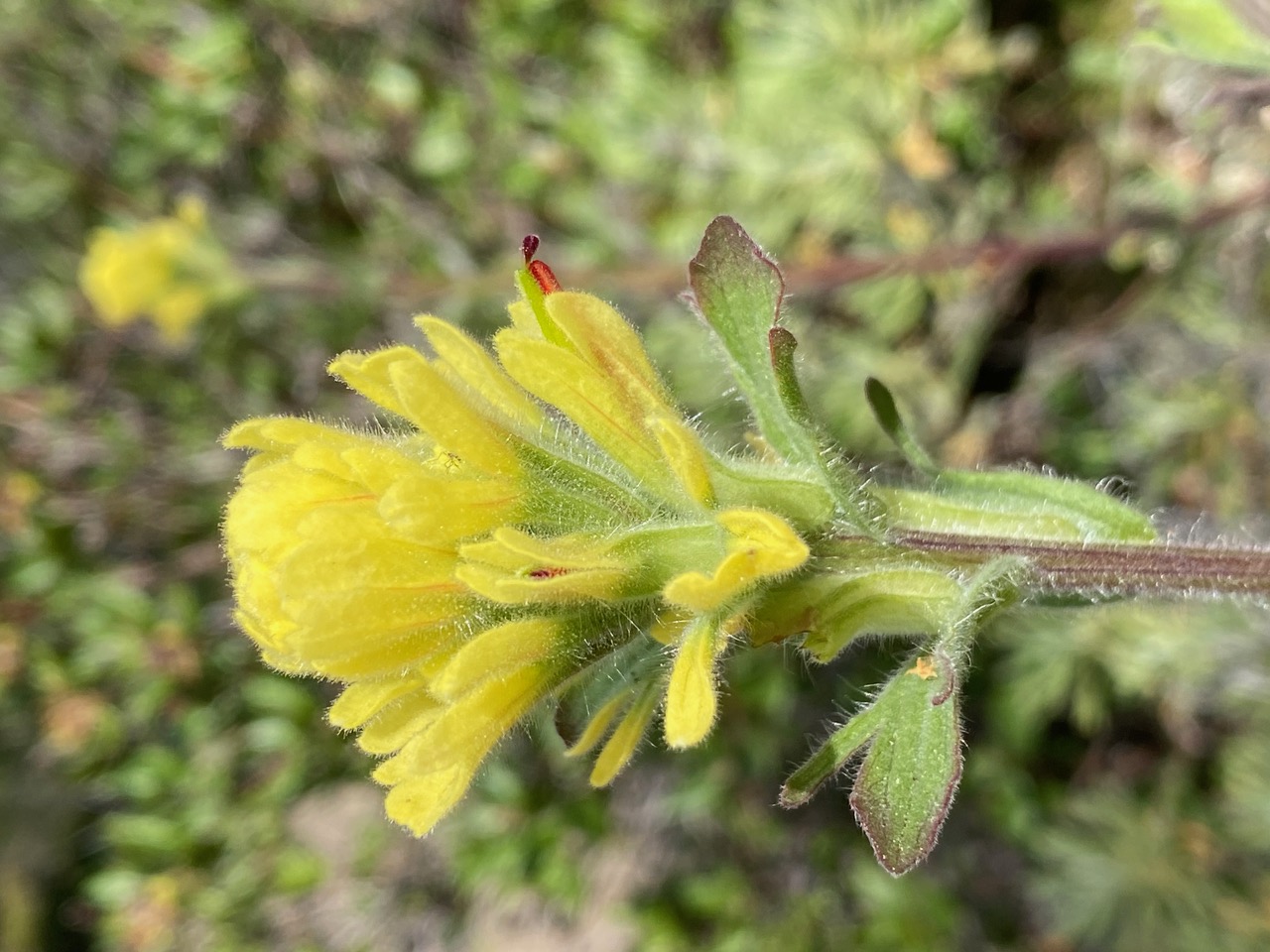
I stop by a Coast Paintbrush, Castilleja affinis ssp. affinis to admire its unusual yellow inflorescence.
The showy yellow structures on this paintbrush are technically not petals, but bracts, a type of modified leaf. The two real flowers are quite visible in this view as they are partly red.
Close of up a Castilleja flower.
The real flowers are tiny and oddly shaped. They would be inconspicuous if not for the red lower petal and maroon style. The large sepals are colored yellow similar to the surrounding bracts. The petals are curiously arranged, extending out into a long, pointed beak that envelops the stamens and style. The upper petal is green while the lower is red. The velvety maroon style protrudes beyond the corolla, while the stamens are located right behind the opening of the corolla. Indian Paintbrush flowers, typically with red bracts, are adapted for pollination by hummingbirds that have long slender bills capable of reaching the nectar rewards at the base of the flowers. It suddenly dawns on me why this yellow paintbrush variety has red flowers – its yellow bracts would not attract hummingbirds. The hummers are attracted to red color. But then will the birds find these tiny flowers? If I could spot them, I’m sure the hummers will have no trouble finding them.
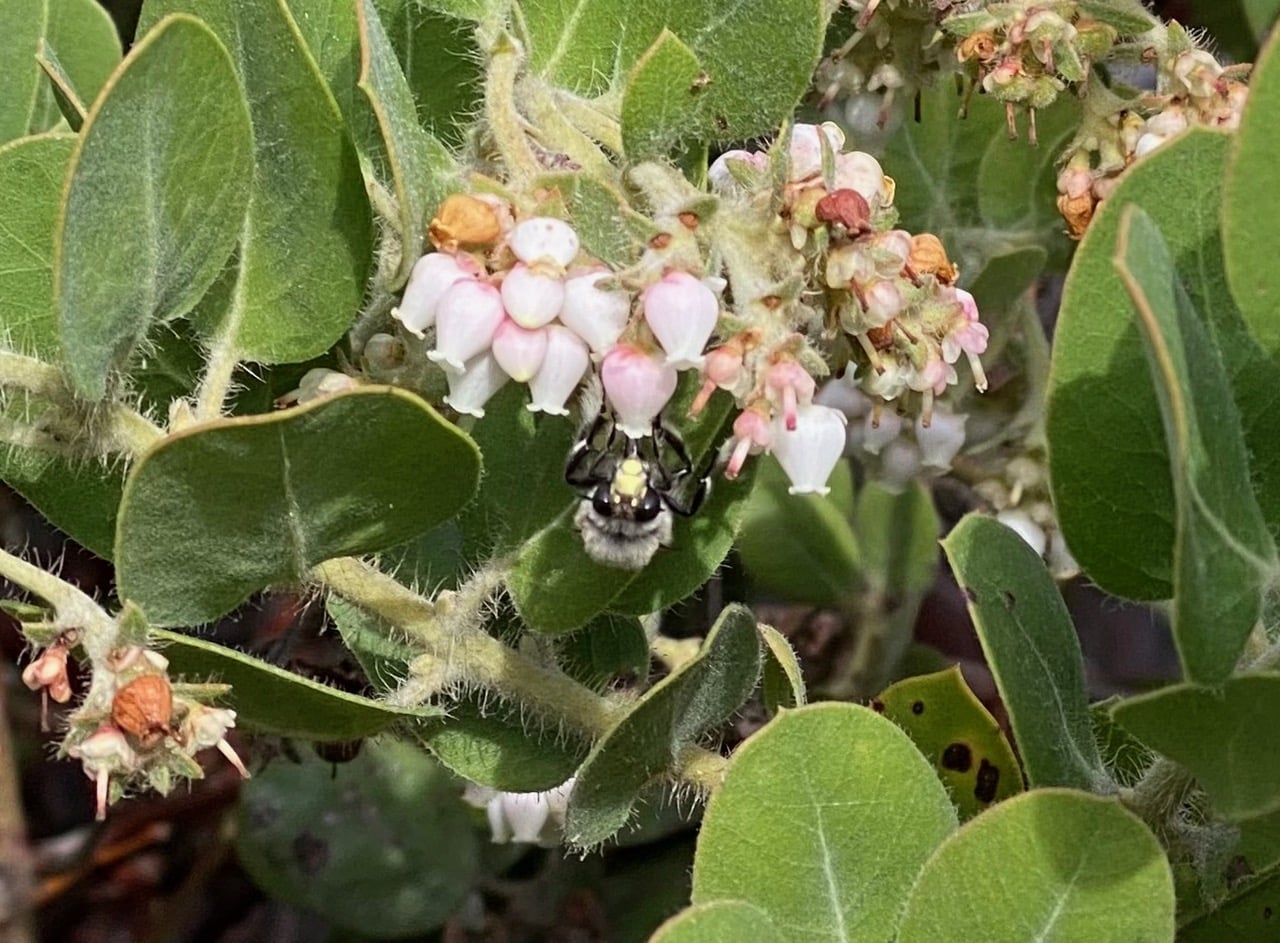
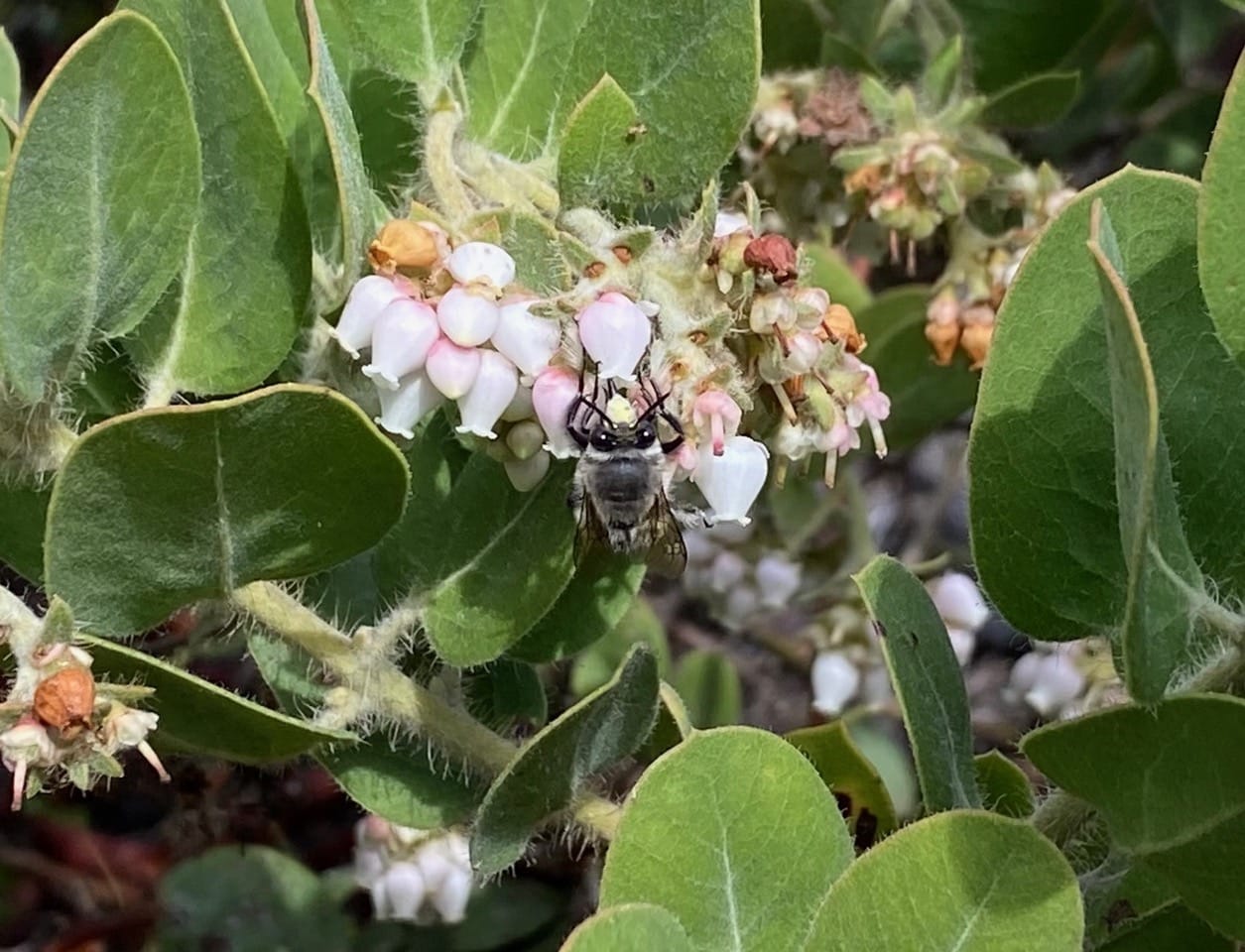
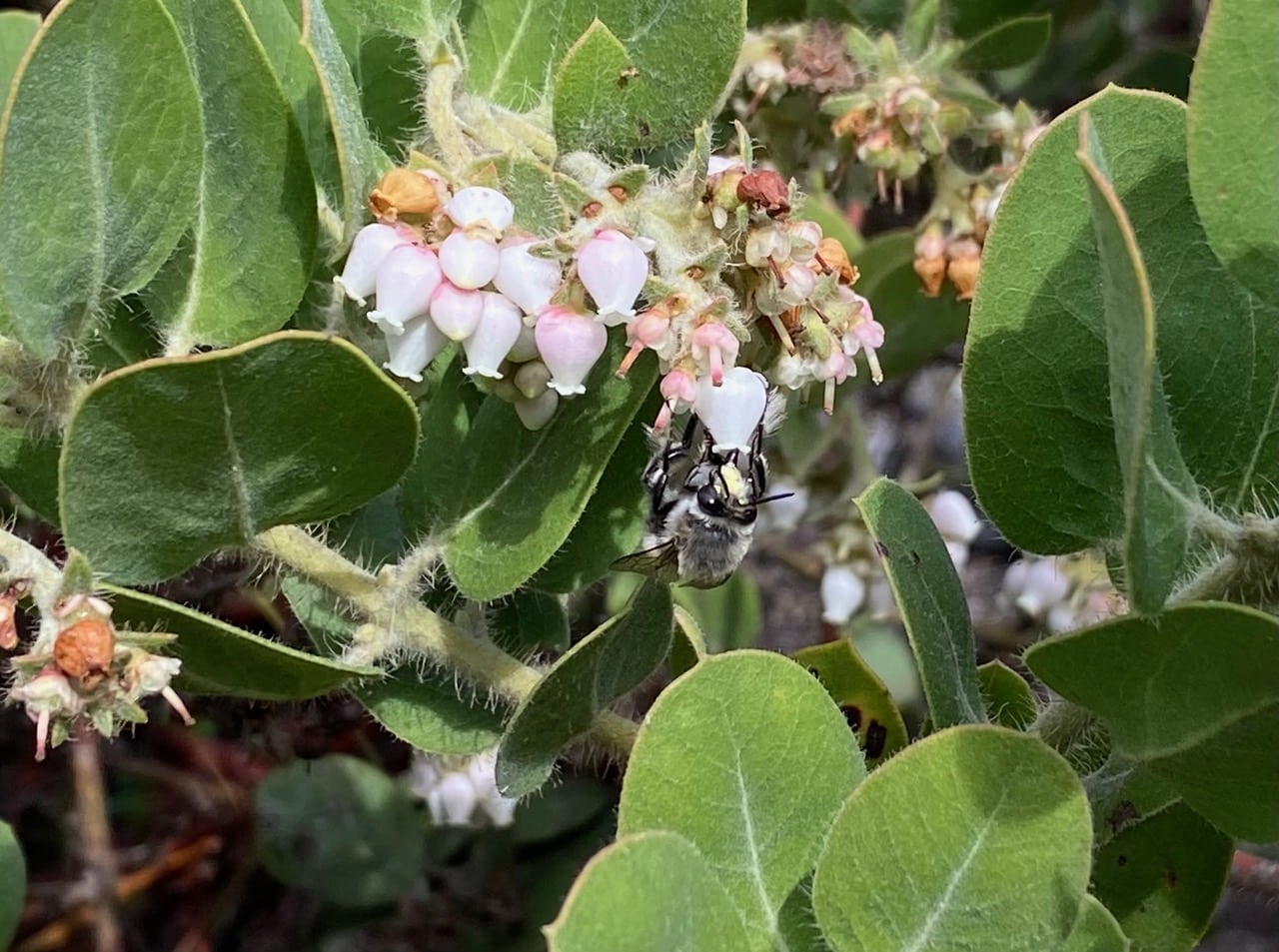
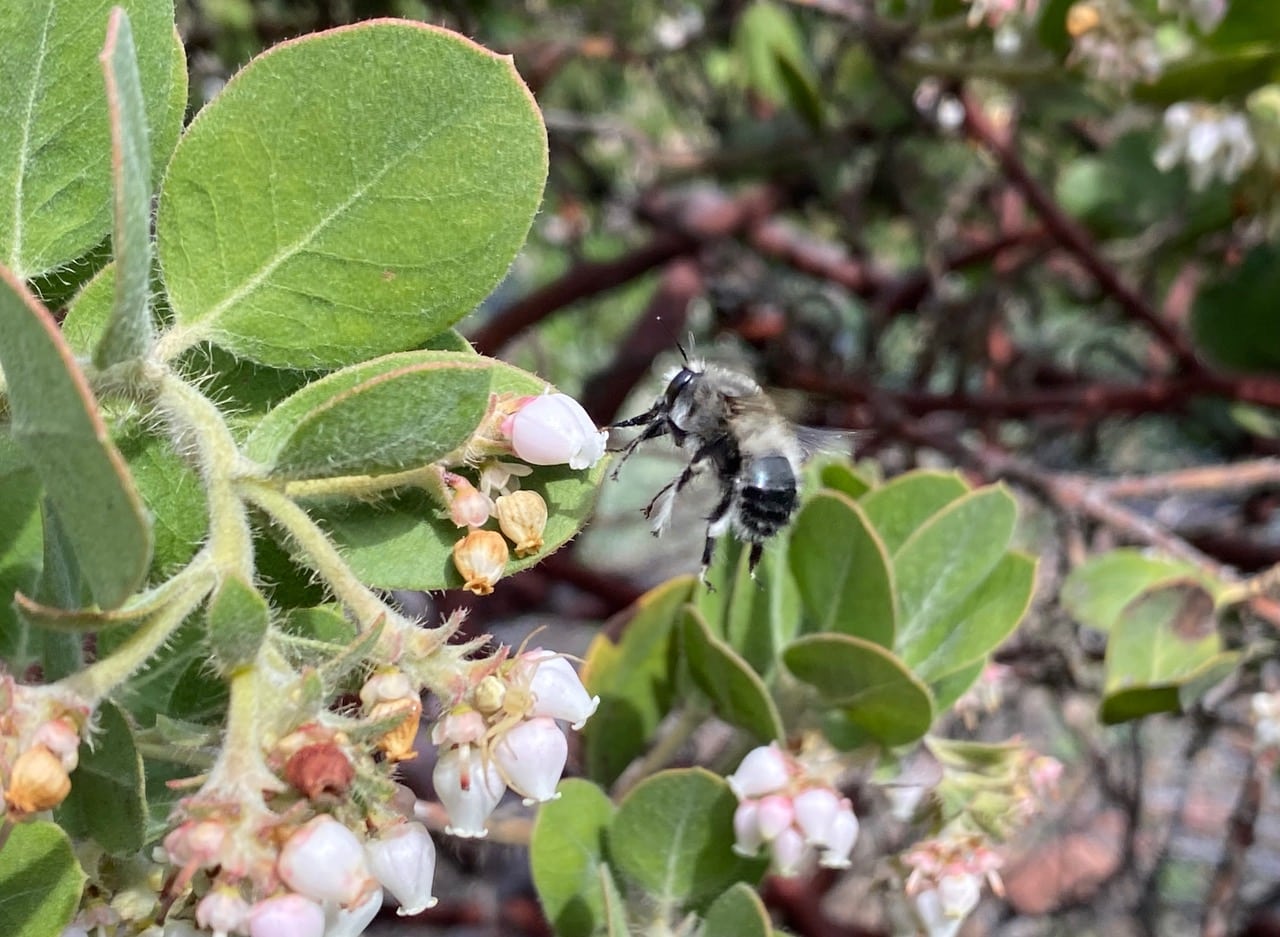
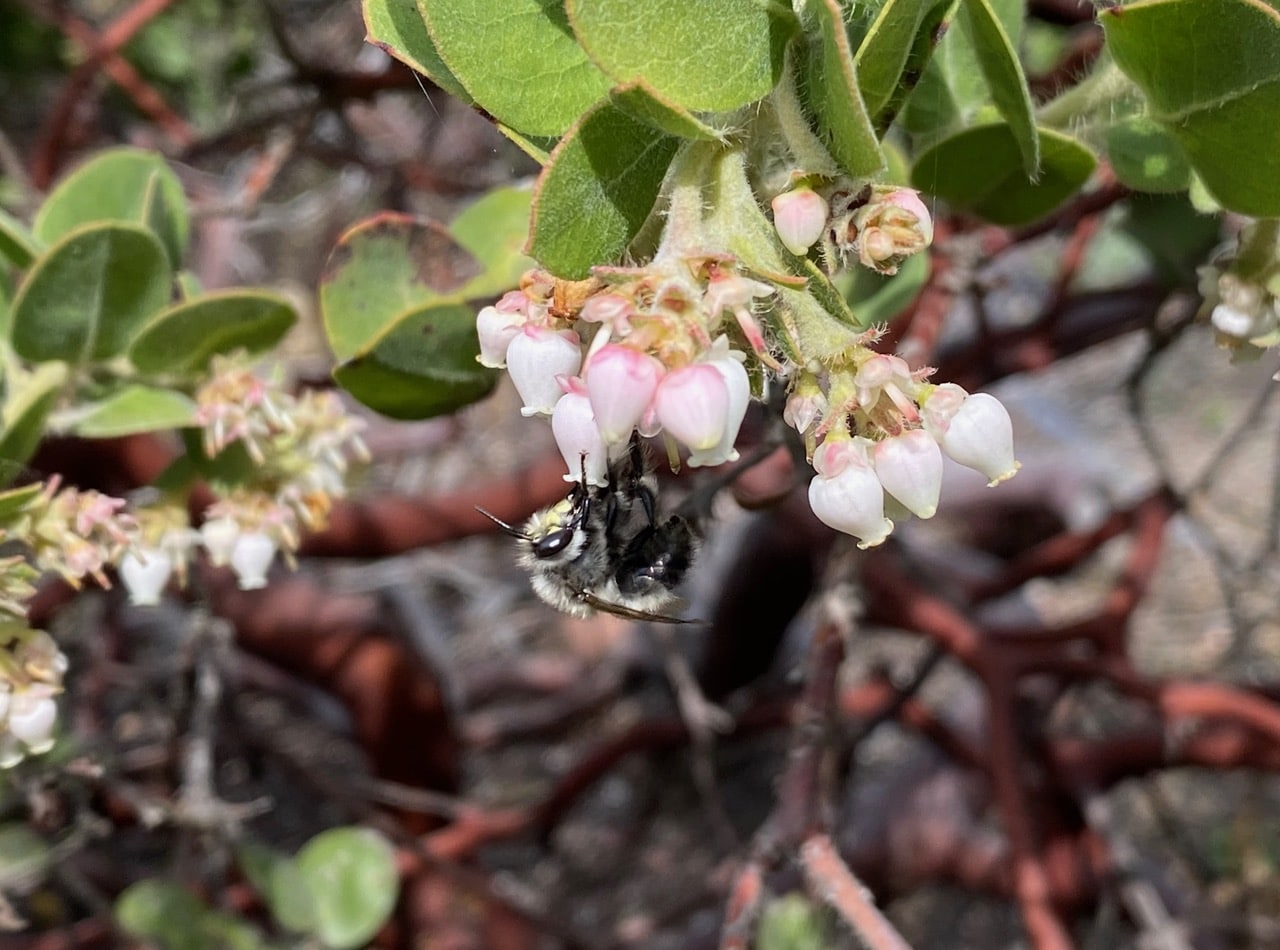
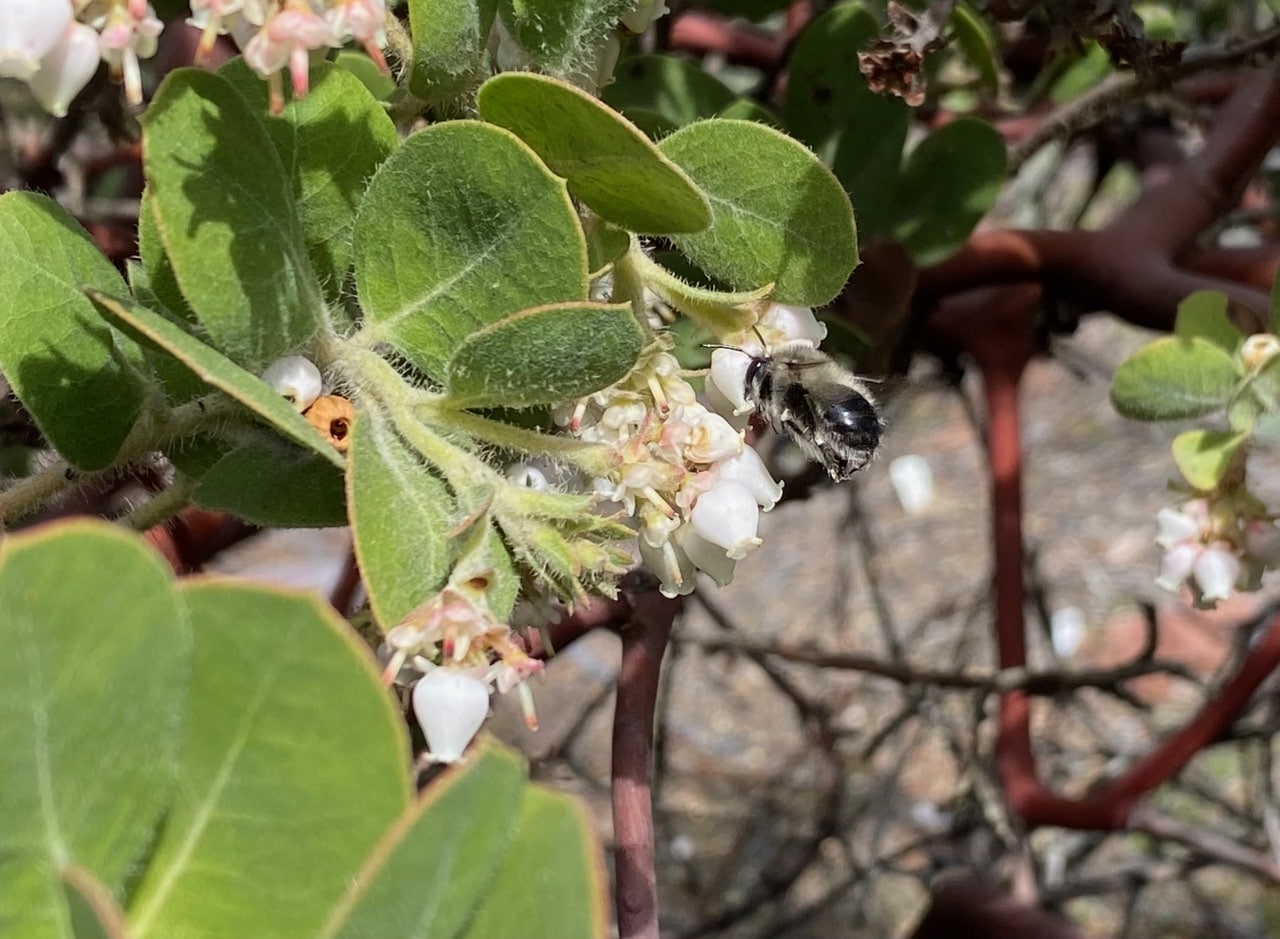
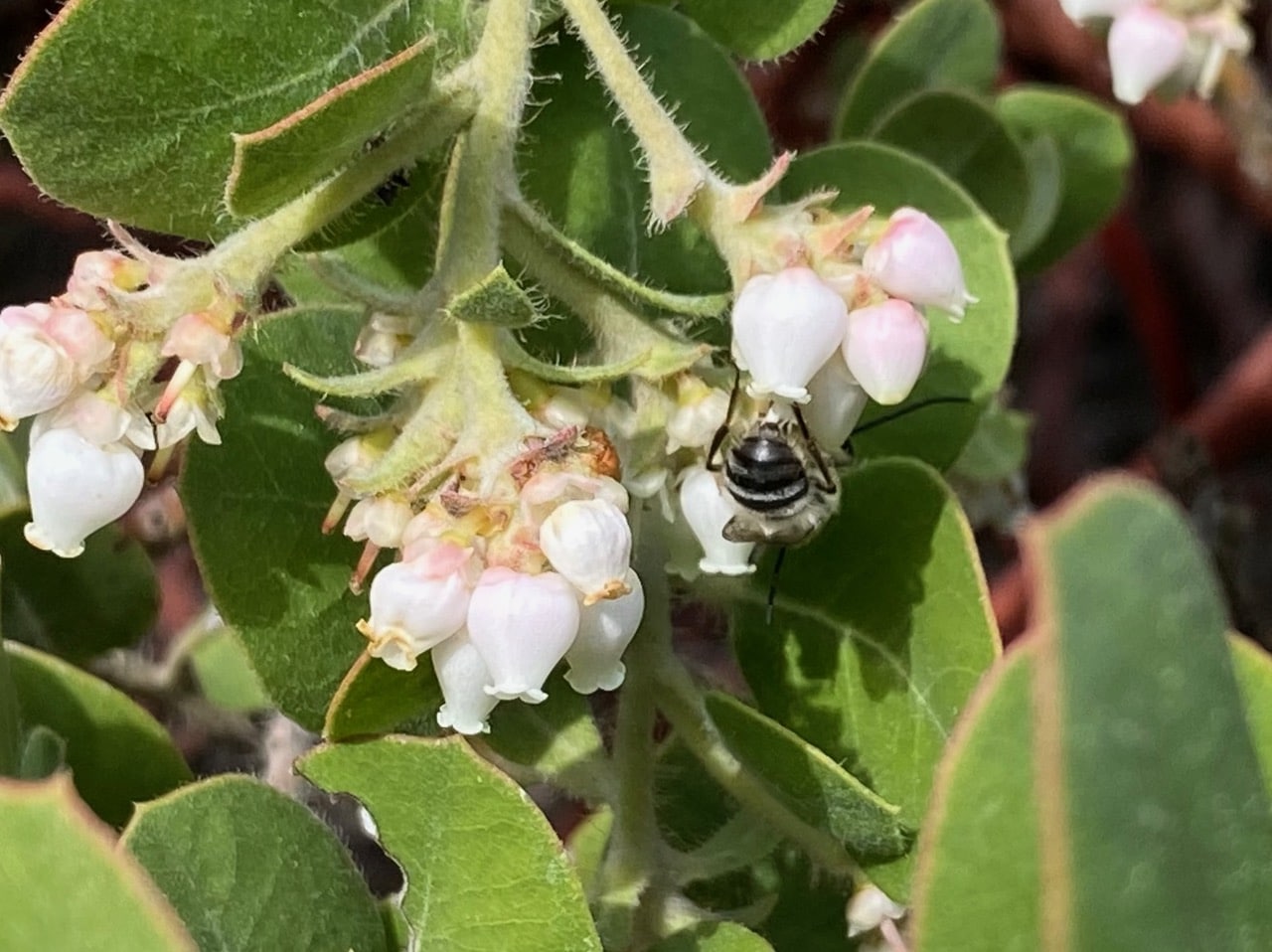
Hanging upside-down from a manzanita flower, a Pacific Digger Bee, Anthophora pacifica (family Apidae) is probing for nectar with its tongue. The yellow clypeus on its face indicates that it is a male. The clypeus of the bee is the area below the antennae, but above the labrum and the mouth. The clypeus is one of the ways a bee can be identified, based on its shape as well as the type of hairs present on it.
As their name implies, the Digger Bees nest in the ground, sometimes in huge aggregations. These fast and noisy flyers buzz around flowers, appearing to “hop” from flower to flower while foraging. The chubby, furry Digger Bees resemble the bumble bees in many ways, but are a lot noisier. They are a fearless, rowdy lot – fun to watch but a challenge to photograph. Male digger bees of many species have white or yellow integuments on their faces. Females have shaggy hairs on their back legs, used to carry pollen. Female Anthophora are capable of buzz pollination – i.e. they vibrate their wing muscles to shake pollen from the anthers of some flowers. Digger bees are generalist pollinators that visit an impressively wide range of plants. They are exceptionally effective pollinators and play an important role in maintaining wildflower diversity, in part because their long tongues allow them to pollinate deep-throated and tubular blossoms inaccessible to other bees.
Backing off the flower….
… and onto the next flower on the same cluster. There seems to be more male digger bees than females out foraging.
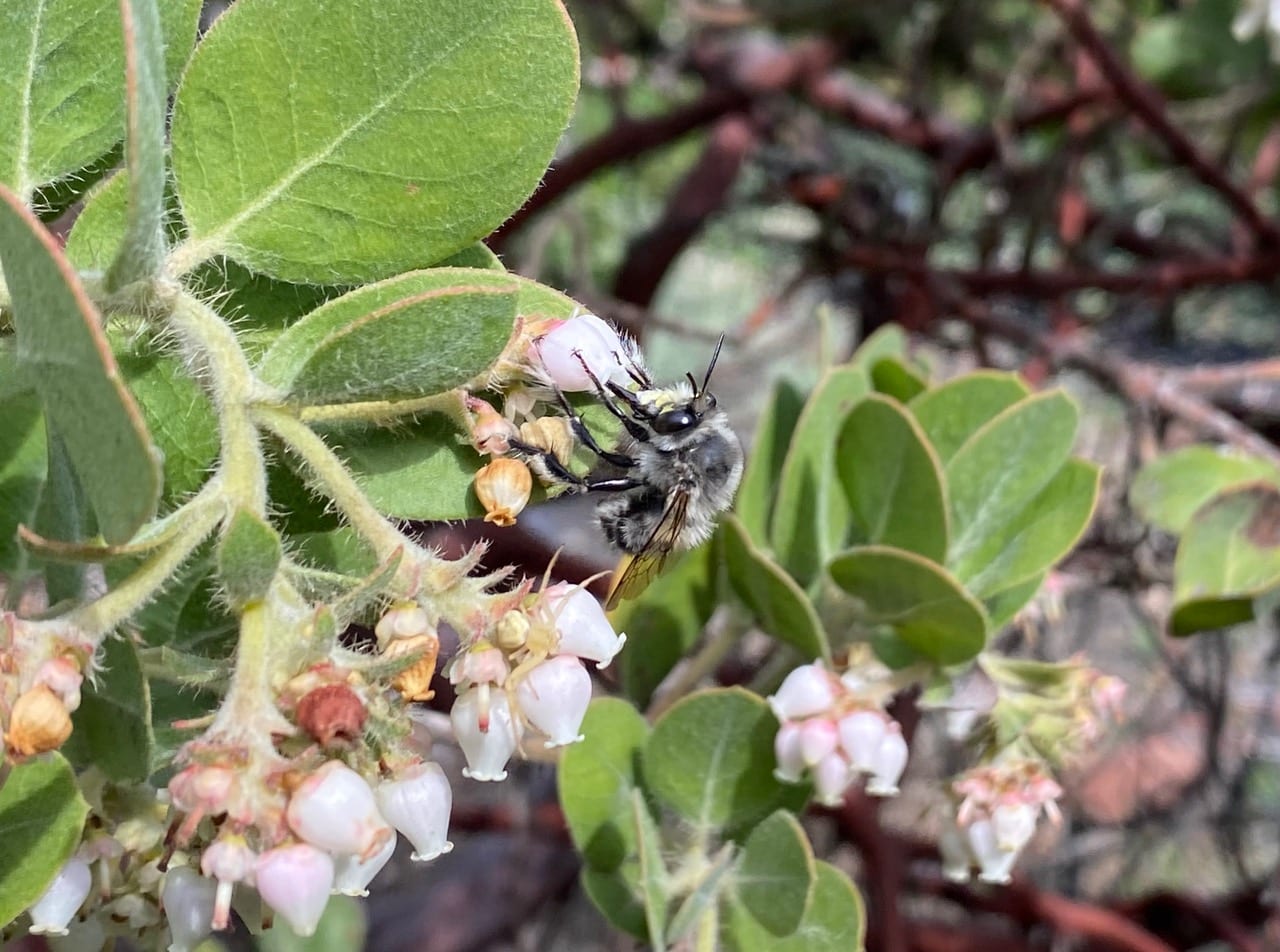
Then the next flower on the same cluster. It is this bee’s persistence that makes it possible for me to get close enough for these pictures. Digger Bees are notoriously difficult to photograph because of their fast and erratic flight, and frenetic behavior.
Note that the yellow clypeus on this male Pacific Digger Bee’s face is partially covered with yellow hairs.
As the Pacific Digger Bee backs off the flower, I can see the tufts of long white hairs on his legs. Instead of these hairs, the females have a scopa on each of their hind legs for collecting pollen.
Another male Pacific Digger Bee taking nectar from a manzanita flower.
I think this is a female Pacific Digger Bee, Anthophora pacifica.
Wow, check out the long antennae on that bee! It is a Spring Long-horned Bee, Eucera sp. (family Apidae).
The name Eucera is Greek for “well-horned”, a reference to the long antennae of the males. Only one subgenus, Synhalonia occurs in the United States and Canada, and are especially common in the west. These fast flying bees are hairy and generally large. Males have extraordinarily long antennae. Eucera includes both specialist and generalist bees. Specialists often limit themselves to the flowers of the pea family. Eucera are among the first to emerge in the spring and most fly exclusively in the spring. They are solitary ground-nesters. Each female excavates her own nest, and provides for her own young. Nest entrances have a mound of excavated soil heaped symmetrically around them. Since males do not build nests, they sleep out in the open, usually on flowers, sometimes in aggregation with other males, which help them maintain higher body temperature, or as a dilution effect against predators.
A view of the bee’s rear end. Its long antenna is visible from behind the flower.
Here’s another male Long-horned Bee, Eucera sp. showing yellow clypeus.
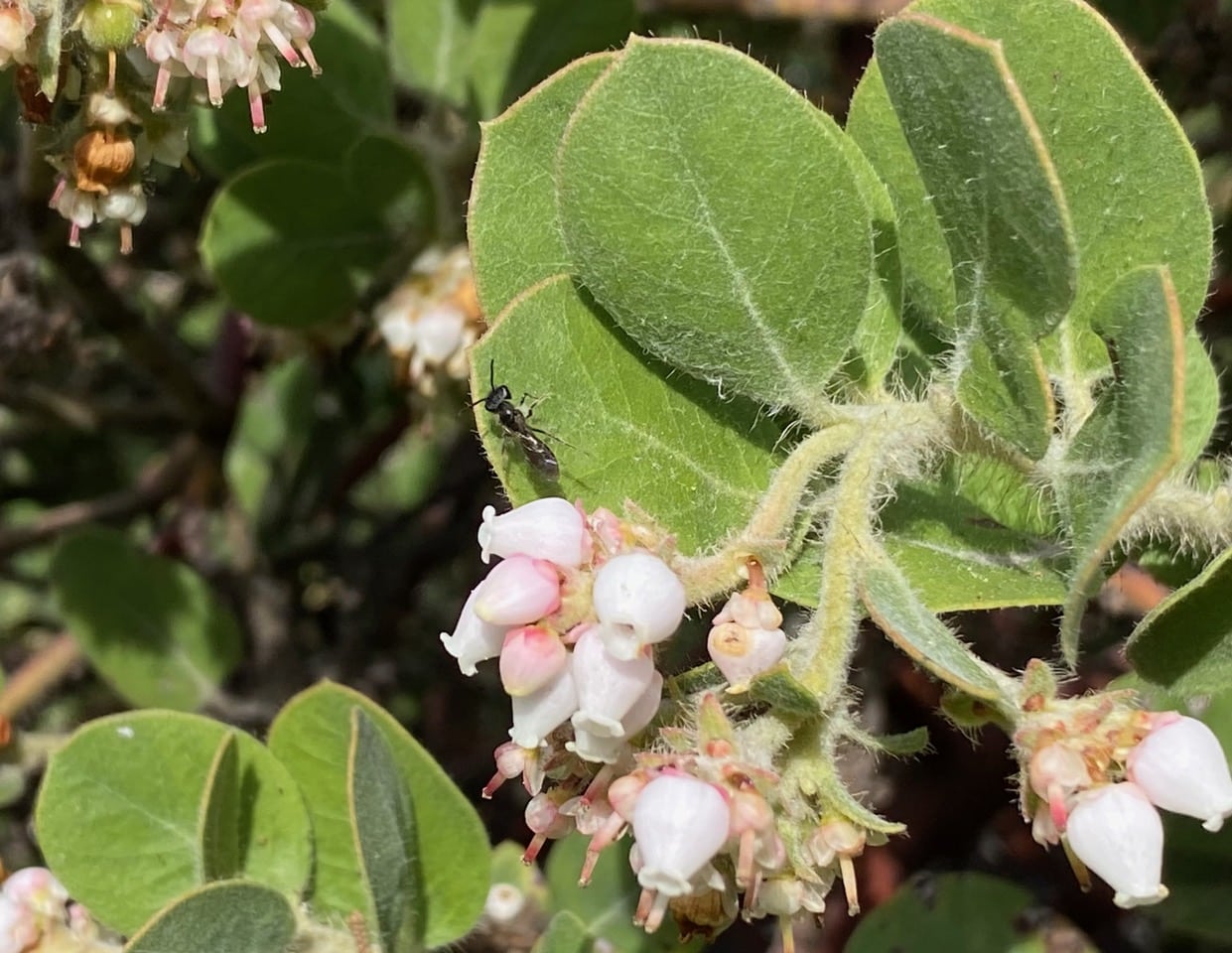
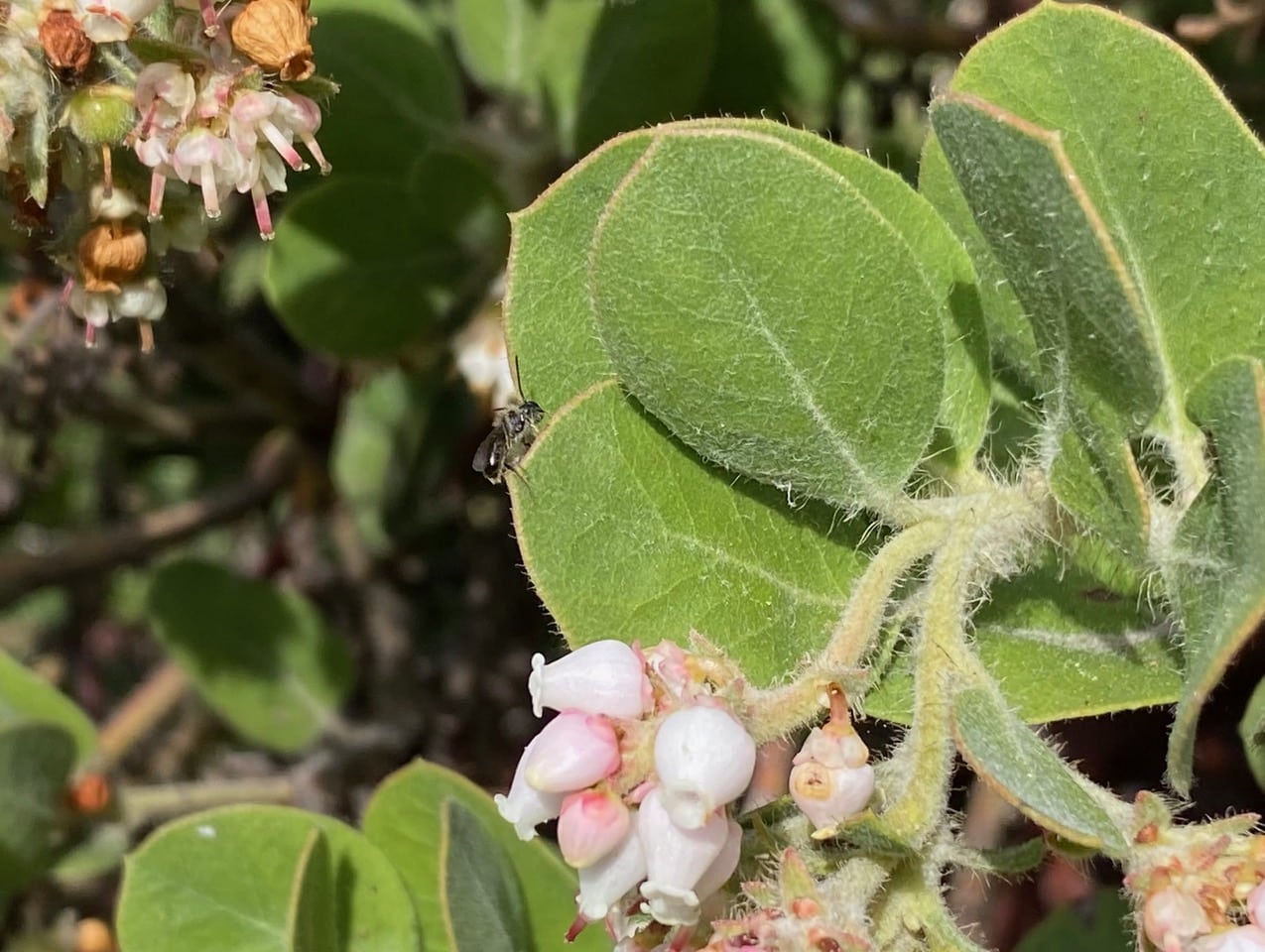
Numerous small insects are swarming over the manzanita flowers, amidst the frantic buzzing of the larger bees. They hardly ever land. For a moment, one alights on a leaf, seemingly discombobulated. Wow, it’s a bee, about the size of a grain of rice! Do these bees enter the manzanita flowers to access the nectar and pollen?
A Mining Bee (family Andrenidae)? Without a better image, it’s impossible to tell for sure. But Andrenidae is a good guess, given its slender build and paucity of hair. Some Mining Bees are among the first bees to fly in the spring. Their ability to withstand the chill is still a puzzle to scientists. These cold-hardy bees are excellent pollinators for early spring wildflowers and cultivated crops. Many are oligolectic, specializing in certain plant species.