

Pollinator Post 2/27/24 (1)
 It is still rather cold when I arrive at the East Bay Regional Botanic Gardens this morning. No insect is flying. On a Ceanothus with fading flowers I spot this bright yellow female Crab Spider, Mecaphesa sp. Zooming in, I realize that it is feeding on another Crab Spider, likely her own kind – cannibalism! Note the color difference between predator and prey.
 Crab Spiders (family Thomisidae) are usually yellow or white. This ultimately depends on the flower on which these ambush predators are hunting (active camouflage). They have the ability to change between these colors based on their surroundings, using visual cues. The color-changing process is not instant and can take up to 25 days to complete. Depending on the color of flower they see around them, the spiders can secrete a liquid yellow pigment into the body’s outer cell layer. The baseline color of the spider is white. In its white state, the yellow pigment is sequestered beneath the outer cell layer so that the inner glands which are filled with white guanine are visible. While the spider is residing on a white flower, it tends to excrete the yellow pigment instead of storing it in its glands. In order to change back to yellow, the spider must first produce enough of the yellow pigment. For this reason it takes these spiders much longer to turn from white to yellow than it does the reverse. The color change from white to yellow can take between 10-25 days while the opposite color change takes only about 6 days.
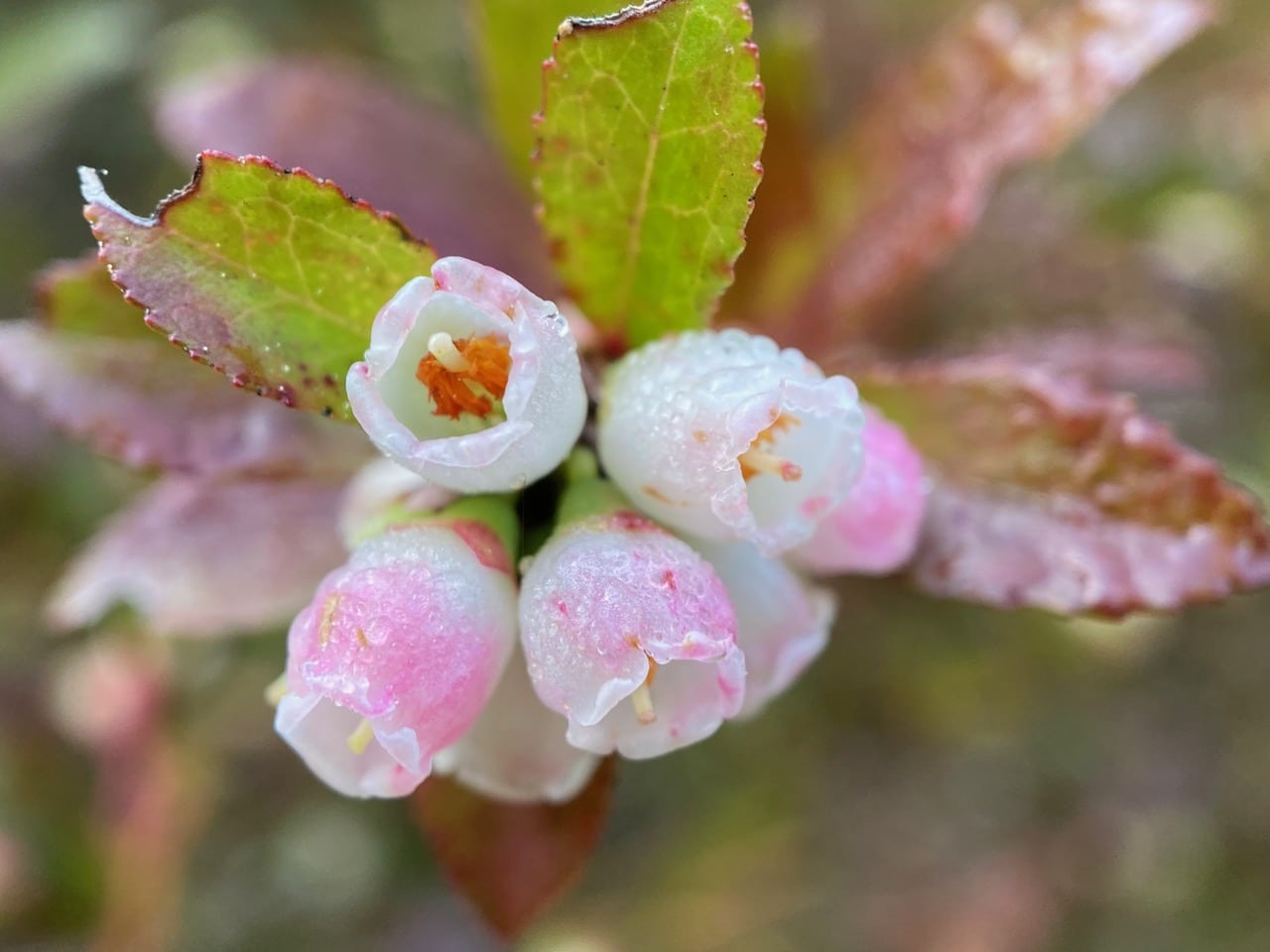



The label reads “Dwarf Huckleberry, Vaccinium cespitosum”. In general form, the huckleberry flowers are very similar to the manzanita flowers, as both plants belong to the family Ericaceae. This particular species of huckleberry seems to have very wide opening to the corolla – I can actually see the reproductive structures inside. Like the manzanitas (genus Arctostaphylos), huckleberry is dependent on buzz pollination by bumble bees and native solitary bees in early spring.
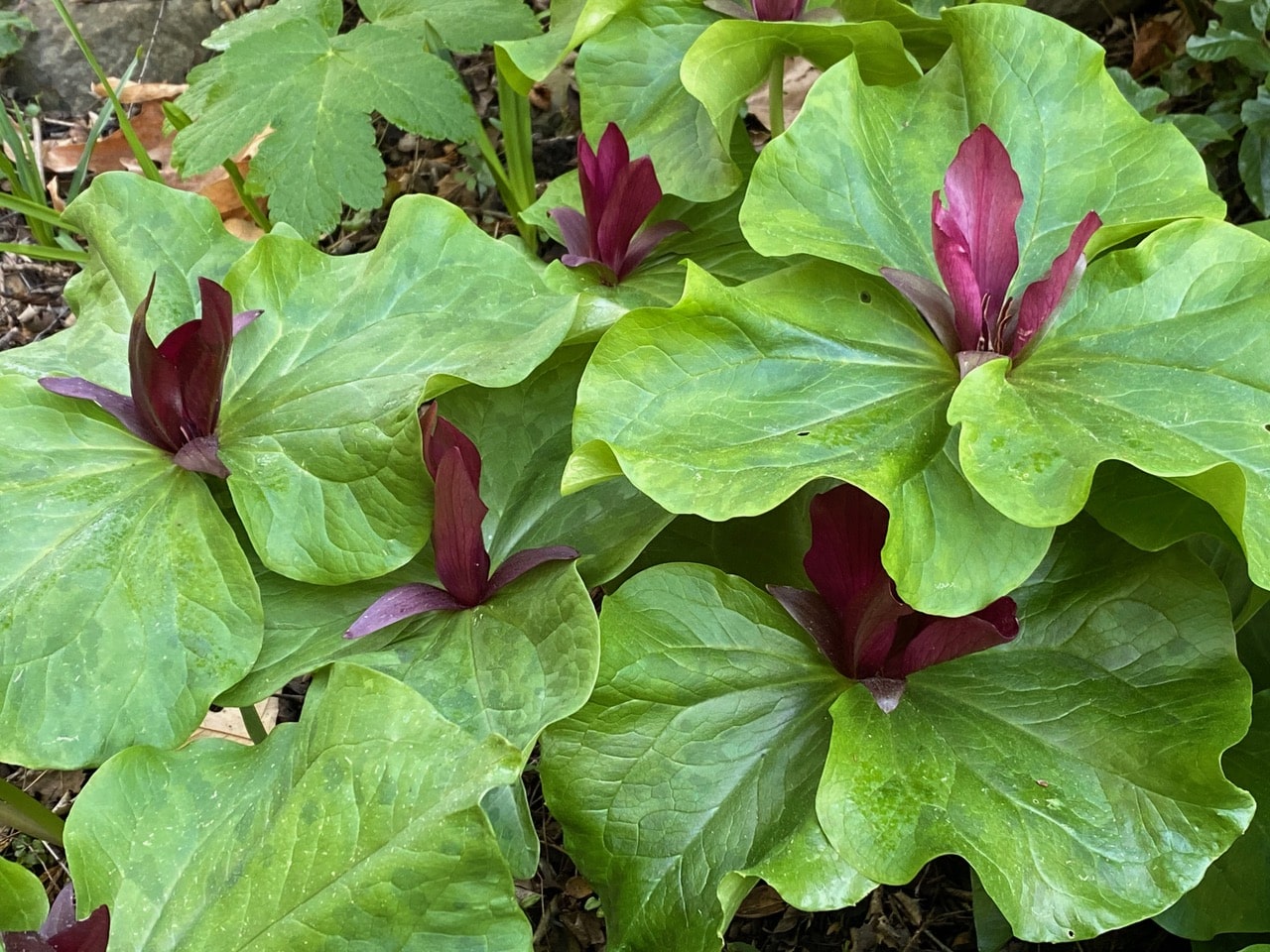
The Giant Trillium, Trillium chloropetalum is blooming gloriously, but there’s never an insect around these spectacular flowers. I peek into each flower and am disappointed as usual. Who pollinates these flowers? The plant probably relies mainly on asexual reproduction by rhizomes.
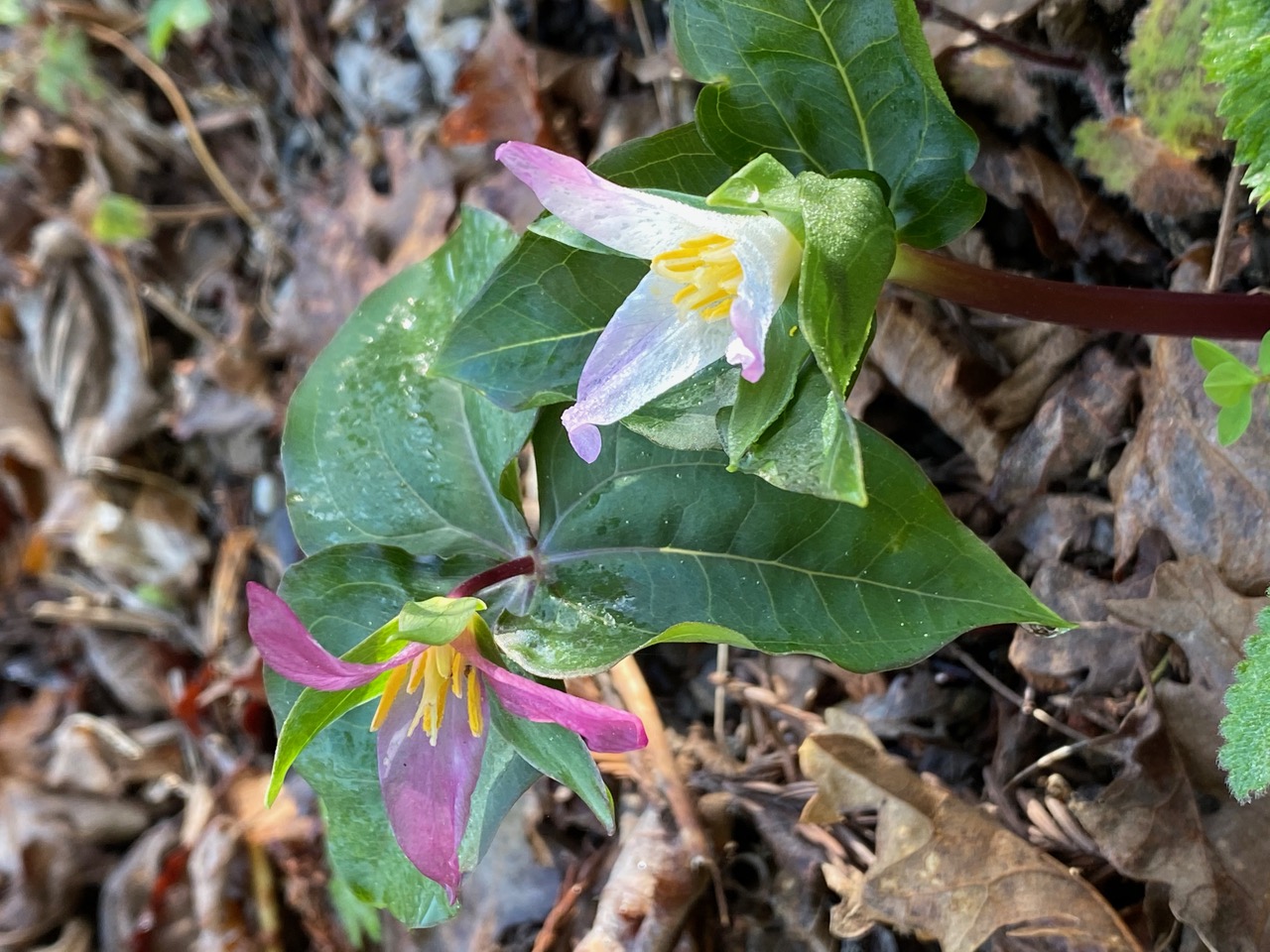
Not far away, another species of Trillium is blooming. It’s probably the Pacific Trillium, Trillium ovatum. It is the only pedicellate-flowered Trillium species found within its range. Unlike the Giant Trillium, the flowers of this species is held by a pedicel or flower stalk above the leaves.
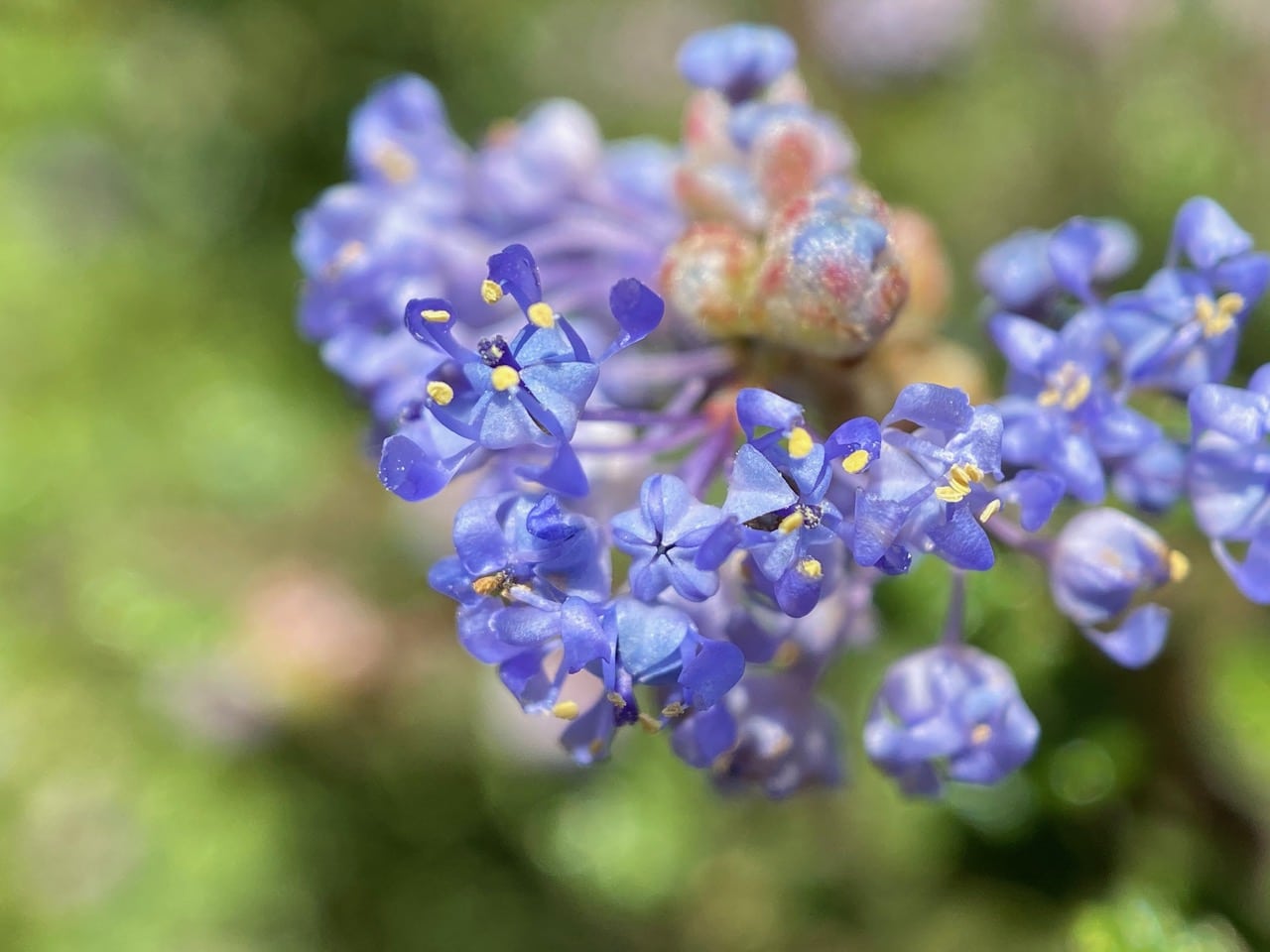
Since there’s no insect activity I settle down next to a Ceanothus to photograph its flowers. The tiny flowers are so tightly clustered it is hard to figure out the floral structure.
The individual flowers consists of 5 hooded sepals, 5 scoop-like petals, 5 stamens attached to a nectar-bearing disc, and a superior 3-lobed ovary. Both the sepals and petals are similarly colored. The anthers are fully exerted, making it easy for bees to collect pollen by simply walking over the inflorescence.
As the day warms up, I spot some movements around the Ceanothus. It’s a Greater Bee Fly hovering over the flowers. I quickly switch to video mode on my camera.
Bombylius major, commonly known as the Greater Bee Fly is a parasitic bee mimic fly in the family Bombyliidae. It derives its name from its close resemblance to bumble bees. Its flight is quite distinctive – hovering in place to feed, and darting between locations. The species has long skinny legs and a long rigid proboscis held in front of the head. Bombylius major is easily distinguished from the other local species of Bombylius for having wings with dark leading edge, hyaline trailing edge with sharp dividing border. This feature is visible even as the fly is hovering. Adults visit flowers for nectar (and sometimes pollen) from a wide variety of plant families, excelling at small tubular flowers, and are considered good generalist pollinators. Often the pollen is transferred between flowers on the fly’s proboscis.
The bee fly larvae, however, have a sinister side. They are parasitoids of ground-nesting bees and wasps, including the brood of digger bees in the family Andrenidae. Egg deposition takes place by the female hovering above the entrance of a host nest, and throwing down her eggs using a flicking movement. The larvae then make their way into the host nest or attach themselves to the bees to be carried into the nest. There the fly larvae feed on the food provisions, as well as the young solitary bees.
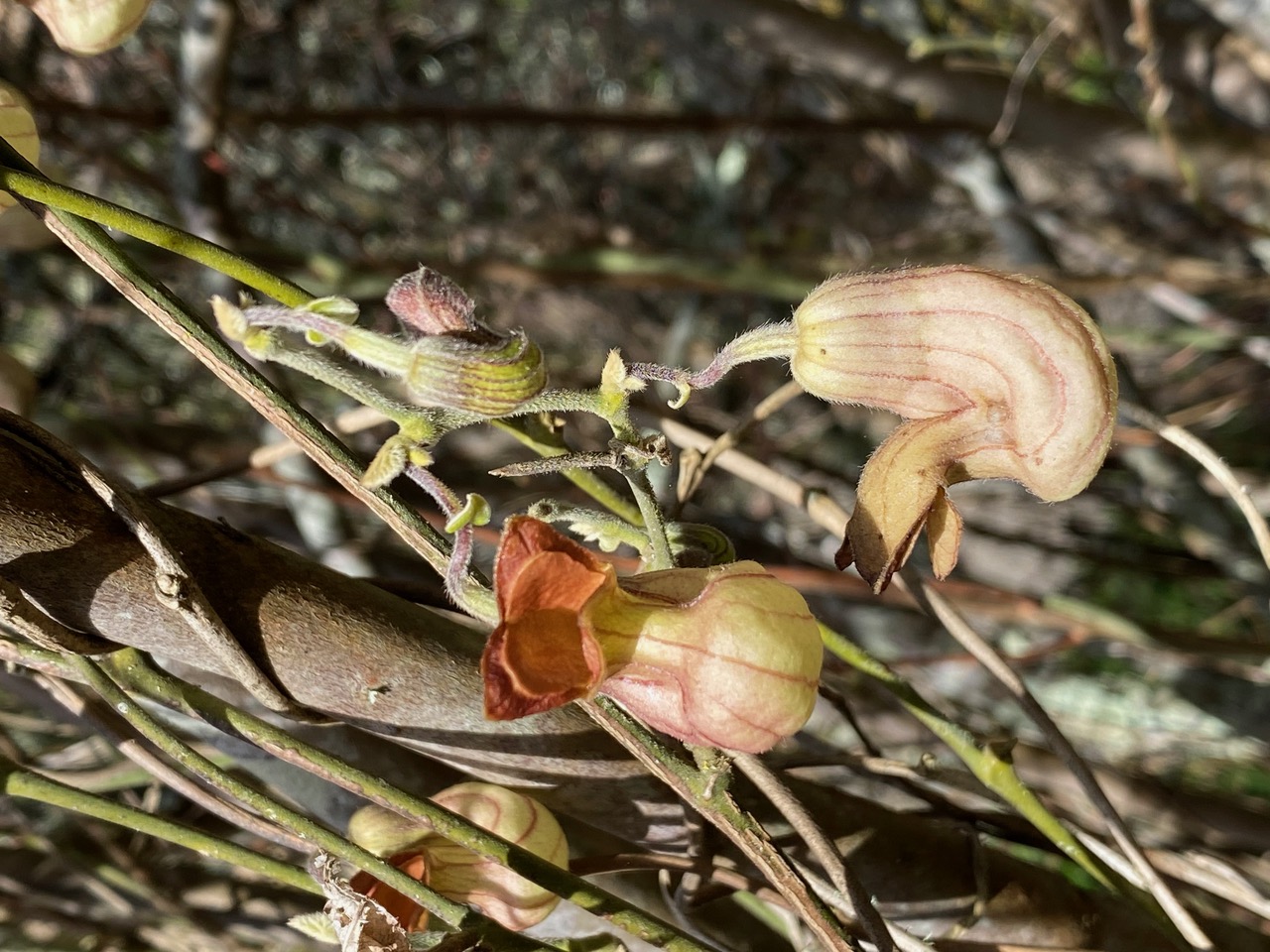
The California Pipevine, Aristolochia californica is in peak bloom now, its leafless vines loaded with odd, pipe-shaped flowers.
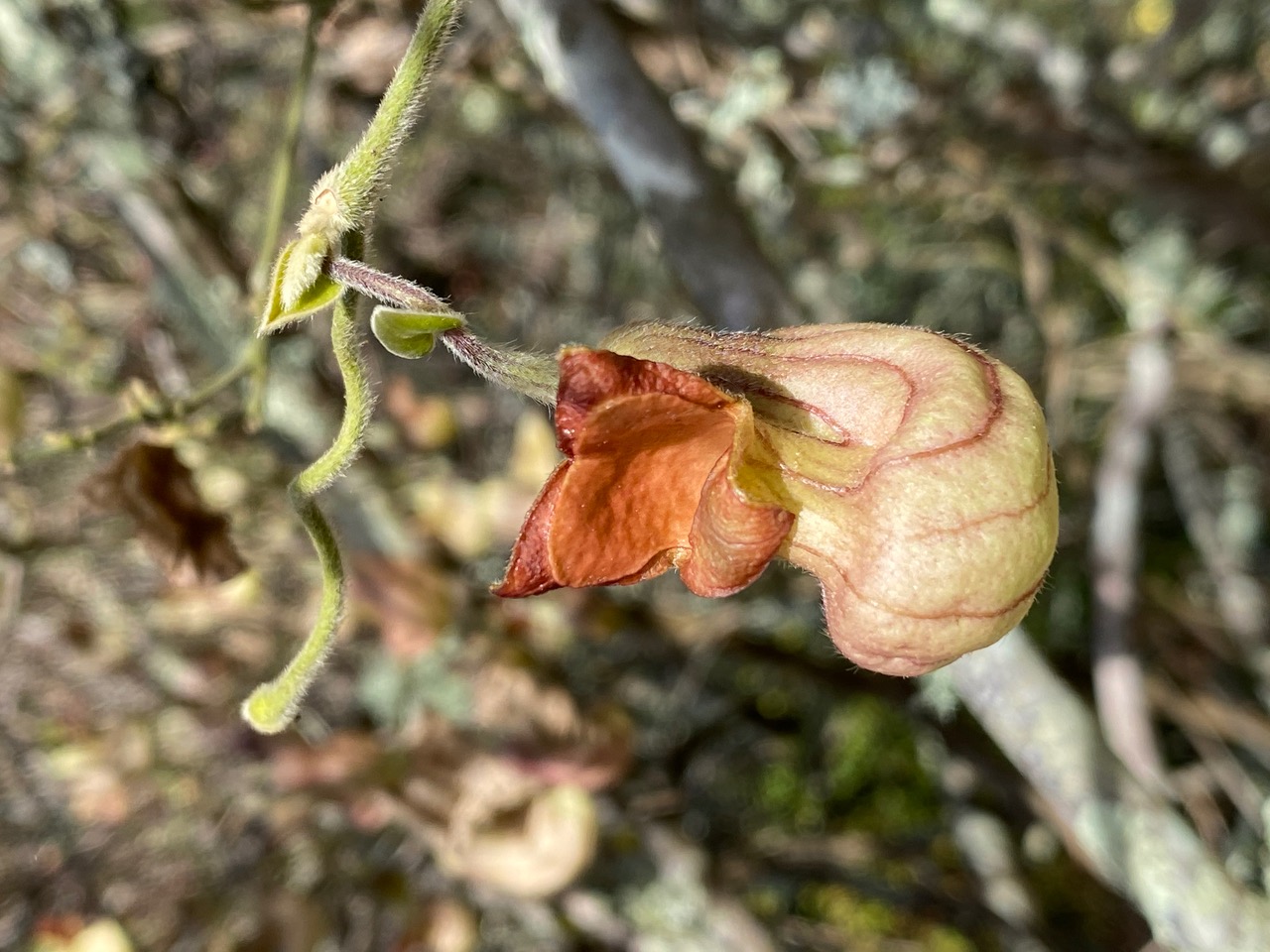
It’s maroon-brown lips wide open, this flower is probably calling to Fungus Gnats (family Mycetophilidae) by emitting its unusual scent.
Backlit by the morning sun, the pollination strategy of the pipevine flower comes to light. See the dark band near the base of the flower where it is attached to the petiole? If you look inside, you’d find that it is made up of a moist maroon-colored tissue on the wall of the flower where nectar is secreted. This band surrounds the reproductive structures of the flower. Fungus Gnats (family Mycetophilidae) are attracted by the scent of the flower and enter through the 3-lipped opening. While sipping nectar from the dark tissue, their bodies invariably come on touch with the reproductive structures. California Pipevine flowers are protogynous, the female parts maturing before the male parts. If the flower is in the male phase, it will release pollen that can adhere to the gnats. If the gnats subsequently visit a flower in the female phase, the pollen on their body might be deposited on the receptive stigma. The temporal separation of the sexes ensures that the flowers are not self-pollinated.
Walking down a short flight of stone steps near the stand of pipevine, I spot this brown chrysalis attached to the side of the steps. I recognize it as the chrysalis of the Pipevine Swallowtail, Battus philenor. The butterfly is closely associated with California Pipevine, its exclusive larval food plant. We’ll be seeing the adults flying soon, and as the pipevine leafs out we’ll hopefully find some of the butterfly’s eggs. So much fun to look forward to!
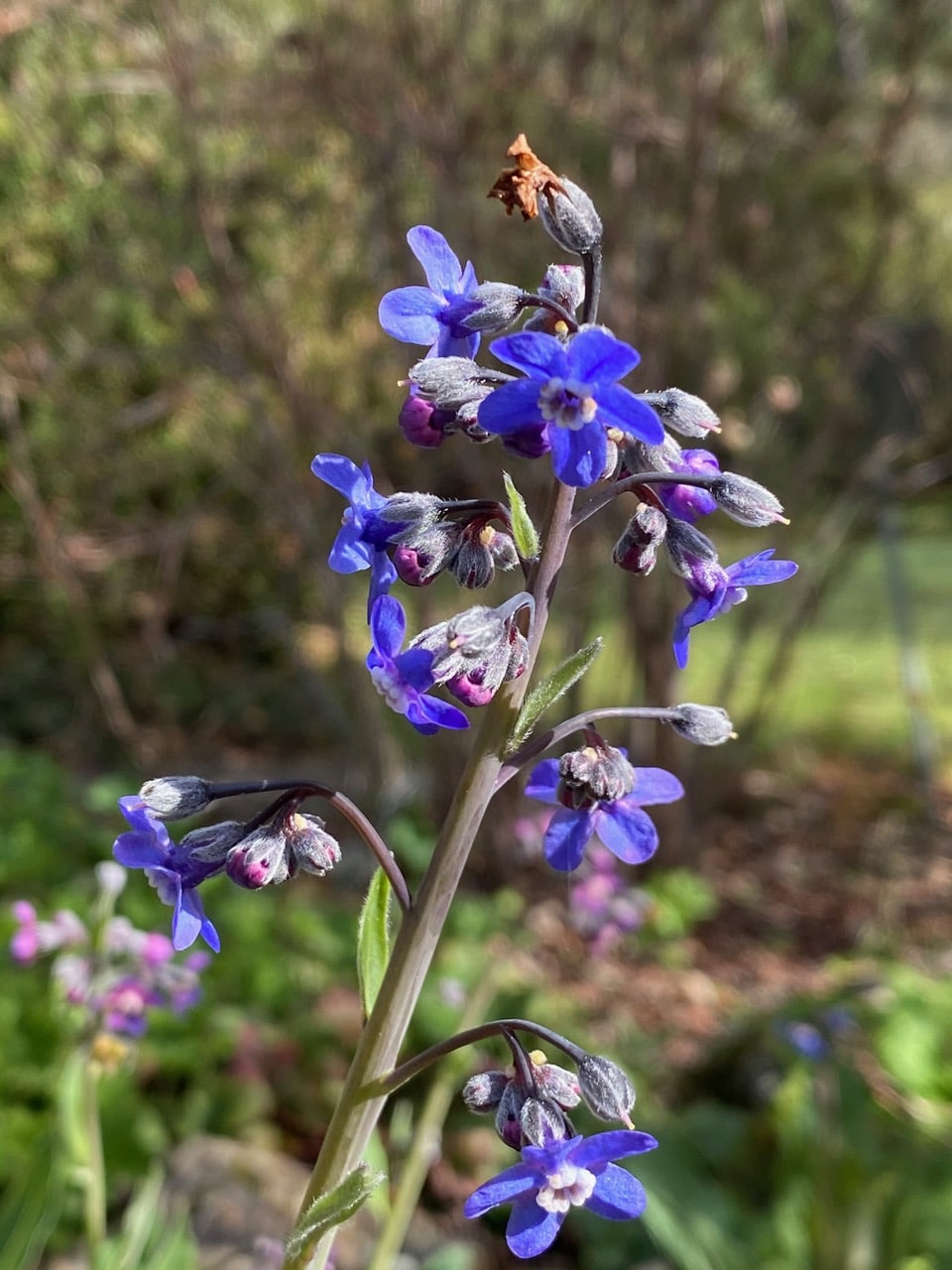
The patch of blooming Western Hound’s Tongue, Adelinia grandis is causing quite a bit of excitement among the Pacific Digger Bees, Anthophora pacifica (family Apidae). These noisy and fast-flying bees are zipping in and out, wary of me and my camera. I decide to sit down and let them acclimate to my presence.
I relax and look around. Sure enough, after a while, the bees let me closer, and I finally get some videos of them taking nectar from the Hound’s Tongue flowers.
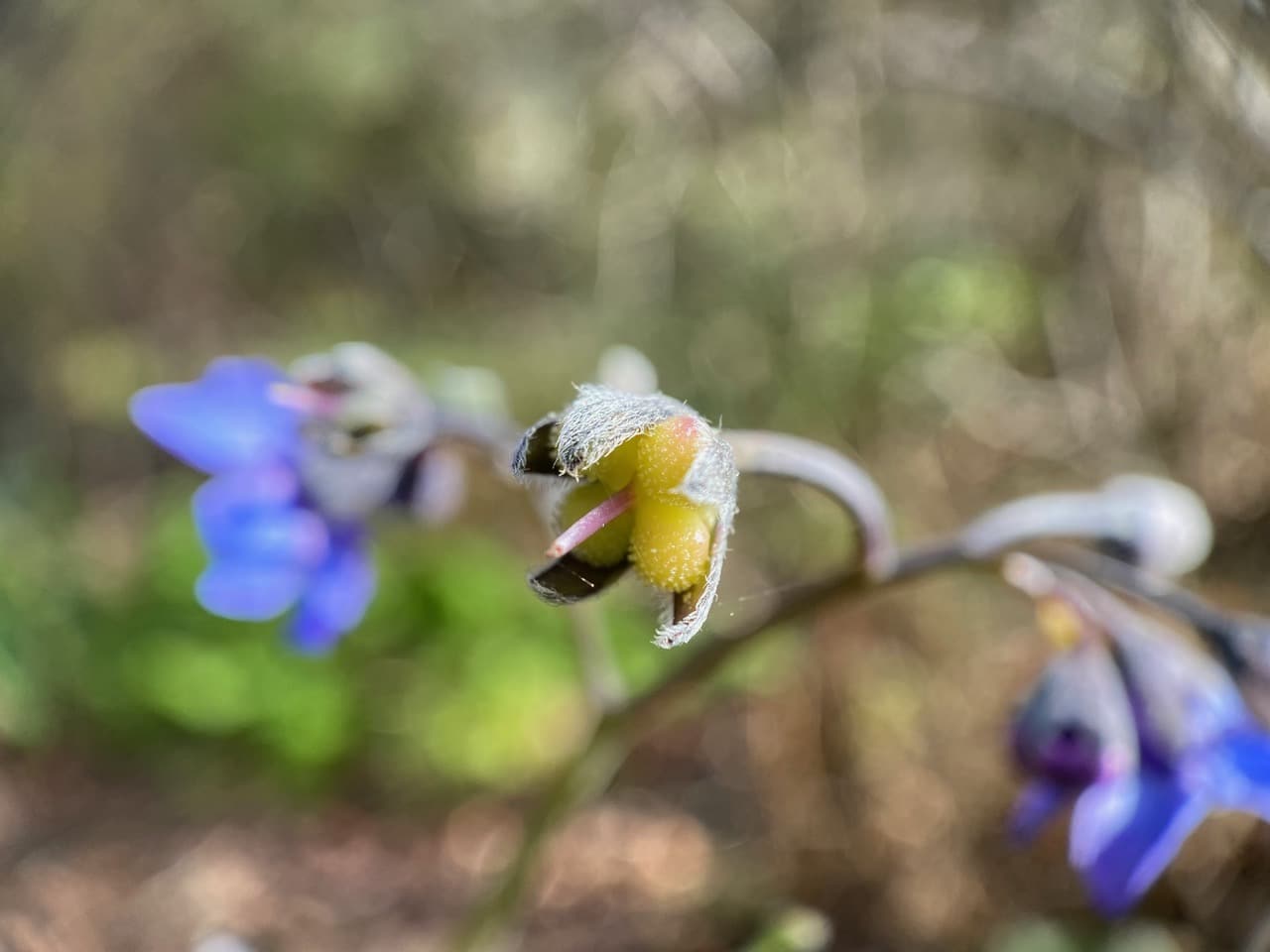
Some fruits are already developing on the Hound’s Tongue after the petals drop off. The fruit comprises a set of 4 nutlets (small, dry fruit that does not split open, derived from a multi-chambered ovary). The seed has evolved hook-like appendages on the seed coat that grab onto anything that brushes against it, including animals or human socks.