

Pollinator Post 2/25/25
It is fun to visit the native plant garden at Crab Cove, Alameda, now that more plants are coming into bloom.
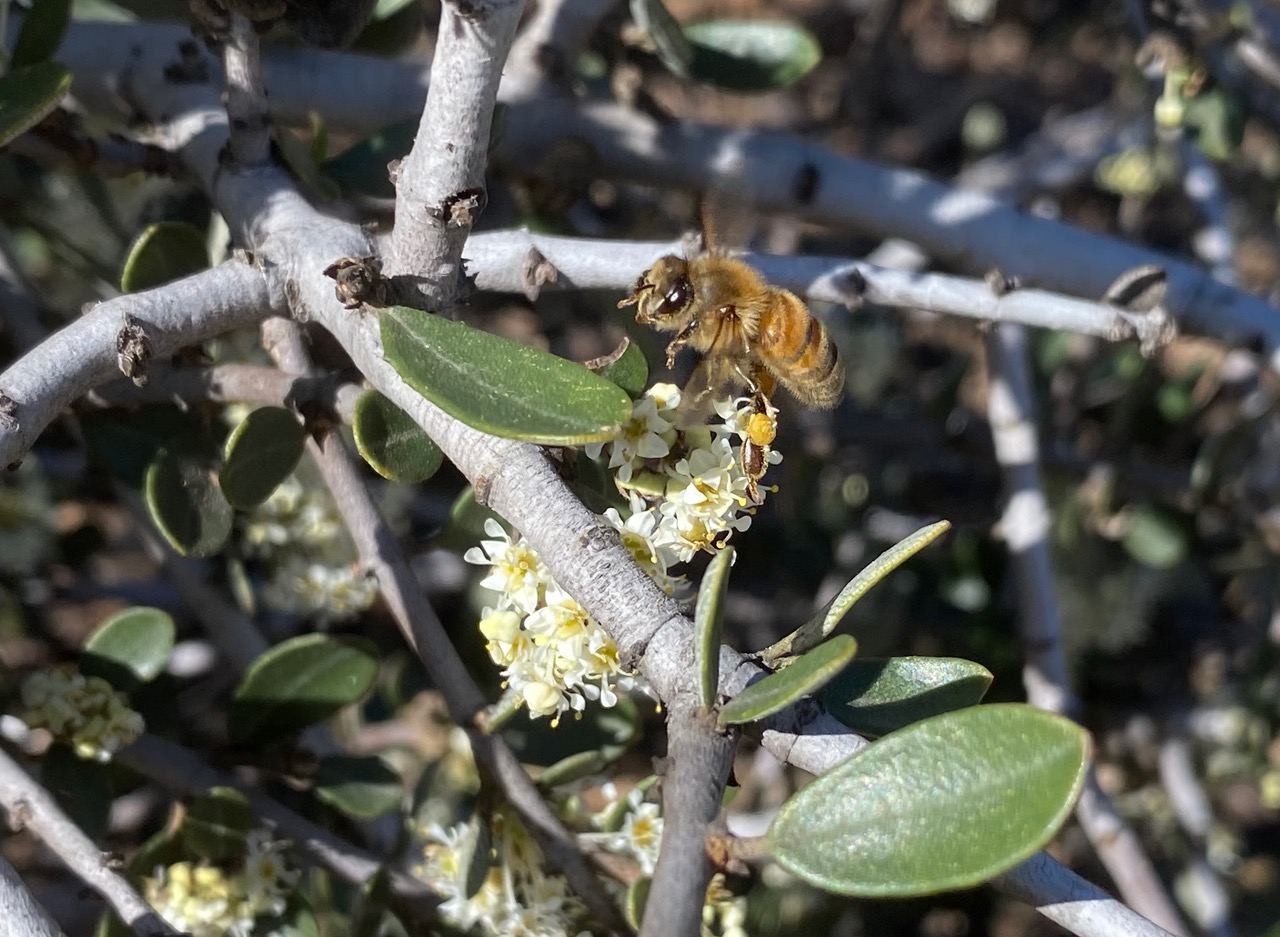
Although past prime blooming, the large shrubs of Buckbrush, Ceanothus cuneatus continue to be a magnet for the Honey Bees, Apis mellifera (family Apidae). The early blooming ceanothus is an excellent source of easily accessible nectar and pollen. The bees simply shimmy their way through the tightly packed flower clusters to gather pollen from the protruding anthers.

This Honey Bee has gathered an impressive load of pollen in her pollen baskets. The bees are capable of flying with pollen loads up to 1/3 of their body weight.
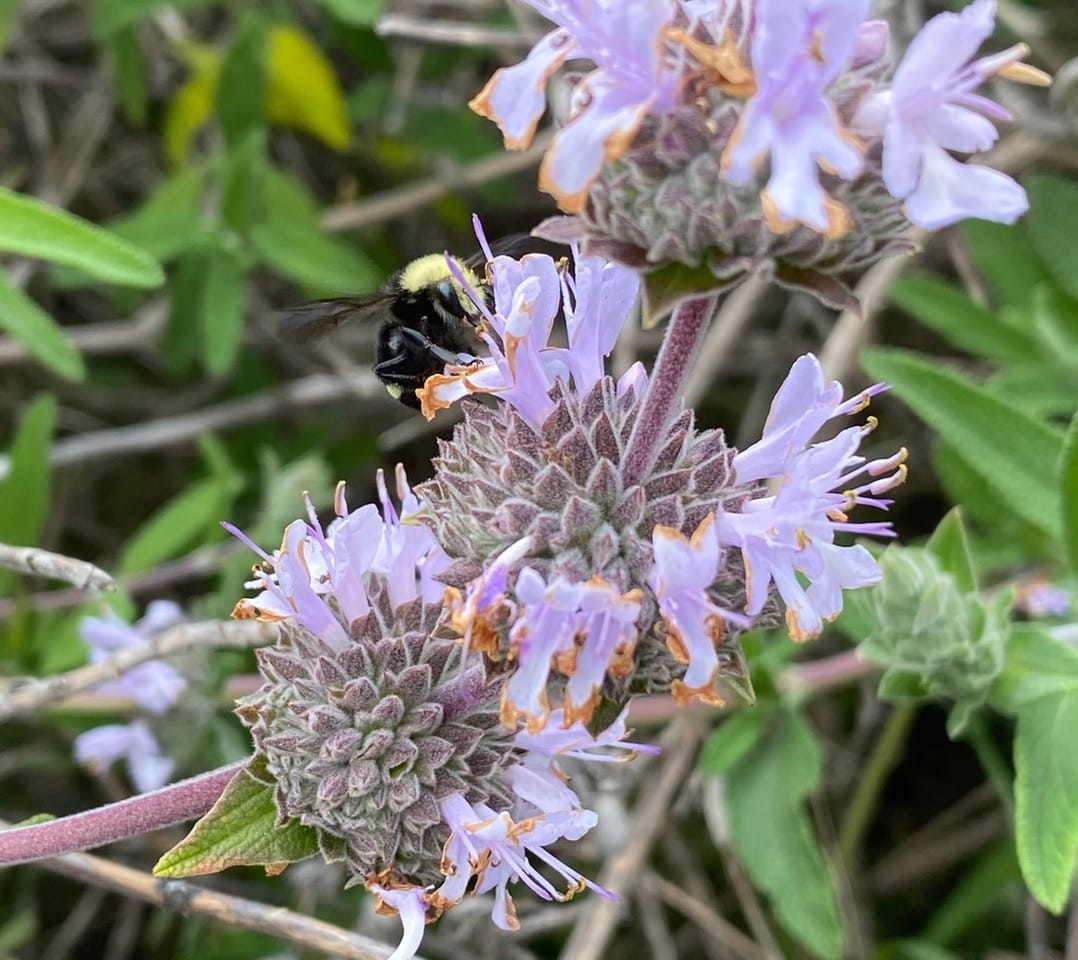
The Black Sage, Salvia mellifera is in peak bloom, attracting numerous bumble bees. Both common species – the Yellow-faced and the Black-tailed bumble bees frequent the sage flowers. A Yellow-faced Bumble Bee, subgenus Pyrobombus (family Apidae) lands on the lower lip of a Black Sage flower to probe for nectar located at the base of the flower.

Her tongue extended, a Yellow-faced Bumble Bee is taking nectar from a Black Sage flower.

Retracting her tongue, the bee backs off from the Black Sage flower. It appears that a clump of pollen has adhered to the base of her right antenna. Note the forked style of the sage flowers that protrudes way beyond the corolla. If the pollen on the bee is transferred to one of these styles at the right stage of maturity, pollination would be accomplished. Salvia flowers are generally protandrous, with the male parts maturing before the female parts. This temporal separation of the sexes helps prevent self-pollination.
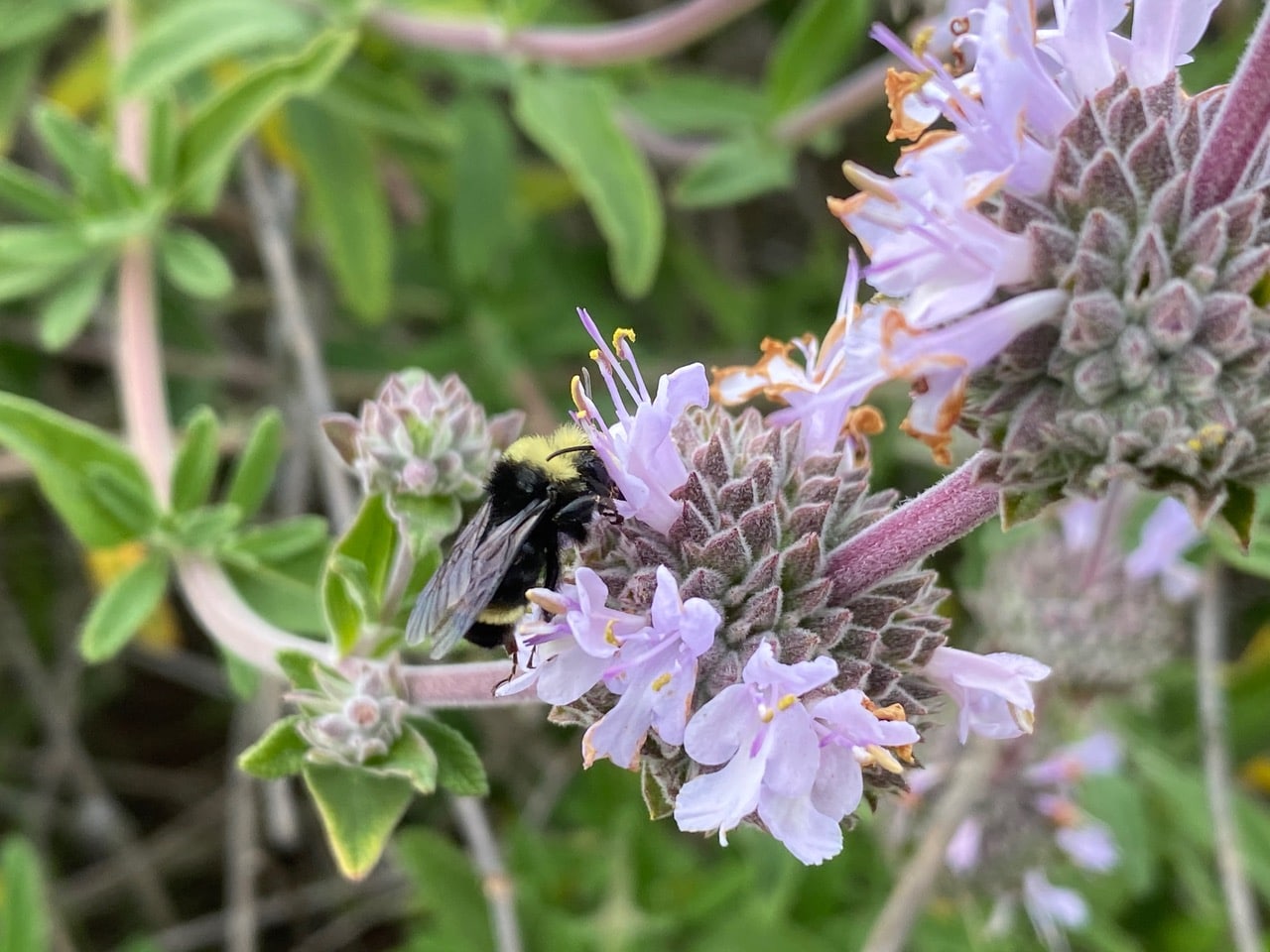
As the bumble bee is reaching into a sage flower for nectar, she is likely to be dabbed with pollen from the pair of ripe anthers.
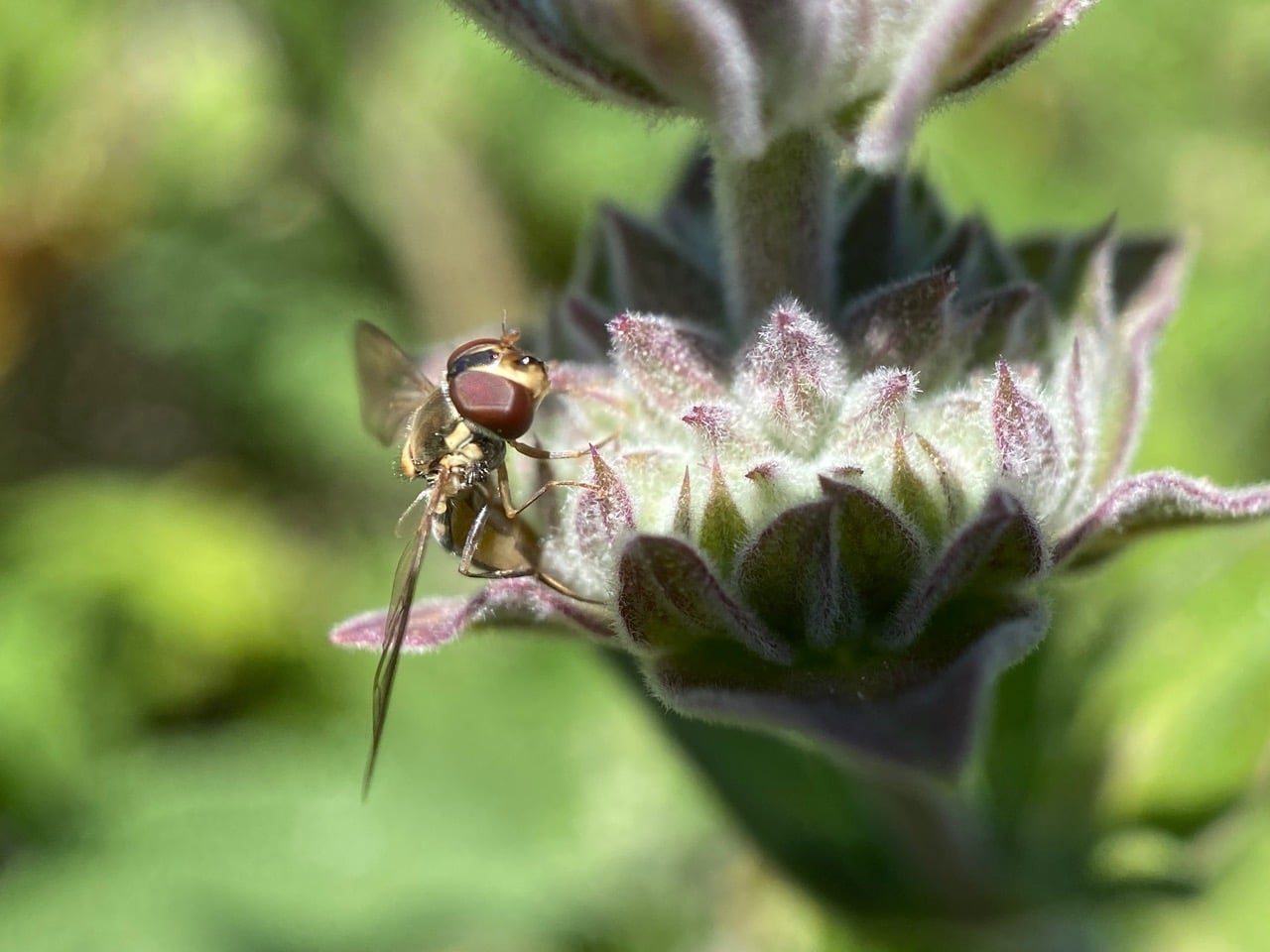
Quietly a hover fly only the size of a grain of rice appears to be laying eggs among the flower buds on an inflorescence of Black Sage. Note that she has inserted her curled abdomen into the space between the flower buds.

Ah, this view reveals her identity: Diamond Spottail, Fazia micrura (family Syrphidae). Note the four characteristic diamond-shaped yellow markings near the tip of the abdomen.
The Diamond Spottail, Fazia micrura occurs in western North America, from British Columbia south to California and Texas; and Mexico. The slender, elongate fly measures 6-7 mm. The adult and larva feed on pollen. Females lay eggs on flowers. Larvae are often encountered in the field chewing through the calyx and corolla of unopened flower buds. They are known to feed on pollen in the anthers. Usually only one larva is found in each flower. This larval diet is rather unusual for hoverflies, most of which consist of aphids on plants or decomposing matter in aquatic environments, depending on the species.
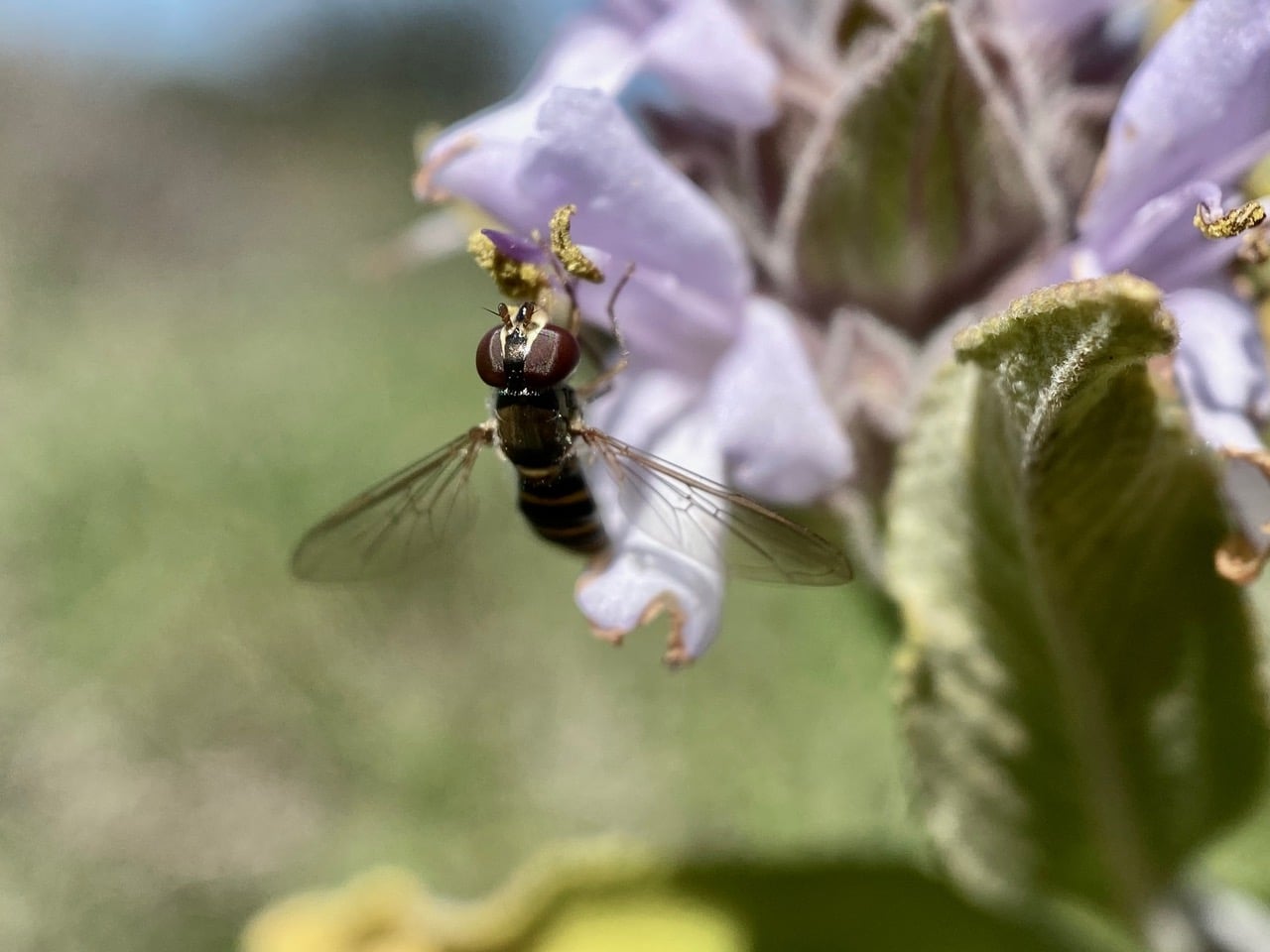
Holding onto the filaments of the flower, the hover fly is feeding on the pollen from the anthers.

Note that the hover fly’s eyes do not meet on top of her head – they are dichoptic. In contrast, the males have holoptic eye that meet on top of their head. This is an easy way to distinguish the genders of hover flies.
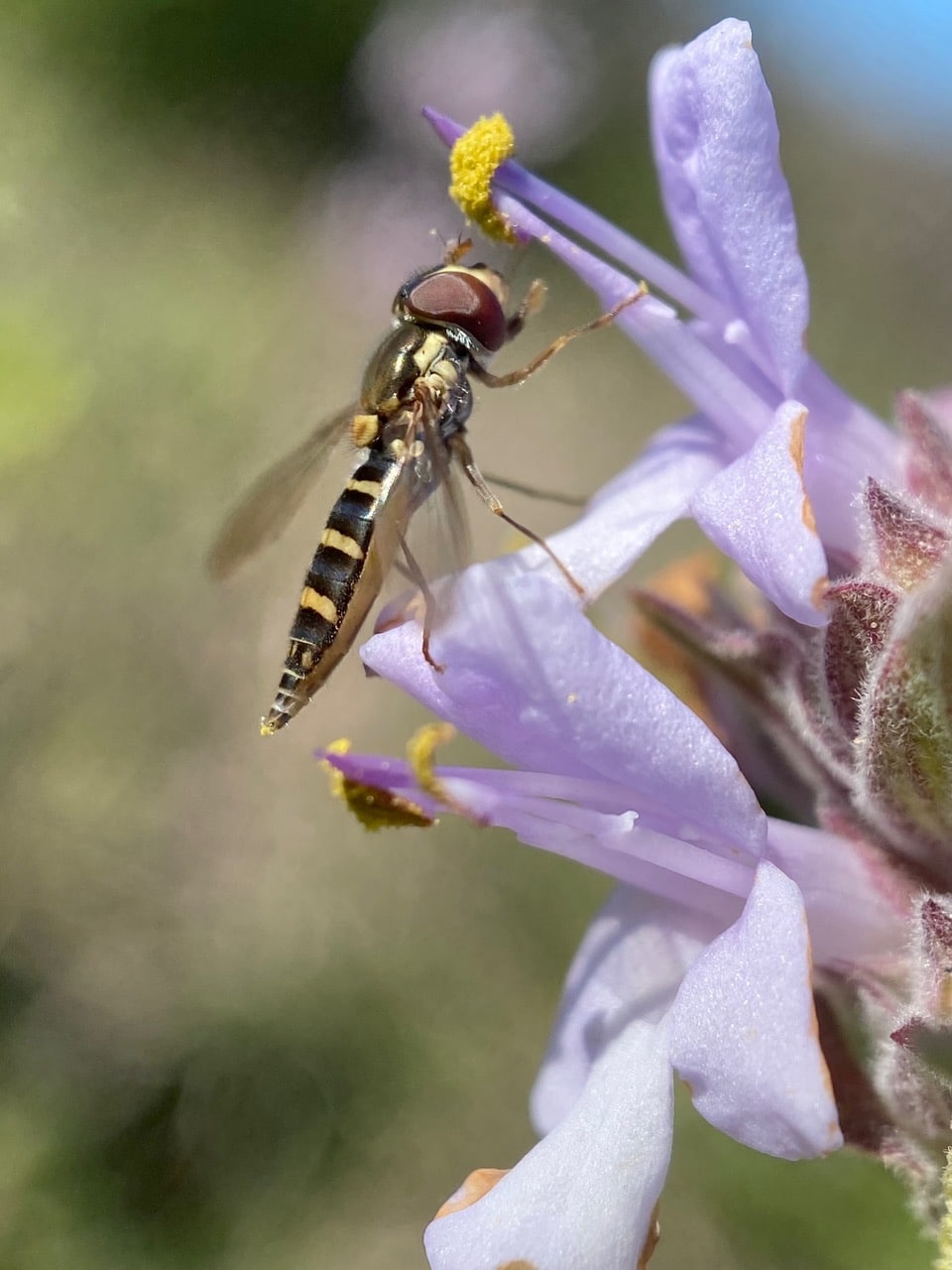
Standing tall on the lower lip of a Black Sage flower, the Diamond Spottail is reaching up to feed on the pollen from the anther.