

Pollinator Post 2/23/24 (1)
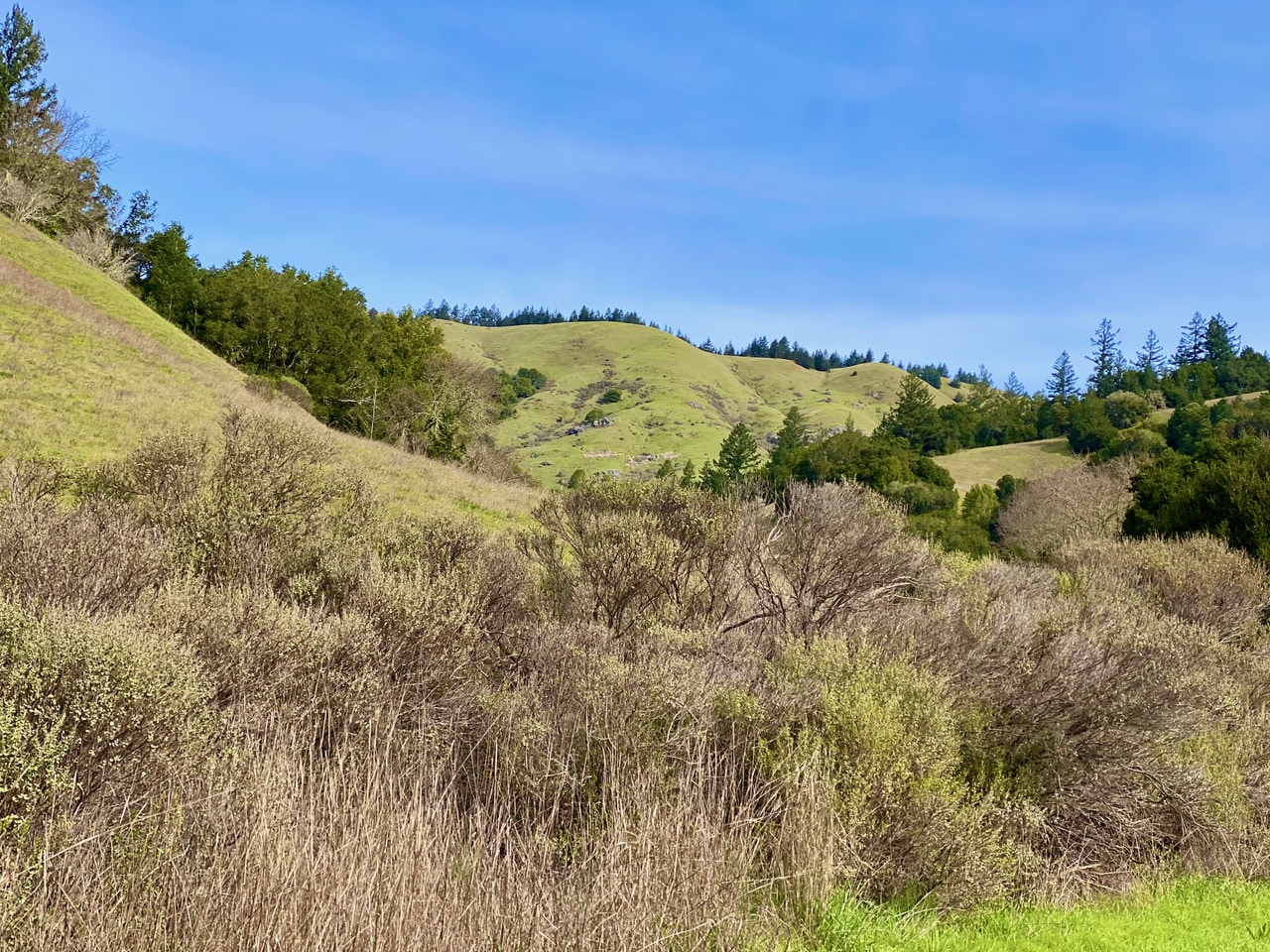
Braving muddy and poorly marked trails, my friends and I explore Roy’s Redwood Preserve near Woodacre in Marin County on this beautiful day.
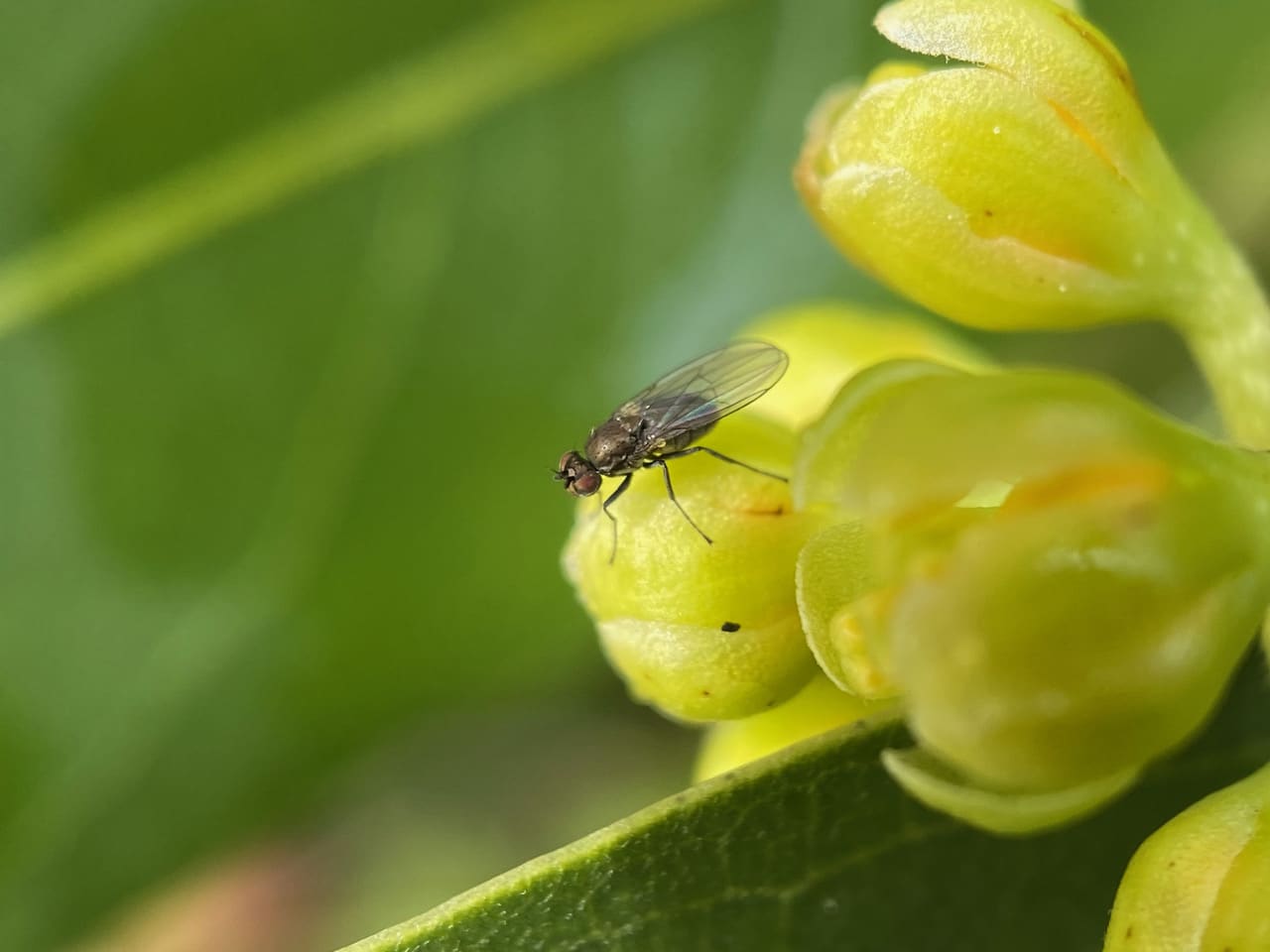





Passing a California Bay tree, Umbellularia californica, I can’t resist stopping to look at this tiny insect on the flower buds. It turns out to be a fly, about 1-2 mm long. iNaturalist suggests that it could be a Freeloader Fly, Desmometopa sp. (family Miliciidae).
“Freeloader”? Milichiidae are a family of flies, usually 1-3 mm in length, typically dark. The adult flies hang around invertebrate predators such as spiders and assassin bugs, where they act as kleptoparasites, feeding on bodily fluids of the prey. The behavior has given rise to the common name of Freeloader Flies. Larvae primarily feed on rotting plant materials or decaying wood, carrion, or feces.
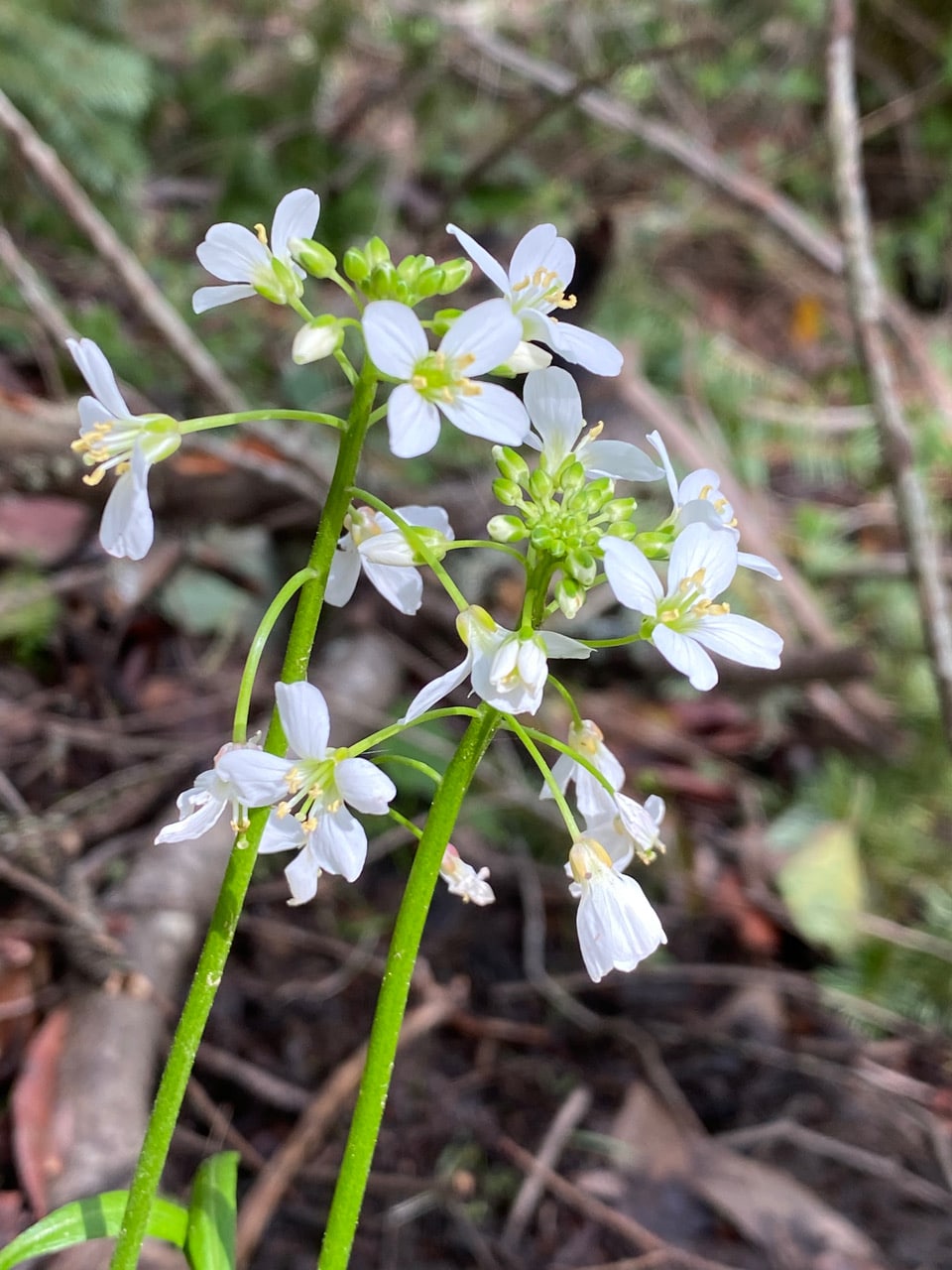
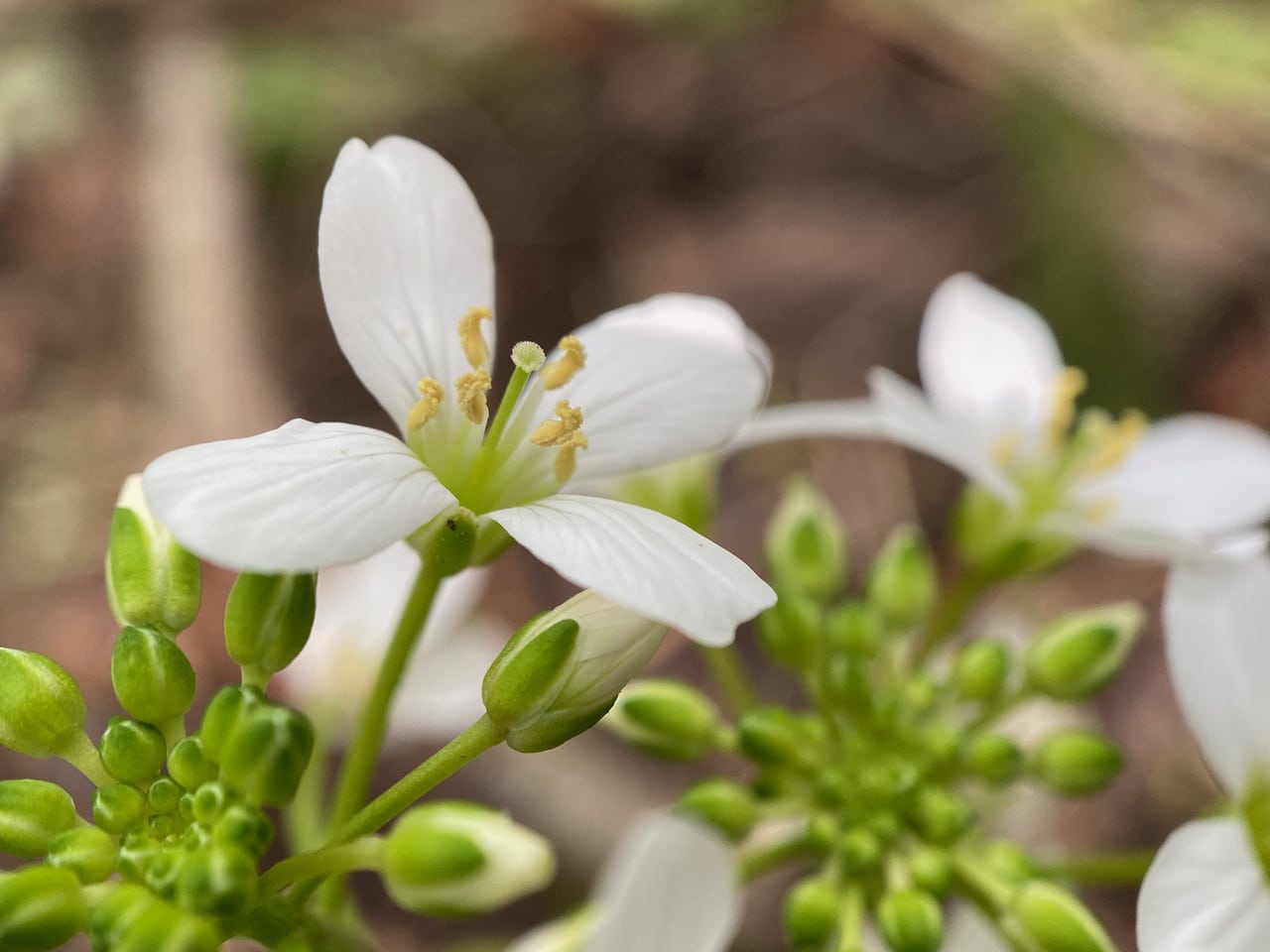
The Milk Maids, Cardamine californinca are in bloom!
The herbaceous perennial growing to about 1 foot tall, is one of the first wildflowers to bloom in the Bay Area. A member of the family Brassicaceae, the flowers are produced on a spike. The flower closes in the late afternoon as the sun sets, and droops downward before a rain, protecting the pollen. How does a flower sense impending rain?
Milk Maid flowers form a loose terminal cluster. Flowers are symmetrical, white to pale pink/lavender, about 1/2 “ across with 4 sepals and 4 petals. There are 6 stamens, two shorter than the others. The pistil consists of a cylindrical green ovary, green style, and a paler, capitate stigma.
In the shade under the conifers, the Wrinkled Coral Fungus, Clavulina rugosa grow in scattered clumps.
Widely distributed in North America, the fungus is presumably mycorrhizal, found under conifers and hardwood; growing alone, gregariously, or in clusters. Branches have blunt tips.
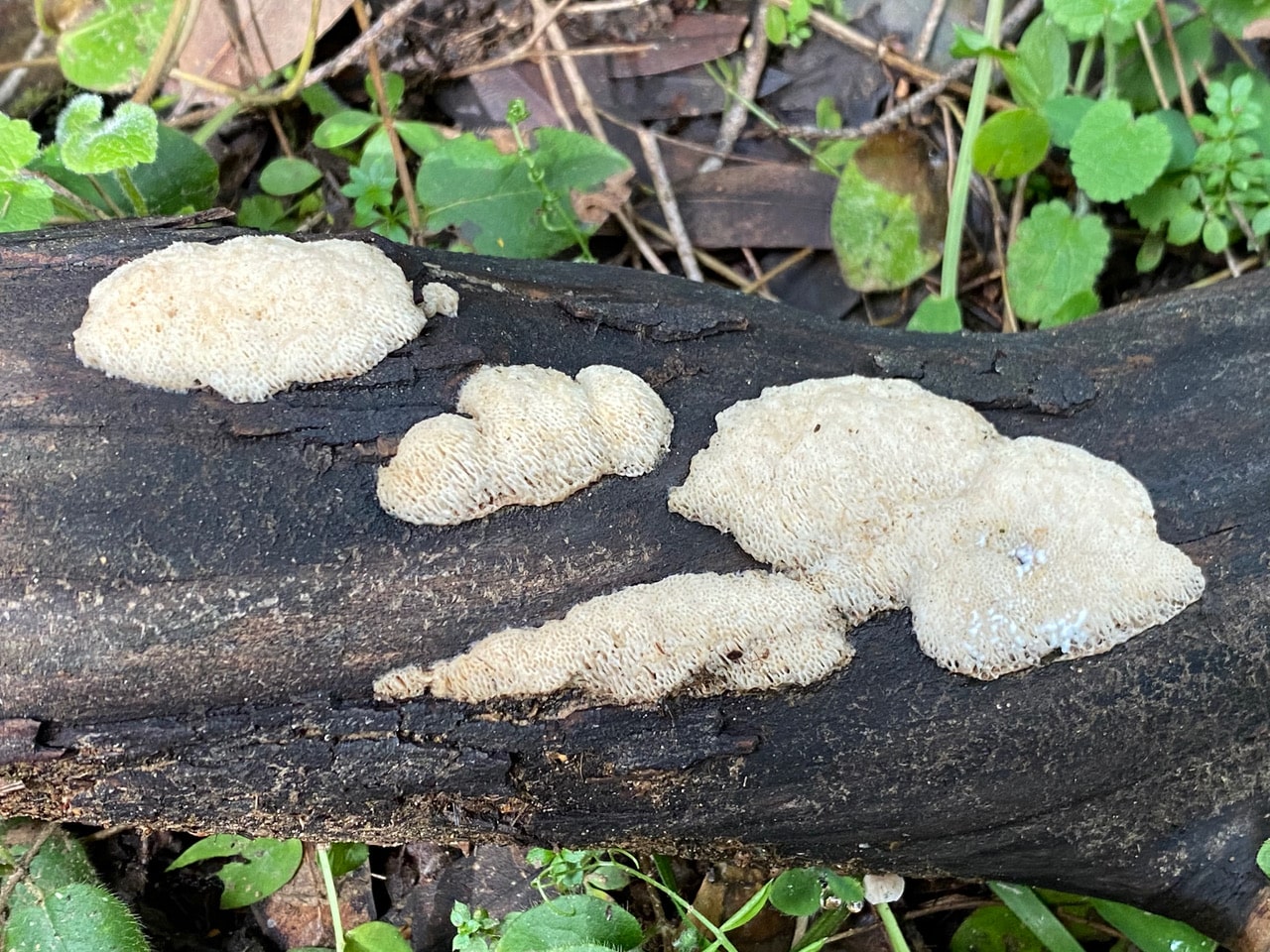
Mounds of Madrone Antrodia, Antrodia madrona sit like wet sponges on a rotting log.
Antrodia is a genus of fungi in the family Fomitopsidaceae. Their fruiting bodies are typically resupinate (i.e. lying flat or spread out on the growing surface), with the hymenium (spore-bearing tissue) exposed to the outside. All species cause brown-rot.
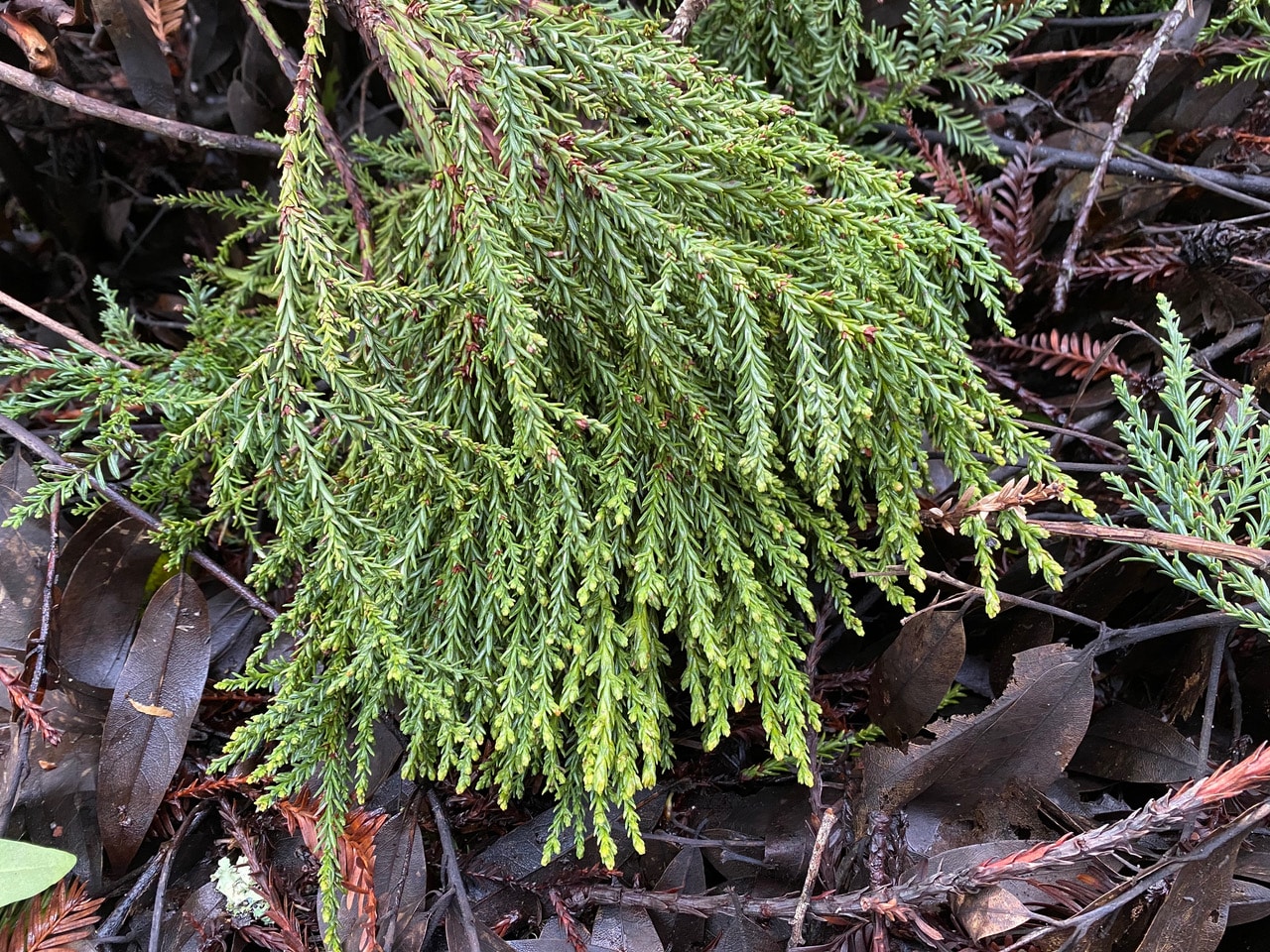
Several trees have been blown over, and numerous broken branch tips bearing foliage are strewn on the forest floor. The leaves do not look like they belong to the Coast Redwood, Sequoia sempervirens.
I pick up the fallen shoots to examine them. They are not the “typical” Coast Redwood leaves we are familiar with. These axial leaves are scale-like and hug the stem. Just 2 years ago, scientists at UC Davis discovered that the axial leaves make up a small portion of the canopy but absorb water at about four times the rate of ordinary-looking “peripheral” leaves. The outside of the axial leaves lack a waxy, water-repellent coating, and their insides are full of water-storing tissues. In the tree canopy, the axial leaves serve as fog catchers. Where on the tree the axial leaves grow varies with the climate, the scientist found. In wet areas, redwoods sprout these leaves near the bottom. That allows them to collect extra rainwater as it trickles down from above.
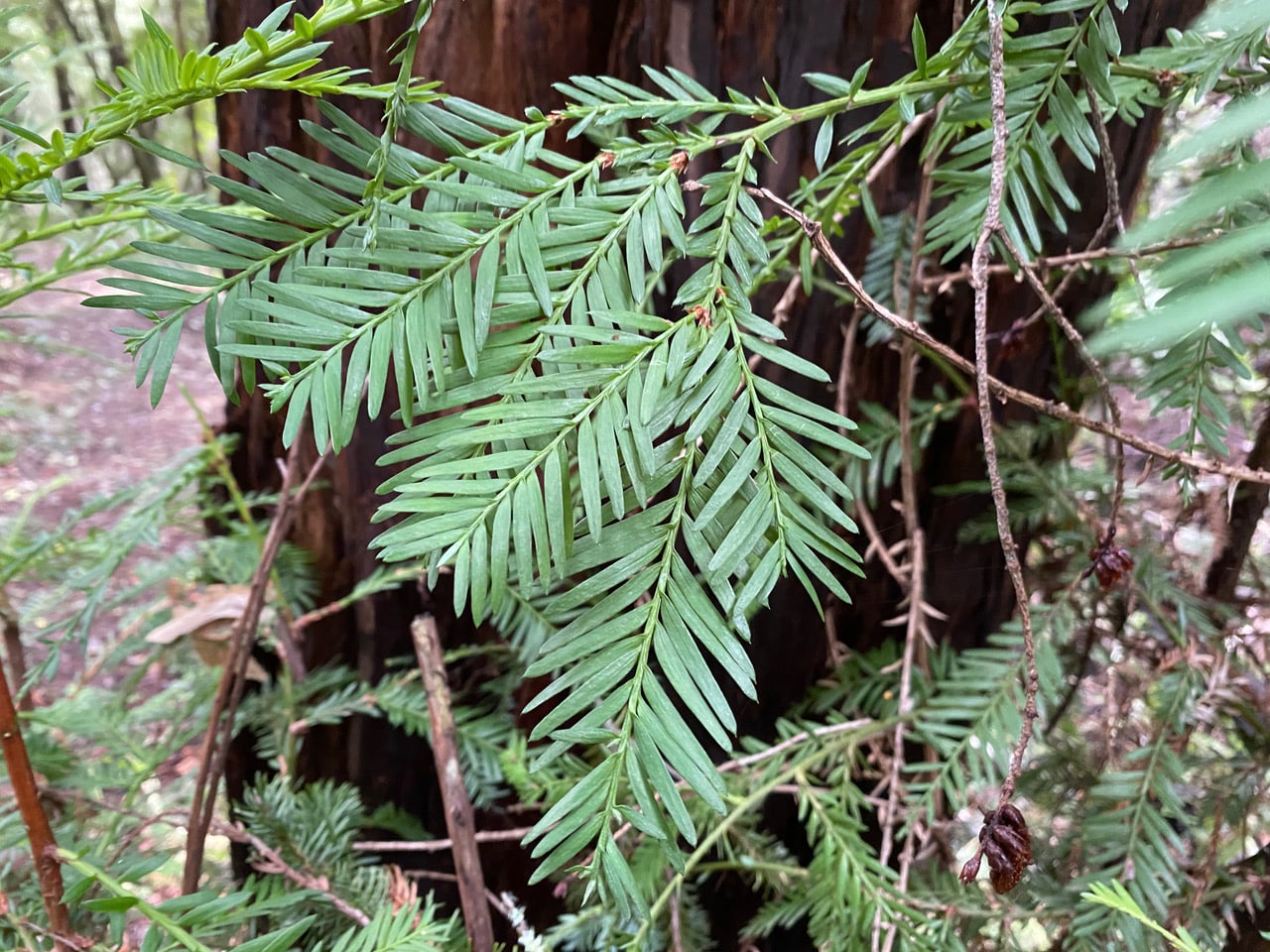
These are the more familiar peripheral leaves of the Coast Redwood. While not as proficient at absorbing water, these leaves excel at photosynthesis with dense stomata and waxy, water-repellent coatings.
The scientists believe that the leaf dimorphism helps the redwoods adapt to varied climates.
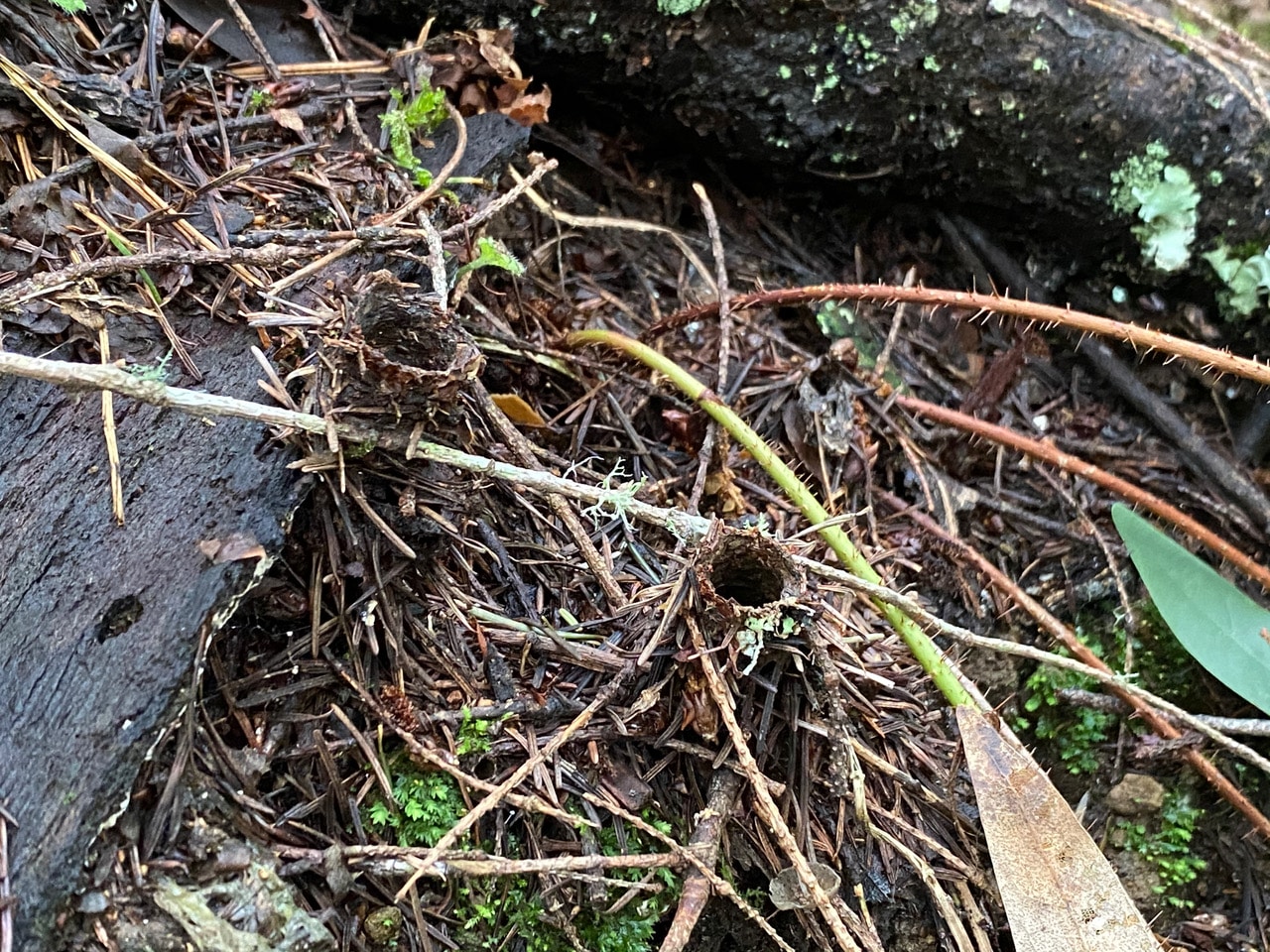
On the moist banks of the trail I am delighted to find these turrets built by the California Turret Spiders.
The California Turret Spiders, Atypoides riversi are found only in California, in the Coast Range and Sierra foothills, limited to moist woodlands, often on north-facing slopes, and near shady streams and thickets. They belong to an ancient lineage of spiders, the mygalomorphs, which includes the tarantulas and trapdoor spiders. Mygalomorph fangs swing straight down like pickaxes, instead of from side-to-side like pincers. Turret spiders are ambush predators. At dusk, the spider comes up for food, poised just inside the turret, ready to grab any passing prey.
This turret is almost entirely decorated with Redwood needles!
The debris that is attached to the silken turret not only serves to camouflage the spider’s lair, it also serves as an extension of the spider’s sensory reach. A bumbling prey that touches the attachments will alert the spider of its location.
There are at least two turrets in this picture. Can you see them?
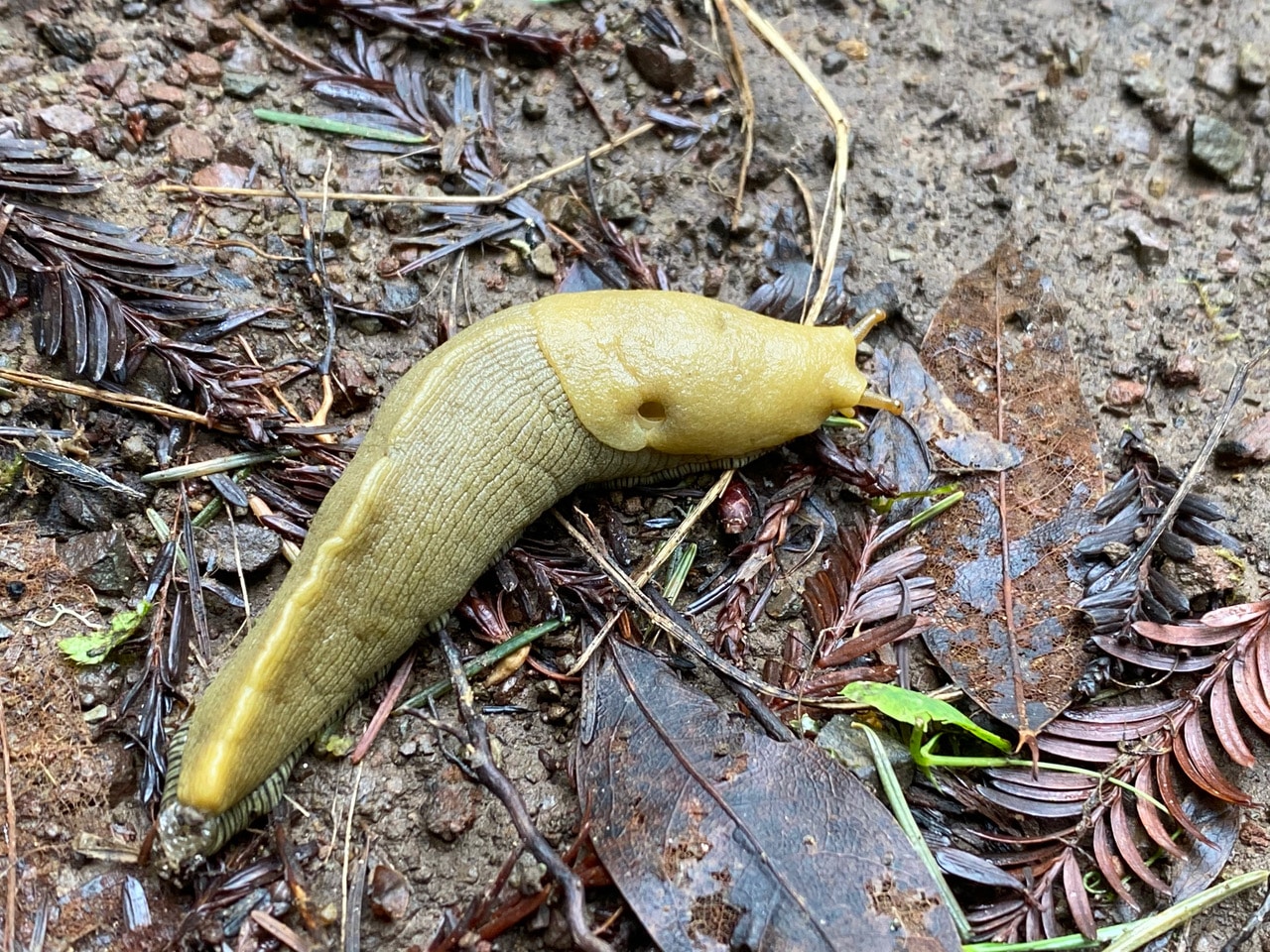
Hey, a Banana Slug! An adventure in the Redwood forest is hardly complete without seeing a Banana Slug. See that gaping hole on the side of the slug’s mantle? It is the pneumostome, a respiratory opening that leads to a single lung, always on the right side.
Our Coast Redwood forest is home to the largest slug in North America and the second largest slug worldwide. The Banana Slug, Ariolimax columbianus grows up to 8” in length and can live for 7 years. The slugs crawl along their own slime trails in the moist habitat provided by the conifers. They are detritivores, feeding on fallen leaves, live plants, fungi and animal wastes.
Ooh, what a pretty mushroom!
The Parrot Waxcap, Gliophorus psittacinus is a small mushroom, with a convex to umbonate cap up to 1.6” across. In its early stages of development, it is distinctively parrot-green and slimy. It quickly begins to change colors, turning yellow or orange, and then fading to a dingy straw color. Widely distributed in North America, the mushrooms appear under conifers over winter.