

Pollinator Post 2/22/23
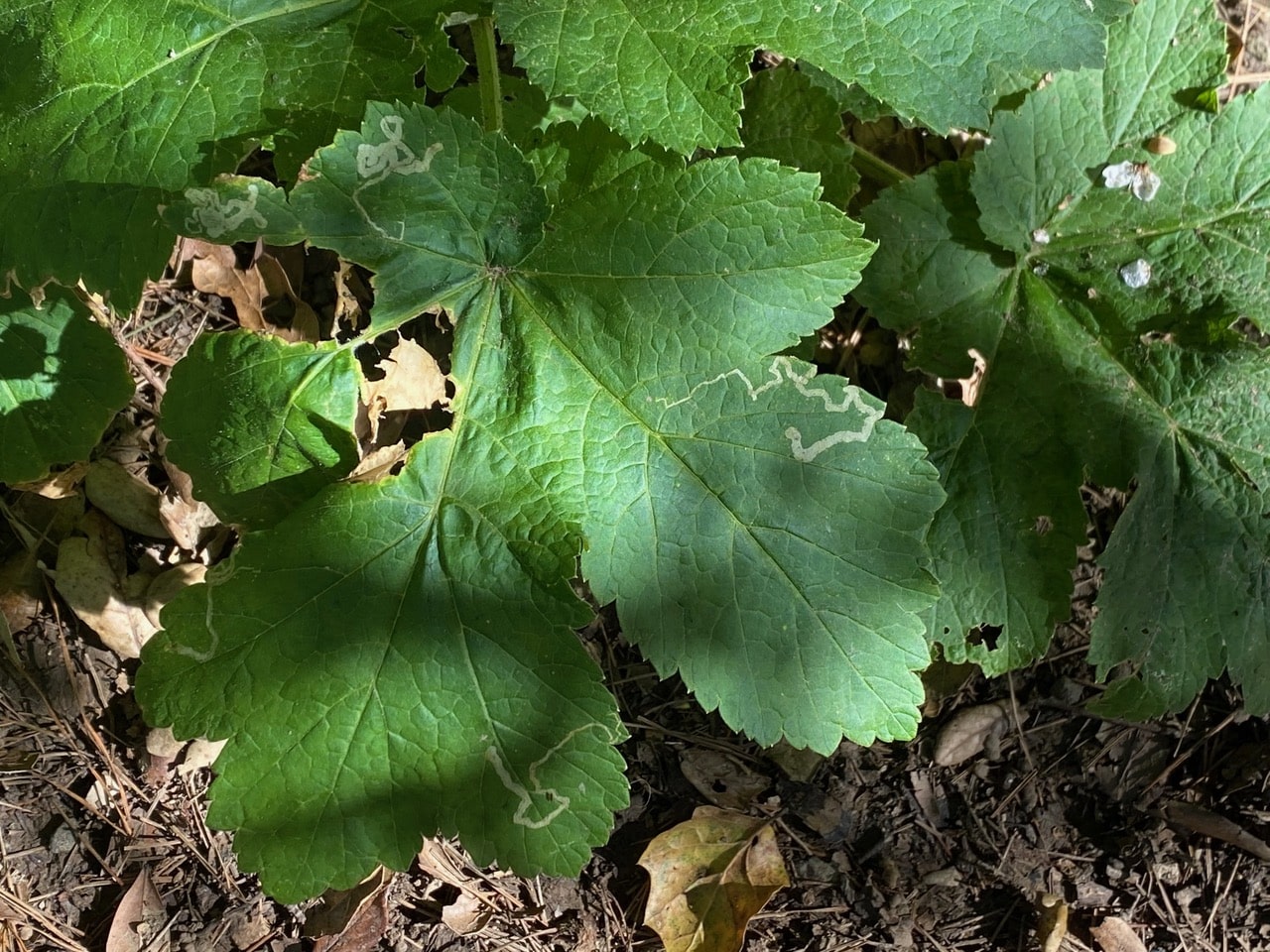
Time for a walk at the Sibley Volcanic Regional Preserve in the Oakland hills.
Under the dappled shade of the oak woodland, I spot a Cow Parsnip leaf that has squiggly lines on its upper surface.
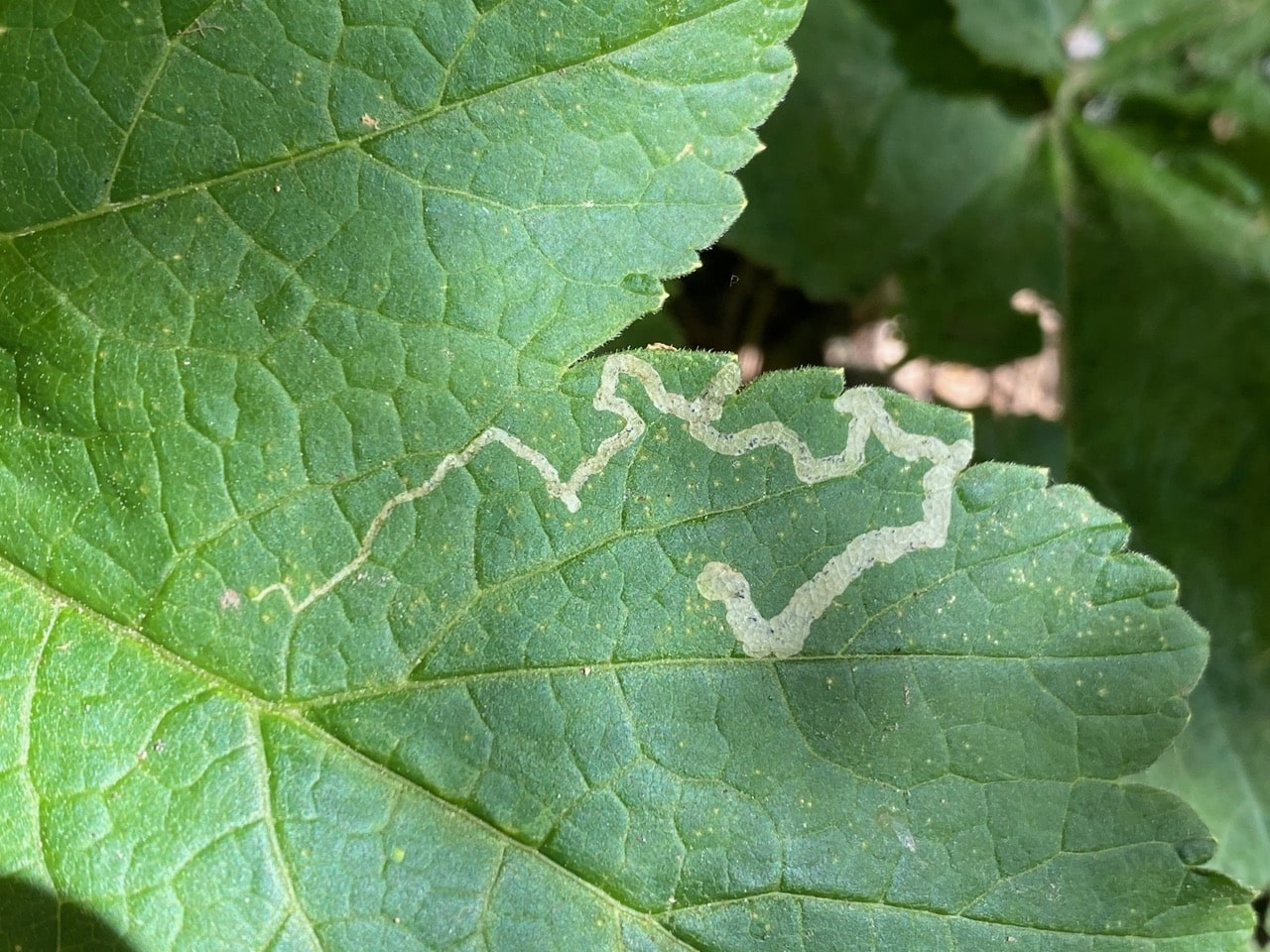







Close-up of one of the Cow Parsnip leaf mines. It is made by the larva of a Leafminer Fly, Phytomyza sp. (family Agromyzidae).
The Agromyzidae are a family commonly referred to as the Leaf-miner Flies, for the feeding habits of their larvae, most of which are leaf miners on various plants. They are small flies, most species in the range of 2-3 mm. Agromyzidae larvae are phytophagous, feeding as leaf miners, less frequently as stem miners or stem borers. A few live on developing seeds, or produce galls. There is a high degree of host specificity. A number of species attack plants of agricultural or ornamental value, so are considered pests. The shape of the mine is often characteristic of the species and therefore useful for identification. Adults occur in a variety of habitats, depending on the larval host plants.
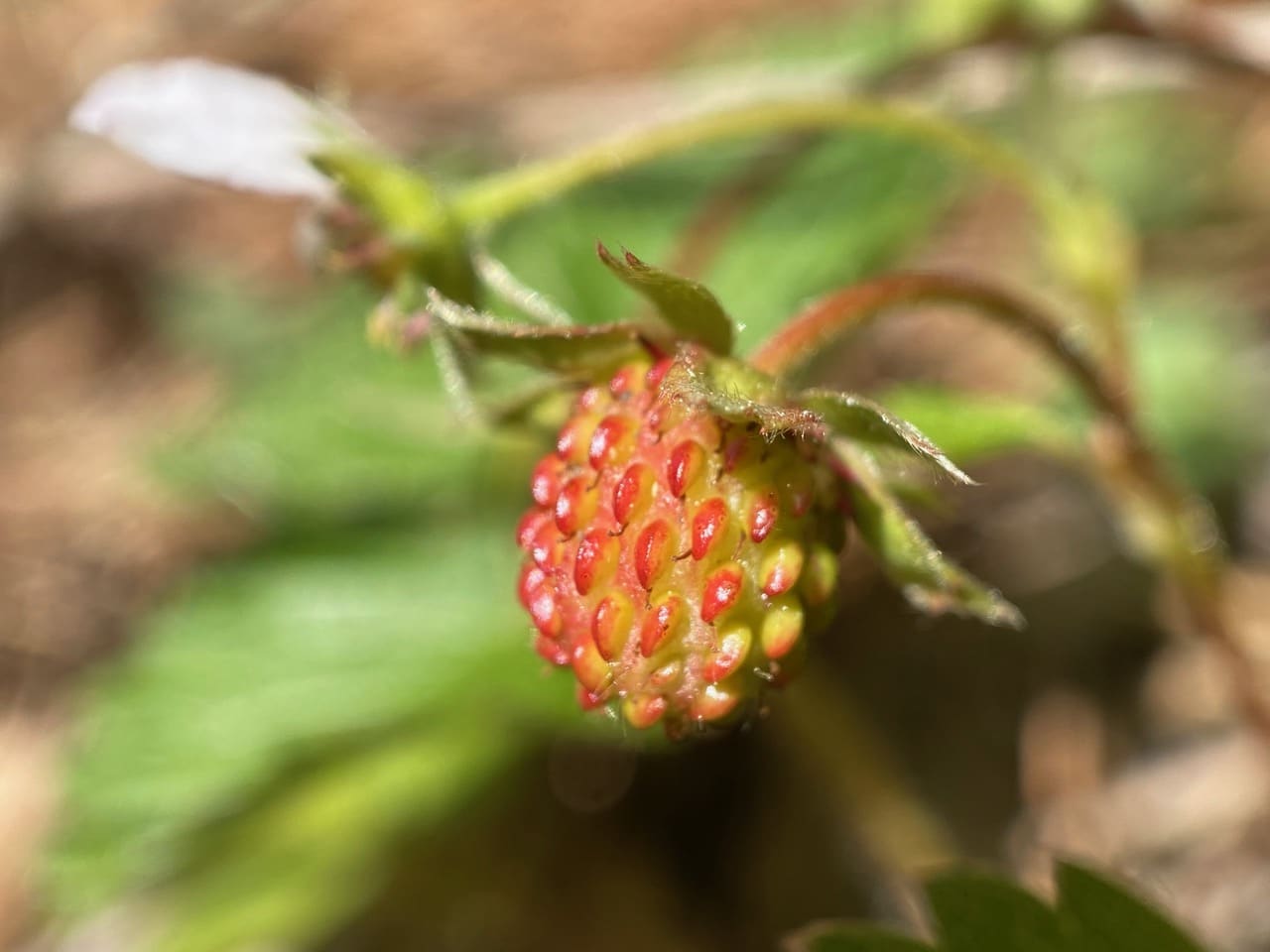
The Wood Strawberry fruits are ripening. And I mean fruits in the plural! This is not a single fruit, but an aggregate fruit. Every little bump here is a fruit, botanically speaking.
What is swelling under the fruits is the receptacle tissue of the flower. When the strawberry flower is pollinated the fruit doesn’t swell; instead, the receptacle underneath swells, while the true fruit separates into small, dry achenes, each containing a single seed. Eventually the receptacle turns red, while the fruits on the surface turn dry and white. These tiny fruits are commonly mistaken as “seeds” on the surface of the store-bought Strawberry we know.
To add insult to injury for the poor tasteless, crunchy achene fruits, most strawberry plants aren’t even grown from their seeds. Strawberry plants send out what’s called “runners” as they grow, essentially little strawberry clones that will take root when they touch the ground.
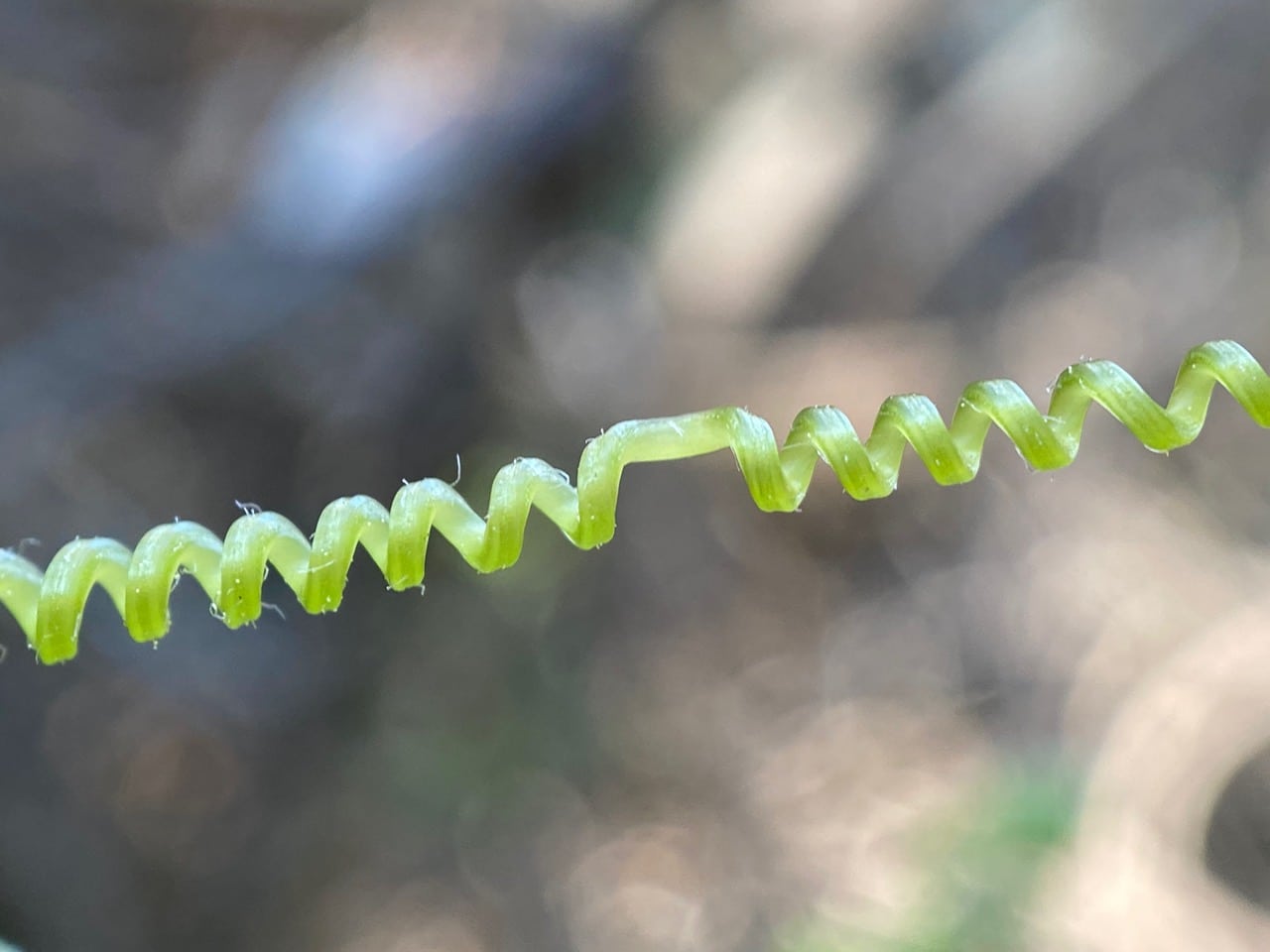
A large California Manroot, Marah fabacea has sent its vines sprawling over a large area in the undergrowth by the trail. The plant is blooming gloriously. Curiously, when I look for female flowers, I find none. It is interesting that this individual plant has only male flowers, oodles of them. Marah are supposed to be monoecious, with separate male and female flowers borne on the same plant. I guess we’ll never see a fruit on this plant then. Perhaps some Marah individuals are males? I turn my attention to the tendrils instead. They hold endless fascination for me. See that straight section on the tendril where the coiling direction is reversed? That has inspired serious research by botanists and engineers alike.
Long tendrils enable Marah to climb/trail over neighboring vegetation in order to reach sunlight. You can invariably find a straight section along a tendril coil where the coiling direction is reversed. Charles Darwin had noticed this behavior and coined it “perversion”. Scientists have actually studied the cucumber tendrils seriously and found some fascinating properties. Once a tendril curls around a support, it forms a counter-clockwise helix and clockwise helix with a straight section between the two. If the tendril is pulled, more turns are added to both helices to better grasp the support.
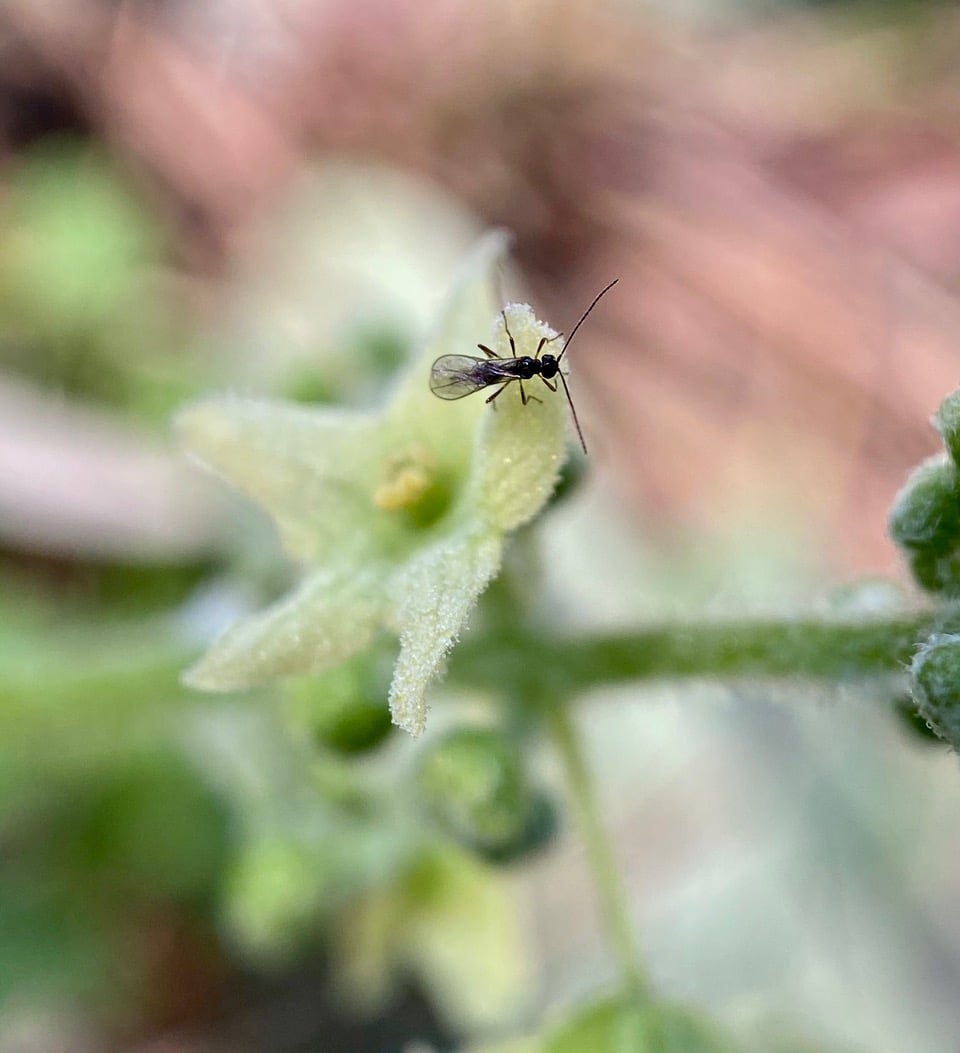
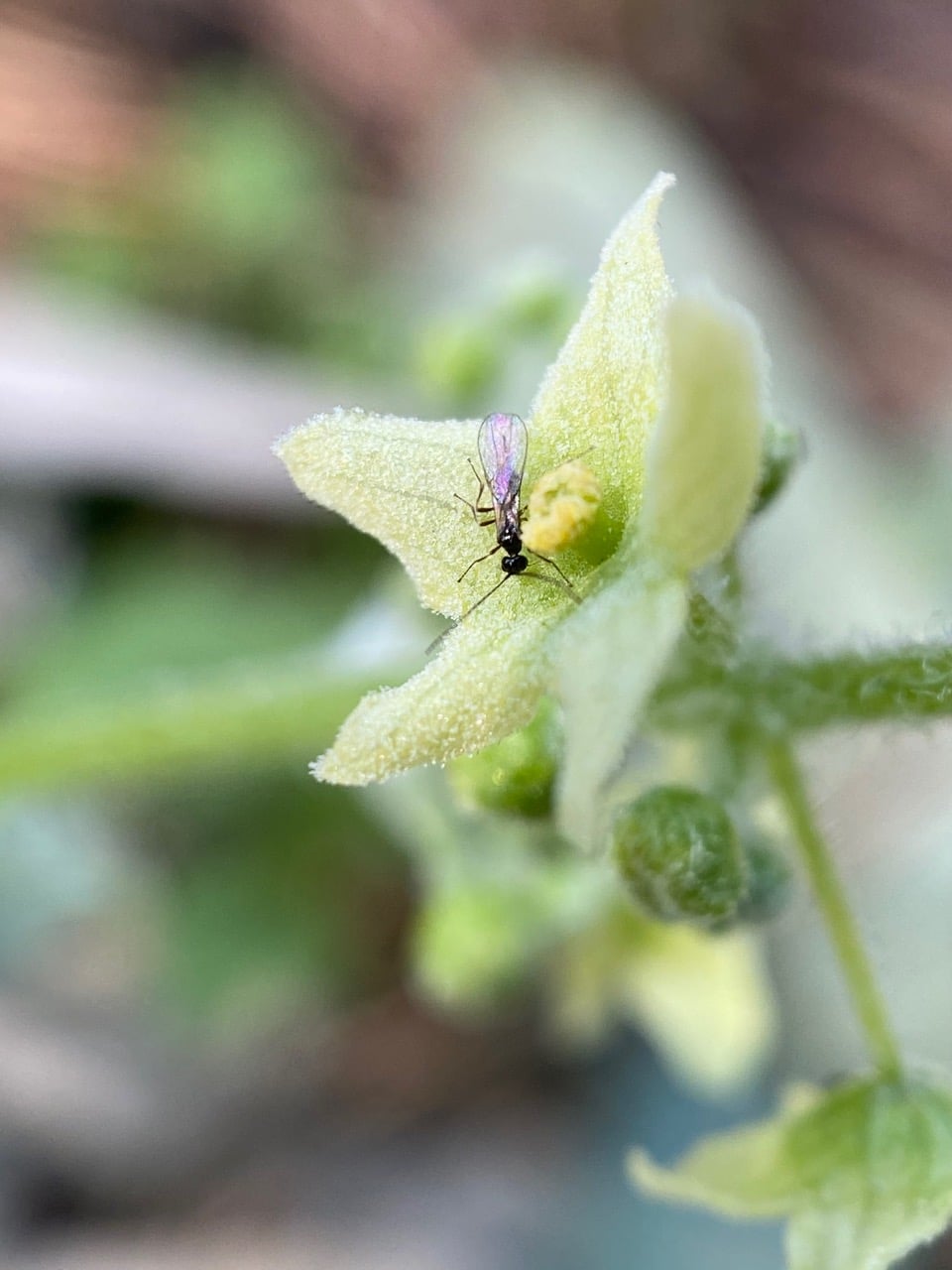
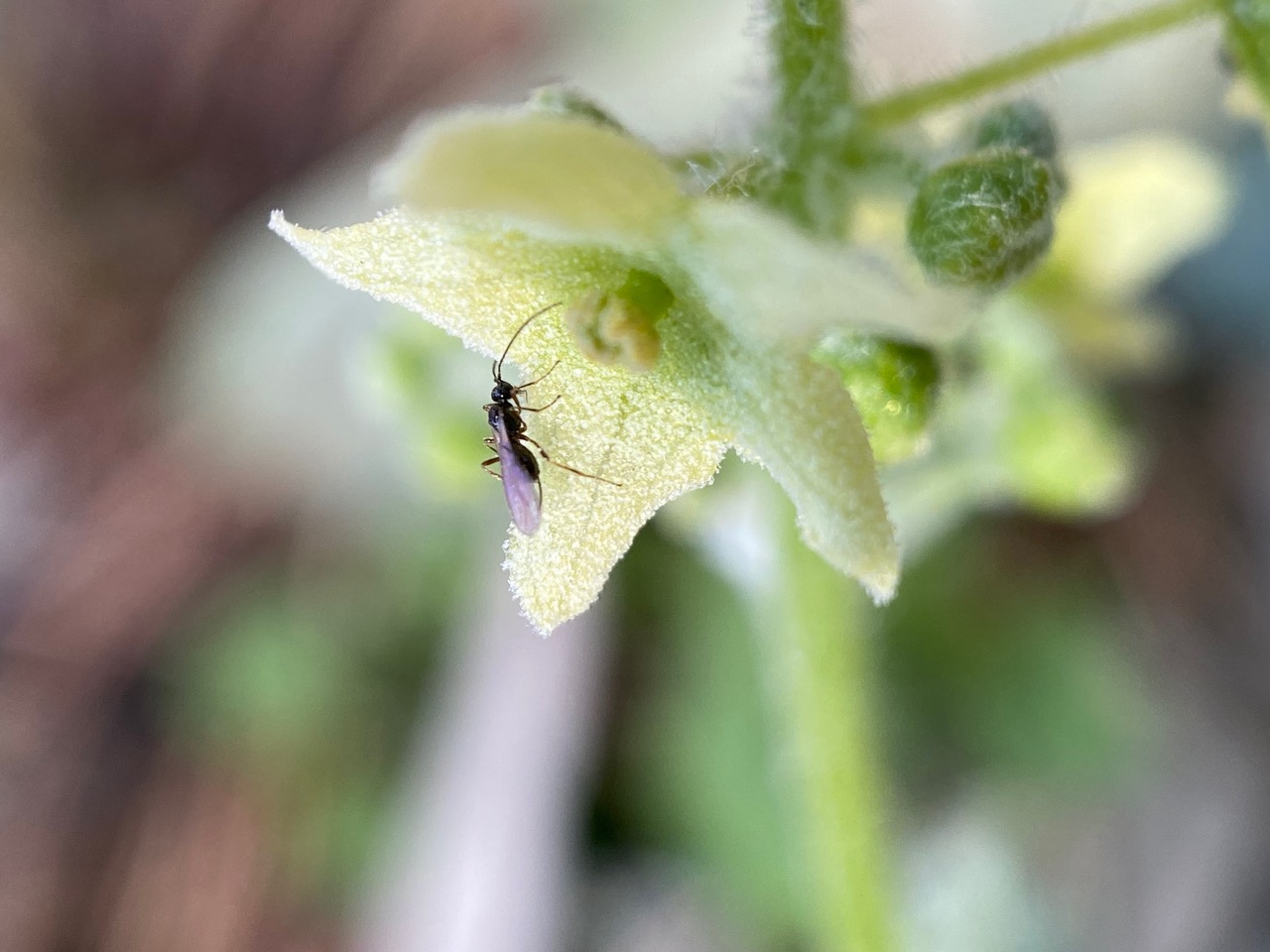
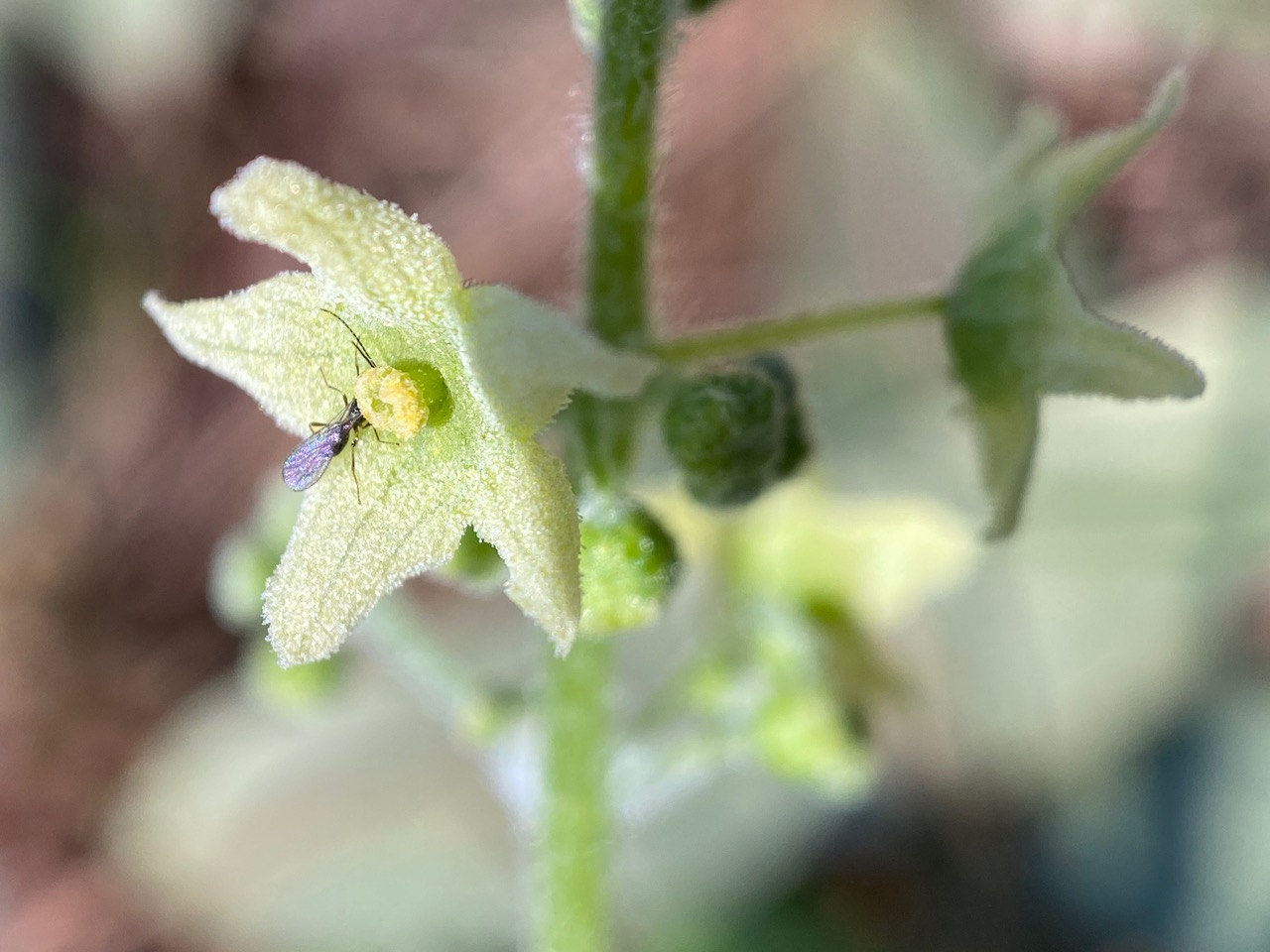
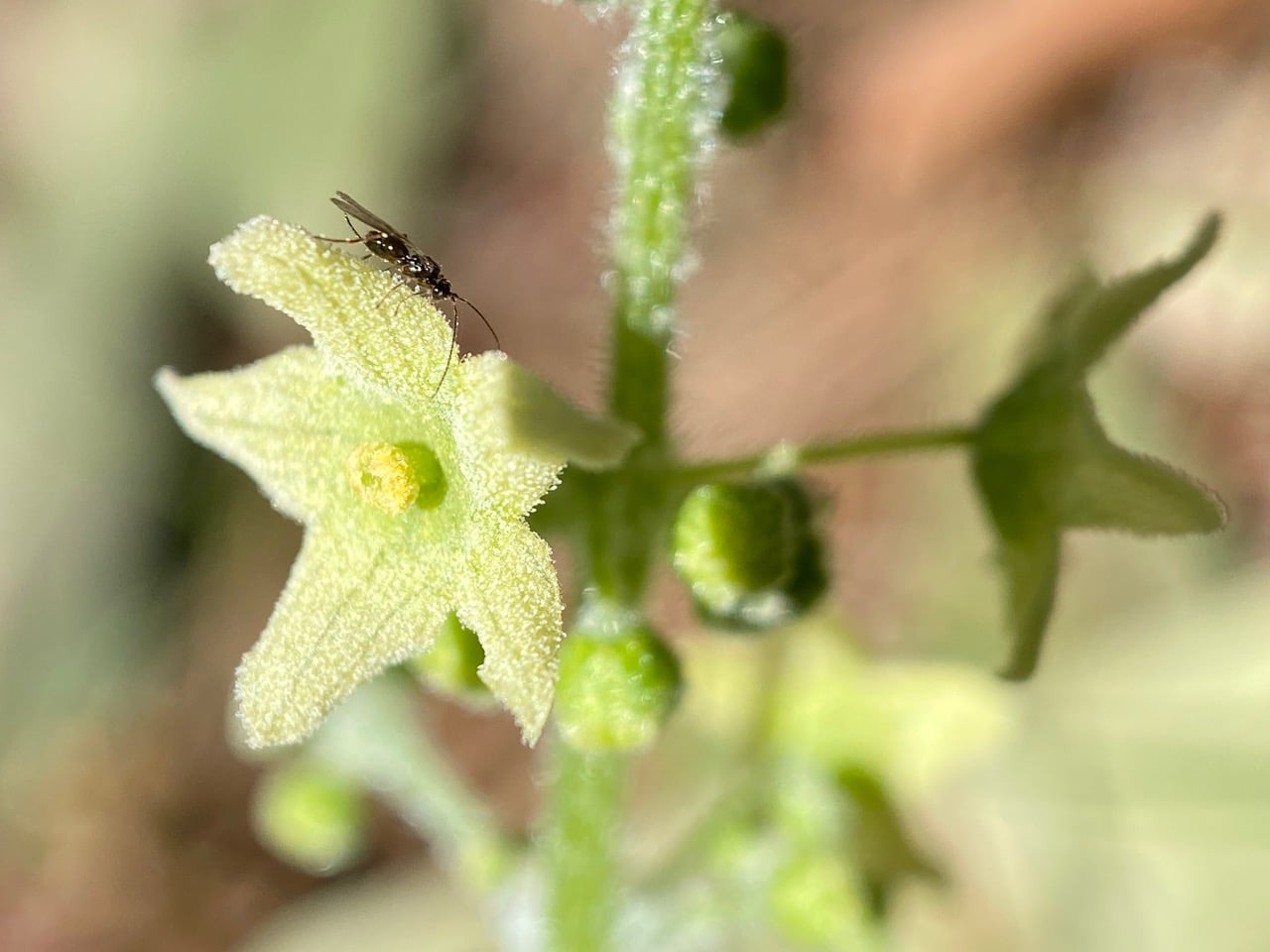
Hey, there’s a tiny wasp with long antennae on that Marah flower! For its size (barely 3 mm), it is probably a parasitoid wasp.
A side view shows that the wasp is a female with an ovipositor that extends from her abdomen. I wonder what poor creature the ovipositor is intended for.
iNaturalist has identified the wasp as Aphidius sp. (family Braconidae).
The Braconidae are a family of parasitoid wasps. After the closely related Ichneumonidae, braconids make up the second-largest family in the order Hymenoptera, with about 17,000 recognized species. Females often have long ovipositors to lay eggs on or in their hosts. The larvae of most braconids are internal primary parasitoids of other insects, especially the larval stages of Coleoptera, Diptera, and Lepidoptera. Generally, the braconid life cycle begins when the female wasp deposits her eggs in the host insect, and the braconid larvae develop in the host body, eating it from the inside out. When the wasp larvae are ready to pupate, they may do so in or on the host insect. The new generation of adult braconid wasps emerges from their cocoons and begins the life cycle again.
Braconid wasps use a remarkable weapon to disable the defenses of their host insects – a virus. These parasitic wasps coevolved with polydnaviruses (read poly-DNA-virus), which they carry and inject into the host insects along with their eggs. The virus attacks the host’s immune system and renders it unable to encapsulate the wasp egg; it also halts the host’s development, so it can’t pupate and transform into an adult. Amazingly, the “bracovirus” also changes the host’s metabolism so that it can survive longer without food or water – thus ensuring a nurturing environment for all the young wasps to come.
Aphidius is a genus of parasitoid wasps in the family Braconidae. Aphidius is a small wasp, usually less then 3 mm long. They are endoparasitoids of aphids. The female wasp lays single eggs in aphids. When the egg hatches, the wasp larva feed on the inside of the aphid. As the larva matures, the host dies and becomes discolored, bloated, or mummified. Complete metamorphosis of the wasp occurs within the host. When the adult is ready to emerge, it cuts an escape hole in the back of the “aphid mummy” and immediately go in search of food (nectar and pollen) as well as a mate. Once mated, the females search for aphids in which to lay their eggs, using the scent of the aphids as a guide.
To access nectar at the base of the flower, the wasp reaches down the narrow space between the corolla and the fused stamens in the center of the flower.
When it emerges, the wasp has pollen grains scattered all over its body
If the wasp next visits a female flower, it might unintentionally rub off some of the pollen onto the stigma, pollinating the flower. Who would’ve thought that parasitoid wasps can serve as pollinators for Marah!
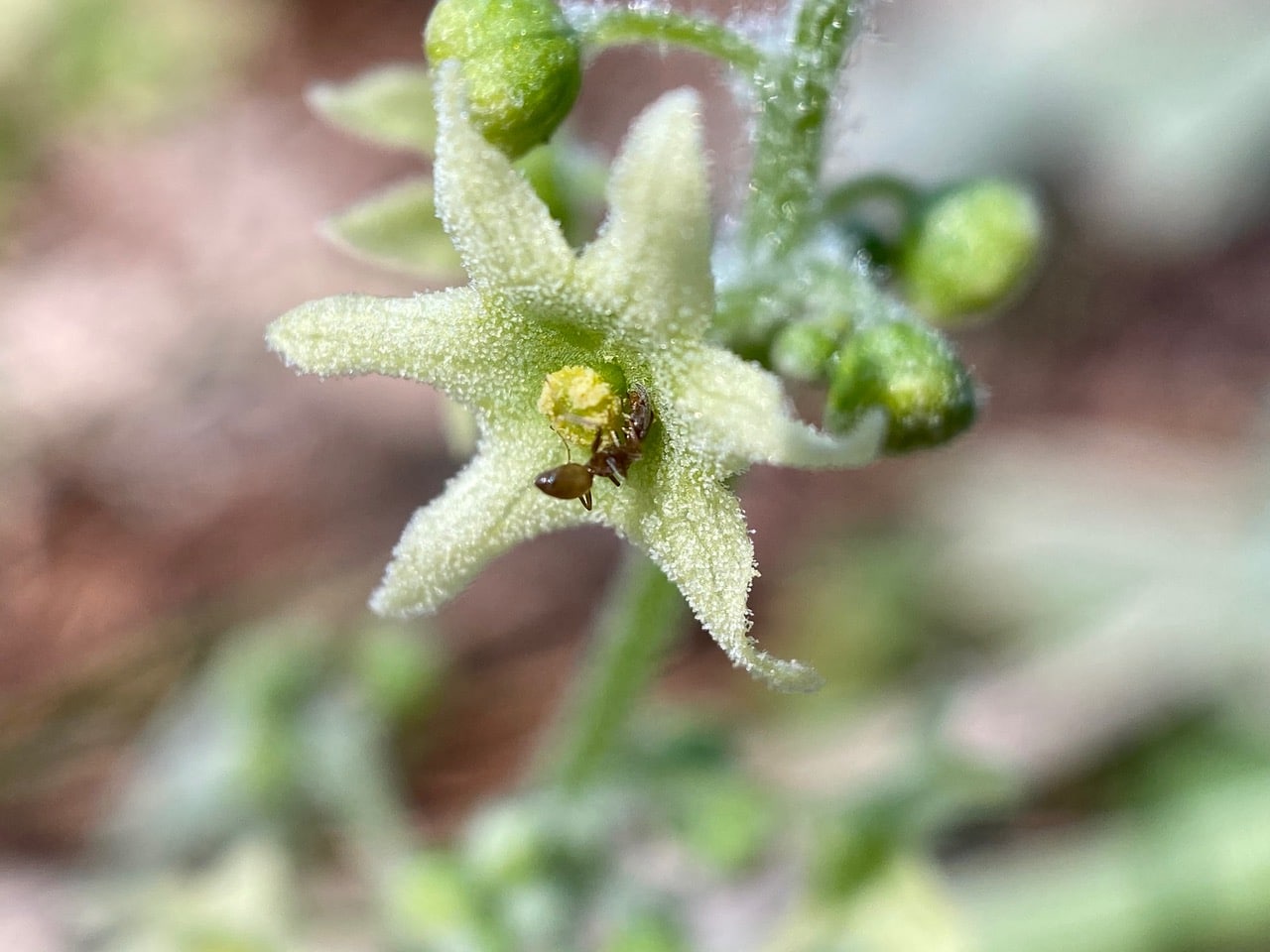
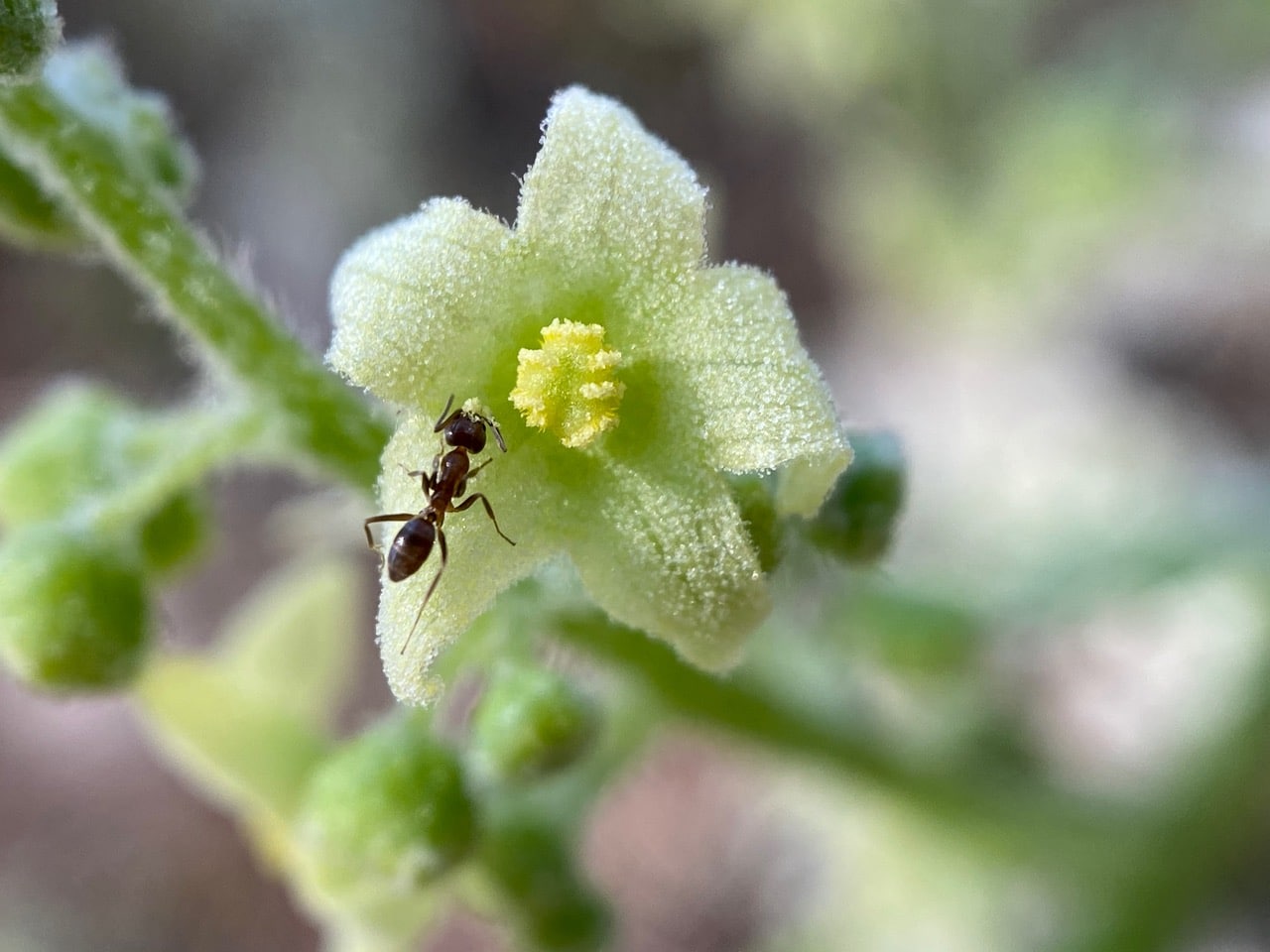
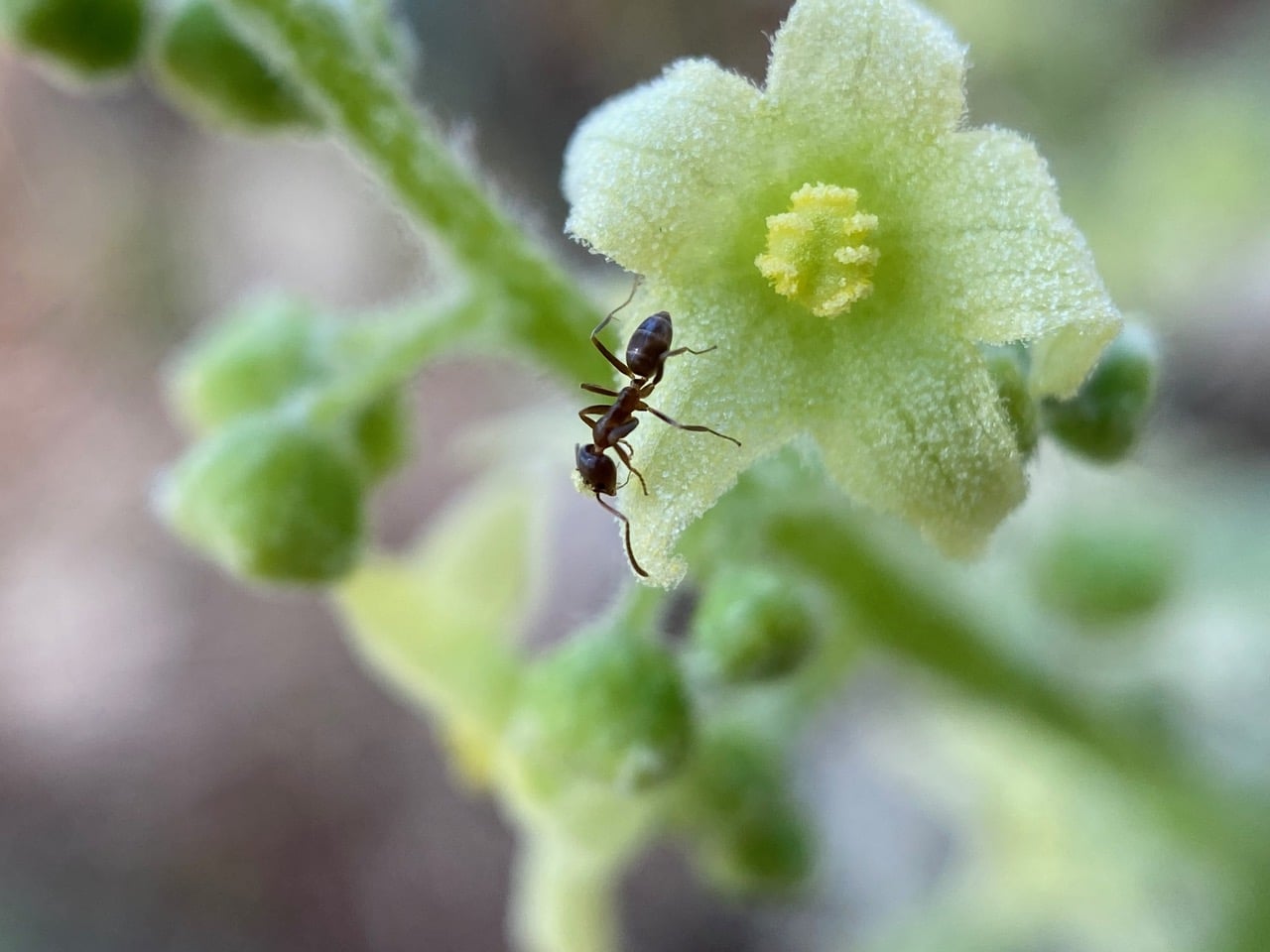
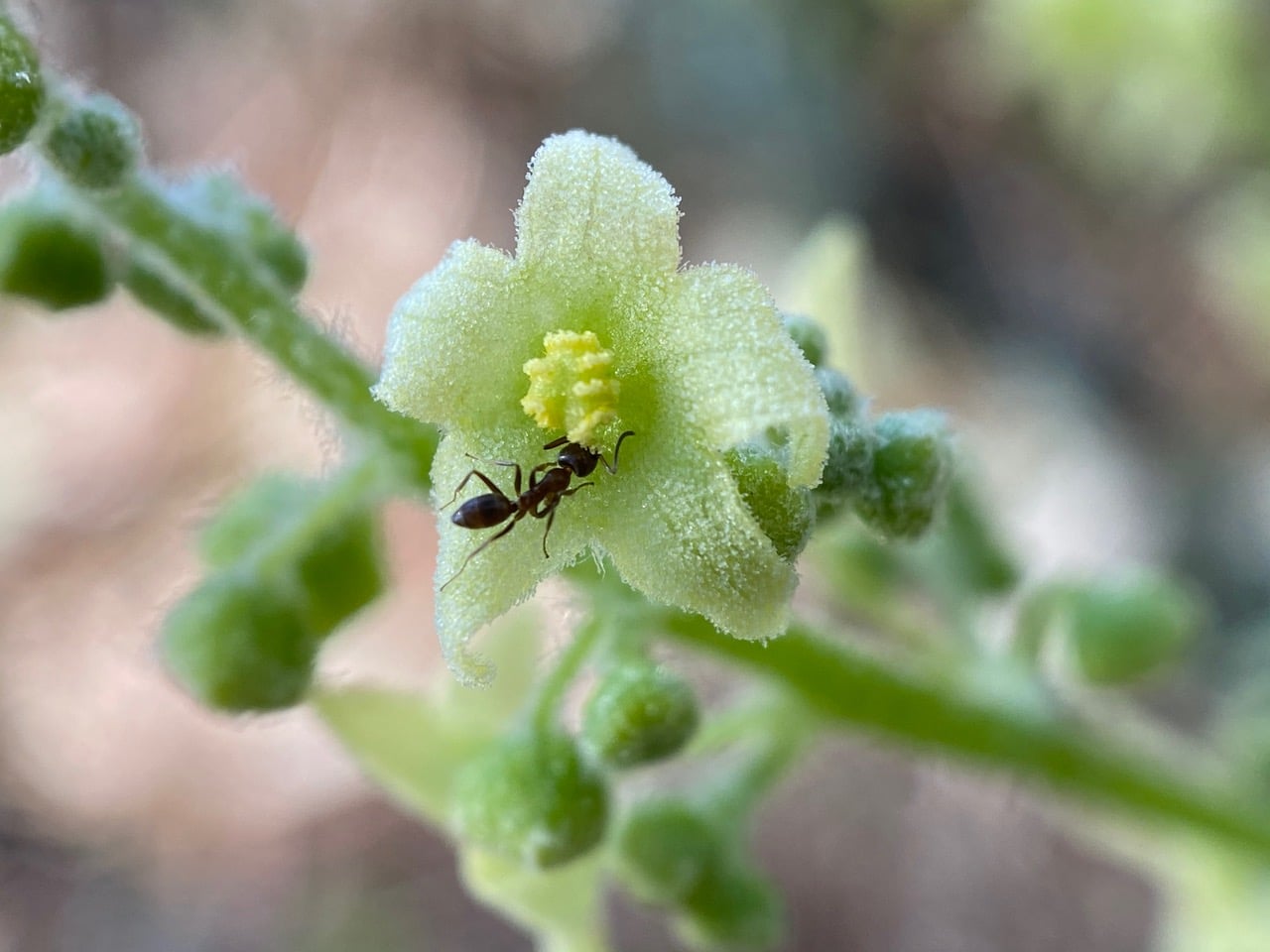
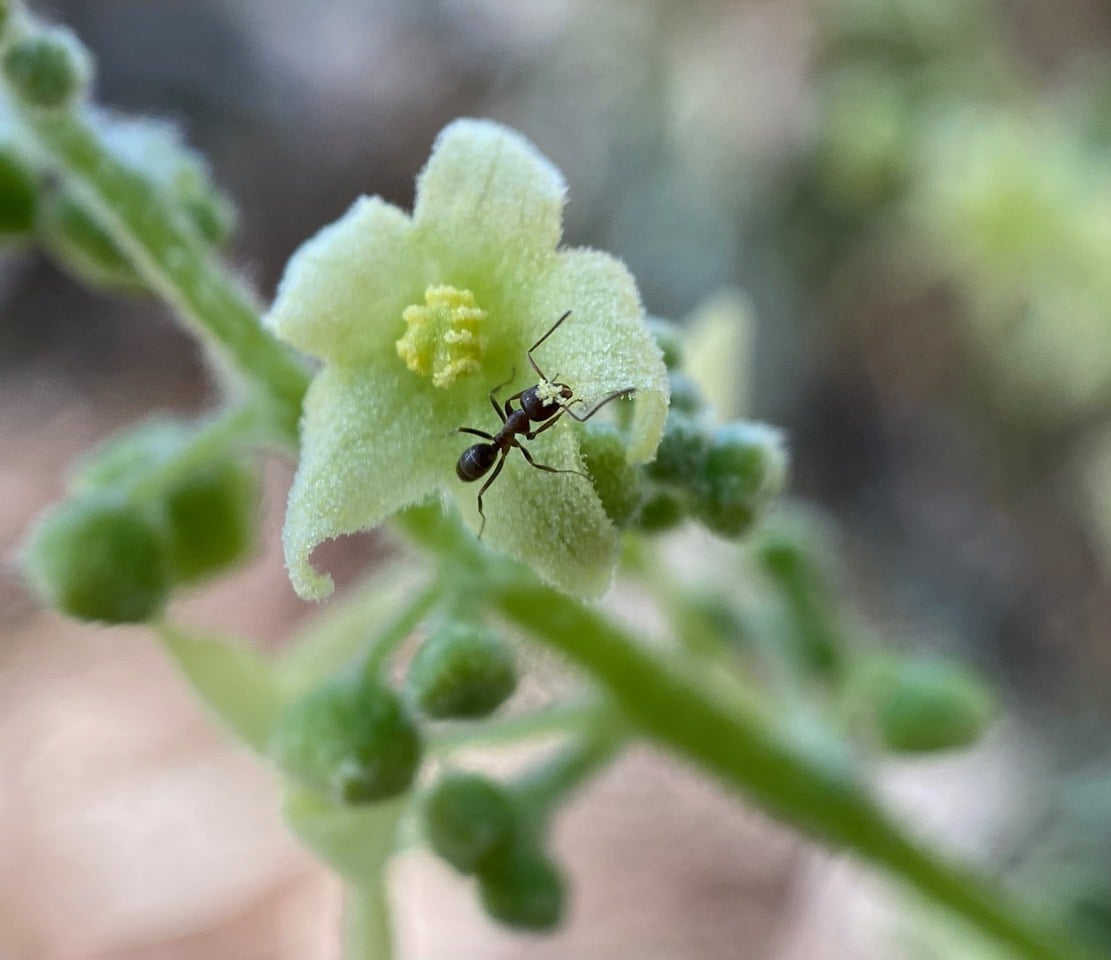
Many Argentine Ants are crawling around on the Marah.
This one is reaching for nectar on a Marah flower.
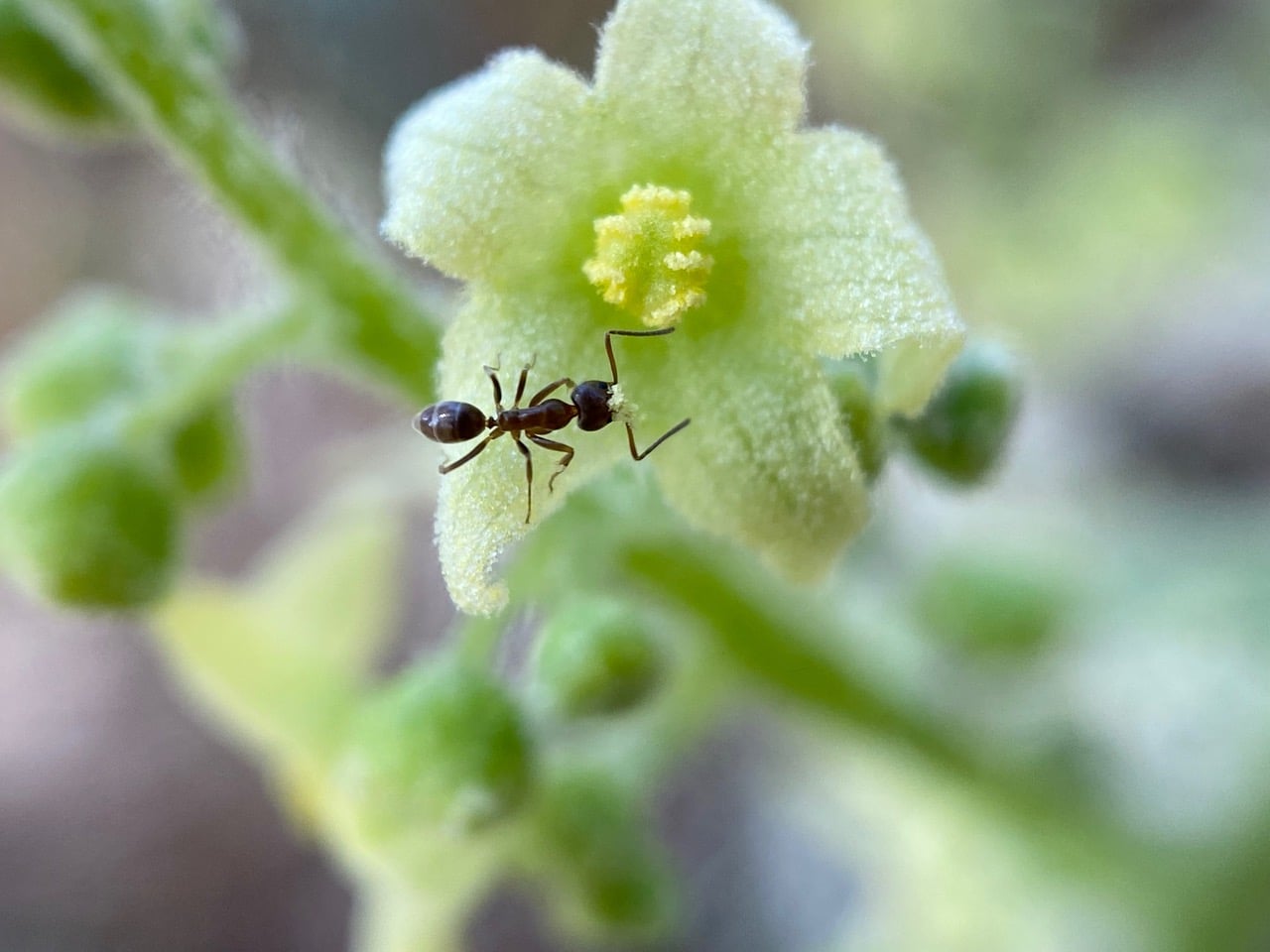
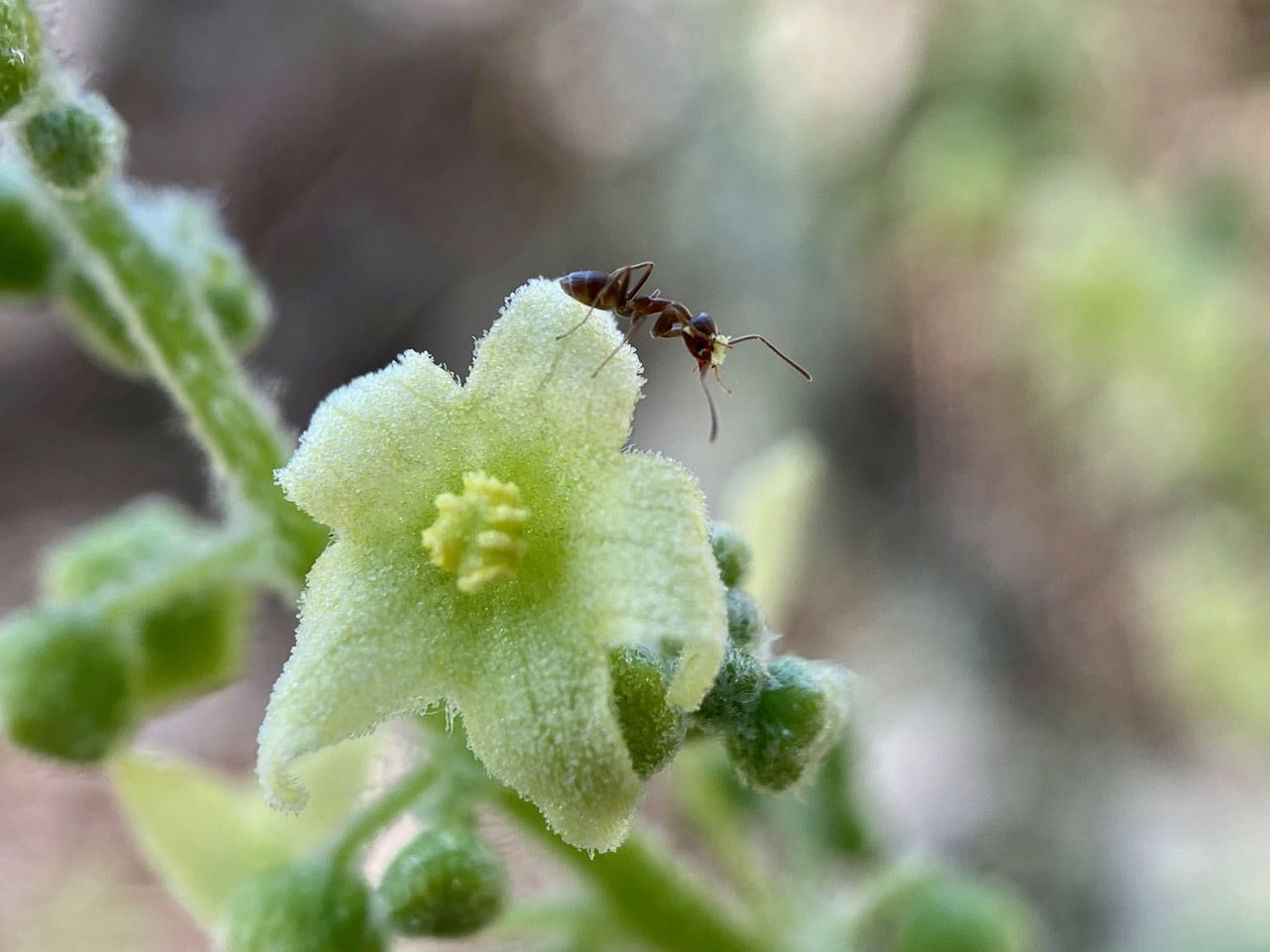
That Argentine Ant has some yellow pollen on its head.
This one too.
It tries to brush off the pollen, but fails. It seems there’s a spot on top of the ant’s head between its antennae that is always out of reach.
What the heck, time to get back to the sweet stuff!
The ant emerges with an even bigger pollen load on the head!
Another frantic but futile attempt at dislodging the pollen.
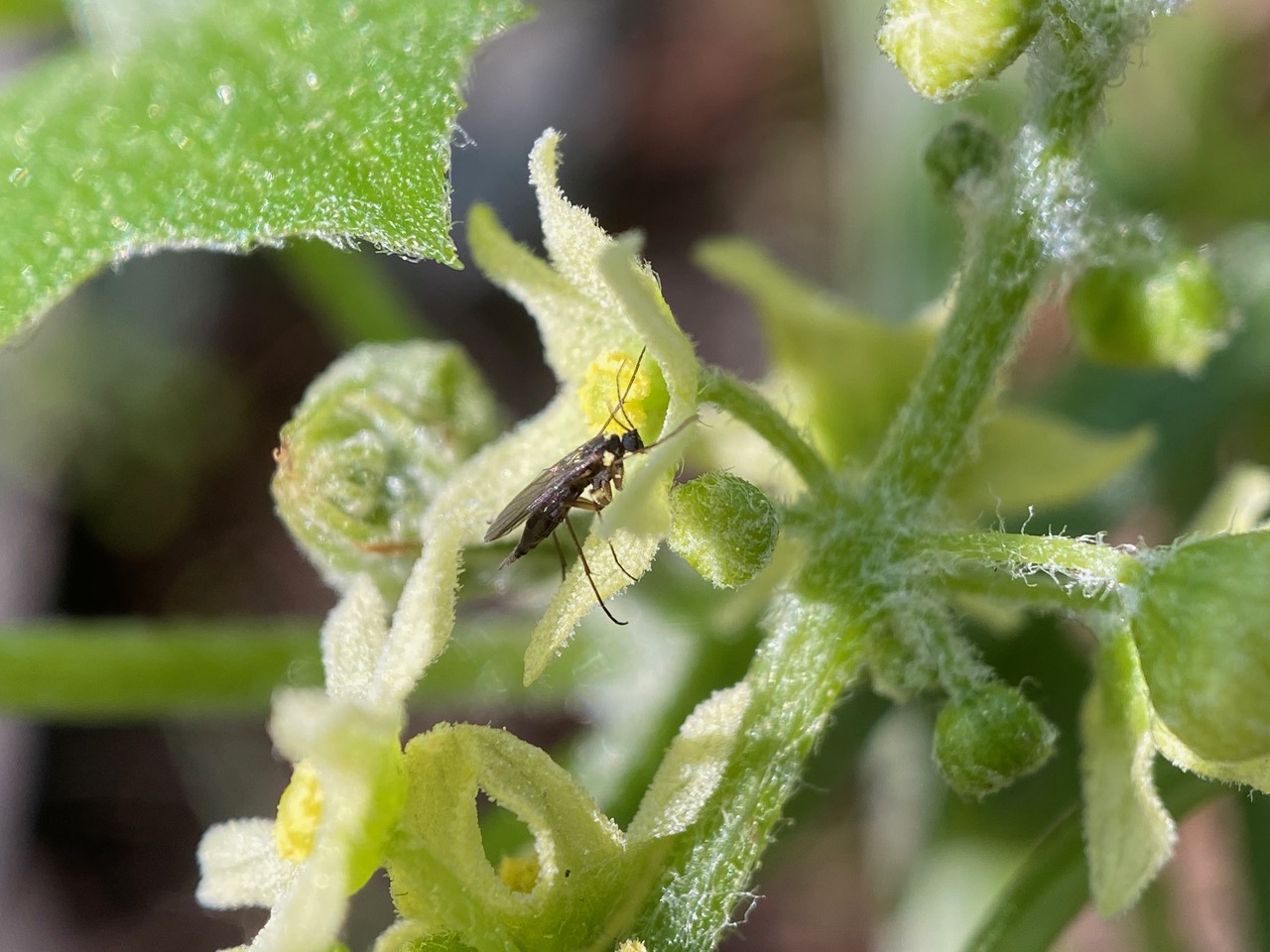
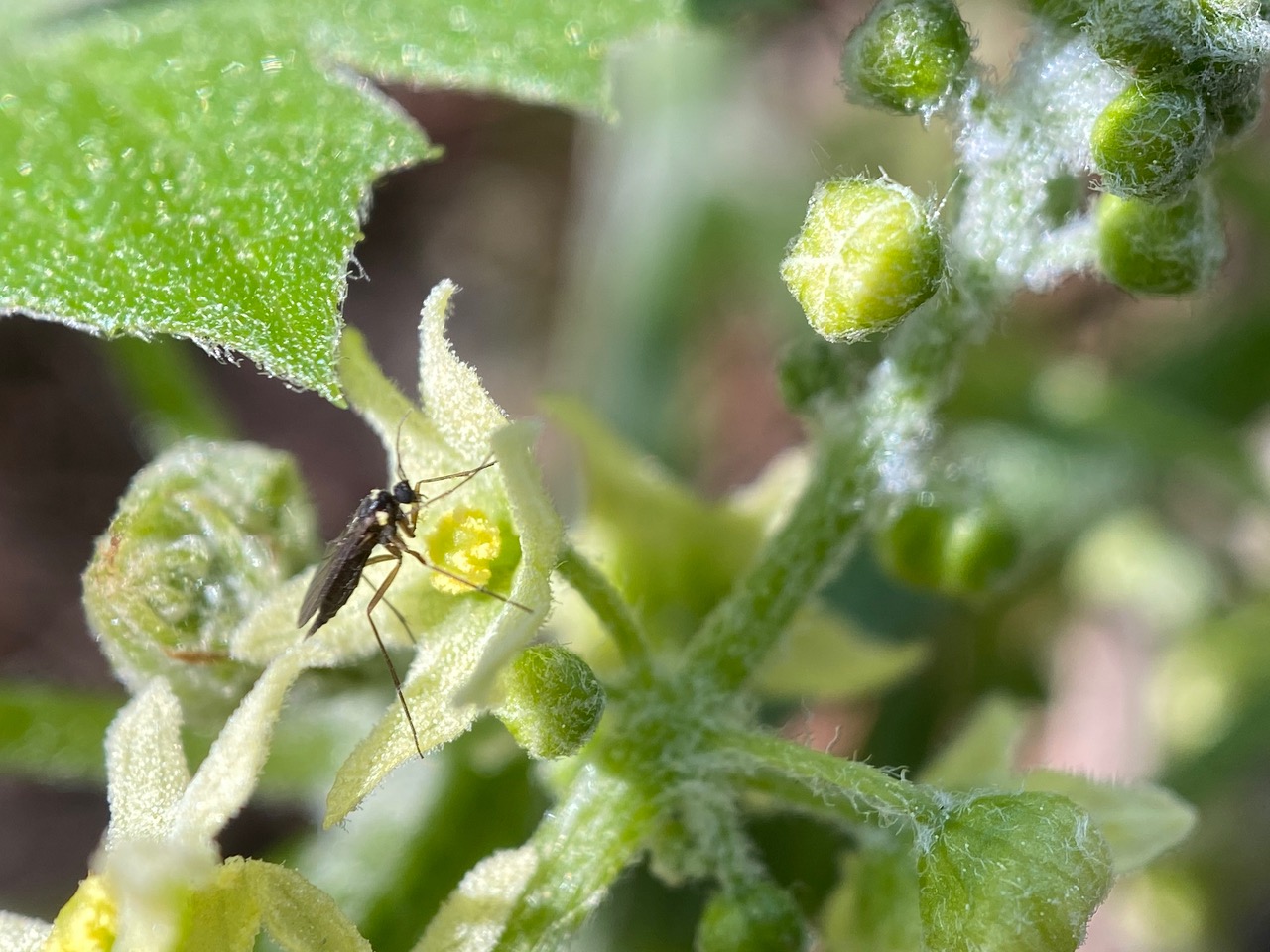
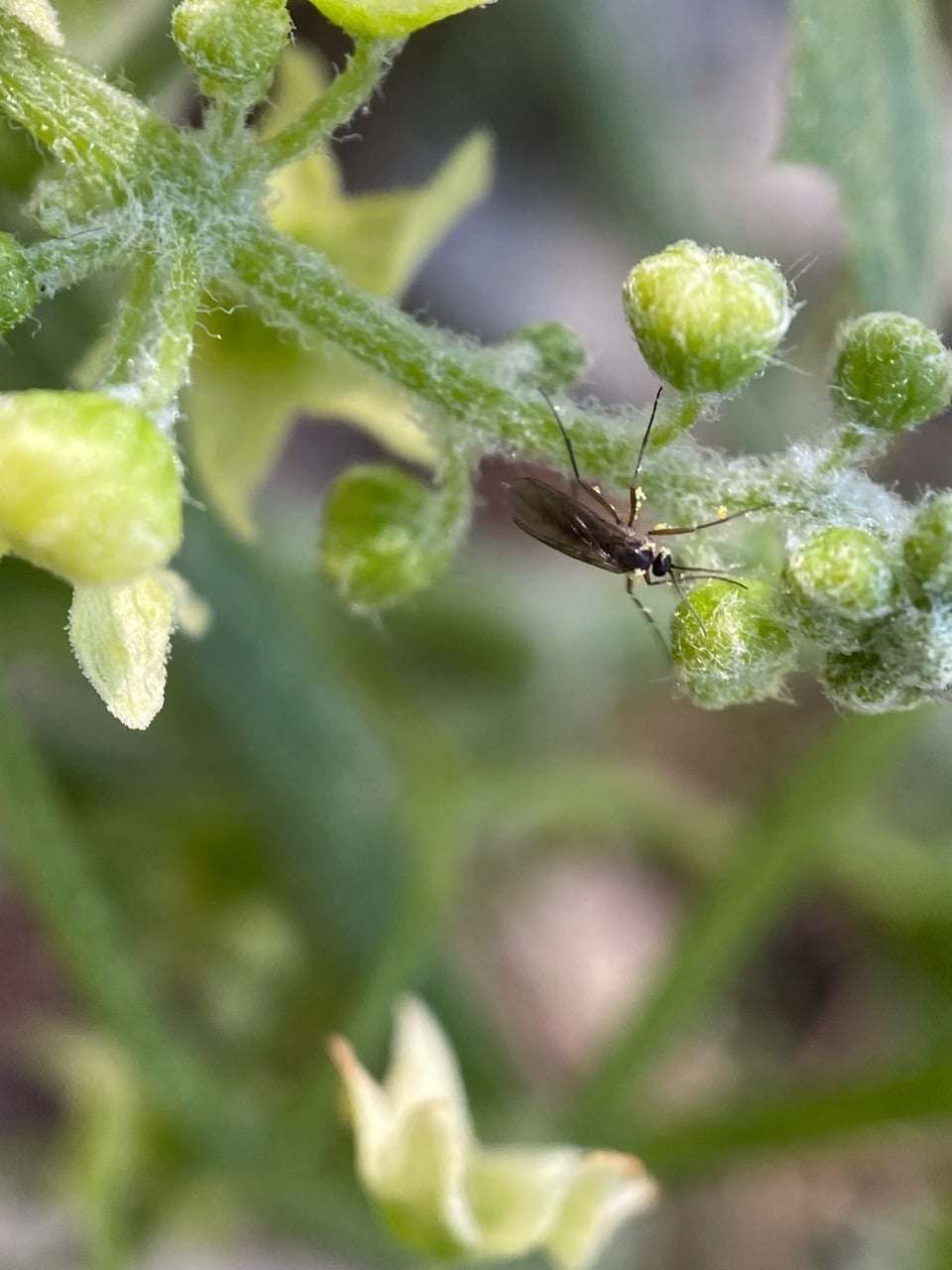
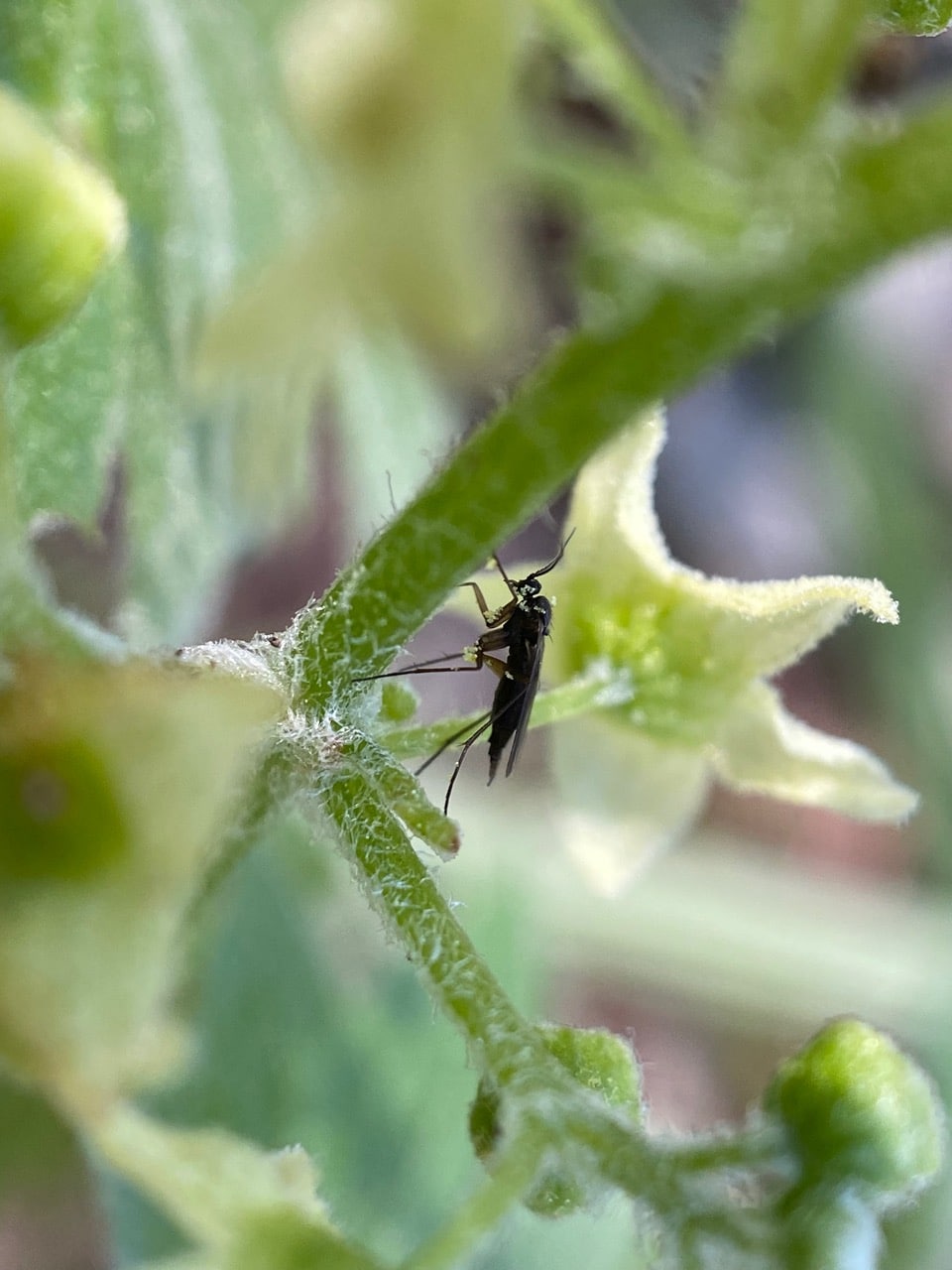
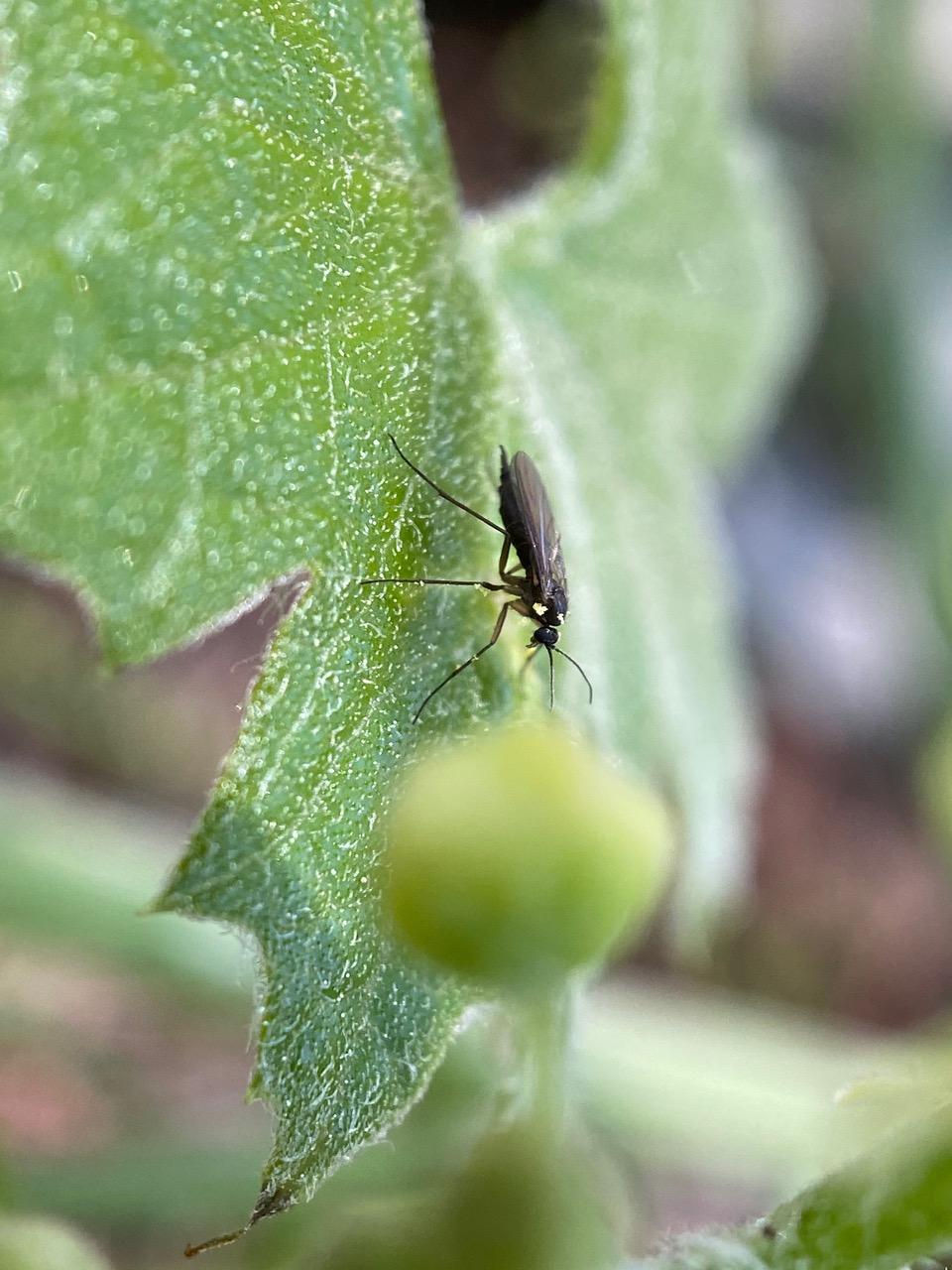
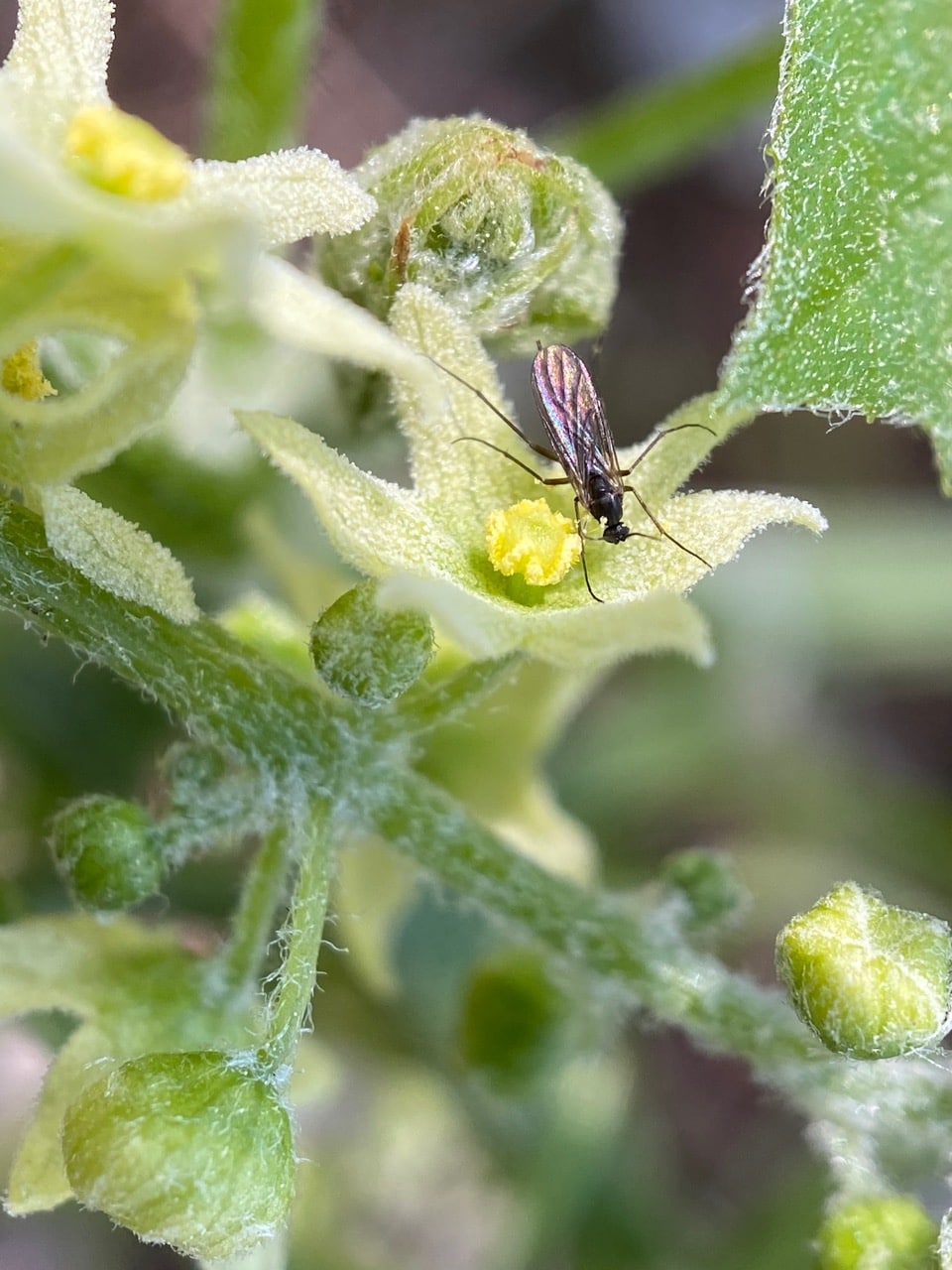
Hey, that’s a different pollen-covered insect on the leaf! A Dark-winged Fungus Gnat (family Sciaridae)?
Occurring worldwide, the Sciaridae are a family of flies, commonly known as Dark-winged Fungus Gnats. Usually found in moist environments, they are known to be a pest of mushroom farms and are commonly found in household plant pots. In moist, shadowy areas, up to 70% of all dipteran species can be Sciaridae. Adults are small, dark flies, usually less than 5 mm long. They are distributed through wind and drifting, or by humans through transported soil. Sciarid larvae often occur in decaying plant matter such as rotten wood or under the bark of fallen trees. They play an important role in turning forest leaf litter into soil. The adults with their characteristic dancing flight do not bite. They only ingest liquids and only live long enough to mate and produce eggs. They die after about five days.
Here’s another Dark-winged Fungus Gnat foraging on a Marah flower.
The gnat leaves the flower with pollen stuck to many parts of its body.
The gnat goes off to a leaf to groom itself…
.. but returns to the same Marah flower again in no time.
It seems nobody can resist the allure of Marah nectar.
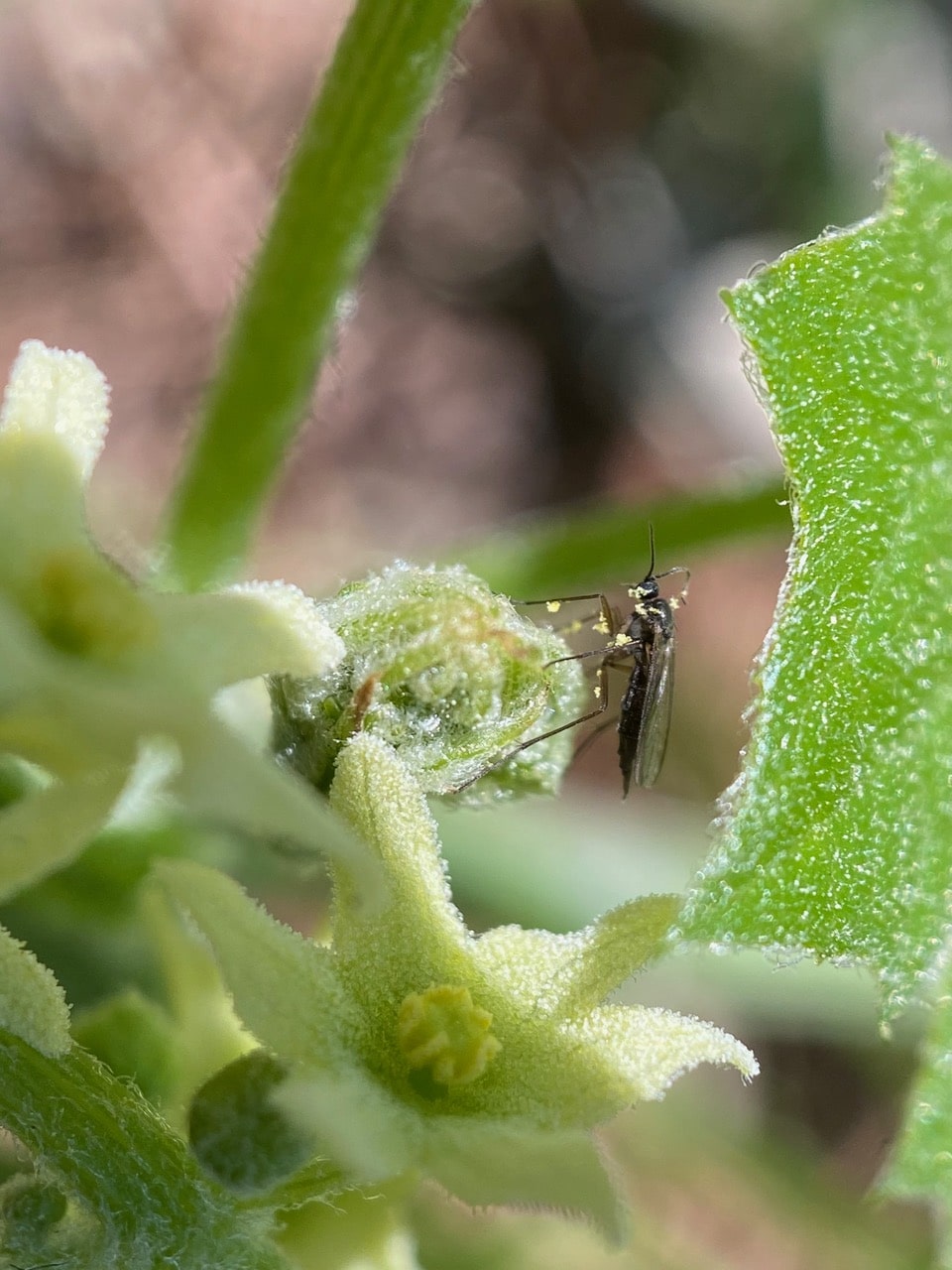
Pollen problem again! To get its pollen transferred from flower to flower, Marah plays this endless sticky trick on small insects. In the end, pollination is a win-win for both flower and its tiny visitors – the insect gets fed, the flower gets pollinated.