

Pollinator Post 2/21/25 (1)
It’s been a while since I last walked the West Ridge Trail in the Reinhardt Redwood Regional Park in the Oakland hills. I hope the trail has had time to dry out after all the rains.
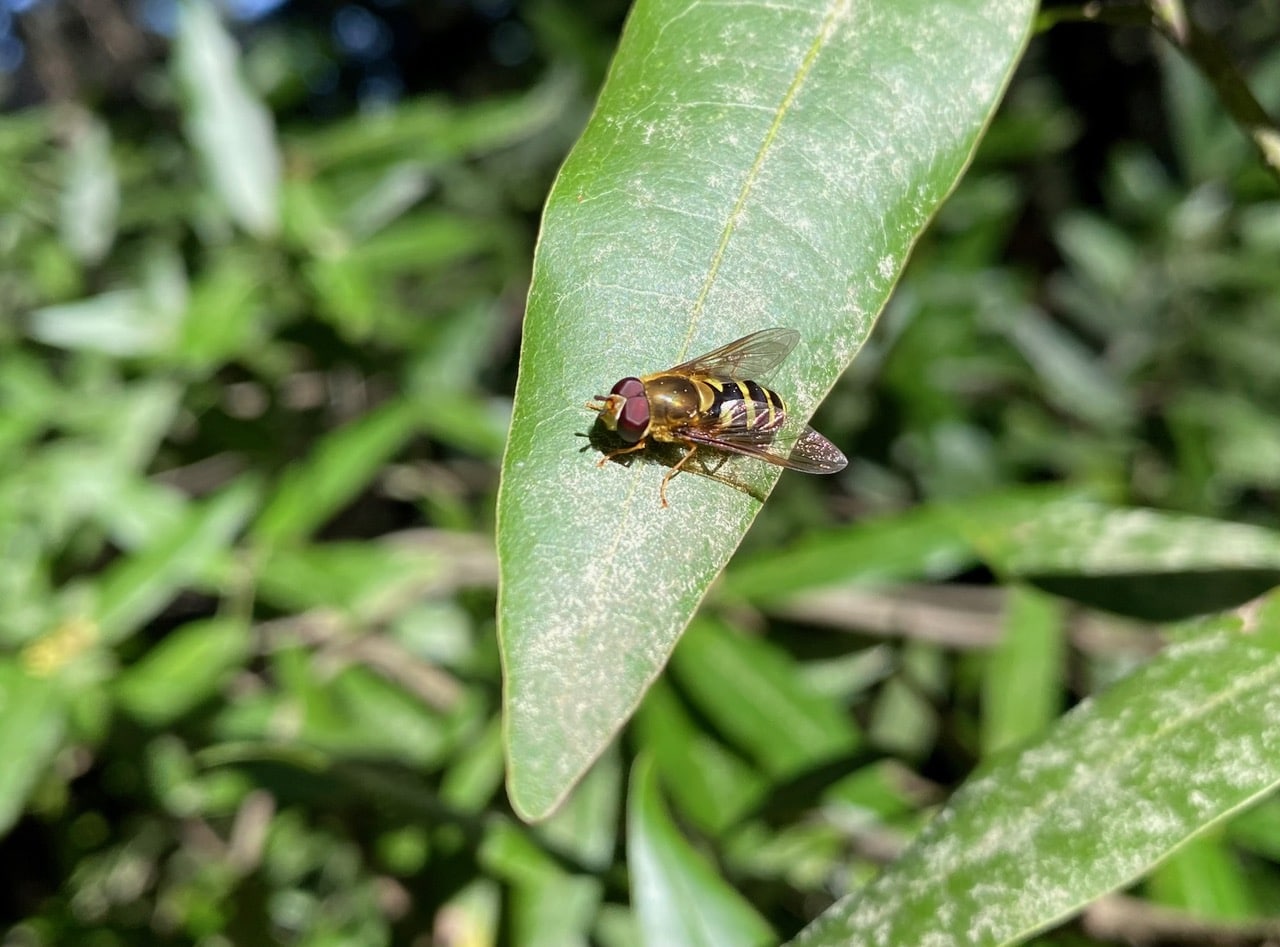
Besides bumble bees, the most common insect in flight early in the morning is often the Black-margined Flower Fly, Syrphus opinator (family Syrphidae). The hover fly makes up for the cold by basking on sunlit leaf surfaces. They seem to prefer large, smooth foliage, such as this California Bay leaf.
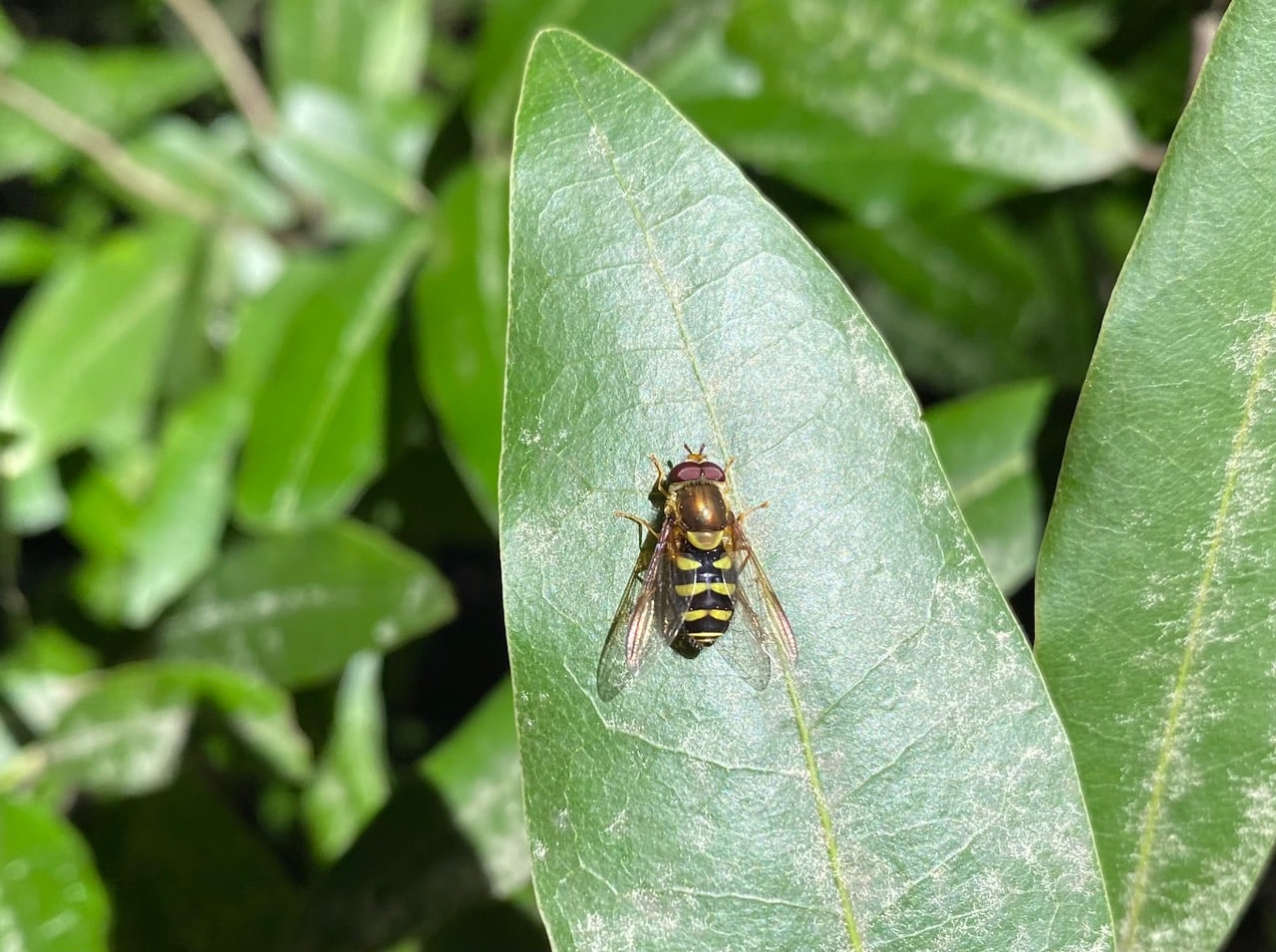
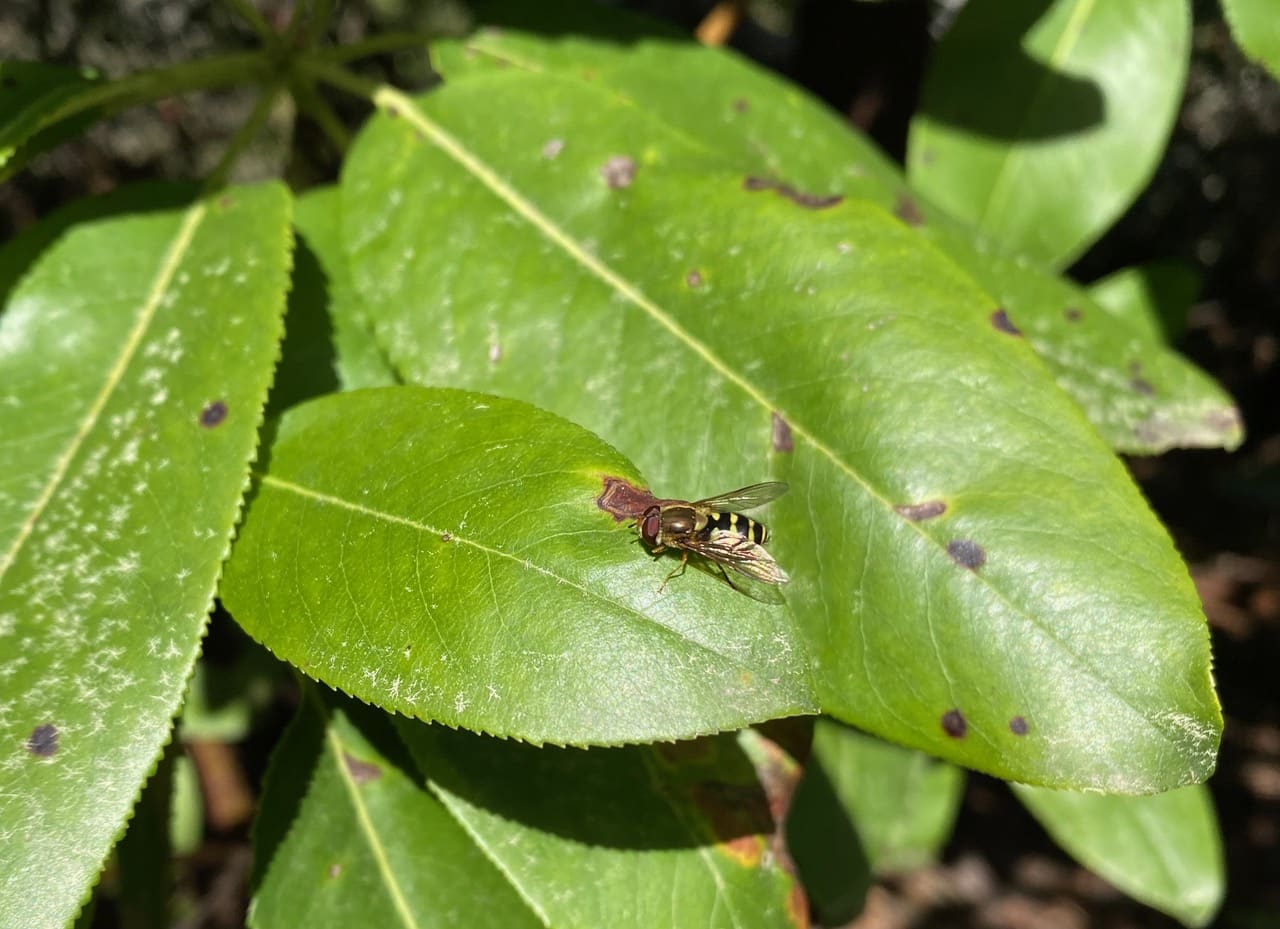







The Black-margined Flower Fly, Syrphus opinator (family Syrphidae) has black-and-yellow patterns on its abdomen that mimic those of wasps and bees, a kind of Bayesian mimicry commonly seen in hover flies that helps deter potential predators. The species is common in central California during winter months. It can be distinguished from similar species by the abdominal fascia restricted to the sides and isolated from the margins. Adults visit flowers for nectar and pollen. Larvae feed on aphids and other soft-bodied insects.
Another Black-margined Flower Fly, Syrphus opinator (family Syrphidae) has landed on a leaf of the Pacific Madrone, Arbutus menziesii to soak up the sun.
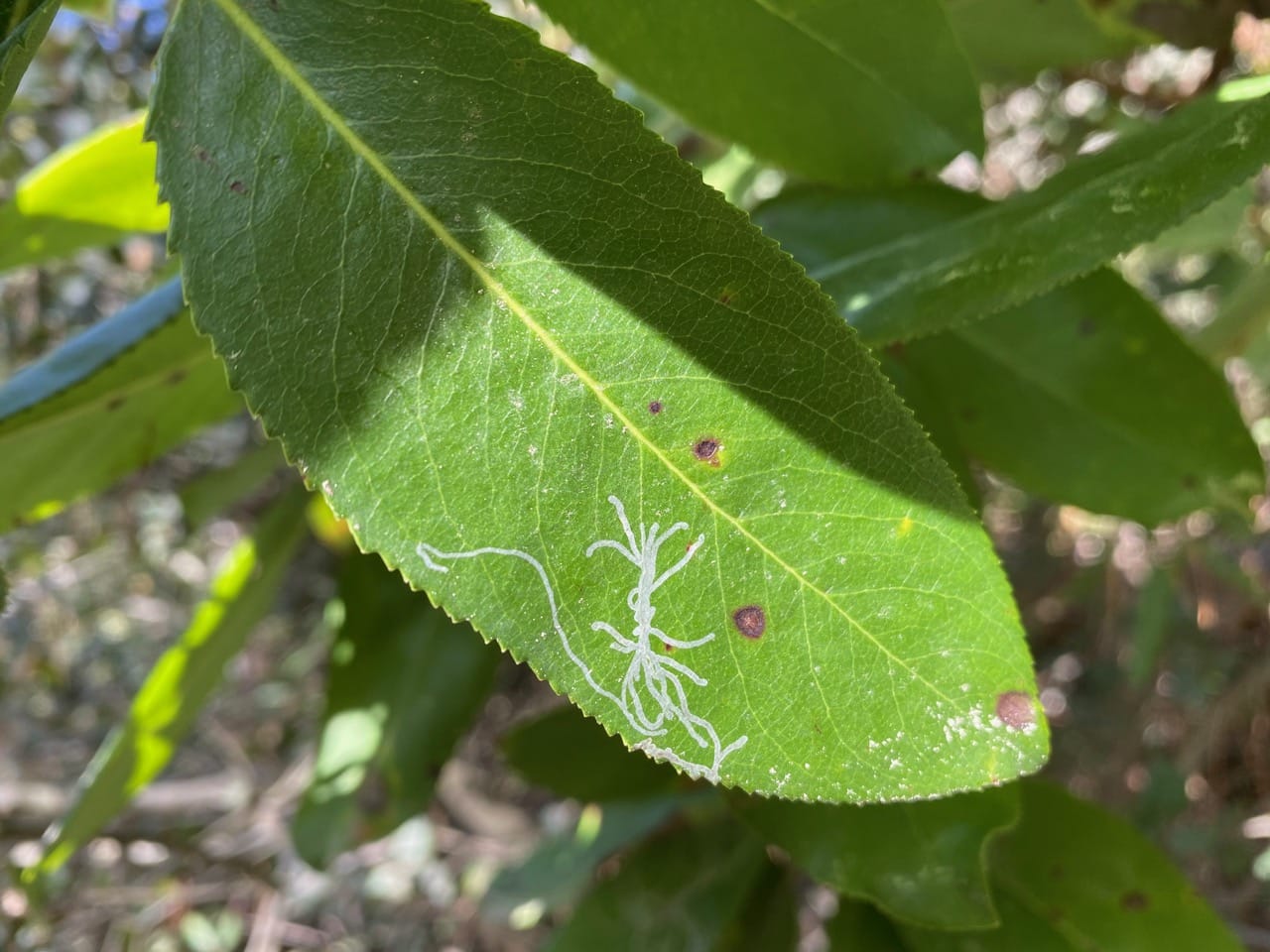
Hey, what are those squiggly lines on that madrone leaf?
Here’s a madrone leaf that has those lines all over it. A closer inspection tells me that these are leaf mines.
A leaf miner is any one of numerous species of insects in which the larval stage lives in, and eats, the leaf tissue of plants. The vast majority of leaf-mining insects are moths (Lepidoptera), sawflies (Symphyta), and flies (Diptera). Some beetles also exhibit this behavior. Leaf miners are protected from many predators and plant defenses by feeding within the tissues of the leaves, selectively eating only the layers that have the least amount of cellulose, and lowest levels of defensive chemicals.
The surface leaf mines on our madrone here are made by the larva of a moth, the Madrone Skin Miner, Marmara arbutiella (family Gracillariidae), found in western North America. The adult is a tiny, slender moth (about 0.2 in. wingspan). The larvae feed on Madrones (Arbutus) and Manzanitas (Arctostaphylos). They blaze sinuous, serpentine mines across the surface of host plant leaves. Although damage might be unsightly they do not affect the long-term health of the tree.
Most larval Gracillariidae undergo hyper-metamorphosis, meaning there is a major change within the larval stage. Early instars have a flattened head and body, modified mandibles, and lack functional spinnerets or legs; these feed on sap. Later instars are cylindrical with round heads, and have chewing mouthparts, legs and functional spinnerets; these feed on plant tissues. Some members of the family roll leaves, while others form galls.
Draping over the trail bank, a California Honeysuckle, Lonicera hispidula has sprouted tender new shoots along its vines.
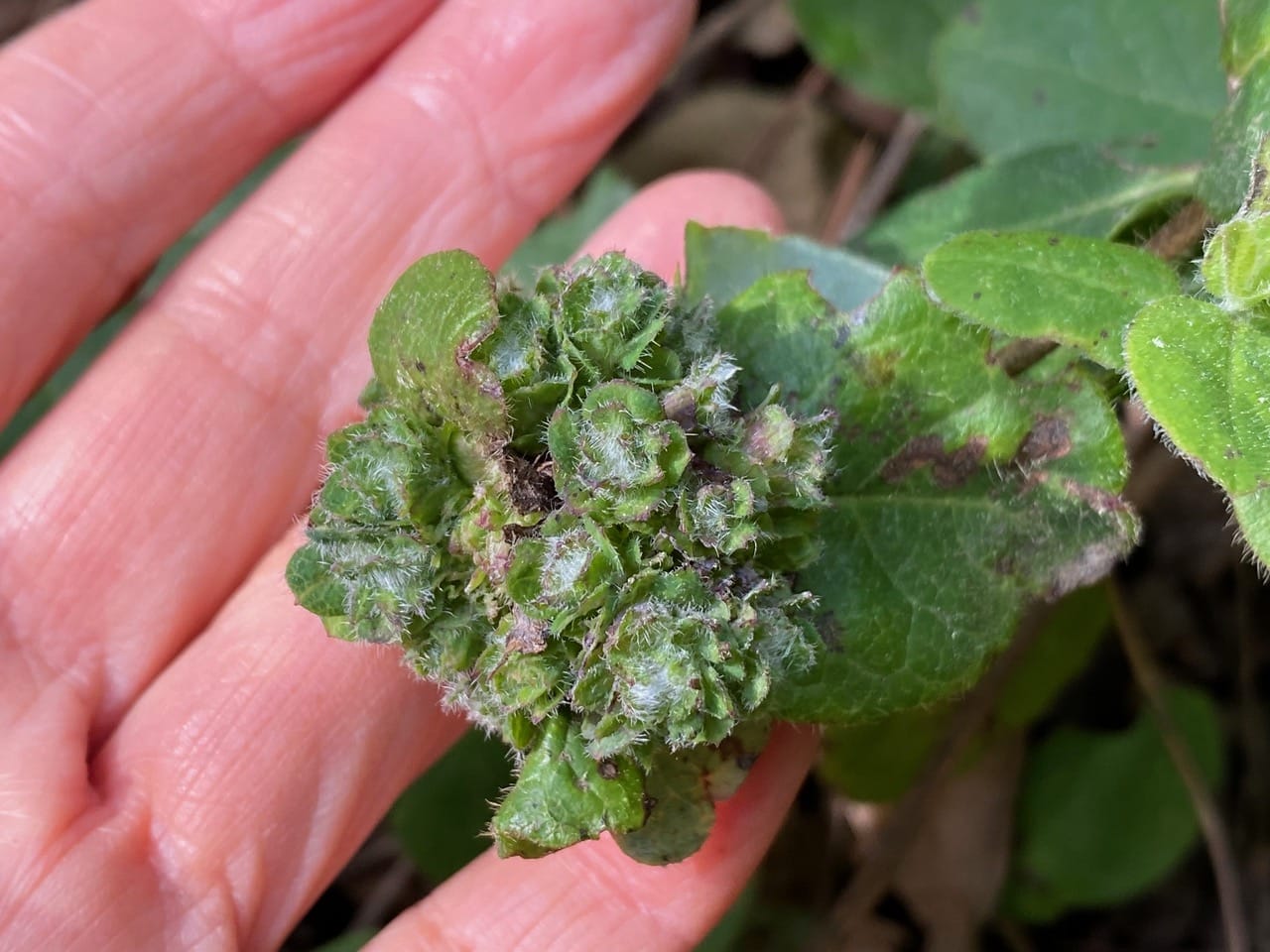
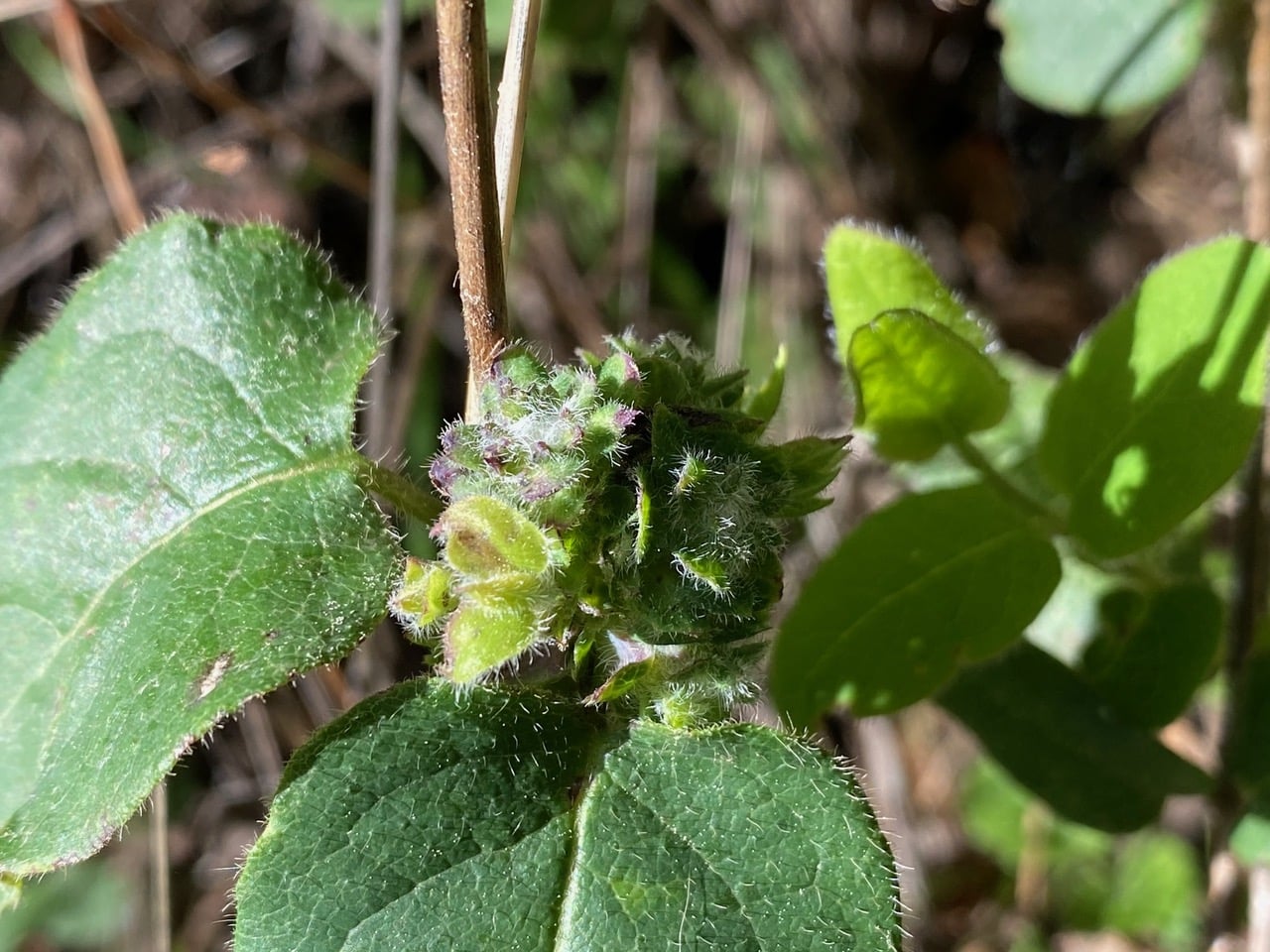
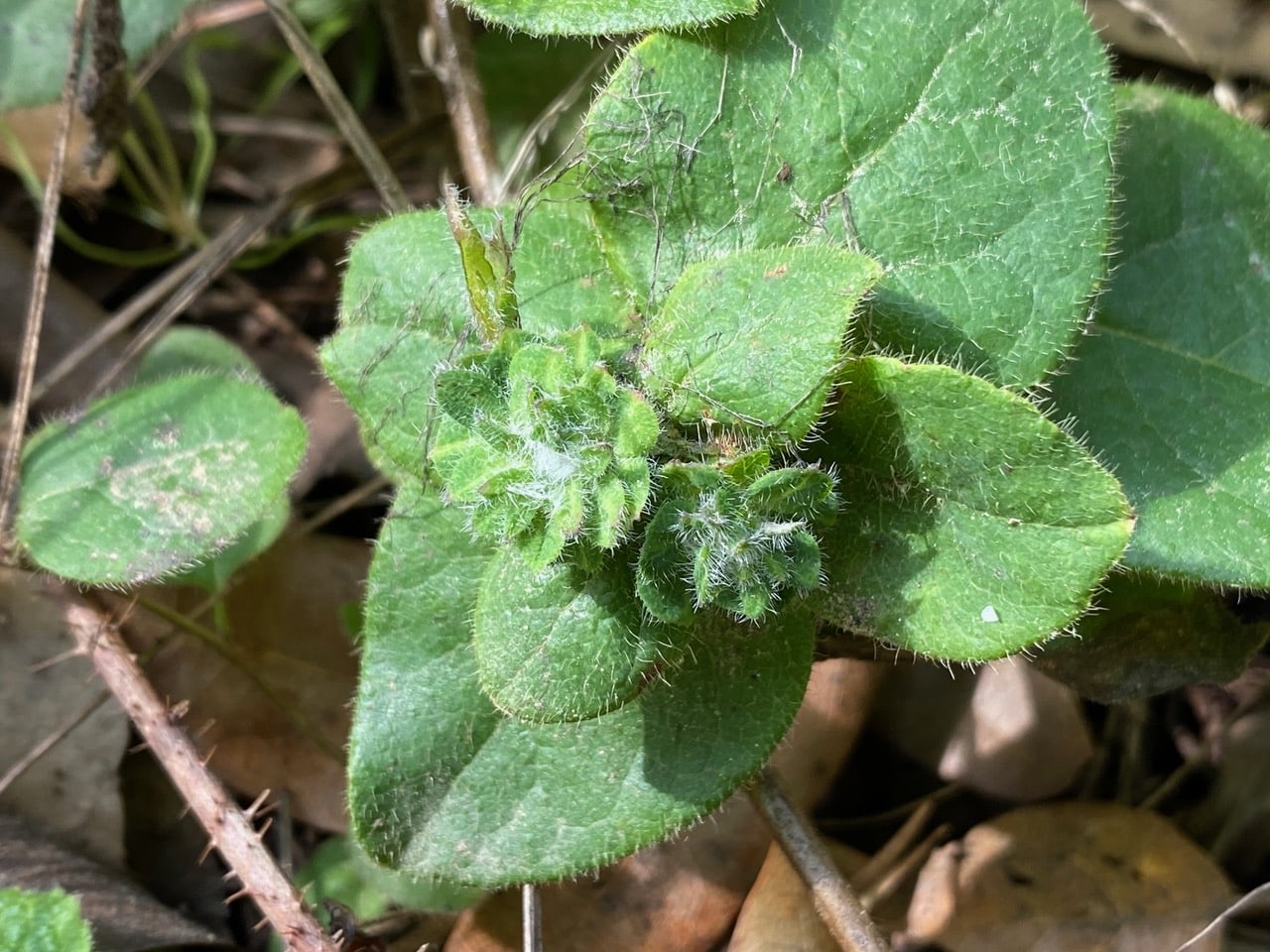
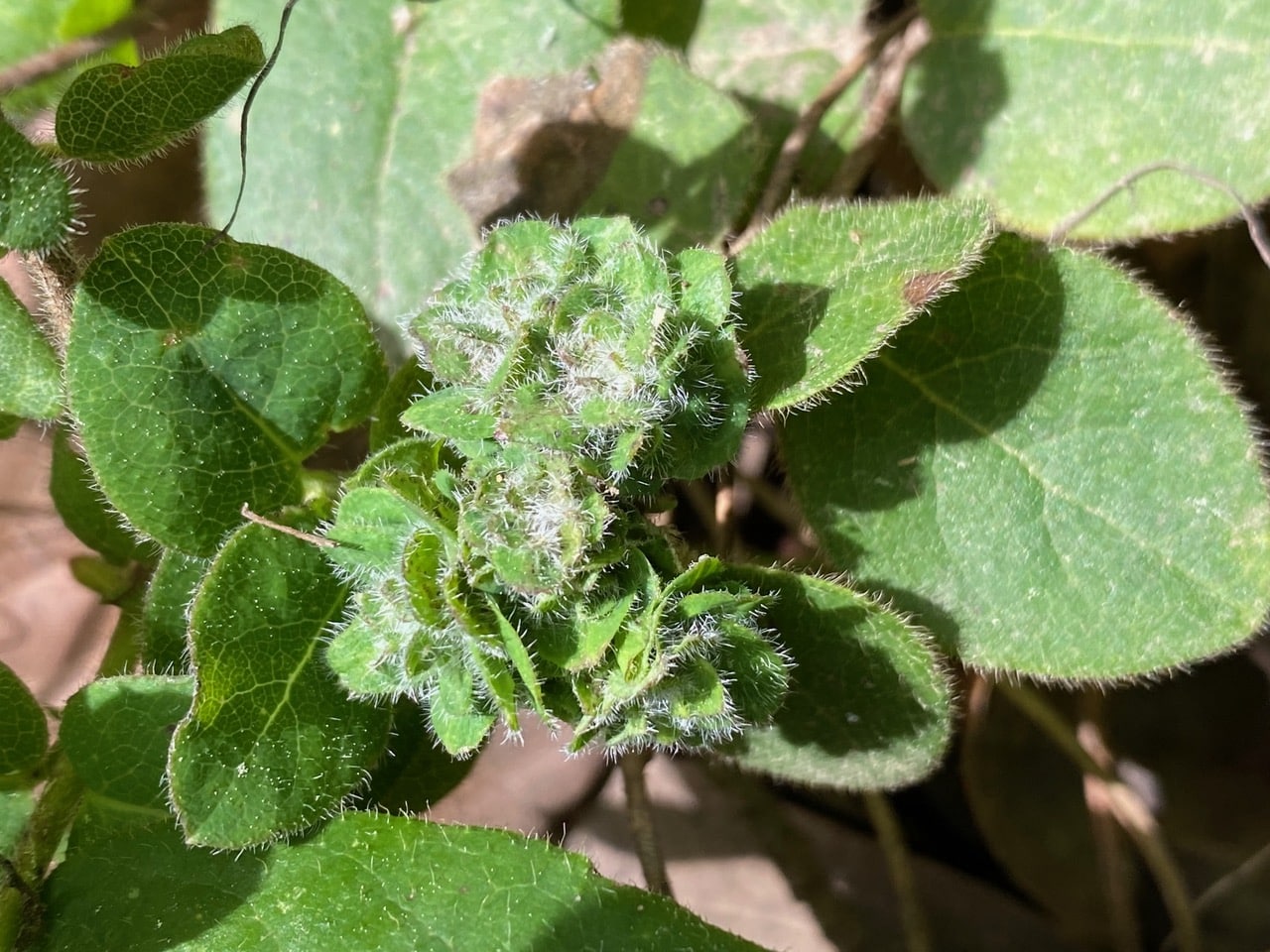
What delight to find this pom-pom of a bud gall on the honeysuckle! It brings back fond memories of helping Ron Russo rear the gall-makers from them. The Cabbage Bud Gall has since been named after Ron – Lonicerae russoi (family Cecidomyiidae). Ron is the author of the Field Guide to Plant Galls of California and Other Western States.
Some of these bud galls take on a reddish-purple coloration when growing in the sun. The pigment, anthocyanin is a sunscreen that protects the gall insects within from excessive ultraviolet radiation.
The Cabbage-bud-gall Midge, Lonicerae russoi (family Cecidomyiidae) induces conical, leafy bud galls on the honeysuckle. While these rosette galls can occur singly, they usually appear in congested clusters that can reach 3 cm across. Each gall has a dense arrangement of white hairs filling its center, marking the entrance to the larval chamber. The galls exposed to direct sun often turn wine red. The larvae feed and eventually pupate within the galls. Adults emerge in late February and March by pushing through the hairs.
Why should we care about these minute insects? Like the caterpillars and aphids, gall insects are “first order consumers”, plant feeders that convert plant materials into animal tissues. Though small and apparently insignificant, they feed those further up the food chain – the predatory insects, lizards, birds and so on. They are the unseen, unsung heroes of a healthy ecosystem.
It is interesting that while most honeysuckle along the trail have no galls, this particular plant is host to a dozen of them. Obviously mama midge is very selective about which plant she lays her eggs on. Perhaps she prefers plants of a certain age? that produce less defensive chemicals? or which grow in ideal microclimate?
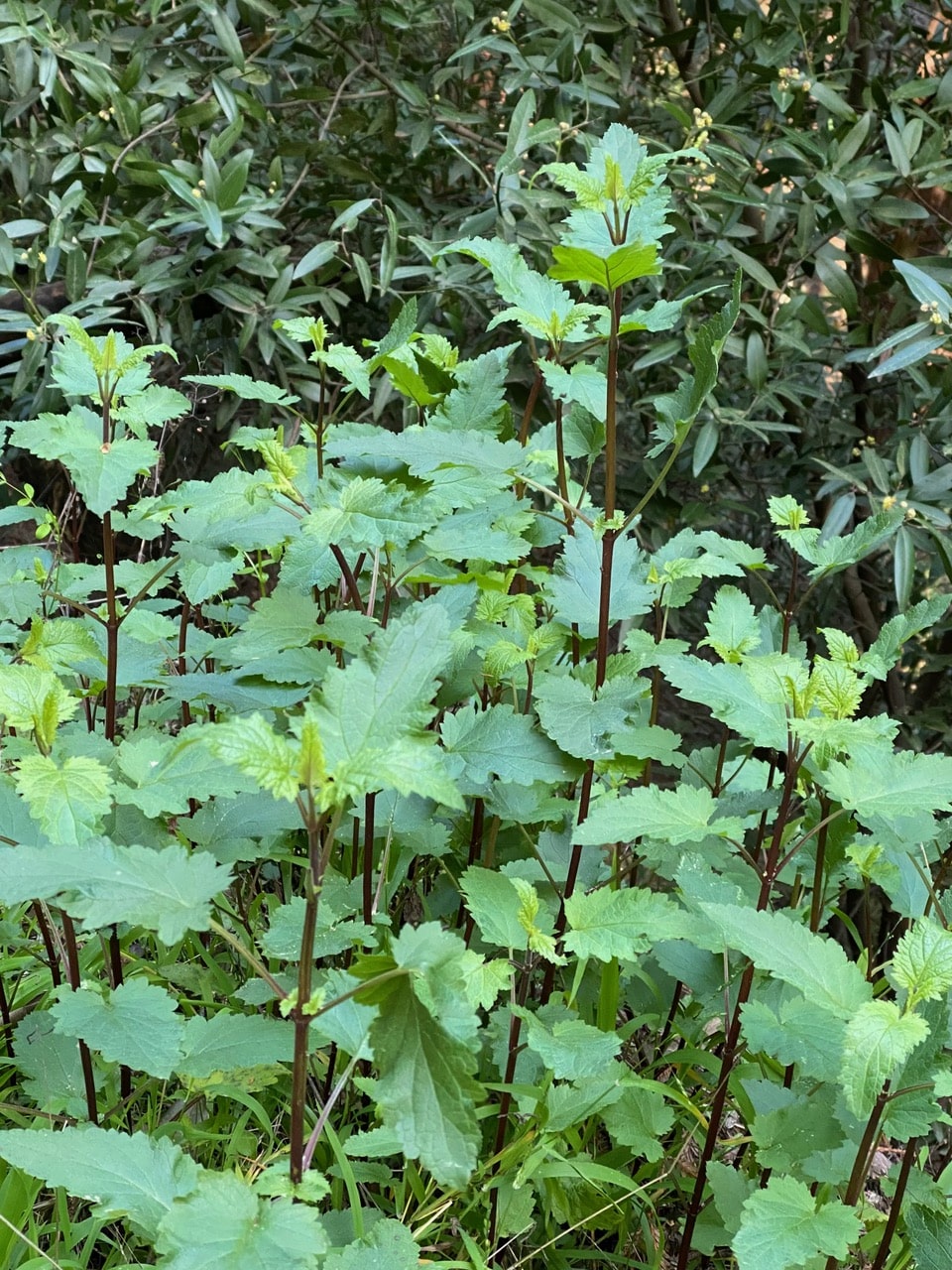
The California Bee Plant, Scrophularia californica abounds in shady spots along this trail. I stop by a healthy patch to look for caterpillars. No, there are no caterpillars, but I encounter other delightful denizens.
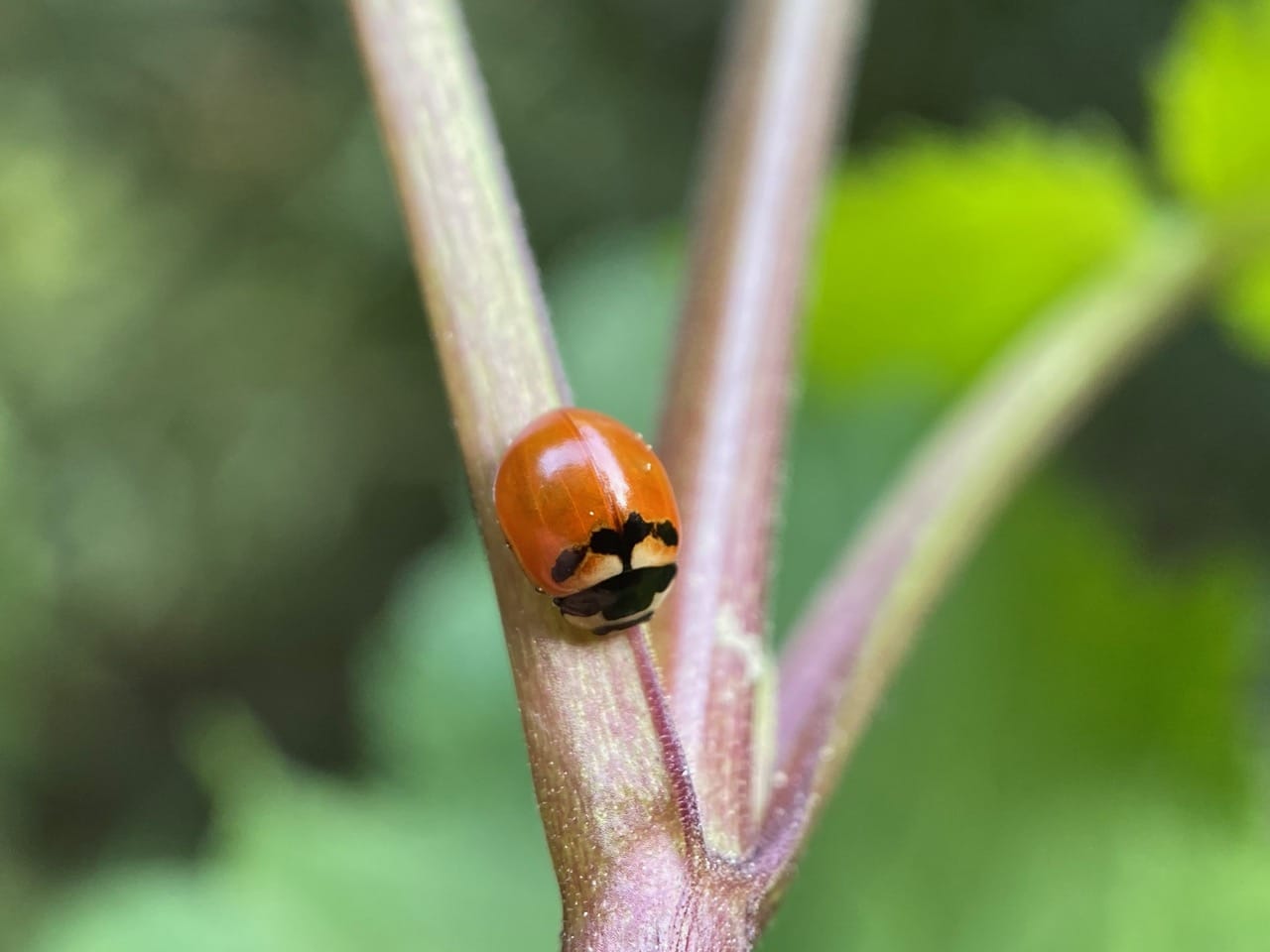
A Three-banded Lady Beetle, Coccinella trifasciata (family Coccinellidae) is resting near a leaf axil of a Bee Plant.
“Three-banded”? The species is rather variable depending on its range. The ones found east of the Rockies are indeed three-banded. Species Coccinella trifasciata – Three-banded Lady Beetle – BugGuide.Net Here in California, we have the subspecies Coccinella trifasciata subversa, also known as the Pacific Three-banded Ladybeetle. Photos of Pacific Three-banded Lady Beetle (Subspecies Coccinella trifasciata subversa) · iNaturalist These beetles are active from spring through summer months and on warm days of fall; diapausing (insect version of hibernation) through the colder winter months.
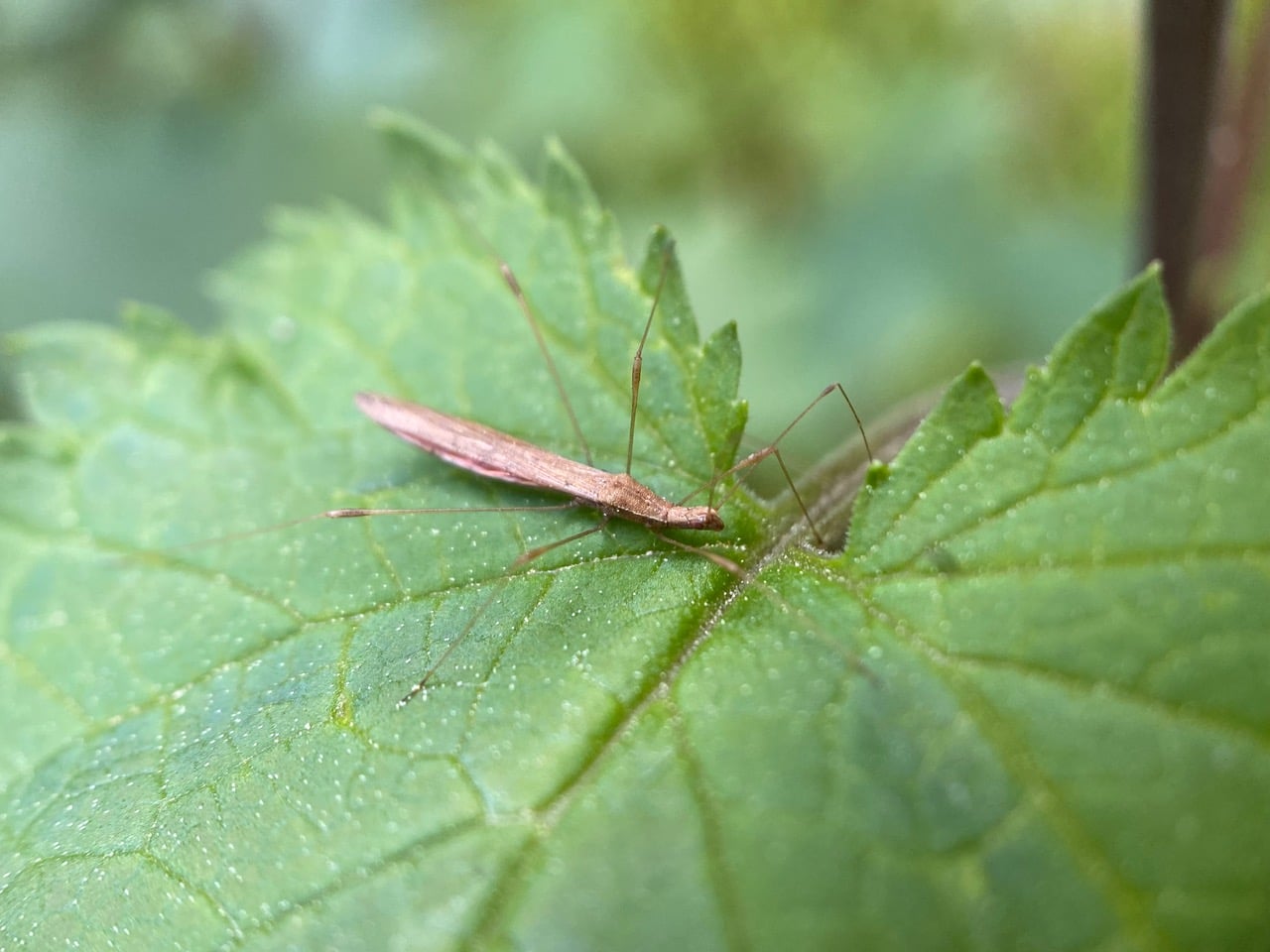
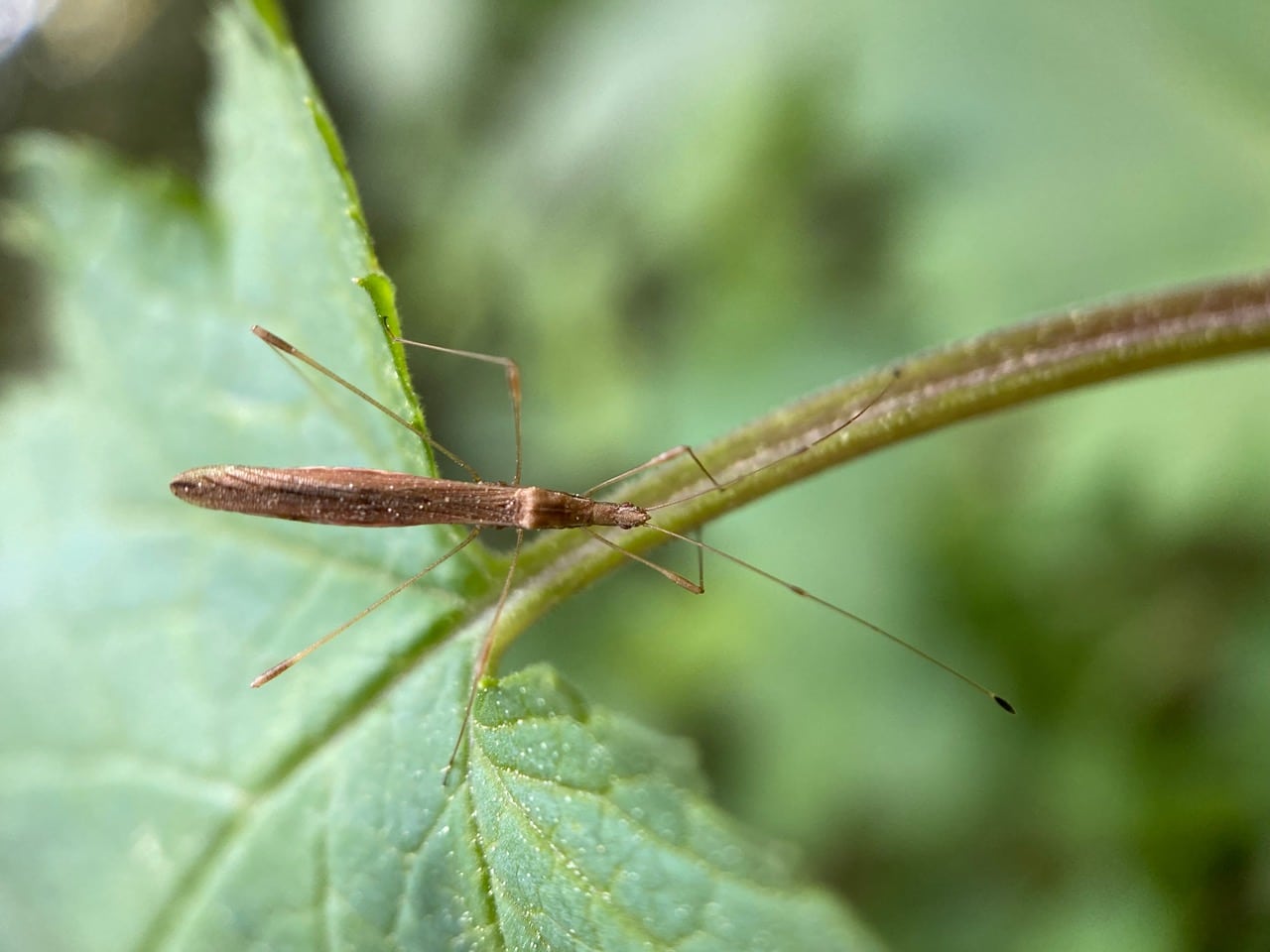
A small, slender, thread-legged insect is resting on a Bee Plant leaf. It is a Stilt Bug, Neoneides muticus (family Berytidae)
The Berytidae are extremely gracile insects with legs so long and slender as to suggest common names such as “thread bugs” and “stilt bugs”. They resemble some Assassin Bugs, but lack the raptorial forelegs of the predators. Antennae have 4 segments, the fourth enlarged, appearing as a swelling at the tip.
Stilt Bugs occur worldwide and throughout North America. Most are phytophagous (plant-feeders); many may be host-specific, often associated with plants with glandular hairs in Geraniaceae, Onagraceae, Scrophulariaceae, and Solanaceae. Some are occasionally omnivorous, feeding opportunistically on insects entrapped in plant exudates or on lepidopteran eggs or aphids.
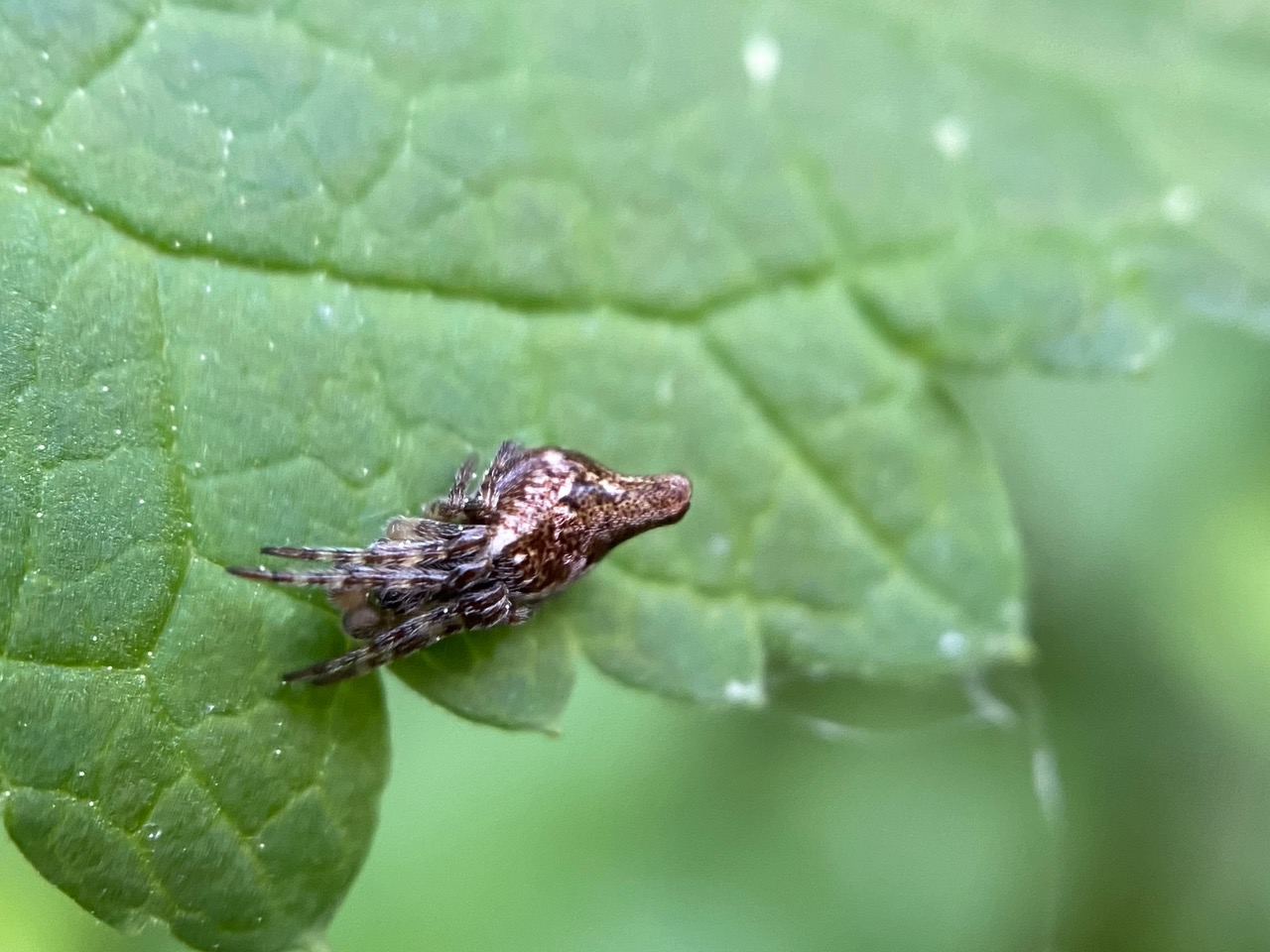
A Conical Trashline Orbweaver, Cyclosa conica (family Araneidae) is lying motionless on its side at the edge of a Bee Plant leaf. There is a damaged web attached to the same leaf close to the spider. What has happened here? Is the spider dead? I don’t have the heart to prod it to find out. Note the pair of bulbous structures in front of the spider’s face, visible between the folded front legs. These look like the large pedipalps of a male spider. The pedipalps are jointed appendages, much like small legs. They are used by the spider to sense objects, shape their webs, and to aid in prey capture and feeding. In male spiders, the large pedipalps are also used to deliver sperm during mating.
Male False Wolf Spider | The male has pedipalps, the 2 large… | Flickr
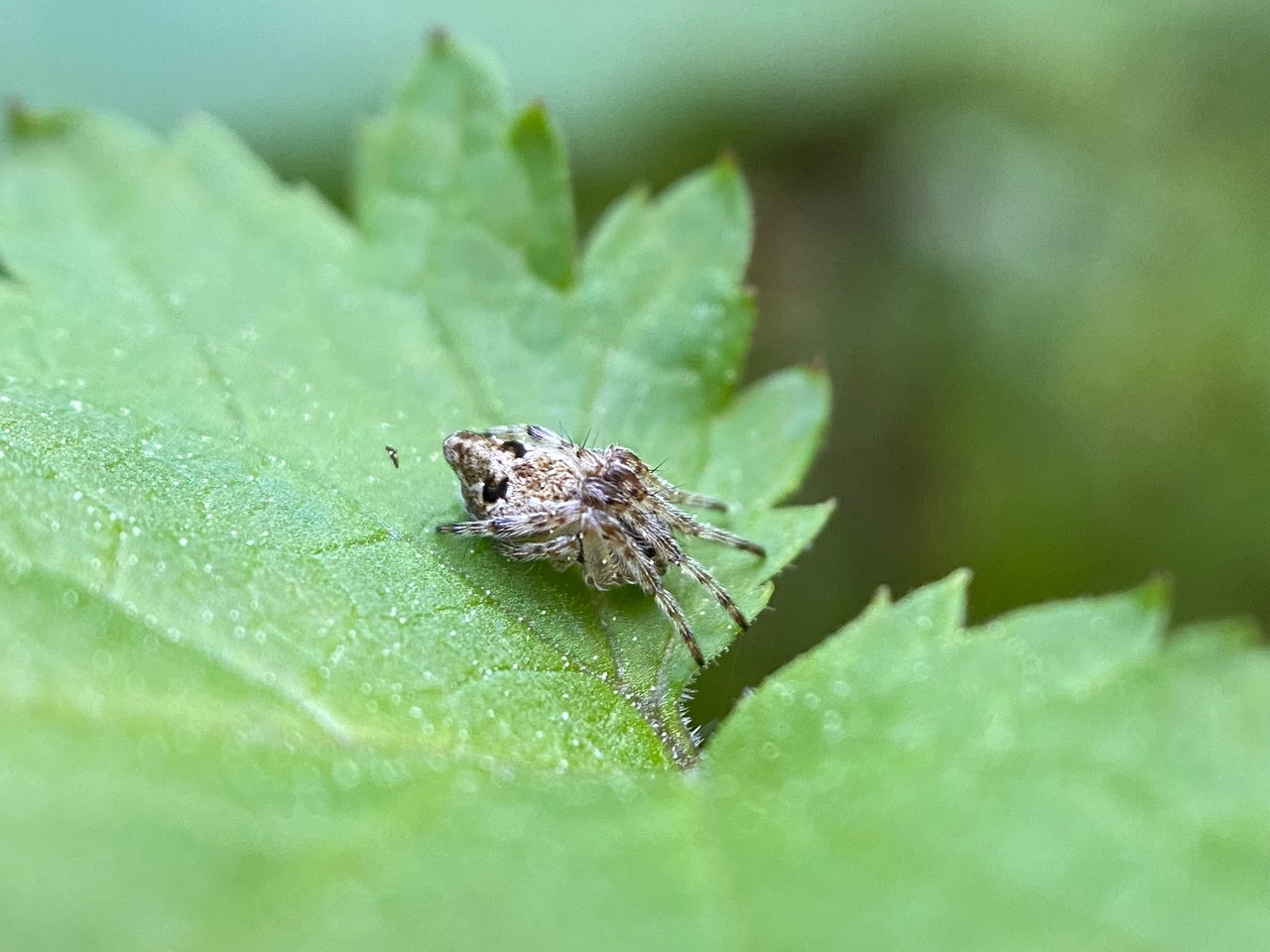
A couple of feet away on another Bee Plant, another Conical Trashline Orbweaver, Cyclosa conica is resting on a leaf. It is rather unusual to find these spiders away from their orb webs. This is a much paler individual with a less prominent cone-shaped protuberance on the abdomen. Note how these spiders generally rest with their front legs folded tightly, completely hiding their cephalothorax.
Trashline spiders are so-called for their web decoration. Cyclosa create orb-shaped webs using both the sticky and non-sticky threads, mostly during times of complete darkness. Across its spiral wheel-shaped web, Cyclosa fashions a vertical “trashline” made of various components such as prey’s carcasses, detritus, and at times, egg cases. The trashline helps the spider to camouflage exceptionally well from predators. The spider sits in the web hub to conduct its sit-and-wait hunting, ensnaring prey at nearly any time of day; it only leaves its spot to replace the web prior to sunrise.
Ooh, a Three-banded Lady Beetle, Coccinella trifasciata (family Coccinellidae) is on the move on a Bee Plant leaf. These beetles are out of their winter diapause!
There seems to be pollen everywhere, on the leaves and on the insects. They probably came from the nearby Acacia and Pine trees whose pollen is air-borne.
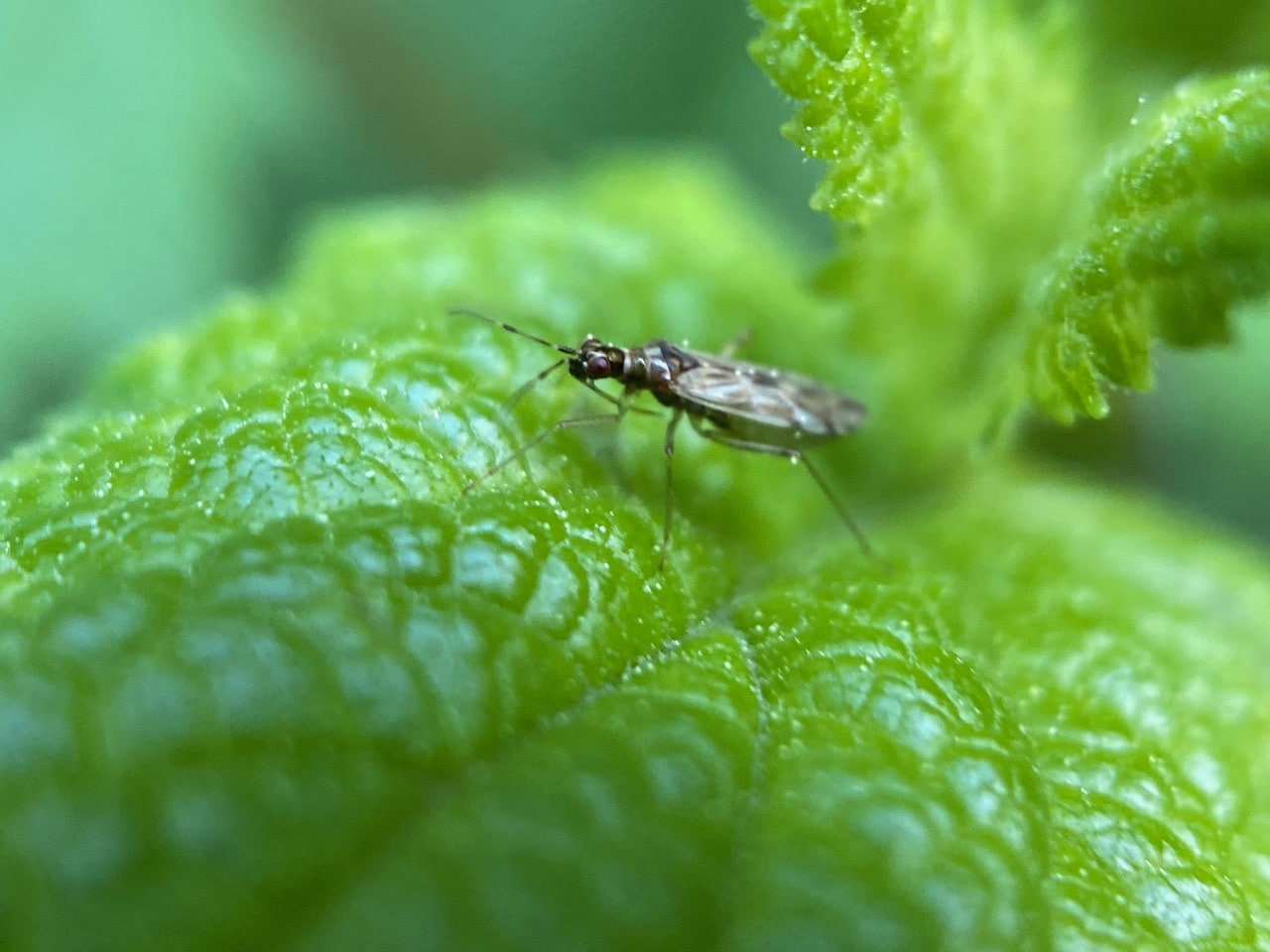
A tiny bug is lurking on the foliage of a Bee Plant, covered with scattered pollen grains. How do I know it is a bug? See the long piercing-sucking mouthpart (commonly referred to as a rostrum) that is folded under the body? That is a characteristic feature of a “true bug” in the order Hemiptera.
The bug runs to the underside of the leaf. A Hemiptera expert on iNaturalist has helped identify the insect as a Plant Bug in the tribe Dicyphini (family Miridae).
Mirid bugs are also referred to as plant bugs or leaf bugs. Miridae is one of the largest family of true bugs in the order Hemiptera. Like other Hemipterans, Mirids have piercing, sucking mouthparts to extract plant sap. Some species are predatory. Others are opportunistic omnivores. One useful feature in identifying members of the family is the presence of a cuneus; it is the triangular tip of the corium, the firm, horny part of the forewing, the hemielytron. The cuneus is visible in nearly all Miridae.

A Winter Gnat, also known as Winter Crane Fly, Trichocera annulata (family Trichoceridae) is perched on a Bee Plant leaf.
Few insects habitually appear in adult form during the winter months, but members of the family Trichoceridae, better known as Winter Gnats, are among them. They are relatively small, averaging 6 mm in body length. Unlike other crane flies (family Tipulidae), Winter Gnats have three ocelli (simple eyes) on the top of the head that monitor light/dark. These flies are usually associated with dark, sheltered habitats such as mouths of caves, hollow trees, and decaying logs in cool/temperate climates. Males perform in mating swarms in sunny patches in winter months, bobbing up and down a few feet off the ground. Females fly less, but they will join the dance to find a mate before returning to the ground to lay eggs. The larvae are generally found in dampish situations with organic decay – under leaf litter, in fungi, caves, manure, rodent burrows, where they scavenge on rotting plant matter and animal wastes. The Winter Gnats provide a nice morsel of protein for birds in winter.
A Furcate Dung Fly, Scathophaga furcata (family Scathophagidae) has landed on a Bee Plant leaf.
The genus Scathophaga are small to medium sized predatory flies that for the most part, have larvae that develop in animal dung or decaying plant matter. The adults are predators on other small insects, and while they are commonly seen on flowers, they are hunting prey there, rather than acting as pollinators. They are, in fact, one of the better predators of blow flies; thus, they are beneficial agents of biological control. The larvae feed on other insect larvae within animal dung or decaying plant matter. The Furcate Dung Fly prefers more shaded and humid locations than their better-known relative, the Golden Dung Fly, S. stercoraria.