

Pollinator Post 2/20/25 (2)
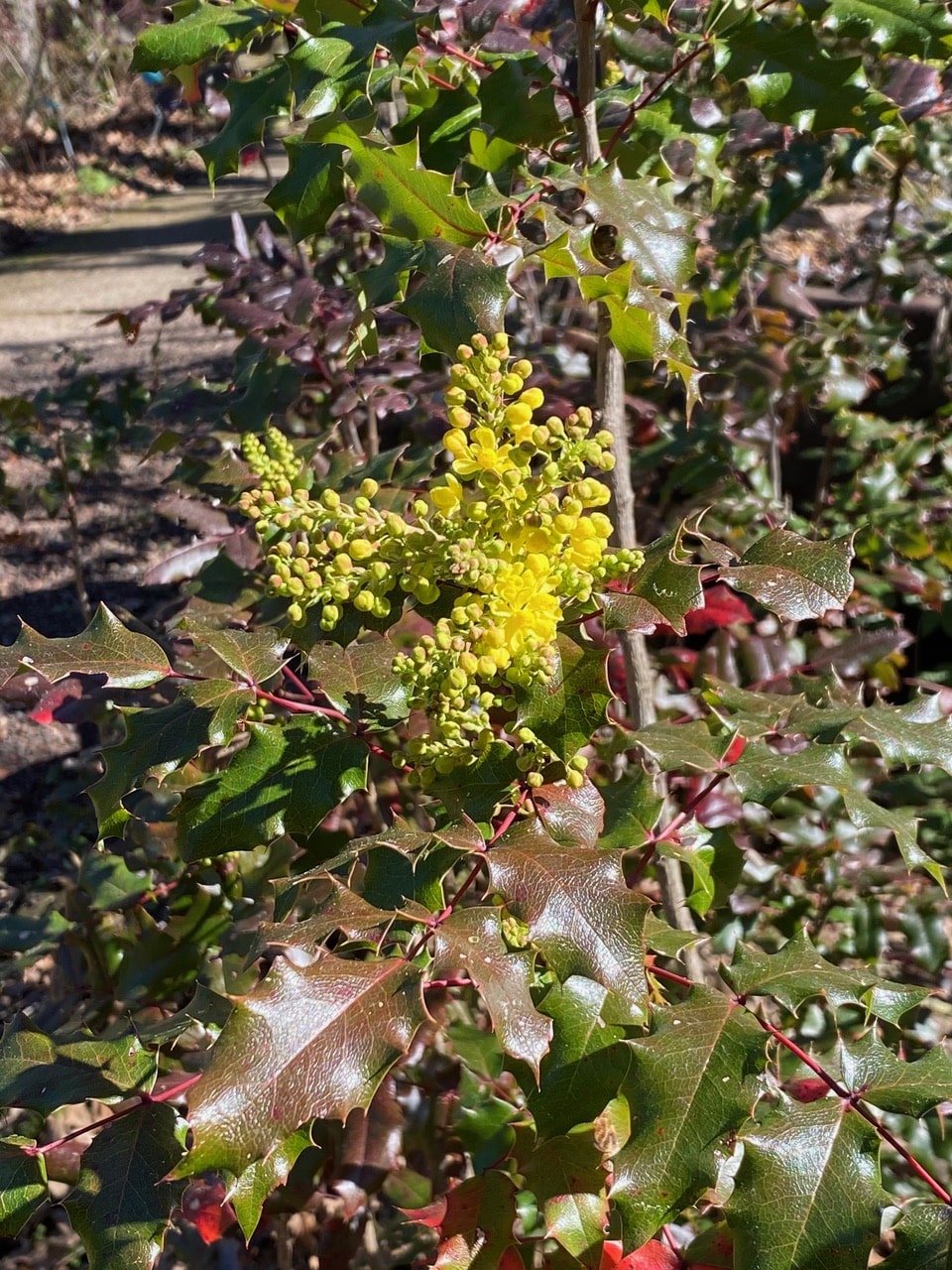
Near the visitor center, the patch of Oregon Grape, Mahonia aquifolium (family Berberidaceae) is putting up quite a show. Bright lemon-yellow flowers have started to bloom atop bronze-red foliage.
Woody-stemmed and spreading by rhizomes, the evergreen shrub has the characteristic holly-like leaf shape, pointed and prickly on the edges. The new growth in the spring emerges in a light green to coppery-red color.
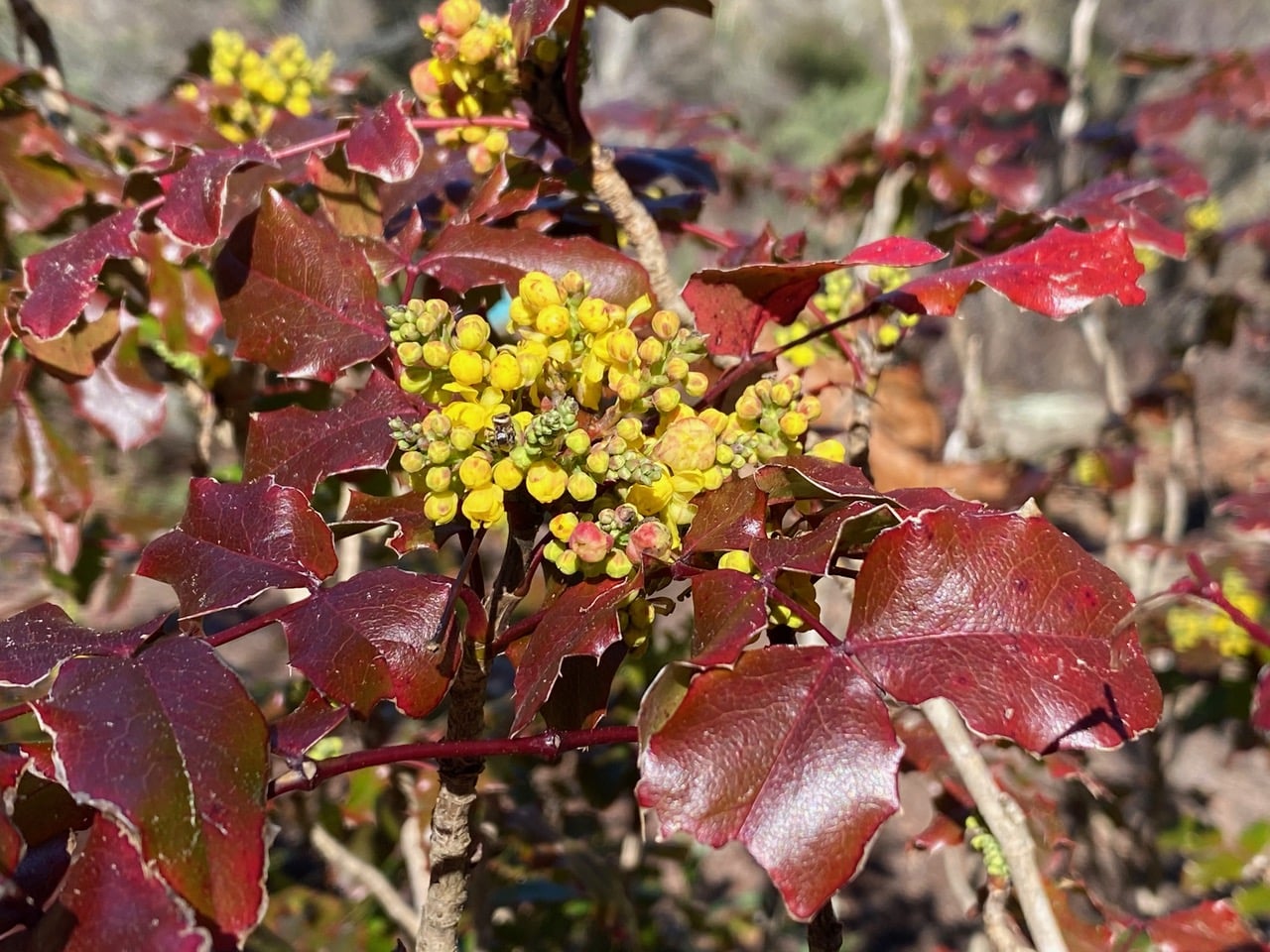


Some of the old Mahonia leaves from last fall have responded to the cold weather and full sun by taking on shades of bright red to burgundy. What an unexpected sight in the gray of winter!
The presence of anthocyanins gives Mahonia leaves a reddish or purplish hue, depending on the variety and environment. Anthocyanins are plant pigments that give red, blue, and purple colors to leaves and fruits. Anthocyanins primarily act as a “sunscreen” by absorbing excess blue and ultraviolet light, protecting the leaf tissue from oxidative stress and photo-damage, particularly under high light conditions. The concentration of anthocyanin in Mahonia leaves can vary depending on the season, with higher levels often observed in young leaves or during autumn when the leaves are changing color.
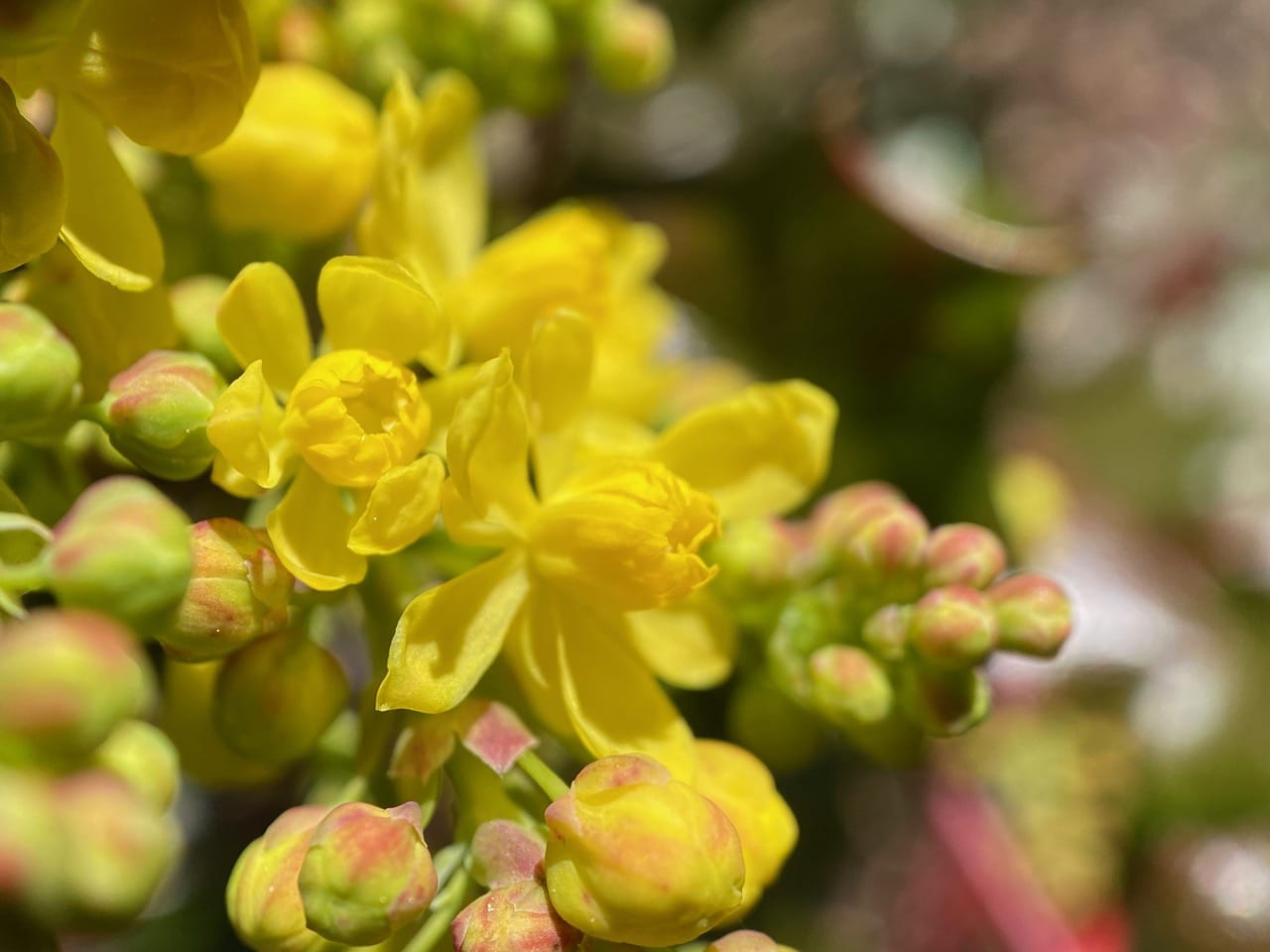
If you find a dicot plant with evergreen, holly-like leaves and flower parts in multiples of three then it is likely a member of the Berberidaceae family. The small yellow flowers are clustered together in racemes. Members of the Barberry family may have 2 or 3 small bracts masquerading as sepals on the back of the flower, but otherwise there are typically 6 true sepals and 6 petals that appear similar. There are 6 stamens, with anthers opening to release pollen by uplifting flaps (rather than longitudinal slits). The ovary consists of 2 to 3 fused carpels (syncarpous) forming a single chamber. It matures into a purplish, sour berry.
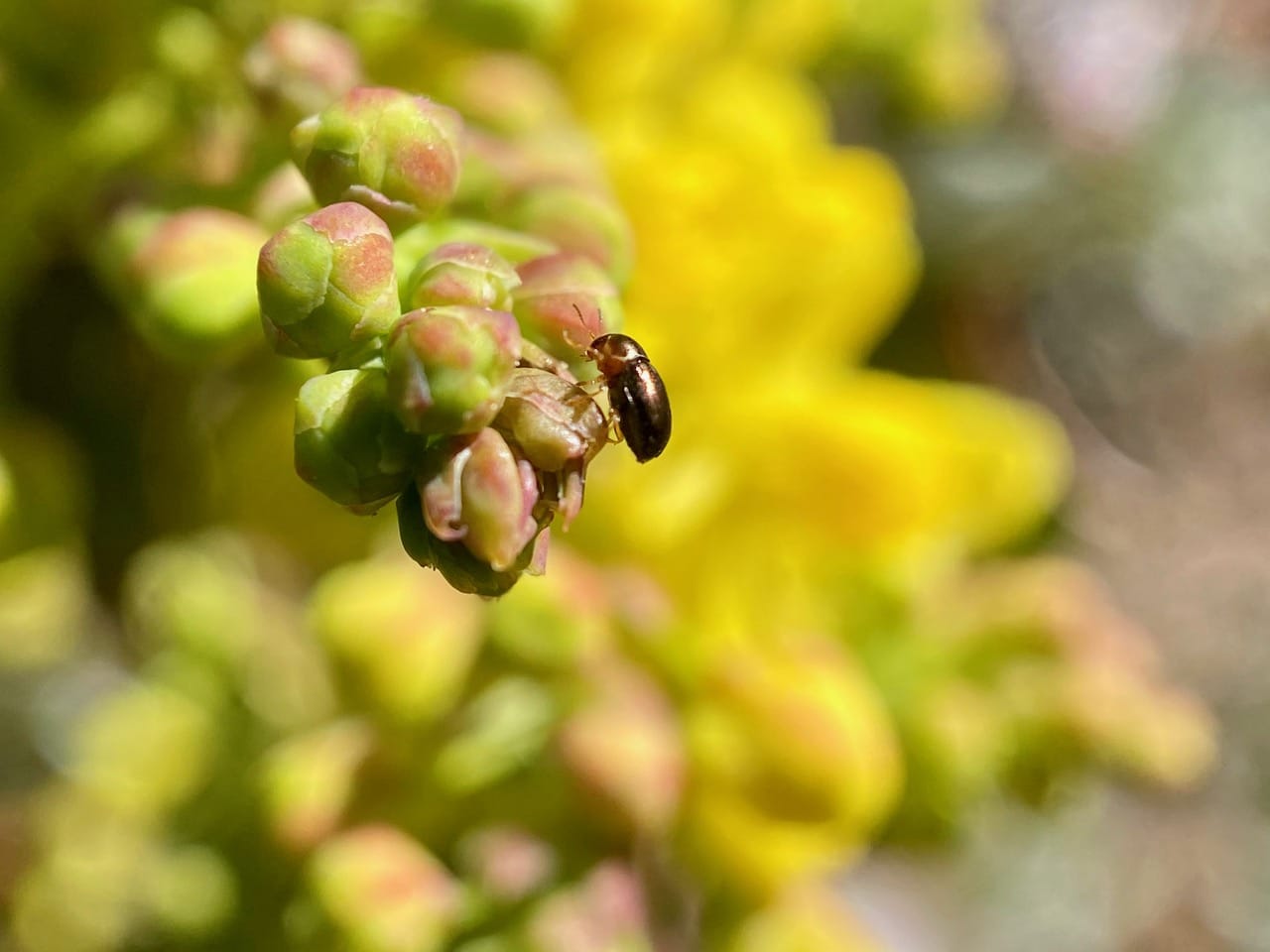
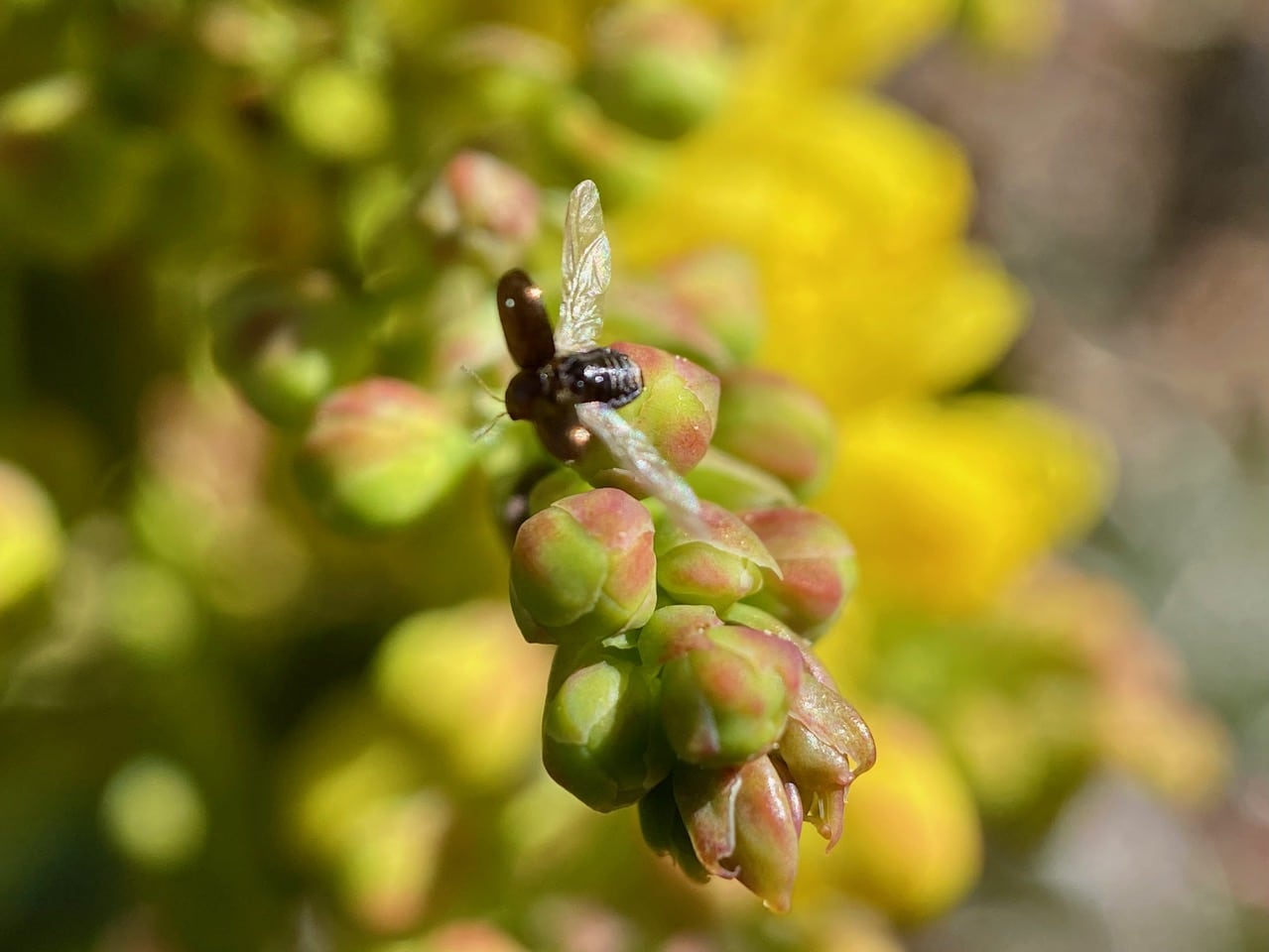
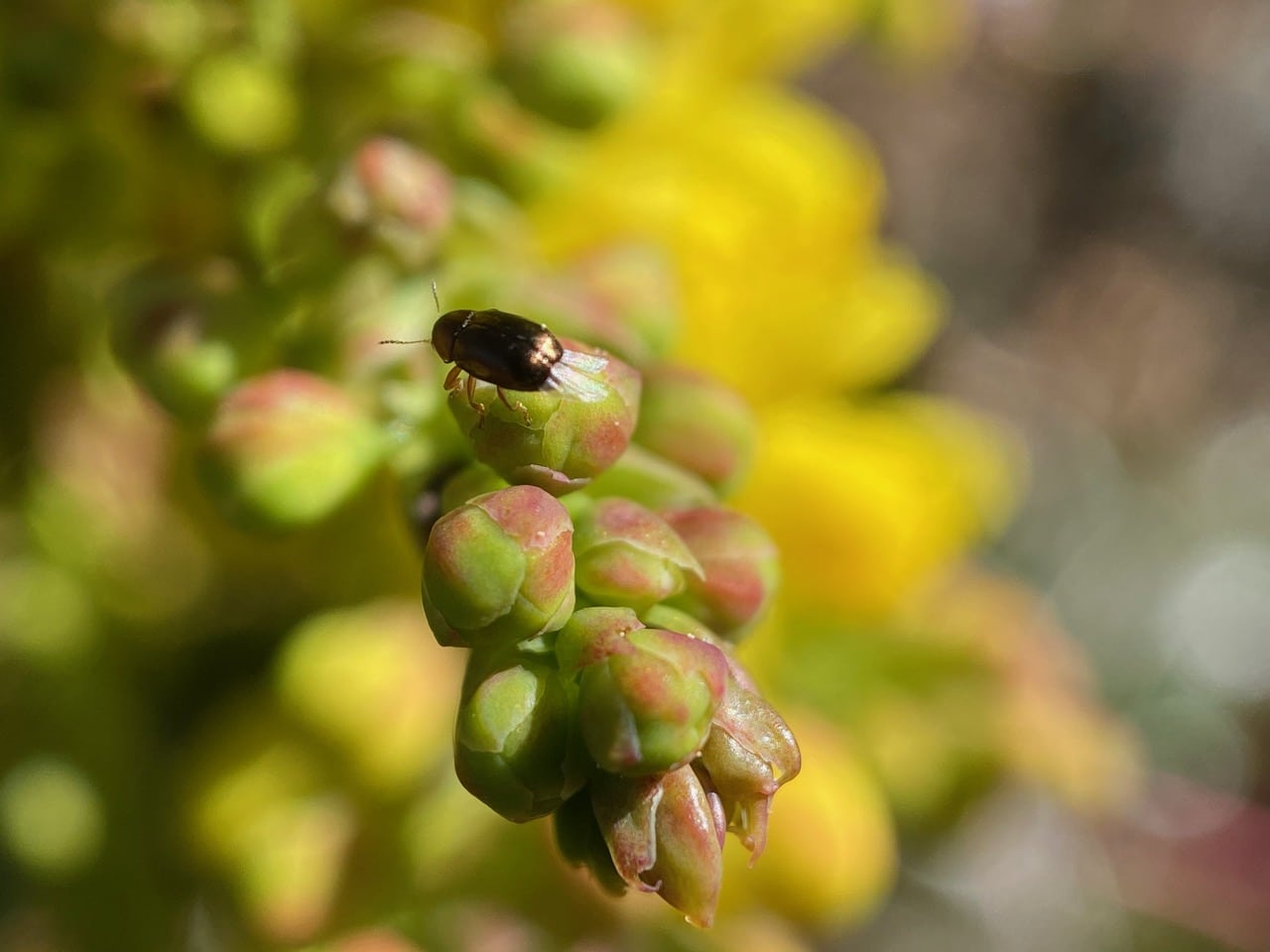
Glinting brightly in the sun, a Bronze Leaf Beetle, Diachus auratus (family Chrysomelidae) is exploring a cluster of Oregon Grape flower buds.
Members of the family Chrysomelidae are commonly known as Leaf Beetles. Adults and larvae feed on all sorts of plant tissues, and all species are fully phytophagous. Many are serious pests of cultivated plants, including food crops. Others are beneficial due to their use in biocontrol of invasive weeds. Chrysomelids are popular among insect collectors, as many are conspicuously colored, typically in glossy yellow to red or metallic blue-green hues, and some have spectacularly bizarre shapes.
The Bronze Leaf Beetle, Diachus auratus is a species of case-bearing leaf beetle in the family Chrysomelidae, subfamily Cryptocephalina. It is found in Australia, the Caribbean, the Americas, Oceania, and Southern Asia. Adults, 1-2 mm, are found on many unrelated plants, especially plants in bloom. Case-bearing leaf beetles are found in two subfamilies within Chrysomelidae. As she lays her eggs, the female case-bearing leaf beetle covers each one with a layer of excrement. After the larvae hatch, they retain this covering (case) as camouflage and add to it throughout their larval life. When disturbed, the larvae pull in their head and legs; because their color and shape resemble caterpillar droppings they are ignored by predators. Eventually the larva seals the case to pupate inside, before emerging as an adult. Some species are myrmecophiles, living near or even inside ant nests.
Should I stay, or am I better off on another inflorescence?
Suddenly, the beetle lifts its elytra and spreads its flight wings as if ready to fly.
Beetles differ from all other winged insects in having the first pair of wings hardened and thickened. These hard forewings, called elytra, serve as protective covers for the fragile flight wings, which are folded underneath when not in flight. In fact, the Latin name for the order of beetles, Coleoptera, means “sheath-winged”. The elytra in beetles meet in a straight line down the middle of the back.
The beetle doesn’t fly after all. It folds its wings.
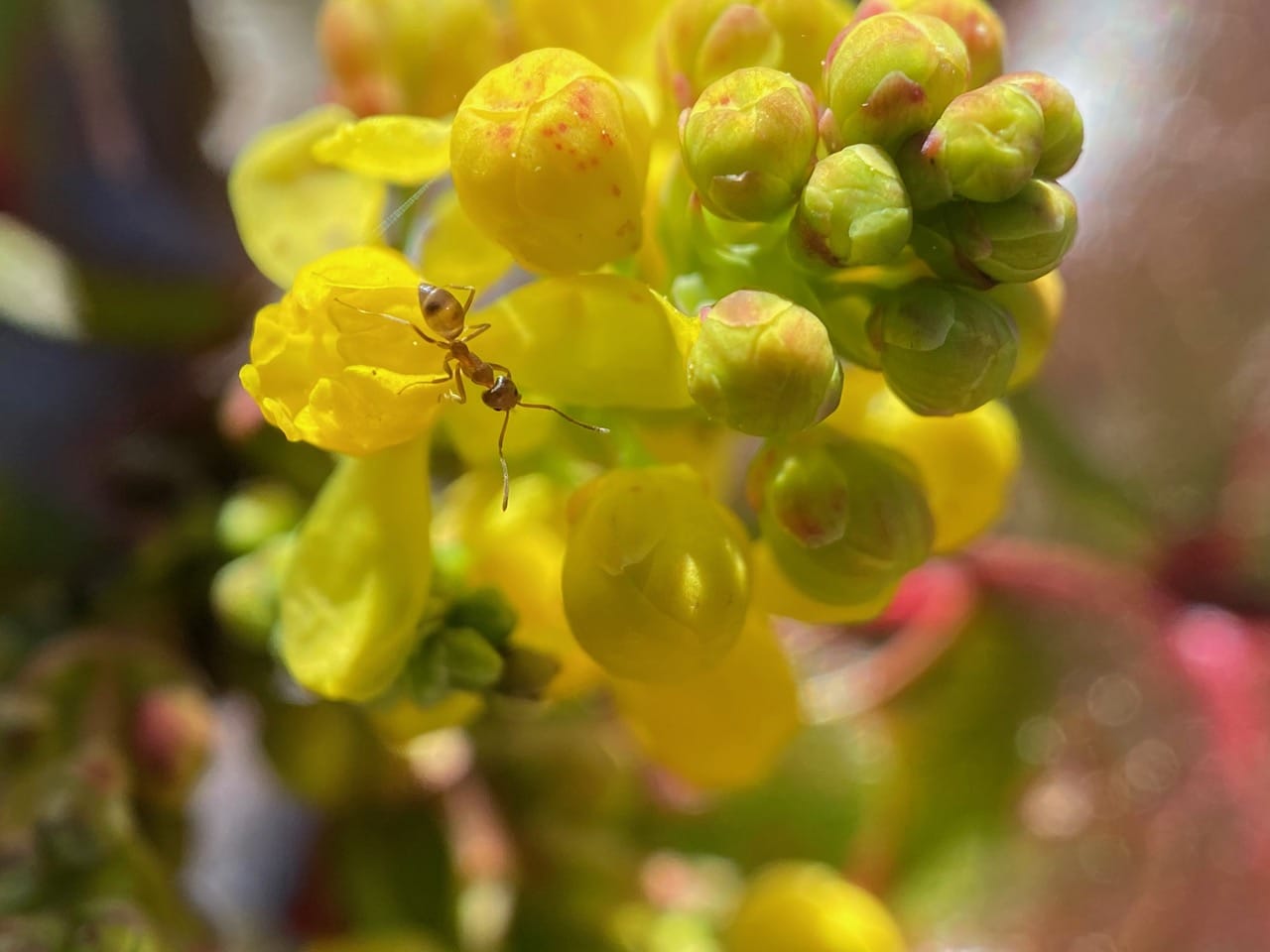
An Argentine Ant is exploring an inflorescence of Oregon Grape.
The Argentine Ant, Linepithema humile (family Formicidae) is native to Northern Argentina, but it has been inadvertently introduced by humans to many countries, and is now an established invasive species in many Mediterranean climate areas worldwide. The success of the species can be attributed to their lack of aggression between the colonies. There is no apparent antagonism between separate colonies of its own kind, resulting in “super-colonies” that extend across hundreds or thousands of kilometers in different parts of the their range. Genetic, behavioral, and chemical analyses show that introduced Argentine Ants on separate continents actually represent a single global supercolony.
The Argentine Ants are ranked among the world’s worst invasive animal species. In its introduced range, the Argentine ant often displaces most or all native ants and can threaten native invertebrates and even small vertebrates that are not accustomed to defending against the aggressive ants. This can, in turn, imperil other species in the ecosystem, such as native plants that depend on native ants for seed dispersal, or lizards that depend on native ants for food.
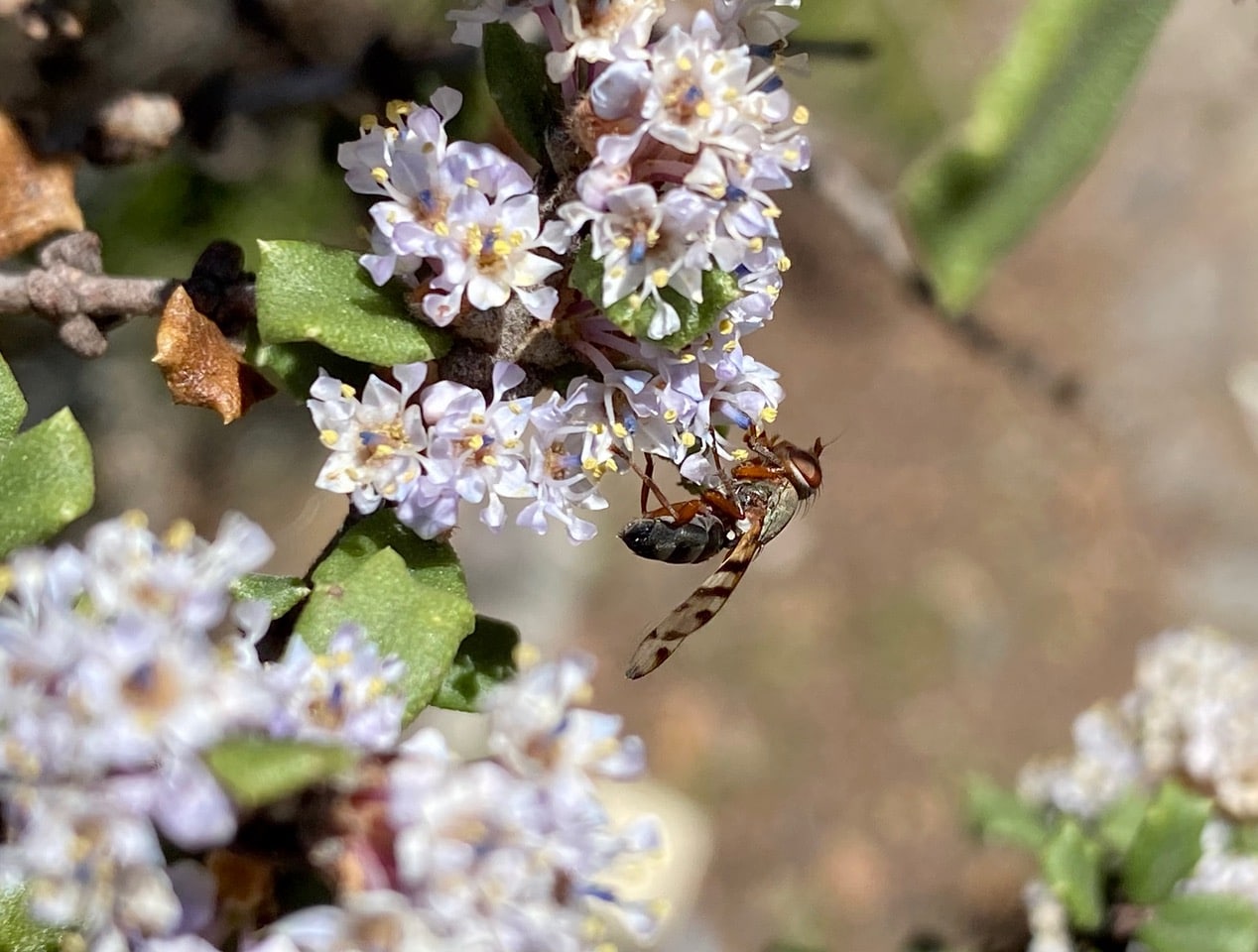
In the shadows, a large Dance Fly (family Empididae) is hanging upside-down on an inflorescence of Oregon Grape. Check out that long, stout proboscis!
Dance Flies, in the family Empididae, get their name from the habit of males of some species to gather in large groups and dance up and down in the air in the hopes of attracting females. They are predominantly predatory and they are often found hunting for small insects on and under vegetation in shady areas. Both genders may also drink nectar. Male dance flies give their sweeties a nuptial gift to eat while they mate. The gift is thought to enable her to complete the development of her eggs. Males may wrap their gifts in balloons of silk or spit, hence the other common name of Balloon Flies.
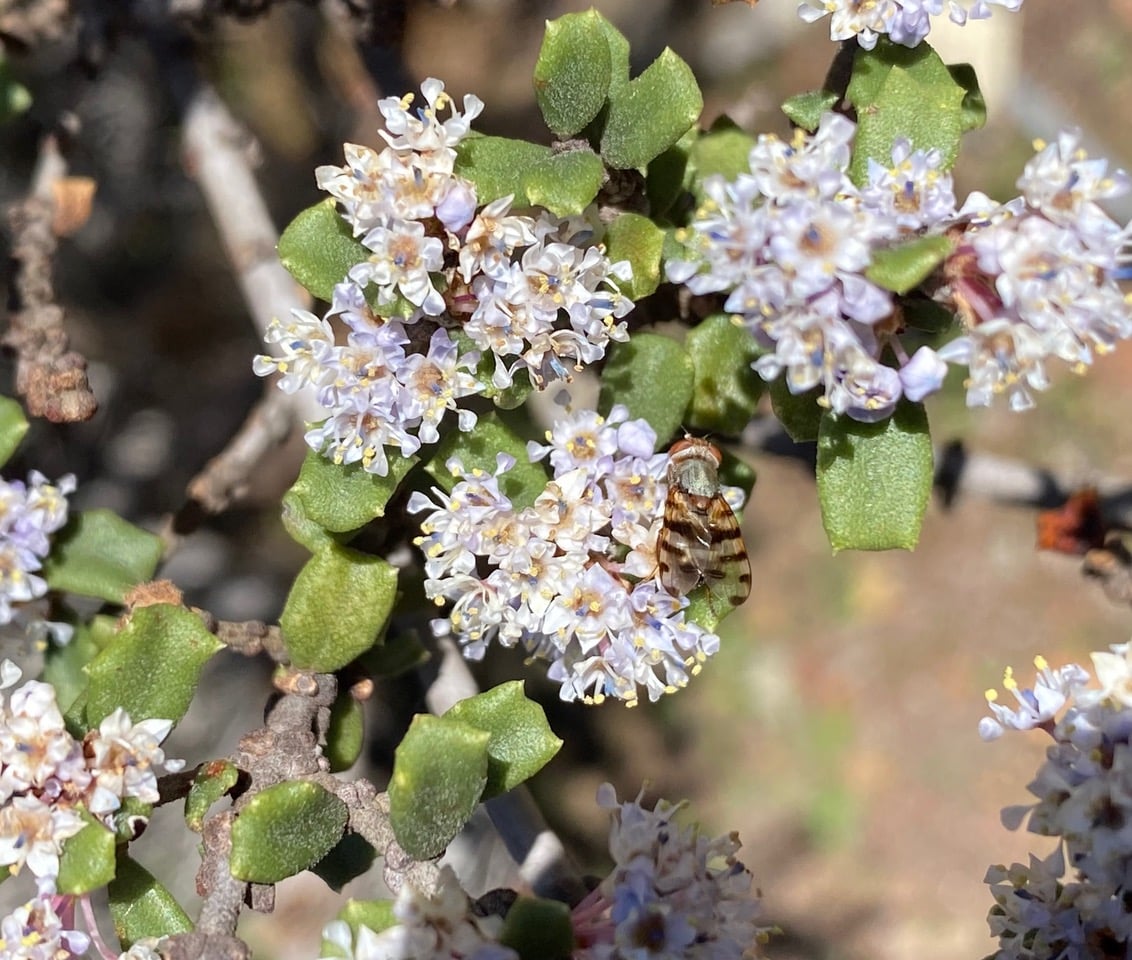
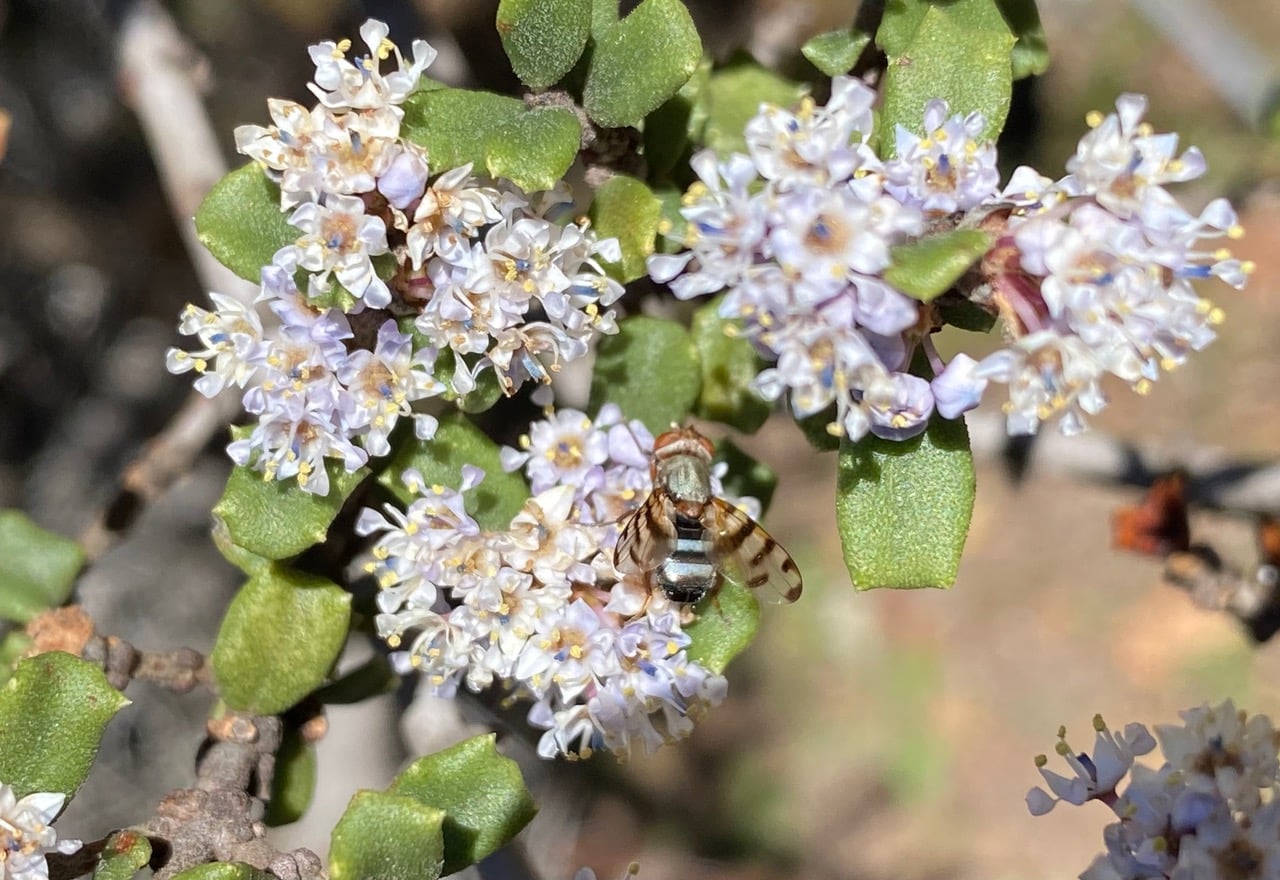
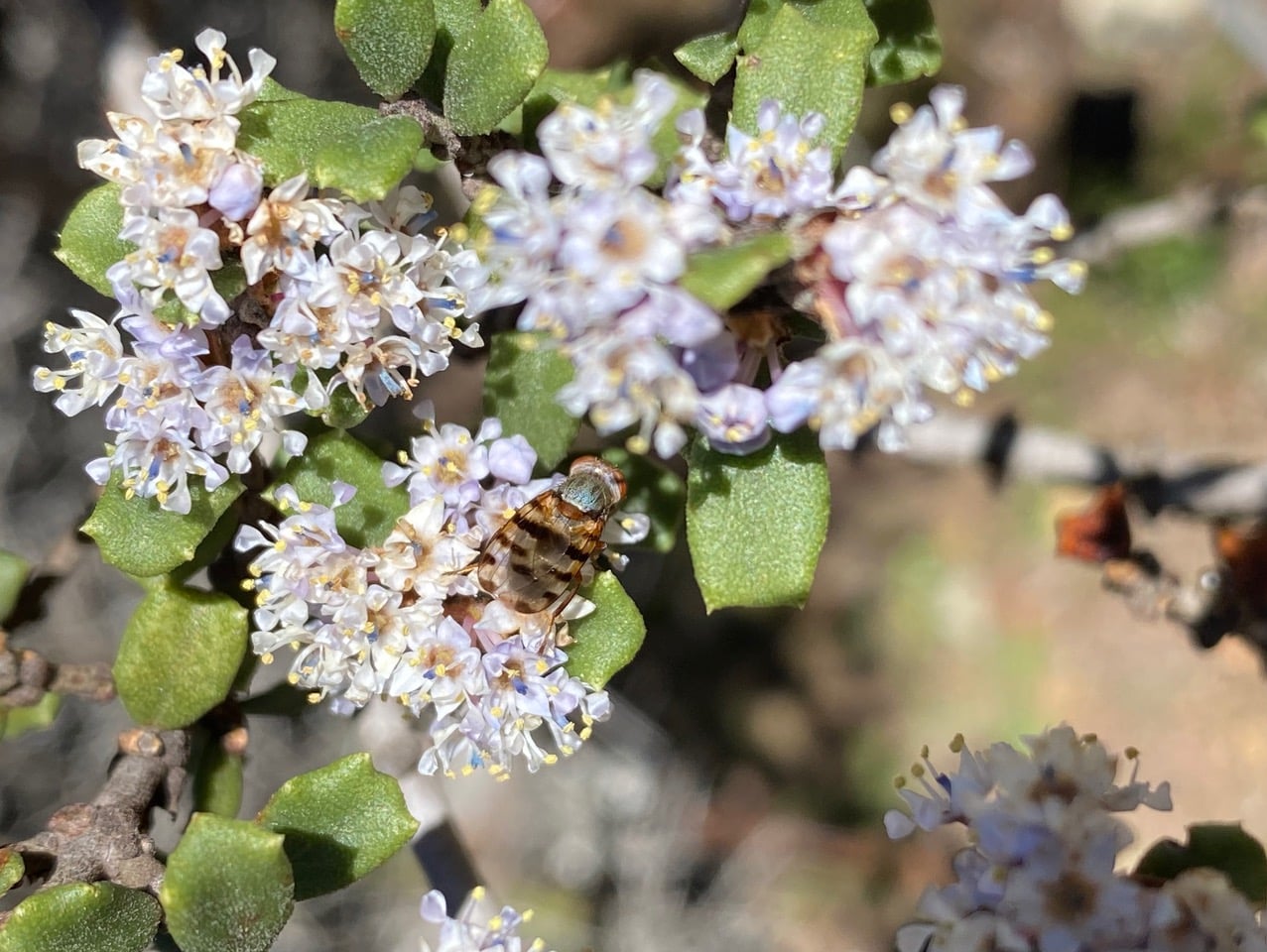
Before I walk out the front gate, I decide to detour to the large Otay Mountain Ceanothus, Ceanothus otayensis that, in its prime has been an insect magnet . Today most of the flowers are faded, but they still manage to attract an occasional bumble bee. Hey, who’s this fly waving its wings as it forages on an inflorescence?
iNaturalist has helped identify it as the Narrow-banded Picture-winged Fly, Ceroxys latiusculus (family Ulidiidae).
Picture-winged flies belong to the family Ulidiidae, in the superfamily Tephritoidea. They are among the more common, ornate, and entertaining of all Diptera, thanks to their lovely wing patterns and adorable courtship behaviors. Most have some kind of pattern of spots, bars, or lines on the wings, and at least a few have metallic bodies. Many can often be found on certain plants, dung, logs, wooden fences, or the trunks of trees. These locations serve as food sources, basking sites, or display sites for courtship. Most species of Picture-winged Flies are herbivorous or detritivorous.
Ceroxys latiusculus is common throughout western North America. Adults are 9-12 mm in length. The abdomen is black with gray bands and the wings have distinctive markings. Larvae develop in the seed heads of Senicio, and other composite flowers. The adult flies are known to invade homes and other buildings in the fall, seeking winter shelter.
Check out this video showing the fly’s wing-waving behavior: