

Pollinator Post 2/20/23 (2)
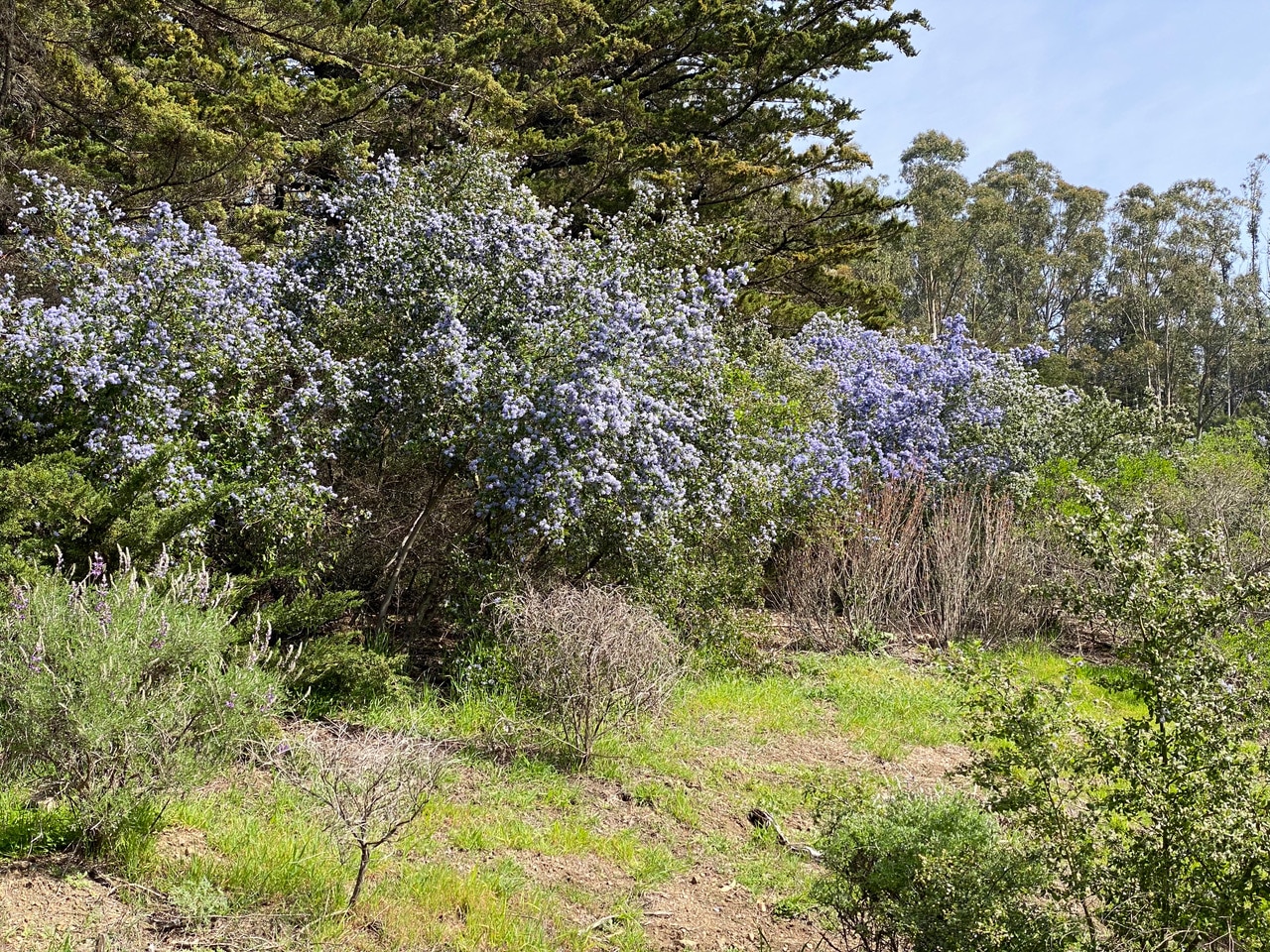
It is time to revisit the stand of Ceanothus in Joaquin Miller Park that was just starting to bloom when I last saw the plants on 2/1.
On a hillside just a stone’s throw from the Pyramid, the Blueblossom Ceanothus, Ceanothus thyrsiflorus is blooming gloriously. There are about a dozen mature plants in all. I’m not sure if these were wild or planted. All around are signs of human manipulation of the landscape, including the non-native Eucalyptus and the Monterey Pines.
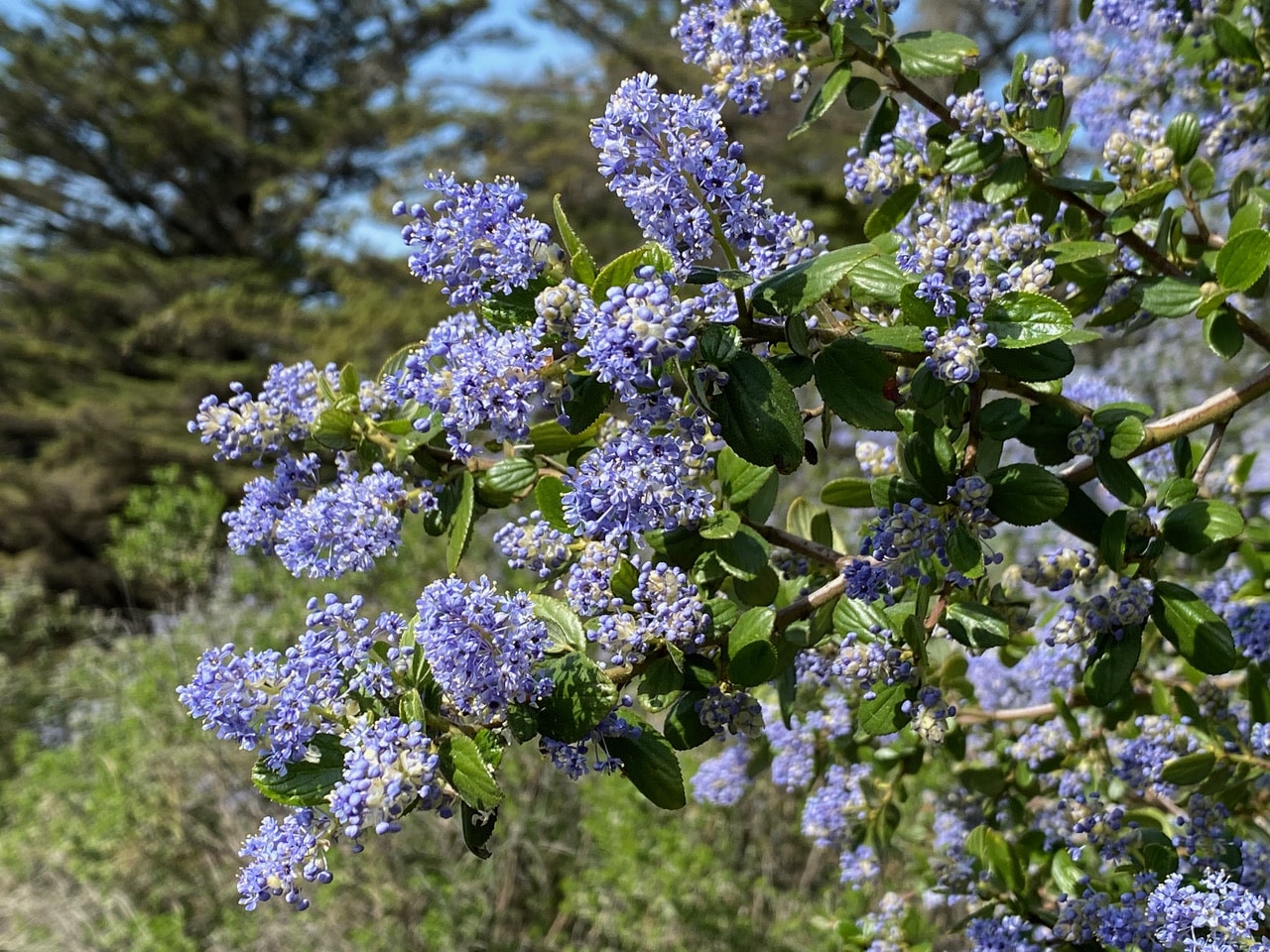
I am thrilled to arrive in time for the peak bloom. As I clamber up the slope to the tall shrubs, the fragrance becomes intoxicating, and I am engulfed in a constant buzz of bees. Can there be a happier place for bees (and me)?
The tiny flowers of Ceanothus are fragrant, and mass together in dense puff-shaped clusters to make a show attractive to bees.
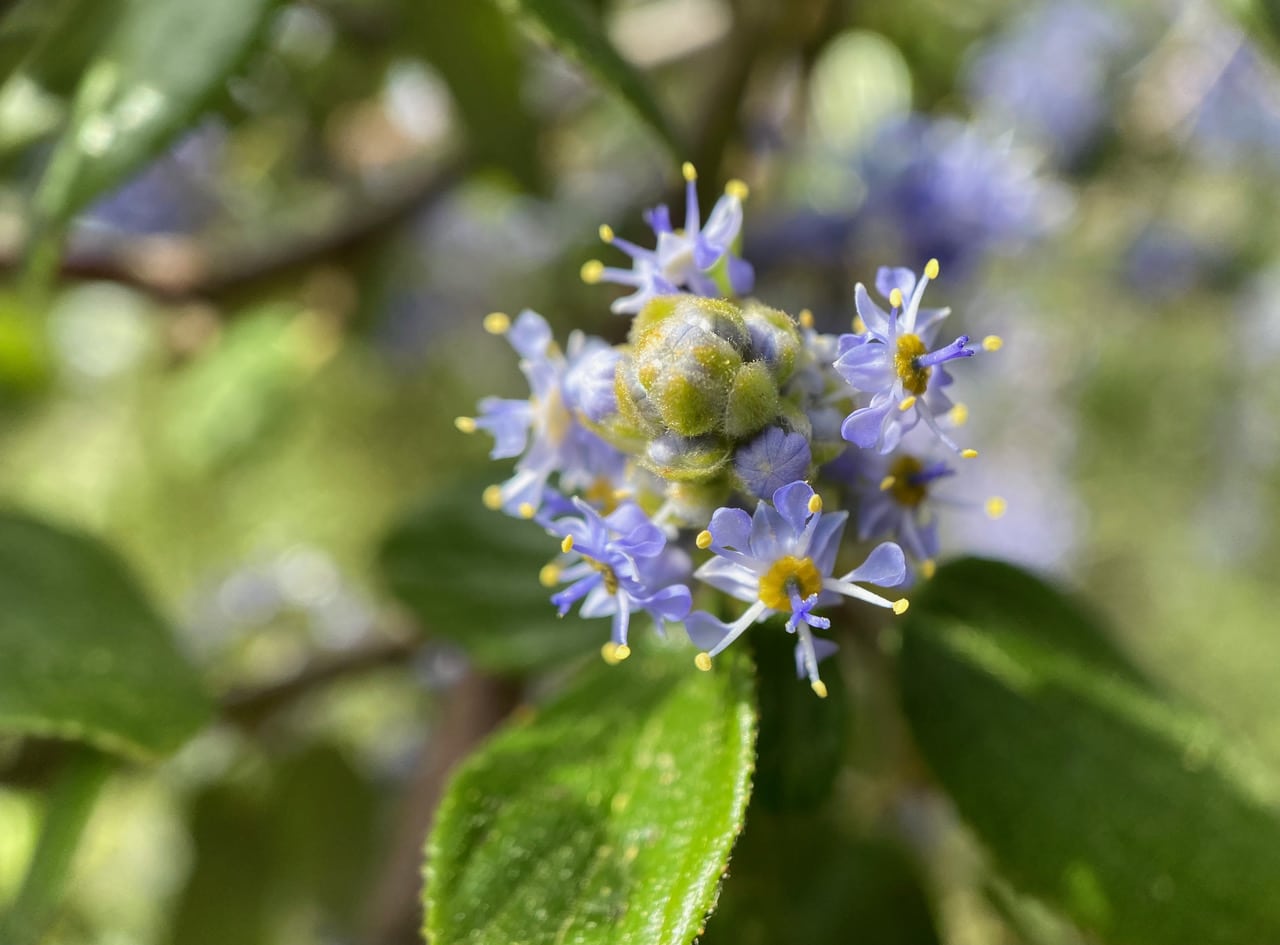
The tiny flowers are so tightly clustered it is hard to figure out the floral structure. Ah, these flowers freshly opened on an inflorescence are spaced further apart and easier to discern.
The individual flowers consists of 5 hooded sepals, 5 scoop-like petals, 5 stamens attached to a nectar-bearing disc, and a superior 3-lobed ovary. Both the sepals and petals are similarly colored. The anthers are fully exerted, making it easy for bees to collect pollen by simply walking over the inflorescence.

This close-up was taken on 2/1.
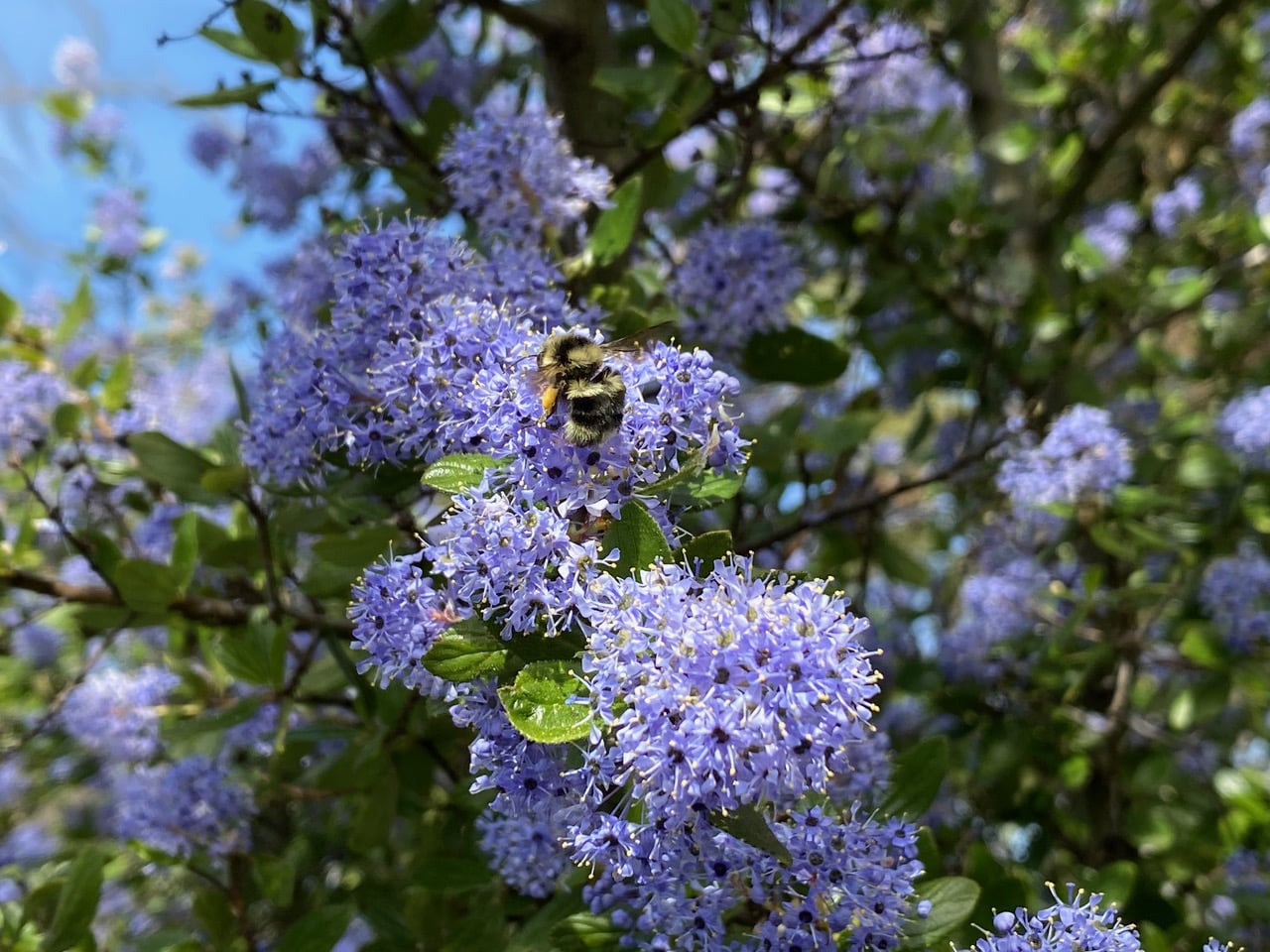
Most of the bees buzzing around are the Black-tailed Bumble Bees, Bombus melanopygus (family Apidae). I see two huge queen Yellow-faced Bumble Bees, Bombus vosnesenskii, but they are foraging too high on the shrub for me to photograph. A few small hoverflies visit the flowers but they are lost in the bumble bee frenzy.

It appears that the yellow nectar-bearing discs turn a dark purple as the flowers age, but that does not seem to deter the bees from foraging on the older inflorescences.
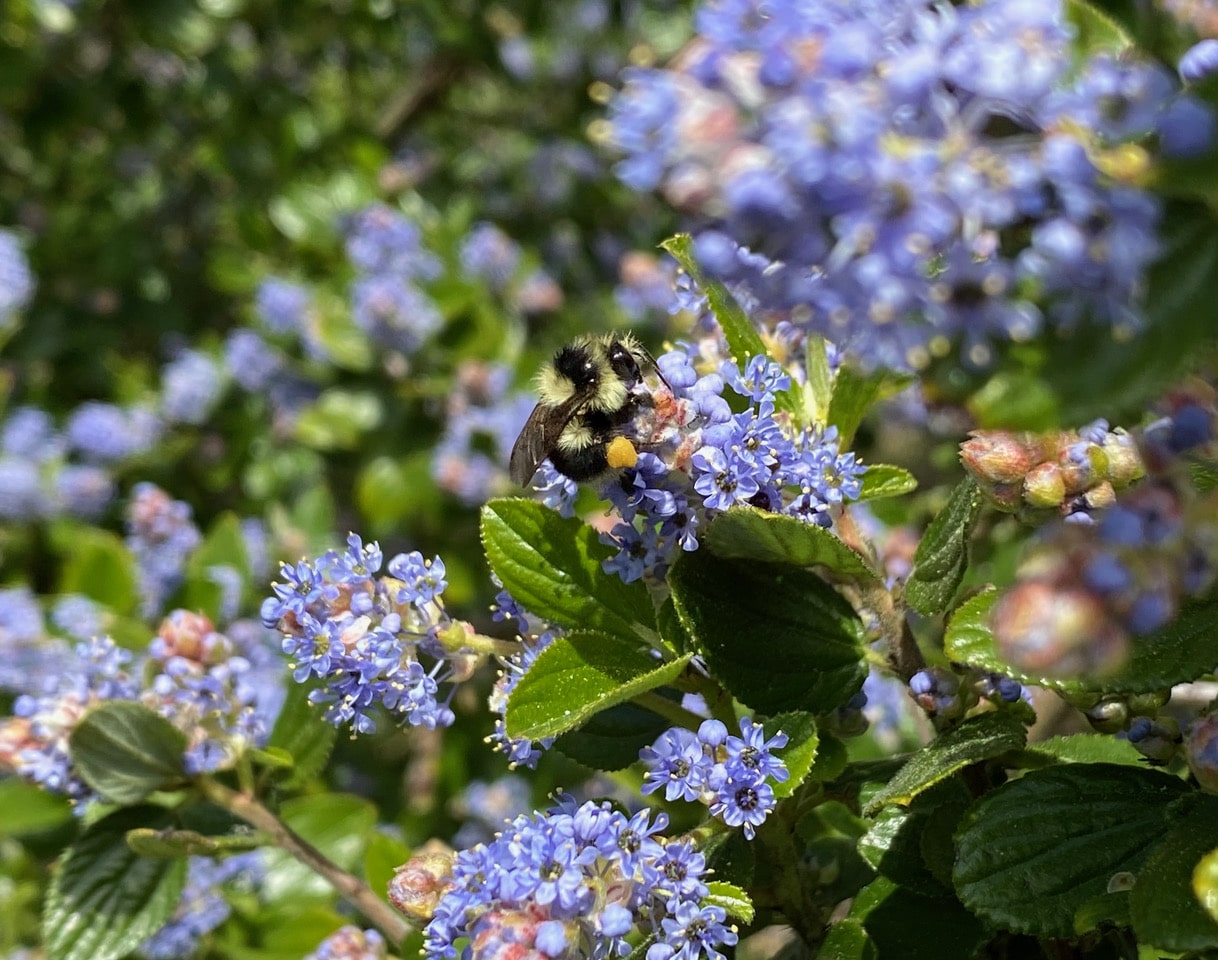
Judging from their small size, most of the Black-tailed Bumble Bees foraging on the Ceanothus today are workers. Some colonies must have been successfully established in the vicinity! Usually the queen bees, much larger in build, are the first to appear in early spring. They are the only ones to over-winter while the rest of the colony dies last year. Having been inseminated last fall, the new queens or gynes are fully equipped for reproduction. Freshly emerged from hibernation, a queen has to forage for herself, look for a good nesting site, usually an abandoned rodent hole. She prepares the nest and lays eggs. She has to nourish herself and her young when they hatch, a single mom responsible for establishing a new colony by herself. Once the first brood is produced, the queen becomes a stay-at-home mom to concentrate on egg laying, while the workers (all female) take over foraging and hive duties. Among the foraging bees, I see some distinctly small individuals. These are most likely the workers from the first brood hand raised by the queens themselves; as larvae they were probably not as well nourished as the regular broods raised by a team of workers.
This is why it is important to include some early blooming natives in the garden to help support the new queens during this crucial period of their lives. The Ceanothus fits the bill nicely. The bees seem to love the nectar, and collecting pollen is a cakewalk as the small flowers are densely clustered and the anthers are fully exserted beyond the corolla.
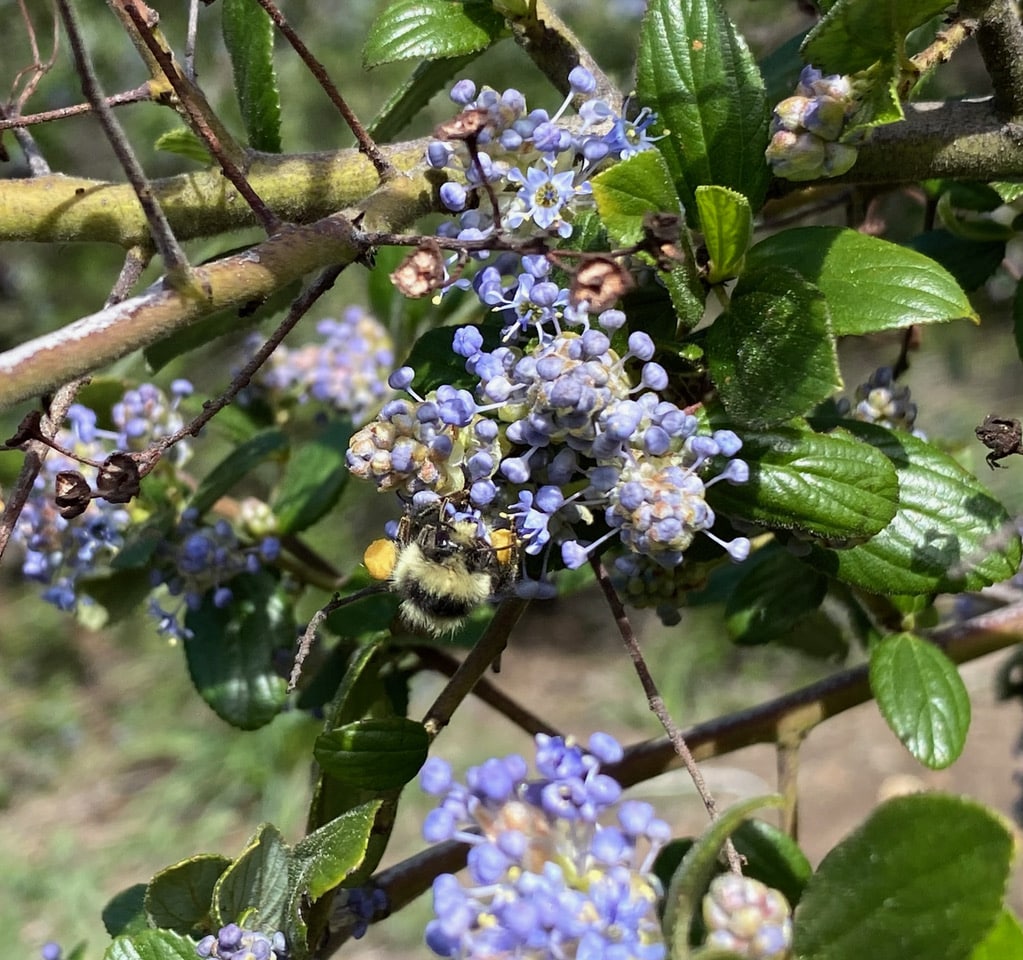
A worker bee is carrying a huge load of pollen in the pollen baskets on her hind legs. The bright spots of cargo look like miniature saddlebags from this angle.

The pollen collecting apparatus in Apidae bees, which include honey bees and bumble bees, is commonly called a “pollen basket” or corbicula. This region is located on the tibia of the hind legs and consists of hairs surrounding a concave region. After the bee visits a flower, she begins to groom herself and brushes the pollen down toward her hind legs and packs the pollen into her pollen basket. A little nectar mixed with the pollen keeps it all together like putty, and the stiff hairs surrounding the pollen basket hold it in place.
.jpg)
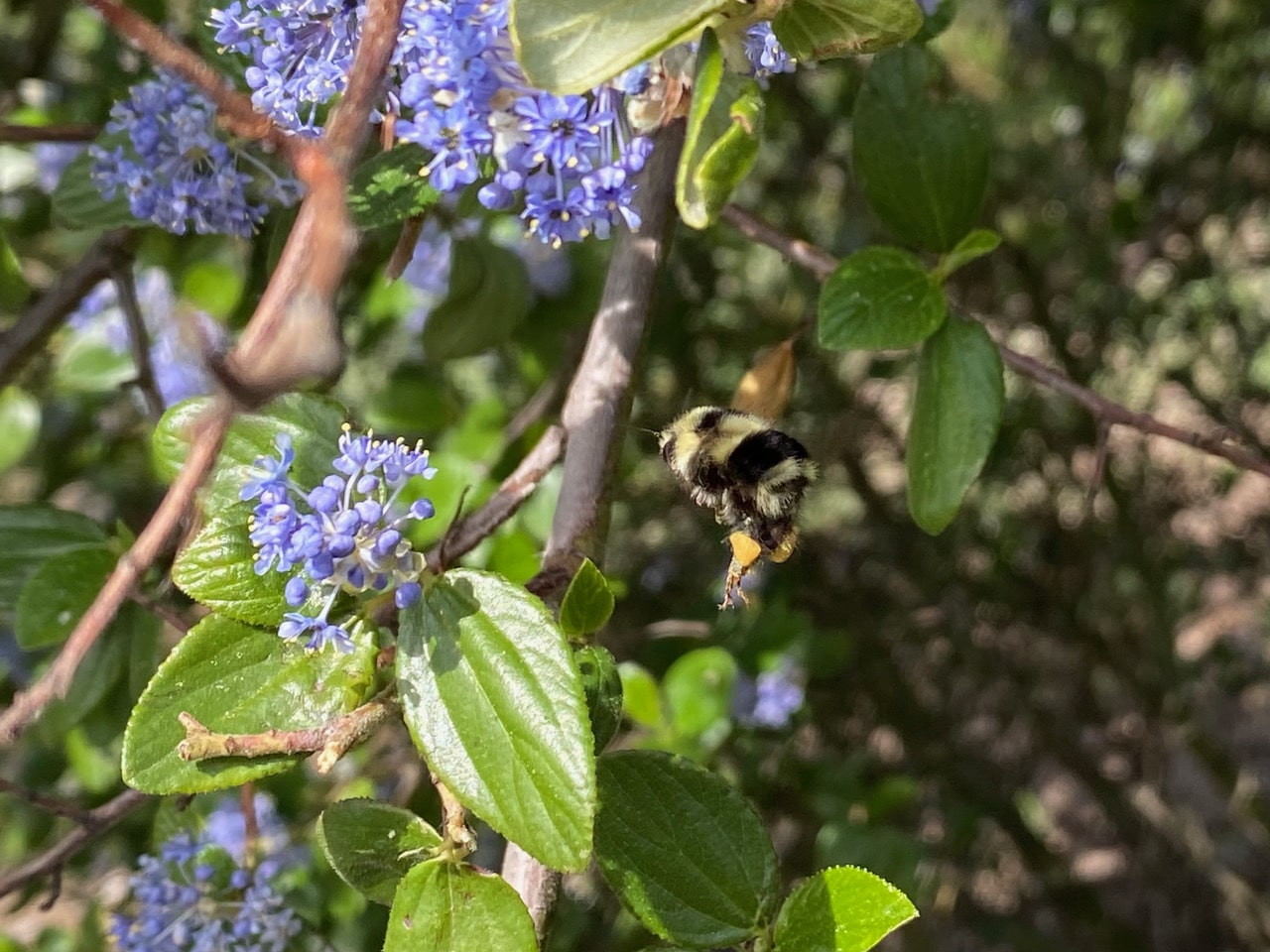
Some of the pollen manipulation (corbicula filling) happens in flight, while the bee is traveling from flower to flower.


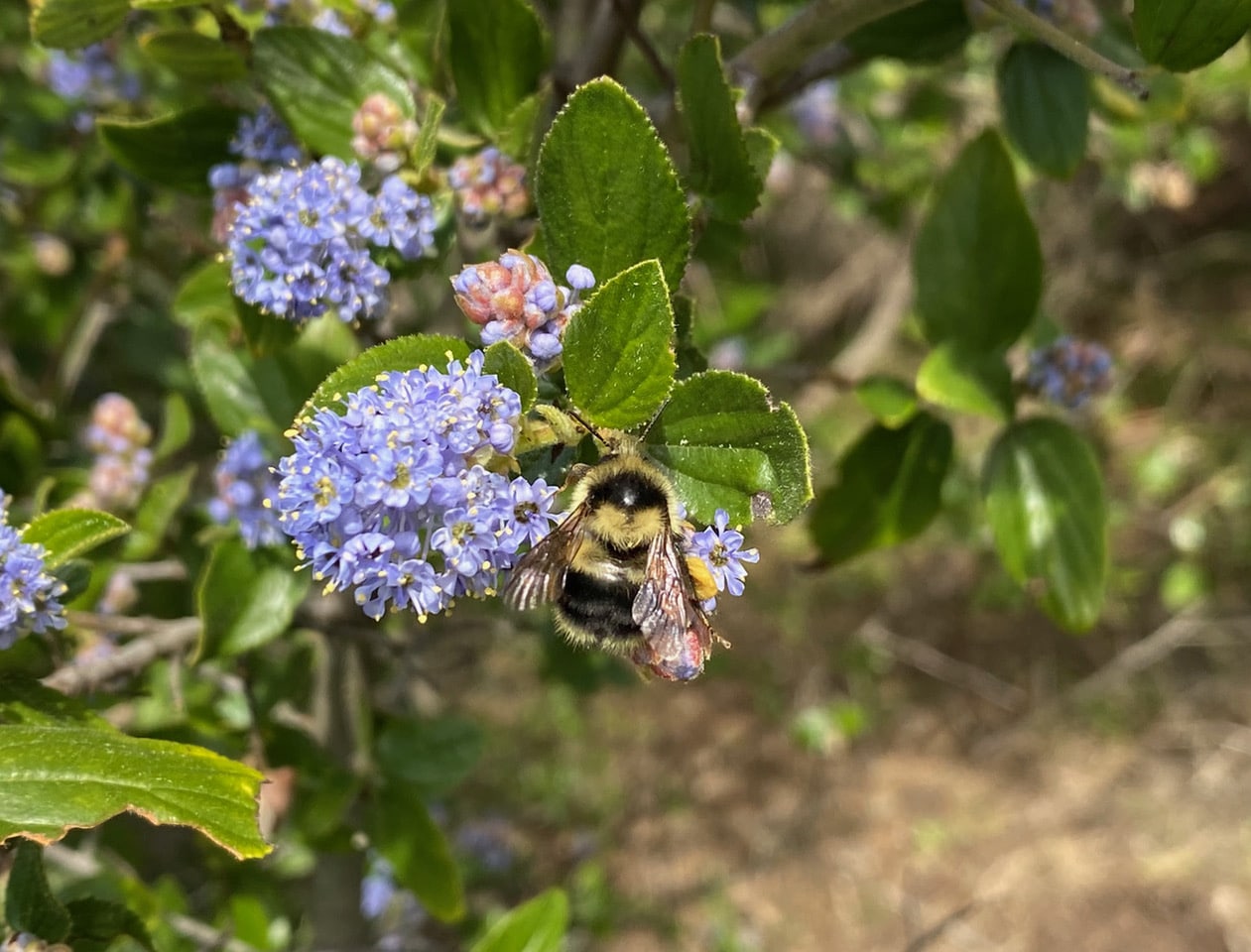
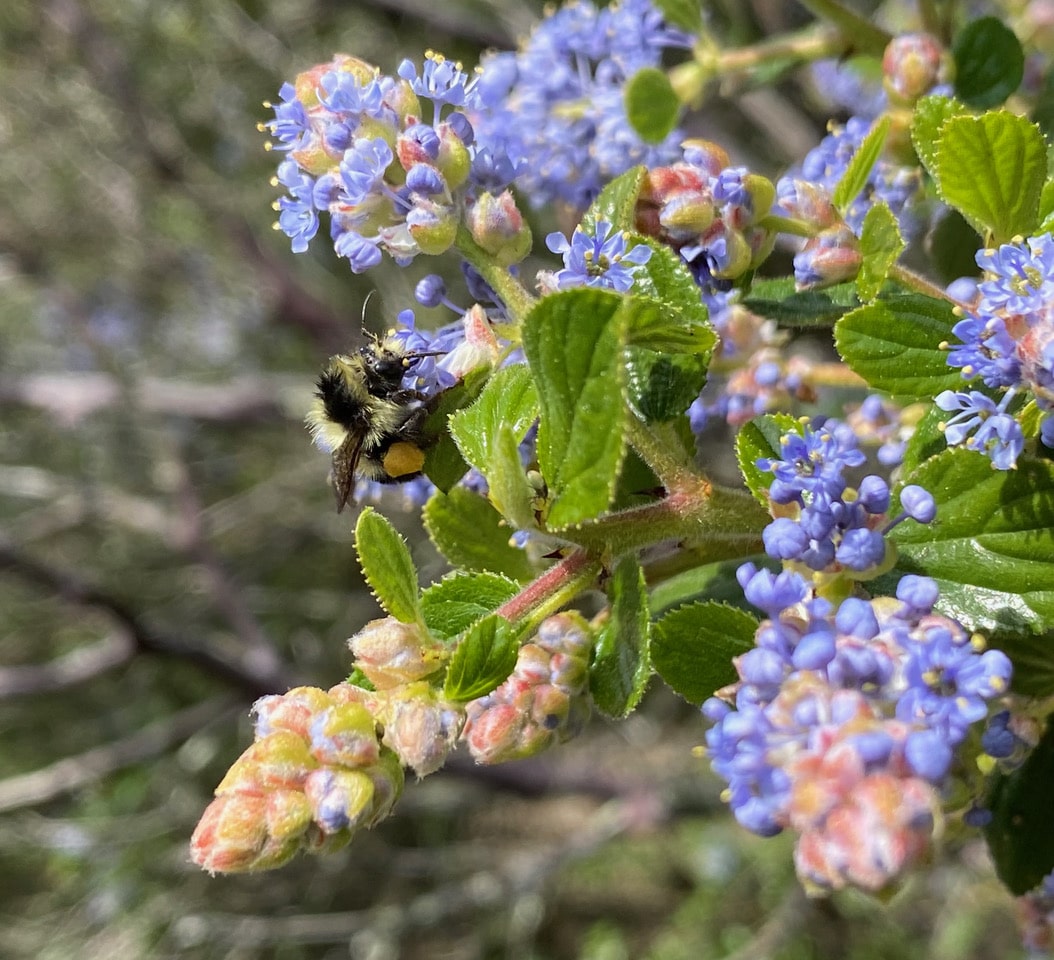
This worker bee looks disheveled. Too busy to groom herself?
BTW, all worker bees in the colony are females. Males are only produced late in the season to inseminate the new queens. They do not collect pollen for the colony, but do seek nectar for themselves.
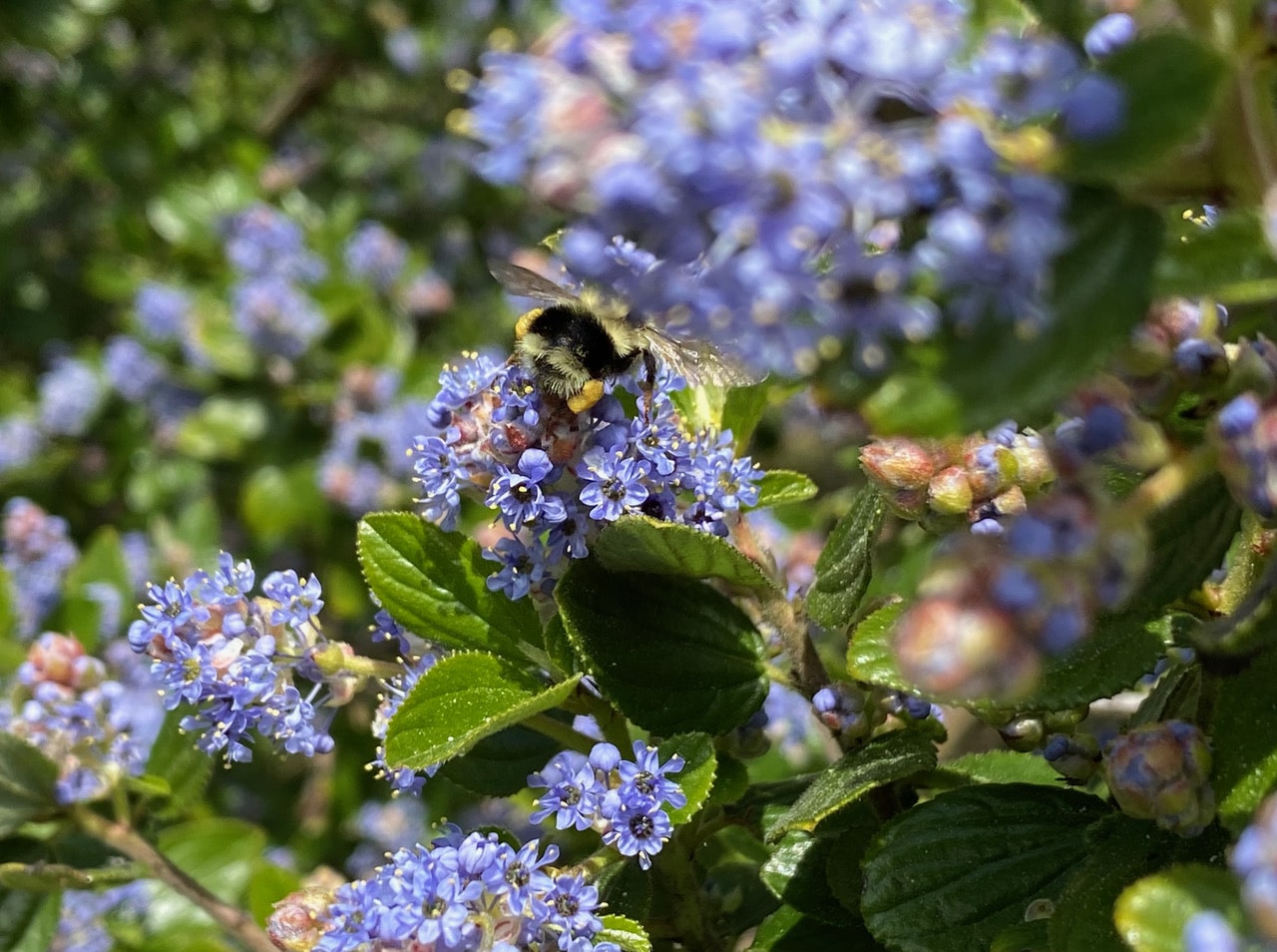
To collect pollen, the bee simply shimmies its way through the Ceanothus flowers. Even without direct contact, the loosened pollen grains are attracted to the hairs of the bee by electro-static force. The bee then grooms the pollen into its corbiculae. Occasionally I hear a high-pitched buzz from the foraging bee. Not sure what that is about. Pure joy and exuberance?
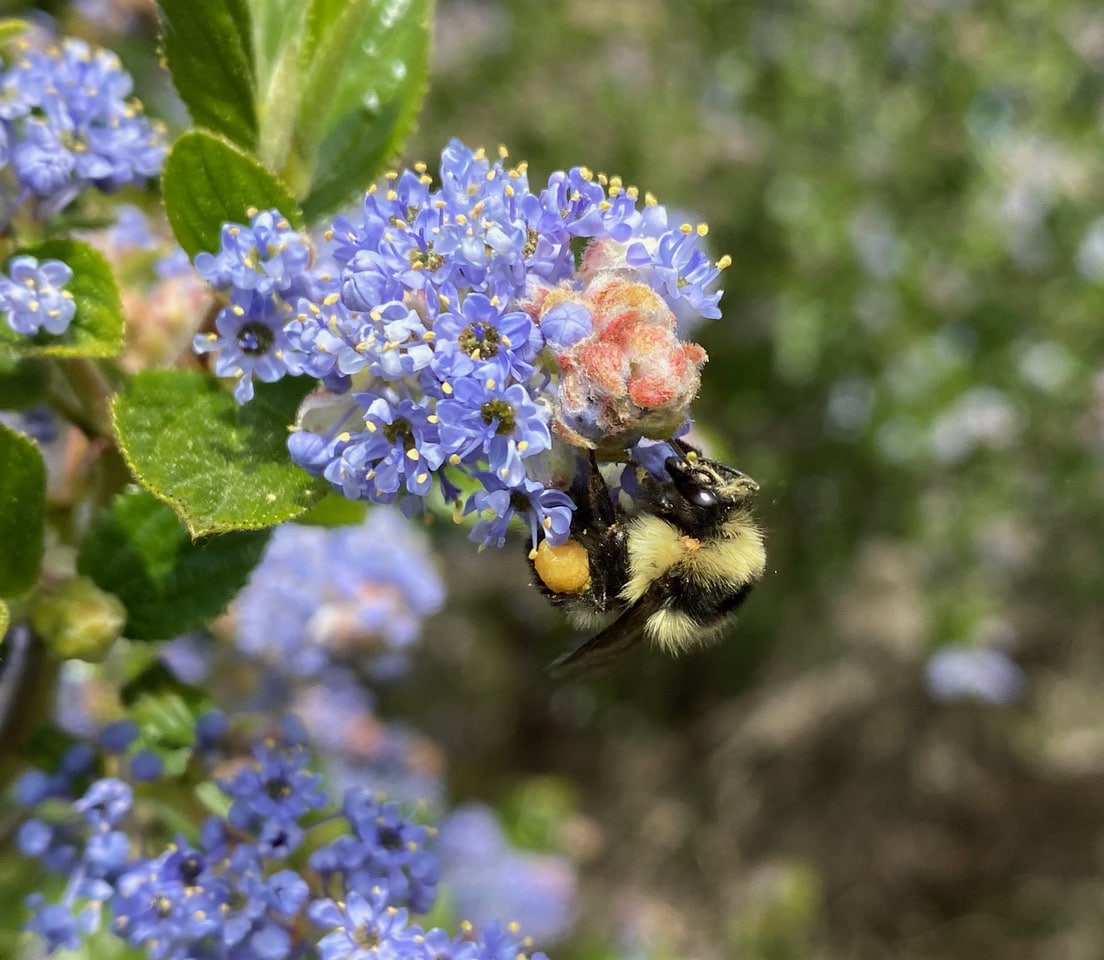
Pollen has dusted the face and body of this hard-working Black-tailed Bumble Bee. It is the stray loose pollen on the bee’s body, and not the neatly packed pollen paste in her corbiculae, that is likely to be transferred (inadvertently) to the next flowers she visits. Pollination is actually a haphazard affair.