

Pollinator Post 2/20/23 (1)
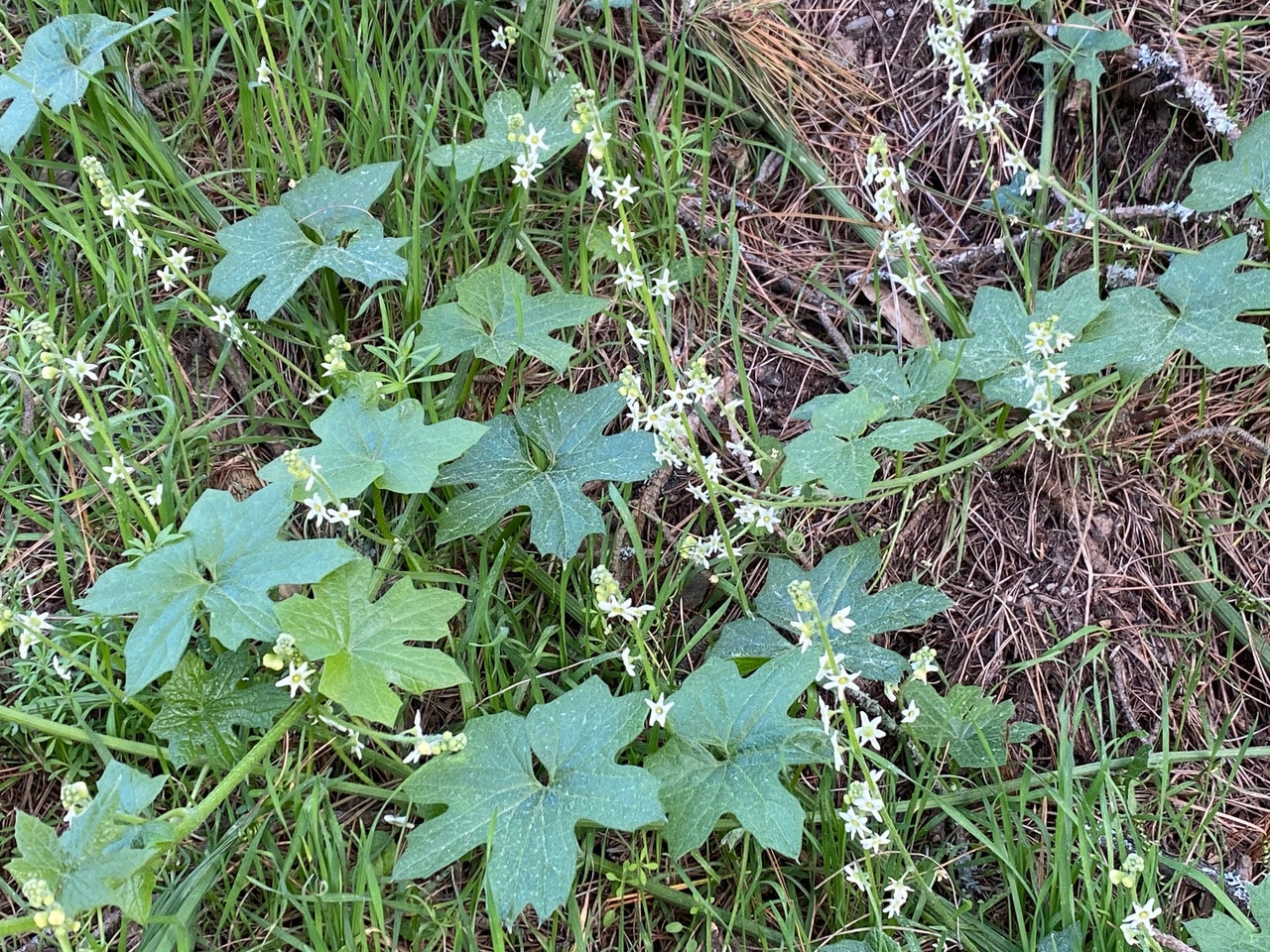
An extensive Wild Cucumber vine is trailing on the grassy slope along Sanborn Drive in Joaquin Miller Park, Oakland.
I immediately notice how much larger and whiter these Marah flowers are compared to the ones I have been observing on the Marah at Skyline Gardens. That’s because they are different species. The smaller, yellowish flowers belong to the California Manroot, Marah fabacea, whereas the ones in front of me now belong to Marah oregana, commonly known as Wild Cucumber or Oregon Manroot. Both species are commonly found in California.
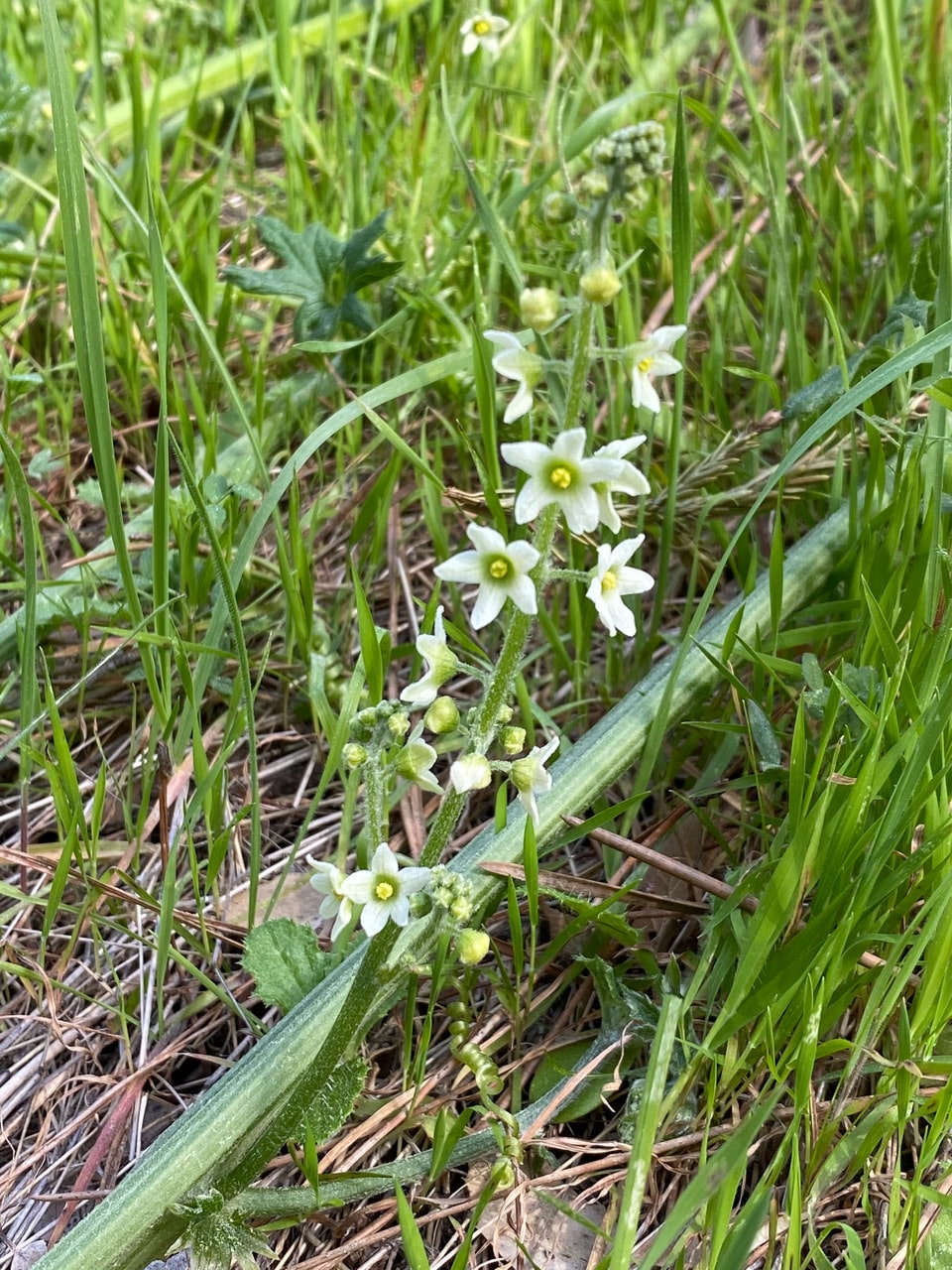
The flower arrangement on both Marah species are the same. The flower is monoecious: separate male and female flowers are found on the same plant. Male flowers appear in open spikes while solitary female flowers appear at the leaf axil, often beneath the male flowers. A small hairy inferior ovary is already evident when the female flower is very young. This will eventually develop into a spiky fruit. The wild cucumber is pollinated by insects, but the plant is self-fertile, meaning that pollen from the male flowers can fertilize the female flowers on the same plant.
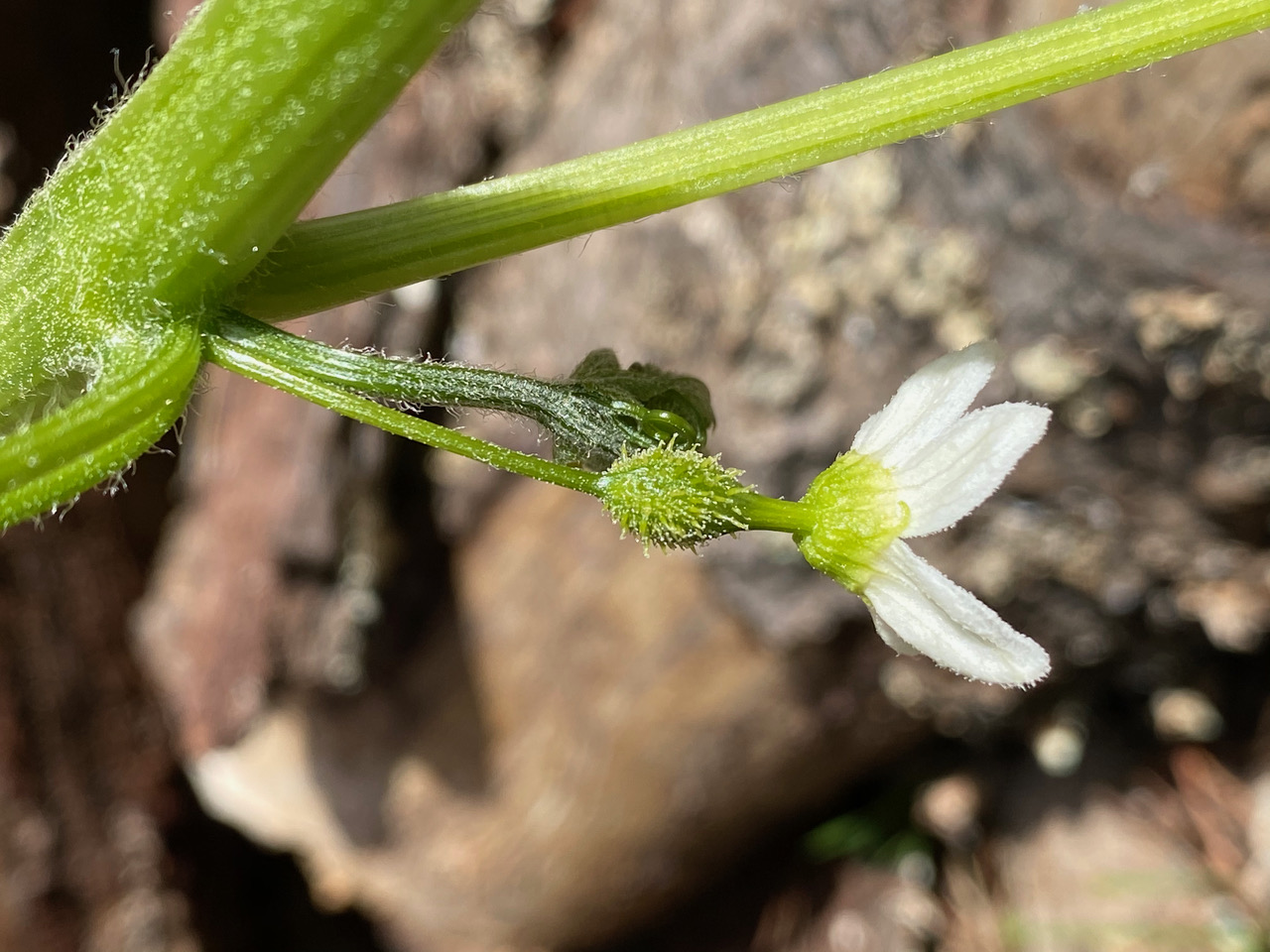
Female flowers are few and far in between on the Marah vine. One has to consciously look for them to find them. Ah, here’s one hanging from a vine that is draped over a tree stump. The spiny green structure below the corolla is the immature fruit. The shape of the fruit is another distinguishing feature for the two Marahs, even at this early stage. Instead of being spherical, the fruits of Marah oregana are football shaped.

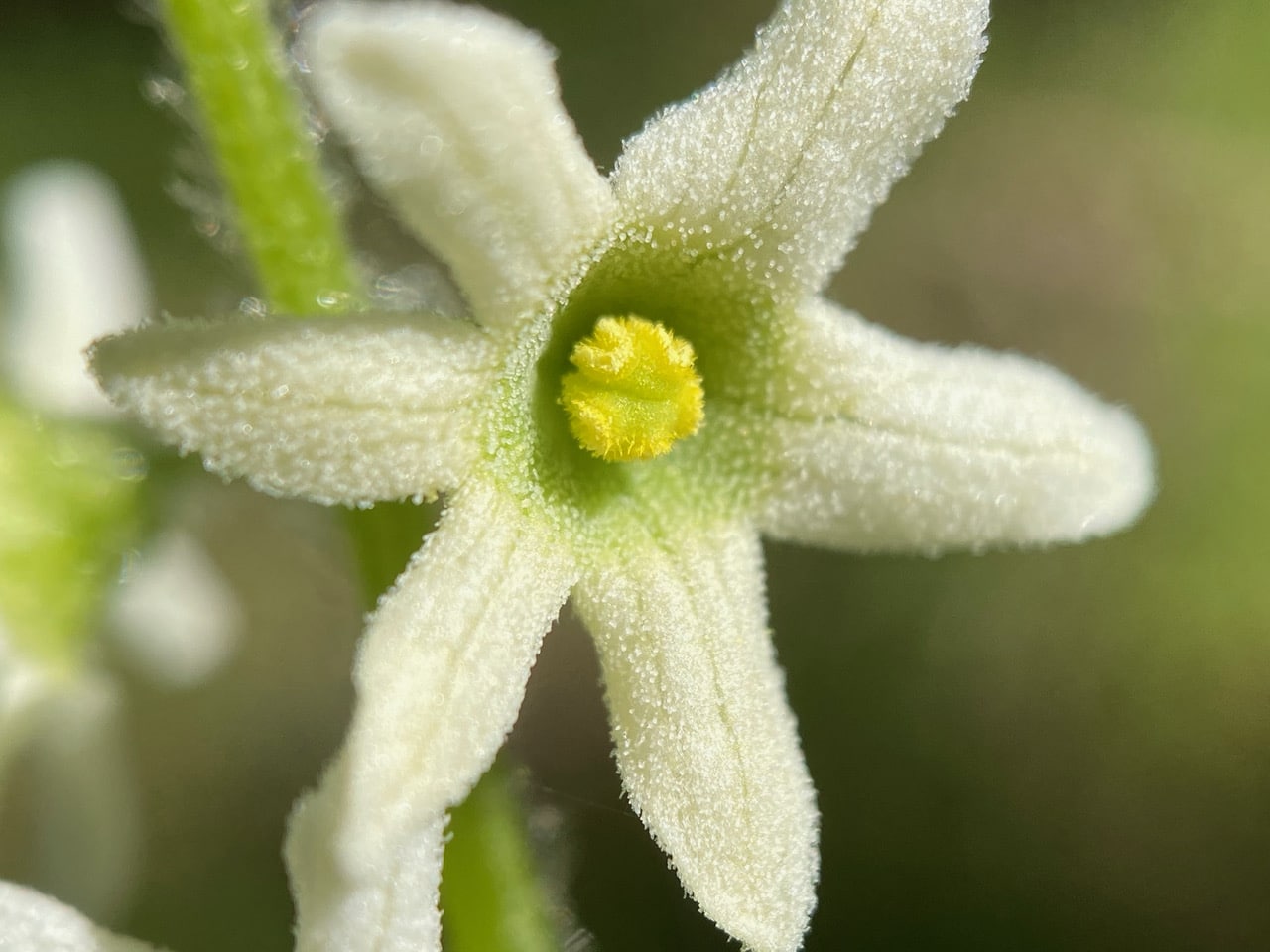
I pay special attention to the reproductive parts of the flowers. Here’s a fresh male flower bearing pollen on its lobed stamens.
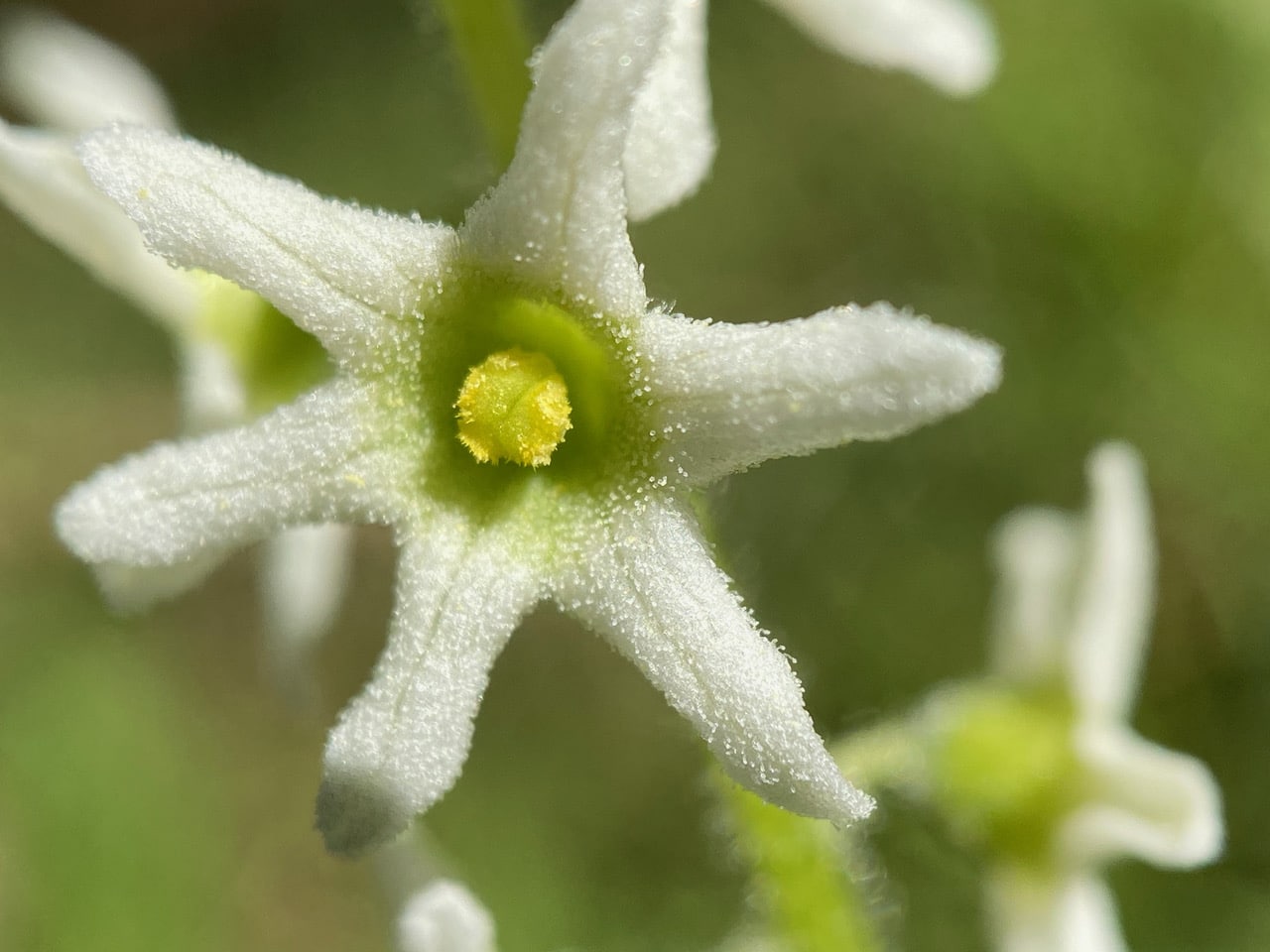
The fused petals form a rather deep cup at the base of the corolla.

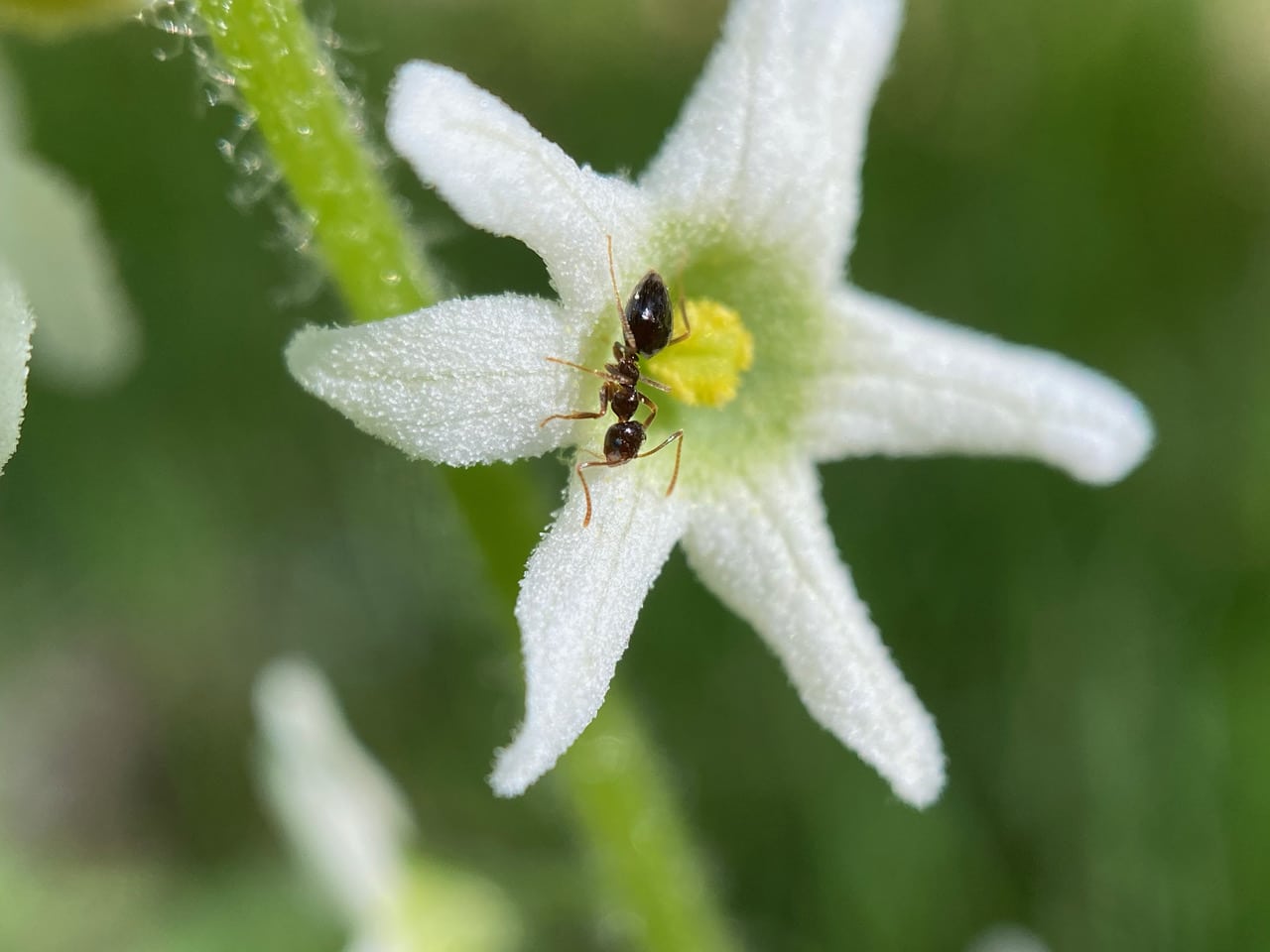 An Argentine Ant climbs on a male flower. What follows below is a composite of several observations of ant behavior on different male flowers of Marah.
  The ant skillfully reaches down the narrow cup, probably seeking nectar at the base of the corolla.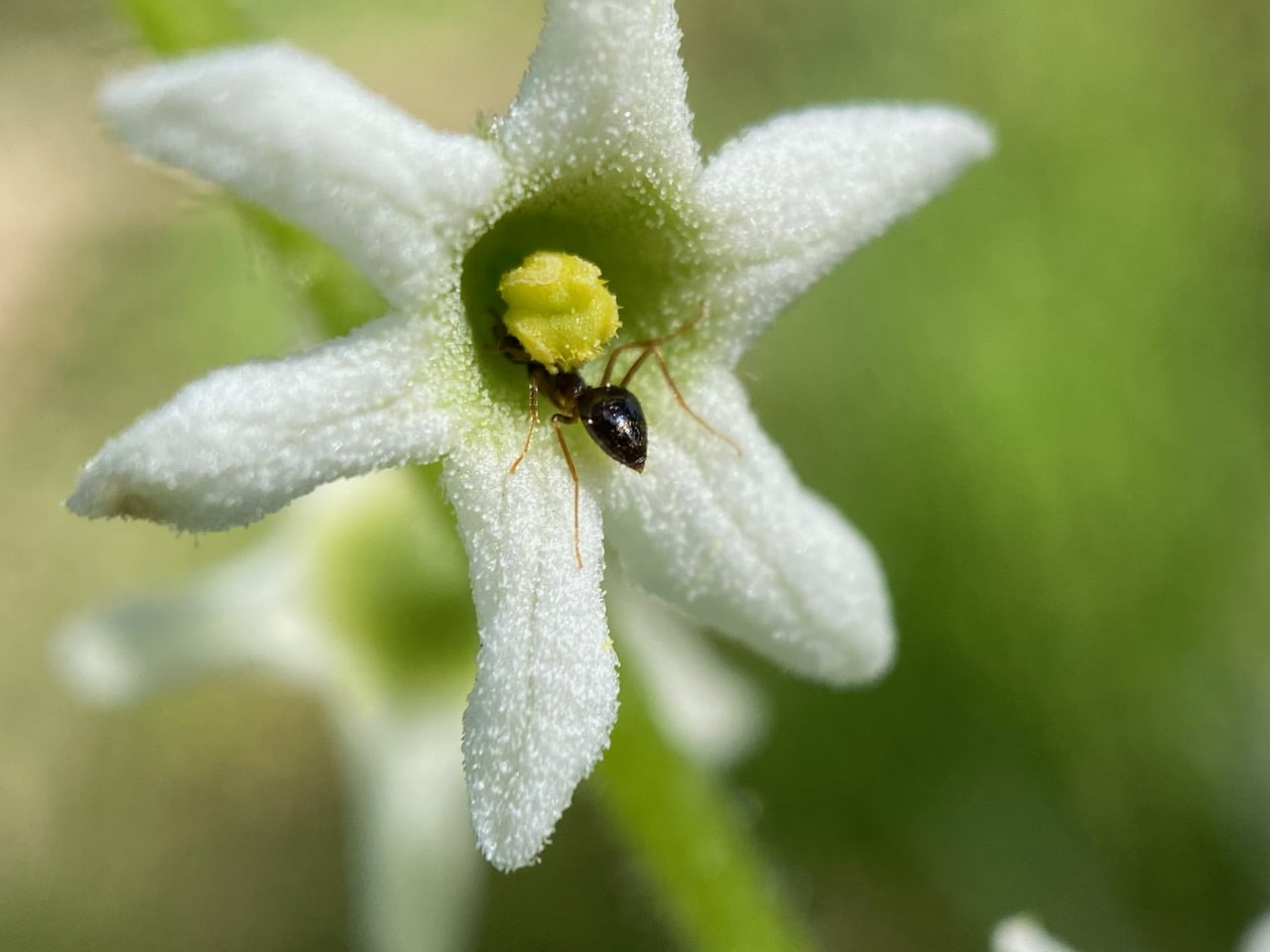
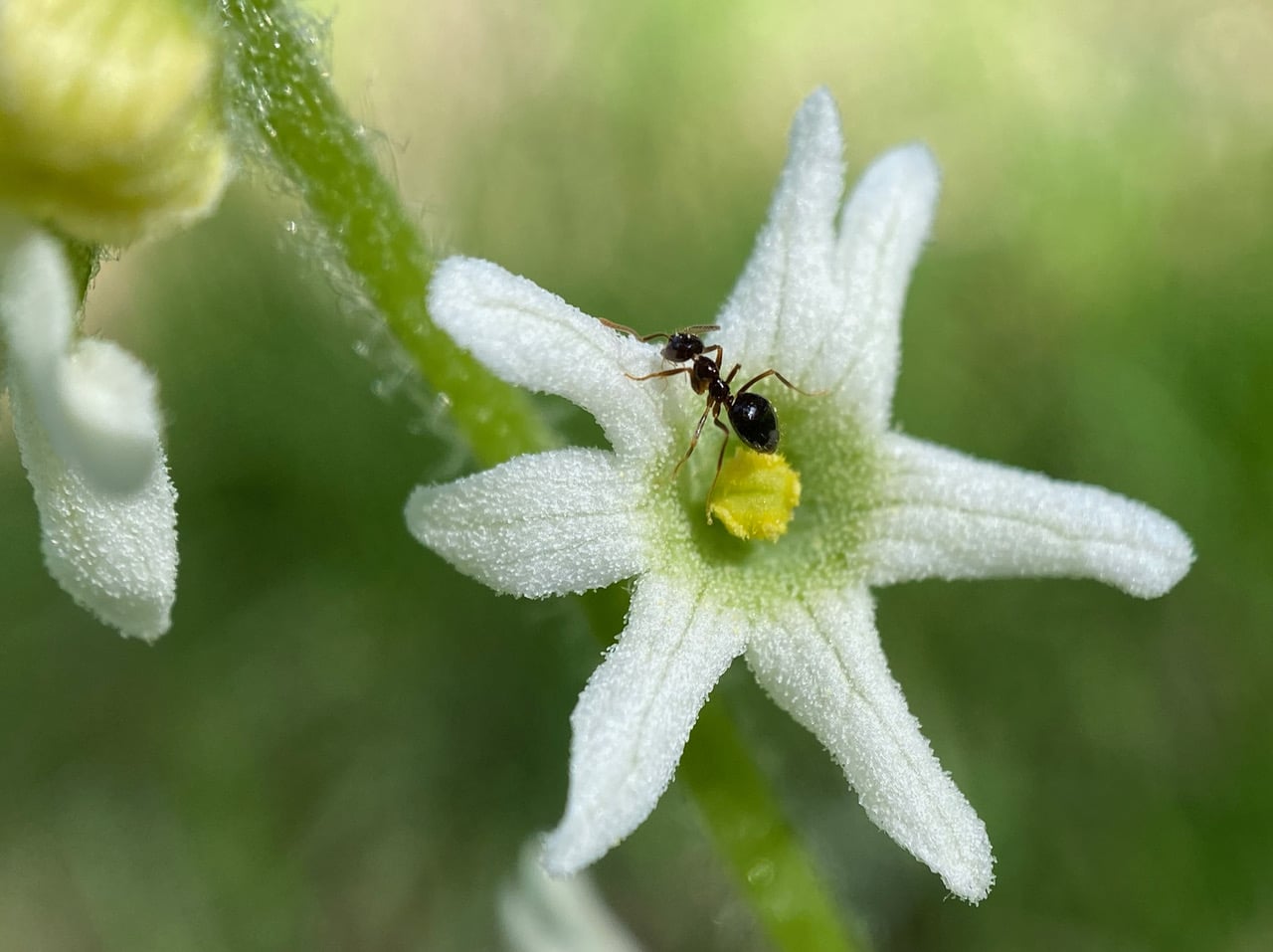
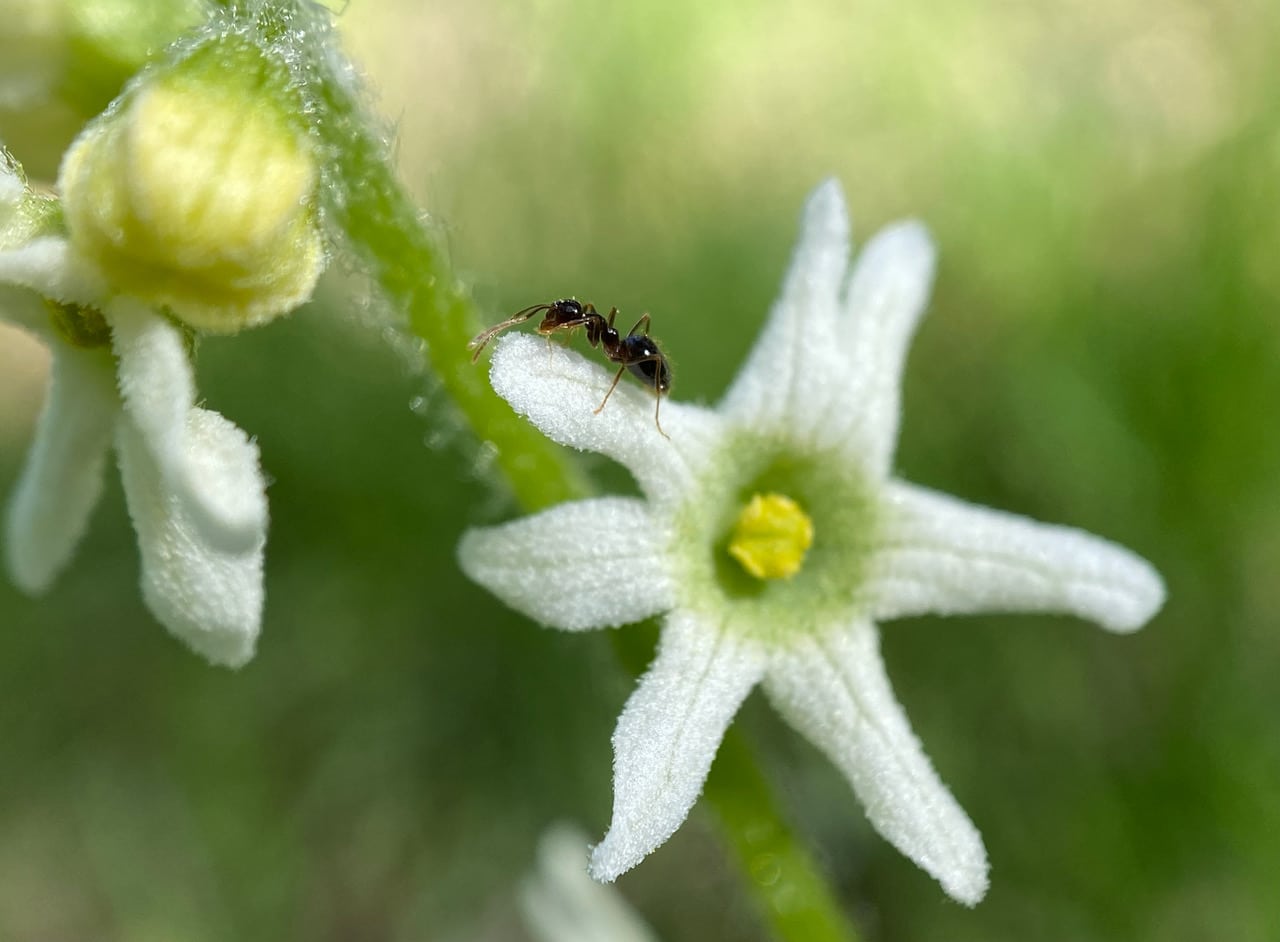
When the ant emerges from the male flower, it sometimes carries some pollen on its body, especially on the head.
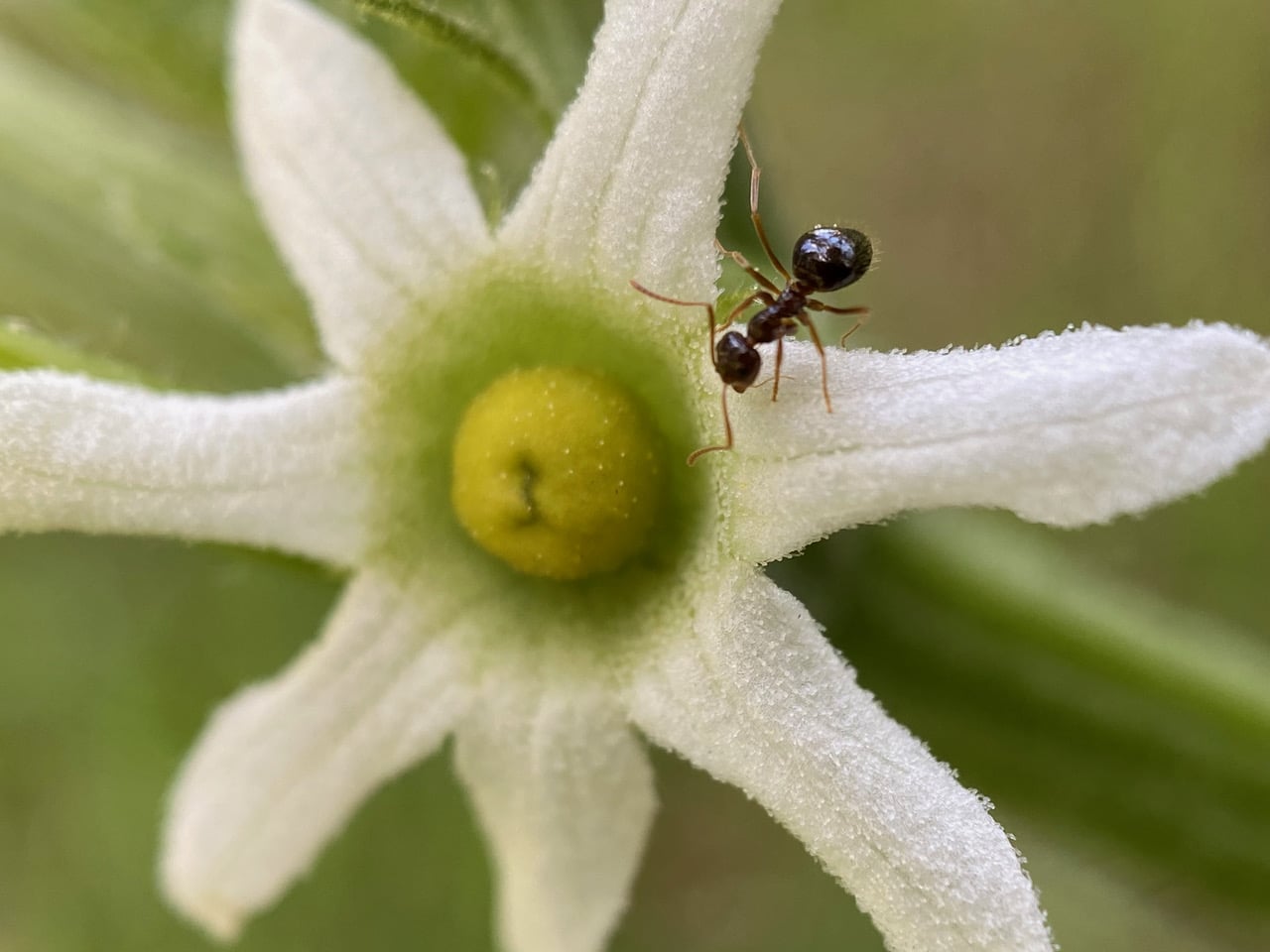
An Argentine Ant has discovered a female Marah flower.
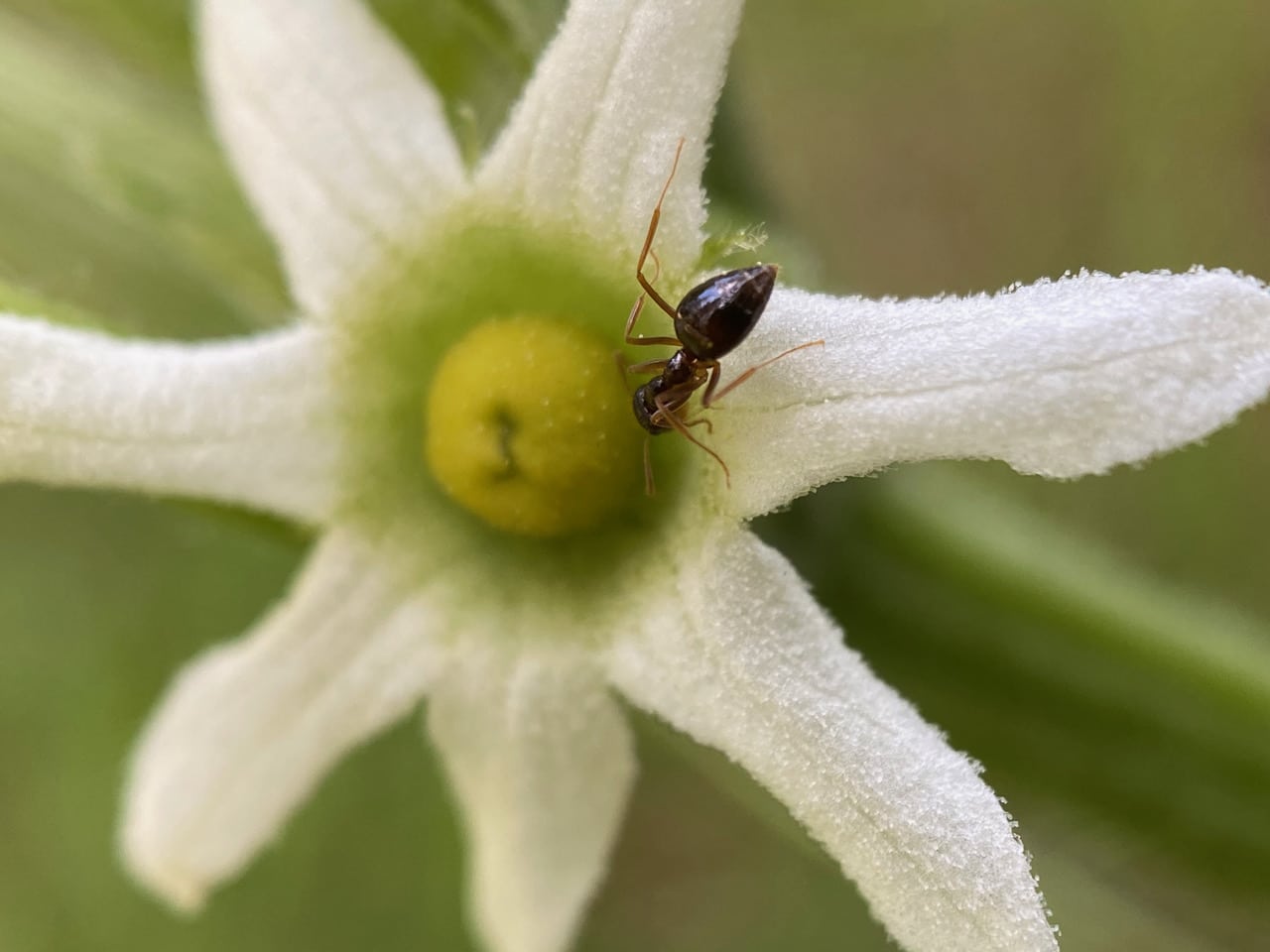
The ant carefully descends the narrow corolla.
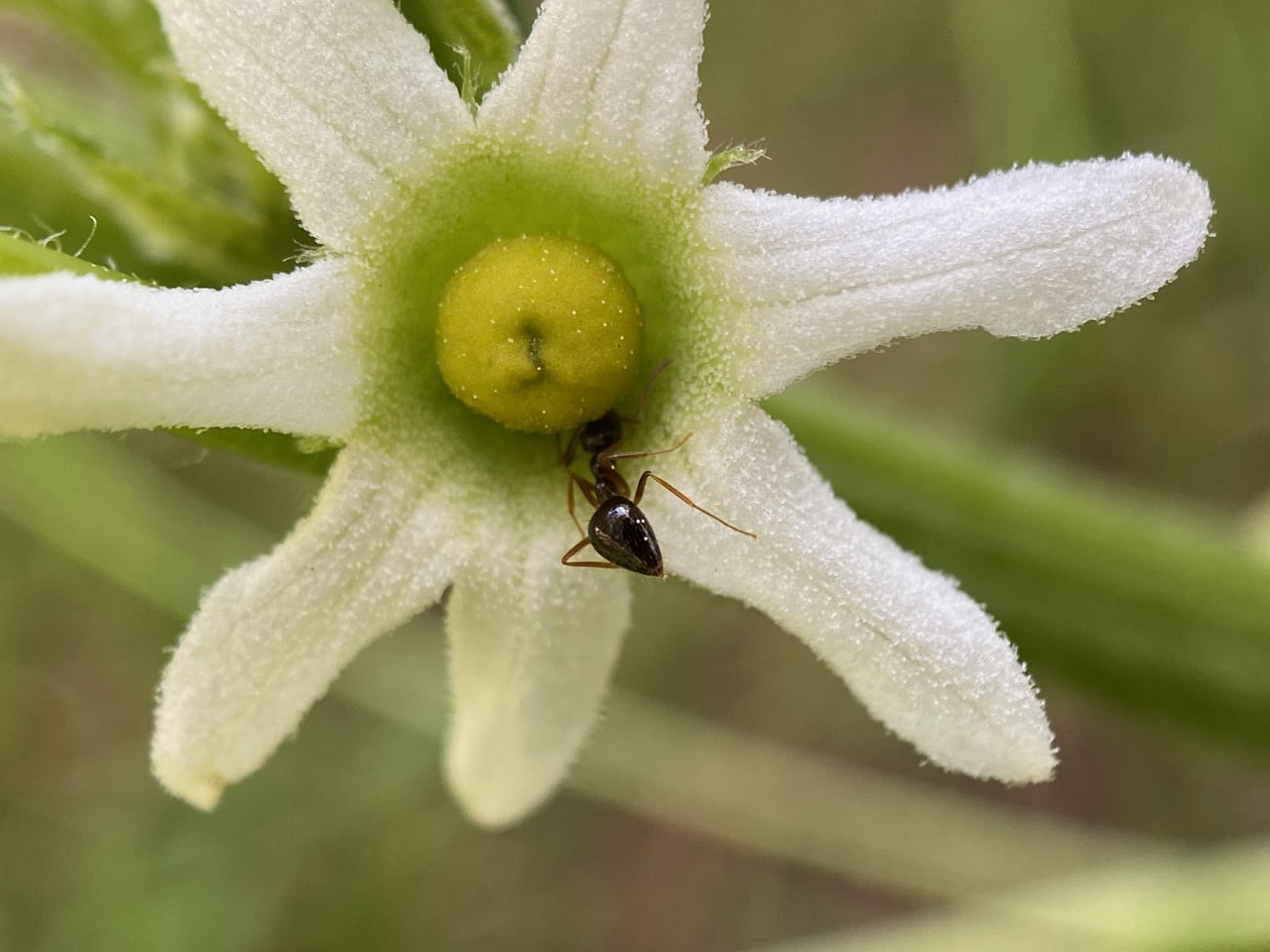
The ant has to lower its head to reach the nectar under the bulbous pistil. Note the pollen grains on the ant’s abdomen. There are already numerous pollen grains stuck on the stigmatic surface of the pistil. Obviously the flower has had many previous visitors who left their loads of pollen.
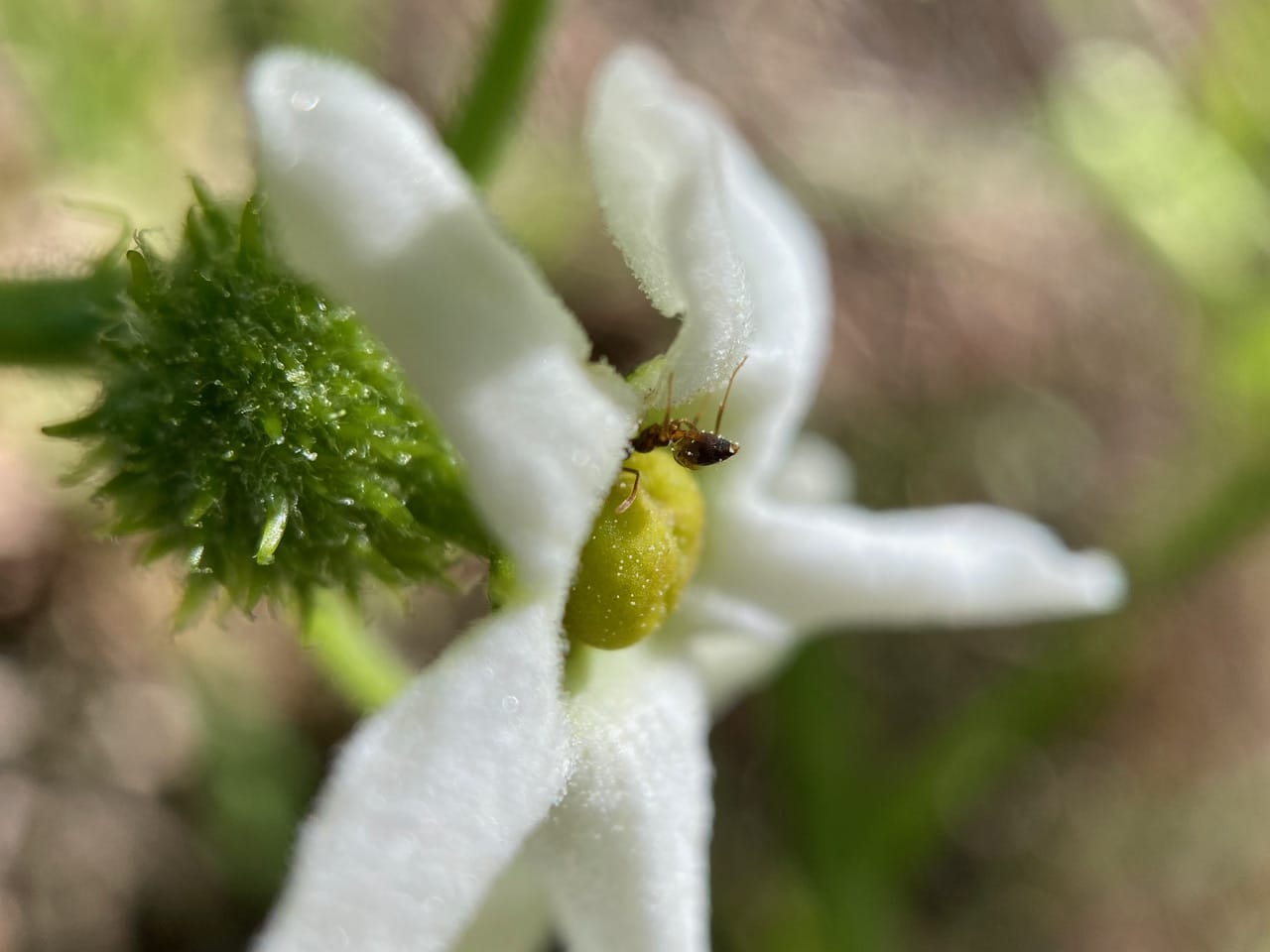
Here’s another Argentine Ant entering a female Marah flower, bearing some yellow pollen grains from previous male flowers it has sought nectar from. It is becoming evident to me that the ants are effective pollinators for Marah. Since the plant is self-fertile, any small crawling insects attracted to nectar can serve as pollinators. It would be interesting to see if small bees are attracted to Marah flowers. Or even gnats?