

Pollinator Post 2/2/26 (2)
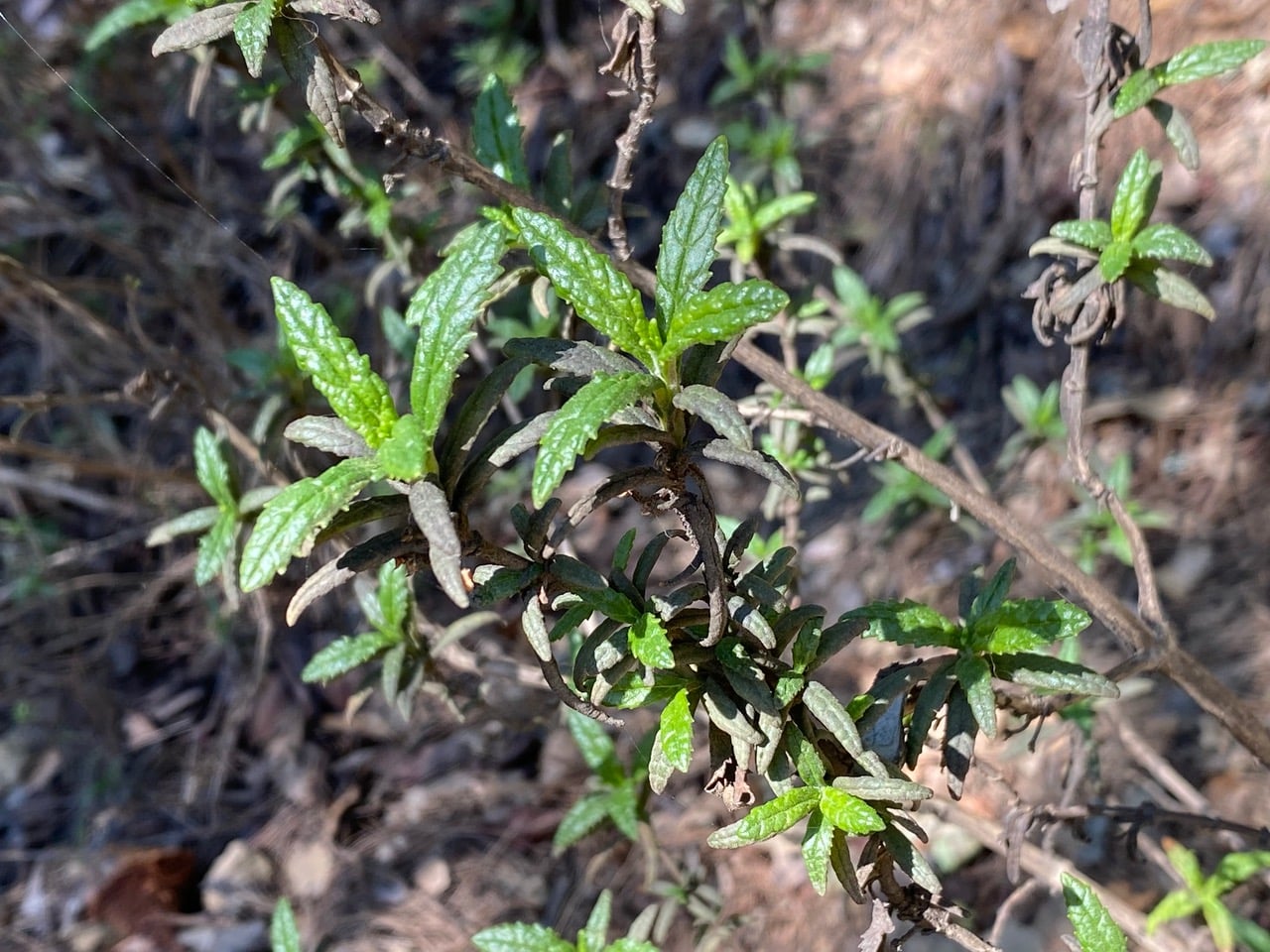
Bush Monkey Flower, Diplacus aurantiacus has sprouted bright green leaves at every branch tip and stem node to replace the dark, spent leaves from last year. Life is ready for renewal!
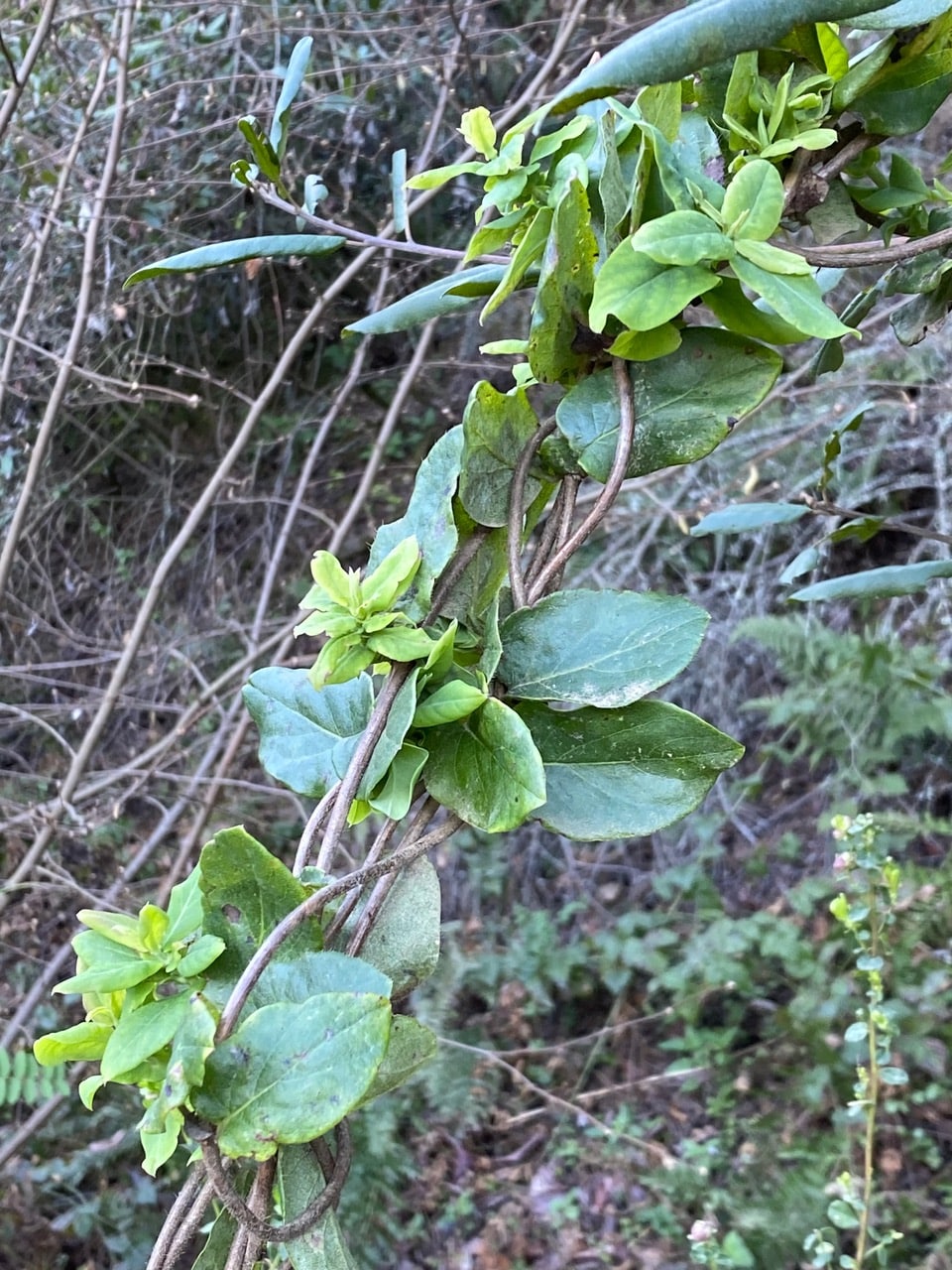
Cascading down a large Coffeeberry shrub, the vines of a Pink Honeysuckle, Lonicera hispidula have intertwined with each other for support. They have also sprouted prolific new growths on every node along the vine. Pink Honeysuckle
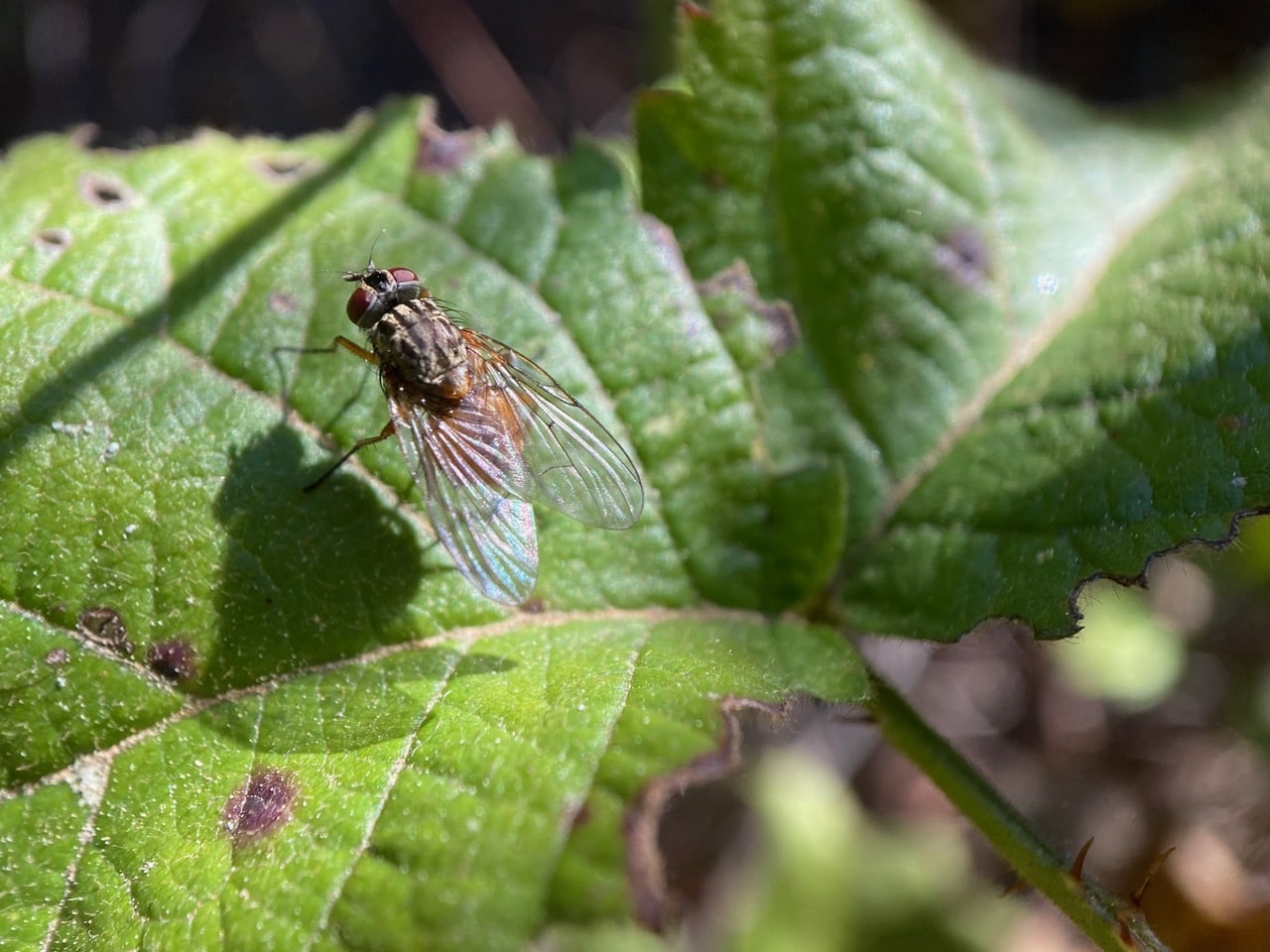
A fly with yellowish abdomen lands on a Blackberry leaf. iNaturalist has helped identify it as a member of the House Flies and Allies, Phaonia sp.(family Muscidae).
Phaonia is a very large genus in the fly family Muscidae. It is distributed worldwide, with over 80 species in North America. Larvae develop in sap runs, decaying wood and plant matter, fungi, carrion, humus soil. They are obligate carnivores that feed on other insect larvae.

A pale, ghost-like spider is hiding under a broken leaf of Soap Plant. It is most likely a freshly molted spider still waiting for its exoskeleton to dry and harden, and for coloration to set in. Judging from its large, bulbous pedipalps, the spider is probably a male having molted for the last time to reach adulthood. Uh-oh, it is already missing some legs on the left. As an adult, it will not be able to regenerate those legs.
Like other arthropods, spiders molt in order to grow. The process involves shedding their hard outer shell (exoskeleton) to reveal a new, larger, softer one underneath. This leaves behind an empty shell called an exuvia, making the spider vulnerable as they rest and wait for their new skin to harden, which requires them to stop eating and hide.
Mature male spiders possess conspicuously enlarged, bulbous tips on their pedipalps – often resembling “boxing gloves” – which function as organs to store and transfer sperm to females during mating. These structures, which develop upon reaching sexual maturity, are also used for courtship displays, sensory perception, and cleaning. The specialized appendages are crucial for distinguishing mature males from females and immature spiders. A spider can go through 20 or more molts before it reaches its full, adult size. Not only does the shedding allow for growth, but it also allows for regeneration. If a spider loses a leg, it is able to grow a new leg provided it still has at least one more molt left in its life cycle. In most species the new leg is thinner and shorter than the original leg. It can take two or three molts until the regenerated limb matches the original in appearance.
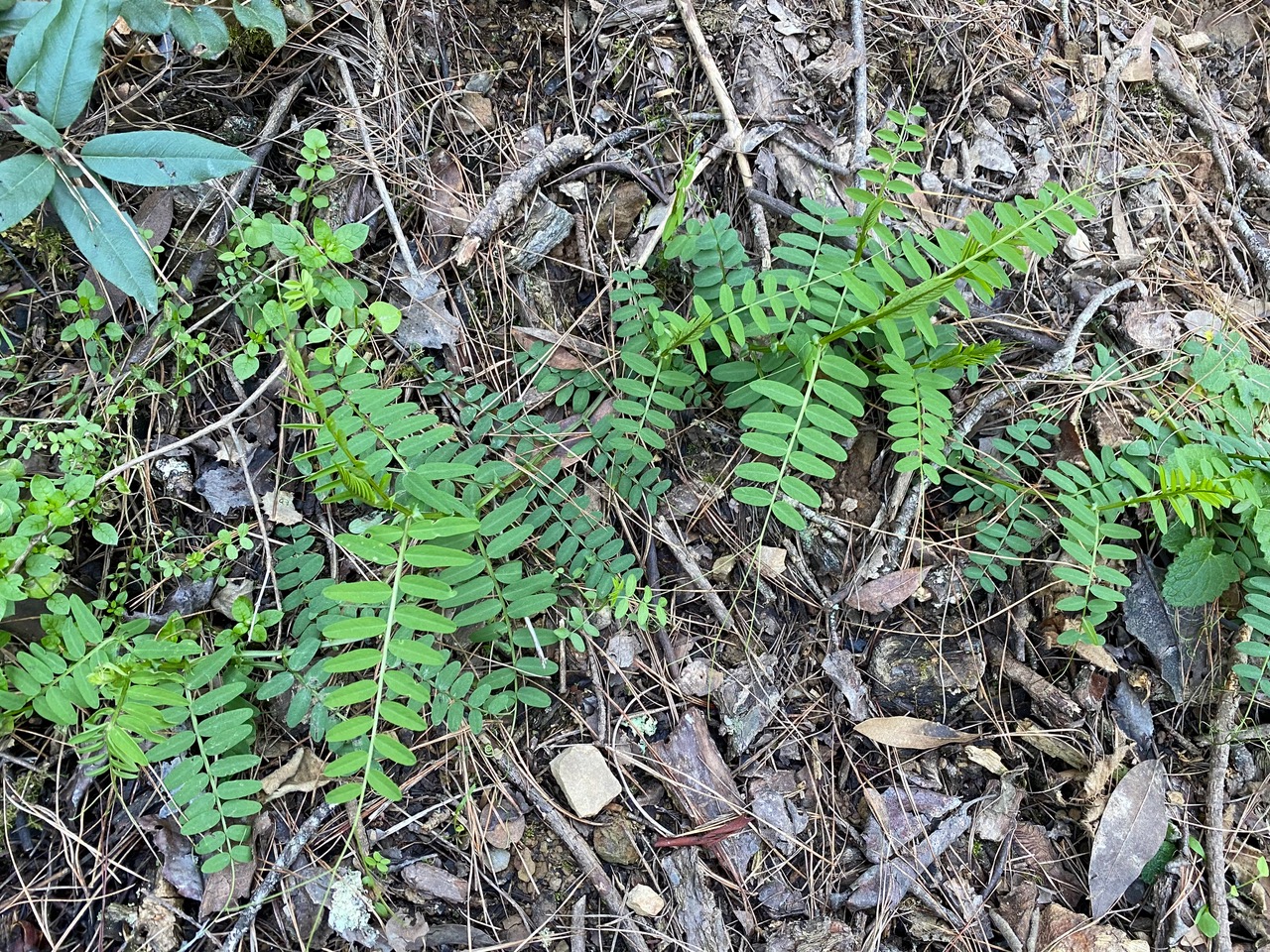
Fresh young herbaceous plants have emerged from the ground. I think these are Giant Vetch, Vicia gigantea.
Giant Vetch, Vicia gigantea is a native, perennial, climbing plant found in western North America from Alaska to California, often in coastal, moist, and disturbed habitats. It is known for its robust, 3-8 foot long stems, purplish-yellow flowers, and large, pinnately compound leaves.
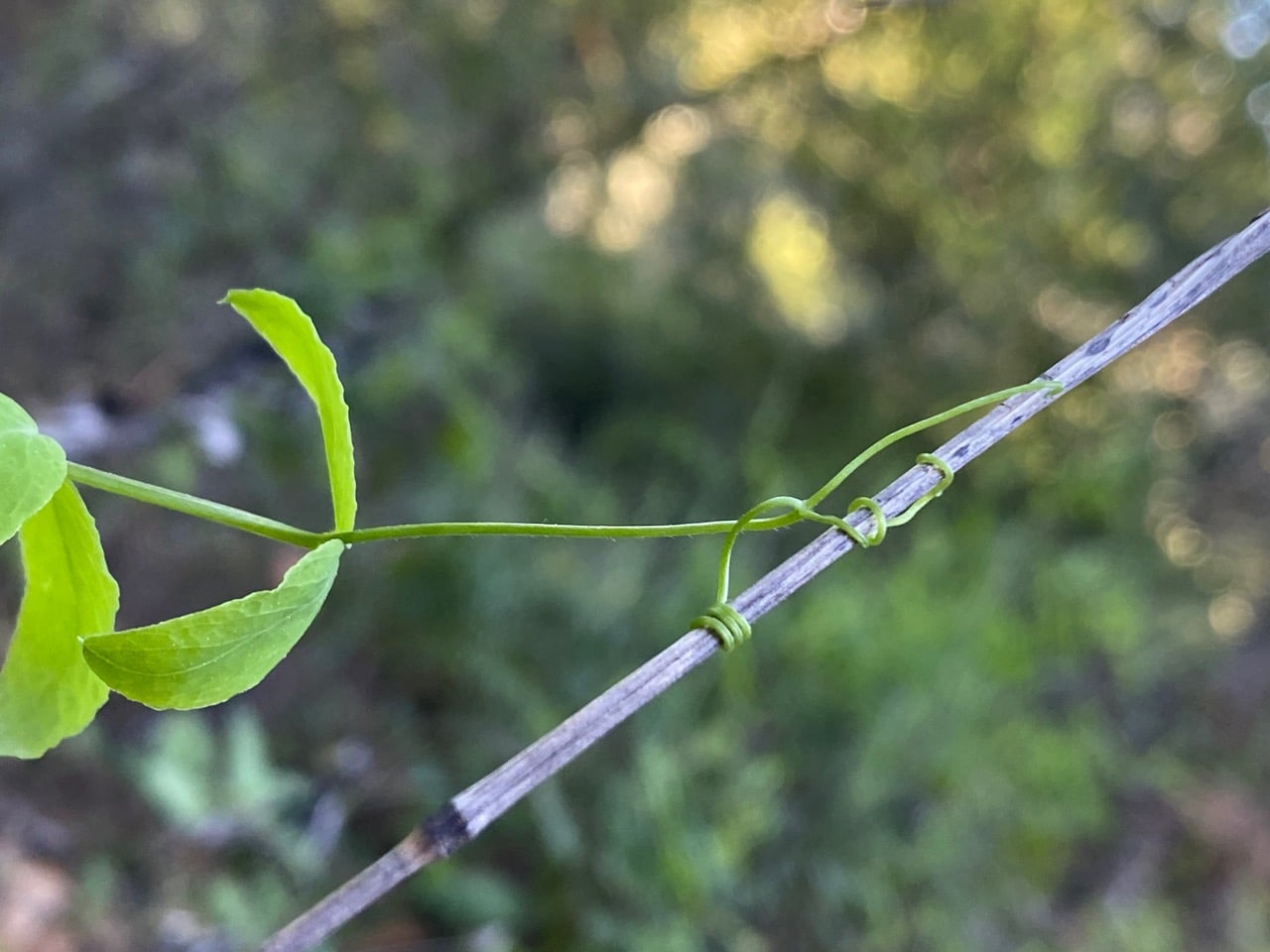
Look, all three branches of this Giant Vicia’s tendril have gotten a grasp of a dried stem. Many species of vetch (genus Vicia) are characterized by having compound leaves that terminate in a forked or branched, slender, twisting tendril. These tendrils are used to climb over other plants and structures in search for sunlight.
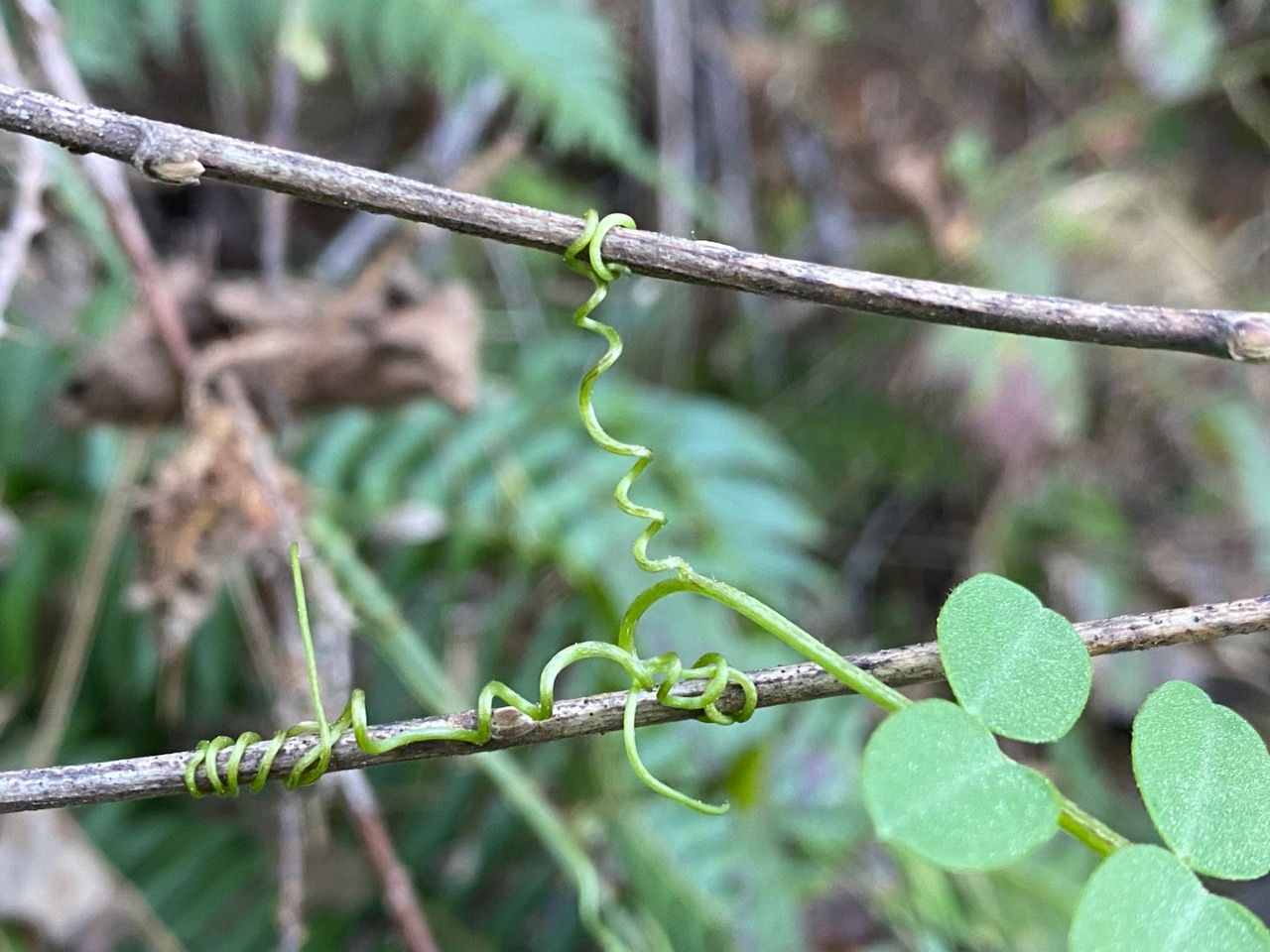
Long tendrils enable plants such as Vetches and Wild Cucumber to climb/trail over neighboring vegetation in order to reach sunlight. This branched tendril has gotten hold of two neighboring dried stems. Note that there’s a coil reversal in each branch. We have seen this phenomenon in the tendrils of Wild Cucumber (genus Marah).
You can invariably find a straight section along a tendril coil where the coiling direction is reversed. Charles Darwin had noticed this behavior and coined it “perversion”. Scientists have actually studied the cucumber tendrils seriously and found some fascinating properties. Once a tendril curls around a support, it forms a counter-clockwise helix and clockwise helix with a straight section between the two. If the tendril is pulled, more turns are added to both helices to better grasp the support.

A small spider with disproportionately long front legs is resting head-down in the hub of its orb web. I would never have guessed it, but several spider experts on iNaturalist have chimed in to vouch that it is a Long-jawed Orbweaver in the genus Metellina (family Tetragnathidae).
Tetragnathids are usually elongated spiders with long legs and chelicerae. They weave small orb webs with an open hub and few, wide-set radii and spirals. Metellina species are web dwellers that make their webs low in vegetation.
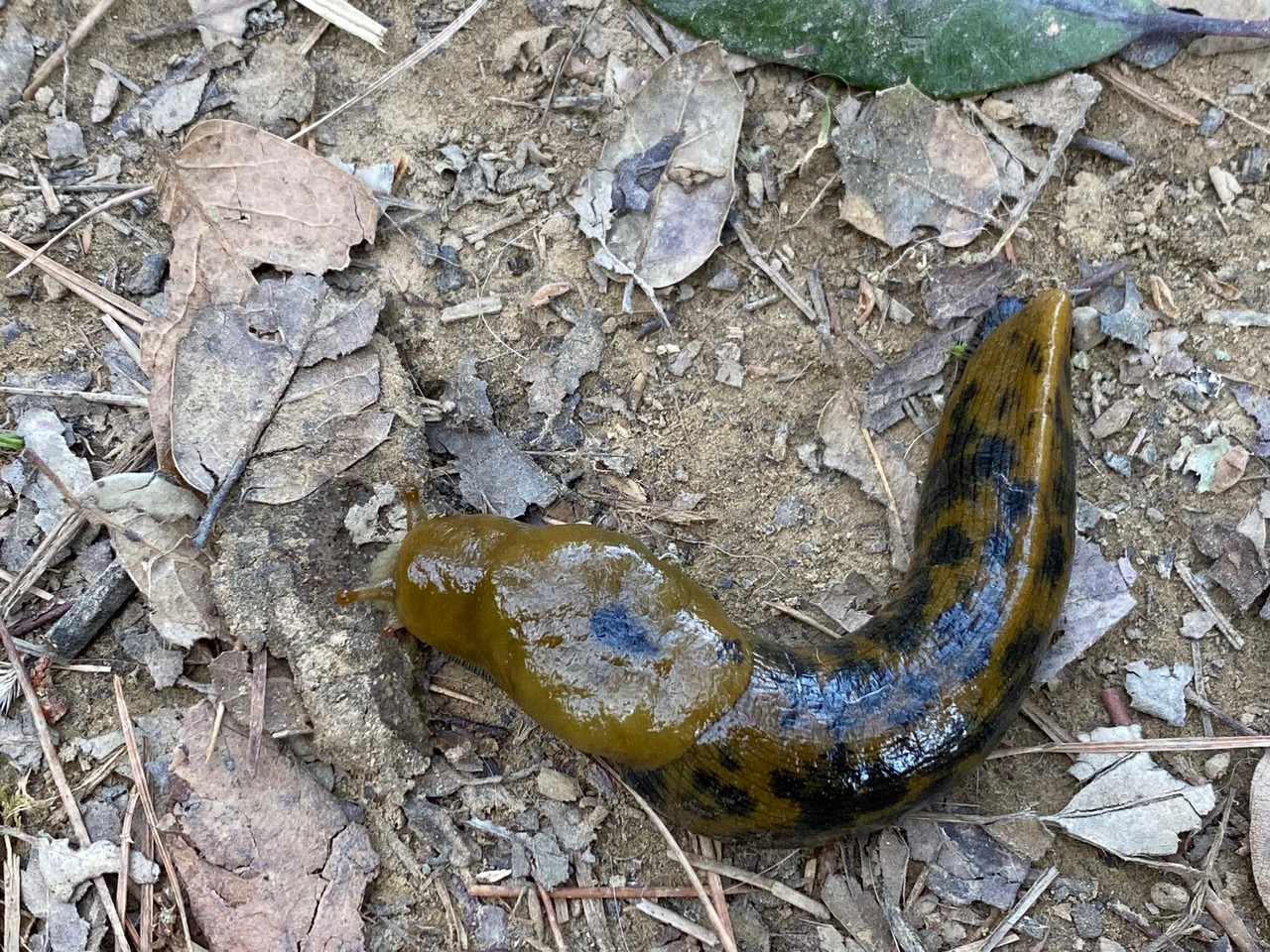
Ooh, a large, spotted banana slug about 5” long is sprawled on the trail, seeming to be feeding on something wet on the ground. Fearing that it might be trampled by passing cyclist or hiker, I use a soft leaf to pick it up and relocate it far from the trail. iNaturalist has helped identify it as a Button’s Banana Slug, Ariolimax buttoni. The uncommonly seen mollusk has a status of “Globally Imperiled”, indicating a high risk of extinction.
Button’s Banana Slug is native to the west coast of the United States. The species has a yellowish hue, and can be either spotted or unspotted. It is a detritivore that eats dead organic matter, but also feeds on plants (herbivorous), as well as animal feces and mushrooms. Its mouth is on the bottom of its head with a tongue called a radula that is covered in microscopic teeth to break down the food. Strangely, the slug excretes waste through the anus located on the side of its head.
Banana slugs are simultaneous hermaphrodites, meaning an individual has both male and female sexual organs at the same time. During mating, one slug acting as the female would invert its penis for sexual reproduction to take place. On the occasion that the penis becomes trapped, it is sometimes gnawed off by either partner in a process called apophallation. The amputatee can continue to mate as a female.
Banana slugs use their versatile, liquid-crystal slime for several essential functions, including locomotion, protection, hydration, and communication. The slime is a unique substance that is simultaneously a lubricant and an adhesive. This enables the slug to glide smoothly over rough, sharp surfaces without injury by temporarily liquefying the slime with muscle contractions. The adhesive properties of the slime enables the slug to adhere firmly to surfaces, including vertical ones, which helps it climb trees. As the slug lacks a shell, slime is its primary defense. When threatened, the slugs produce extra-thick, sticky mucus that can choke a predator. The slime has a foul or bitter taste, and contains anesthetic chemicals that numb the tongue and throat of the predator, further discouraging the attempt to eat the slug.
Slugs are mostly water and rely on moisture to survive. The mucus coating on their body helps form a barrier to prevent fatal dehydration in dry conditions. During hot, dry periods, slugs wrap themselves in a blanket of slime and forest litter to enter a dormant state (aestivation) until moist conditions return.
Slugs leave behind slime trails laced with chemical messengers (pheromones) that other slugs can follow to find a mate or a destination.
Slugs are important spore dispersers for fungi and bryophytes (mosses, liverworts, hornworts). As they eat fungi and berries, the spore and seeds pass through their digestive system and are deposited in their nitrogen-rich, slimy excretions, aiding forest regeneration.
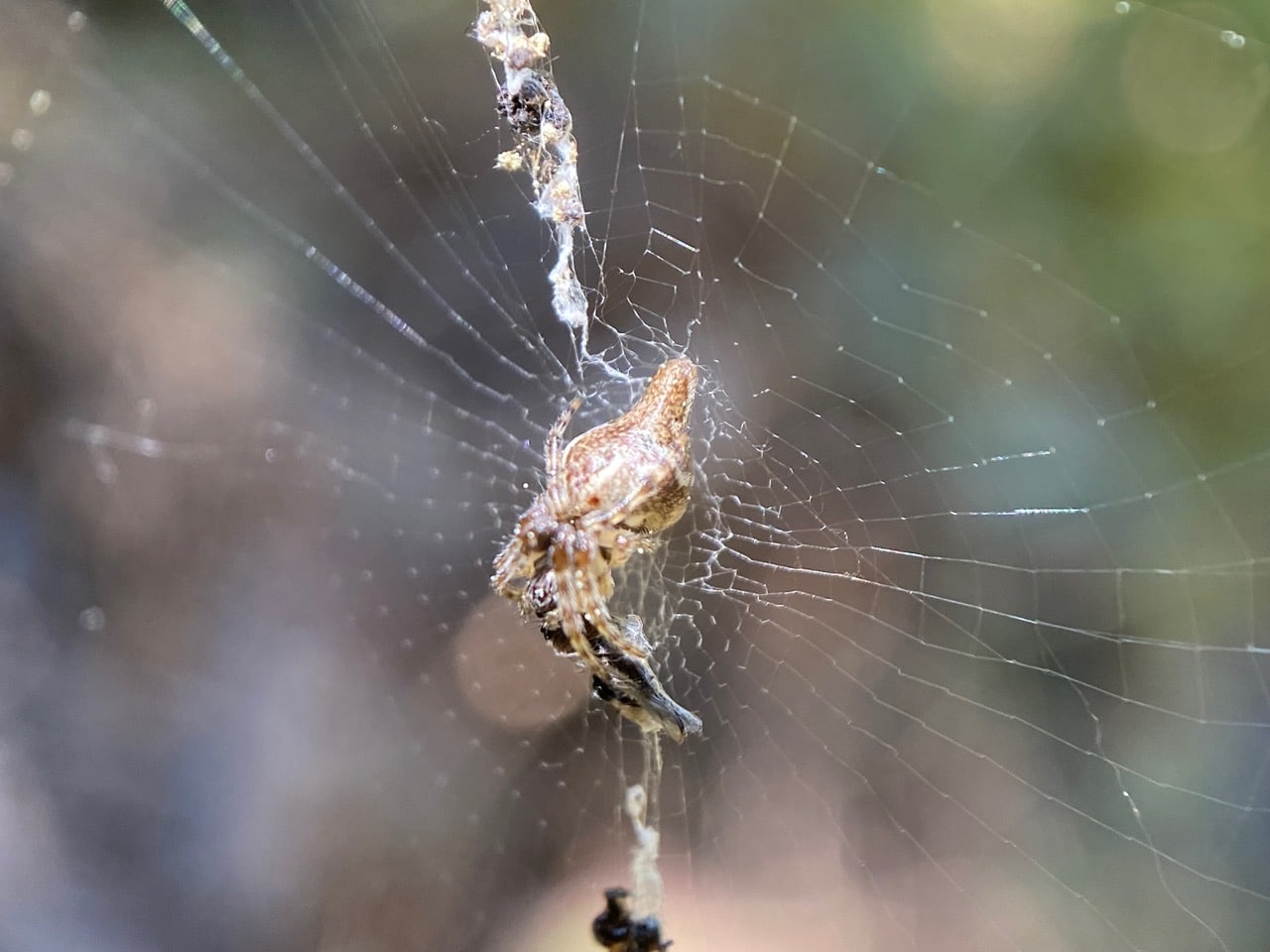
A pale Conical Trashline Orb Weaver, Cyclosa conica (family Araneidae) is resting head-down in the center of its web.
Cyclosa, also called Trashline Orbweavers, is a genus of orb-weaver spiders (family Araneidae). The tiny spider (5-7.5 mm) is easily recognized by its web decoration; the spider strings together the dead bodies of insect prey and other debris and hangs them in a vertical line through the middle of its web. The decoration, which sometimes includes egg cases as well, probably serves to camouflage the spider. Cyclosa creates its webs mostly during times of complete darkness. The females occupy the web hub (center) to sit-and-wait for prey. The spider can ensnare prey at nearly any time of day, and it only leaves its spot to replace the web prior to sunrise.
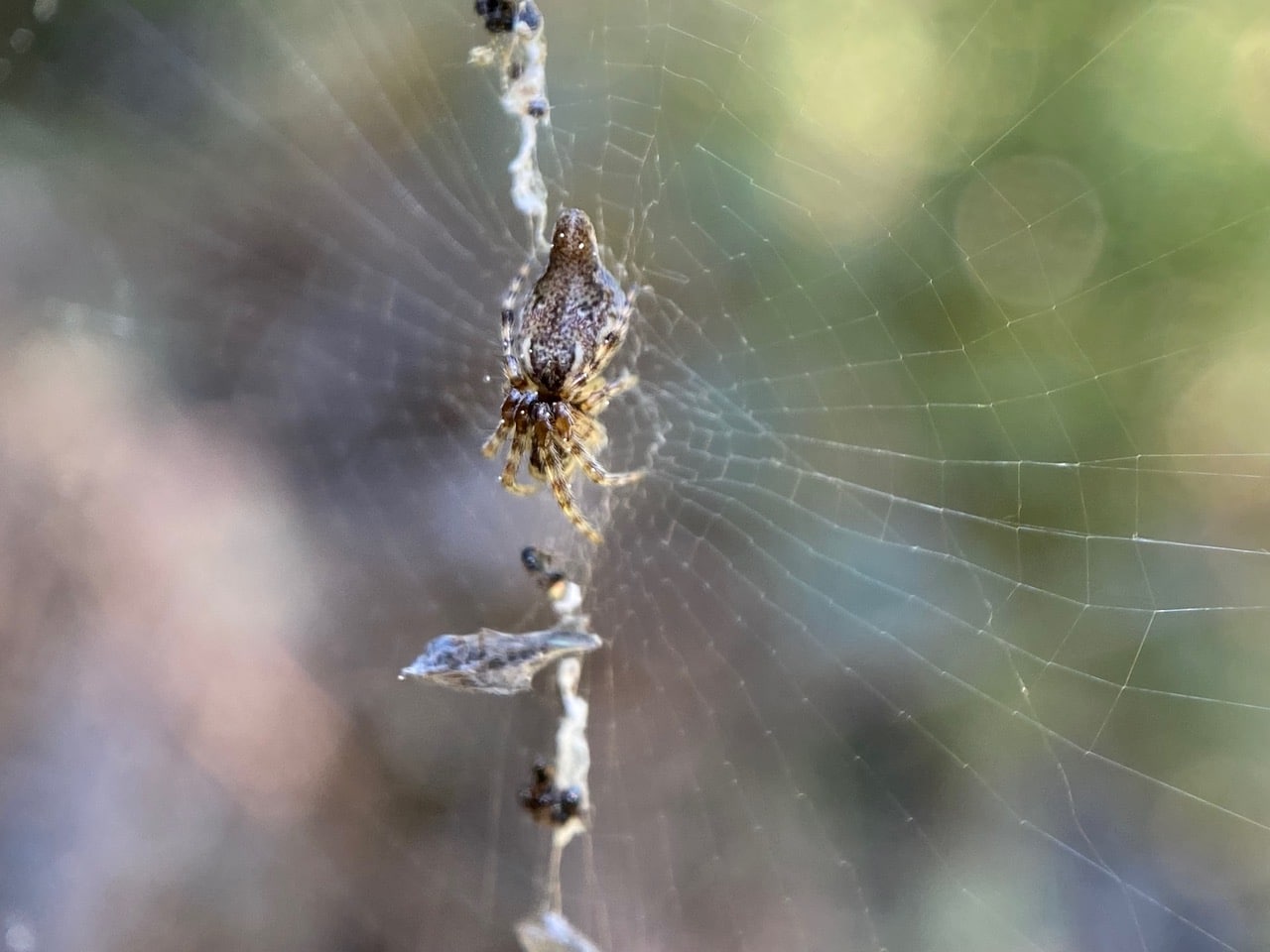
Just three feet away, a smaller, darker Conical Trashline Orb Weaver is resting in its own web.
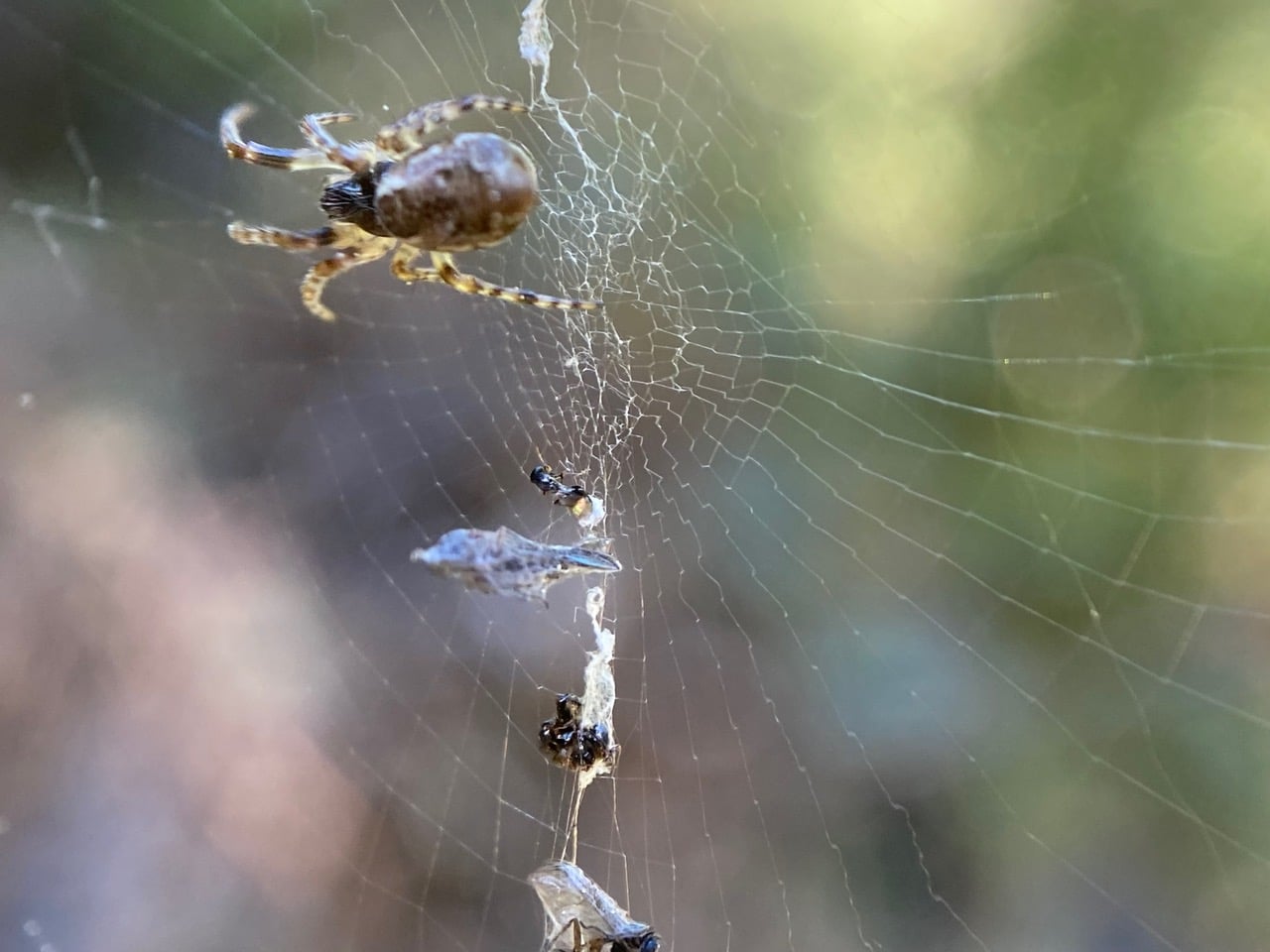
Sensing my approach, the spider flees to the side of its web. I haven’t expected to see that. It is rather unusual for spiders of this species to run away like this. When feeling threatened, they usually gyrate wildly in their web to deter/confuse any potential predator, or they drop straight down from the web on a strand of silk.

The spider runs along a strand of silk to a supporting vegetation and finally comes to rest in a dark spot where it feels safe. Note that its hind leg is holding onto the bridge line.
Orb weaver spiders often use their hind legs to manage silk threads. They possess a special third claw on their legs specifically designed for grasping and handling their silk threads. This allows the spiders to move precisely across their web without getting stuck in the sticky capture silk. When not sitting directly in the hub of their web, many orb weaver spiders hide in a nearby, sheltered retreat and hold on to a special, taut signal line (or bridge line) connected to the web to detect vibrations from struggling prey.
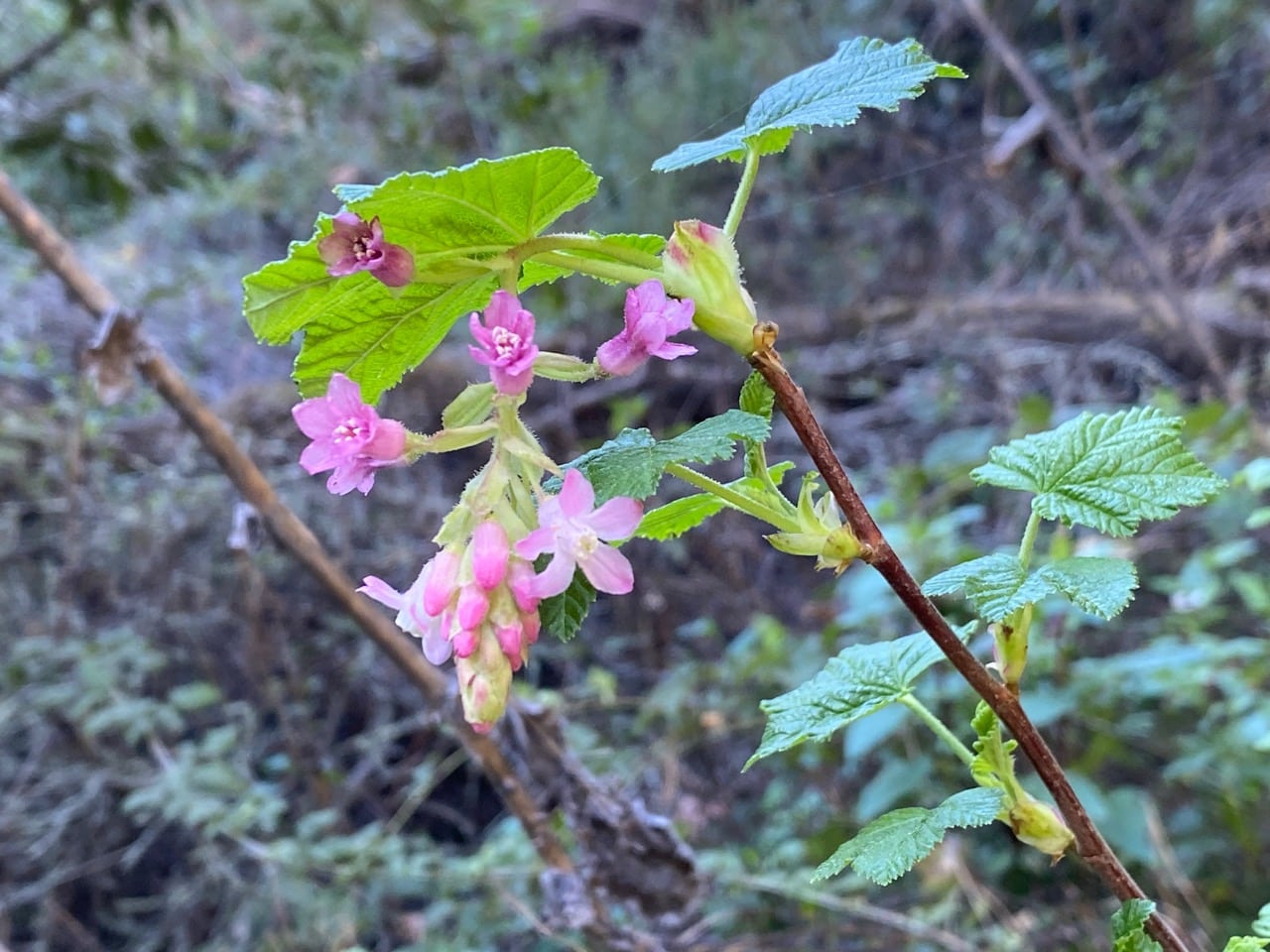
A Red-flowering Currant, Ribes sanguineum is blooming in a wet spot on the side of the trail. I wait around for a while for pollinators to approach the flowers, but nobody comes, not a hummingbird or a bee. Come to think of it, I have not seen a single bee today. Most of the insects I have encountered are flies, with decomposer larvae.
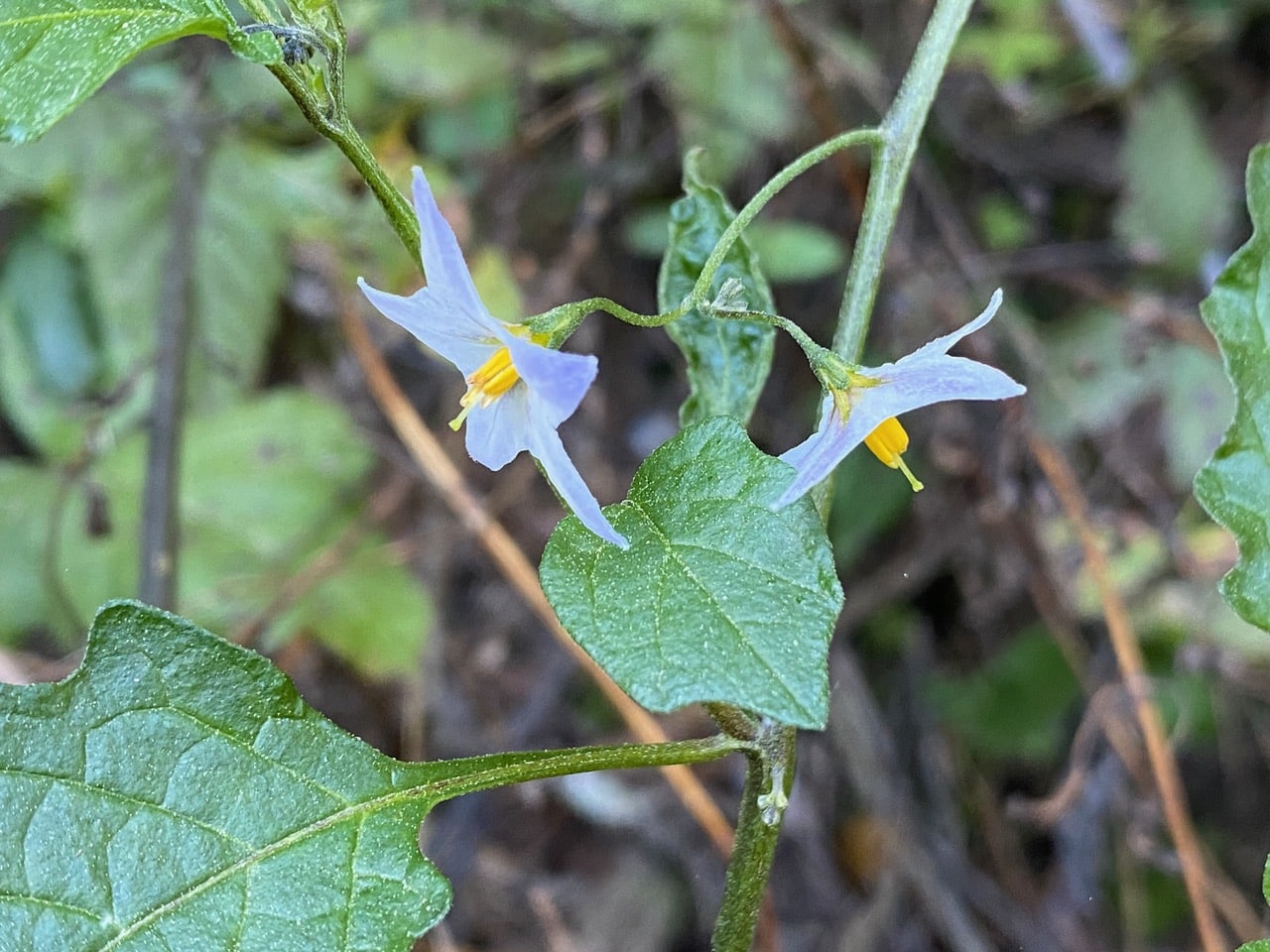
The small, pale, nodding flowers on this small Nightshade all come in pairs, at the ends of a forked flowering stem. Solanum furcatum? Bumble Bees are well known for buzz pollinating the larger nightshades, such as the Blue Witch, solanum umbelliferum. What bees buzz pollinate these smaller species with pollen hidden in poricidal anthers? The anthers of the flower on the left look a little bruised, having been sonicated by a bee?
Forked Nightshade, Solanum furcatum is named for the distinctive, forked or branched structure of its inflorescence (flower cluster). This forked, Y-shaped branching pattern of the flowering stem helps distinguish it from similar nightshade species. S. furcatum is native to South America, but is known elsewhere as an introduced species; they are commonly found around the Bay Area.
Small native bees capable of buzz pollination (sonication) include sweat bees (family Halictidae), small carpenter bees (Ceratina), Mining Bees (family Andrenidae) and specialist bees like the southeastern blueberry bee. These bees grab the anthers and vibrate their thoracic muscles to shake pollen from poricidal anthers of flowers such as tomatoes, peppers, and blueberries that require this specific technique.

Sunlight is now streaming from the west – it’s past noon. Time to head home for lunch!