

Pollinator Post 2/19/23
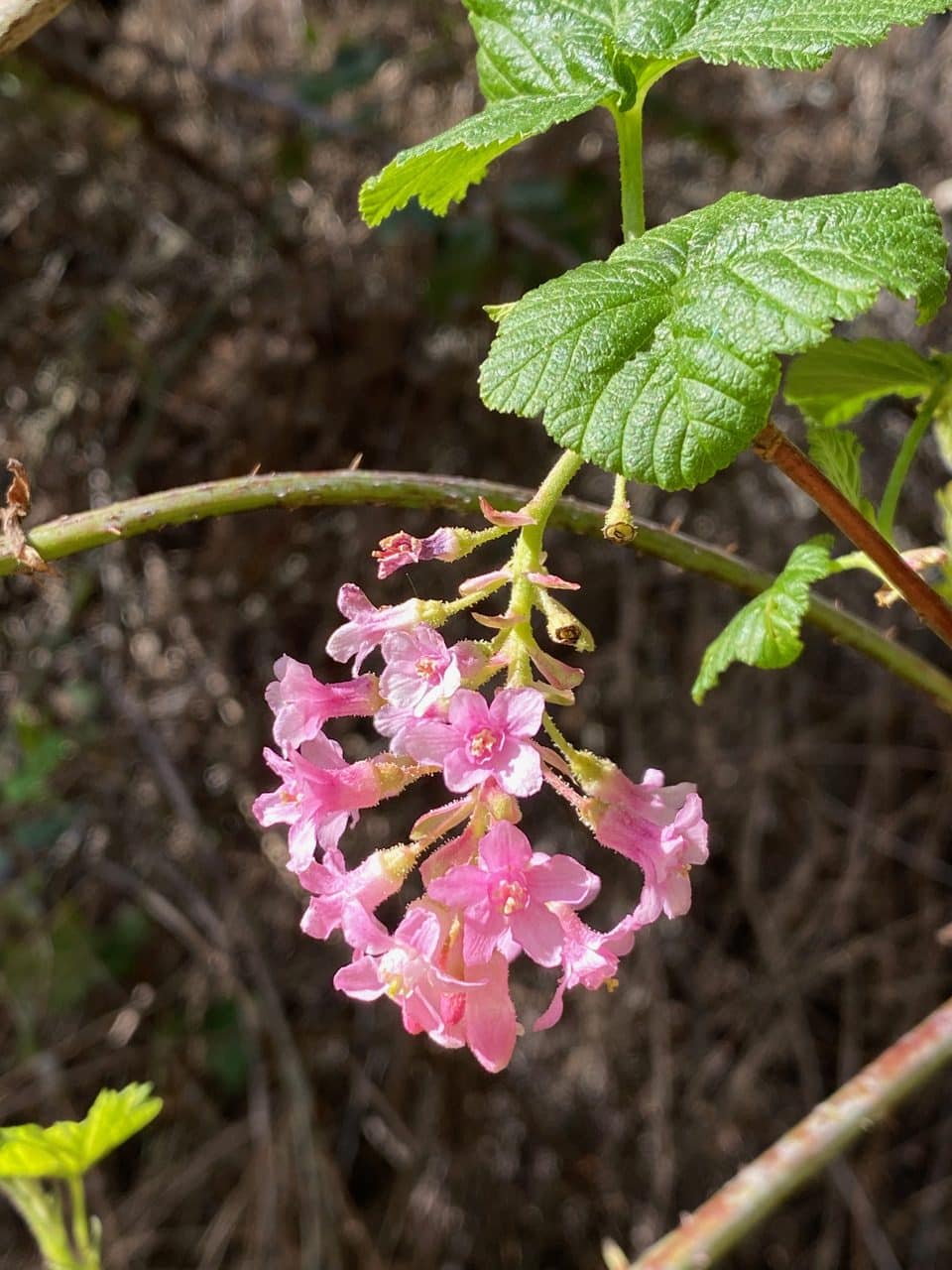
On this beautiful, sunny Sunday, I decide to go for a walk on West Ridge Trail in the Oakland hills.
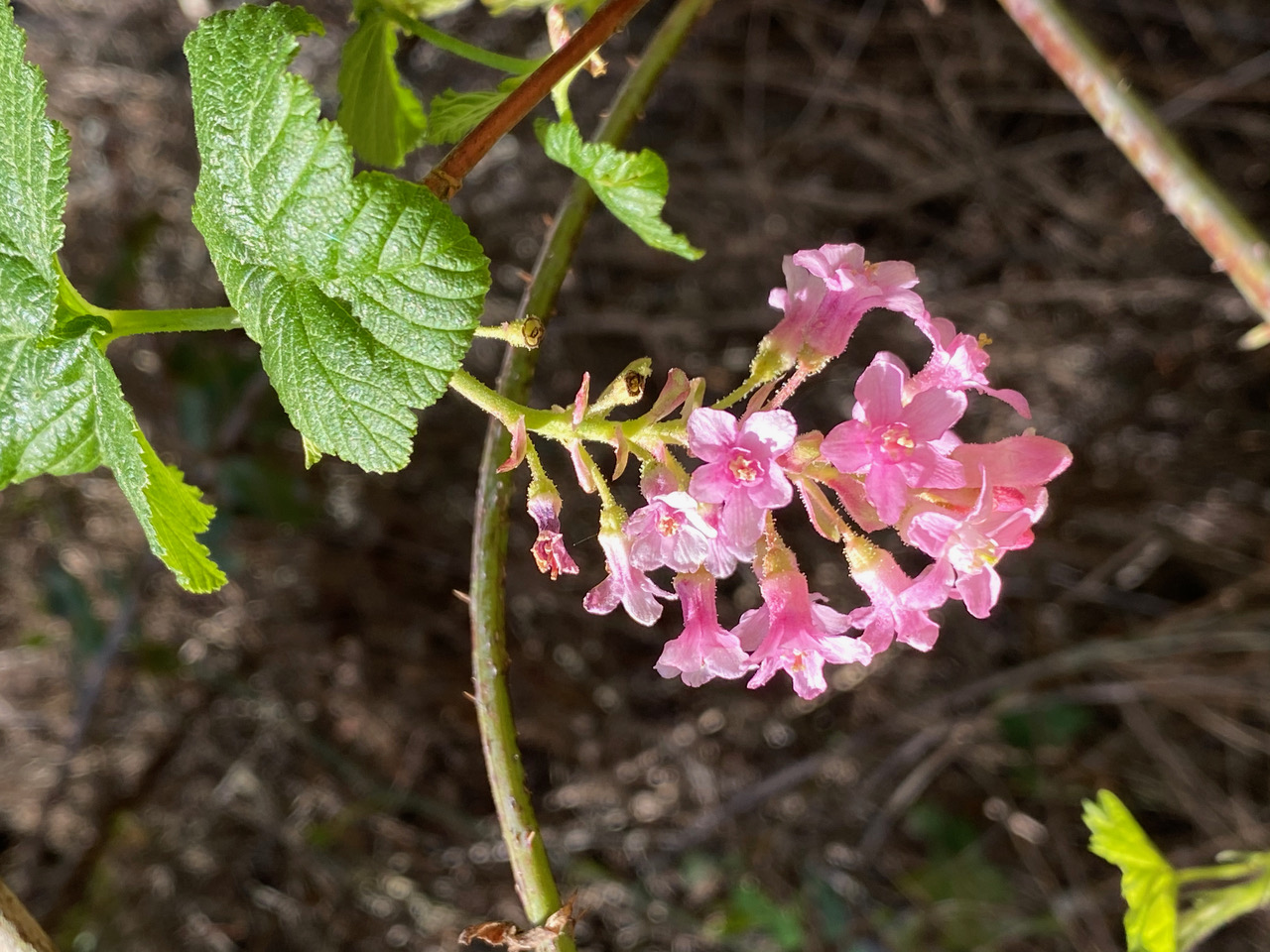
Not far from the Waterloo trailhead, I come across a Pink Flowering Currant, Ribes sanguineum in bloom.
The deciduous shrub is native to the western United States. In California it is restricted to areas near the coast. The flowers are produced in early spring on dangling racemes. The showiest parts of the flowers are not the petals, but the sepals. The usually paler and smaller petals extend forward to form a loose tube from which the reproductive parts protrude.


 The male catkins of the California Hazelnut, Corylus cornuta (family Betulaceae) have been formed last fall on the bare branches, but they have now lengthened, releasing copious pollen into the wind.




Close up view of a young flower near the tip of the inflorescence. The style with a lobed green stigma at the end (female parts) extend the furthest from the corolla to receive any incoming pollen. The flower is in its female phase.
In this older flower near the base of the inflorescence, the stamens (the male parts) have become fully mature, releasing their pollen while the stigma (female part) has senesced and turned brown. Ribes sanguineum appears to be a protogynous flower, with female parts maturing before the male parts. Dichogamy, or the temporal separation of the sexes is a floral strategy for avoiding self-pollination.
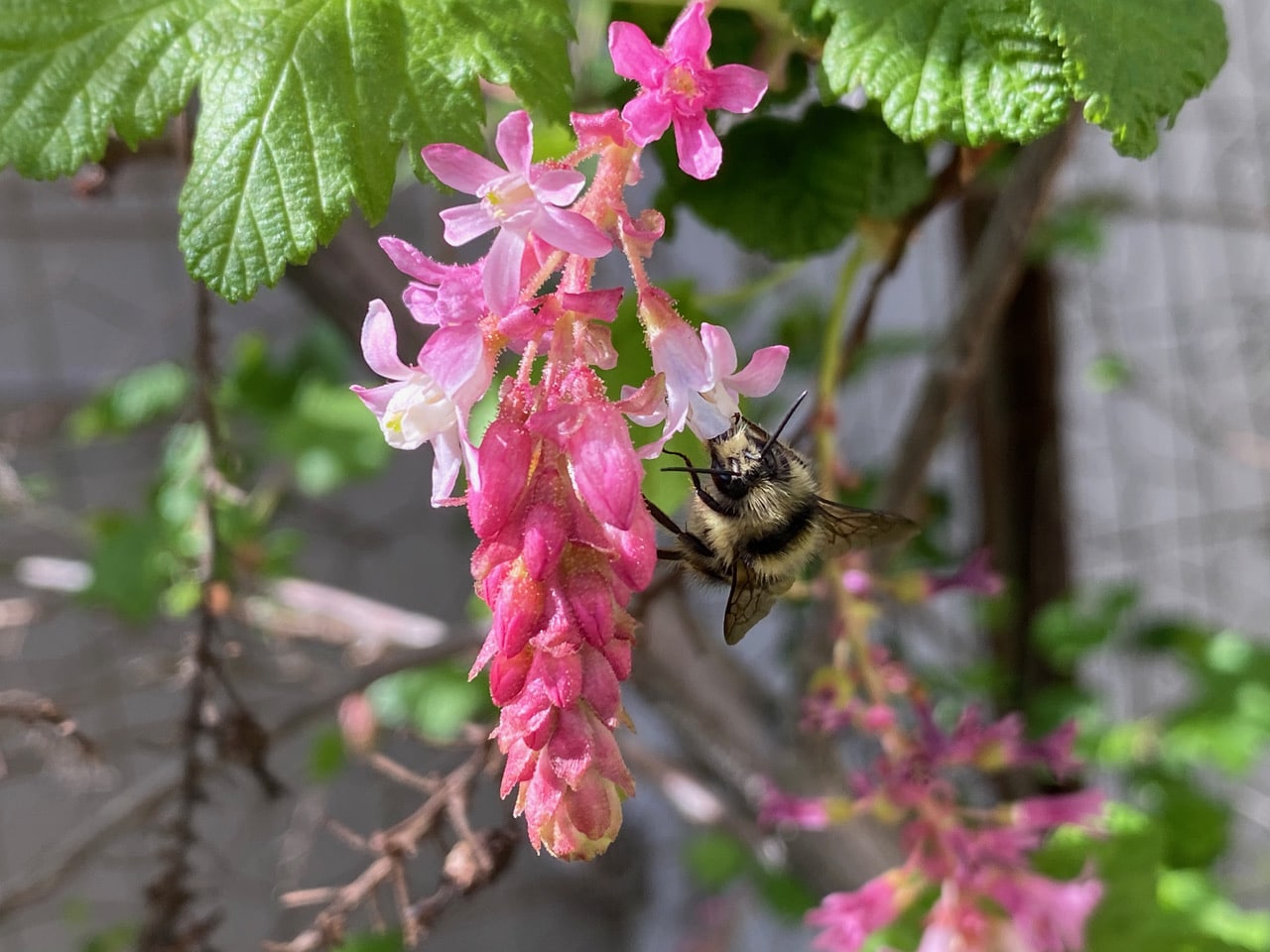
This picture was taken in my own garden two days ago. The Ribes flowers are very popular with the Black-tailed Bumble Bees, Bombus melanopygus. The colony of Carpenter Bees, Xylocopa sp. living under the rafters of my house has become active recently. Those bees are frequent visitors to the Ribes flowers too, sometimes engaging in a chasing game with the bumble bees.
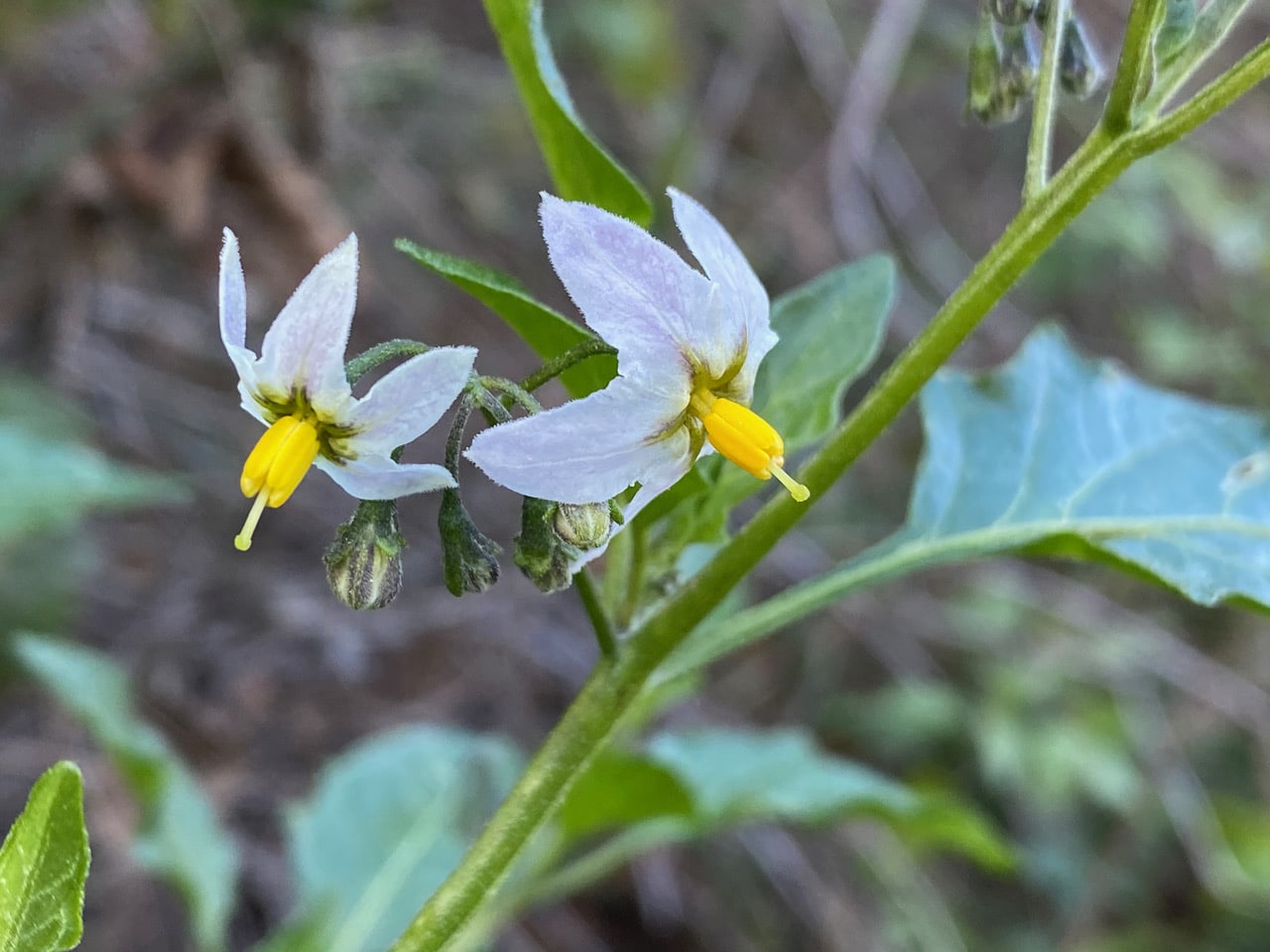
A Forked Nightshade, Solanum furcatum (family Solanaceae) is blooming in the dappled shade along the trail.
Native to South America, the species is now naturalized along the California coast. As in all Solanum flowers, S. furcatum flowers do not produce nectar, and pollen serves as the only pollinator reward. The pollen is hidden away in prominent, elongate yellow anthers that come together to form an “anther cone” surrounding the long style in the middle of the flower. The anthers are “poricidal”, meaning they only open with a small pore at the tip to allow exit of pollen. The pollen has to be “sonicated” or shaken out by bees using vibrations. Hanging upside down, the bee grasps the anther cone with its legs, uncouples its flight muscles from its wings, and vibrates its body vigorously. Pollen is dislodged from the anthers and flows down through the pores onto the belly of the bee.
Only bumble bees and a few others are able to perform sonication or buzz pollination.
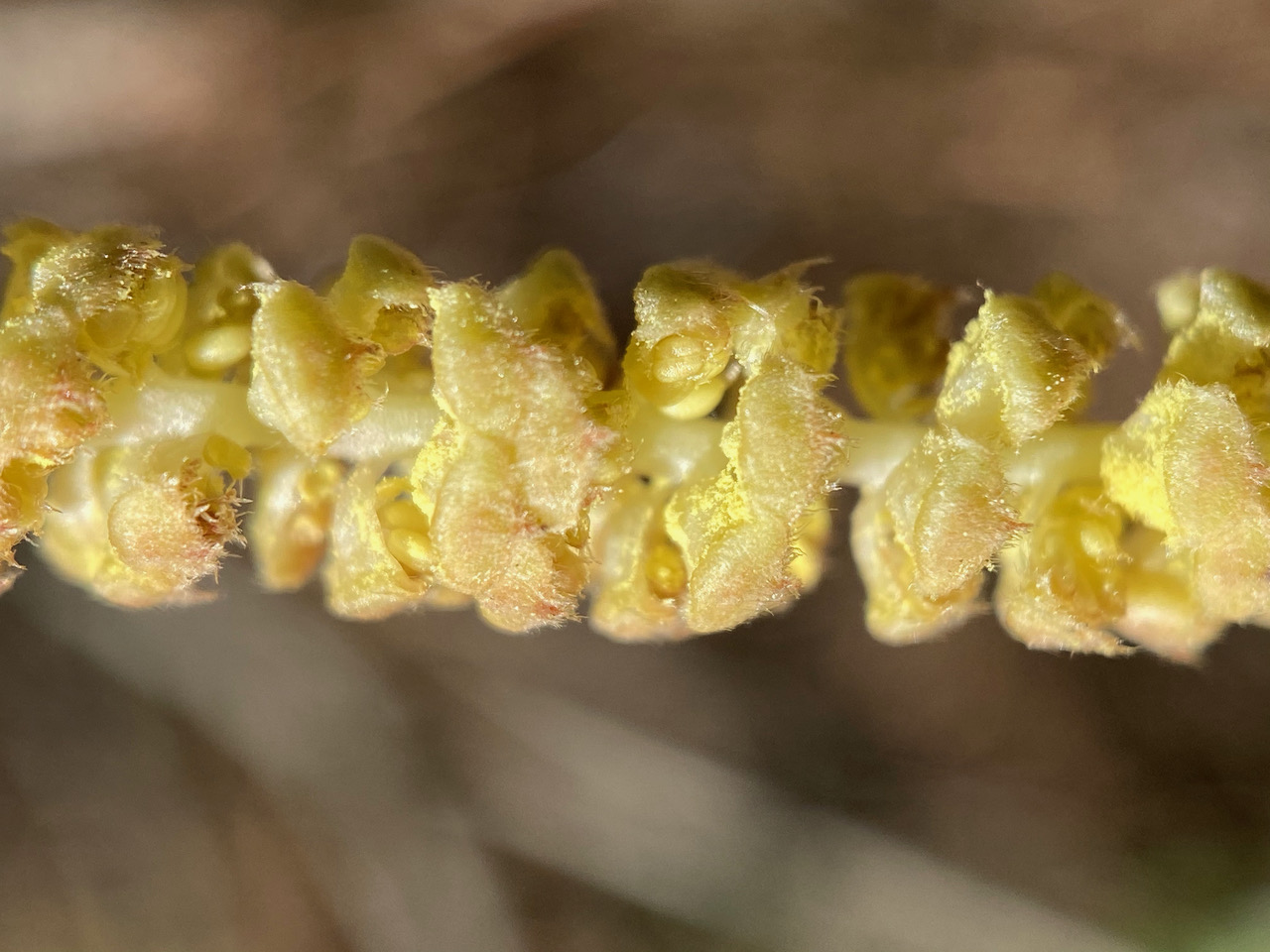
The male catkins of the California Hazelnut, Corylus cornuta (family Betulaceae) have been formed last fall on the bare branches, but they have now lengthened, releasing copious pollen into the wind. Close examination of a male catkin reveals numerous anthers packed beneath each downward curving bract.
Here’s a close-up showing yellow pollen released from the anthers.
This appears to be a spent catkin, fully stretched out and empty of pollen.
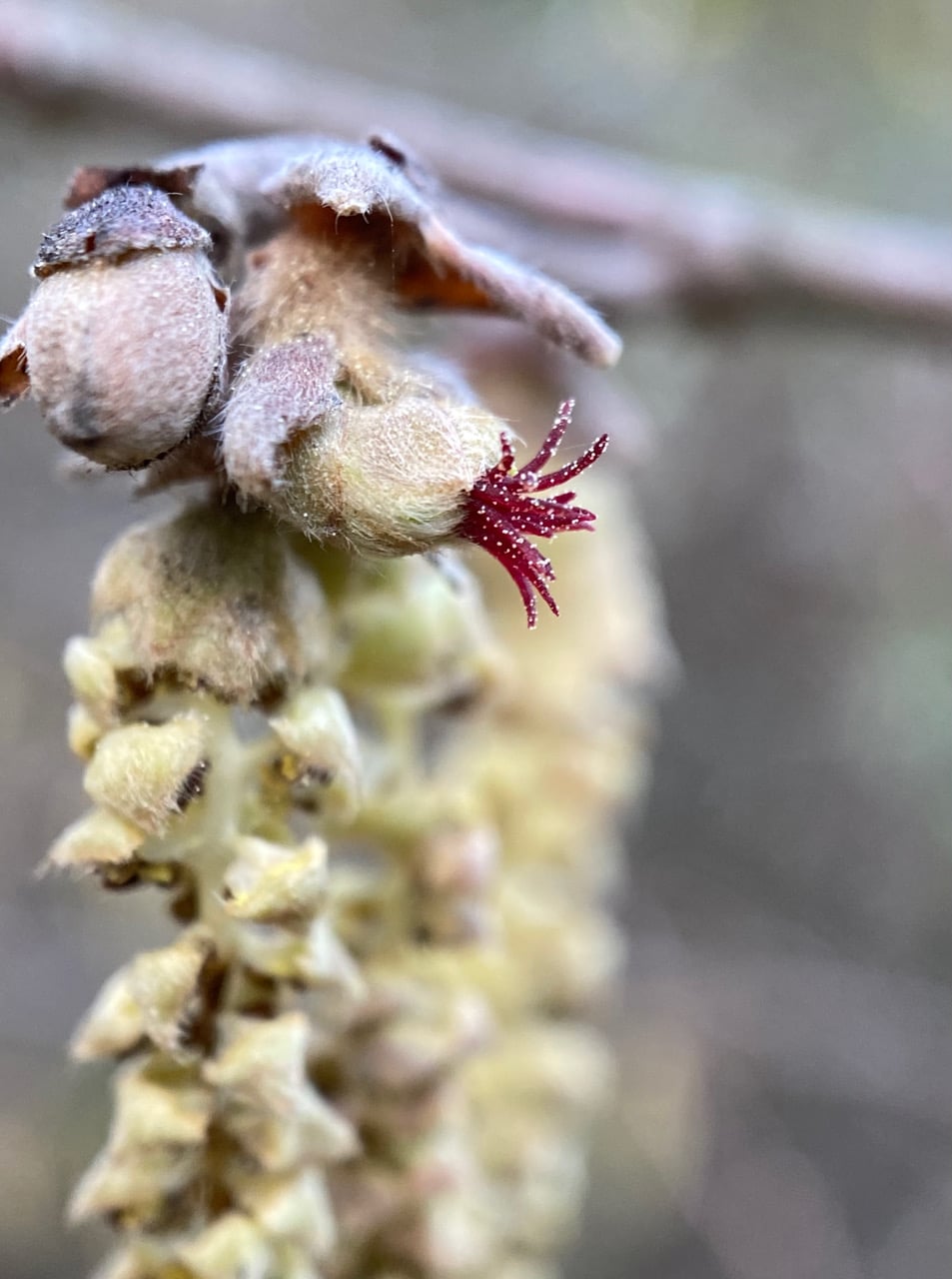
Look, there’s a female flower at the base of the dangling male catkin!
California Hazelnut is monoecious, with separate male and female flowers on the same plant. You have to look hard for the female flowers. They are several in a scaly bud, tiny and inconspicuous, with only bright red stigma and styles protruding.
Close-up of a female flower, its red stigmas already studded with pollen grains. California Hazelnut is wind-pollinated, requiring no assistance from insects. We can expect a good crop of hazelnuts this fall!
Here are some known characteristics of wind-pollinated flowers:
No bright colors, special odors, or nectar
Small
Most have no petals
Stamens and stigmas exposed to air currents
Large amounts of pollen
Pollen smooth, light, easily airborne
Stigma feathery to catch pollen from wind
May have staminate and pistillate flowers, may be monoecious or dioecious
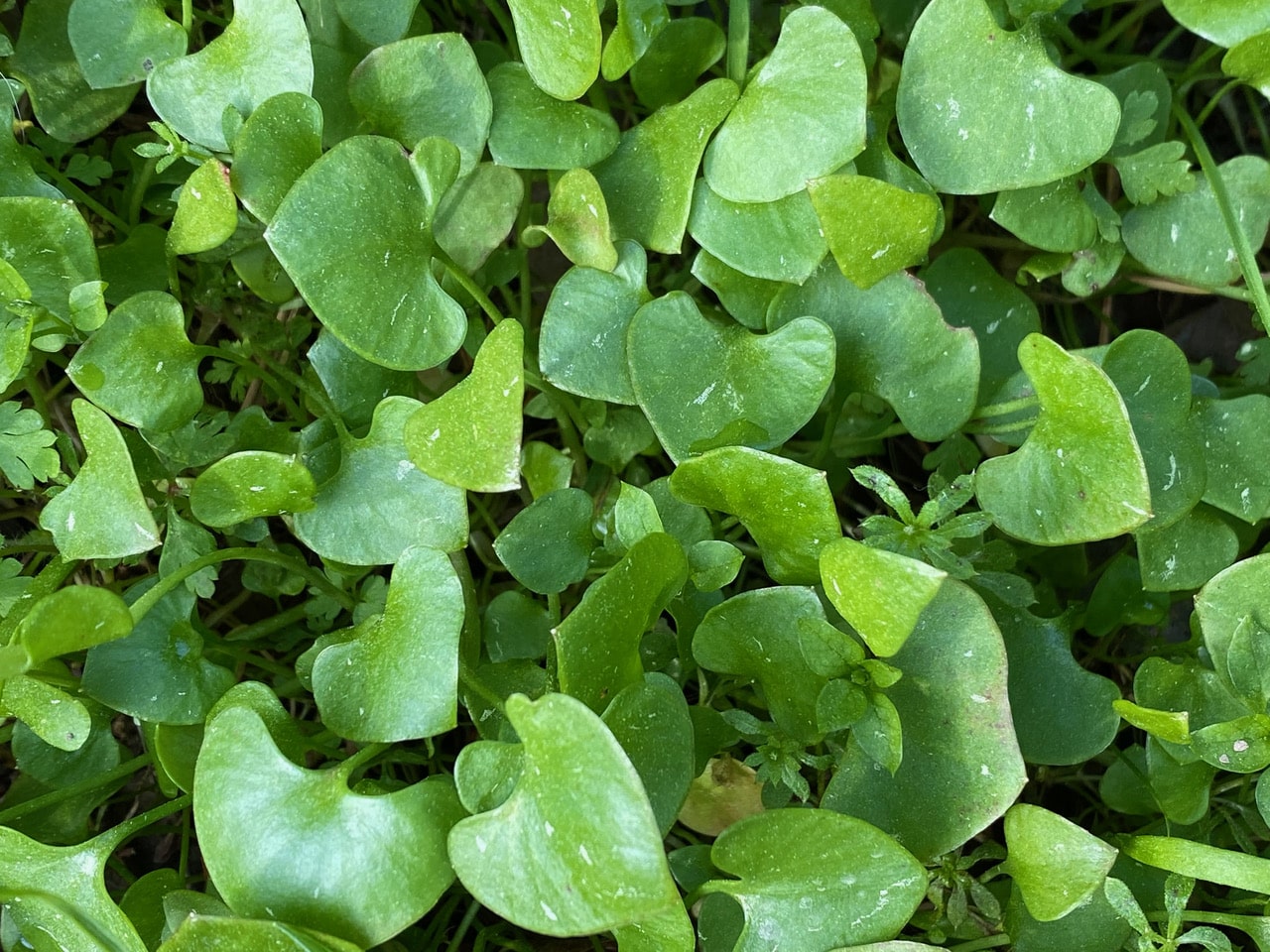
Wow, the Miner’s Lettuce, Claytonia perfoliata has already assumed its second leaf shape! I have completely missed its first leaves, which are narrow and strap-shaped when the plant emerges from the ground. Tiny white flowers are eventually borne on the last sequential form, a perfoliate leaf that gives the plant its species name, “perfoliata”. The common name of miner’s lettuce refers to its use by miners during the California Gold Rush to prevent scurvy. Commonly eaten raw in salads, the plant is a rich source of vitamin C; but watch out for the gnarly oxalates!
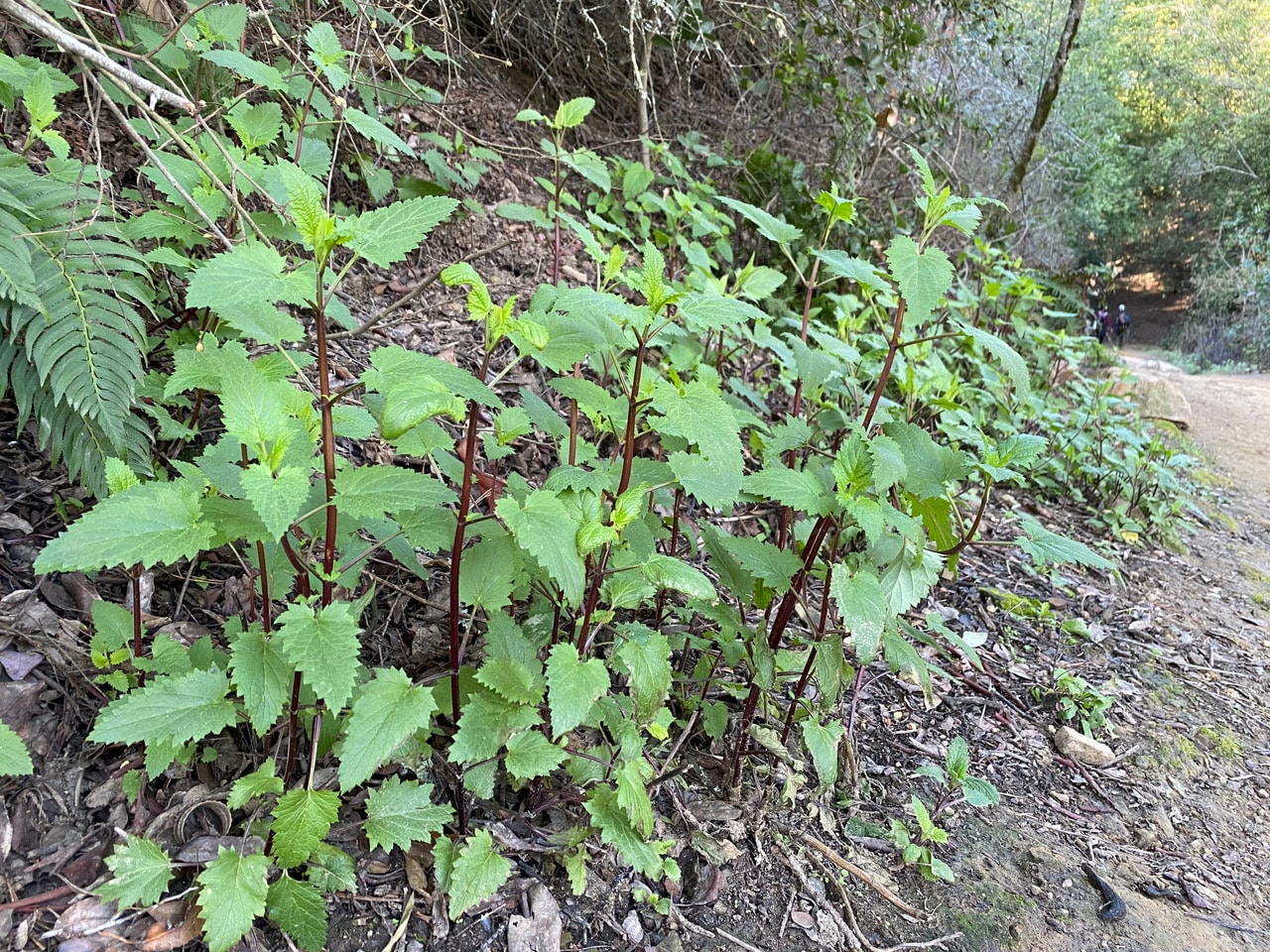
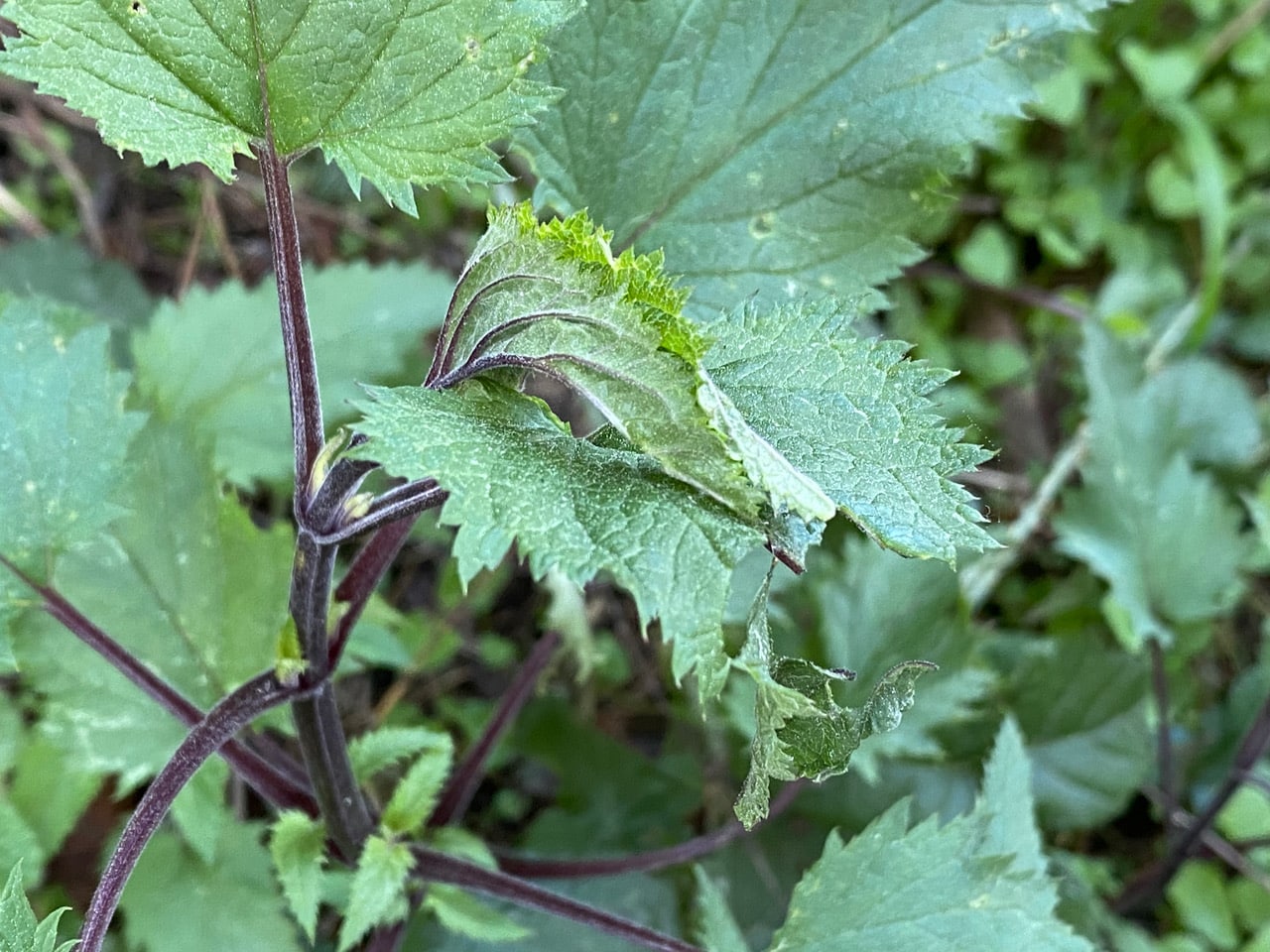
The California Bee Plant, Scrophularia californica is growing tall along the trail. The perennial herb is easily recognized by its square maroon stems, and triangular, toothed leaves. When in bloom the small, oddly shaped flowers are an excellent nectar source for a diversity of pollinators.
Hey, a terminal leaf on a Bee Plant has been folded along its mid rib. Where it touches another leaf below it, there appears to be some feeding damage on the lower leaf. Unable to contain my curiosity, I pull open the folded leaf.
The little green caterpillar startles at the sudden exposure to bright light. Note the silk that it has used to bind the two sides of the leaf together. It is probably some kind of moth. Calscape lists at least 6 moths and a butterfly (Variable Checkerspot) that use the California Bee Plant as a larval host plant. Sorry, little guy. Hope you can build yourself another shelter!
Most caterpillars draw silk from a spinneret, typically on their lower lips. The caterpillars have modified salivary glands that make liquid silk, which goes through a tube to the outer edge of the spinnerets. As the caterpillar draws out the silk, it dries immediately upon contact with air. To construct shelters, many caterpillars reshape leaves with silk, typically by folding or rolling them.