

Pollinator Post 2/18/25 (3)
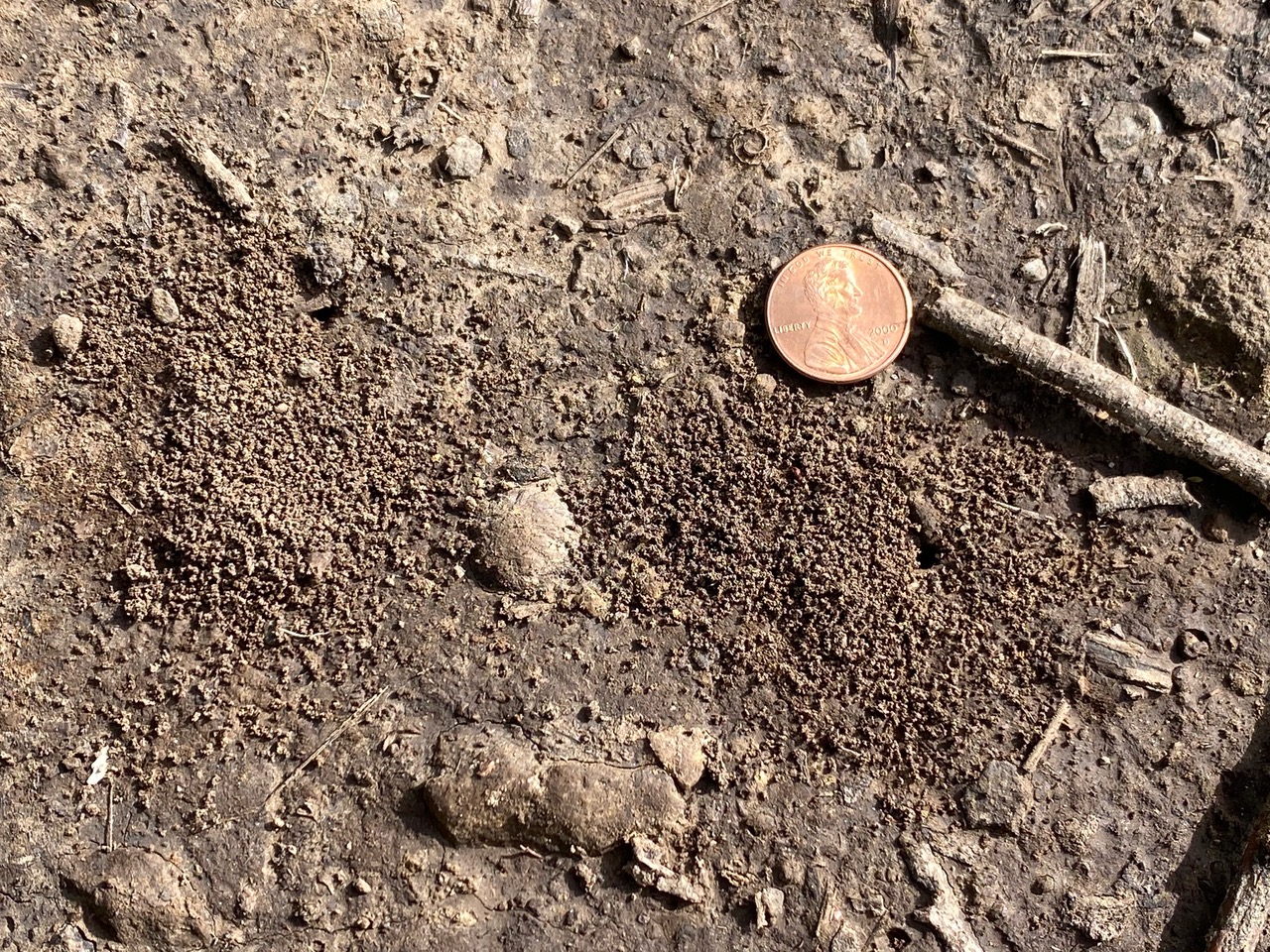
Right in the middle of the trail, tiny pellets of soil surround the entrance of two adjacent ant nests. I put down a penny for scale.

On my knees and using the macro lens, I watch as American Winter Ants climb out of the holes to deposit mouthfuls of excavated soil at the entrance, one at a time. Nest excavation is in progress. The action is best seen in the video. These are relatively new nests, as the mounds are not extensive.
The American Ant, Prenolepis imparis is a widespread North American ant. A dominant woodland species, it is most active during cool weather, when most other ant species are less likely to forage. This species is one of a few native ants capable of tolerating competition with the invasive Argentine Ant, Linepithema humile. They are also aggressive toward other ants and produce abdominal secretions that are lethal to Argentine Ants. Prenolepis imparis is a generalist omnivore. Foragers are known for tending to aphids or scale insects from which they consume excreted honeydew, aggregating on rotting fruit, and exploiting protein-rich sources such as dead worms. The colony enters estivation (a hibernation-like state) and becomes inactive above ground for the warmer months, during which time eggs are laid and brood are reared. Reproductives overwinter and emerge on the first warm day of spring for their nuptial flight.

From Diablo Bend, I enjoy a clear view of Mt. Diablo in the distance.
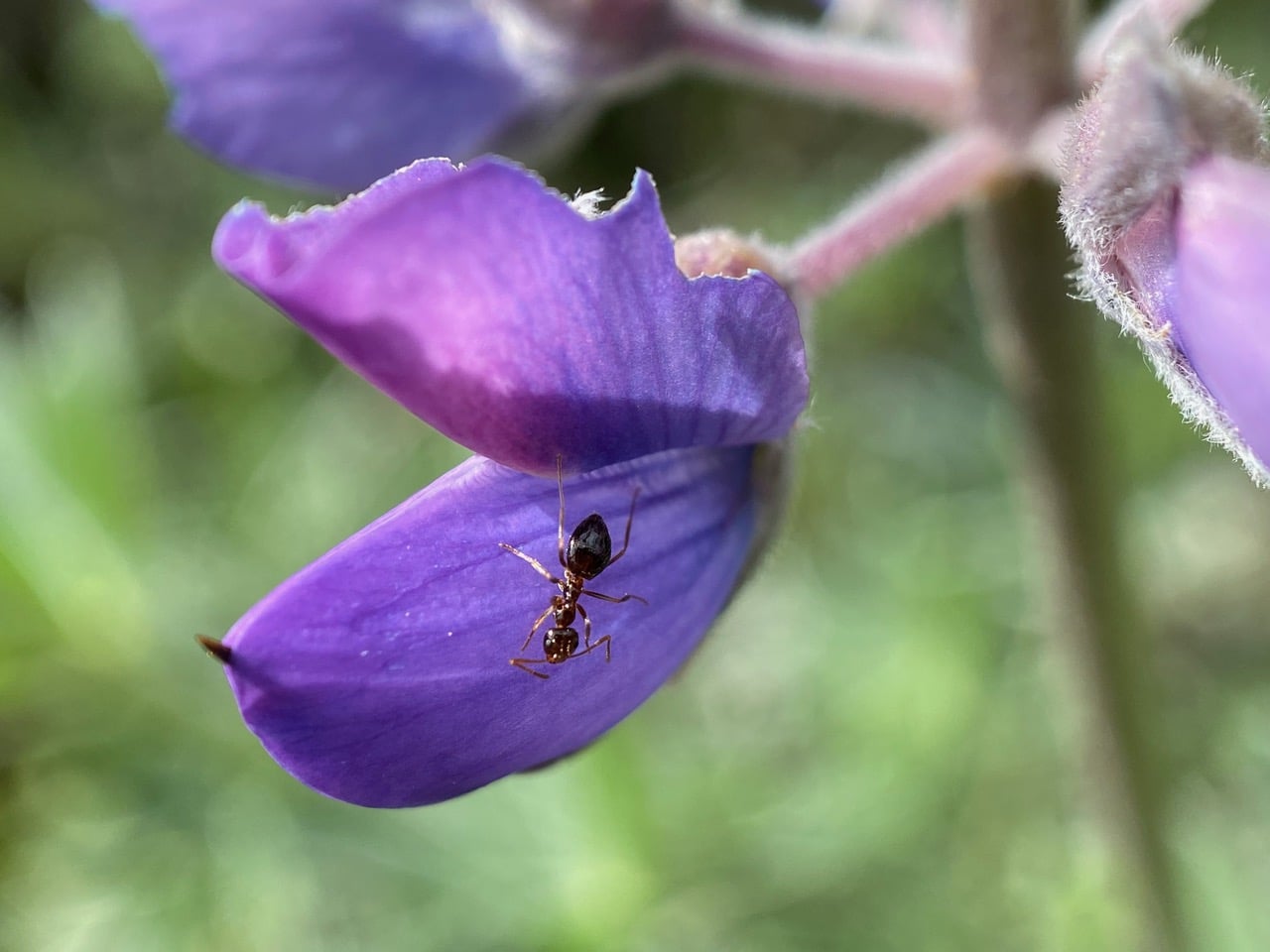
Only a couple of the Silverleaf Lupine, Lupinus albifrons have started to bloom. Hey, there’s already somebody on that flower. It’s an American Winter Ant. Who has chewed on the edges of the banner (upper erect petal)?
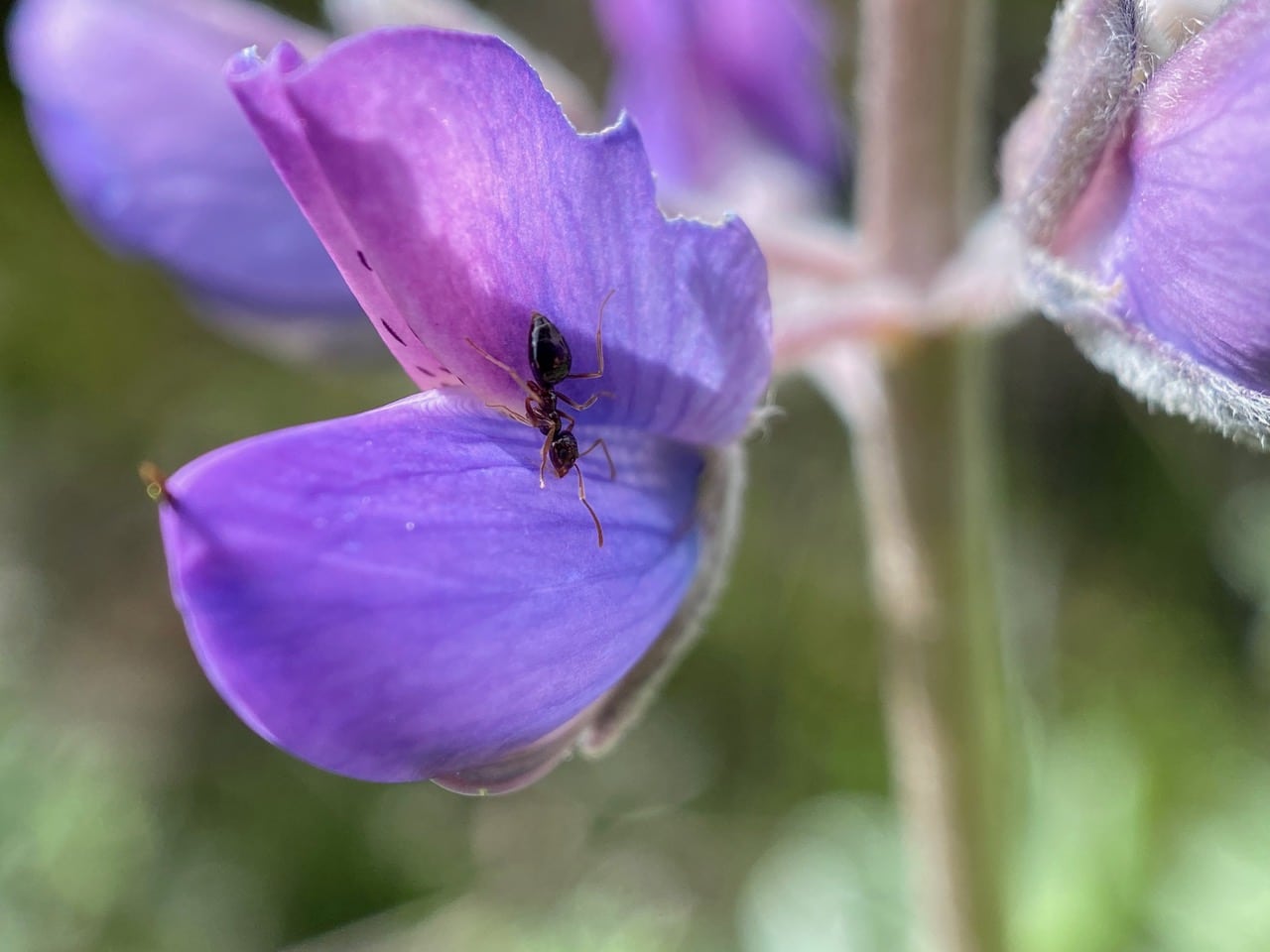


The ant roams all over the flower….
… and finally ends up probing at the base of the flower where the banner presses against the wing petal. The ant obviously knows where the nectar is, but it is not clear whether it can get to it through that tight gap. This is a clever lupine floral design that prevents non-pollinators from stealing the goods. Only heavy-bodied bees, such as carpenter bees (Xylocopa sp.), bumble bees (Bombus sp.), and some digger bees (Anthophora sp.) are hefty enough to lower the wing petals when they land for nectar. In doing so, the flower dabs the bee’s belly with pollen from stamens that pop up by spring action from below.
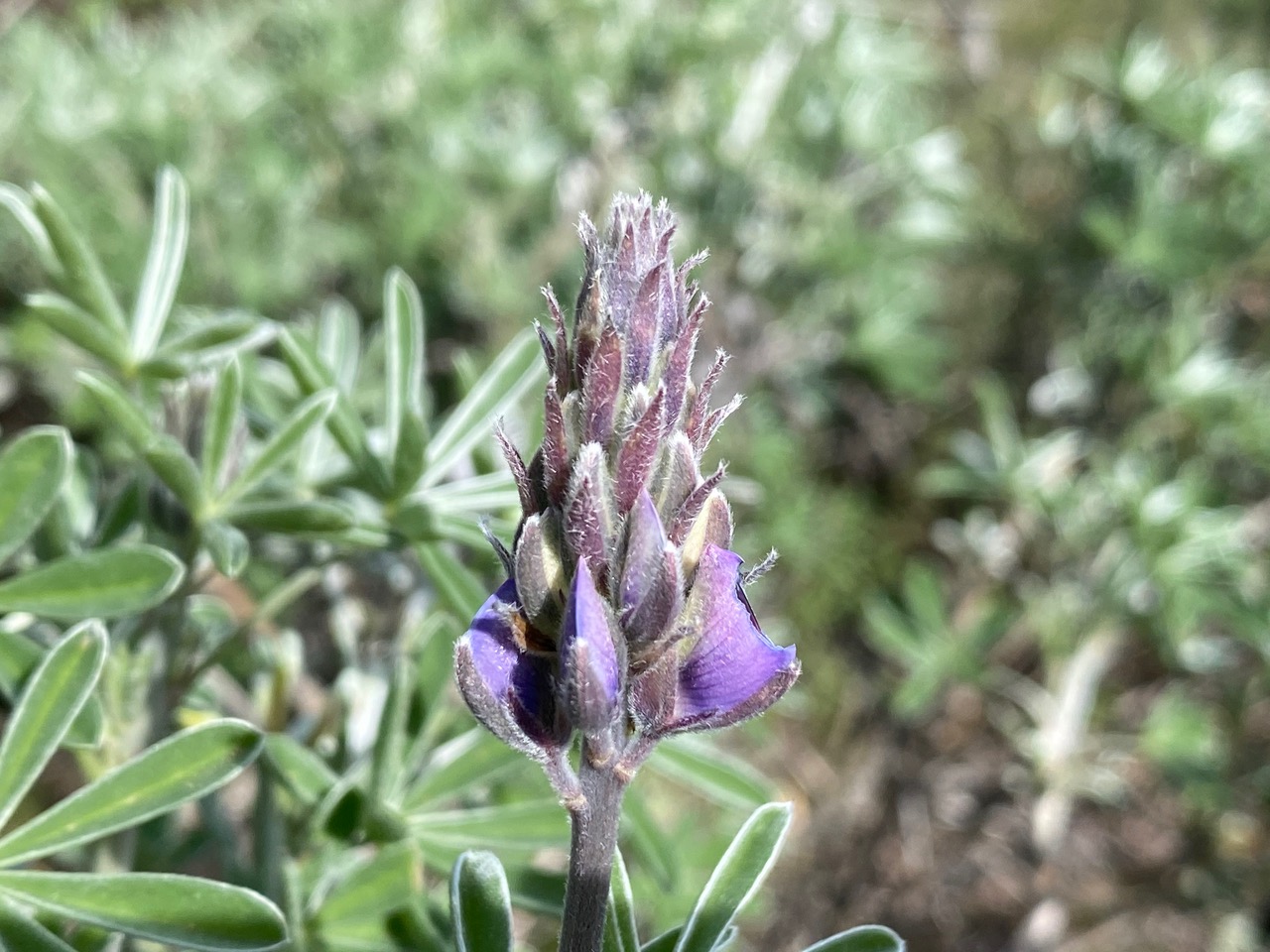
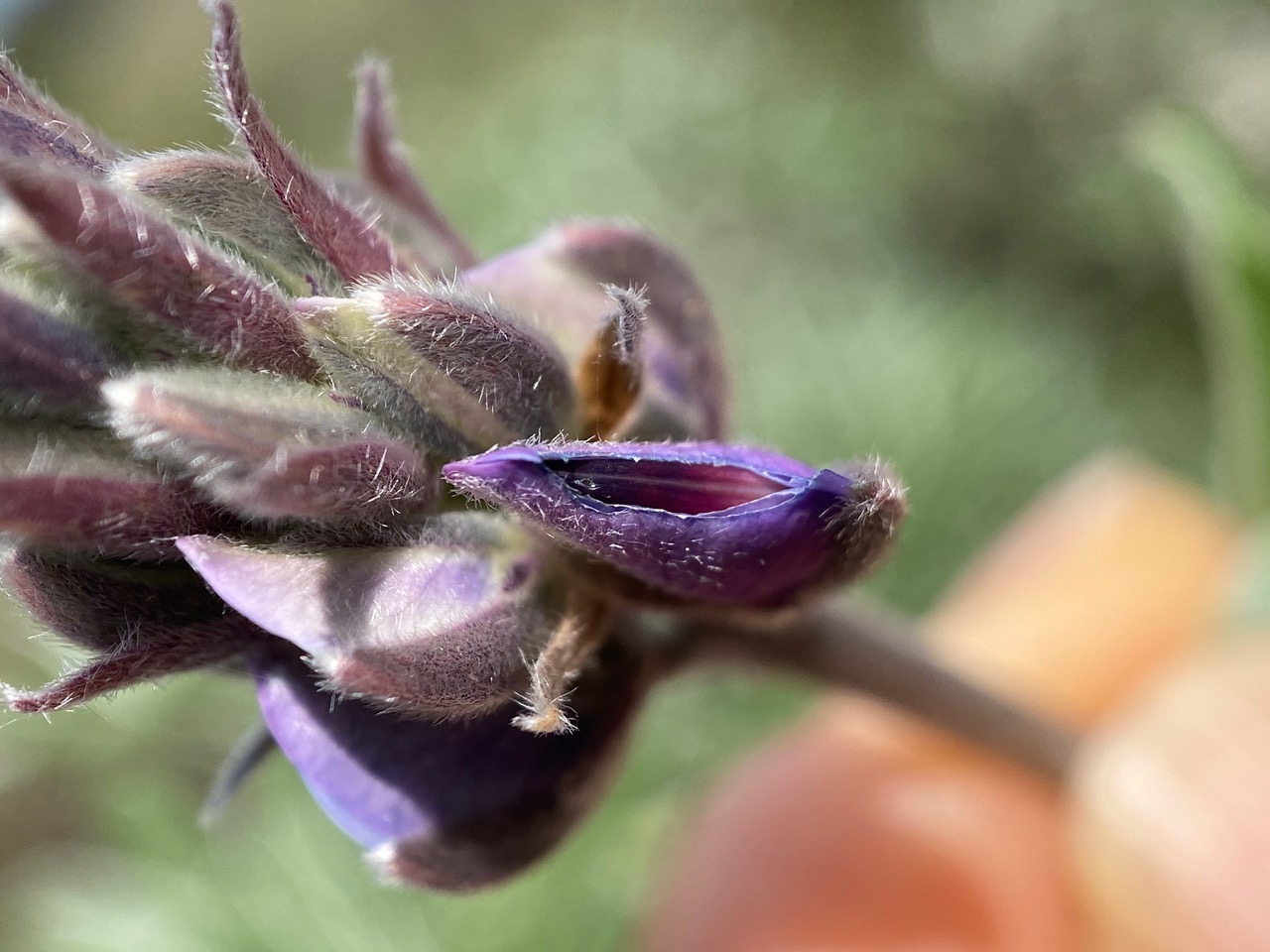
A flower bud on the same inflorescence has been broken into. Someone has chewed neatly through several layers of petals to get in. Did an ant do this? Other common insects with chewing mouthparts come to mind – bees, beetles, grasshoppers and katydids. I have seen few beetles so far, and certainly the grasshoppers and katydids have yet to make their appearances. Might a bee, impatient for the flower to open, resort to robbery?
A flower bud on this young inflorescence has also been breached.
Looking through the macro lens, I find that the flower bud has been emptied of its contents – all the reproductive structures are missing! It looks like a job done by an ant.
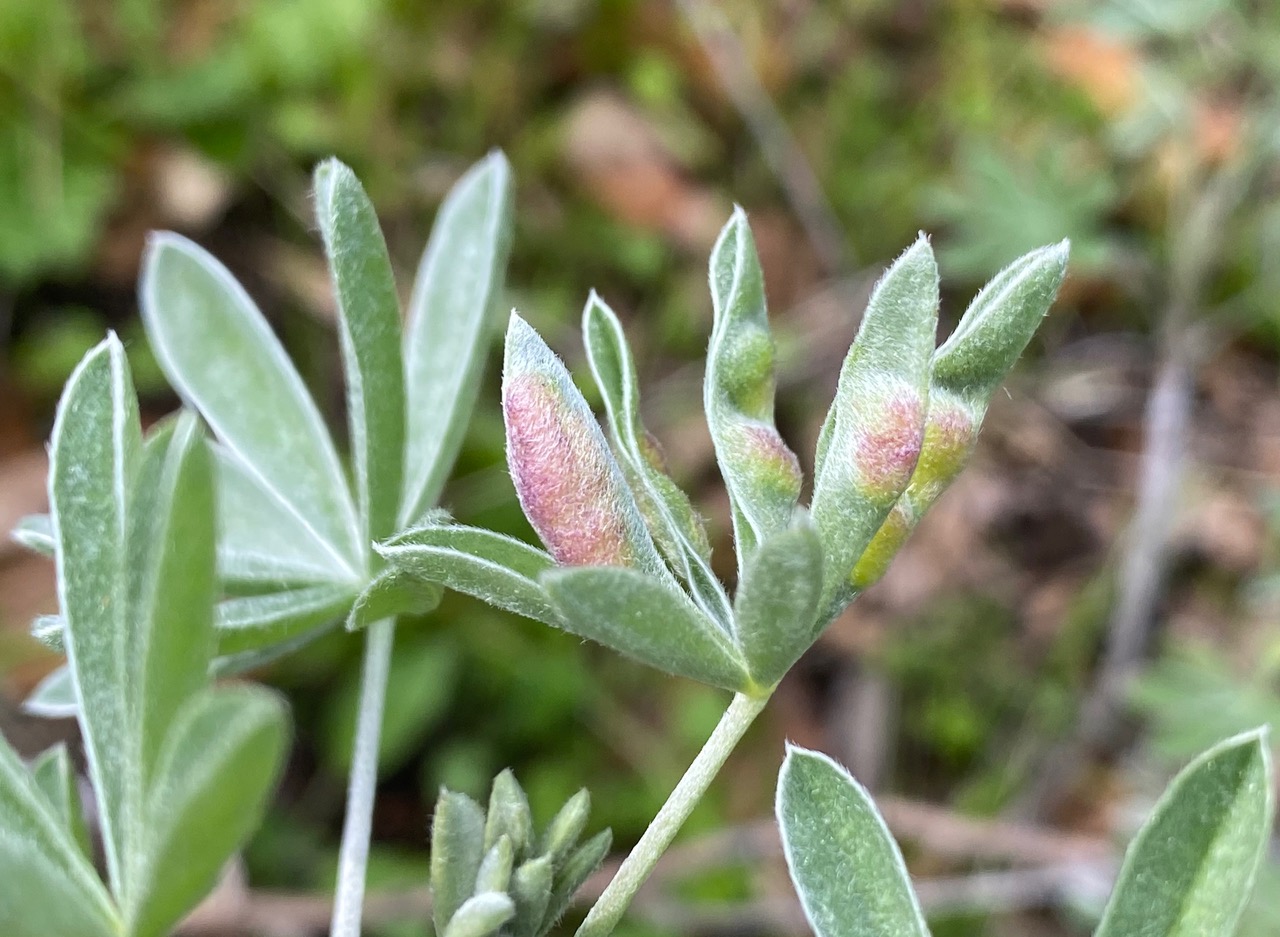
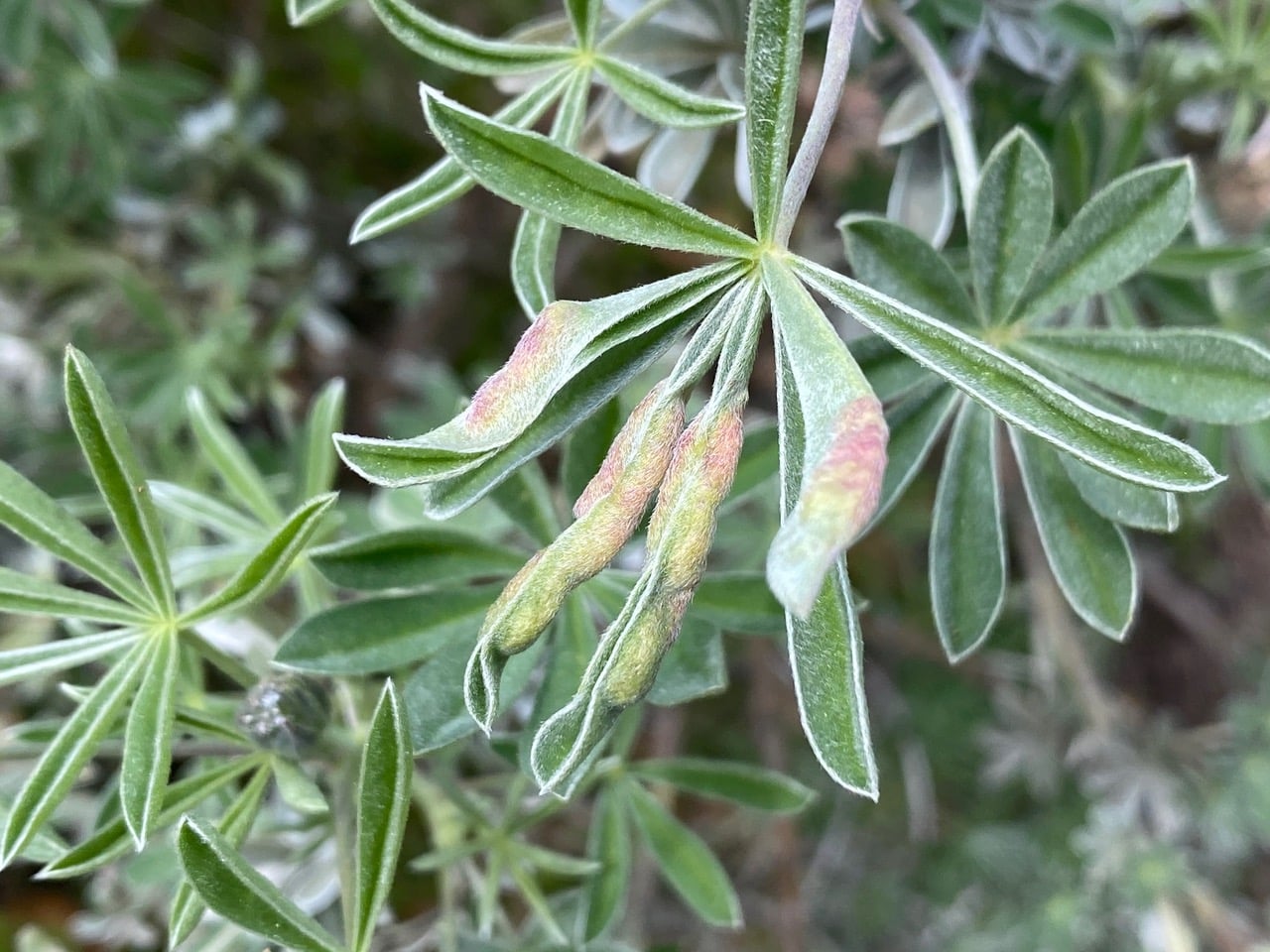
Many of the Silverleaf Lupines have leaflets that are folded along the midrib and which contain reddish swellings.
These tumor-like growths are induced by the Leaf-fold-gall Midge, Dasineura lupinorum, family Cecidomyiidae. Females lay their eggs on unopened leaflets in growing buds. Newly hatched larvae crawl between the closed halves of the leaflets and begin feeding, stimulating formation of the swollen galls. The larvae complete development inside the gall and remain there through pupation. The midge produces several generations per year.
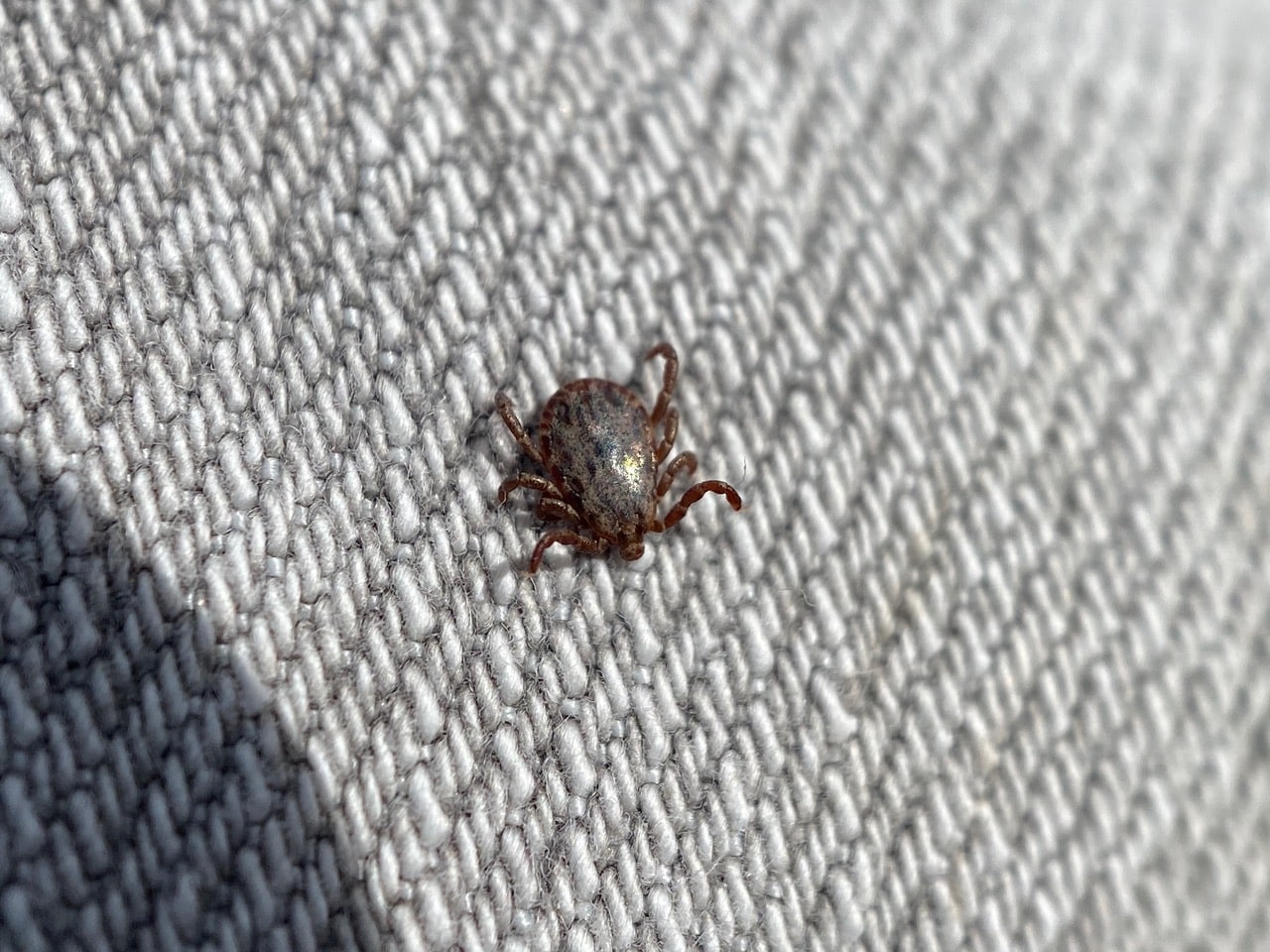
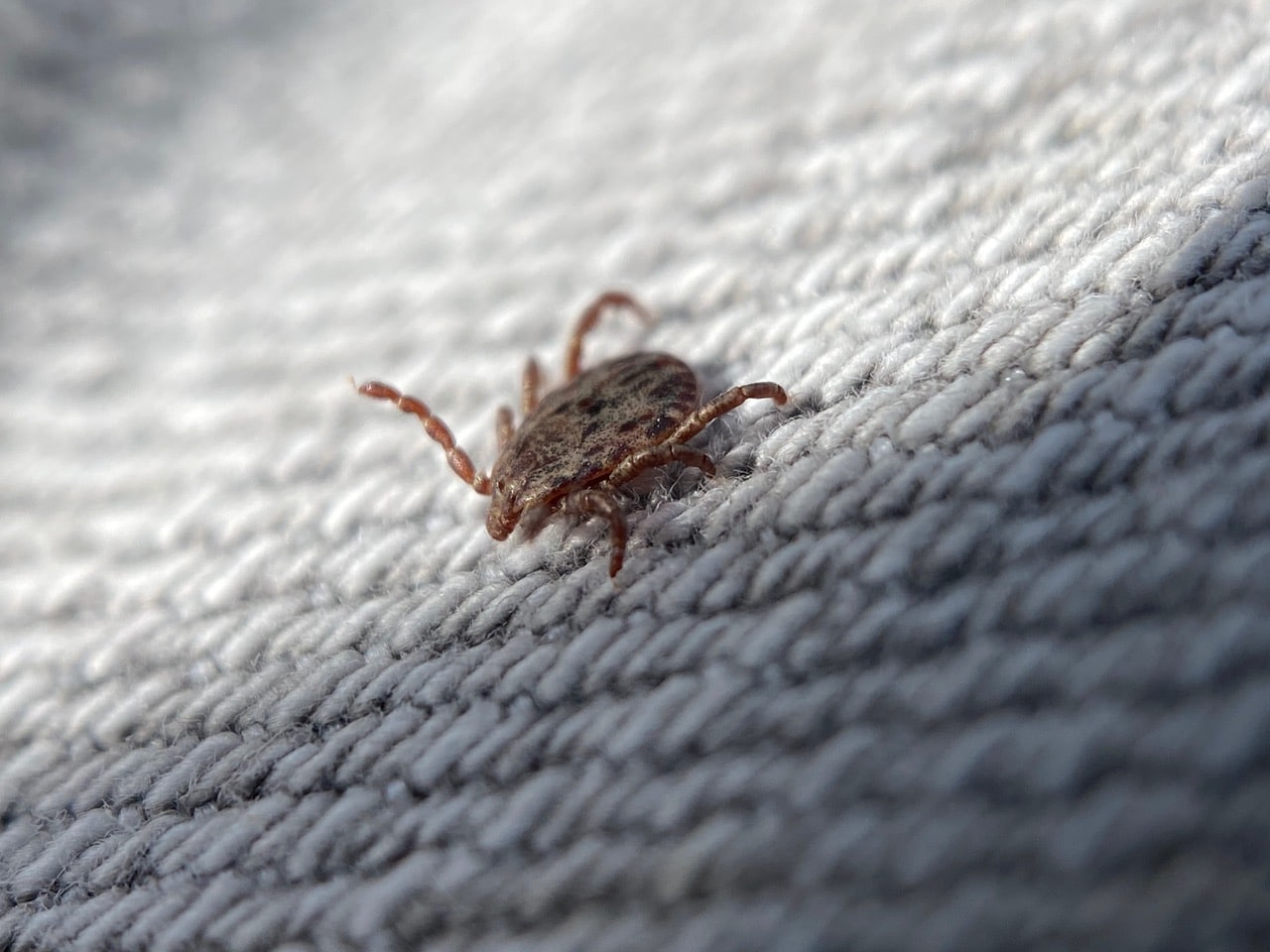
Yikes! An adult male Pacific Coast Tick, Dermacentor occidentalis has attached itself to my pant leg! Wow, the tick season is upon us!
Ticks pick a place to wait by identifying well-used paths, resting on the tips of grasses and shrubs. They find their hosts by detecting animals’ breath and body odors, or by sensing body heat, moisture, and vibrations. Some species can even recognize a shadow. Ticks can’t fly or jump, but many species wait in a search position known as “questing”. Holding onto leaves or grass by their third and fourth pair of legs, they hold the first pair of legs outstretched, waiting to climb on to a passing host. When a host brushes the spot where the tick is waiting, it quickly climbs aboard. Recent research has shown that ticks are significantly aided by electrostatic forces (static electricity) when attaching to their hosts, allowing them to be passively attracted across air gaps to land on potential hosts due to the natural electrical charges animals accumulate on their bodies.
Capable of transmitting various diseases through their bite, ticks are a nuisance to those of us who spend time in the wilds. Surely they must serve a larger ecological role that eludes us? What good are tick?
The tiny blood-sucking parasites benefit the ecosystem in which they live by serving as food for other species such as reptiles, amphibians, and birds. Many Woodland animals feed on them, including wild turkeys and western fence lizards.
By transmitting diseases to their hosts, ticks contribute to their major evolutionary role of controlling the populations of various animals all around the globe. The diseases ticks transmit help weed out sick and infirm individuals in the host populations, giving more space and opportunities for younger and healthier animals to thrive, keeping host populations within the carrying capacity of the land. Like it or not, ticks are a leading participant in the natural selection process of a number of animal species. They are even used as an indicator of an ecosystem’s overall health and stability.
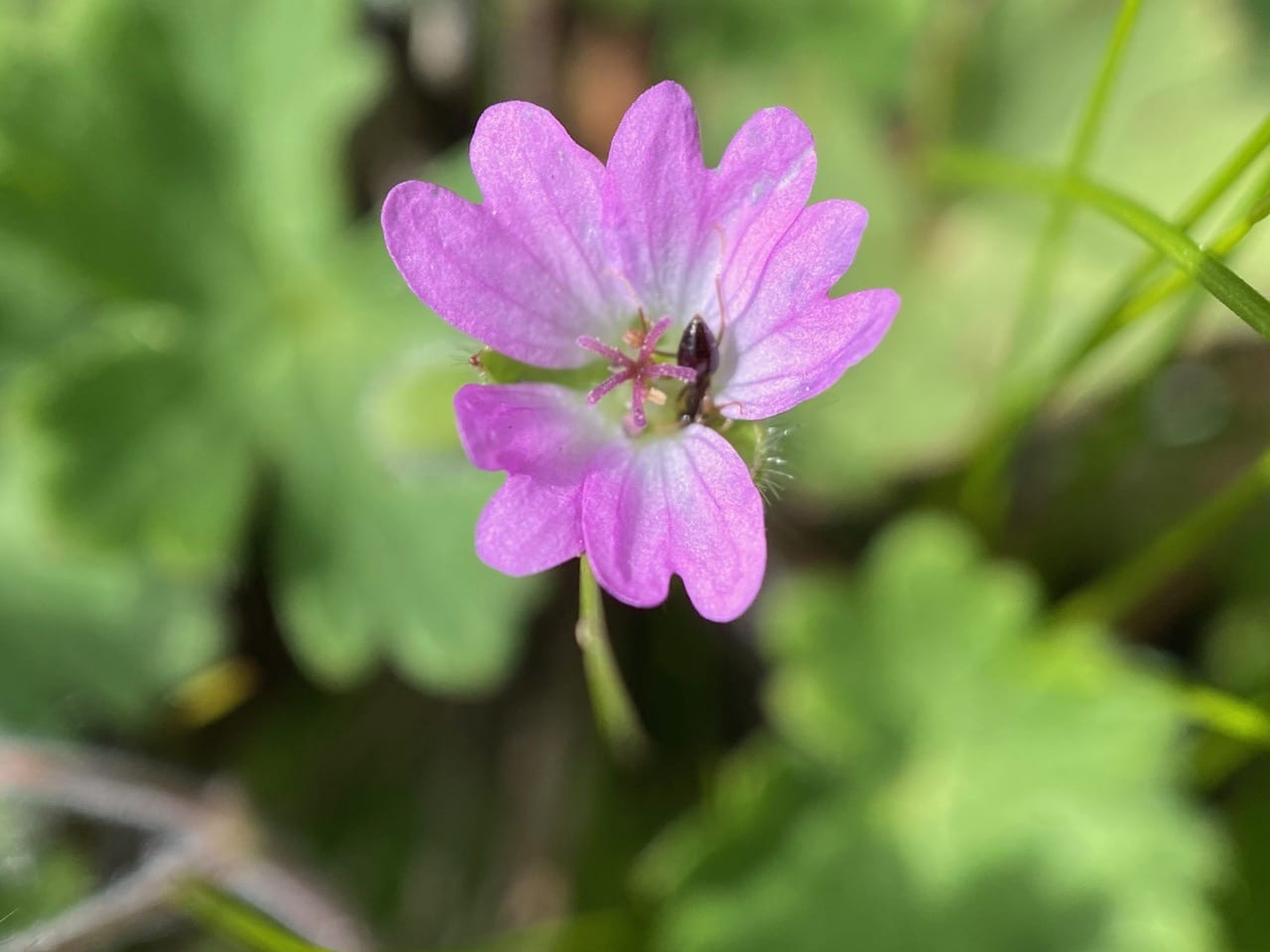
An American Winter Ant, Prenolepis imparis (family Formicidae) is taking nectar at the base of a Wild Geranium flower.