

Pollinator Post 2/18/24 (3)
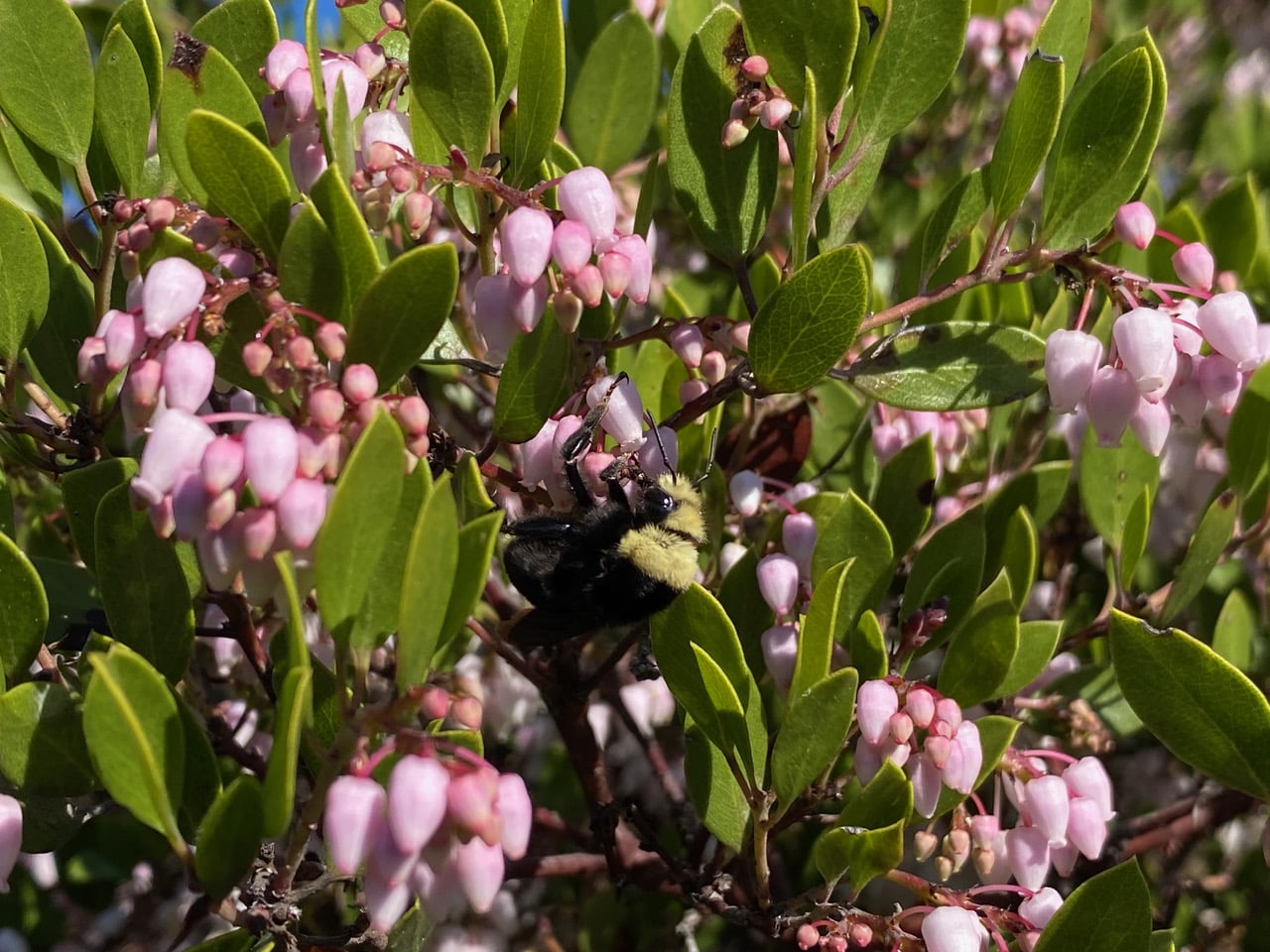
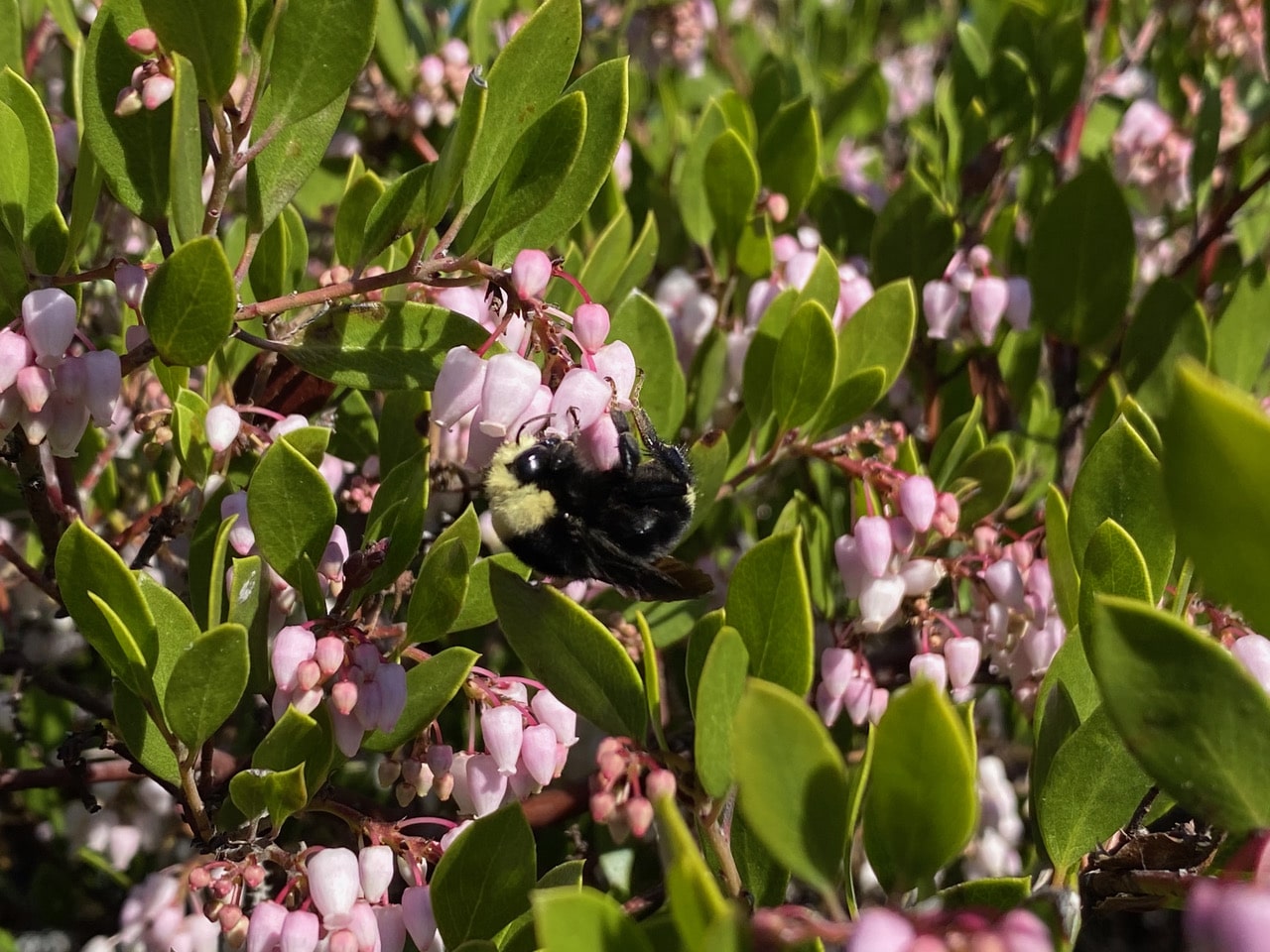
A large Yellow-faced Bumble Bee, Bombus vosnesenskii (family Apidae) lands on a cluster of Manzanita flowers. From her large size, I have no doubt that she is a queen. She seems to have difficulty getting a firm hold of the small flowers. She might also be inexperienced, fresh out of hibernation.

The queen Bumble Bee is trying to aim her tongue into the small opening of a Manzanita flower
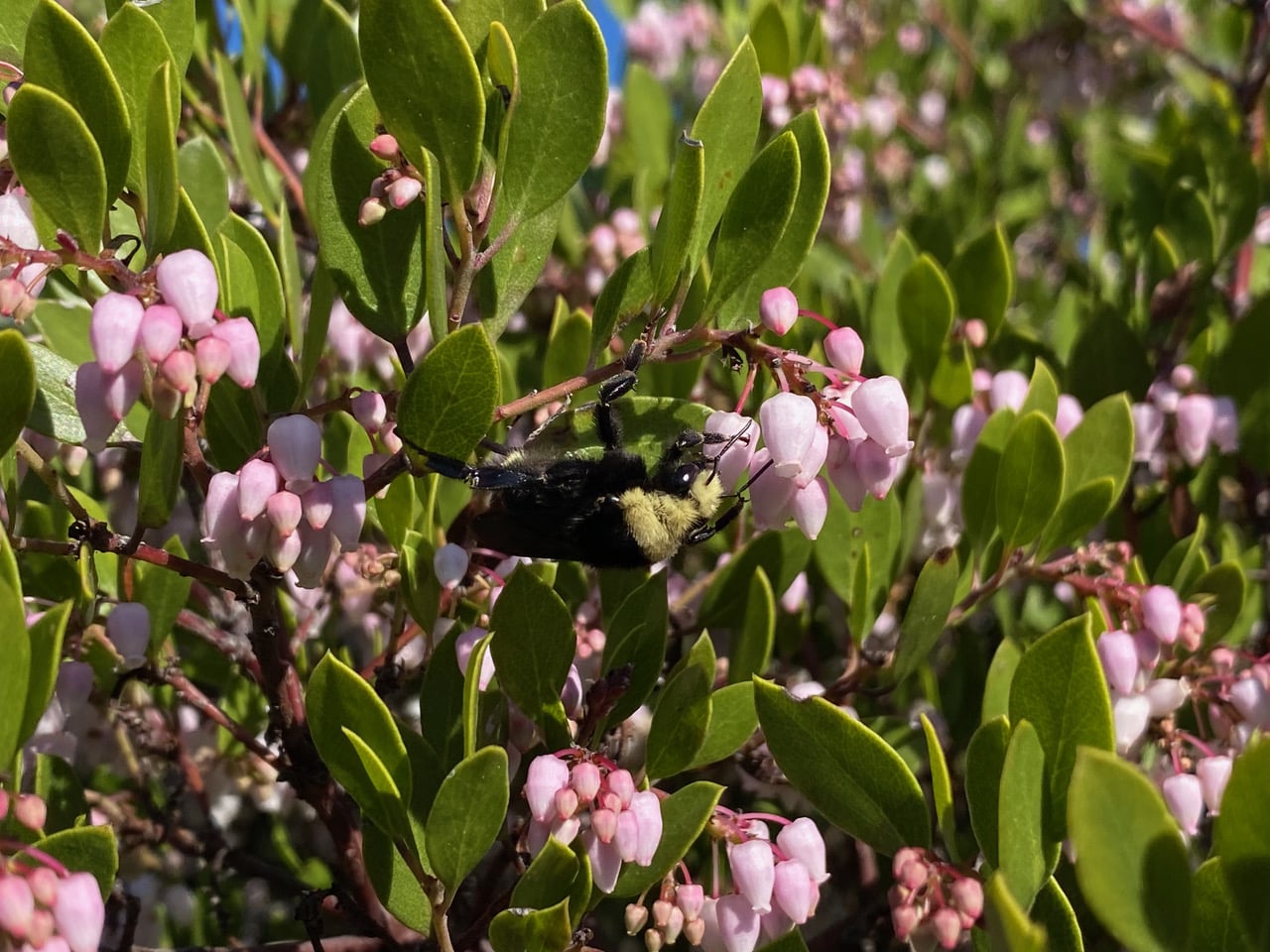
The bee scrambles to the next cluster of flowers. Note that the pollen basket on her hind leg is empty – she is not collecting pollen. With the persistent rains we have been experiencing, the newly awakened bumble bee queens probably haven’t had much time to feed themselves, let alone forage for her first brood of larvae. Surely, self preservation is their priority at this juncture – if they don’t survive, they can’t establish a colony. Plant pollen is protein-rich, predominantly collected by bees for their developing young. Nectar is an important source of caloric energy necessary for fueling the bees’ activity, not just for larvae. This queen might not have established a nest, so she might not even have larvae to feed.
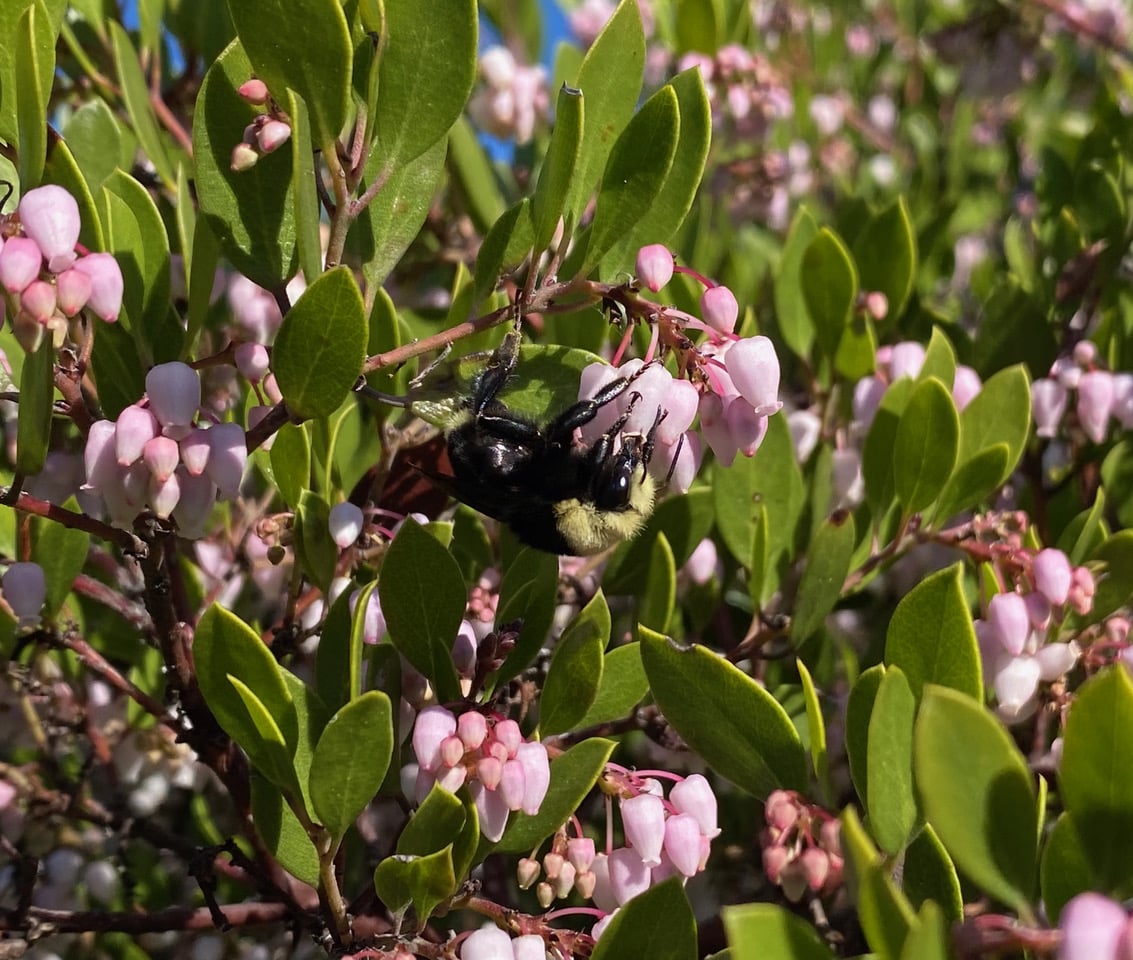
The queen is trying to take nectar. She finally succeeds by hanging her hind legs on the stem for extra support. Her large size is cumbersome for such a delicate operation.
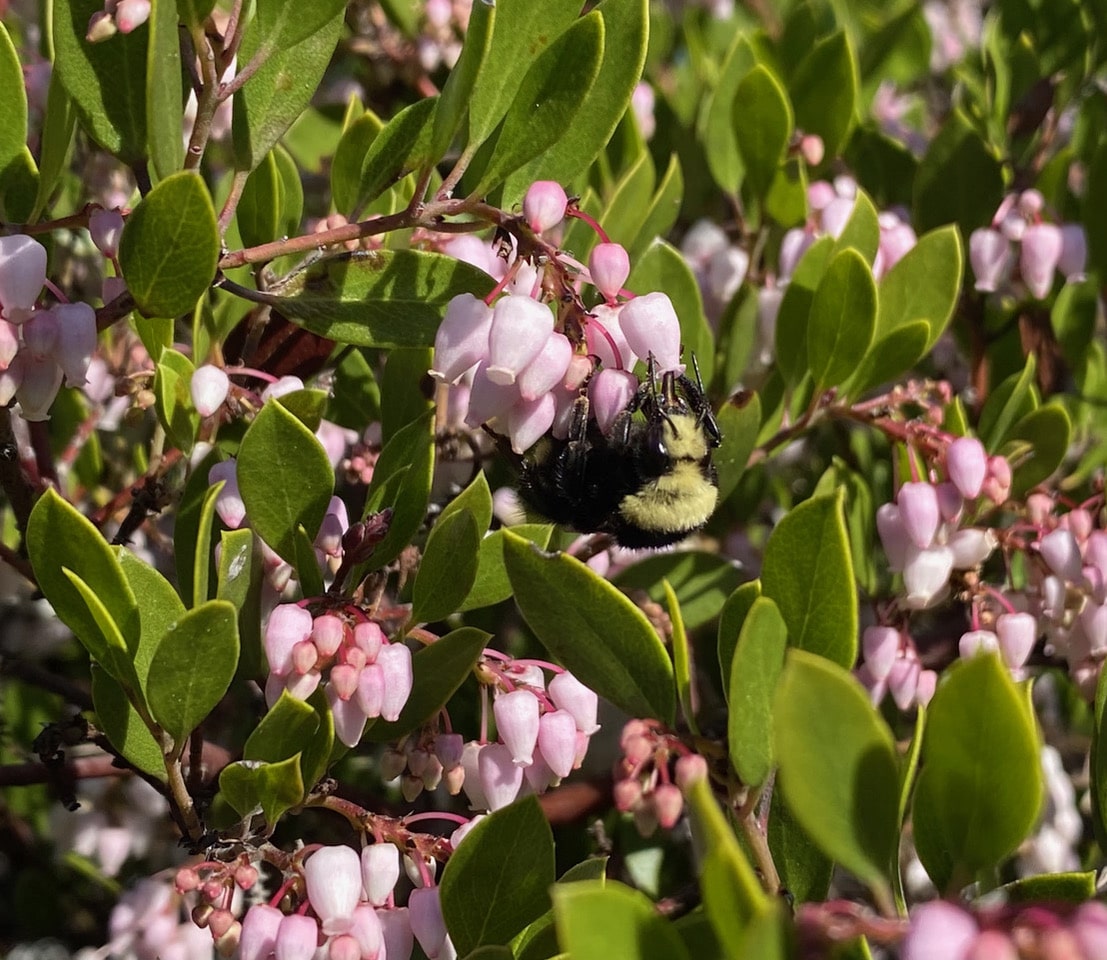
She works several flower in the same cluster. Note her extended tongue.
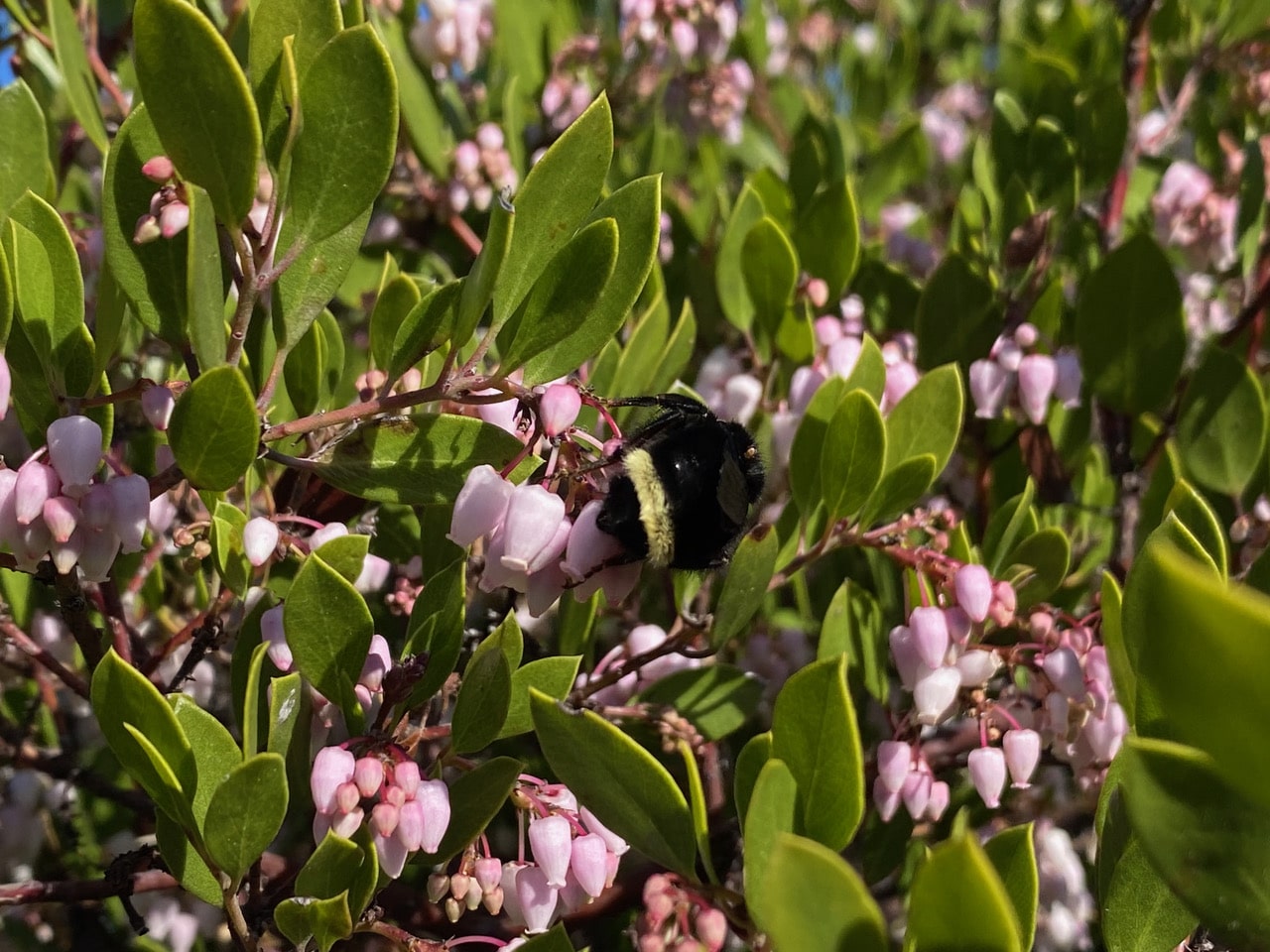
A glimpse of the business end of the queen Yellow-faced Bumble Bee. If she’s successful in establishing a colony, she will no longer be out foraging. The first brood of workers that she single-handedly rears will take over the duty, and the queen will hence forth remain in the nest to lay eggs.
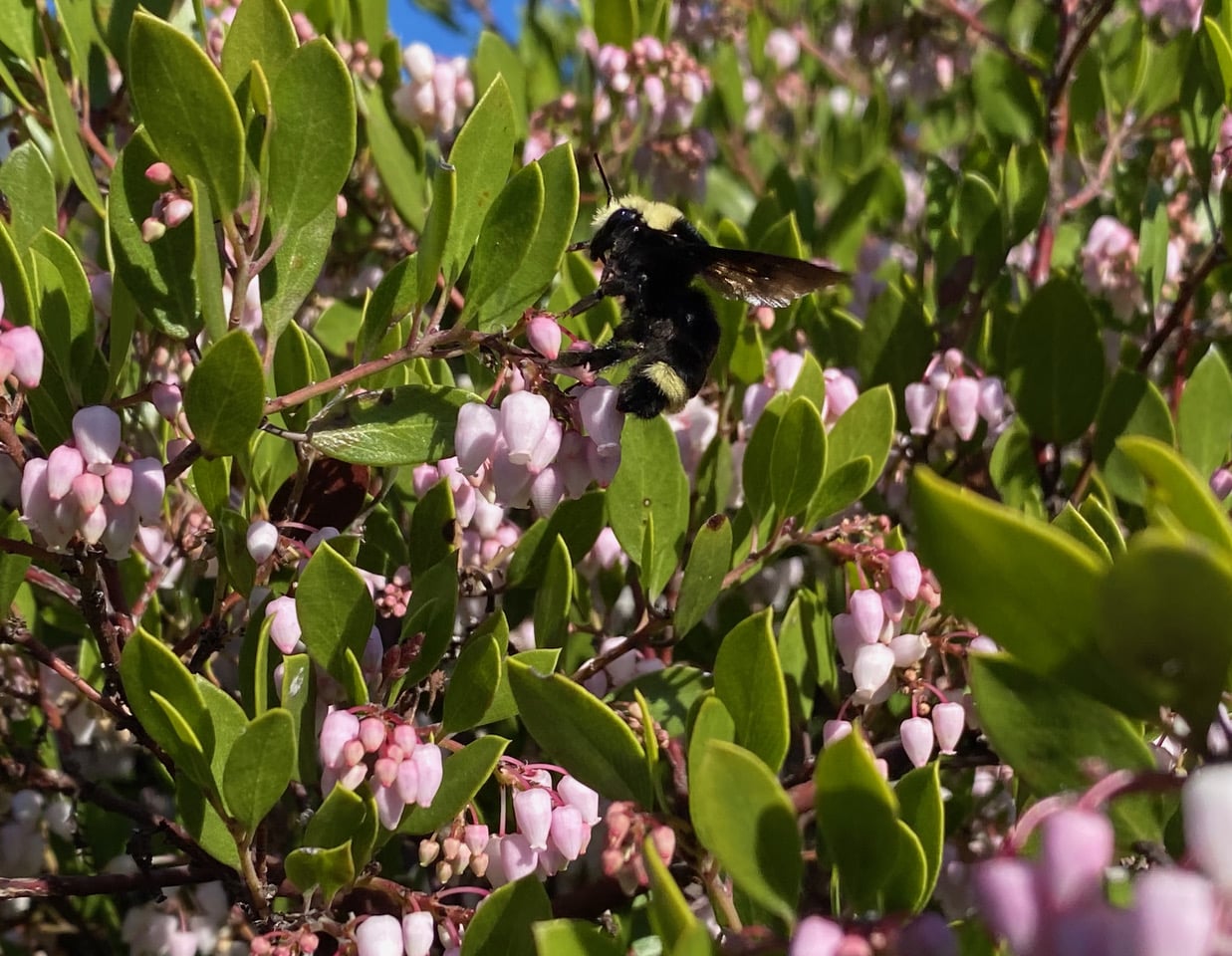
She’s off to the next Manzanita bush! With the next rain storm coming this afternoon, she has little time to waste.
To help Bumble Bees, I encourage all gardeners to plant more early-blooming natives to support the queens during this most vulnerable time of their lives.

A Red Admiral butterfly lands on a Manzanita to take nectar from the flowers. My curiosity is piqued: why are these butterflies so commonly seen in winter? Checking the literature, I learn that the species overwinters as adults!
Here’s what Art Shapiro’s Butterfly Site (UC Davis) says about the Red Admiral:
“One of the most frequently seen butterflies in midwinter at low elevation, and often very common in the urban Bay Area, the Red Admiral occurs all around the Northern Hemisphere. It is multi-brooded, overwinters as an adult, and may undergo altitudinal migration in the Sierra.”
The Red Admiral, Vanessa atalanta (family Nymphalidae) is a striking butterfly with wings of black, red and white. Green eggs are laid singly on the tips of host plant leaves, notably plants in the nettle family, Urticaceae. Young caterpillars eat and live within a shelter of folded leaves; older caterpillars make a nest of leaves tied together with silk. Adult butterflies prefer sap flows on trees, fermenting fruit, and bird droppings, visiting flowers only when these are not available. The species is found in almost any habitat, from tundra to subtropics.
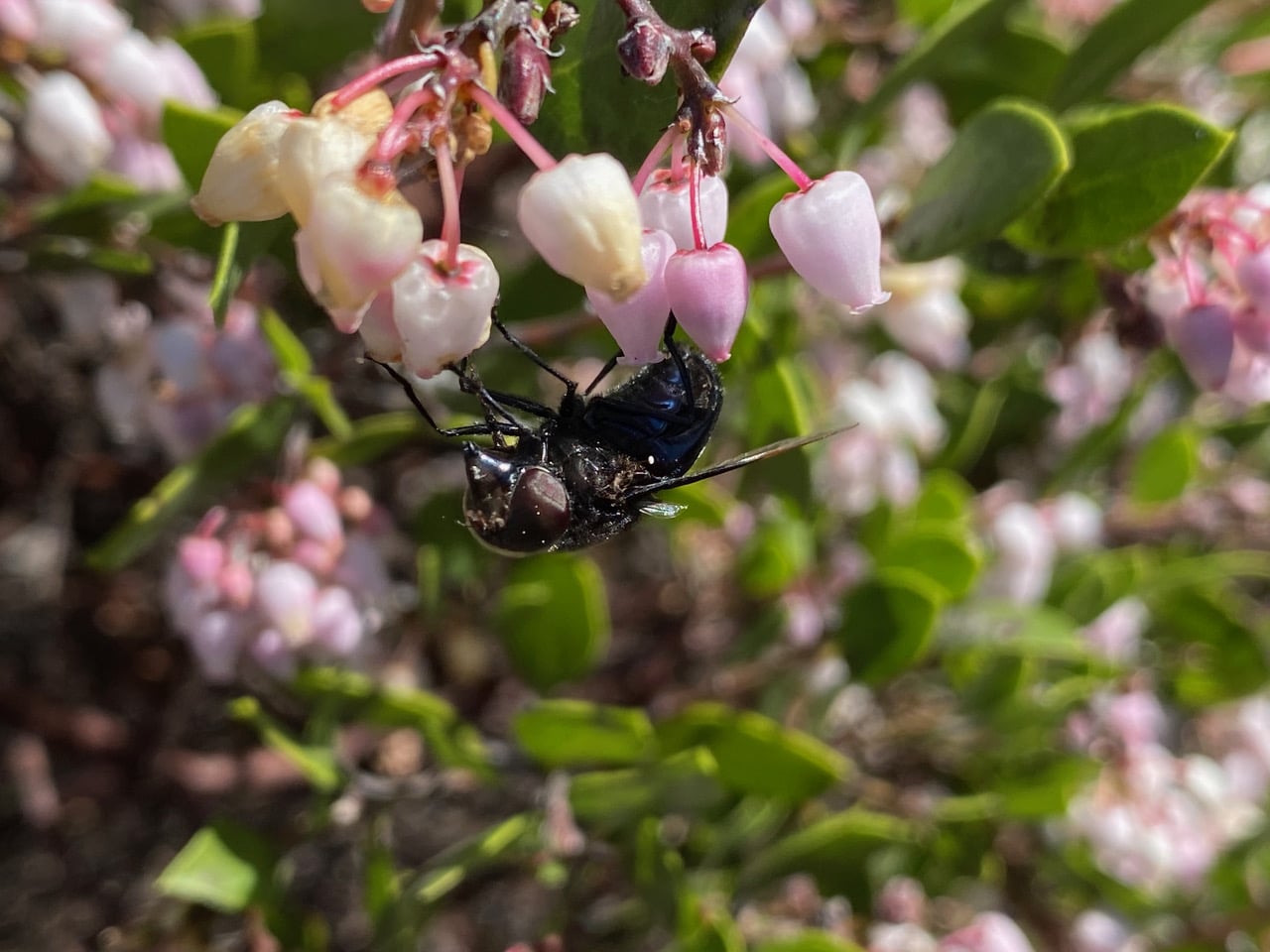
A Purple Bromeliad Fly, Copestylum violaceum (family Syrphidae) lands on a cluster of Manzanita flowers next to me. Note the hover fly’s pointy “snout”. I am intrigued by the fly’s feeding mechanism.
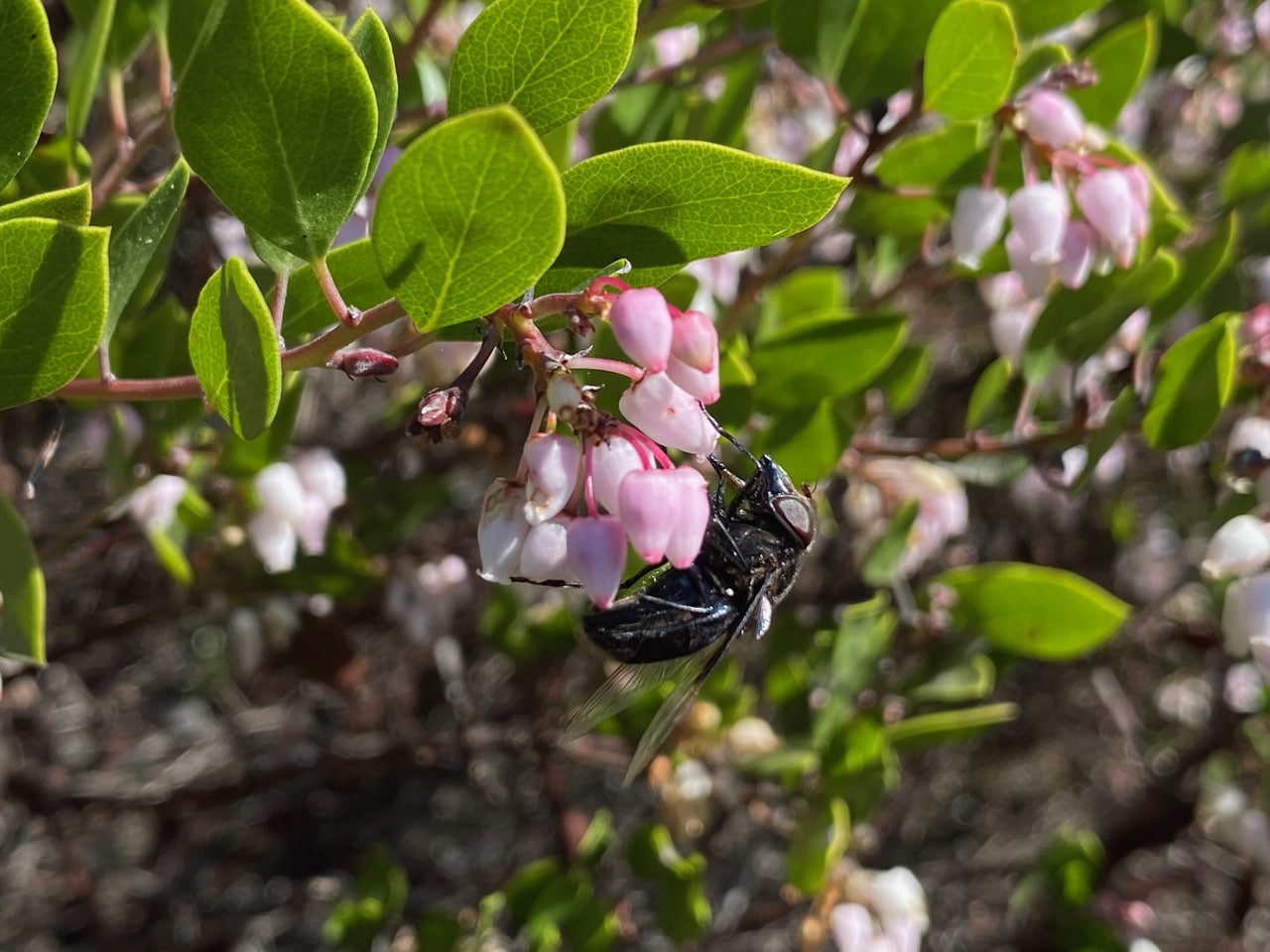
The fly is aiming its rigid proboscis into the corolla of a Manzanita flower. Note that the proboscis is extended vertically from the bee, at right angle to the bee’s orientation, not from the tip of its snout. How does this work?
I found an excellent close-up picture of a different Copestylum species: Copestylum hagii – Copestylum haagii – BugGuide.Net Where on earth is the proboscis attached??
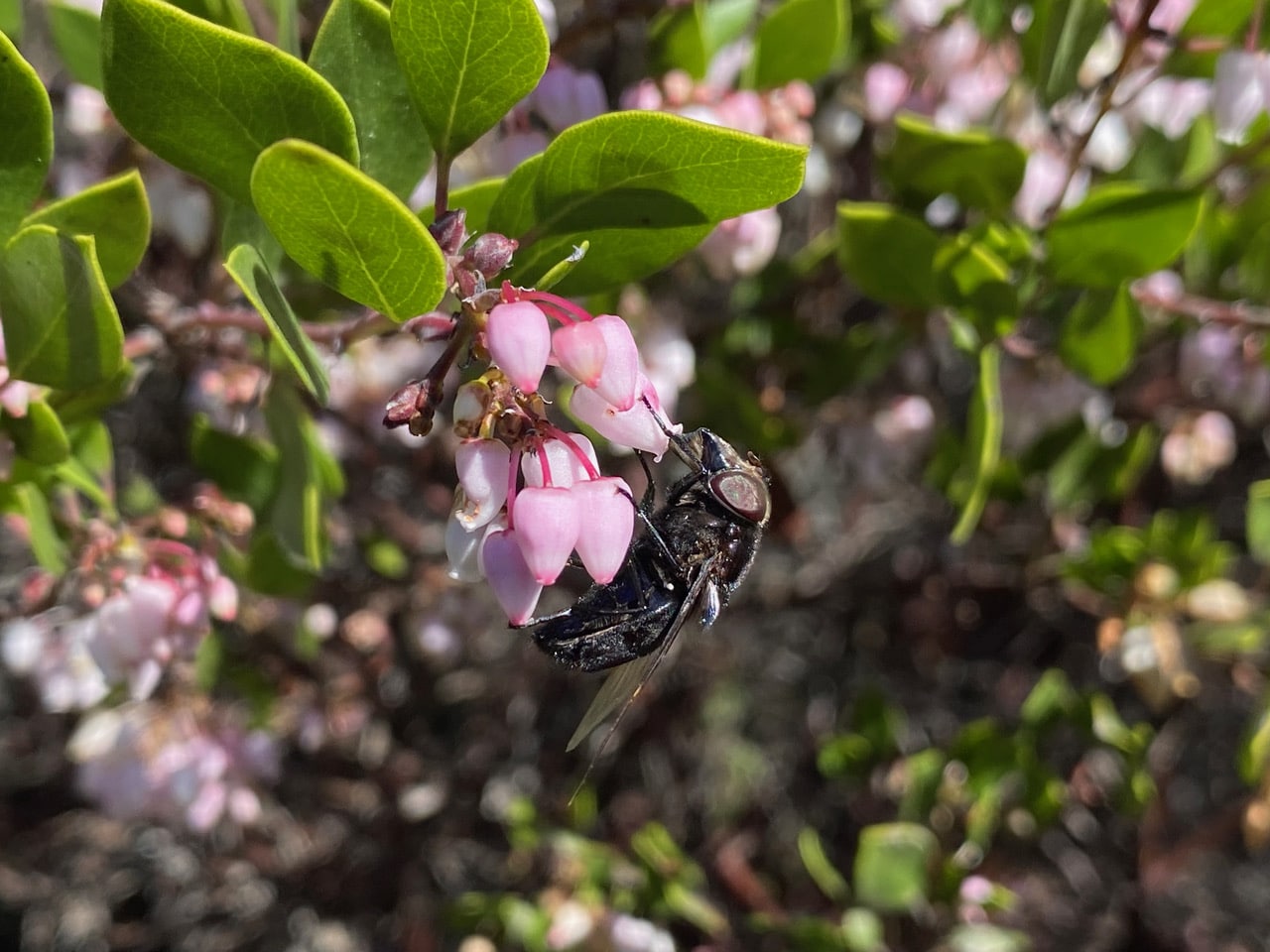
As the fly probes deeper into the flower, a membrane is extended from the base of the proboscis, attached to the “snout”.

The hover fly retracts its proboscis. Note the retreating membrane at the base of the rigid proboscis. What strange mouthparts!
This large hover fly is probably the only Syrphid that can access the nectar from Manzanita flowers directly with its proboscis. Do I see hints of pollen stuck on the wet proboscis? Perhaps in the process of the fly probing for nectar, the anthers within have been disturbed enough to release pollen? Can Manzanita pollen be transferred to the next flower on a fly’s tongue?
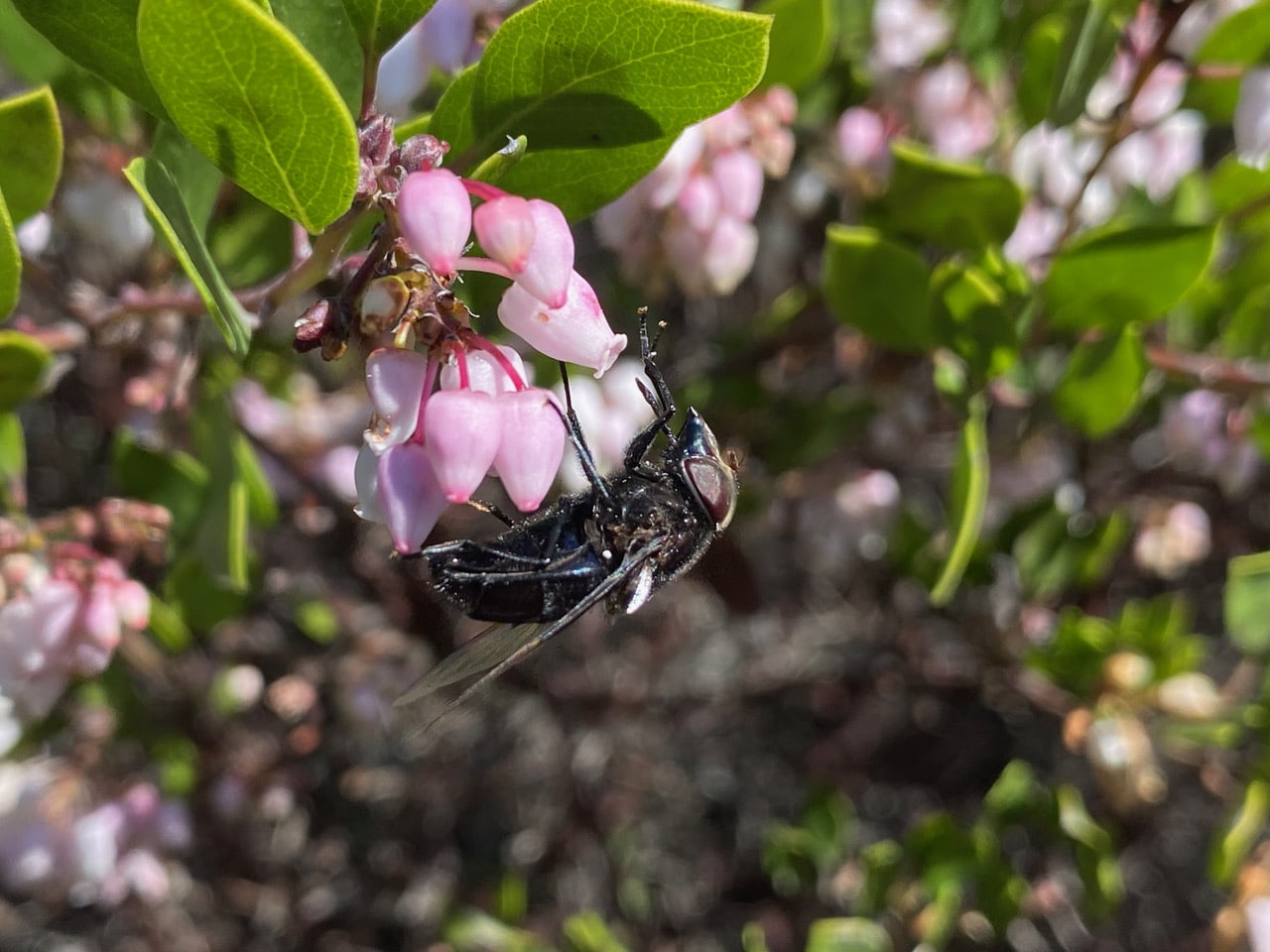
The fly proceeds to clean its proboscis with its front legs before flying off.
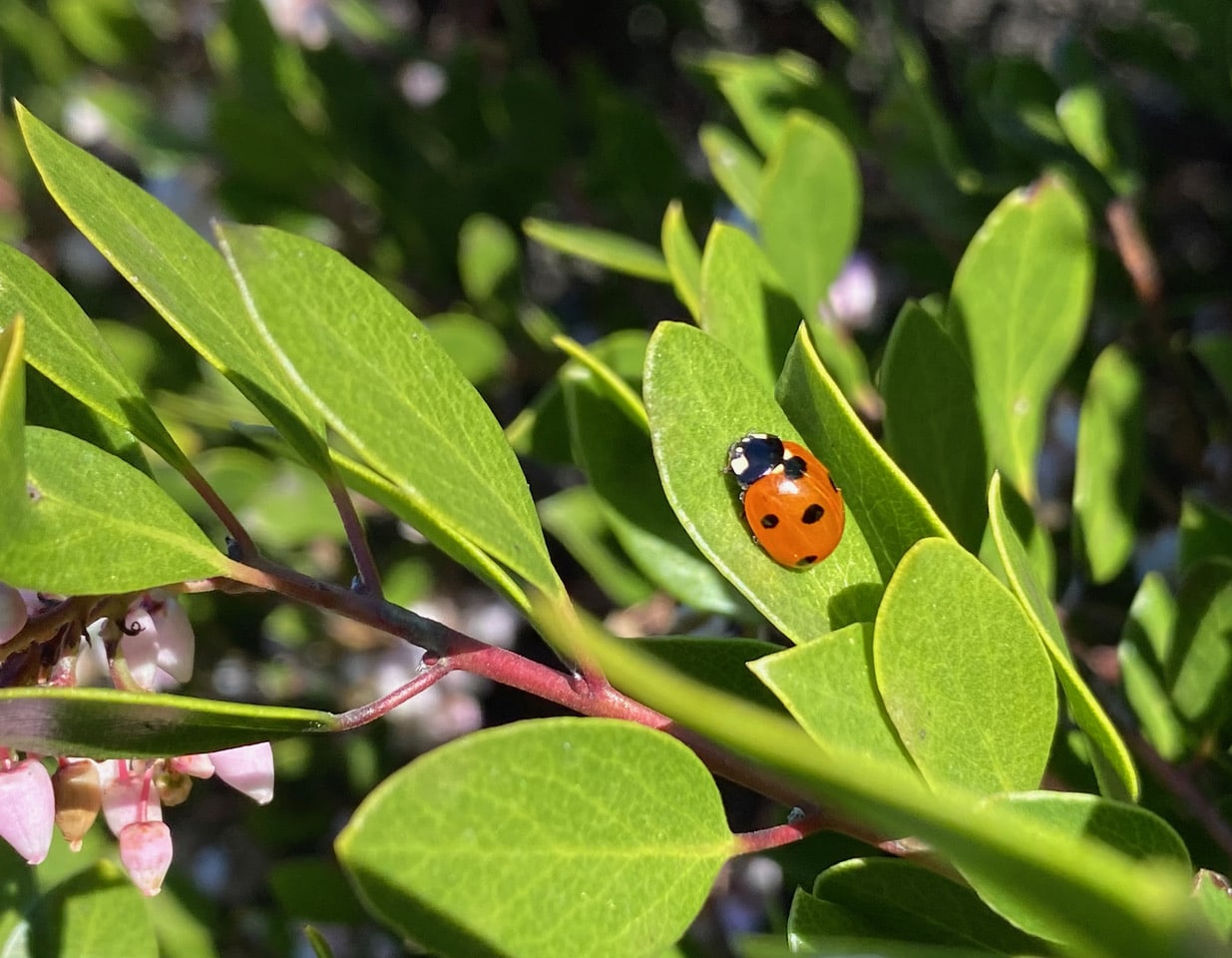
A Seven-spotted Ladybeetle, Coccinella septempunctata (family Coccinelidae) shows up conspicuously on a Manzanita leaf. It seems to be enjoying the morning sun.
Native to Europe, the species has been repeatedly introduced to North America as a biological control agent to reduce aphid numbers. It has since spread to many states, where it has outcompeted some native species, including the Coccinella. The Seven-spotted Ladybeetles are large; adults may reach a body length of 0.5 in. Their distinctive spots and conspicuous colors warn of their toxicity, making them unappealing to predators. When threatened, the beetles can secrete a fluid from joints in their legs which gives them a foul taste.