

Pollinator Post 2/18/24 (2)
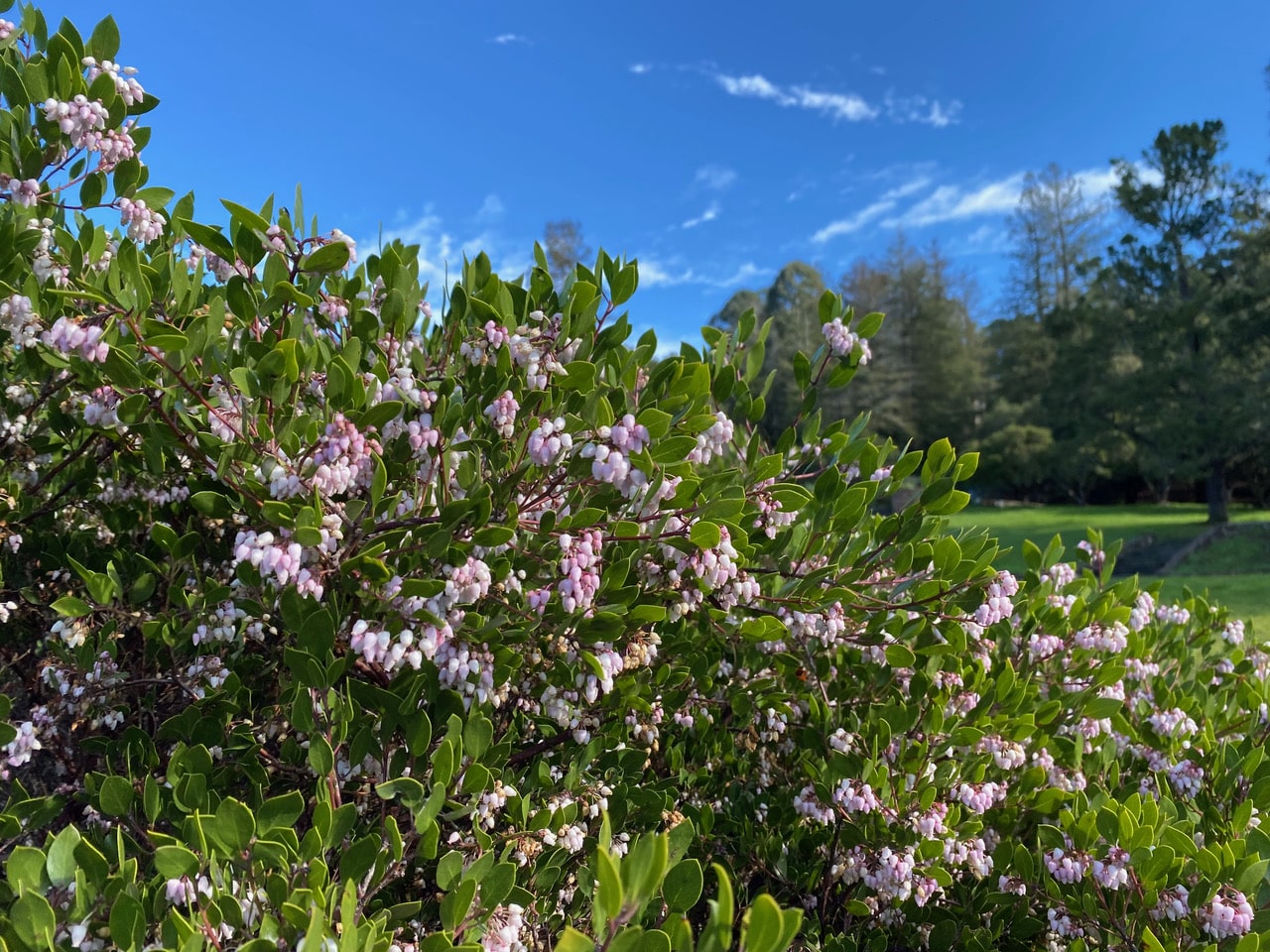
I have not been to the Cascades since the beginning of the Covid pandemic. It’s good to see that the Manzanitas have grown bigger and are blooming profusely.



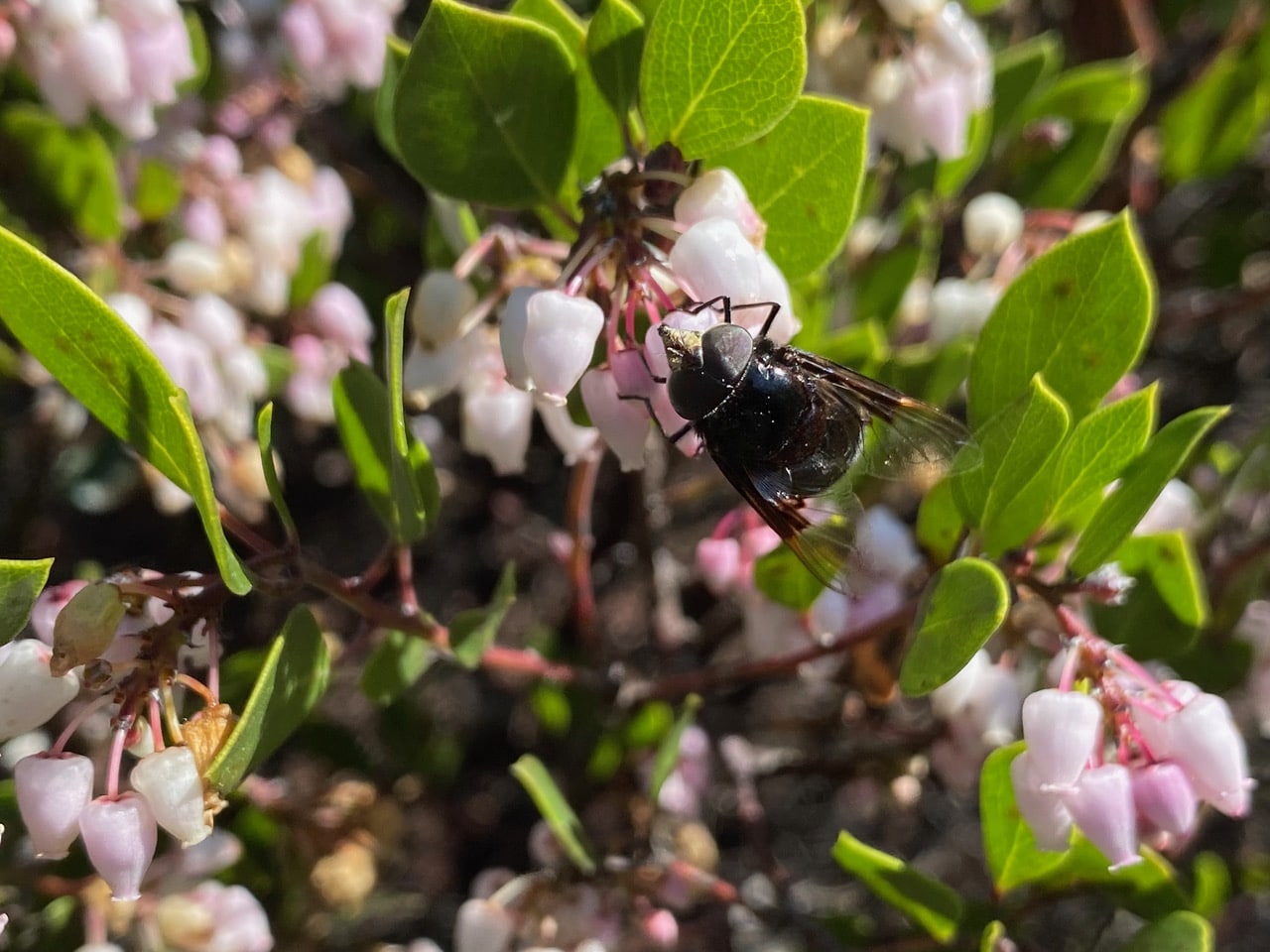
 See the pair of whitish translucent, rounded flaps at the base of the wings that lie at a different plane as the wings? Those are the prominent alulae of Copestylum.

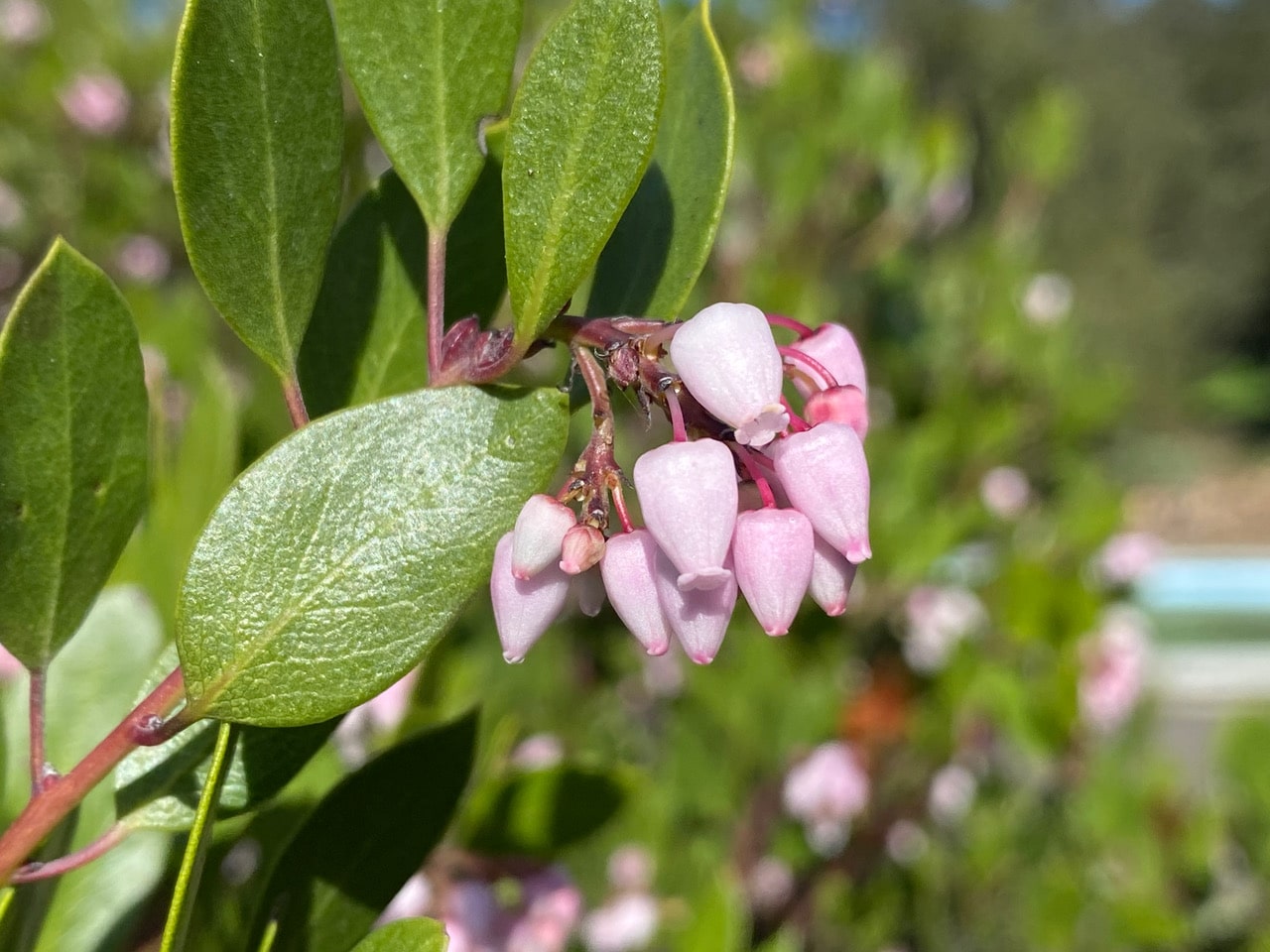
For a winter-blooming flower in California, it’s crucial that its pollen is protected from the rains. The Manzanita flowers (genus Arctostaphylos) are structured to withstand the wet season – urn-shaped with small opening, the nodding flowers are tightly clustered. Pollen develop in special poricidal anthers within that need to be shaken at specific frequency to release their pollen. The flowers require special bees for pollination, those that can “sonicate” the flowers. Some examples are the bumble bees and the digger bees that emerge around this time.
In buzz pollination, the bee hangs upside-down on the flowers, disengage its wings from the flight muscles; then the muscles are vibrated at a specific high frequency to cause the pollen to shake loose and to fall down onto the bee’s belly. The bee gathers the pollen into the pollen baskets on her hind legs before returning to her hive.
Much less known is that some Manzanita species are also pollinated by thrips, those tiny insects familiar to gardeners as pests. Thrips (order Thysanoptera) are minute (most are one millimeter or less), slender insects with fringed wings and unique asymmetrical mouthparts that they use to feed on plant tissues by puncturing and sucking out the contents. They are feeble flyers, but capable of long-distance travel aided by air currents. Generally male and female thrips visit flowers cued by scent, color, and possibly form. They feed on pollen and mate. Females proceed to lay eggs on the spot or on subsequent flowers they visit. Larvae that hatch out eventually drop to the ground to pupate. Adult thrips bearing pollen grains breed in the flowers of many plant species and contribute to their pollination. The phenomenon is well studied in cycads. A 2015 study of Pointleaf Manzanita, Arctostaphylos pungens concluded that thrips do pollinate the manzanita and do contribute significantly to the reproductive success of the plant. I have shaken some Manzanita flowers from my own garden over white paper and found numerous thrips when viewed under the microscope.
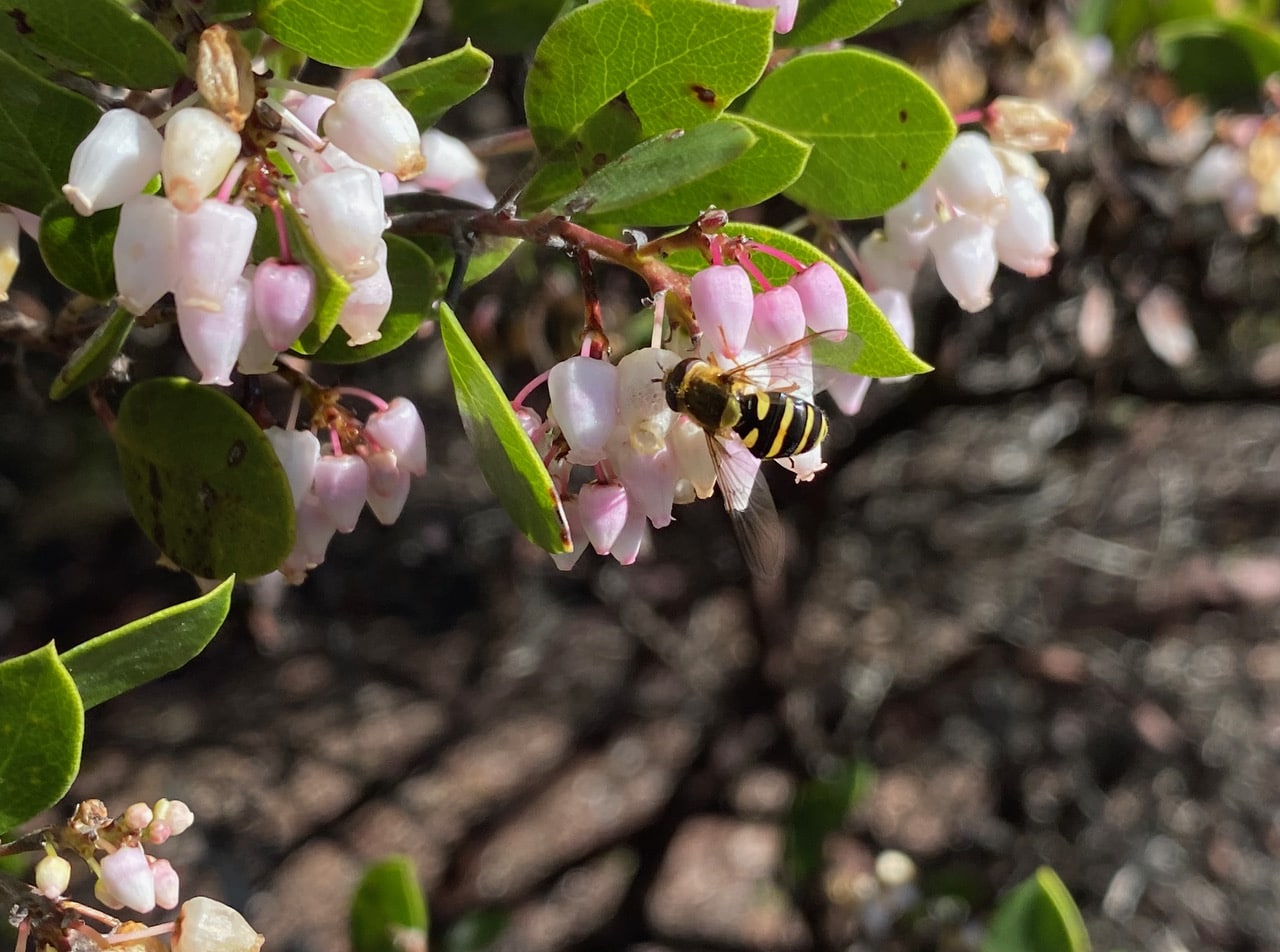
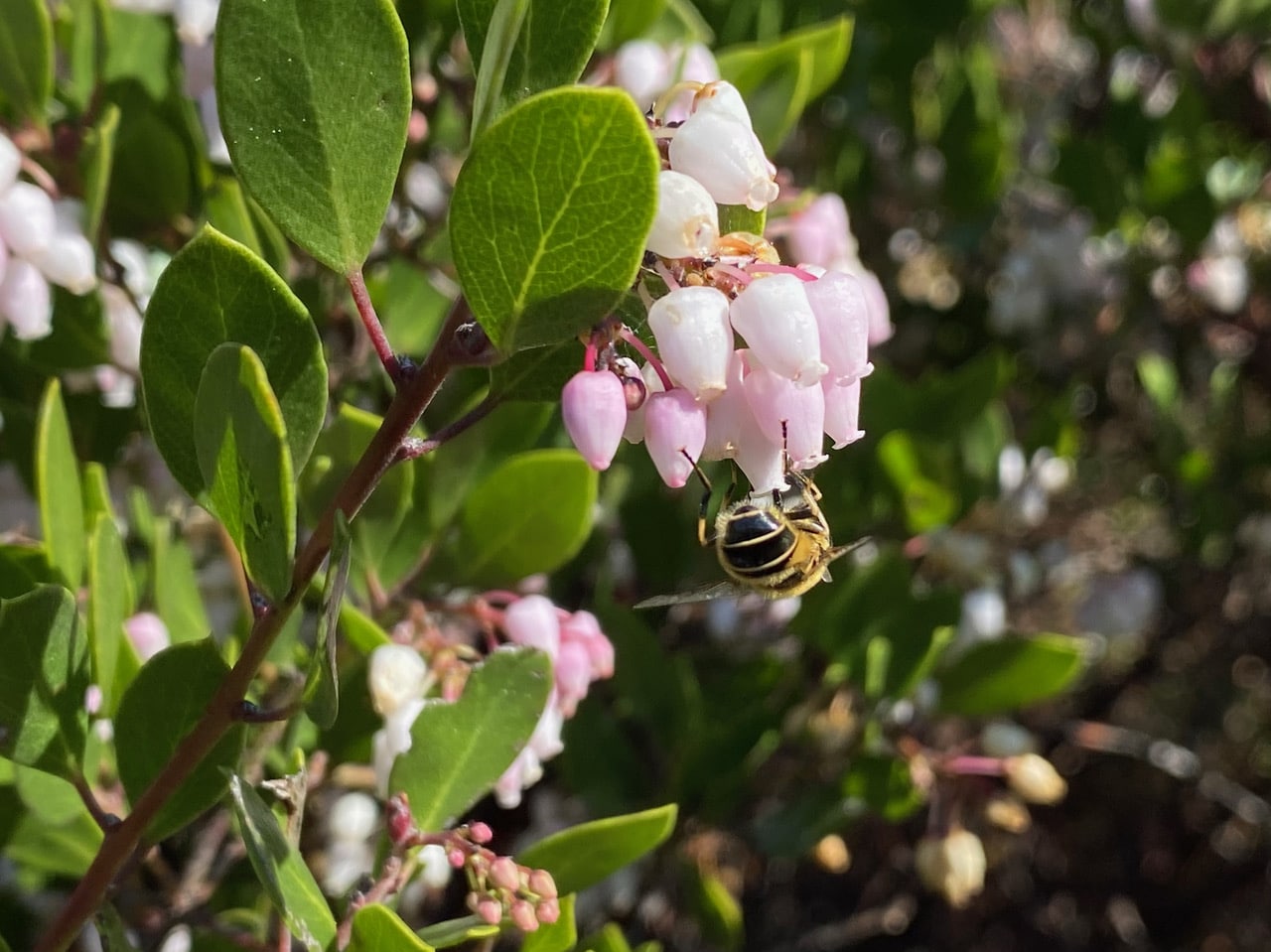
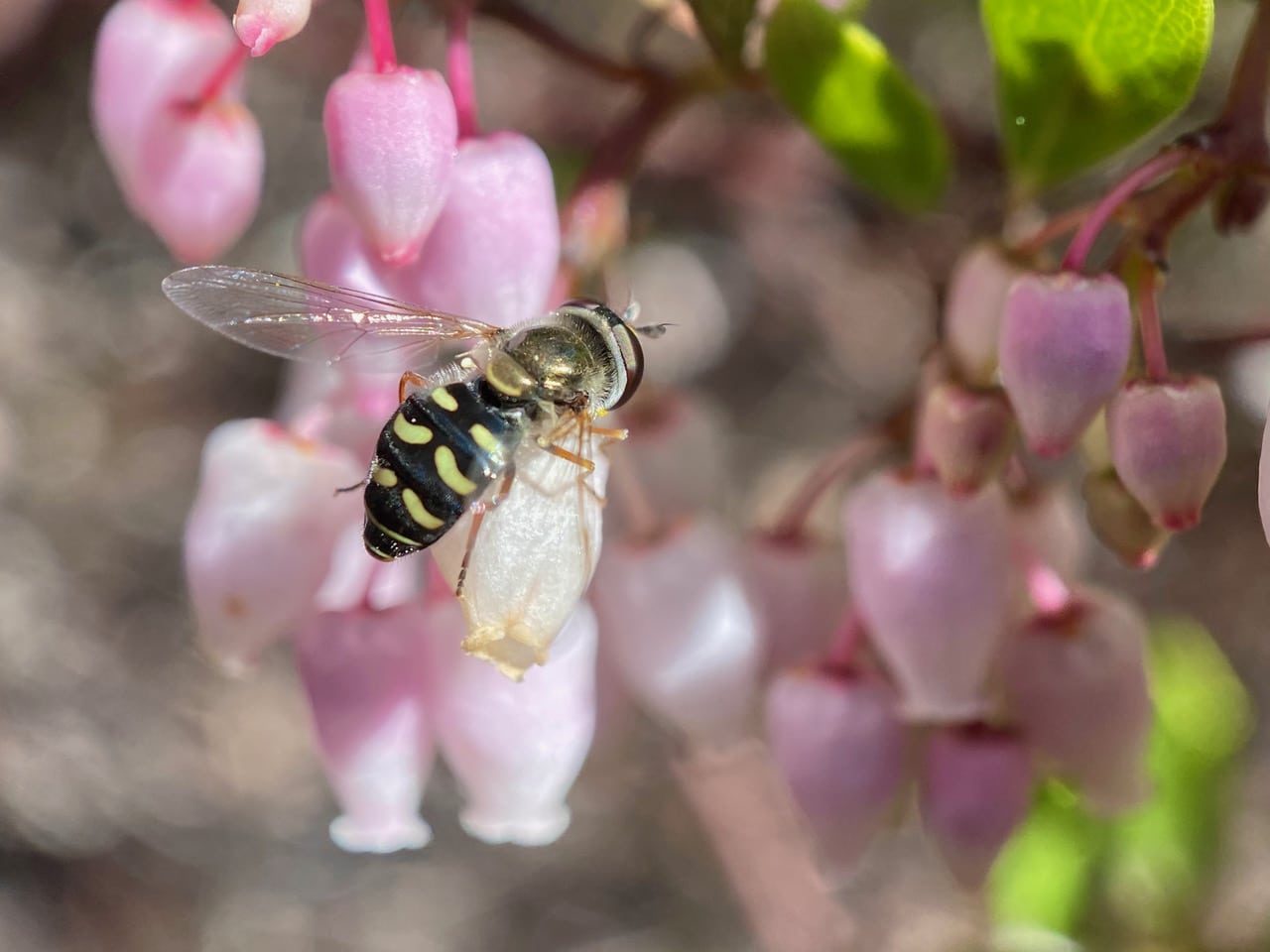
Given the unique floral structure of the Manzanita flowers that necessitates sonication for pollination, a service rendered only by some bees (such as the bumble bees and digger bees), most of the other insects visiting the Manzanita flowers are probably opportunists scavenging for spilled nectar and/or pollen. This probably applies to the Black-margined Flower Fly, Syrphus opinator (family Syrphidae) here, usually a good pollinator for most other flowers it visits.
The Black-margined Flower Fly, Syrphus opinator (family Syrphidae) is common in central California during winter months. It can be distinguished from similar species by the abdominal fascia restricted to the sides and isolated from the margins. It is the quintessential hover fly that mimics bees or wasps. The black-and-yellow banding on the abdomen serves to ward off potential predators that want to avoid prey with stings – a form of Batesian mimicry.
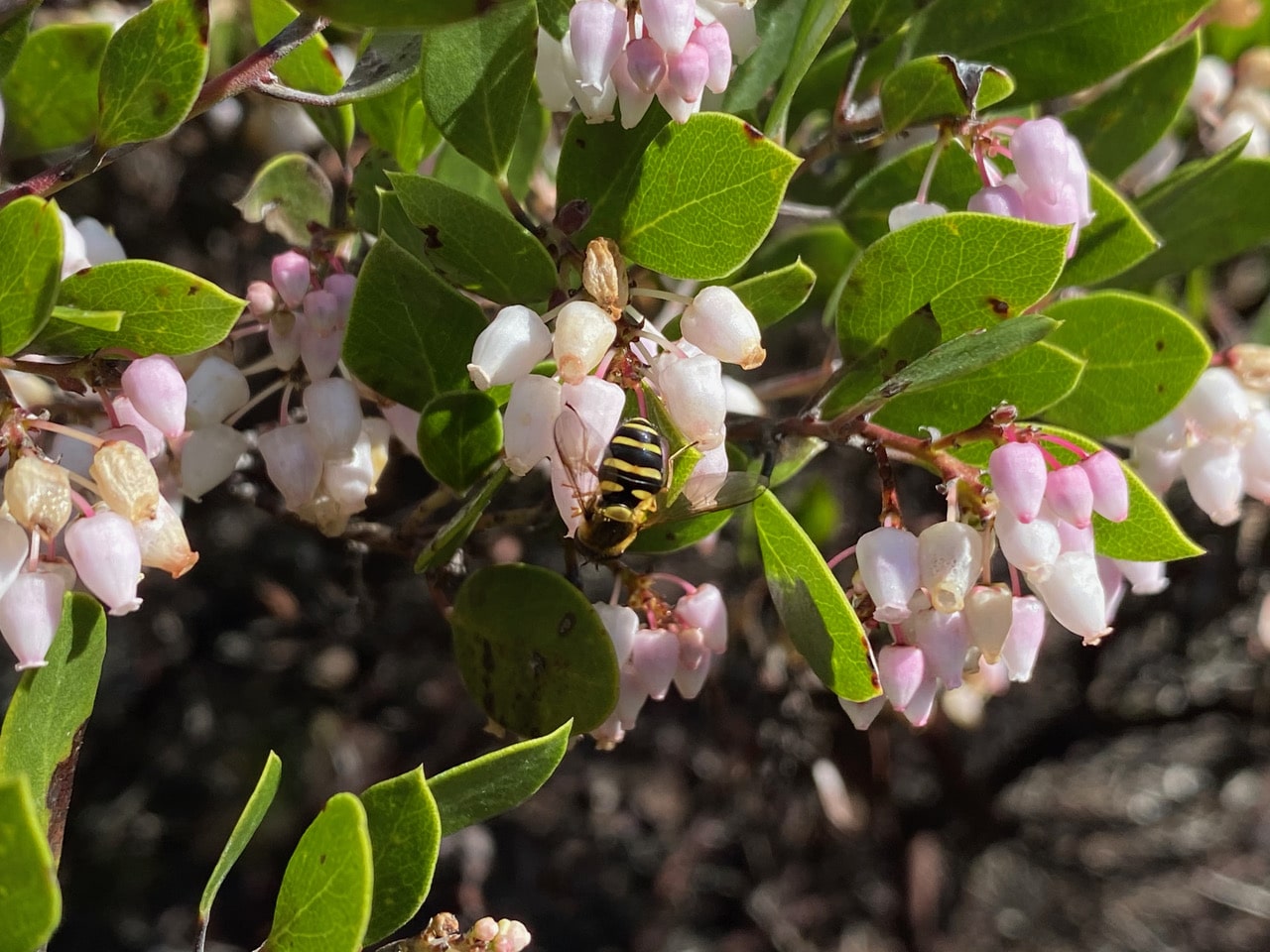
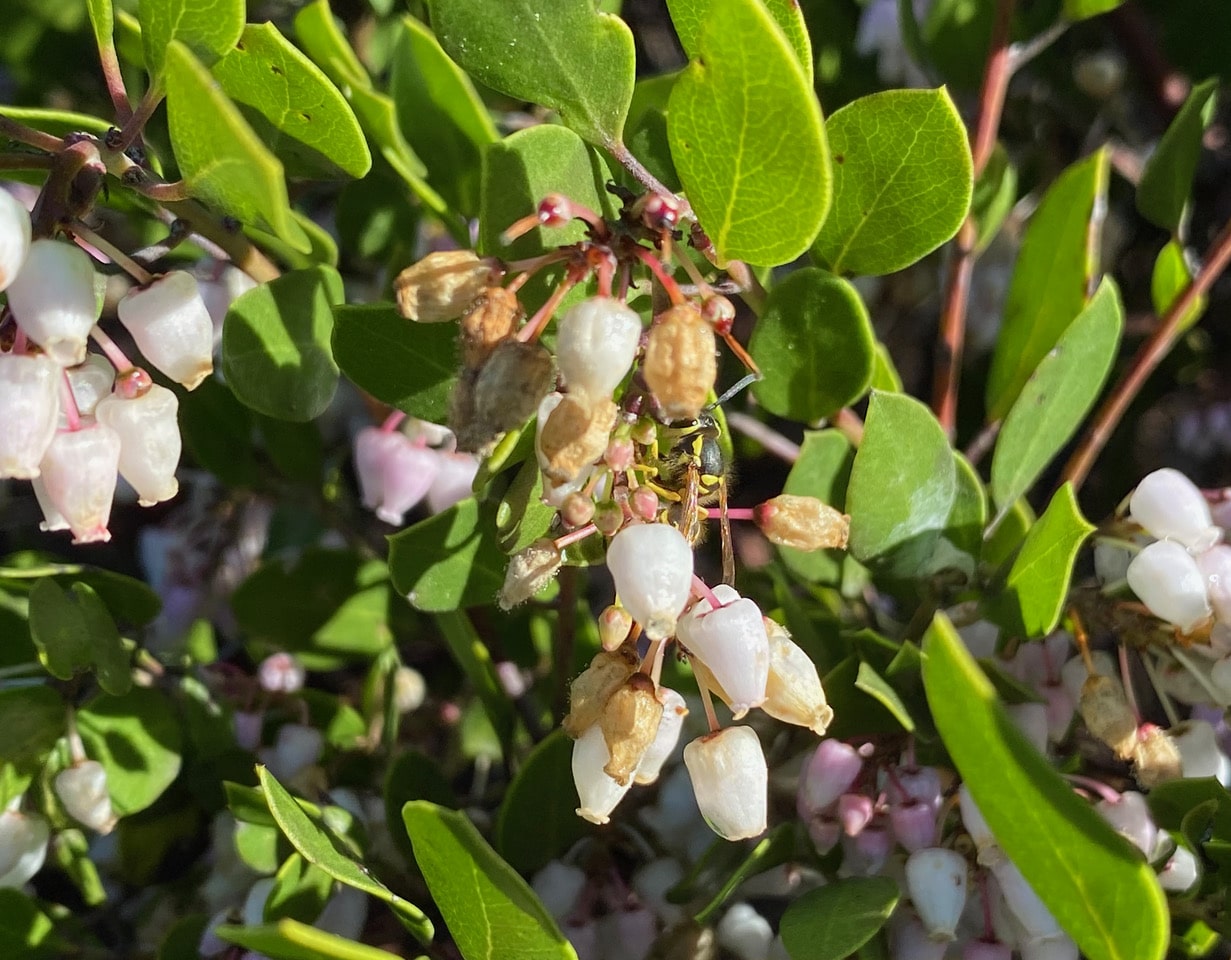
There is a real wasp here, a Yellowjacket (family Vespidae). It is partially hidden behind the cluster of fading Manzanita flowers. Do you see it?
Hey, that’s my first Black-footed Drone Fly of the year!
The Black-footed Drone Fly, Eristalis hirta (family Syrphidae) is a common Western North American species of hover fly. The adults visit flowers for nectar and pollen. Larvae are aquatic filter-feeders that develop in wet habitats. The larvae have long snorkel-like appendages on their rear end to help them breathe under water, and are often called rat-tailed maggots.
Although we often associate Blow Flies (family Calliphoridae) with filth – dung, carcasses, etc., many of the adults visit flowers for nectar and can effectively serve as pollinators. However, it’s doubtful if the flies could access the nectar inside the Manzanita flowers. The individual here, a Screwworm Fly, Cochliomyia hominivorax is probably scavenging spilled nectar or pollen on the flower exterior.
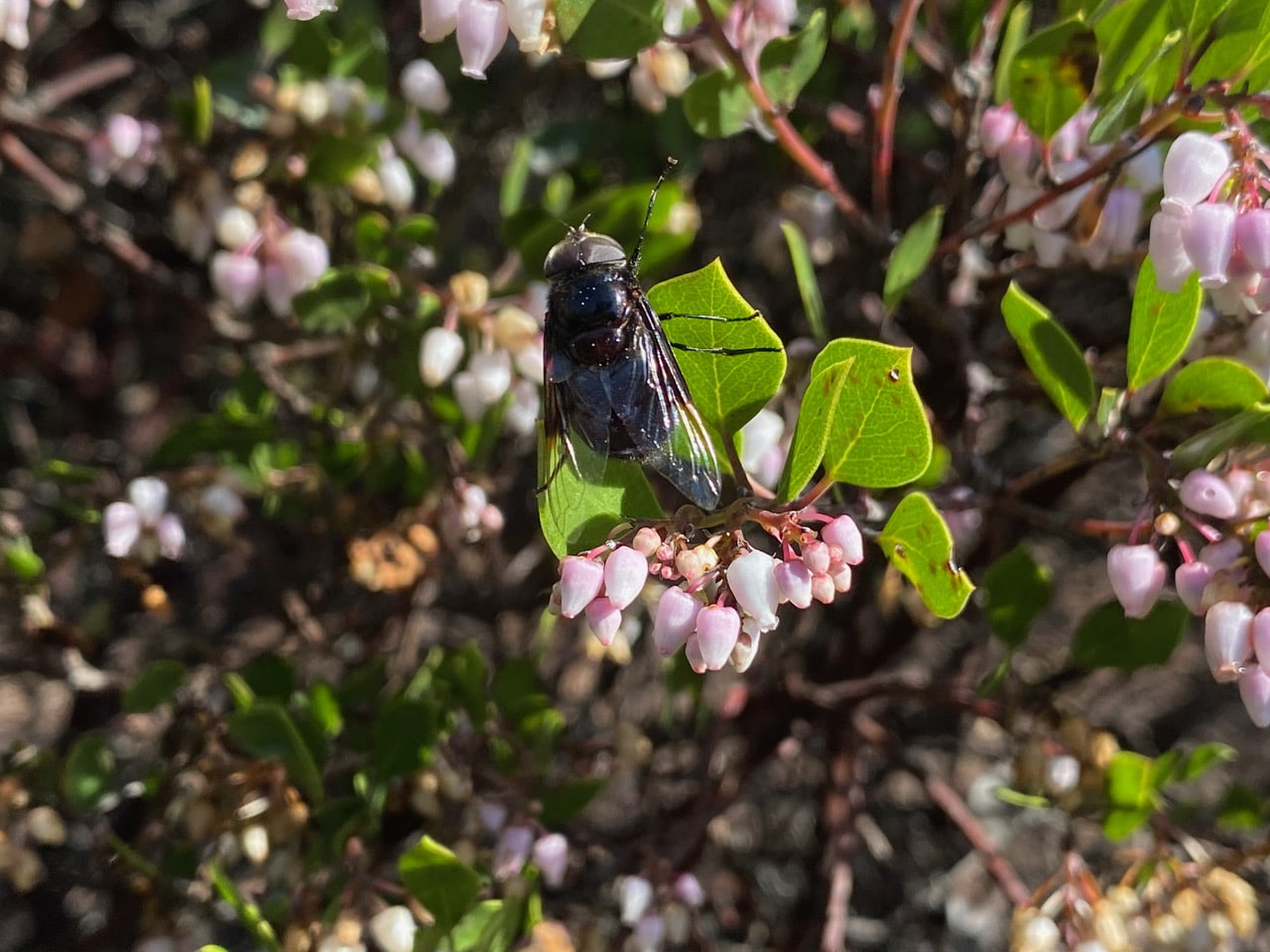
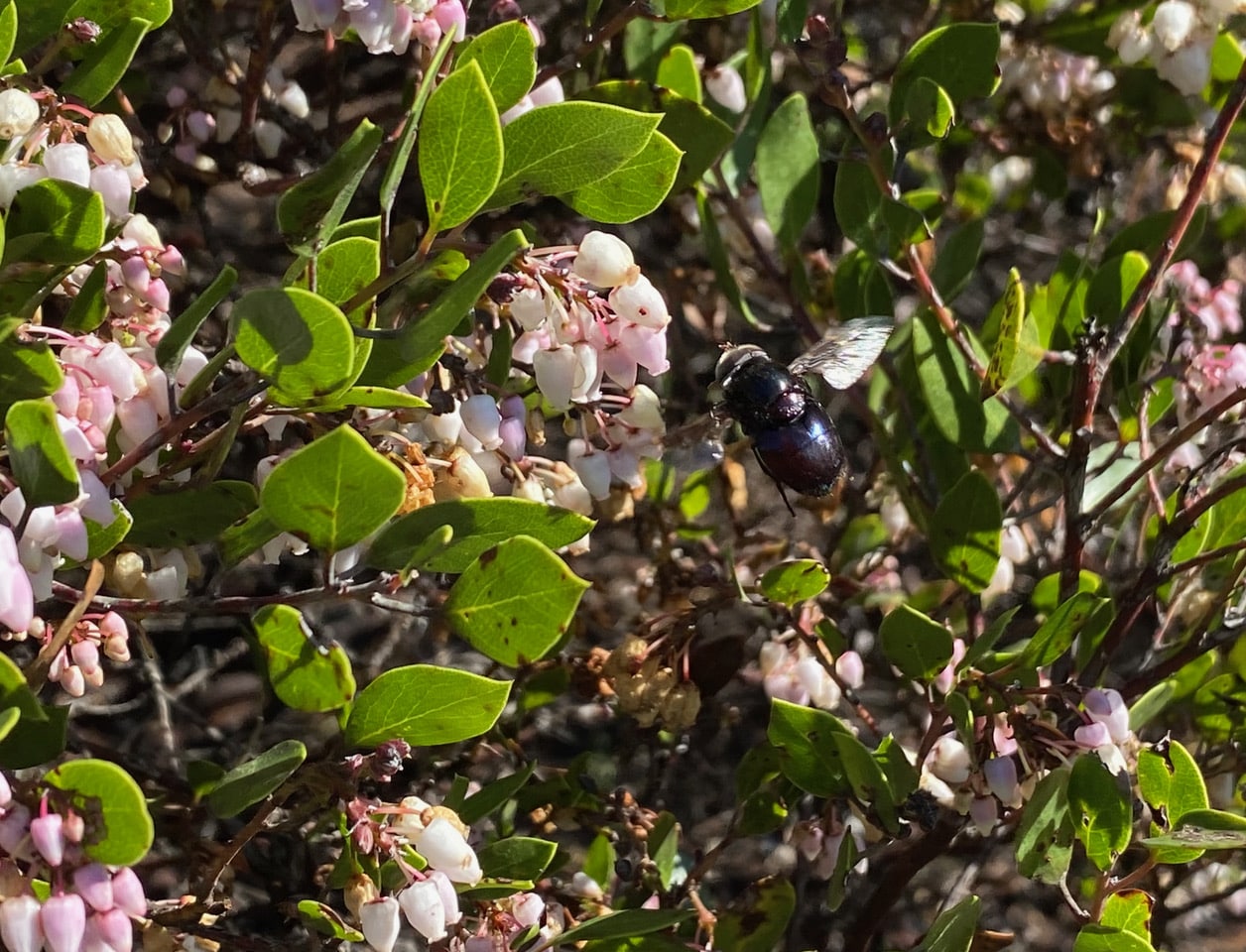
Whoa, that’s a huge hover fly! People often mistake this big, black fly for a Carpenter Bee, Xylocopa sp. In fact, these flies often buzz loudly as they fly, just like a bee. But once they land, it is obvious that they are not bees. Besides, these flies are generally not as frenetic as bees, and are more easy to photograph.
The Purple Bromeliad Fly, Copestylum violaceum (family Syrphidae) appears to be grooming itself. It is a male, as evidenced by its holoptic eyes that meet along a central line on top of its head. This is a useful feature to tell the sexes apart in the Syrphids. Note that the areas of the wings near the tips are clear, while the basal parts are colored black, like the body.
An interesting characteristic of Copestylum is the pointy “snout” on their faces. Note the distinctive marking on the wings again.
When it flies, the Purple Bromeliad Fly often reflects a shiny purple-black. I’m not sure where the “bromeliad” part of the common name comes from.
I often find this hover fly species in the fall foraging on the blooming Coyote Brush. This is the first time I see them out this early in the year! The adults visit a wide range of flowers for nectar and pollen. The larvae develop in semi-aquatic habitats, e.g. tree holes, where they feed on bacteria on decomposing plant matter. The larvae have a long, snorkel-like appendage on their rear end that helps them breathe underwater; hence they are called rat-tailed maggots.
See the pair of whitish translucent, rounded flaps at the base of the wings that lie at a different plane as the wings? Those are the prominent alulae of Copestylum. The alula is a hinged flap found at the base of the wings of most brachyceran Diptera. The alula accounts for up to 10% of the total wing area in hover flies (Syrphidae), and its hinged arrangement allows the wings to be swept back over the thorax and abdomen at rest. The alula is implicated in the gear change mechanism of flies during flight.
A dainty Black-tailed Bumble Bee, Bombus melanopygus (family Apidae) is foraging on the Manzanita flowers. Her hairs are wet and matted – she must’ve been caught in the rain earlier. She is probably a worker. That’s a welcome sign that a colony has been successfully established nearby and the workers are now out foraging, while the queen remains in the nest to devote herself solely to laying eggs.
Is that one of those Black-margined Flower Flies, Syrphus opinator again? Not so fast – check the markings on the abdomen carefully. It is a look-alike called the Large-tailed Aphideater, Eupeodes volucris (family Syrphidae), a female that lacks the distinctive“large tail” of the males. The species is found in western North America, and is active March through November. As the rest of the common name implies, the larvae of the species are voracious predators of small plant-sucking insects such as aphids. Females seek out dense aphid colonies on plants to lay eggs among them.