

Pollinator Post 2/15/24 (3)
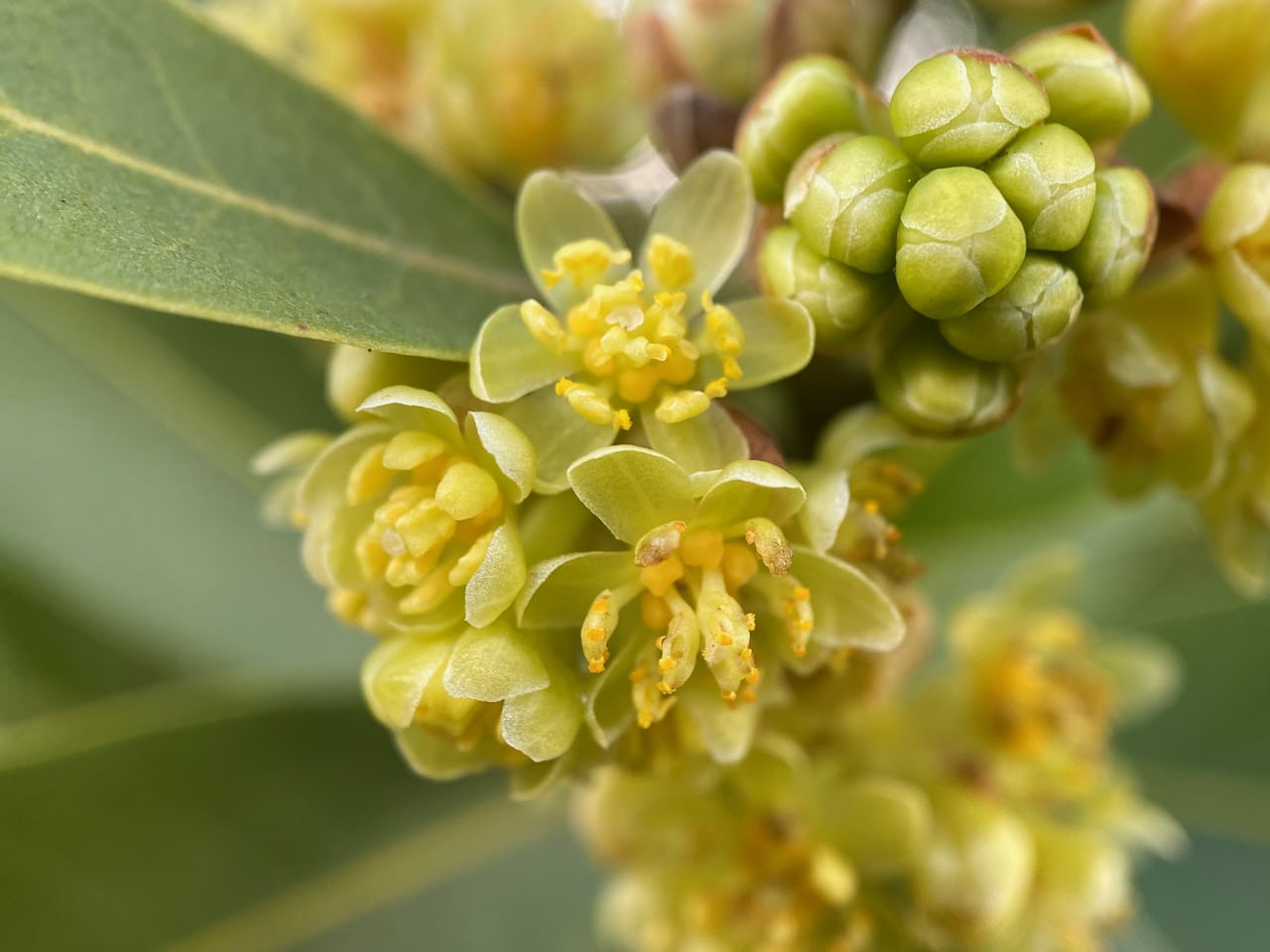
The California Bay, Umbellularia californica along Skyline Trail has been blooming continuously through the winter, rains not withstanding. Keeping my eyes peeled, I am constantly on the lookout for its pollinators.
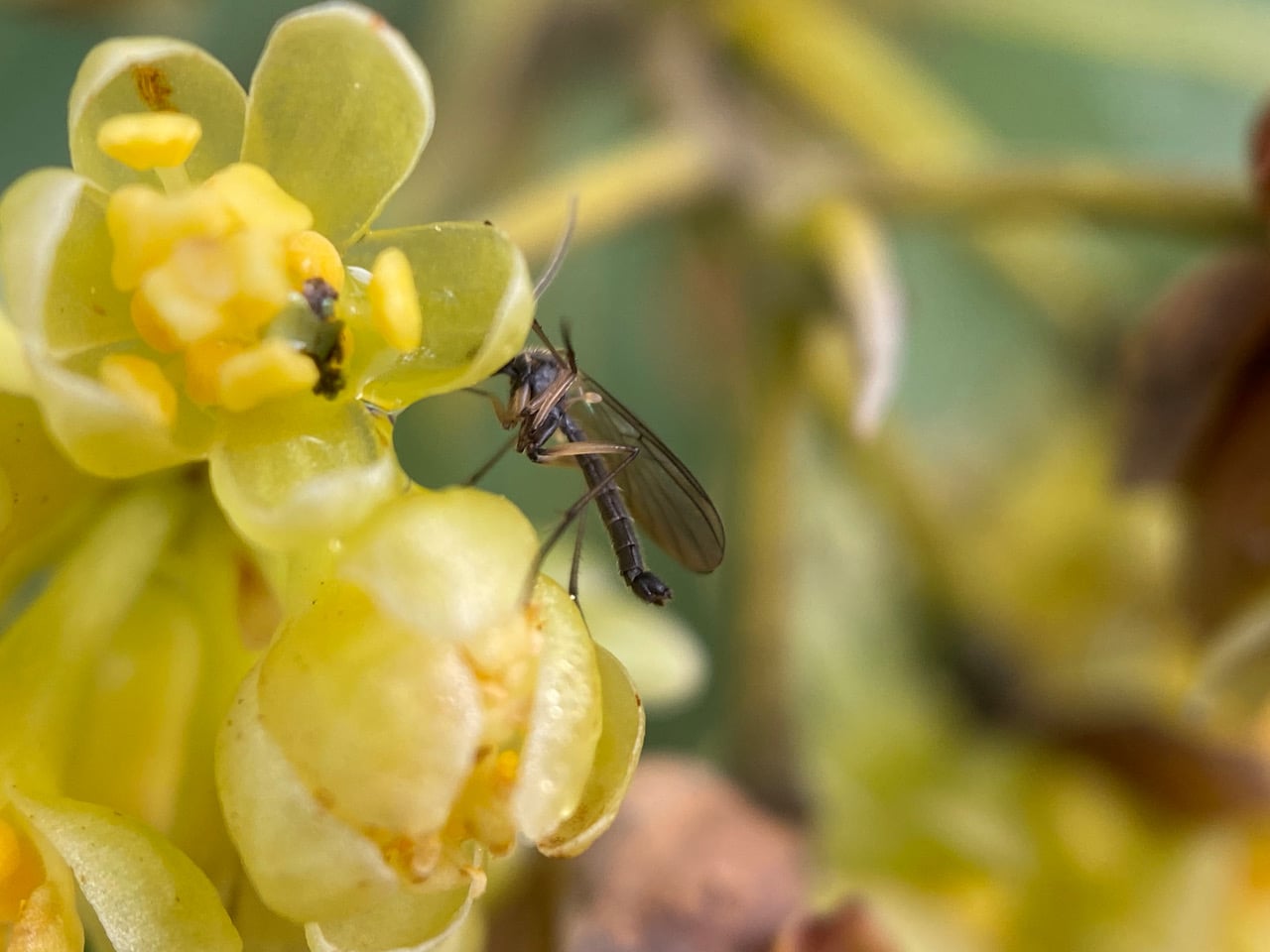
Who’s that lurking behind the cluster of Bay flowers? It is actively moving among the flowers.

A Fungus Gnat (family Mycetophilidae)?
These tiny flies are called Fungus Gnats because many species lay eggs in soil and other damp places where the larvae feed on fungi. They are most common during winter and spring in California when water is more available and cooler temperatures prevail.
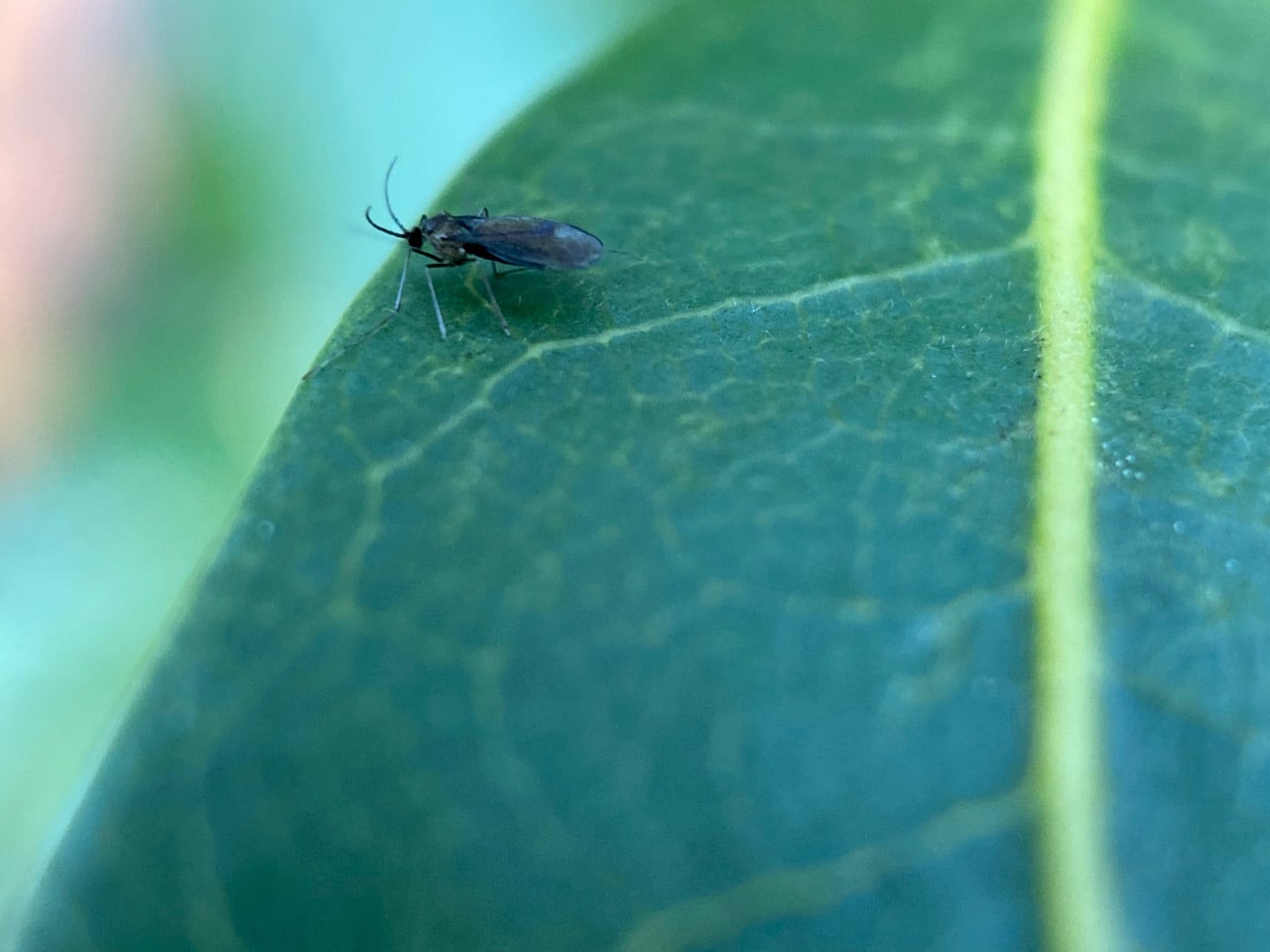
Here’s a similar insect on a Bay leaf, but smaller still. Perhaps a member of the superfamily Sciaroidea?
The superfamily Sciaroidea comprises the Fungus Gnats (family Mycetophilidae) and Gall Midges (Cecidomyiidae). As nematoceran flies, sciaroid adults generally have long segmented antennae, while their larvae have a well-developed head and mouthparts. Most fungus gnats live in forests with their larvae occurring in fungi, dead wood and soil. The larvae of Cecidomyiids form plant galls.

Here’s a mating pair on another Bay leaf.
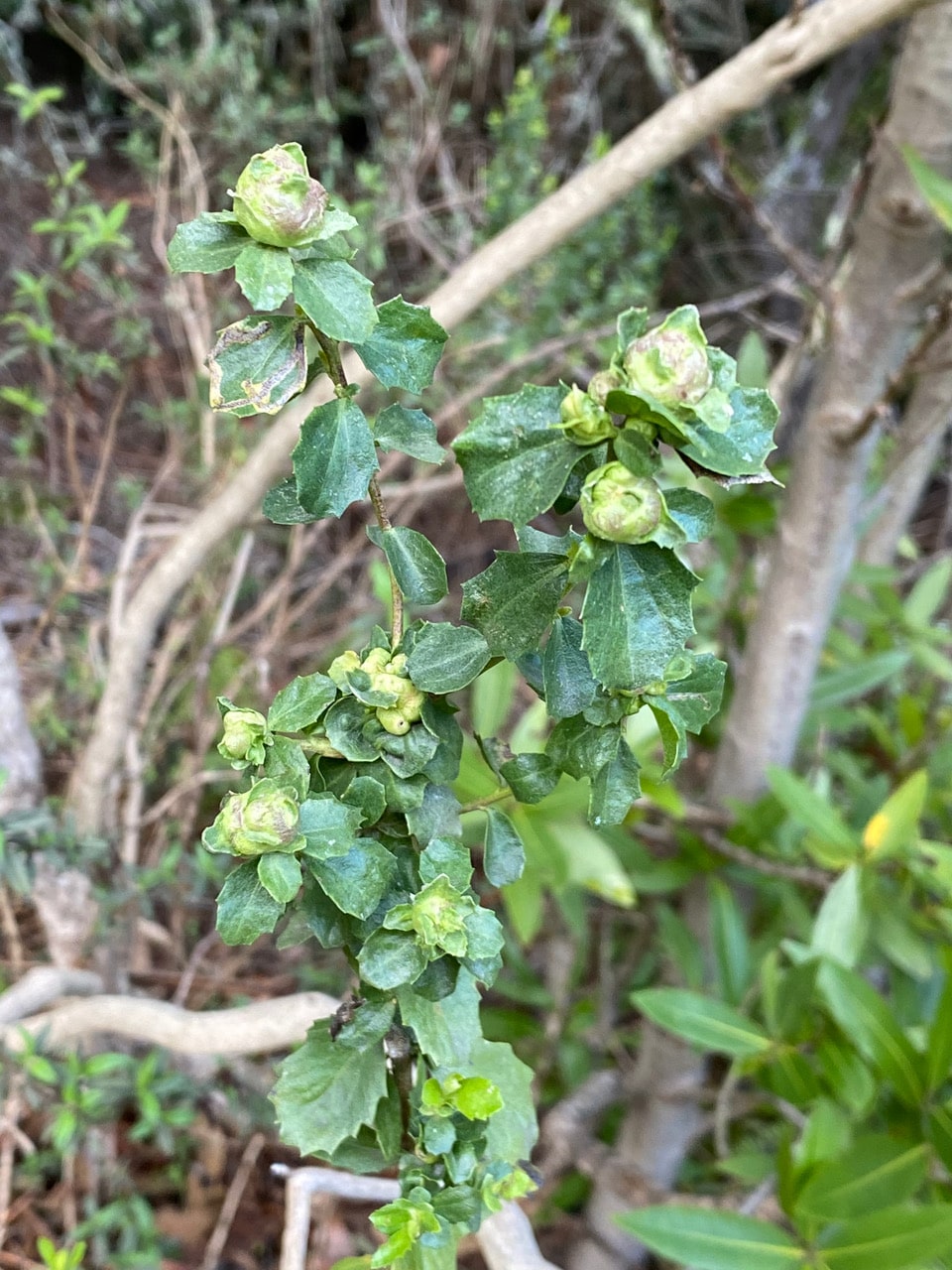
Next to the California Bay tree is a young, scraggly Coyote Brush. Just about every shoot of the plant bears a bulbous bud gall. Might the gall midges from the Coyote Brush be responsible for pollinating the California Bay flowers?
The Coyote Brush Bud Gall Midge, Rhopalomyia californica lays eggs into the flowerbuds of Baccharis pilularis, inducing lumpy, fleshy galls. Female midges lay clusters of eggs on terminal buds. The larvae that hatch out burrow between bud scales and commence feeding. The gall tissue swells around each of the larvae. When fully grown, larvae burrow to the surface of the gall, where they develop their partially protruding white cocoons and pupate. Adults look like miniature mosquitoes. The species, Rhopalomyia californica (family Cecidomyiidae) represents one of the rare situations among all gall insects where fresh galls and emergence of adults occur throughout the year.

There’s a dark insect in the back of a cluster of Bay flowers. I pull a leaf aside to find a wasp-like insect motionless in an awkward up-side-down position, its long antennae bent unnaturally. It appears to be trapped in a small tangled web of a Cobweb Spider. Has it been killed by the spider?
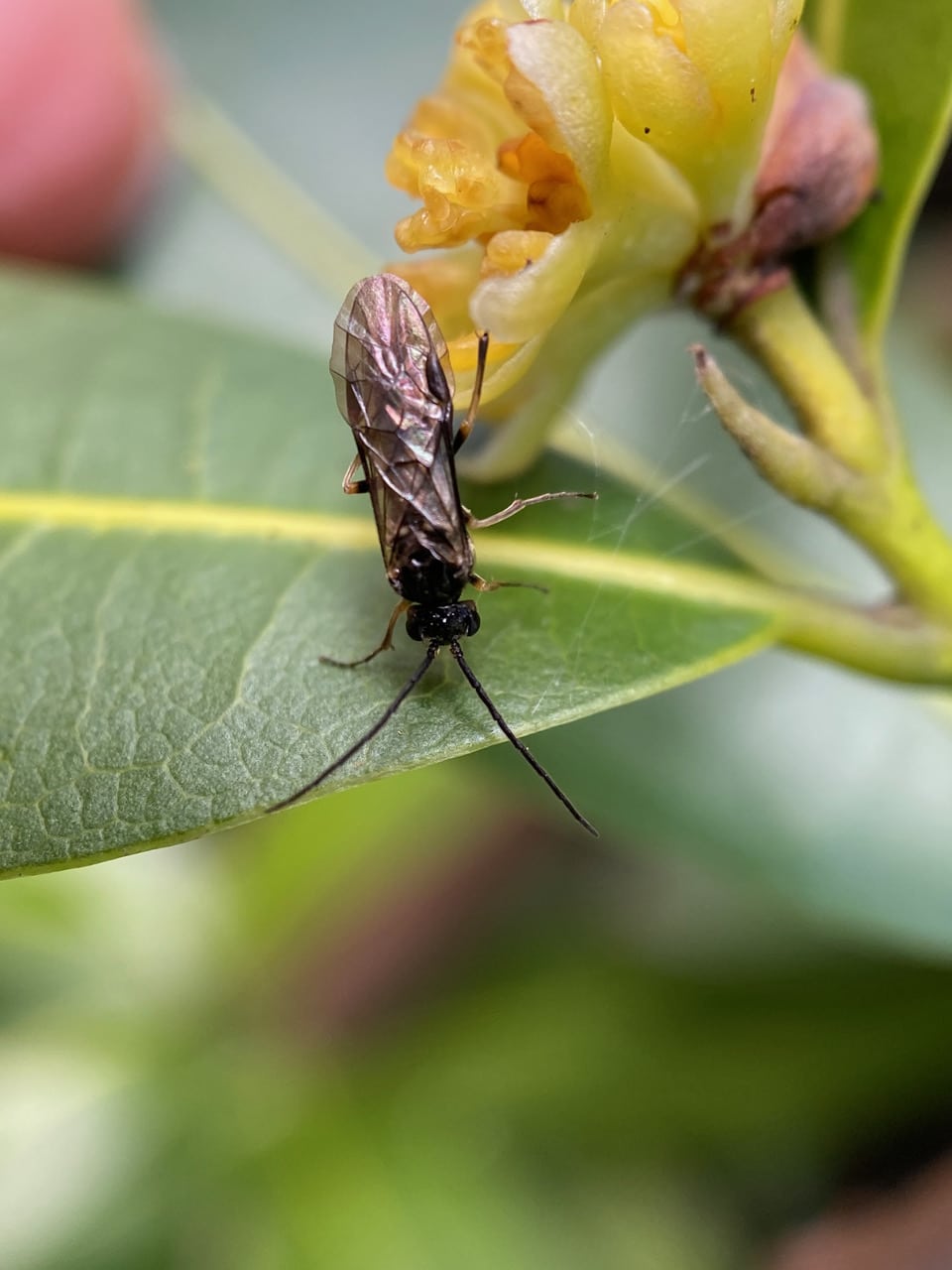
As I ponder, the insect begins to descend from the flowers rather unsteadily. Has it recovered from the spider’s envenomation ? The spider is probably much smaller than its prey, and has not injected enough venom to kill it.
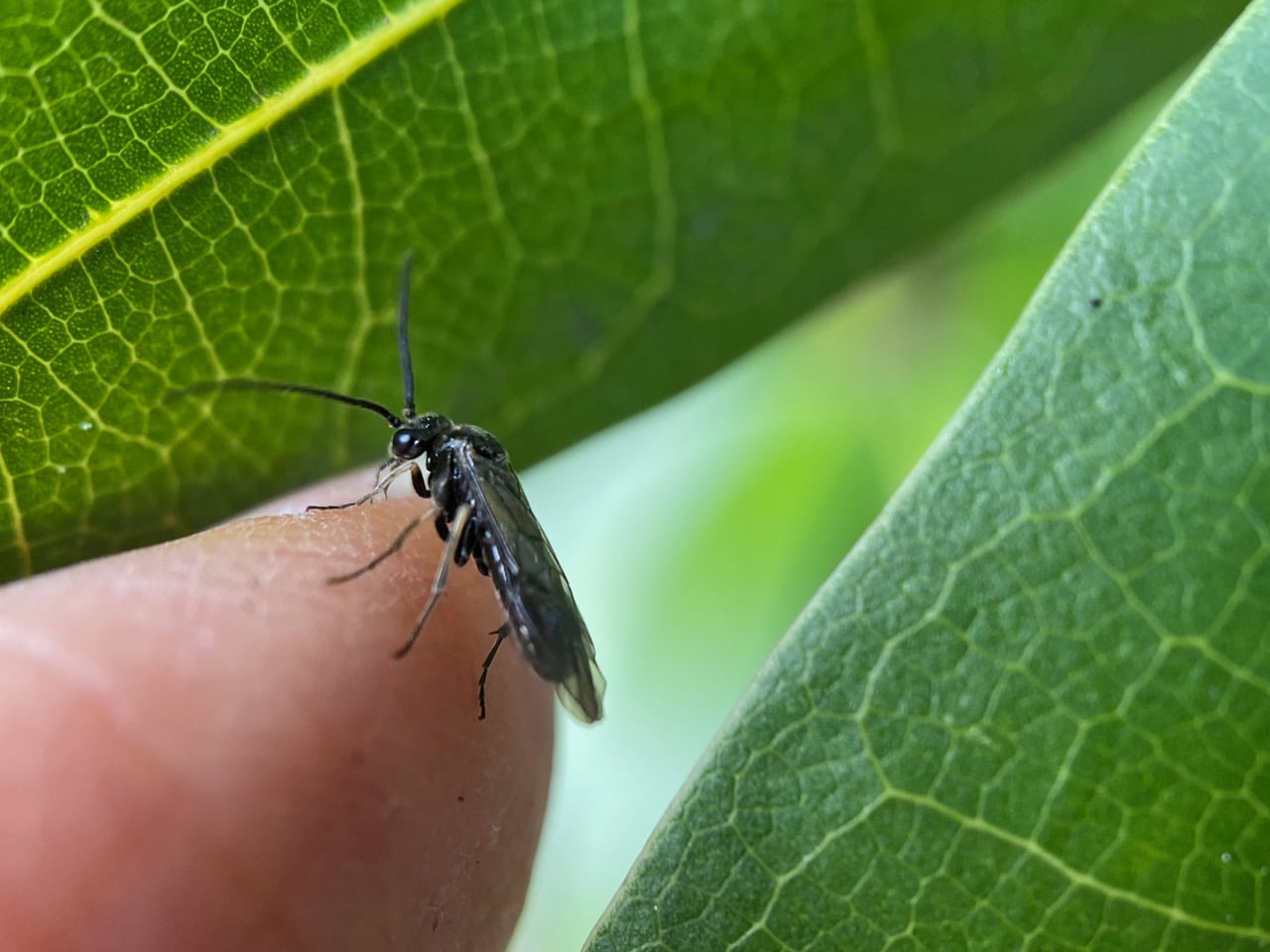 The insect moves slowly on the leaf and mindlessly climbs onto my finger that is holding down the leaf. I take a look at its side profile and realize that it is probably a Sawfly. Note the lack of a narrowed “waist” between its thorax and abdomen. The identification has since been confirmed by iNaturalist.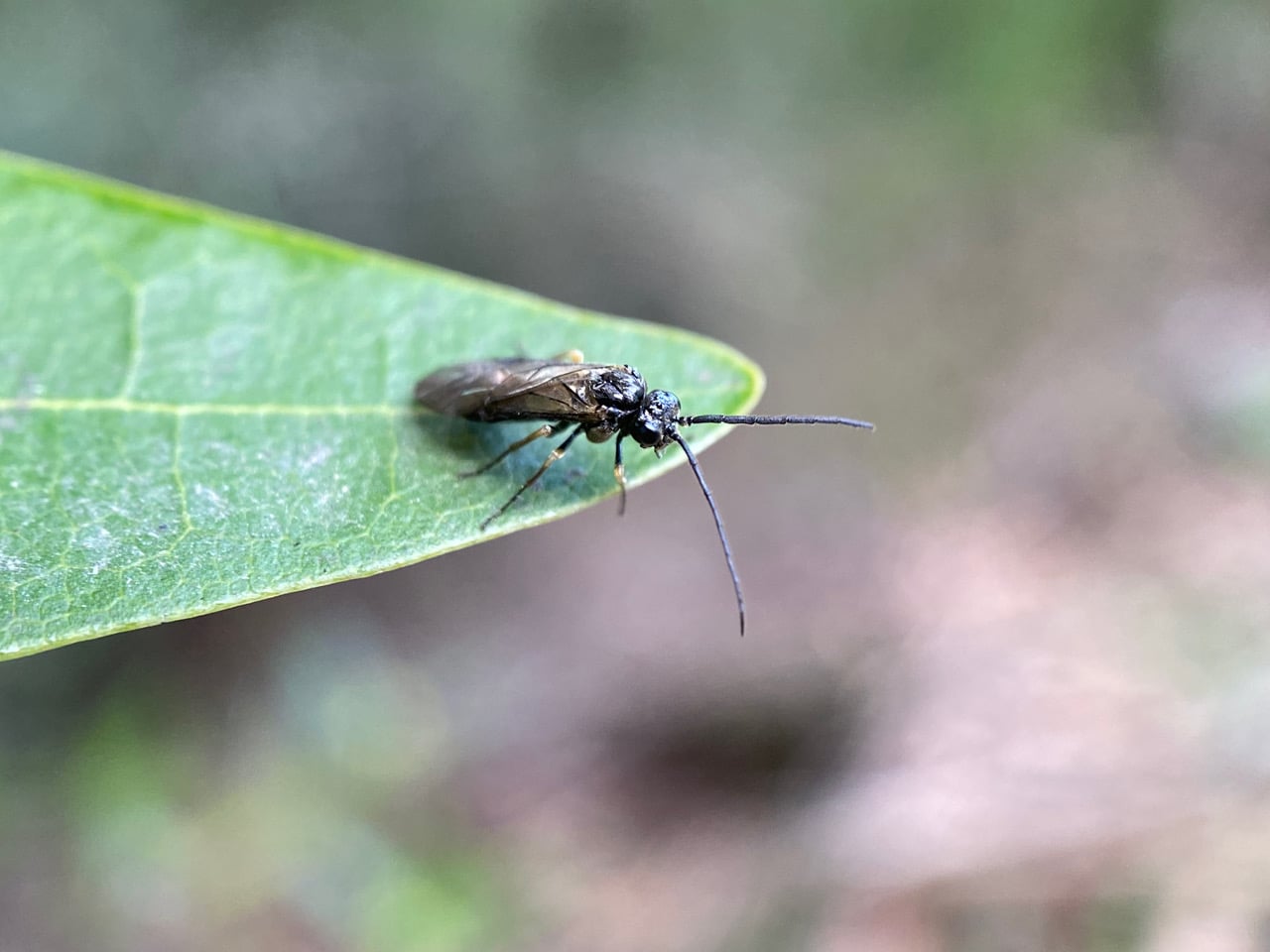
Here’s a good look at the discombobulated Sawfly as I place it back on the leaf to recover from its temporary paralysis.
Sawflies are part of the insect order, Hymenoptera, together with bees, wasps and ants. They are considered to be the most primitive group and form the sub-order Symphyta. They differ from the bees, wasps and ants in not having a narrow ‘waist’ and in their wing venation. The common name comes from the saw-like ovipositor that the females use to cut into plant tissues to lay their eggs. Larvae are caterpillar-like and can be distinguished from lepidopteran caterpillars in that all body segments following the three bearing true legs have a pair of fleshy prolegs. Like the lepidopteran caterpillars, sawfly larvae walk about and eat foliage. In many species, the larvae feed in groups.
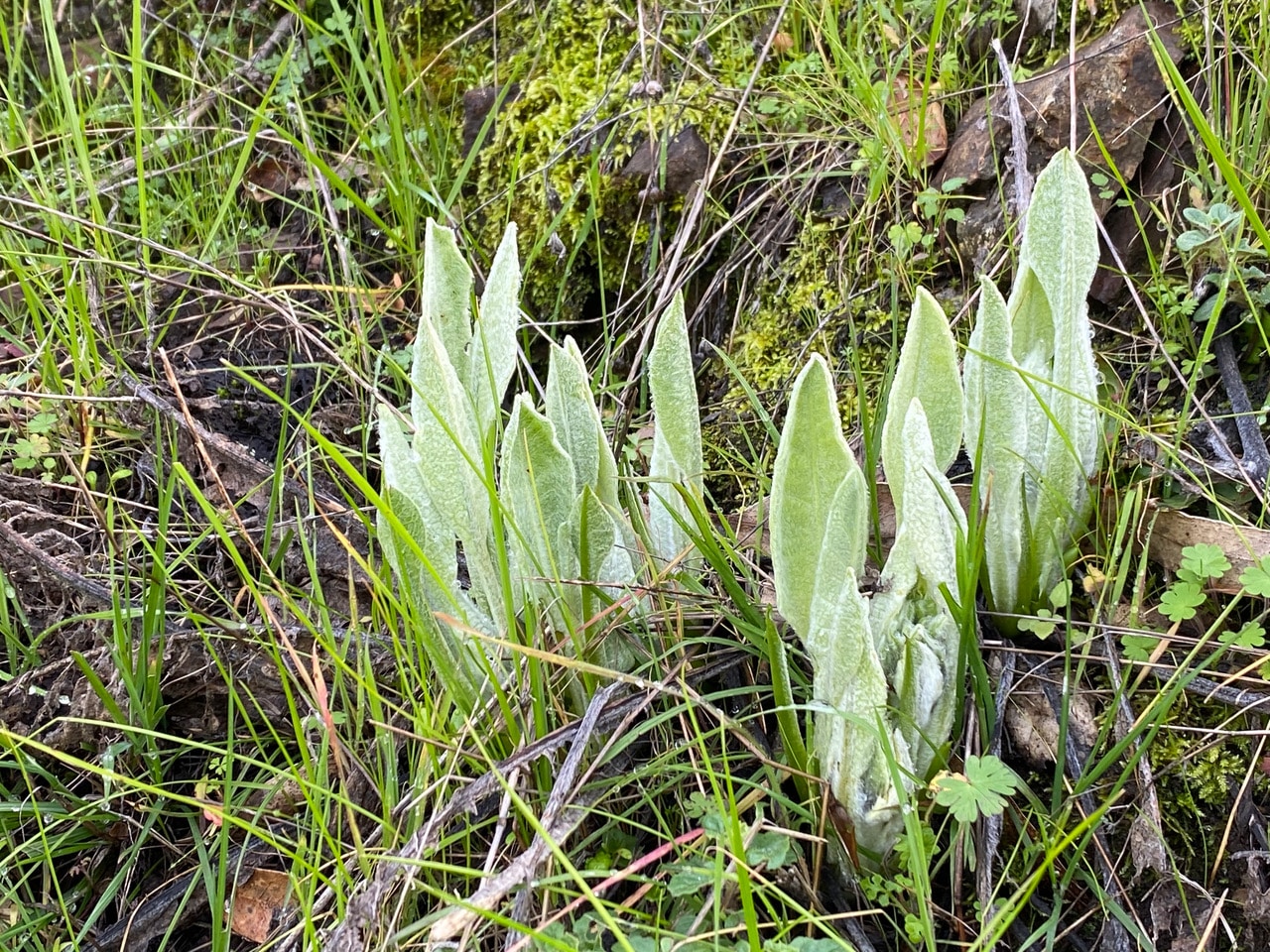
Hey, the Wooly Mule’s Ears, Wyethia helenioides have emerged from the steep bank of the trail!
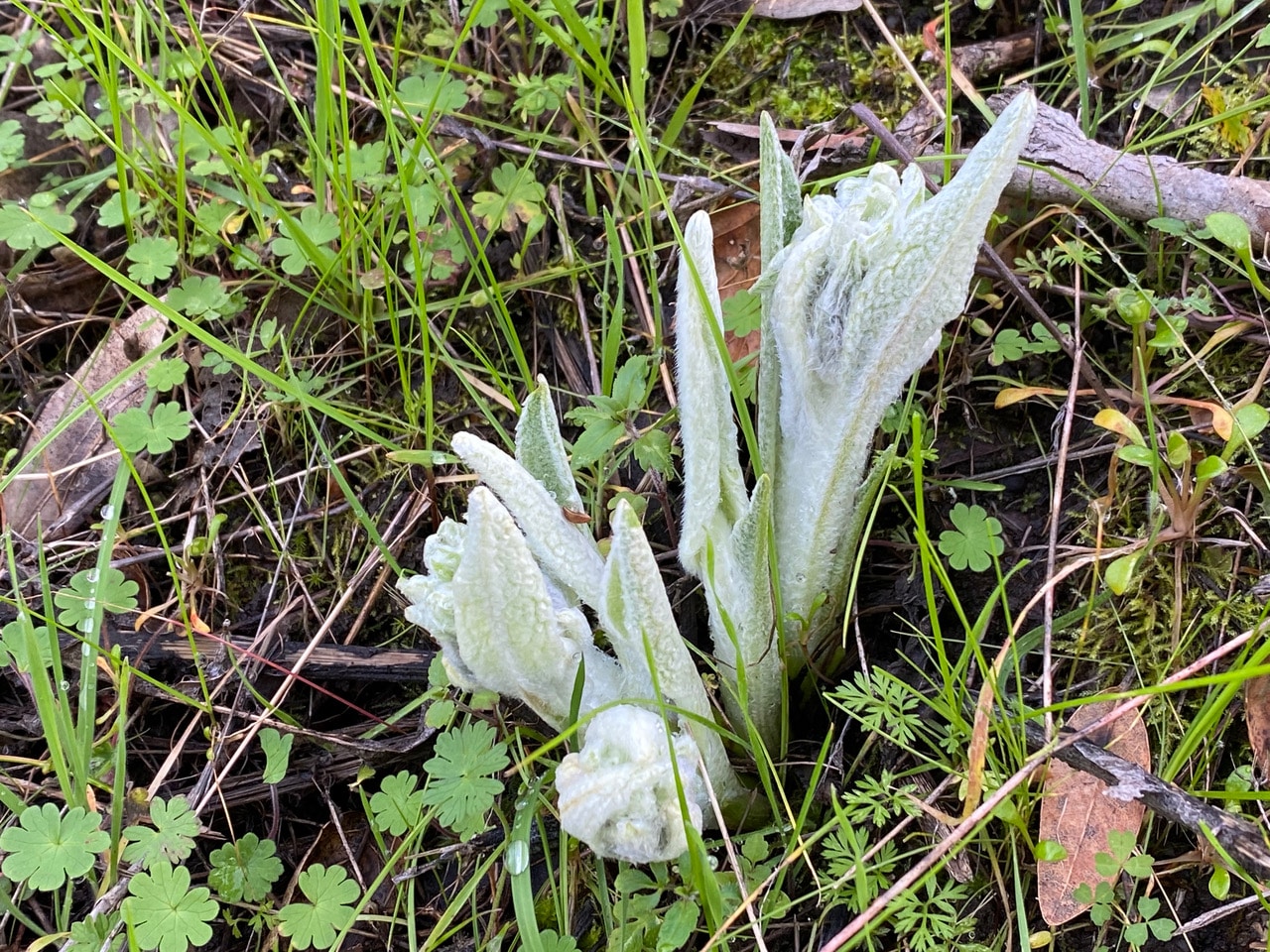
This one is already bearing flower buds!
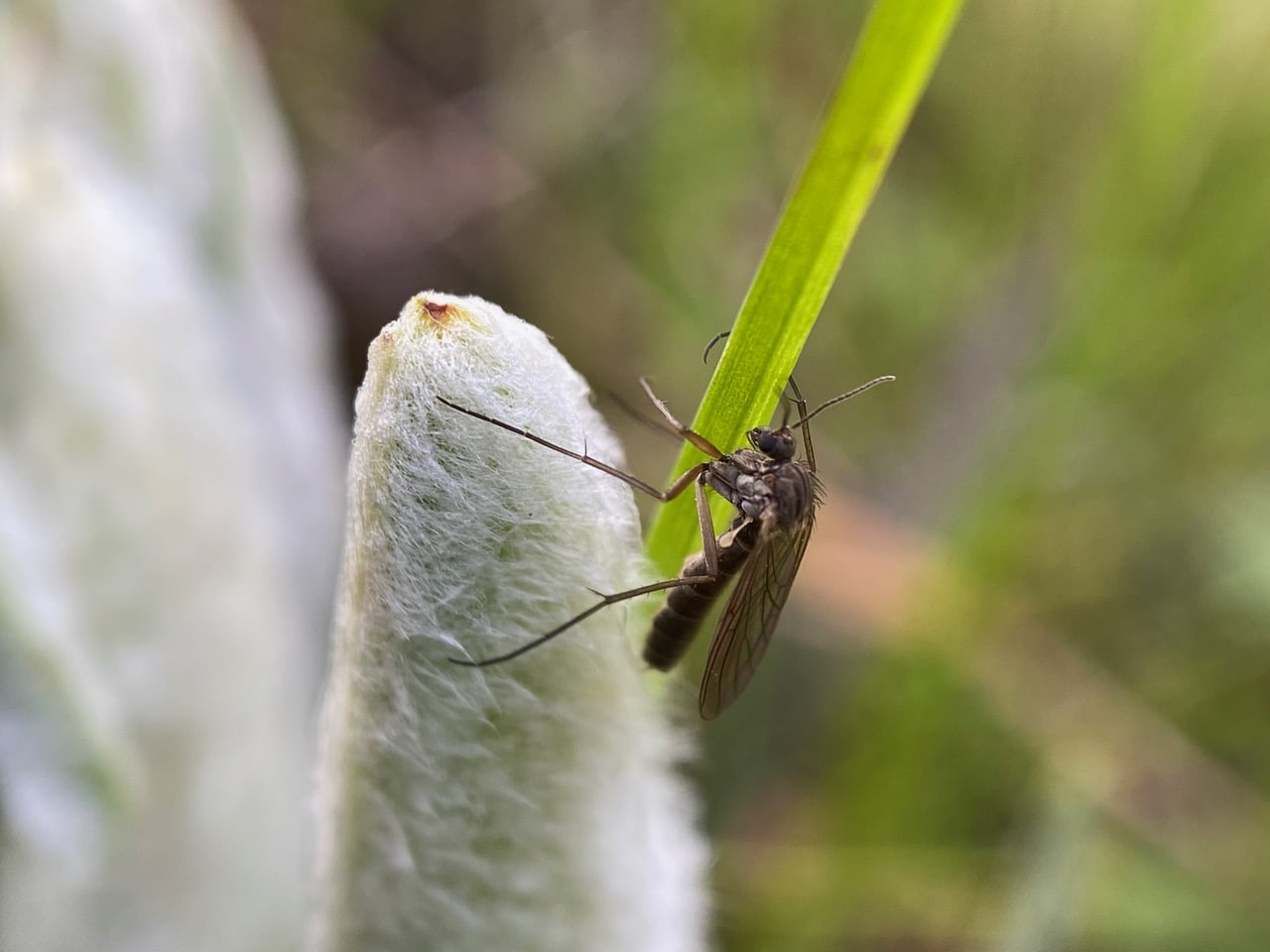
A midge is hanging on the tip of a Wooly Mule’s Ears leaf and a neighboring blade of grass.
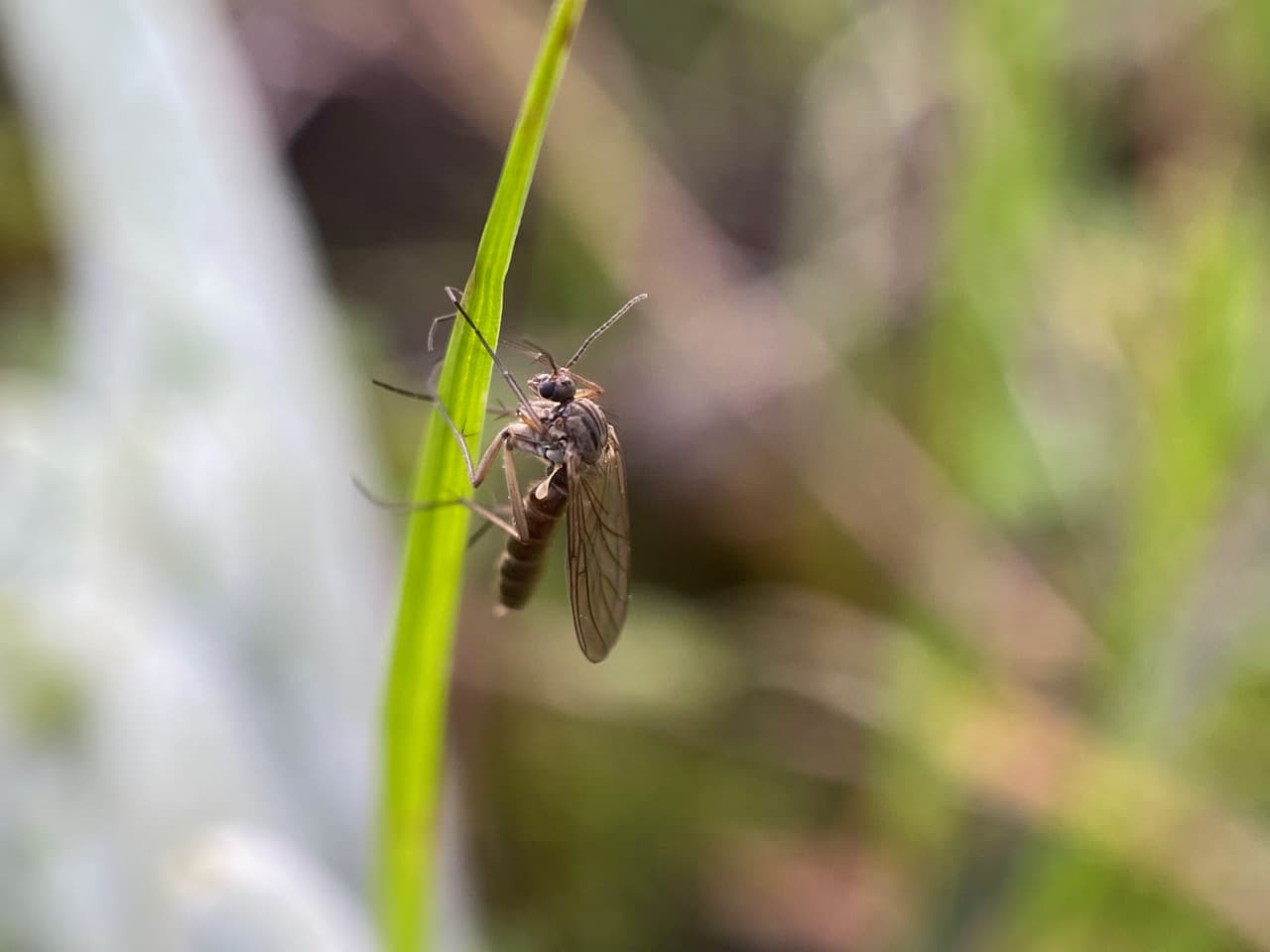
The insect is almost as big as a mosquito, but an expert on iNaturalist has helped identify it as a member of the superfamily Sciaroidea, which includes Fungus Gnats and Gall Midges. California’s wet winter is truly the busy season for these insects!
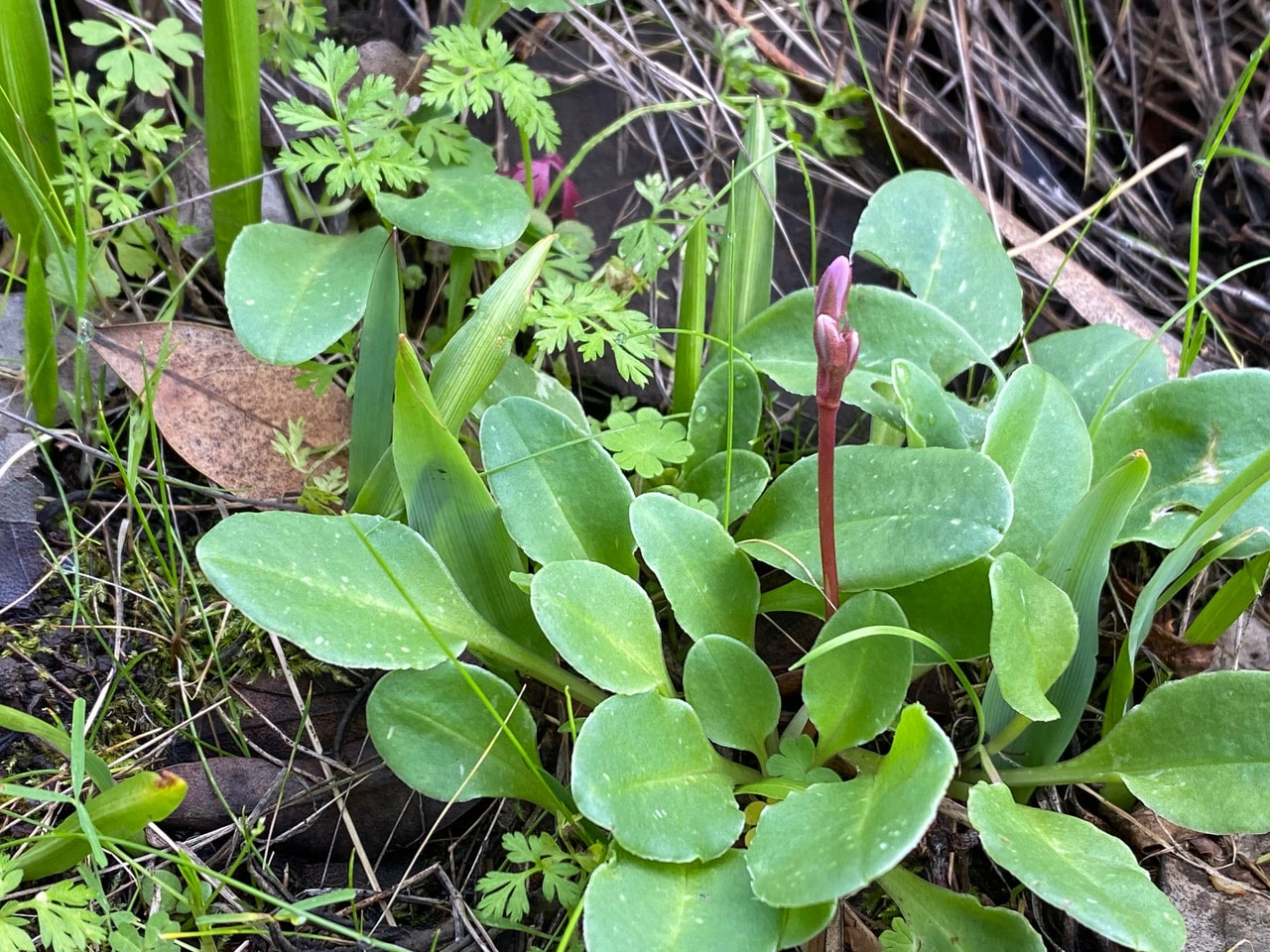
Those spoon-shaped basal leaves tell me that the flower buds will open up into beautiful Shooting Stars, Primula hendersonii.

And these leaves hugging the wet rocky bank among the mosses are the California saxifrage, Micranthes californica. Wow, we’re on the verge of a spectacular bloom season!
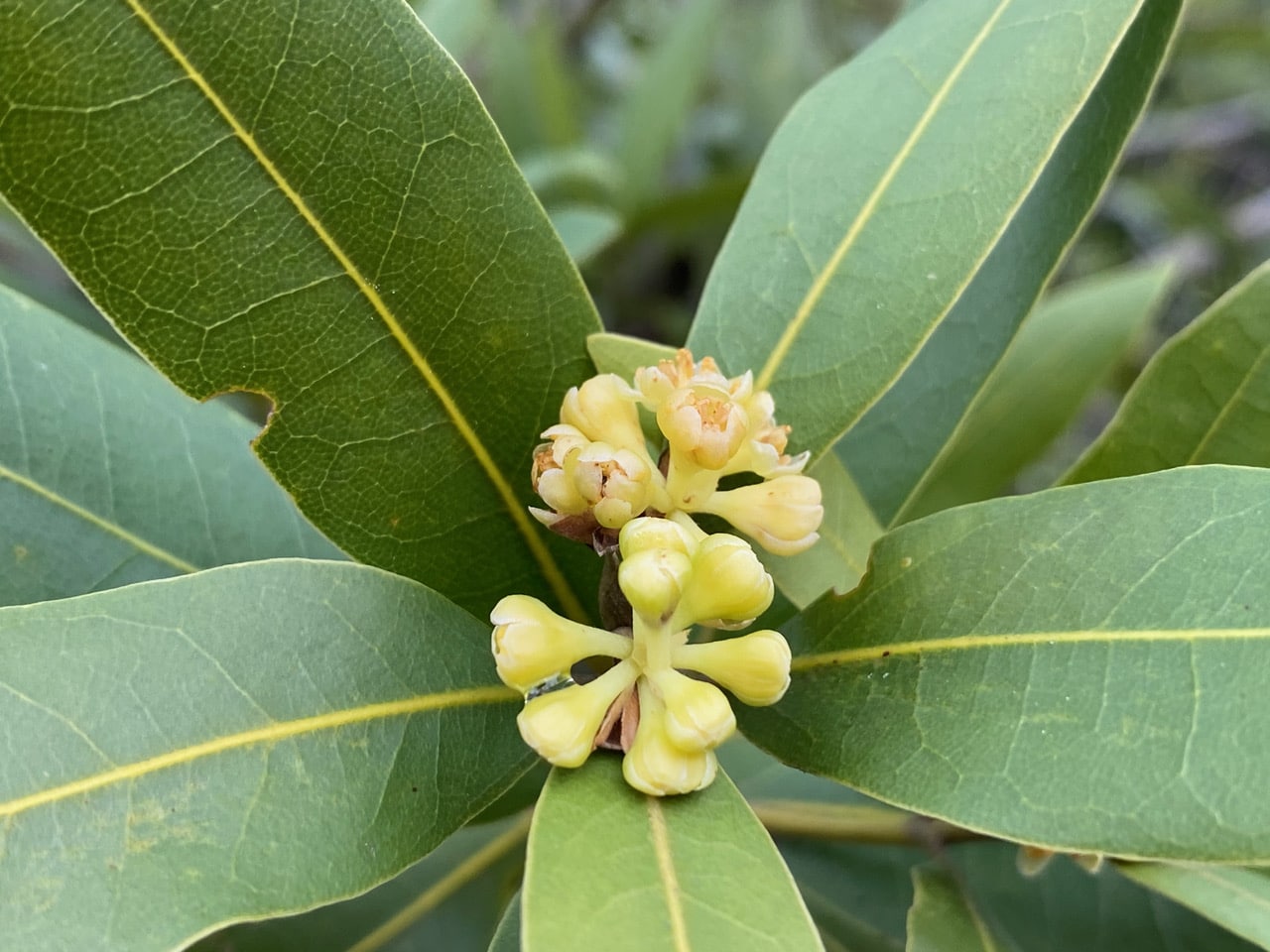
I spot three midges on these young California Bay flowers, but they scatter as I approach with the camera.
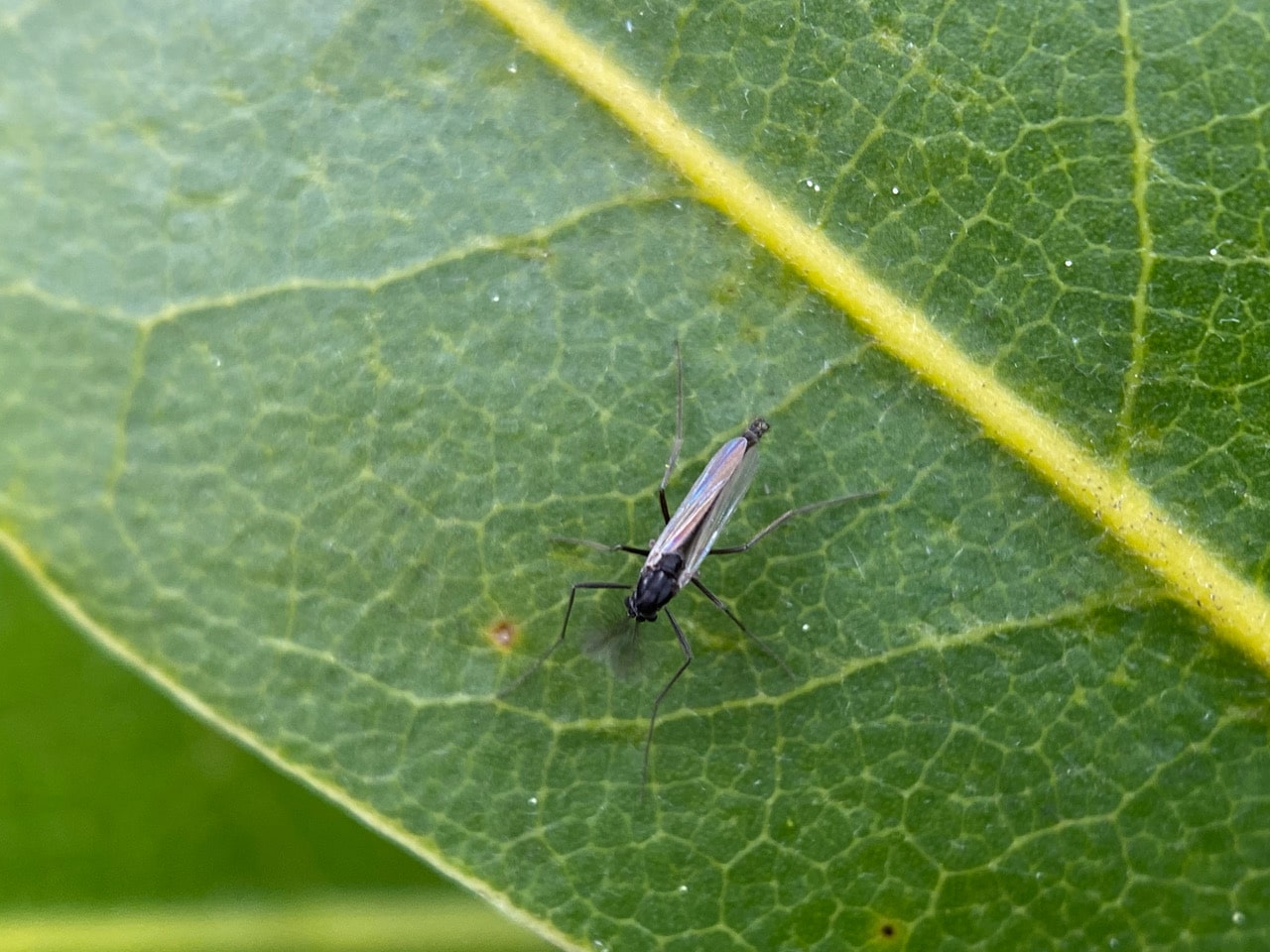
One lands on a leaf where I manage to get this close-up. It is a male Non-biting Midge in the family Chironomidae. These insects are most consistently found on the Bay trees in winter.
The Chironomidae is a large and diverse family of flies, with over 20,000 species known world-wide. Adult midges are small, most measuring 1-10 mm long, with narrow bodies and long legs. They resemble mosquitos, but do not bite. Males have long, feathery (plumose) antennae. Adults are short-lived. They feed on fly droppings, nectar, pollen, honeydew, and various sugar-rich materials. Larvae are mostly aquatic or semi-aquatic; most occur in freshwater habitats, a few occur in decaying matter, under bark, in moist ground, or tree holes. Larvae are mostly scavengers/detritivores. Collectively, they play a vital role in freshwater ecosystems as primary consumers. They harvest an enormous amount of energy from detritus and are important food items for fish, amphibians, birds, and predatory insects such as dragonflies and dance flies. Adult Chironomids can be pests when they emerge in large numbers, forming mating swarms over water or road surfaces.
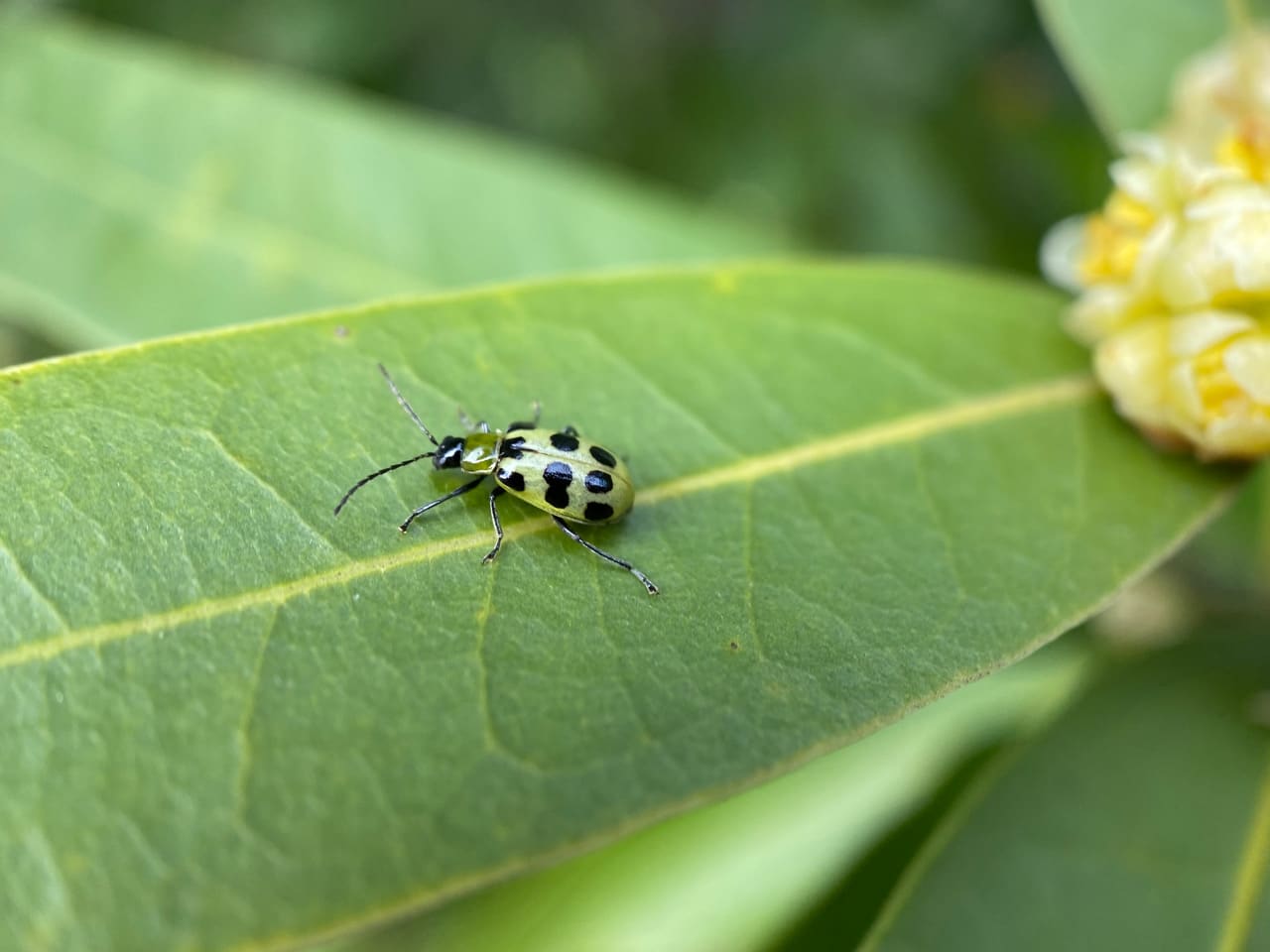
Hey, my first Spotted Cucumber Beetle of the year! These common beetles have the improbable scientific name of Diabrotica undecimpunctata (family Chrysomelidae).
Members of the family Chrysomelidae are commonly known as Leaf Beetles. Adults and larvae feed on all sorts of plant tissues, and all species are fully herbivorous. Many are serious pests of cultivated plants, including food crops. Others are beneficial due to their use in biocontrol of invasive weeds. Chrysomelids are popular among insect collectors, as many are conspicuously colored, typically in glossy yellow to red or metallic blue-green hues, and some have spectacularly bizarre shapes. Photos of Leaf Beetles (Family Chrysomelidae) · iNaturalist
Native to North America, the Spotted Cucumber Beetle can be a major agricultural pest, causing damage to crops in the larval as well as adult stages of their life cycle. Larvae, sometimes known as rootworms feed on the roots of emerging plants. In the adult stage the beetles cause damage by eating the flowers, leaves, stems and fruits of the plant.
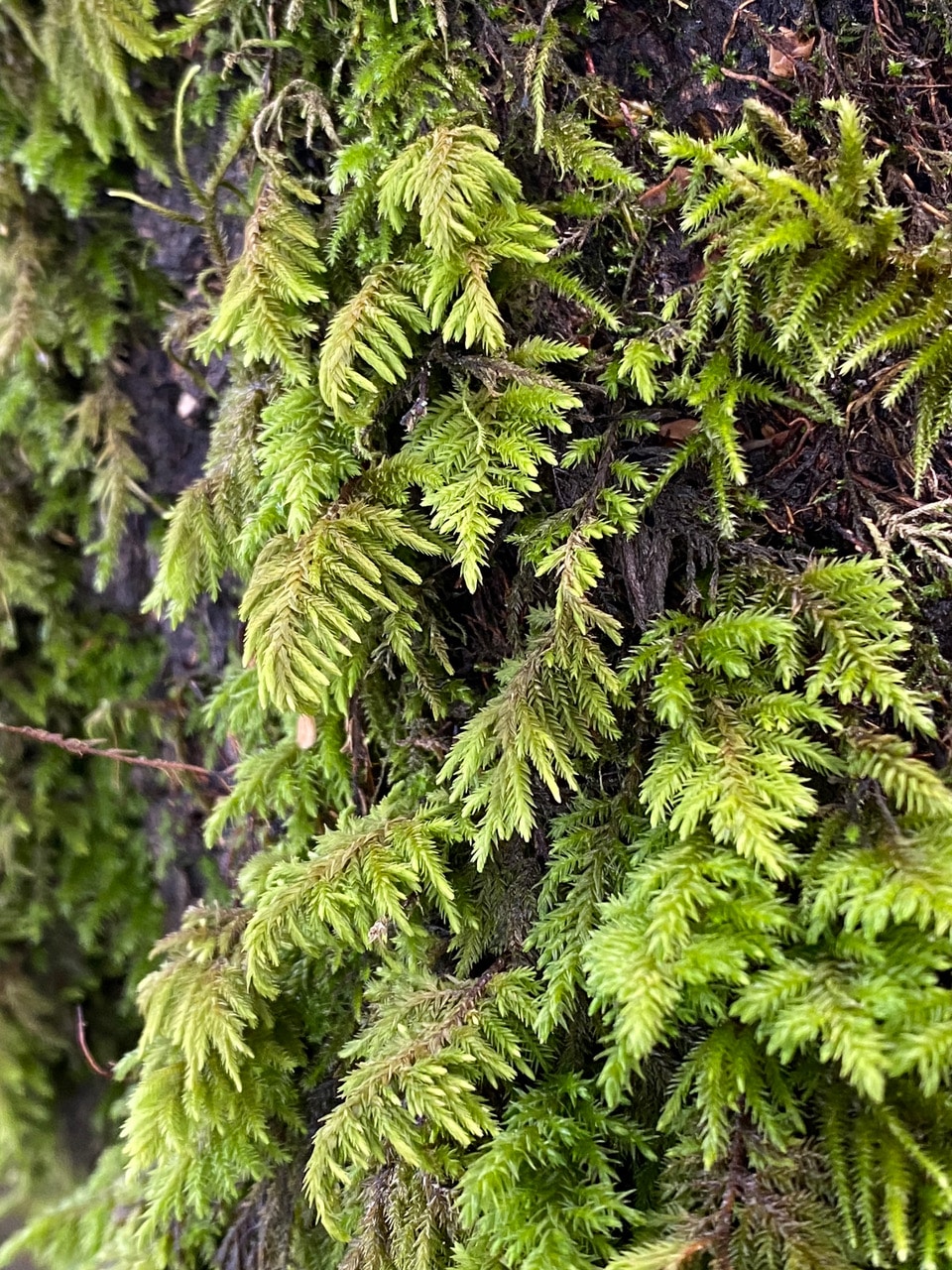
The bark of the California Bay trees near Siesta Gate is saturated with rain. The large moss, Dendroalsia abietina has plumped up and turned a brilliant green, covering a large section of the tree trunk.
The large moss is common throughout the Pacific Northwest, especially in oak woodlands. It often covers whole tree trunks, leaving little room for competition. The specific epithet, abietina means “like a small fir tree” in Latin, and refers to the overall appearance of the shoots when fully hydrated. As the moss dries, leaves turn brown and curl downwards, appearing like poodle fur.