

Pollinator Post 2/15/24 (2)
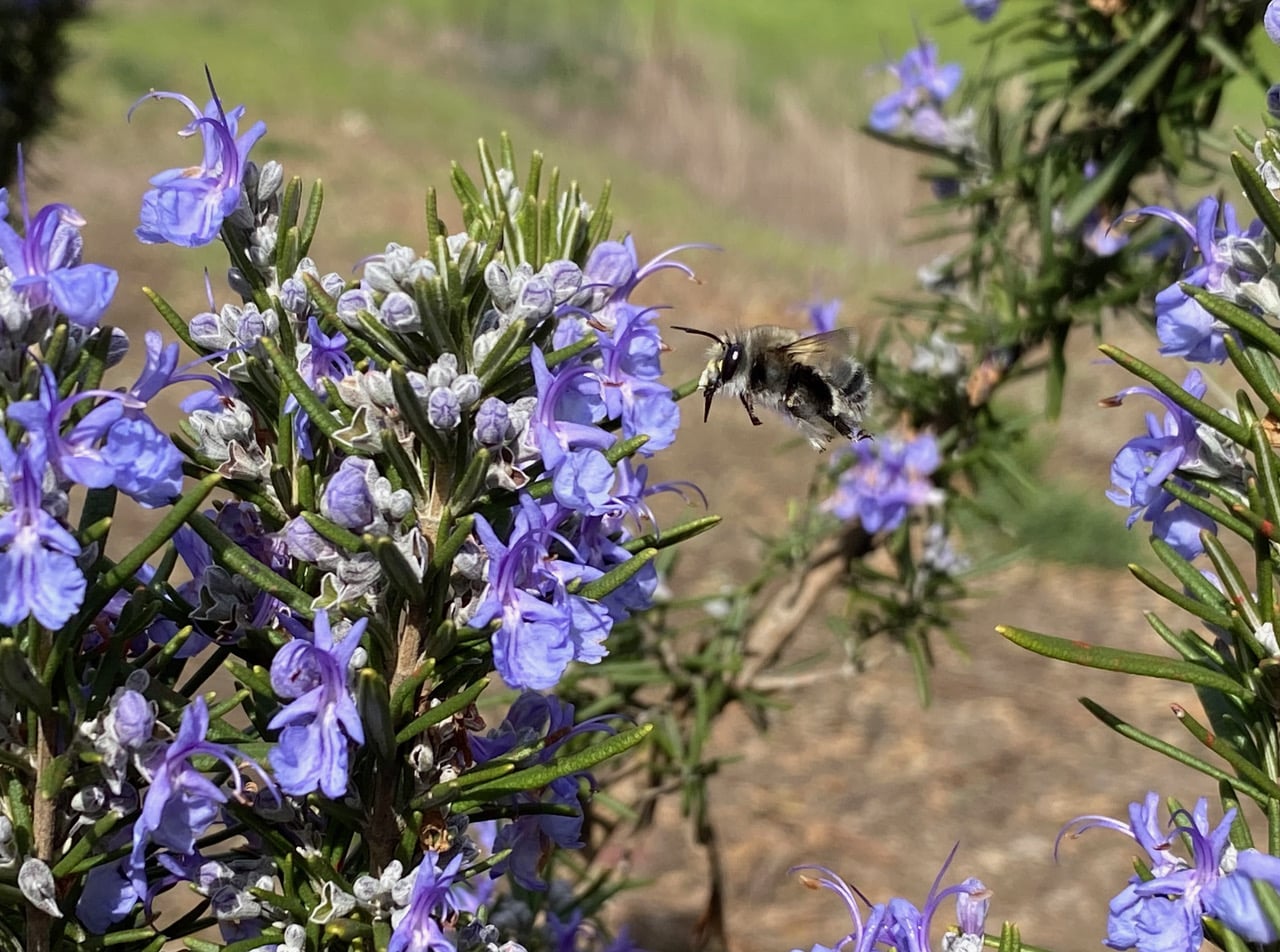
Much harder to photograph are the feisty Pacific Digger Bees, Anthophora pacifica (family Apidae). These fast and noisy flyers buzz around the Rosemary plant, appearing to “hop” from flower to flower while foraging. The chubby, furry Digger Bees resemble the bumble bees in many ways, but are a lot noisier. They are a fearless, rowdy lot – fun to watch but a nightmare to photograph.
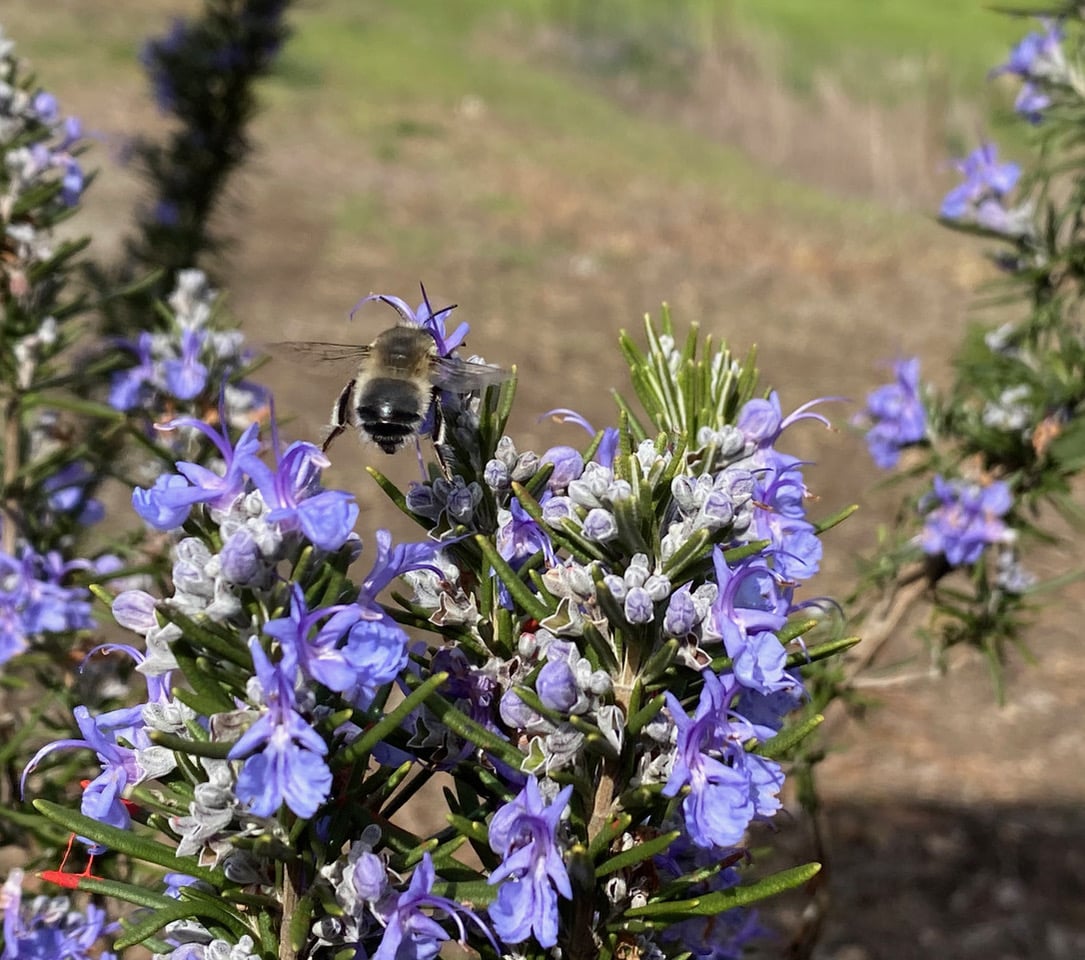
Anthophora, commonly called Digger Bees, are entertaining, unusually noisy bees with a distinctive way of flying. They zip speedily around flowers, stopping abruptly to hover in front of a blossom, sometimes angling their long tongues down a flower’s throat without landing. Or they buzz raucously while clinging to the flowers, and thrust their faces so deeply into them that their bodies get coated in pollen.
Anthophora are generally somewhat larger than honey bees and robustly built like bumble bees, but with black or black-and-white-striped abdomens and furry thorax. Typically, digger bees have “Roman noses” or concave profiles. Male digger bees of many species have white or yellow integuments on their faces. Females have shaggy hairs on their back legs, used to carry pollen.
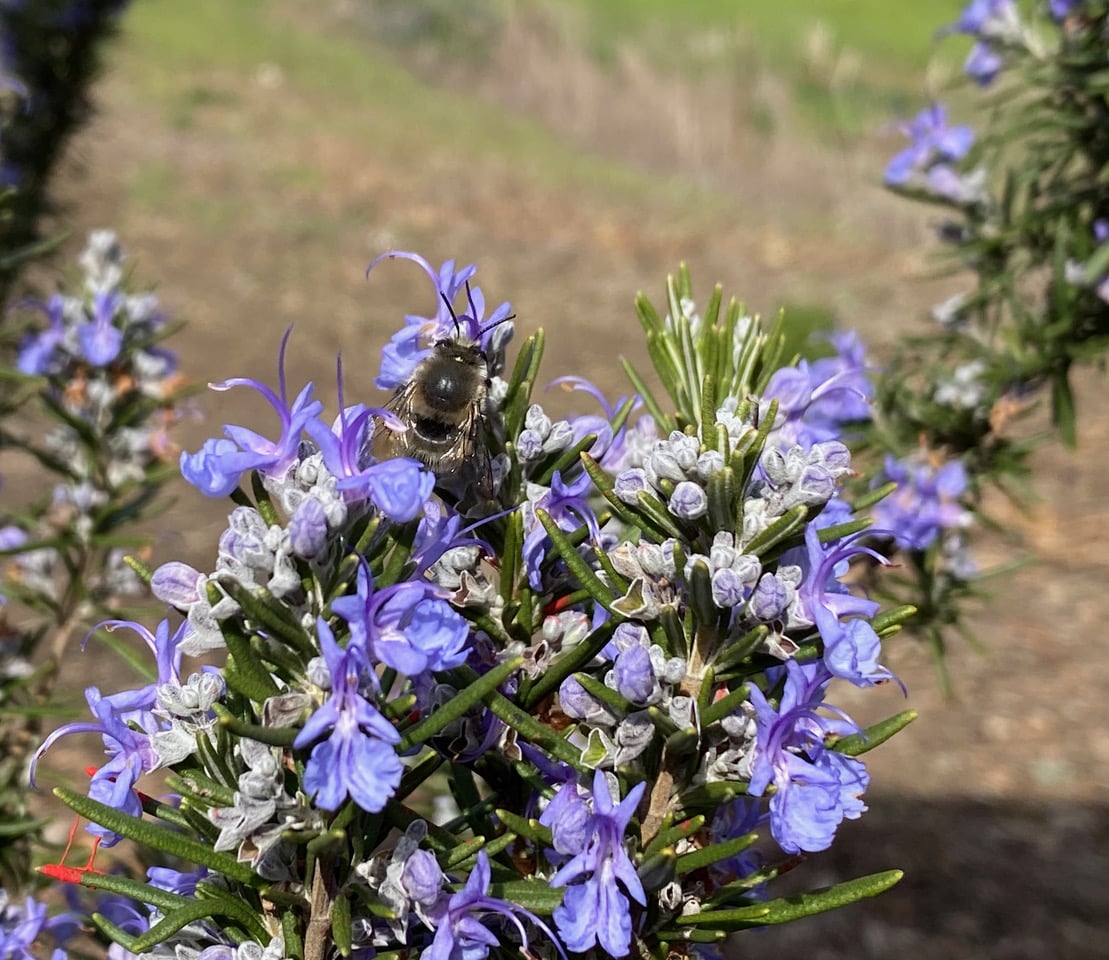
Anthophora are solitary bees, i.e. each female builds and provisions its own nest. However, digger bees are often gregarious, preferring to build their nests close by one another, sometimes forming large aggregations that number in the hundreds. As their name suggests, digger bees typically nest in the soil, either in level ground or vertical banks. Female Anthophora construct ground nests by digging with their front legs and using their mandibles to loosen dirt. The males often hang around nest entrances, awaiting the emergence of a female for a chance to mate with her. When she appears, the males jump on her en masse, sometimes creating chaotic “mating balls”. It’s a boisterous affair!
Female Anthophora are capable of buzz pollination – i.e. they vibrate their wing muscles to shake pollen from the anthers of some flowers. Digger bees are generalist pollinators that visit an impressively wide range of plants. They are exceptionally effective pollinators and play an important role in maintaining wildflower diversity, in part because their long tongues allow them to pollinate deep-throated and tubular blossoms inaccessible to other bees.
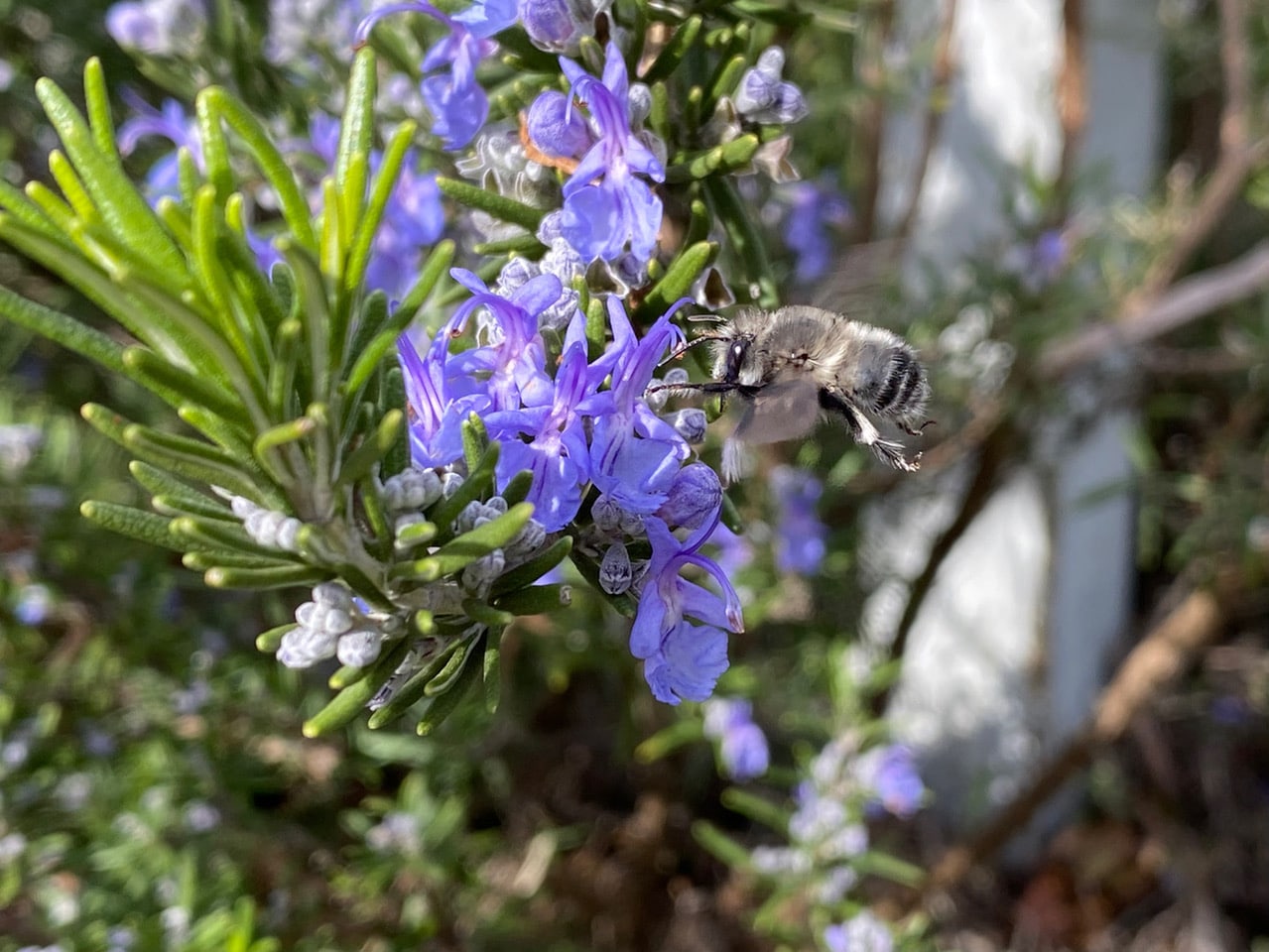
Most of the Anthophora bees I see today are males. Perhaps the female have yet to emerge? Males develop faster and usually emerge a few days before their sisters.
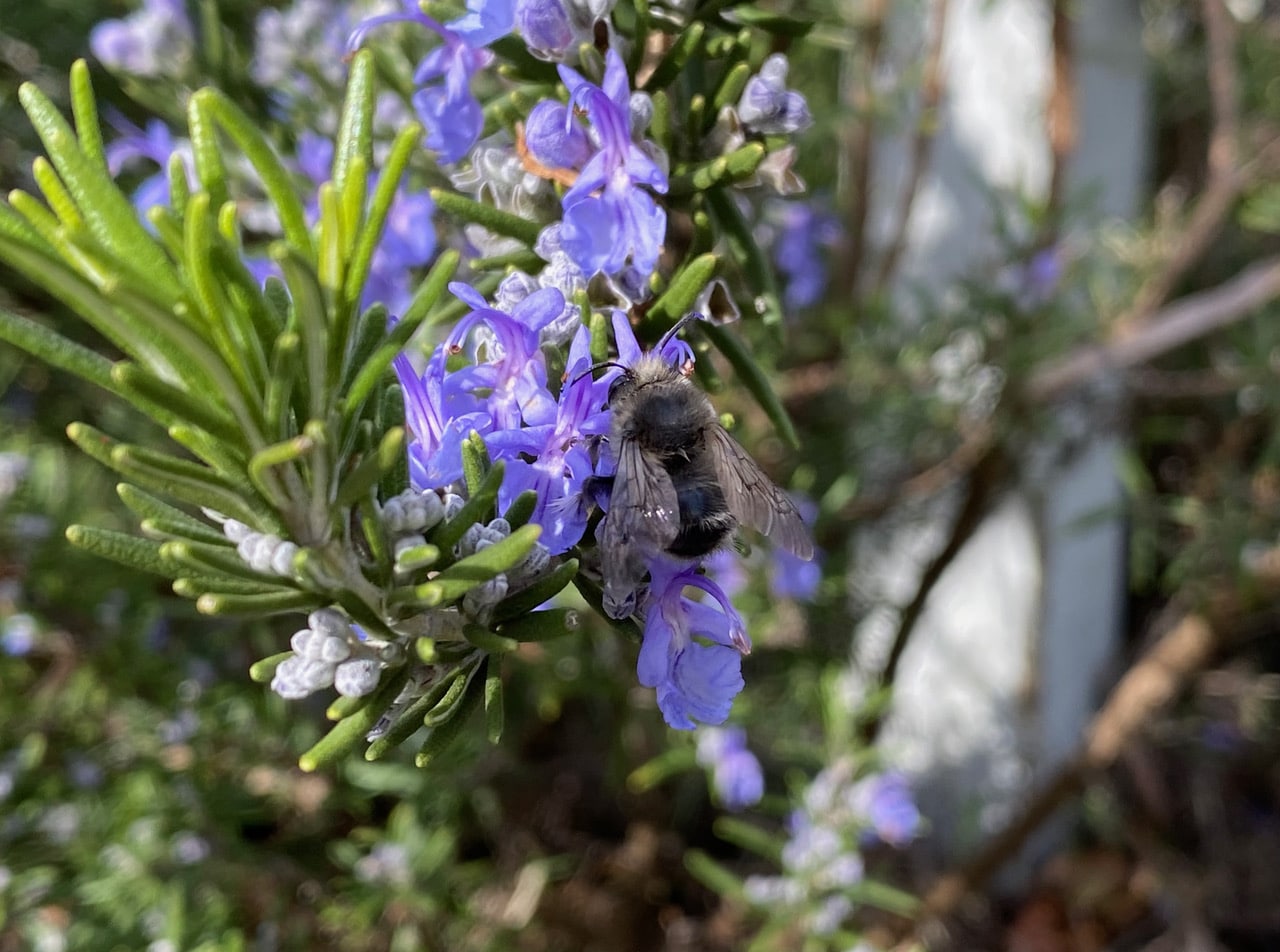
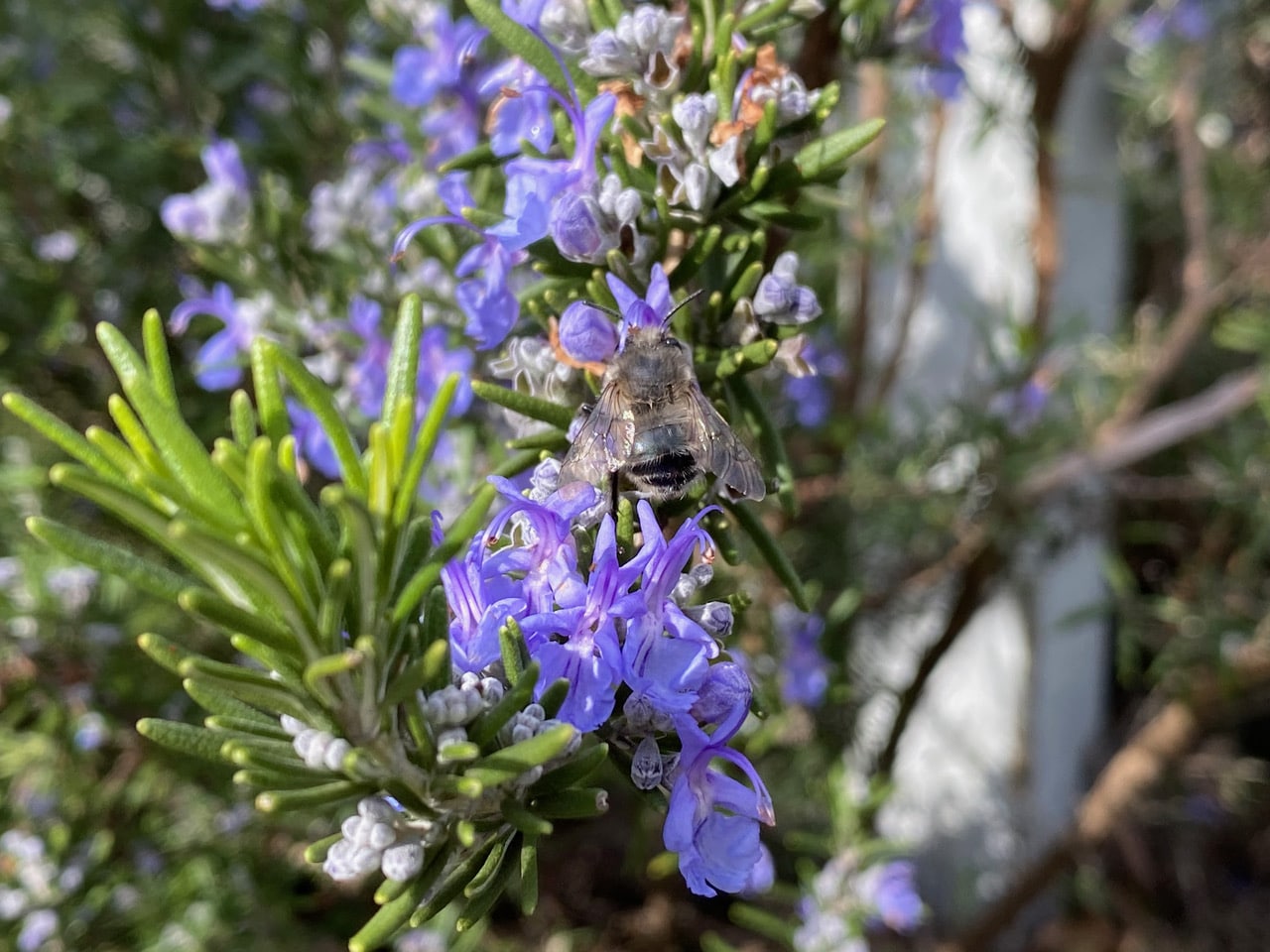


A female Pacific Digger Bee has settled down momentarily to sip nectar from a Rosemary flower while the two stamens are dabbing her with pollen behind the head.
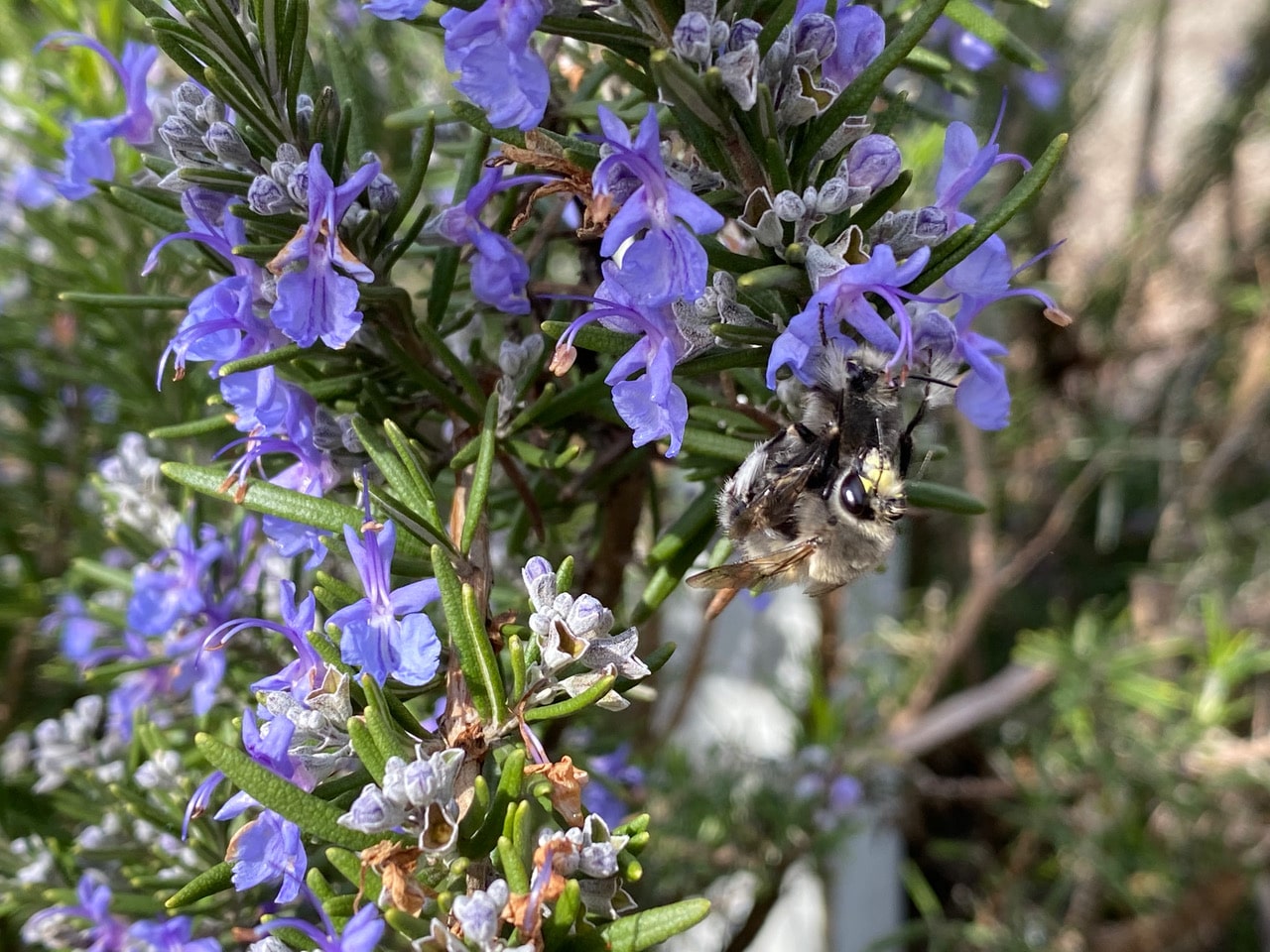
For a split second, a male lands on top of her and proceeds to mate with her while she holds on to the flower. While I have seen this behavior in other species, it is beyond my wildest dream to capture the drama for this feisty species. Note the tassels of long white hairs on the male’s middle legs.
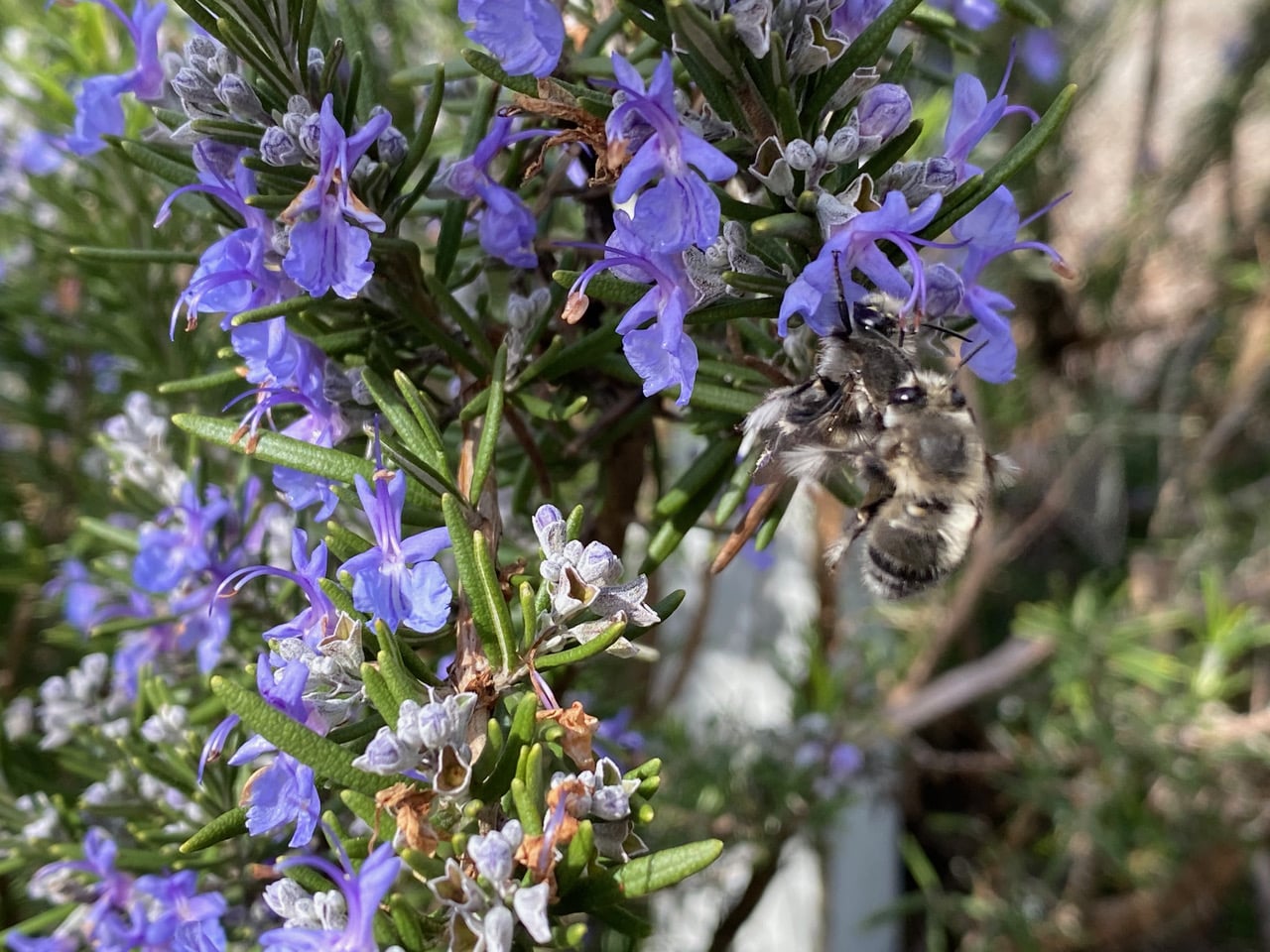
The action is over in a blurry second, then the pair separates and goes their own way.
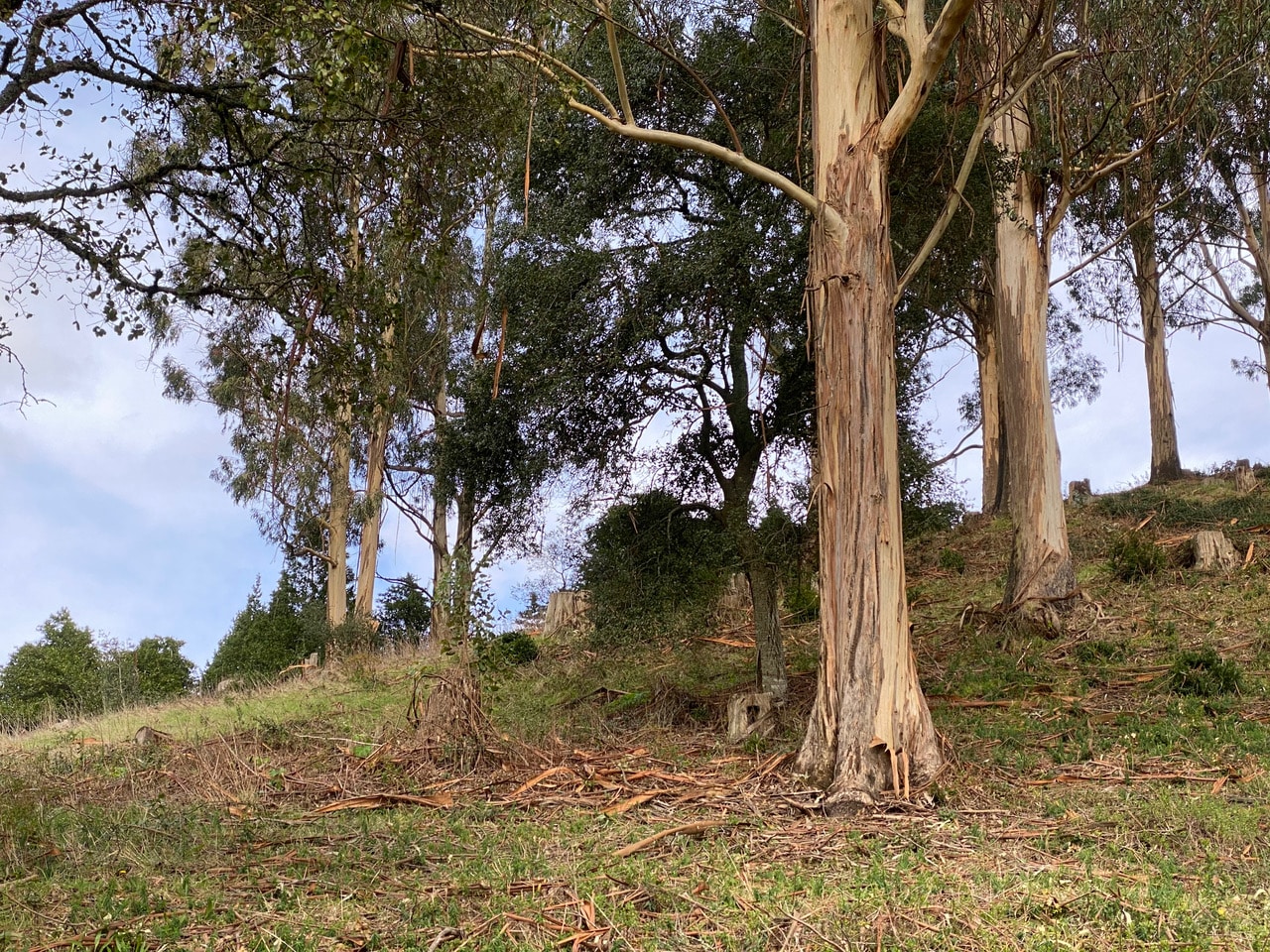
I take a shortcut through the broken wire fence to get on Skyline Trail heading back north. The hillside across the Water Tank has been cleared of brush for fire prevention. Even the peeling barks of the Eucalyptus trees have been stripped from their trunks!
 Hearing loud buzzing from Digger Bees, Anthophora sp. overhead at the Diablo Bend, I stop to check for activities on the steep rocky bank. Look, here’s an exit hole of a bee burrow, about 3/8” across. I wonder if it is an exit hole for this year’s emerging bees, or has some new females begun to excavate their own nests?
Just about 3 feet away, there’s another hole. The bees seem to favor soil under protective rocks for nesting. Their burrows will be sheltered from rain and possible erosion.
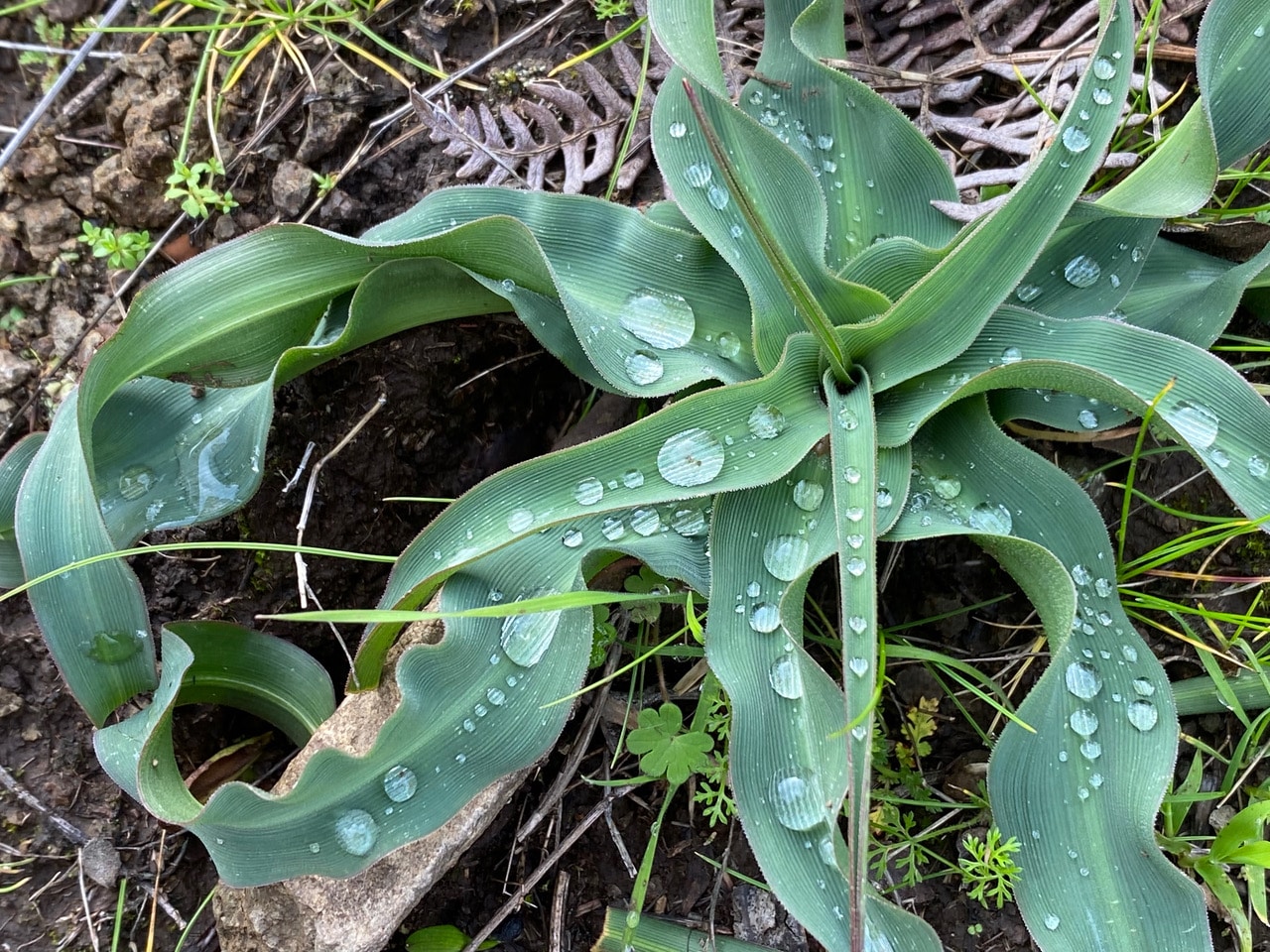
Rain drops have been artfully retained on the curvy leaves of a young Soap Plant, Chlorogalum pomeridianum.
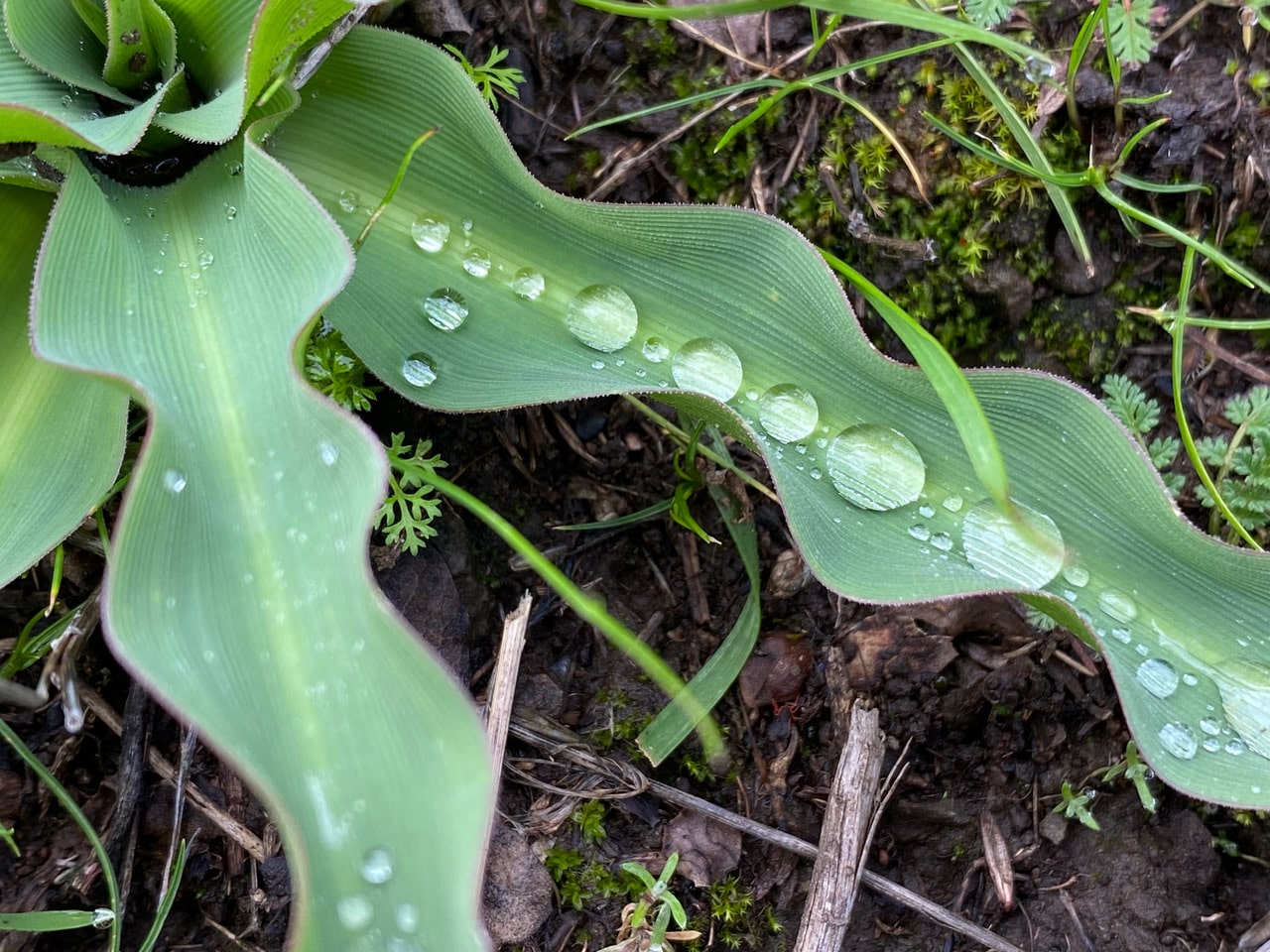
I love how the water drops magnify the leaf veins they’re resting on.