

Pollinator Post 2/15/24 (1)
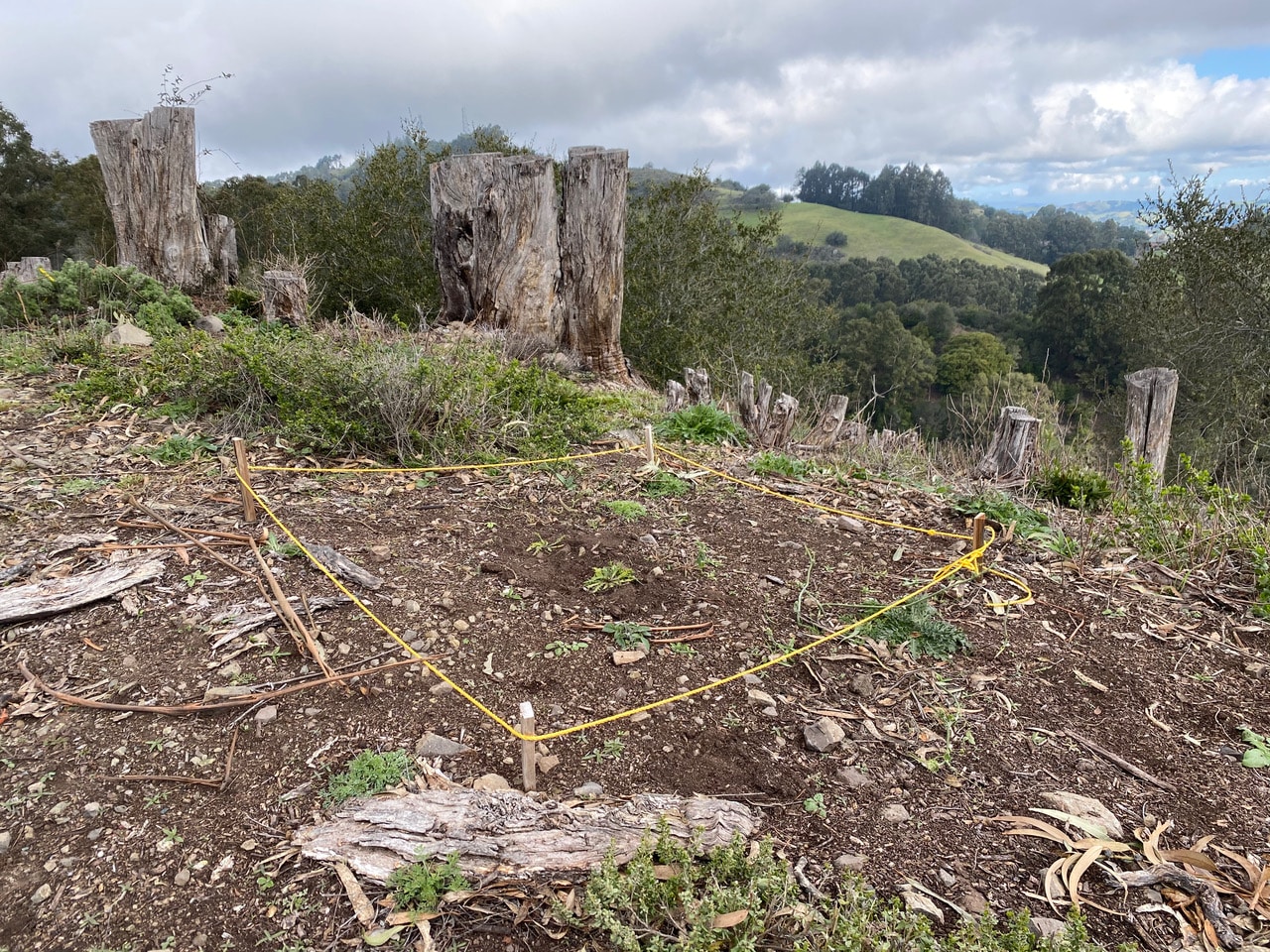
With another series of rain in the forecast, I want to make sure I get in some outdoor time while I can. Besides, it’s time to check on what’s new at the Skyline Gardens.
Along the paved road, I notice that new plantings have gone into the robed-off seed beds on the sides.
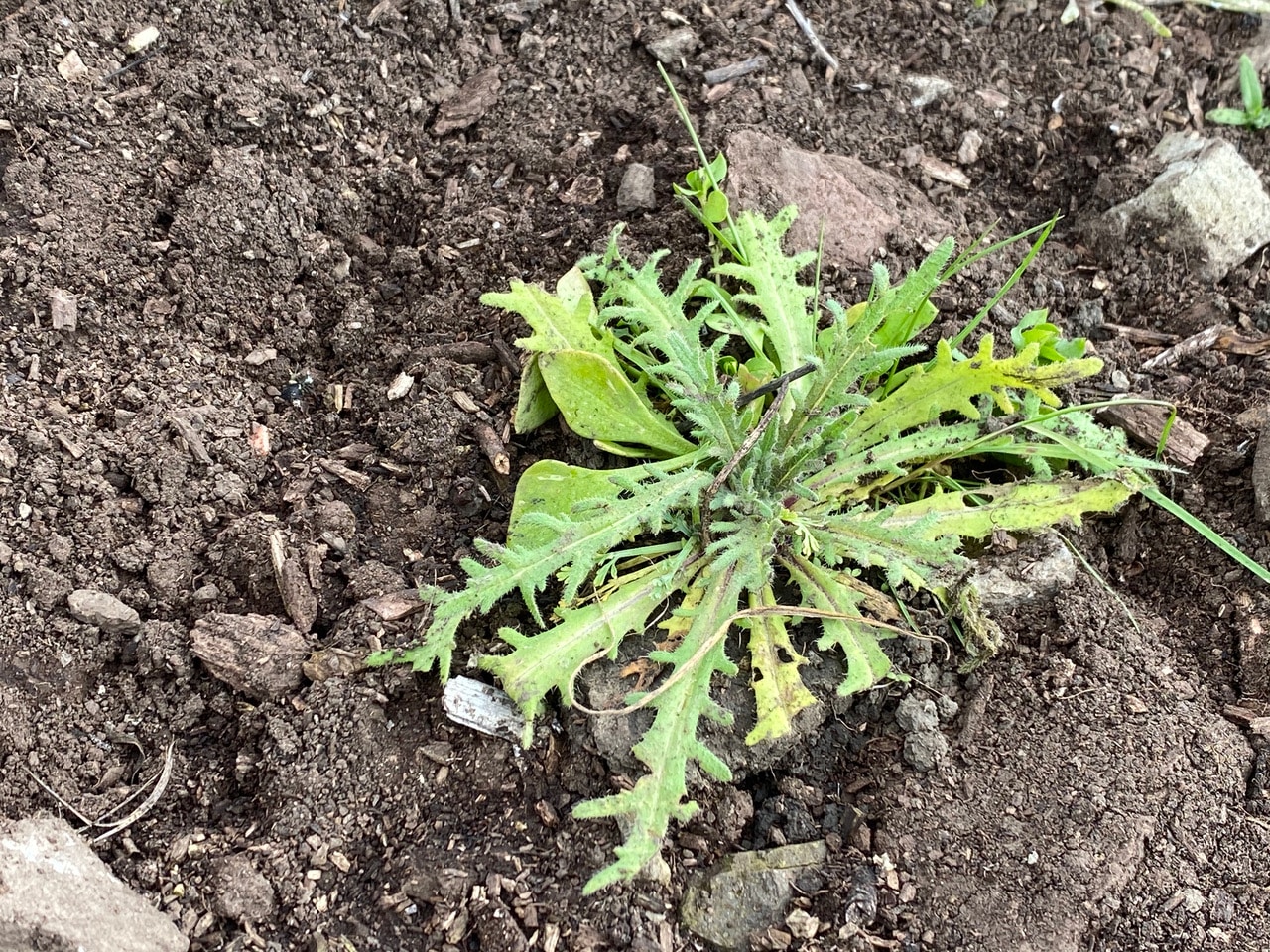 Hmm… what has the volunteers planted? Tidy Tips, Layia platyglossa? I look forward to seeing the cheery faces of their blossoms, so will the pollinators!
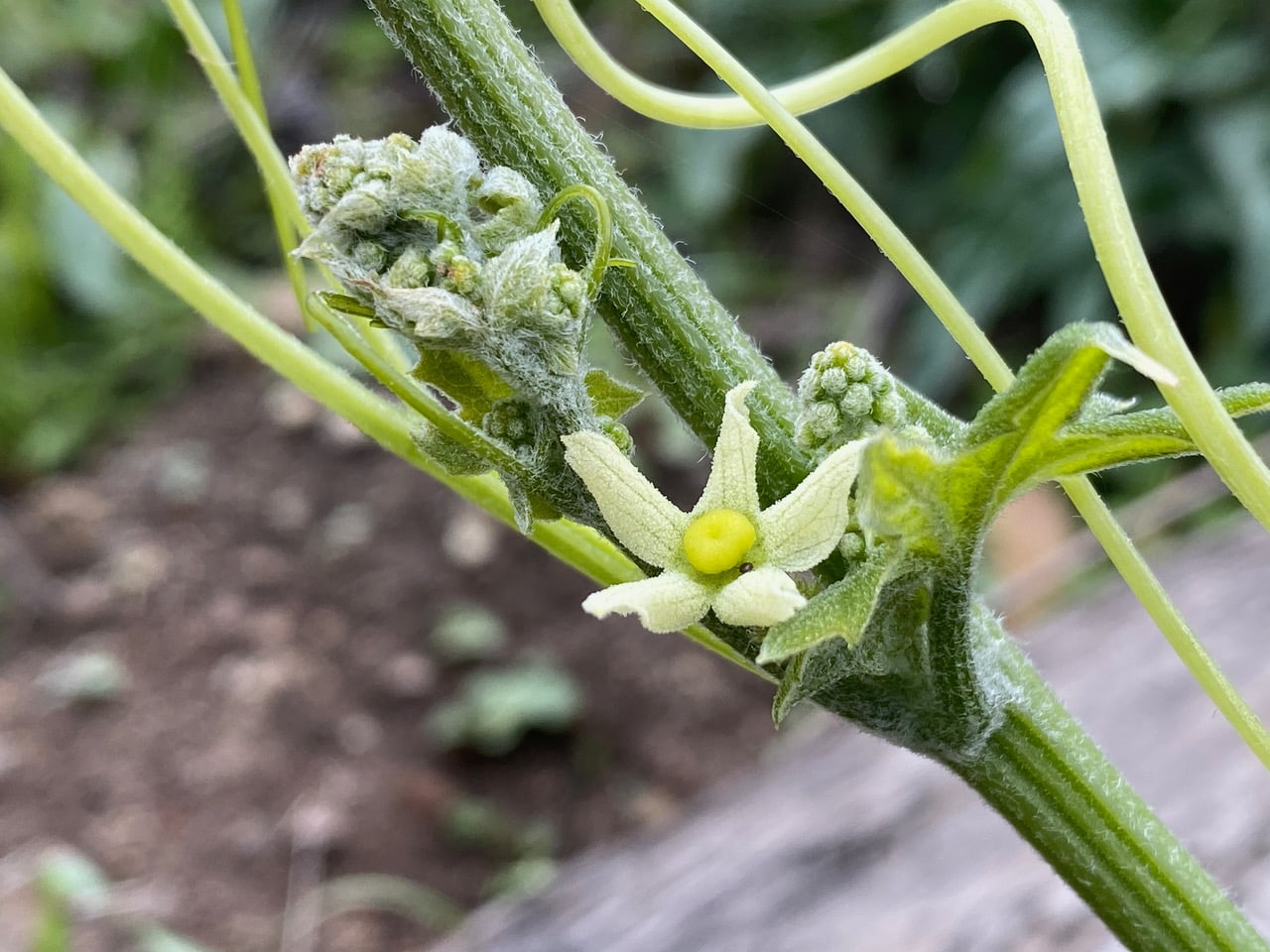


Hmm… what has the volunteers planted? Tidy Tips, Layia platyglossa? I look forward to seeing the cheery faces of their blossoms, so will the pollinators!On a California Manroot, Marah fabacea, a female flower has opened up at the leaf axil below the cluster of male flowers still in tight buds. As I look around, this development is the same in all the vines I find today. It’s amazing that I have failed to see this for all these years. I guess you have to catch the first flowers on the vine to appreciate what’s happening. Apparently, the monoecious plant has separated the bloom time of its male and female flowers to avoid self-pollination. How clever! The temporal separation of the sexes is termed dichogamy, but I have thought it only applies to the maturation of the reproductive structures of bisexual flowers! Can the Manroot be considered a plant exhibiting protogynous (female-first ) tendency?
A old twig has fallen off an oak tree, its surface still laden with life – fungus, mosses and lichens.
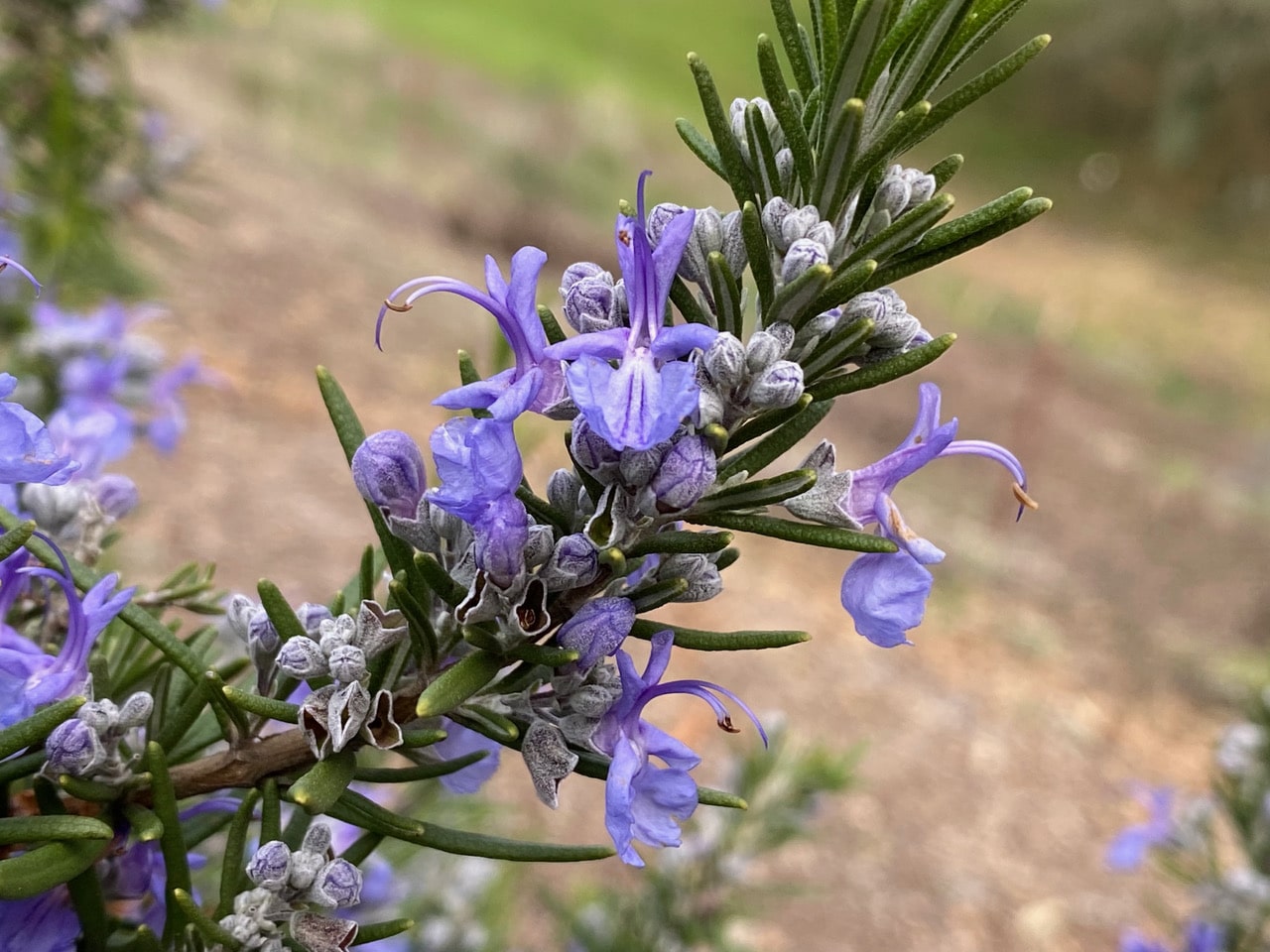
By the Water Tank fence, the two large bushes of Rosemary, Salvia rosmarinus (family Lamiaceae) are in glorious bloom. Although the plant is not native, the bees are intensely attracted to the flowers – a good source of both nectar and pollen. The dance between flowers and bees is something to behold.
Sage flowers (genus Salvia) feature a unique pollination mechanism called a “staminal lever”. The flower is bisexual and protandrous, i.e. the male parts mature earlier than the female parts. When a pollinator probes the back of a male-phase flower in search of nectar, a see-saw contraption tilts the pair of pollen-filled (male) anthers down to deposit their load on the back of the insect. When the insect next visits a female-phase flower, the protruding mature stigma will be the first part of the flower to touch the pollinator and will receive the pollen from the previous flower.
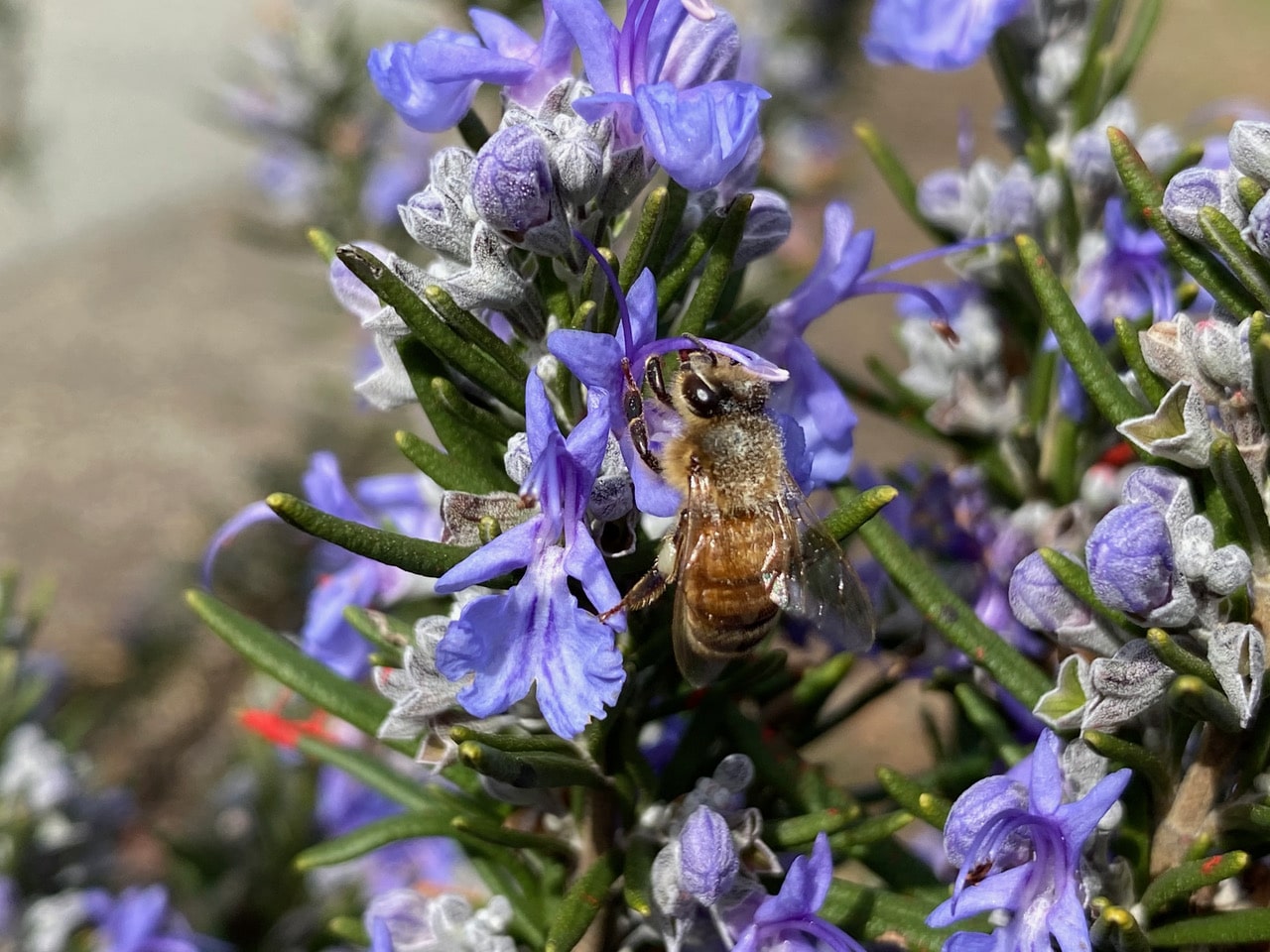
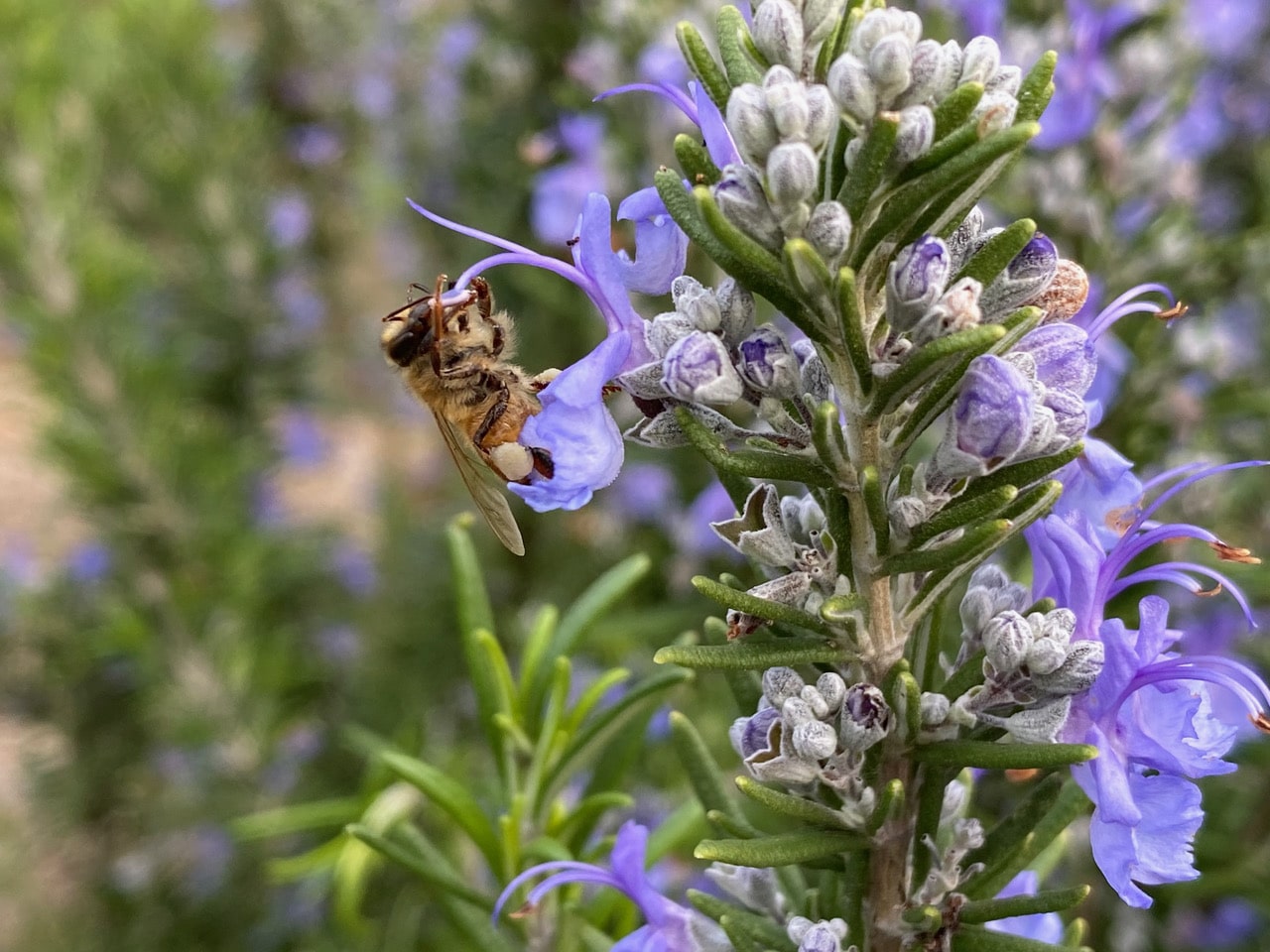
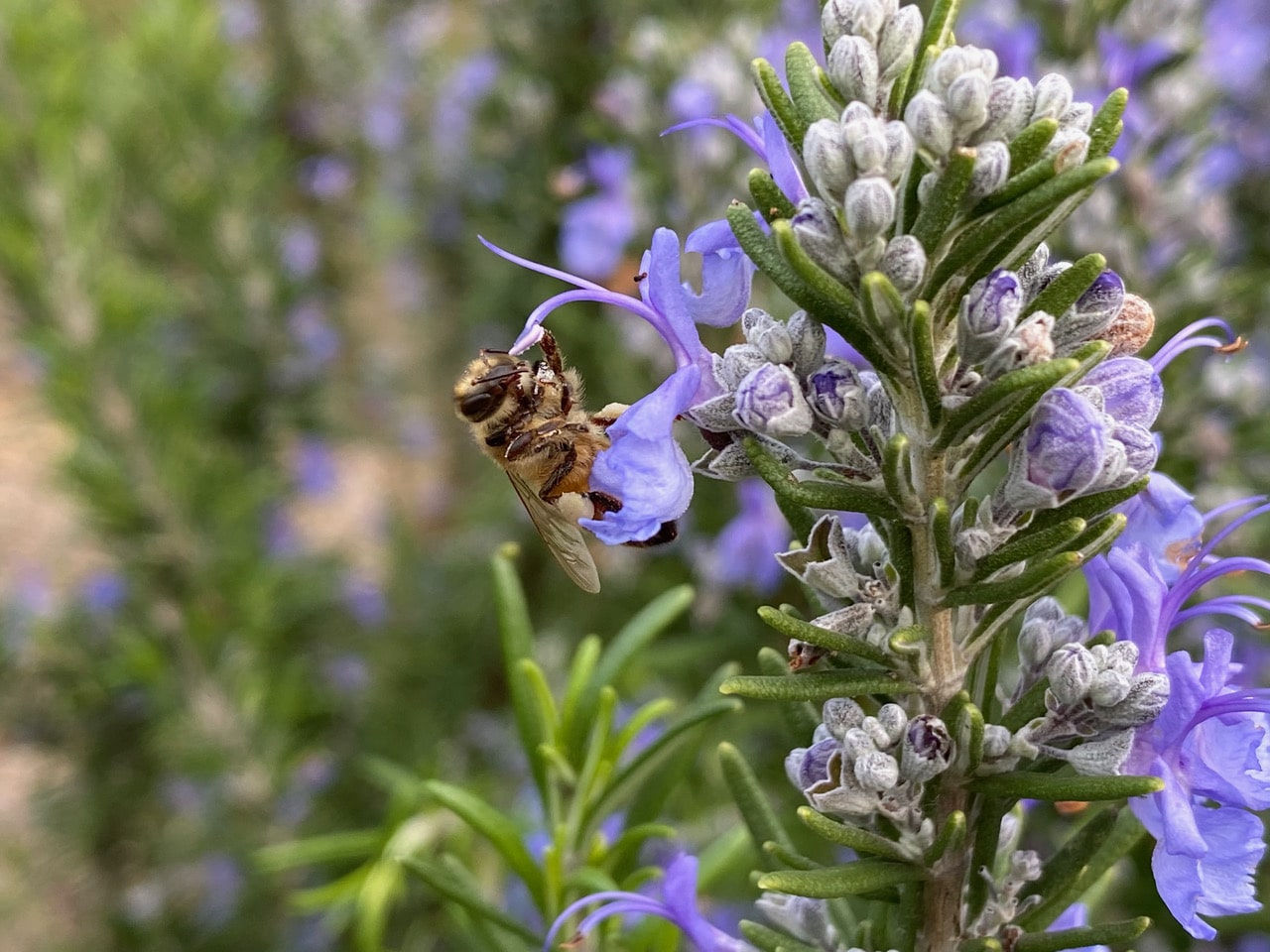
A Honey Bee, Apis mellifera (family Apidae) is probing a Rosemary flower for nectar and getting dabbed with pollen on her back by the pair of arching stamens. The bee is essentially collecting both nectar and pollen simultaneously.
Note the dusting of the cream-colored pollen on the bee’s thorax as she lifts off.
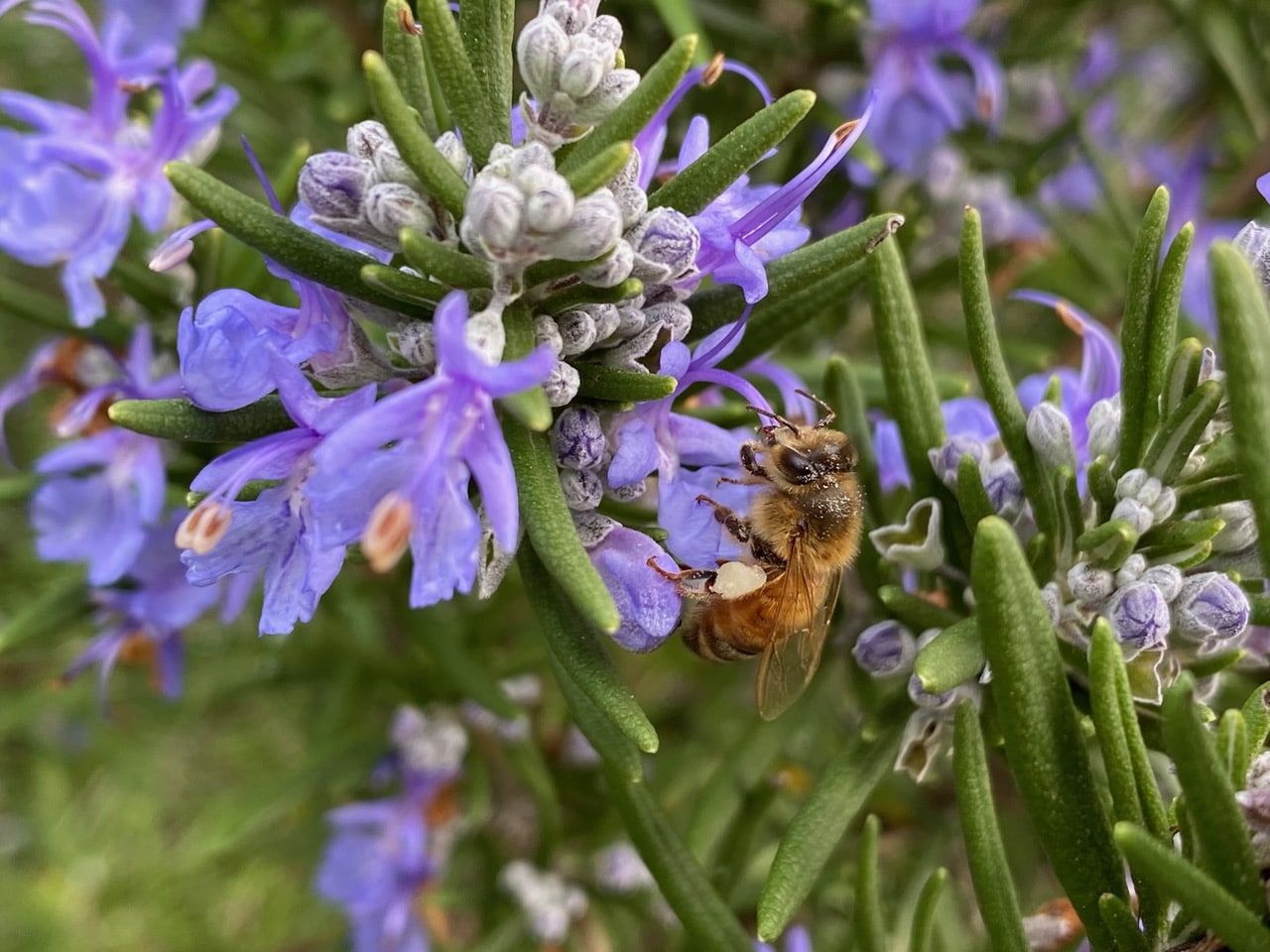
Another Honey Bee is collecting pollen directly from the anthers arching forward from the corolla. Note the cream-colored pollen in her pollen basket.
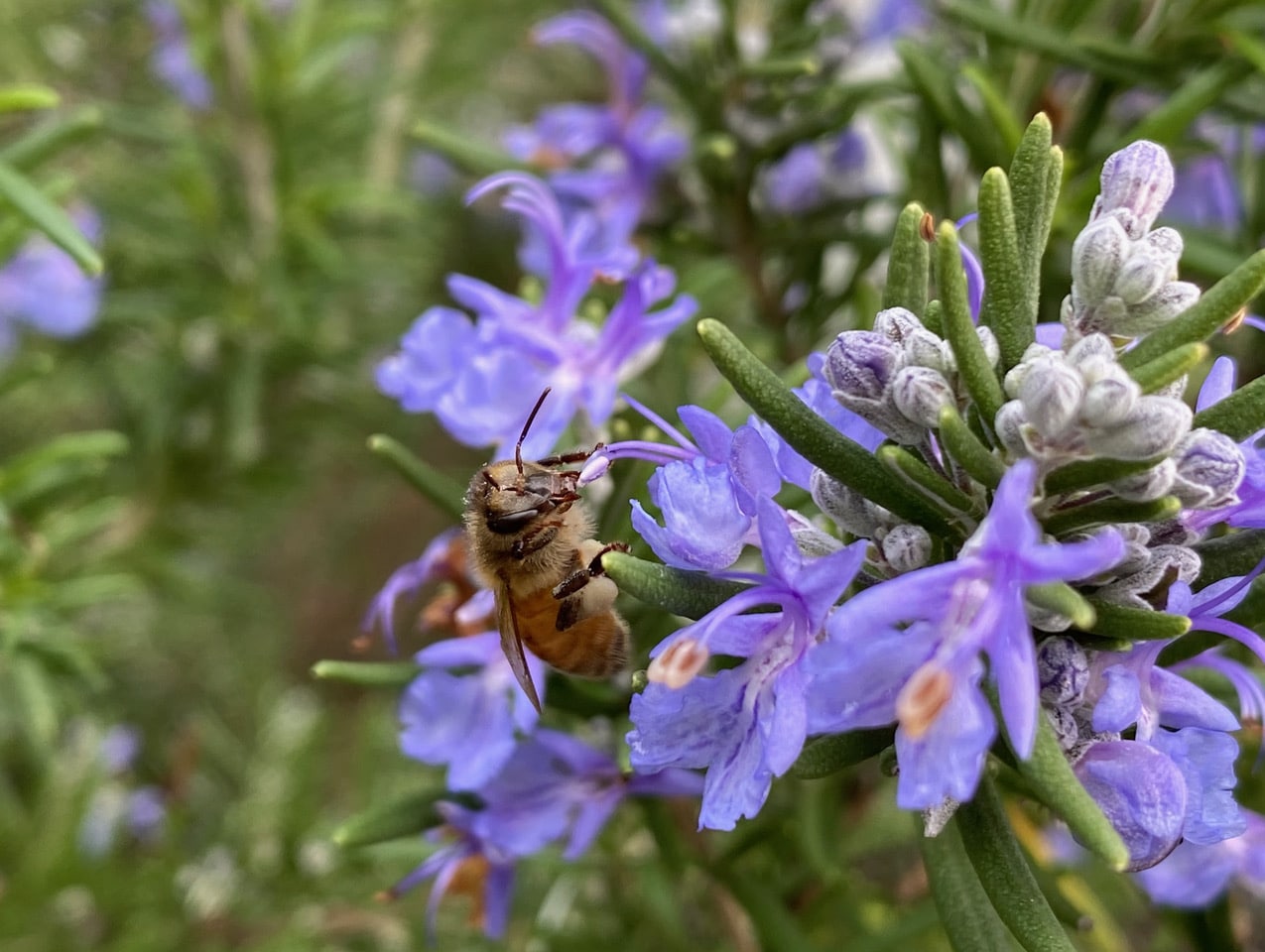
The bee is using her mandibles …
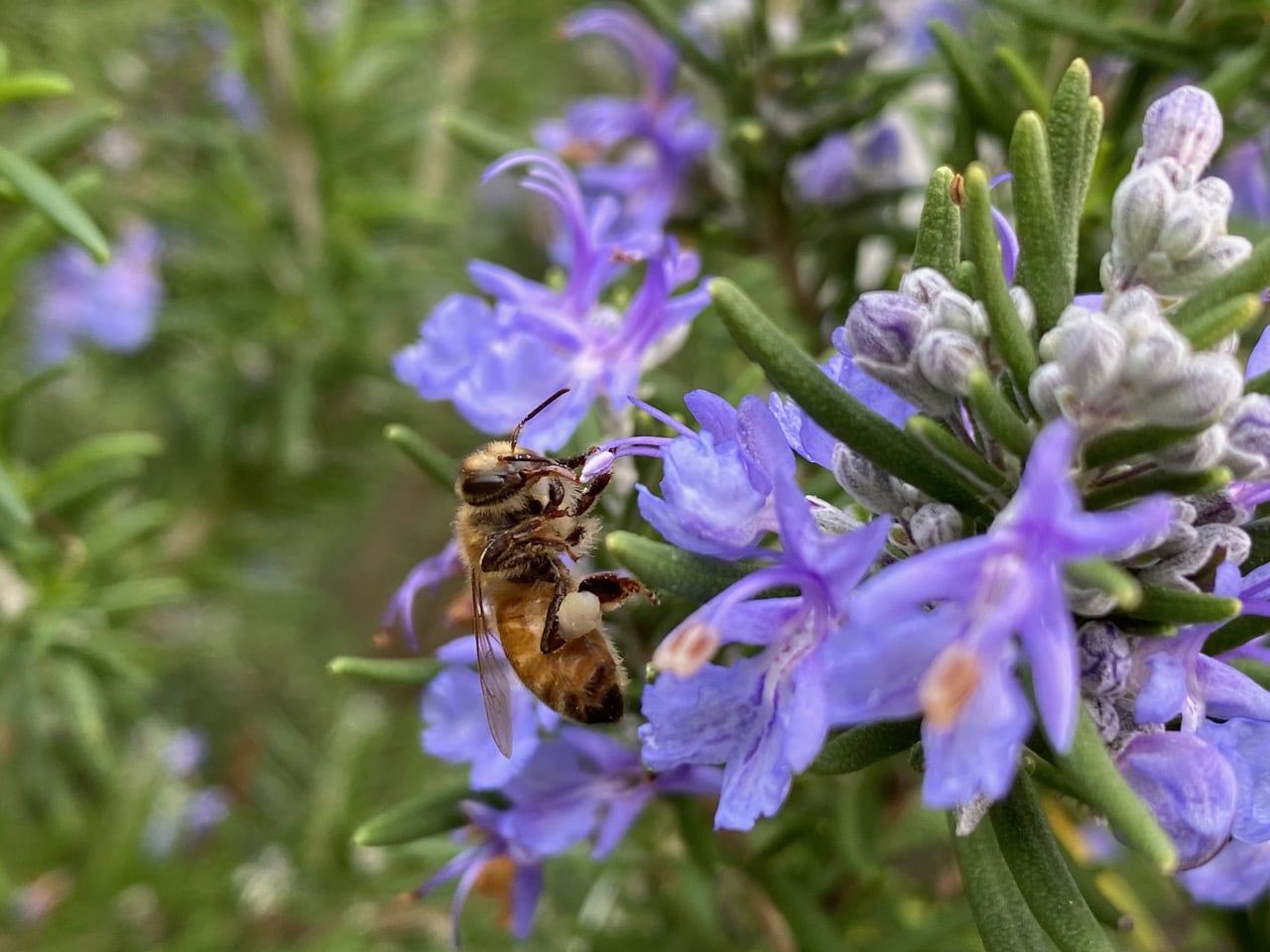
… as well as her tongue to extract pollen from the anthers.
This other Honey Bee is sitting squarely on the lower lip of a Rosemary flower and reaching up to collect pollen from the anthers.
Flower and bee seem made for each other – a perfect partnership!