

Pollinator Post 2/13/23

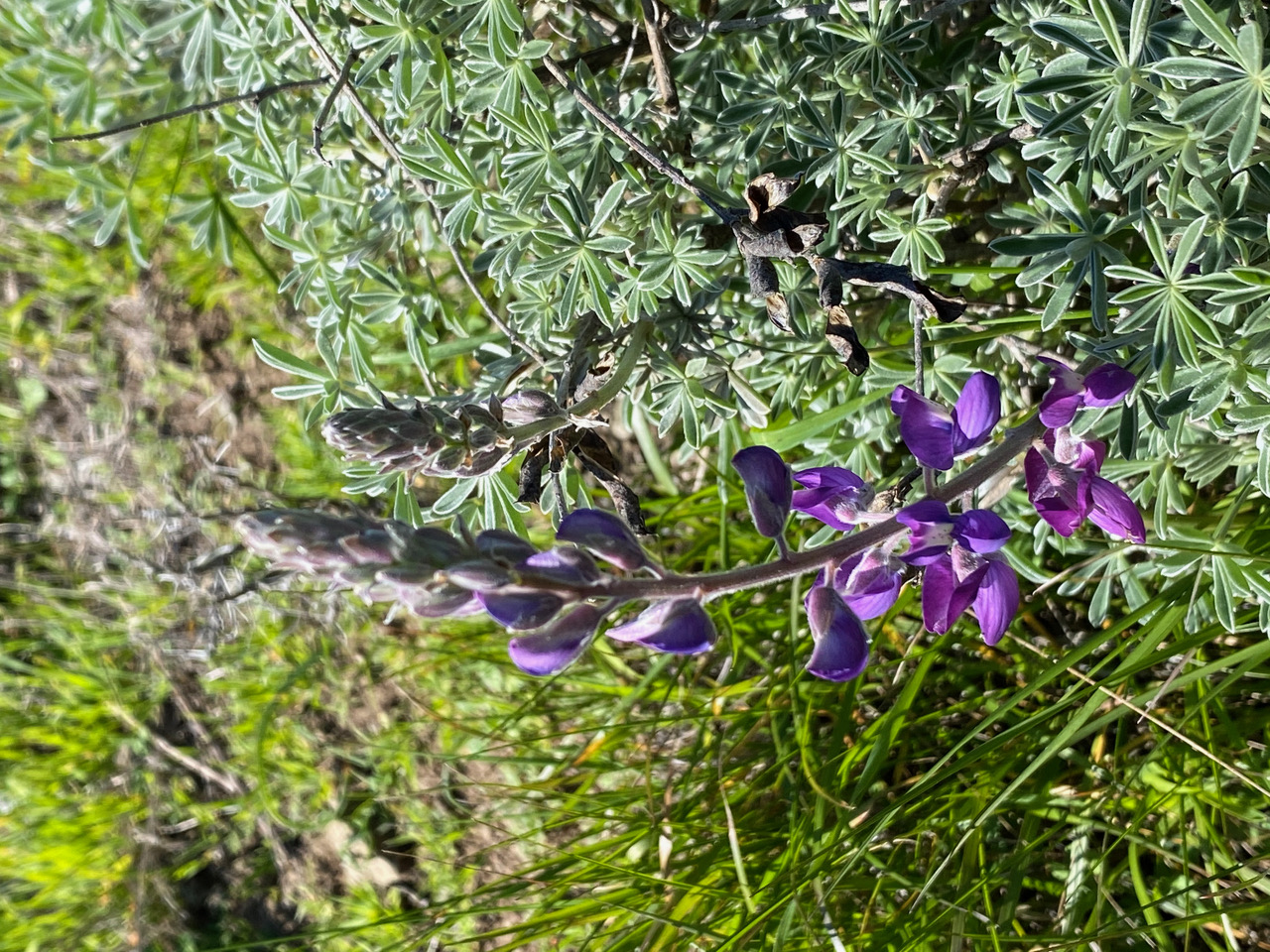
Near the bench at Diablo Bend, several showy spikes of Silverleaf Lupine flowers, Lupinus albifrons stick up above the small shrubs. To me this is a sure sign that spring has arrived at the Skyline Gardens.
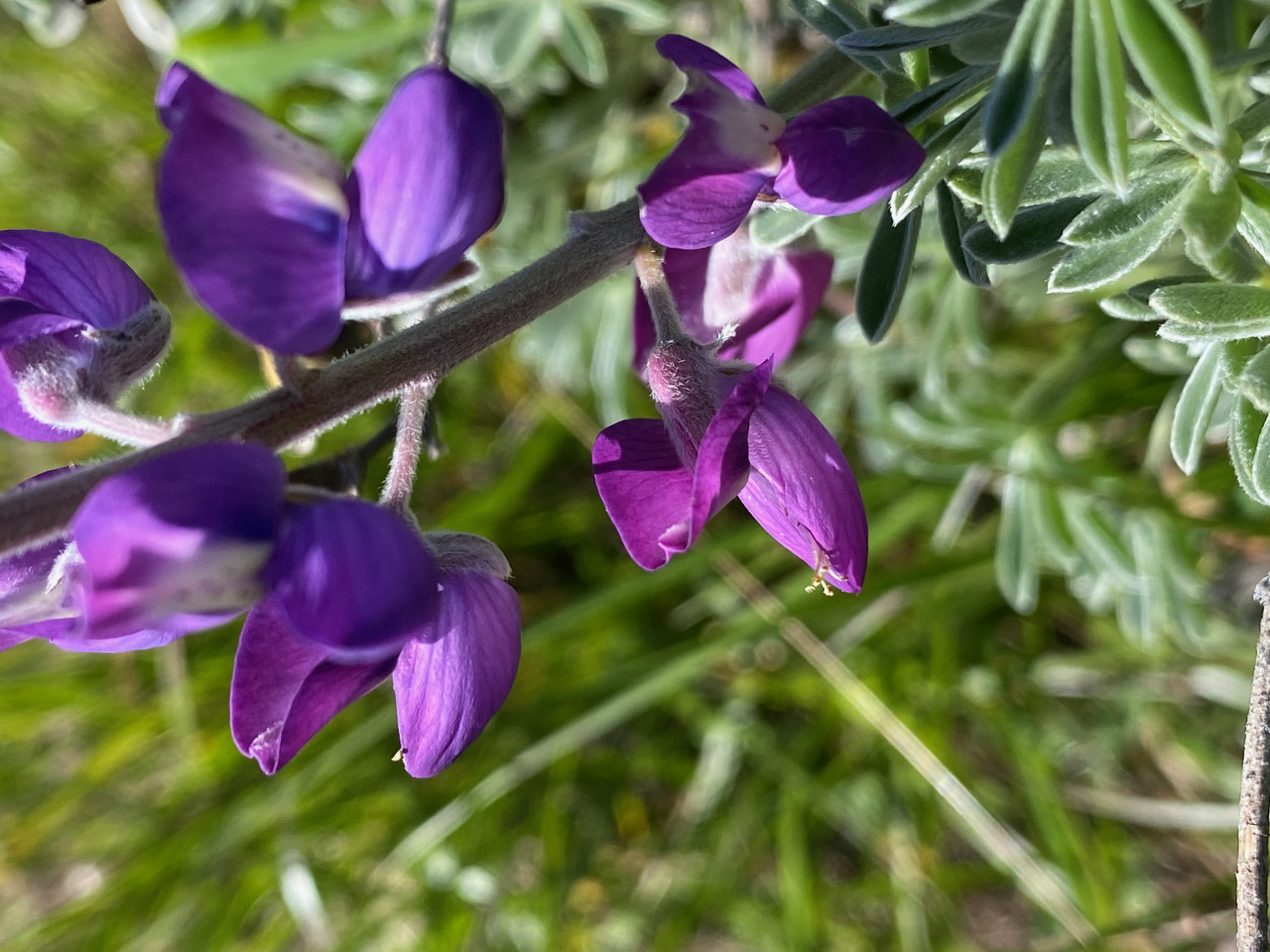
Most of the lower flowers on the inflorescences have already been pollinated, as evident from the reproductive parts protruding above the wing petals. Some bumble bees must have visited and “tripped” the flowers.

I gently remove one of the wing petals of a tripped flower to reveal the sharp-tipped keel inside. The single long style and the pollen-tipped anthers within the keel have bounced out when the heavy bee landed on the wing petals, dabbing the bee on the belly. What a clever contraption for pollination!
While I am taking pictures, a few large Yellow-faced Bumble Bees, Bombus vosnescenskii fly low to the ground around the stand of lupine. Newly emerged from winter diapause (insect version of hibernation) the fresh queens are checking every nook and cranny in the ground for a nesting site. What a perfect place for them – with abundant floral resources, and a steep, well-drained hillside riddled with gopher holes. Most bumble bee queens establish their colonies in abandoned rodent holes.

One of the large queen bumble bees disappears into a large hole in the ground, about 11/2 in. across. I quickly ready my camera for a shot when she surfaces.
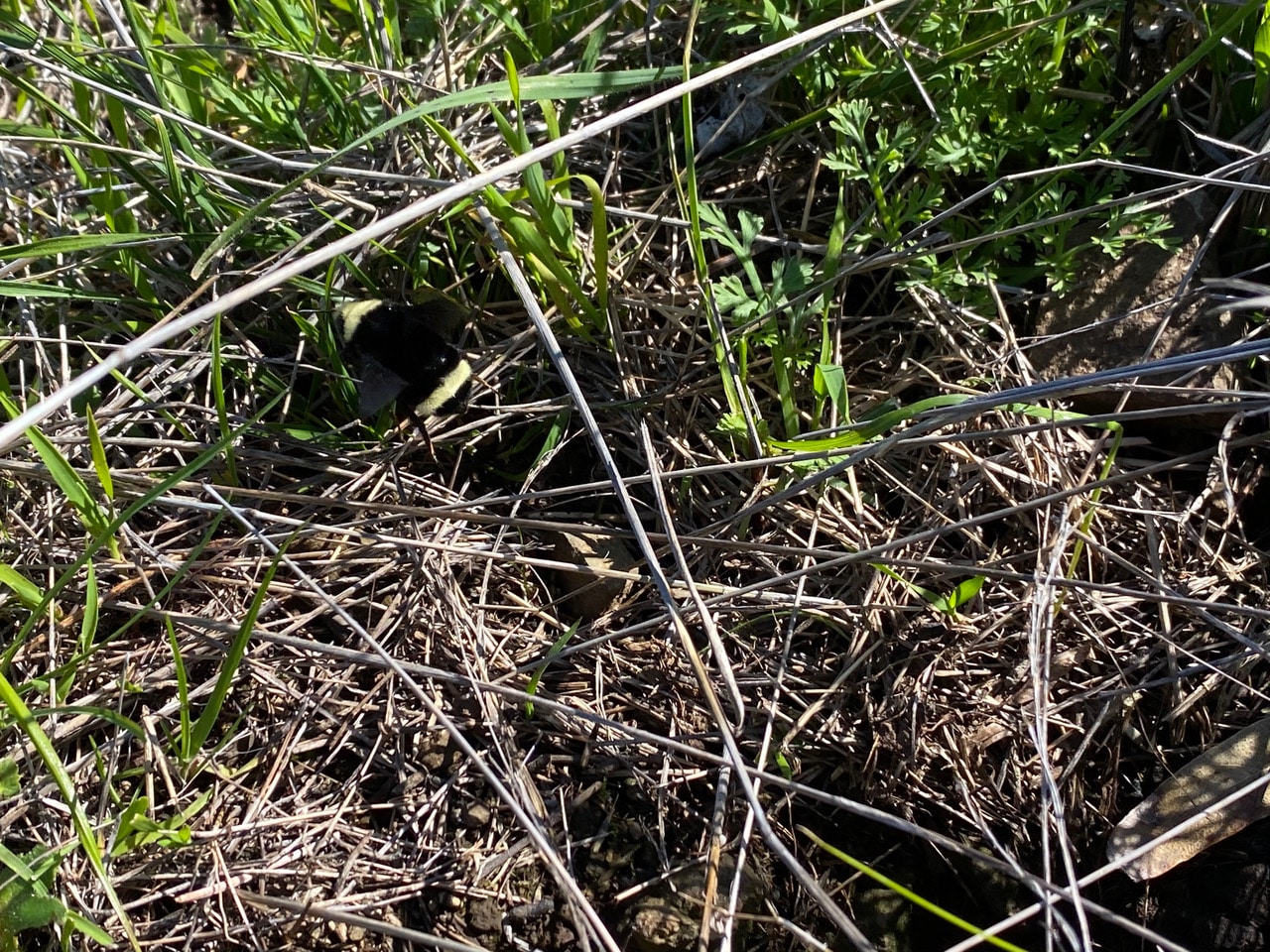
With a loud buzz, the Yellow-faced Bumble Bee (see her yellow head and yellow-banded abdomen?) emerges from another hole a couple of feet away. These holes are all interconnected! I wonder if the bee found the space agreeable.
There is another species of bees flying around the stand of lupines. About the size of worker bumble bees, these stout, gray bees are fast and noisy flyers. They are also bold, hovering in front of me to check me out, but never allowing themselves to be photographed. I think they are the Digger Bees in the genus Habropoda. Females are solitary and nest in soil, often in vertical banks.
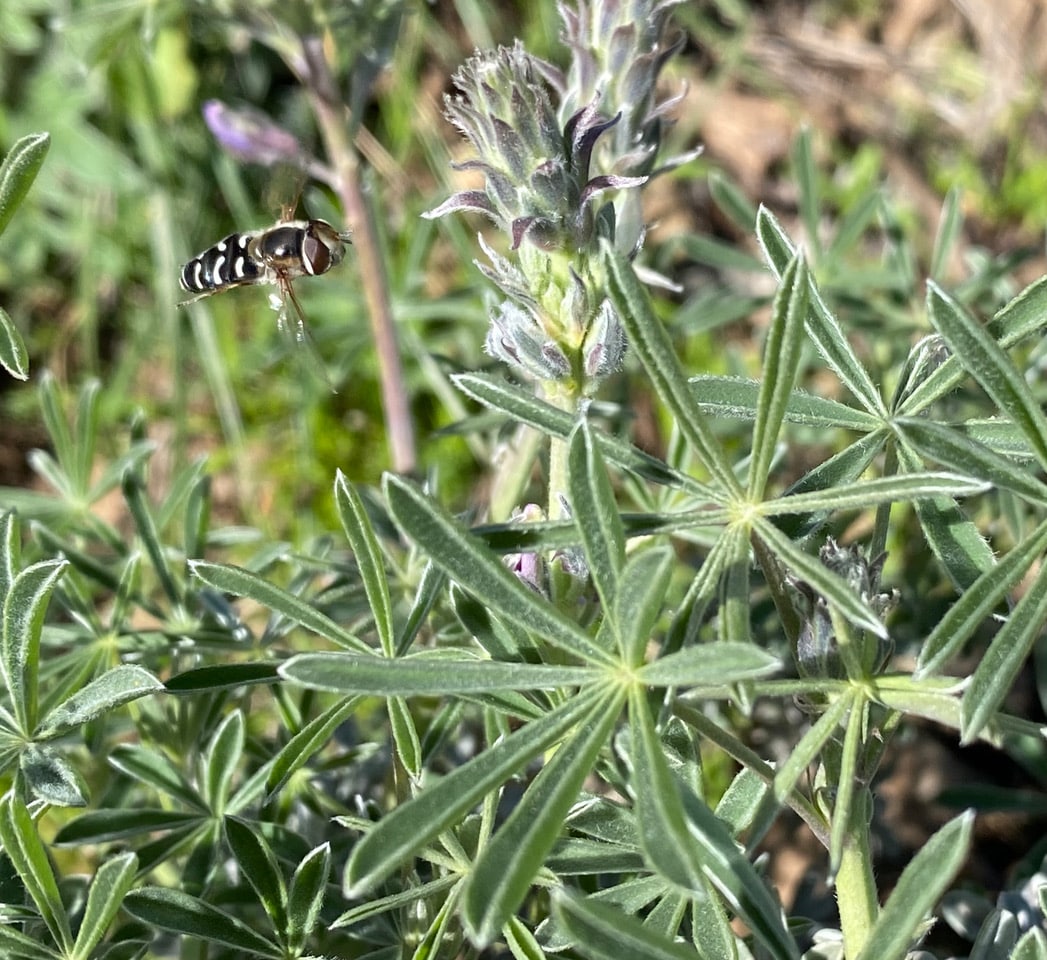
My eyes are attracted to a black-and-white insect hovering over the flower buds above the lupine foliage. It is a hoverfly, the White-bowed Smoothwing, Scaeva affinis (family Syrphidae). It checks out all the young flower spikes one by one. None of the spikes has open flowers yet. What could the fly be doing? It has to be a female looking for a place to lay her eggs!
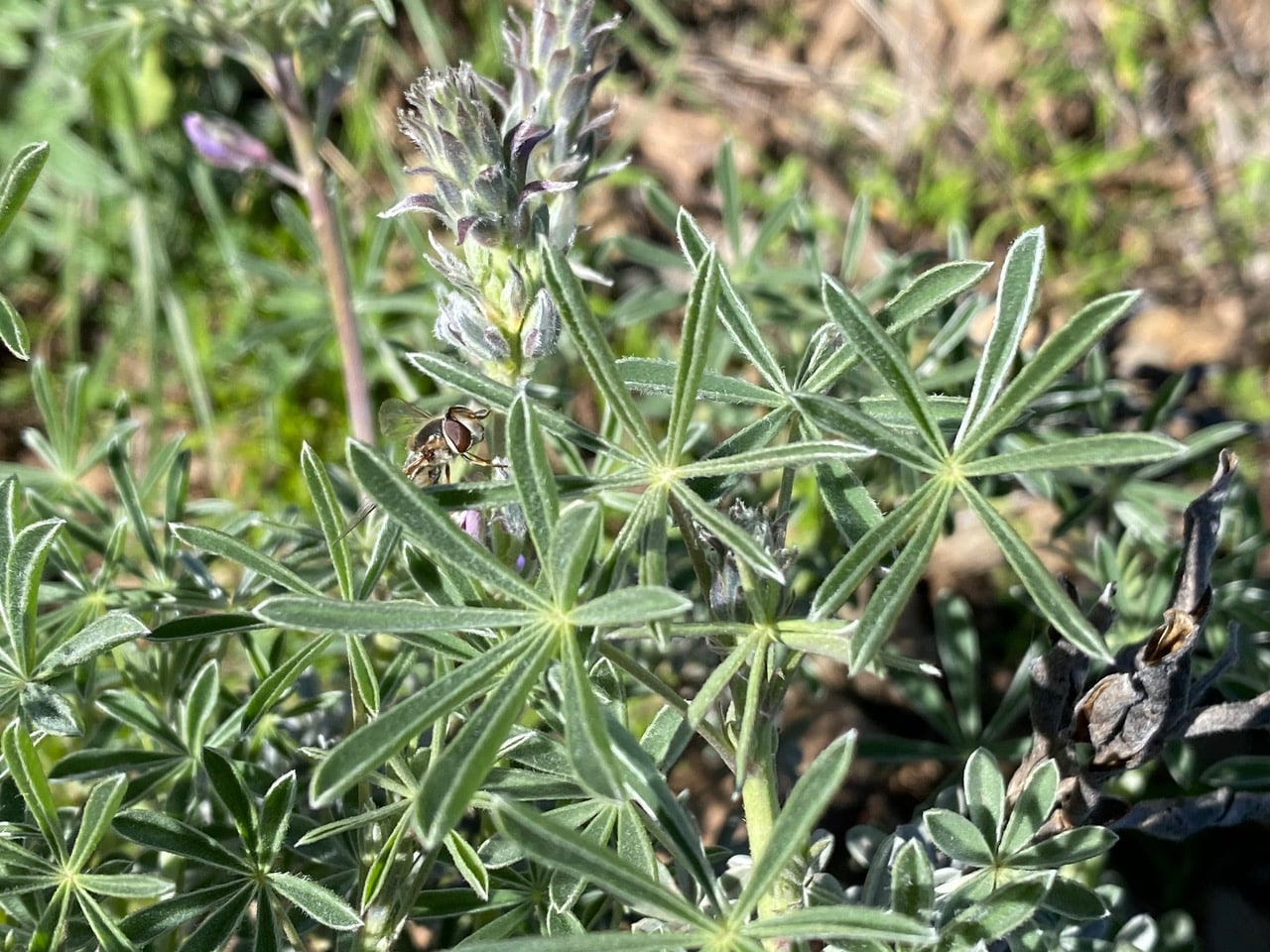
Sure enough, the hoverfly lands on one of the floral spikes, and curls her abdomen forward to lay eggs.
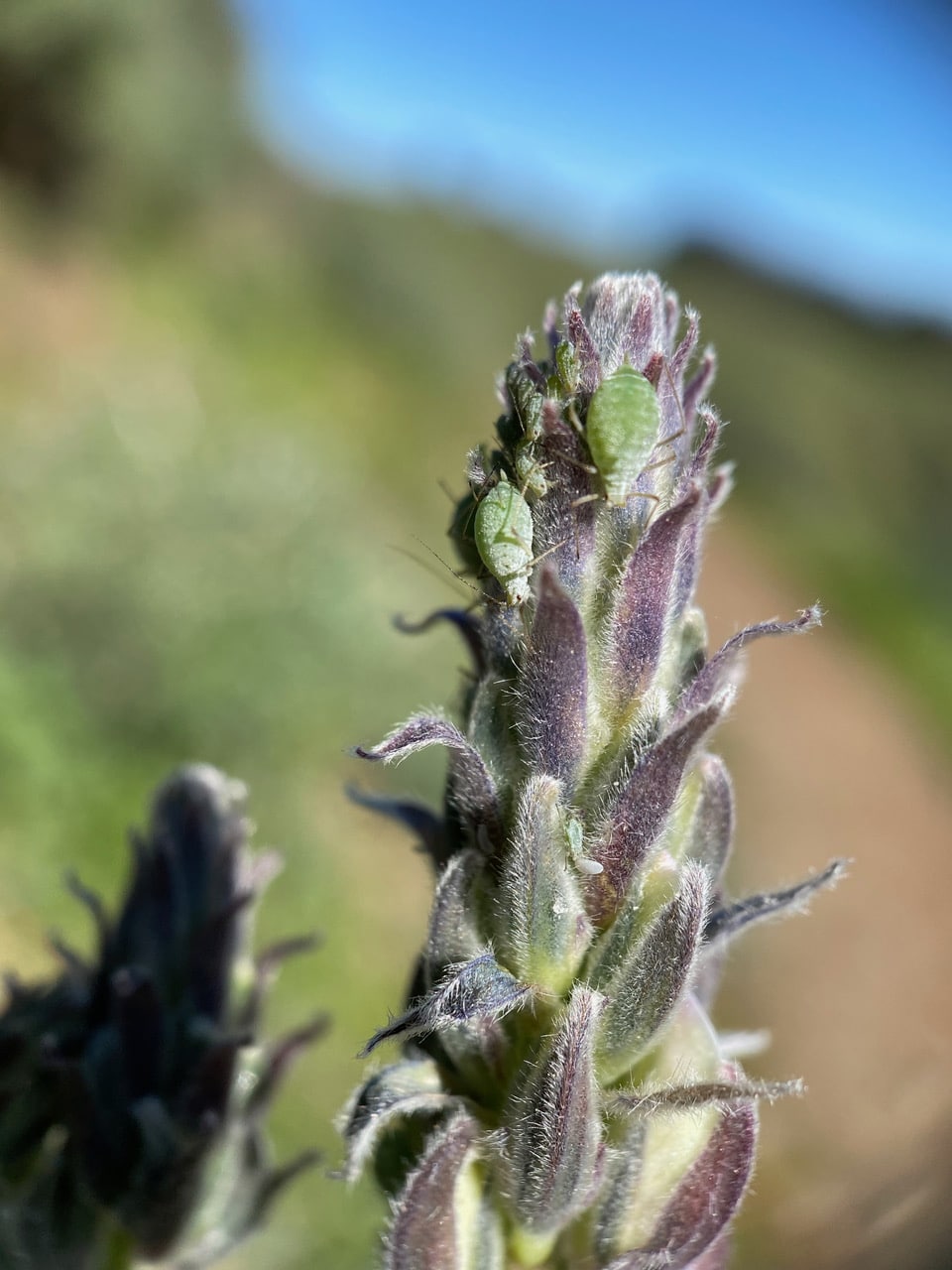
Since the larvae of some hoverflies feed on aphids, the adult females tend to lay their eggs near aphid colonies to ensure an ample supply of food for their young. It doesn’t take long for me to find the aphids on the flower spikes that the hoverfly was hovering over. There are a few large aphids scattered among the flower buds, some accompanied by their babies. This appears to be the beginning of an aphid infestation.
Wait, do you see a white hoverfly egg lower down on the flower spike?

The hoverfly egg resembles a miniature grain of rice. Next to it is a baby aphid.
Although the hoverflies are not capable of pollinating the lupines, they benefit from the other important resource the plants are providing – the resident aphids. The hoverfly larvae develop on the lupines feeding on the aphids, eventually turning into adults that can pollinate the other plants in the garden. No wonder that hoverflies are much beloved by knowledgeable gardeners, providing both pest control as well as pollination services.
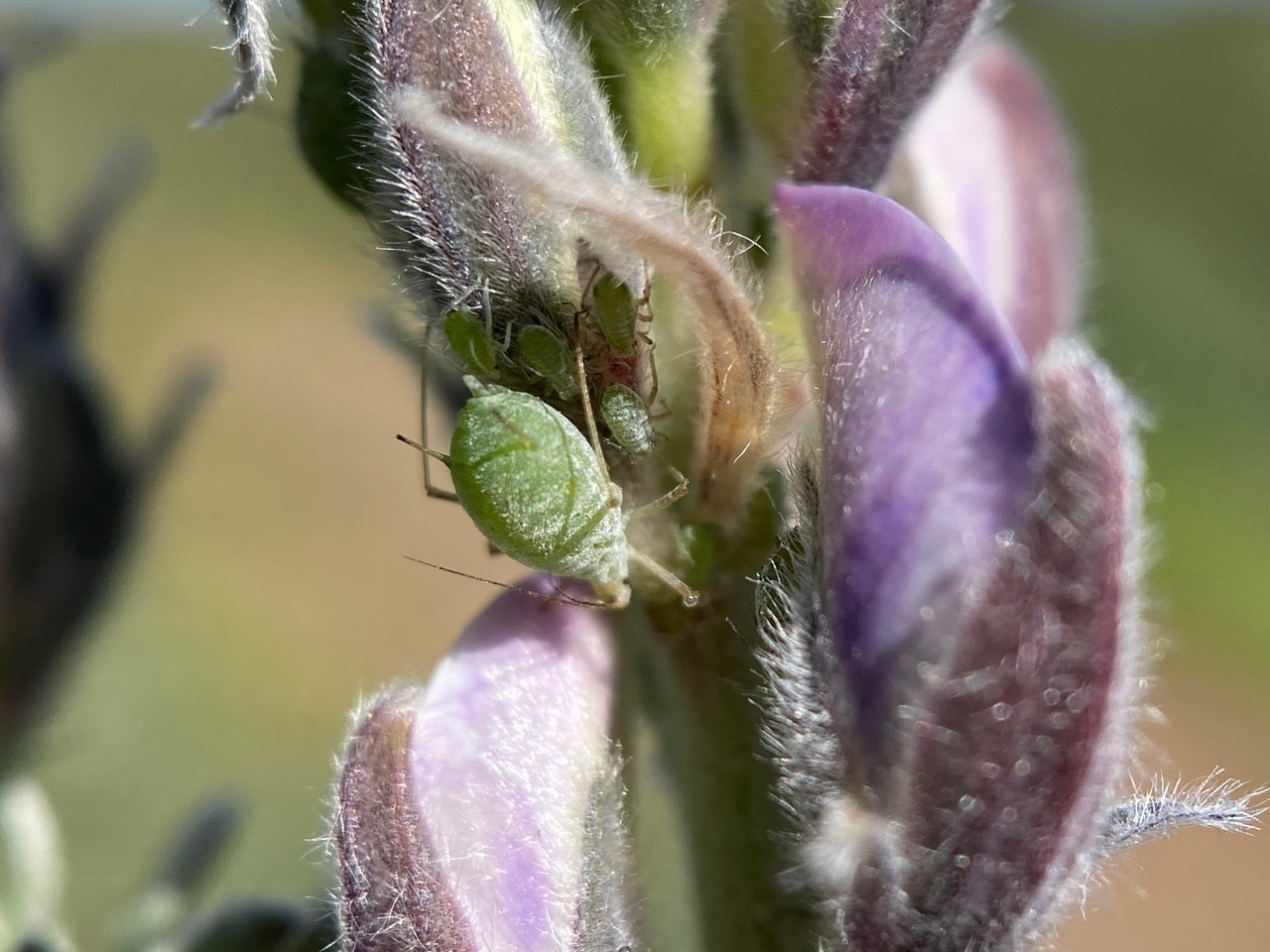
There are big mama aphids and their young scattered all over this flower spike.

The
Lupin Aphid, Macrosiphum
albifrons is specific to lupines and spends
its entire life cycle on lupines. It has been recorded from 21 Lupinus species.
It lives mainly on the leaves, stems and flower spikes. Originating
in North America, it has spread to England and much of Europe, where it is
considered an invasive pest. The aphids sequester the toxic alkaloids of
their host plant for their own defense. As aphids go, this species is rather large, and they are dusted with a powdery
white wax. Waxy secretions on the integument of aphids are thought to
limit their contact with the sticky, sugary honeydew excreted from the same or
other individuals in the colony, and possibly providing protection against
fungi, parasitoids, predators, dehydration and/or frost.
Lupin Aphid, Macrosiphum
albifrons is specific to lupines and spends
its entire life cycle on lupines. It has been recorded from 21 Lupinus species.
It lives mainly on the leaves, stems and flower spikes. Originating
in North America, it has spread to England and much of Europe, where it is
considered an invasive pest. The aphids sequester the toxic alkaloids of
their host plant for their own defense. As aphids go, this species is rather large, and they are dusted with a powdery
white wax. Waxy secretions on the integument of aphids are thought to
limit their contact with the sticky, sugary honeydew excreted from the same or
other individuals in the colony, and possibly providing protection against
fungi, parasitoids, predators, dehydration and/or frost.
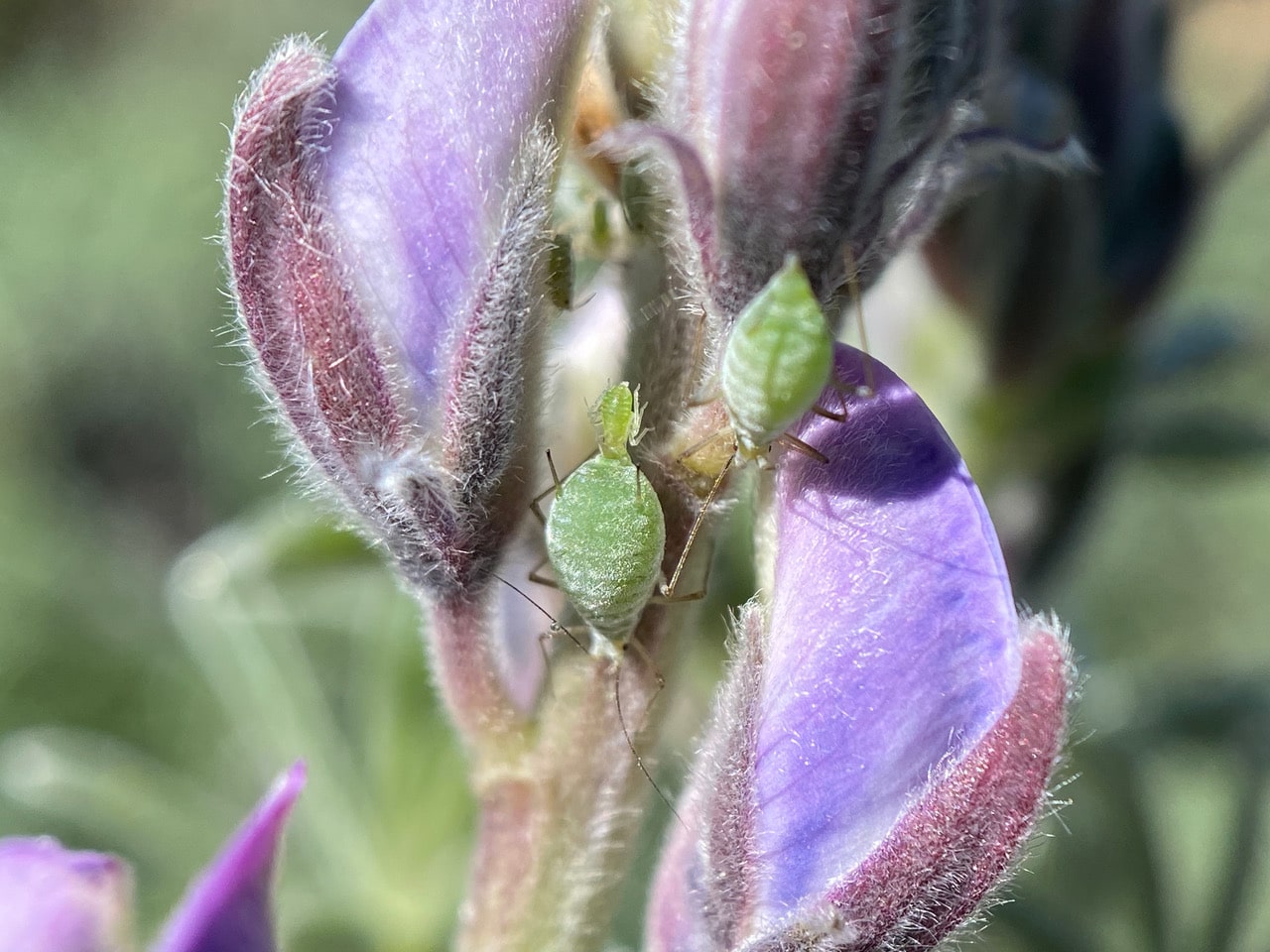
Look, this big mama is giving birth! Interestingly all aphid births occur in the breech position, wherein the baby emerges rear end first.
Many species of aphids are
parthenogenetic, capable of cloning themselves and giving birth to live young
without having to mate. This mode of reproduction can result in explosive
population growth. This is why aphids can literally colonize a plant
overnight. Lupin Aphids cycle between asexual and sexual phases. In
spring, the aphids reproduce asexually, producing all female progeny from
cloning. In the fall, sexual forms with winged males develop to diversify
the gene pool. The alates or winged reproductives are also produced when the colony becomes overcrowded or when food resources decline. With flight capability, the alates disperse to seek out greener pastures and conquer new territories. Aphids rule!
parthenogenetic, capable of cloning themselves and giving birth to live young
without having to mate. This mode of reproduction can result in explosive
population growth. This is why aphids can literally colonize a plant
overnight. Lupin Aphids cycle between asexual and sexual phases. In
spring, the aphids reproduce asexually, producing all female progeny from
cloning. In the fall, sexual forms with winged males develop to diversify
the gene pool. The alates or winged reproductives are also produced when the colony becomes overcrowded or when food resources decline. With flight capability, the alates disperse to seek out greener pastures and conquer new territories. Aphids rule!