

Pollinator Post 2/12/26 (2)
Since my last post, I have had some time to mull over and research the pollination of Bitterroot, Lewisia sp. (family Montiaceae). I am sharing the new findings here as an addendum to the previous post.
Like many others, I have been a fan and devotee of Bitterroot, Lewisia rediviva ever since I first encountered the plants in the wild. In my younger days, I would go on a yearly pilgrimage to see them in bloom on the rocky serpentine outcrops at Mt. Burdell (in Novato). For Lewisia, I would also scramble up a steep, flaky rock face near the summit of Mt. Diablo. How do these plants manage to produce such delicately beautiful flowers in such harsh environments? I learned that the roots of Bitterroot are fleshy, thick, and edible, serving as a traditional, nutrient-dense food source for Native American tribes who harvested them in spring. These plants possess a deep taproot that allows them to thrive in rocky, well-drained, and often nutrient-poor soil. They are highly susceptible to rot if kept in damp soil, needing exceptional drainage.
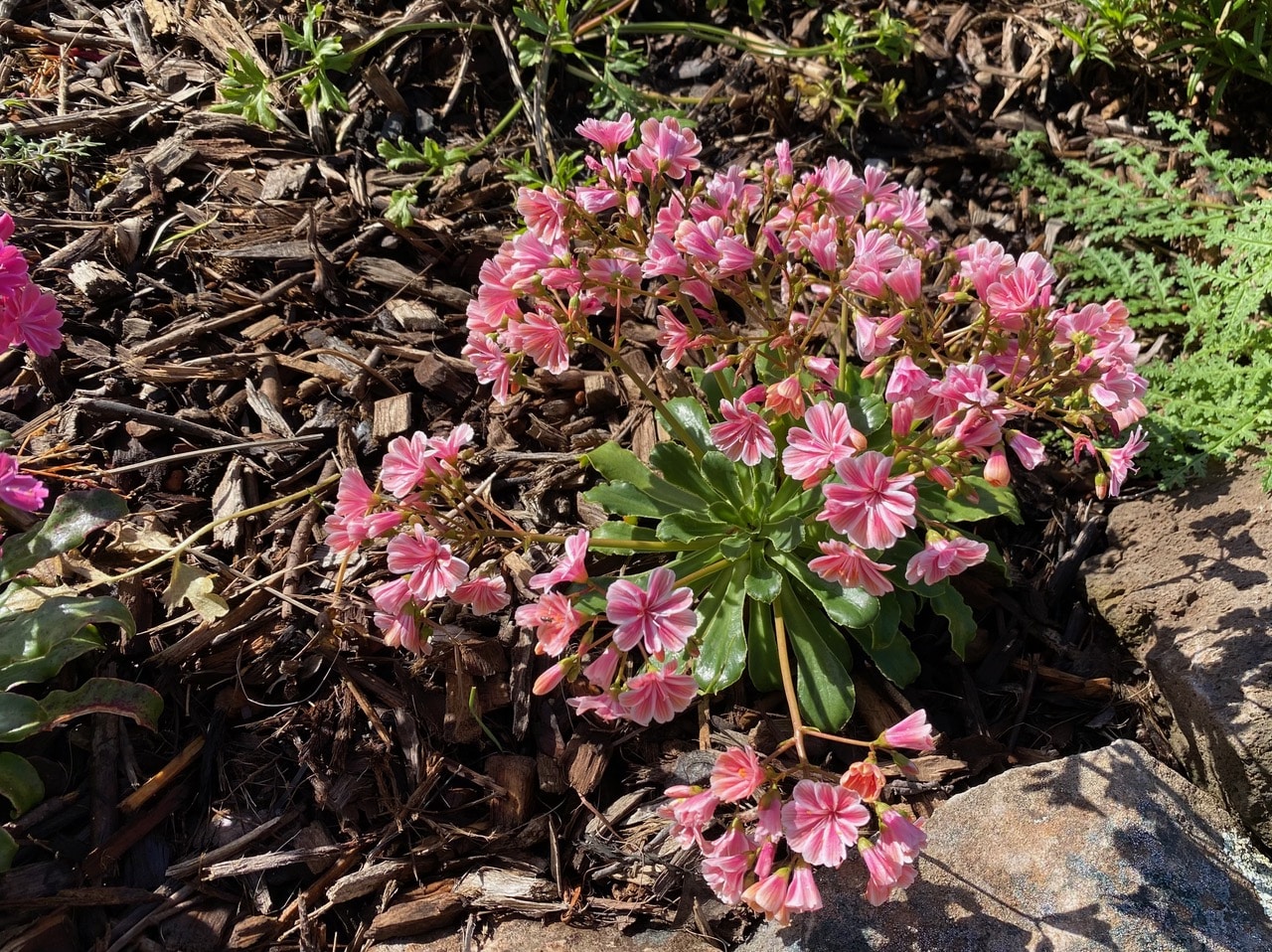
Although I have never planted Lewisia myself, a friend had once gifted me with a Lewisia cotyledon (commonly called Cliff Maids) in a small pot. The plant remained in the pot in my garden for years, continuing to bloom despite neglect. Then I started to see the hybrids pop up in native plant nurseries in the Bay Area, in a dazzling array of colors. These plants are obviously garden-ready!
Cliff Maids, Lewisia cotyledon in Jenny and Craig’s newly restored garden. Will this Lewisia hybrid thrive coddled in rich soil and regular irrigation? Are they adapted to the cushy conditions of a suburban garden?
In optimal conditions, Lewisia plants can live for several years, often exceeding a decade. They are best grown in gritty, well-draining soil, frequently in rock gardens or pots. It is essential to let the soil dry out between waterings to prevent rot; they are highly susceptible to fungal infections if kept too wet. Lewisia thrives in bright, direct sunlight to partial shade. They may go dormant in hot summers, thriving in rocky areas that are moist in spring and dry in summer.
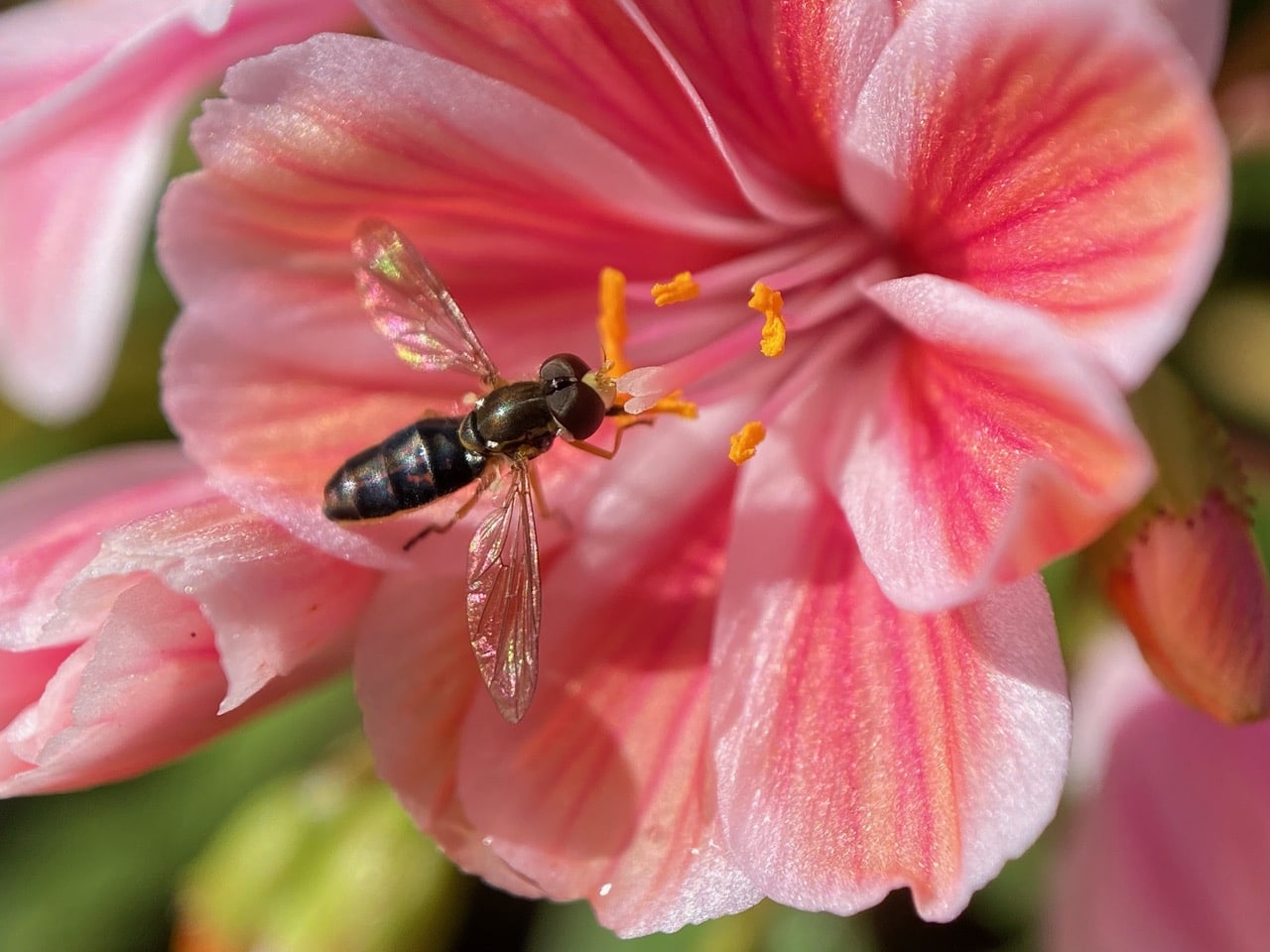
Who pollinates the Lewisia flowers?
Lewisia plants are primarily self-pollinating, with pollen from the stamens frequently falling directly onto the pistil of the same hermaphroditic flower. (Note the proximity of the male and female structures, all located at the same level in the flower. This arrangement facilitates self-pollination.) Self-pollination is particularly advantageous in isolated habitats or during periods of environmental stress. When pollinator activity is low, this method guarantees that Lewisia can still produce seed. However, self-pollination limits genetic diversity, reducing vigor of the species in the long run. No worry, Lewisia, with vibrant colors and fragrant flowers, also attracts pollinators like bees, butterflies and hummingbirds for cross-pollination. For better, more diverse, or guaranteed seeds, gardeners can use a small brush to transfer pollen between different flowers. Alternatively, Lewisia can be propagated vegetatively by dividing the small rosette offsets that grow beside the main stem. Long live Lewisia!