

Pollinator Post 2/11/26

Encouraged by a pause in the rain and much improved air quality, I go for a walk at Bay Farm Island. A moody shoreline greets me with an ominous view of San Francisco across the bay.

A flock of Snowy Egrets rest hunkered along the shore. Even these birds seem intimidated by the unsettling weather.

An early blooming Oregon Gumweed, Grindelia stricta provides the only cheery color along the shore. Wait, is that an insect on the flowerhead?
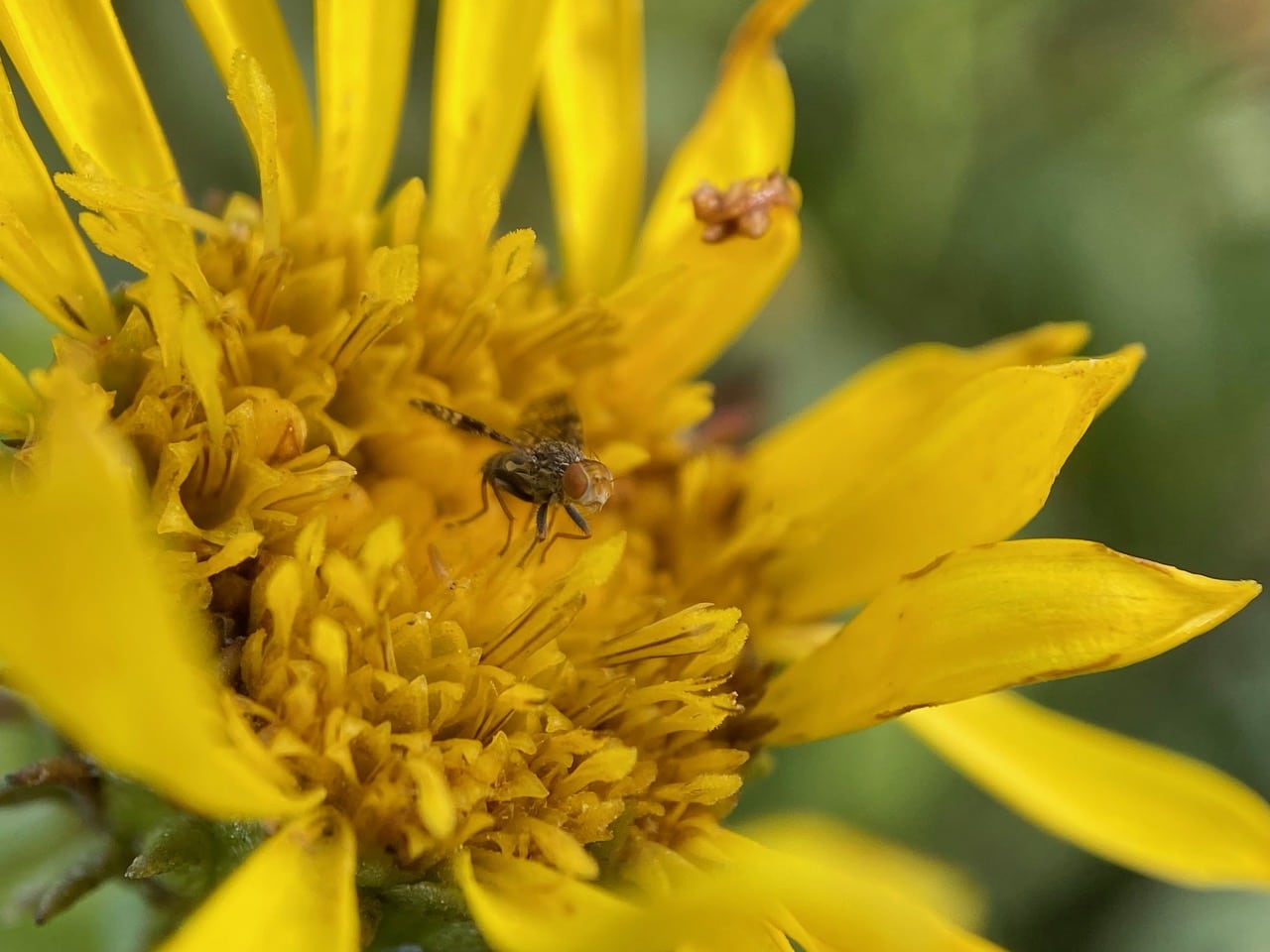
The little Fruit Fly (family Tephritidae) lifts off as I approach with my macro lens.
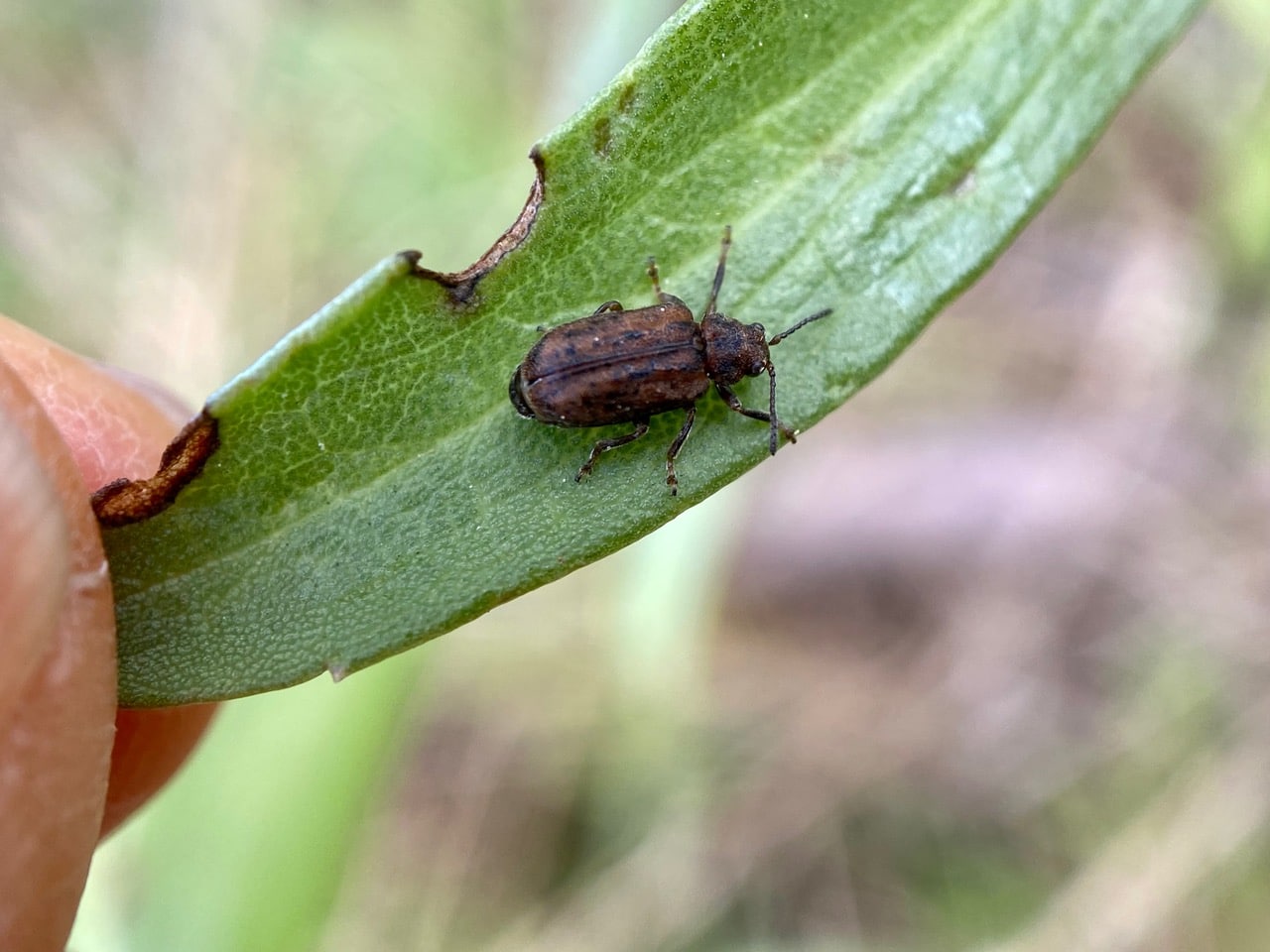
Hey, there’s a beetle on a chewed Grindelia leaf! (It is almost impossible to take pictures in such low light.) A beetle expert on iNaturalist has helped identify it as a Skeletonizing Leaf Beetle, Monoxia sp. (family Chrysomelidae). I often find these beetles on Grindelia along the shore here.
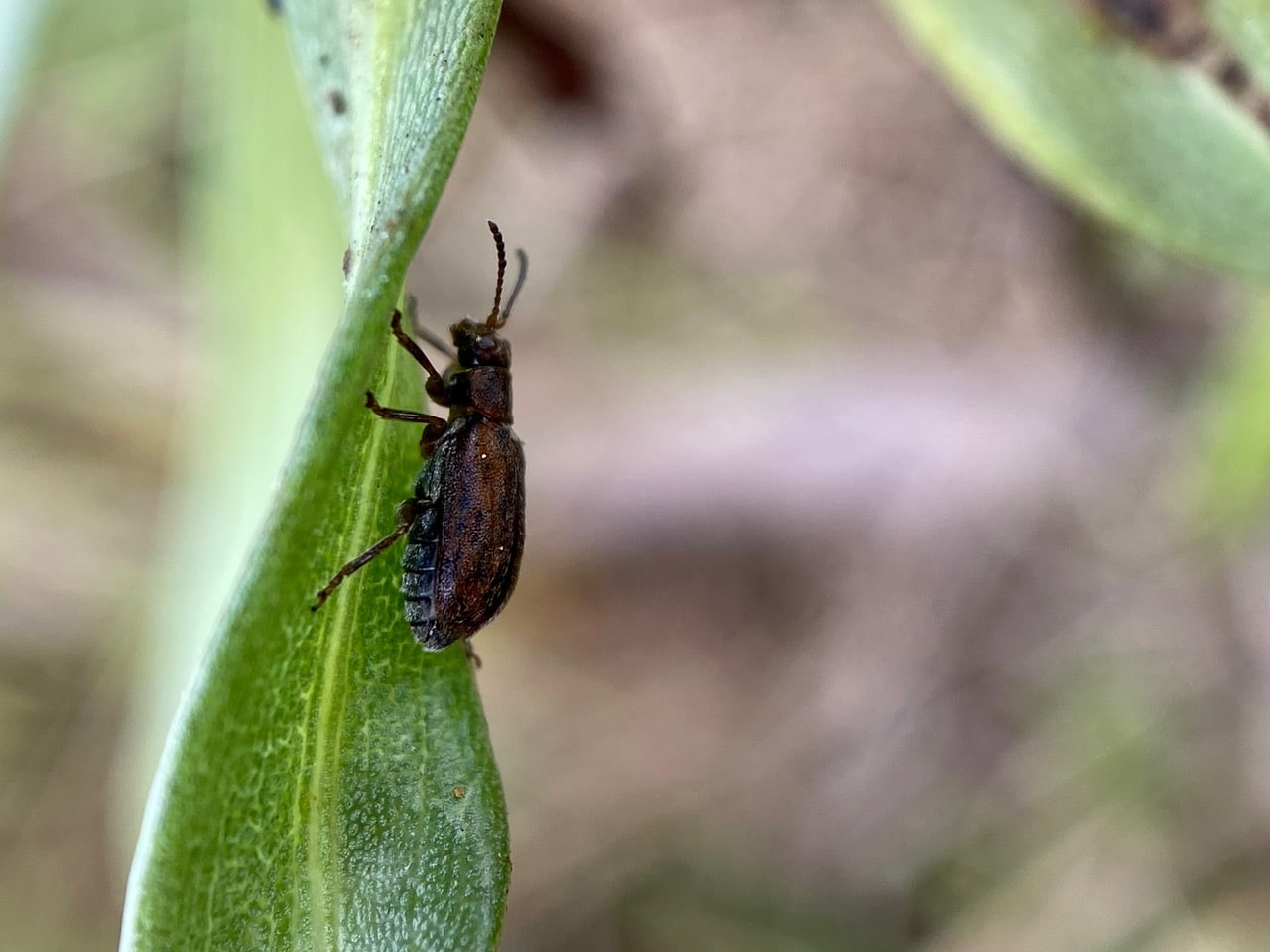
Skeletonizing Leaf Beetles, primarily from the subfamily Galerucinae, are beetles that feed on plant tissue between leaf veins leaving behind a net-like “skeleton”.
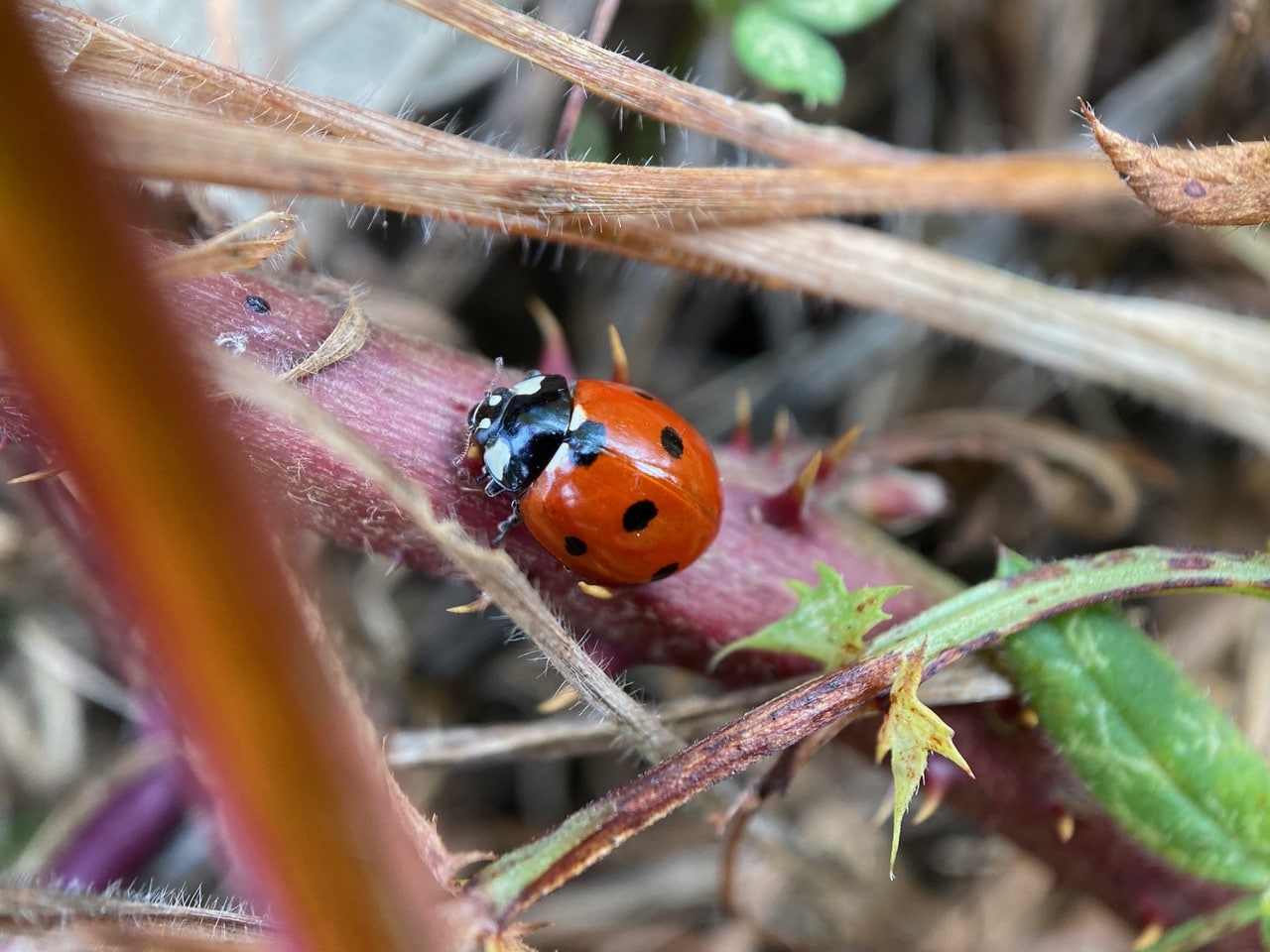
The sight of a Seven-spotted Lady Beetle in the weedy undergrowth lifts my spirit.
Native to Europe, the Seven-spotted Lady Beetle, Coccinella septempunctata (family Coccinelidae) has been repeatedly introduced to North America as a biological control agent to reduce aphid numbers. It has since spread to many states, where it has outcompeted some native species, including the Coccinella. The Seven-spotted Lady Beetles are large; adults may reach a body length of 0.5 in. Like other lady beetles, both adults and larvae of the species are voracious predators of aphids and other soft-bodied insects. Their distinctive spots and conspicuous colors warn of their toxicity, making them unappealing to predators. When threatened, the beetles can secrete a fluid from joints in their legs which gives them a foul taste.
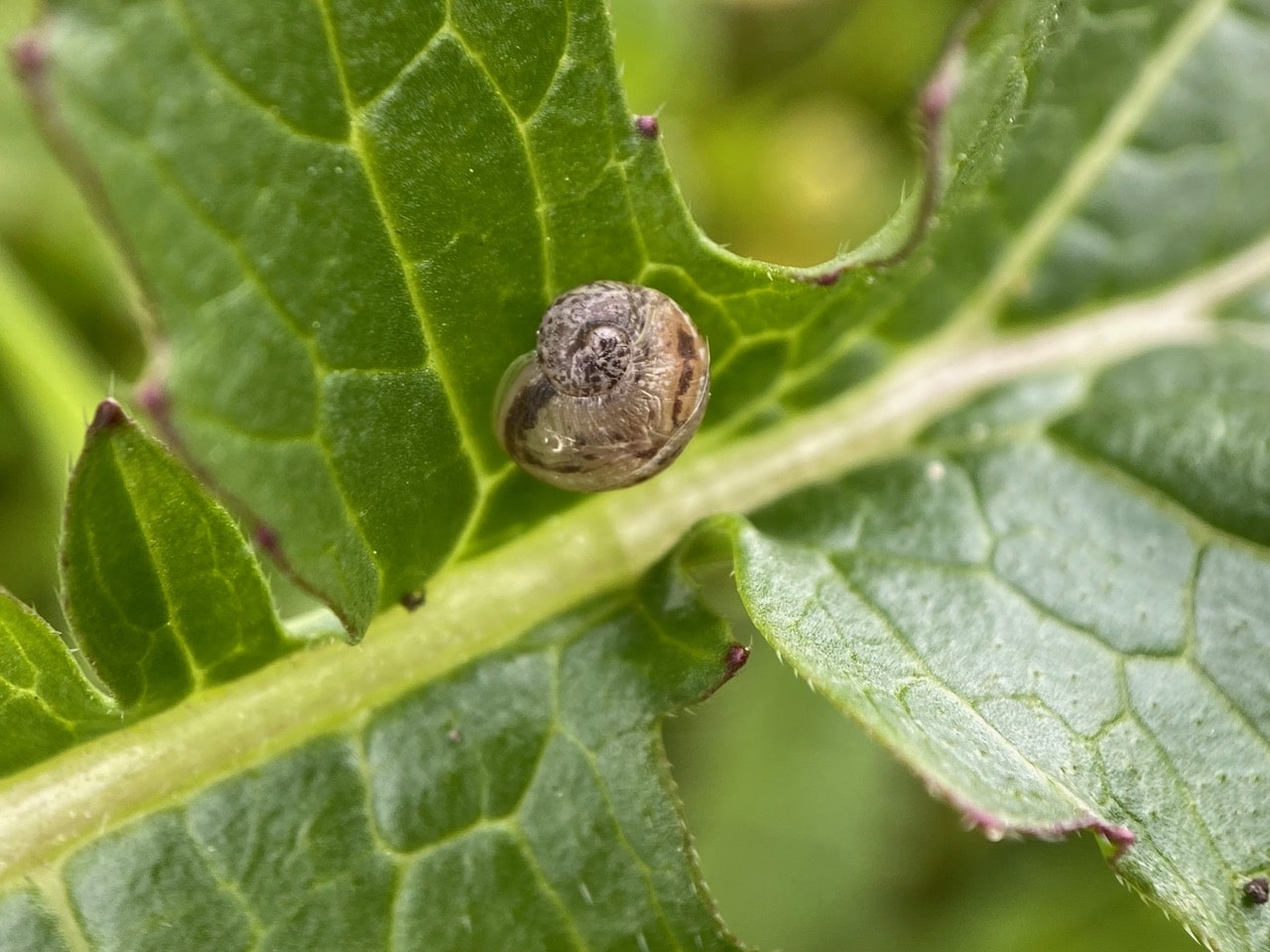
I find many of these small snails on the weeds along the shore, their thin shells almost translucent. They are all about the same size, about 1/4” across. These are young Garden Snails, Cornu aspersum (family Helicidae).
Native to Europe, and cherished as a delicacy there, the Garden Snail, Cornu aspersum (family Helicidae) has spread to many parts of the world where it is regarded as a pest in gardens and in agriculture. Adults bear a hard, thin calcareous shell up to 15/8” in diameter. During times of activity, the snail’s head and “foot” emerges from the shell. The head bears four tentacles; the upper, larger two bear eye-like light sensors, and the lower two are tactile and olfactory sense organs. The mouth is located beneath the tentacles, and contains a chitinous radula with which the mollusk scrapes and manipulates food particles. The snail’s quiescent periods during heat and drought are known as aestivation. During such times it seals the aperture of the shell with a thin membrane of dried mucus to retain moisture and to protect itself from small predators such as ants.
The individual snails are hermaphrodites, producing both male and female gametes. During a mating session of several hours, two snails exchange sperm reciprocally. A few days after fertilization, the snail lays eggs into crevices in the topsoil, or sheltered under rocks. Hatchlings mature in one or more years. The life span in the wild is typically 2-3 years.

Whoa, here’s a full-grown Garden Snail! It is almost 11/2″ across.
There are a variety of control measures that gardeners and farmers use to protect their plants from snail damage. I recently learned about the use of copper metal and caffeine as snail repellents. Copper bands, tape, and mesh repel snails and slugs by creating a natural, non-toxic, and chemical-free barrier. When a snail’s mucus reacts with copper, it creates a small electrical charge or unpleasant sensation that forces them to turn away. Caffeine has proven surprisingly toxic to snails, to the extent the spent coffee grounds make a safe and immediately effective snail-repellent.
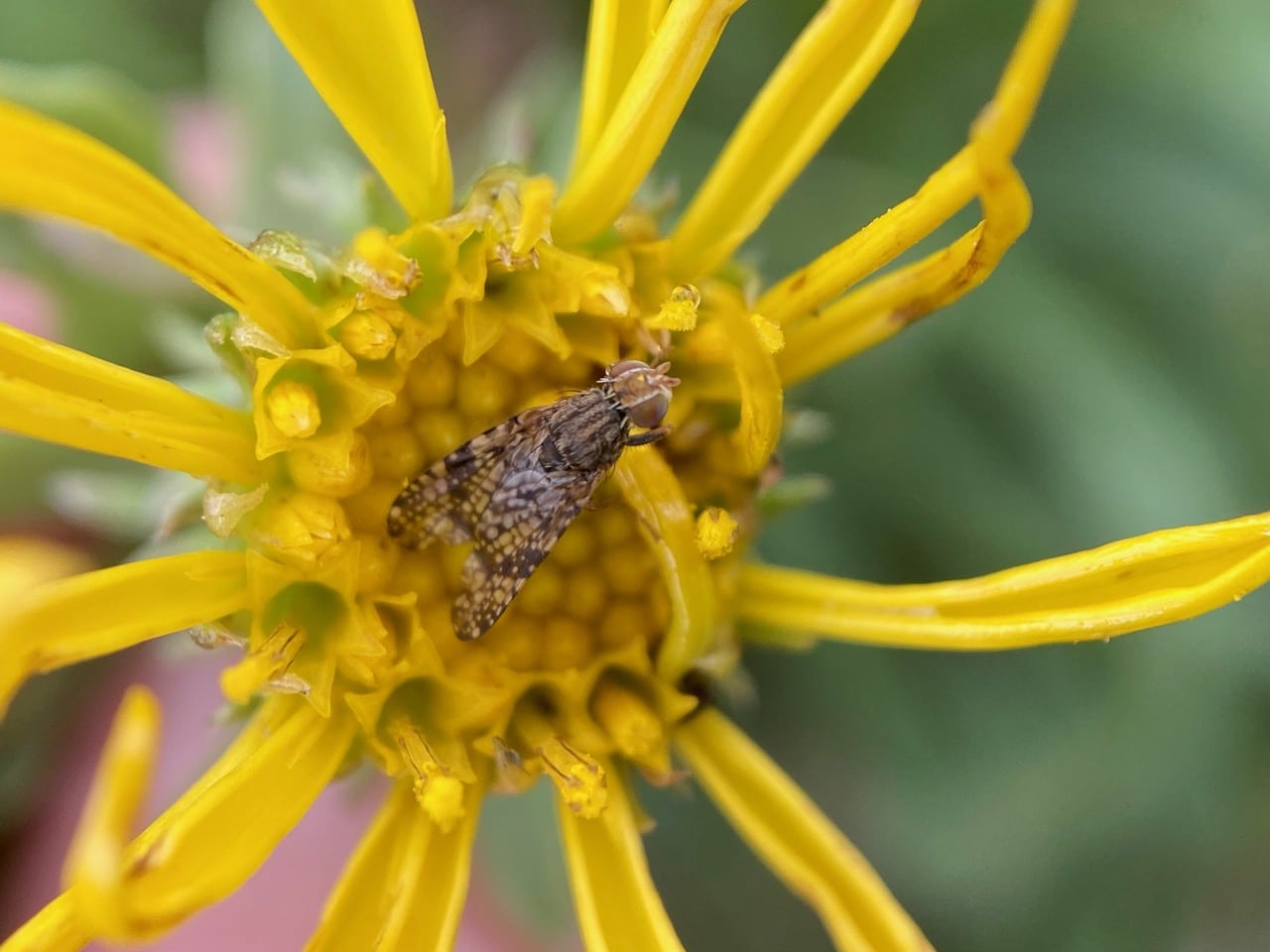
A fruit fly, the Sunflower Seed Maggot, Neotephritis finalis (family Tephritidae) is resting on a freshly opened Grindelia flowerhead.
Commonly called Fruit Flies, Tephritids are small to medium-sized flies that are often colorful, and usually with picture wings. The larvae of almost all Tephritidae are phytophagous. Females deposit eggs in living, healthy plant tissues using their telescopic ovipositors. Here the larvae find their food upon emerging. The larvae develop in leaves, stems, flowers, seeds, fruits, and roots of the host plant, depending on the species. Adults are often found on the host plant and feeding on pollen, nectar, rotting plant debris, or honeydew. Tephritid flies are of major economic importance as they can cause damage to fruit and other plant crops. On the other hand, some Tephritids are used as agents of biological control of noxious weeds.
The Sunflower Seed Maggot is a sunflower specialist, found on over 20 species of Asteraceae. Larvae feed on immature seeds and pupate in flowerheads.
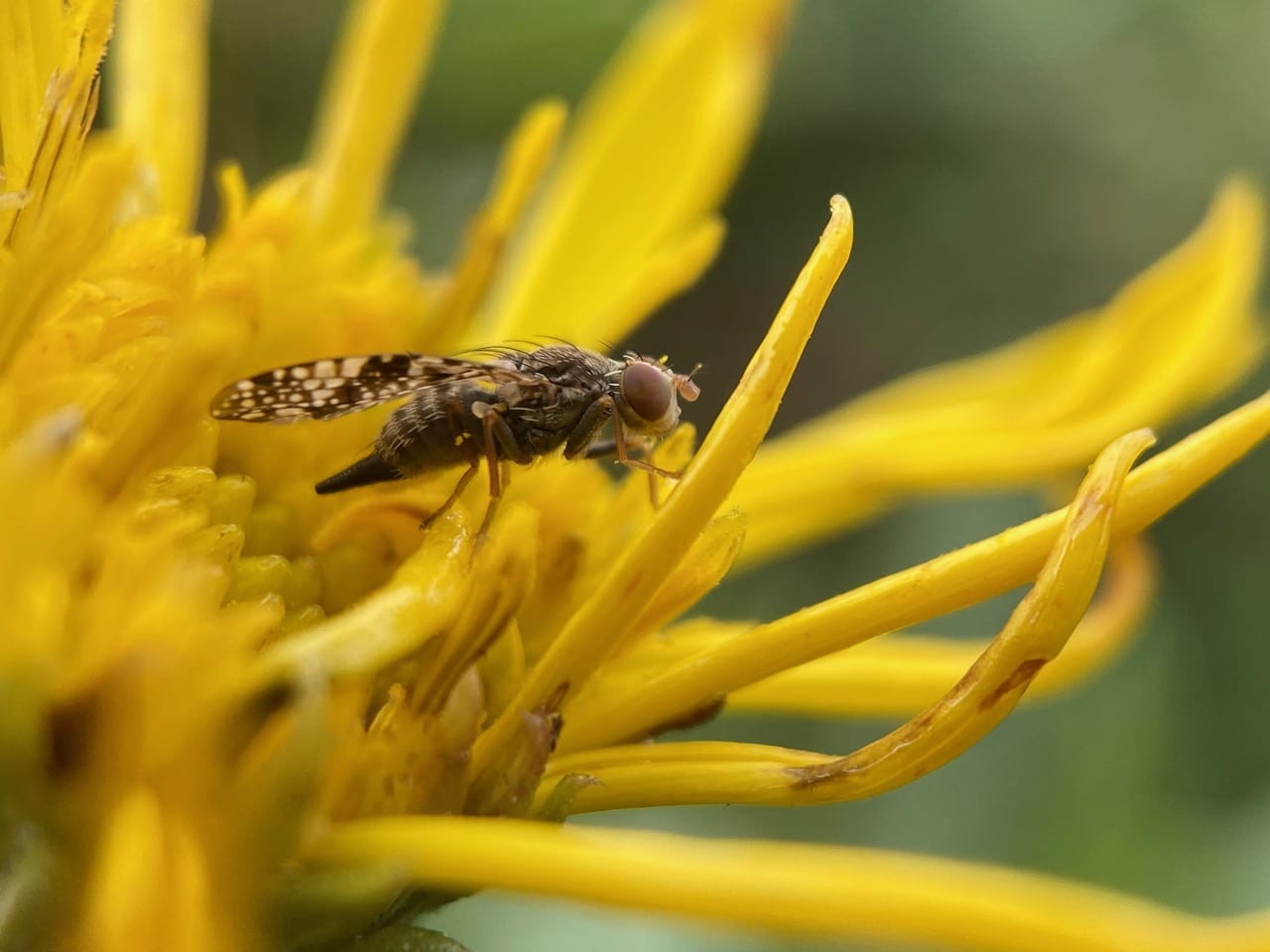
Side-view of the same Fruit Fly, showing her oviscape. Is the female here to lay her eggs among the flowers? Female Fruits Flies are easily distinguished by the presence of an oviscape – the pointy structure at the tip of their abdomen. The oviscape is the basal part of the ovipositor, the non-retractile sheath that protects the telescopic ovipositor. It remains exposed when the ovipositor is withdrawn and not in action.
Big raindrops start to pelt on me as I am taking this picture. Surprisingly the fly doesn’t budge. I’m outa here!