

Pollinator Post 2/11/24 (2)
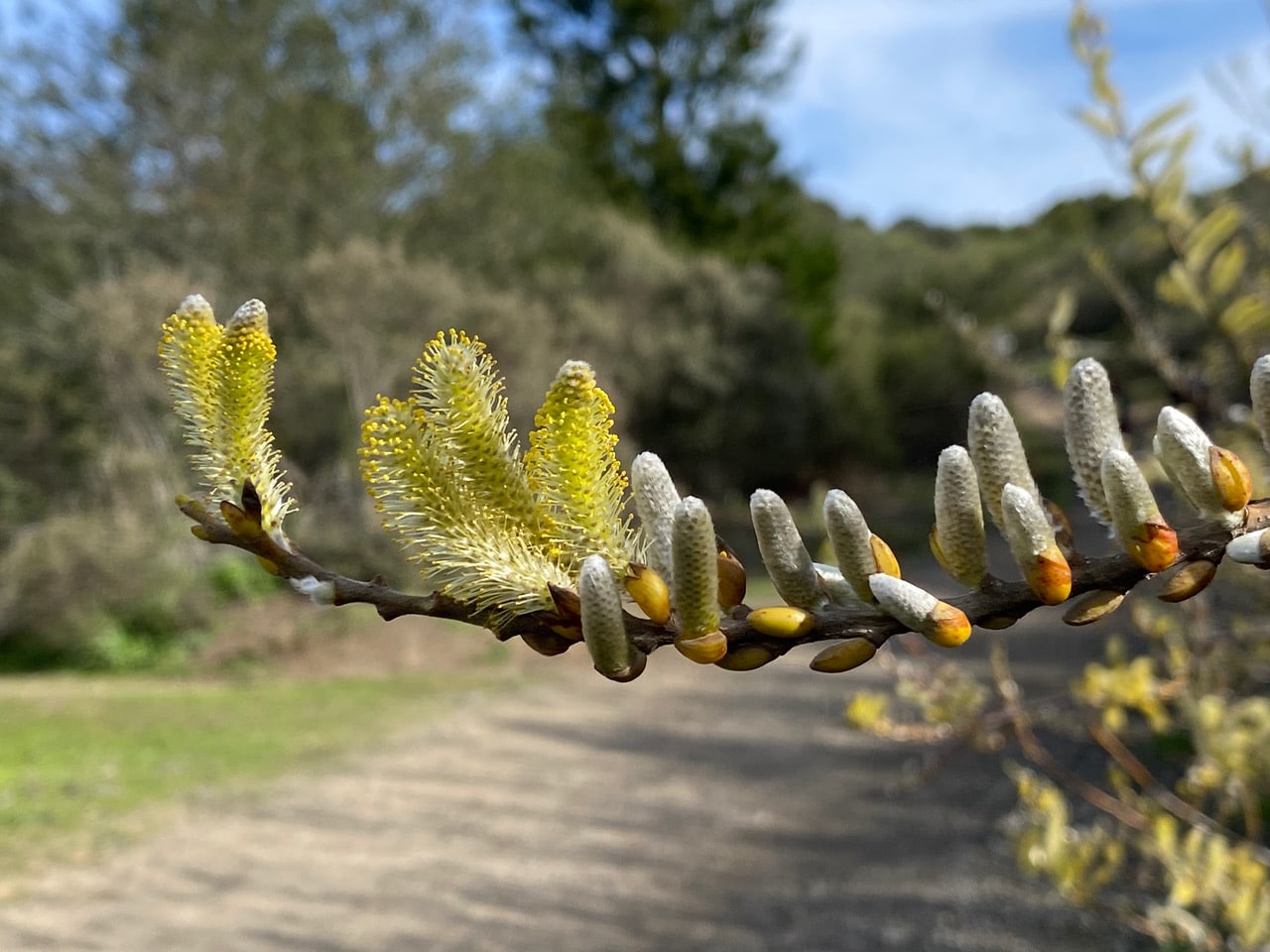
Along the main trail at the Sibley Volcanic Regional Preserve, pools of water accumulate at the base of the hills, giving rise to healthy stands of Arroyo Willow, Salix lasiolepis. Willow catkins appear before the leaves with male and female flowers on different plants. These pollen-releasing male catkins are yellow, loaded with pollen.

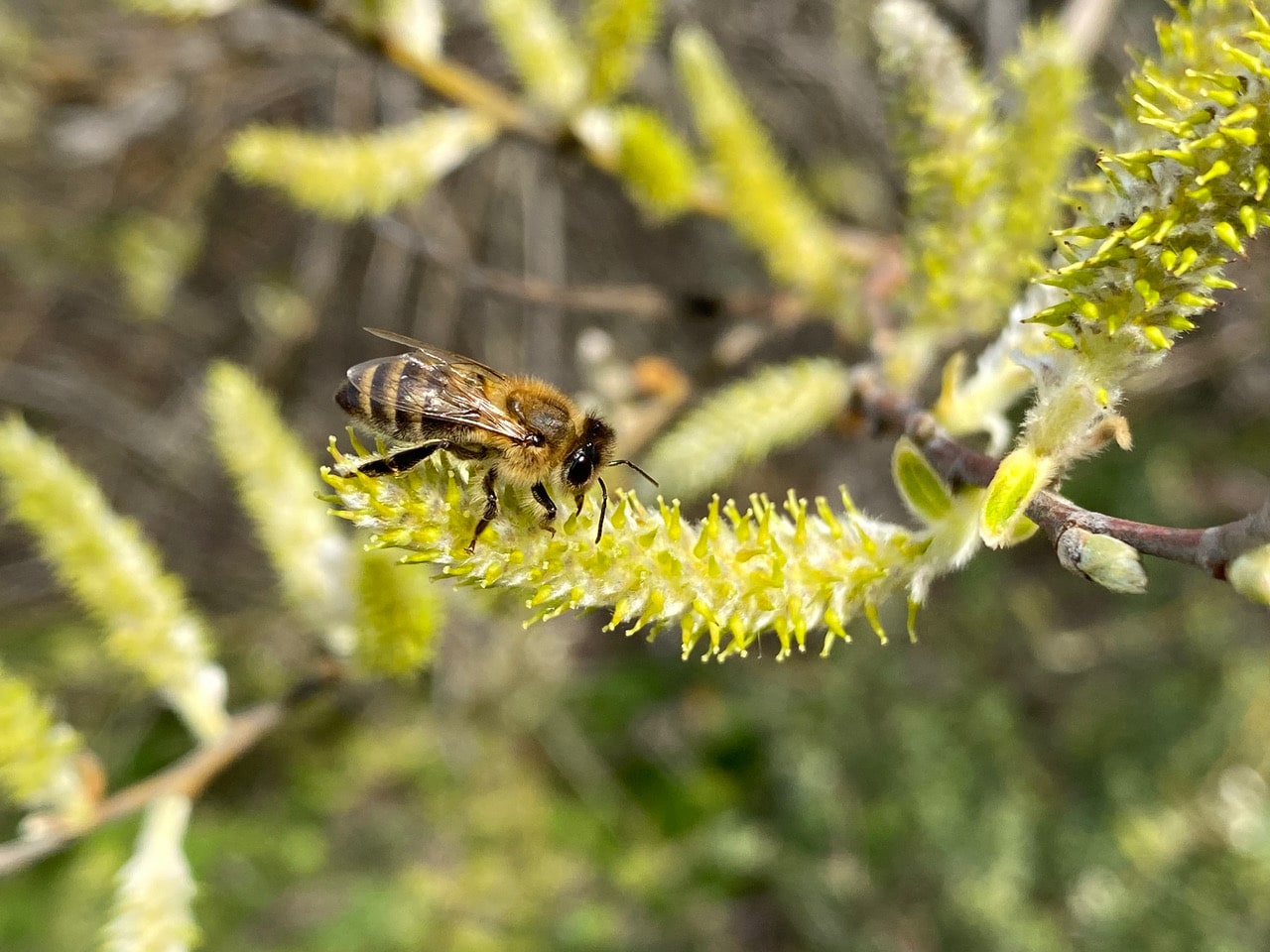

 Watching honey bees forage, I am often reminded of a fellow docent at the Oakland Museum Natural Sciences Gallery many years ago. Bud taught me that every honey bee worker out foraging should be treated with respect – they are all little old ladies. Bud was absolutely correct. All Honey Bee foragers are female, and they are the oldest of their hive mates. How do honey bees get their job assignments within their social organization?
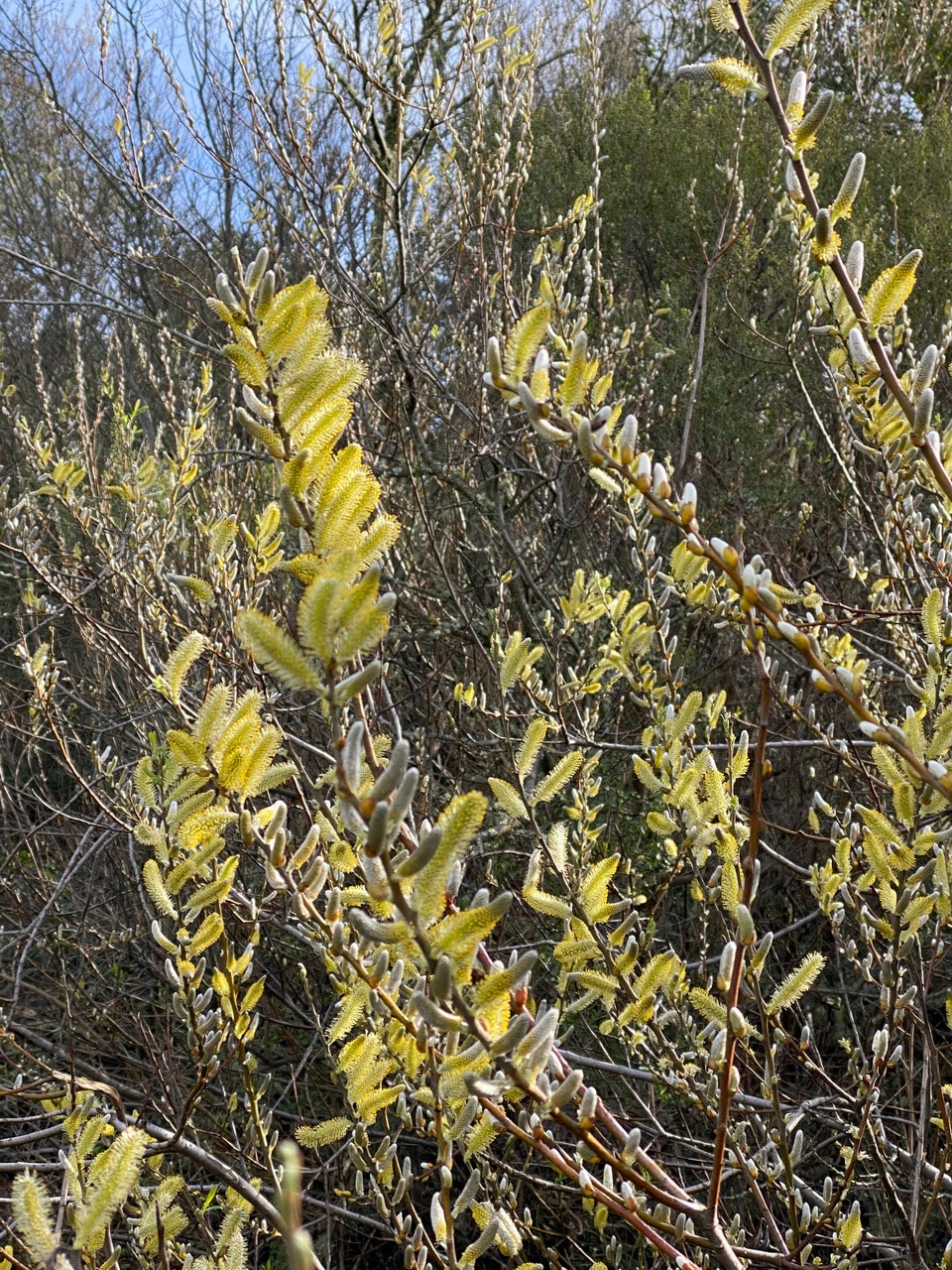
I lean into this stand of male Arroyo Willow to take in the exuberance and abundance of its yellow blooms.
Arroyo Willow, Salix lasiolepis (family Salicaceae) is a large, sprawling, multi-trunked, winter-deciduous shrub or small tree. It often forms dense groves where there is a shallow water table or seep.
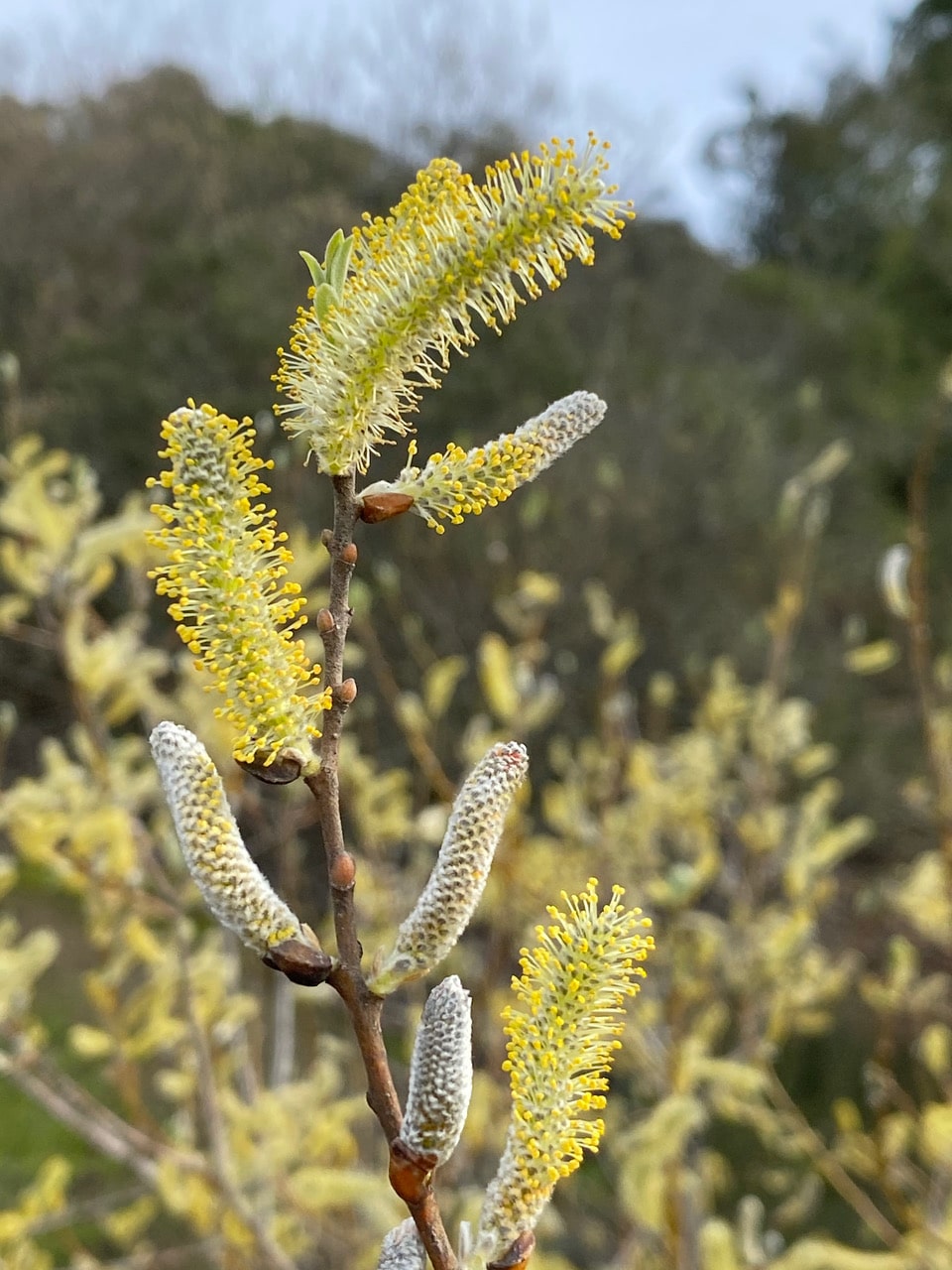
Arroyo Willow flowers are dense, cylindrical clusters of tiny flower, catkins, that appear February – May before new leaves appear. Petals and sepals are absent. Unlike most catkins-bearing plants, willows are primarily insect pollinated. Insects are attracted by nectaries, small glands within both male and female flowers that produce sweet nectar.
The plant is dioecious, with male and female flowers borne on separate plants. Male catkins are 1-3 in. long, colored yellow or greenish yellow by the abundant pollen.
Each flower on the male catkin consists of two stamens that are united at their bases. Each flower has a small gland that secretes nectar to attract pollinating insects.
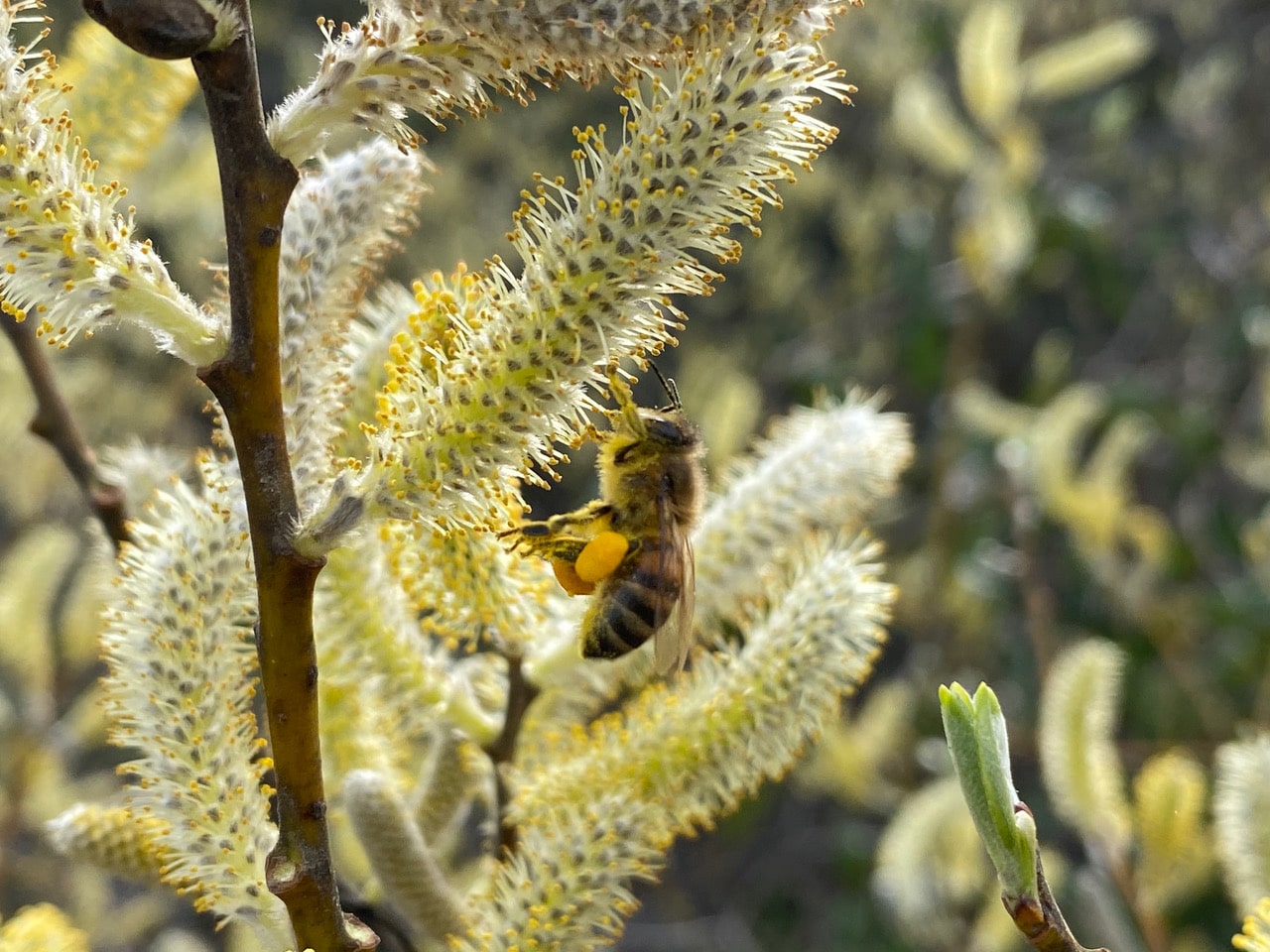
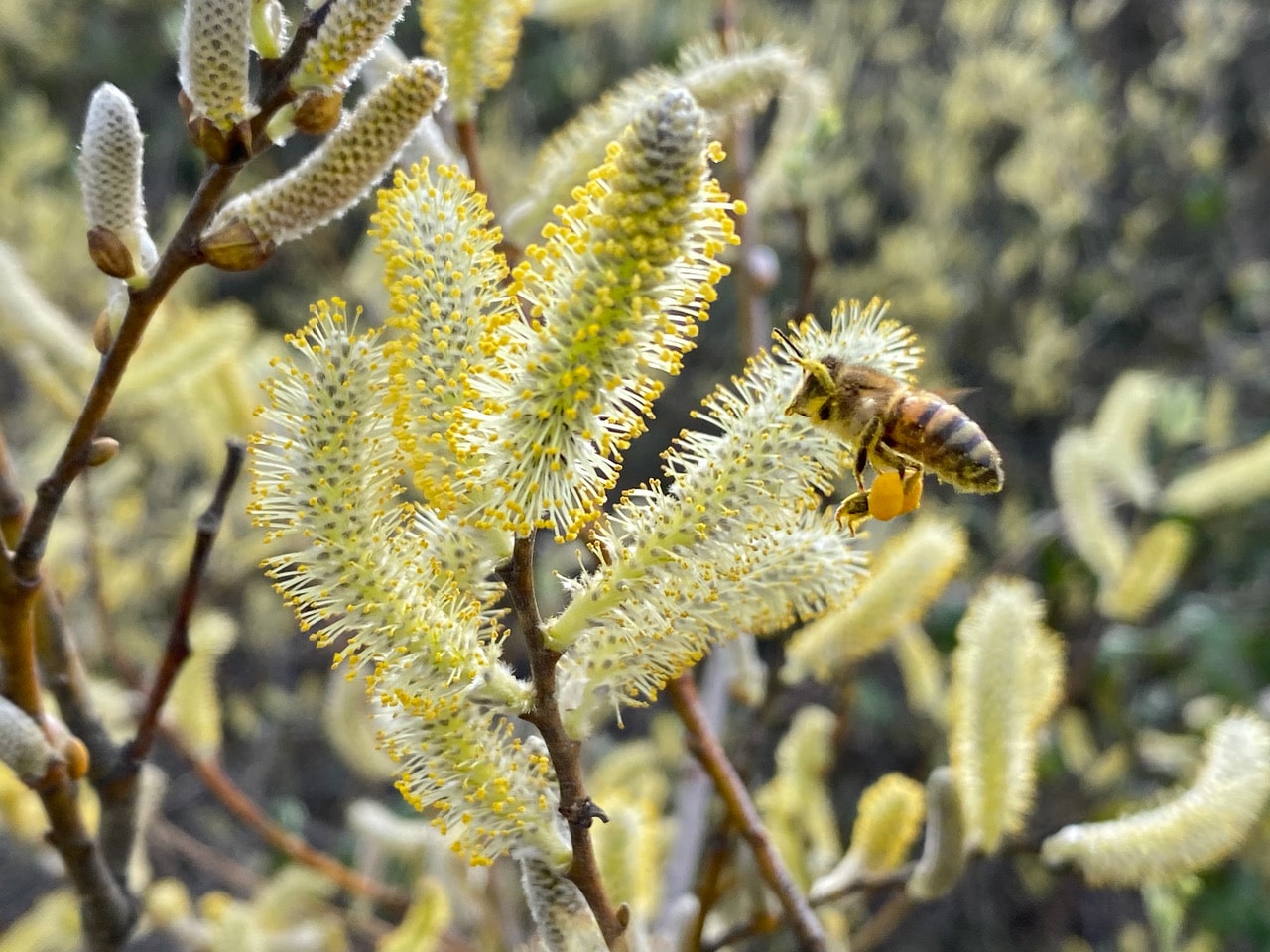
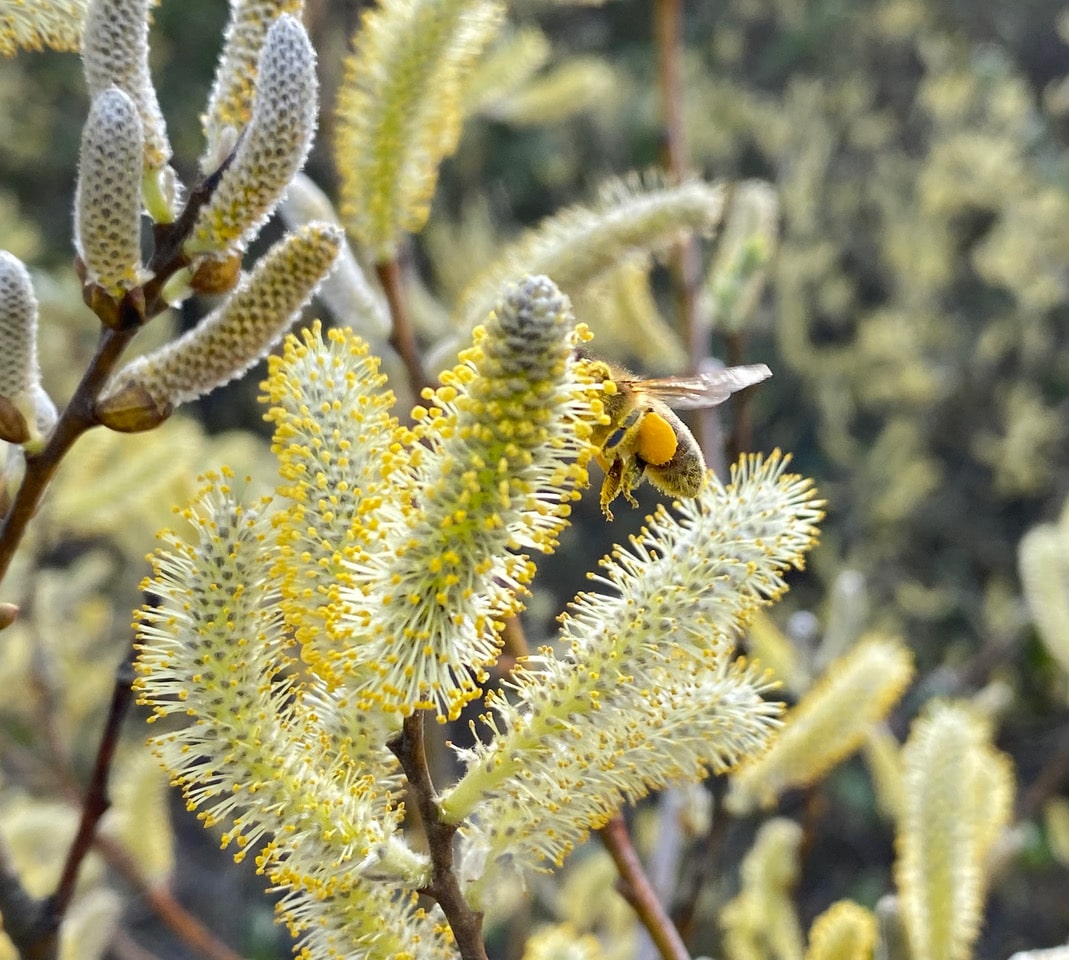
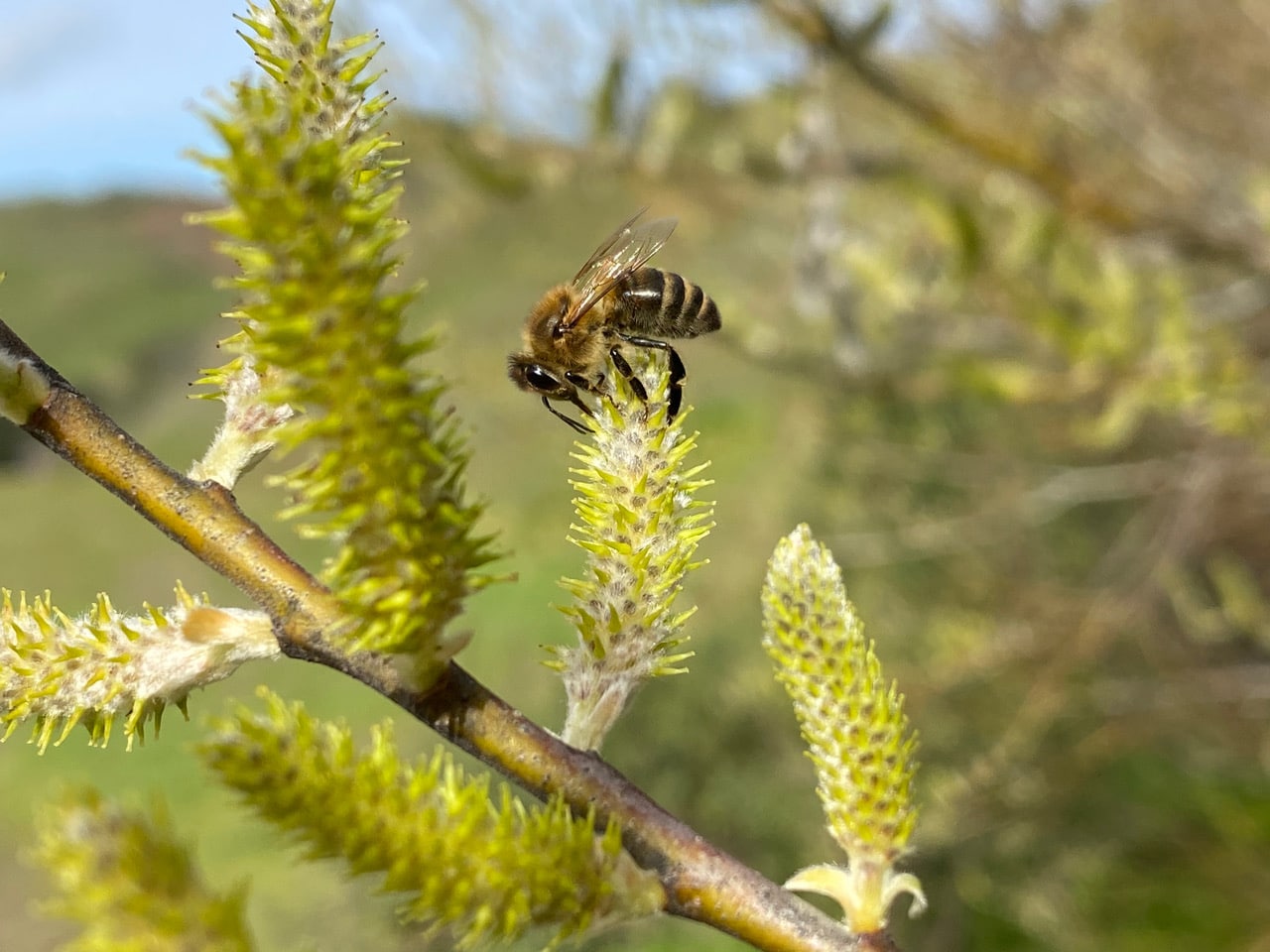
A Honey Bee, Apis mellifera (family Apidae) is hanging off a male catkin, busy grooming the pollen she has gathered on her body into the pollen baskets on her hind legs. Wow, that’s quite a hefty load already!
Then off she goes, still cleaning her eyes.
Honey Bees have hairy compound eyes. These hairs help catch pollen when the bee is foraging, so that they can collect as much pollen as possible.
The pollen collecting apparatus in Apidae bees, which include honey bees and bumble bees, is commonly called a “pollen basket” or corbicula. This region is located on the tibia of the hind legs and consists of hairs surrounding a concave region. After the bee visits a flower, she begins to groom herself and brushes the pollen down toward her hind legs and packs the pollen into her pollen basket. A little nectar mixed with the pollen keeps it all together like putty, and the stiff hairs surrounding the pollen basket hold it in place. A honey bee can fly with a full pollen load that weighs as much as a third of her body weight.
.jpg)
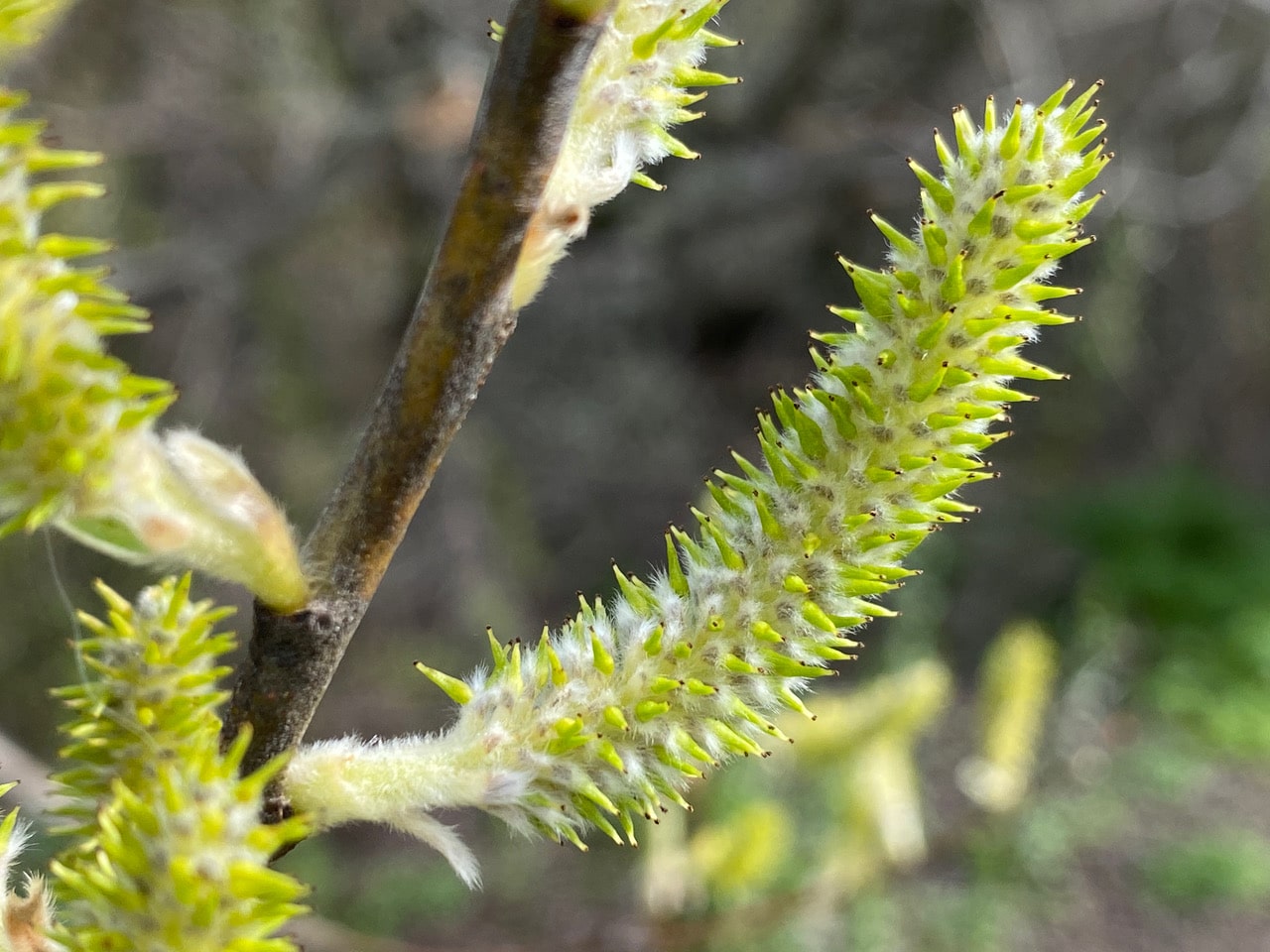
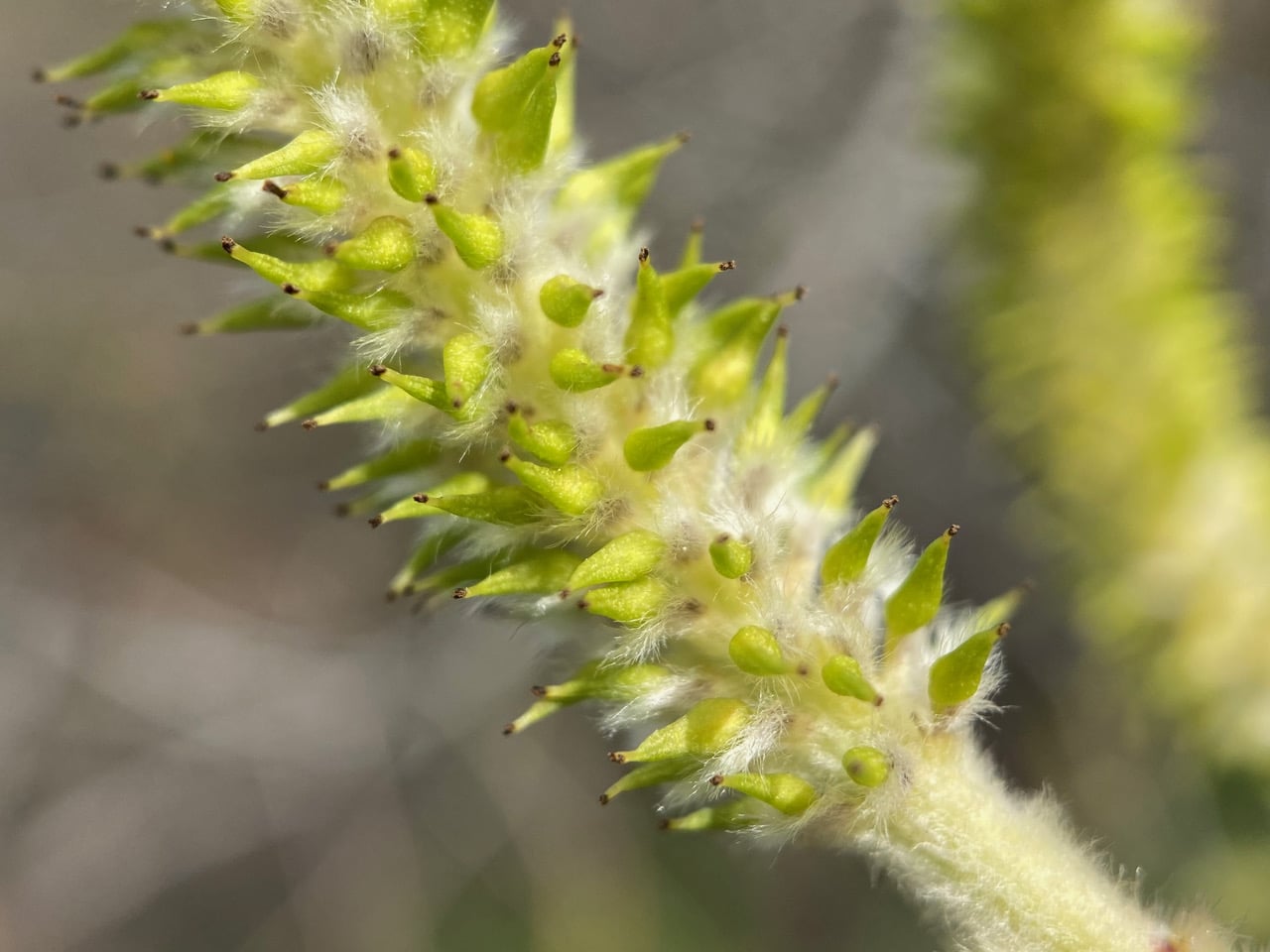
Just a stone’s throw away, a female Arroyo Willow is in bloom. Female catkins are slightly smaller than the male, and green in color.
Female flowers consist of a green, bowling-pin-shaped pistil and a small stalk. The ovary and style tapers to two, small, two-lobed stigmas. As in the male catkins, the female flowers also has nectaries at the bases.
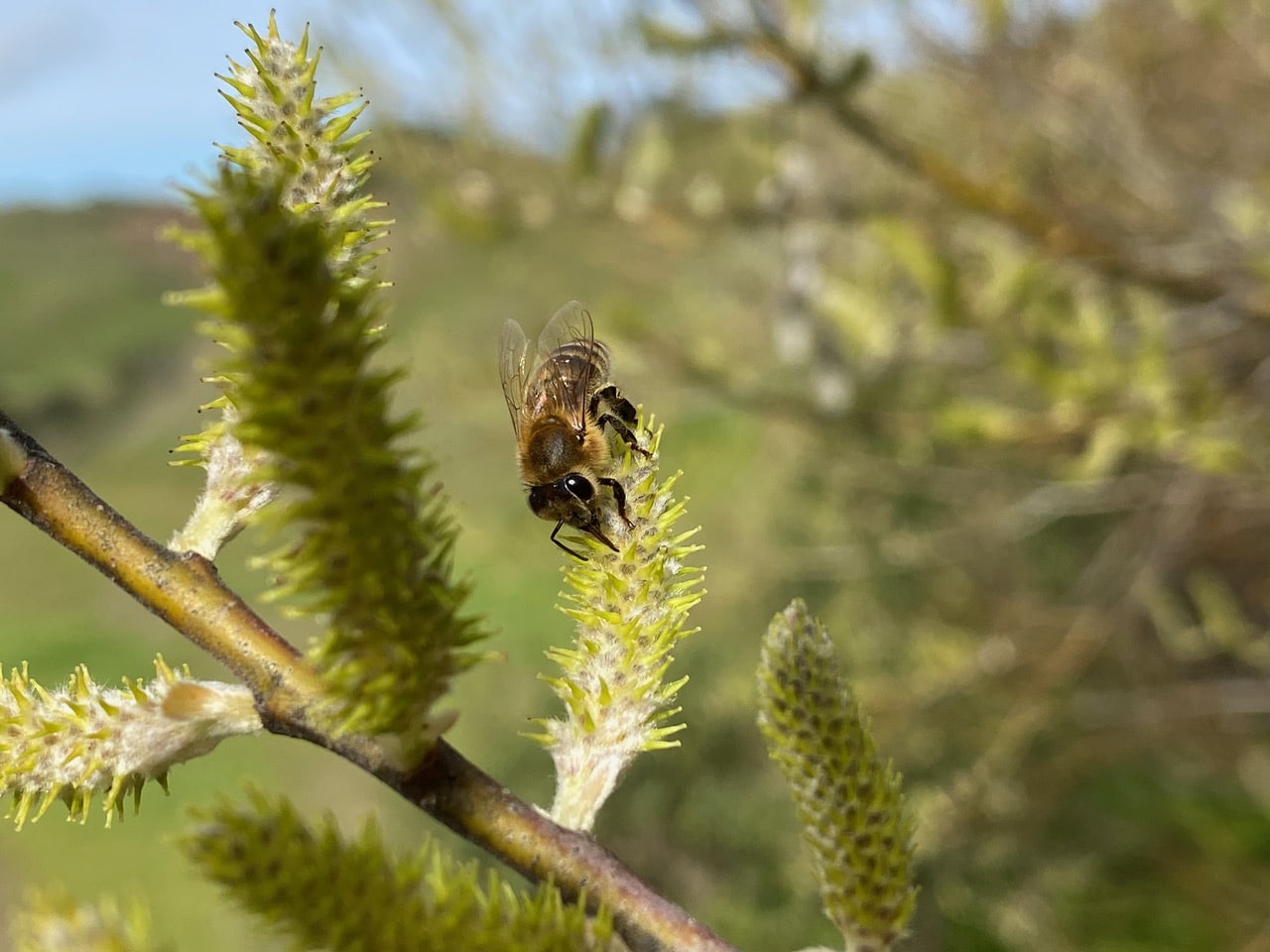
With her tongue extended, a dark Honey Bee, Apis mellifera (family Apidae) is foraging on a female catkin. As the female flowers do not produce pollen, the bee is collecting only nectar.
I watch the same bee go from catkin to catkin, tanking up with nectar tirelessly.
The bee’s abdomen looks increasingly bloated. Pretty soon she’d have to fly home. Honey bees temporarily store nectar in their honey stomach (or crop) before returning to their hives to be shared by the colony.
Watching honey bees forage, I am often reminded of a fellow docent at the Oakland Museum Natural Sciences Gallery many years ago. Bud taught me that every honey bee worker out foraging should be treated with respect – they are all little old ladies. Bud was absolutely correct. All Honey Bee foragers are female, and they are the oldest of their hive mates. How do honey bees get their job assignments within their social organization?A bee’s job is, first of all, determined by its sex. Male bees, or drones, don’t do any work. Making up roughly 10% of the colony’s population, they spend their whole lives eating honey and waiting for the opportunity to mate with the queen. The queen mates with up to 20 drones and will store their sperm in her spermatheca for the rest of her life. That’s where male duties end. Female bees, known as worker bees, make up the vast majority of a hive’s population, and they do all the work to keep it functioning. Females are responsible for the construction, maintenance, and proliferation of the nest and the colony. When a worker bee emerges as an adult, she immediately starts cleaning the cell from which she hatched. Her first 3 days are spent cleaning cells to prepare them for the queen’s next round of eggs. Then her hormones kick in to initiate the next phase of work: nursing the young. The worker bee spends about a week nursing the brood, feeding larvae with royal jelly. Next, the worker bee enters the third phase, as a sort of utility worker, moving farther away from the nest’s center. Here she builds cells and stores food in the edge of the nest for about a week. A worker’s hormone shifts into the final phase of work at around 41st day: foraging. This work is the most dangerous and arguably the most important. It’s only done by older bees who are closer to death. As the worker bee approaches her fourth week of nonstop work, she senses her end of days, and removes herself from the hive, so as not the become a burden to the colony. If she dies in the hive, her hive mates would have to remove her corpse. Thus is the life of a female honey bee during the active seasons of spring and summer, compulsively working from the day she’s born until the day she expires.
So, don’t forget to tip your hat to the “little old ladies” you see in the garden!
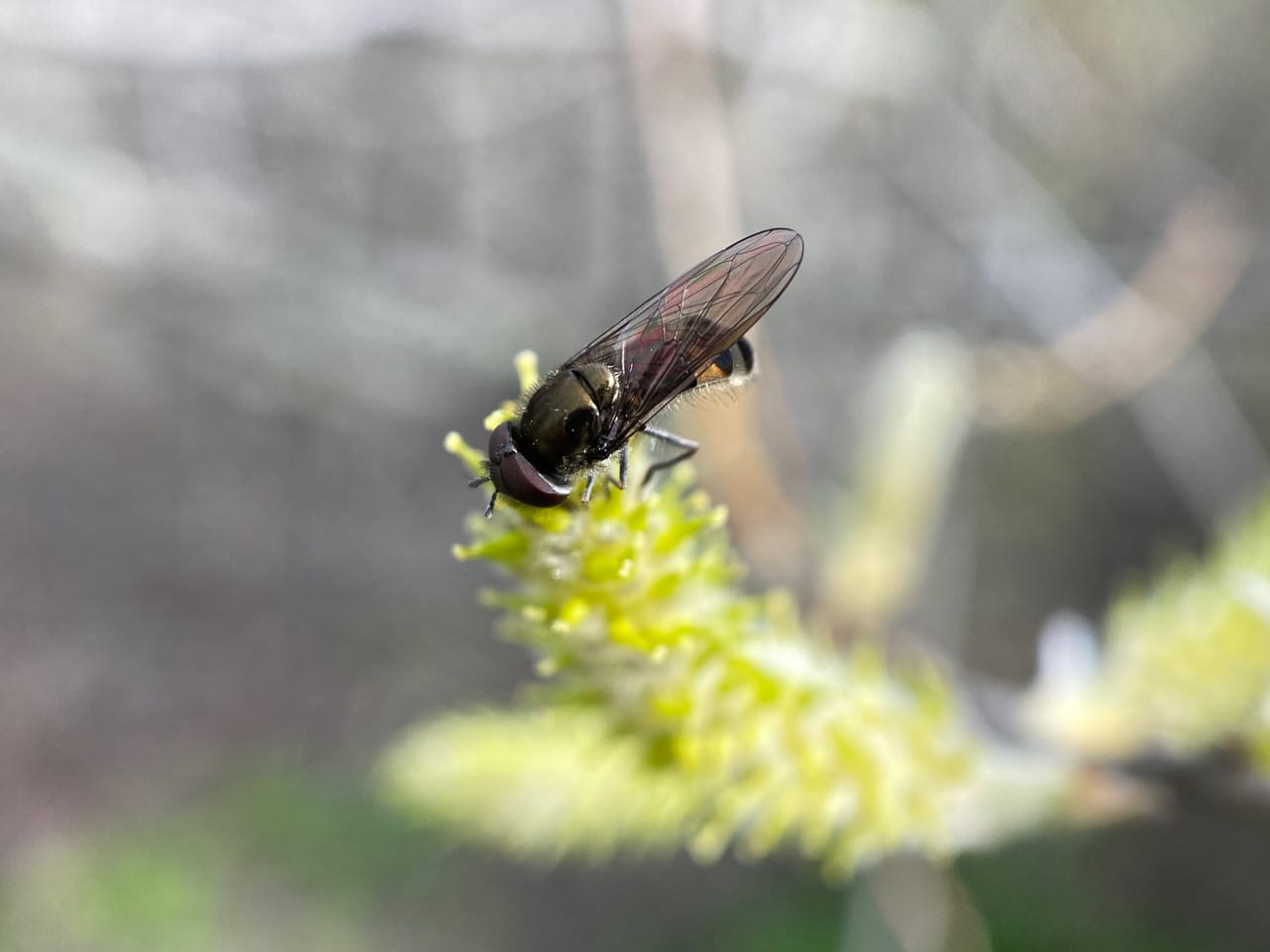
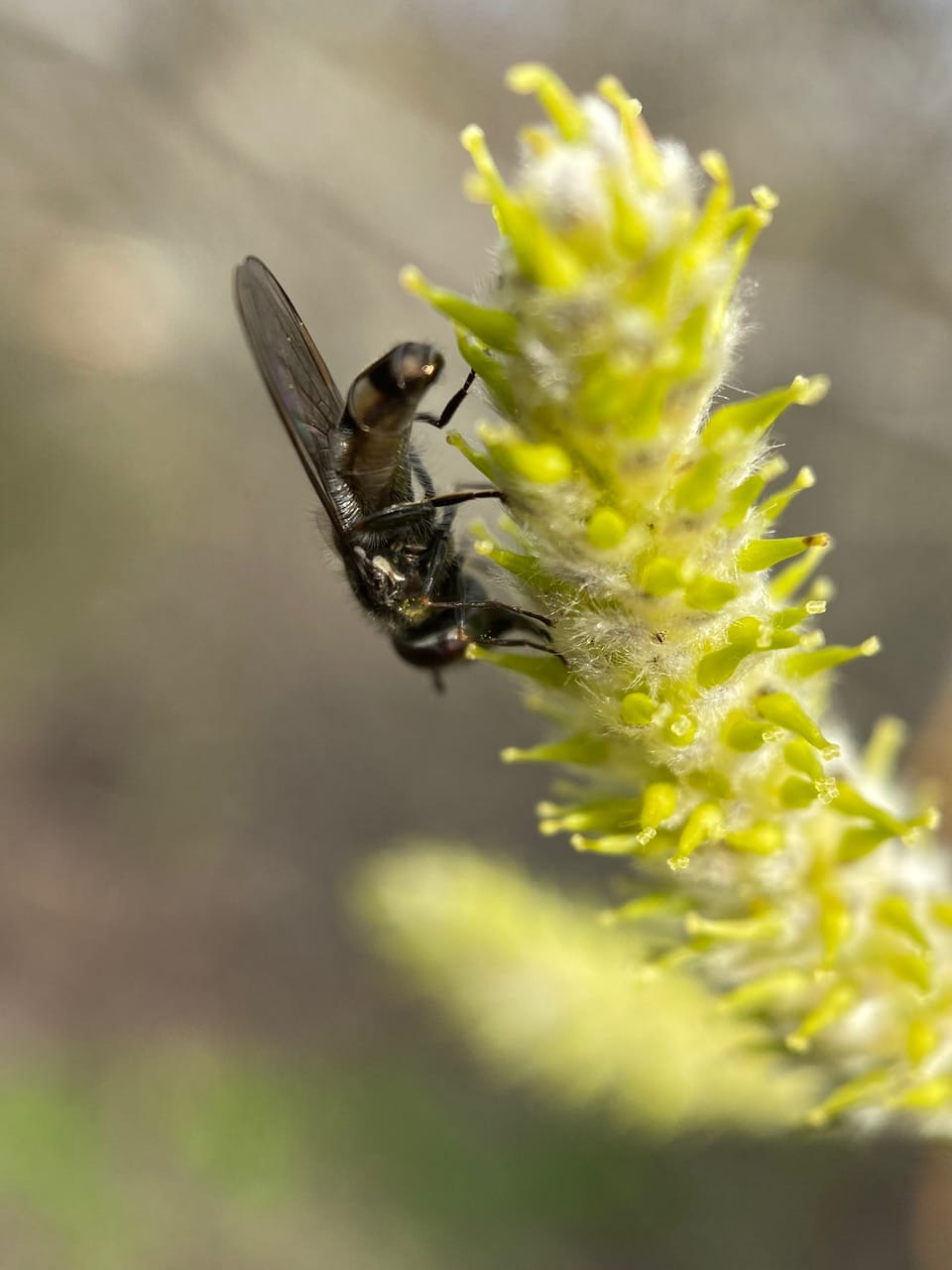
The honey bees are not the only insects enjoying the largesse of the Willow flowers. Here’s a Sedgesitter, Platycheirus sp. (family Syrphidae) seeking nectar from a female catkin. The fly’s dusky, metallic sheen distinguishes it from most other hover flies.
Platycheirus is found in grass and herb vegetation. Adults of many species feed on pollen of wind-pollinated plants, such as Plantago, Poaceae, Cyperaceae, but they visit other flowers also. Many stay active during cold and rainy weather. Larvae feed on aphids.
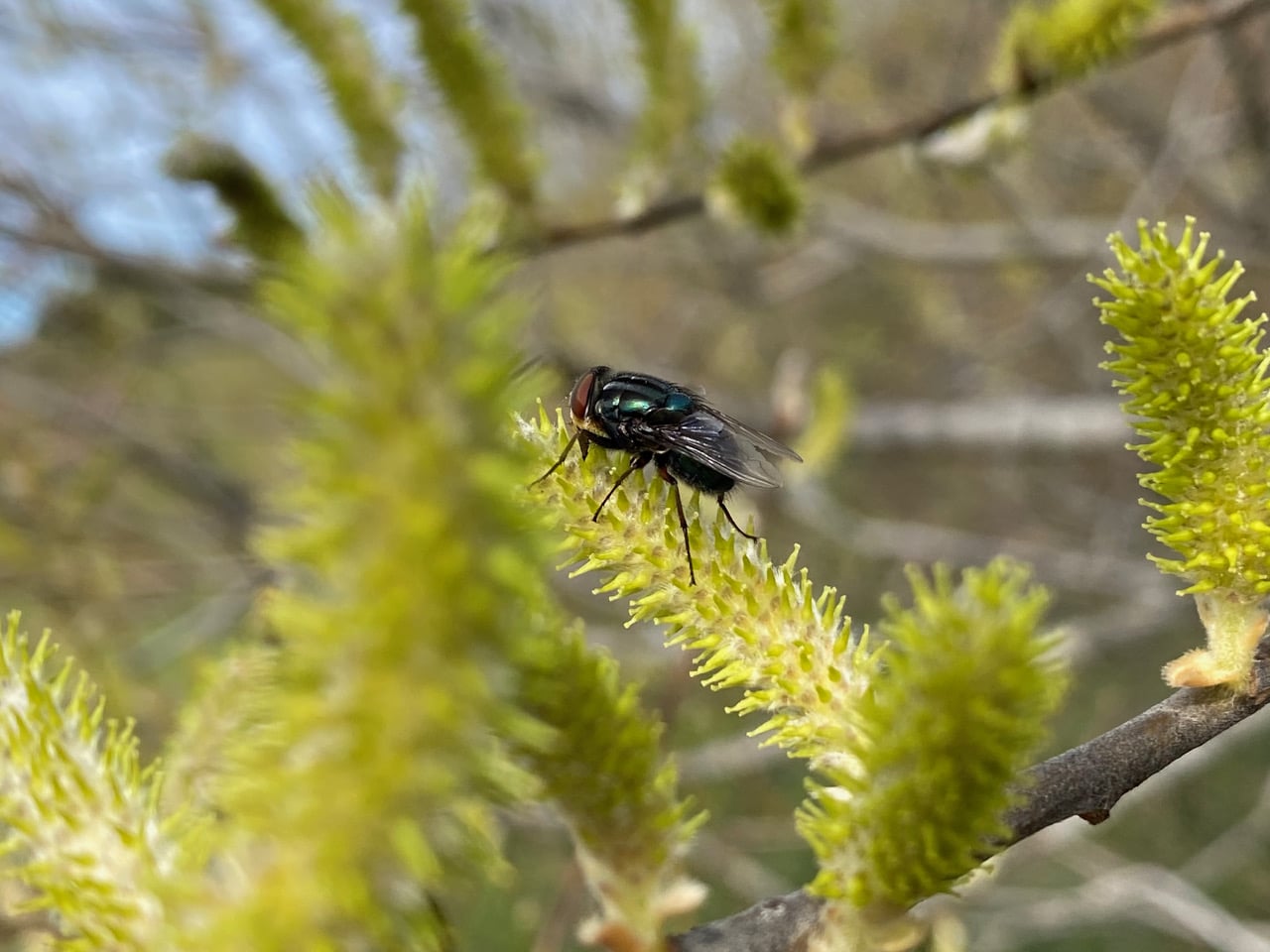
Here’s yet another fly – a Secondary Screwworm Fly.
The Secondary Screwworm, Cochliomyia macellaria (family Calliphoridae, commonly known as blow flies) ranges throughout the United States and the American tropics. The body is metallic greenish-blue and characterized by three black longitudinal stripes on the dorsal thorax. Females are attracted to carrion where they lay their eggs. These screwworms are referred to as “secondary” because they typically infest wounds after invasion by primary myiasis-causing flies. While the flies carry various types of Salmonella and viruses, C. macellaria can also serve as important decomposers in the ecosystem. In a lifetime, a female may lay up to 1000 or more eggs. Females may also lay their eggs with other females, leading to an accumulation of thousands of eggs. The larval stage of C. macellaria is referred to by the common name of secondary screwworms; this is due to the presence of small spines on each body segment that resemble parts of a screw. The larvae feed on the decaying flesh of the animal that they have been laid on until they reach maturity. Eventually the larvae fall off the food source to pupate in the top layer of the soil. Adult females will continue to feed on tissues of animals; however, now they preferentially feed off of live tissues and tissue plasma. Adult males will no longer consume tissue, but instead will eat nearby vegetation and take nourishment from floral nectar.
Although we like to categorize insects into functional groups – pollinators, decomposers, scavengers, predators, etc., in actuality, insects seldom fit neatly into these boxes. Many insects serve different ecological roles as they go through their life cycle – the larvae of blow flies are predominantly decomposers, while the flower-visiting adults can serve as pollinators. Pollen can inadvertently adhere to their bodies and be transferred to another flower. After all, pollination is generally not an intentional activity, even in insects that we label as “pollinators”.
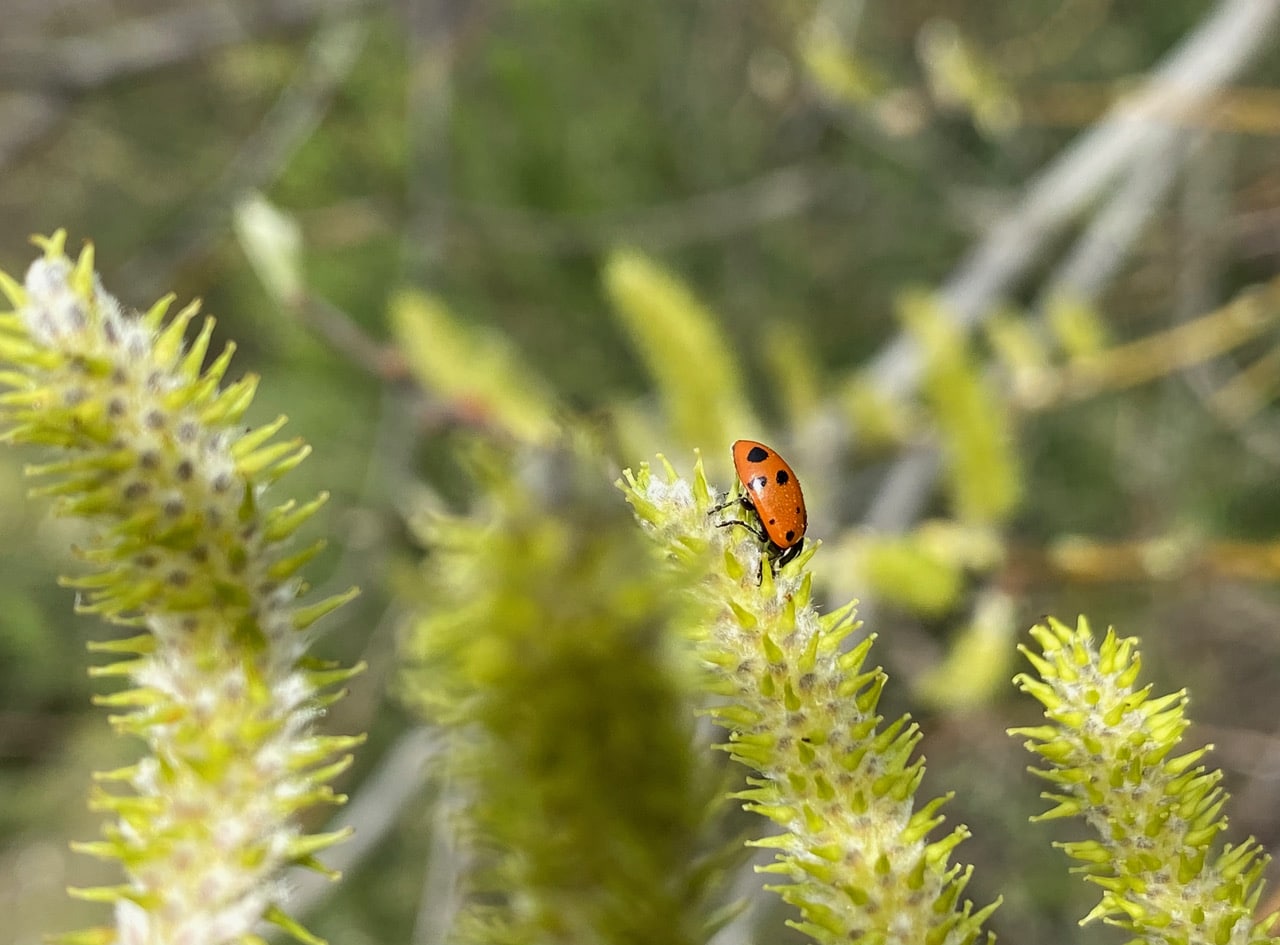
A Ladybeetle on the willow catkin! While there might be aphids and other small insect prey in the catkin, the Convergent Ladybeetles, Hippodamia convergens (family Coccinellidae) are known to feed on pollen and nectar from flowers when prey is scarce.
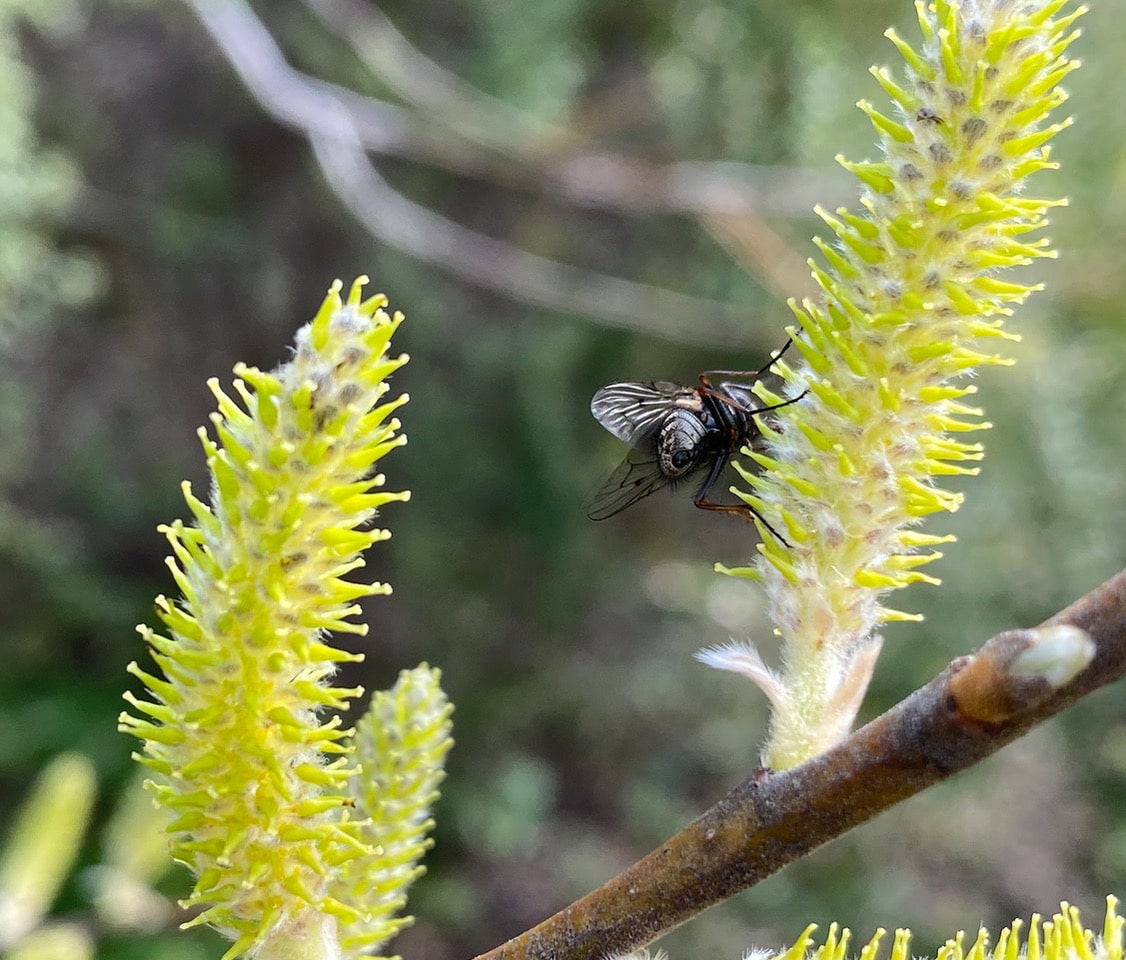
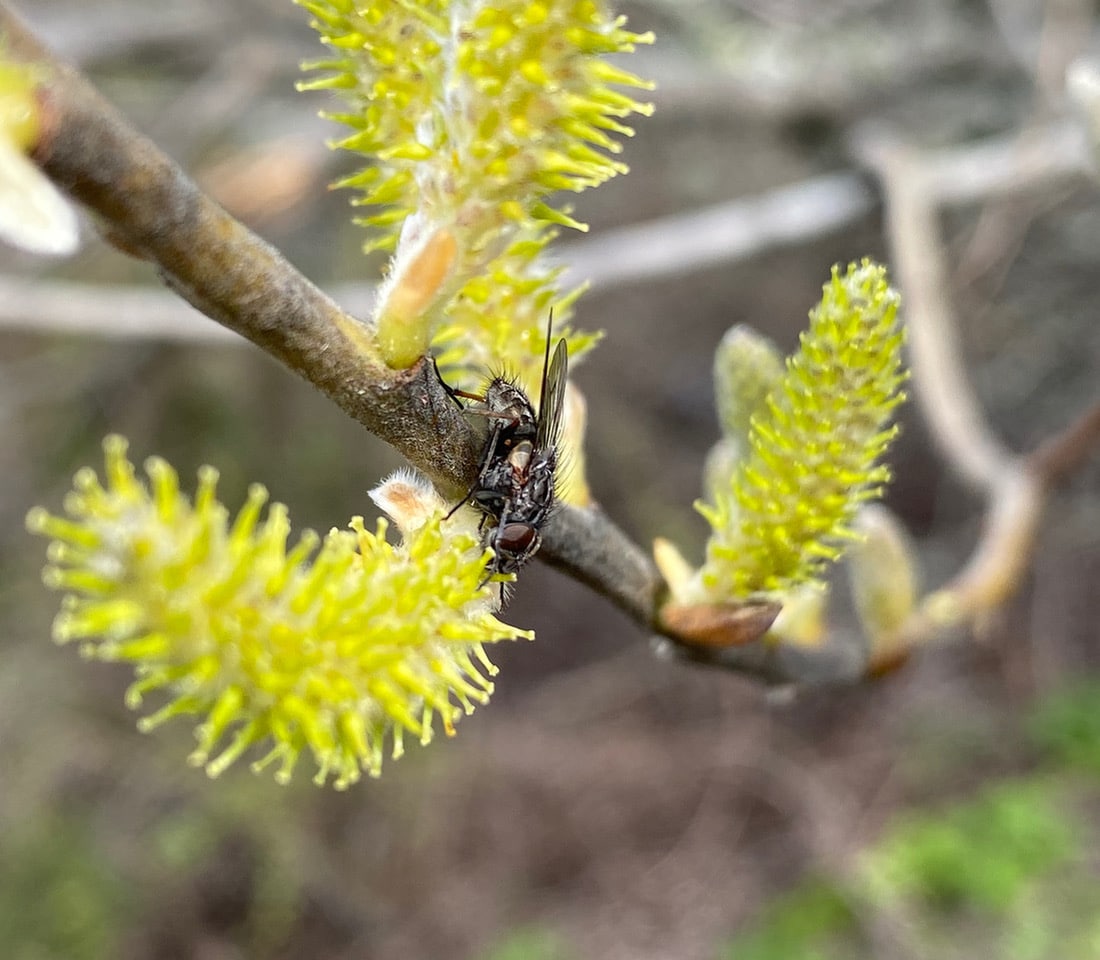
Hello, who’s this fly?
Flies are the most frustrating to identify. They are so diverse, and they identification complicated, I usually don’t get much help from iNaturalist by simply submitting photos. This one has been kindly identified by a Diptera expert as a Muscoid Fly (superfamily Muscoidea).
Flies in the superfamily Muscoidea are calyptrate, meaning they possess calypters under their wings. Muscoid flies comprise about 5% of known species of Diptera. (I guess being able to narrow it down to 5% is not bad!) Most muscoid flies are saprophagous, coprophagous or necrophagous as larvae, but some species are parasitic, predatory, or phytophagous.
See those rounded, whitish flaps under the fly’s wings? Those are the calypters. They are small membranous flaps or lobes that are located at the base of the wing in some species of fly. Flies often have two calypters (commonly called the upper and lower calypters) on either side of their bodies. The presence of calypters is an important diagnostic feature and is often used by entomologist to help identify different species of fly. The function of the calypters is not fully known. It is hypothesized that they prevent wind turbulence from affecting haltere movements, allowing more precise detection of body position during flight.
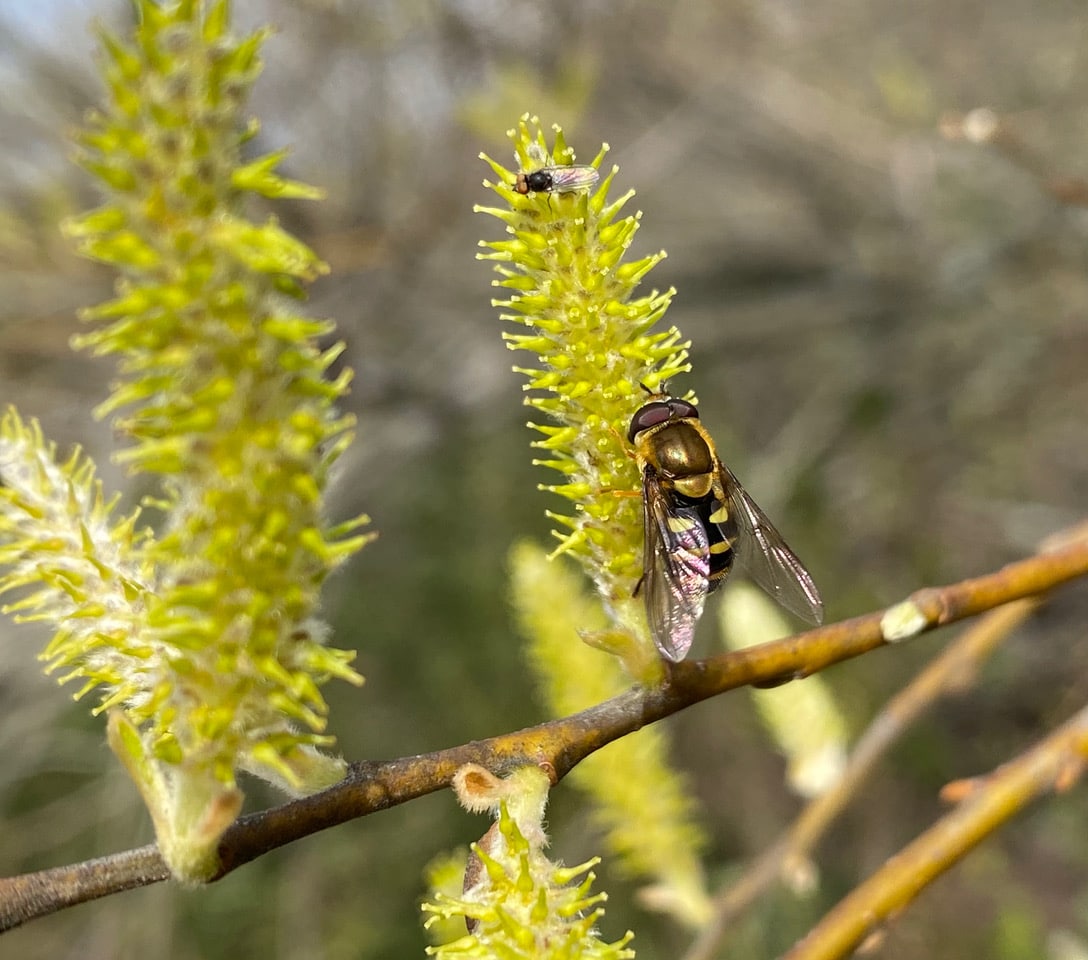
Two different flies are taking nectar on the same female catkin. The one on top is too small to identify, but the lower one is the Black-margined Flower Fly, Syrphus opinator (family Syrphidae). These hover flies seem to be everywhere lately. The species is common in central California during winter months. It can be distinguished from similar species by the abdominal fascia restricted to the sides and isolated from the margins. It is the quintessential hover fly that mimics bees or wasps. The black-and-yellow banding on the abdomen serves to ward off potential predators that want to avoid prey with stings – a form of Batesian mimicry.