

Pollinator Post 2/10/23 (2)
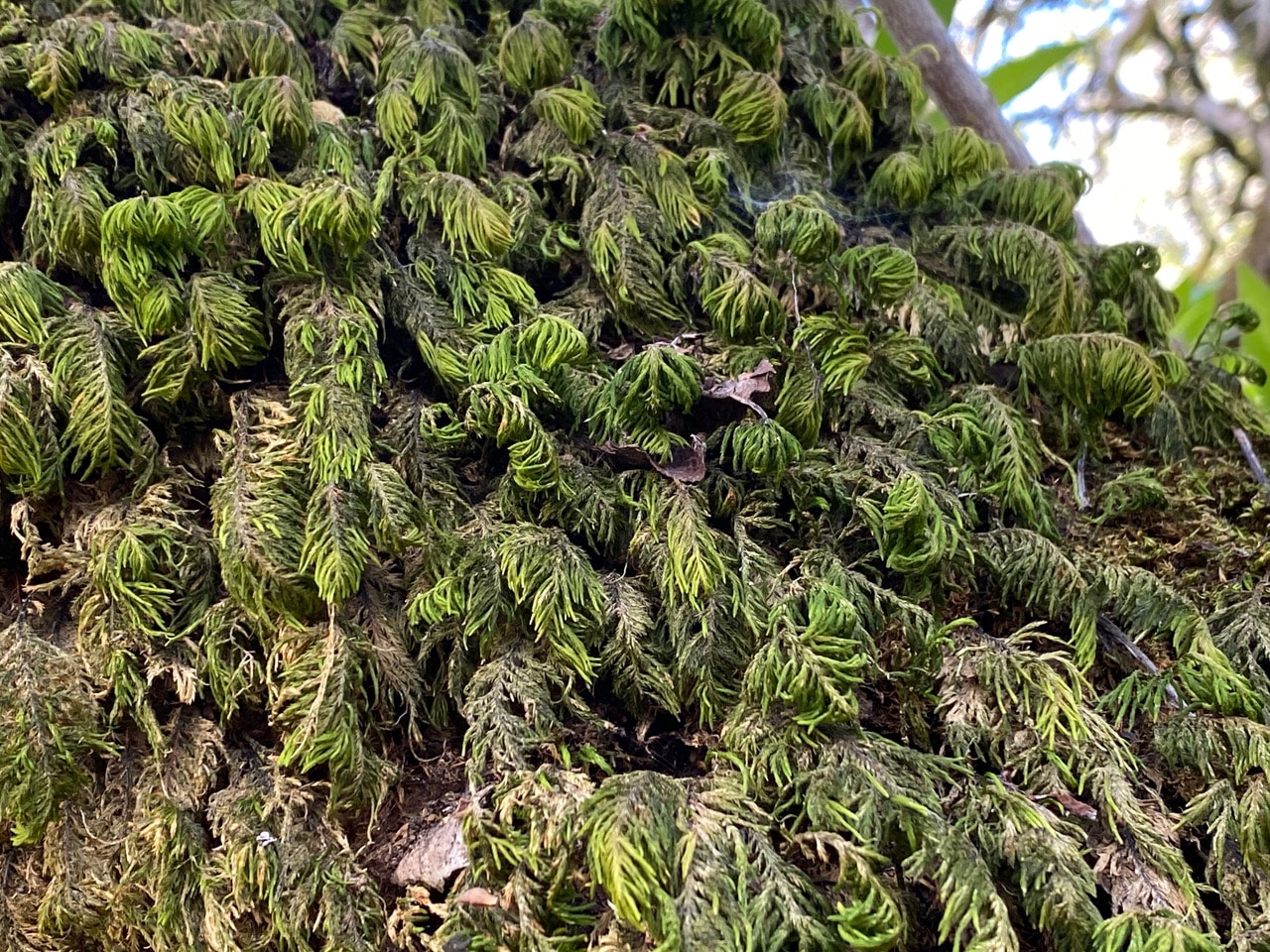
The large mosses growing on the trunk of a Buckeye tree are beginning to dry and curl downwards, appearing like poodle fur. Dendroalsia abietina is one of the most conspicuous and easily recognizable mosses in our area. The moss is common throughout the Pacific Northwest, especially in oak woodlands. It often covers whole tree trunks, leaving little room for competition.
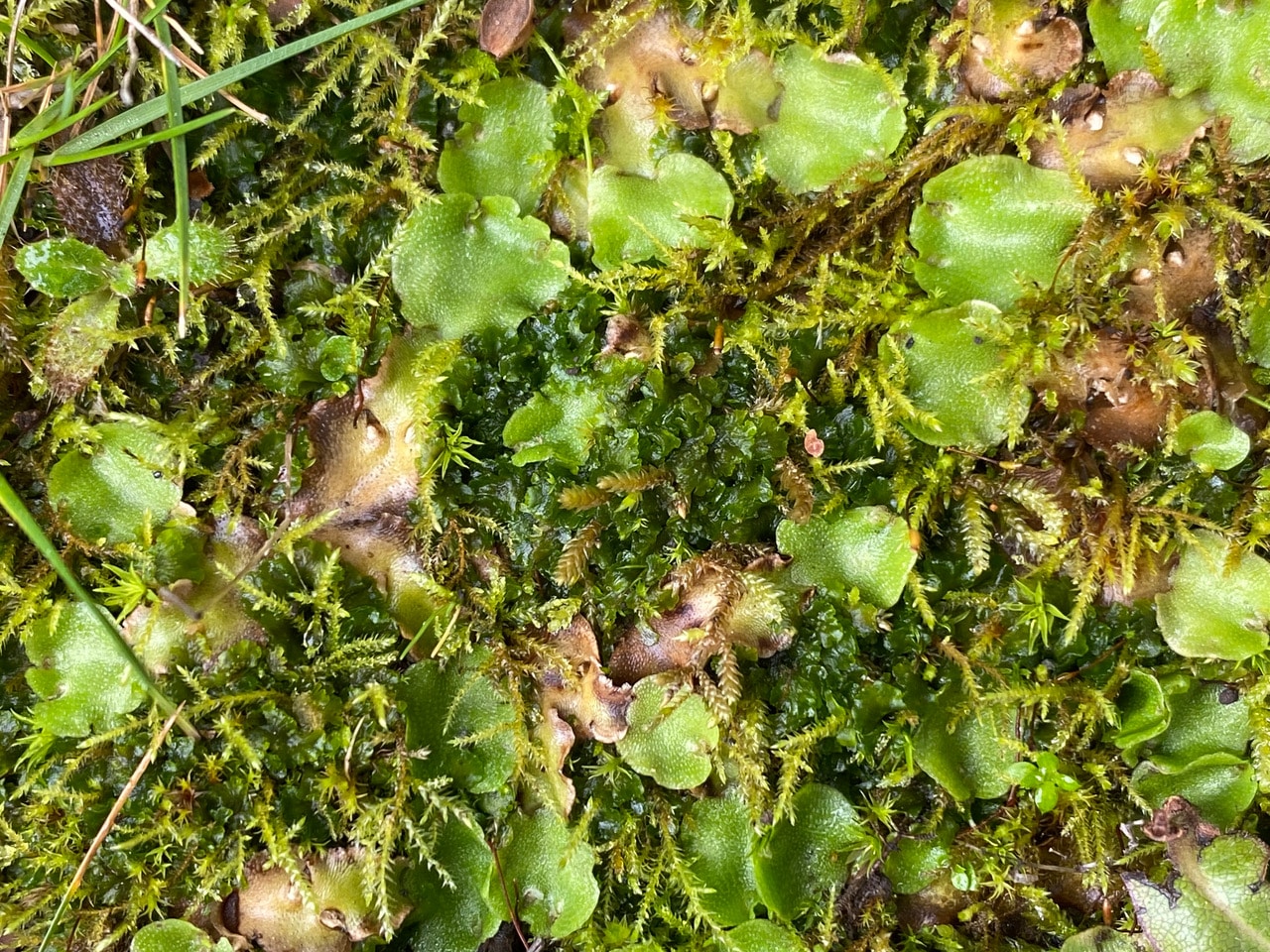
What a delight! A palm-size patch on a moist trail margin contains all three members of the Bryophytes – a moss, a liverwort, and a hornwort. The most obvious are the large thalloid liverworts, Lunalaria cruciata that we have encountered earlier.

The dark green, gelatinous, ruffled scales are the gametophytes of a hornwort. I have been checking on these regularly for any development of sporophytes that give the lilliputian plant its common name. Alas, they are not in a hurry to show off their signature “horns” yet.
 A patch of moss is showing off their sporophytes – those erect stems with a swollen tip. The sporophyte is the diploid generation of the moss. It remains attached to the gametophyte (the haploid mother) from which it derives its nourishment. The swollen tip is the sporangium where the spores are produced. When a moss spore lands on suitable substrate, it germinates and grows into a gametophyte.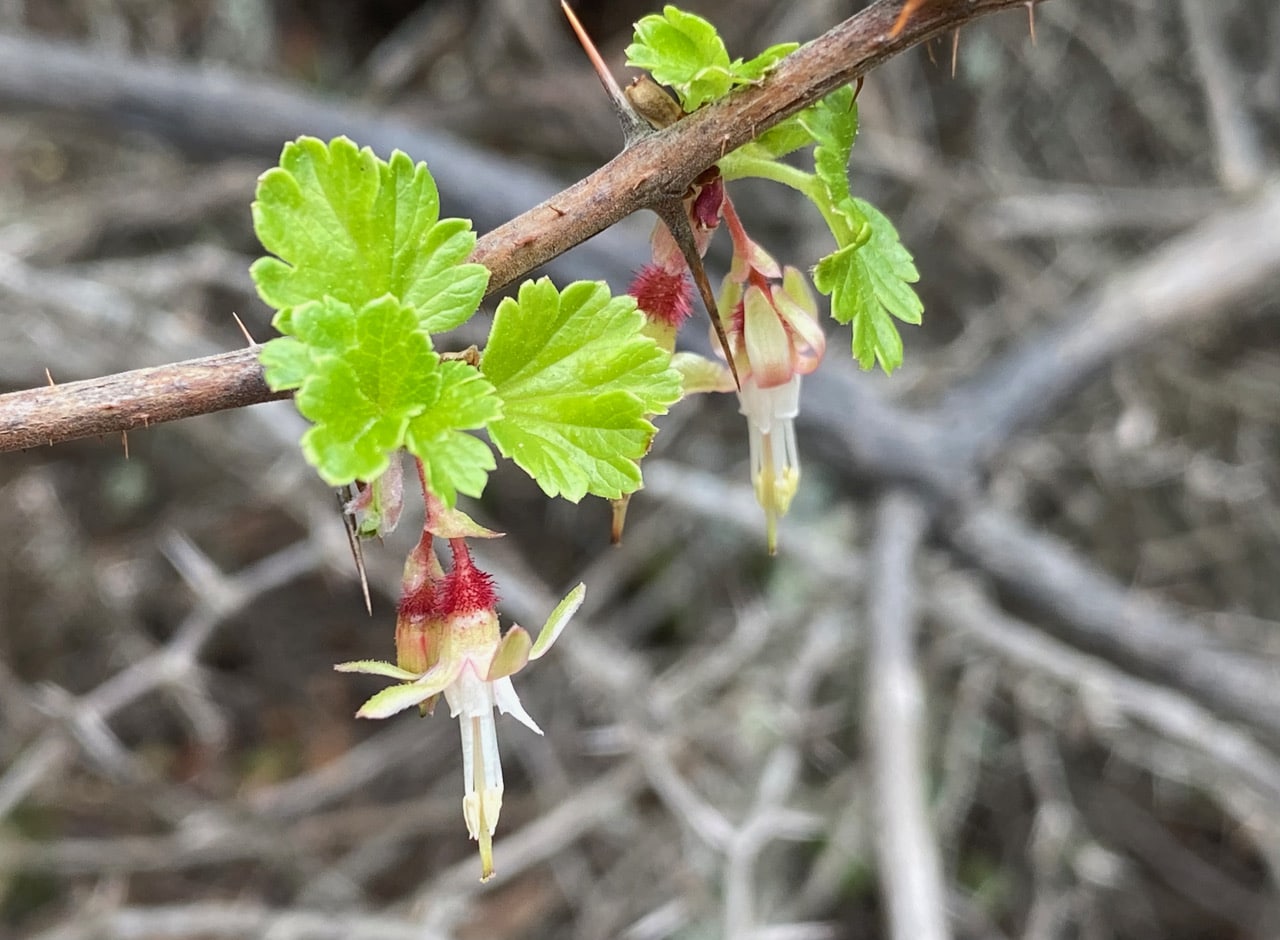
The Hillside or California Gooseberry, Ribes californicum has started to bloom! The dainty, pendulous flowers are easy to overlook. The genus Ribes includes gooseberries and currants. The gooseberries are easily distinguished by their spiny stems. The charming hanging flowers have sepals that are reflexed, or folded backwards along the length of the flower. The petals are white and extend forward to form a loose tube from which the stamens emerge. The plant is known to attract bees, butterflies, hummingbirds and other pollinators, but I am not seeing any of those on this cold morning.
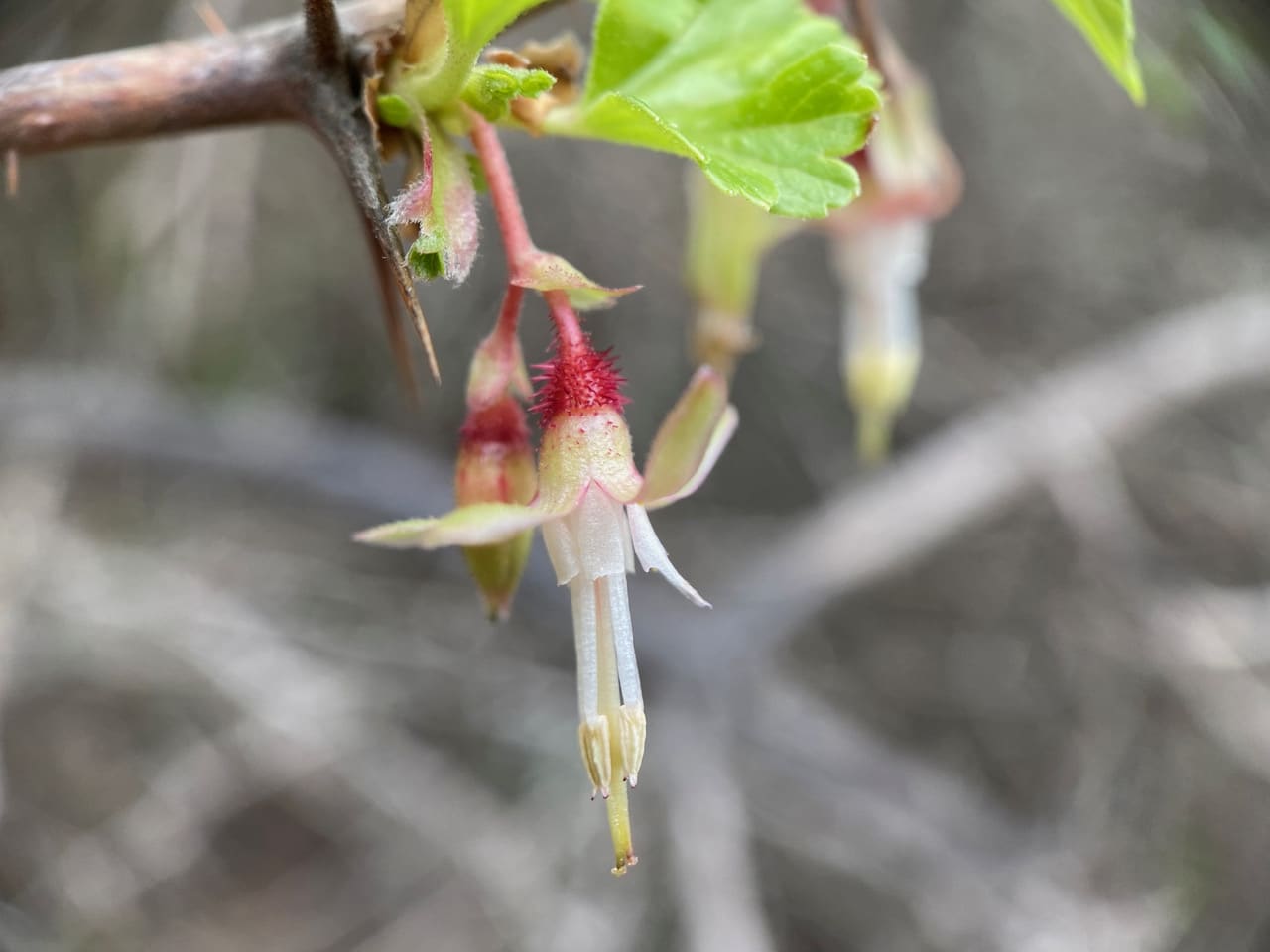
The spiky red swellings (ovaries) under the flowers are already recognizable as the future berries!

The California Bay, Umbellularia californica is in peak bloom. Looking like creamy-yellow pompoms, the clustered flowers are releasing copious pollen now.

California Bay is an odd ball in our native flora – it belongs to the Lauraceae family that occurs mainly in warm temperate and tropical regions. No surprise that the Bay flower structure is unlike any other we are familiar with.
The flowers do not have petals but they do have 6 creamy-white sepals. Stamens are found in two rows – the outer row has six and the inner row three. For the inner row, there are two large yellow glands associated with each stamen. The stamens have four anther sacs – they give the stamen a paw like appearance. The ovary is superior and includes a stigma that is mostly white.

I am intrigued by how the stamens develop on the flowers. As the flower matures, the four anther sacs (covered with pollen) “pop out” of discrete sockets on the paw-like stamen, appearing like yellow “claws” at the tips of the paw. Since the flowers are small, these details are only observable with a hand lens. But it is worth a peek.
Who pollinate these winter-blooming flowers? I have seen small Non-biting Chironomid midges visit the flowers, and suspect that they are responsible for pollinating the plant. As the weather warms, might these flowers attract other pollinators?
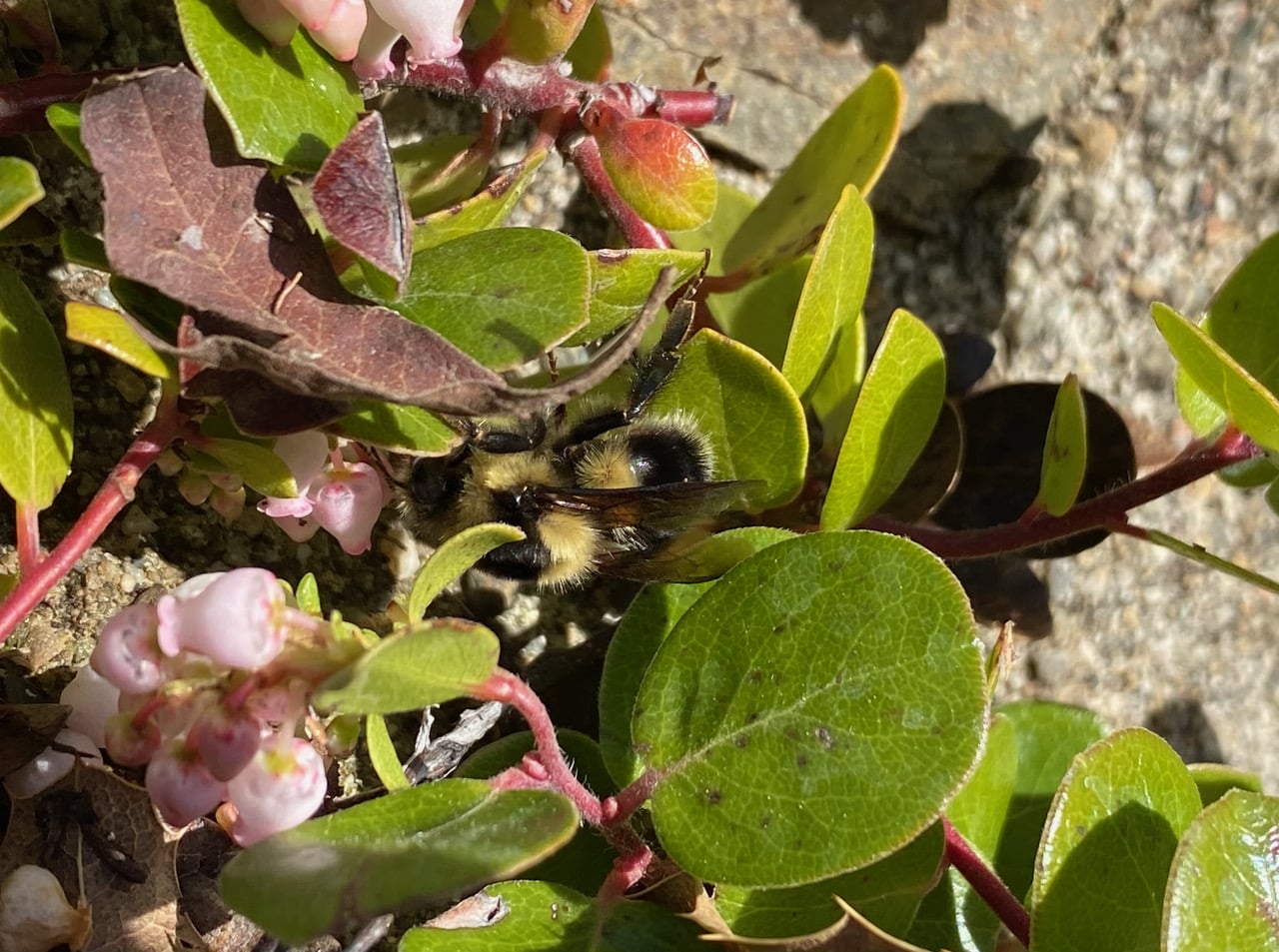
Remember this picture taken at the East Bay Regional Parks Botanic Garden on 2/7/23? I have heard back from two bee experts on iNaturalist, both of whom agreed that the bee was a Black-tailed Bumble Bee, Bombus melanopygus, and not a Cuckoo Bumble Bee. The critical feature is the presence of a pollen basket (albeit empty) on the hind tibia, which the cuckoo would not possess. The poor sluggish bee was probably a worn queen. When it was rainy and cold for days on end, the queen bee could not come out to forage. She also had to keep her eggs or brood warm. This she does by shivering to generate heat while sitting on the eggs/larvae. The lack of food and the extra energy expenditure probably weakened her. All the more reason we plant early blooming natives in our gardens to provide for these single moms.