

Pollinator Post 2/10/23 (1)
These are my observations at the Skyline Gardens, walking along Skyline Trail from the Steam Train Gate to Siesta Nose.
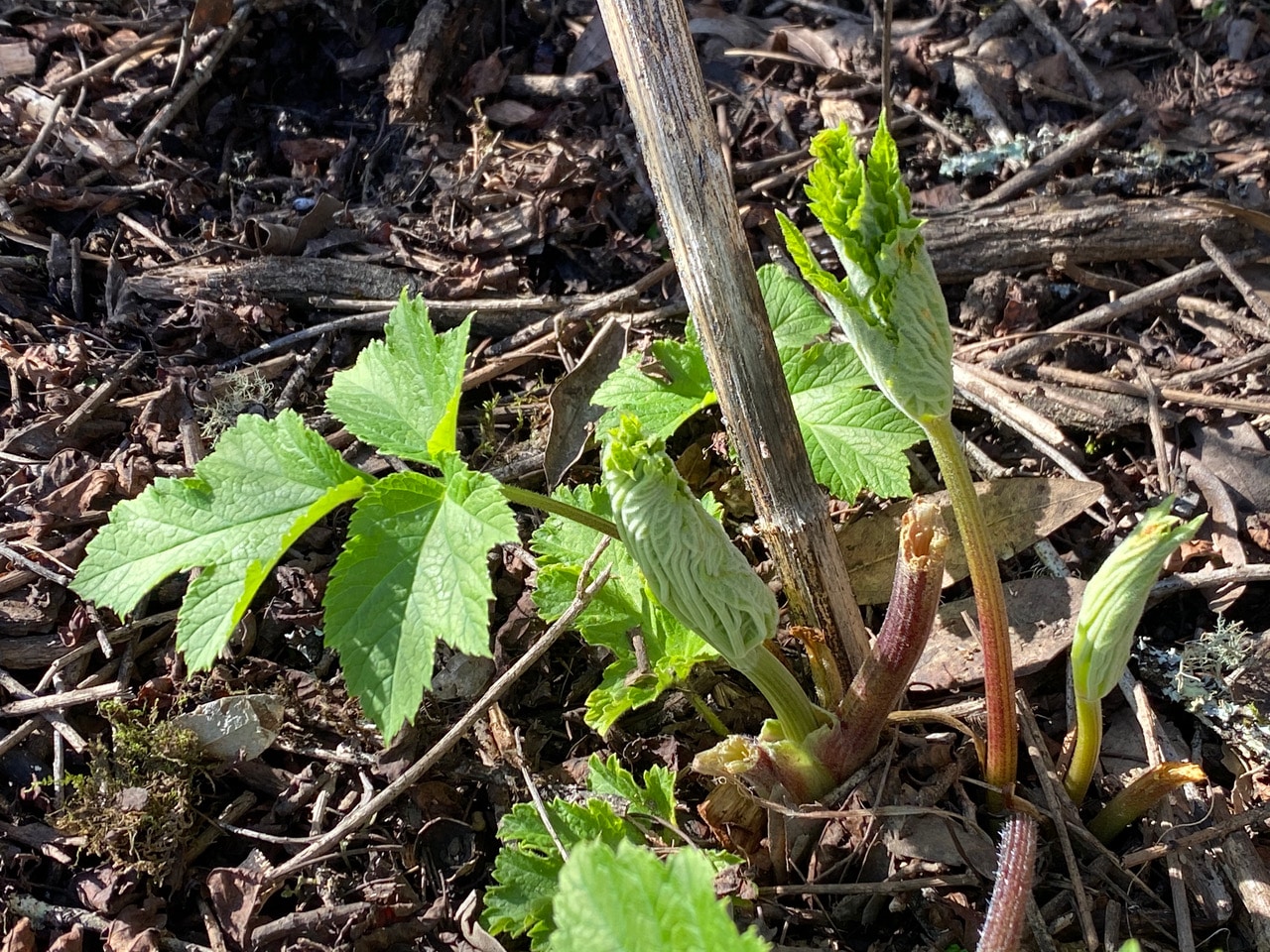
Breaking through the soil, the dramatic Cow Parsnip, Heracleum maximum is coming back in force. This North American native is easily recognizable by its large leaf that is divided into three lobes. The plant sap contains organic chemicals called furanocoumarins which can be phototoxic to the human skin. When activated by ultraviolet radiation from the sun, it can cause severe burning, blistering and rash. Beware, gardeners, when you work around these handsome plants. 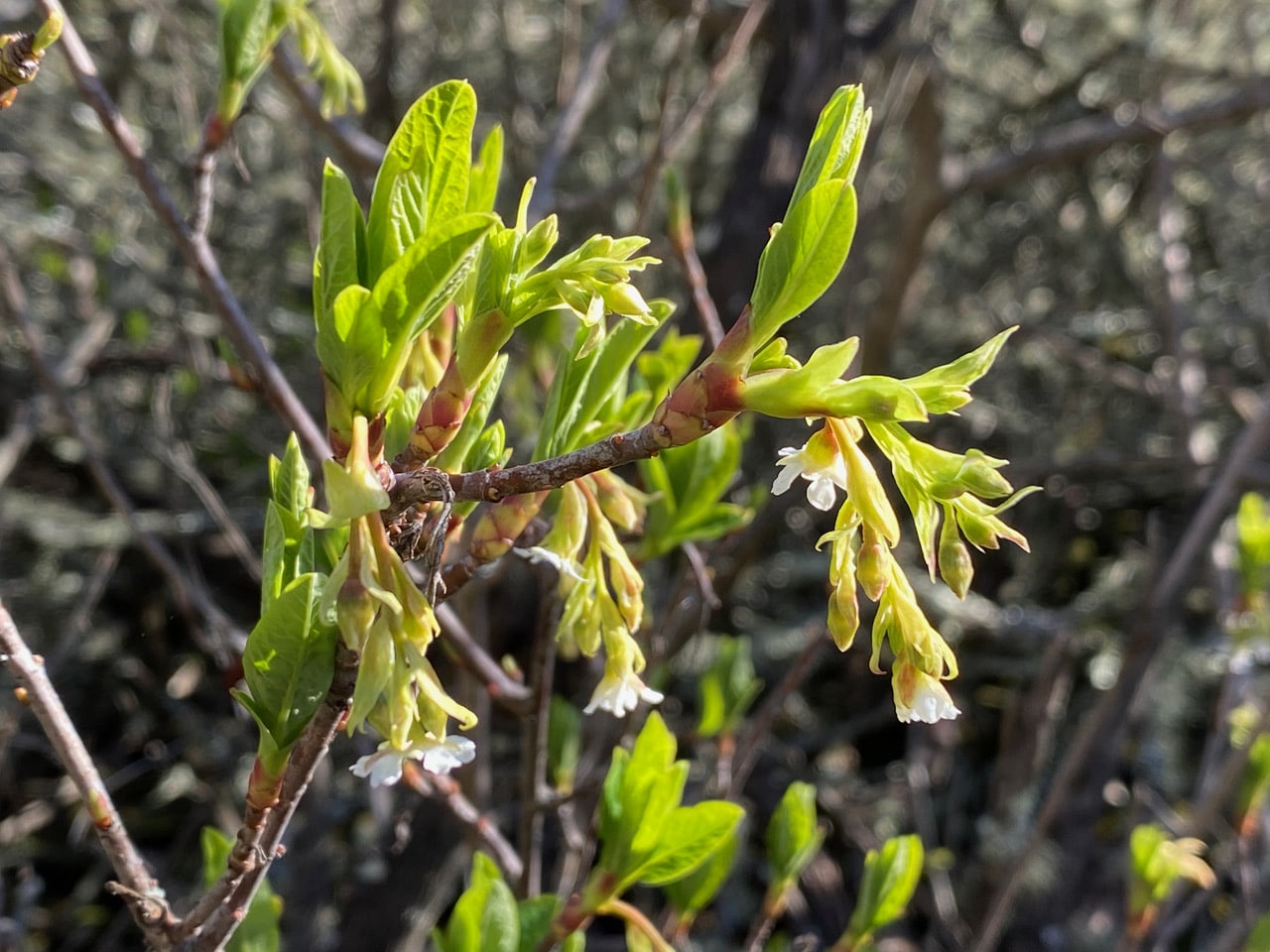
The Osoberry, Oemleria cerasiformis (family Rosaceae) is starting to bloom. Nodding chains of white flowers are borne on the tips of branches. Each flower has 5 petals and 5 sepals. The flowers are supposed to have an unusual scent, but it’s difficult for me to get close enough for a whiff without touching the surrounding poison oak.
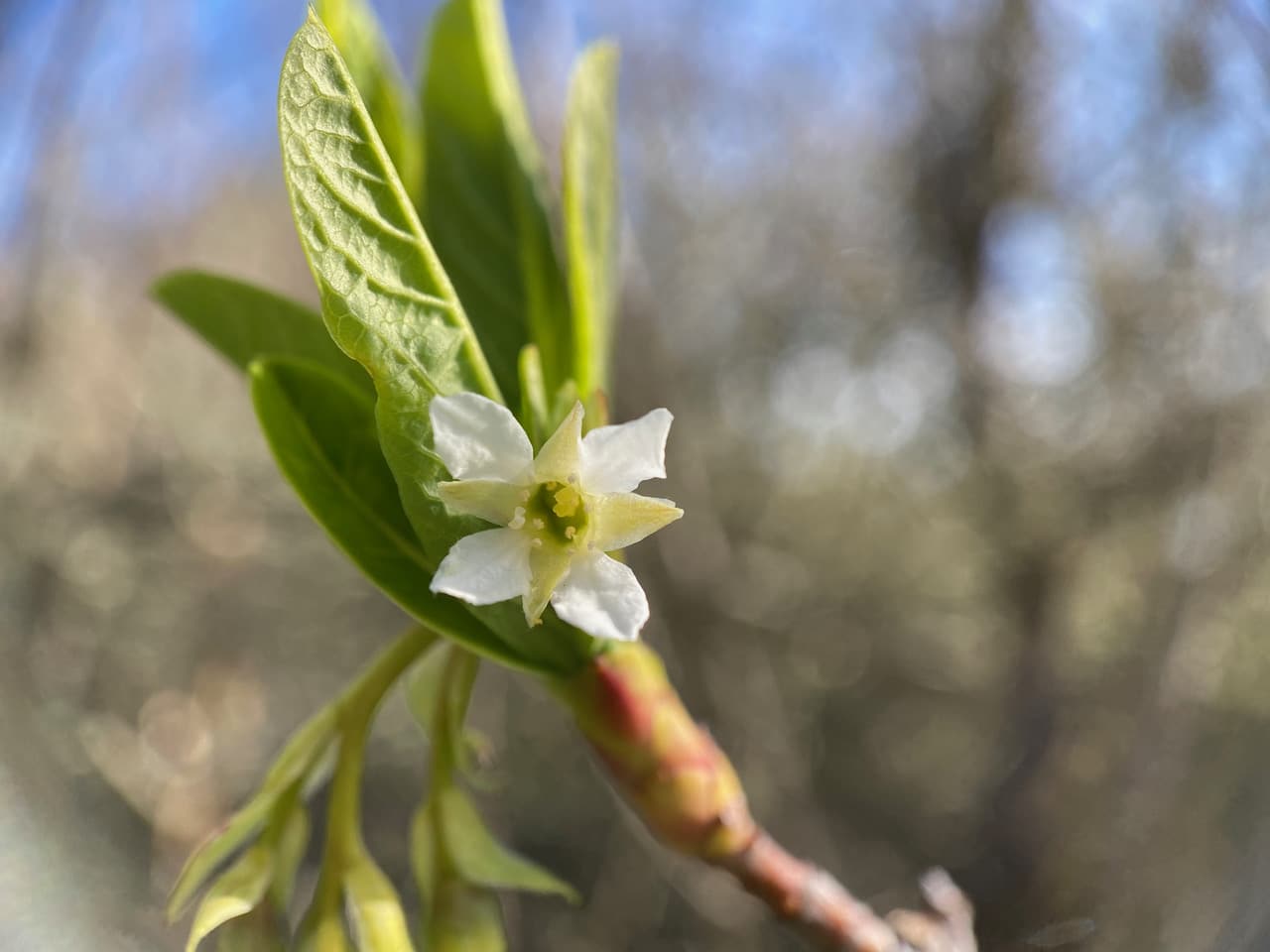
This Osoberry flower is atypical, having only four sepals and four petals. The other unusual thing about it is that it is female (as evident by the prominent pistils in the center and the vestigial stamens on the surrounding calyx). Osoberry is dioecious, with male and female flowers borne on separate plants. Apparently female Osoberry are much rarer, only about one in ten plants. I happen to hit the jackpot on the first flower I look into! According to what I have read, the female flowers have a pleasant fragrance, but the male flowers are unpleasant. The flowers are supposedly pollinated by hummingbirds, butterflies, native bees and other insects. I have yet to see these visit the flowers.

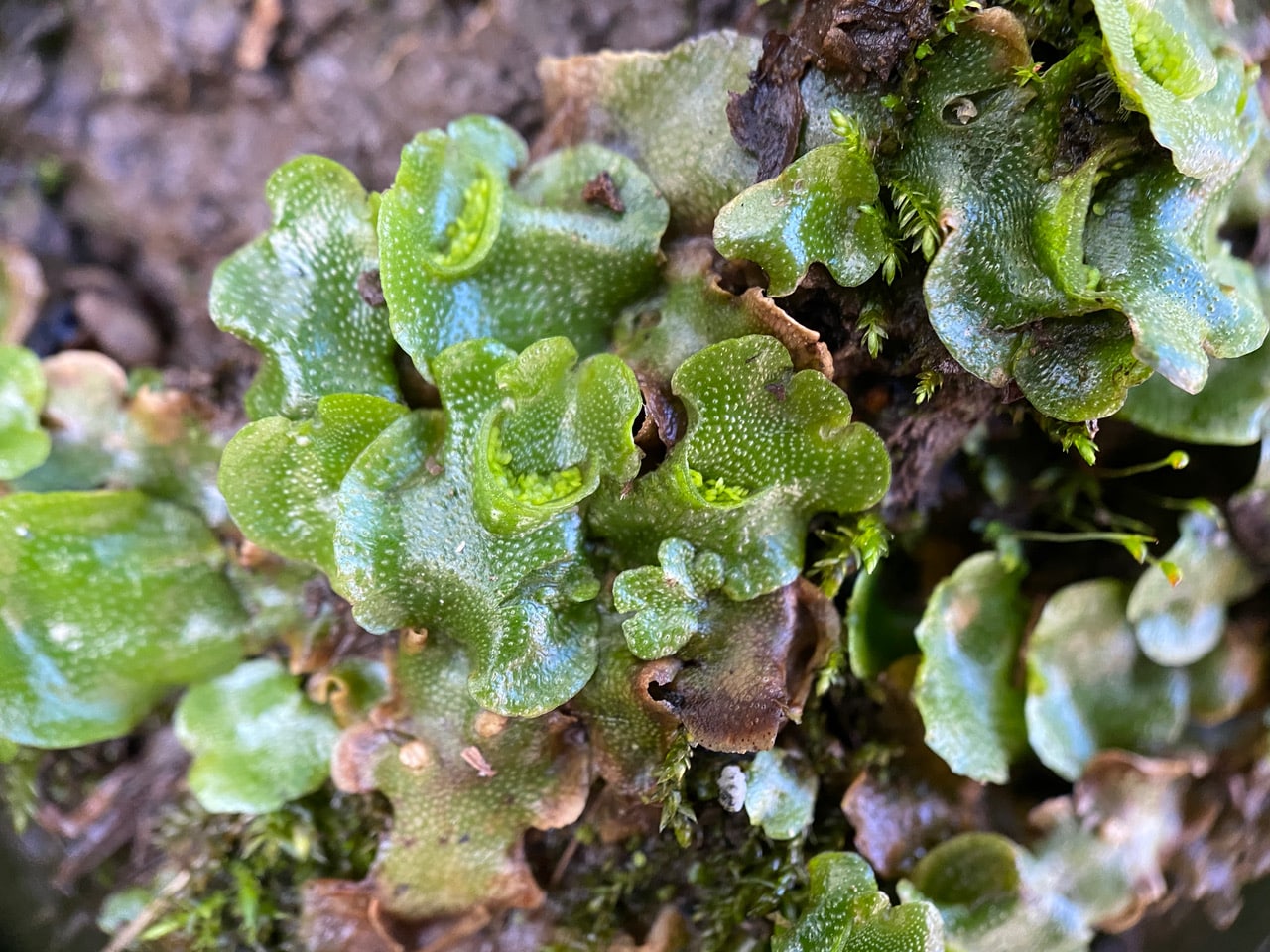
These Crescent-cup Liverworts, Lunalaria cruciata always put a smile on my face. Today their cups appear to be quite full.
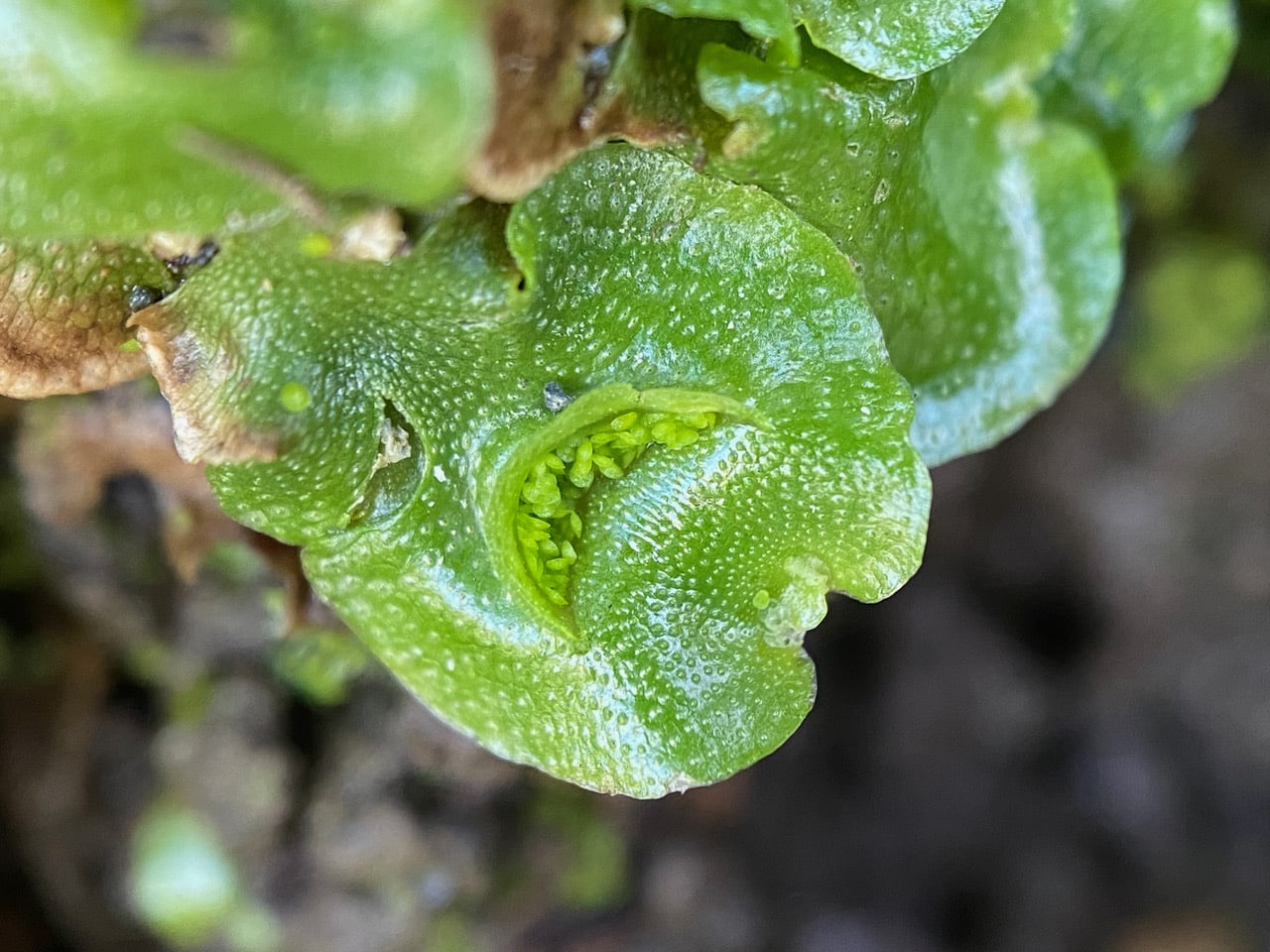
The thallus surface is shiny, and dotted with tiny air pores. The crescent shaped gemma cups contain disc like gemmae which are readily dislodged from the cups by splashes of rainwater. This is the plant’s strategy for reproducing asexually. Tiny clones of the parent plant, the gemmae can quickly take root and start to grow in suitably damp places. This is why Lunalaria is such a successful liverwort with a worldwide distribution.
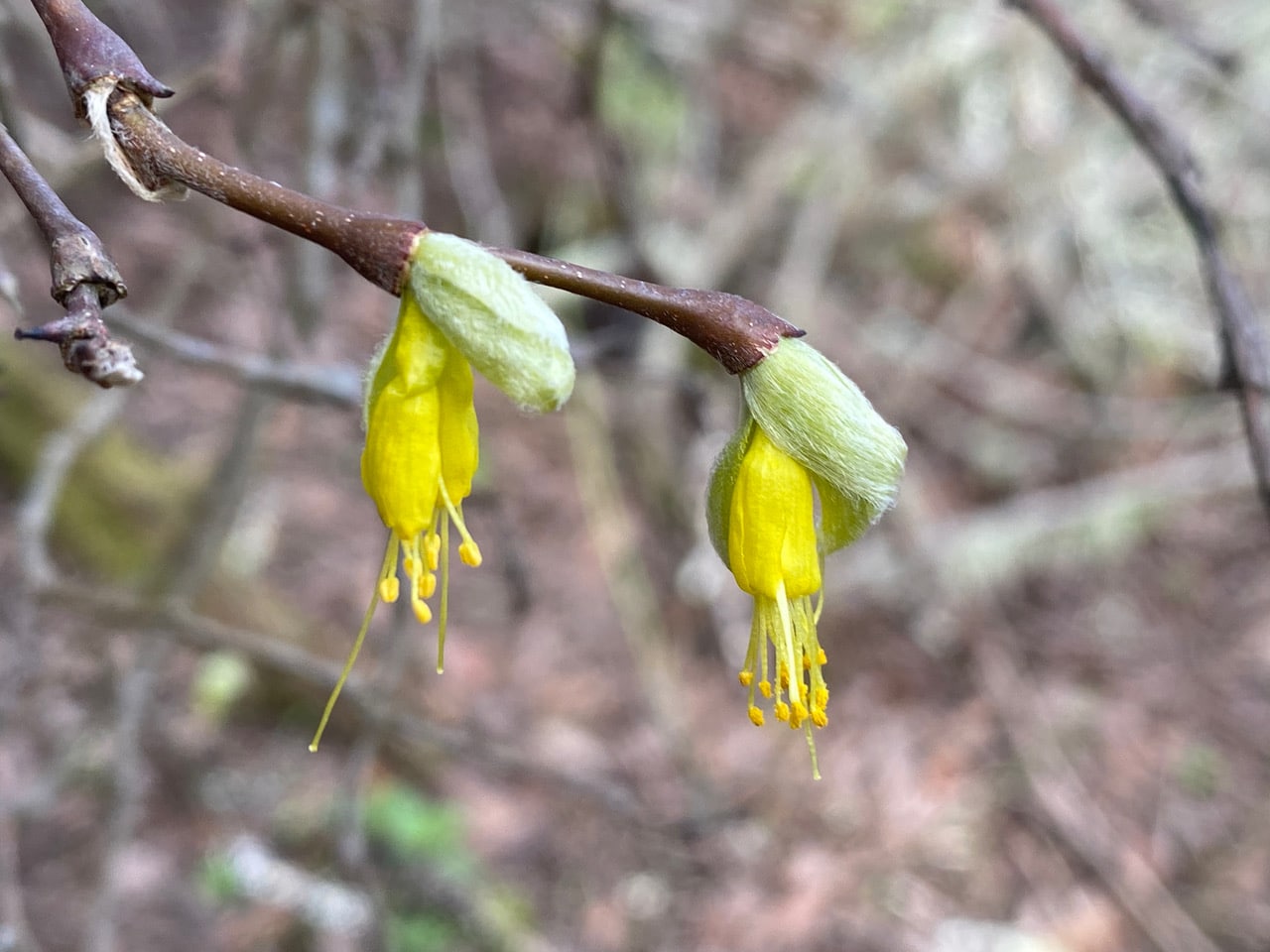
The Western Leatherwood, Dirca occidentalis (family Thymelaeaceae) is approaching peak bloom. The bare branches are dotted with dainty, tasseled flowers. The plant is not only endemic to California, but to the SF Bay Area specifically. The common name Leatherwood refers to the plant’s pliable twigs and tough, leathery bark. The branches were historically used by Native Americans for basket making.
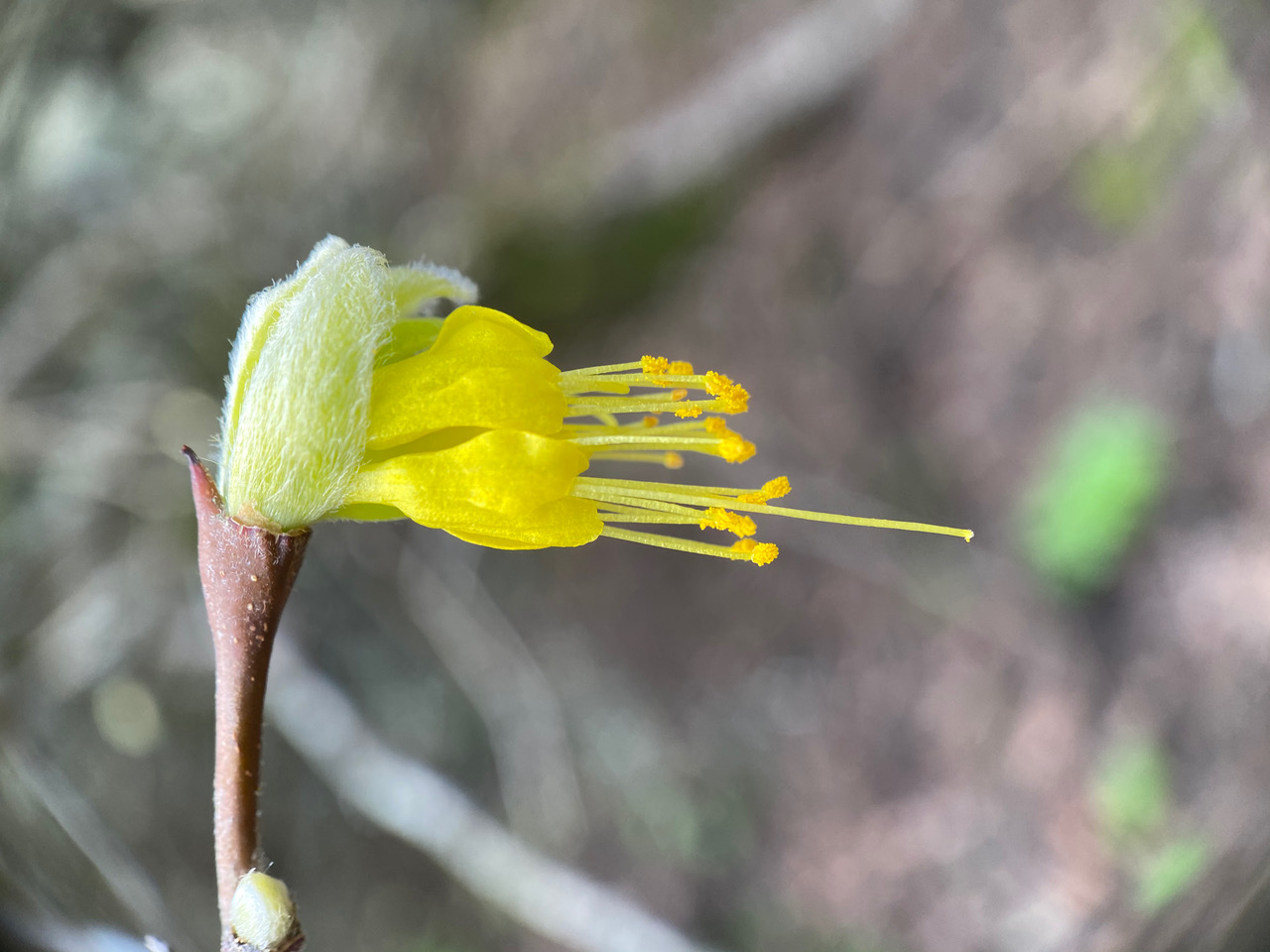
Each inflorescence consists of 1-4 nodding flowers arising from the same leaf axil. The apparent petals are actually bright yellow sepals. Long stamens and pistil extend beyond the calyx, giving the appearance of tassels. Anna’s hummingbirds and non-native honey bees frequent the flowers.
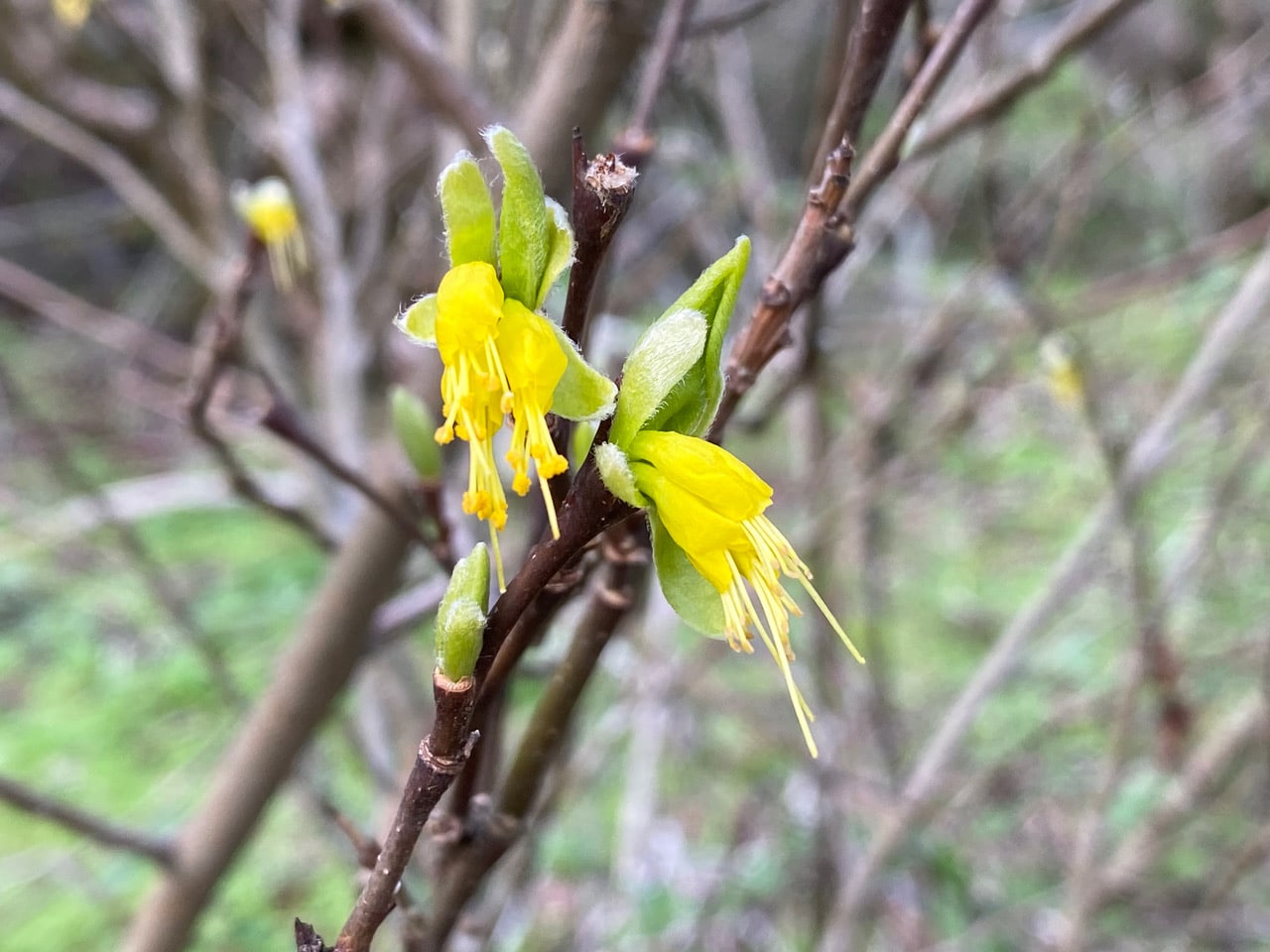
The bright green leaves of Dirca occidentalis are produced from the same bud as the flowers, and they unfurl in clusters concurrent with or after flowering.
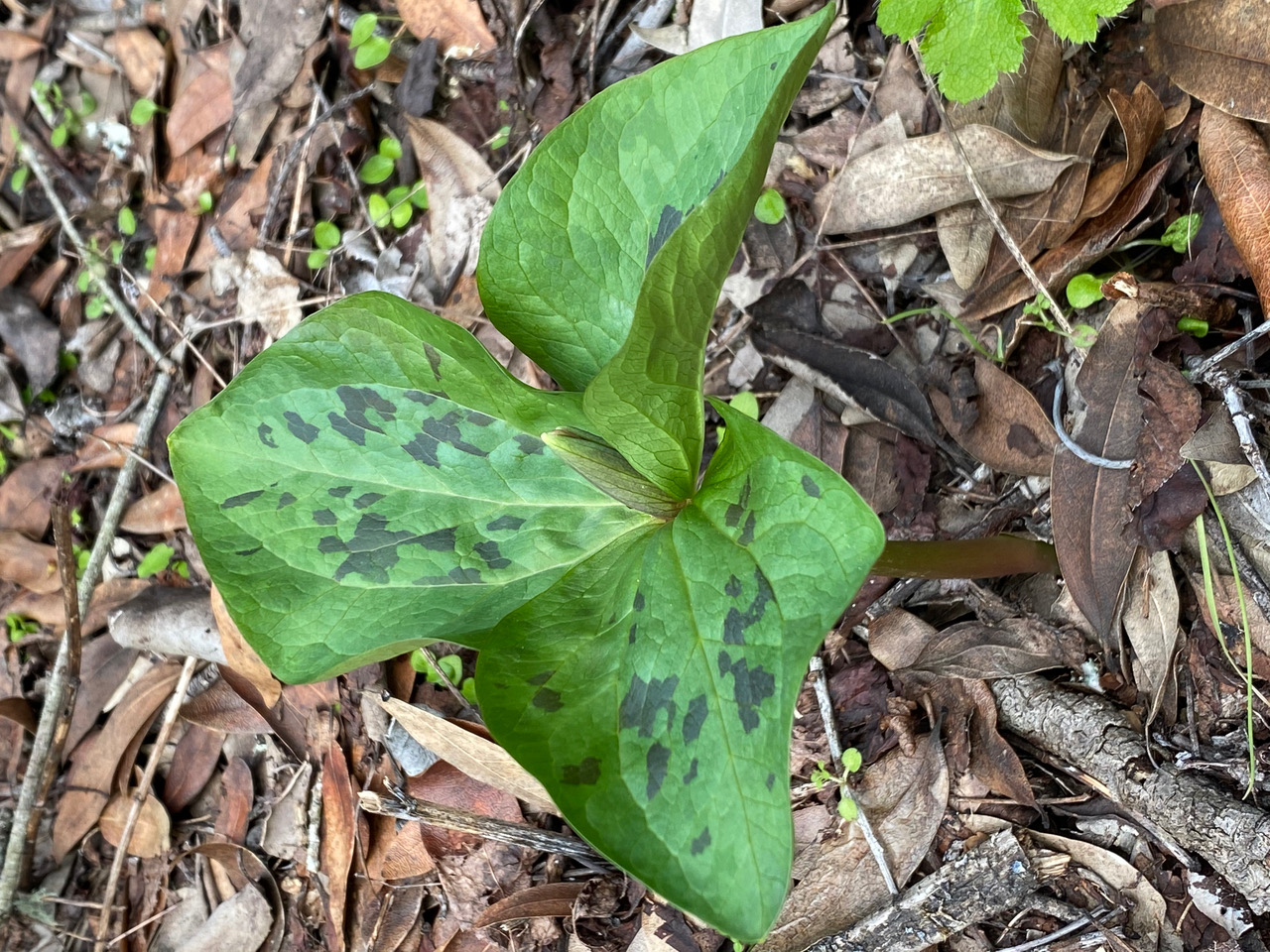
Hey, the Giant Trillium, Trillium chloropetalum has emerged from the leaf litter! The three large mottled leaves (technically bracts) arranged in a triangle are unmistakable.
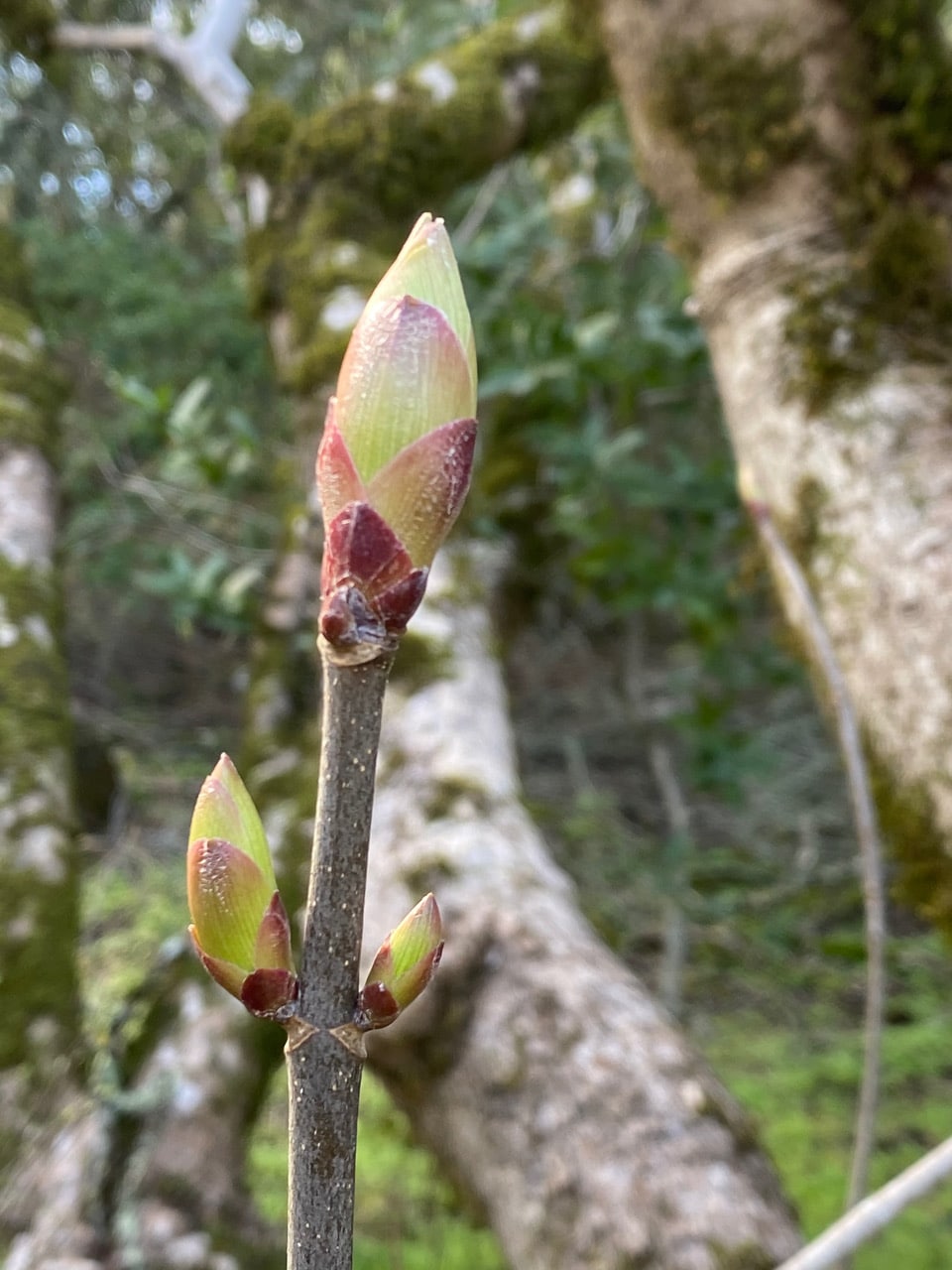
The California Buckeye trees, Aesculus californica are sending out conspicuous buds at and near the tips of their branches.
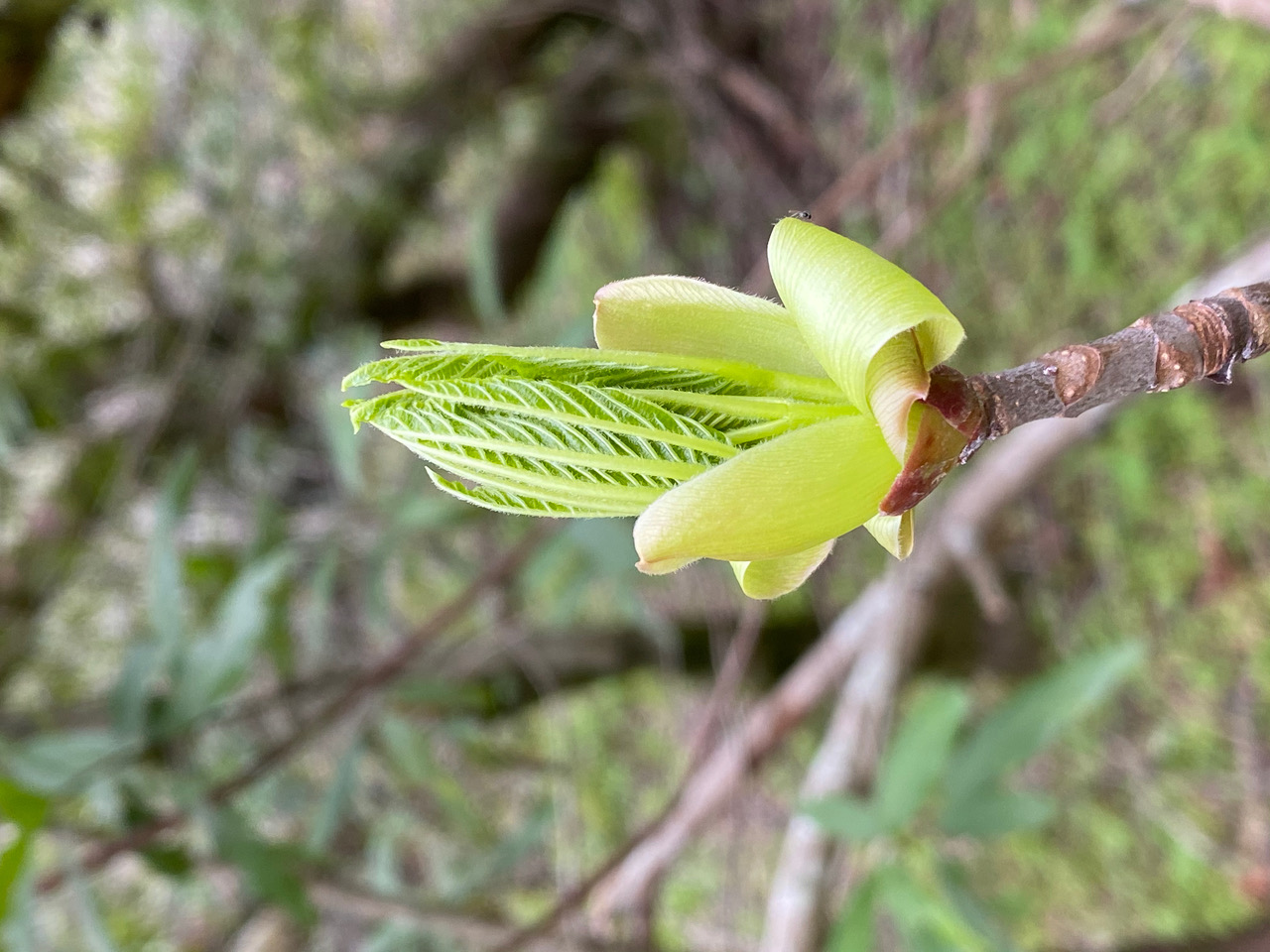
The unfolding of the Buckeye foliage is a wonderment I cherish every early spring.
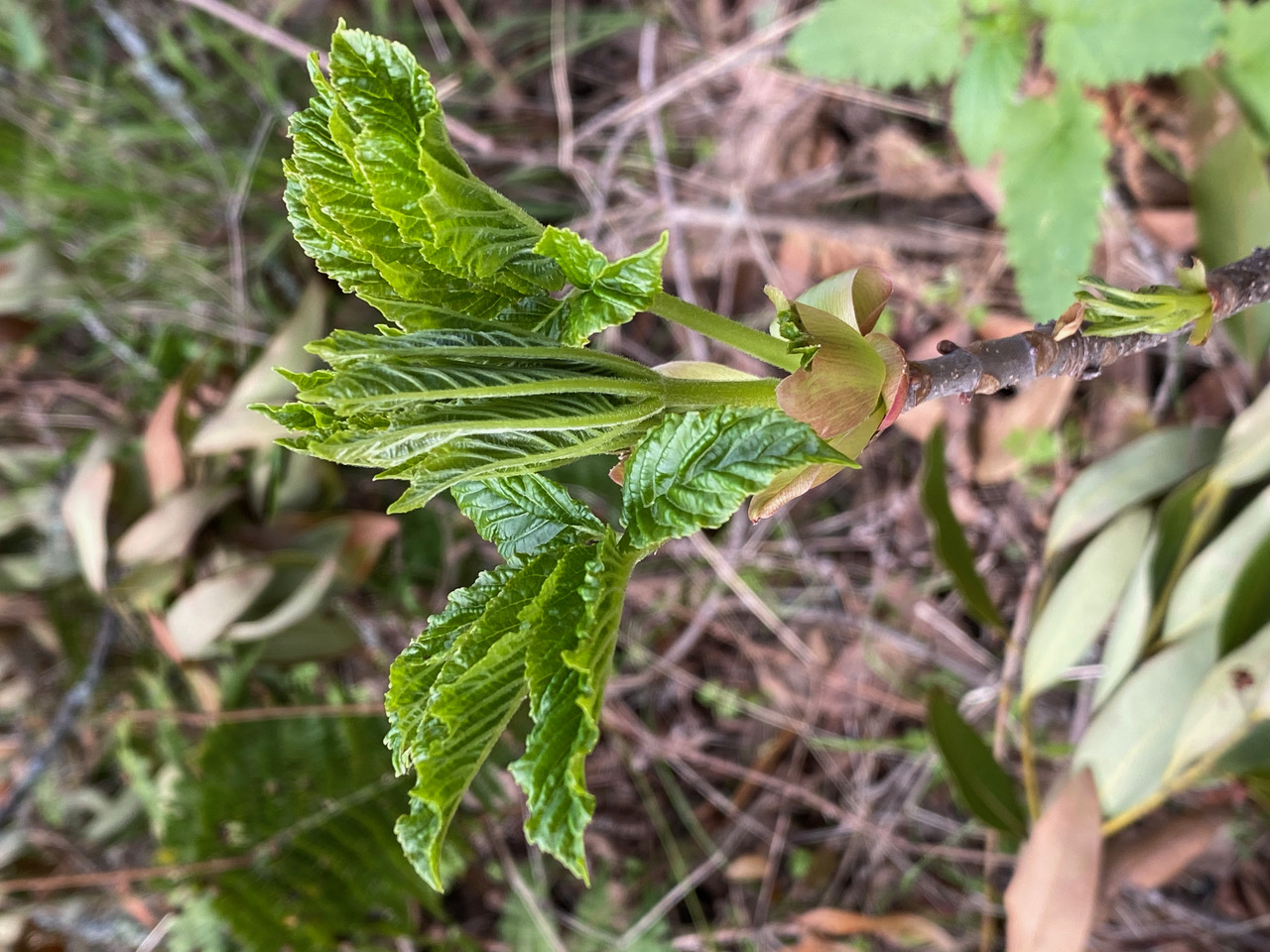
Who would’ve thought that so much life could be packed into a simple bud?