

Pollinator Post 2/1/23 (2)
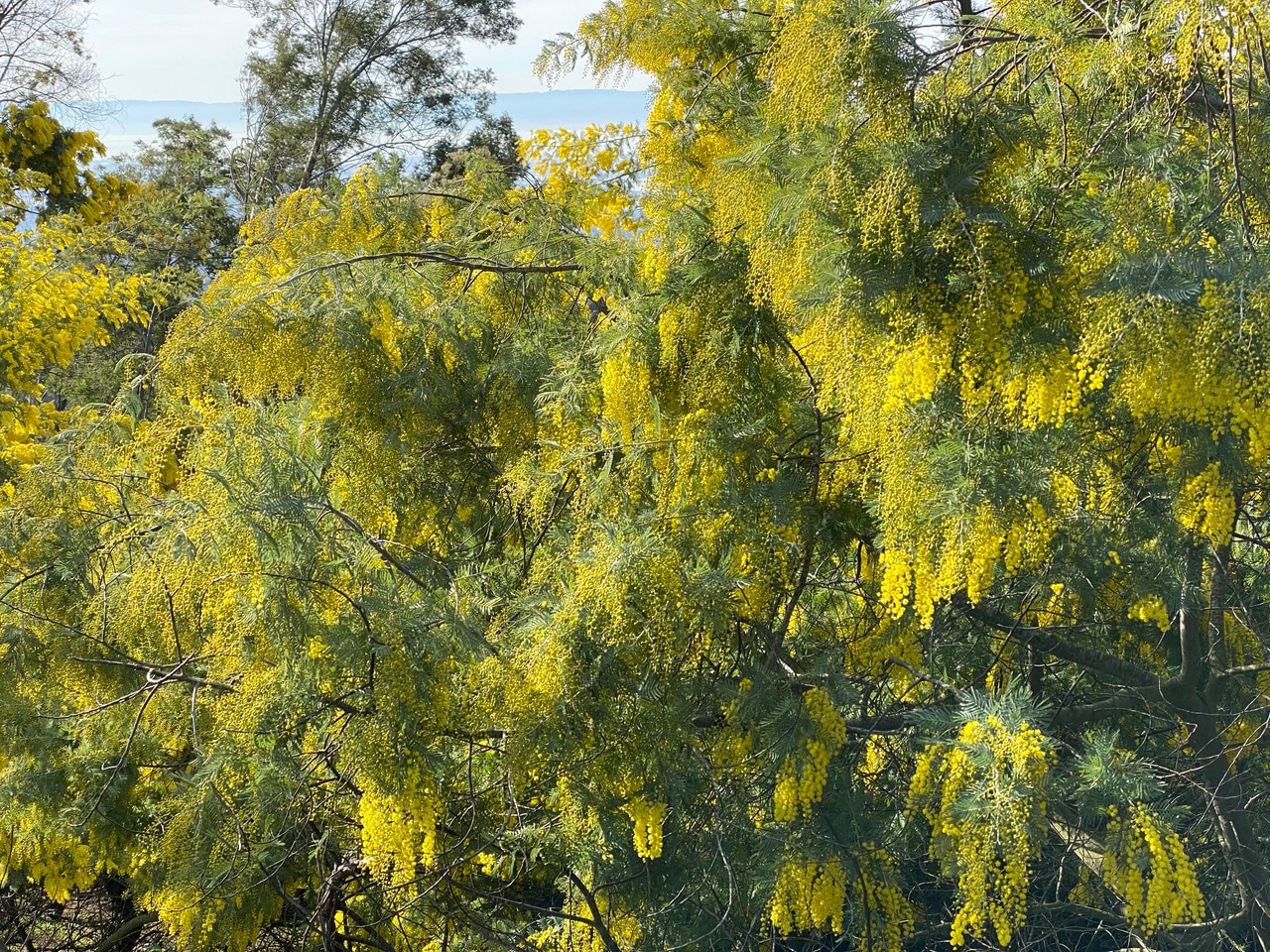 It’s hay fever season! The non-native Acacia is blooming profusely.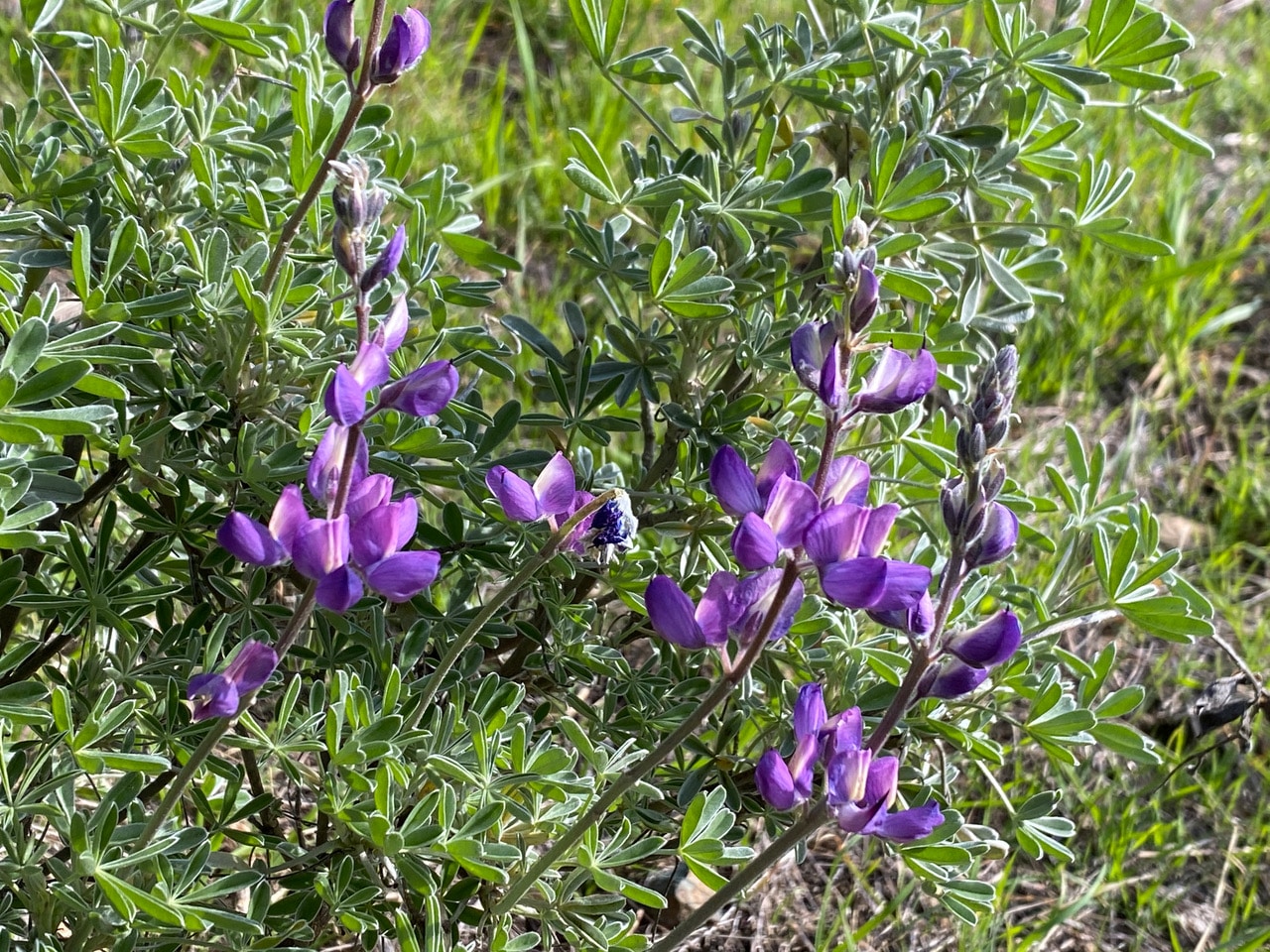
On the slopes near the FOSC nursery, some Silverleaf Lupines, Lupinus albifrons have started to bloom.
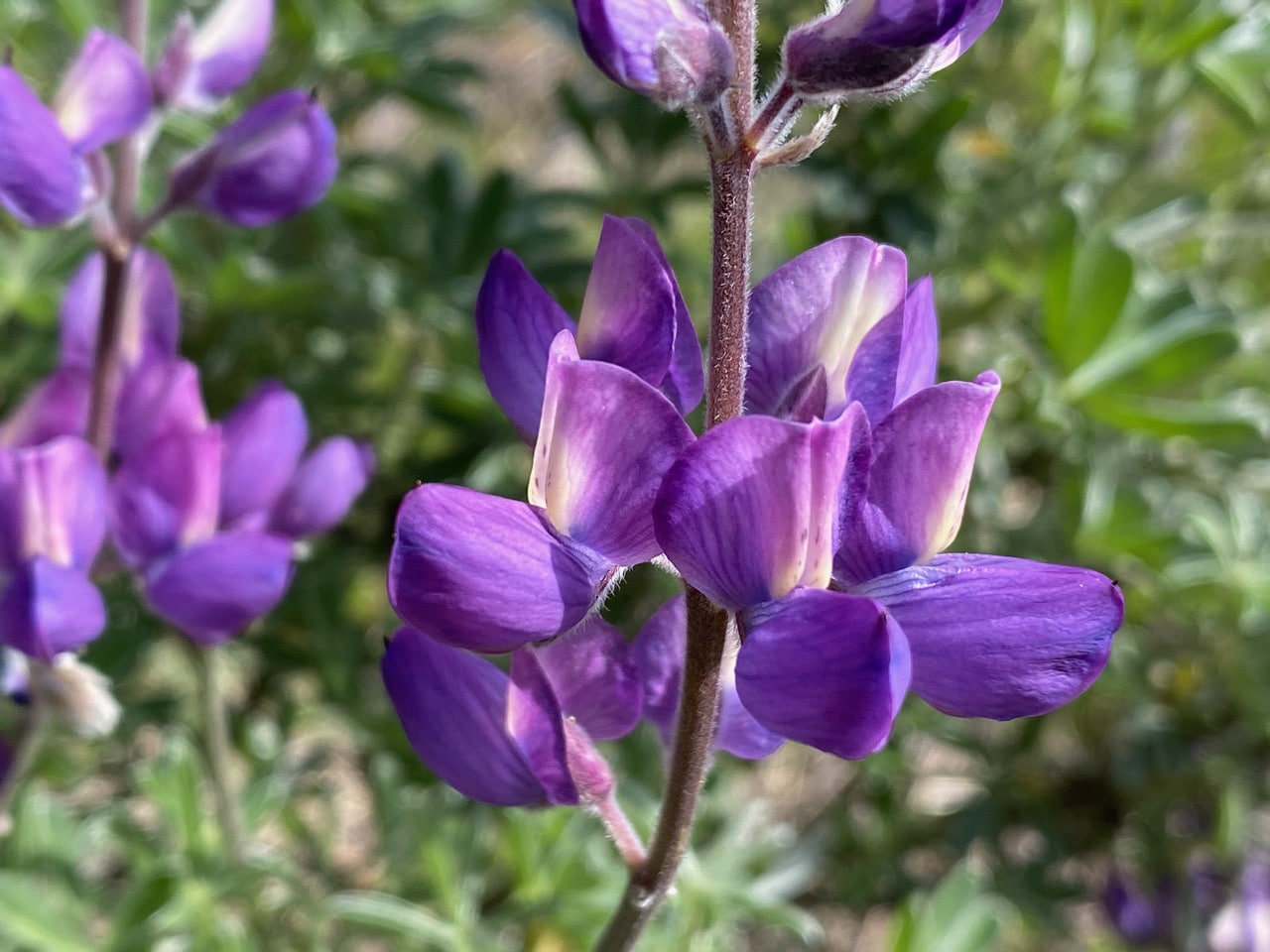
Lupines belong in the Fabaceae, or pea family. The flowers bear the typical bilateral structures of pea flowers. Lupine flowers are held on racemes at the tips of the branches. Individual flowers have a pair of upright petals that are fused; these are called the banners. Below the banners are a pair of petals called the wings that come together loosely to form a pouch-like structure. Within this space, the wings enclose another structure called the keel. Within the keel are held the precious reproductive structures. Only certain heavy-bodied bees, such as the bumble bees are capable of accessing the nectar and pollen of these flowers.
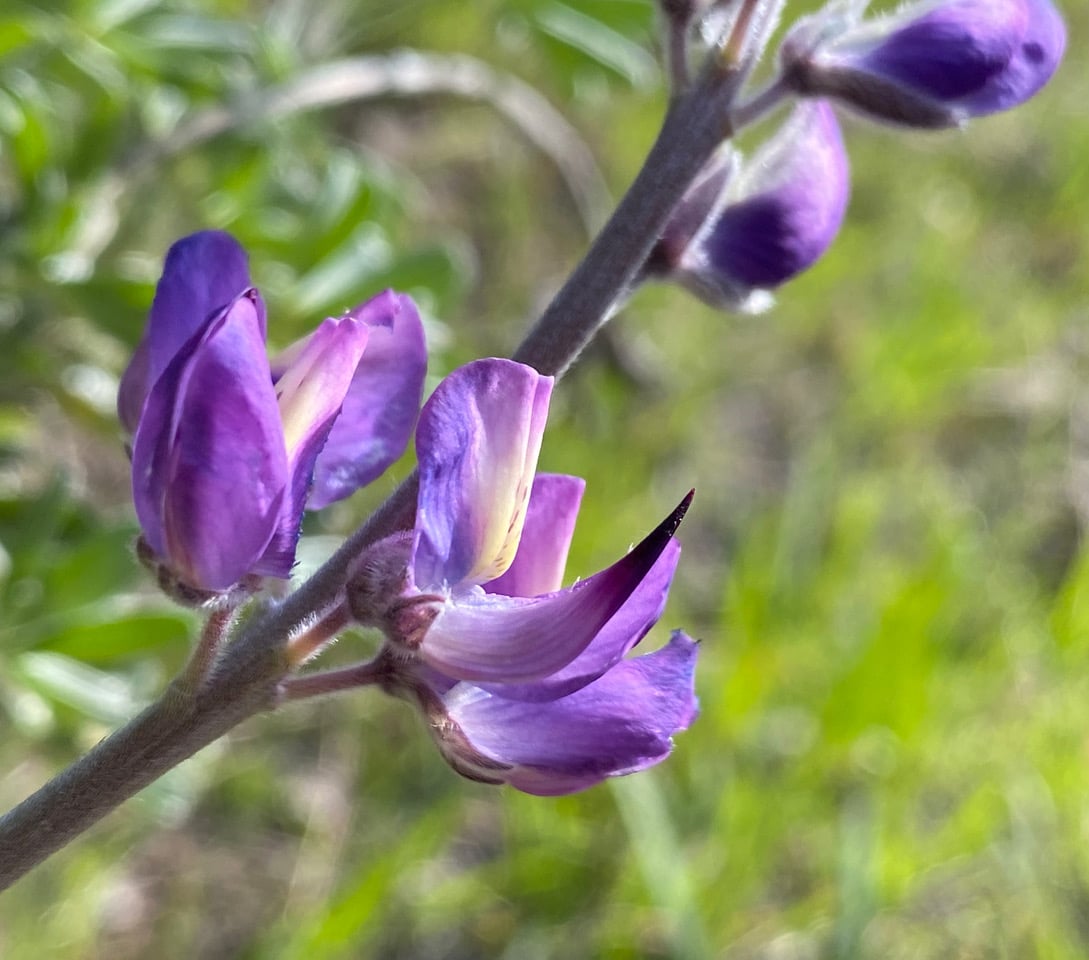
Here’s a flower with a missing wing petal, showing the sharp and dark-tipped keel within.
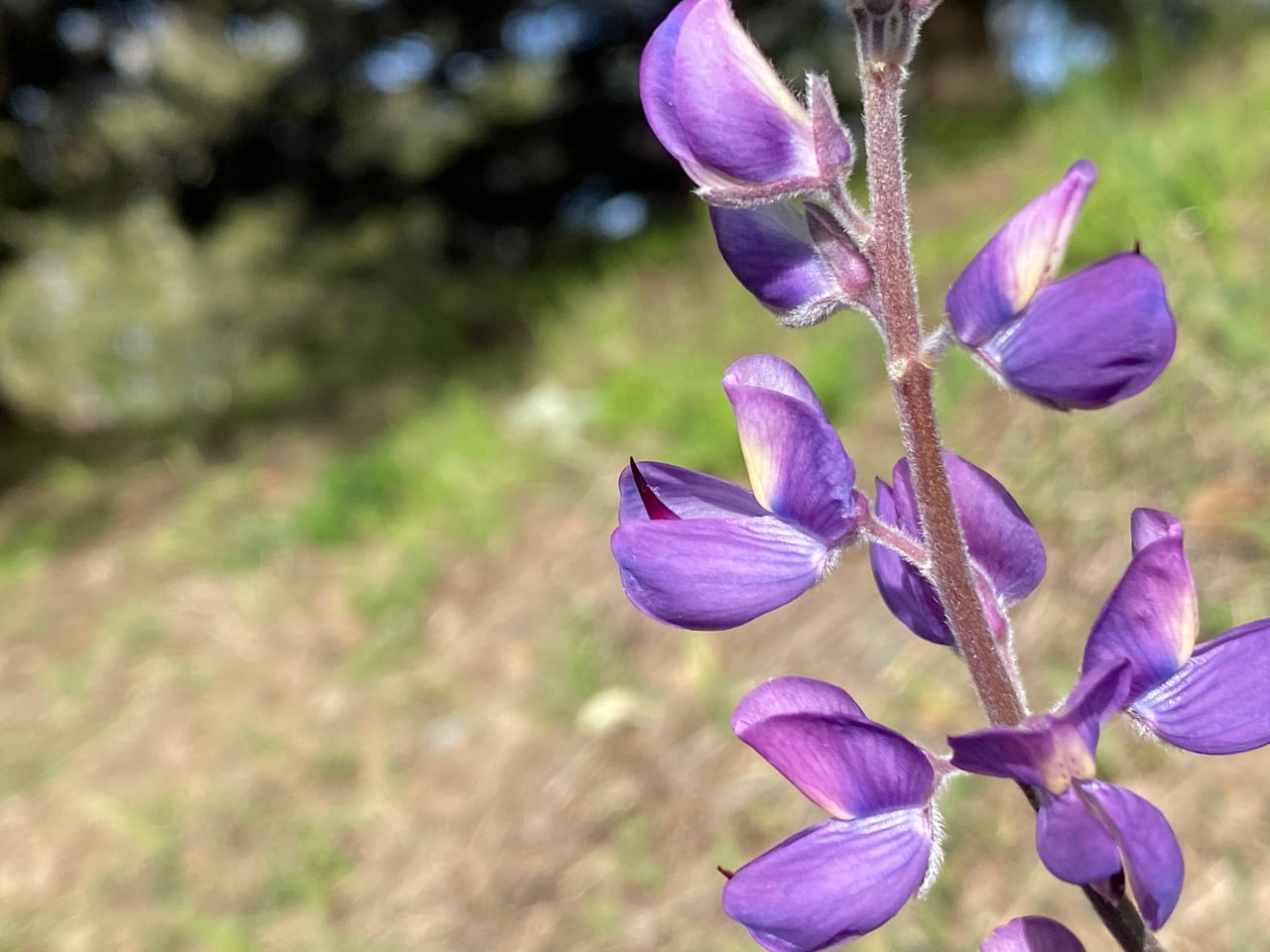
These flowers appear to have been visited by bumble bees! The sharp-tipped keel has popped up through the wing petals. This is what happens when a bumble bee lands on the horizontal surface created by the wing petals. The weight of the insect spreads the wing petals apart. The keel pops up, exposing the reproductive structures within. In an instant, the bee is hit on the belly by pollen from the stamens. Any pollen already on the bee is instantly transferred to the exposed stigma. Pollination accomplished!
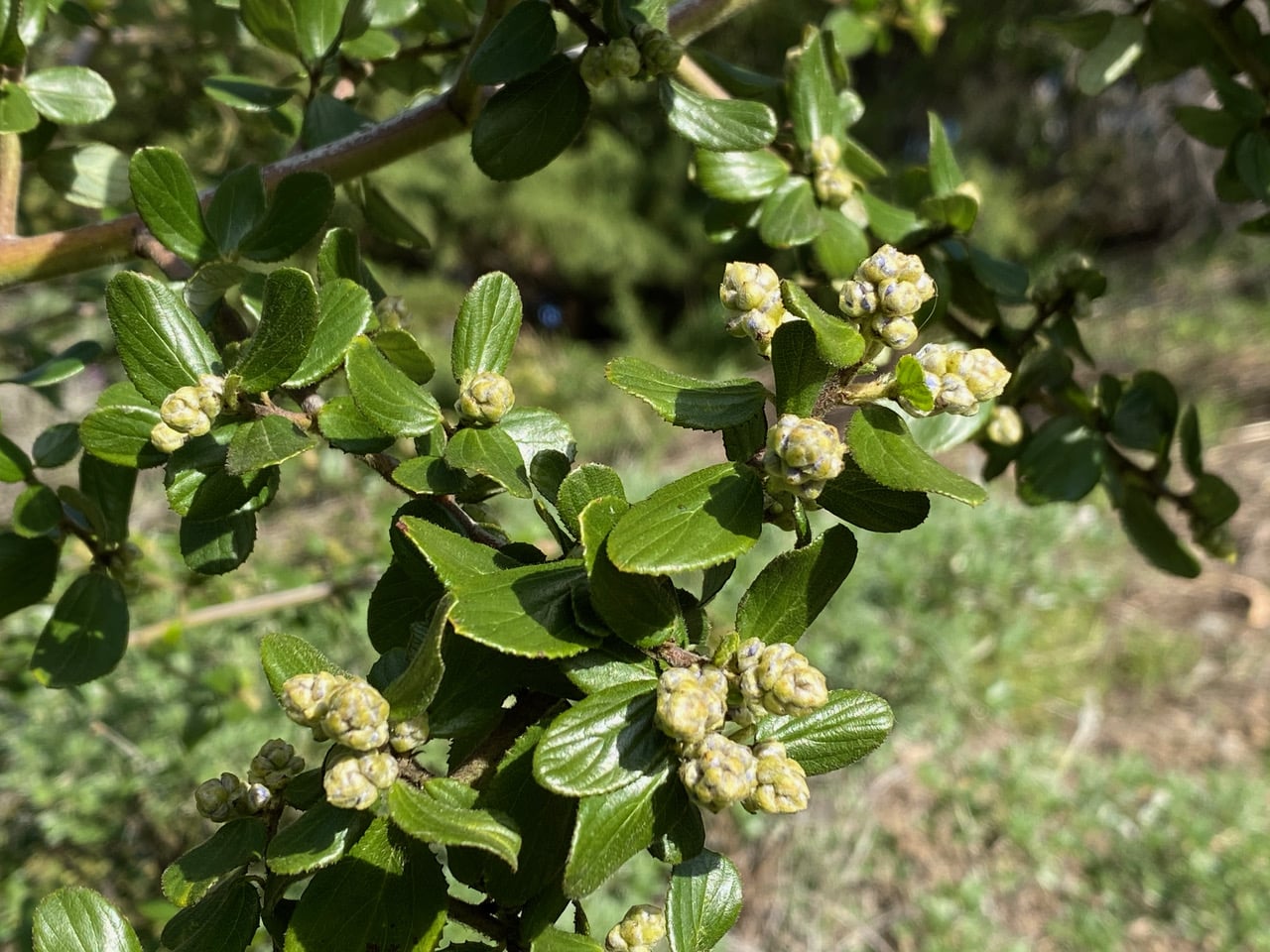
Up on the same slope, some shrubs of Blue Blossom Ceanothus, Ceanothus thyrsiflorus are studded with flower buds.

Scanning the upper slopes, I find a couple of large Ceanothus shrubs already in full bloom! Too bad that it’s so cold (about 50 F) – no bees are out foraging this morning.
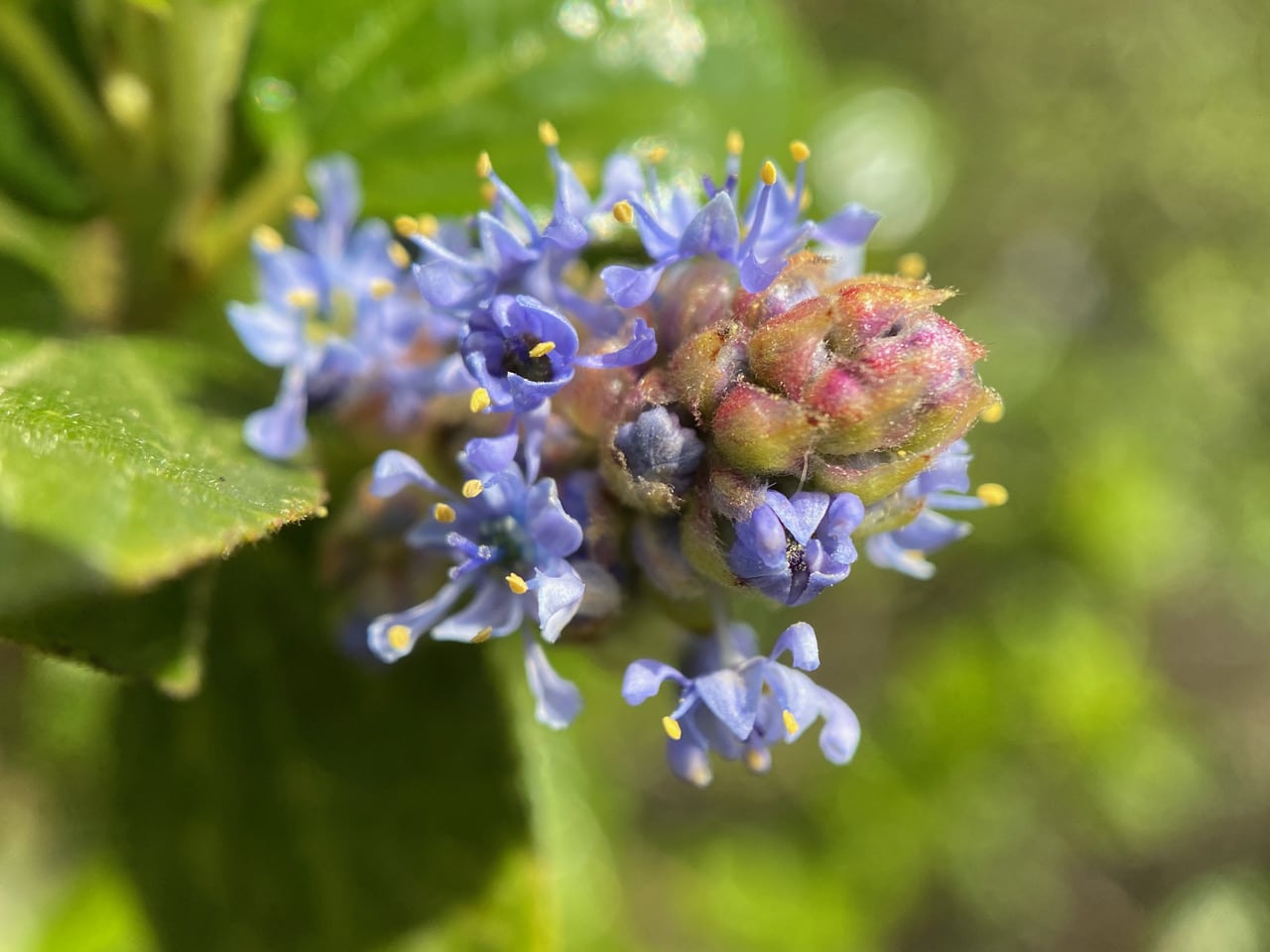
The tiny flowers are fragrant, and masses together in dense puff-shaped clusters to make a show attractive to bees. Both the petals and sepals are brightly colored.
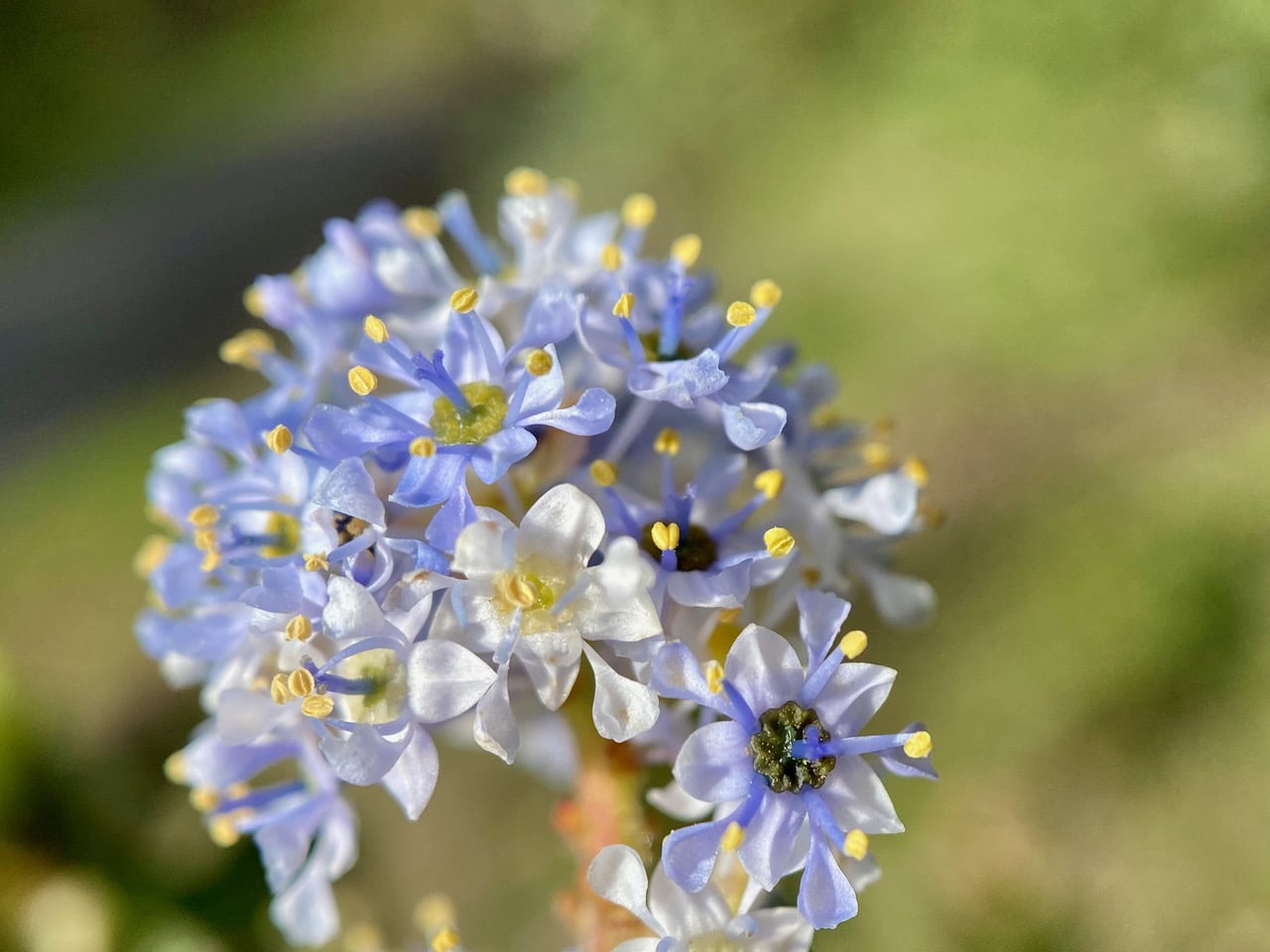
The blue color tends to fade as the flowers age. The anthers are fully exserted, making it easy for bees to collect pollen by simply walking over the inflorescence.
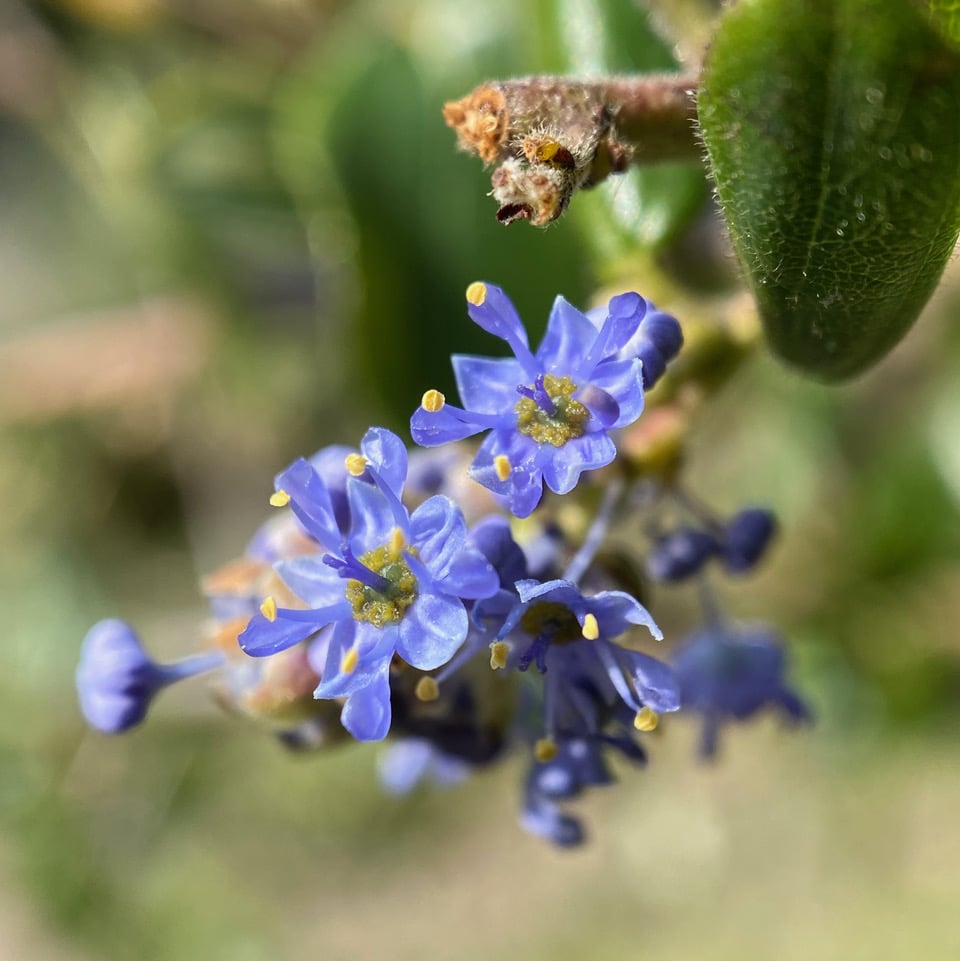
The individual flowers consists of 5 hooded sepals, 5 scoop-like petals, 5 stamens attached to a nectar-bearing disc, and a superior 3-lobed ovary. Both the sepals and petals are similarly colored.