

Pollinator Post 2/1/23 (1)

Friends have reported major tree damage at Joaquin Miller Park in Oakland during the last rain storms. I decide to check it out now that it has stopped raining for a couple of weeks.
 Dead trees have been cut and piled in huge amounts along the upper Sanborn Drive.


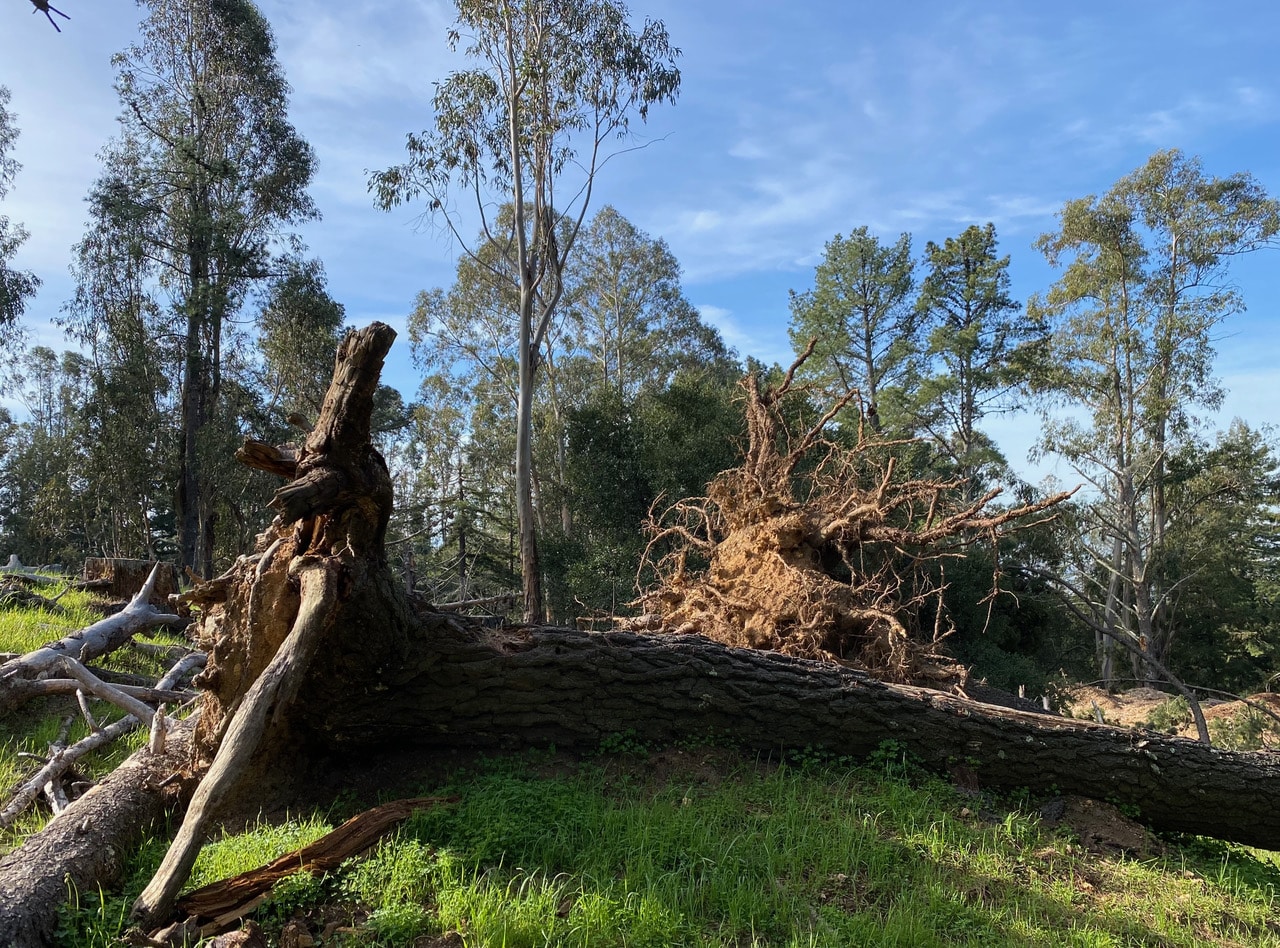
There are several uprooted and fallen trees near the visitor center.
Most of the casualties are Monterey Pines. These trees were planted about 50 years ago, about the life span of the species. They are all about the same age, weakened and dying from the drought. I walk the area around the parking lot cautiously, in case more weakened trees are ready to fall.
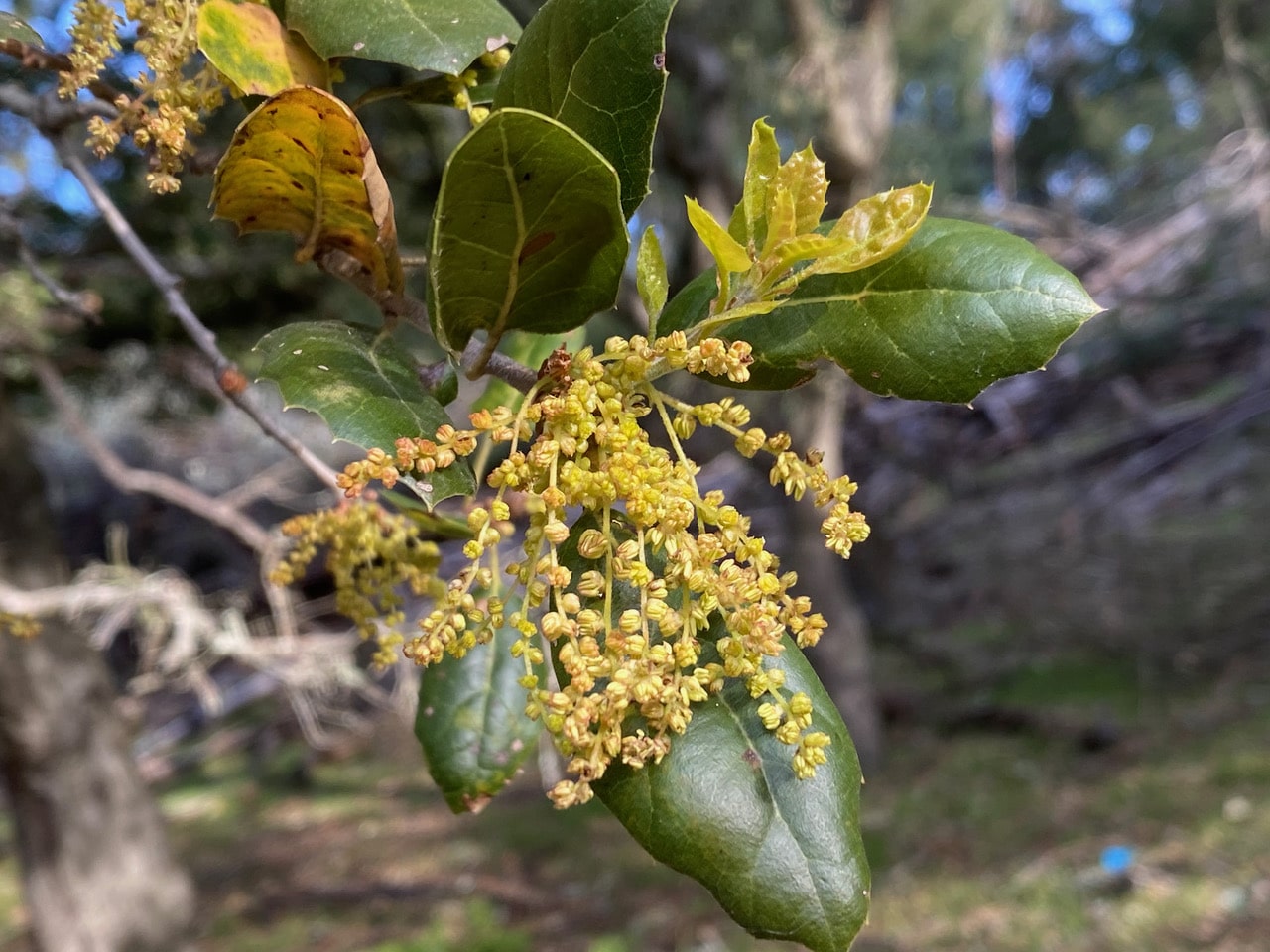
The Coast Live Oaks seem to have weathered the storms well. Some have already started to bloom, with male catkins dangling from the tips of the branches.
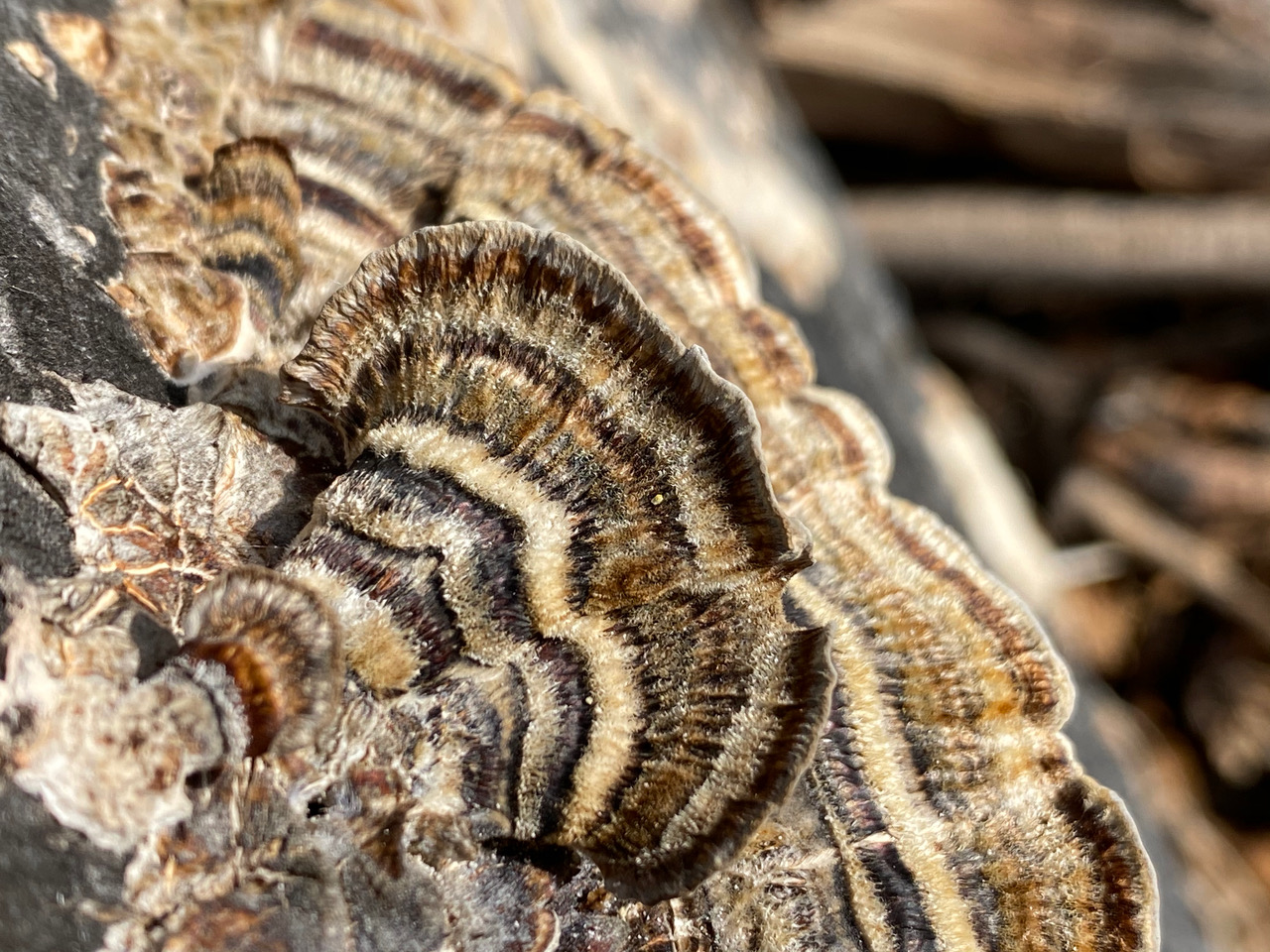
Dead trees have been cut and piled in huge amounts along the upper Sanborn Drive. I stop to marvel at the life on the tree trunks lying on the ground. This one has pretty Turkey Tail Fungus, Trametes versicolor growing on it. This is a polypore mushroom found commonly in North American woods, wherever there are dead hardwood logs and stumps to decompose. The species is a white-rot fungus which degrades lignin in wood. Tough and leathery, the mushroom is considered inedible to humans.
Close-up of the Turkey Tail Fungus, Trametes versicolor. As the species name suggests, the colors on the caps of Turkey Tail fungus are highly variable, but tend to stay in the buff, brown, cinnamon, and reddish brown range. The mushrooms are strikingly “zonate” with sharply contrasting concentric zones of color; the surface of the cap is finely fuzzy or velvety. The underside of the cap is the whitish pore surface where spores are released.
I am delighted to find this beautiful pattern on a log where the bark has recently fallen off. It is a gallery created by the Bark Beetles in the genus Scolytus. The gallery is carved into the tree’s phloem, or inner bark, by a female beetle and her larvae. Bark beetles typically attack stressed trees that are weak and dying. The feeding damage destroys the tree’s ability to transport food and nutrients, eventually killing the plant. The female beetle bores a straight tunnel into the phloem, while the male follows. After mating, she lays her eggs. When the eggs hatch, the larvae bore their own tunnels, feeding and growing bigger as they radiate from the maternal tunnel. Here you can see that the tunnels are still encased in solidified frass, or insect poop consisting mainly of sawdust.
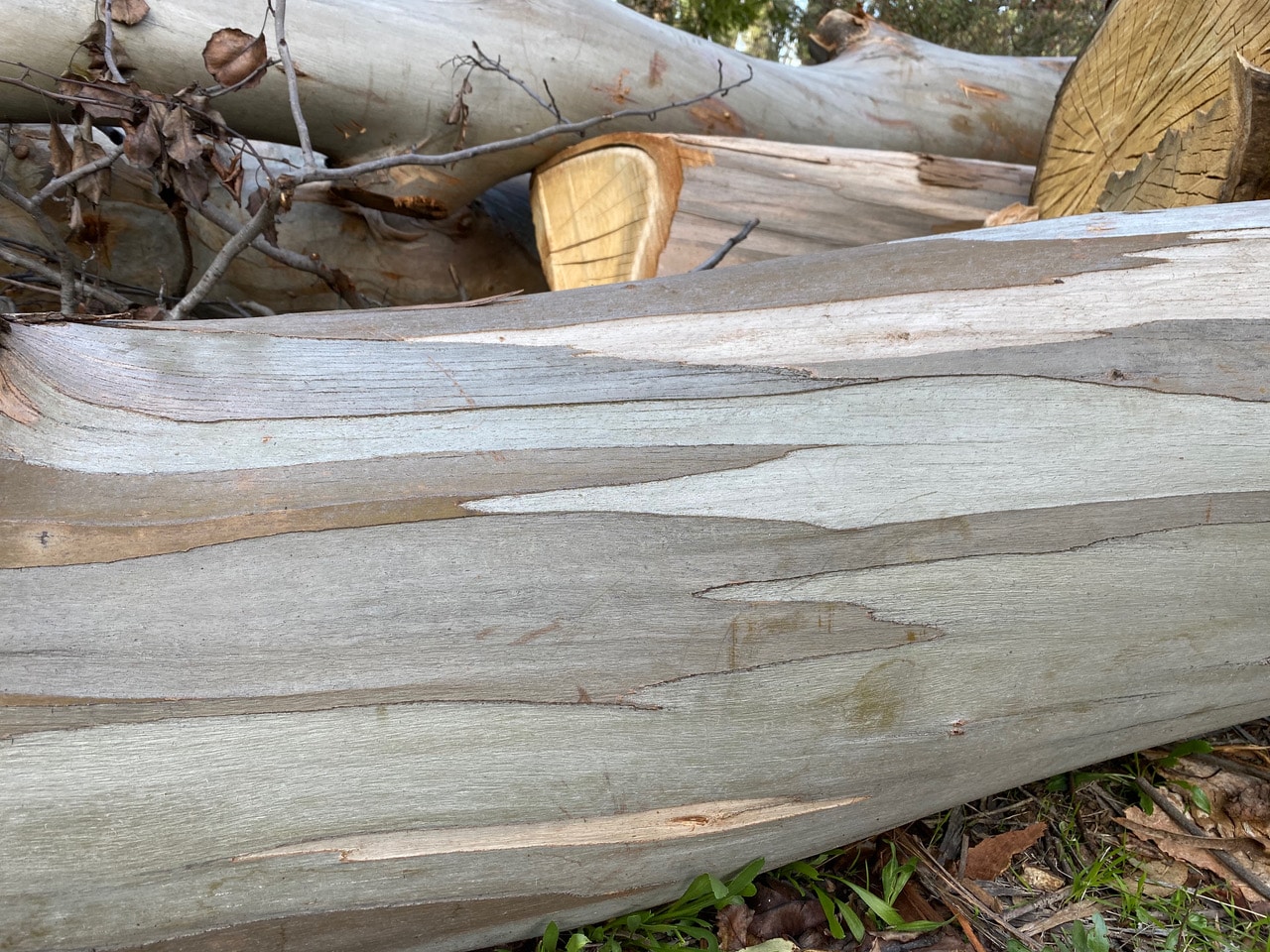
Some Eucalyptus trees are also downed by the rain storms.
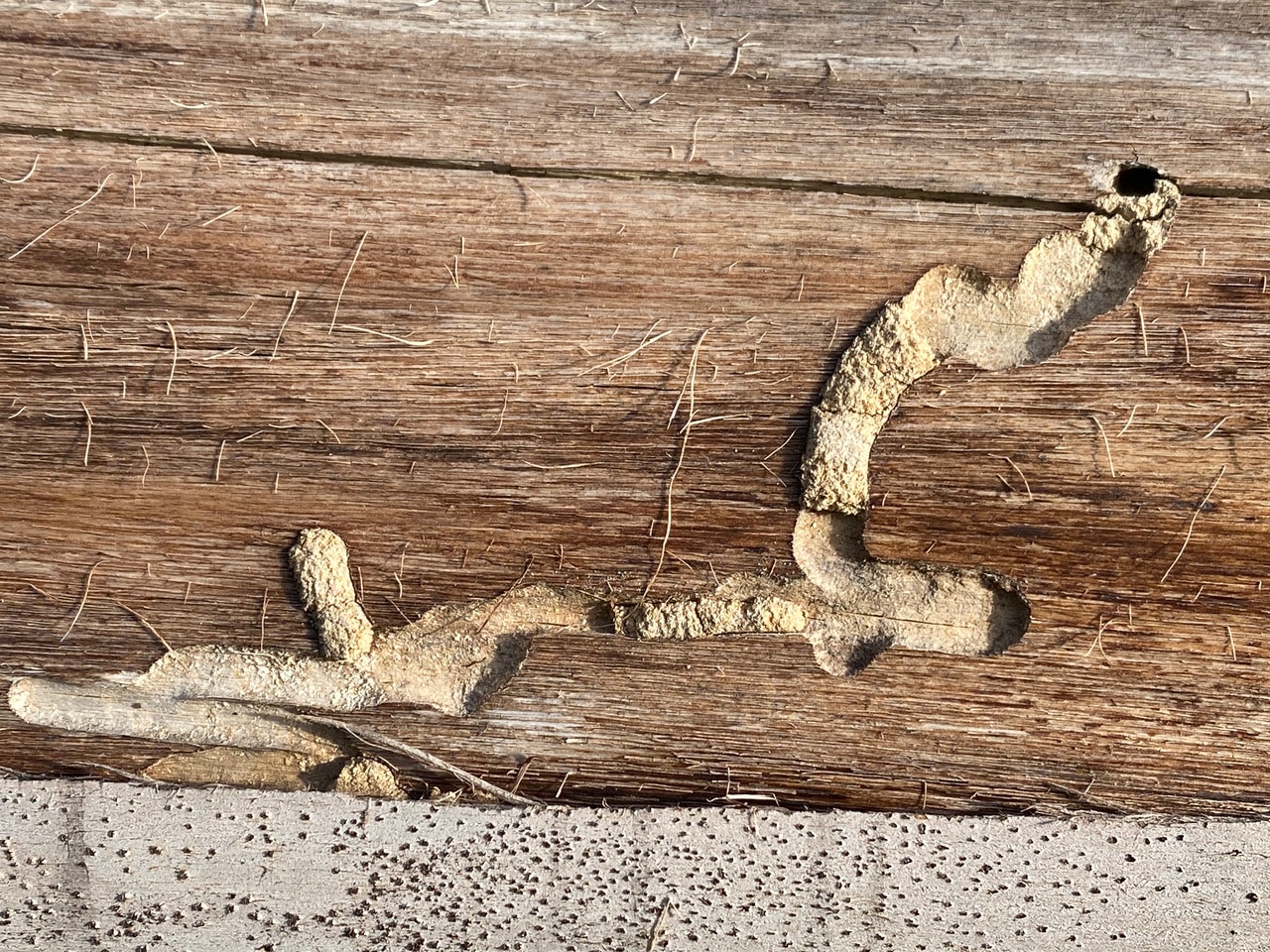
Where the bark has peeled off, a Eucalyptus trunk shows large bore holes and interconnecting tunnels. Chunks of frass has fallen off, revealing the carved tunnels of a larger species of beetle.