

Pollinator Post 12/26/25

After a series of rain that lasted for days, I am happy to be back walking the shoreline trail at Bay Farm Island.
Neon green vegetation has sprouted quickly with the rains, and isolated puddles have appeared on the flat trail.
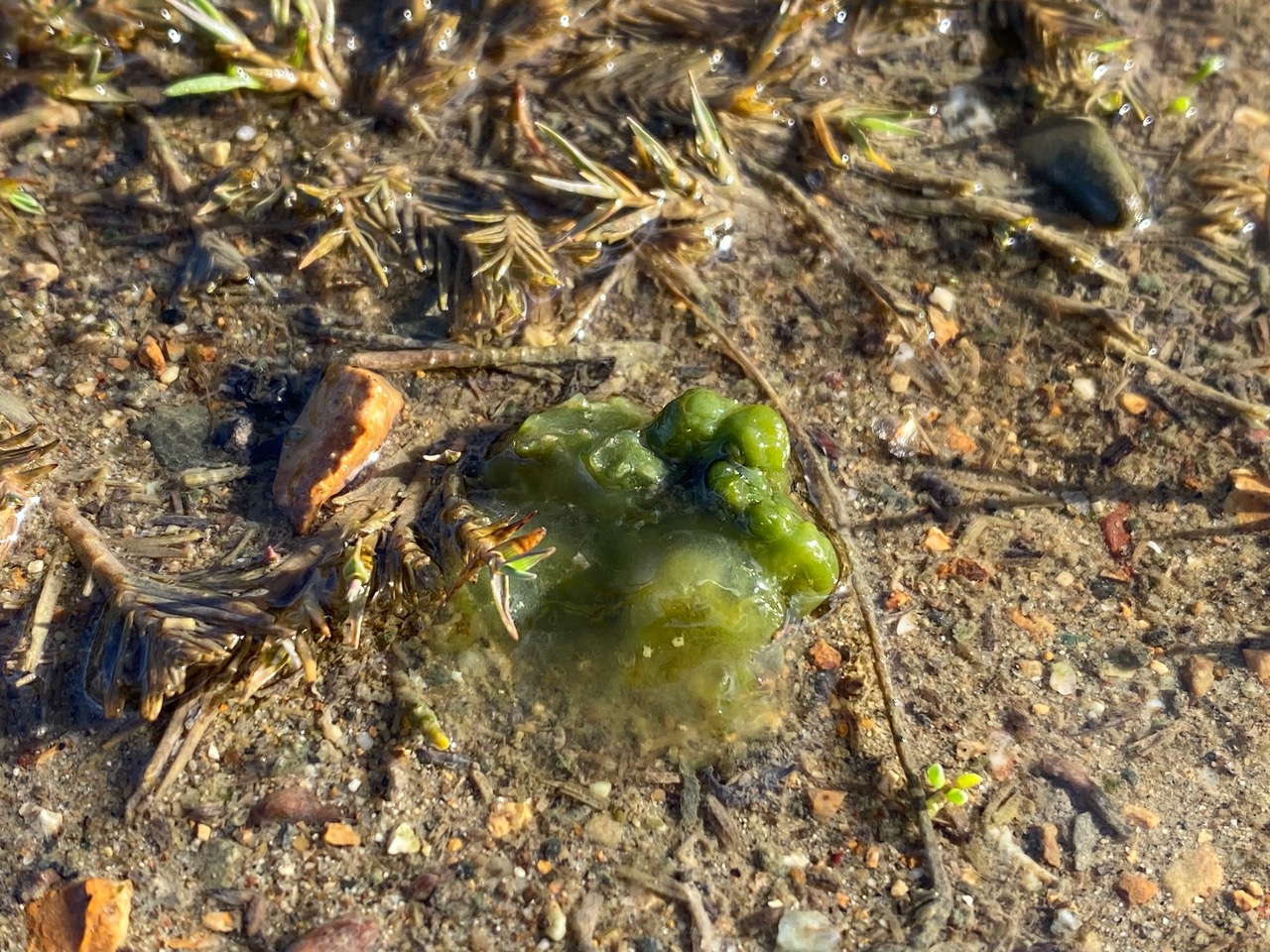
I peer into a shallow puddle and see small, gelatinous green lumps. Are these algae? iNaturalist has helped identify them as Star Jelly, Nostoc commune, a colonial species of cyanobacterium.
Nostoc commune is found in many countries around the world. It is able to survive in extreme conditions in polar regions and arid areas. It is a terrestrial or freshwater species and forms loose clumps on soil, gravel and paved surfaces, among mosses and between gravel. The cyanobacterium contains photosynthetic pigments and is capable of photosynthesis. It can also fix nitrogen from the atmosphere and can survive on nitrogen-poor substrates. Under adverse conditions such as desiccation, Nostoc commune can remain dormant for an extended period and revive when water becomes available.
Photos of Star Jelly (Nostoc commune) · iNaturalist

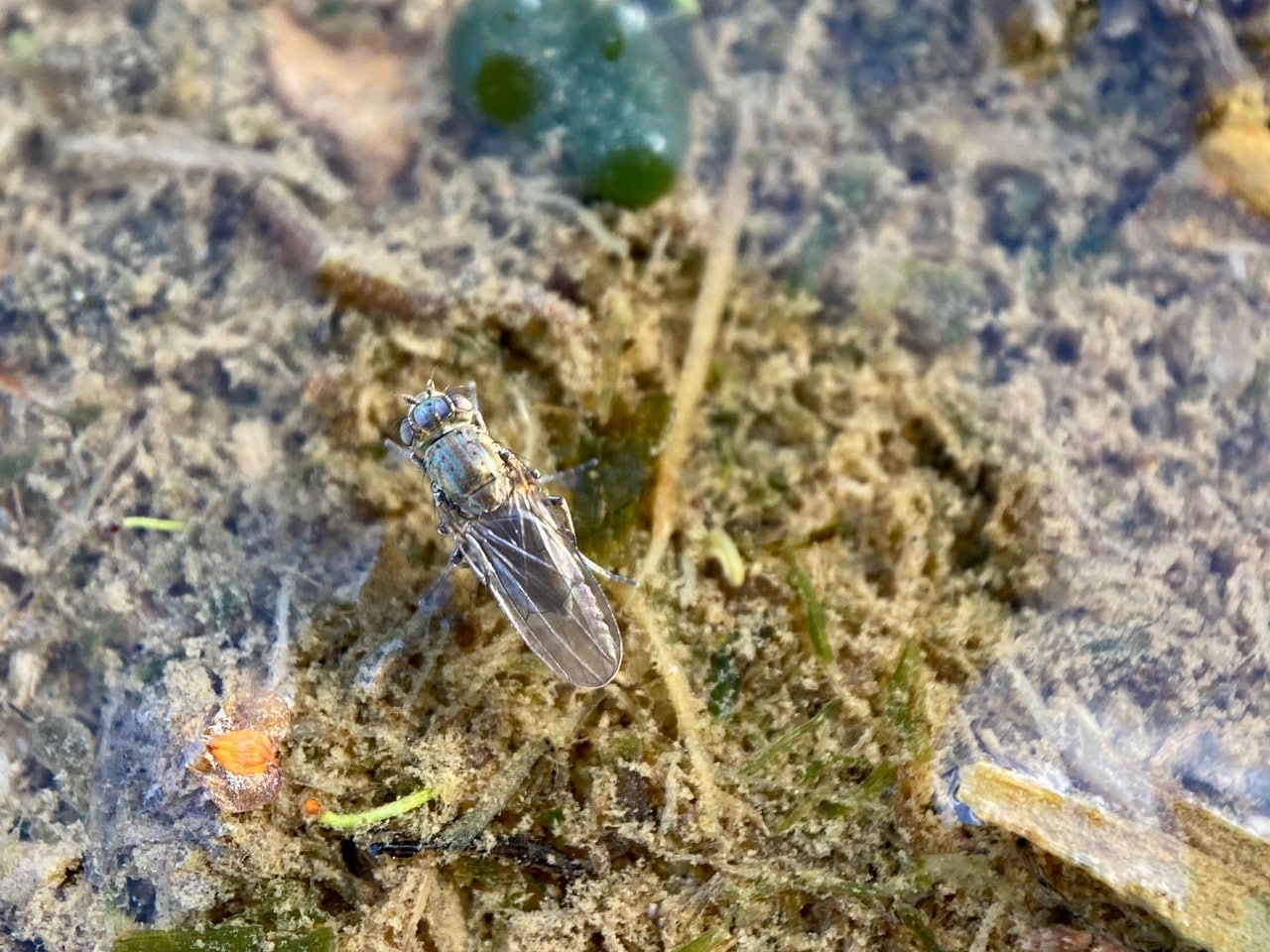
Despite the low temperatures and the brisk winds, there are actually small insects skating on the surface of the puddle. Water Striders? I have never seen such tiny ones. On closer inspection, I realize that they are actually flies. Shore Flies? iNaturalist has confirmed my suspicion. I have often seen these tiny flies on the vegetation around here, but never skating on water. They are skittish and scatter to the winds when I approach with the camera. This cooperative individual seems to be feeding on the green colonial cyanobacterium growing under the water surface.
The Shore Flies (family Ephydridae) are minute to small (2.5-9 mm), dark colored flies that are found in aquatic/semiaquatic habitats such as salt marshes, tidal salt pools, and alkaline lakes of arid regions. Along the shores of large lakes, they may rise in clouds from the ground. Larvae of most species filter microorganisms (bacteria, unicellular algae, yeasts) from the surrounding semiliquid medium, although some prefer dead and decaying animal tissue, or excrement. Adults are phytophagous, mostly feeding on microscopic algae and bacteria.