

Pollinator Post 12/18/25
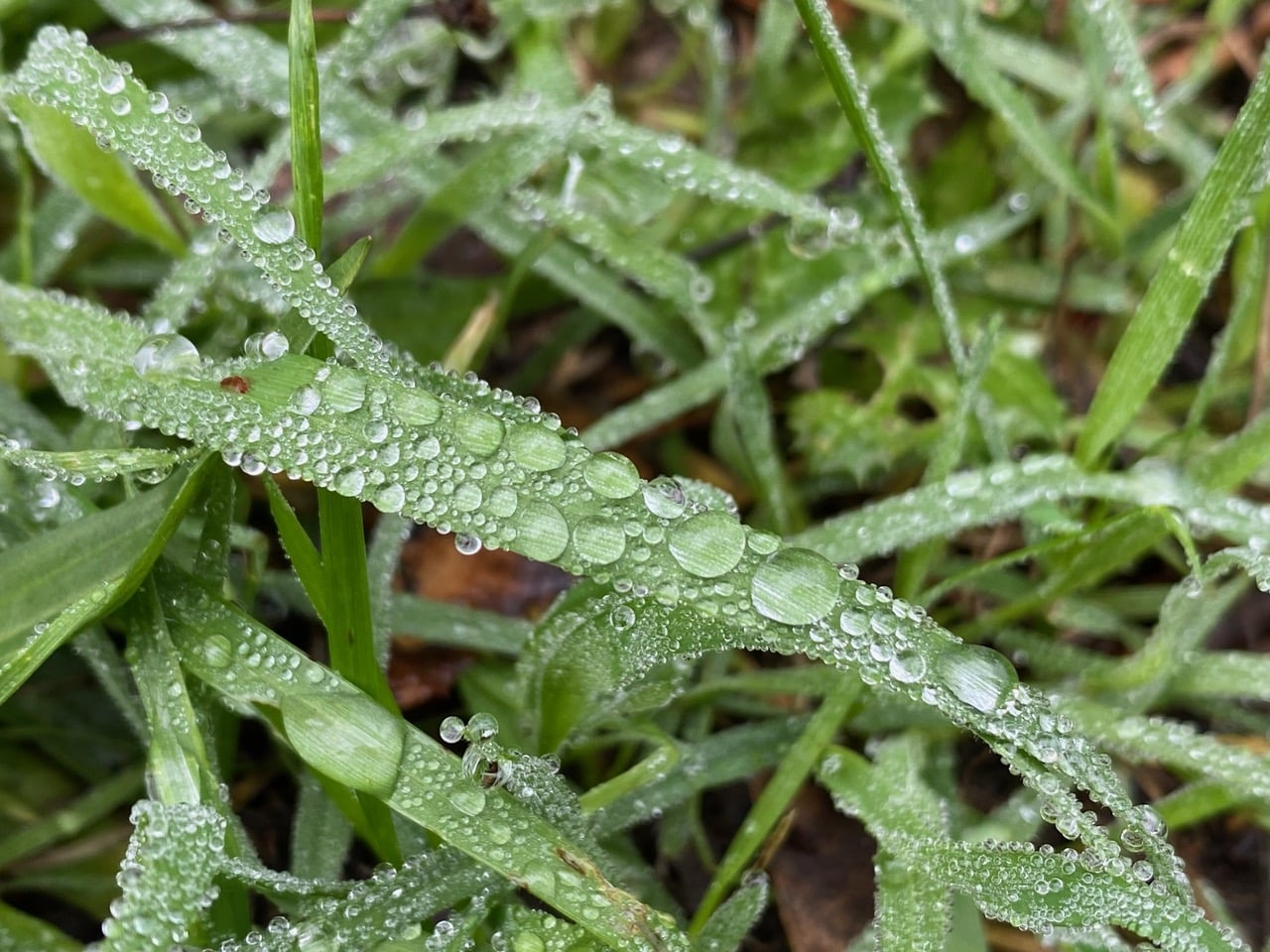
We had mild, persistent rain yesterday, first of a series that is forecast to last through the end of the year. I am taking my walk this morning at Joaquin Miller Park in the Oakland hills, thankful for the air that has been scrubbed clean.
The grasses on the side of the road are loaded with glistening rain drops.

I love how the curved surfaces of the water drops magnify the features of the leaf under them.
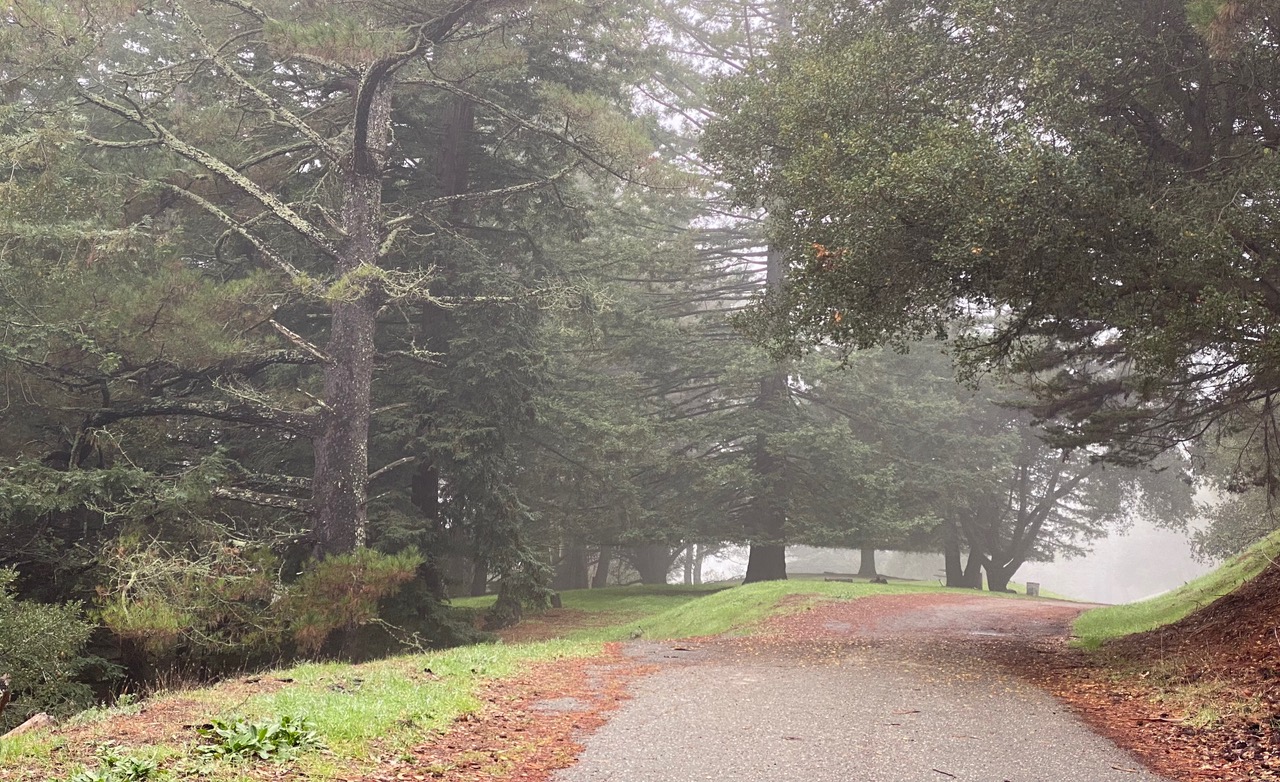
Strolling through the fog around this bend, I keep my eyes out for a couple of old friends on the steep slope to the right of the road.

Aha, here’s one of them! The Wild Cucumber or Coastal Manroot, Marah oregana has emerged from the thick duff under the Coast Live Oak and Monterey Pines.
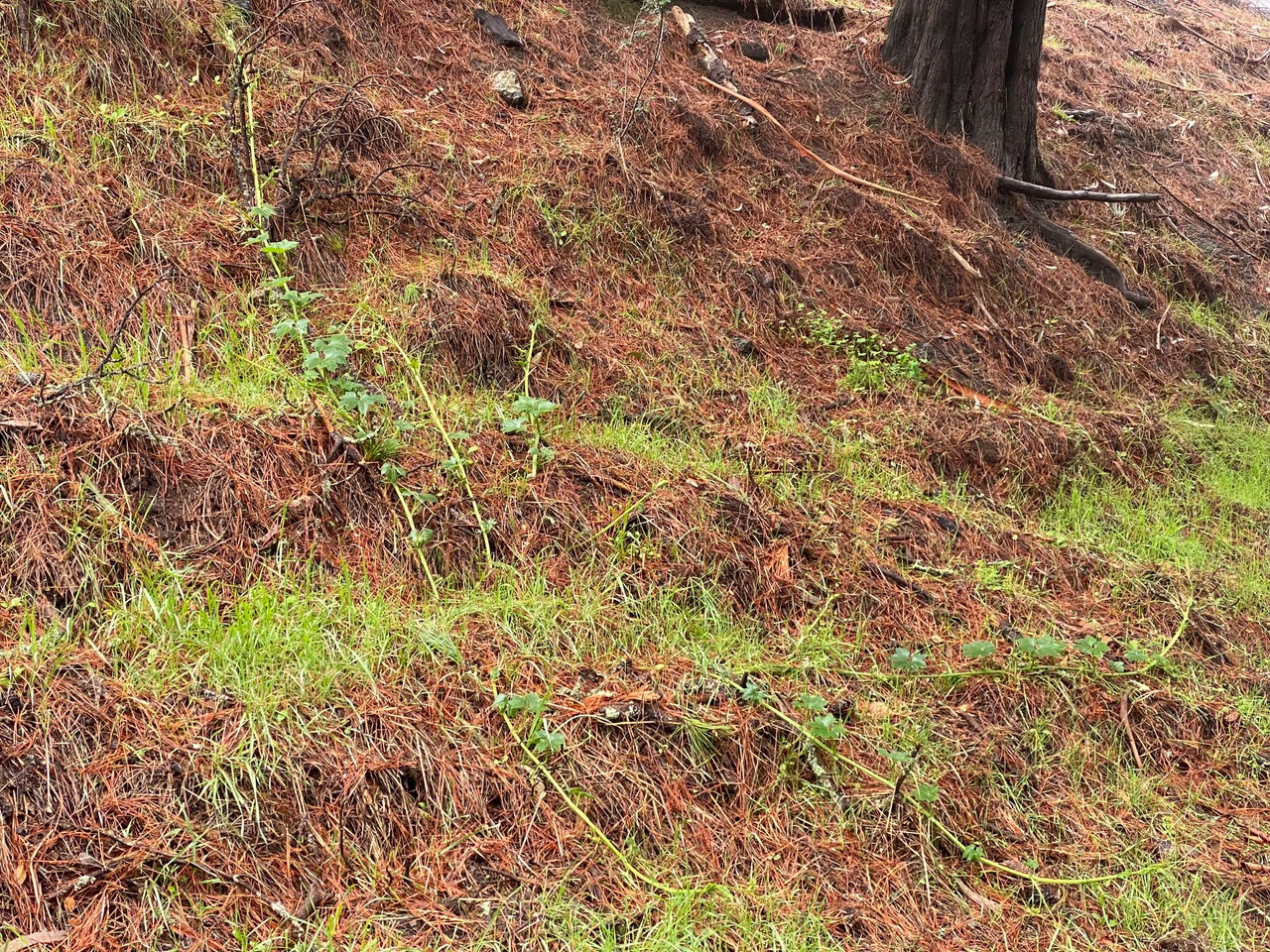
Just a few steps away, this other Marah has sent out several vines from the ground sprawling out like an octopus. After the first rains, the perennial emerges from its massive tuberous root in the same spot year after year.
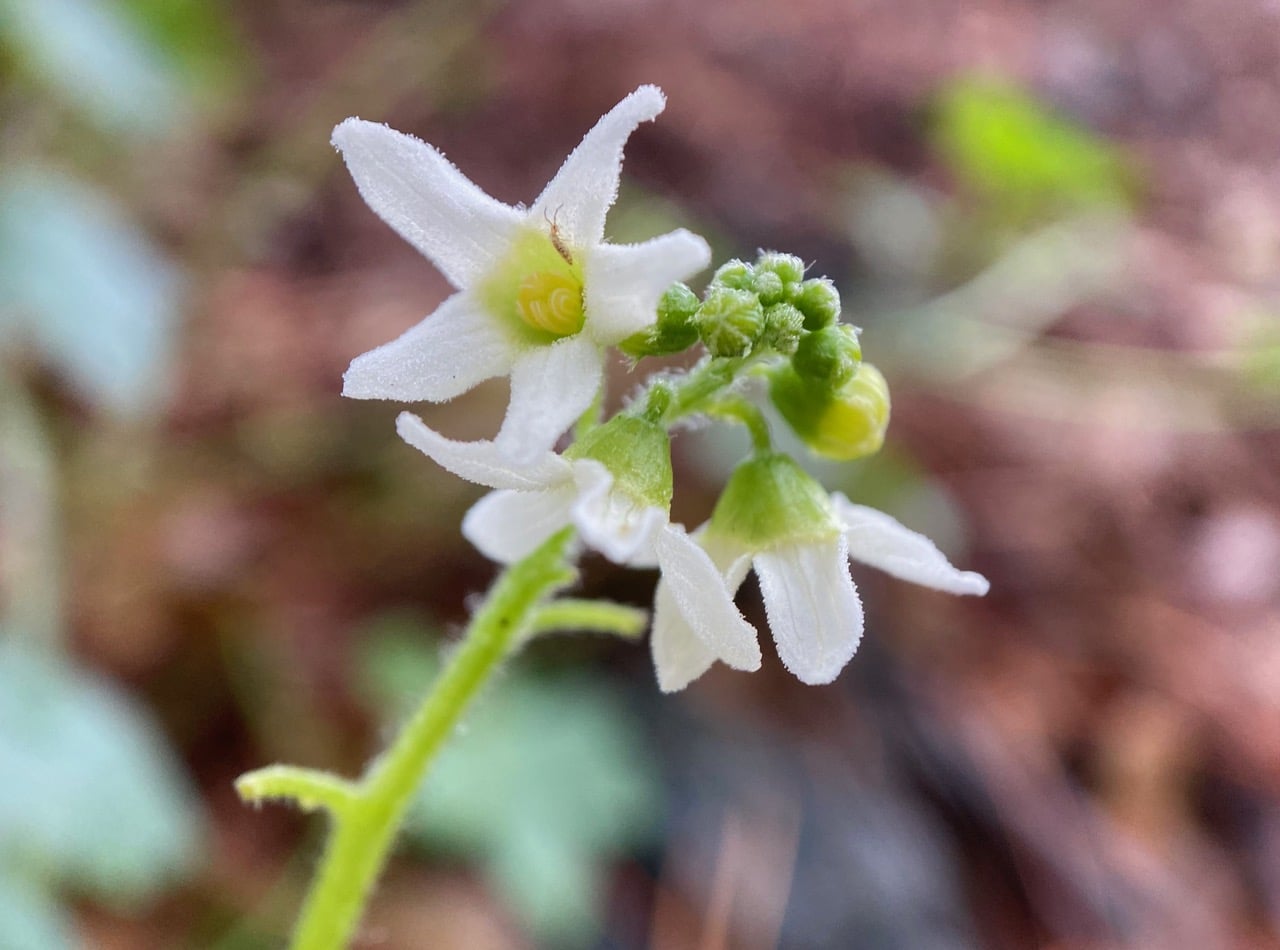
The Wild Cucumber is already in bloom! I take a picture of a cluster of male flowers for the records. Wait, there’s a tiny critter crawling out of that flower.
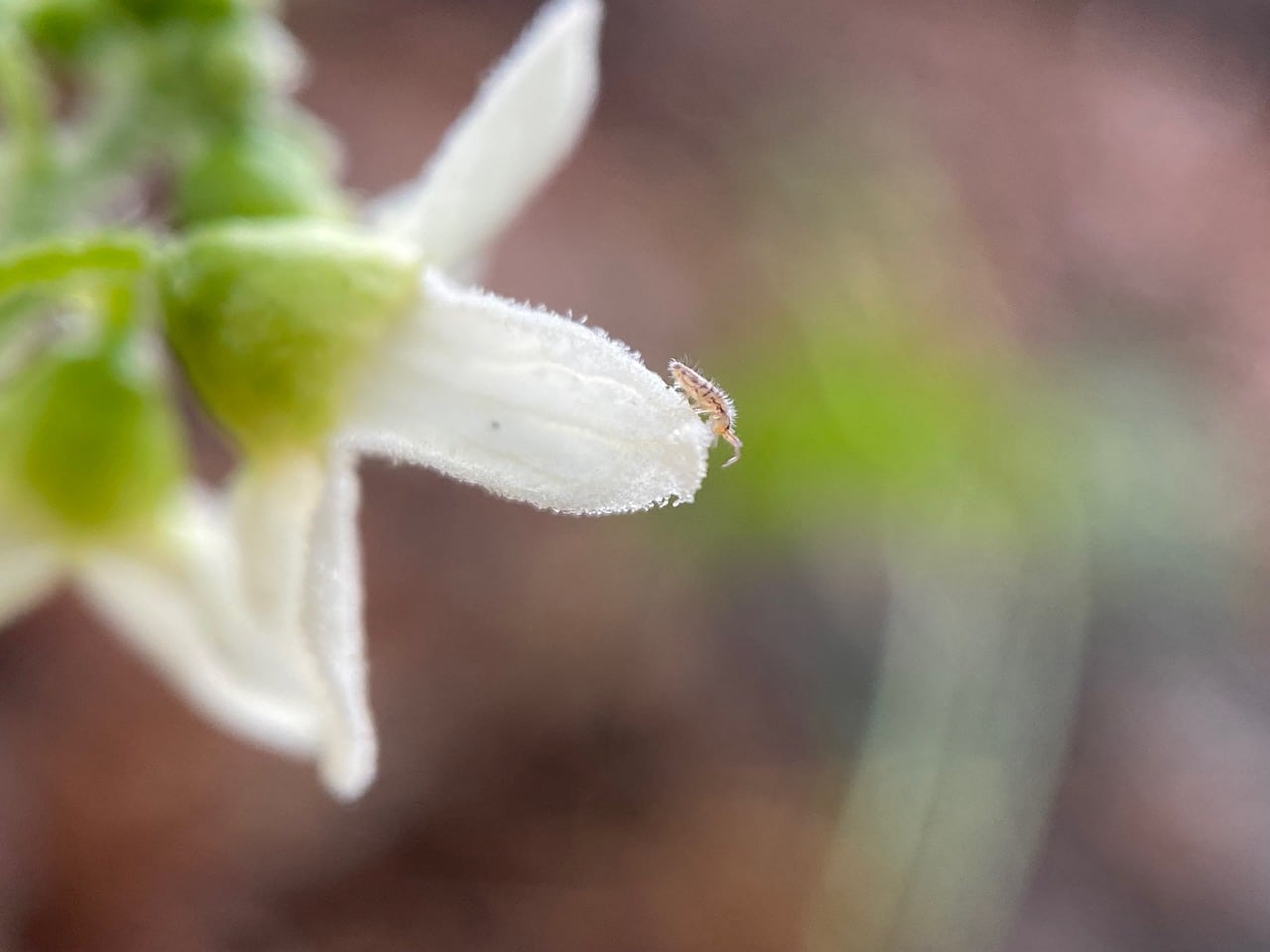
On closer inspection, I realize that it is not a thrips as I have first suspected, but a Slender Springtail (family Entomobryidae, class Collembola)! How delightful!
The Springtails are among the most abundant of all soil-dwelling arthropods. They live in a variety of habitats where they feed as scavengers on decaying vegetation and soil fungi. Most species are small (less than 6 mm in length) and quite susceptible to desiccation unless they remain in a moist environment. A unique, tube-like structure, the collophore is located ventrally on the first abdominal segment of most species. The exact function of this organ is unknown, but it probably helps maintain water balance by absorbing moisture from the environment, and helps stabilize the animal.
Springtails are named for a forked jumping organ (the furcula) found on the fourth abdominal segment. The furcula is retracted against the ventral wall of the abdomen and held there, in cocked position, by a special catch (the tenaculum). Releasing the tenaculum causes the furcula to snap down against the substrate and flip the organism some distance through the air to escape predators.

There are several of these critters moving around in the tight recesses of the Marah flowers. Are they foraging for pollen and nectar?
Springtails are detritivores, primarily eating fungi, decaying organic matter (such as leaf litter, dead plants), algae, pollen, and bacteria. They are vital decomposers. While some springtails feed on pollen and nectar in flowers, they may incidentally transfer pollen. However, the springtails are better known to play a vital, ancient role in helping mosses reproduce. Mosses release sperm that needs water to swim to the female plant, but springtails help by carrying this sperm on their bodies, especially when water is scarce.

iNaturalist has helped narrow down the ID of the Springtail to the genus Entomobrya (family Entomobryidae, order Entomobryomorpha, class Collembola).
The Entomobryomorpha are one of the three main orders of Springtails, tiny hexapods related to insects. They are distinguished from the other springtails by their slender, elongated body.
Springtails aren’t insects because their mouthparts are hidden inside their head (entognathous), unlike insects with external mouthparts, and they have other distinct features like a unique jumping appendage (furcula), simple eyes, and they continue to molt after sexual maturity, setting them apart as their own ancient lineage (Collembola) within hexapods. They are more like insects’s ancient cousins, representing a separate evolutionary branch that diverged long ago, even though they share six legs and a body plan.
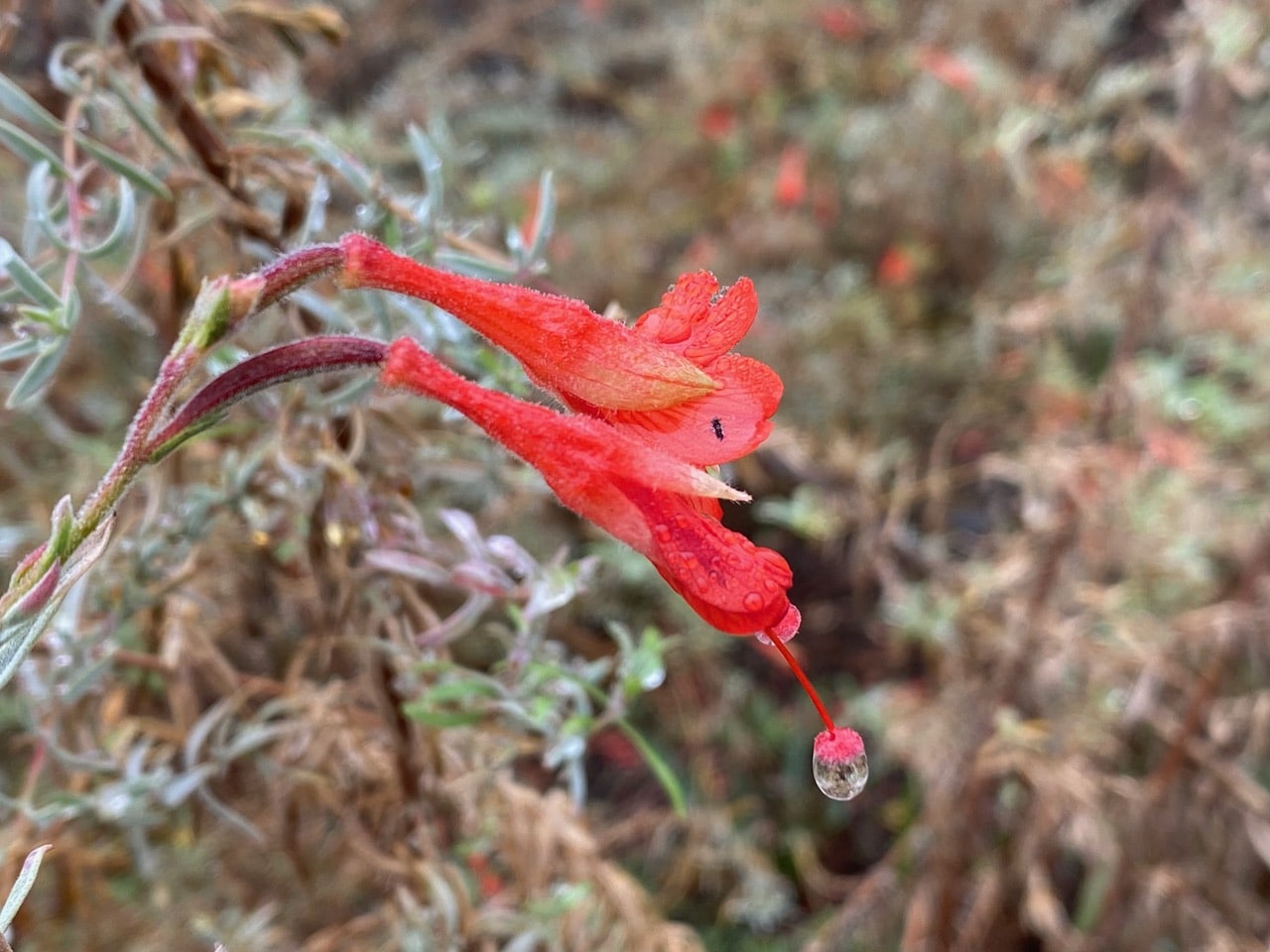
Many of the California Fuchsia, Epilobium canum have closed their flowers in response to the rain. Somehow I have never noticed this behavior before. These flowers generally do not close in the evening; they remain open continuously during their blooming season to attract pollinators. The closed petals wrap around the stamens to protect the pollen from the rain, while the longer style and stigma remain exposed, dripping with rain drops. It makes sense that flowers that bloom during our wet season are downward facing. Think of manzanita, pink-flowering currants, milk maids…
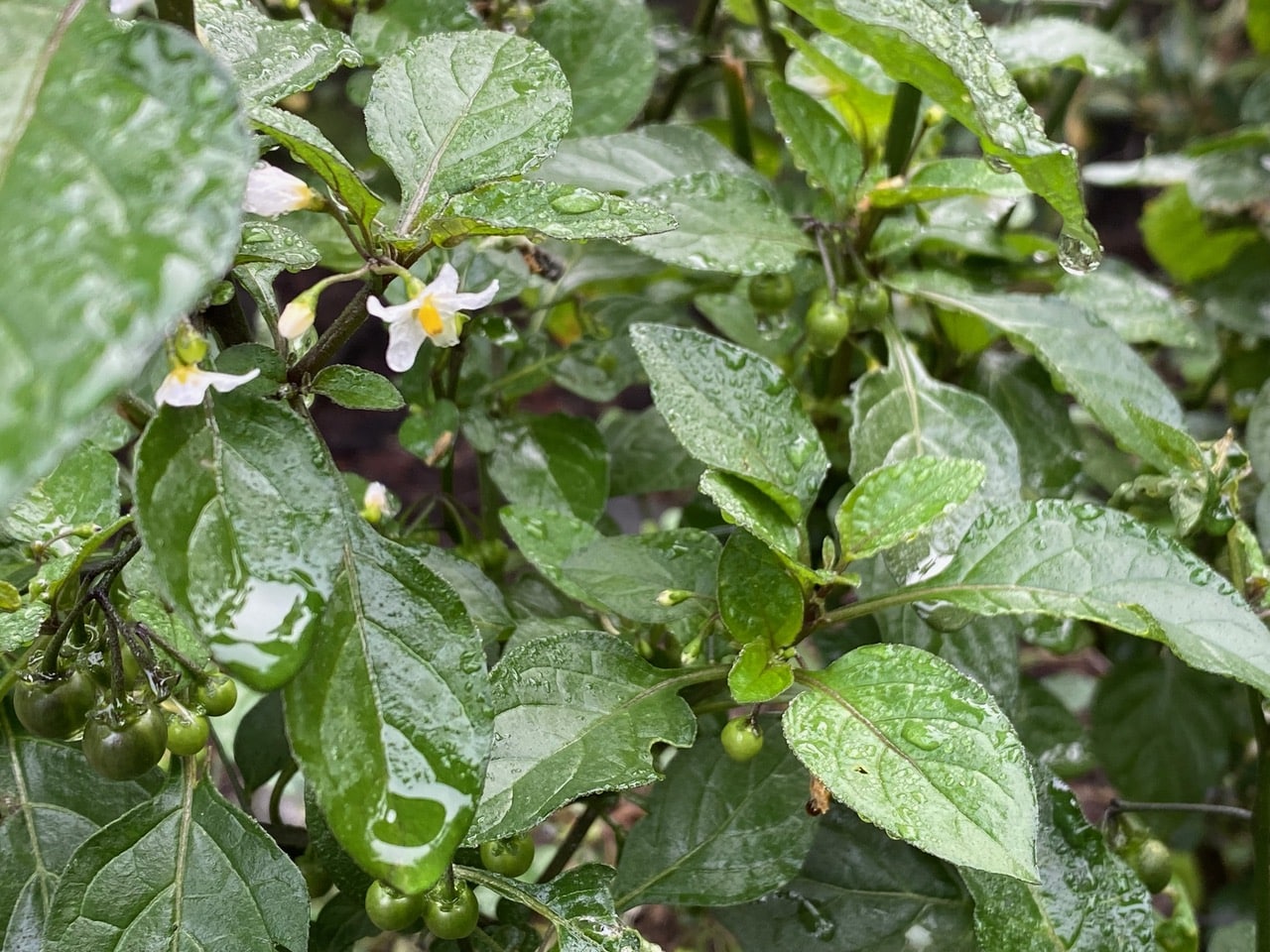
Near the gate of the FOSC Native Plant Nursery, the American Black Nightshade, Solanum americanum is drenched in rain.
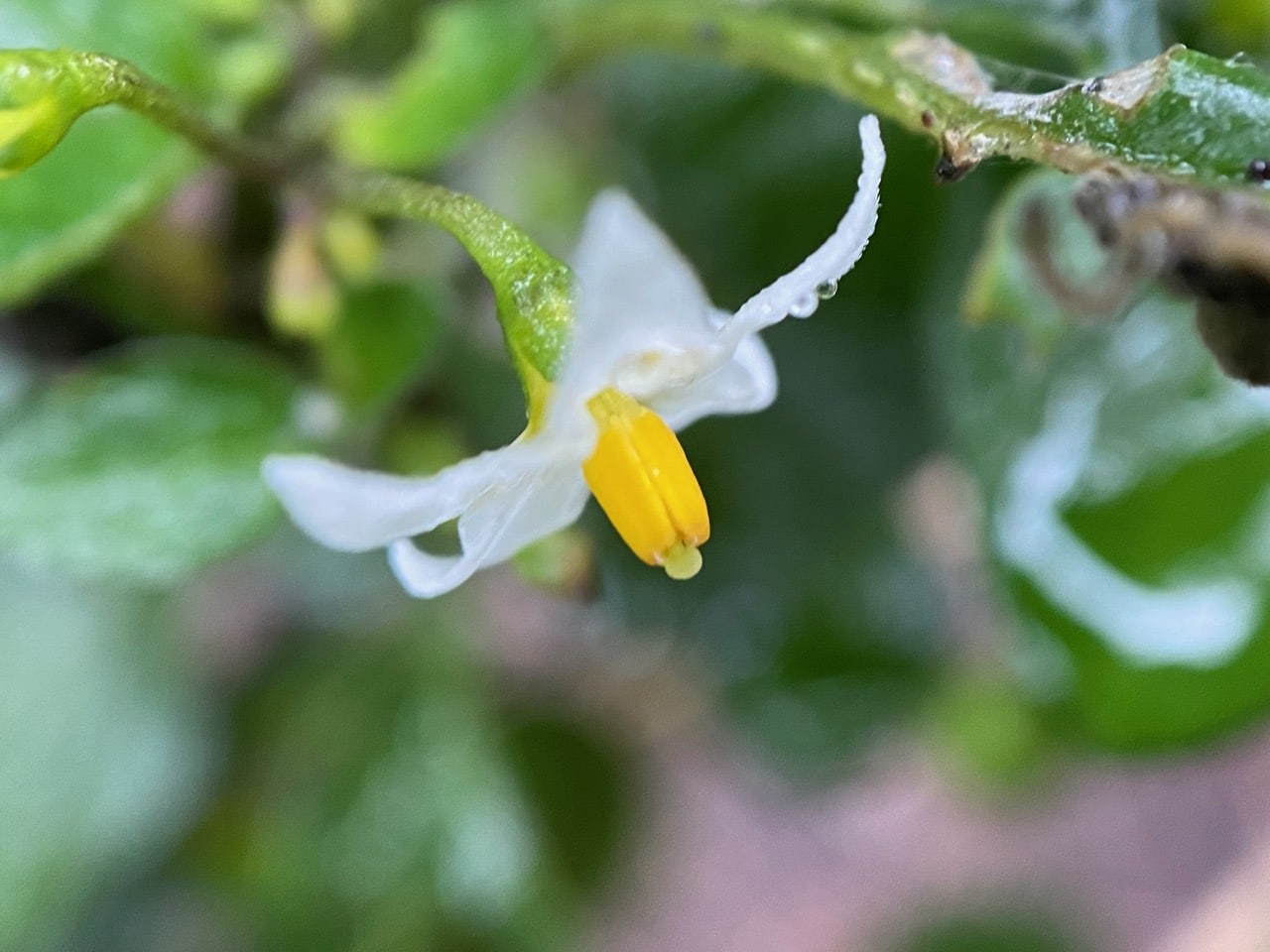
The small pendant flowers of the nightshade have protected their reproductive parts nicely. The flaring petals prevent the direct onslaught of the rain, while the pollen is safely hidden in the elongate anthers that form an anther tube surrounding the style and stigma. Pollination of these flowers requires the special skill of certain bees to sonicate or vibrate the anthers to release the pollen through the terminal pores. I have not thought of these floral features as adaptations for weather proofing.
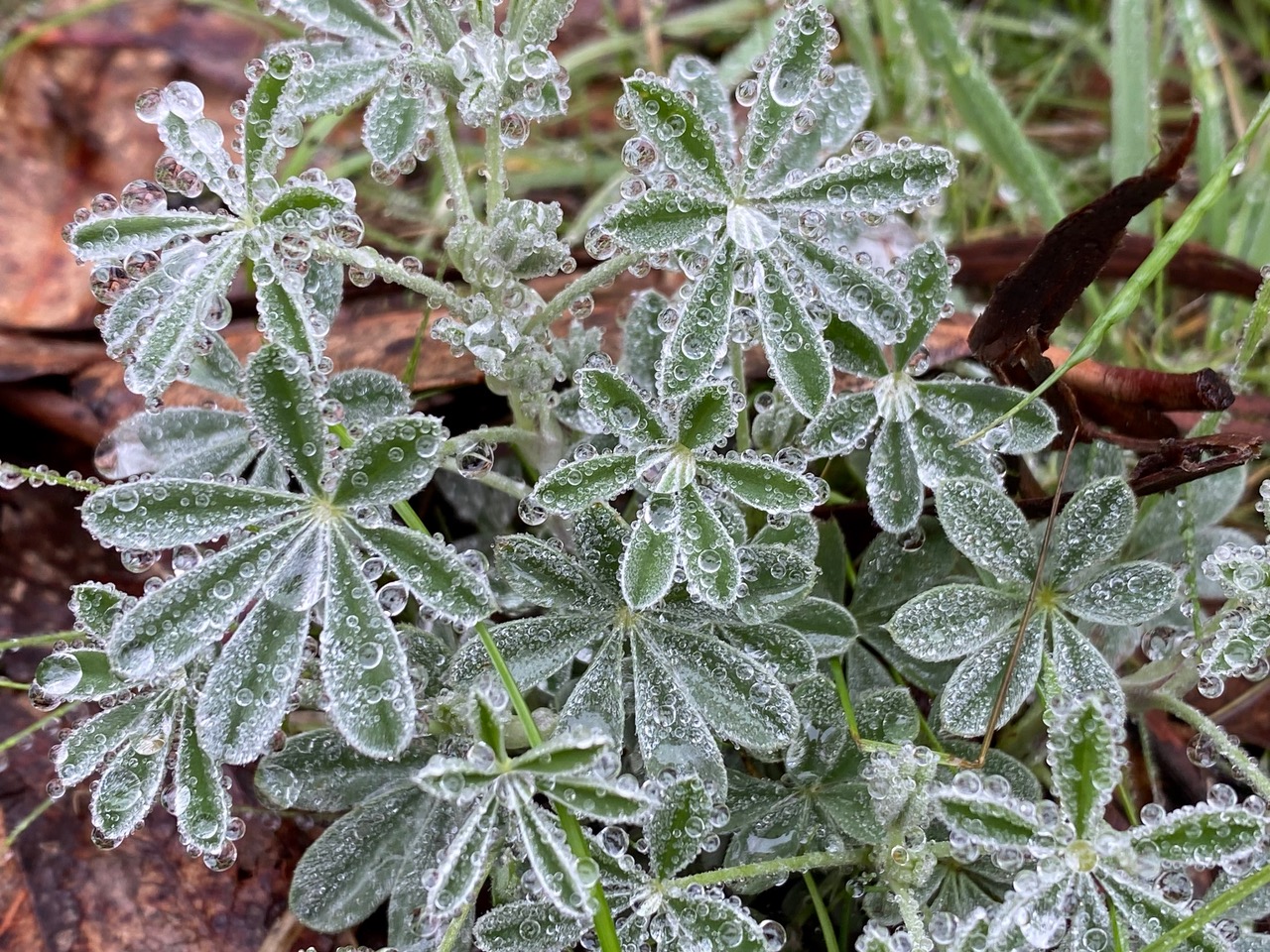
The Silverleaf Lupine, Lupinus albifrons is a work of art, glistening with rain drops that have been trapped by the hairs on the leaves. The leaf hairs are supposed to reflect sunlight, reducing heat and UV radiation, protecting the leaf. They are also thought to trap a layer of still air, reducing evaporation and water loss.

Surprise, that’s an Anise Swallowtail caterpillar on the Fennel, Foeniculum vulgare! Wow, this is the latest in the year I have ever seen a caterpillar of this species. Most should have formed chrysalids by now to wait out the winter. The caterpillar is almost 2 inches long. I wonder if it is developing normally, as most instars this size would be predominantly greenish. Last November, I rescued three mature Anise Swallowtail caterpillars at Bay Farm and reared them at home. One has emerged in the spring and has been released back to the wild. The other two are still chrysalids. Sometimes they take more than a year to emerge as butterflies.
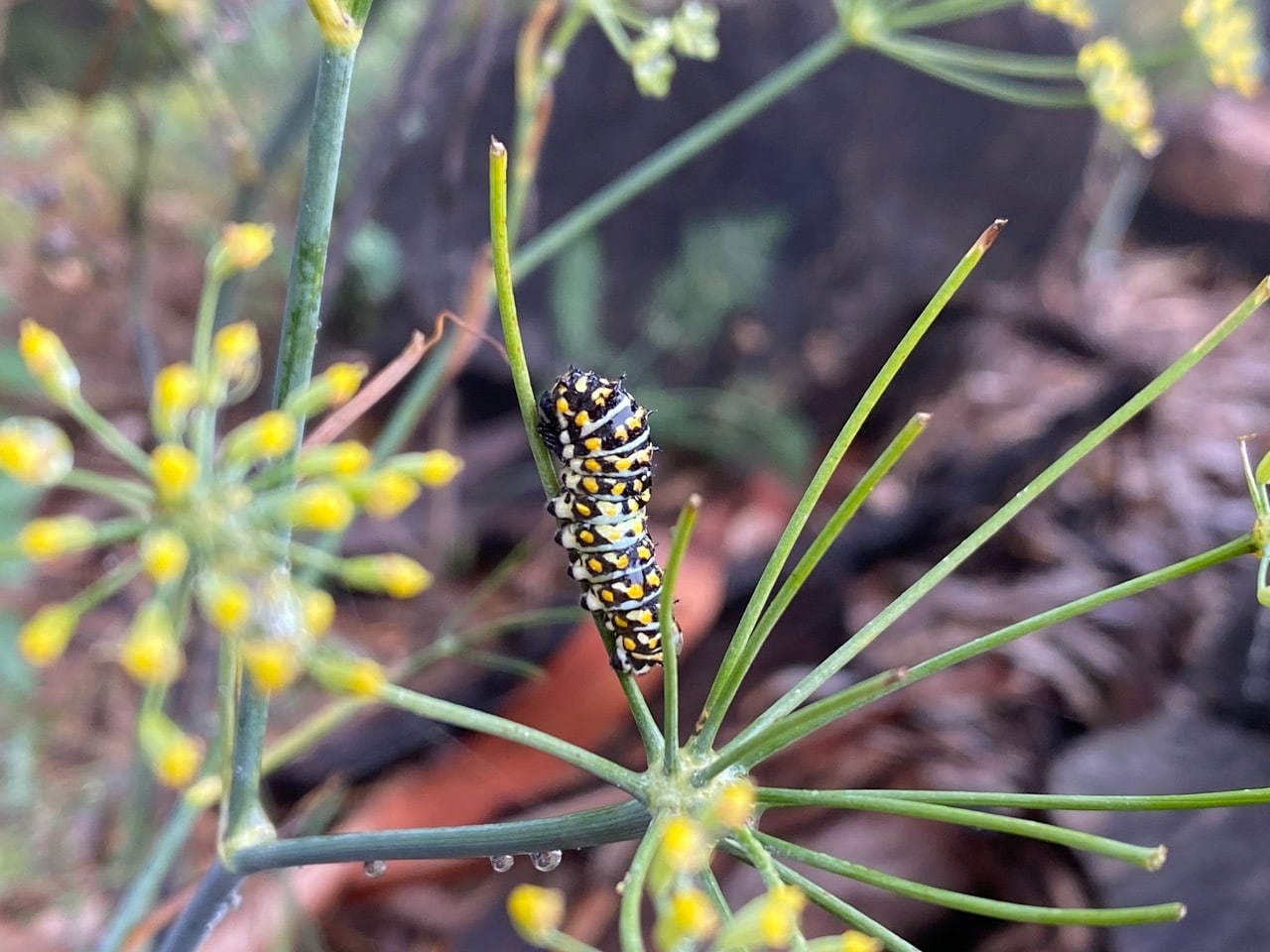
Here’s another, younger Anise Swallowtail caterpillar on a Fennel. Note that it has demolished all the flowers on this umbel. There is still plenty of food for this caterpillar as long as the plant is not removed as weed by the park service, but can the caterpillar continue to develop through the cold winter? An insect’s development is very much dependent on environmental temperatures. The colder, the slower the growth/development. I am amazed at the resilience of these creatures.
The Anise Swallowtail, Papilio zelicaon (family Papilionidae), is a common swallowtail butterfly of western North America. It is found in fairly open country, most likely seen on bare hills or mountains, in fields or at the roadside. Adult females lay eggs singly on the underside of host plant leaves. In the first two instars, the caterpillar is a bird poop mimic – dark brown, almost black, with an irregular white band at its middle. After that it becomes more green at each successive molt until, in the fifth (last) instar, it is predominantly green, with markings in black, orange, and light blue. Its major food plants are members of the carrot family, Apiaceae (including fennel), and also some members of the citrus family, Rutaceae.
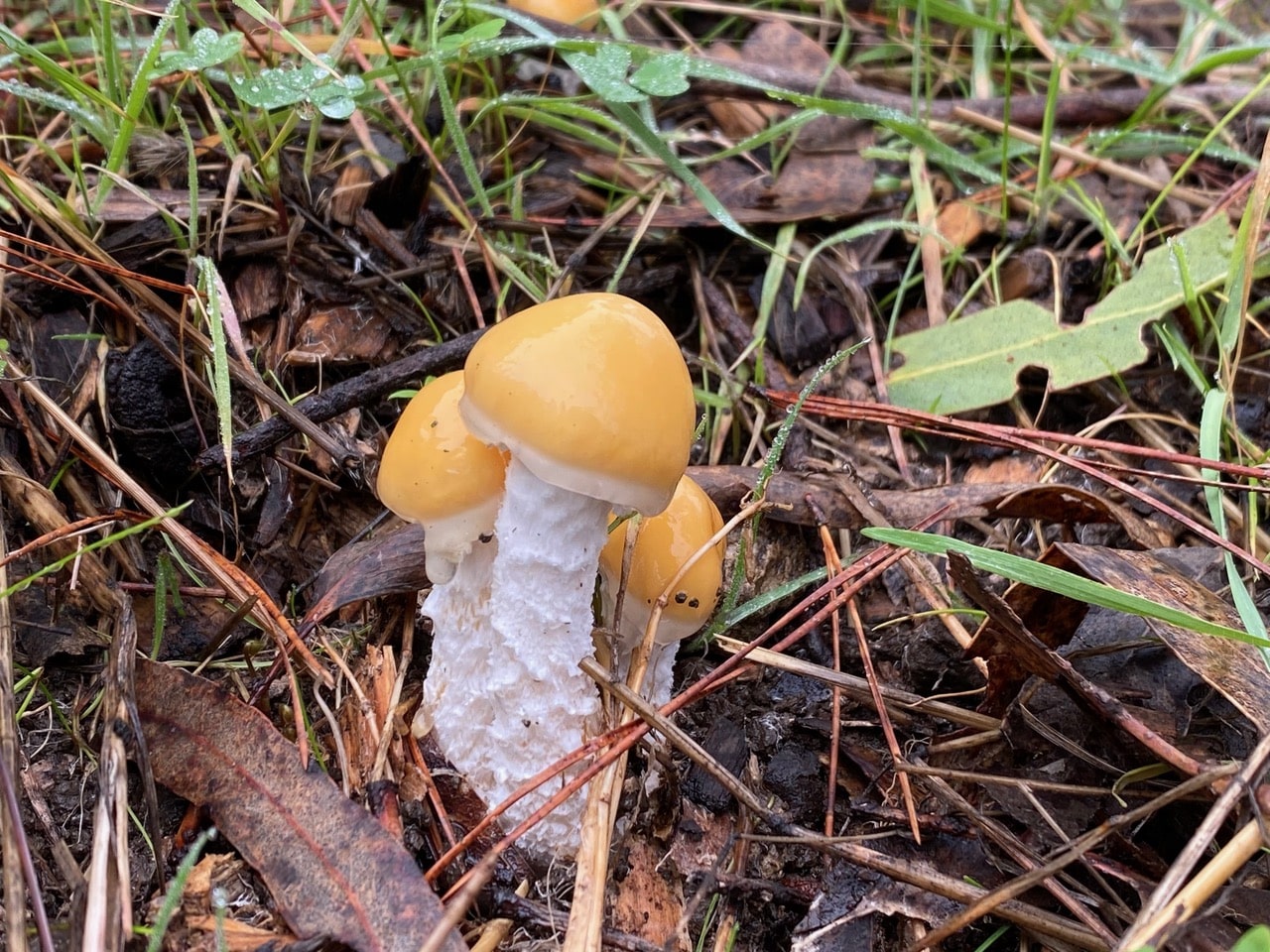
Some yellow mushrooms have popped up on the grassy meadow below the road. Ah, they are Questionable Stropharia, Stropharia ambigua. These are very young, with conic, viscid caps. Note the scaly, cottony stipe.
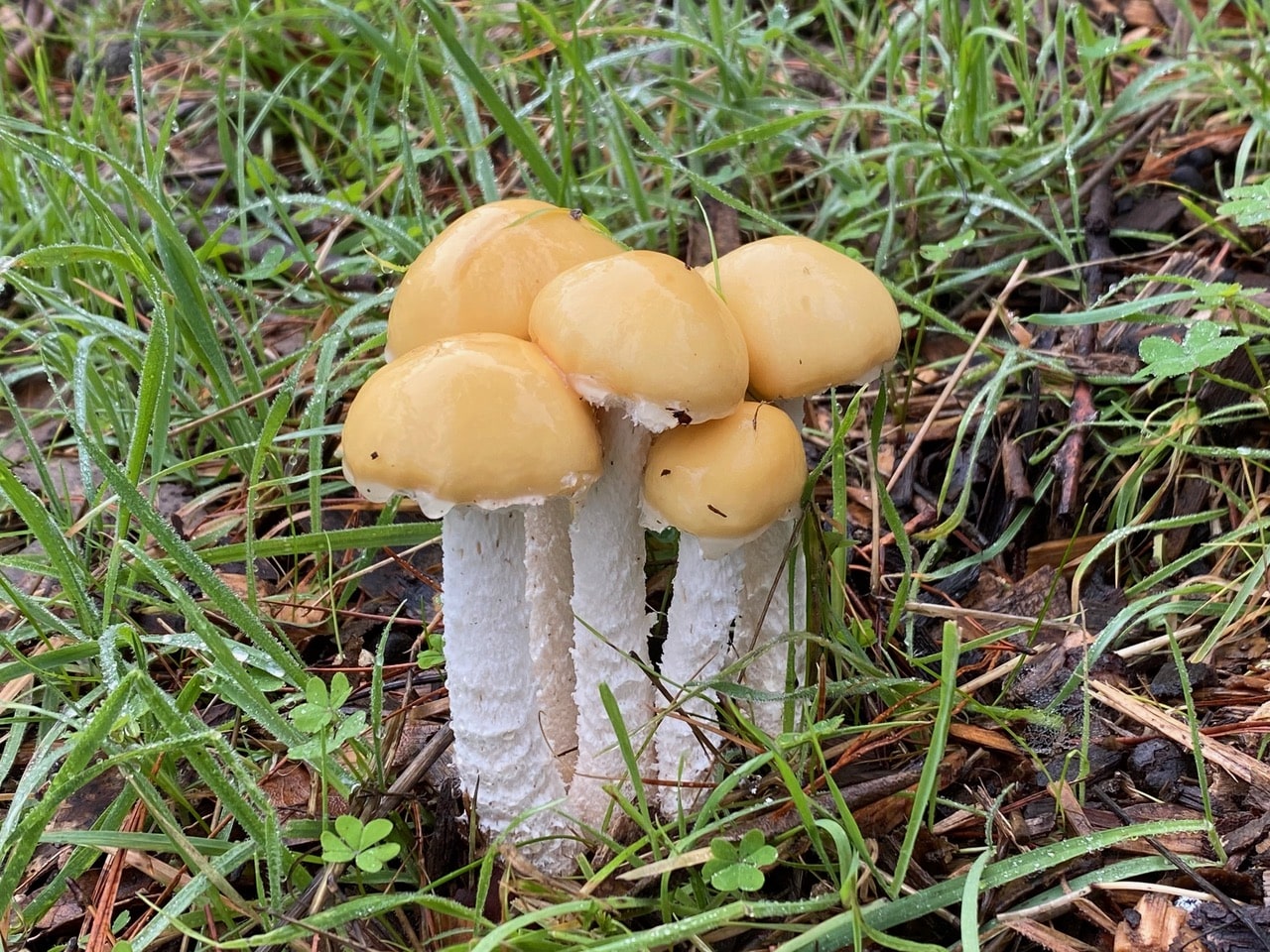
This group is more mature.
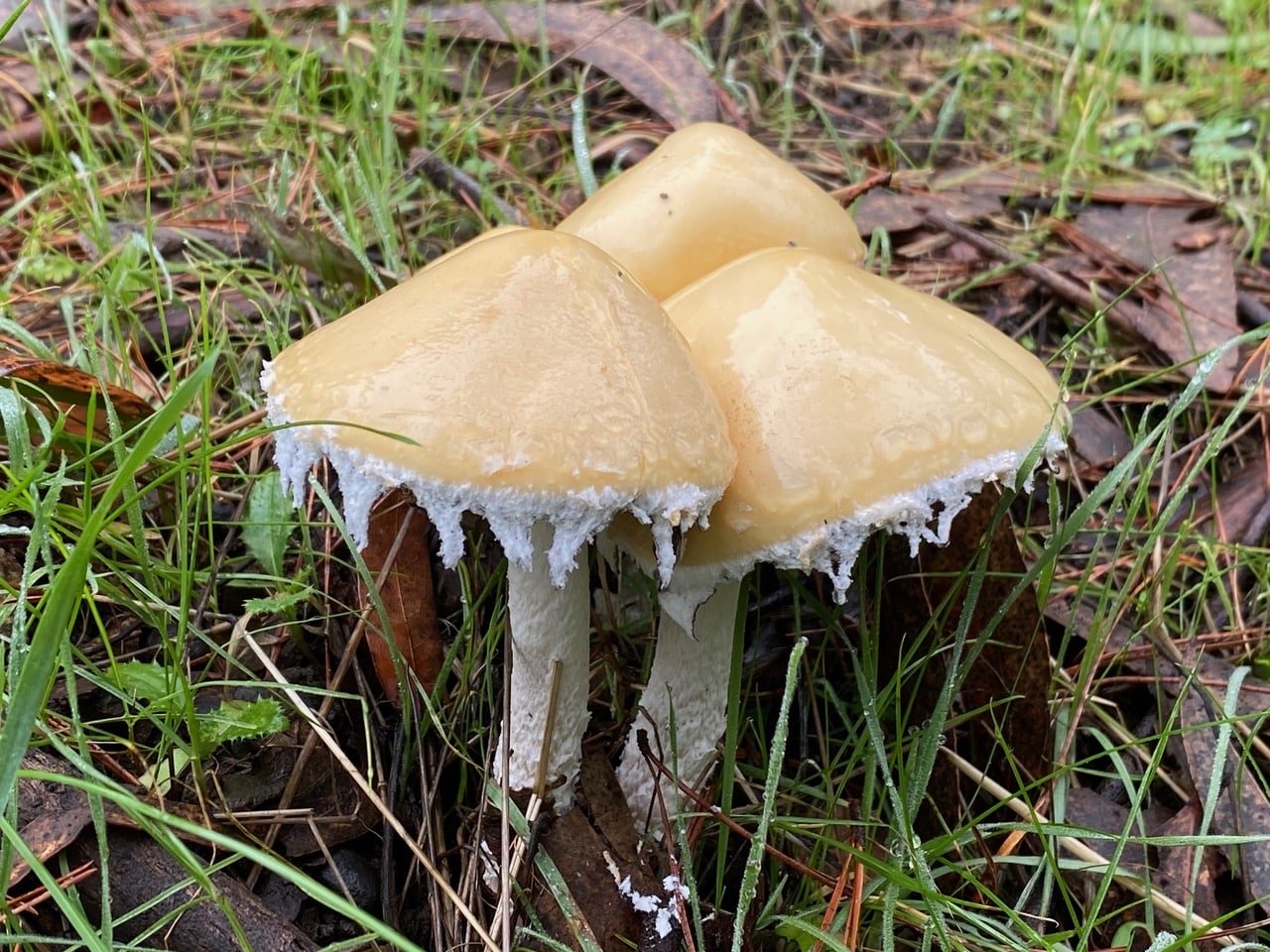
When fully mature, the mushroom caps become umbonate, with adhering veil fragments on the margins.
The tall, pale yellow fruiting bodies of Stropharia ambigua are exquisitely beautiful. The pale yellow, sometimes viscid cap with an appendiculate margin and cottony stipe are important field characteristics. The mushrooms are found solitary, scattered to gregarious, usually in deep humus of our coastal forests under conifers, but also found along streams and in damp shaded areas; from late fall to mid winter. It is a saprotrophic agaric mushroom, commonly fruiting in leaf litter and wood chips in the Pacific Northwest. Its edibility is debated.
A saprotrophic mushroom is a fungus that gets its food by breaking down and absorbing nutrients from dead or decaying organic matter, like fallen leaves, logs, and forest debris, playing a crucial role in recycling nutrients in ecosystems by turning waste into soil-enriching substances. They act as nature’s recyclers, releasing enzymes to digest complex materials like cellulose and lignin, making food available for plants and other organisms.