

Pollinator Post 11/15/22

It is a cool, crisp and sunny fall morning. I am glad to be back at the Skyline Gardens to check for any sprouting seedlings at the Swale.

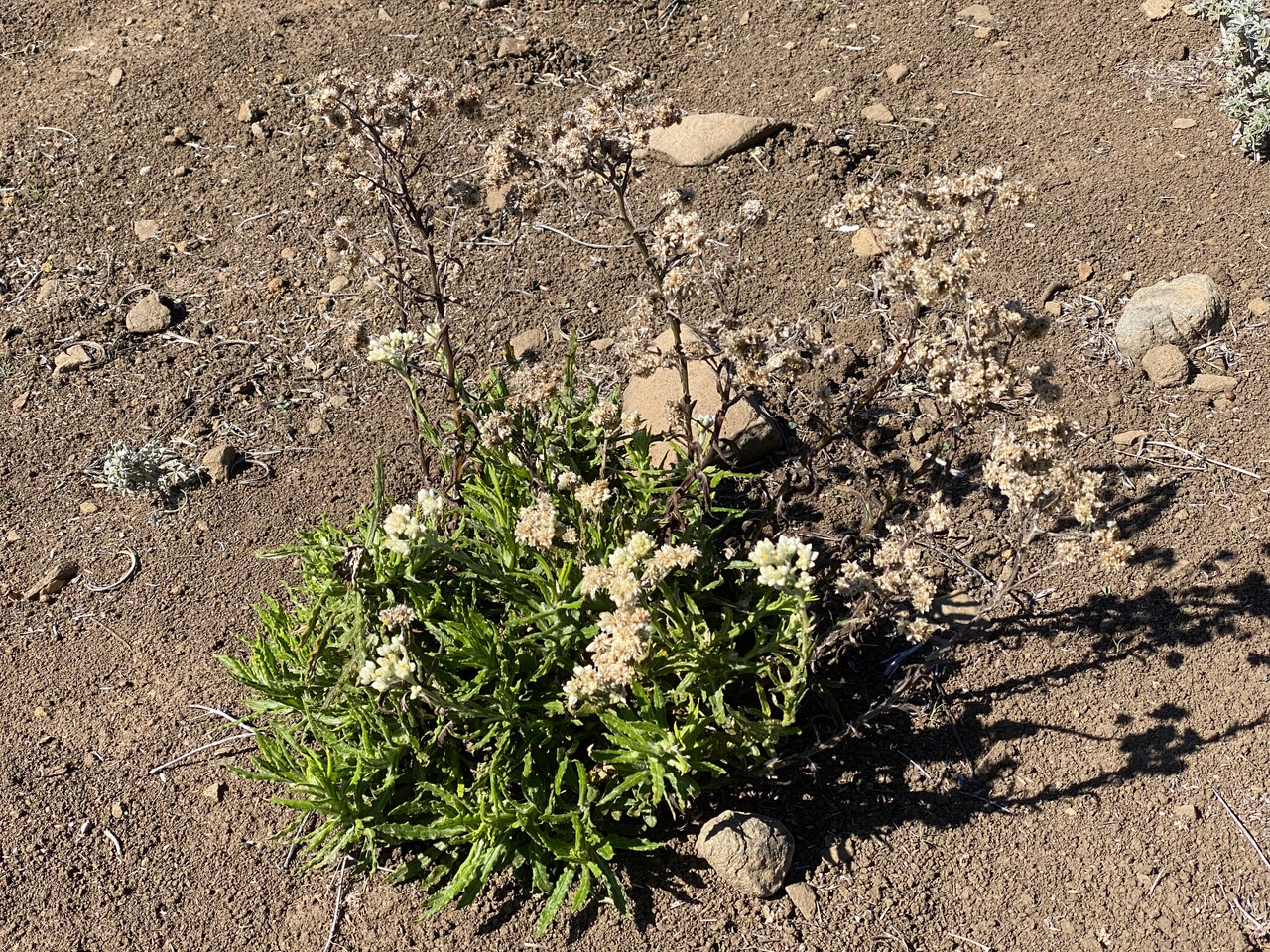 At the Swale, a few of the California Everlasting has produced new flowerheads while still holding on to their old inflorescences from the summer. The plant is enjoying a very long bloom period this year! With so many ways to grow, the California Everlasting is proving to be an incredibly adaptable plant!




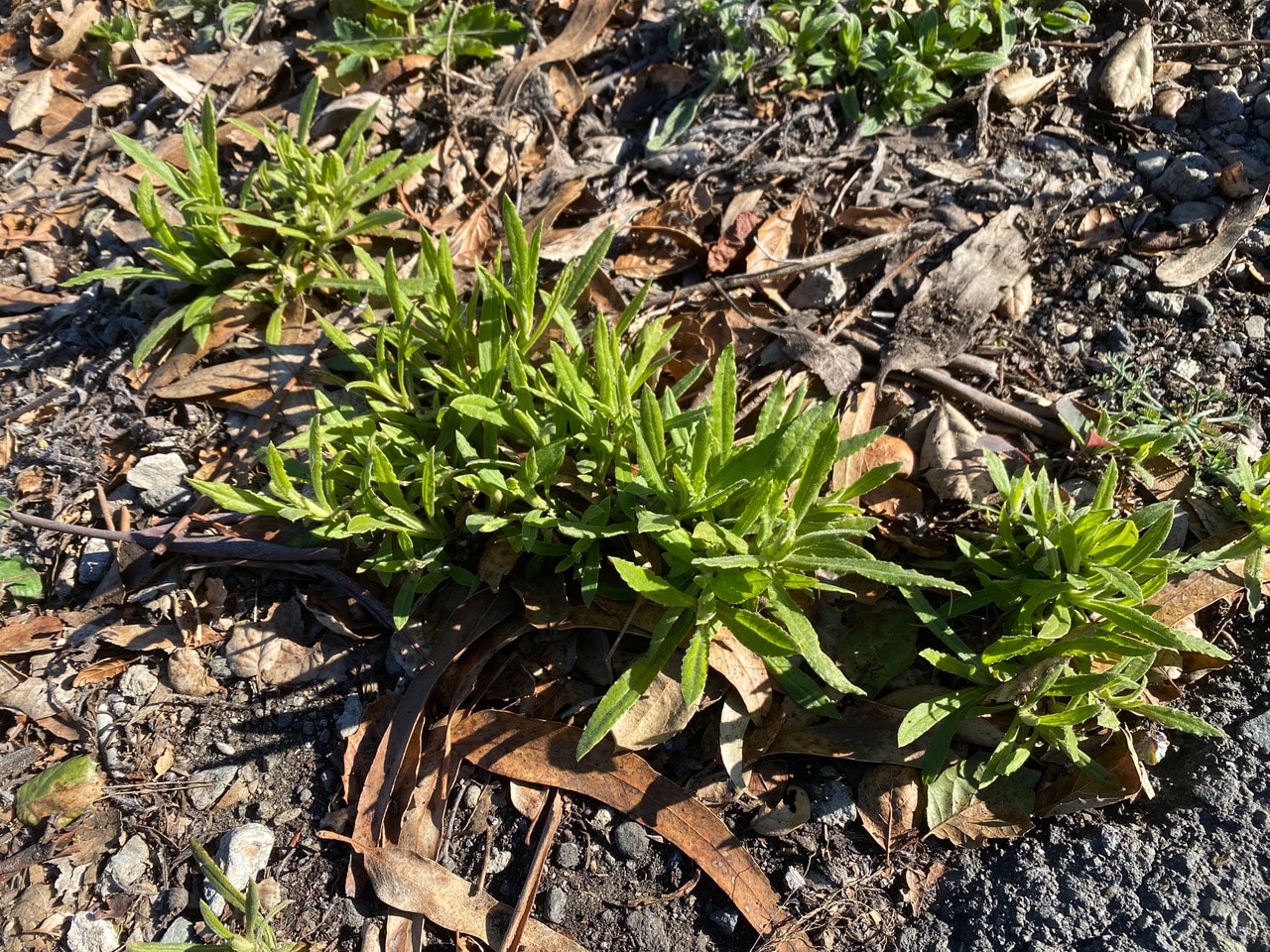
A dense patch of what looks like fresh young California Everlasting, Pseudognaphalium californicum lines the side of the paved road to the Water Tower. These must have sprouted from seeds. The plant has responded remarkably fast to the recent rains! According to Calscape, California Everlasting is an annual or a biennial herb.
Across the road, fresh green foliage has emerged from the old woody stems at the base of this California Everlasting. The plant is behaving like a perennial!
While a biennial plant is defined as a flowering plant that takes two years to complete its life cycle, many of them do not always follow a strict two-year life cycle, some taking 3 or more years to fully mature. Under extreme climatic conditions, a biennial plant may complete its life cycle rapidly (e.g. in less than a year). This behavior can cause them to be treated as an annual. Conversely, an annual grown under extremely favorably conditions may have highly successful seed propagation, giving it the appearance of being biennial or perennial. True biennials flower only once, while many perennials will flower every year once mature.
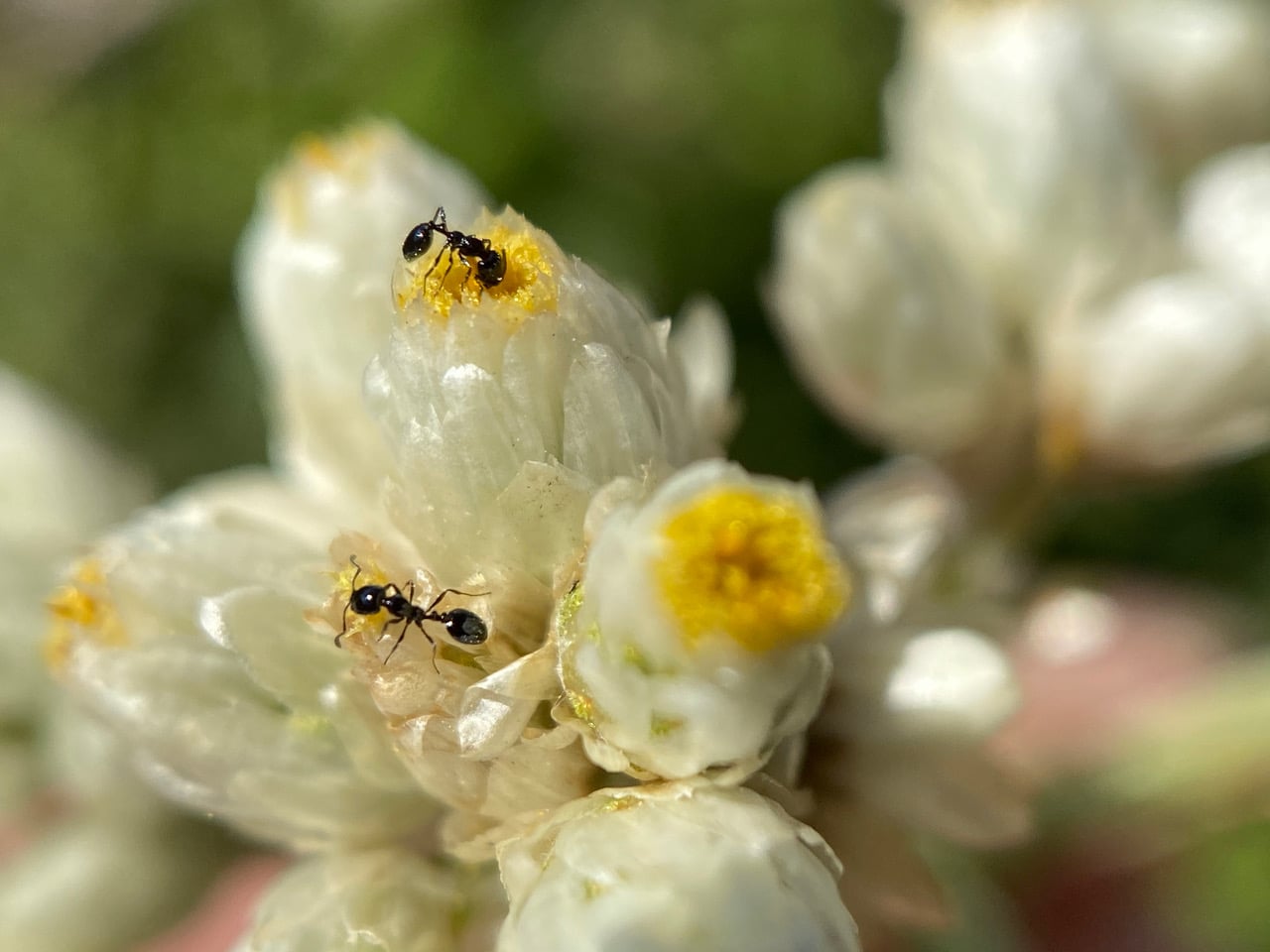
At the Swale, a few of the California Everlasting has produced new flowerheads while still holding on to their old inflorescences from the summer. The plant is enjoying a very long bloom period this year! With so many ways to grow, the California Everlasting is proving to be an incredibly adaptable plant!This California Everlasting is blooming beautifully in the middle of November! What insects are out to pollinate the flowers this time of year?
Argentine Ants are foraging on the open flowerheads.
The shiny scale-like structures covering the egg-shaped flowerheads are actually the phyllaries (collectively known as the involucre). The individual flowers are enclosed within, with only the yellow reproductive parts showing. This is as open as the Everlasting flowers will ever get! The everlastings are unusual members of the sunflower family, Asteraceae.
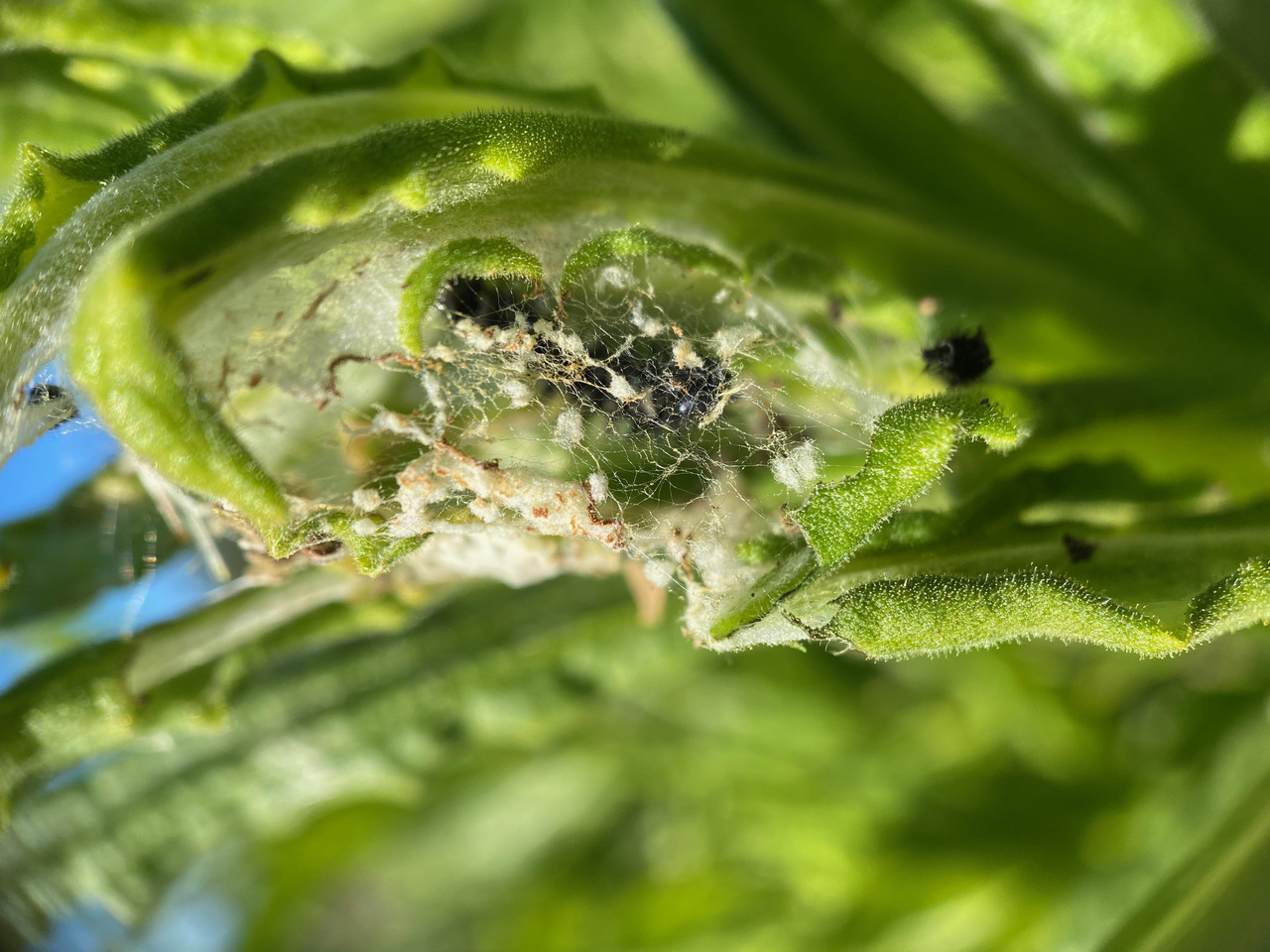
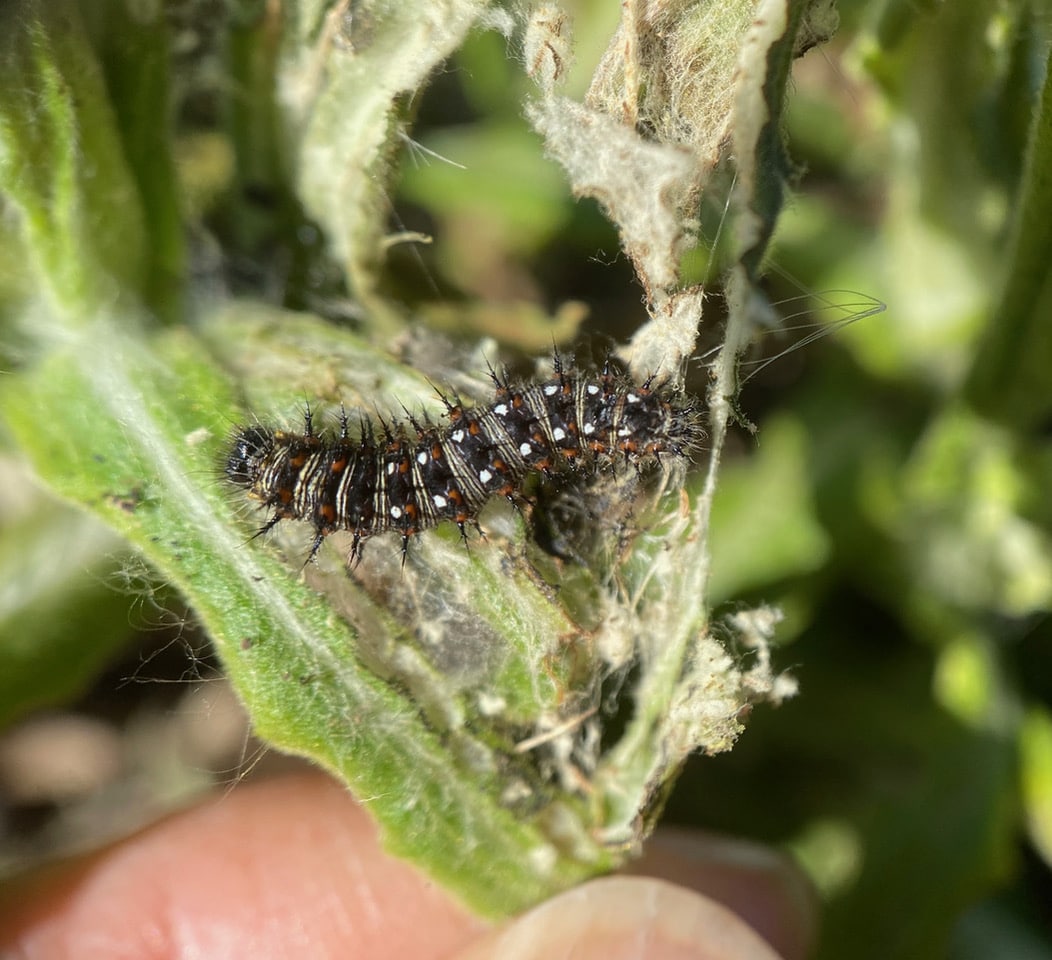
A dark caterpillar is feeding within a shelter it has created by binding together the terminal leaves of a California Everlasting with silk. Obviously some butterflies have been out laying eggs not too long ago!
The caterpillar has incorporated some plant fuzz in its silken creation. Young caterpillars usually feed on the enclosed leaves in the safety of their retreats, protected from predators and parasitoids.
I carefully tear open one of the silken retreats to expose the caterpillar within. As I have suspected, it is a larva of the American Lady butterfly. Its glossy black head is on the left. The host plants for this species are plants in the sunflower family, notably the everlastings. The butterfly can produce 3-4 broods from May to November, overwintering as adults.
Side view of the caterpillar showing the tiny spiracles ringed in white. Spiracles are external openings that allow gas exchange (respiration). The caterpillar contracts muscles to open and close the spiracles.
A tiny Crab Spider, Mecaphesa sp. (family Thomisidae) crawls out of an empty caterpillar retreat.
At the approach of my camera, the crab spider runs for shelter among a cluster of immature flowerheads, then turns around to face me. Crab spiders (family Thomisidae) have 8 eyes arranged in 2 rows of 4 (4:4). The spiders are usually too small to be identified by eye arrangement. Rather, crab spiders are easily recognizable by their two front pairs of legs that are extra-long for grabbing prey.
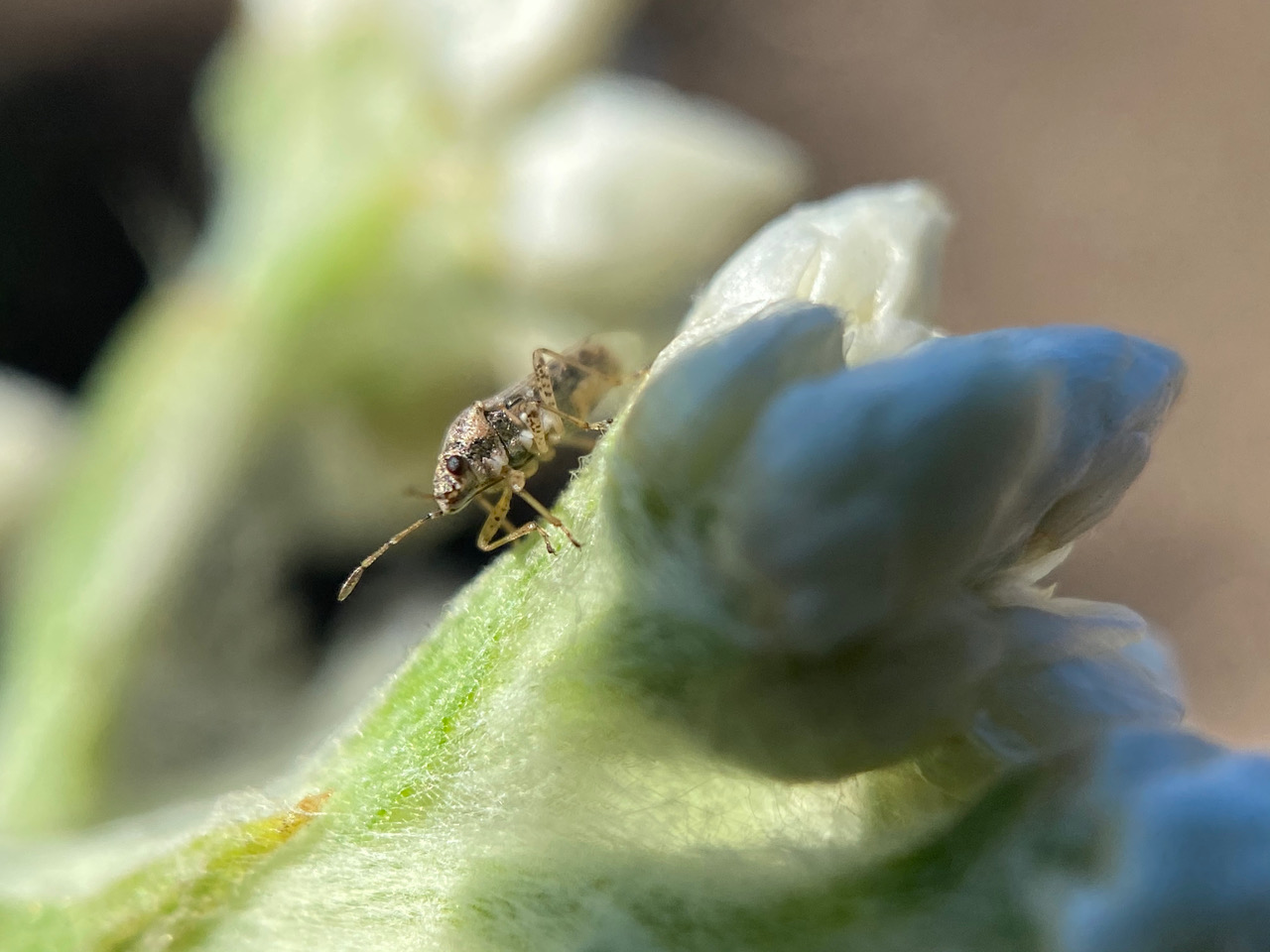
A False Chinch Bug, Nysius sp. (family Lygaeidae), only about 3 mm, explores a cluster of immature flowerheads.
The insect is commonly found within grassy or weedy fields, pastures, and foothills. Each spring, once the plants in these areas dry up the false chinch bug migrates to find new places to feed, often becoming a nuisance for gardeners and farmers.
Close-up of the False Chinch Bug showing its mouthparts folded under its body when not in use. Like many other insects in the order Hemiptera, both immature and adult chinch bugs feed on plants through a proboscis, a hypodermic-needlelike structure they use to probe into plant tissue and drink up pant fluids. This type of feeding can cause severe damage to plants that are unable to compensate for lost leaf tissue and sap.
A Convergent Ladybeetle, Hippodamia convergens (family Coccinellidae) is resting on a cluster of spent flowerheads. There doesn’t seem to be much for this predator to feed on. Shouldn’t it be gathering with its kind to hibernate soon?