

Pollinator Post 11/1/25

Seeking clean air, I head up the hills to Inspiration Point in Berkeley to walk the Nimitz Trail.
Most of the female Coyote Brush, Baccharis pilularis along the trail are already dispersing their plumed seeds, but there’s a late bloomer that is still attracting many insects.
Coyote Brush is dioecious, with male and female flowers borne on separate plants. The flowers of both genders are petal-less, and are packed tightly into small flowerheads. The female flowerheads consist of tight clusters of bare, forked, white stigmas subtended by a large involucre. After pollination, these develop into white fluffy seed heads very noticeable in late fall and winter.
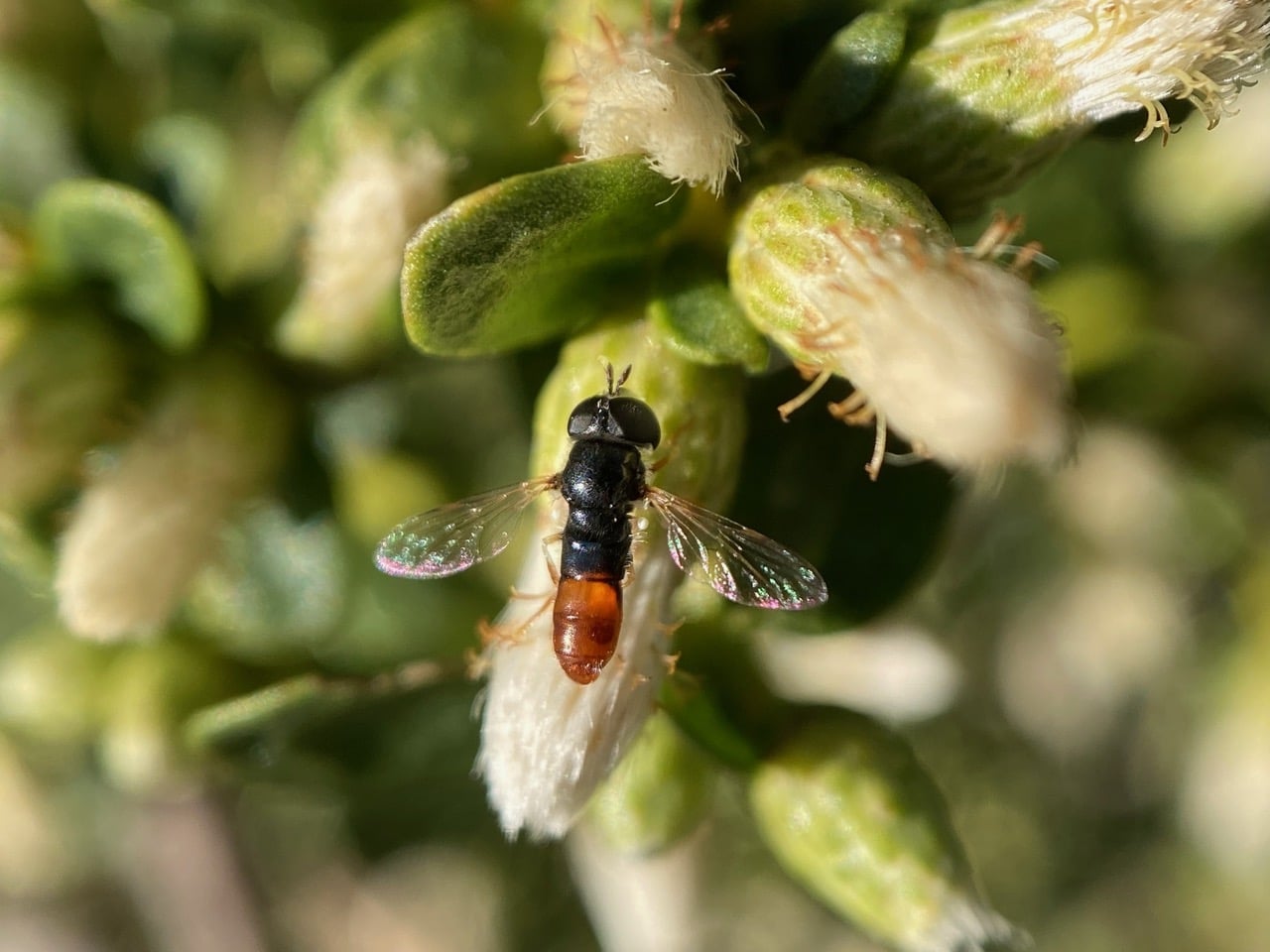
A Common Grass Skimmer, Paragus haemorrhous (family Syrphidae) has landed on a developing seed head of the female Coyote Brush.
The Common Grass Skimmer, Paragus haemorrhous (family Syrphidae) is easily the smallest hover fly I know, measuring only about 4 mm in length. The species has a world-wide distribution, found in unimproved grassland, dune grass, open areas and pathsides in forest, and meadows. Adults visit flowers for nectar and pollen. Larvae feed on aphids on low herbaceous plants.
Photos of Common Grass Skimmer (Paragus haemorrhous) · iNaturalist
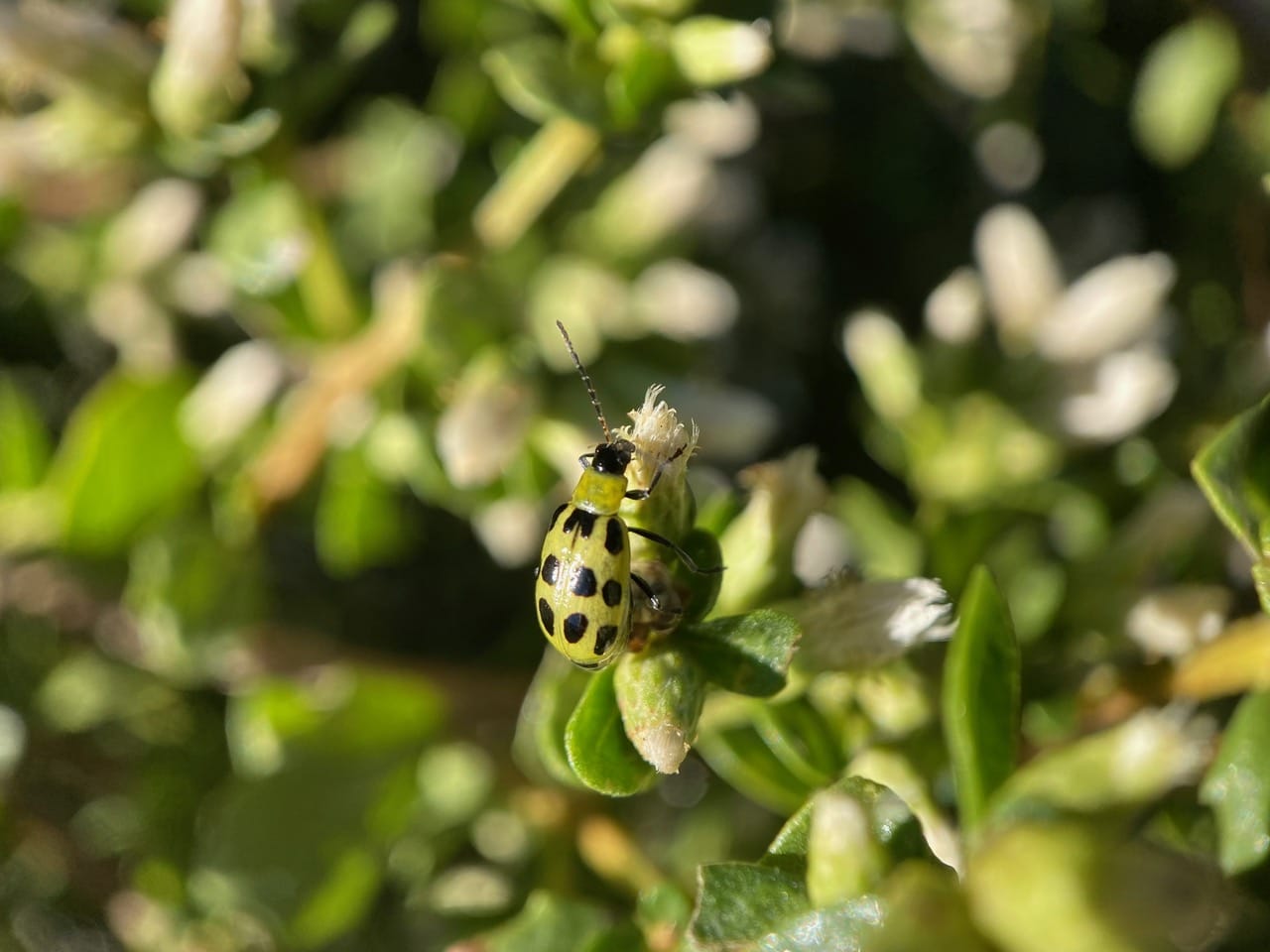
A Spotted Cucumber Beetle, Diabrotica undecimpunctata (family Chrysomelidae) is feeding on a female Baccharis flowerhead.
Members of the family Chrysomelidae are commonly known as Leaf Beetles. Adults and larvae feed on all sorts of plant tissues, and all species are fully herbivorous. Many are serious pests of cultivated plants, including food crops. Others are beneficial due to their use in biocontrol of invasive weeds. Chrysomelids are popular among insect collectors, as many are conspicuously colored, typically in glossy yellow to red or metallic blue-green hues, and some have spectacularly bizarre shapes.
Native to North America, the Spotted Cucumber Beetle can be a major agricultural pest, causing damage to crops in the larval as well as adult stages of their life cycle. Larvae, sometimes known as rootworms feed on the roots of emerging plants. In the adult stage the beetles cause damage by eating the flowers, leaves, stems and fruits of the plant.
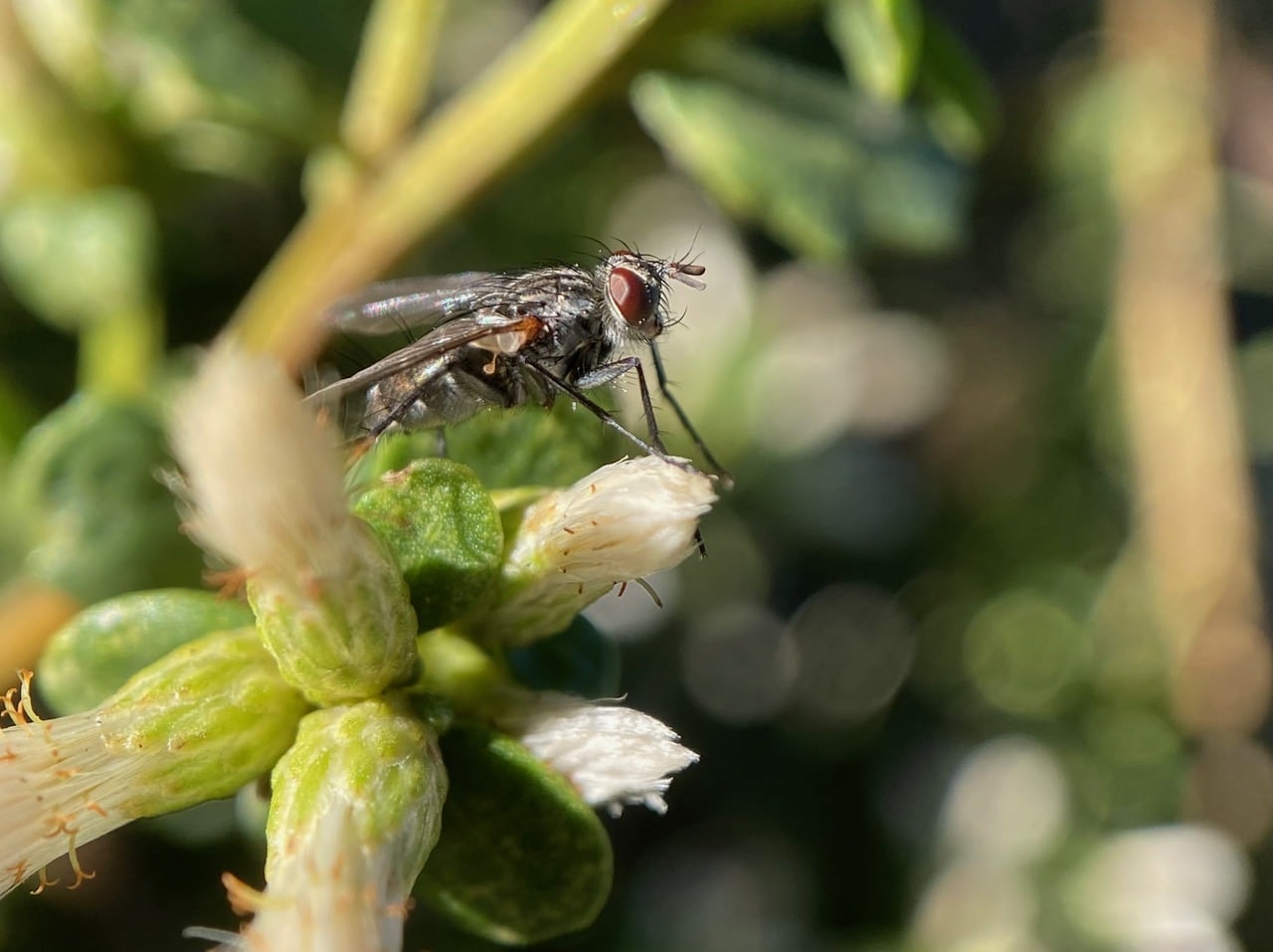
A Woodlouse Fly, Stevenia deceptoria (family Rhinophoridae) is perched on a fading female Baccharis flowerhead.
The Woodlouse Flies (family Rhinophoridae) are somewhat related to the Tachinidae. The larvae are mostly parasitoids of woodlice (pill bugs), beetles, spiders and other arthropods, and occasionally snails. Adult female deposits the eggs near woodlice. The first instar larva attaches itself to a passing woodlouse and enters the body of the freshly molted host. The larva feeds on the hemolymph and organs of the host until pupation, leading to the death of the host. Adult fly emerges from the pupa from inside the empty exoskeleton of the host. Adult Woodlouse Flies primarily feed on nectar and plant juices.


A rotund, shiny little fly is perched on a Baccharis leaf in the shadows. The fly is in the genus Calliopum (family Lauxaniidae).
Some 1800 species of Lauxaniidae have been described, but no common name has been assigned to the family. They have a cosmopolitan distribution. Most species inhabit forests, where the adults usually are found sitting on leaves of the moist and shady understory. Lauxaniidae are small flies (2-7 mm in length). They are often rather plump, dull, yellowish-brown or black, or partly lustrous flies. Many species have iridescent reddish/purplish or greenish eyes. Larvae are mostly saprophagous, feeding on decaying vegetation, soil, bird nests, etc. Adults may visit flowers. The North America, the genus Calliopum is only recorded from the West.
Genus Calliopum · iNaturalist
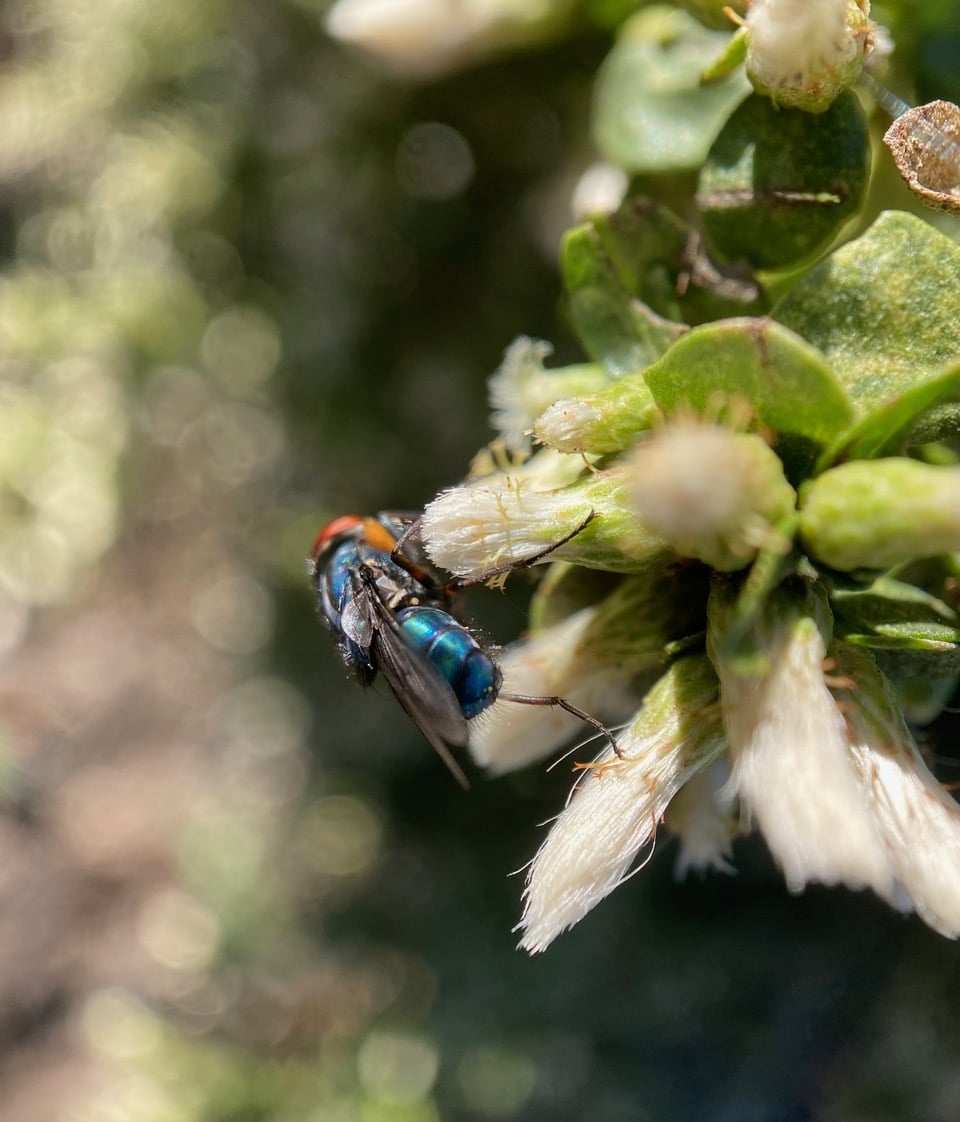
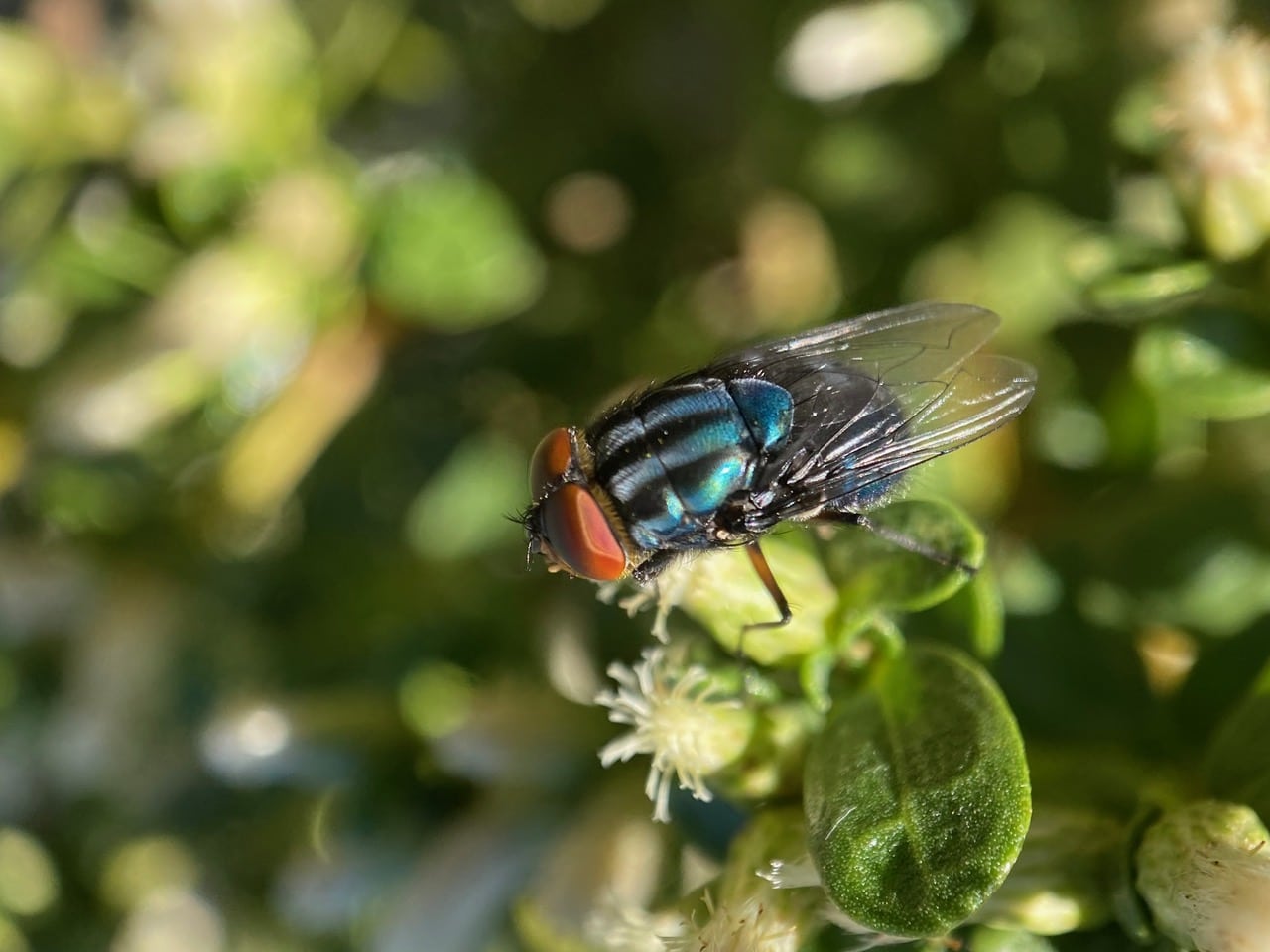
By far the most abundant insects on the Coyote Brush are the Blow Flies, Compsomyiops callipes (family Calliphoridae).
Glinting in the sunlight, a pretty Blowfly, Compsomyiops callipes (family Calliphoridae) is taking nectar from a female Baccharis flowerhead.
The Calliphoridae are variously known as blow flies, carrion flies, greenbottles, and bluebottles. Adults are usually brilliant with metallic sheen, often with blue, green, or black thoraces and abdomens. There are three cross-grooves on the thorax; calypters are well developed. Females visit carrion both for proteins and egg laying. The larvae that hatch feed on dead or necrotic tissue, passing through three instars before pupation. After the third instar, the larva leaves the corpse and burrows into the ground to pupate. Adult blow flies are occasional pollinators, being attracted to flowers with strong odors resembling rotting meat. The flies use nectar as a source of carbohydrates to fuel flight.
The Blowfly, Compsomyiops callipes is a warm weather fly that is found in southwestern parts of the United States and parts of South America. About 5-8 mm in size, the fly has a metallic blue-green sheen with three dark longitudinal stripes on the thorax. The fly is attracted to carrion, being able to smell carrion from up to 10 miles away. Much study has been done on the life cycle of the species, as it serves an important role in the field of forensic entomology, helping investigators solve crime cases involving human remains. The fly’s life cycles allow the entomologist to determine the post mortem interval (their age and how long they have been present on the corpse based on their succession pattern).

I am thrilled to finally get a good look at the Blow Fly’s face. For a long time, I have been curious about the yellow-orange structure on the lower half of the fly’s face.
The gena is a region on the blow fly’s head, specifically the area on the side of the head, located below the compound eye. The appearance of the gena, particularly its color and the color of the hairs on it, is an important feature used for identifying different blow fly species. The gena is part of the overall head structure and not a direct component of the mouthparts themselves. The inner surface of the gena provides attachment points for the muscles that are involved in the movement of food into the pharynx (part of the feeding mechanism). The mouthparts, also known as the proboscis, are located on the lower, front part of the head, and include structures like the labrum, hypopharynx, and the spongy labella used for feeding on liquid food. Like the house flies, blow flies have sponging mouthparts, which they use to suck up liquified food, not to bite. They regurgitate digestive fluids onto the solid food to break it down into a liquid form before consuming it. This adaptation allows them to feed on decaying matter, garbage, and other nutrient-rich liquids. Not all Dipterans have sponging mouthparts. Many predatory flies have stabbing-sucking mouthparts.
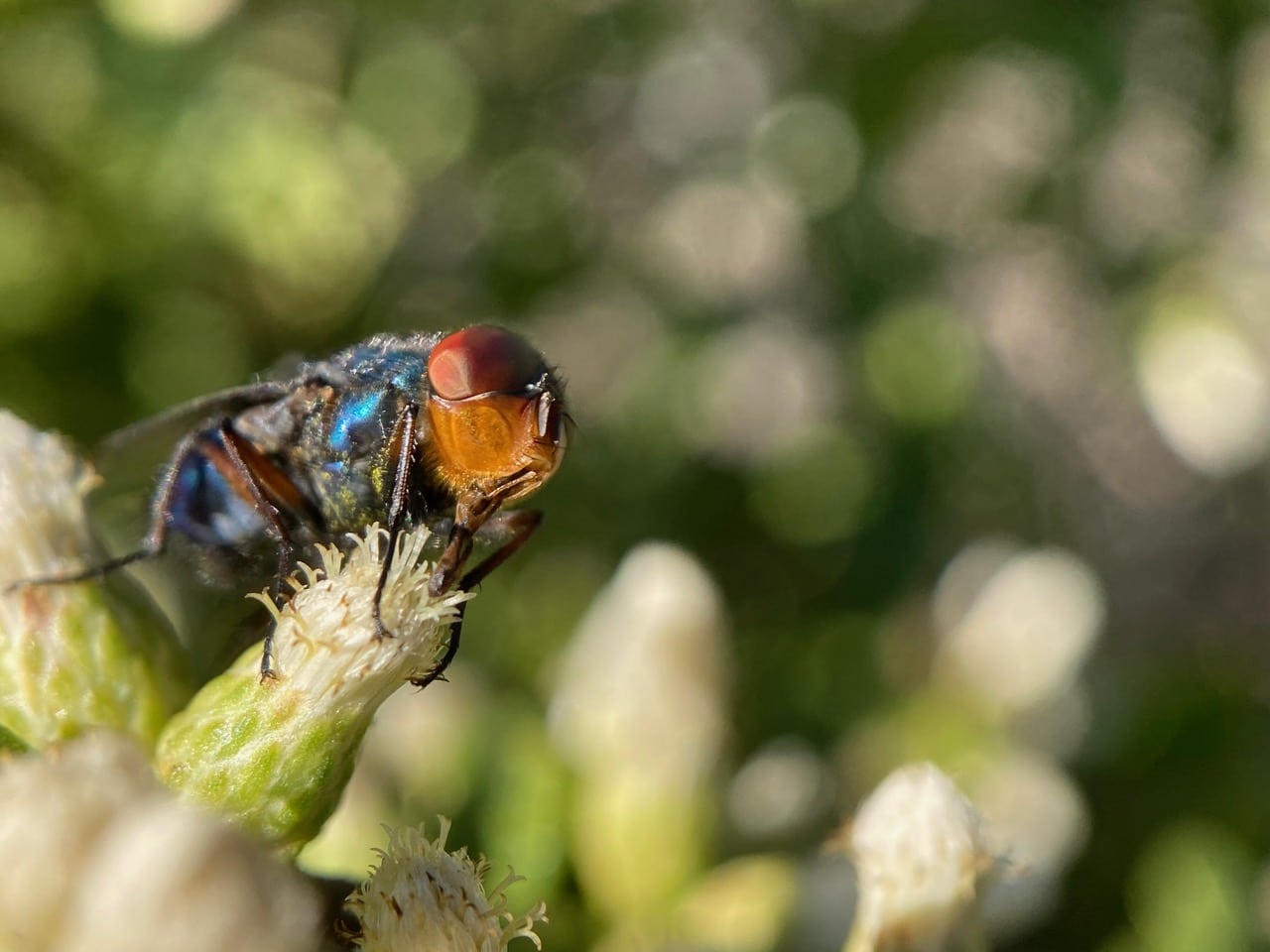
The Blow Fly extends its proboscis into the Coyote Brush flowerhead.
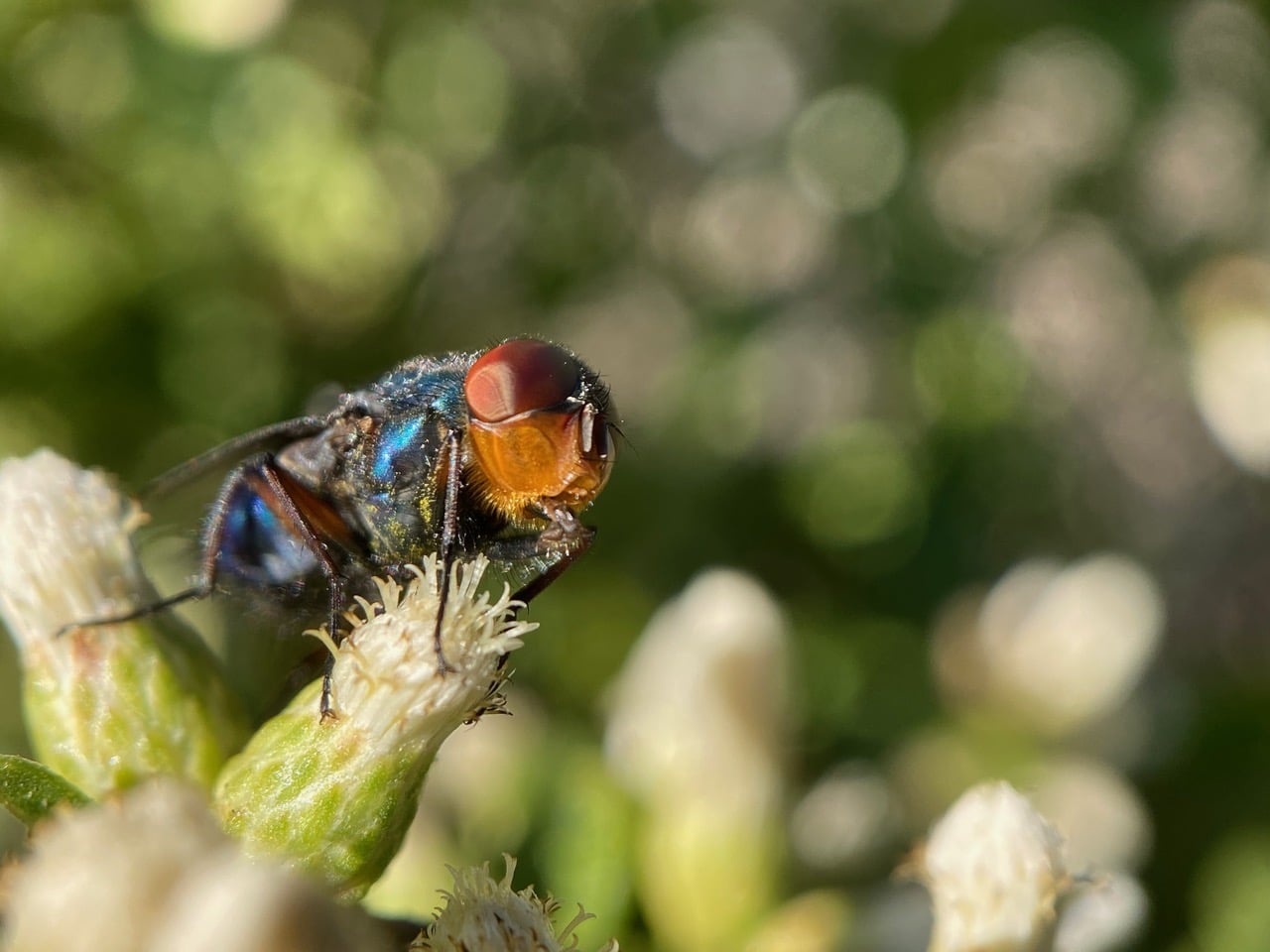
The fly retracts its proboscis. Note the wide, sponging tip of the proboscis, the labella.
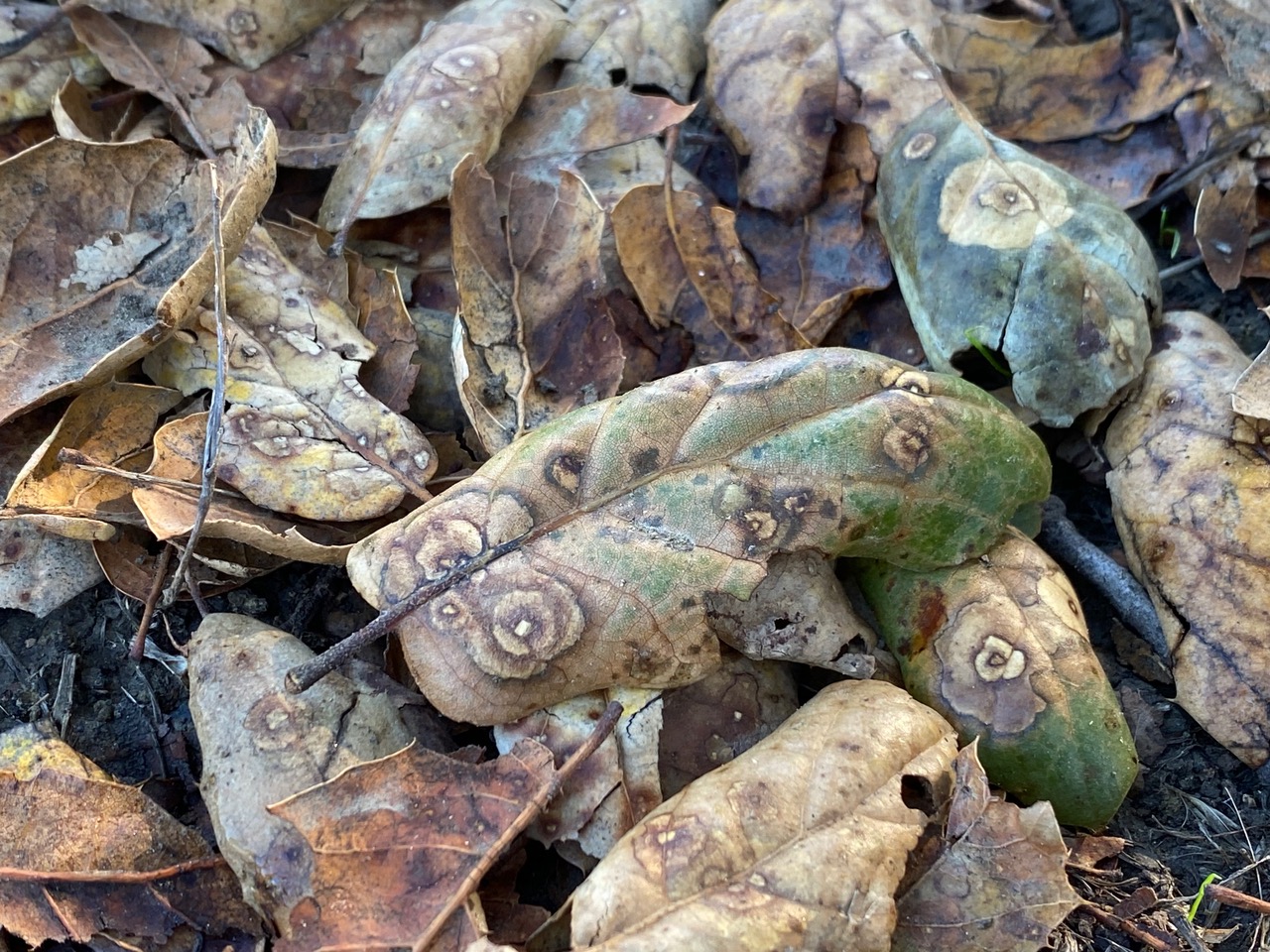
Sitting down to rest under a Coast Live Oak, Quercus agrifolia, I notice that all the fallen leaves around me have these irregular concentric brown circles on them. iNaturalist has helped identify the markings as Tubakia Leaf Spot, Tubakia californica.
Tubakia Leaf Spot is a fungal disease common in oak trees, identifiable by reddish-brown to black leaf spots that can merge into larger blotches and sometimes cause premature leaf drop. Small, disc-shaped or black specks can be found on the dead leaf tissue, which are the fungal fruiting bodies. In severe cases, the disease can cause leaves to drop early, though this usually happens late enough in the season that it doesn’t harm the tree’s long-term health. Abundant rainy weather promotes the spread of the fungus. Stressed trees, particularly those with nutritional deficiencies or those that have been recently transplanted, are more susceptible. While it primarily affects oaks, the fungus can also appear on other trees like maples, hickory, chestnut, and elm.
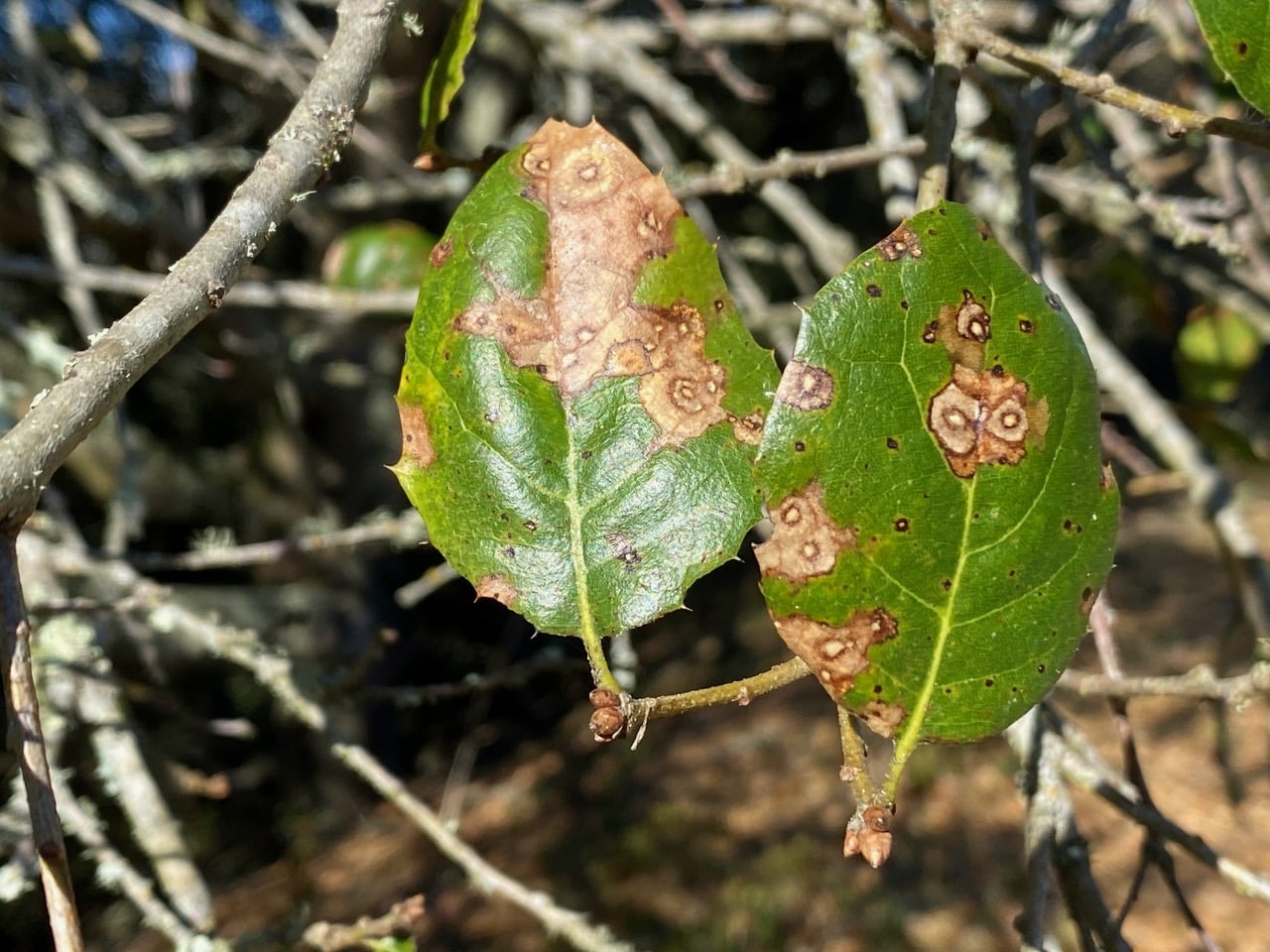
Further along the trail, I encounter the Tubakia Leaf Spots on green oak leaves that are still hanging on their branches. They remind me of an article by my friend, David Lukas.
“Long before leaves start changing colors, you can tell that autumn is coming because leaves develop brown spots. These mysterious spots are caused by fungal spores that have been living on leaves all summer, waiting for the first signs of autumn, and now they’re “waking up” so they can start decomposing leaves before they fall to the ground.
When a new leaf emerges from its bud, first to arrive and most active, are bacteria, with 1-10 million bacteria covering every square centimeter of a leaf’s surface. Equally important are yeast (a type of fungus) and fungal spores. Taken together, this habitat of leaf tissue is known as the phyllosphere, possibly the most important habitat on earth. This microscopic community actively feed and shape this community by secreting a balance of sugars and toxins that protect the leaf (their home) from attacks by herbivores and diseases. Plants with a healthy phyllosphere grow bigger, faster, and outcompete other plants. Other benefits include increasing a plant’s drought tolerance, promoting nutrient cycles, and modifying atmospheric gases.
The fungal spores need moisture to begin their life cycle. Because summers are too dry and hot, the fungi either wait as resting spores or send a simple hypha (fungal root) into the leaf surface where they find temporary shelter out of the sun. As summer wanes, and rains arrive, the plant begins to withdraw defensive compounds from its leaves in preparation for winter, and the fungal spores “wake up”. The fungi feed on the most easily digestible carbohydrates (mostly cellulose), creating conspicuous brown spots in widening circles producing a bulls-eye pattern on the leaves. When the leaf changes colors and falls to the ground, these fungi continue eating as much of the cellulose as they can before secondary decomposers invade the newly fallen leaf, breaking down the remaining cellulose and then the lignin.”