

Pollinator Post 10/8/24 (2)
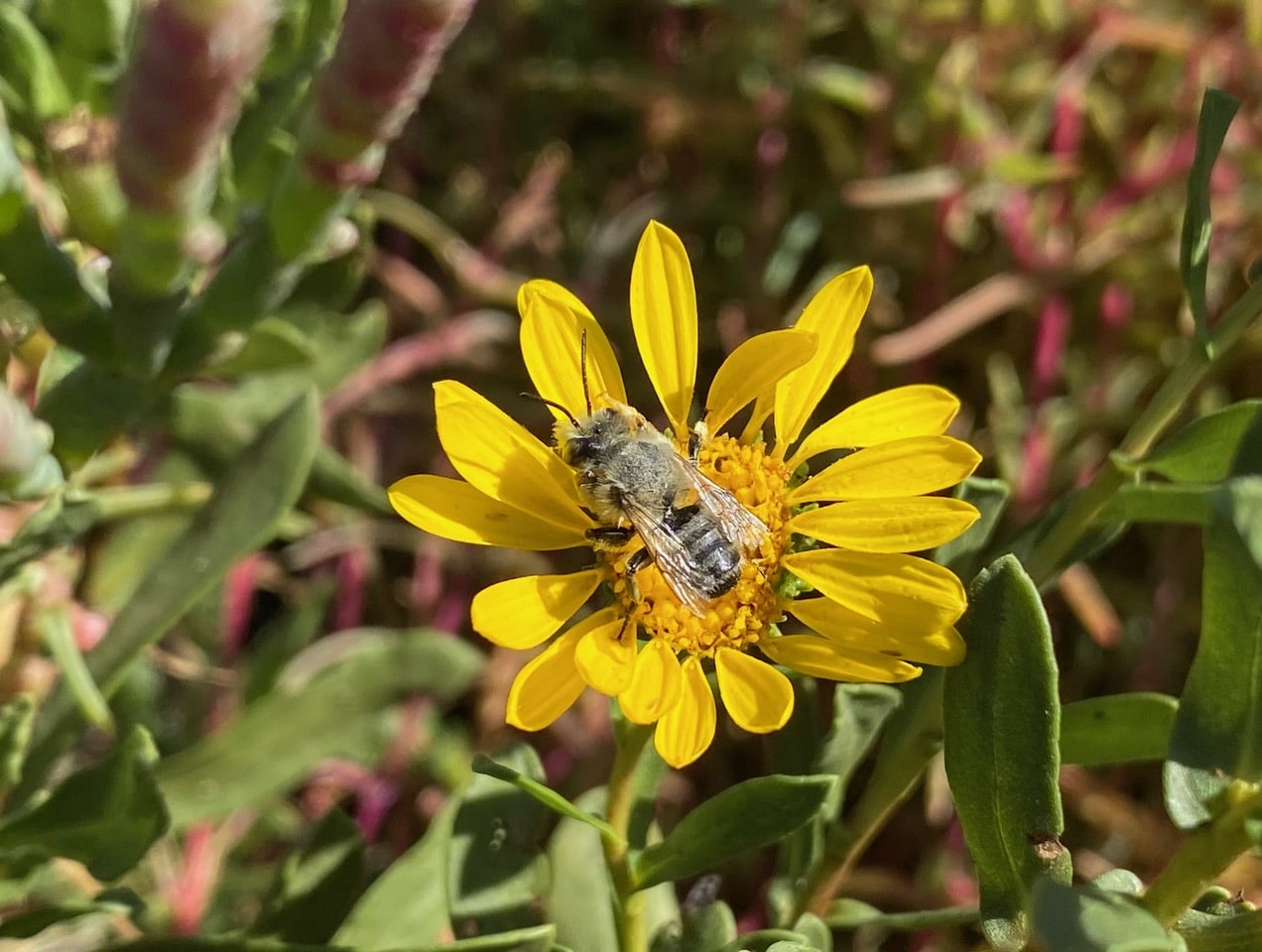
A male Western Leafcutter Bee, Megachile perihirta (family Megachilidae) lands on a Grindelia flowerhead. It is startling to see how tenuously his abdomen is connected to his thorax. The narrow section between the thorax and abdomen of bees (and other hymenopterans including wasps and ants) is called the petiole. It allows little more than the insect’s esophagus and aorta to pass through, but lends great flexibility and maneuverability to the insect’s body. The petiole is very visible in the wasps, but usually obscured in the hairy bees.

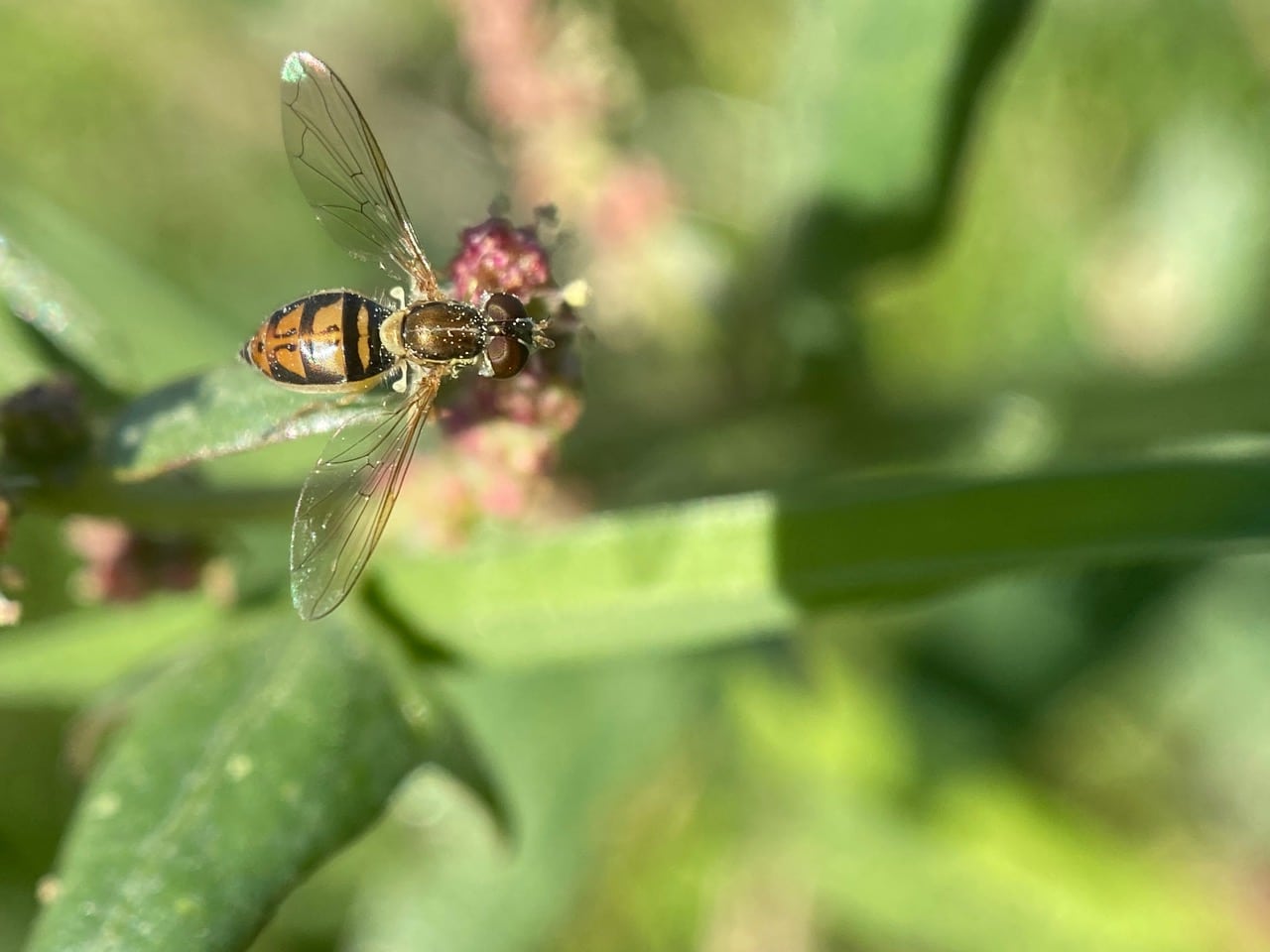 Peppered with pollen, another small insect is enjoying the flowers of the Creeping Saltbush. It is the Margined Calligrapher, Toxomerus marginatus (family Syrphidae). We have seen one earlier on the Grindelia flowerhead. The diminutive hover fly is just the perfect size to pollinate these minute flowers!
Leaf-cutter Bees, Megachile sp. (family Megachilidae) are stout-bodied, usually with pale hair on the thorax and stripes of white hairs on the abdomen. Females usually have a triangular abdomen with a pointed tip, and males’ faces are covered with dense, pale hair. Flight season is from May into September, with peak activity from June to August.
Solitary females construct nests in tubular cavities, including hollow stems, tree holes, and abandoned beetle burrows in wood. Many use holes drilled into wood, straws, or other manufactured tunnels. Females cut pieces from leaves or flower petals for use in the construction of brood cells. Most Megachile females are generalists when foraging for pollen. Pollen is transported in dense scopae on the underside of the abdomen.
Photos of Western Leafcutter Bee (Megachile perihirta) · iNaturalist
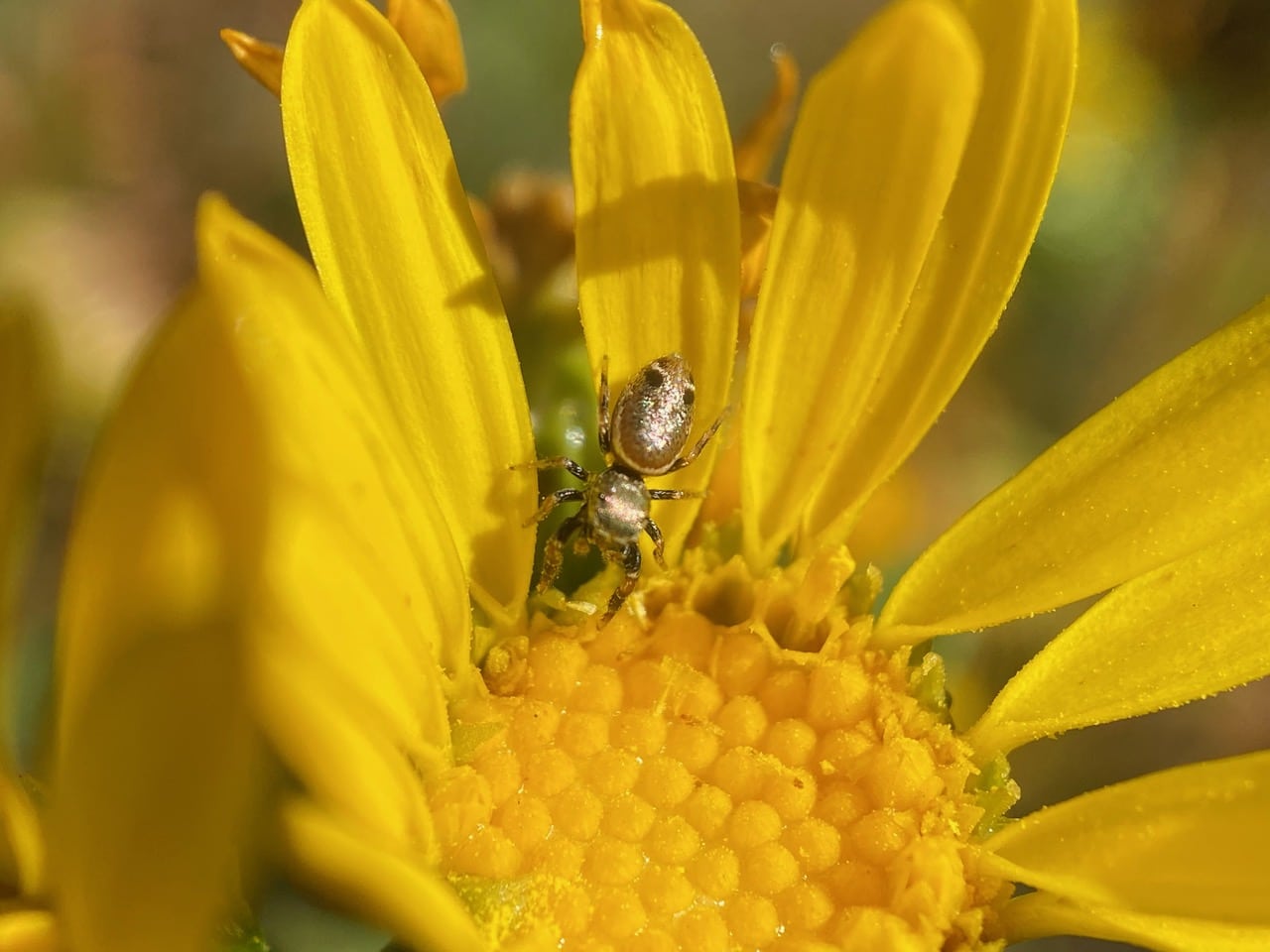
Hardly a day goes by without my finding a Buttonhook Leafbeetle Jumping Spider or Grapevine Jumping Spider, Sassacus vitis (family Salticidae) on a Grindelia flowerhead. They seem to be the most common jumping spider in this habitat.
The spider is native to North America, with a range spanning from Canada to Panama. It is a small jumping spider with iridescent gold abdomen and white ring around the anterior surface of abdomen. Body is covered with golden scales. Males are 3.5 mm long, females 4.5 mm. The name vitis is Latin for “grapevine”. The spider is commonly found on shrubs and vines and in fields. Best known as a common resident of vineyards.
Salticids are free-roaming hunting spiders. They do not weave a web to catch prey. They stalk, then pounce on their prey. Just before jumping, the spider fastens a safety line to the substrate. It can leap 10-20 times their body length to capture prey. Their movement is achieved by rapid changes in hydraulic pressure of the blood. Muscular contractions force fluids into the hind legs, which cause them to extend extremely quickly. Jumping spiders are visual hunters. Their excellent vision has among the highest acuities in invertebrates. Since all their 8 eyes are fixed in place and cannot pivot independently from the body like human eyes can, jumping spiders must turn to face whatever they want to see well. This includes moving their cephalothorax up and down, an endearing behavior.
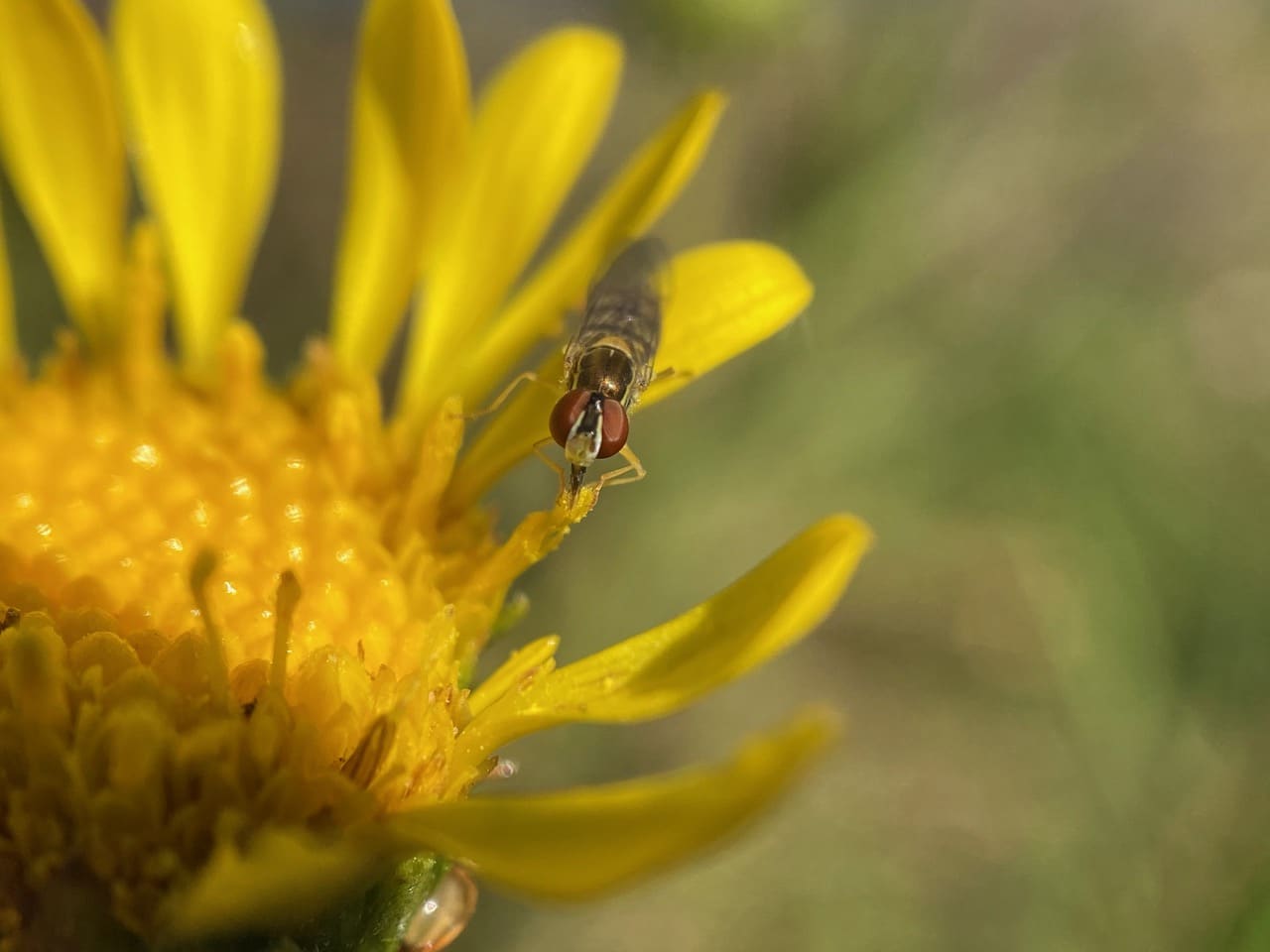
A Margined Calligrapher, Toxomerus marginatus (family Syrphidae) is feeding on pollen from the stamen of a Grindelia floret. I love how she lovingly holds the anthers in her front legs.
Toxomerus marginatus, also known as the Margined Calligrapher is a common species of hoverfly found in North America. These are small hoverflies, measuring 5-6 mm in length. The abdomen is black and yellow, and is narrowly margined with yellow. Adults are found in diverse habitats such as forests, fields, meadows, marshes, deserts, and alpine areas. They are highly adaptable and can occur is very disturbed habitats. Larvae prey on aphids, thrips, mites, and small caterpillars. Adults visit flowers for nectar and pollen.
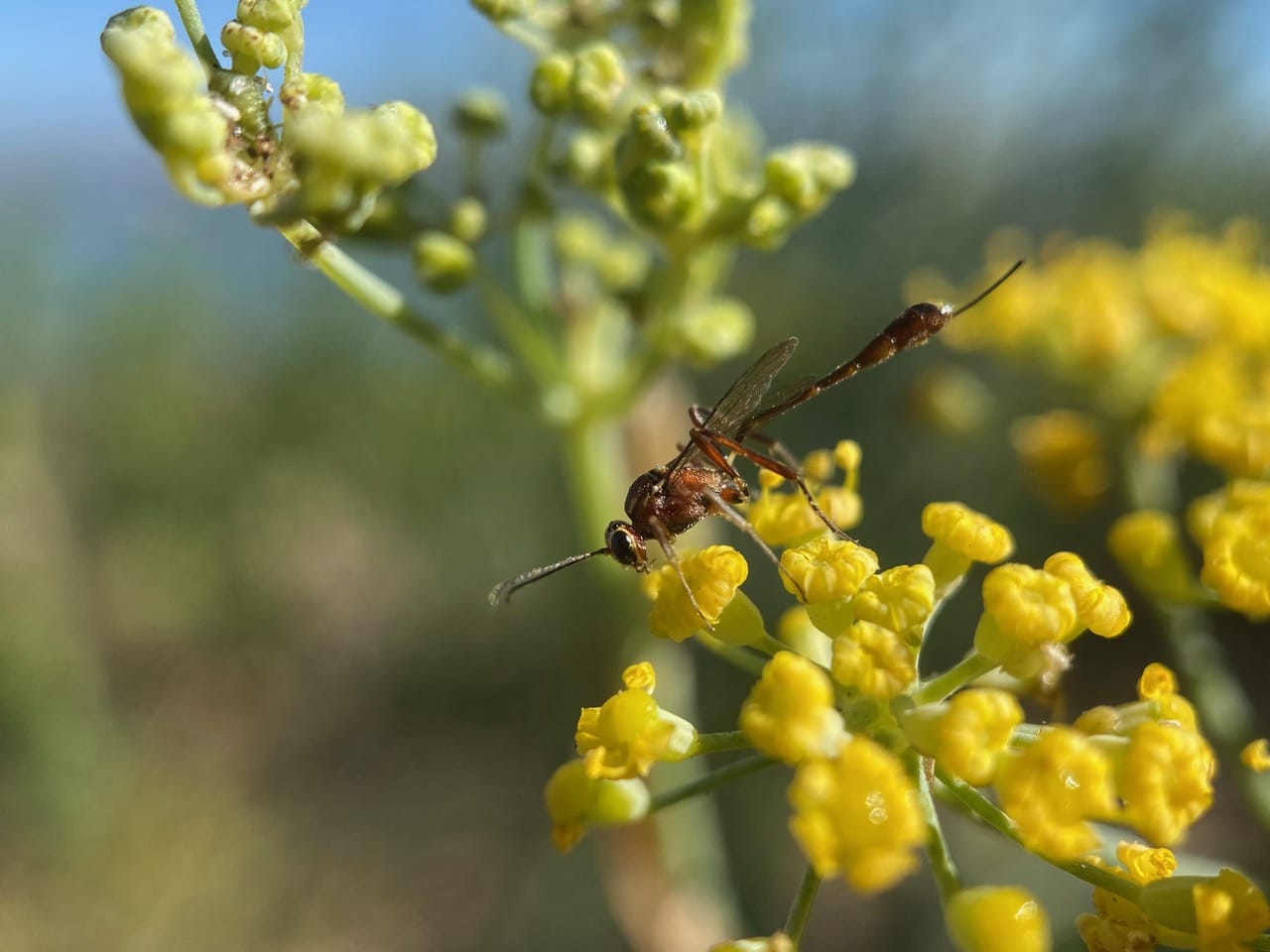
A female parasitoid wasp, Anomalon sp. (family Ichneumonidae) is taking nectar from a flower of Fennel, Foeniculum vulgare.
The Ichneumonidae, also known as the Ichneumon Wasps, or Ichneumonids, are a family of parasitoid wasps. They are one of the most diverse groups within the Hymenoptera (the order that includes the ants, wasps and bees) with about 25,000 species and counting. Ichneumon Wasps attack the immature stages of insects and spiders, eventually killing their hosts. They play an important role in the ecosystem as regulators of insect populations.
The Ichneumon Wasps have longer antennae than typical wasps, with 16 segments or more as opposed to 13 or fewer. Ichneumonid females have an unmodified ovipositor for laying eggs. They generally inject eggs either directly into their host’s body or onto its surface, and the process may require penetration of wood. After hatching, the Ichneumonid larva consumes its still living host. The most common hosts are larvae or pupae of Lepidoptera (butterflies and moths), Coleoptera (beetles) and Hymenoptera. Adult Ichneumonids feed on plant sap and nectar. Females spend much of their active time searching for hosts while the males are constantly on the look out for females. Many Ichneumonids are associated with specific prey, and Ichneumonids are considered effective biological controls of some pest species.
Anomalon is a large genus of parasitoid wasps in the family Ichneumonidae. The wasps are found worldwide, but most diverse in tropical regions. In the Americas they are mostly found in very wet rain forests. Recorded hosts include tenebrionid (darkling beetle) or elaterid (click beetle) larvae, and noctuid and tortricid moth larvae.
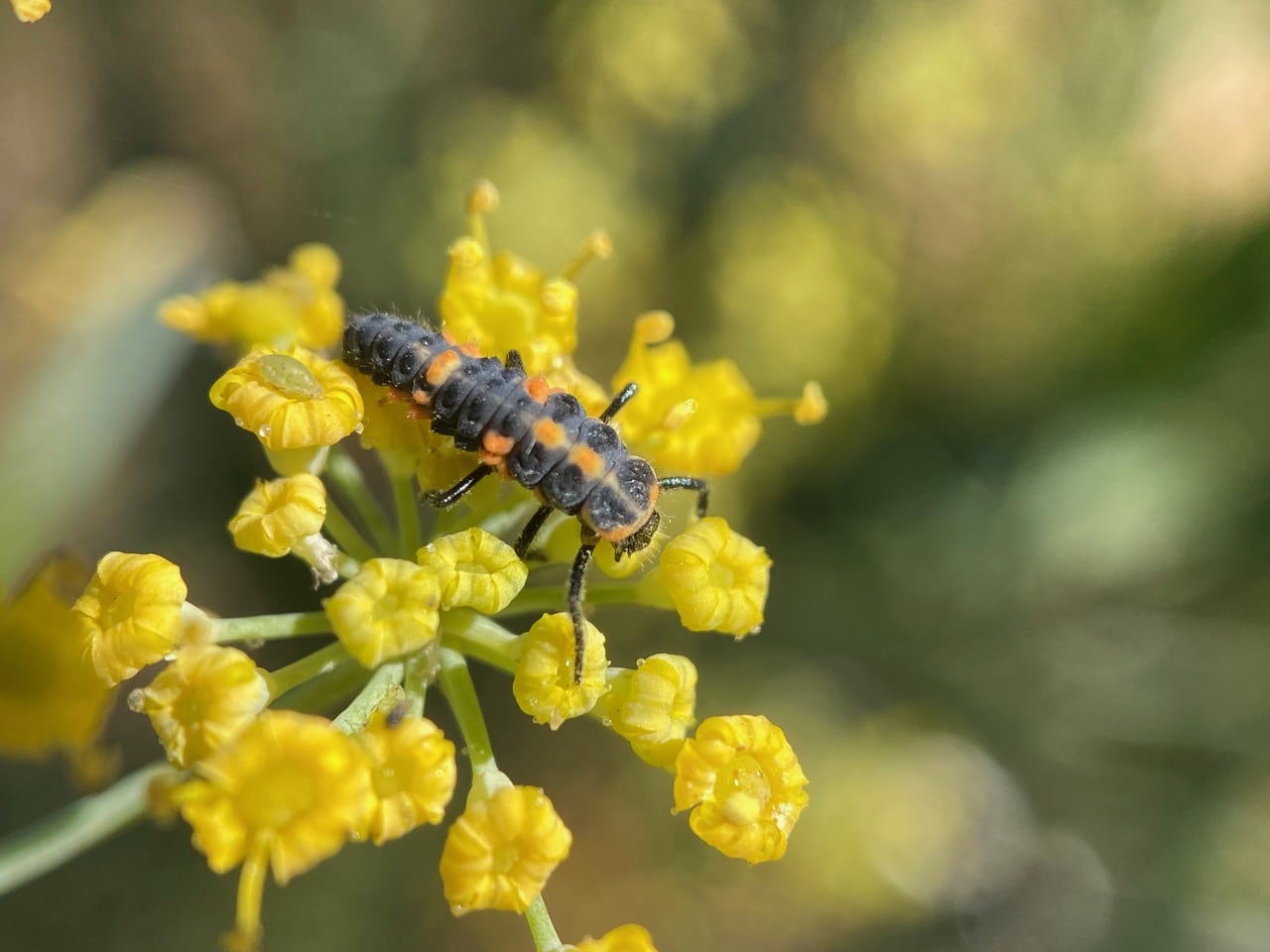
A Lady Beetle larva (family Coccinellidae) is resting on a flower umbel of Fennel, Foeniculum vulgare.
Ladybeetles go through complete metamorphosis, which comprises four stages: eggs, larva, pupa and adult. The larva goes through four molts during their development. Often described as miniature alligators with six legs, the larvae are voracious predators of aphids. Each larva can eat about 400 aphids in the three weeks before it pupates. Besides aphids, they also feed on soft scales, whitefly pupae, thrips, and spider mites.
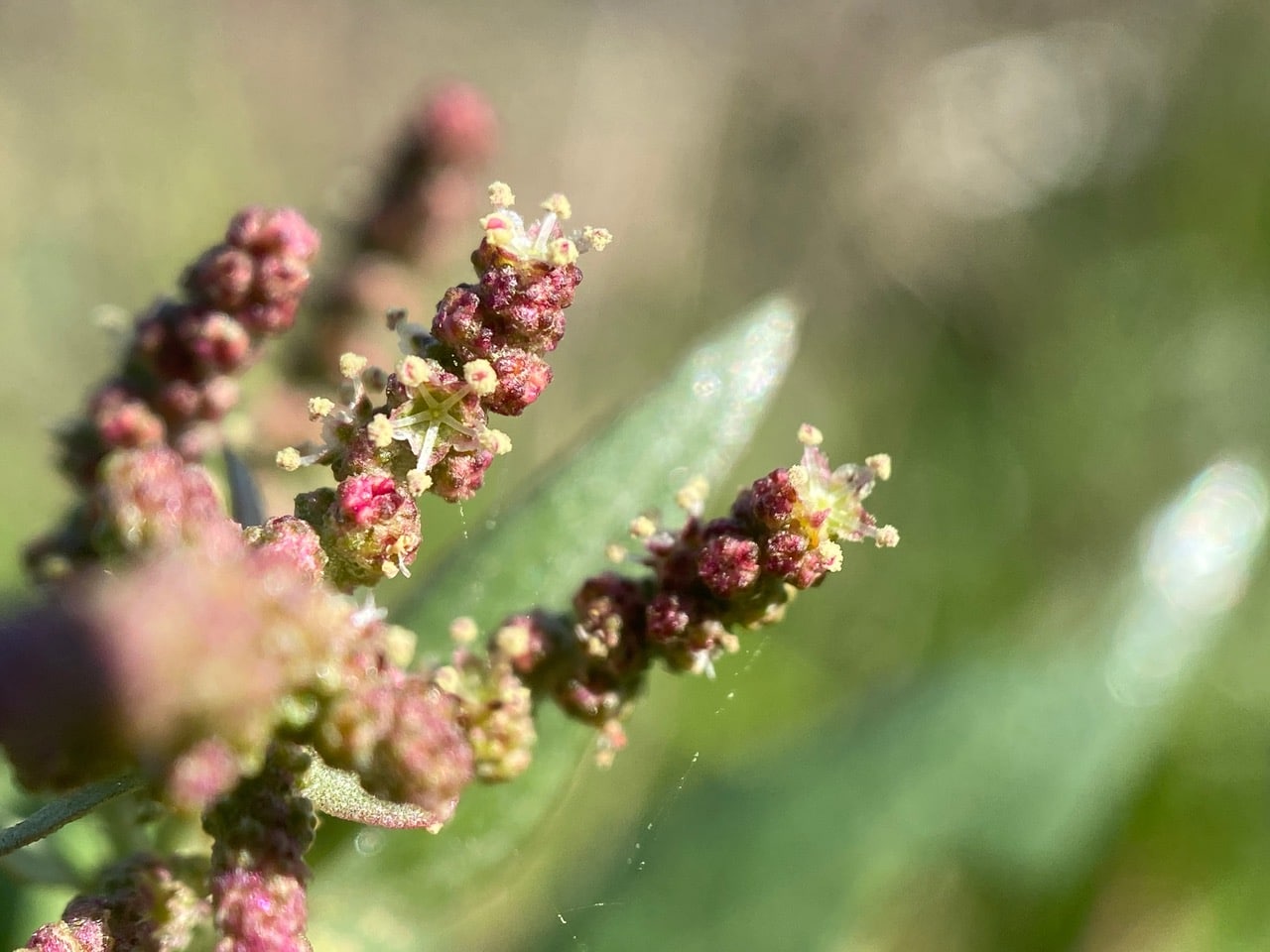
The Creeping Saltbush, Atriplex prostrata (family Chenopodiaceae) seems to be blooming. This is the plant that I have seen the Western Pygmy Blue butterflies, Brephidium exilis (family Lycaenidae) lay their eggs on. I have been puzzled by those tiny reddish-purple knobs studding the terminal spikes. Are they flowers?
Closing in with the macro lens, I discover that the reddish-purple structures are flower buds. The inflorescences look paler now that some of the flowers have opened, each with five stamens protruding star-like from the flower, offering copious cream-colored pollen. Ah, mystery solved!
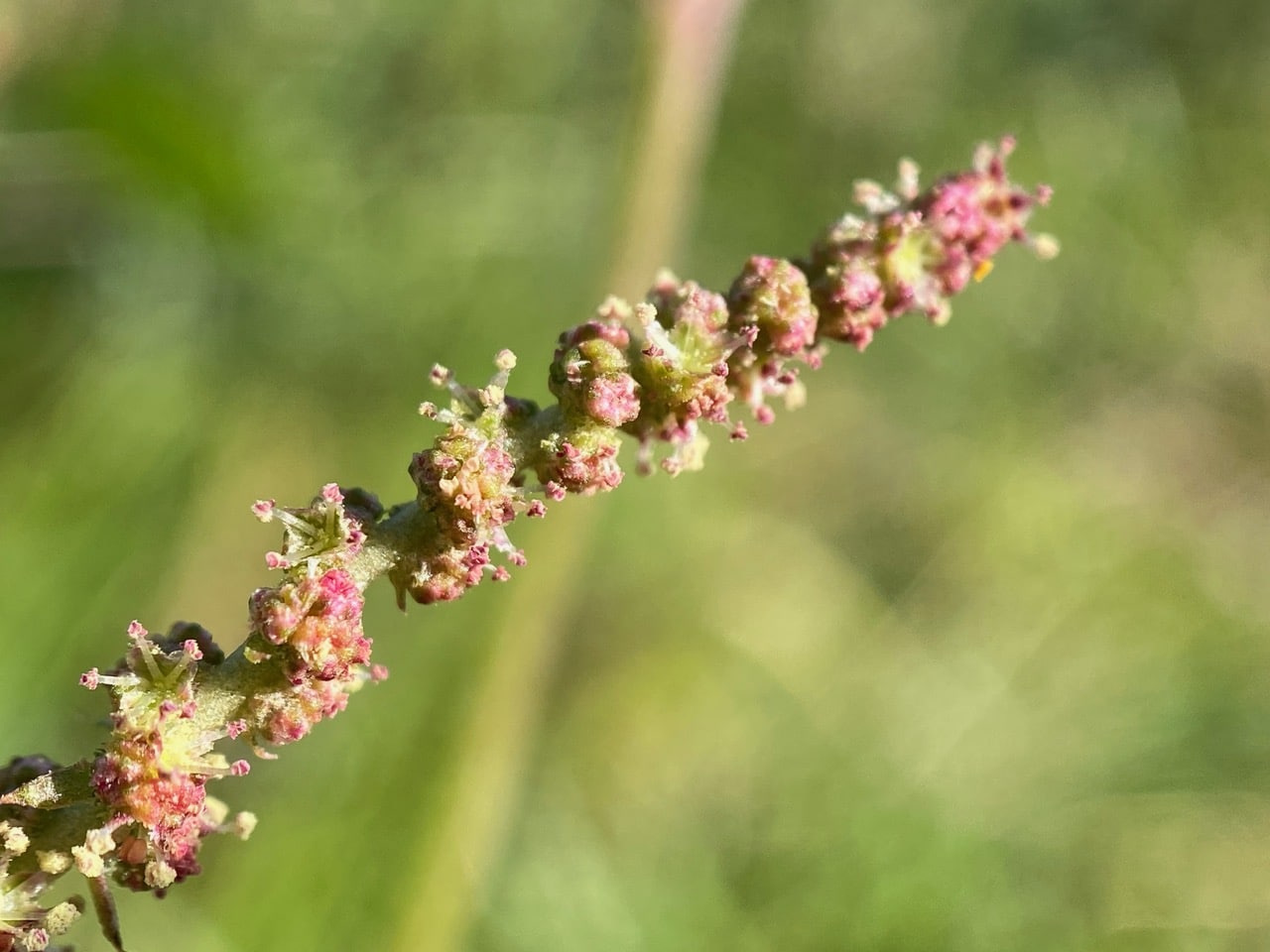
An older inflorescence with flowers that have shed their pollen.
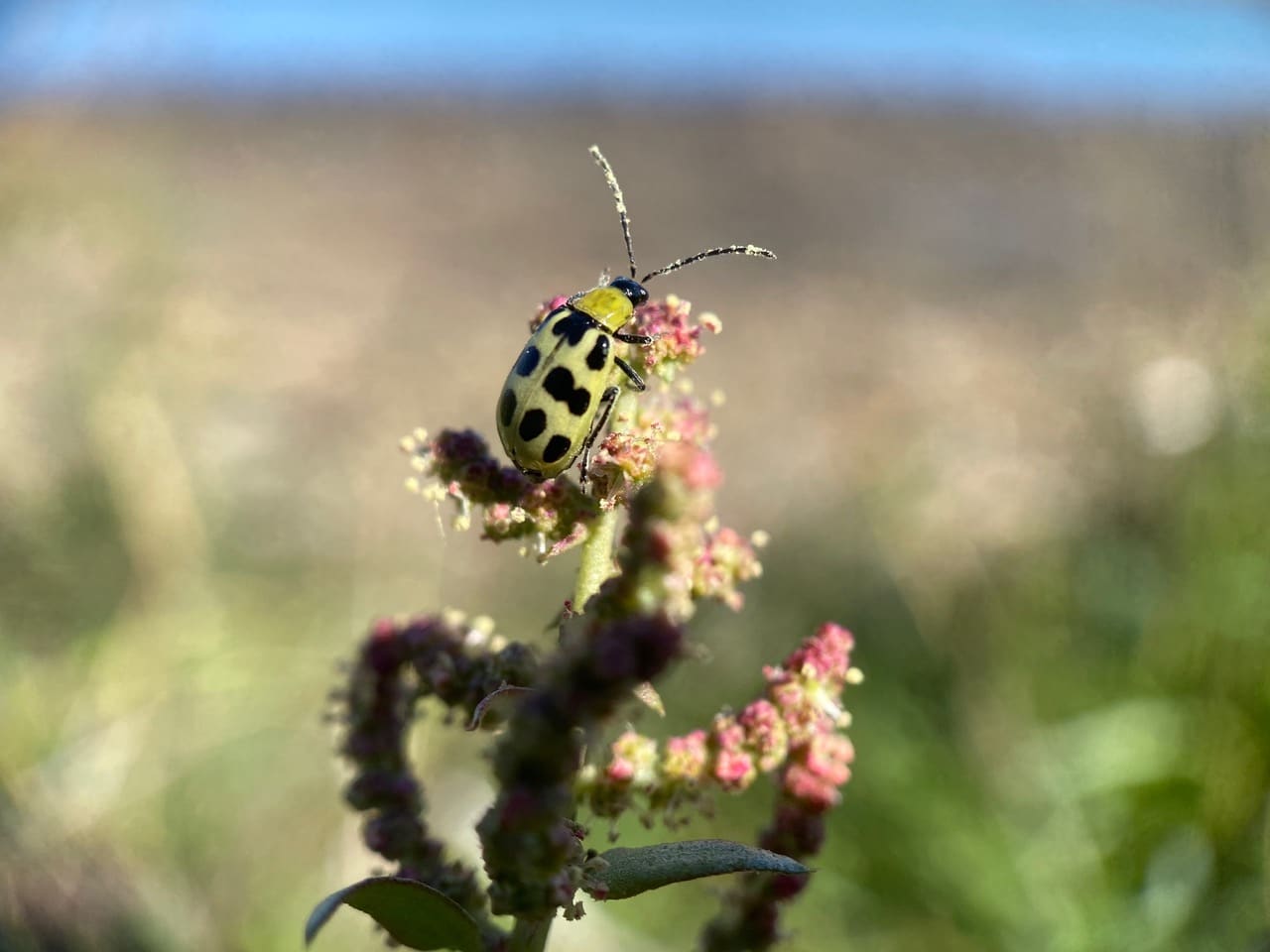
Its antennae covered with pollen, a Spotted Cucumber Beetle, Diabrotica undecimpunctata (family Chrysomelidae) is feeding on the tiny flowers of Creeping Saltbush.
Members of the family Chrysomelidae are commonly known as Leaf Beetles. Adults and larvae feed on all sorts of plant tissues, and all species are fully herbivorous. Many are serious pests of cultivated plants, including food crops. Others are beneficial due to their use in biocontrol of invasive weeds. Chrysomelids are popular among insect collectors, as many are conspicuously colored, typically in glossy yellow to red or metallic blue-green hues, and some have spectacularly bizarre shapes. Photos of Leaf Beetles (Family Chrysomelidae) · iNaturalist
Native to North America, the Spotted Cucumber Beetle can be a major agricultural pest, causing damage to crops in the larval as well as adult stages of their life cycle. Larvae, sometimes known as rootworms feed on the roots of emerging plants. In the adult stage the beetles cause damage by eating the flowers, leaves, stems and fruits of the plant.
Peppered with pollen, another small insect is enjoying the flowers of the Creeping Saltbush. It is the Margined Calligrapher, Toxomerus marginatus (family Syrphidae). We have seen one earlier on the Grindelia flowerhead. The diminutive hover fly is just the perfect size to pollinate these minute flowers!