

Pollinator Post 10/7/24
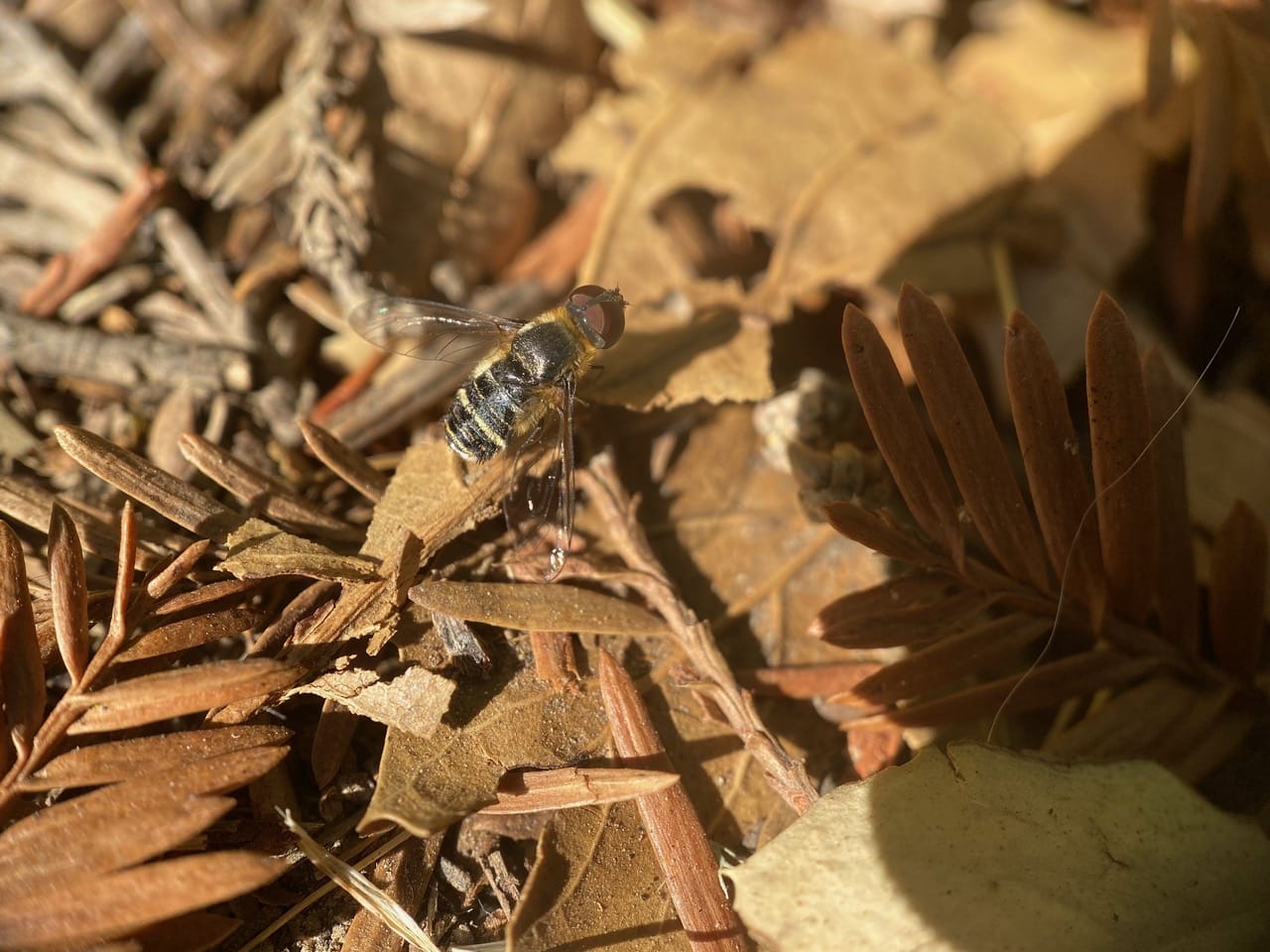
Anticipating a hot day, I seek the coolness of Reinhardt Redwood Regional Park in the Oakland hills this morning.





I barely left the parking lot when I encounter numerous small insects swarming over the leaf litter on the ground next to shrubs. When they land I discover that they are Banded Bee Flies, Villa sp. (family Bombyliidae). I have never seen so many bee flies in one place! Are they freshly emerged? Or are they seeking to lay eggs in host nests?
The Bee Flies belong to the family Bombyliidae. Adults generally visit flowers for nectar and pollen, some being important pollinators. Larvae generally are parasitoids of other insects. When at rest, many species of bee flies hold their wings at a characteristic “swept back” angle. The adult females usually deposit eggs in the vicinity of possible hosts, quite often in the burrows of beetles or ground-nesting bees/wasps. Bombyliidae parasitism is not host-specific, but rather opportunistic, using a variety of hosts. Adult females of the genus Villa lay eggs in mid-air and flick them towards the nest entrances of their hosts. They typically have an eversible pouch near the tip of their abdomen known as a sand chamber, which is filled with sand grains gathered before egg laying. These sand grains are used to coat each egg just before their aerial release, presumably to improve the female’s aim by adding weight.
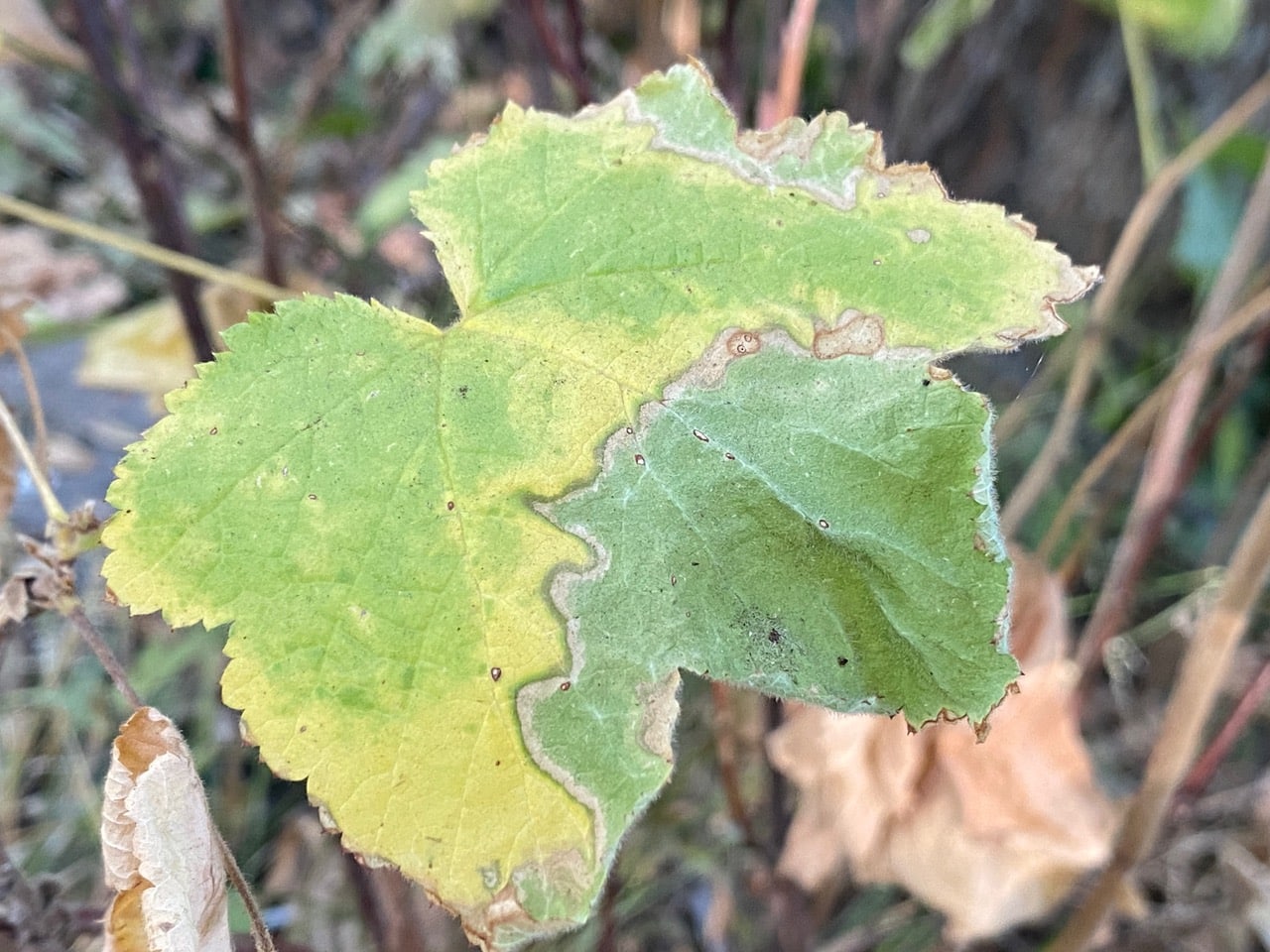
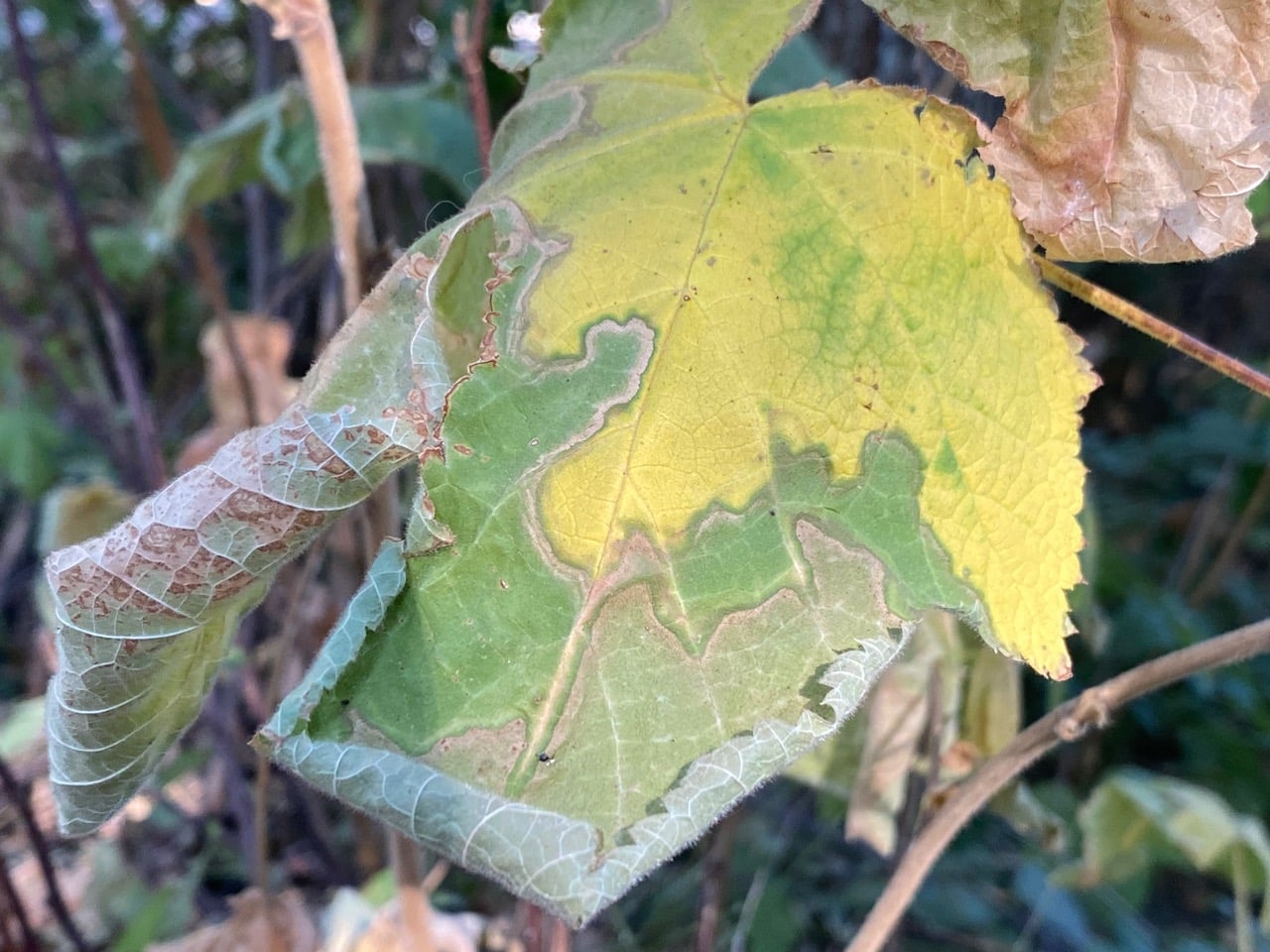
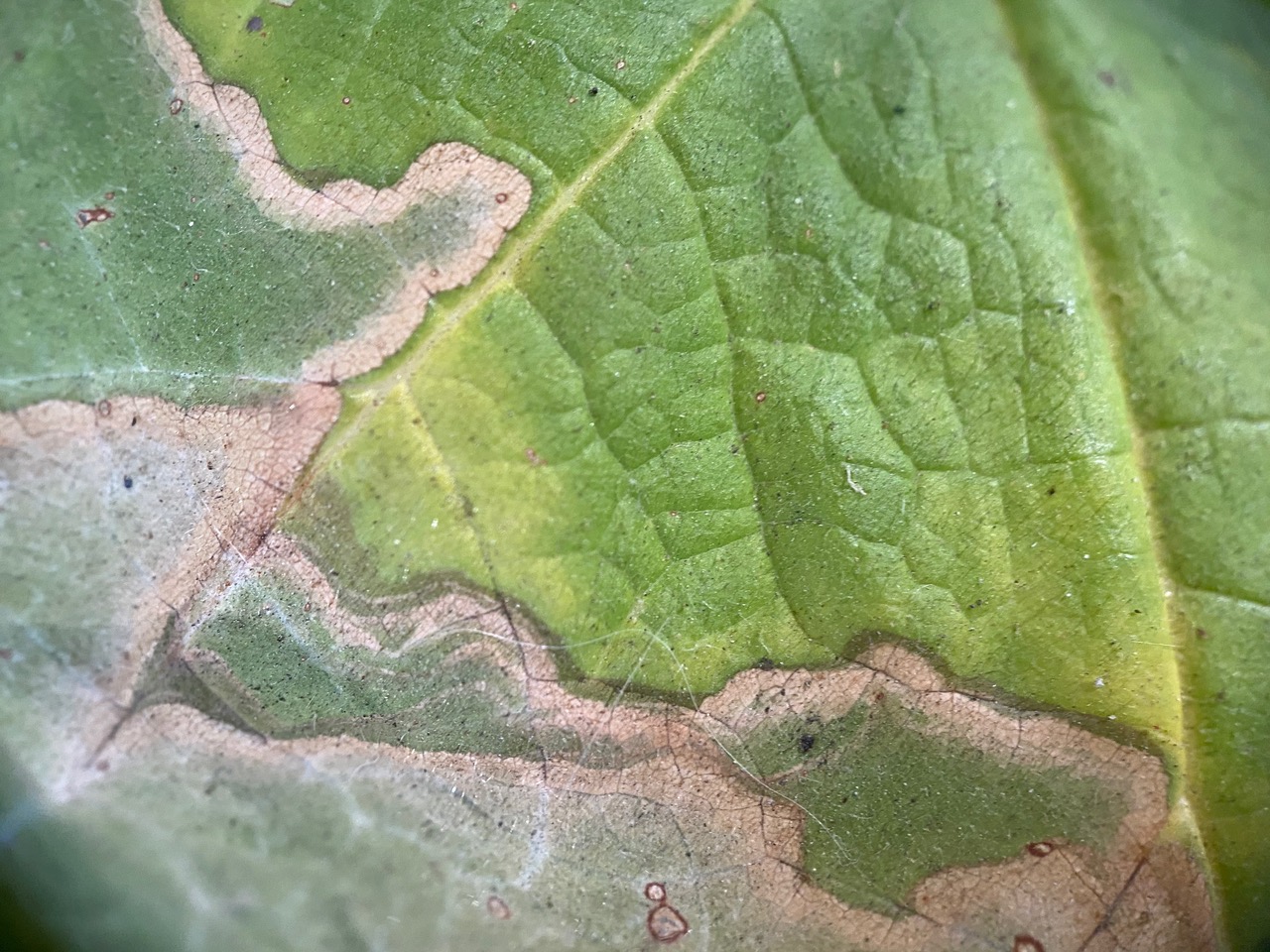
A Pink-flowering Currant, Ribes sanguineum by the parking lot is shedding its leaves. The senescent leaves still holding on have well-defined patches in different shades of green demarcated by borders reminiscent of geographical maps.
Are the “borders” the tunnels made by leaf-miners? I can’t be sure. It seems the patches distal from the petioles are able to retain their chlorophyll longer. Perhaps the tunnels have cut off signaling within the leaf, preventing the normal process of senescence? Could the “borders” be areas invaded by fungus that is gettin a head start on the decomposition process even before the leaf drops?
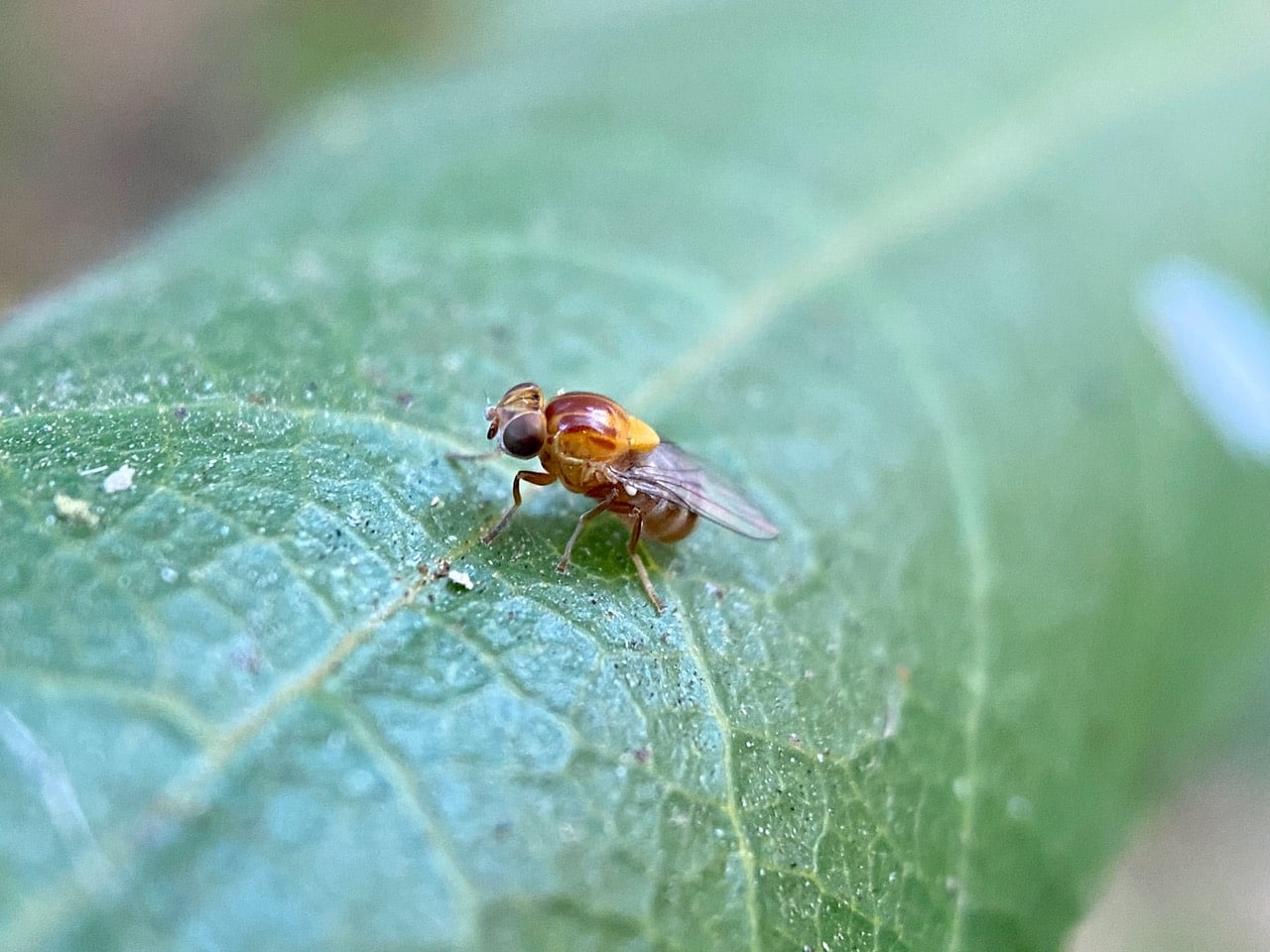
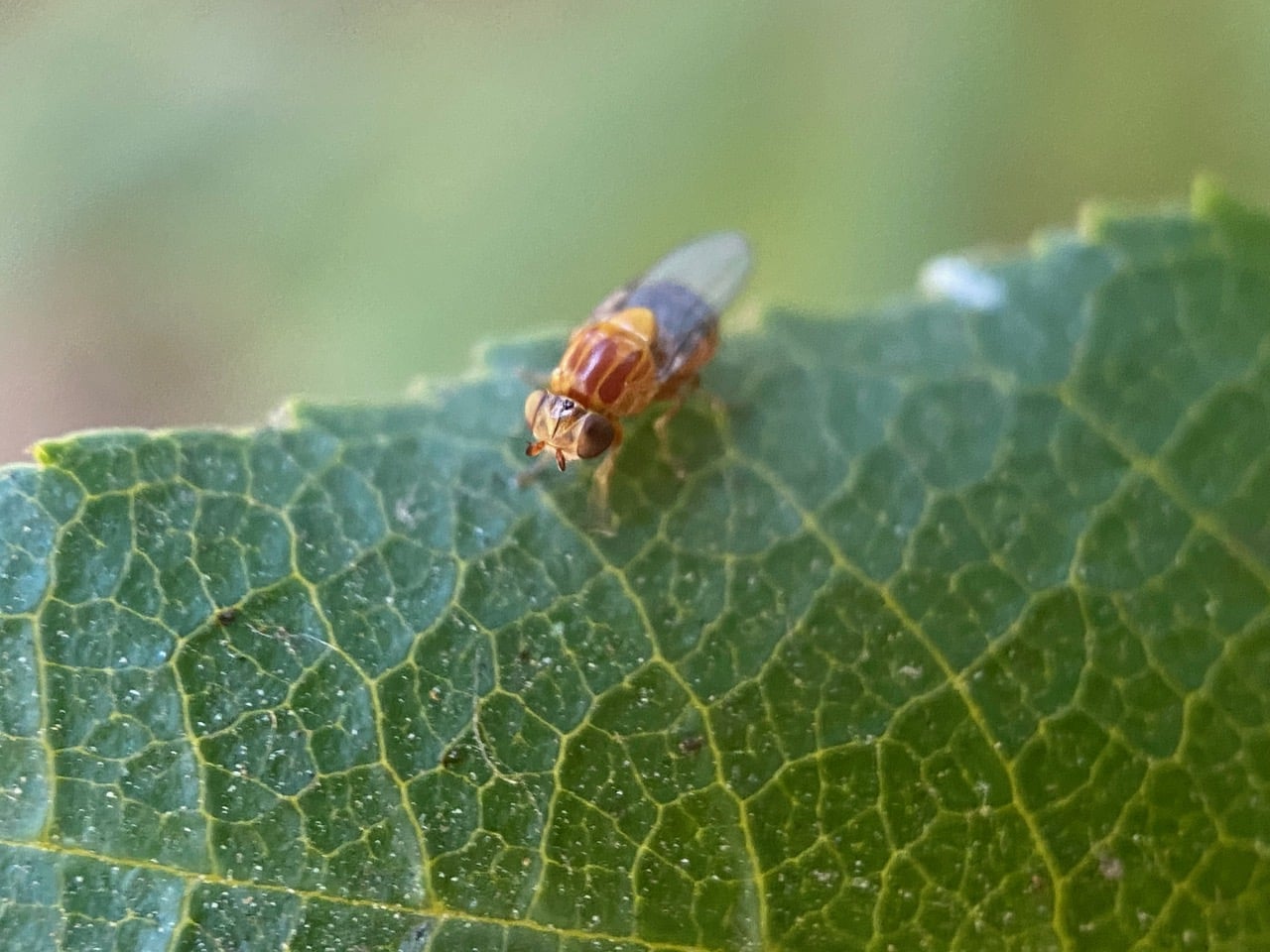
A tiny fly lands on an oak leaf. It is a Grass Fly of Frit Fly (family Chloropidae).
Chloropidae are minute to small flies, usually 1-4 mm. The thorax often has a pattern of three to five longitudinal stripes against a light-colored background. The flies appear shiny due to the virtual absence of any hairs. The majority of the larvae are phytophagous, mainly on grasses.
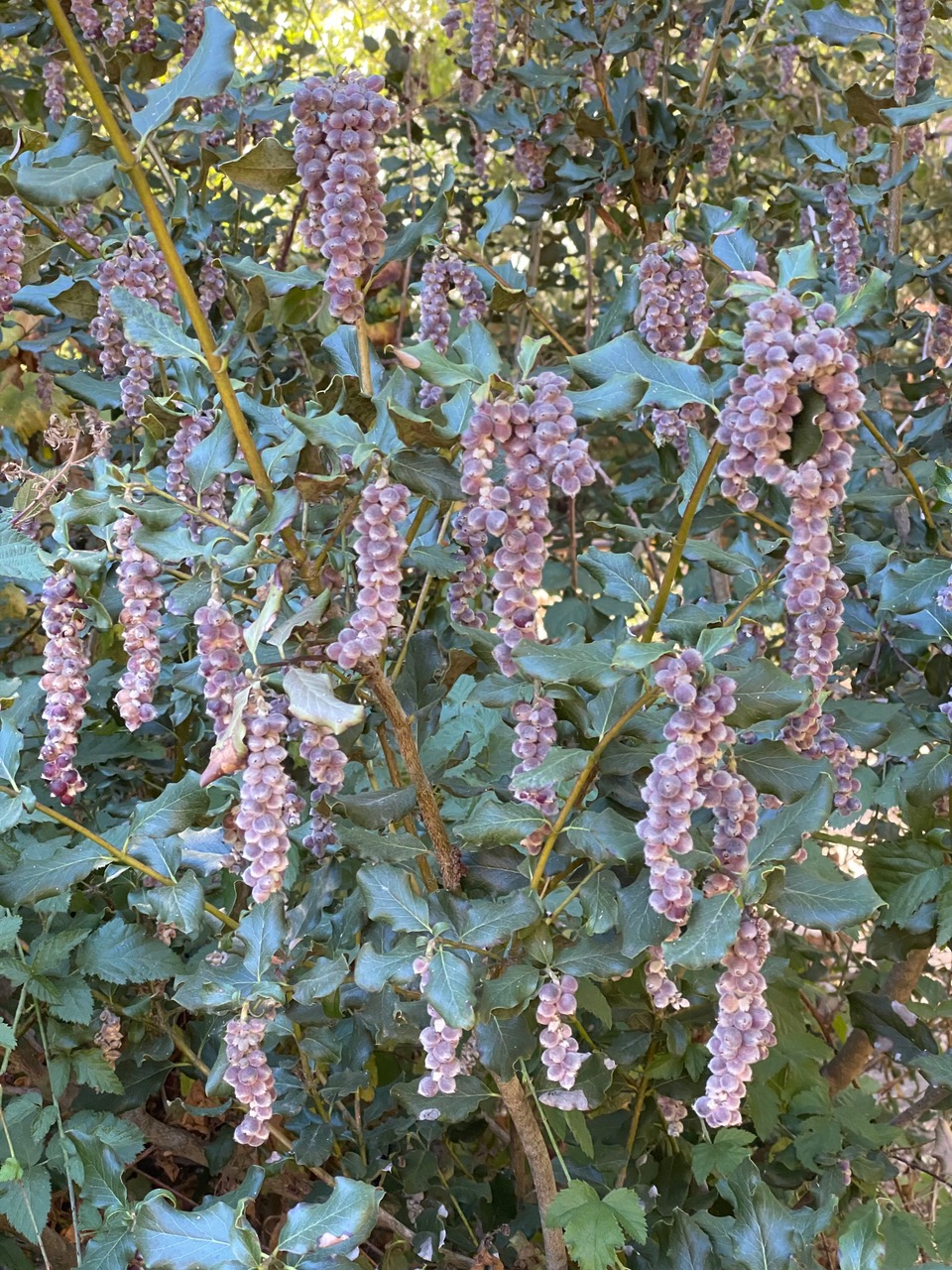
The female Coast Silk Tassel, Garrya elliptica by the parking lot has produced a bumper crop of fruits this year! The plant is dioecious and wind pollinated. There has to be some male plants close by to provide pollen to fertilize this female plant.
The felty fruits of Garrya hang like bunches of grapes from the tips of the branches. Each fruit is a round dry berry containing two seeds.
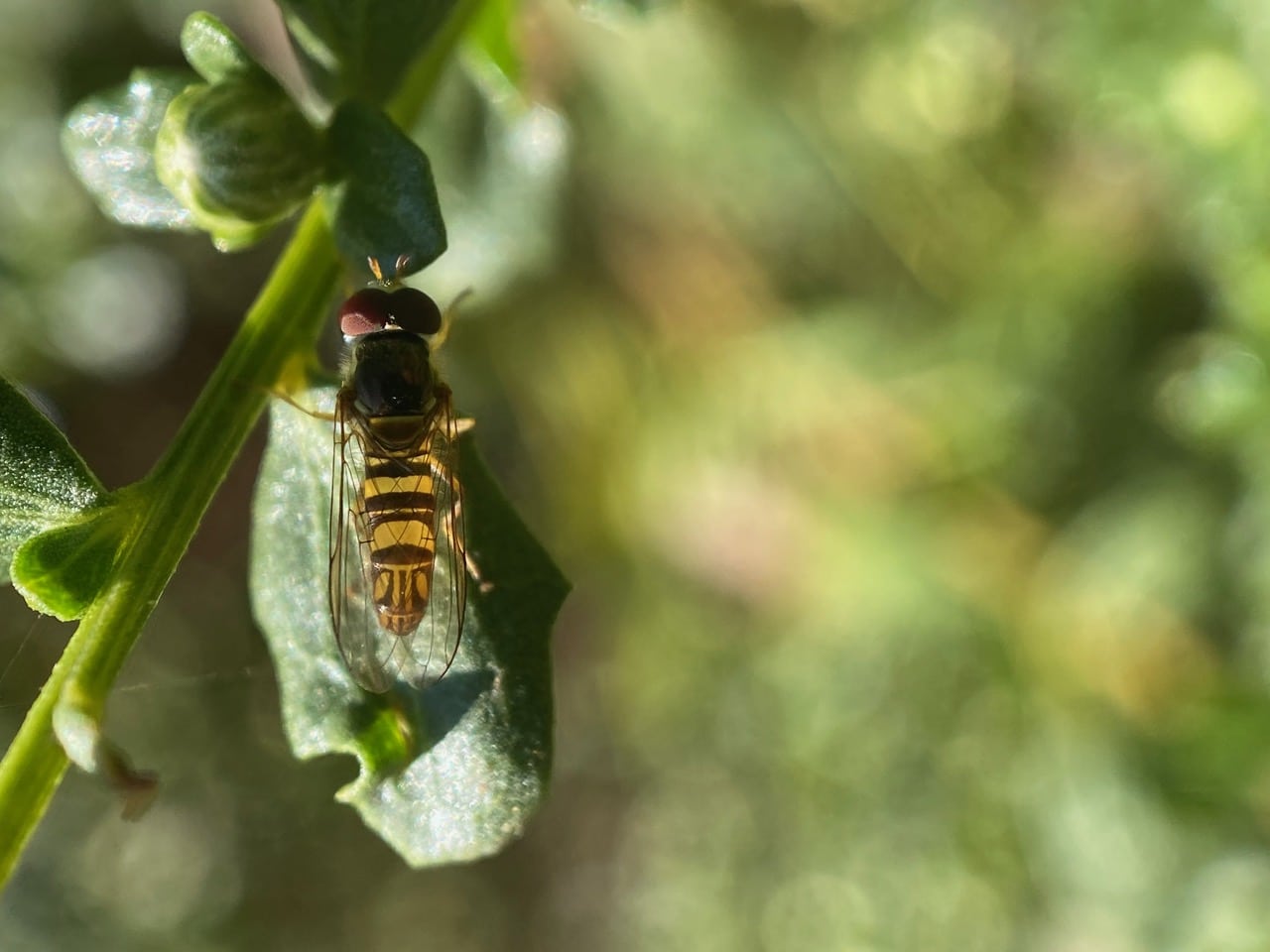
Sunlight illuminates the distinctive abdomen of an Oblique Streaktail, Allograpta obliqua (family Syrphidae) perched on a leaf of Coyote Brush, Baccharis pilularis.
The Oblique Streaktail, Allograpta obliqua (family Syrphidae) is a common North American species of hoverfly. Adults are 6-7 mm long. Males have holoptic eyes (that meet on top of the head), while females have dichoptic eyes. Eggs are laid on surfaces of leaves or stems near aphids. The larvae are important predators of aphids. Adults visit flowers for nectar and pollen, and are pollinators.
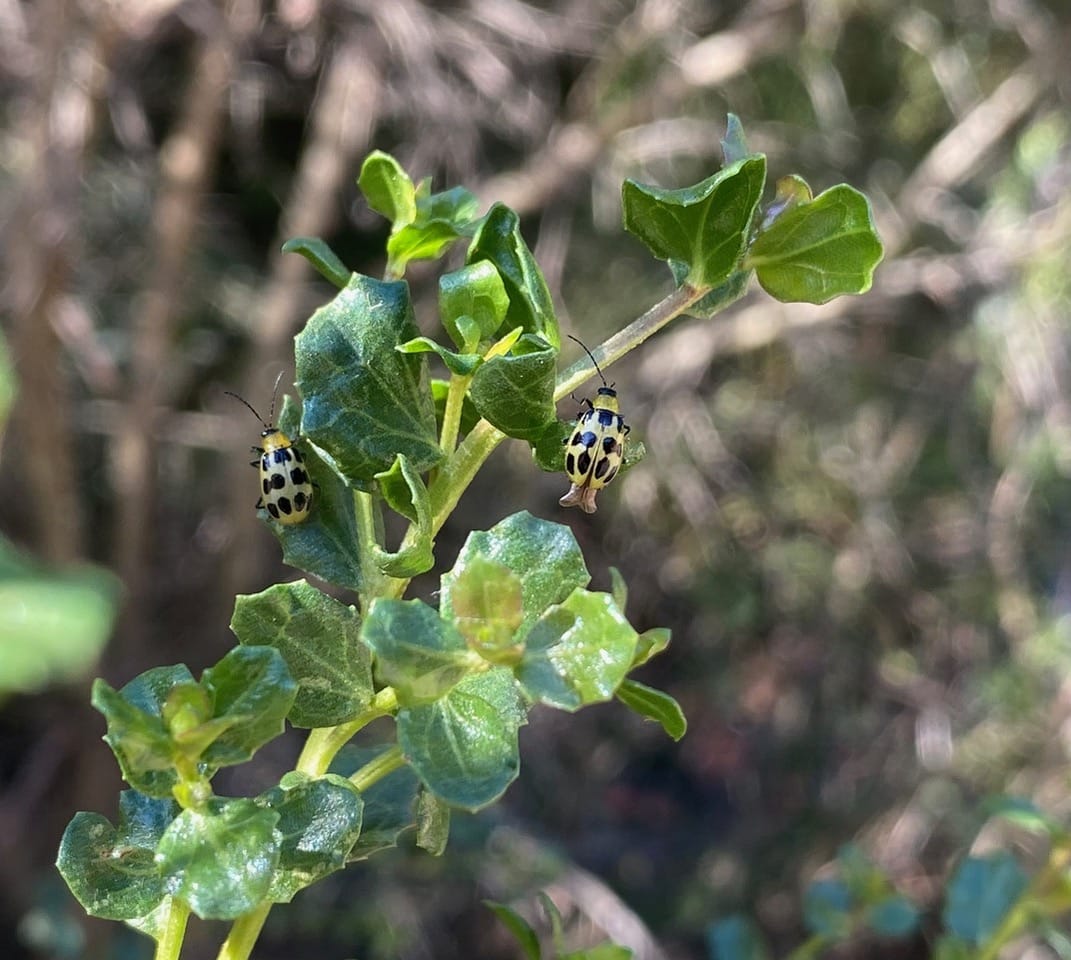
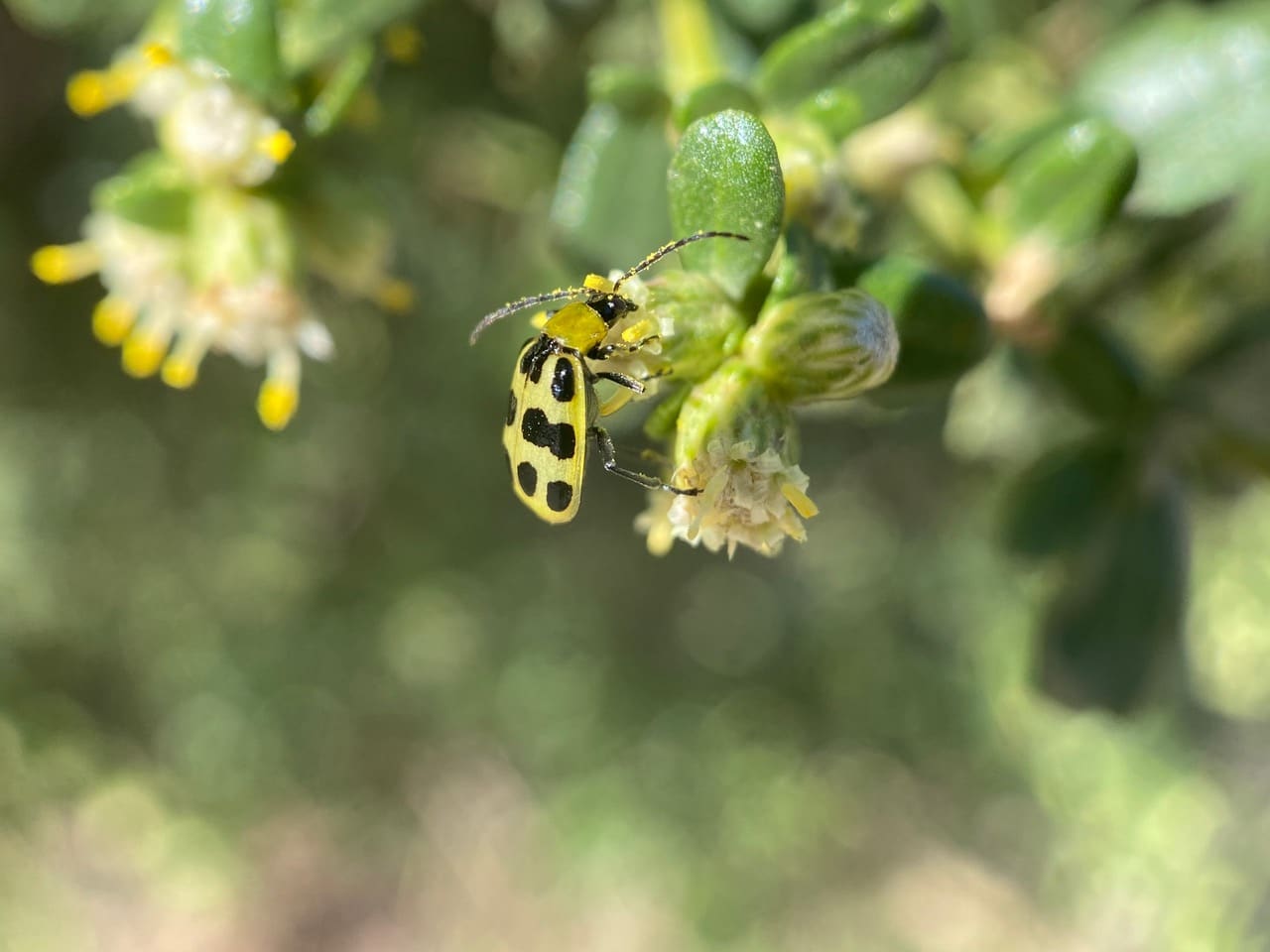
The Spotted Cucumber Beetles, Diabrotica undecimpunctata (family Chrysomelidae) are everywhere today. They are swarming over and landing on the Coyote Brush in large numbers.
Members of the family Chrysomelidae are commonly known as Leaf Beetles. Adults and larvae feed on all sorts of plant tissues, and all species are fully herbivorous. Many are serious pests of cultivated plants, including food crops. Others are beneficial due to their use in biocontrol of invasive weeds. Chrysomelids are popular among insect collectors, as many are conspicuously colored, typically in glossy yellow to red or metallic blue-green hues, and some have spectacularly bizarre shapes. Photos of Leaf Beetles (Family Chrysomelidae) · iNaturalist
Native to North America, the Spotted Cucumber Beetle can be a major agricultural pest, causing damage to crops in the larval as well as adult stages of their life cycle. Larvae, sometimes known as rootworms feed on the roots of emerging plants. In the adult stage the beetles cause damage by eating the flowers, leaves, stems and fruits of the plant.
This Spotted Cucumber Beetle is feeding on the male flowers of Coyote Brush, while most of the others are just milling around.
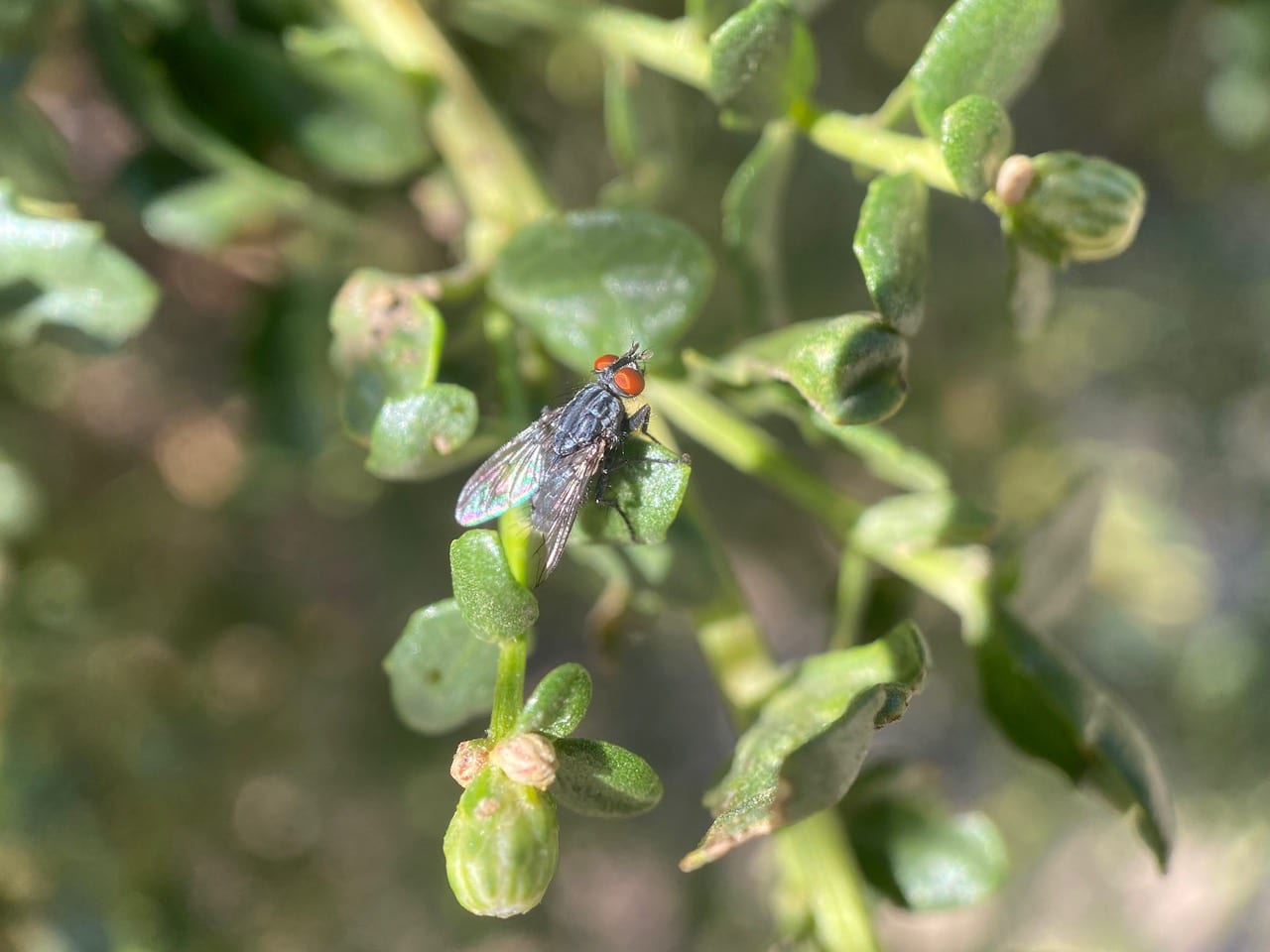
An unidentified fly with bright red eyes perches on a Coyote Brush leaf.
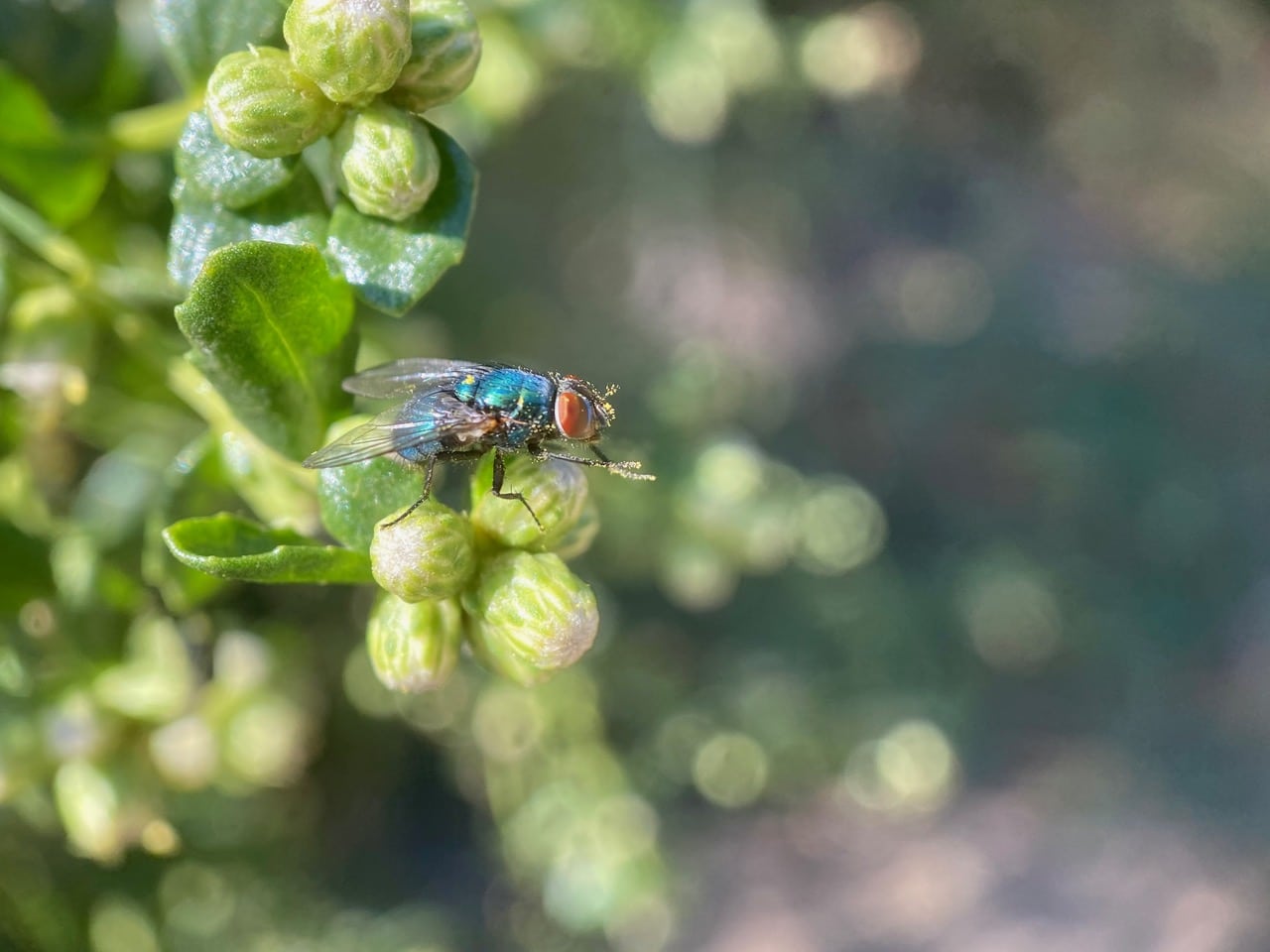
A Green Bottle Fly (family Calliphoridae) lands on a cluster of immature flowerheads of Coyote Brush.
The Calliphoridae are variously known as blow flies, carrion flies, greenbottles, and bluebottles. Adults are usually brilliant with metallic sheen, often with blue, green, or black thoraces and abdomens. There are three cross-grooves on the thorax; calypters are well developed. Females visit carrion both for proteins and egg laying. The larvae that hatch feed on dead or necrotic tissue, passing through three instars before pupation. After the third instar, the larva leaves the corpse and burrows into the ground to pupate. Adult blow flies are occasional pollinators, being attracted to flowers with strong odors resembling rotting meat. The flies use nectar as a source of carbohydrates to fuel flight.
A large Cross Orbweaver, Araneus diadematus (family Araneidae) hangs head-down in the center of her untidy web. She seems to have masticated a small prey into a black mush that she is manipulating between her pedipalps. She appears to be missing some legs on her left side, but still manages to feed herself, thanks to her web.
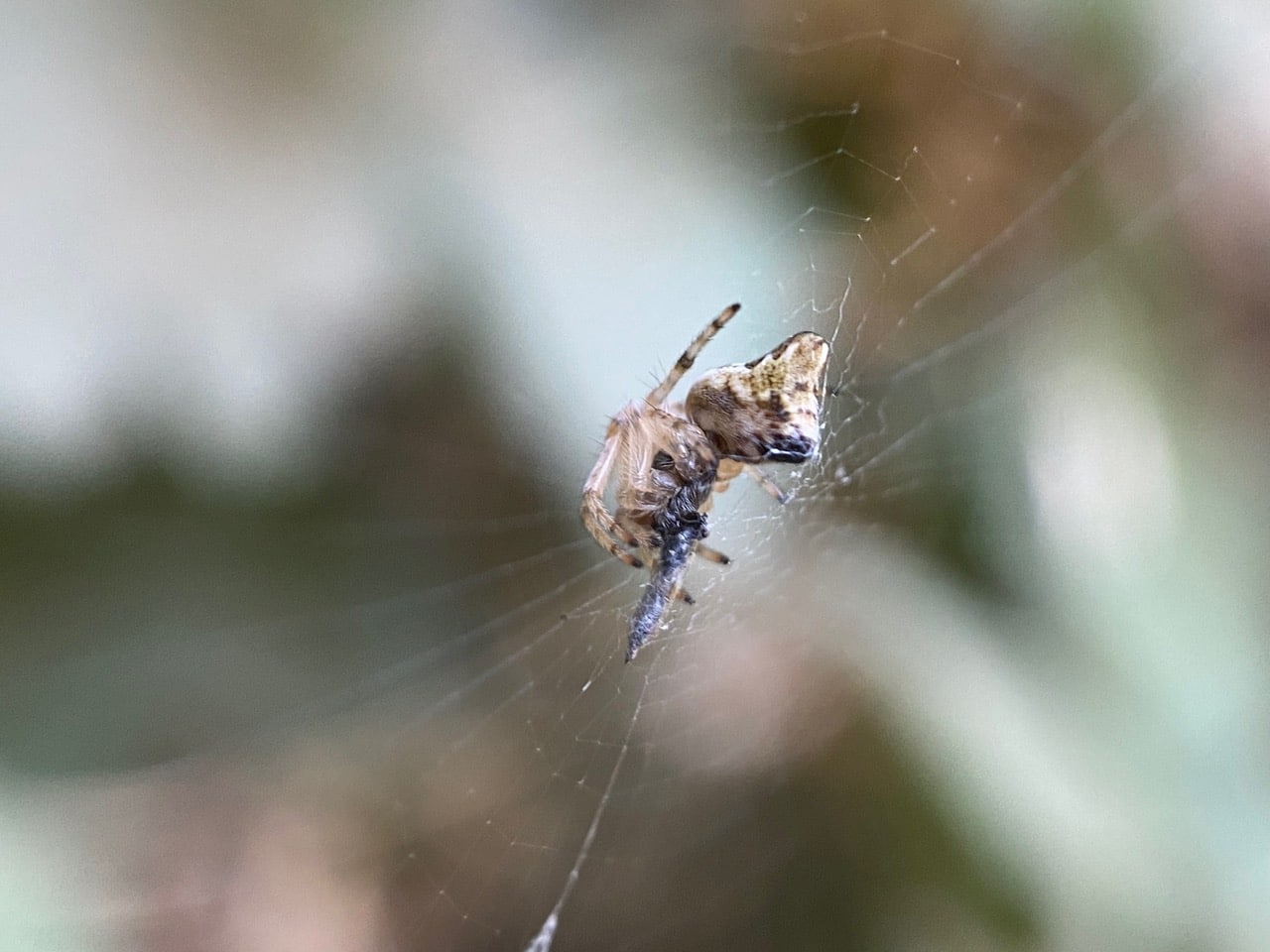
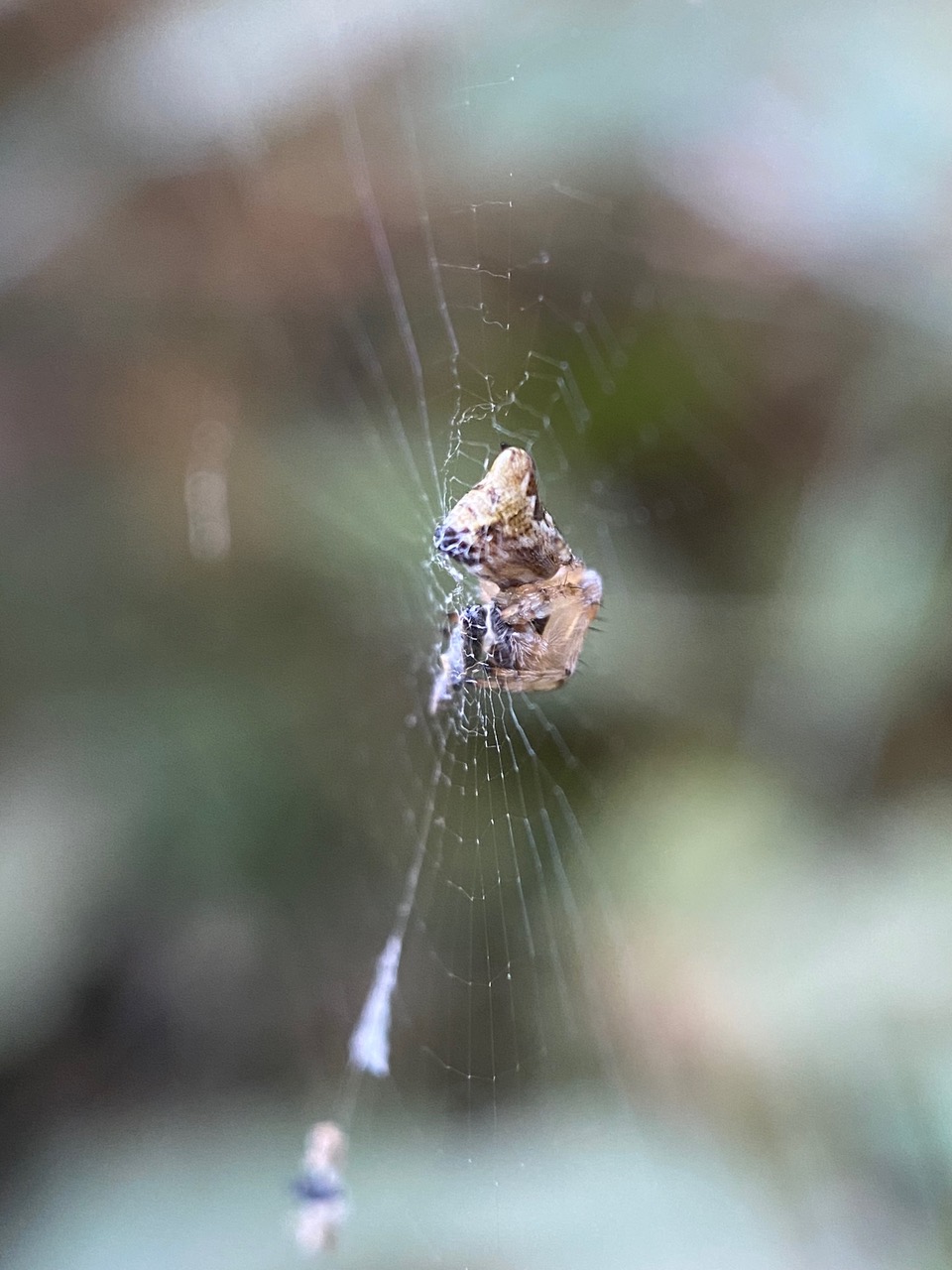
I stop by a tiny web of a Trashline Orbweaver with only a few bits of trash incorporated in the web. Zooming in, I discover that the owner is a male Conical Trashline Orbweaver, Cyclosa conica (family Araneidae). This is the first time I find a male on a web, feeding on a captured prey. All the previous males of the species I have seen were on the move. The males have a slimmer, somewhat angular abdomen, and are generally smaller than the females.
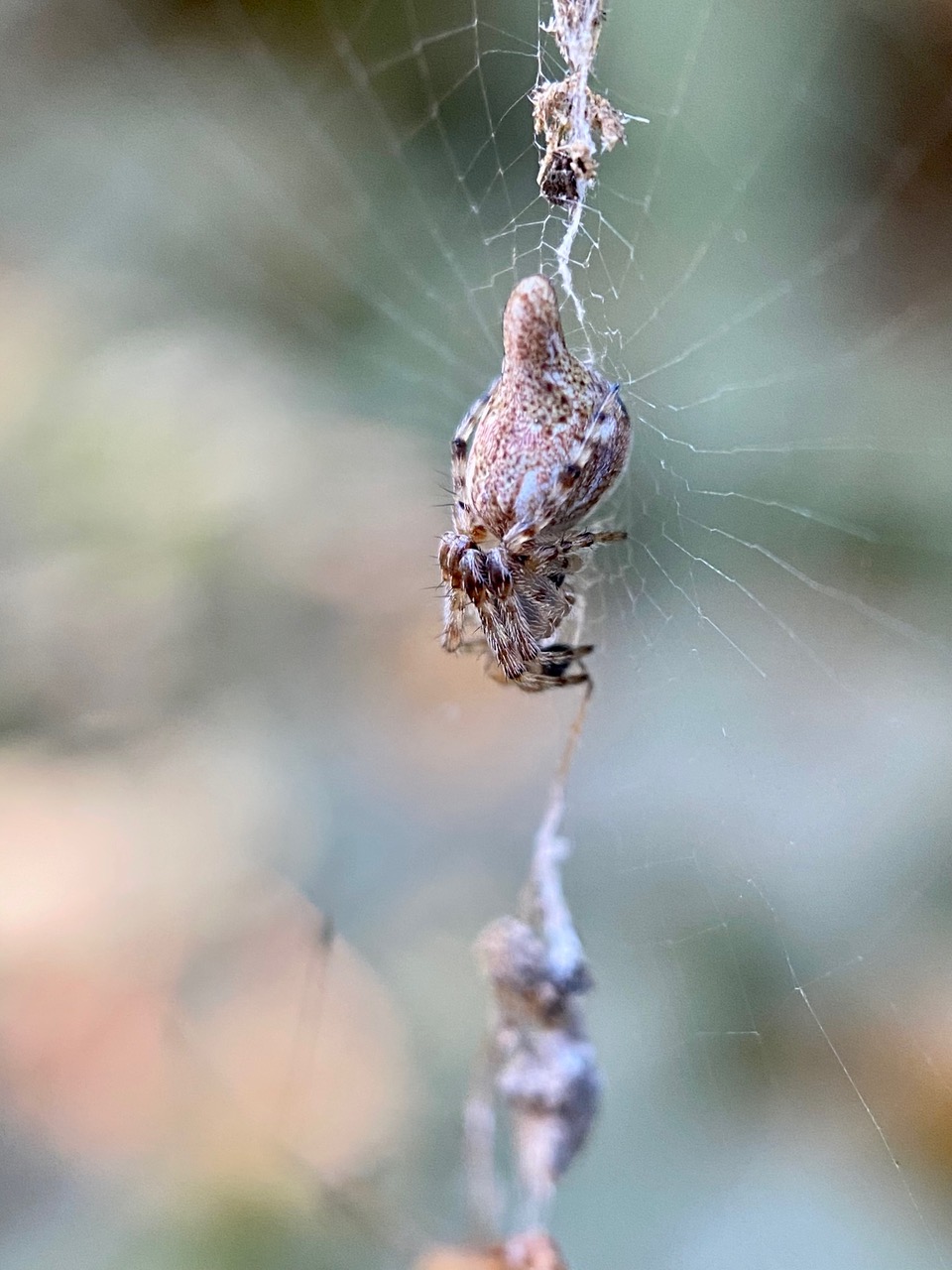
Trashline spiders are so-called for their web decoration. Cyclosa create orb-shaped webs using both the sticky and non-sticky threads, mostly during times of complete darkness. Across its spiral wheel-shaped web, Cyclosa fashions a vertical “trashline” made of various components such as prey’s carcasses, detritus, and at times, egg cases. The trashline helps the spider to camouflage exceptionally well from predators. The spider sits in the web hub to conduct its sit-and-wait hunting, ensnaring prey at nearly any time of day; it only leaves its spot to replace the web prior to sunrise.
Just a few steps further, I find this pale female Conical Trashline Orbweaver, Cyclosa conica (family Araneidae) resting head-down in the center of her web. Note her broad and rounded abdomen. The prominent tubercle on her abdomen gives her the common name. I call it the Hershey’s Kiss spider. Her cephalothorax is completely concealed behind her folded front legs. This is the typical resting posture of the Trashline Orbweavers, usually right in the middle of the vertical string of debris it has incorporated into the web.
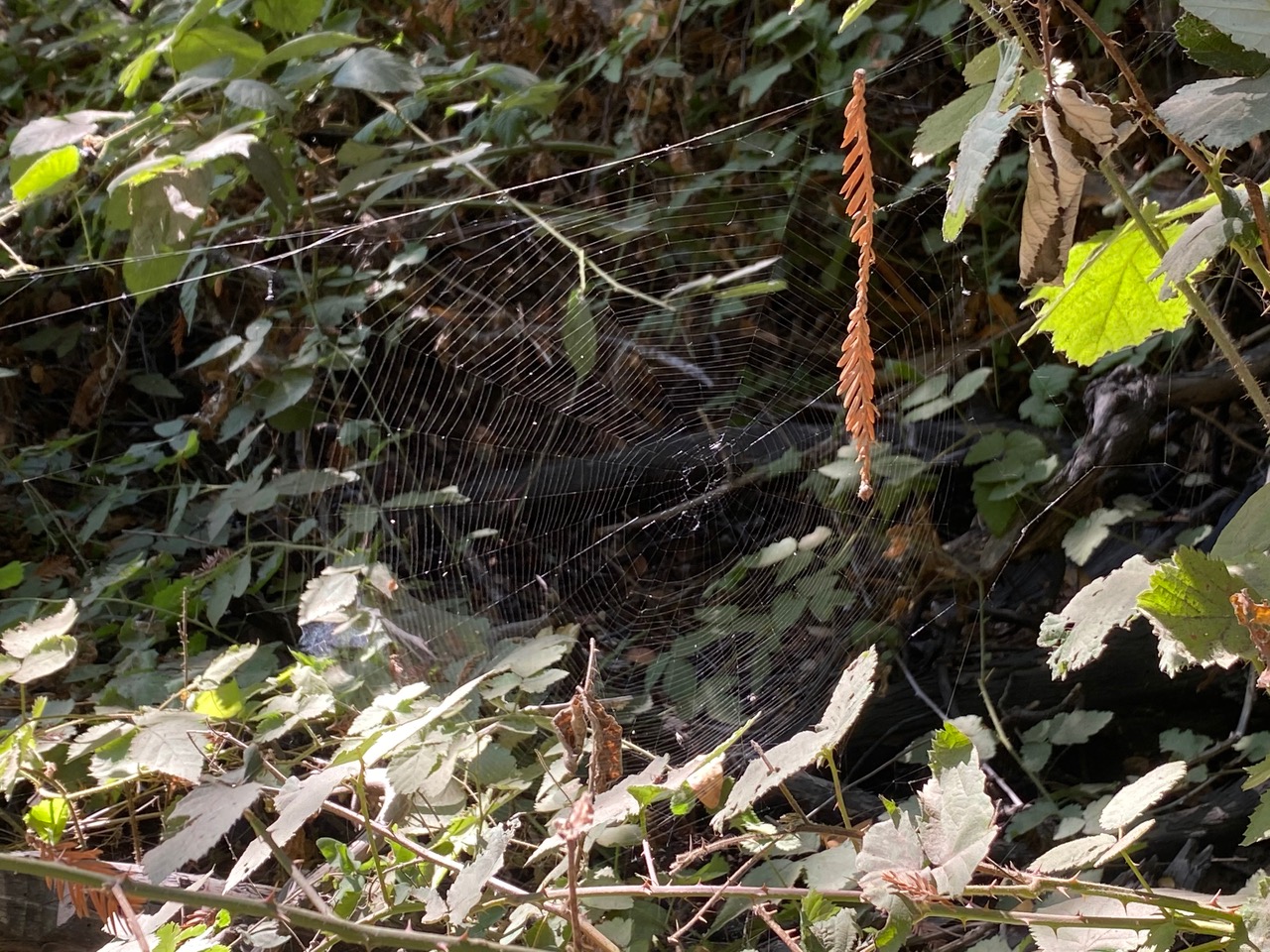
A large orb web hangs among the tangle of Blackberry vines with no spider in sight. The web looks fresh and in good shape. Surely the spider is close by?
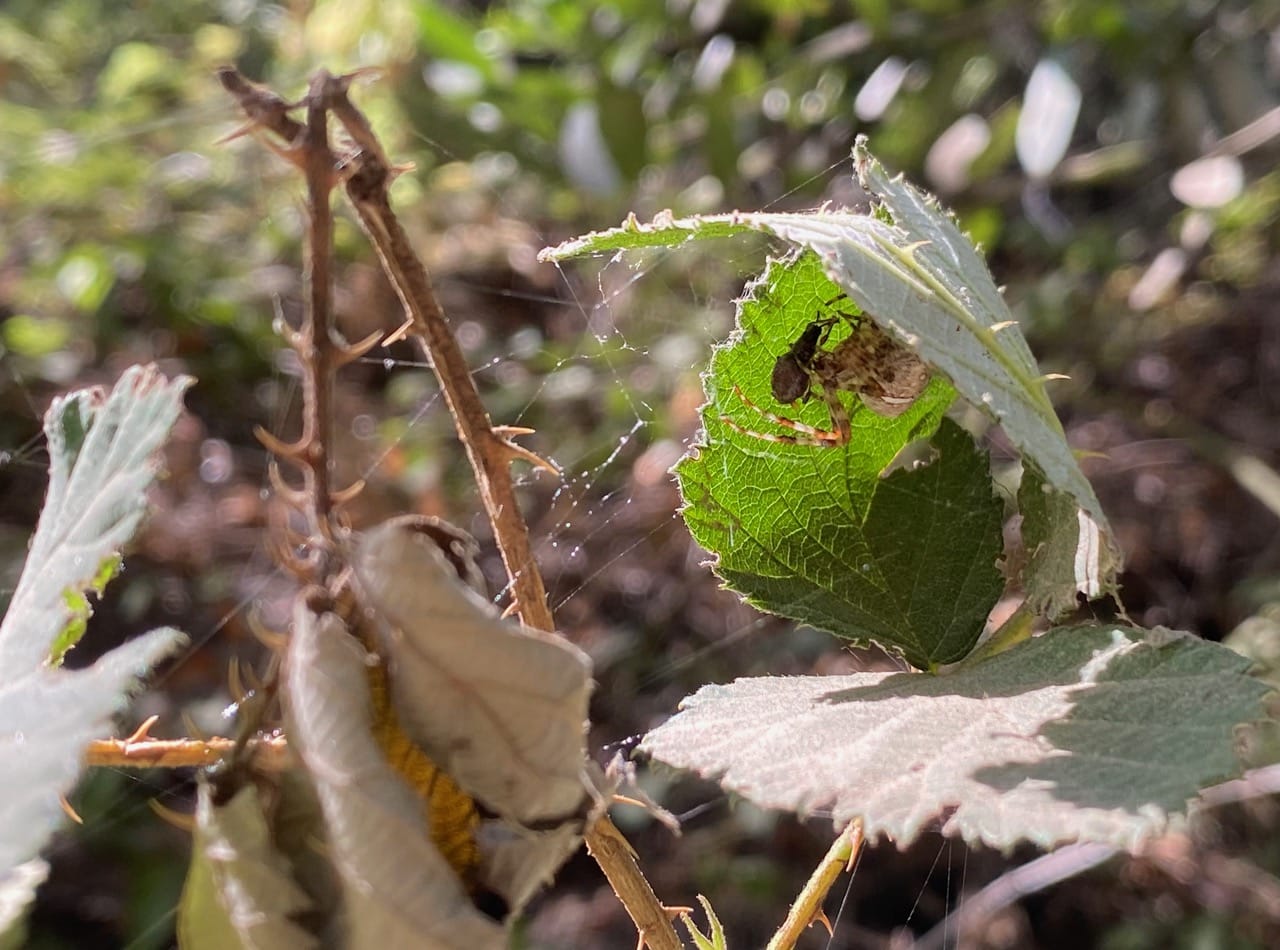
To the right just above the web, I notice the top leaves of the Blackberry have been unnaturally bent to form a sort of shelter.
Shifting my position and crouching low, I can see the owner of the web in the shelter – a large Cross Orbweaver, Araneus diadematus (family Araneidae). She is feeding on an insect that she has caught. Not all orbweavers sit in the hub of their web to wait for prey to blunder into their web. Some prefer to build a shelter in adjacent vegetation where they can wait concealed, but connected to the web by a drag line. When an insect prey is trapped in the web and causes vibrations in their struggles, the spider rushes out to subdue it, wrap it up and carry it back to the shelter to consume in safety.
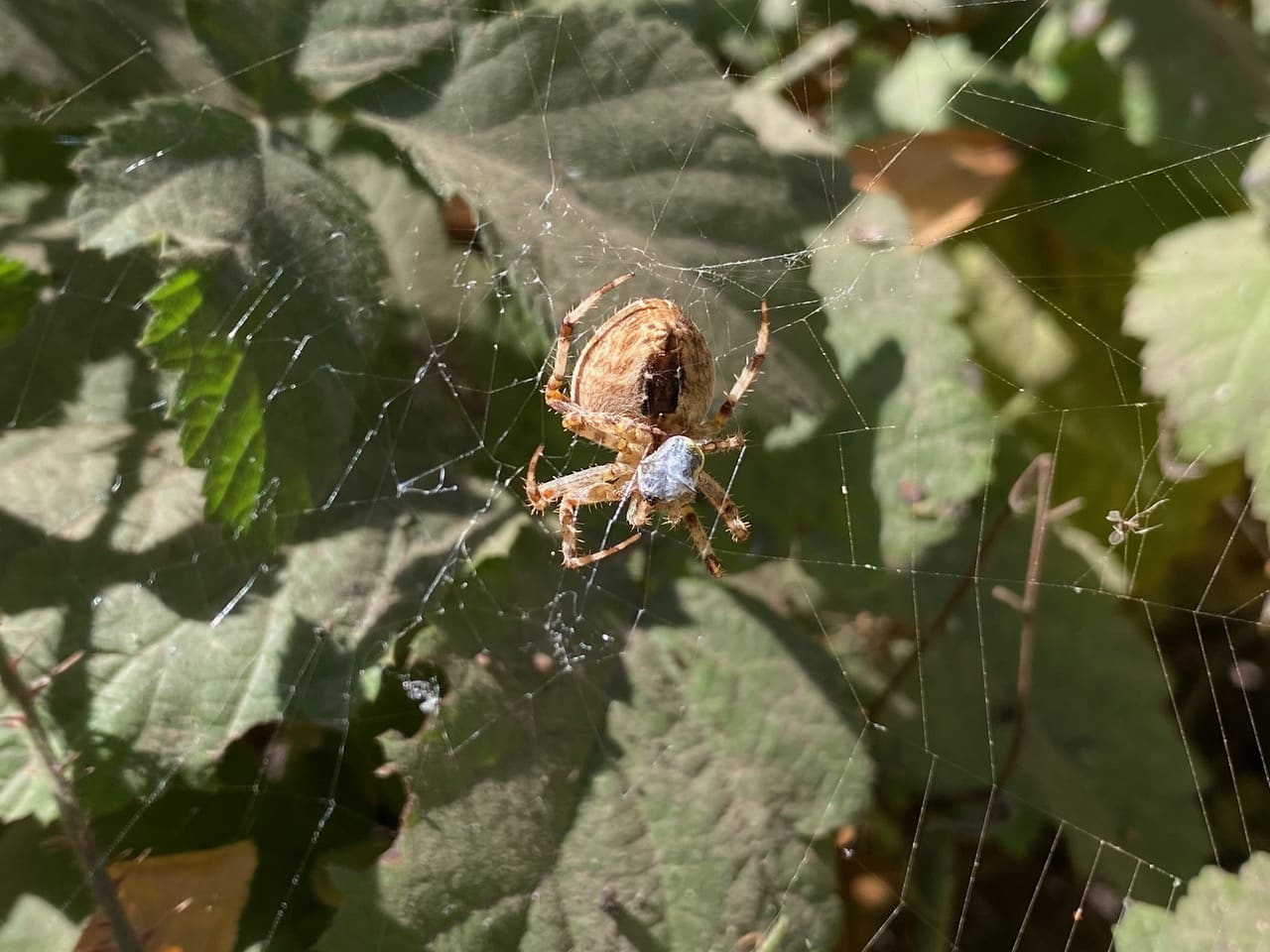
The blackberry thickets along Bridal Trail abounds in large orb webs. A large Cross Orbweaver, Araneus diadematus (family Araneidae) is feeding on a prey that she has wrapped in silk in the middle of her web.
It has been recently discovered that electrostatic attraction may be involved in spider predation. When insects fly through the air, electrons are stripped from their body, leaving the insects with a positive charge. The negatively charged spider webs attract the positively charged insects even before direct contact is made.