

Pollinator Post 10/4/23
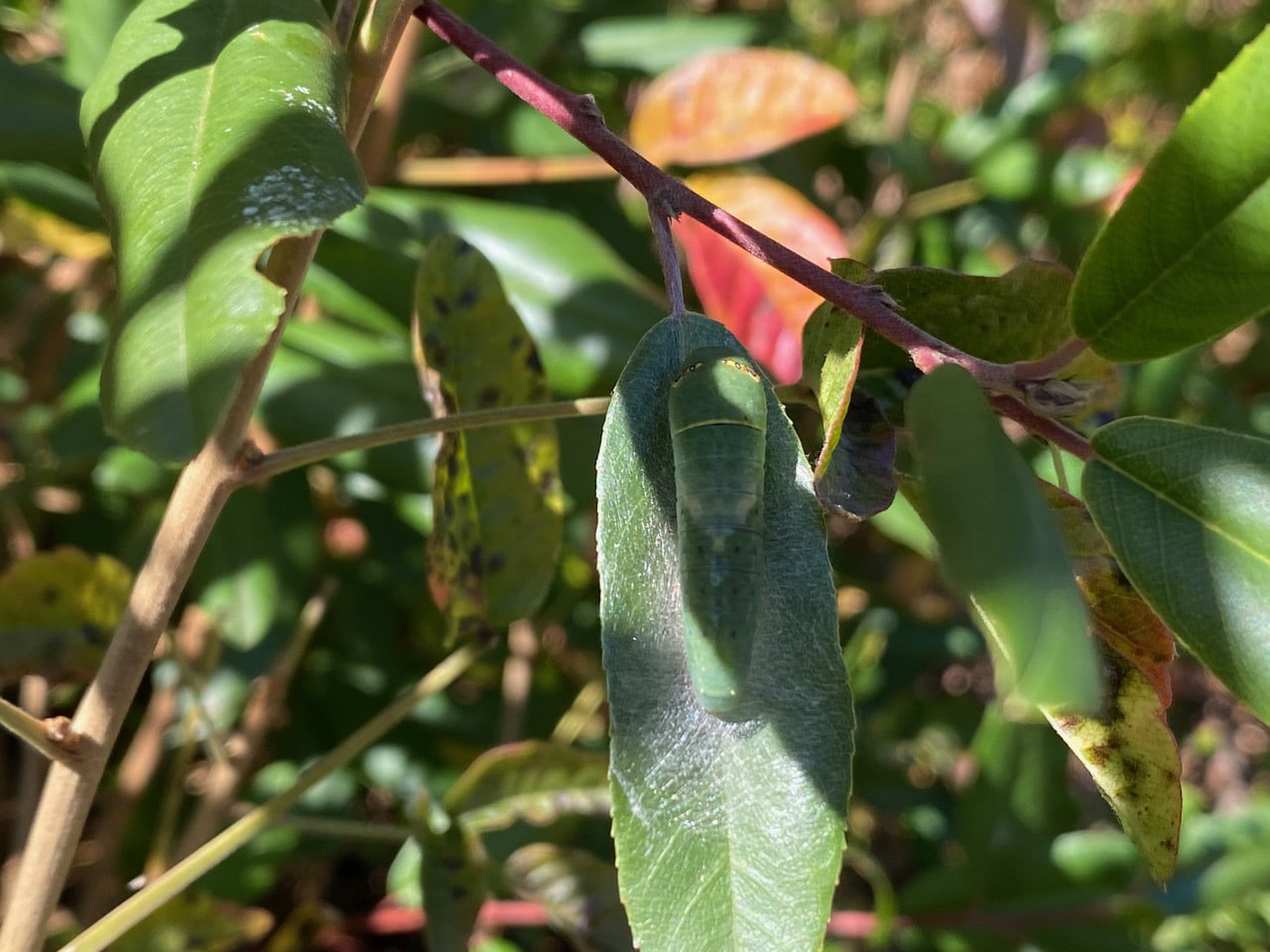
It’s 11:40 am when I reach our Pale Swallowtail B2’s coffeeberry. I have a terrible time locating the caterpillar as it is hidden in dappled shade at this hour. I am glad that its home leaf has some shade at midday and in the afternoon as we are expecting a heat wave in the next few days. Stay cool and hold tight, B2!
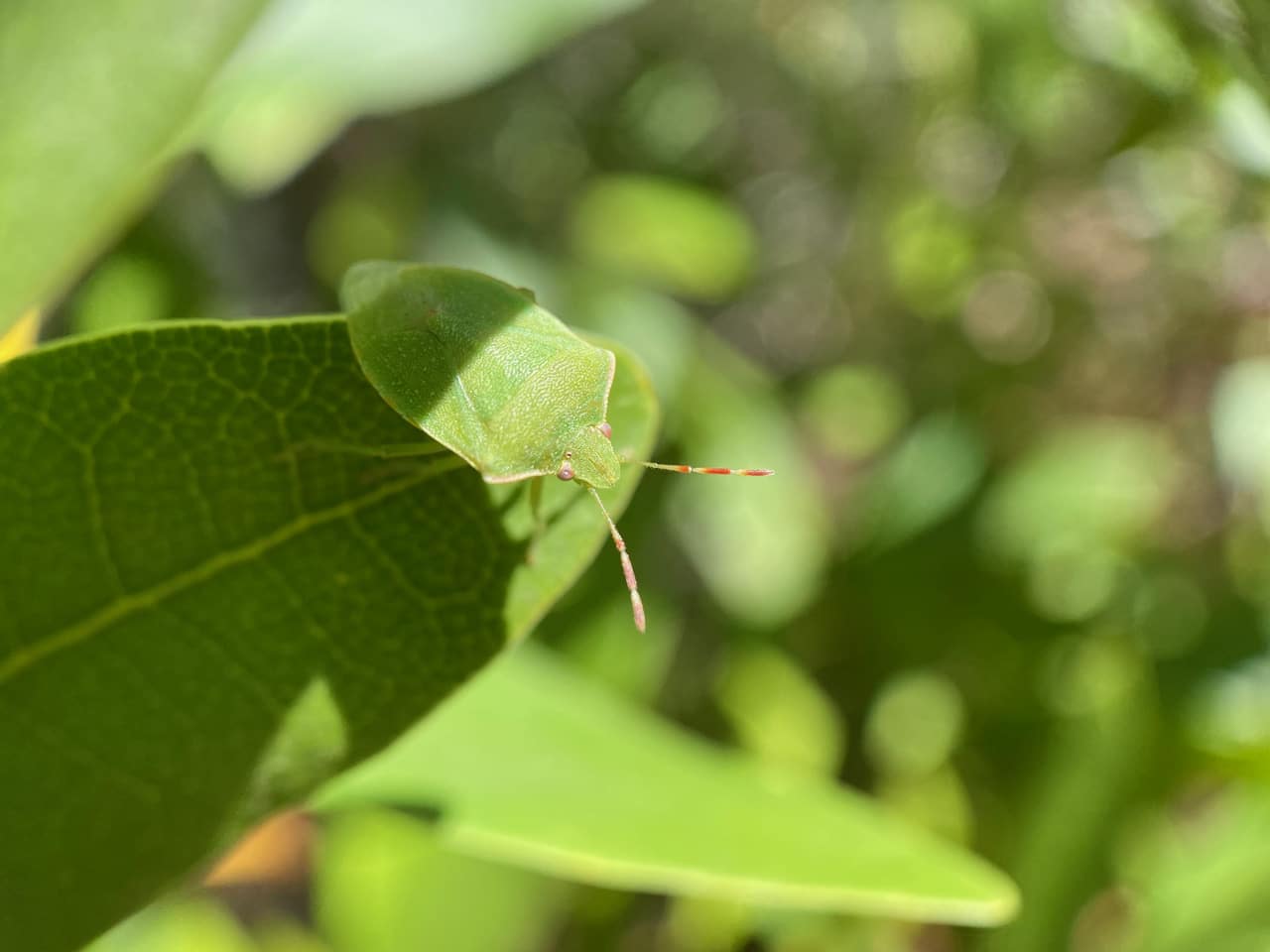 I walk a short stretch of Skyline Trail south of Siesta Gate, but hardly see an insect. Everything is eerily quiet – the brush clearing crew is taking a lunch break? I think most insects have long fled the commotion. A Red-shouldered Stink Bug, Thyanta custator (family Pentatomidae) on a California Bay leaf peers warily into the sunlight.
 Pentatomidae is a family of insects belonging to the order Hemiptera or “true bugs”. As hemipterans, the pentatomids have piercing-sucking mouthparts, and most are phytophagous, including several species that are severe pests on agricultural crops.
All Pentatomids have 5-segmented antennae, and they generally have a large triangular scutellum in the center of the back. The body shape of adults is generally shield-shaped when viewed from above. The common name of Stink Bug refers to their ability to release a pungent defensive spray when threatened, disturbed, or crushed.
The Red-shouldered Stink Bug is a generalist feeder and is reported to be a minor pest on a variety of crops including beans, corn, peaches, and wheat.
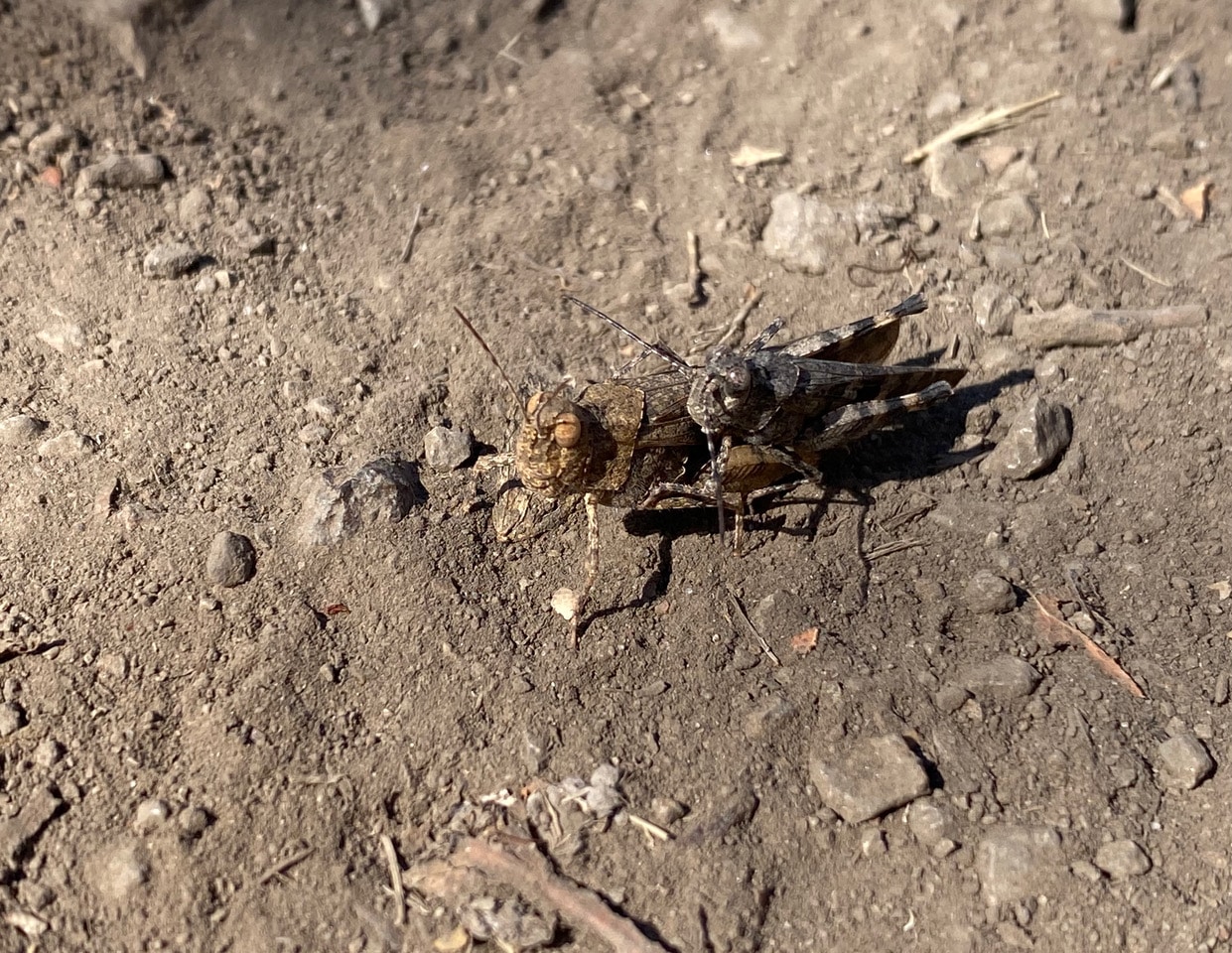
A pair of Fontana Grasshoppers, Trimerotropis fontana (family Acrididae) is mating in the middle of the trail. It is startling to see the size and color differences between the two. Actually I have missed the more interesting behavior – the courtship.
These grasshoppers have electric blue tibia on their hind legs. In courtship, the males perform femur-shaking, producing a low-pitched humming sound.
Male, and sometimes female Band-winged Grasshoppers make loud snapping or crackling sounds with their wings as they fly. Crepitation can be used for both romance and defense. The sound is created by the wings being snapped taut in mid-flight. During courtship flights, male grasshoppers will make this sound while interested females watch below.
Grasshoppers belong to the family Acrididae, suborder Caelifera, order Orthoptera. They are ground-dwelling insects with powerful hind legs which allow them to escape from threats by leaping vigorously. They protect themselves from predators by camouflage; when detected, many species attempt to startle the predator with a brilliantly-colored wing-flash while jumping and launching into the air. A large grasshopper can jump about 20 body lengths, equivalent to a human jumping the length of a football field. Grasshoppers jump by extending their large back legs and pushing against the substrate with high force and high velocity, using a catapult mechanism to amplify the mechanical power produced by their muscle.
Most grasshoppers are polyphagous, eating vegetation from multiple plant sources. In general their preference is for grasses, including many cereals grown as crops. They eat large quantities of foliage both as adults and during their development, and can be serious pests of arid land and prairies. Grasshoppers thrive in warm sunny conditions, so drought stimulates an increase in grasshopper populations.