

Pollinator Post 10/3/23 (1)

Brush clearing is probably still going on at the Skyline Gardens, so I decide to go for a walk at Inspiration Point instead.
Before I even step through the entrance gate, I put my hands on the trunk of an oak tree for a few moments, a way of grounding myself and clearing my mind. I notice a little insect close to my hand on the bark. It scoots side-ways from me when I try to photograph it, never attempting to fly. What strange behavior for a fly!
iNaturalist has helped identify the insect – it is a Woodpecker Fly, Medetera sp. (family Dolichopodidae or Longlegged Flies). It is a large genus of flies that includes 350 species worldwide. The adults are commonly found resting on vertical surfaces such as tree trunks. The larvae are predators of bark beetle larvae. Adults eat a wide variety of soft-bodied arthropods.


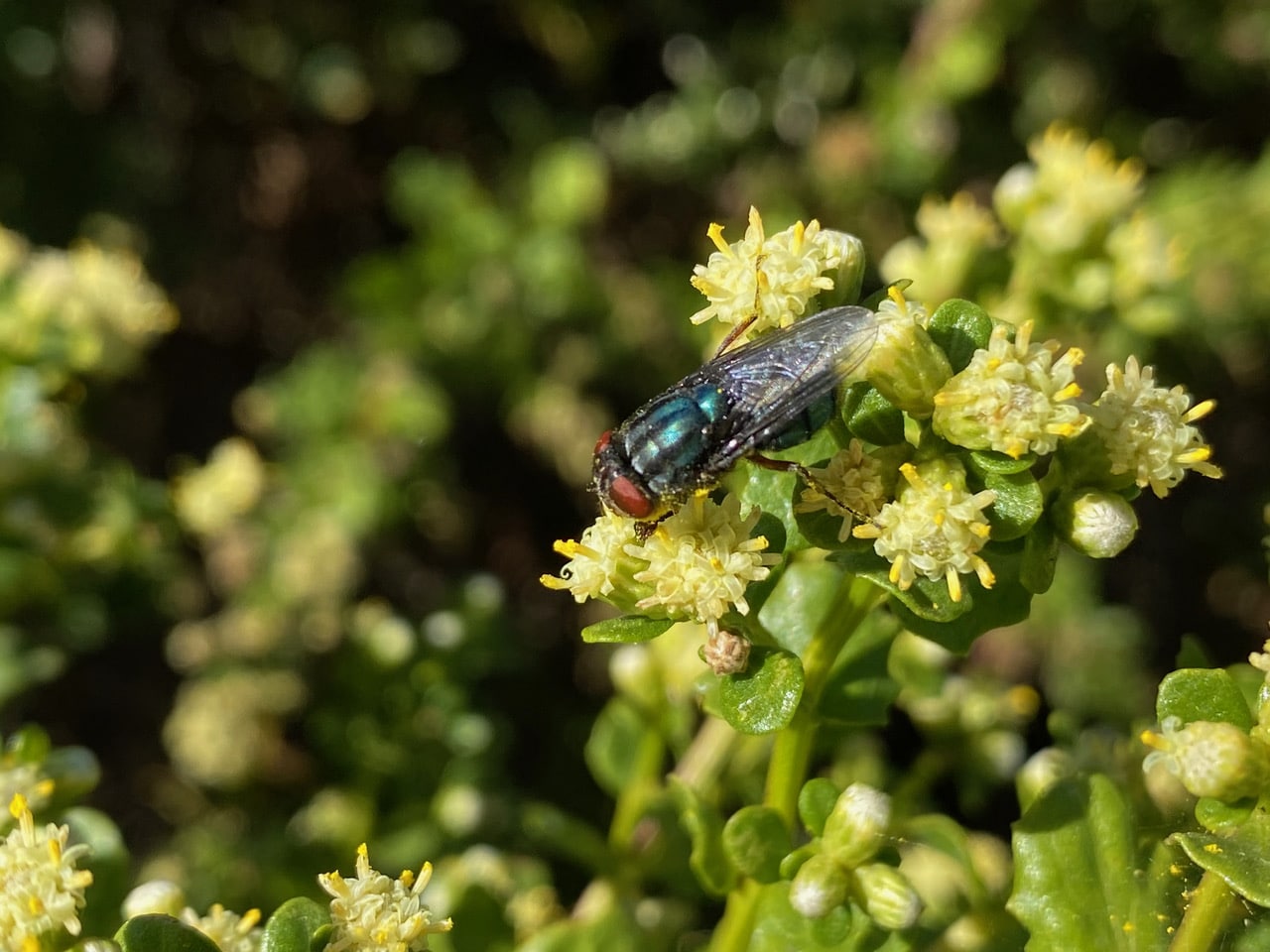 Coyote Brush, Baccharis pilularis is the most common shrub along the trail. None of them seems to have been removed. A Secondary Screwworm Fly, Cochliomyia macellaria (family Calliphoridae) is foraging on the flowers of a male Coyote Brush.


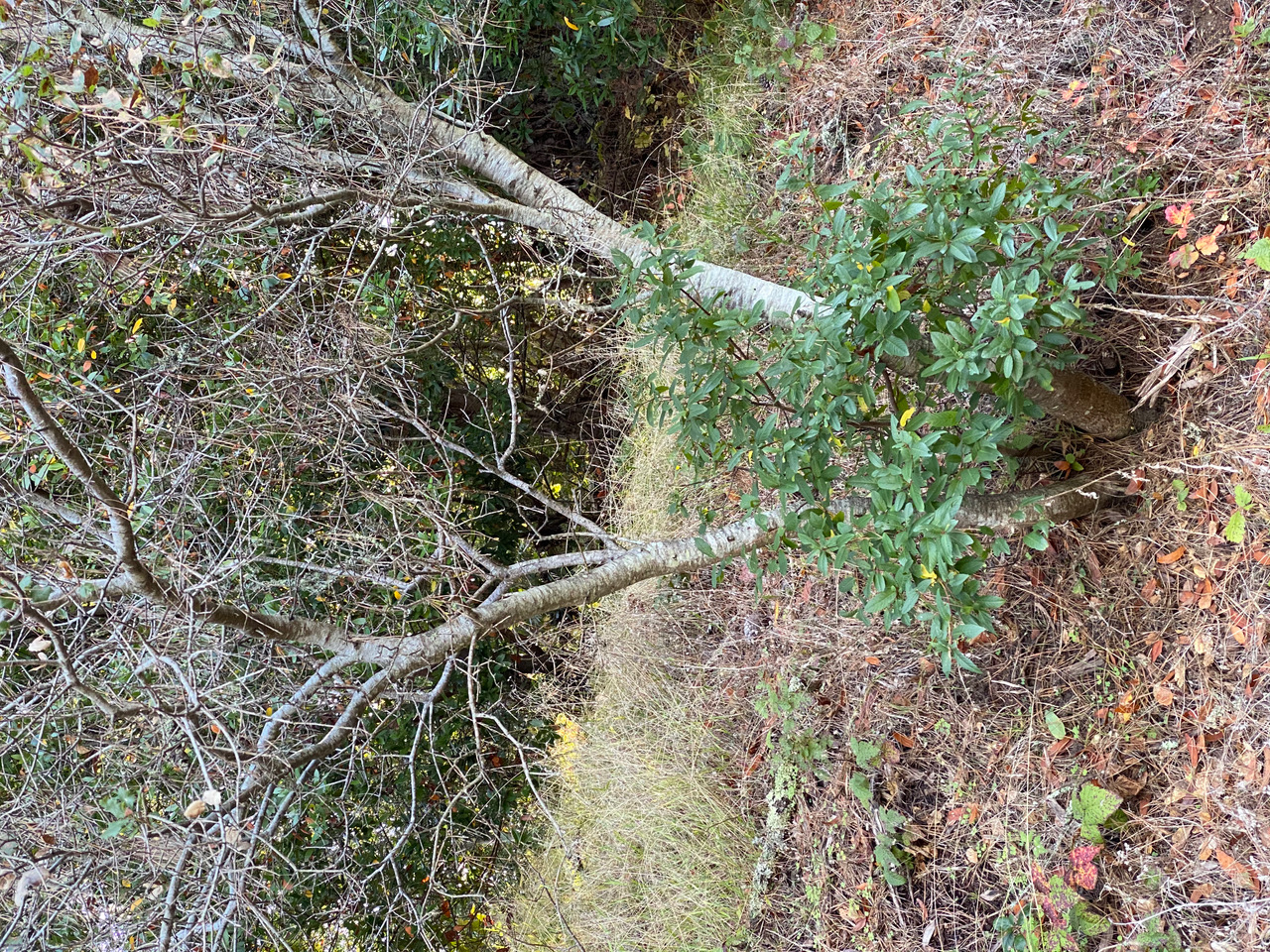
As I walk along the paved trail, I hear the loud buzz of chain saws. Oh no, it seems I can’t get away from brush clearing! The hot and dry conditions are stoking fears of wild fires in these hills, and brush clearing is the standard way of allaying the fear. A large section near the front gate is already cleared of underbrush between the trees. I am thrilled to see that the crew has spared this healthy Coffeeberry, Frangula californica under an oak tree.
Next to the road, a sprawling Coffeeberry is still standing with cheery young leaves.
Yet another Coffeeberry has been spared! Obviously, the crew has been careful about not removing the native shrub.
The lower branches of a big oak tree have been removed, lying on the ground. Among the rubble, a Pink-flowering Currant, Ribes sanguineum remains standing, apparently saved by a large pink ribbon that has been tied to it. Now, that’s a smart and simple way to prevent accidental loss – tagging shrubs that are not to be touched! I see several of these as I walk along the trail. The sights give me hope that fire prevention can be done in a sane and less destructive way, avoiding unnecessary damage to local flora and fauna.
Coyote Brush, Baccharis pilularis is the most common shrub along the trail. None of them seems to have been removed. A Secondary Screwworm Fly, Cochliomyia macellaria (family Calliphoridae) is foraging on the flowers of a male Coyote Brush. The Secondary Screwworm, Cochliomyia macellaria (family Calliphoridae, commonly known as blow flies) ranges throughout the United States and the American tropics. The body is metallic greenish-blue and characterized by three black longitudinal stripes on the dorsal thorax. Females are attracted to carrion where they lay their eggs. These screwworms are referred to as “secondary” because they typically infest wounds after invasion by primary myiasis-causing flies. While the flies carry various types of Salmonella and viruses, C. macellaria can also serve as important decomposers in the ecosystem. In a lifetime, a female may lay up to 1000 or more eggs. Females may also lay their eggs with other females, leading to an accumulation of thousands of eggs. The larval stage of C. macellaria is referred to by the common name of secondary screwworms; this is due to the presence of small spines on each body segment that resemble parts of a screw. The larvae feed on the decaying flesh of the animal that they have been laid on until they reach maturity. Eventually the larvae fall off the food source to pupate in the top layer of the soil. Adult females will continue to feed on tissues of animals; however, now they preferentially feed off of live tissues and tissue plasma. Adult males will no longer consume tissue, but instead will eat nearby vegetation and take nourishment from floral nectar.
Yellowjackets swarm over this female Coyote Brush, seeking nectar from the flowers.
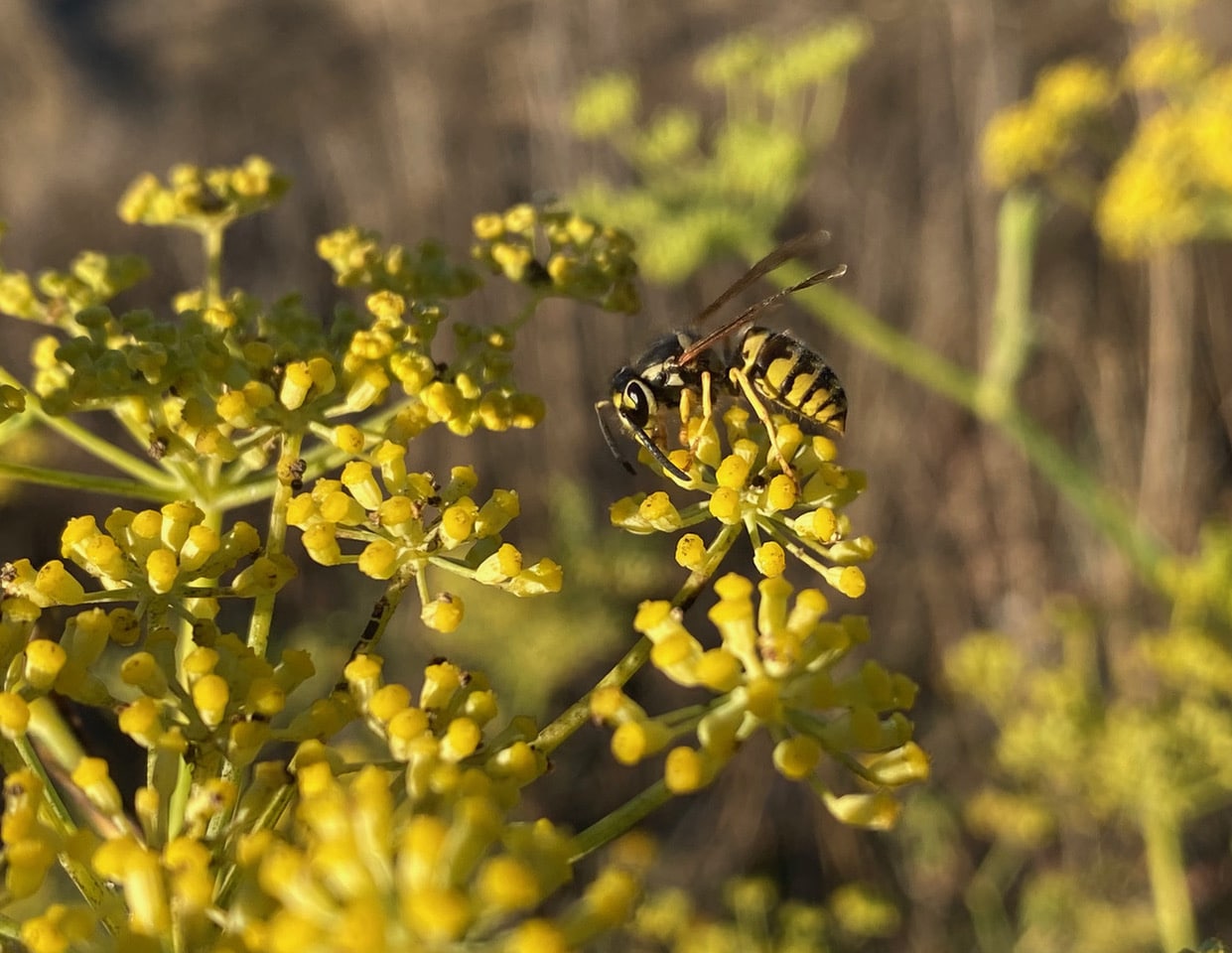
More Yellowjackets foraging on the flowers of Fennel.
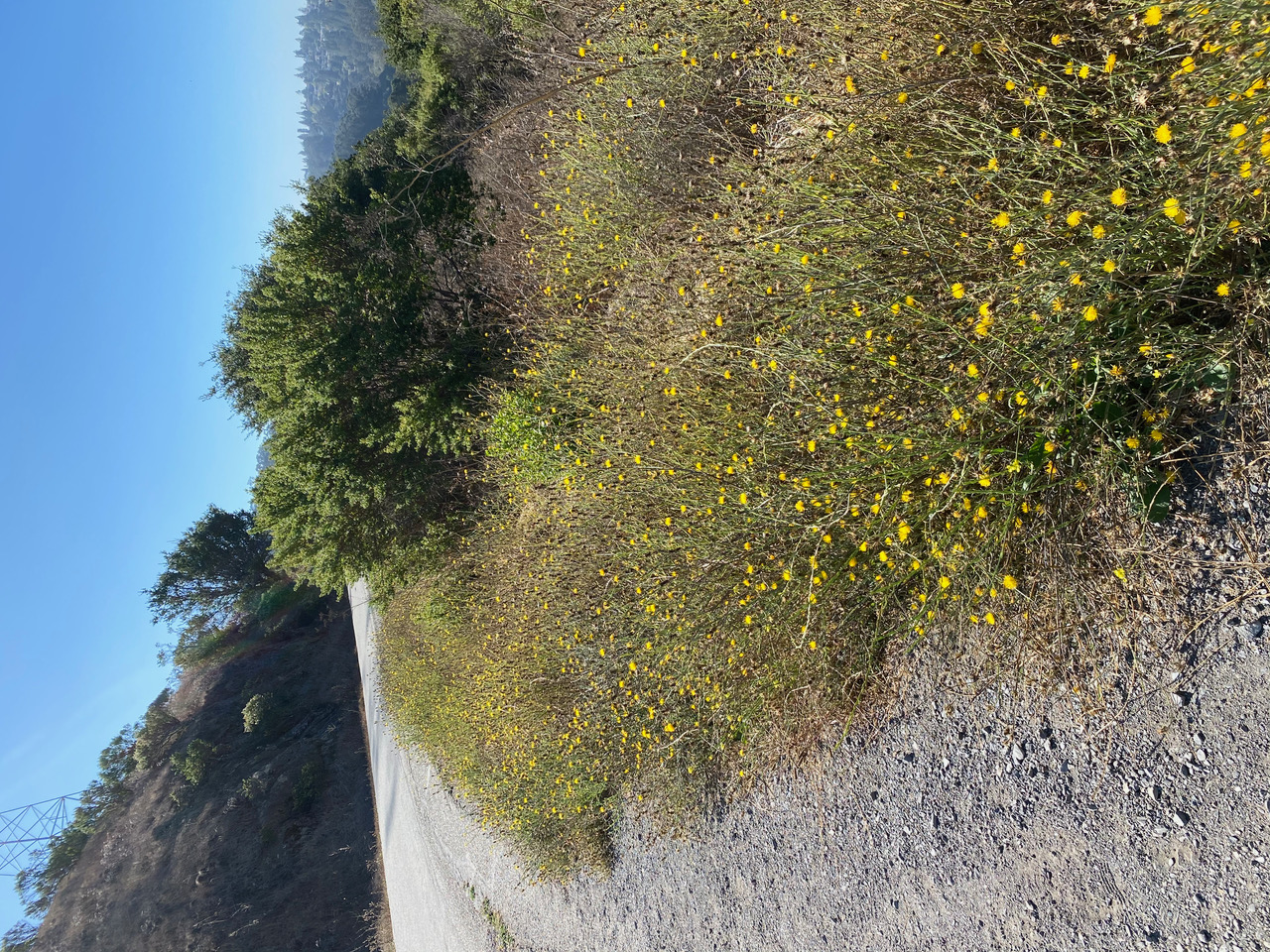
Prodigious amounts of Yellow Starthistle, Centaurea solstitialis cover the ground along large sections of the trail. A highly invasive weed, the plant seems to proliferate out of control here.
Hoards of Honey Bees, Apis mellifera are foraging on the fresh flowerheads of Yellow Starthistle.
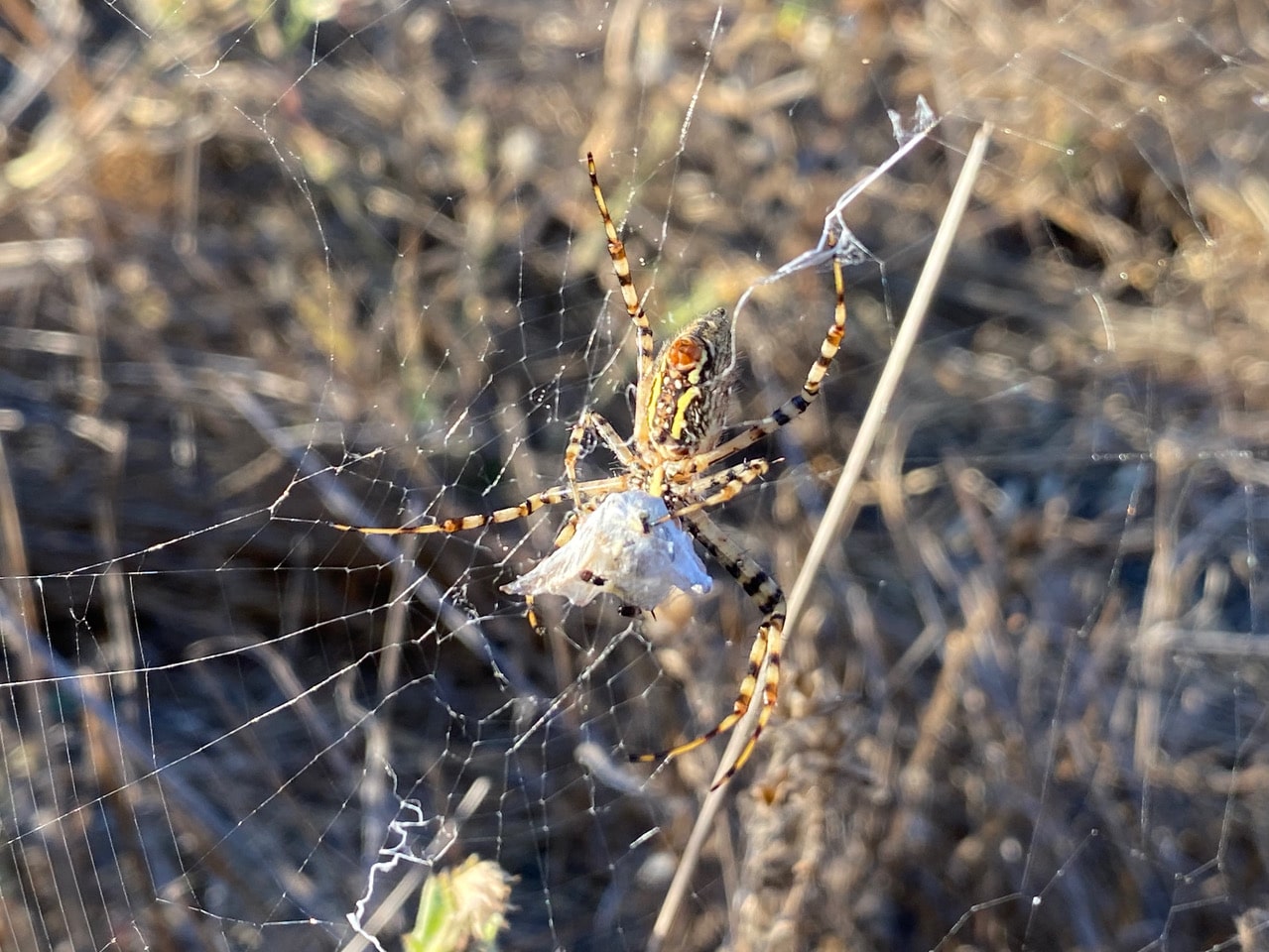
A large tattered orb web near the ground reflects sunlight in a grassy field that has been recently cleared. The owner, a female Banded Garden Spider, Argiope trifasciata (family Araneidae) appears to be wrapping up a prey in her badly damaged web. She has miraculously survived with her life, and making the best of the situation.
Argiope trifasciata is a species of spider native to North and South America, but now found around the world. The spiders typically begin to appear during autumn from early September to late October. Their large orb webs can be up to 2 feet in diameter, among stems and bushes. Often there is a prominent silk decoration of a zigzag line on the web – the stabilimentum. The female rests at the center of the web facing downwards, with her legs arranged in pairs, making a cross shape. Males are much smaller and have their own small webs in close proximity to the females’ webs. The species is diurnal, and feeds on the insects that are snared in the web. Large, powerful prey like yellowjackets are swiftly wrapped in silk to immobilize them, before being injected with toxic saliva. Egg sacs are deposited in early fall and consist of several hundred eggs. The spiderlings emerge the following spring.