

Pollinator Post 10/27/26

Last night was full moon. The effect, combined with Kelvin waves is visible on the shoreline around Bay Farm Island. At 11:30 am the tide is high and still rising.
Kelvin waves are a symptom of El Nino. They transfer heat from west to east across the Pacific Ocean, eventually hitting South America and splitting north and south. Kelvin waves are slow-moving, large-scale oceanic or atmospheric waves that travel underwater as deep pulses of warm water rather than breaking like surface beach waves. Kelvin waves can cause temporary sea level rise of several inches to more than a foot along the California coast and trigger minor flooding on their own. But when the pulse of water combines with high tides, storm-driven surface waves, thermal expansion from El Nino, and rising sea levels, flooding can be exacerbated.

Certain low-lying sections of the trail are already impassable.

I have to skirt around this other stretch of flooded trail. Looks like all the Grindelia along here are done blooming anyway.
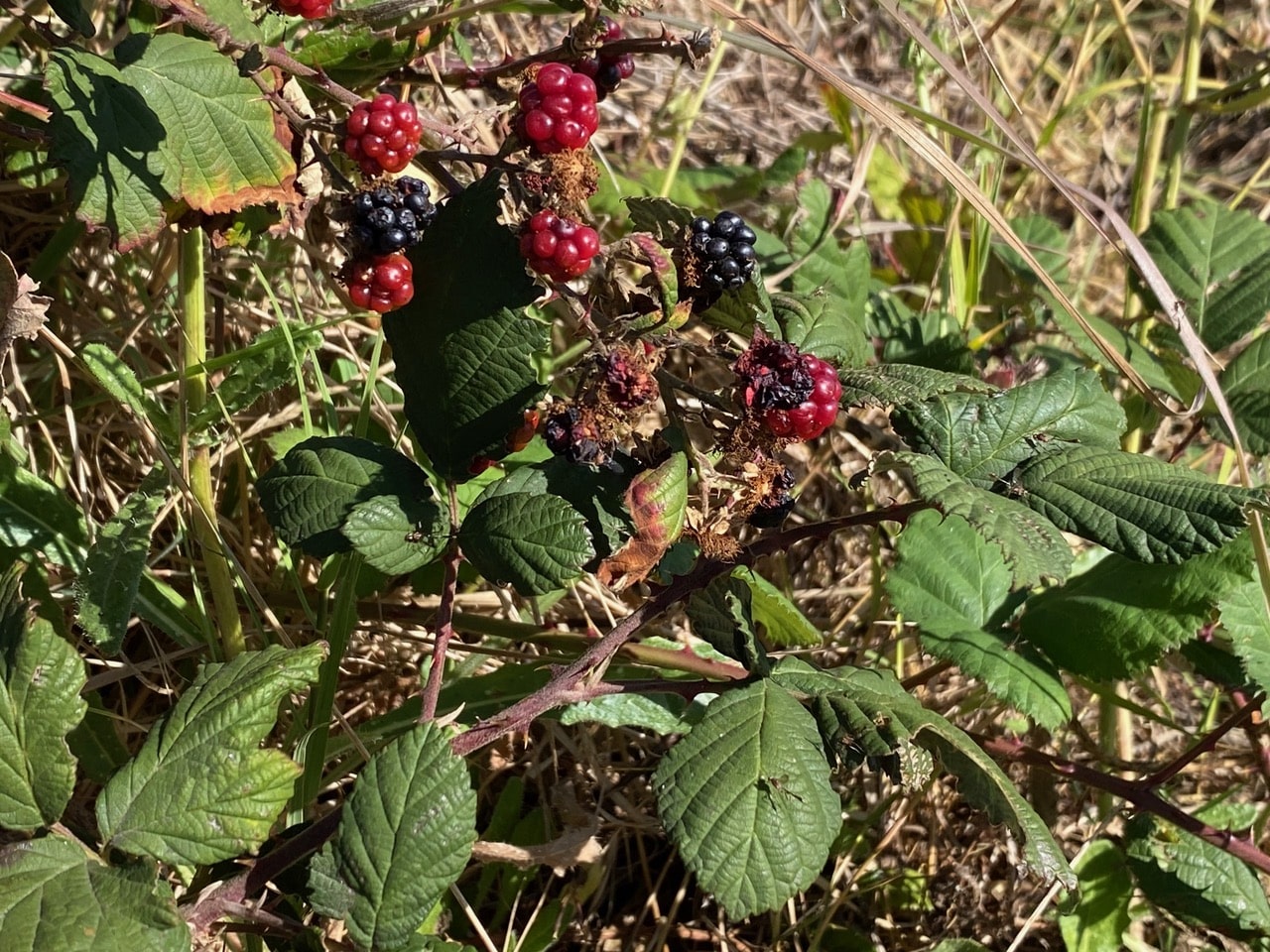
When I reach this Armenian Blackberry bush, Rubus armeniacus on higher ground, I know I’m in for a treat. Those tiny parasitoid wasps, Anomalon sp. (family Ichneumonidae) are gathered on the foliage in large numbers. I have been finding the wasps on this particular shrub predictably since mid September. What is the attraction? I switch my camera to video mode, since the wasps’ behavior is best seen in motion.
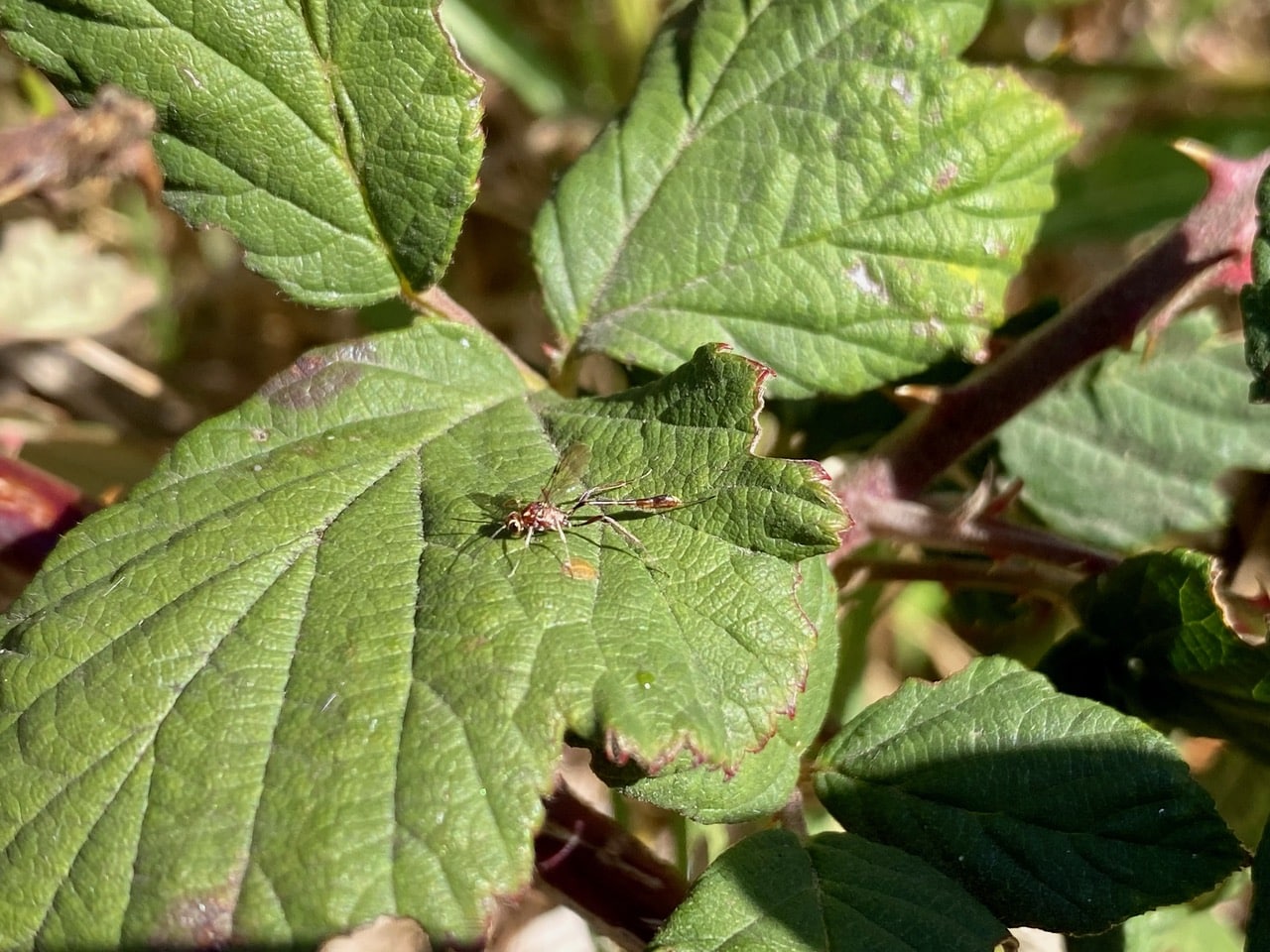
Anomalon wasps (family Ichneumonidae) are highly specialized parasitoids that target beetle larvae and moth caterpillars. Because they do not build nests, adult Anomalon wasps spend almost their entire lives patrolling vegetation. They gather on plant leaves primarily for hunting host caterpillars, mating, and feeding on sweet plant resources. When caterpillars chew on plant leaves, the plant releases airborne chemical distress signals (volatile organic compounds). Anomalon wasps pick up on these signals and fly straight to the source. Once on the leaves, they walk in a distinct, jerky motion while rapidly tapping their antennae against the leaf surface. This tapping senses the vibrations and chemical footprint of the hidden caterpillars.
The leaves also act as the central social meetup spot for these solitary wasps. Virgin female wasps land on prominent leaves and release potent sex pheromones to attract mates. Males will actively gather, rest, and patrol the exact same plants, using their antennae to locate receptive females to mate with. It is very common to find pairs or small groups of both sexes interacting on a single shrub.
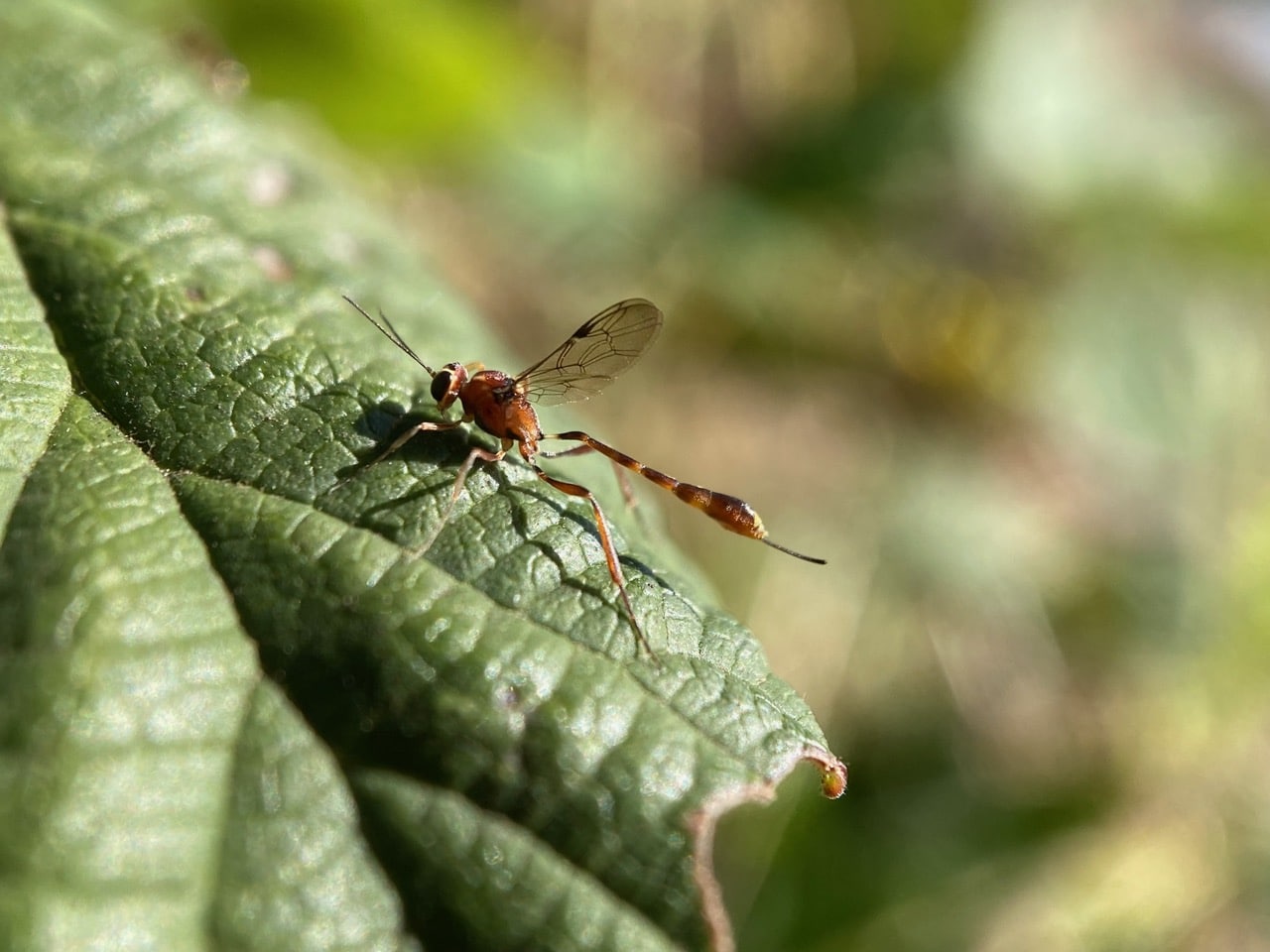
Most, if not all the Anomalon wasps I see today are females, as evidenced by the presence of an ovipositor that extends beyond their slender abdomen.
Anomalon is a large genus of parasitoid wasps in the family Ichneumonidae. The wasps are present worldwide, but most diverse in tropical regions. In the Americas they are mostly found in very wet rain forests. Recorded hosts include tenebrionid (darkling beetle) or elaterid (click beetle) larvae, and noctuid and tortricid moth larvae. Anomalon adults usually measure between 10 to 14 mm in length. They have very slender, narrow waists and abdomens that flatten out on the sides near the back. They fly slowly with a unique posture, holding their slender rear body (metasoma) high up, antennae stretched forward, and legs trailing behind. Adults feed primarily on flower nectar, pollen, and plant sap.
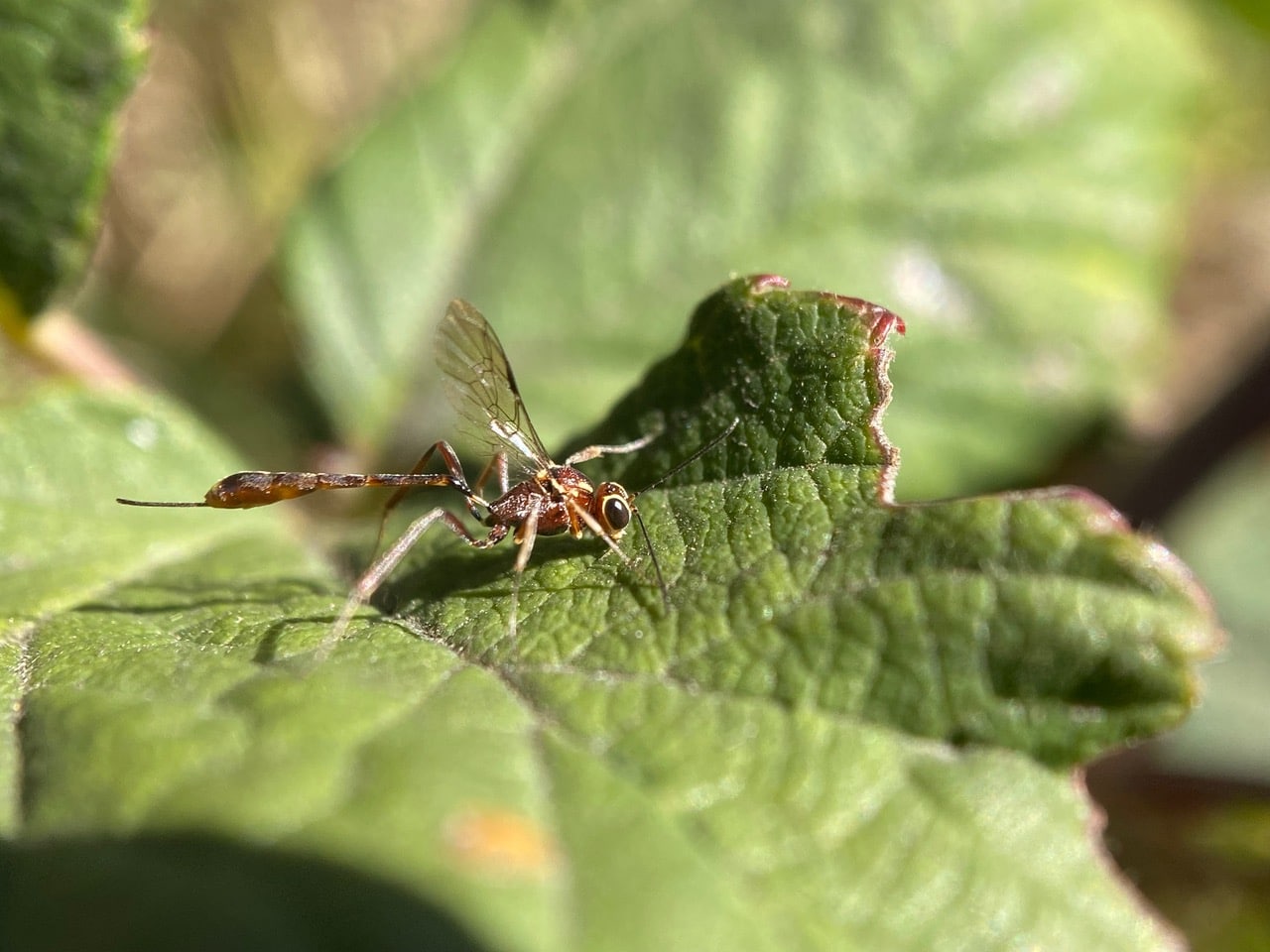
The wasp’s head is always lowered, probably scavenging honeydew on the leaf surface, or hunting for hosts by picking up chemical signals or vibrations on the foiiage. When not in flight, the short wings are clasped vertically over the thorax. The yellow rings around their eyes are quite distinctive.
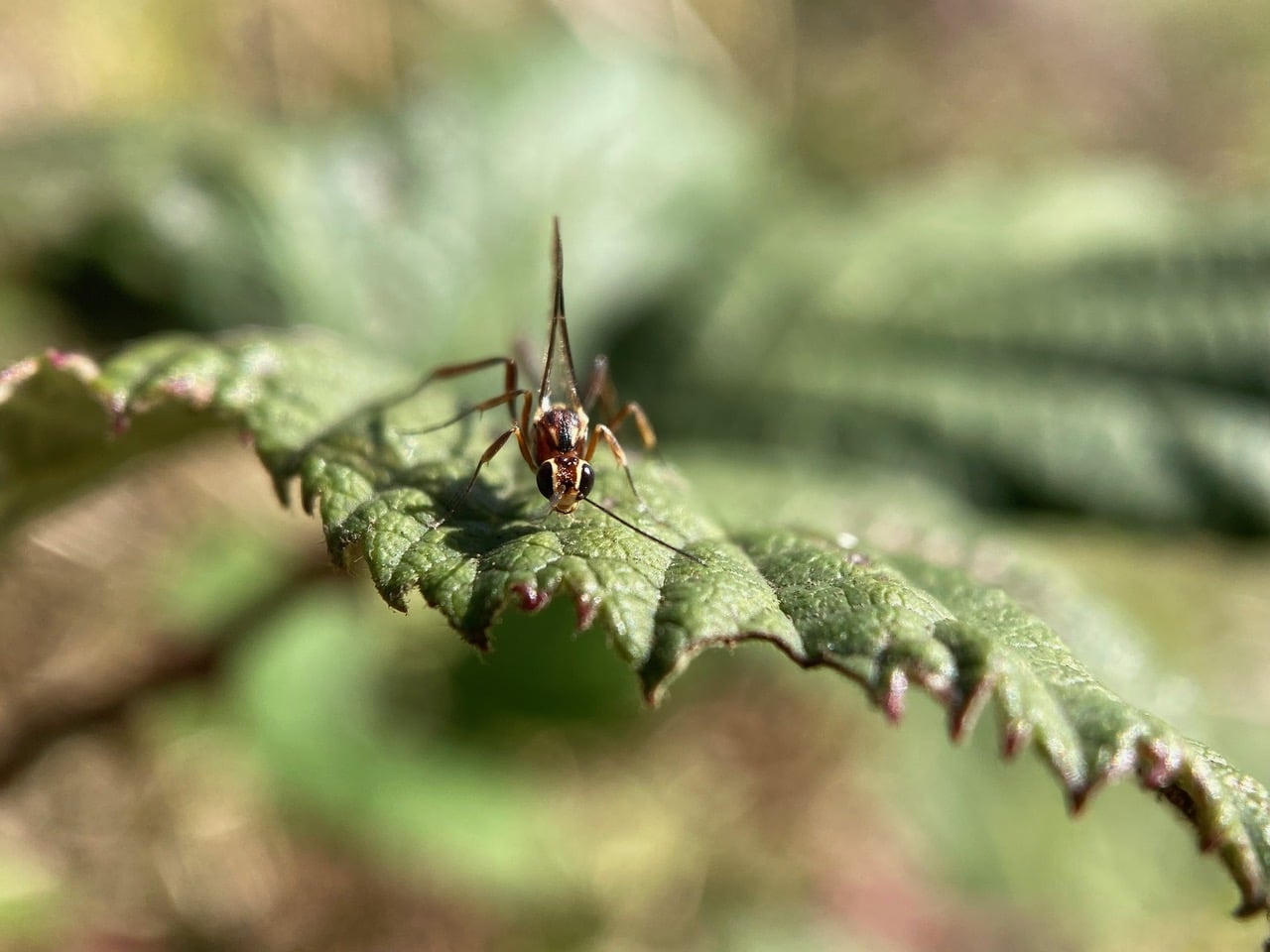
Because they target many notorious agricultural and forest pests, Anomalon wasps are highly valued as natural biological control agents.
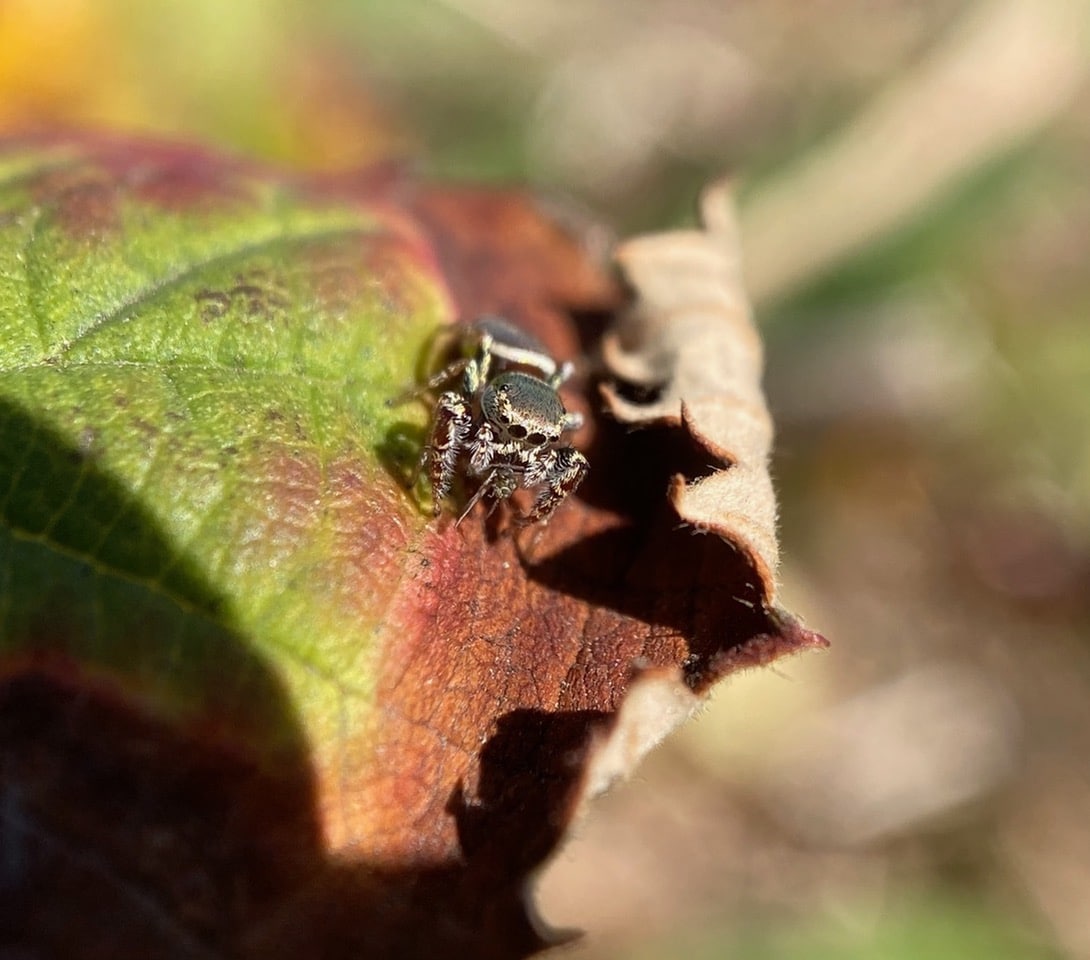
In a split second, a Buttonhook Leafbeetle Jumping Spider sneaks out from the shadows of the curled edge of a blackberry leaf, and pounces on a passing Anomalon wasp. Gotcha!
Jumping spiders (family Salticidae) are free-roaming hunting spiders. They do not weave a web to catch prey. They stalk, then pounce on their prey. Just before jumping, the spider fastens a safety line to the substrate. It can leap 10-20 times their body length to capture prey. Their movement is achieved by rapid changes in hydraulic pressure of the blood. Muscular contractions force fluids into the hind legs, which cause them to extend extremely quickly. Jumping spiders are visual hunters. Their excellent vision has among the highest acuities in invertebrates. Since all their 8 eyes are fixed in place and cannot pivot independently from the body like human eyes can, jumping spiders must turn to face whatever they want to see well. This includes moving their cephalothorax up and down, an endearing behavior.
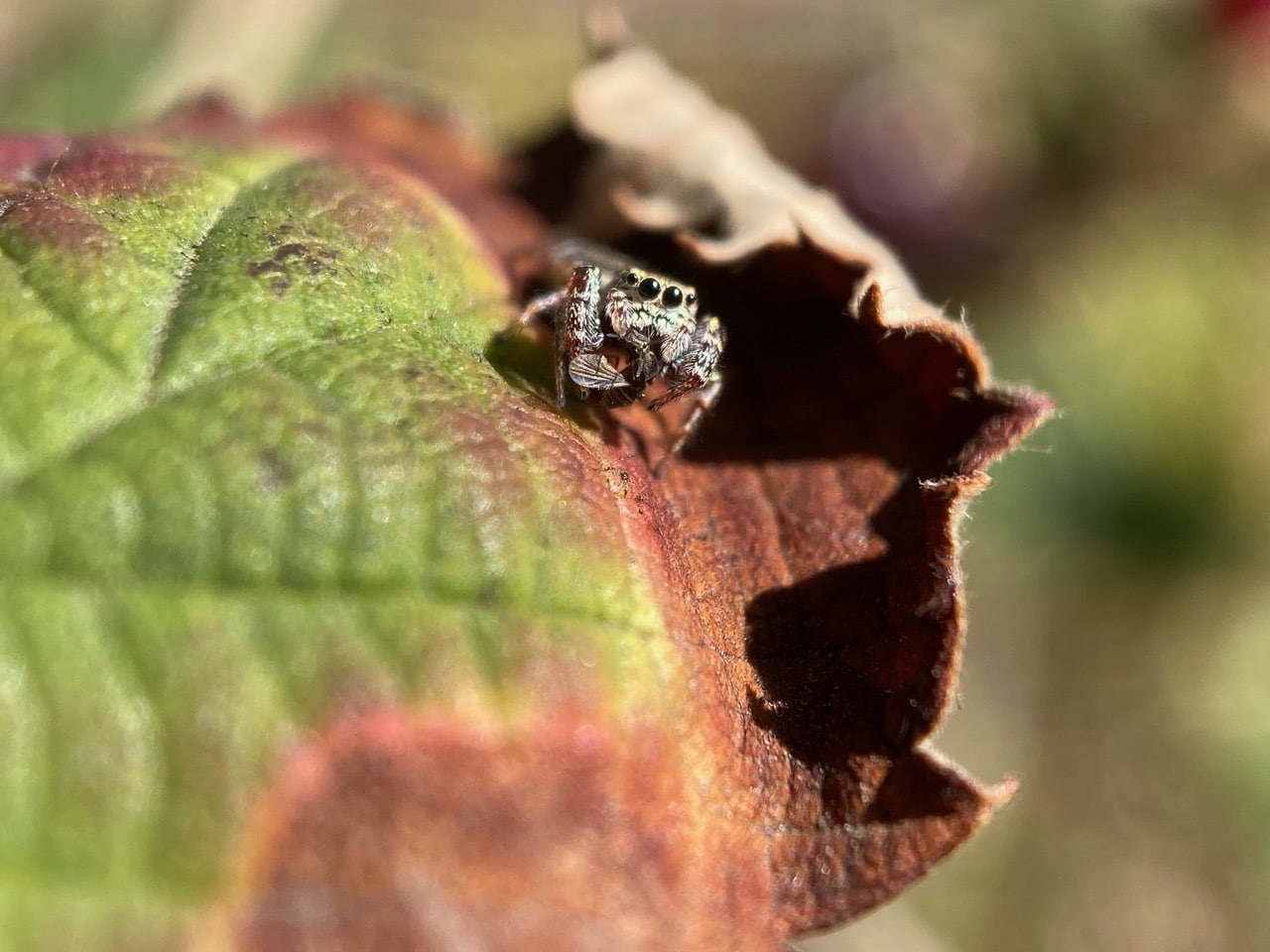
The triumphant predator looks up at me, its prey secured between its front legs and pedipalps. Note the short wings of the Anomalon wasp. Not much of a meal, these skinny wasps.
The Buttonhook Leafbeetle Jumping Spider, Sassacus vitis (family Salticidae) is native to North America, with a range spanning from Canada to Panama. It is a small jumping spider with iridescent gold abdomen and white ring around the anterior surface of the abdomen. Body is covered with golden scales. Males are 3.5 mm long, females 4.5 mm. The name vitis is Latin for “grapevine”. The spider is commonly found on shrubs and vines and in fields. Best known as a common resident of vineyards.

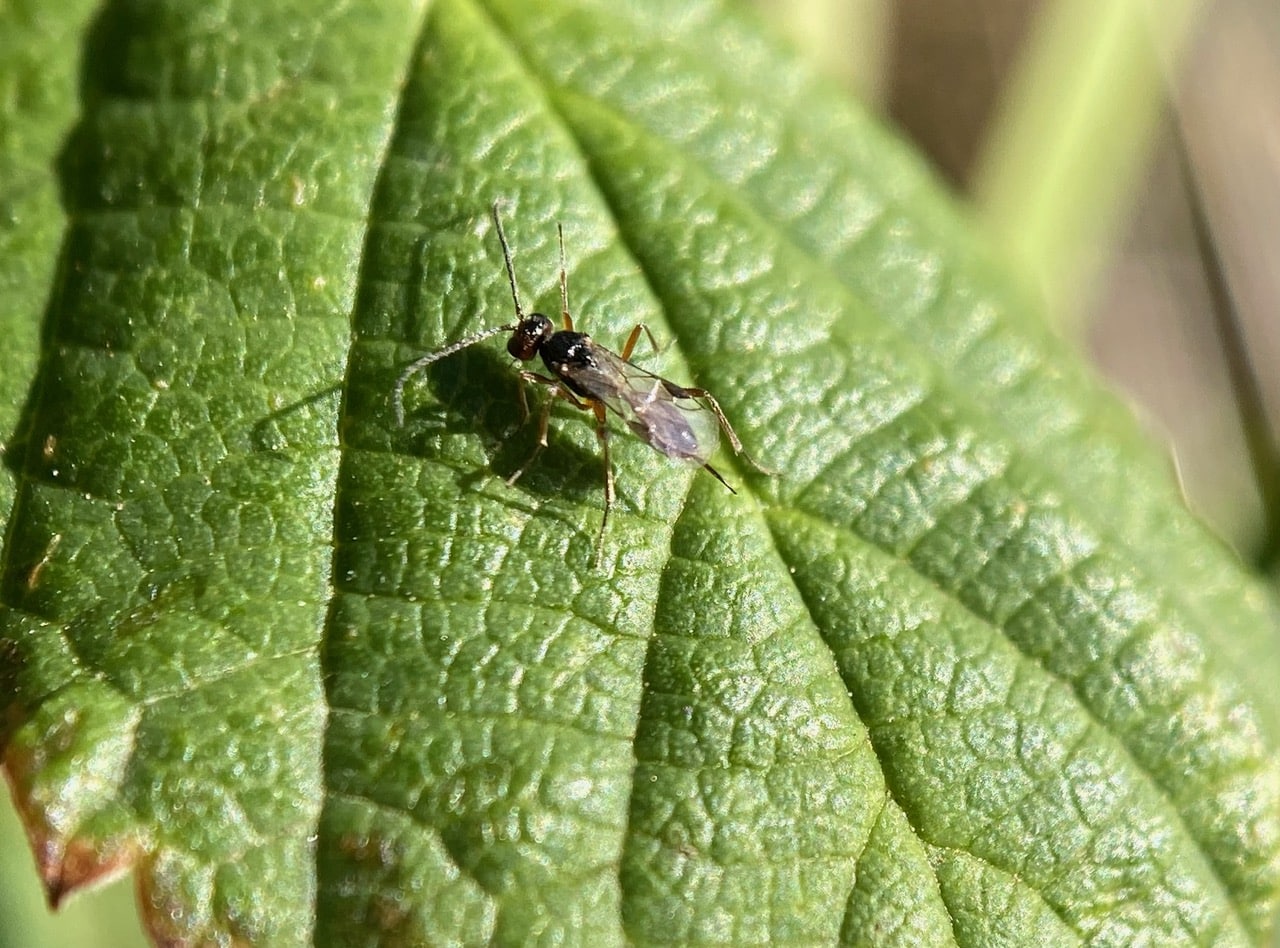
Wait, there’s a different, smaller wasp on the Blackberry leaf! It is also walking around in search mode, head lowered and antennae tapping. A female with an ovipositor. iNaturalist has helped identify it as a Ladybird Parasitoid Wasp, Dinocampus coccinellae (family Braconidae).
Dinocampus coccinellae is a tiny, solitary parasitic wasp belonging to the family Braconidae. It is famous for turning adult ladybeetles into living “zombie bodyguards”. The species is mostly parthenogenetic (females can reproduce without males; males are rare and not well-known). The wasps target adult ladybeetles, across more than 50 species globally. The female wasp uses an ovipositor to inject a single egg into the belly of an adult ladybeetle. Over 20-30 days, the wasp larva hatches and feeds on the lady beetle’s internal fluids (hemolymph and fats) while keeping the beetle alive and acting normally.
I have only seen an adult Ladybeetle guarding a wasp cocoon once, at the BridgeView Pollinator Garden where I documented 6 species of ladybeetles. Here’s the Halloween-worthy details of the “Zombie Bodyguard” story:
When the wasp larva is fully grown, it chews its way out through the ladybeetle’s abdomen – without killing the host – and spins a yellowish silk cocoon directly between the ladybeetle’s legs. During egg-laying, the wasp injects a symbiotic RNA virus called Dinocampus coccinellae paralysis virus (DcPV). This virus multiplies in the ladybeetle’s nervous system, causing partial paralysis. The paralyzed lady beetle stands humped over the wasp cocoon, guarding it. If disturbed or approached by a predator, the beetle twitches, jerks, or flexes its legs to scare the threat away. Because ladybeetles are toxic and brightly colored, birds and other predators leave the guarded cocoon alone. About a week later, the adult wasp chews out of the cocoon and flies away. Surprisingly, about 25% of the ladybeetles recover from the paralysis and resume a normal life.
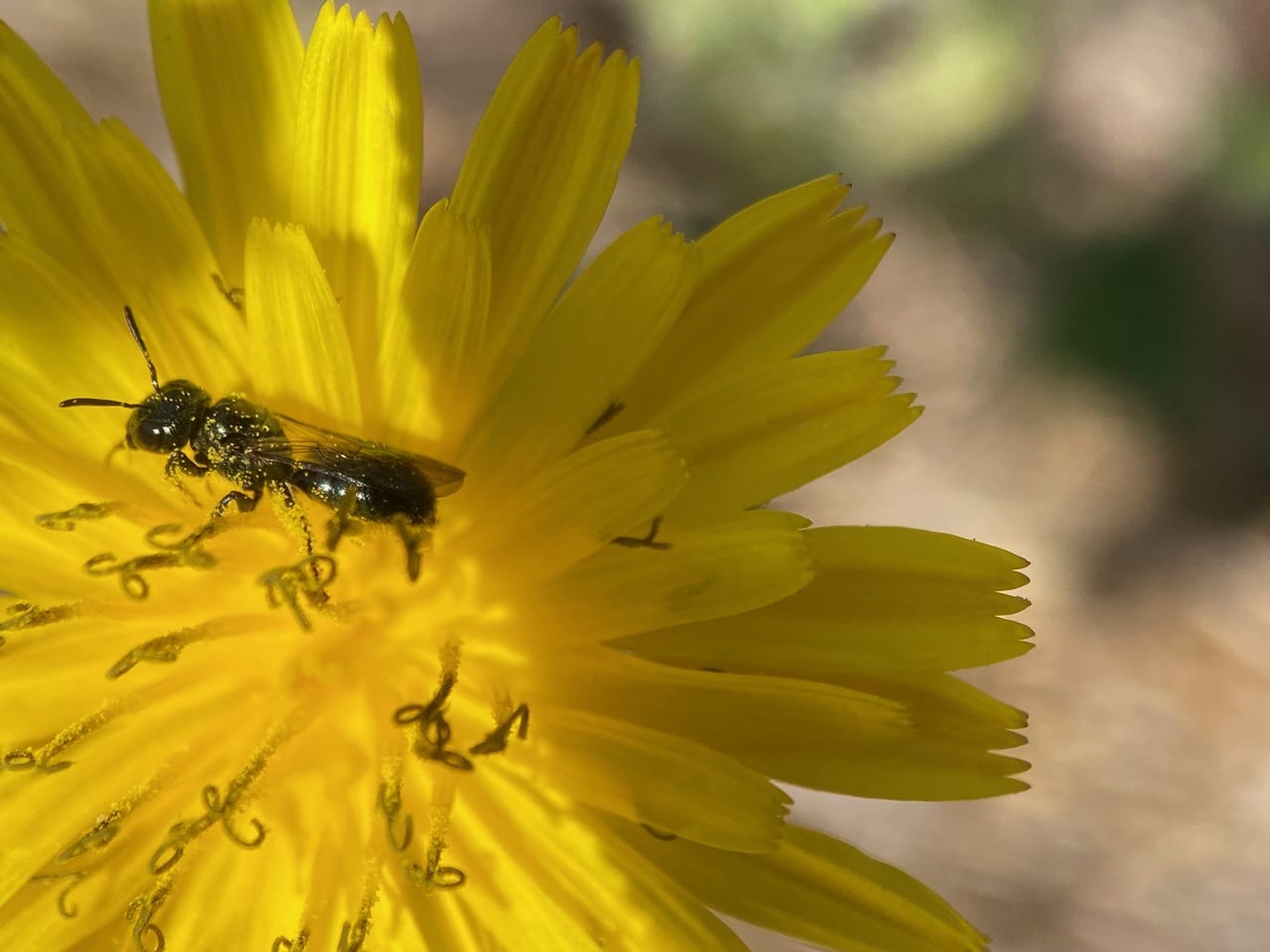
Just a couple of feet from the Armenian Blackberry bush, a Small Carpenter Bee, Ceratina sp. (family Apidae) is foraging in a flowerhead of a small Bristly Oxtongue, Helminthotheca echioides. I often find Ceratina bees on or near blackberry shrubs – these little bees like to make their nests in the broken canes, after emptying out the pith.
The Small Carpenter Bee genus Ceratina is closely related to the more familiar, and much larger Carpenter Bees (genus Xylocopa). Ceratina are typically dark, shiny, even metallic bees, with fairly sparse body hairs and a weak scopa on the hind leg. The shield-shaped abdomen comes to a point at the tip. Some species have yellow markings, often on the face.
Females excavate nests with their mandibles in the pith of broken or burned plant twigs and stems. While many species are solitary, a number are subsocial. Both male and female carpenter bees overwinter as adults within their old nest tunnels, emerging in the spring to mate. In the spring, this resting place (hibernaculum) is modified into a brood nest by further excavation. The female collects pollen and nectar, places this mixture (called bee bread) inside the cavity, lays an egg on the provision, and then caps off the cell with chewed plant material. Several cells are constructed end to end in each plant stem.

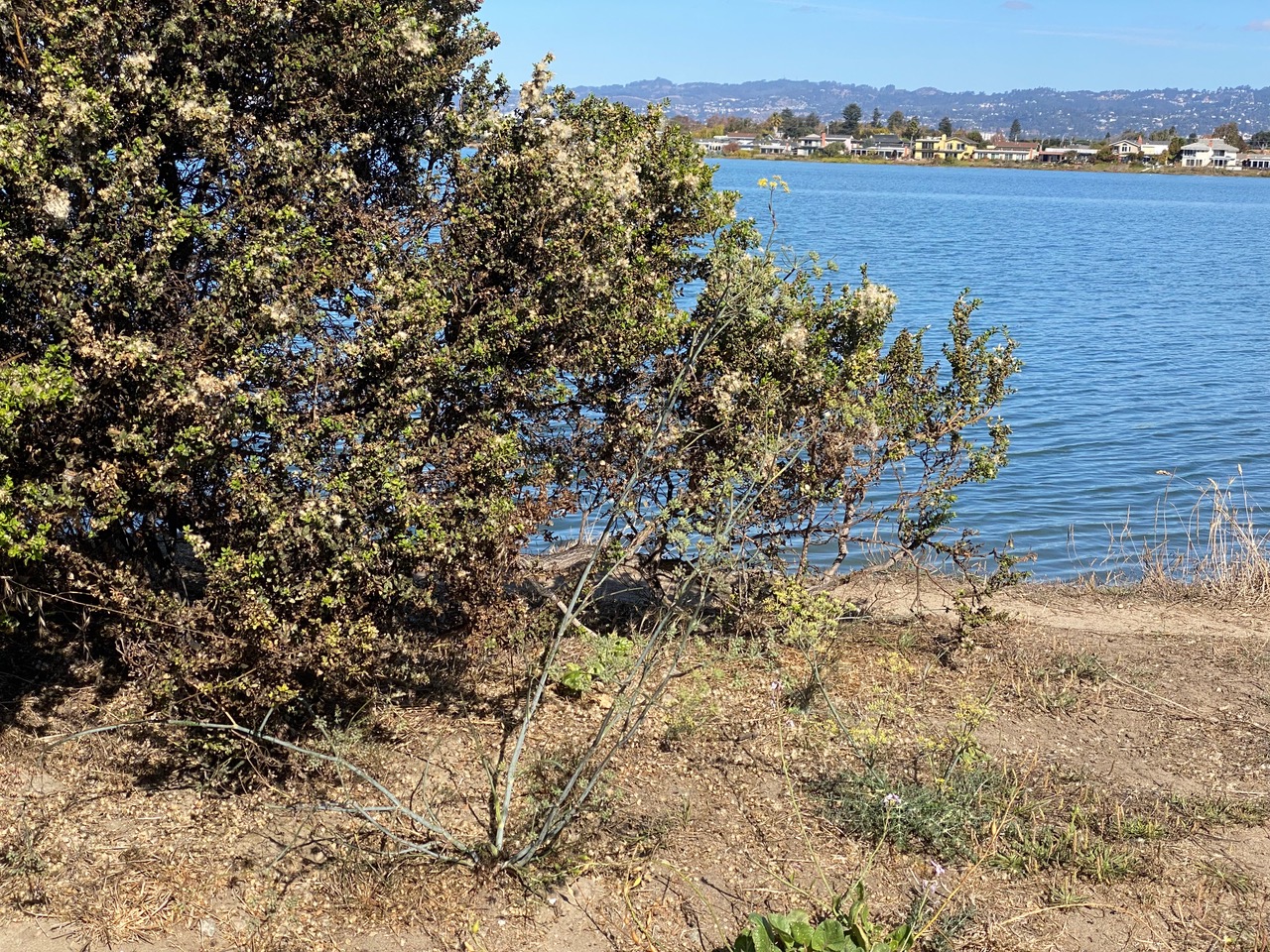
I feel a sense of relief to find that the spindly Fennel, Foeniculum vulgare next to the Coyote Brush is still there. It takes me only a few seconds to find three Anise Swallowtail caterpillars on the plant that is now devoid of foliage and fresh flowers.
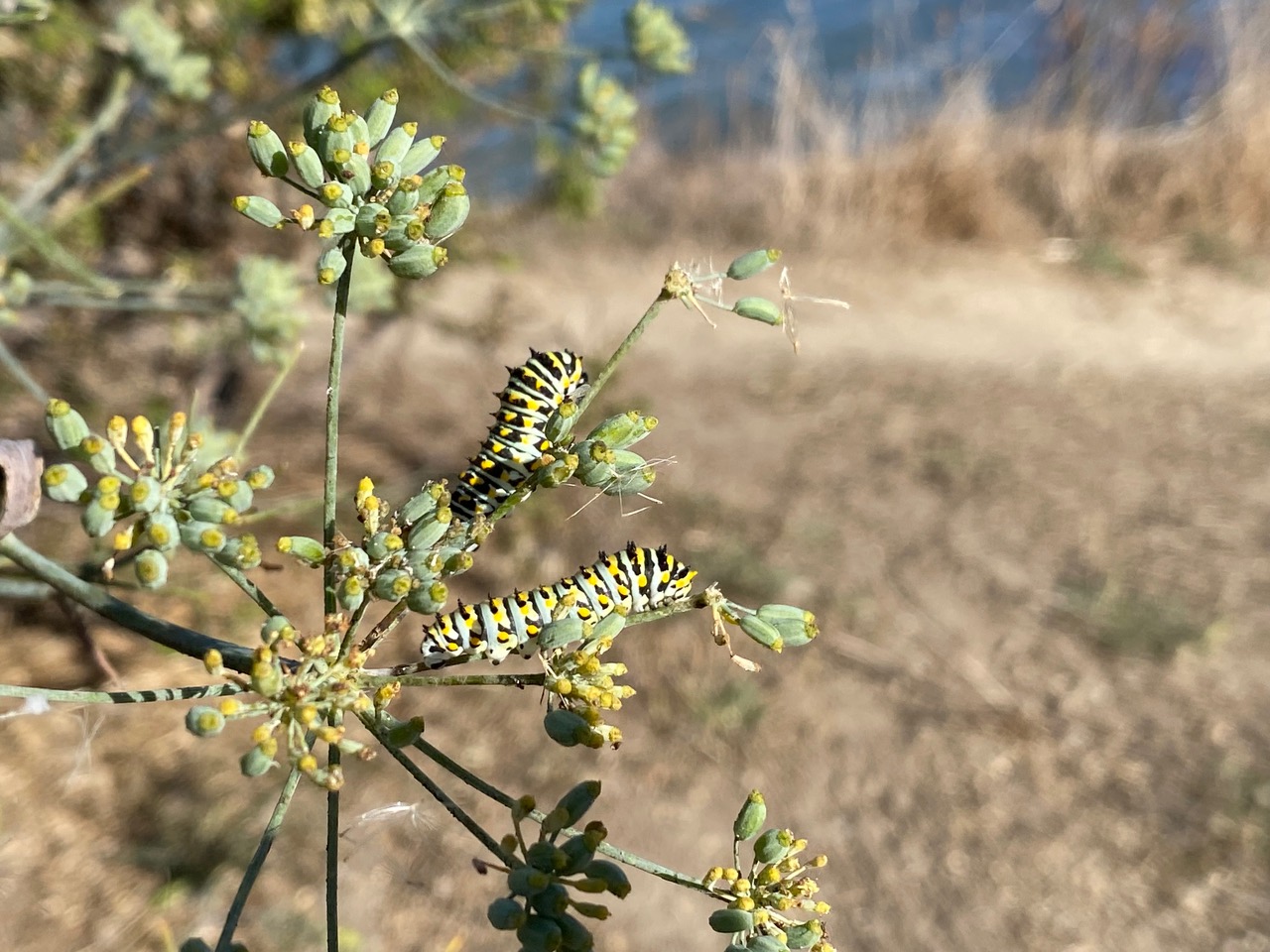
On its last legs, the Fennel plant continues to support another round of Anise Swallowtail caterpillars. These two fourth-instar caterpillars are apparently feeding on the developing seed capsules.
The Anise Swallowtail, Papilio zelicaon (family Papilionidae), is a common swallowtail butterfly of western North America. It is found in fairly open country, most likely seen on bare hills or mountains, in fields or at the roadside. Adult females lay eggs singly on the underside of host plant leaves. In the first two instars, the caterpillar is a bird poop mimic – dark brown, almost black, with an irregular white band at its middle. After that it becomes more green at each successive molt until, in the fifth (last) instar, it is predominantly green, with markings in black, orange, and light blue. Its major food plants are members of the carrot family, Apiaceae (including Fennel), and also some members of the citrus family, Rutaceae.
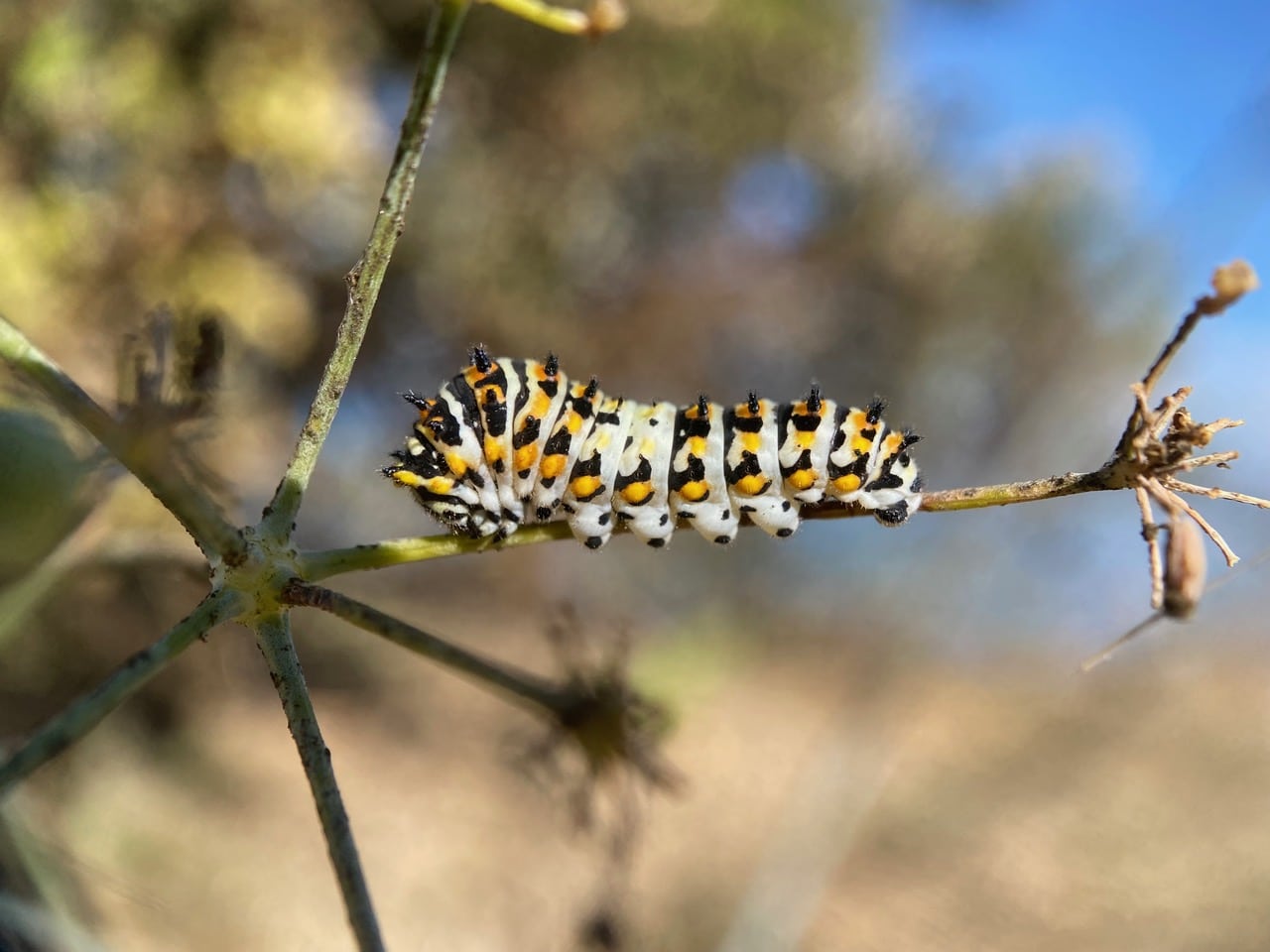
Close-up of a third-instar caterpillar on a different branch of the Fennel. Will there be enough food to nourish it until it turns into a butterfly?
Clustered close to the caterpillar’s head, under the bulky thoracic segments are three pairs of jointed thoracic legs with claws. Behind them under the abdominal segments are several fleshy nubbins, the prolegs. The thoracic legs will be retained in the adult butterfly after metamorphosis, while the prolegs will disappear. Unlike true legs, prolegs are soft extensions of the body wall and lack the rigid segments and joints. The bottom of each proleg features tiny hooks called crochets. These work like microscopic Velcro or grappling hooks to hold tightly onto leaves and stems. Most common caterpillars have up to five pairs of prolegs on their abdomen. These anchor the back and middle parts of the body securely, allowing caterpillars to hang upside down or climb smooth surfaces.

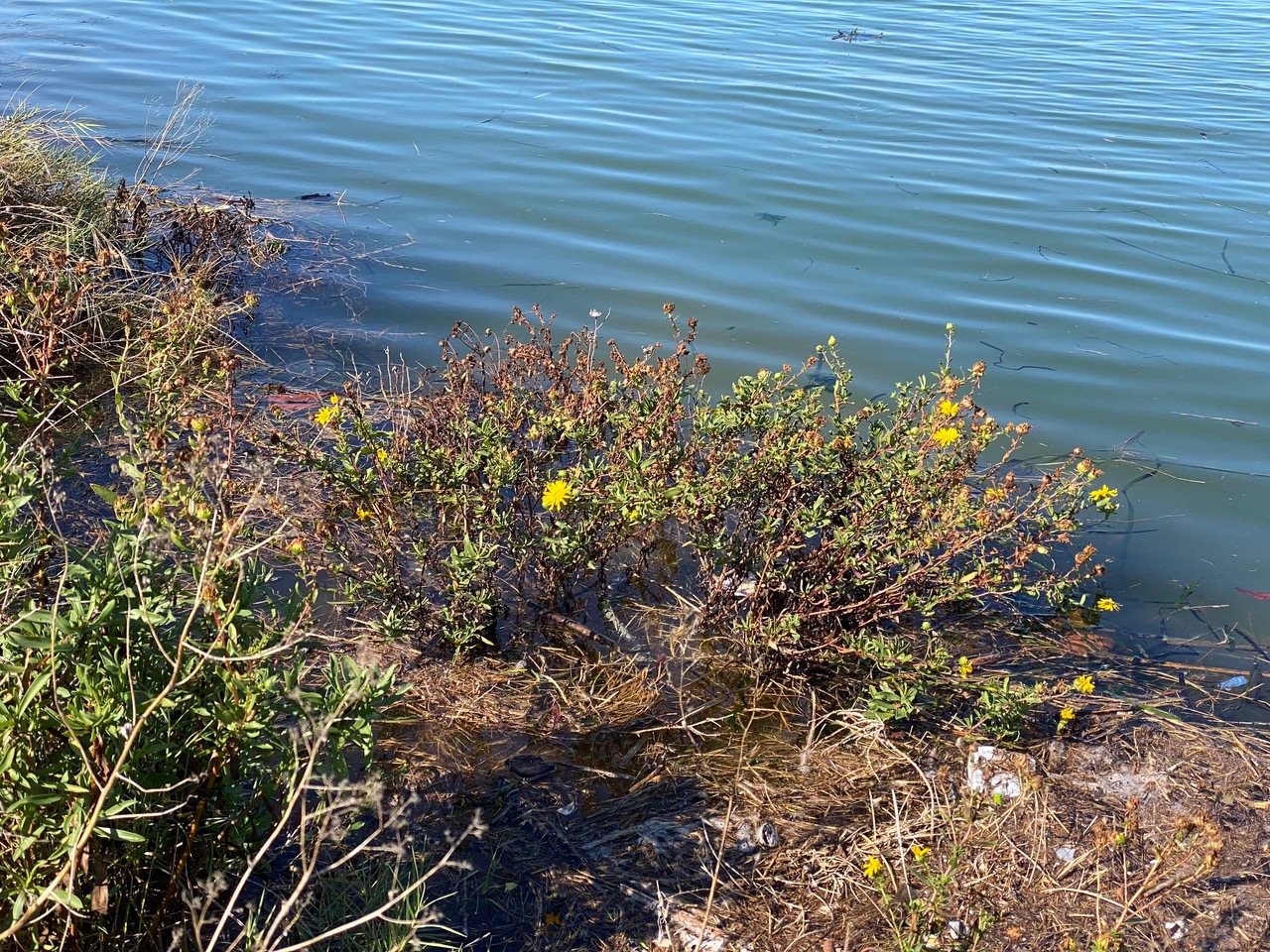
The tide is rising incredibly fast. Salt water is now sloshing around that poor Grindelia. With the arrival of the Kelvin waves, will the plant survive these frequent and prolonged inundations?

The high tide has breached the berm, flooding long stretches of the trail. Not much fun walking the alternative paved path; I’ll settle on the grass and enjoy the expansive view instead.