

Pollinator Post 10/25/26
I only have a little time for a walk today. At Bay Farm I avoid lingering along the trail, but can’t resist examining the Telegraphweed, Heterotheca grandiflora for insects in the end. Since there’s nothing new or unusual, I thought I would skip writing a Pollinator Post today, but then a tiny wasp turns out to be an interesting species. Read on to find out.
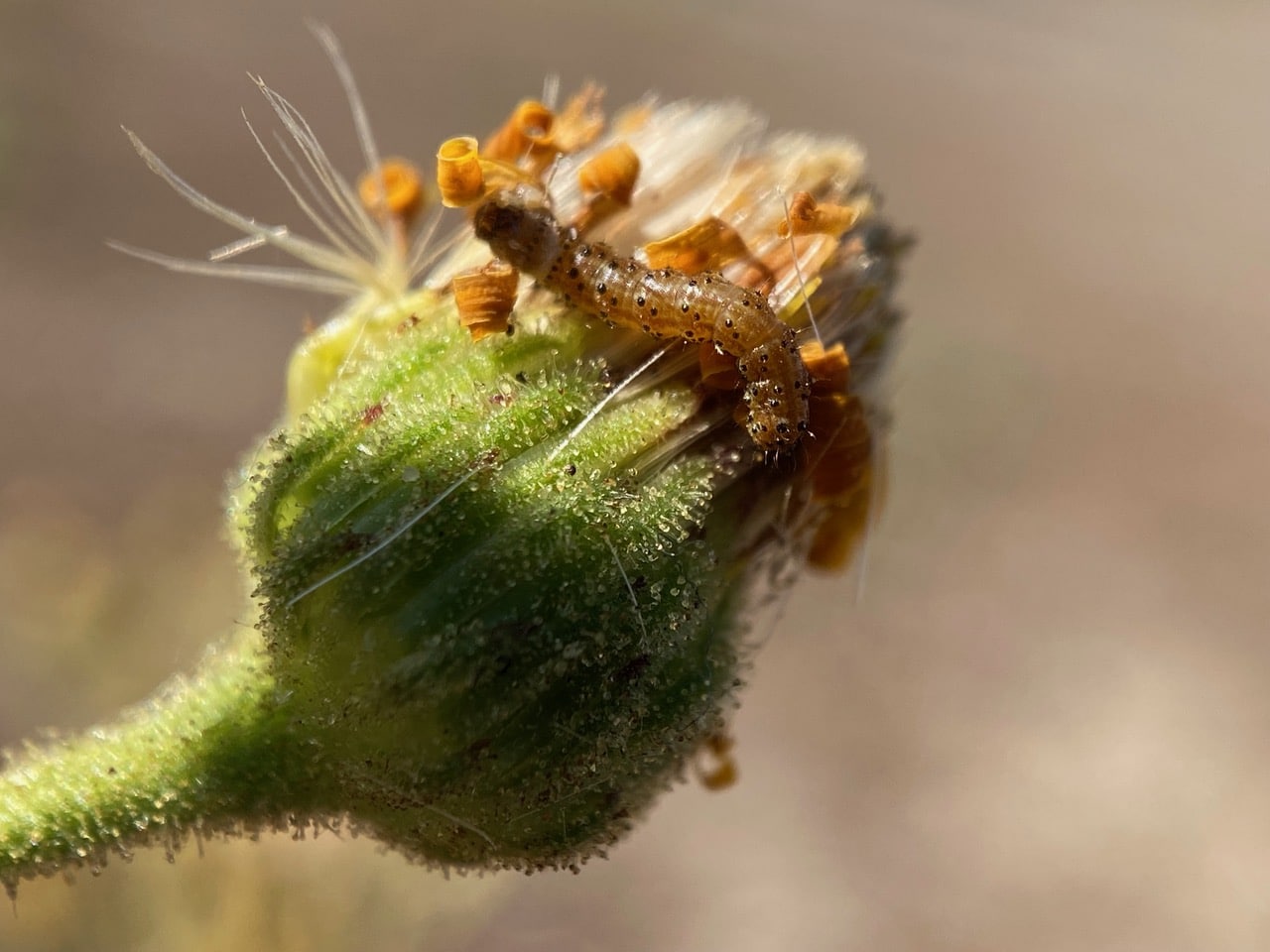
A young caterpillar of the Darker-spotted Straw Moth, Heliothis phloxiphaga (family Noctuidae) is resting on a spent Telegraphweed flowerhead.
Heliothis phloxiphaga is found in the United States and southern Canada. It feeds on a variety of plants, and the caterpillars are considered pests to certain trees, including Ulmus, Malus, and Prunus. Adults fly during the summer.
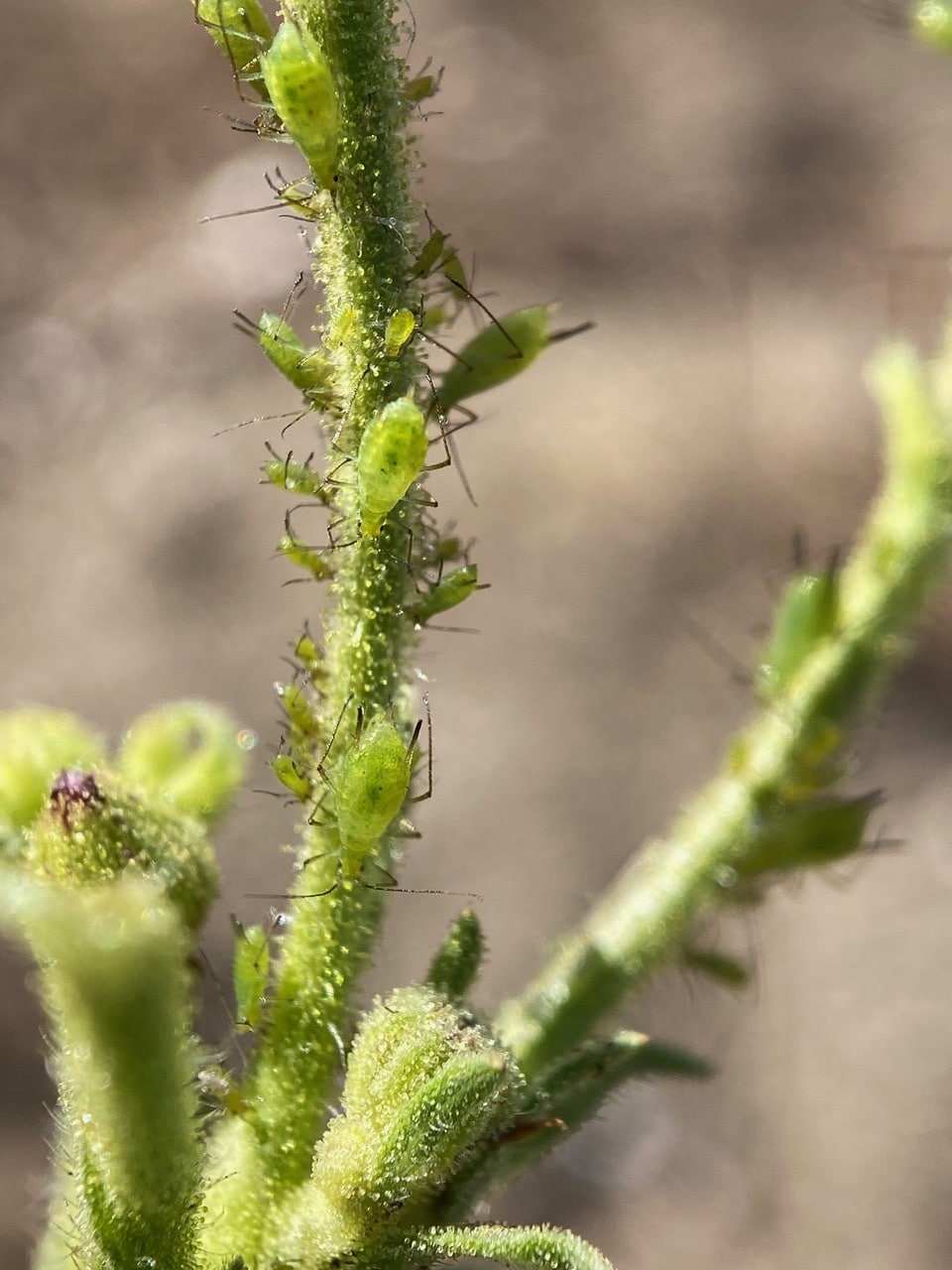
This Telegraphweed is host to a thriving colony of large, green, long-legged aphids in the genus Macrosiphum (family Aphididae).
Aphids (family Aphididae) are small sap-sucking insects in the order Hemiptera (true bugs). A typical life cycle involves flightless females giving live birth to female nymphs, – who may also be already pregnant, an adaptation called telescoping generations – without the involvement of males. Maturing rapidly, females breed profusely so that the population multiplies quickly. Winged (alate) females may develop later in the season, allowing the insects to colonize new plants. In temperate regions, a phase of sexual reproduction occurs in the autumn, with the insects often overwintering as eggs.
Aphids usually feed passively on phloem of plants. Once the phloem vessel is punctured, the sap, which is under pressure, is forced into the aphid’s food canal. Aphids produce large amounts of a sugary liquid waste called “honeydew”. A fungus called sooty mold can grow on honeydew deposits that accumulate on leaves and branches, turning them black.
The defining anatomical feature of aphids is a pair of “tail-pipes” called cornicles or siphunculi on their abdomen. These are small tube-, cone-, or pore-like structures on the dorsal side of the fifth or sixth abdominal segment. They exude defensive droplets containing lipids, wax, and alarm pheromones to warn nearby colony-mates or deter predators. A common misconception is that aphids excrete honeydew from their cornicles. Honeydew, a waste product, actually comes from the aphid’s rectum. The cornicle length, shape, and color vary by species and help scientists identify them. In some rare root-feeding or gall-forming species, cornicles can be completely absent.
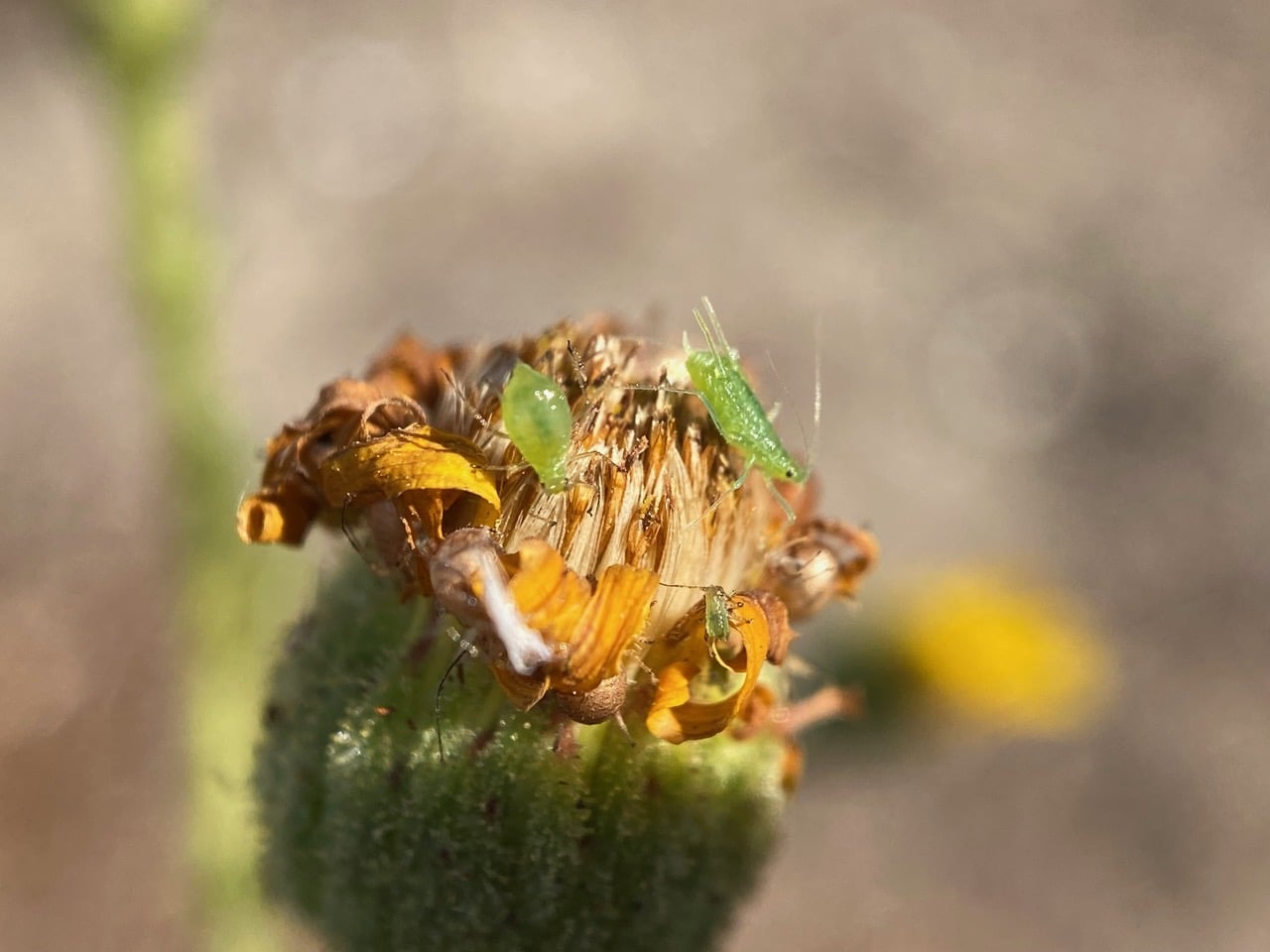
Macrosiphum is a common genus of large, long-legged aphids, measuring up to 3.5 mm long. The genus name derives from their long, slender “tailpipes” (cornicles) on the rear of their bodies. During the summer populations are made of parthenogenetic females. In the fall, males and females are produced; they mate and females lay eggs that overwinter. These aphids are highly polyphagous, feeding on over 200 plant species, including vegetables like tomatoes, potatoes, and ornamentals. They extract sap from soft new foliage and terminal stems, causing leaves to curl, yellow, and stunt. They secrete a sticky, sugary waste product called honeydew that may coat the plant, promoting the growth of sooty mold. The aphids are also prominent vectors capable of transmitting plant viruses between crops.
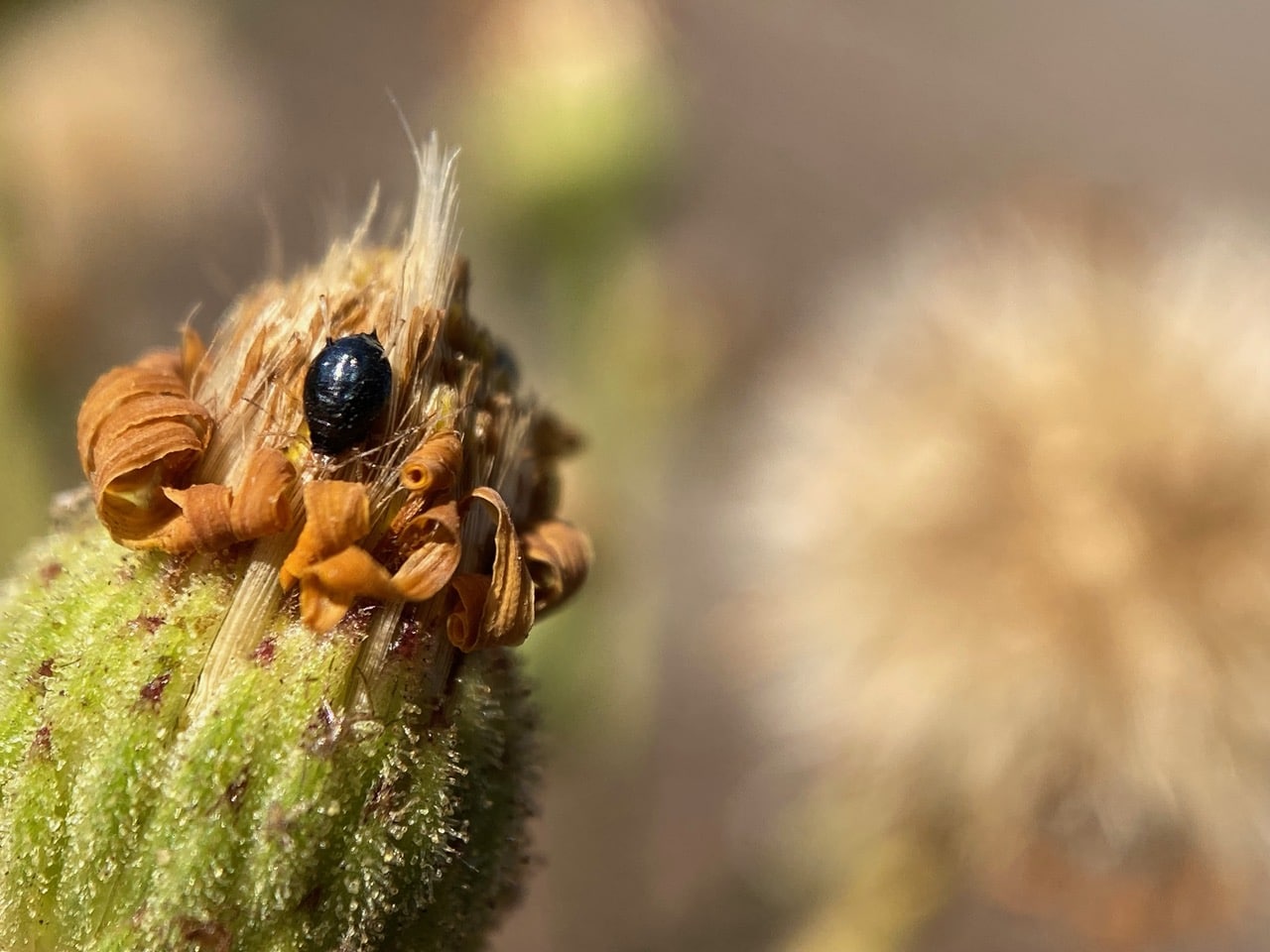
It’s hard to believe, but this bloated, shiny black aphid is also the same species. But it has been parasitized and “mummified” by a parasitoid wasp.
The bloated, black aphid has been parasitized by a wasp in the family Aphelinidae. The mother wasp uses her ovipositor to inject a single egg and symbiotic polydnaviruses into an aphid. The wasp larva hatches and slowly consumes the aphid’s non-vital organs while it is still alive. Right before the larva pupates, it kills the host aphid. The chemical interaction between the wasp and the aphid’s cuticle causes the aphid to swell into a balloon-like, shiny black “mummy”. The wasp pupates safely inside the black shell. Once mature, it chews a perfectly round exit hole in the rear of the mummy to escape and hunt for new aphids.
Not all aphid wasps turn their hosts black – wasps from the subfamily Aphidiinae (family Braconidae) tend to leave behind tan, gold, or brown mummies. Together, these two families of parasitoid wasps are highly effective natural pest control agents for gardens and agriculture.
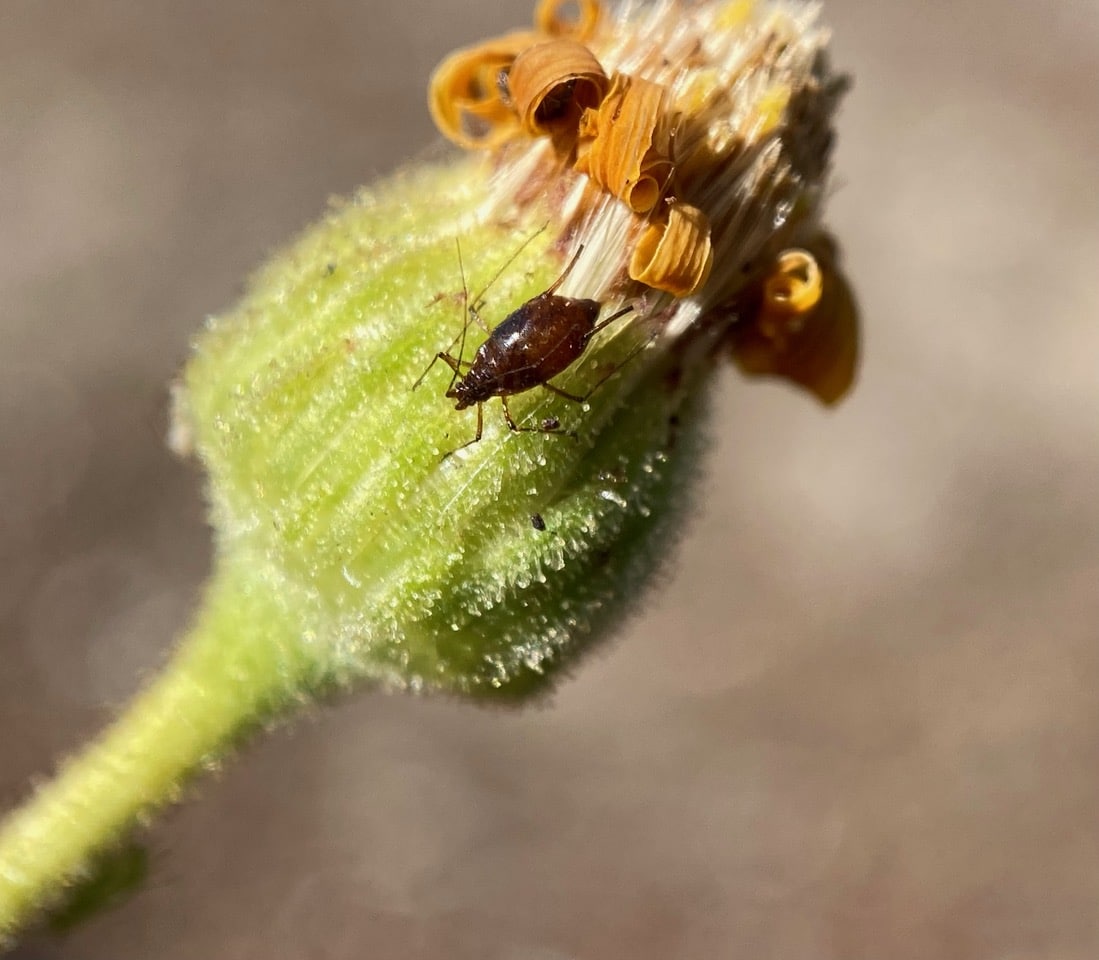
This parasitized Macrosiphum aphid is still alive and moving, but its days are numbered. Eventually it will succumb to the parasitoid within its body.
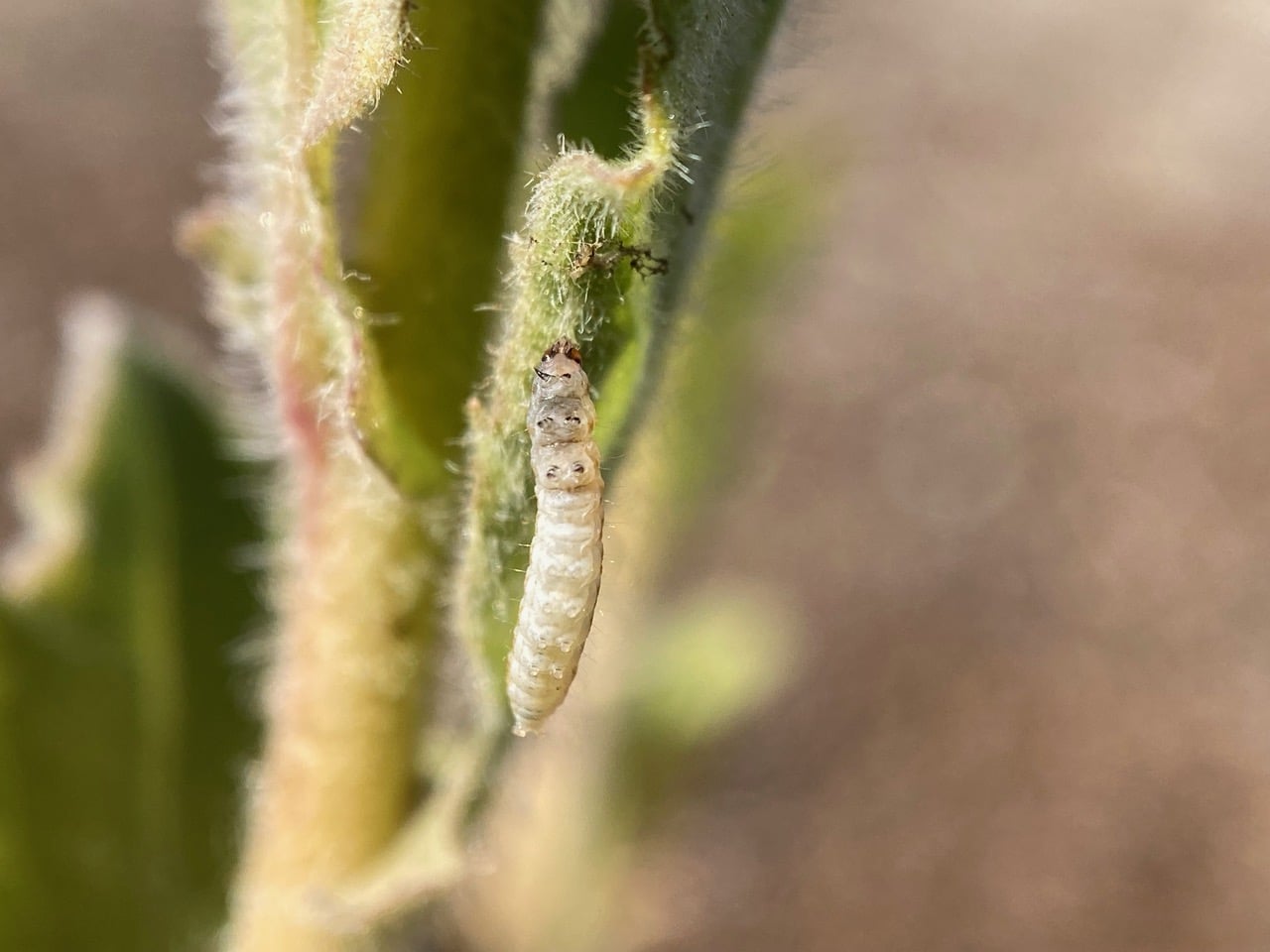
I spot a movement beneath a Telegraphweed leaf. Hanging by a silk thread from its mouth, a small unidentified caterpillar is wriggling its way back up to the leaf. We are looking at the underside of the caterpillar. Note the three pairs of true legs on its thoracic segments right behind its head.
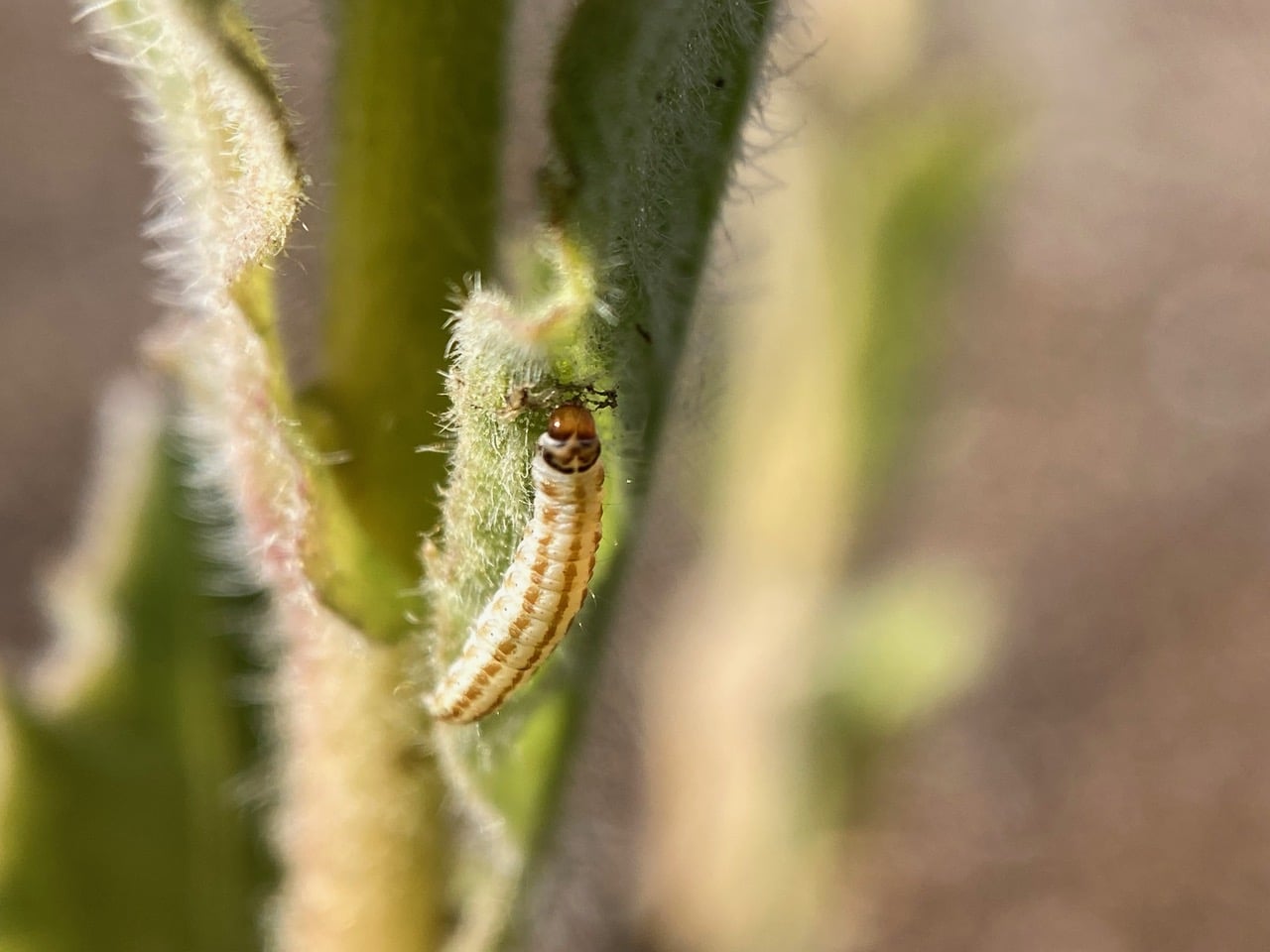
Ah, the caterpillar has finally returned safely to the leaf. Caterpillars return to a plant after falling by using their silk thread as a safety line to climb back up, a process known as “bungee-jumping” or silk-reeling. A naturalist-mentor of mine used to call the behavior “spit and jump”.
When a caterpillar is knocked off a leaf by wind, a predator, or a disturbance, it doesn’t just fall helplessly. Instead, it anchors a strand of silk to the plant right before dropping, allowing it to suspend mid-air or drop safely to the ground. Before or during a fall, the caterpillar spins a continuous silk line from its spinneret (an organ near its mouth). To get back to the plant, the caterpillar uses its thoracic legs (the true legs near its head) and its mouthparts to grasp the silk thread. It pulls itself upward in a repetitive, hand-over-hand motion, resembling a rock climber pulling himself up a rope. As they climb, many caterpillar species actually eat the silk thread to recycle the proteins. This keeps the path clear and prevents wasting energy, as silk production requires significant nutritional resources.
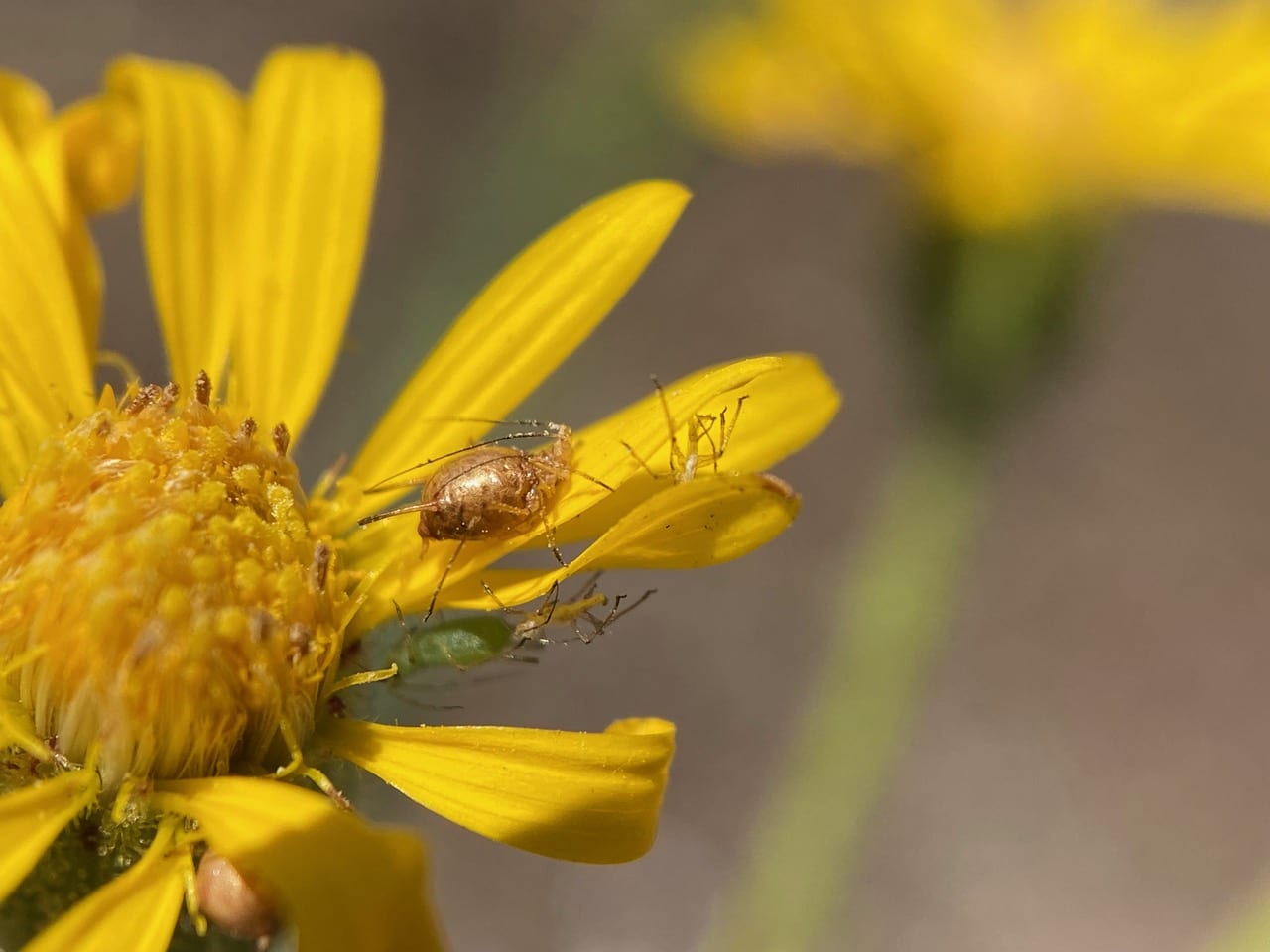
There’s a lot of aphid activity on this Telegraphweed flowerhead. The large, bloated brown aphid is a Macrosiphum aphid that has been mummified by a parasitoid wasp, Aphidius sp. (family Braconidae). Around it are the whitish exuviae or shed exoskeletons left by the aphids after a molt.
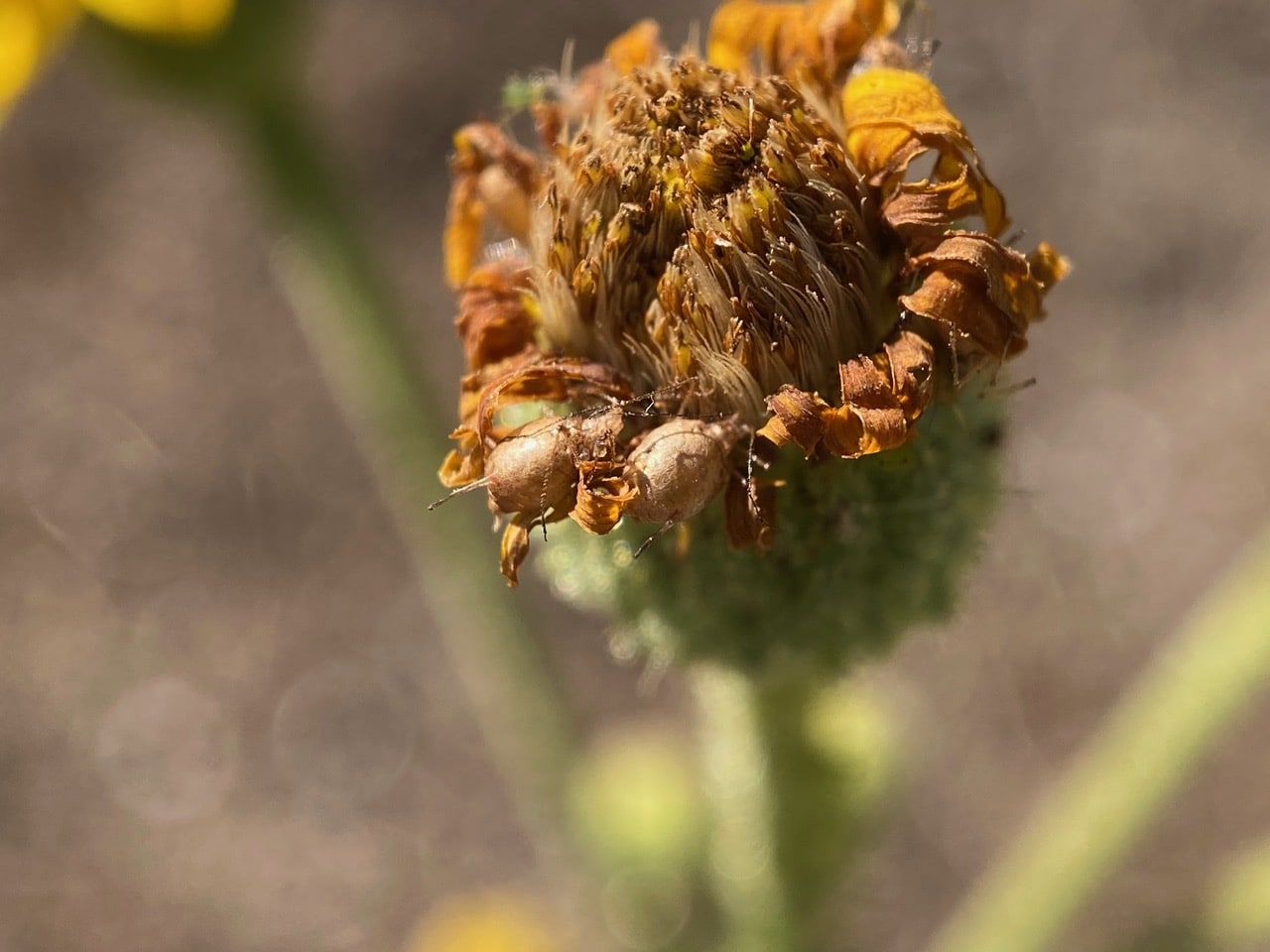
Two Macrosiphum aphid mummies are stuck to the dried ray petals of a Telegraphweed flowerhead. I don’t see any exit holes on their abdomen – perhaps the Aphidius wasps have yet to emerge from these mummies.
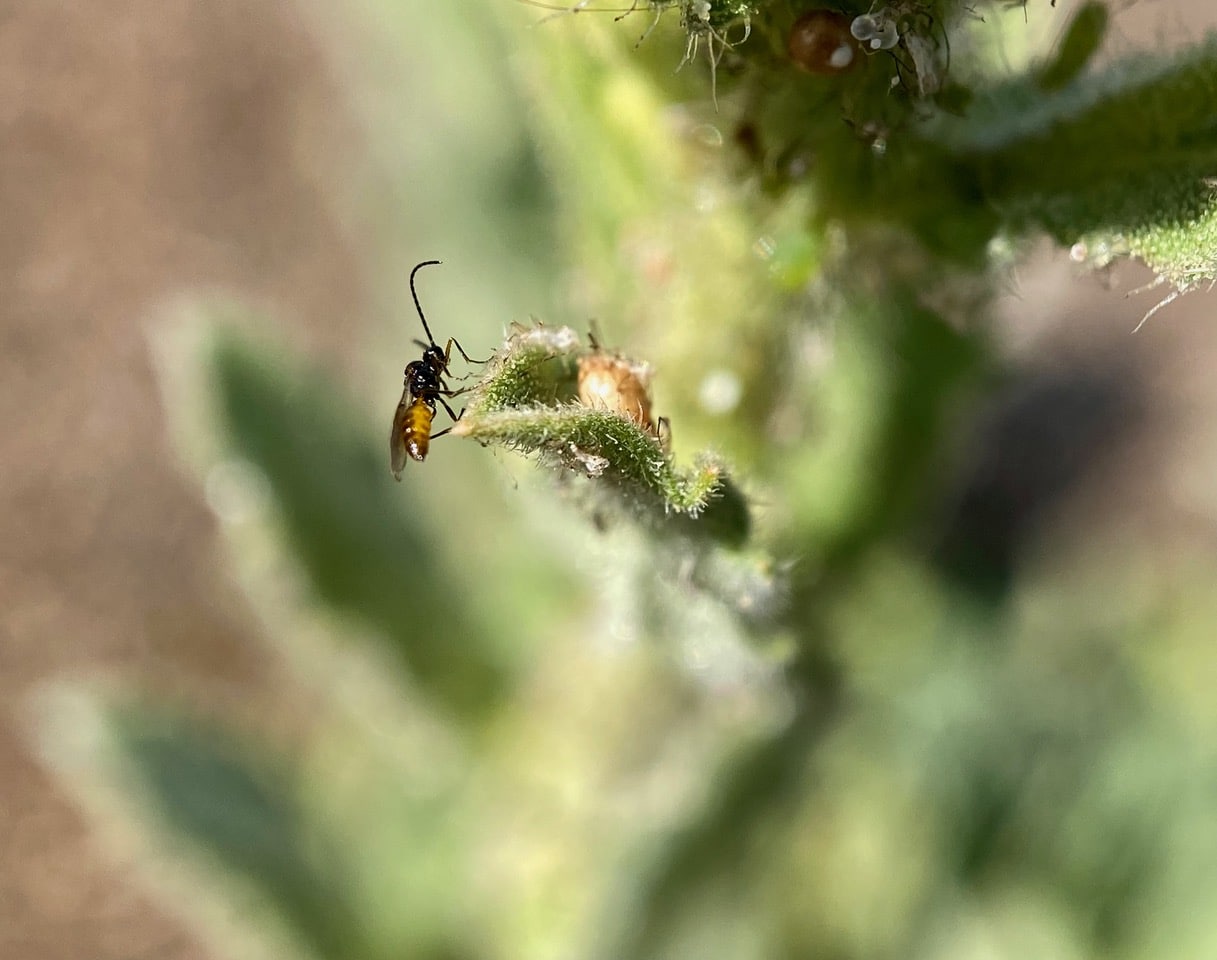
I suddenly catch sight of a tiny wasp perched on the tip of a Telegraphweed leaf. It lingers for a long time next to an aphid mummy. From the length of its antennae, I figure it is a parasitoid wasp in the superfamily Ichneumonoidea (that includes the families Ichneumonidae and Braconidae). Could it be an Aphidius wasp (family Braconidae) that has just emerged from the aphid mummy?
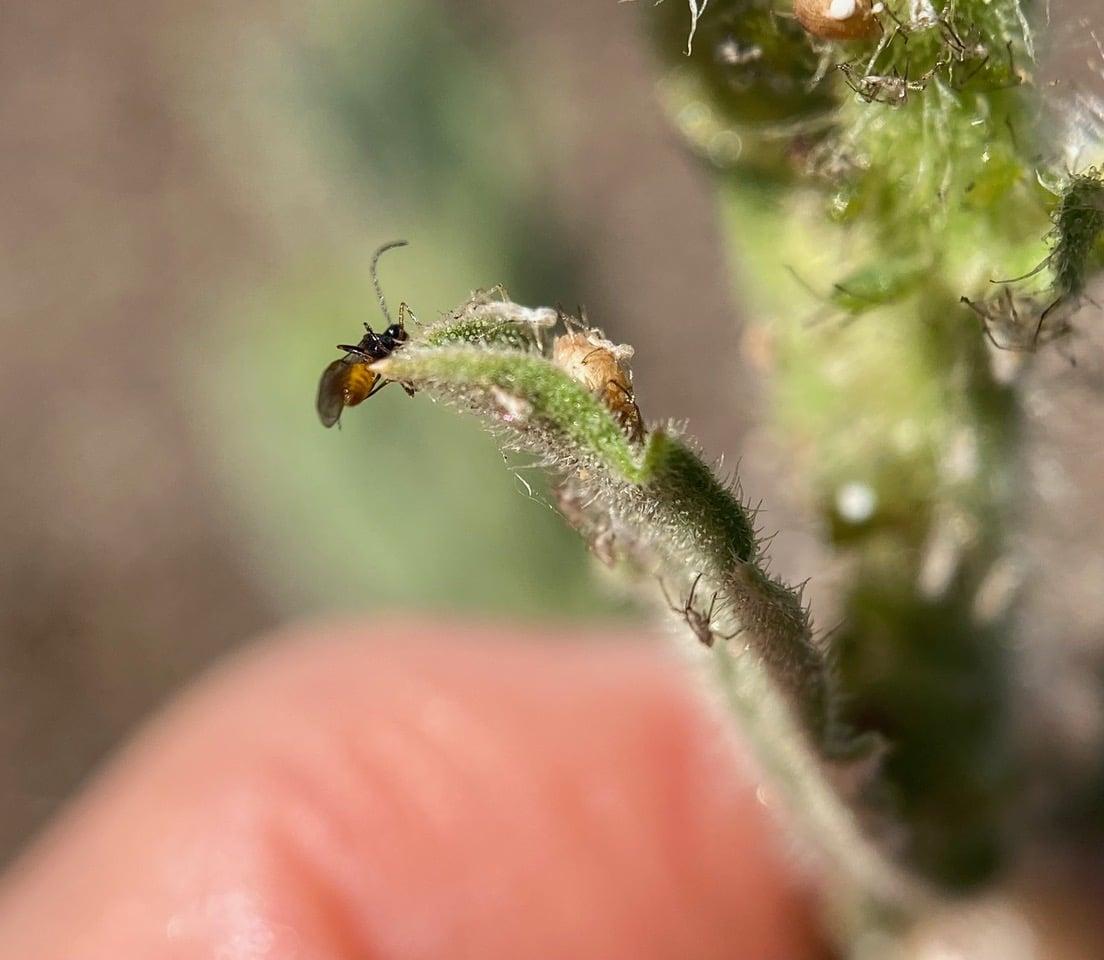
iNaturalist’s AI has confirmed my suspicion. Then came a surprise confirmation from an entomologist, an expert in Aphidius wasps who responded to my photos on iNaturalist. This is the joy of iNaturalist – being in a community of insect enthusiasts who freely share their love and knowledge. Thank you!
I have been seeing a lot of aphid mummies lately. Now I finally get to see an adult wasp that makes these mummies. So cool!
Aphid Mummy Wasps, Aphidius sp. (family Braconidae) are small wasps, typically less than 1/8 in. long. The female wasp lays a single egg in an aphid. When the egg hatches, the wasp larva feeds inside the aphid. As the larva matures the aphid is killed and becomes bloated and mummified, usually turning tan or golden in color. The adult wasp chews its way out of the mummy leaving a circular hole.

Look, an aphid mummy with wings! When I first saw this phenomenon a few years ago, my immediate reaction was, “Why didn’t the alate fly away when the wasp approached with her ovipositor?” It doesn’t take long for anyone to figure out. Of course winged aphids (alates) can be parasitized and turned into mummies by the parasitoid wasps. The wasp egg is injected when the aphids are still young, without functional wings with which to fly. Duh! The amazing thing is that the poor aphid is able to continue to grow and develop into a winged adult before turning into a mummy!

Ooh, another caterpillar of the Darker-spotted Straw Moth, Heliothis phloxiphaga (family Noctuidae). These caterpillars are apparently able to move around on the plant surfaces brimming with sticky glandular exudates. I used to find these caterpillars on the sticky tarweed (Madia) plants – they are adapted for navigating sticky surfaces.
Heliothis caterpillars navigate sticky, trichome-covered plant surfaces by using specialized behavioral and morphological adaptations. While many plants develop sticky glandular hairs (trichomes) as a defense mechanism to trap or kill invading insects, these caterpillars employ specific strategies to overcome them. They can spin extensive mats or bridges of silk over the sticky trichomes. This acts as a protective “carpet” that covers the glue, allowing them to walk freely without their bodies or legs directly touching the adhesive substance. The caterpillars frequently bite off or mow down the sticky trichomes using their mandibles before moving or feeding on the underlying tissue.

The wind-pruned shrubs of California Coffeeberry, Frangula californica along the Bay Farm shoreline have clusters of flowers that are borne on branch tips no more than 21/2 ft. off the ground. This suits the Common Grass Skimmers just fine. These tiny hover flies do not fly very high. Moreover, these plants host teeny-tiny aphids that their larvae can feed on. Female Grass Skimmers are often seen laying eggs near the aphid colonies.
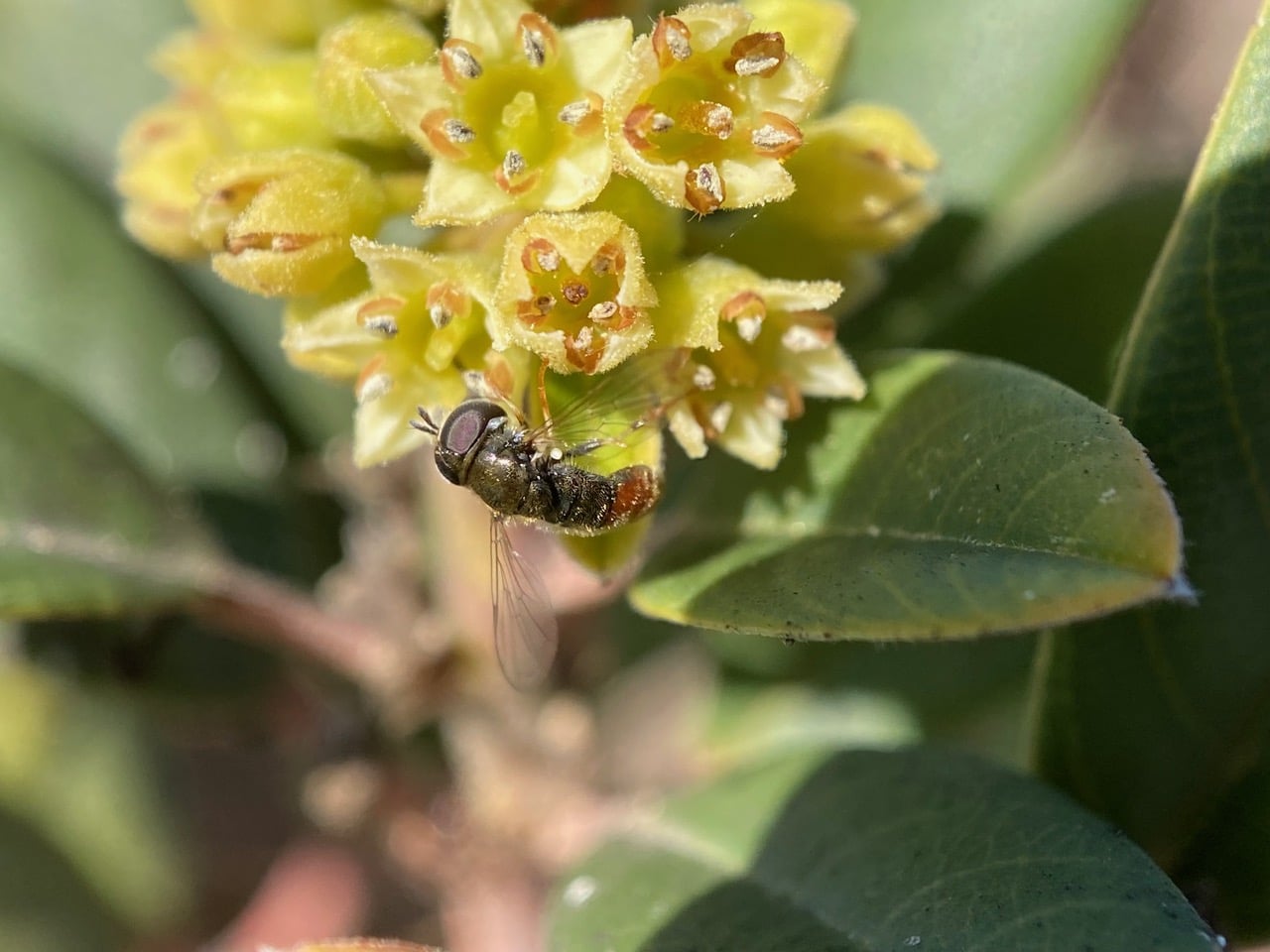
The Common Grass Skimmer, Paragus haemorrhous (family Syrphidae) is the smallest hover fly I know, measuring only about 4 mm in length. The species has a world-wide distribution, found in unimproved grasslands, dune grass, open areas and pathsides in forest, and meadows. Adults visit flowers for nectar and pollen. Larvae feed on aphids on low herbaceous plants.
Photos of Common Grass Skimmer (Paragus haemorrhous) · iNaturalist

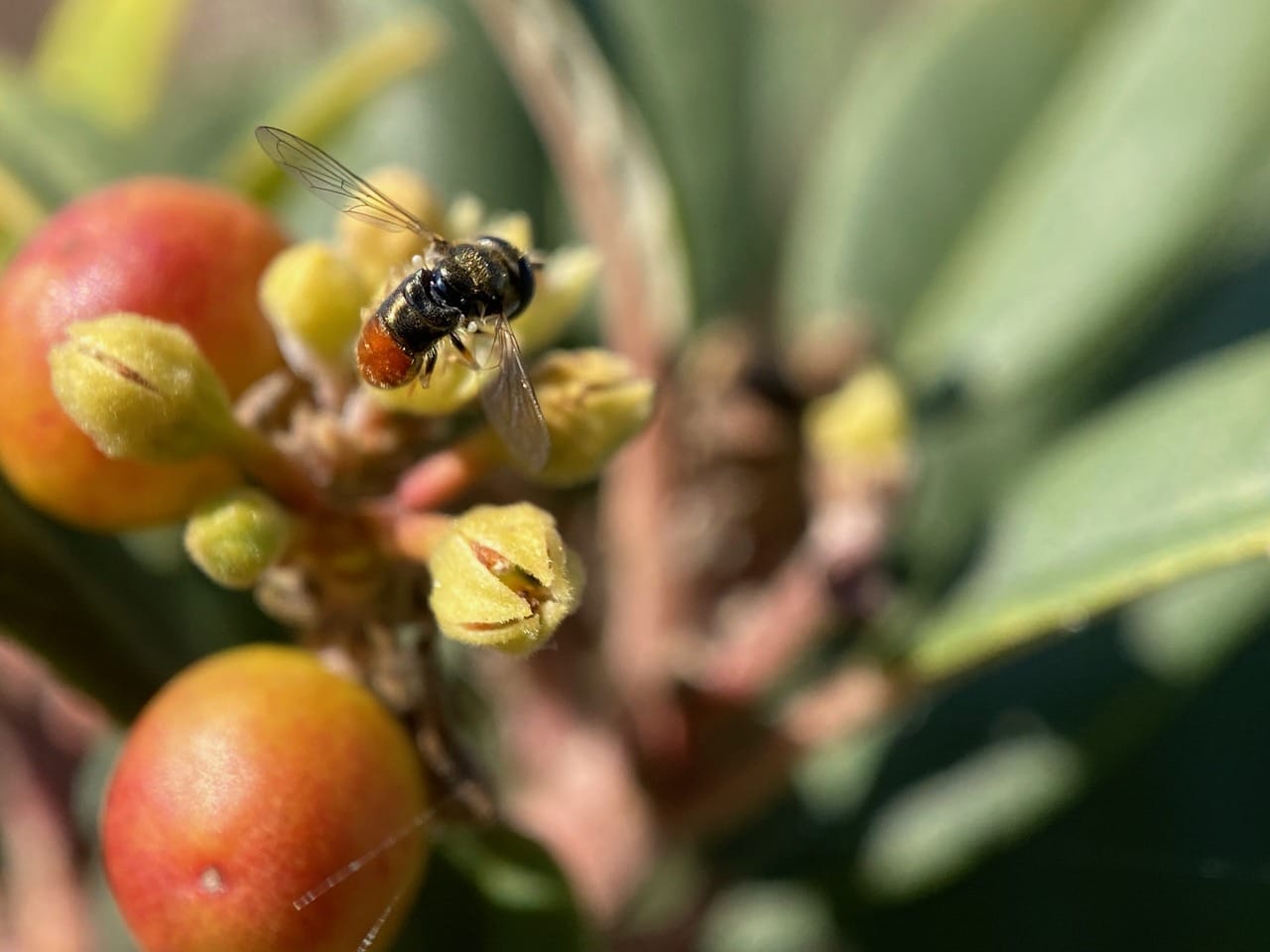
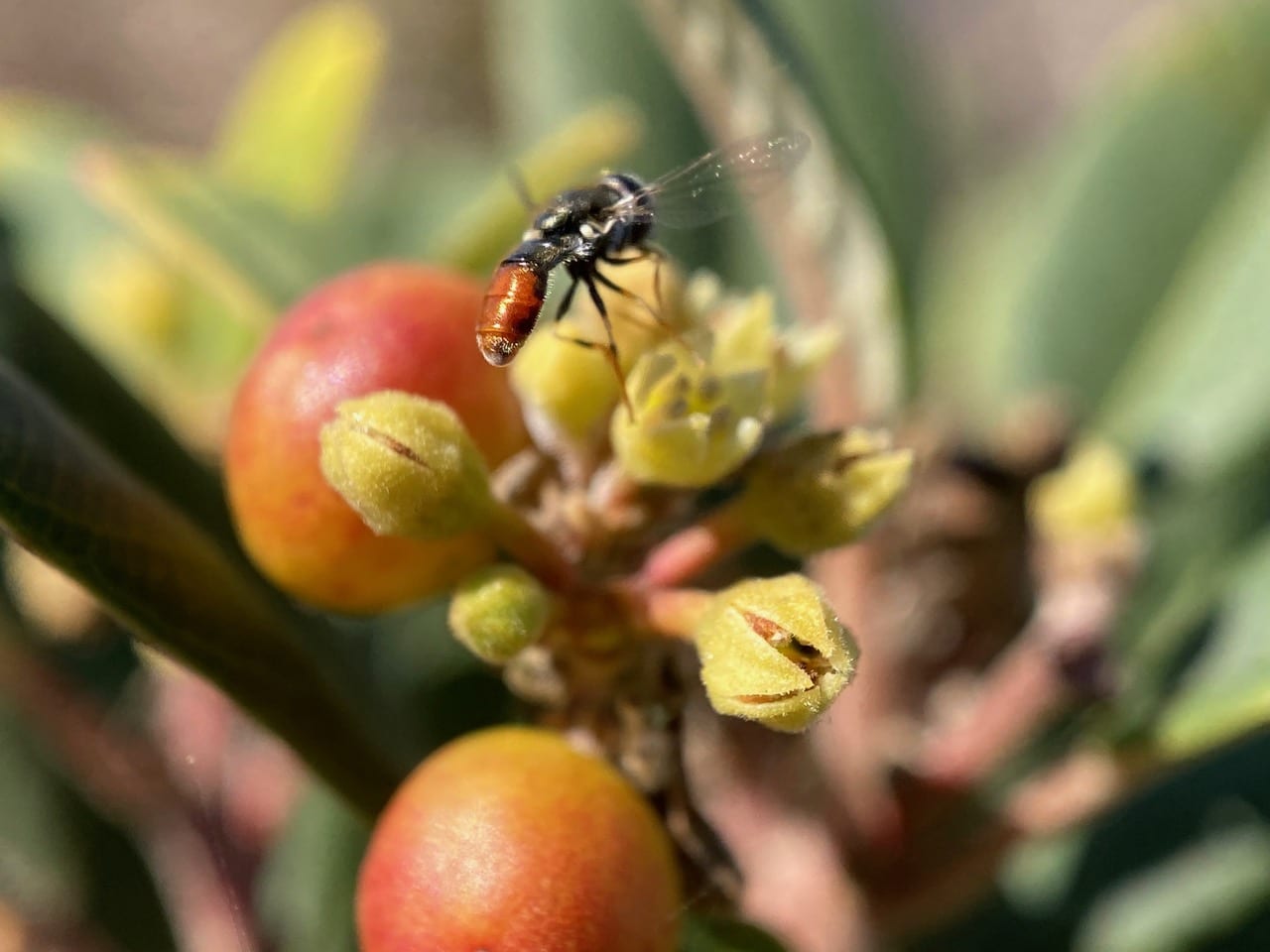
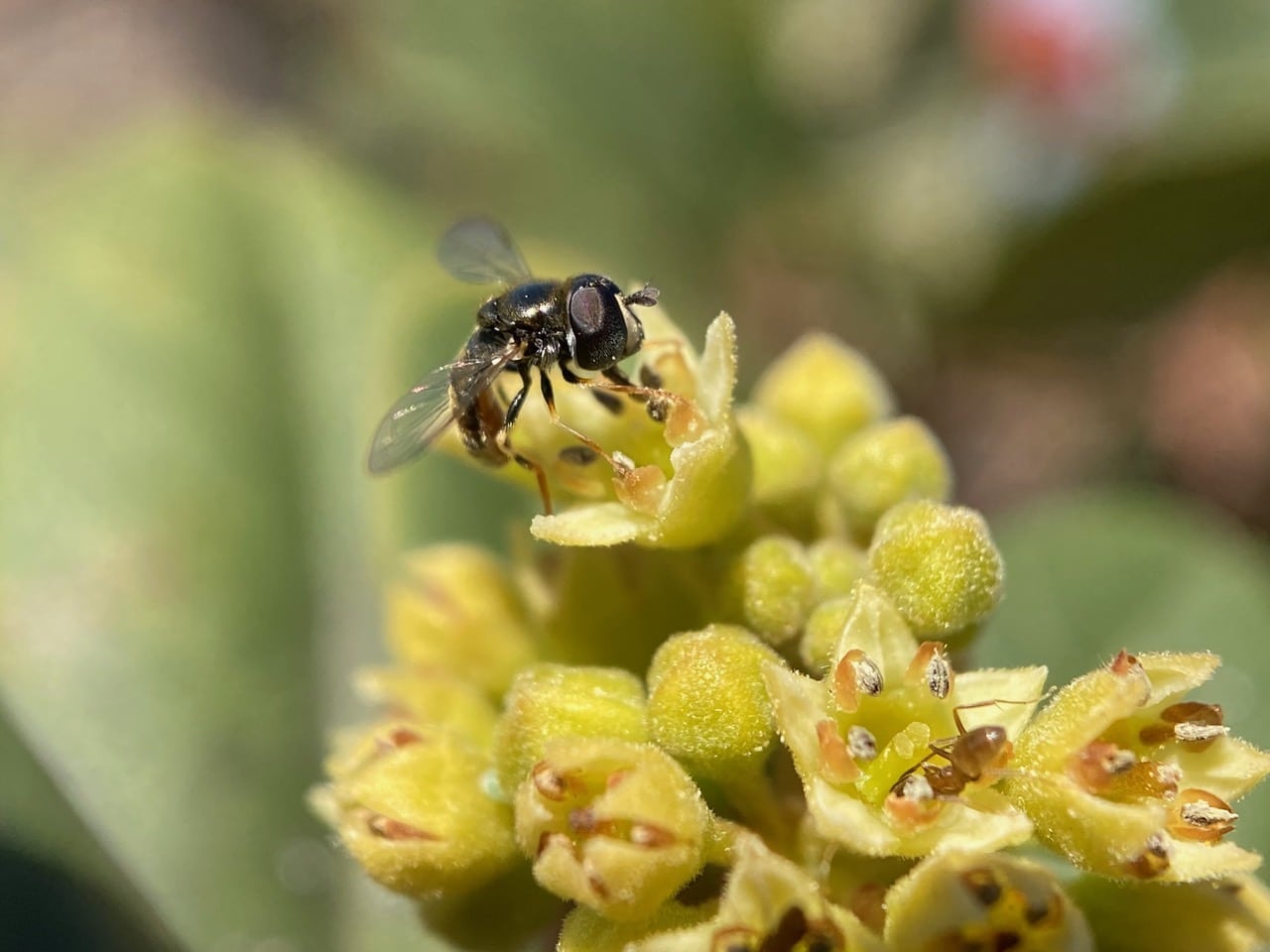
Note the over-sized head and hunched posture typical of the Common Grass Skimmer, Paragus haemorrhous (family Syrphidae).