

Pollinator Post 10/23/26 (2)
Just before I leave Bay Farm Island, a few winged termites fly past me. It suddenly occurs to me that today is ideal for termite swarming – a warm, calm day after rain! I quickly drive to a leafy neighborhood in Alameda where I have observed termite swarming in the past. My excitement mounts as scattered swarms of termites fly across the road – they are easily recognizable from their slow, undulating, fluttery flight.
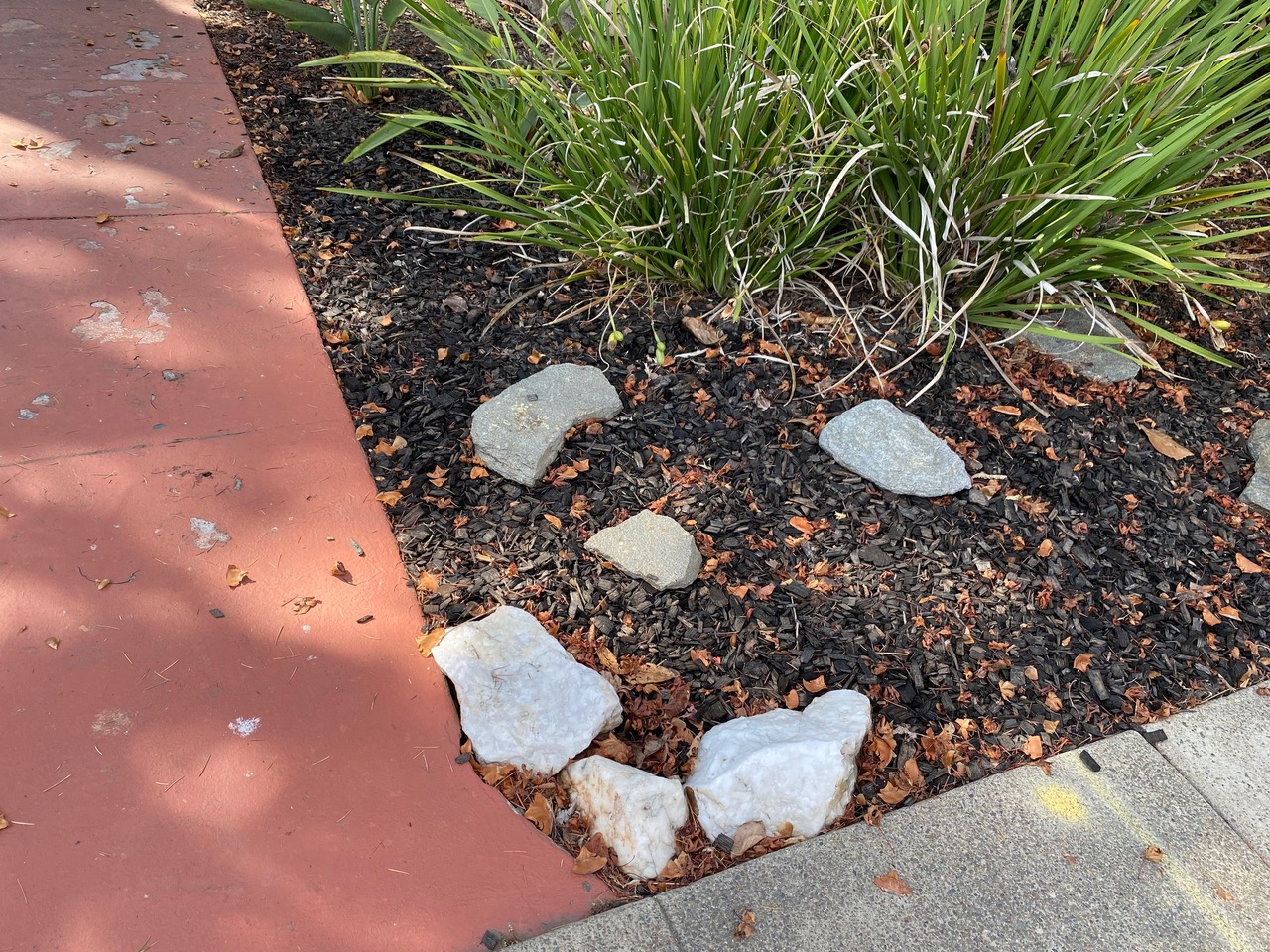
I finally park the car where the density of termites seems to be highest. It only takes me a minute to locate the source of an emerging swarm – the corner of a residential garden covered with black woodchip mulch. It’s a convenient place where I can observe the termite activity from the sidewalk.

While the black mulch is not the easiest background on which to observe the emerging termite alates, the shimmering of the termite’s large wings make them quite easy to see. My first order of business is to video record their emergence.
Termites have a caste system in their social organization. Worker termites undertake the most labor within the colony, being responsible for foraging, food storage, and brood and nest maintenance. They are tasked with the digestion of cellulose in food and feeding their nest mates in the process of trophallaxis. The soldier caste is anatomically and behaviorally specialized to defend the colony. They have large heads with modified jaws so enlarged that they cannot feed themselves. Instead, like juveniles, they are fed by workers. The primary reproductive caste of a colony consists of the fertile adult female and male individuals, commonly known as the queen and king. These form lifelong pairs where the king will continuously mate with the queen. The queen is responsible for egg production. Alates, or winged reproductives are produced at certain time of year. With the right environmental conditions (usually warm, windless days after a rain), the alates fly off on nuptial flight in search of mates from other nearby colonies.
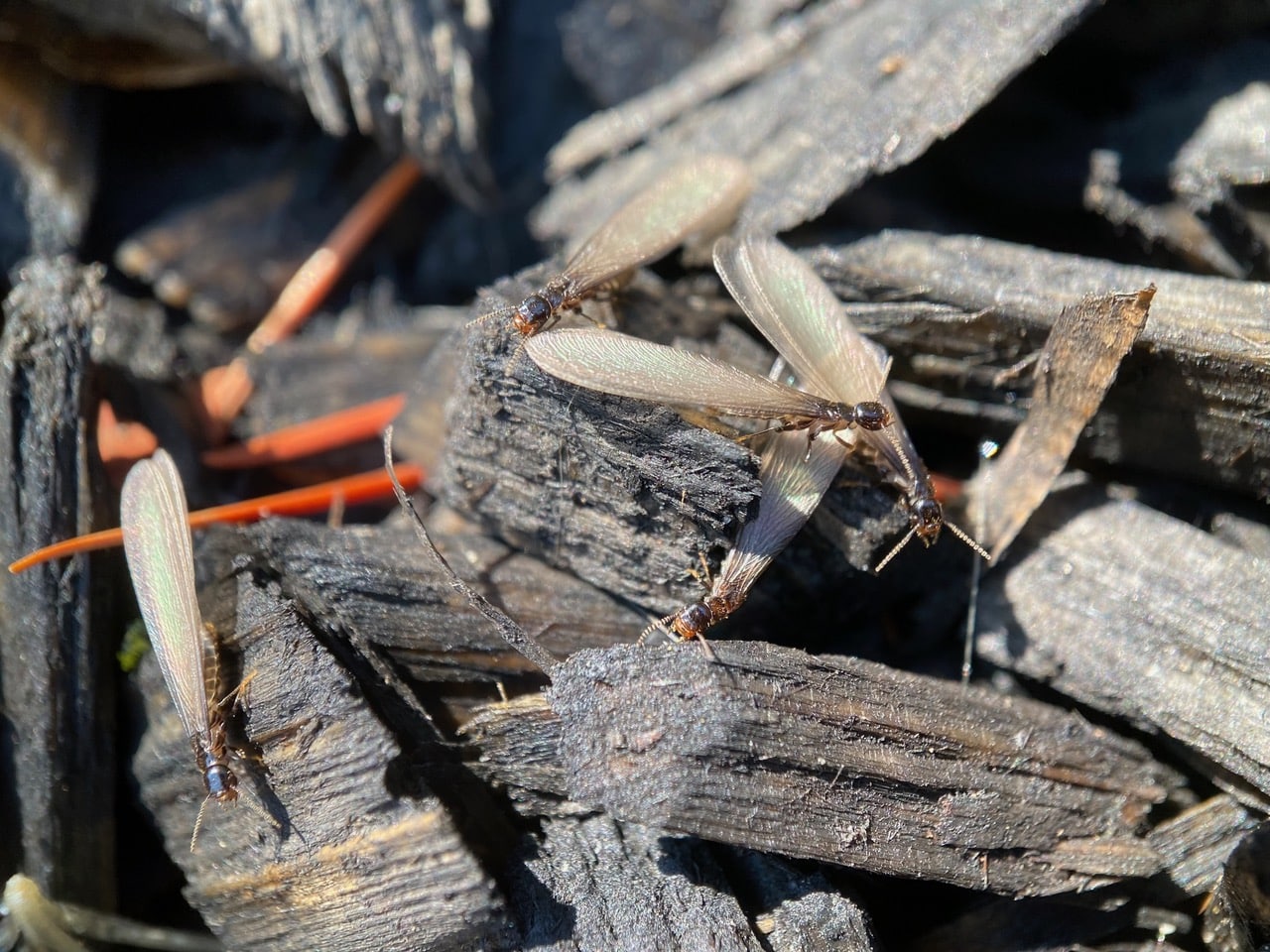
The alates are in constant motion and difficult to photograph. Their sheer numbers is overwhelming. iNaturalist has confirmed that these are the Western Subterranean Termites, Reticuliformes hesperus (family Heterotermitidae, order Blattodea). It is difficult to tell the genders of the alates in the field – male and female alates look similar.
During a swarming event, winged reproductive termites – known as alates – leave a mature underground or wood-nesting colony en masse to reproduce and establish new dynasties. Swarms typically happen during warm, humid, calm days or evenings, often right after a rainfall when the soil is soft and moist. Thousands of alates push out of exit holes or slits in the nest or wood structure. Termites are clumsy, weak fliers; their flight is short and erratic, carried partly by weak winds or a flutter-and-drop motion. After a brief flight of a few hundred feet or less, they drop to the ground and twist or snap off their pale, translucent wings. Males and females pair up in tandem (the male following closely behind the female) to search for a moist, cellulose-rich niche of soil or wood. Most alates never make it – they are easily picked off by predators like ants, spiders, birds, and lizards, or they dehydrate and die before finding a suitable home. The tiny fraction or pairs that survive burrow into the earth or wood, seal themselves in a chamber, mate, and become the king and queen of a brand-new colony.
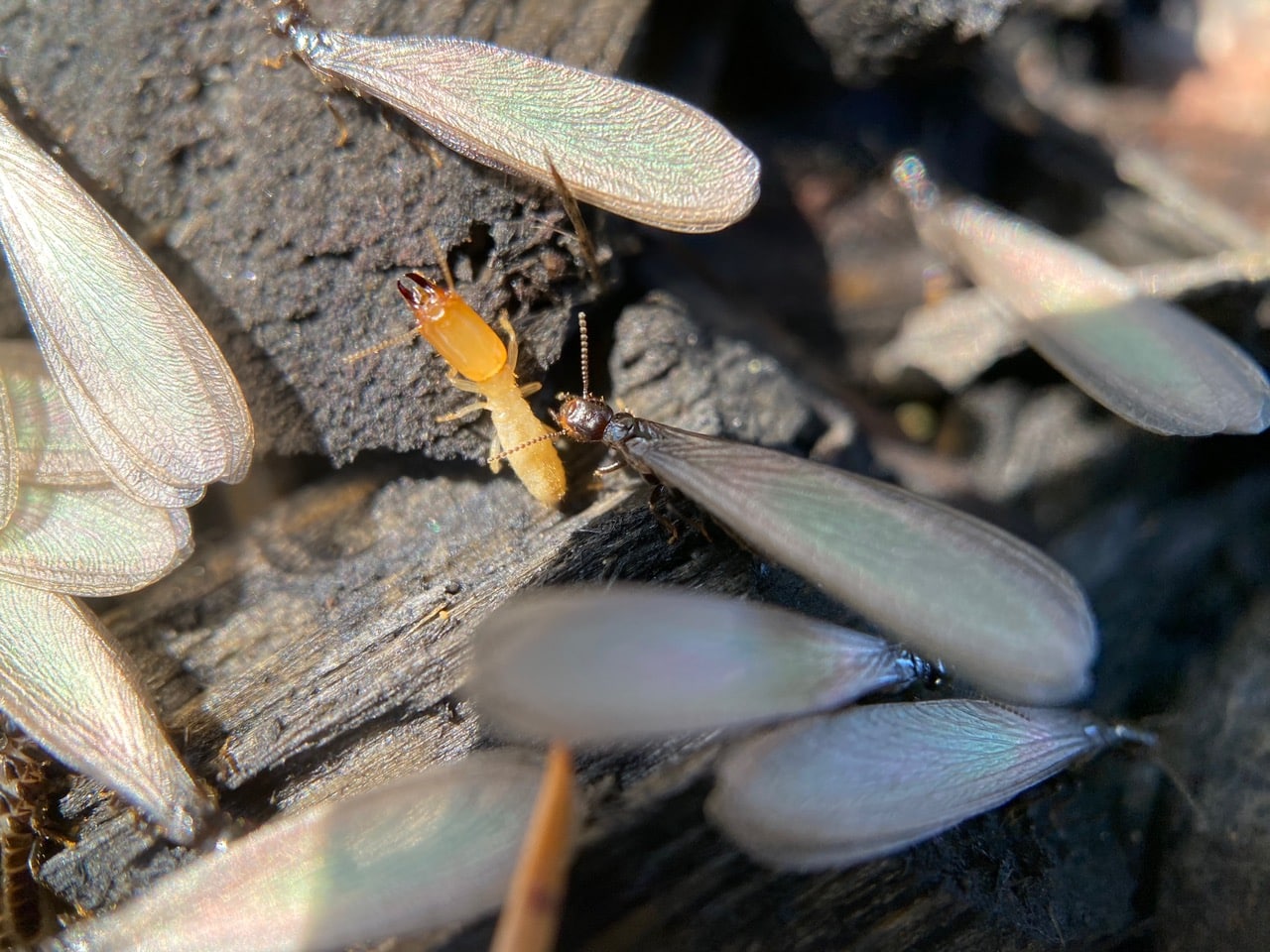
See that pale, yellowish insect with an oversized head among the termite alates? It is a soldier termite of the same species! Several of them are out there to protect the alates, and to see them off on their nuptial flight safely.
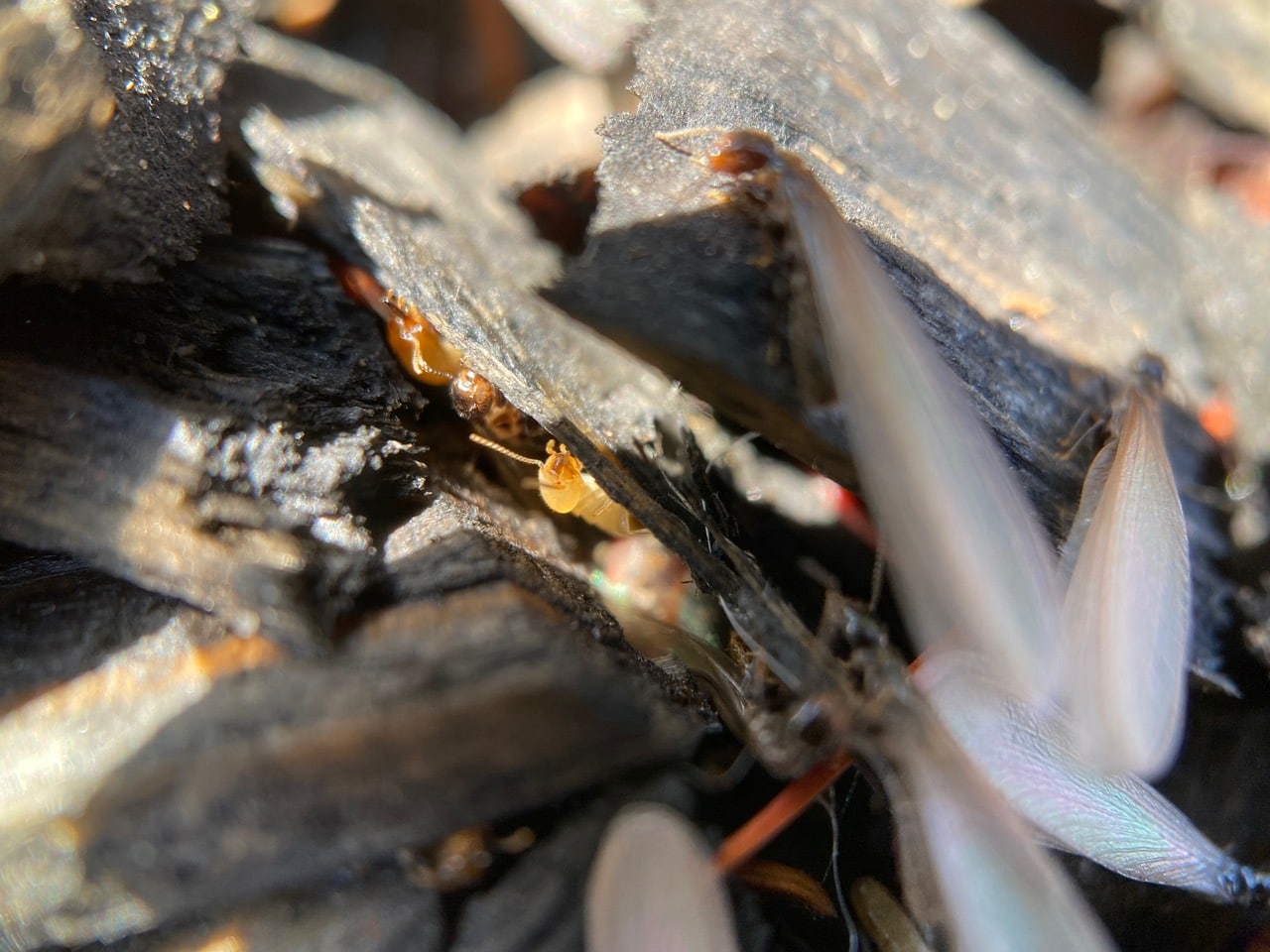
A pale insect with rounded head is peering out of the crevice in the wood chips. It is a worker termite of the same species. These workers don’t leave the ground much, but they groom the alates thoroughly before they emerge for their nuptial flight.
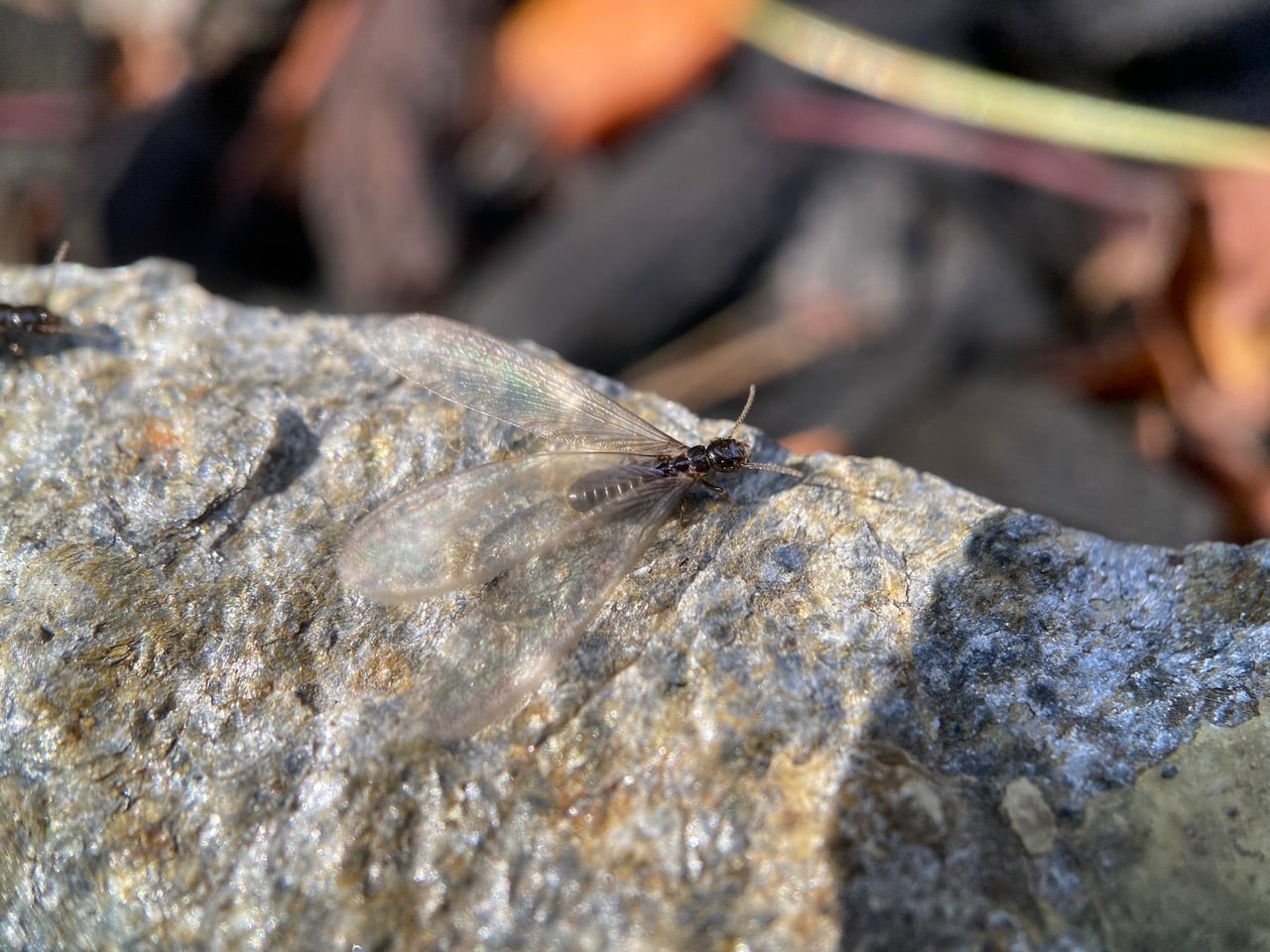
An alate has crawled onto a rock and is trying to snap off its own wings. Note that its four wings are similar in size and shape and extend way beyond the abdomen.
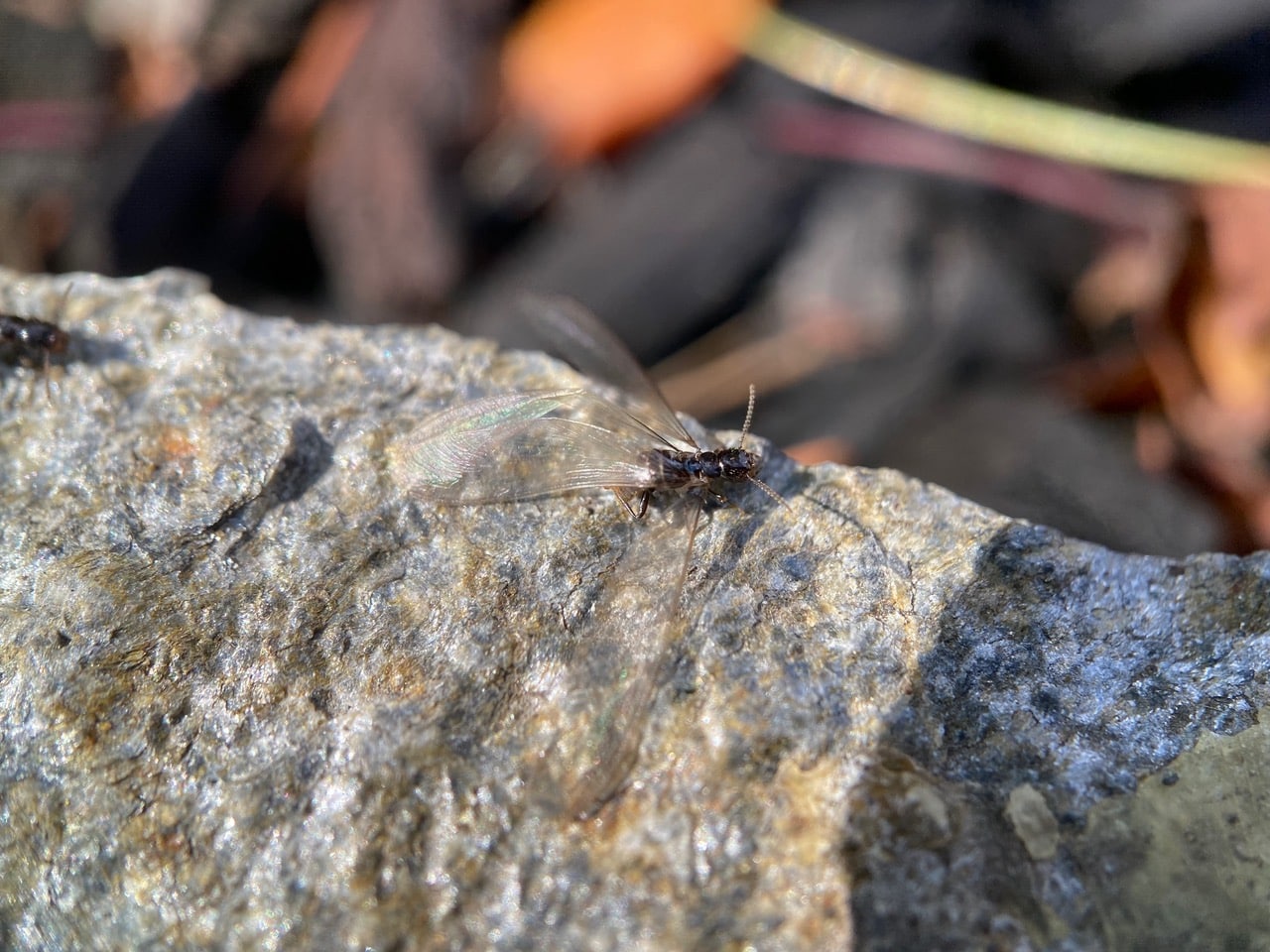
Its wings spread, the alate twists and contorts its body and wings repeatedly against the rock surface.
Termite alates (swarmers) break off their wings using basal sutures – specialized, pre-weakened fracture lines near the base of each wing. After a termite lands from its short nuptial flight it twists, flexes, or rubs its body and wings against the ground or surfaces, causing the wings to snap cleanly off along these lines. This process is called dealation. Once they pair up with a mate to start a new underground colony, wings are no longer needed and would actually get in the way as they try to squeeze into narrow soil or wood crevices.
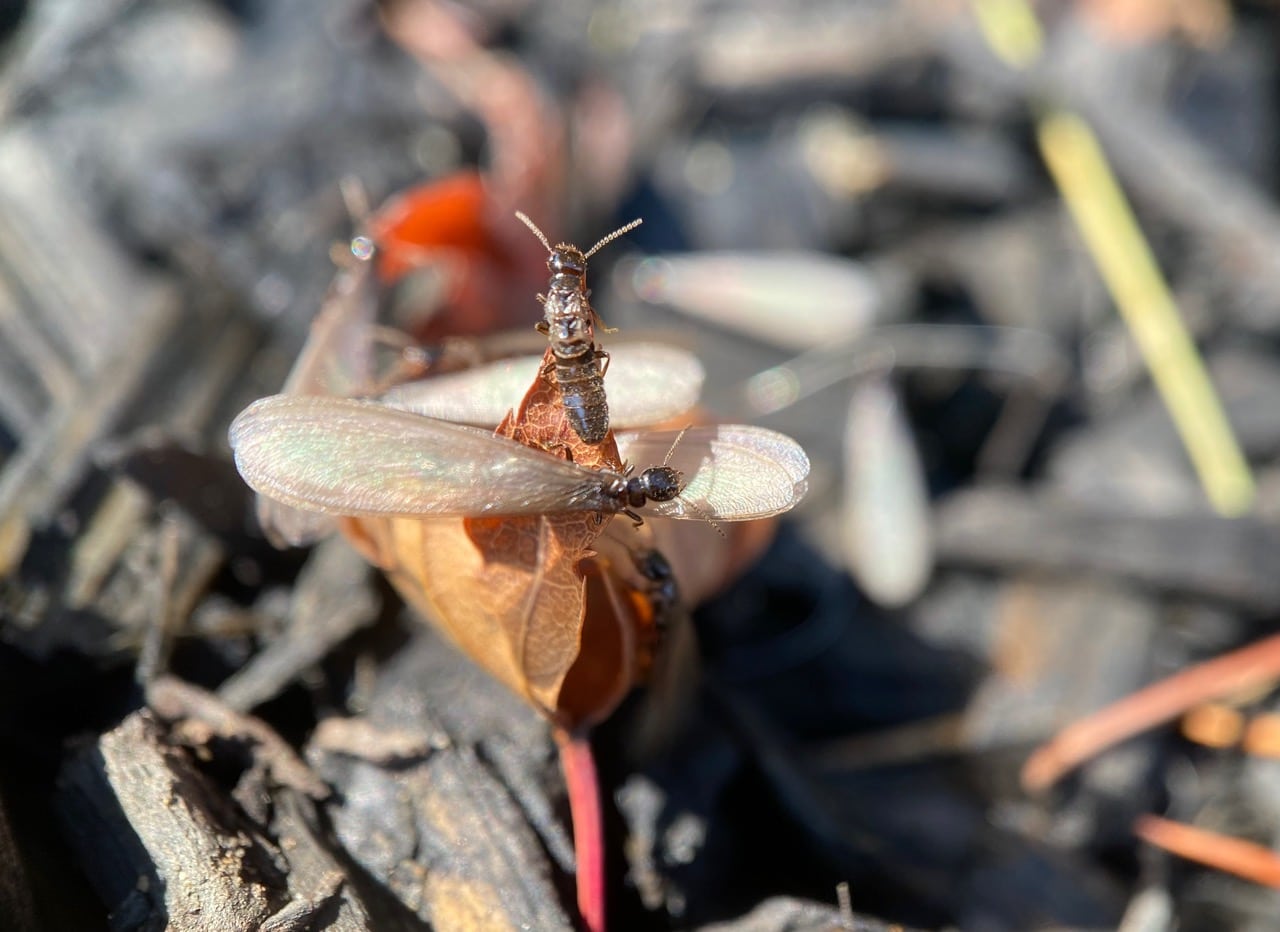
Look Ma, no wings! An alate that has broken off its wings has climbed on a fallen maple leaf on the mulch, giving us a clear view of its wing stubs. With luck, it will pair up with a mate and go off to establish a new colony as king and queen.
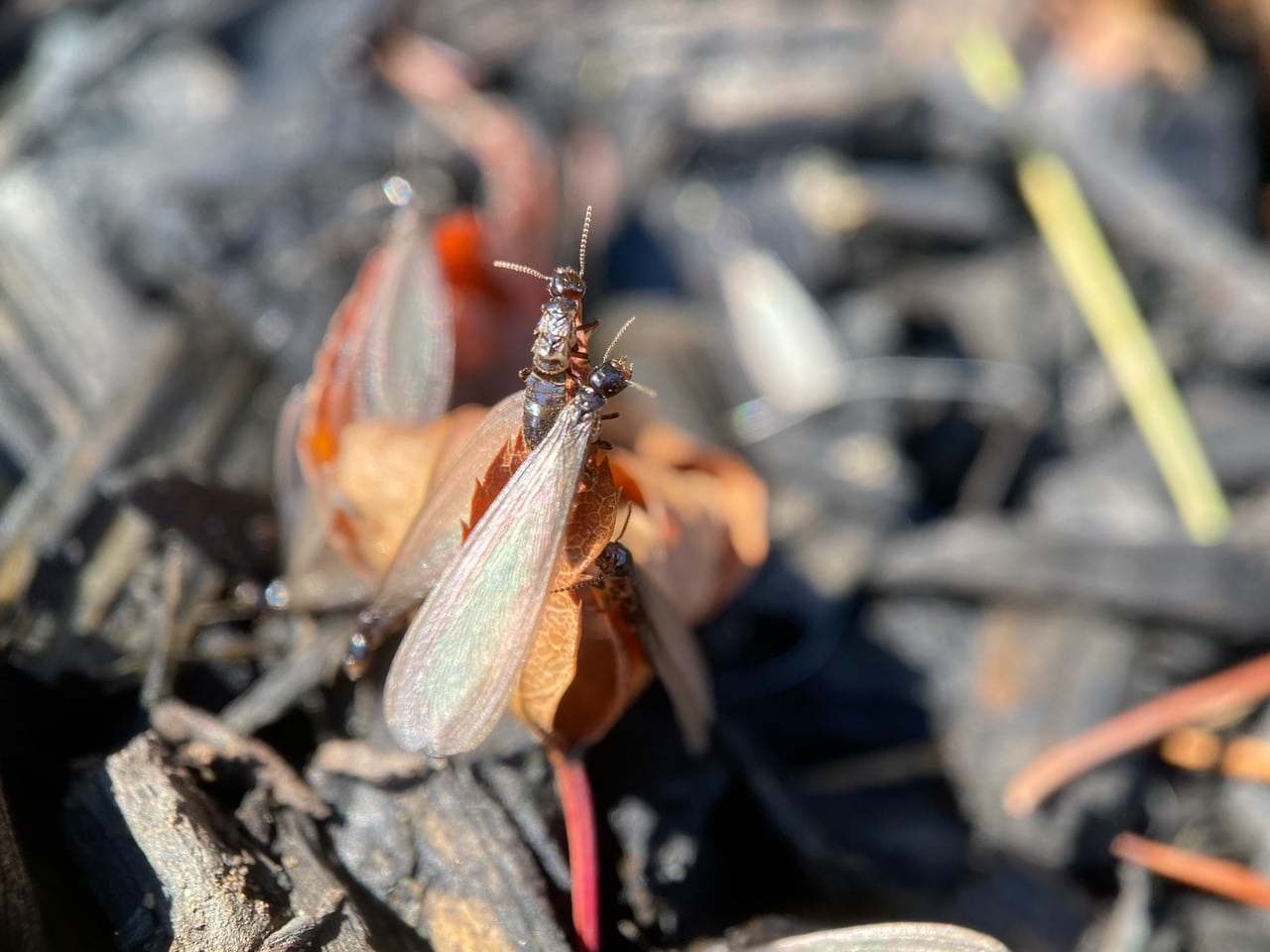
Best of luck, Your Royal Highnesses!
Although termites are dreaded for feeding on our homes and other wooden structures, the insects are an important component of our ecosystem. Termites are “green machines”- they are hands-down nature’s best recyclers. They feed on the cellulose found in dead plants, and their sticky excretions hold the soil together, preventing soil erosion. They burrow tirelessly and aerate the soil, allowing rainwater to seep in and enabling the mixing of nutrients to support new plant growth. Termites are also food for a host of predators such as lizards and birds.