

Pollinator Post 10/23/24

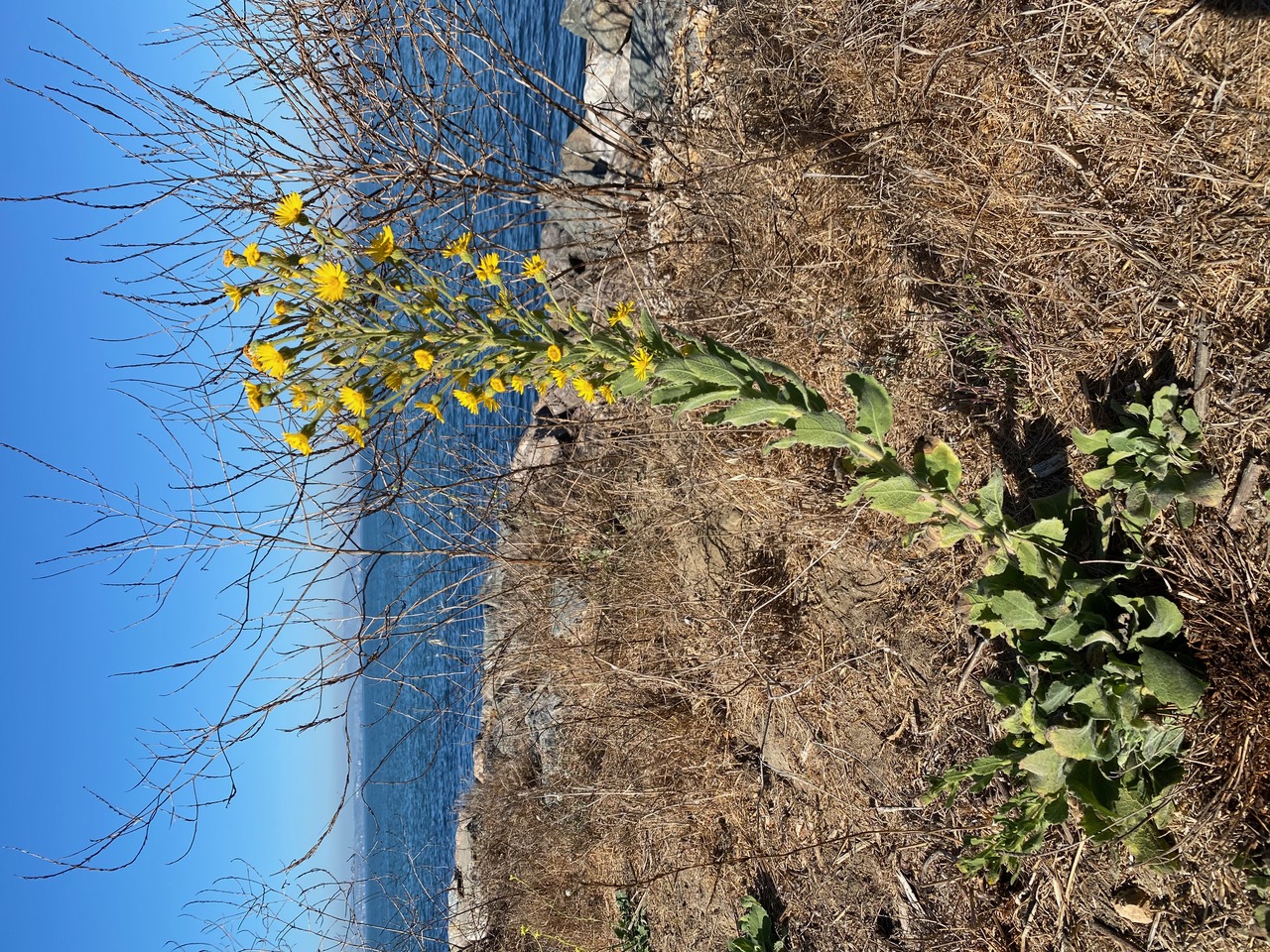
Another beautiful morning by the bay. I am picking up exactly where I left off yesterday afternoon, walking along a rather dry stretch of Shoreline Trail with only the tough native Telegraphweed, Heterotheca grandiflora in bloom.
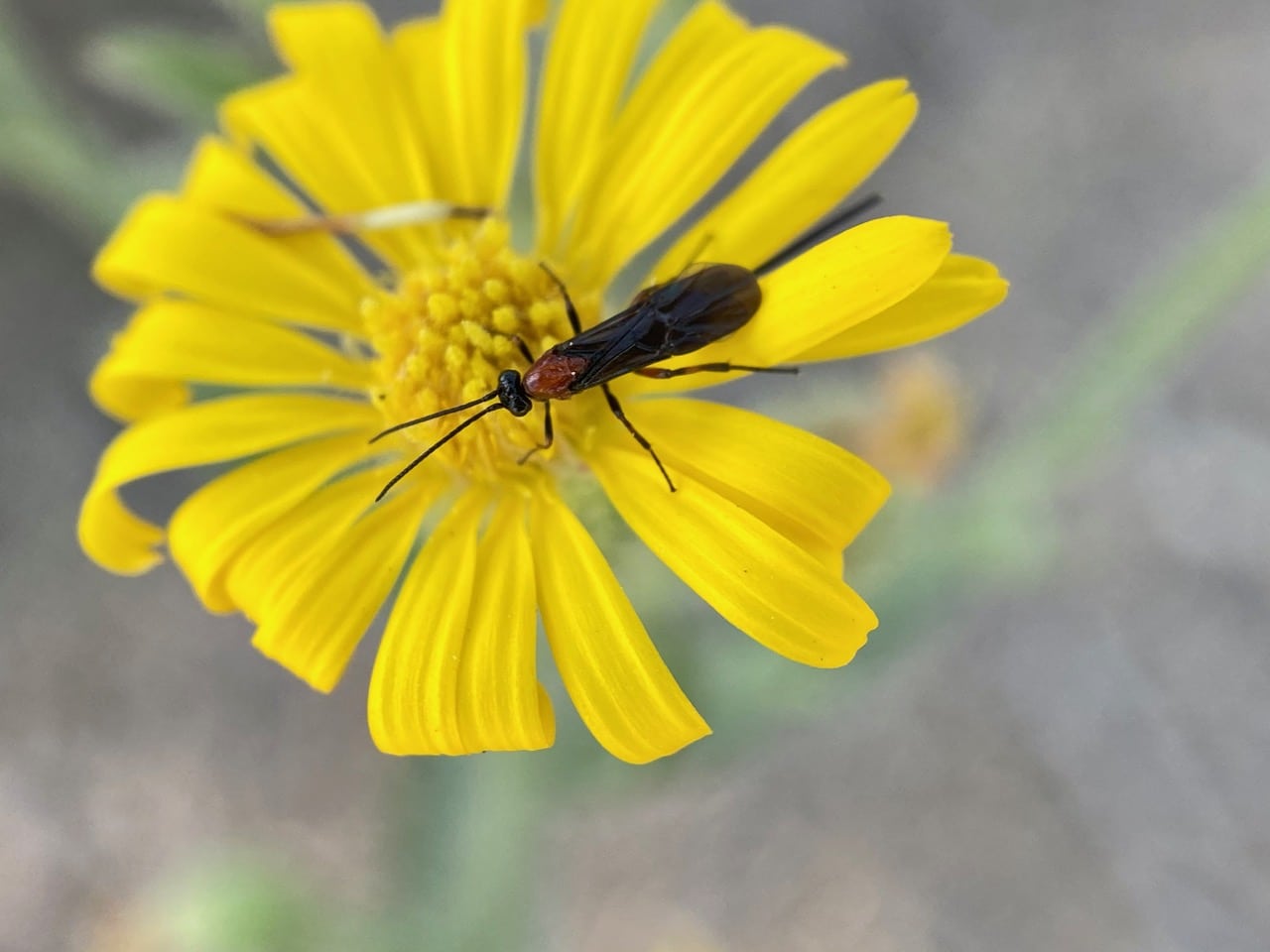
A Braconid Wasp (family Braconidae, tribe Agathidini) is perched stock-still on a Telegraphweed flowerhead. It is a female with a long ovipositor (out of focus). Is it asleep?
The Braconidae are a family of parasitoid wasps. After the closely related Ichneumonidae, braconids make up the second-largest family in the order Hymenoptera, with about 17,000 recognized species and many thousands more undescribed. The families Braconidae and Ichneumonidae together make up the superfamily Ichneumonoidea. Members of the two families are distinguished by wing venation. Ichneumonoids are solitary wasps, and the vast majority are parasitoids; the larvae feed on or in another insect, eventually killing it. In general, ichneumonoids are host specific, and only attack one or few closely related host species. Many species use polydnaviruses to suppress the immune systems of their host insects.
Agathidini is a tribe of braconid wasps, also known as death wasps, that are endoparasitoids of Lepidoptera larvae. Most Agathidini are solitary and attack the first and second instar larvae of their hosts.
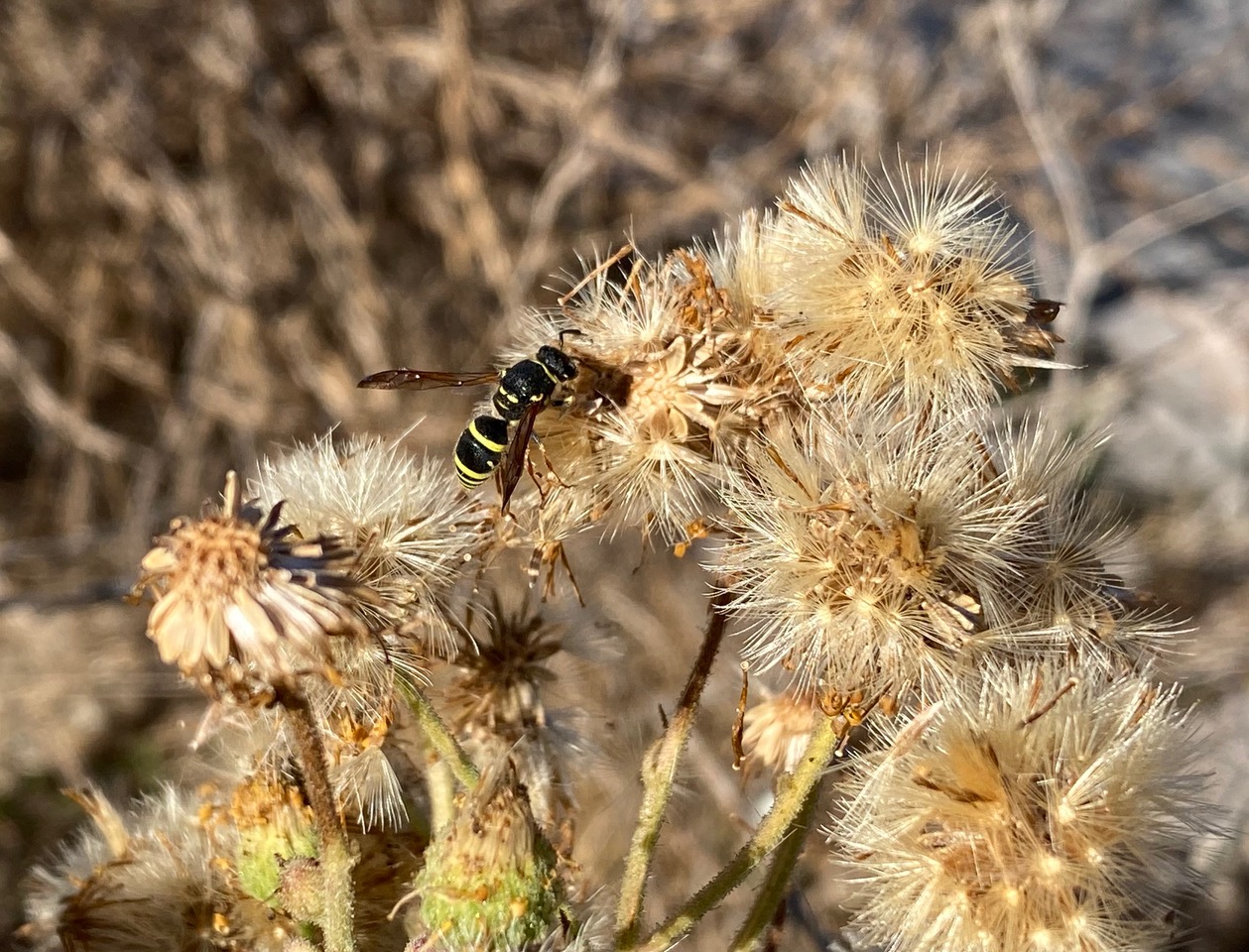
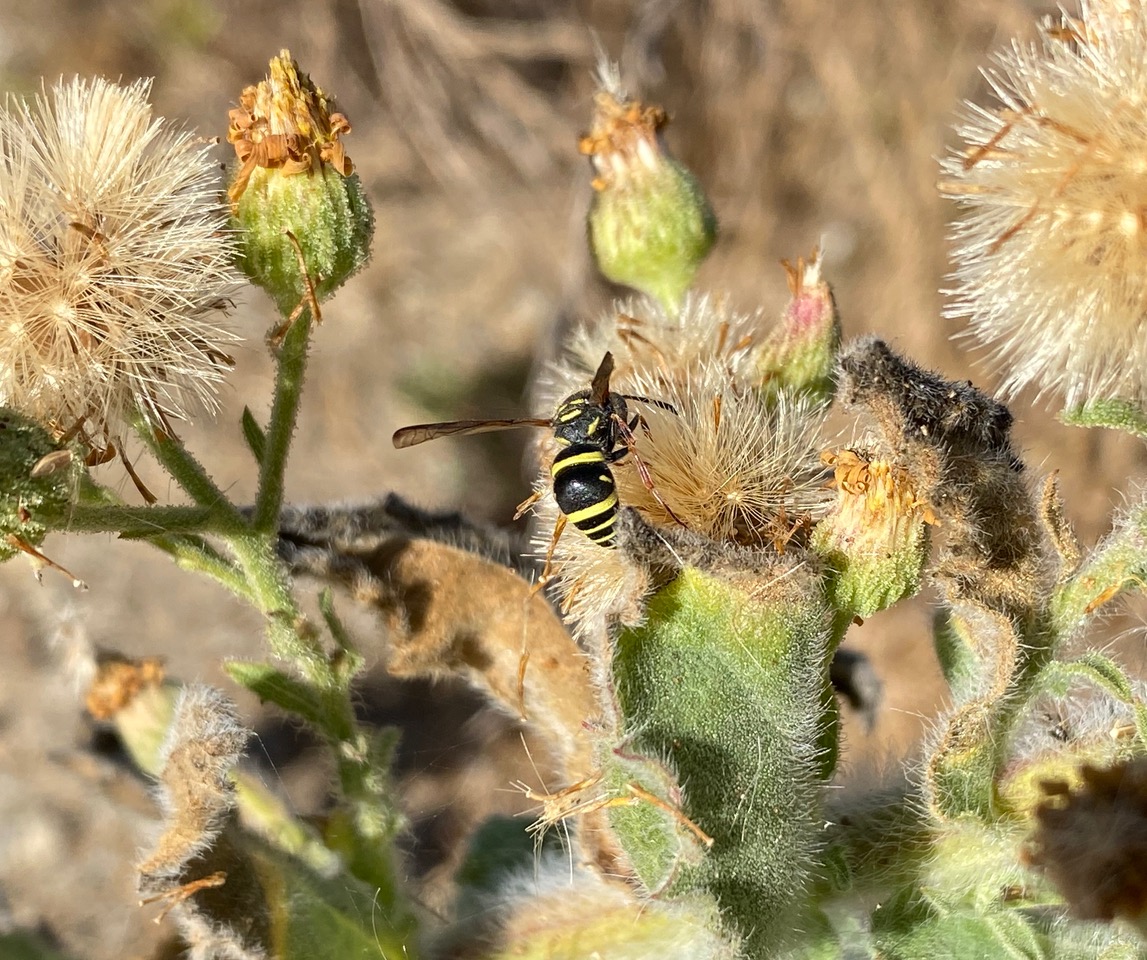
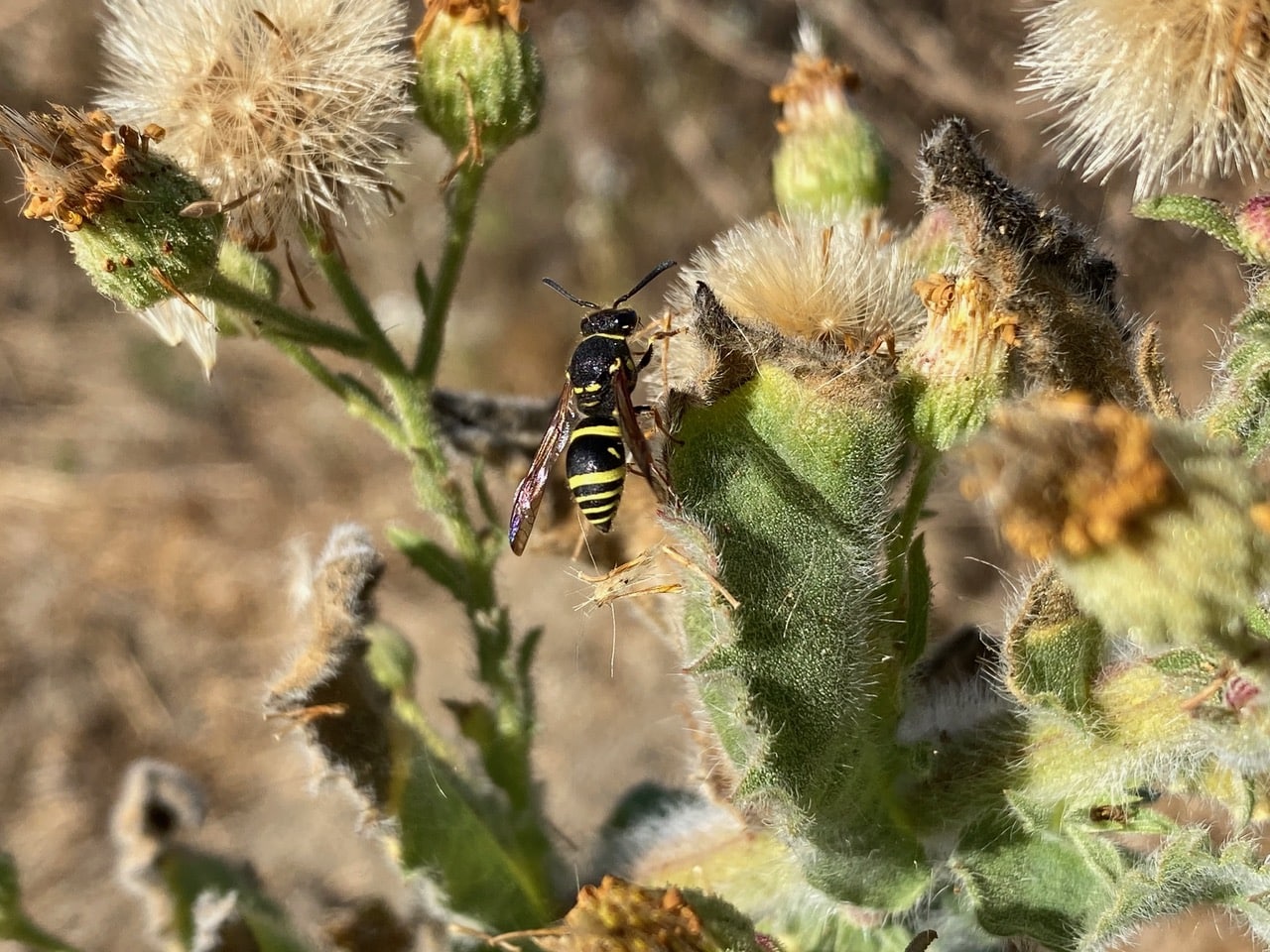
A small wasp has landed on a Telegraphweed seed head. It is the same Mason Wasp that I have photographed yesterday afternoon in this location. I can see the insect so much better today because of better light.
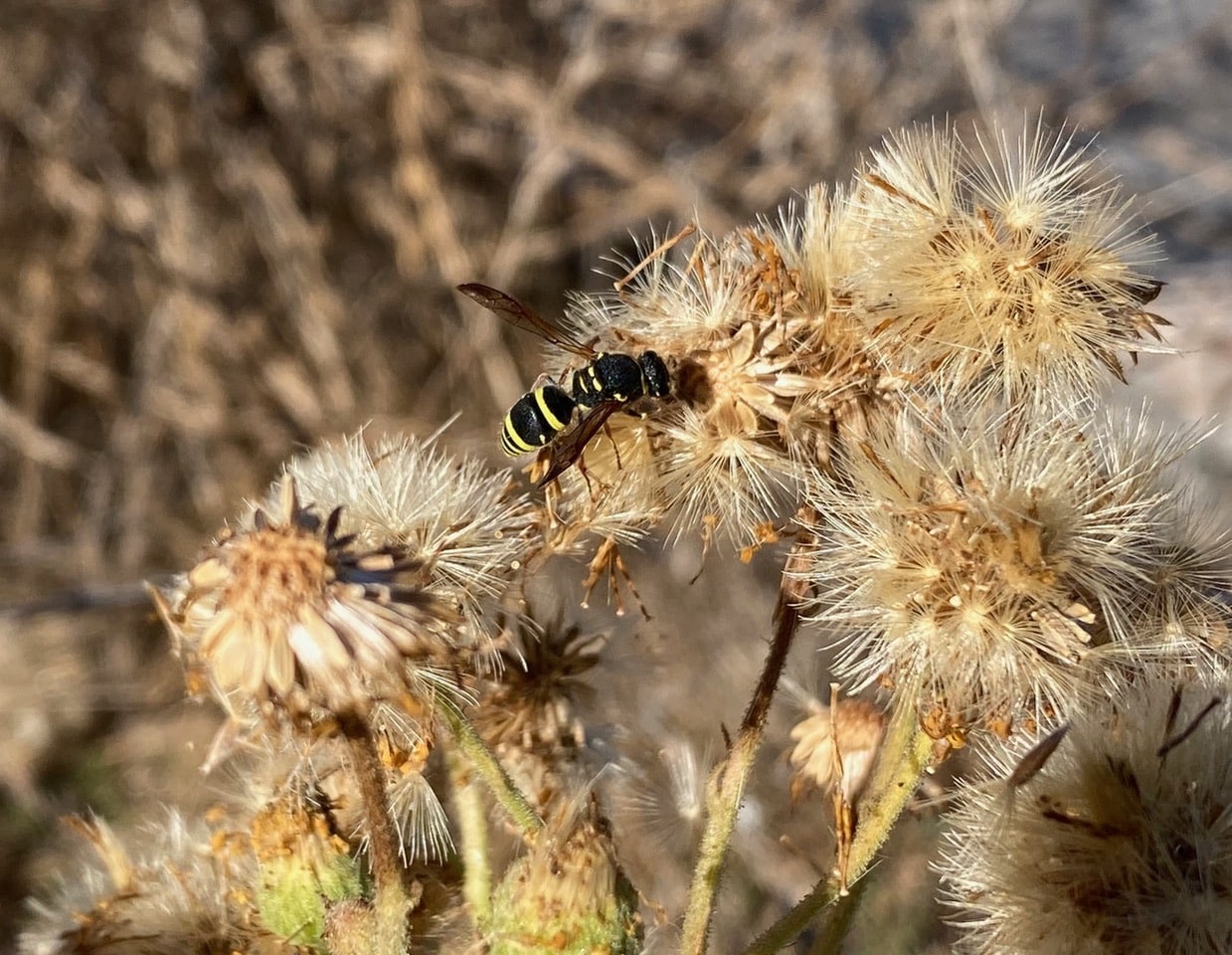
The Mason Wasp, Ancistrocerus bustamente (family Vespidae, subfamily Eumeninae) appears to be hunting for insects to provision its brood cells.

Potter wasps (or mason wasps), the Eumeninae, are a cosmopolitan wasp group presently treated as a subfamily of Vespidae. Most eumenine species are black or brown, and commonly marked with strikingly contrasting patterns of yellow, white, orange, or red. Their wings are folded longitudinally at rest. Eumenine wasps are diverse in nest building. The Mason Wasps are species that generally nest in pre-existing cavities in wood, rock, or other substrate. Potter Wasps are the species that build free-standing nests out of mud, often with a spherical mud envelope. The most widely used building material is mud made of a mixture of soil and regurgitated water.
All known Eumenine species are predators, most of them solitary mass provisioners. When a cell is completed, the adult wasp typically collects beetle larvae, spiders, or caterpillars and, paralyzing them, places them in the cell to serve as food for a single wasp larva. As a normal rule, the adult wasp lays a single egg in the empty cell before provisioning it. The complete life cycle may last from a few weeks to more than a year from the egg until the adult emerges. Adult mason wasps feed on floral nectar.
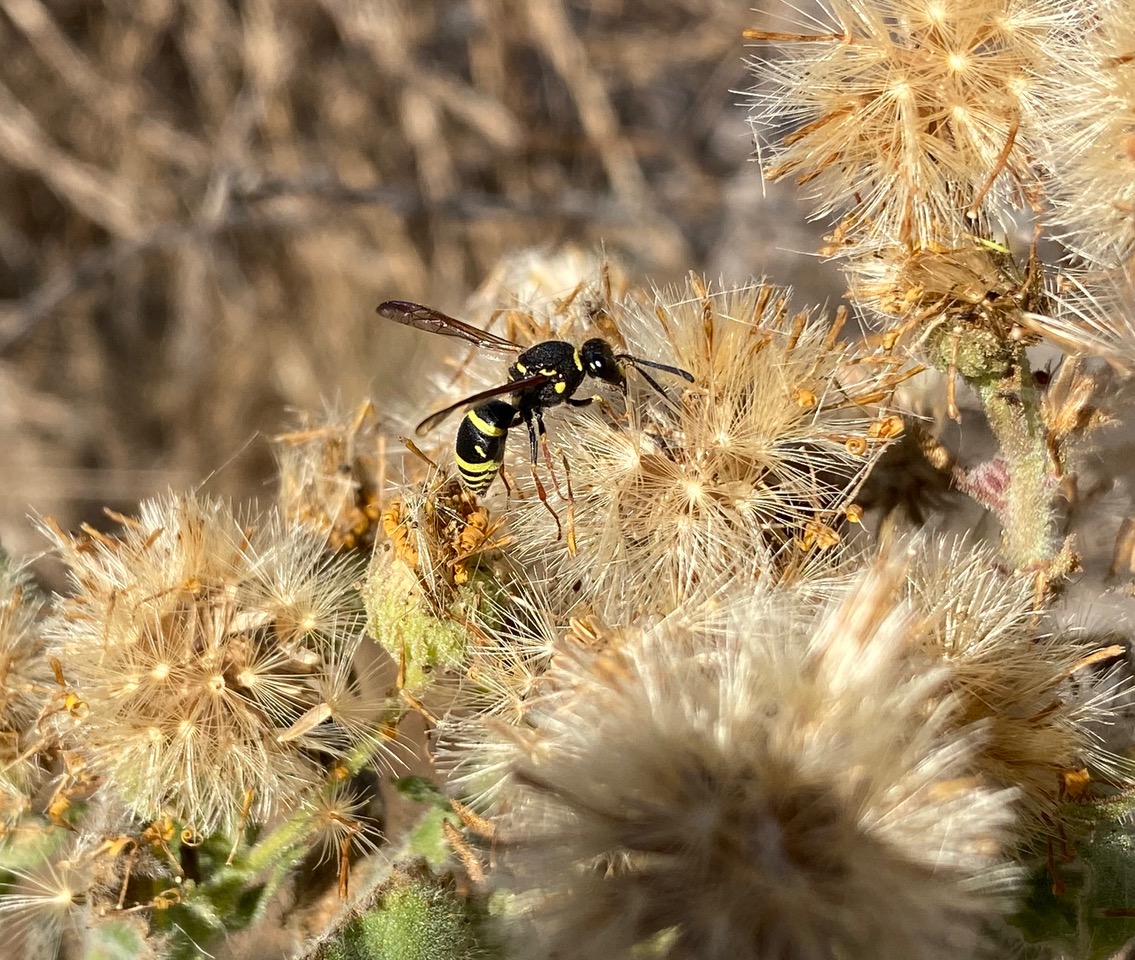
The Mason Wasp, Ancistrocerus bustamente (family Vespidae, subfamily Eumeninae) is found in western North America and Mexico. The species frequents arid areas, and nests in pre-existing cavities (e.g. old borings in wood, hollow stems, rock crevices) and use mud for partitions between brood cells. The wasps have been known to nest in Sambucus (Elderberry) stems. The name of the genus means “hooked horn” for the back-curved last segments of the antennae characteristic of the males.
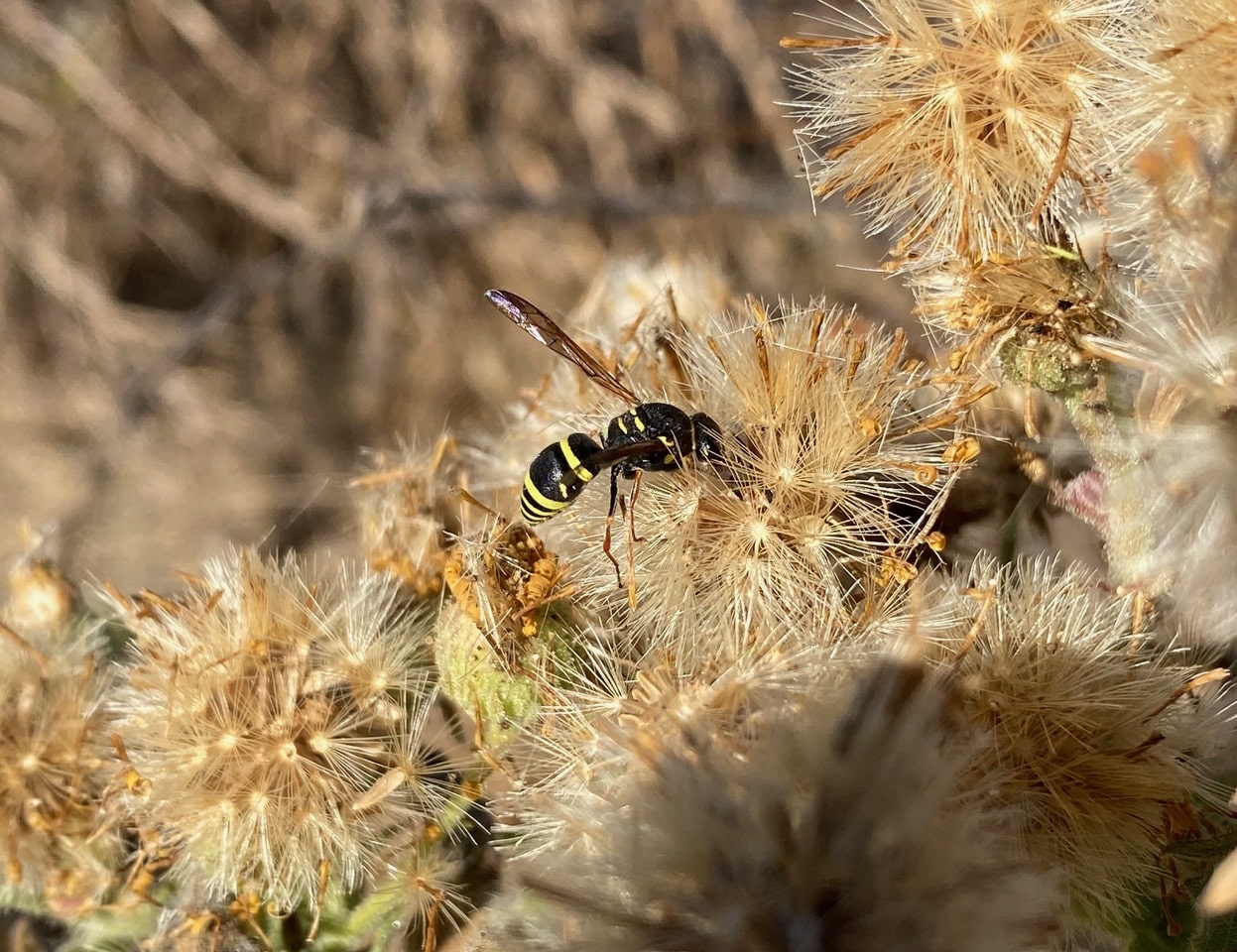
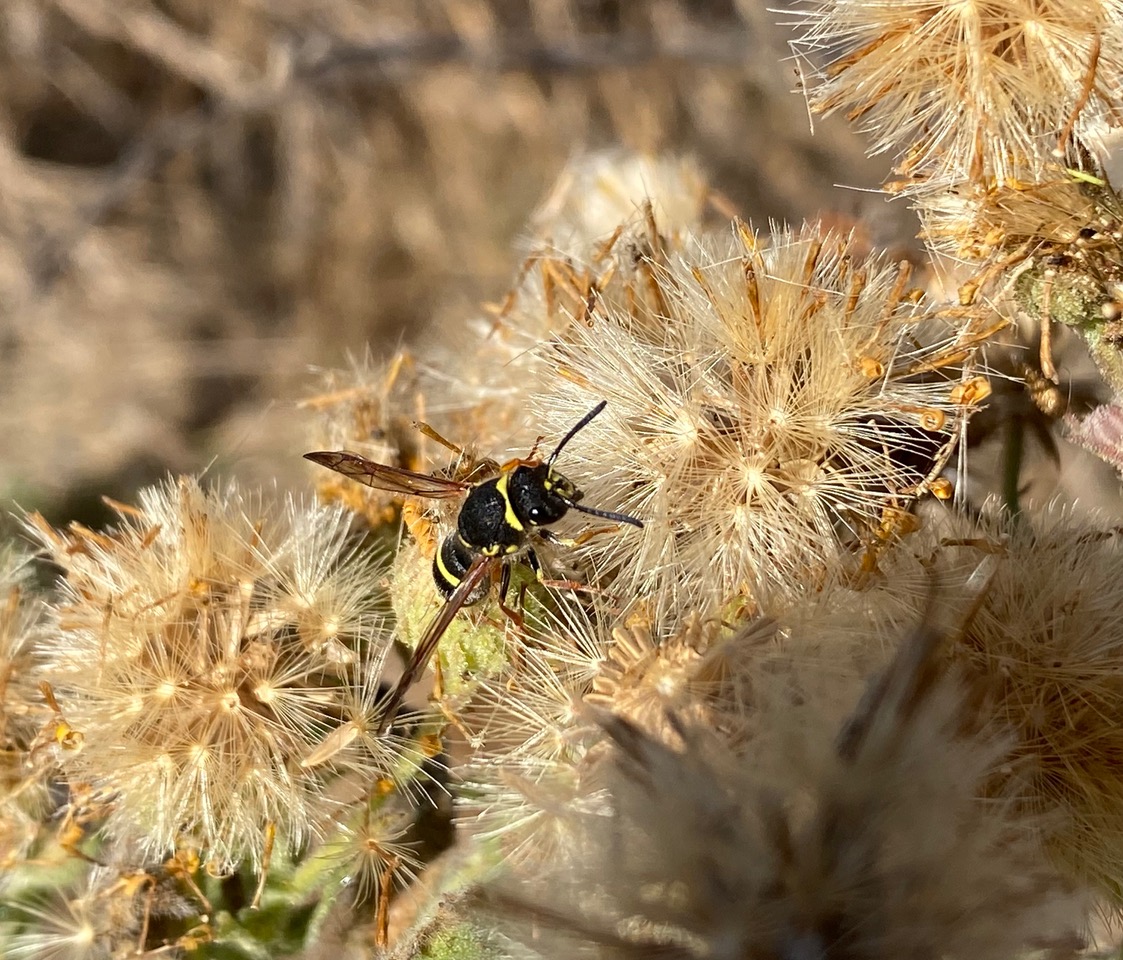
This is obviously a female Ancistrocerus – the tip of its antennae are not bent backwards.
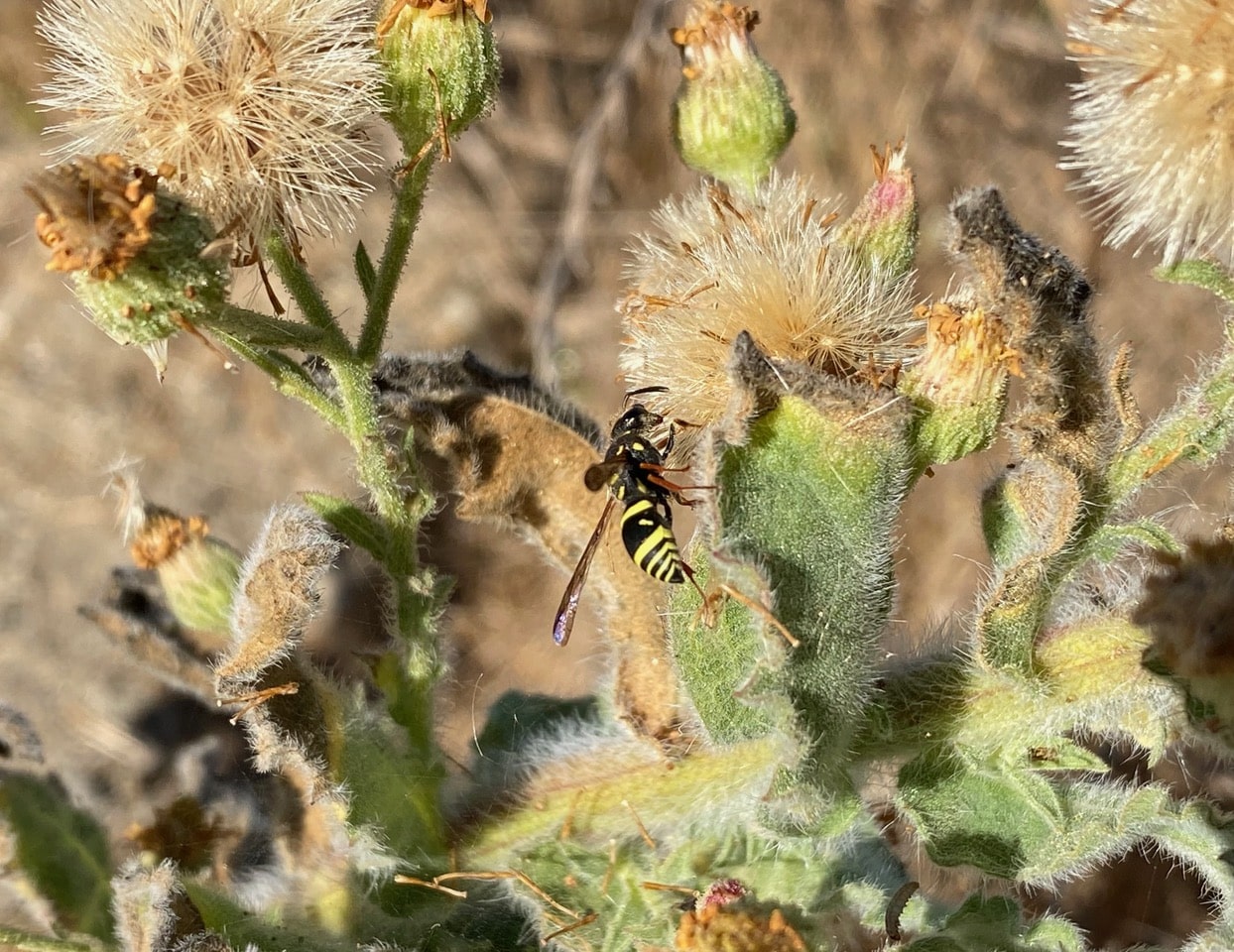
The wasp flies to another part of the plant to investigate more seed heads.
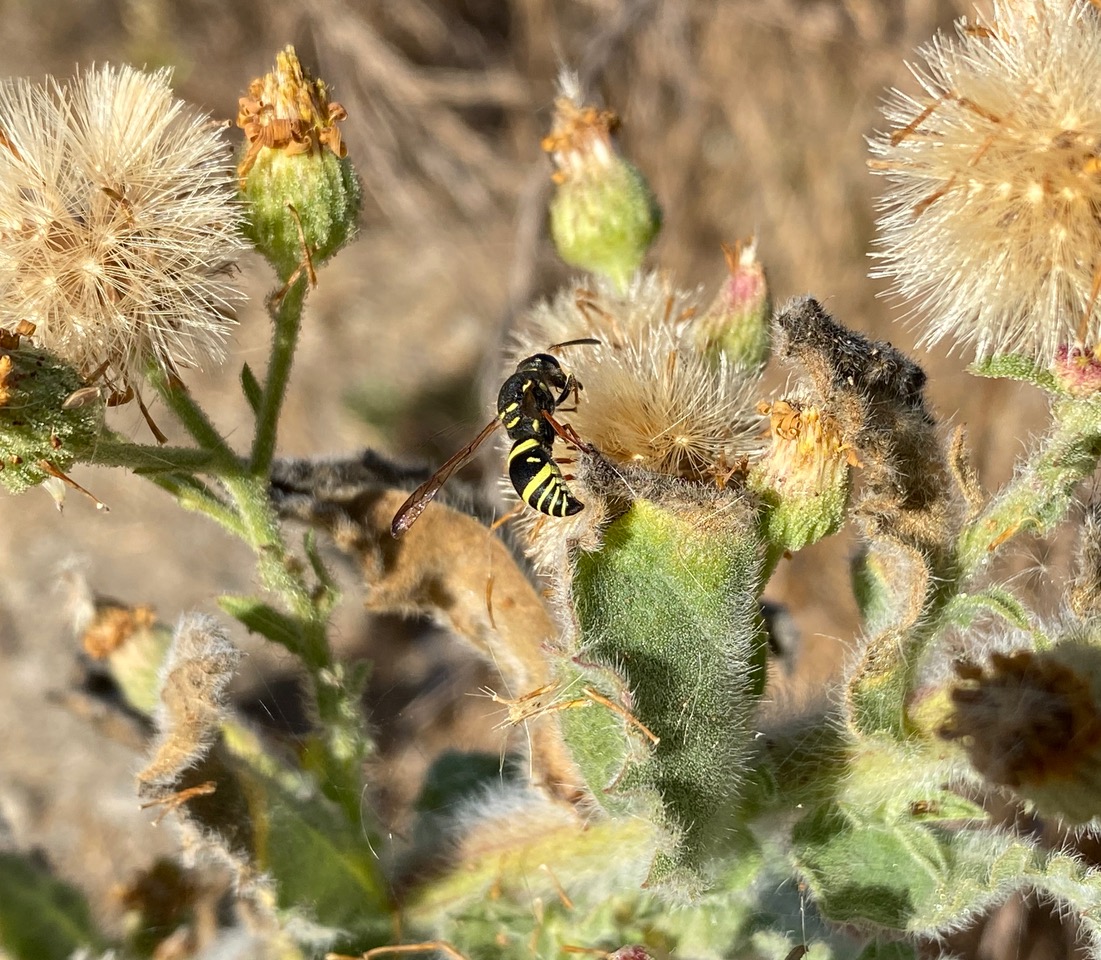

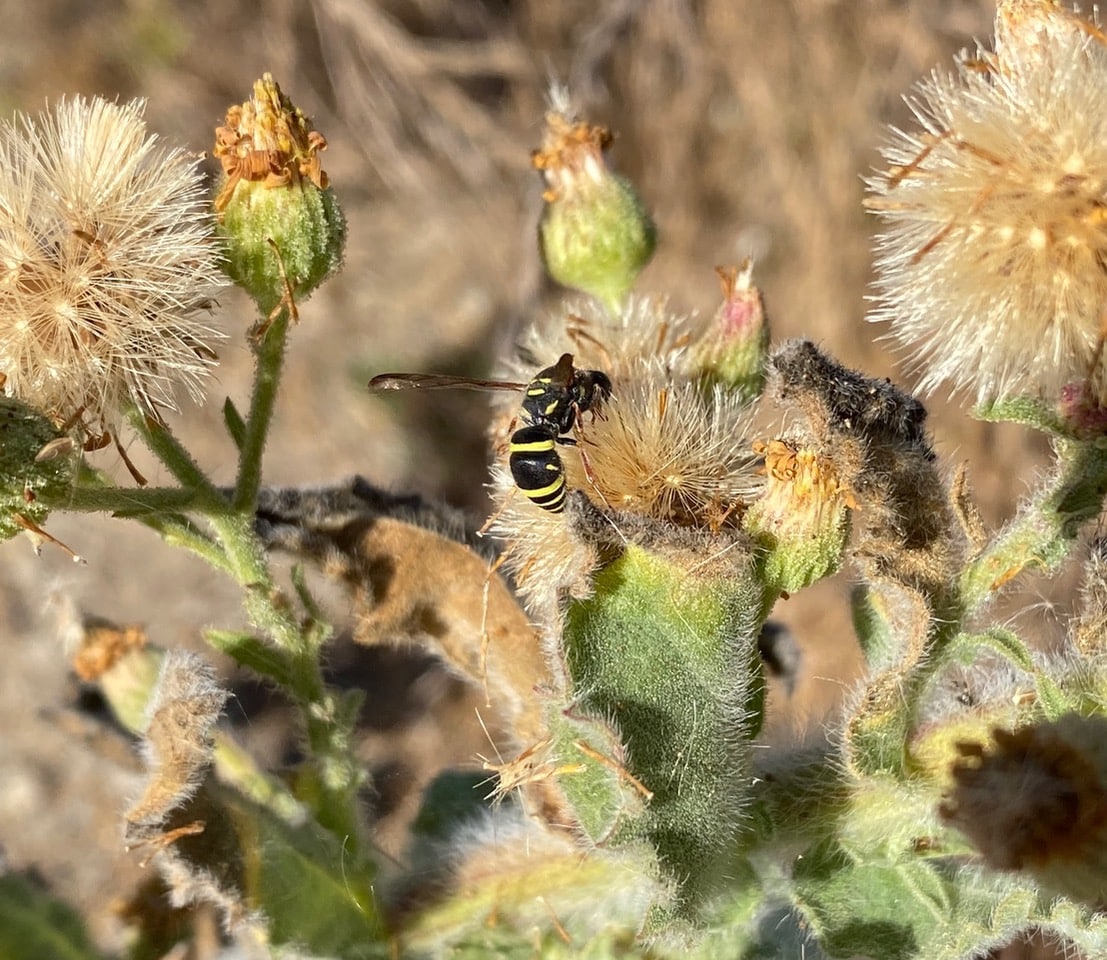
The narrow section between the abdomen and thorax of wasps and other Hymenopterans is called the petiole. It allows little more than the insect’s esophagus and aorta to pass through, but lends great flexibility and maneuverability to the insect’s body. The petiole is very visible in wasps, but usually obscured by hairs on the bees.

It is rather surprising to see fresh flowers on a Coffeeberry that is already bearing ripe fruits.
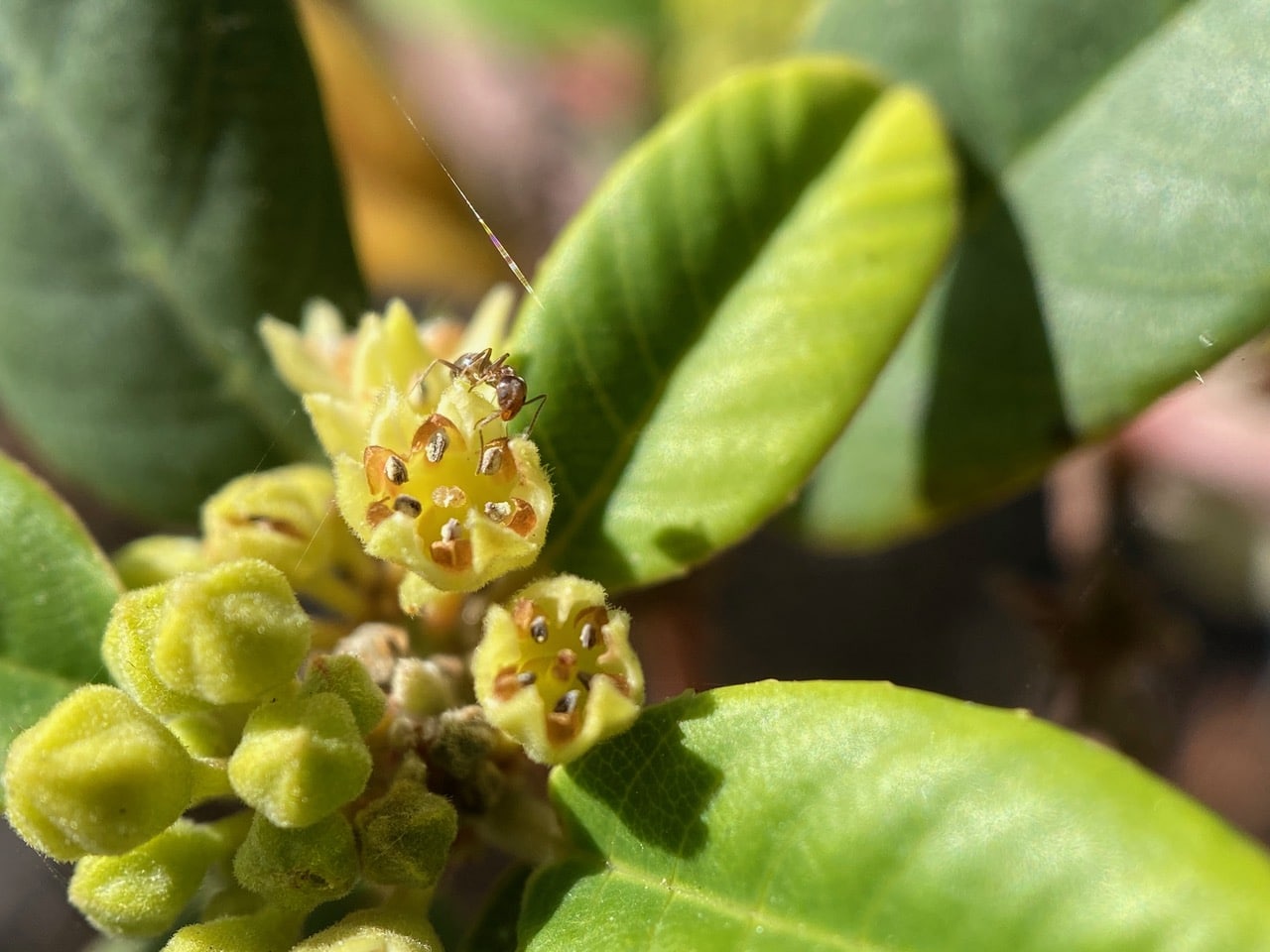
The tiny flowers of Coffeeberry are teeming with Argentine Ants.
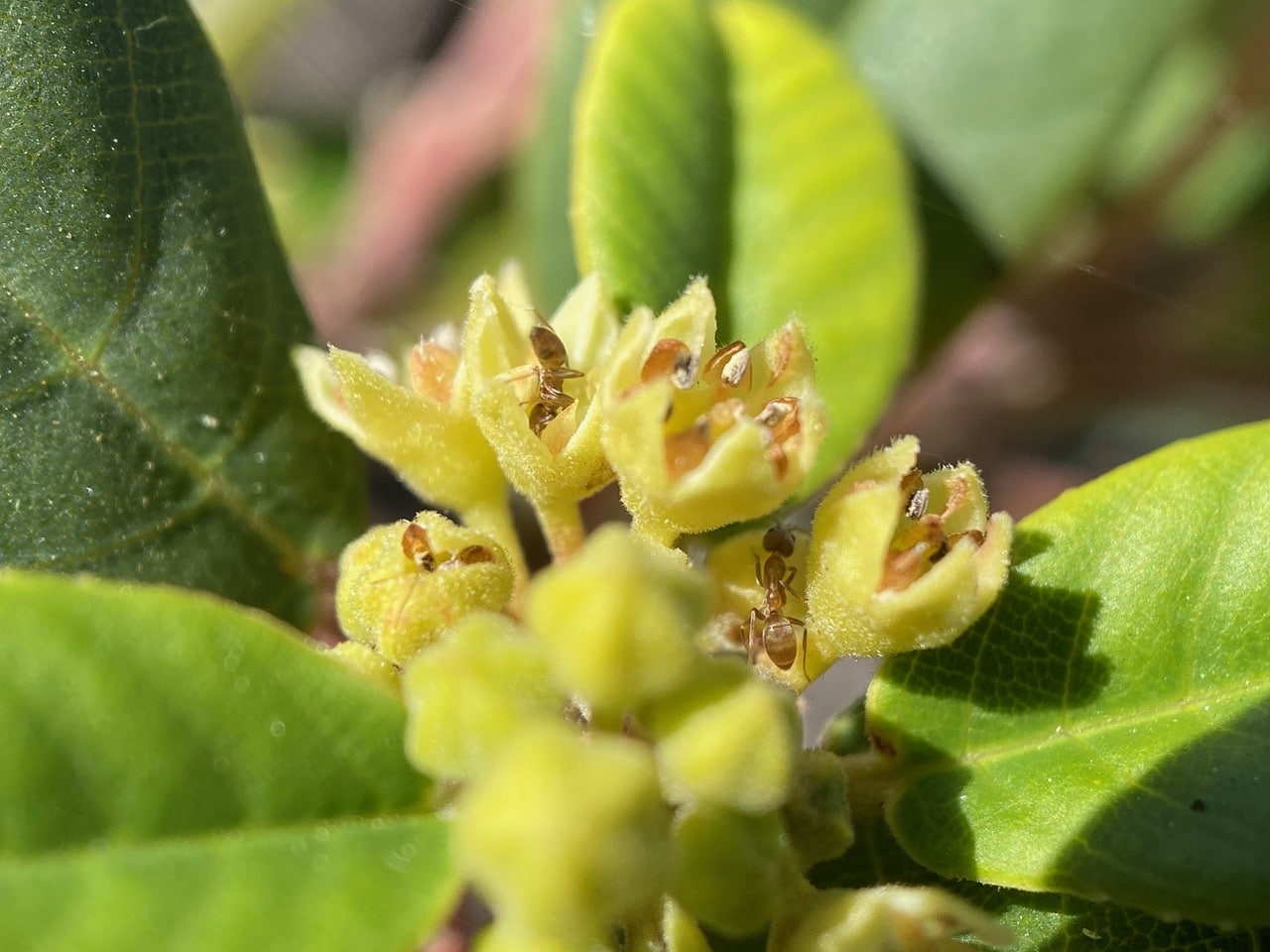
One has to look very closely to see the ants. They blend in imperceptibly with the reproductive structures of the opened flowers.
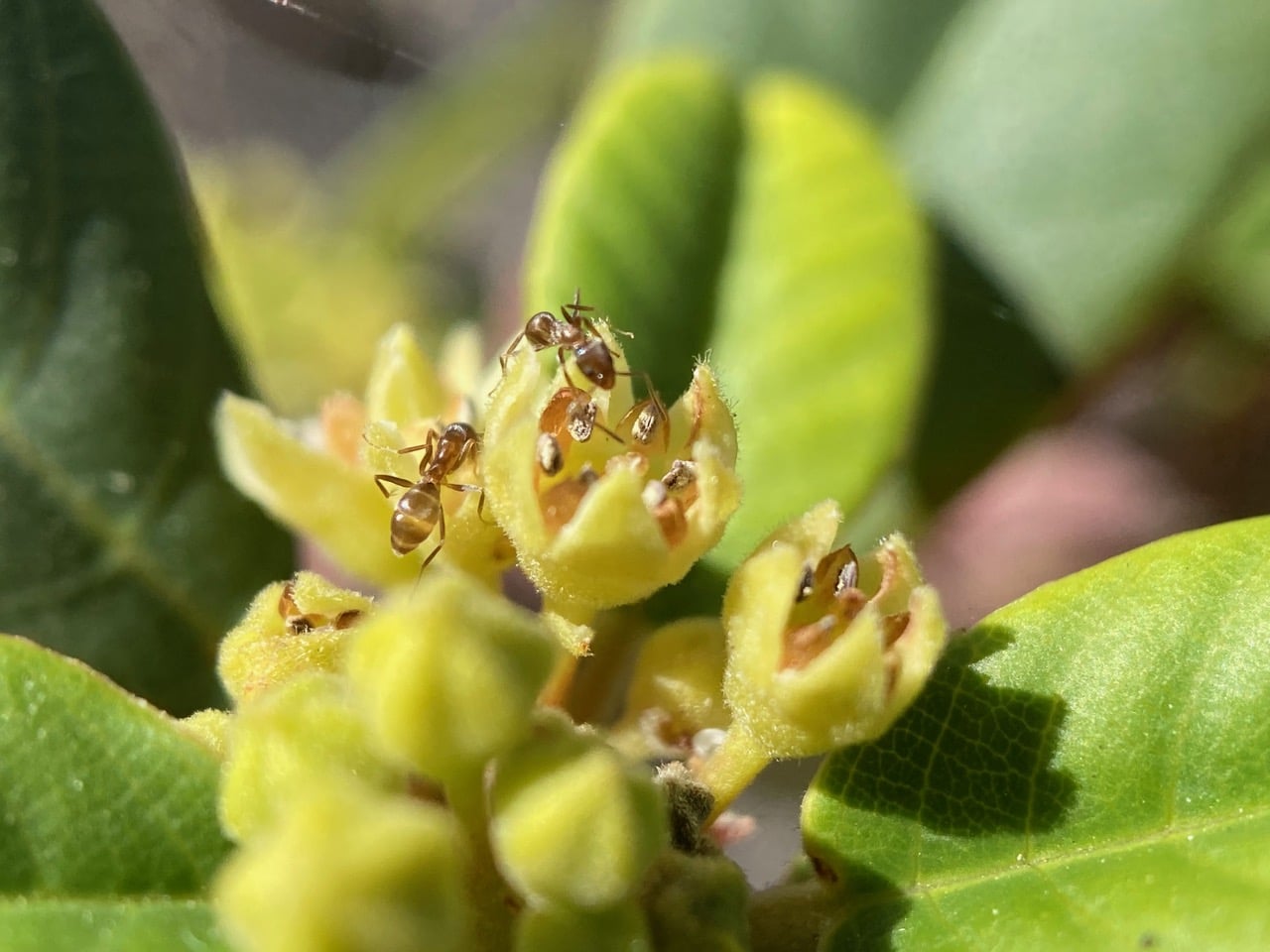
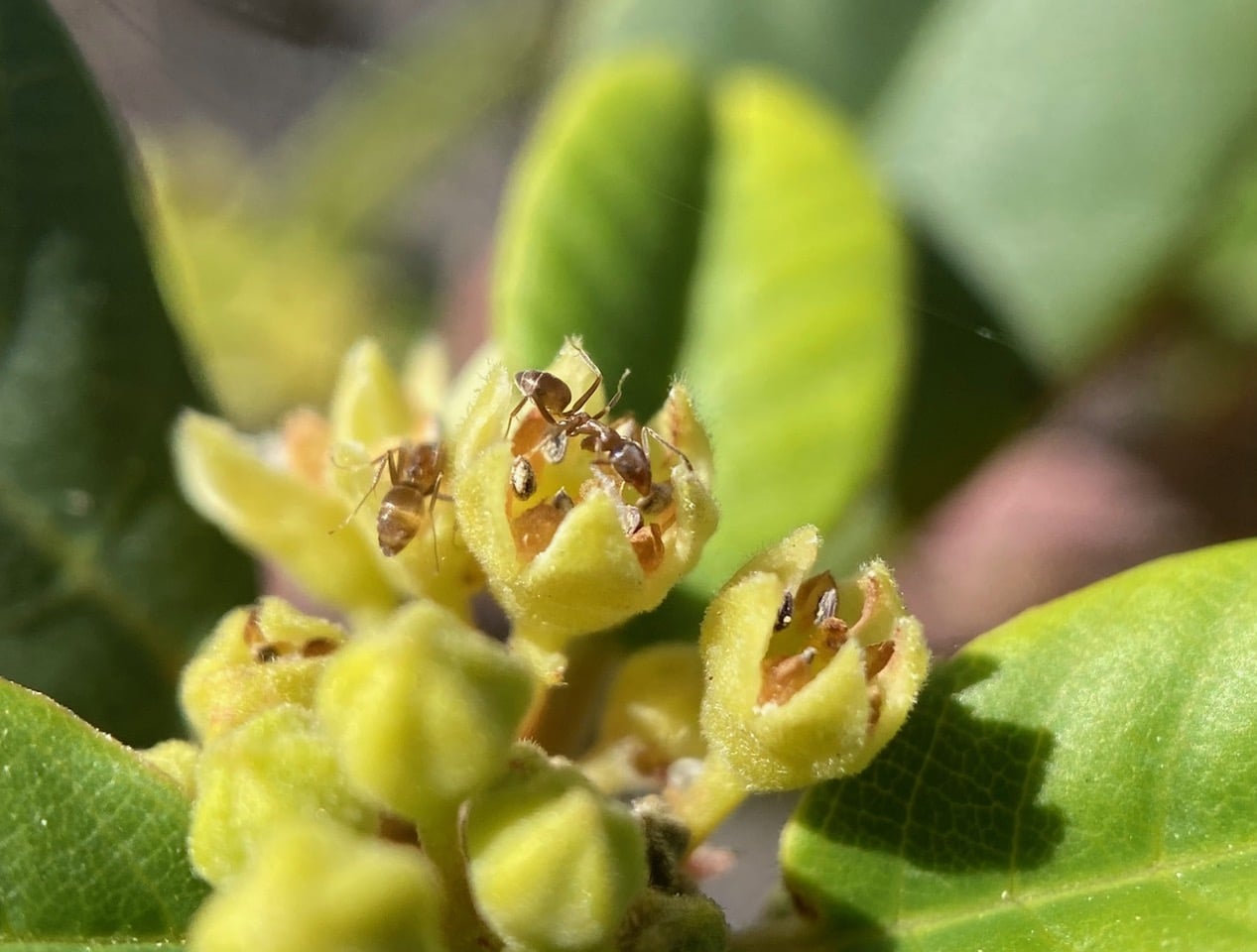
The Argentine Ant, Linepithema humile (family Formicidae) is native to Northern Argentina, but it has been inadvertently introduced by humans to many countries, and is now an established invasive species in many Mediterranean climate areas worldwide. The success of the species can be attributed to their lack of aggression between the colonies. There is no apparent antagonism between separate colonies of its own kind, resulting in “super-colonies” that extend across hundreds or thousands of kilometers in different parts of the their range. Genetic, behavioral, and chemical analyses show that introduced Argentine Ants on separate continents actually represent a single global supercolony.
The Argentine Ants are ranked among the world’s worst invasive animal species. In its introduced range, the Argentine ant often displaces most or all native ants and can threaten native invertebrates and even small vertebrates that are not accustomed to defending against the aggressive ants. This can, in turn, imperil other species in the ecosystem, such as native plants that depend on native ants for seed dispersal, or lizards that depend on native ants for food.
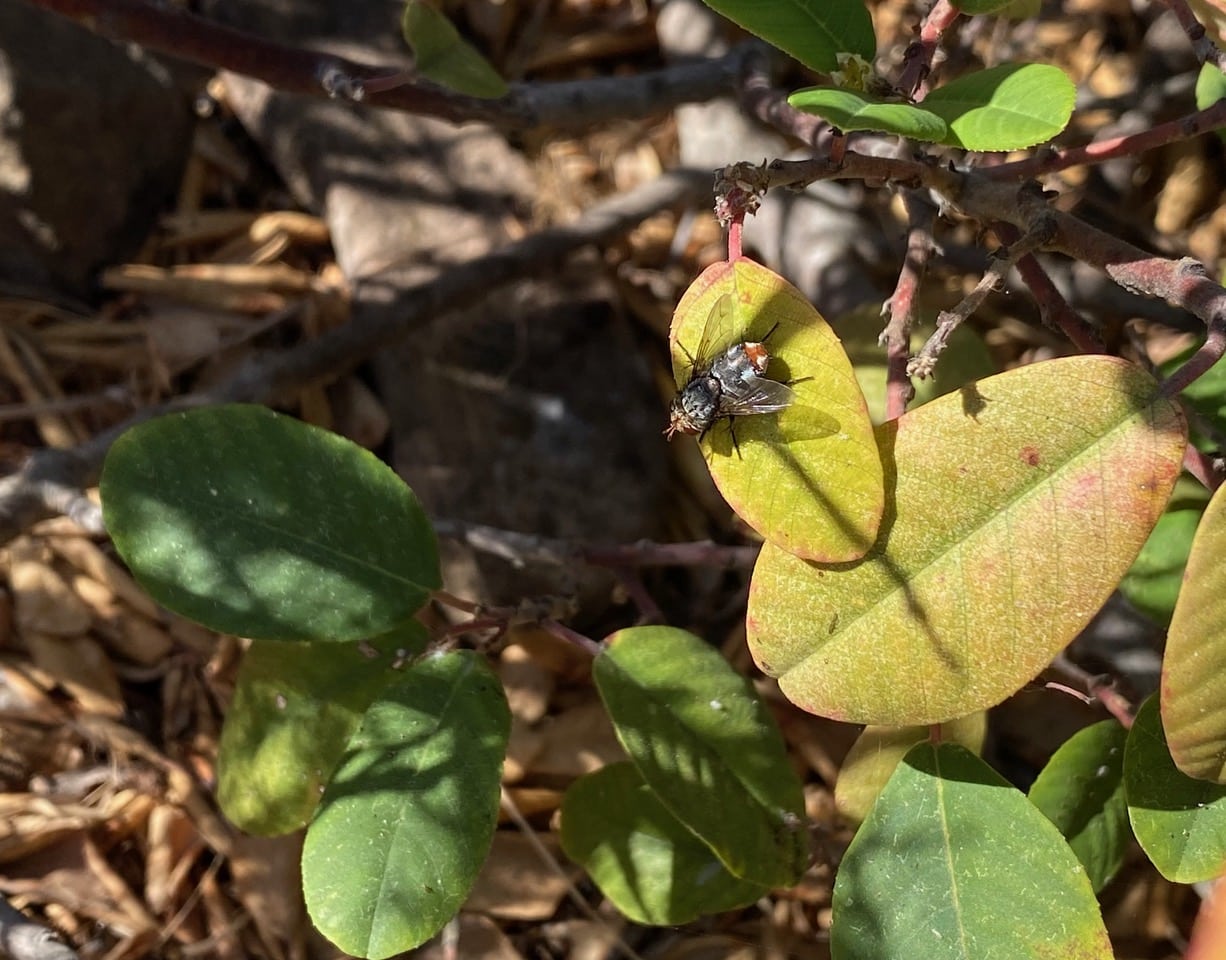
A Bristle Fly (family Tachinidae) has landed on a sunlit leaf in a tangle of Coffeeberry shrub. It has distinctive red markings near the tip of its black-and-gray checkered abdomen. iNaturalist has suggested the genus Winthemia.
The family Tachinidae is by far the largest and most important group of parasitoid flies. All species are parasitic in the larval stage. Most adults have distinct abdominal bristles, hence the common name. Adults feed on liquids such as nectar and honeydew. They can be found resting on foliage, feeding at flowers or searching for hosts.
Most tachinids attack caterpillars, adult and larval beetles, true bugs, grasshoppers, and other insects. Females lay eggs in or on the host. Tachinid larvae live as internal parasites, consuming their hosts’ less essential tissues first and not finishing off the vital organs until they are ready to pupate. The larvae leave the host and pupate on the ground. Tachinids are very important in natural control of many pests, and many have been used in biological control programs.
Bristle Flies in the genus Winthemia (family Tachinidae) are found worldwide, including most of North America. Their hosts include various Lepidoptera, and occasional beetle and sawfly. Lepidopteran hosts include armyworms, larvae of other noctuid moths, and to a lesser extent larvae of Sphingidae and Geometridae, many of which are pests of alfalfa, tobacco, grass, or are defoliators of forest trees.