

Pollinator Post 10/23/23 (2)
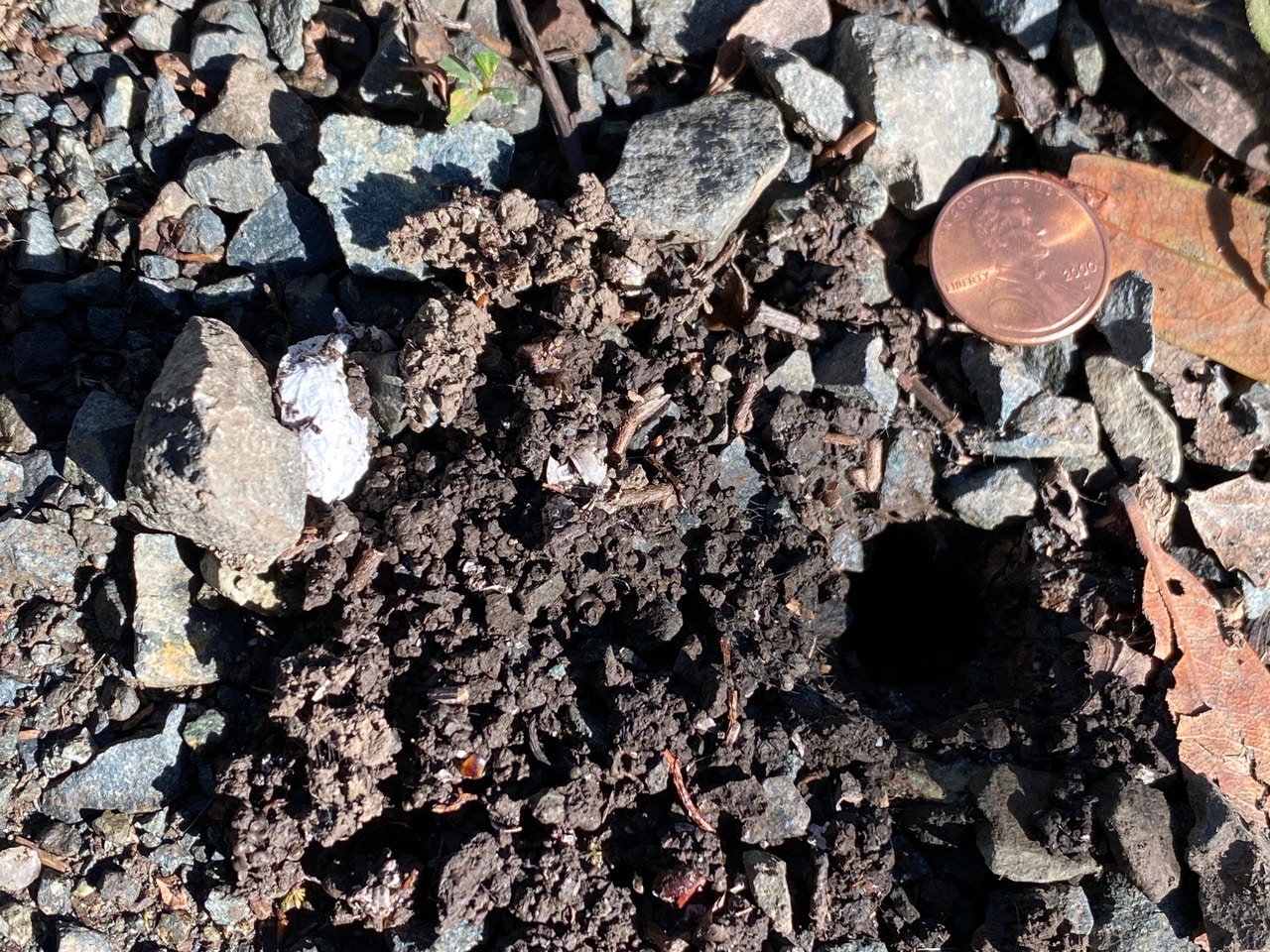
With my eyes glued to the ground to avoid stepping on the termites , I discover a fresh hole at the edge of the trail, about the diameter of a penny. It appears that soil has been brought up and spread around the burrow together with some debris. Most notable is a large white packet that looks like it’s wrapped in silk – a spider egg case!






I eagerly tear open the egg case, and as expected find it filled with tiny spider exuviae (shed exoskeletons). The spider hatchlings have all molted and left. Mama spider has been cleaning house (as ground-dwelling spiders do, especially after a rain), and has tossed out the used egg case. What a delightful find!
I look for signs of spider occupancy around the burrow. Sure enough, there are fine silk threads radiating from the hole to secure the entrance. The spider is probably a False Tarantula, Calisoga longitarsis.
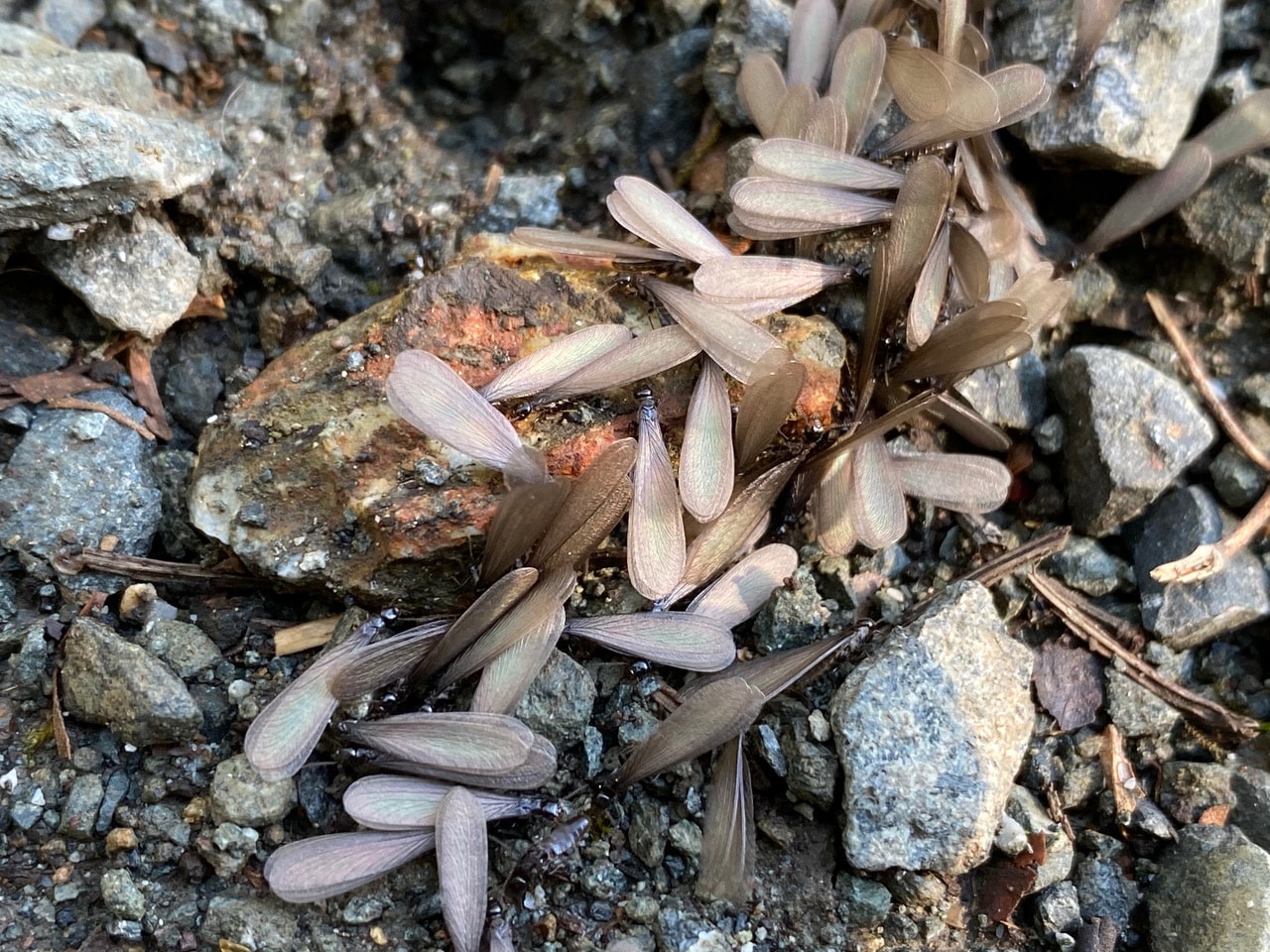
As I continue on the trail, I come across many places where termite alates are erupting from the ground.
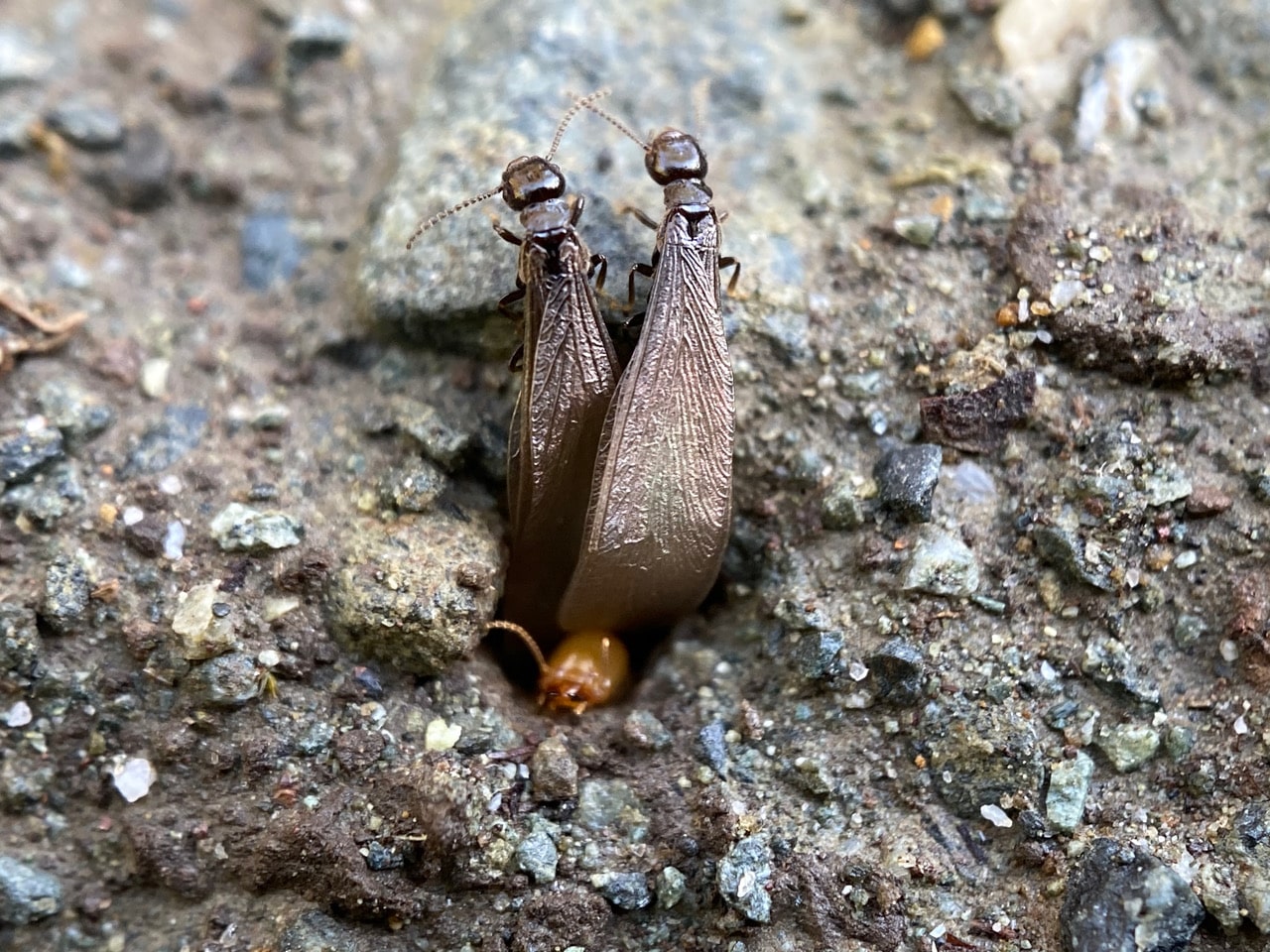
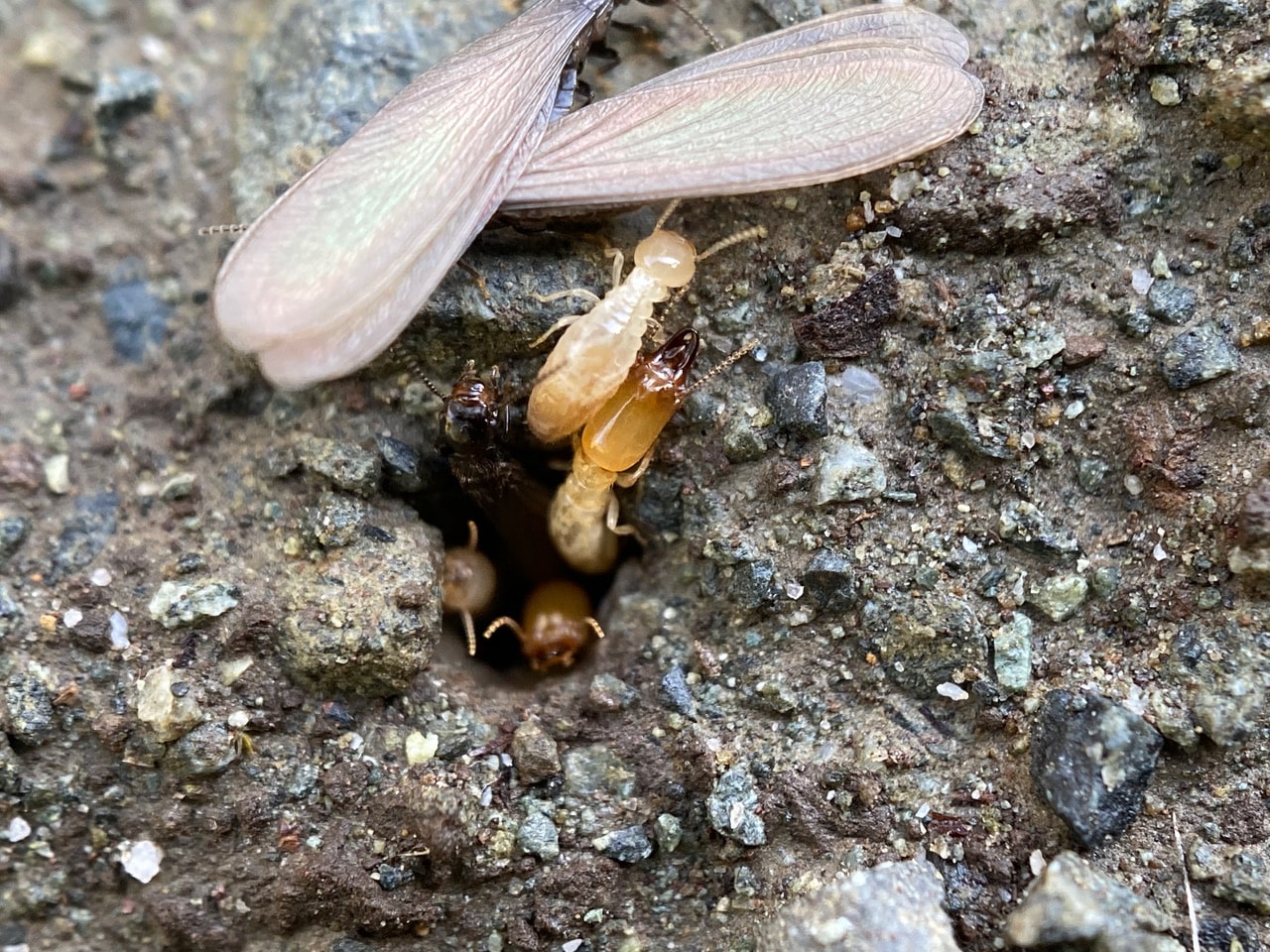
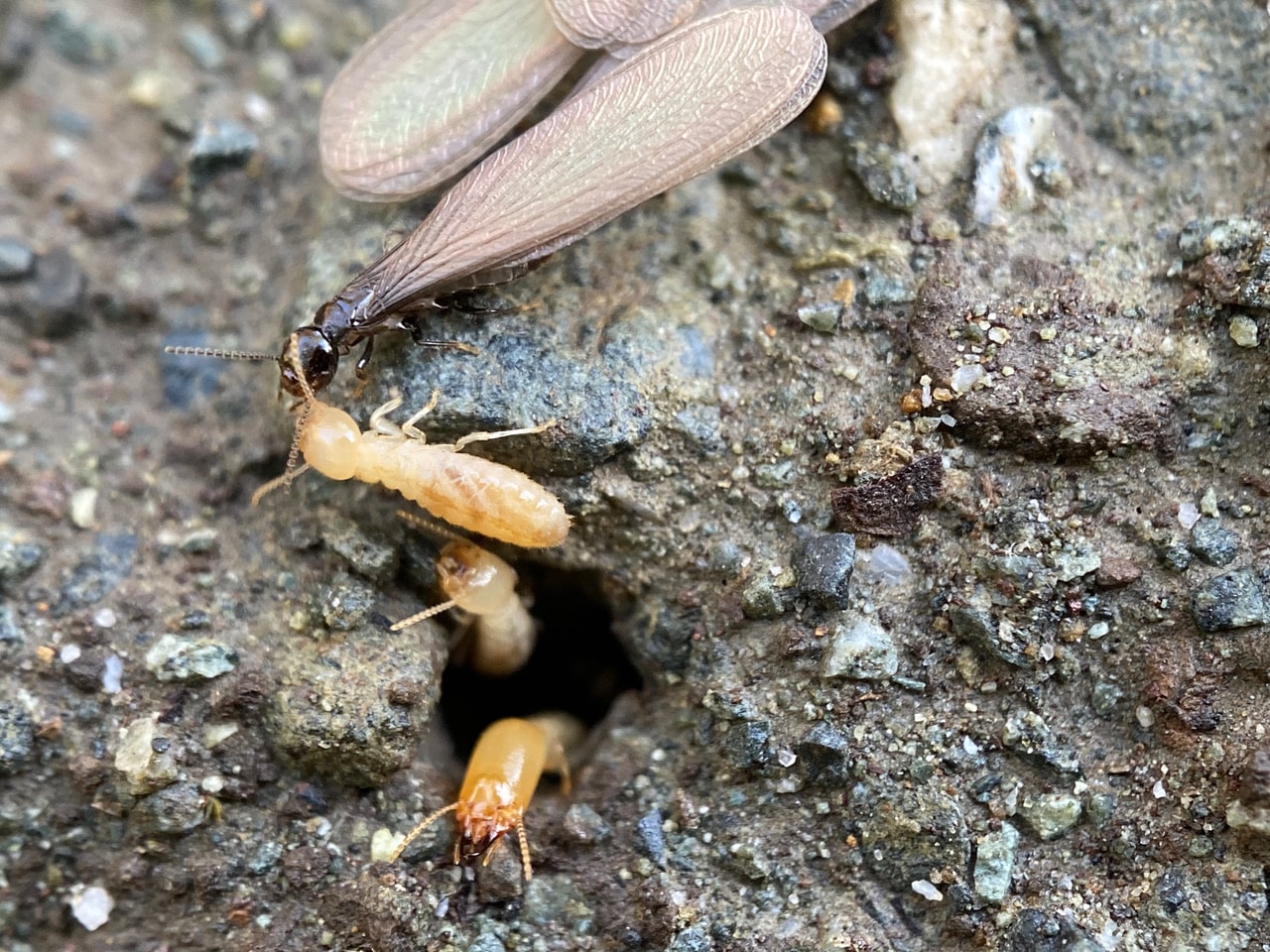
Two alates are emerging from a small hole guarded by a soldier.
Wait, what’s that creature with different wings that just came out?
It appears to be an alate with deformed wings. The poor thing won’t be able to fly.
Termites undergo incomplete metamorphosis, meaning they have three stages of development: egg, nymph, and adult. They do not have a pupal stage. The nymphs look similar to the adults, increasing in size after each molt. At the final molt, they transform into adults with functional wings and reproductive parts.
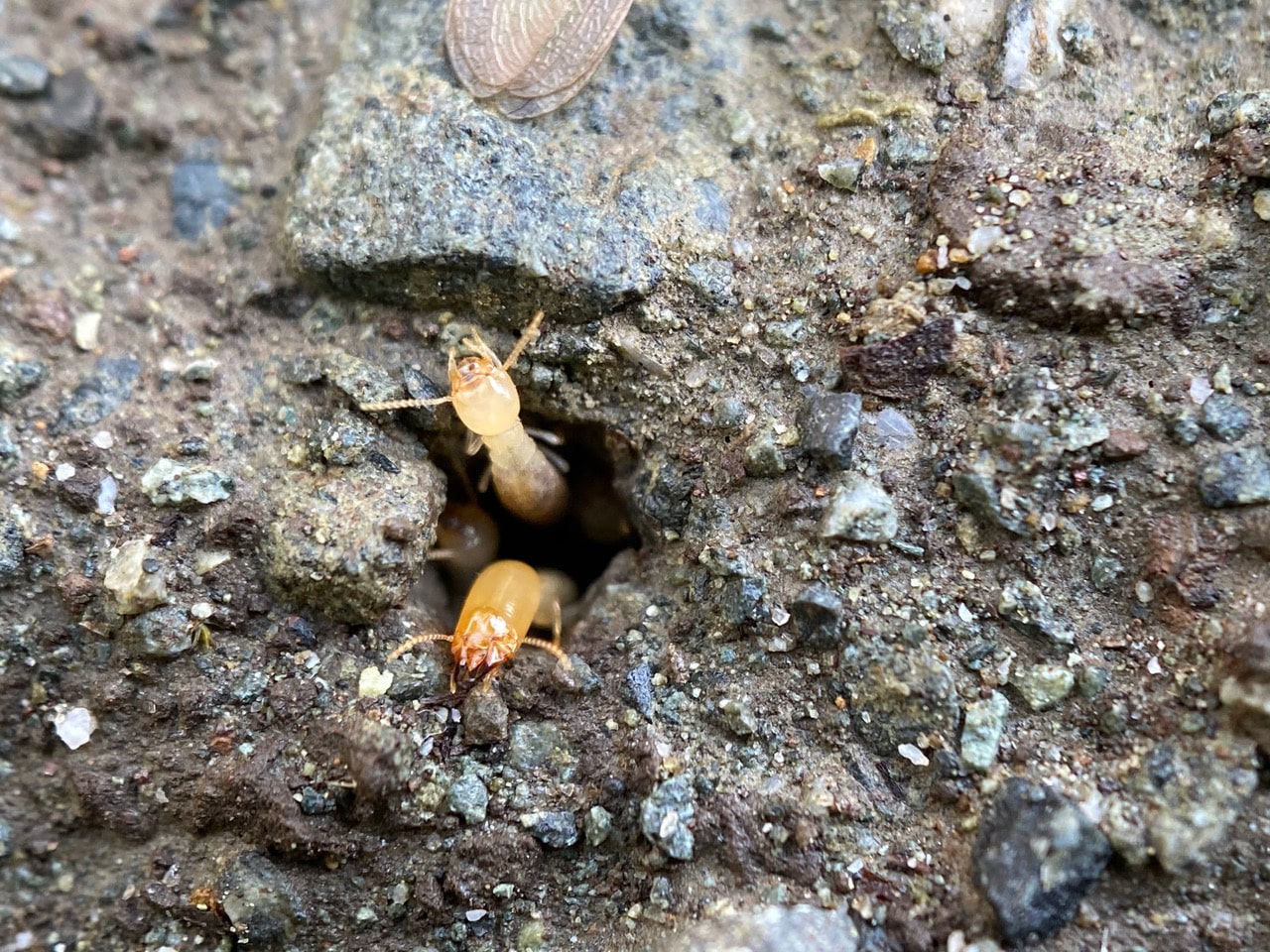
Three different castes can be seen here – the alates (winged reproductives), the worker, and the soldier.
How is termite caste determined? The caste system in termites is an intricate and complicated process. Which caste an individual will become is dependent on both internal as well as external factors. These include environmental cues (such as temperature and humidity), nutritional status, age, hormonal levels, as well as genes. For a colony to be successful and productive, it needs an optimal number of each caste. When there is an imbalance, there is the release of primer pheromones to signal caste members to start reallocating themselves until caste ratios are back in check.
The worker is either feeding or grooming the alate – last minute touches before seeing the winged one off.
I am happy to see these three termite castes. What I am not seeing today is the termite queen. Termite queens are rarely seen, unless one excavates the nest.
The termite queen does not leave the nest. Confined to the nest all her life, her only job is to lay eggs. Both king and queen termites start out the same size – at swarming time, when they are called alates. However, after they have shed their wings, excavated themselves a chamber and mated, the queen slowly starts to increase in size, eventually transforming into an egg-laying machine. The termite queen demonstrates extreme physogastry or the expansion of the abdomen to an extreme size. She is capable of laying hundreds, or even thousands of eggs a day. The queen and king are housed in a special cell called the royal chamber/cell, usually located in the central part of the nest. There is always an army of workers tending to the queen, feeding her, transferring her eggs to the nurseries, and licking her, mainly for the purpose of maintaining the delicate balance within the colony by spreading the queen’s pheromone.