

Pollinator Post 10/23/23 (1)

The mosses on the tree trunks are a vibrant green this morning. We had almost an inch of rain at Skyline Gardens yesterday. With high hopes of seeing termite swarms this warm, calm morning, I enter the garden through the Steam Train entrance, knowing that I am most likely to catch the action in this northern section of Skyline Trail.

As I step through the gate I can already see termites in the air. It is not hard to find where they are coming from. Hundreds of winged termites are rushing out of a crack in a log on the side of the trail. They are getting ready for their nuptial flight!
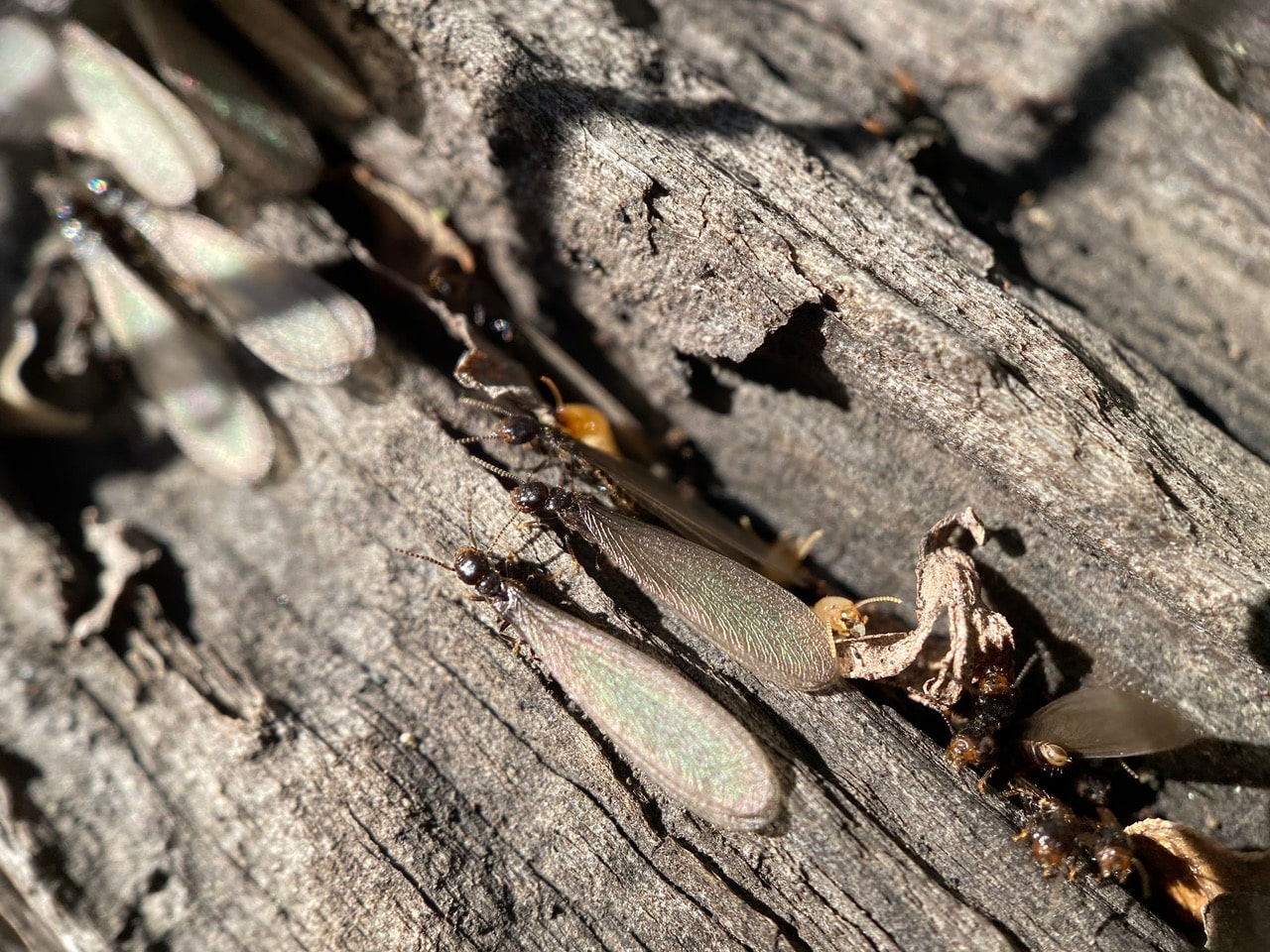
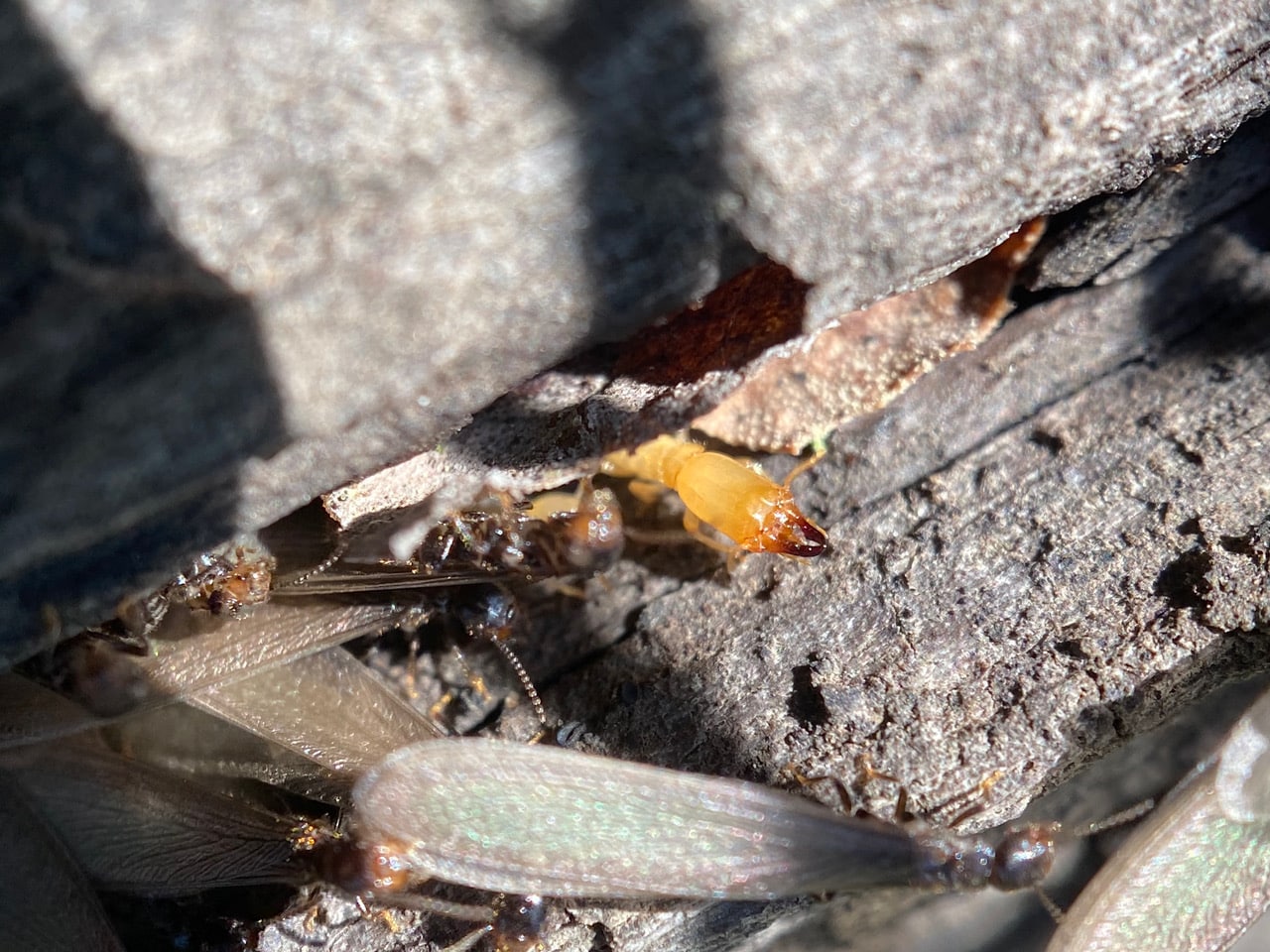
Here’s a termite soldier with a large, elongate head and sickle-shaped mandibles watching over the emerging alates (winged reproductives). It’s hard to believe that the soldiers and the alates are the same species from the same colony – they are so anatomically different!
Termites have a caste system in their social organization. Worker termites undertake the most labor within the colony, being responsible for foraging, food storage, and brood and nest maintenance. They are tasked with the digestion of cellulose in food and feeding their nest mates in the process of trophallaxis. The soldier caste is anatomically and behaviorally specialized to defend the colony. They have large heads with modified jaws so enlarged that they cannot feed themselves. Instead, like juveniles, they are fed by workers. The primary reproductive caste of a colony consists of the fertile adult female and male individuals, commonly known as the queen and king. These form lifelong pairs where the king will continuously mate with the queen. The queen is responsible for egg production. Alates, or winged reproductives are produced at certain time of year. With the right environmental conditions (usually warm, windless days after a rain), the alates fly off on nuptial flight in search of mates from other nearby colonies.
Here’s a fun video to introduce you to the Western Subterranean Termites, Reticuliformes hesperus (family Rhinotermitidae, order Blattodea):
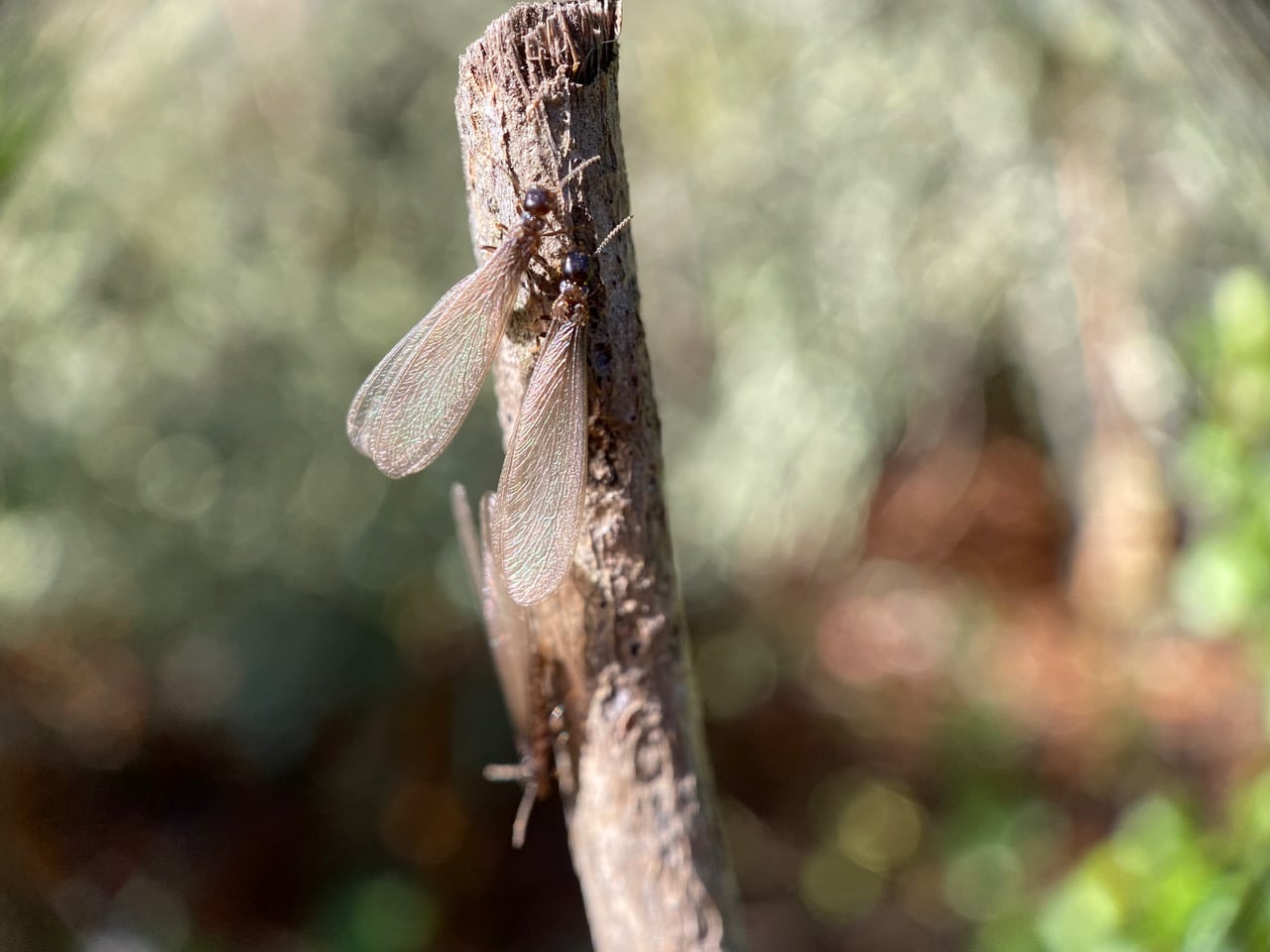
Some alates race up nearby twigs to launch themselves into the air.

Barely a hundred feet ahead, I find an aggregation of termite alates massing on the bare soil of the trail.

Several soldiers are guarding a small hole in the ground from which emerge the alates.
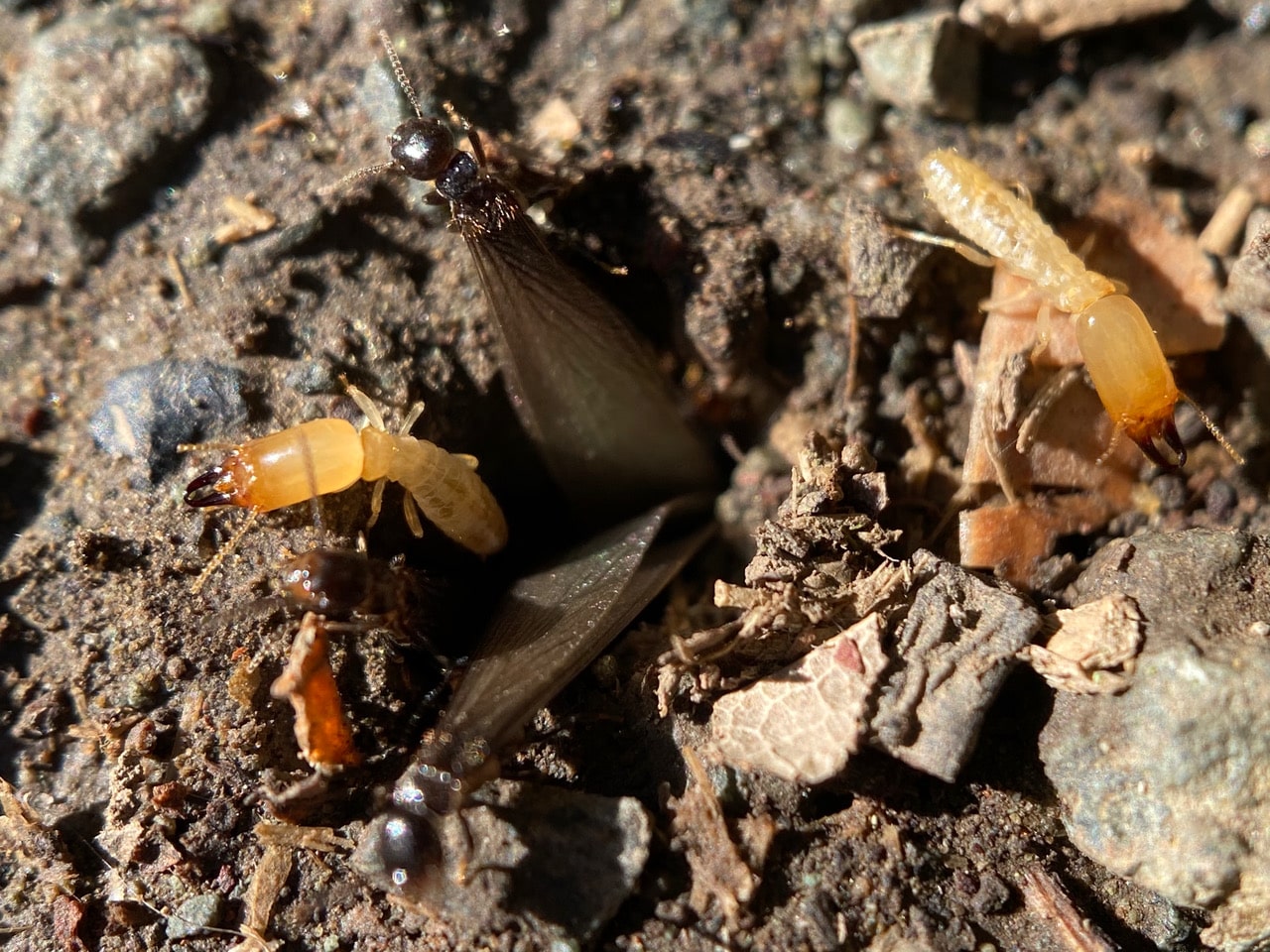

Oh, look, there’s a worker! That pale termite with the rounded head is a worker.
In the midst of the commotion, one of the workers in this video is doing repair work, bringing up and sticking a piece of soil particle near the entrance and then depositing a droplet of poop as it descends down the tunnel. In constructing their tunnels, termites use a sticky substance from their mouth or fecal material for cementing soil and wood particles together.
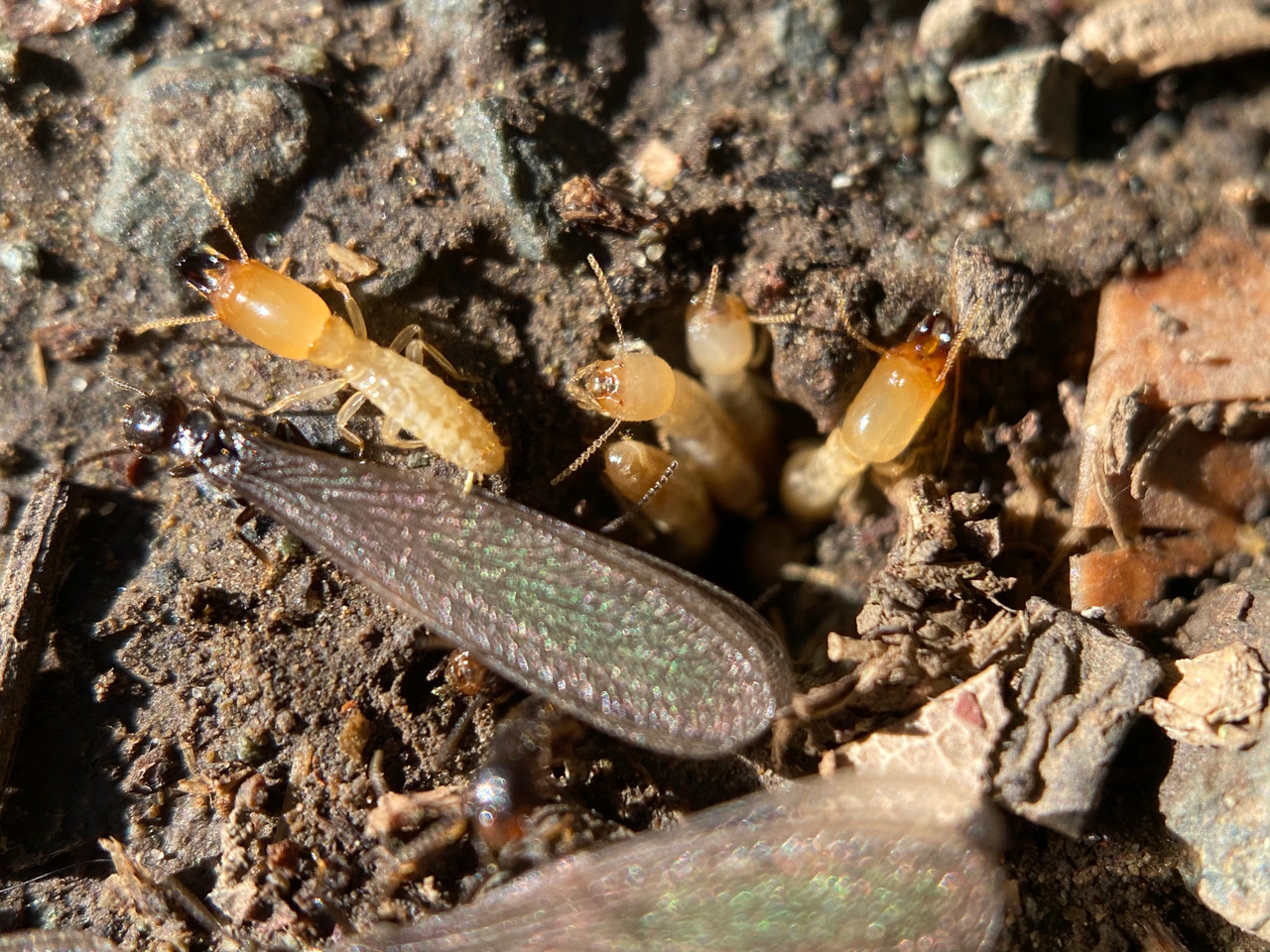
The workers seem to be clearing the path for the alates and the soldiers. They are also seen grooming the alates before seeing them off.