

Pollinator Post 10/17/24
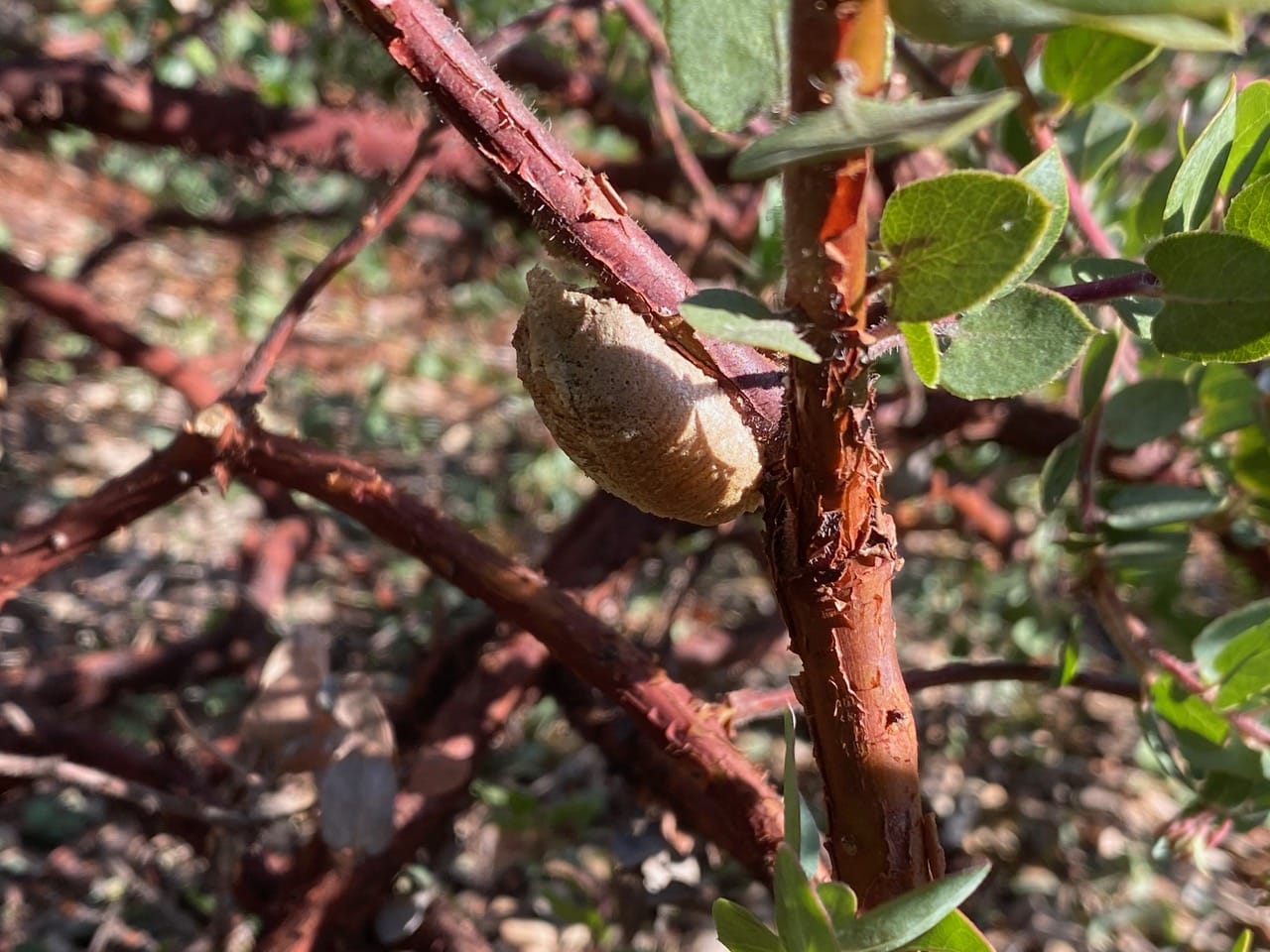
Before I even ring Stefanie’s doorbell, I have already found the Praying Mantis egg case on the Manzanita in her front yard. Stefanie has recently told me that the ootheca was discovered by the pruning team from Merritt College’s Horticulture Department while holding a pruning class in her garden. What a delightful find! The ootheca is still intact, with no exit holes. So the babies have yet to emerge!
Mantises are an order of insects Mantodea, distributed worldwide in temperate and tropical regions. They have triangular heads with bulging eyes supported on flexible necks, and elongated bodies. All Mantodea have forelegs that are greatly enlarged and adapted for catching and gripping prey. Their upright posture, while remaining stationary with forearms folded, has led to the common name Praying Mantis.
Mating in temperate climates typically takes place in autumn, after which the females begin to lay eggs. Eggs are typically deposited in a froth mass-produced by glands in the abdomen. This froth hardens, creating a protective capsule, which together with the egg mass is called an ootheca. A praying mantis ootheca can contain between 14 and 200 babies. Depending on the species, the ootheca can be attached to a flat surface, wrapped around a plant, or even deposited in the ground. Hatch time varies with the species and temperature. Mantises go through three life stages: egg, nymph, and adult. Nymphs generally resemble the adult, but without functional wings. Molting can happen 5-10 times before the adult stage is reached, depending on the species.
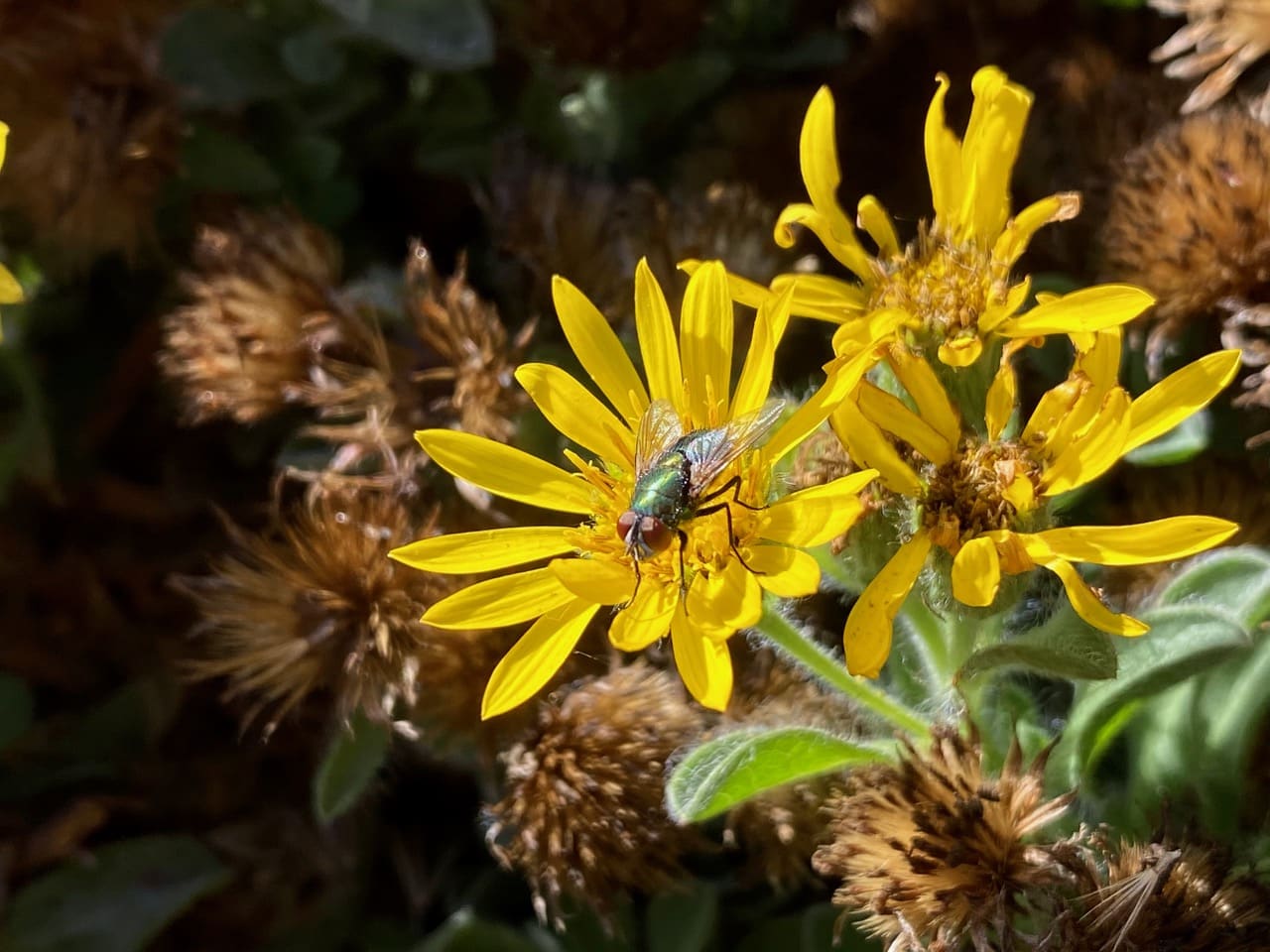
A Common European Greenbottle Fly, Lucilia sericata (family Calliphoridae) lands on a flowerhead of San Bruno Mountain Sessileflfower Goldenaster, Heterotheca sessiliflora ssp. bolanderi ’San Bruno Mountain’.
The Common European Greenbottle Fly is a Blowfly found in most areas of the world and is the most well-known of the numerous green bottle fly species. The lifecycle of Lucilia sericata is typical of blowflies. Females lay masses of eggs in fresh carrion. The flies are extremely prolific – a single female may produce 2,000 to 3,000 eggs in her lifetime. The larvae feed on dead or necrotic tissue, passing through 3 larval instars. Third-instar larvae drop off the host to pupate in the soil. The adults feed opportunistically on nectar, pollen, feces, or carrion; they are important pollinators as well as important agents of decomposition. Pollen is used as an alternative protein source, especially for gravid females who need large amounts of protein and cannot reliably find carrion.
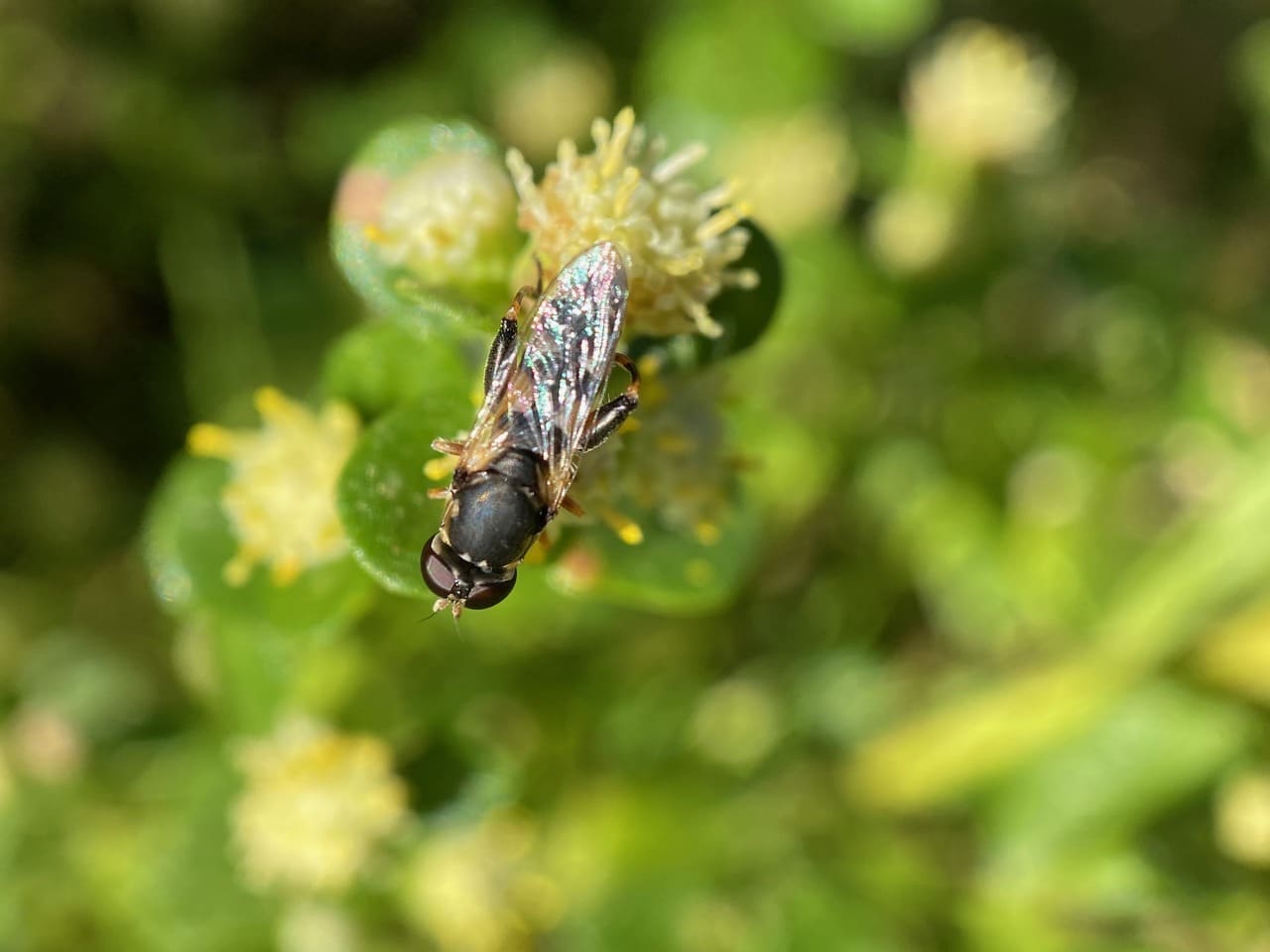
A Thick-legged Hover Fly, Syritta pipiens (family Syrphidae) is foraging on the flowerheads of a male Coyote Brush, Baccharis pilularis. Note its greatly enlarged femora.
Syritta pipiens originates from Europe and is currently distributed across Eurasia and North America. They are fast and nimble fliers. The fly is about 6.5 – 9 mm long. The species flies at a very low height, rarely more than 1 m above the ground. Adults visit flowers – males primarily to feed on nectar, and females to feed on protein-rich pollen to produce eggs. The species is found wherever there are flowers. It is also anthropophilic, occurring in farmland, suburban gardens, and urban parks. Larvae are found in wetlands that are close to bodies of freshwater such as lakes, ponds, rivers, ditches. Larvae feed on decaying organic matter such as garden compost and manure. Males often track females in flight, ending with a sharp dart towards them after they have settled, aiming to attempt forced copulation.
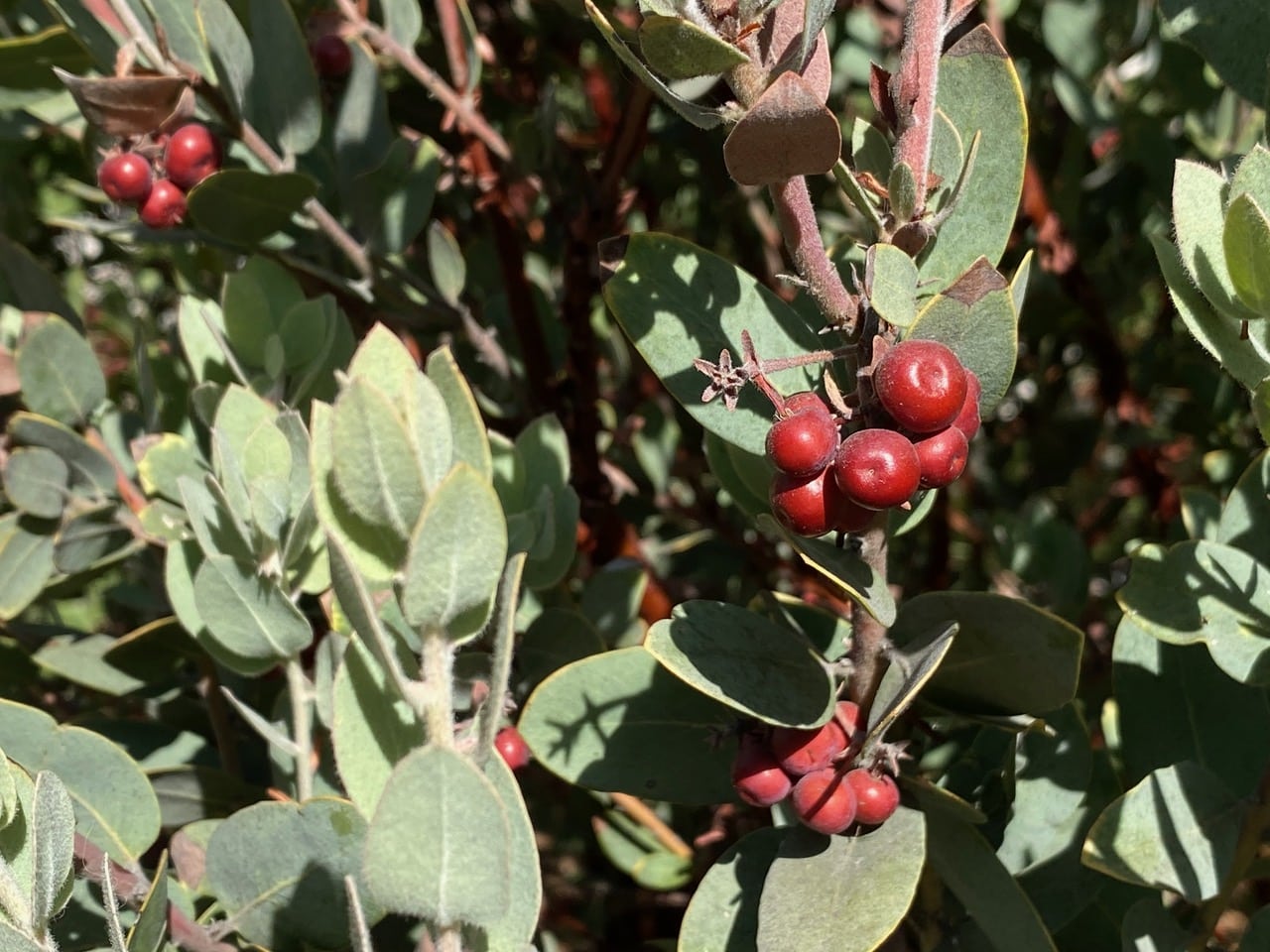
The grey-leafed Manzanita on the side of Stefanie’s house, Arctostaphylos silvicola ‘Grey Eagle’ has produced a bountiful crop of “little apples”. The name “manzanita” is derived from the Spanish word meaning “little apple” in reference to the berry which appears on the shrub in late summer. The fruits are edible and can be eaten ripe (when red). The fruit is a berry-like drupe that contains 3-4 seeds that are protected by a very dense, impervious layer of carpellary tissues. Wildlife cherish these calorie-packed fruits. Mammals such as foxes often leave scat studded with Manzanita seeds along the trail, inadvertently serving as seed dispersers.
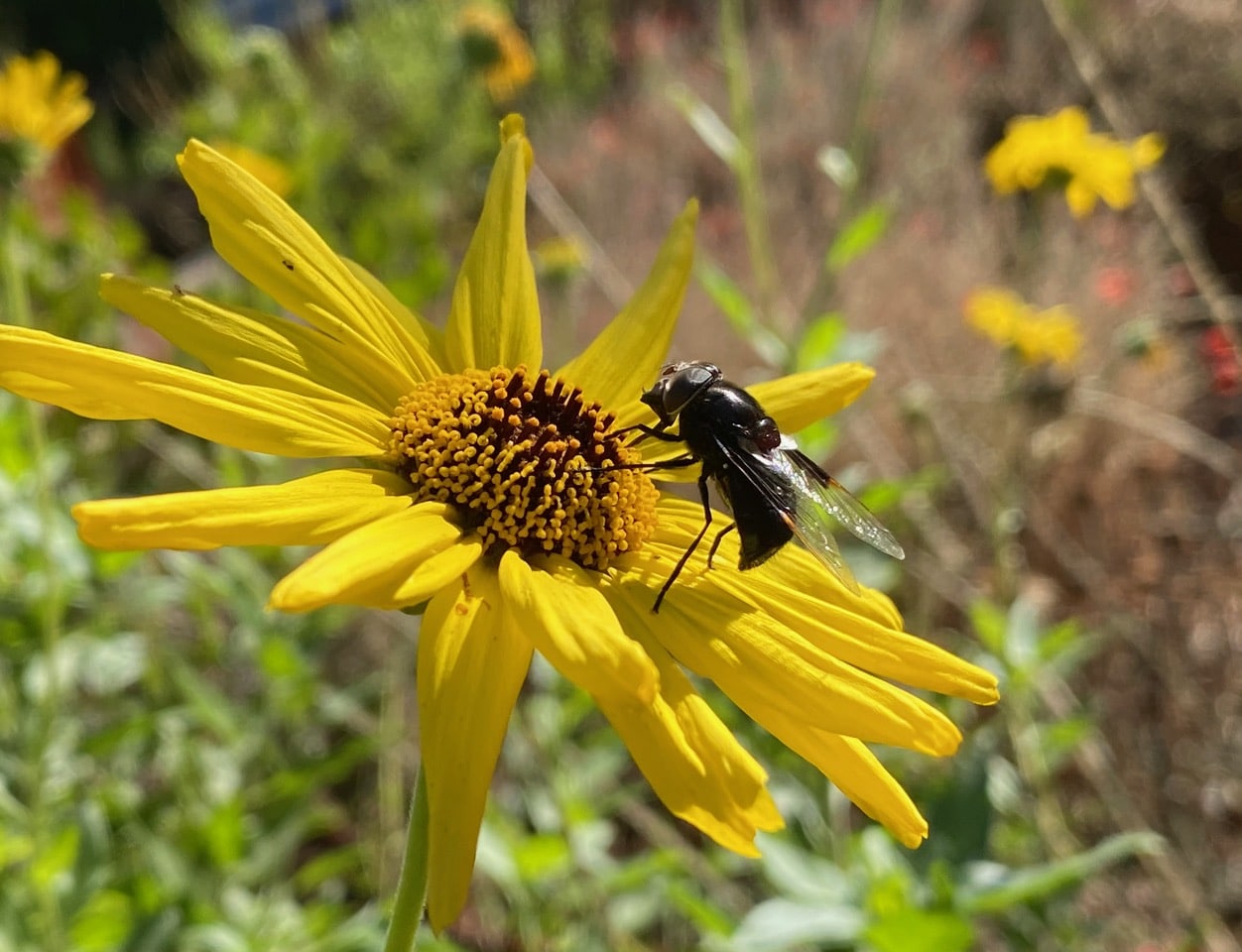
Most of the plants in the backyard have gone dormant and neatly pruned back. The only plant still offering nectar and pollen is the two California Bush Sunflower, Encelia californica that continue to bloom. They now form the hub of insect activity. A Purple Bromeliad Fly, Copestylum violaceum (family Syrphidae) is taking nectar on a flowerhead of California Bush Sunflower.
Note the unusual “snout” on the face of Copestylum. Copestylum females lay eggs in rotting plant materials and rot holes in trees. The larvae are rat-tailed maggots. Adults visit a wide range of flowers for nectar and pollen.
Rat-tail maggots are the larval stage of many species of hover fly (family Syrphidae) in the tribes Eristalini. The maggots are most commonly found in dank and decaying environments such as compost, pond margins, and tree rot holes. The larvae feed on the decomposing material which is poor in oxygen but rich in organic matter. The “tails” are the siphons or breathing tubes that extend from their rear end to enable the larvae to breathe while submerged in the wet substrate. When mature, the larvae climb out to pupate on dry land. The larvae are important decomposers/recyclers and the adult flies are important pollinators.
See those two rounded white flaps at the base of the wings? Those are alula. The alula is a hinged flap found at the base of wings of some flies. The alula accounts for up to 10% of the total wing area in hover flies (Syrphidae), and its hinged arrangement allows the wings to be swept back over the thorax and abdomen at rest. It is a sort of gear change mechanism.
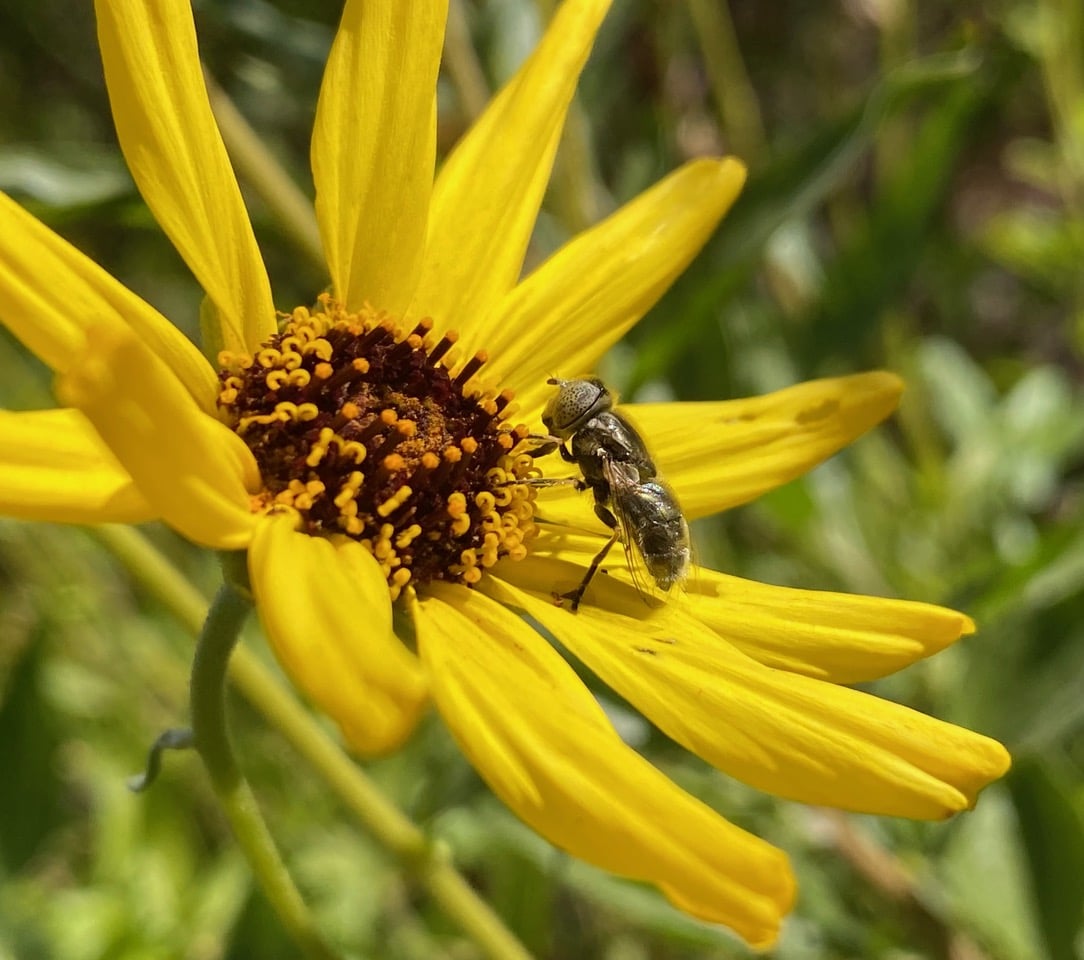
Ooh, I know that metallic hover fly on the Encelia flowerhead – a Common Lagoon Fly, Eristalis aeneus (family Syrphidae). I first saw one recently at Bay Farm Island. Rather surprising to find it here – Stefanie’s house is not even close to the shore. The most distinctive feature of the fly is its eyes that are patterned with black spots.
The species is native to Europe, and widespread throughout Europe and the United States. It draws its common name from its habitat of lagoons, ponds, slow-moving rivers, streams and irrigation ditches. The larvae are commonly found along shorelines in rock pools containing large amounts of decaying seaweed. They develop in brackish as well as a variety of freshwater habitats. The adults fly very fast and low over ground vegetation, and feed on yellow composites and white umbellifers. The flight period is April to October, and the fly overwinters as an adult.
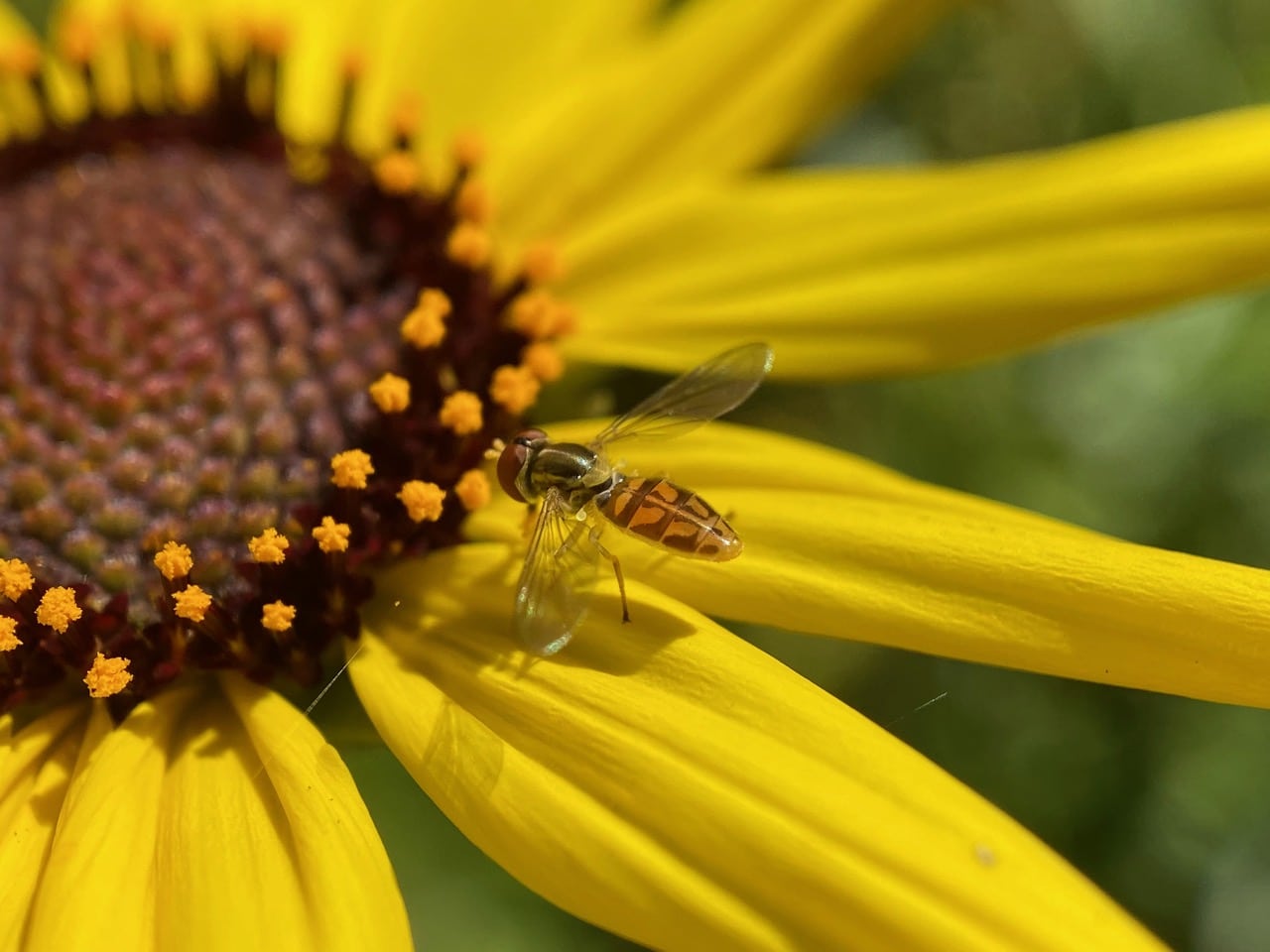
A female Margined Calligrapher, Toxomerus marginatus (family Syrphidae) lands on the ray petals of an Encelia flowerhead.
Toxomerus marginatus, also known as the Margined Calligrapher is a common species of hoverfly found in North America. These are small hoverflies, measuring 5-6 mm in length. The abdomen is black and yellow, and is narrowly margined with yellow. Adults are found in diverse habitats such as forests, fields, meadows, marshes, deserts, and alpine areas. They are highly adaptable and can occur is very disturbed habitats. Larvae prey on aphids, thrips, mites, and small caterpillars. Adults visit flowers for nectar and pollen.
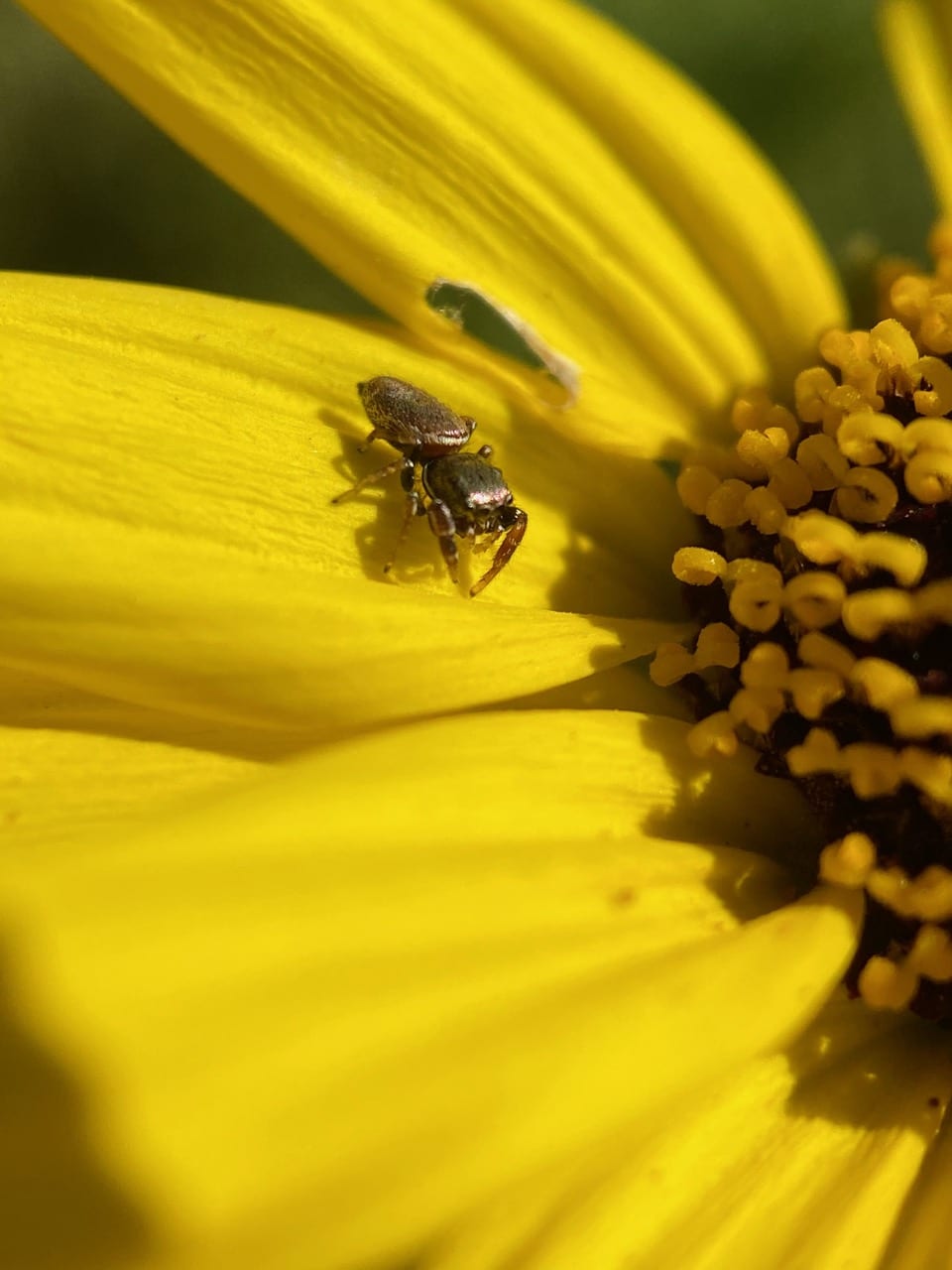
A tiny, shiny jumping spider is patrolling an Encelia flowerhead. It is easily recognized as the Buttonhook Leafbeetle Jumping Spider, also known as the Grapevine Jumping Spider, Sassacus vitis (family Salticidae)
Salticids are free-roaming hunting spiders. They do not weave a web to catch prey. They stalk, then pounce on their prey. Just before jumping, the spider fastens a safety line to the substrate. It can leap 10-20 times their body length to capture prey. Their movement is achieved by rapid changes in hydraulic pressure of the blood. Muscular contractions force fluids into the hind legs, which cause them to extend extremely quickly. Jumping spiders are visual hunters. Their excellent vision has among the highest acuities in invertebrates. Since all their 8 eyes are fixed in place and cannot pivot independently from the body like human eyes can, jumping spiders must turn to face whatever they want to see well. This includes moving their cephalothorax up and down, an endearing behavior.
The Buttonhook Leafbeetle Jumping Spider, Sassascus vitis is native to North America, with a range spanning from Canada to Panama. It is a small jumping spider with iridescent gold abdomen and white ring around the anterior surface of abdomen. Body is covered with golden scales. Males are 3.5 mm long, females 4.5 mm. The name vitis is Latin for “grapevine”. The spider is commonly found on shrubs and vines and in fields. Best known as a common resident of vineyards.
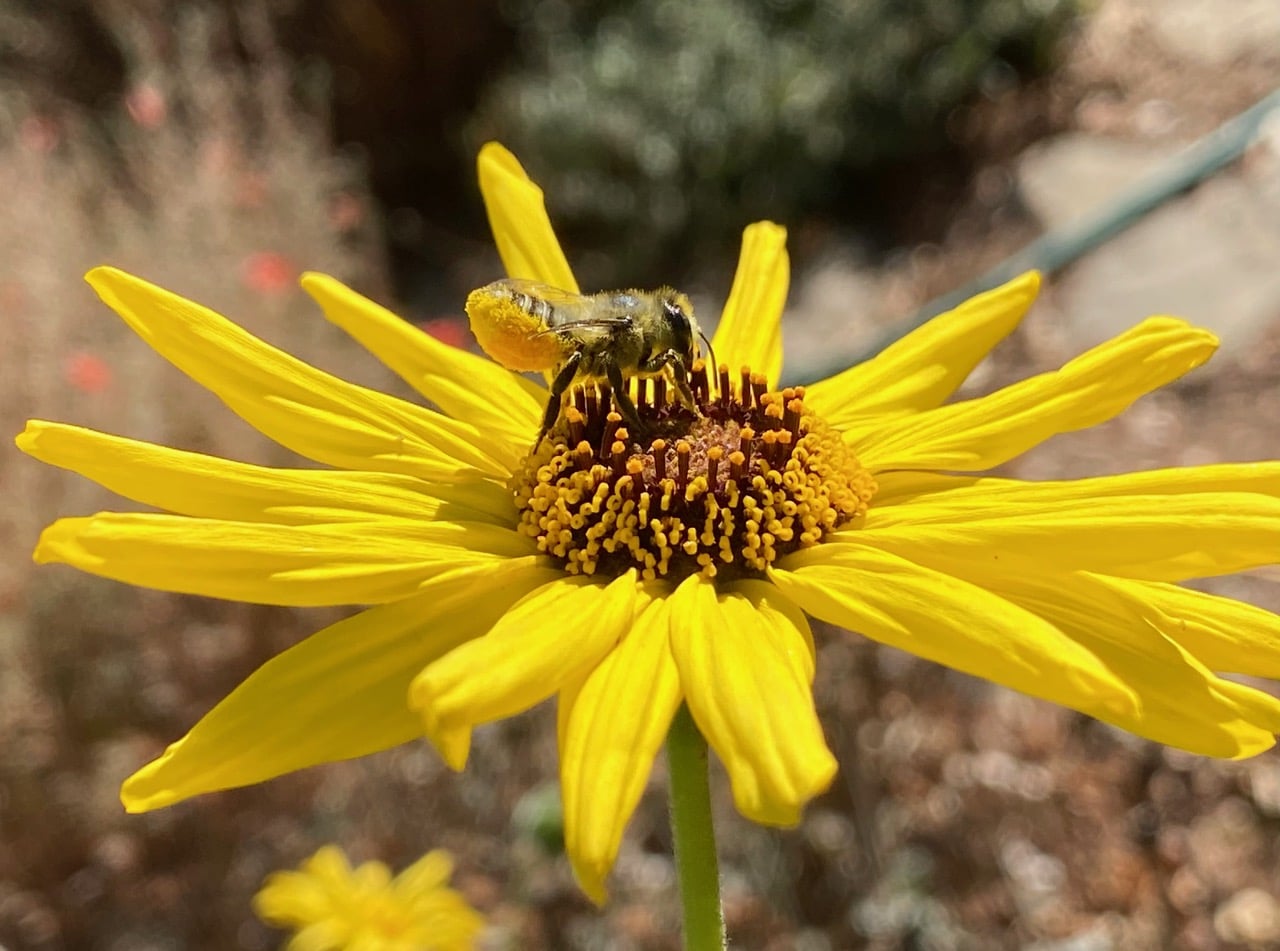
It is a treat to watch a female Western Leafcutter Bee, Megachile perihirta (family Megachilidae) collect pollen on a flowerhead. This individual already has a good load of pollen on the scopa on the underside of her abdomen. Her rear tipped up, she is also taking nectar while gathering pollen. Note that the flowerhead is in mid-bloom, with florets both in the male and female phases. The older florets on the outer edge are already in the female phase with exposed curly-cue stigmas. The bee is focusing her attention on the row of male anther tubes sticking vertically up like candles from the disk florets. These are topped with pollen that she is collecting..

The bee makes a full circle on the flowerhead over the little “candles”, scraping and kicking up pollen and rapidly tapping it into her abdominal scopa.
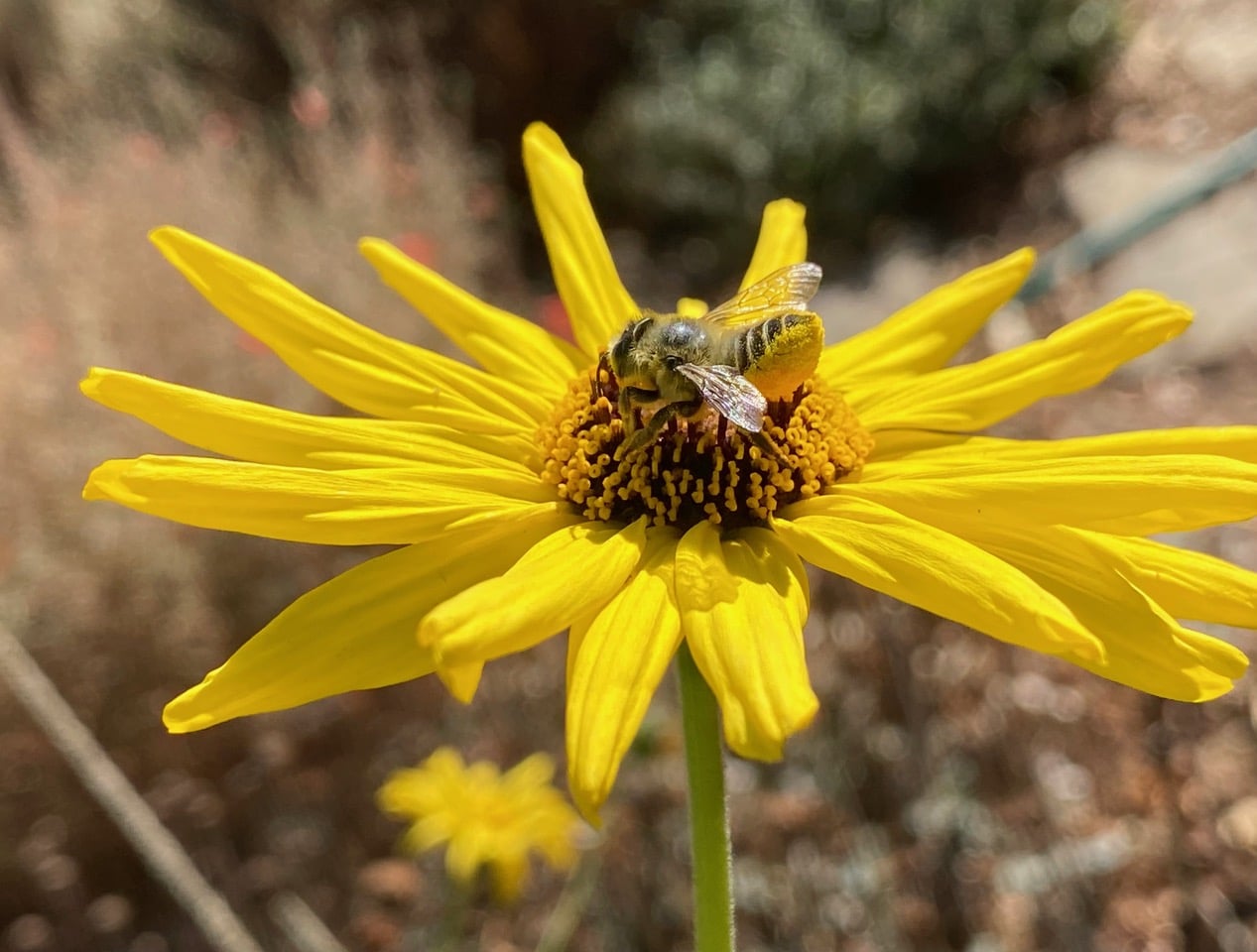
Leaf-cutter Bees, Megachile sp. (family Megachilidae) are stout-bodied, usually with pale hair on the thorax and stripes of white hairs on the abdomen. Females usually have a triangular abdomen with a pointed tip, and males’ faces are covered with dense, pale hair. Flight season is from May into September, with peak activity from June to August.
Solitary females construct nests in tubular cavities, including hollow stems, tree holes, and abandoned beetle burrows in wood. Many use holes drilled into wood, straws, or other manufactured tunnels. Females cut pieces from leaves or flower petals for use in the construction of brood cells. Most Megachile females are generalists when foraging for pollen. Pollen is transported in dense scopae on the underside of the abdomen.
Photos of Western Leafcutter Bee (Megachile perihirta) · iNaturalist
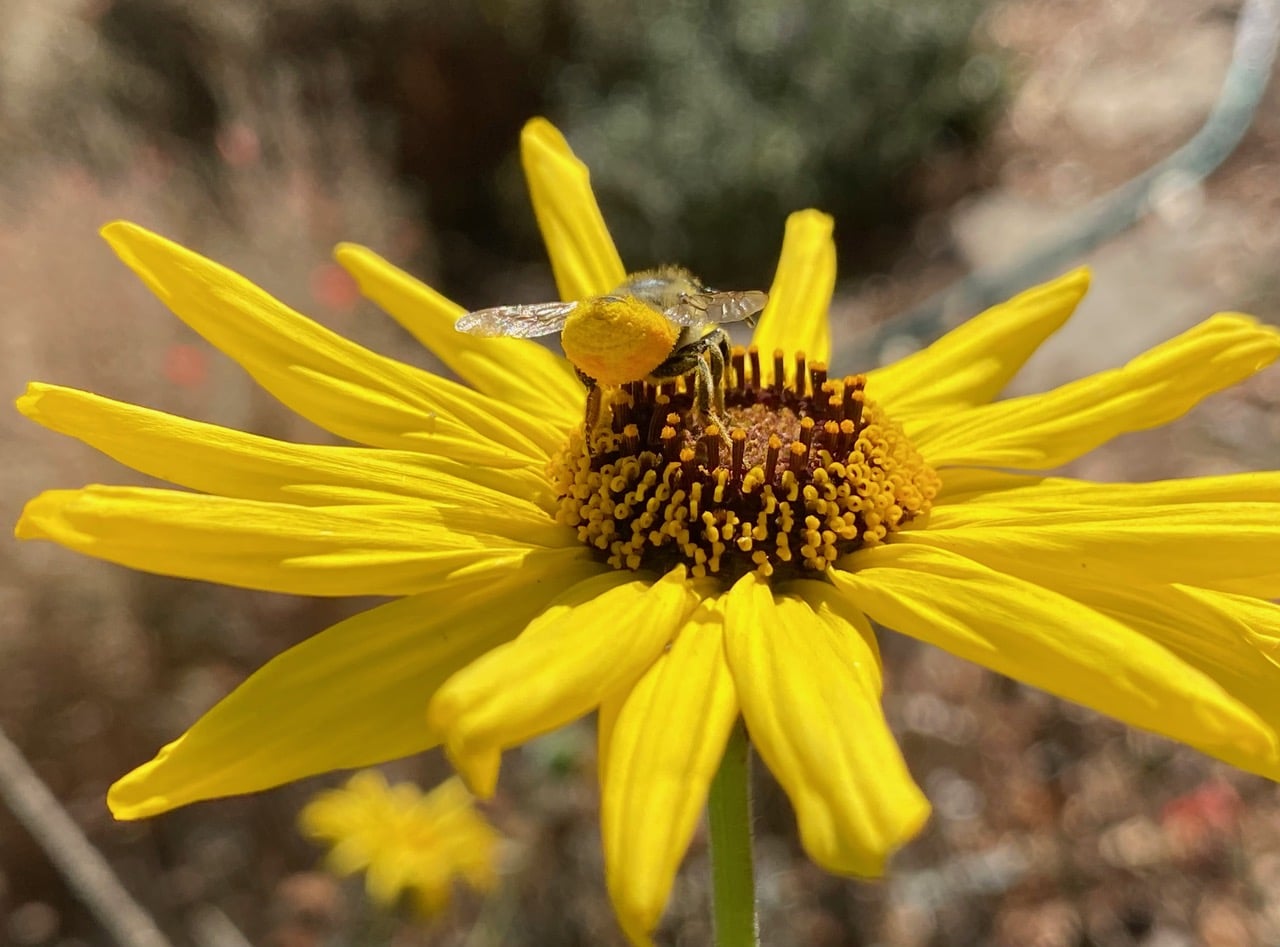
Wow, that’s a full load! Back at her nest, the female will scrape off the pollen from her abdomen, and mix it with some nectar to make a loaf of “bee bread” in a brood chamber. She will then lay an egg on the loaf and seal up the chamber with a piece of cut leaf or petal. She will go on to forage to provision all the nest chambers, and lay more eggs. The bee bread in each brood chamber is sufficient to nourish the larva until pupation.
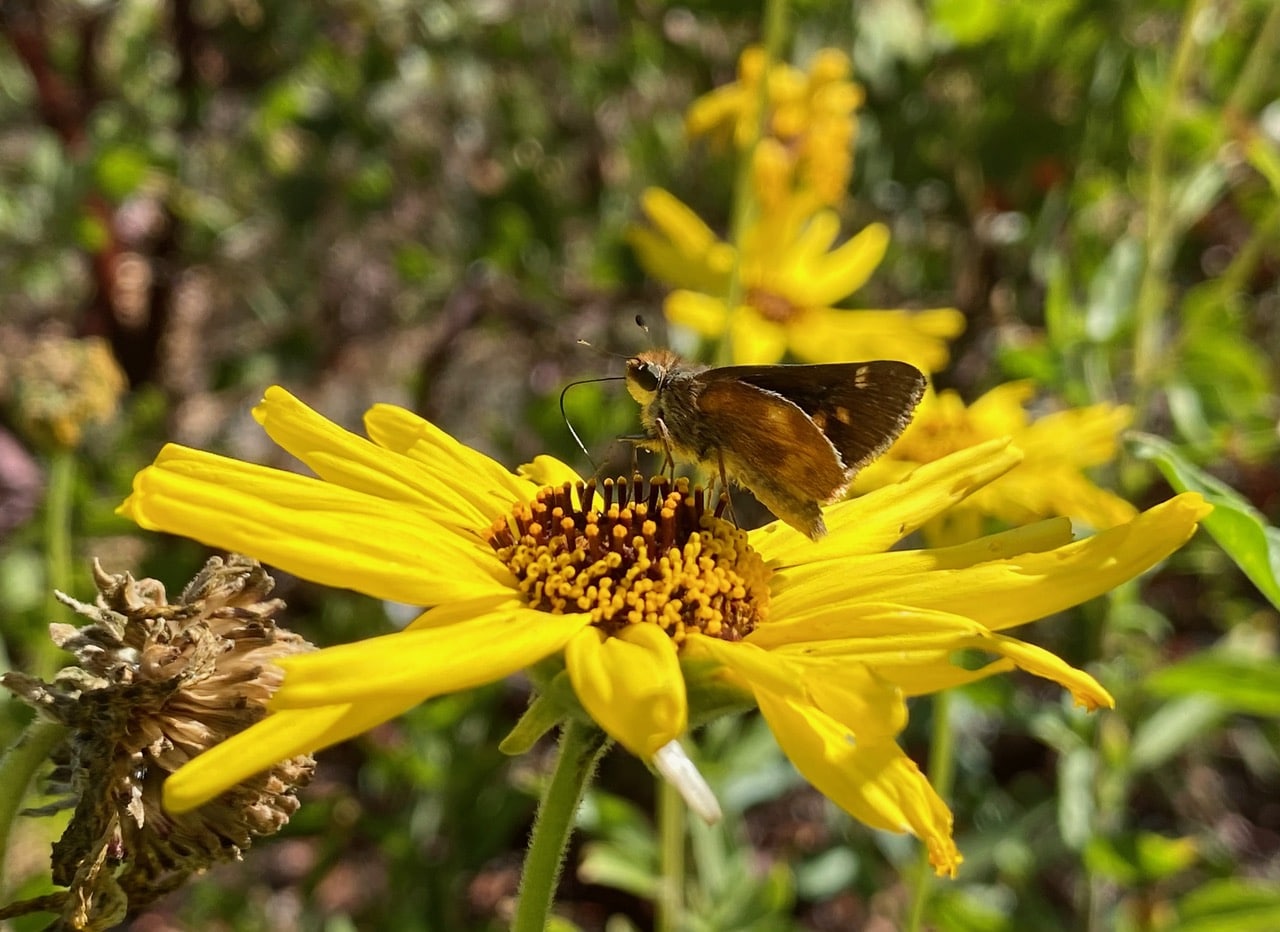
A Skipper butterfly (family Hesperiidae) is taking nectar from an Encelia flowerhead. With its long, flexible proboscis, the butterfly can probe for and access nectar from multiple florets in one sitting.
A tubular sucking organ, the proboscis enables a butterfly to extract sweet nectar from flowers, regardless of the shape of the blossom. When not in use, the proboscis is rolled up out of the way. Unlike caterpillars, adult butterflies do not have any chewing mouthparts, and therefore must obtain their nutrition from sipping liquids. Hydrostatic pressure extends the curled proboscis which is inserted deep into the tubes of flowers. At emergence from the chrysalis, the proboscis initially consists of two parts that appear like a forked tongue. Almost immediately the two tubes are “zipped” together to form the single tube. In addition to flower nectar, butterflies also use the proboscis to suck up moisture from puddles, liquids from fermenting fruits, rotting animal flesh or animal excrements.
Skippers are a family, the Hesperiidae, of the order Lepidoptera (butterflies and moths). They are named for their quick, darting flight habits. Most have the antenna clubs hooked backwards like a crochet hook. They also have generally stockier bodies and larger compound eyes than the other butterflies. Their wings are usually small in proportion to their bodies. When at rest, skippers keep their wings usually angled upwards or spread out, and only rarely fold them up completely. Californian species are mostly brown or tan, with black, orange, or yellow markings.
Skipper caterpillars are usually green or brown, sometimes yellowish, never brightly colored. They have a distinctive “collar”, a narrow ring around the body right behind the head. Caterpillars are camouflaged and often hide during the day. Many species make nests of leaves and silk for additional protection. Most North American species feed on grasses, but some common species eat shrubs and trees, especially in the bean family. Most species are limited to a single group of food plants. Adult skippers are only active during the day, but Skipper caterpillars feed mainly when it is dark or partly light.
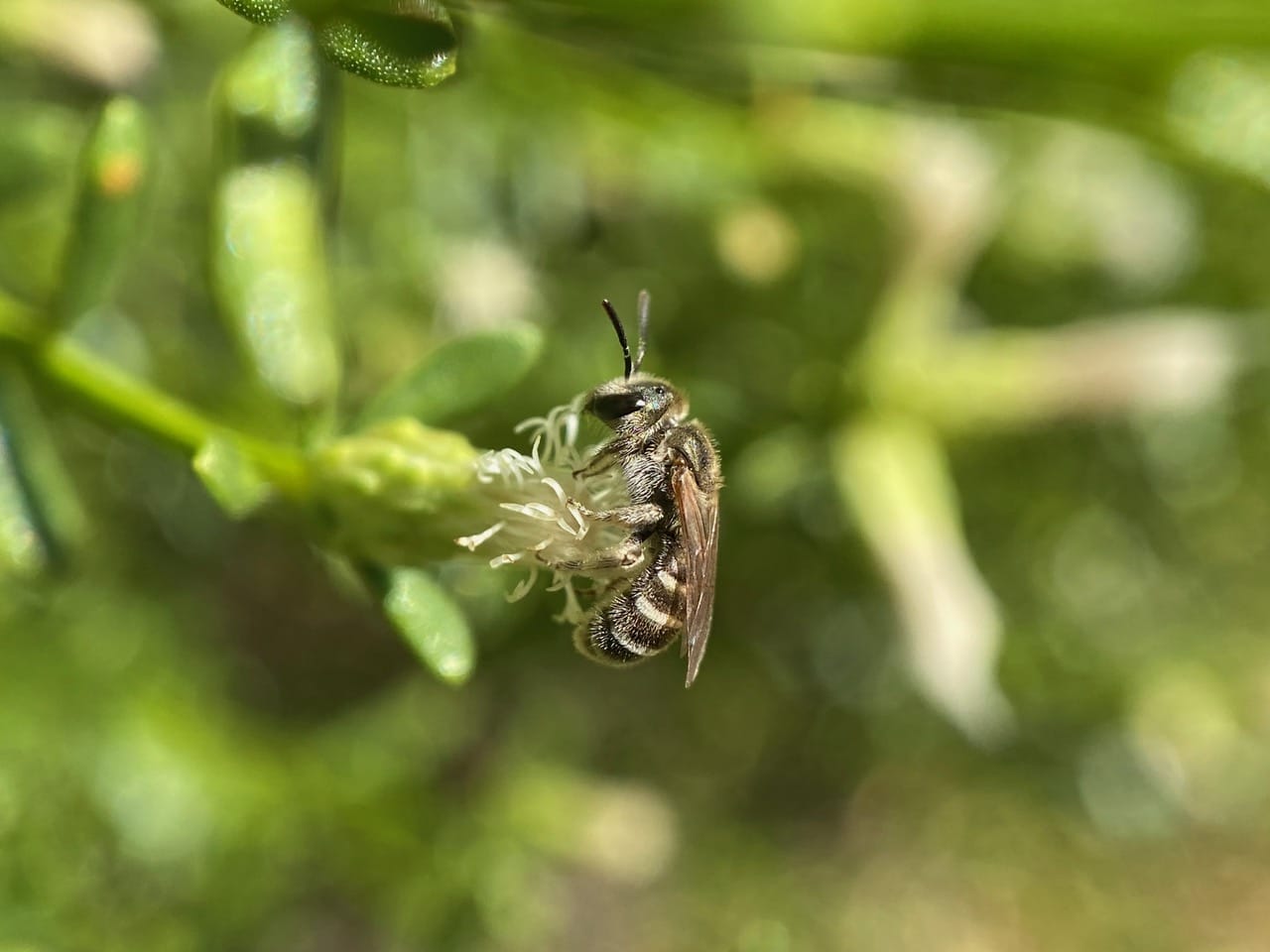
A Tripartite Sweat Bee, Halictus tripartitus (family Halictidae) is foraging on a flowerhead of a female Coyote Brush, Baccharis pilularis.
Halictus is found worldwide; they are most common in the Northern Hemisphere. They are small to medium sized bees in California. They are dark brown to black and many species have a dark metallic green sheen. They have bands of hair on the outermost edge of their abdominal tergites. Females carry pollen on brushes of hair (scopa) on their hind legs. All are generalists, foraging from a wide variety of flowering plants. Many species are social and produce several generations per year. This is not surprising as most blooming plants are season-specific; a bee that requires pollen and nectar across multiple seasons would not thrive as a specialist. All Halictus in North America nest in the ground, often in aggregations; and they may nest in the same area for decades. Individual species can often be seen from spring to early fall. This is due in part to their semi-sociality. A single nest can be established in spring and continue to reproduce through to fall.
Halictus tripartitus is active February to October. The species is partly eusocial with nests connected underground, and some workers capable of reproducing.
Photos of Tripartite Sweat Bee (Halictus tripartitus) · iNaturalist
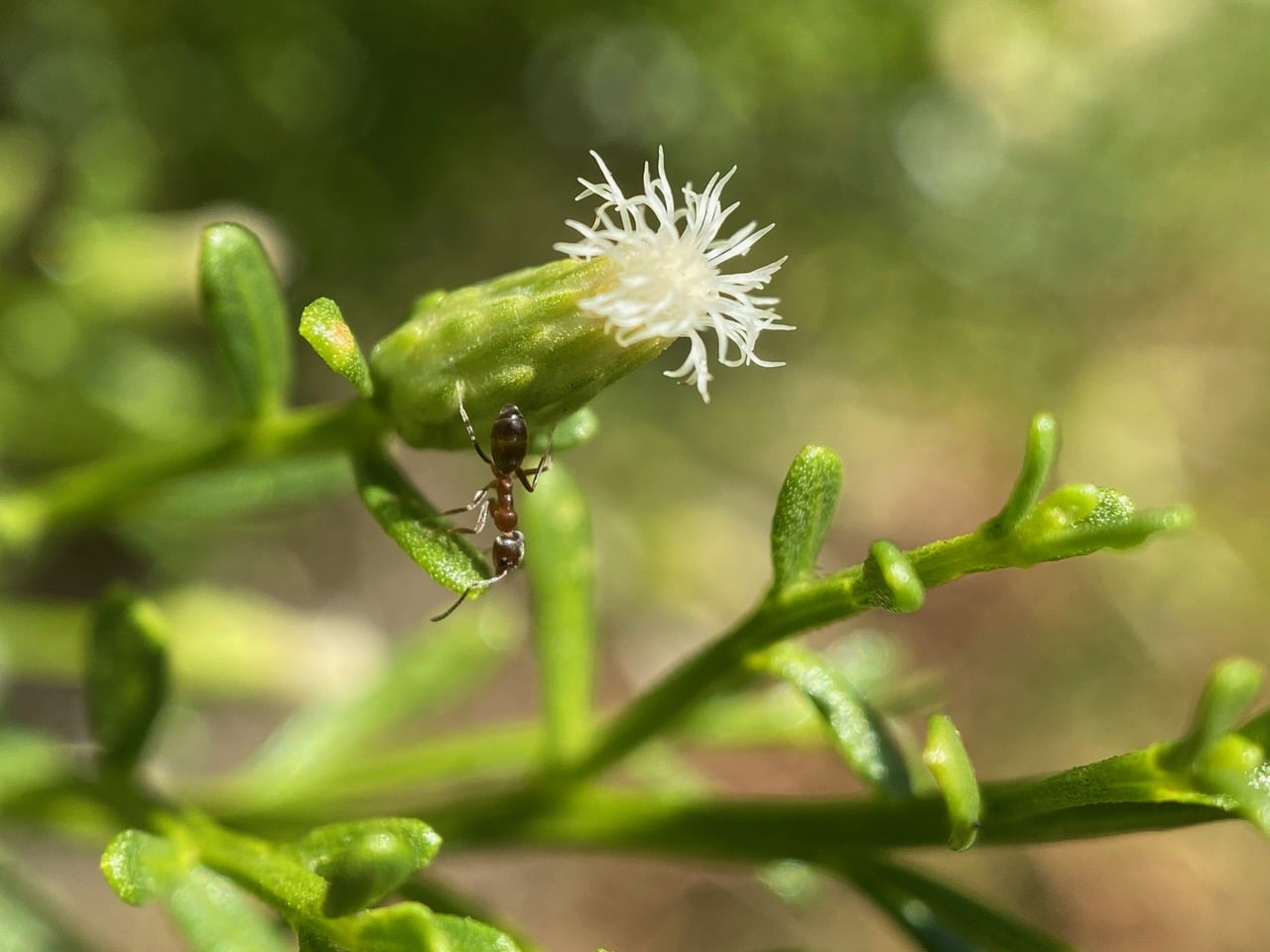
Numerous Argentine Ants, Linepithema humile (family Formicidae) are visiting the flowerheads of the female Coyote Brush. Female flowers do not produce pollen, but the nectar they produce is obviously attractive to many insects.
The Argentine Ant, Linepithema humile (family Formicidae) is native to Northern Argentina, but it has been inadvertently introduced by humans to many countries, and is now an established invasive species in many Mediterranean climate areas worldwide. The success of the species can be attributed to their lack of aggression between the colonies. There is no apparent antagonism between separate colonies of its own kind, resulting in “super-colonies” that extend across hundreds or thousands of kilometers in different parts of the their range. Genetic, behavioral, and chemical analyses show that introduced Argentine Ants on separate continents actually represent a single global supercolony.
The Argentine Ants are ranked among the world’s worst invasive animal species. In its introduced range, the Argentine ant often displaces most or all native ants and can threaten native invertebrates and even small vertebrates that are not accustomed to defending against the aggressive ants. This can, in turn, imperil other species in the ecosystem, such as native plants that depend on native ants for seed dispersal, or lizards that depend on native ants for food.

A Thick-legged Hover Fly, Syritta pipiens (family Syrphidae) is foraging on one of the last flowerheads of Elegant Tarweed, Madia elegans. We saw one earlier on the male Coyote Brush. Syritta pipiens is by far the most prevalent hover fly in Stefanie’s garden.
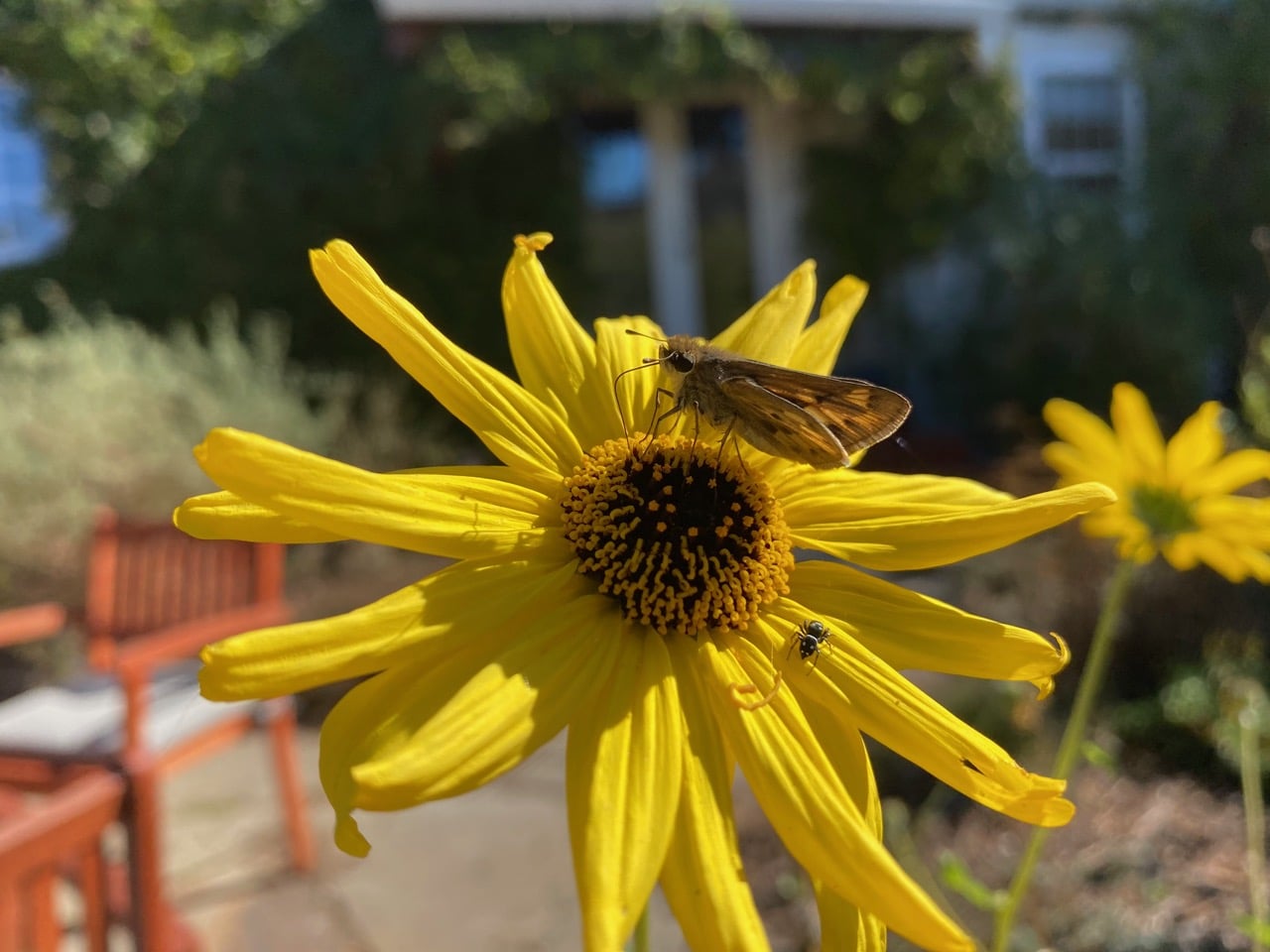 A Skipper landing on an Encelia flowerhead puts a tiny jumping spider on full alert.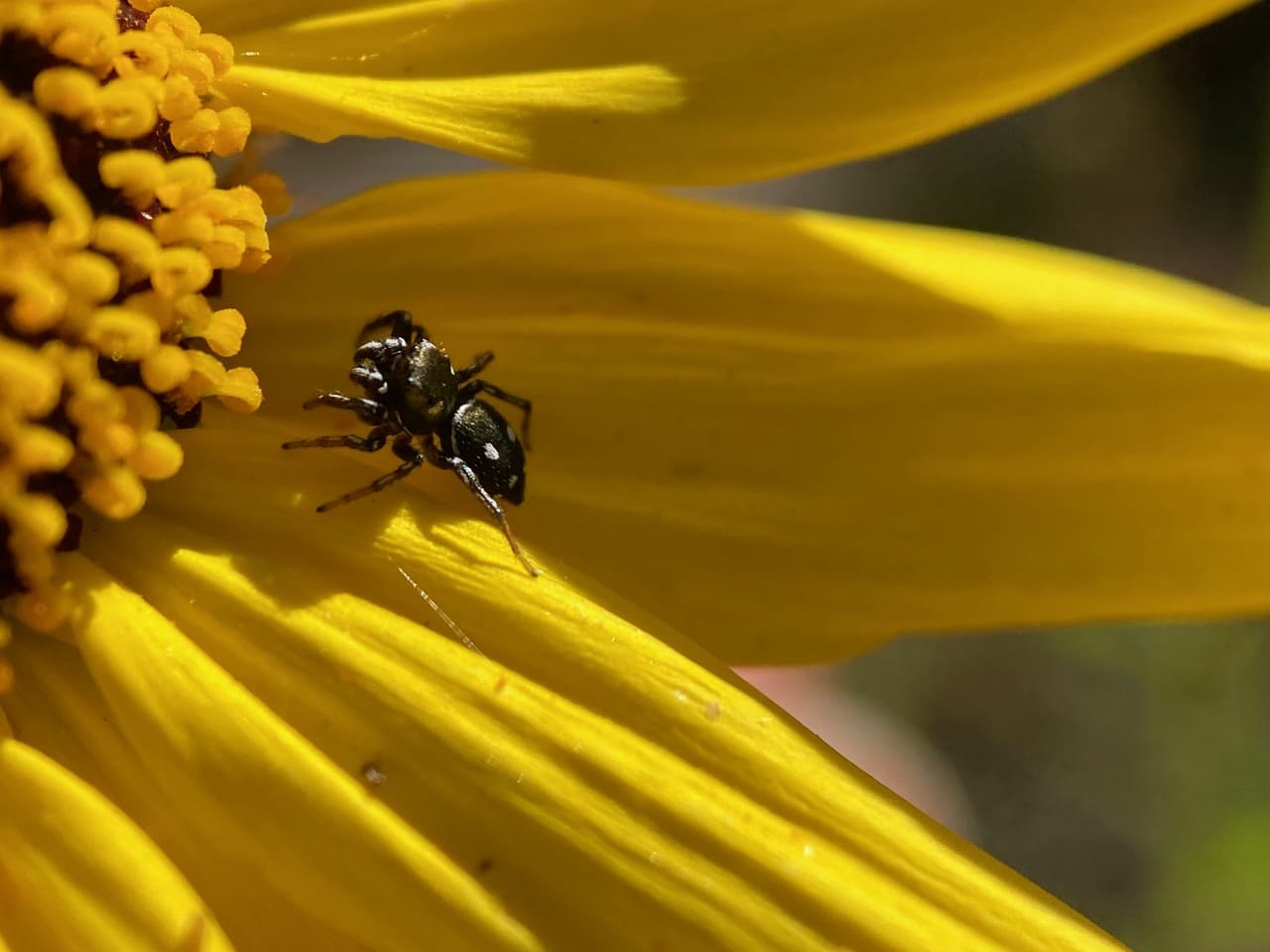
On closer examination, the spider turns out to be a Sun Jumping Spider, Heliophanus apiatus (family Salticidae).
The genus Heliophanus is one of the largest genera of jumping spiders with over 150 species, widespread in the Palearctic and Africa, with one center of diversity in the Mediterranean region. Heliophanus apiatus was first reported in the San Francisco Bay Area in 2015. Since then the species has established in three counties – Alameda, Santa Clara and San Mateo – surrounding the southern arm of San Francisco Bay. H. apiatus is a small salticid, male measuring 3.5-4.0 mm, and females 4.0-4.5 mm in body length. Mature males and females are similar in appearance, but only the females have yellow pedipalps. These spiders are found on low vegetation and on hard structures on or near the ground. They are capable of taking prey their own size.
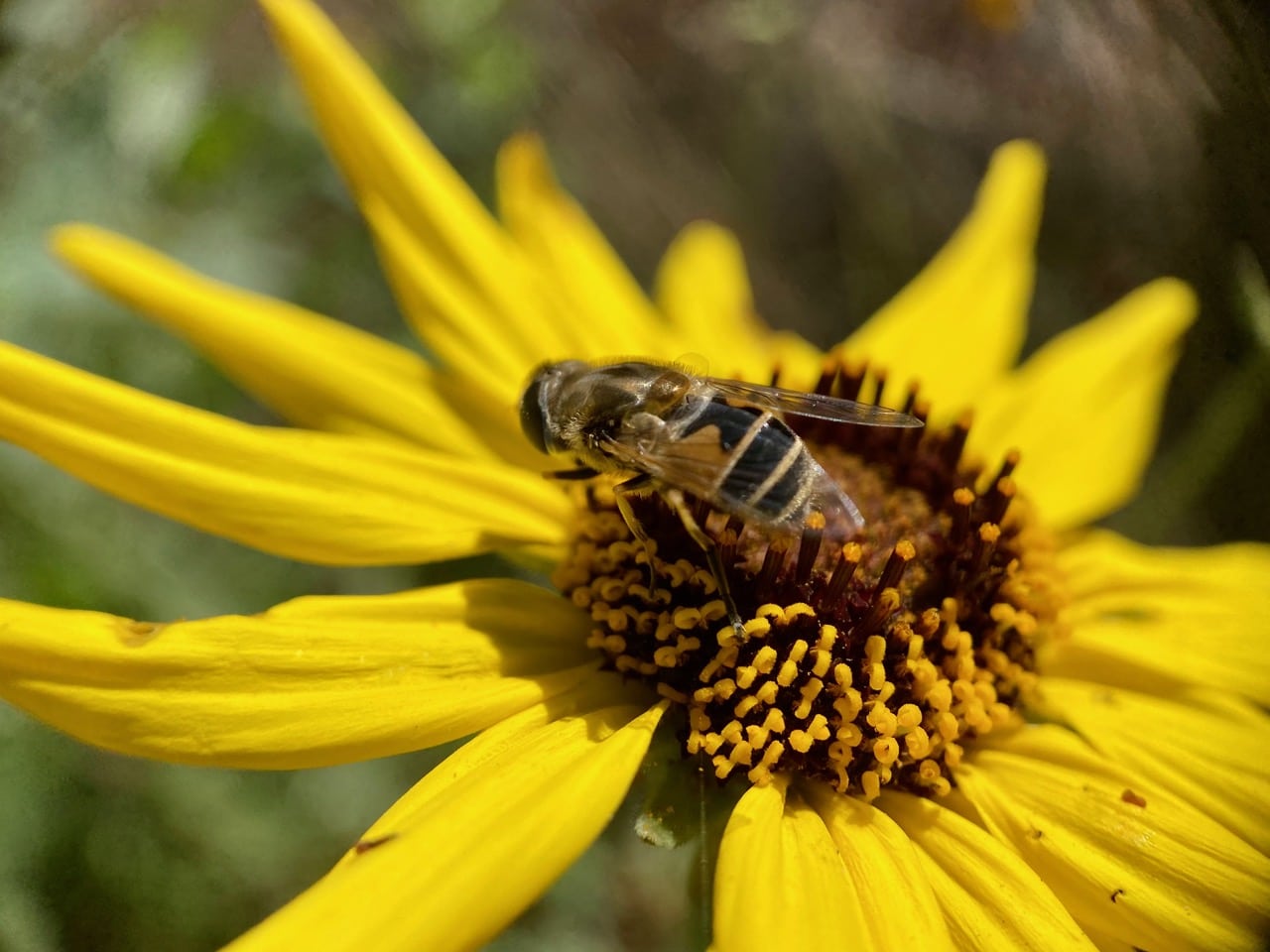
A Eurasian Drone Fly, Eristalis arbustorum (family Syrphidae) is foraging on an Encelia flowerhead.
The Eurasian Drone Fly, Eristalis arbustorum is an abundant species of hover fly that occurs throughout the northern hemisphere, including Europe, North Africa and North India. It was introduced to North America in the mid 1800’s and is now ubiquitous throughout much of the United States and Canada. The common name “drone fly” refers to its resemblance to the drone of the honeybee. Hoverflies get their names from the ability to remain nearly motionless while in flight. The adults are also known as flower flies as they are commonly found on and around flowers feeding on nectar and pollen. The Eurasian Drone Fly is found in a diversity of habitats, including wetland, forests, montane tundra, as well as farmland, urban parks and gardens. It visits the flowers of a wide range of low-growing plants and shrubs. The larvae are aquatic, occurring in shallow, nutrient rich standing water and in cow manure and compost heaps. Also known as “rat-tailed maggots”, the larvae have a siphon on their rear end that acts like a snorkel, helping them breathe under water. The siphon can be several times the length of the larva’s body. The larvae are saprophagous, feeding on bacteria in stagnant water rich in decomposing organic matter.

A Spotless Lady Beetle, Cycloneda sanguinea (family Coccinellidae) is foraging on a flowerhead of a male Coyote Brush. Is the beetle feeding on pollen? Although better known as predators, Lady Beetles are known to feed on pollen when prey is scarce.
The Spotless Lady Beetle, Cycloneda sanguinea (family Coccinellidae) is a widespread species of lady beetle in the Americas. It is is large lady beetle with red, unspotted elytra (wing covers) ranging from 4-6.5 mm long. The black and white marks on the head and pronotum are very distinctive, and they are also gender-specific. These lady beetles are very often found feeding on aphids on milkweeds, but also occur on a number of other plants.
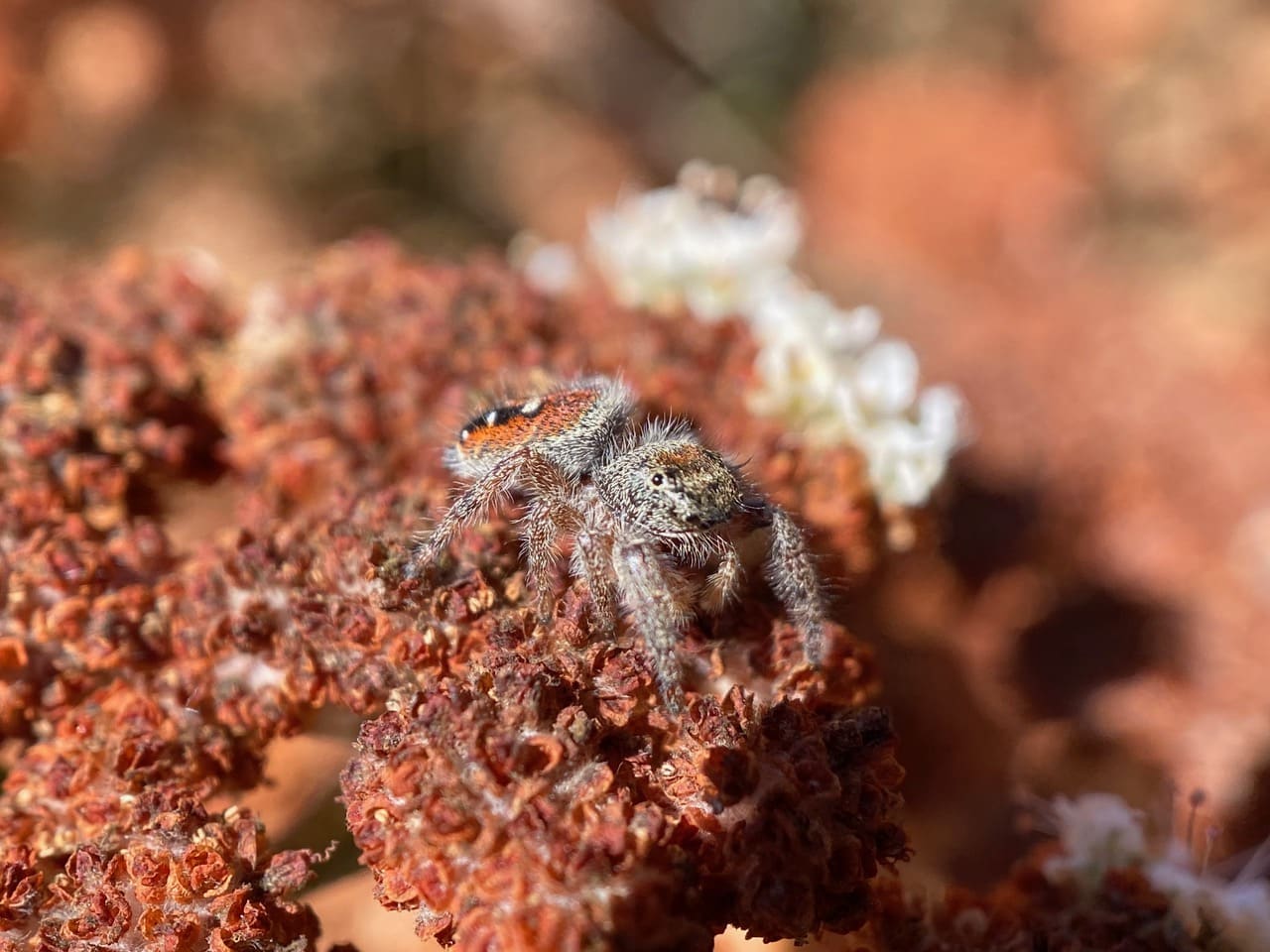
The Red-flowered Buckwheat, Eriogonum grande var. rubescens in the front garden has mostly dried up and gone to seed. A female Johnson’s Jumping Spider, Phidippus johnsoni (family Salticidae) is almost invisible on the dried inflorescences.
Salticids are free-roaming hunting spiders. They do not weave a web to catch prey. They stalk, then pounce on their prey. Just before jumping, the spider fastens a safety line to the substrate. It can leap 10-20 times their body length to capture prey. Their movement is achieved by rapid changes in hydraulic pressure of the hemolymph (insect version of blood). Muscular contractions force fluids into the hind legs, which cause them to extend extremely quickly.
Johnson’s Jumping Spider, Phidippus johnsoni is one of the largest and most commonly encountered jumping spiders of western North America. Adults are about a centimeter in length. While both sexes have a bright red abdomen, the female has an additional black central stripe with white markings. The spiders construct conspicuous tubular silken nests under rocks and wood on the ground. They stay inside the nests at night and during bad weather. Molting, egg laying and sometimes courtship and mating occur inside these nests. They feed on a wide variety of insects, and also prey heavily on spiders. Cannibalism does occur sometimes, when females feed on males.

Here’s a quick glimpse of the spider’s beautiful rear end as she disappears into the inflorescence.

I spot a small clump of clay attached to a dried stem of the Red-flowered Buckwheat. It appears to be built from layers of wet mud – a clay nest of a Potter Wasp!
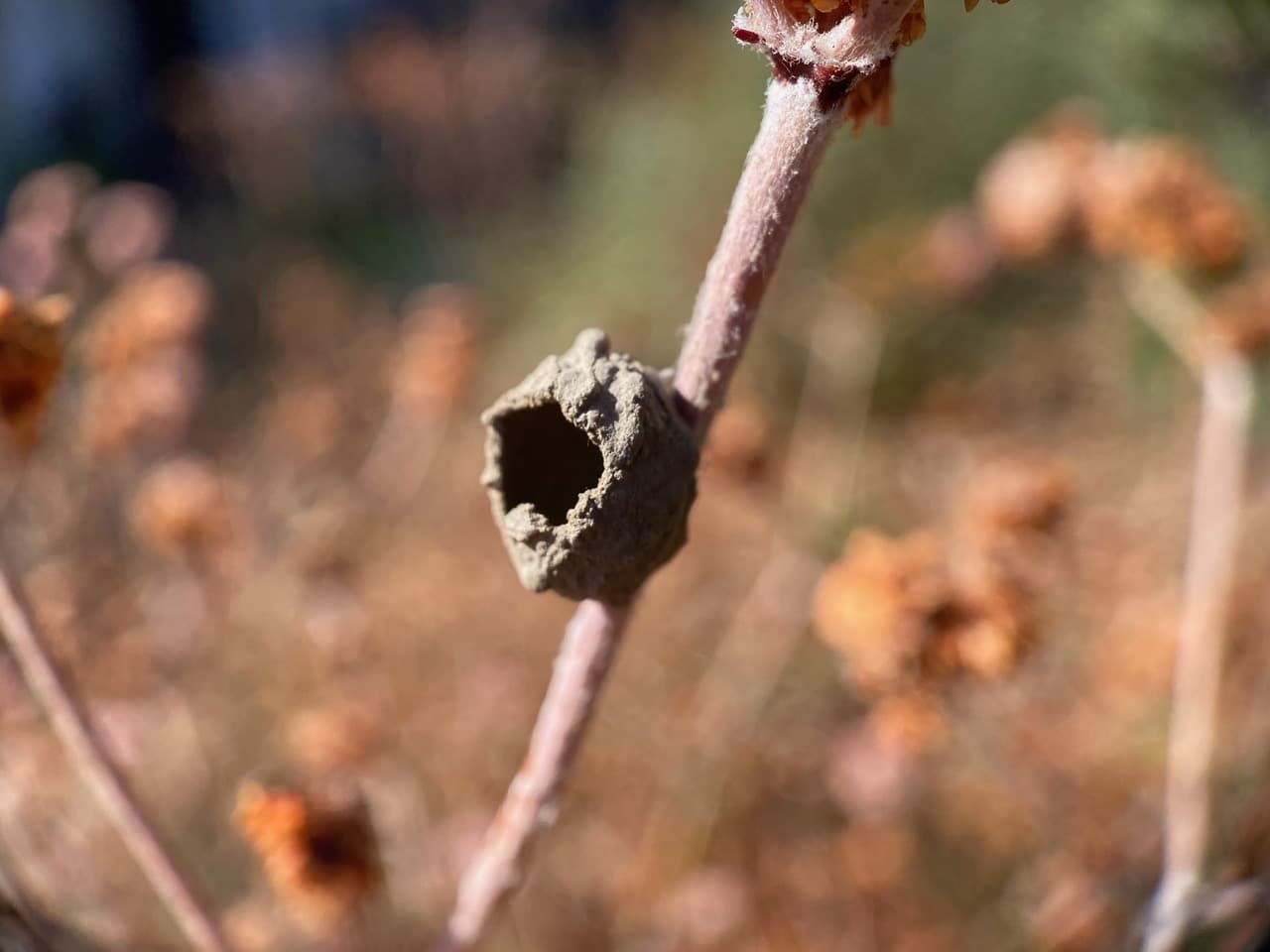
The front of the Potter Wasp nest shows a gaping hole from which the occupant has emerged.
Potter wasps (or mason wasps), the Eumeninae, are a cosmopolitan wasp group presently treated as a subfamily of Vespidae. Most eumenine species are black or brown, and commonly marked with strikingly contrasting patterns of yellow, white, orange, or red. Their wings are folded longitudinally at rest. Eumenine wasps are diverse in nest building. The different species may either use existing cavities or even man-made holes like old nail holes that they modify to some degree, or they construct their own either underground or exposed nests. The most widely used building material is mud made of a mixture of soil and regurgitated water.
All known Eumenine species are predators, most of them solitary mass provisioners. When a cell is completed, the adult wasp typically collects beetle larvae, spiders, or caterpillars and, paralyzing them, places them in the cell to serve as food for a single wasp larva. As a normal rule, the adult wasp lays a single egg in the empty cell before provisioning it. The complete life cycle may last from a few weeks to more than a year from the egg until the adult emerges. The new adult wasp emerges from the brood cell by chewing a hole through the side of the pot. Adult potter wasps feed on floral nectar.

Just minutes later, I spot a Potter Wasp (family Vespidae, subfamily Eumeninae) foraging on one of the last remaining fresh inflorescences on the same plant. Did the wasp emerge from the clay nest we just saw?
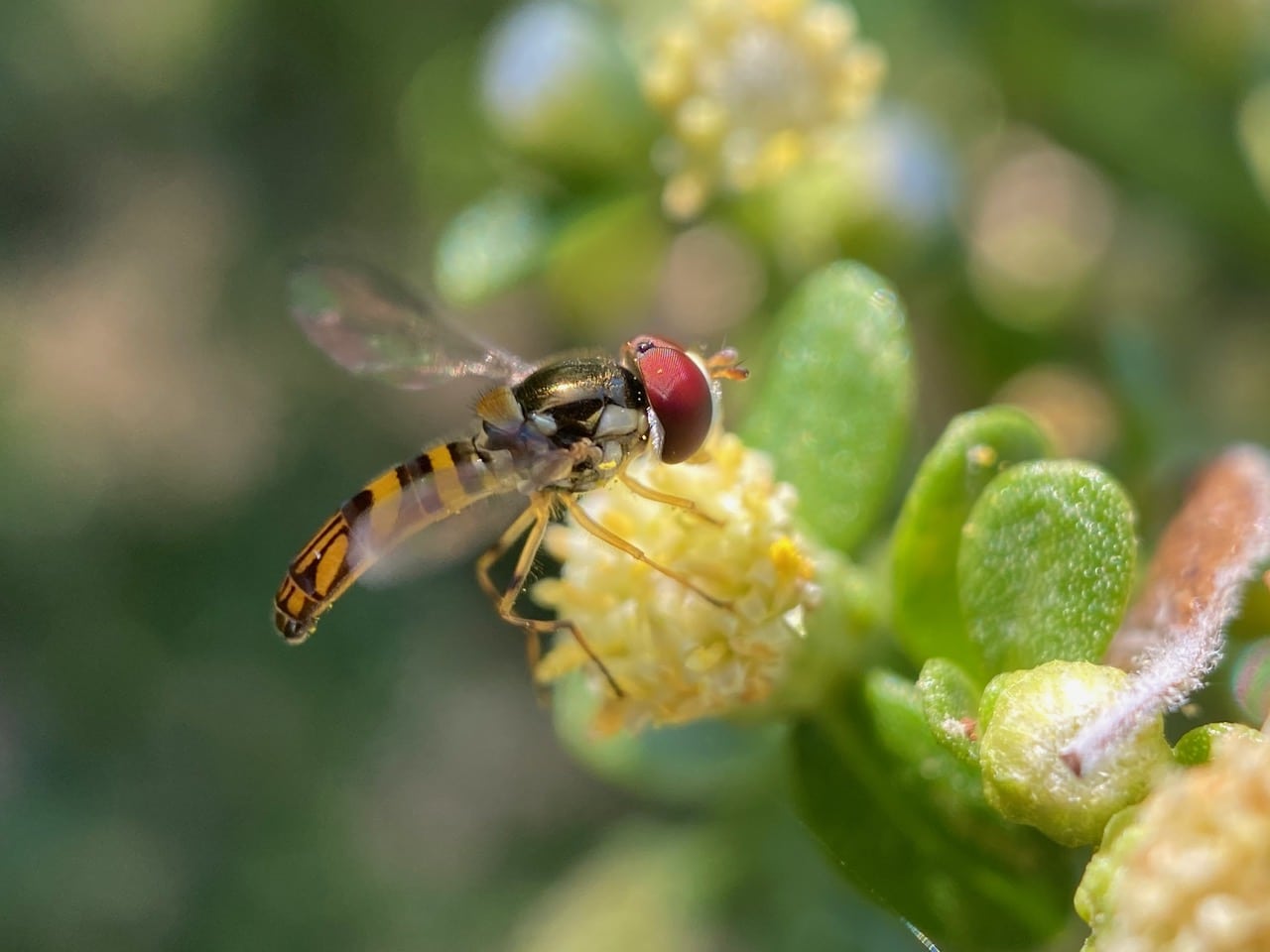
A male Oblique Streaktail, Allograpta obliqua (family Syrphidae) is foraging on a flowerhead of a male Coyote Brush. Note the narrow, parallel-sided abdomen, and the large eyes that meet on top of the head – features that identify the hover fly as a male.
The Oblique Streaktail, Allograpta obliqua (family Syrphidae) is a common North American species of hoverfly. Adults are 6-7 mm long. Females have a tapered abdomen that ends in a pointed tip. Eggs are laid on surfaces of leaves or stems near aphids. The larvae are important predators of aphids. Adults visit flowers for nectar and pollen, and are pollinators.