

Pollinator Post 10/12/24
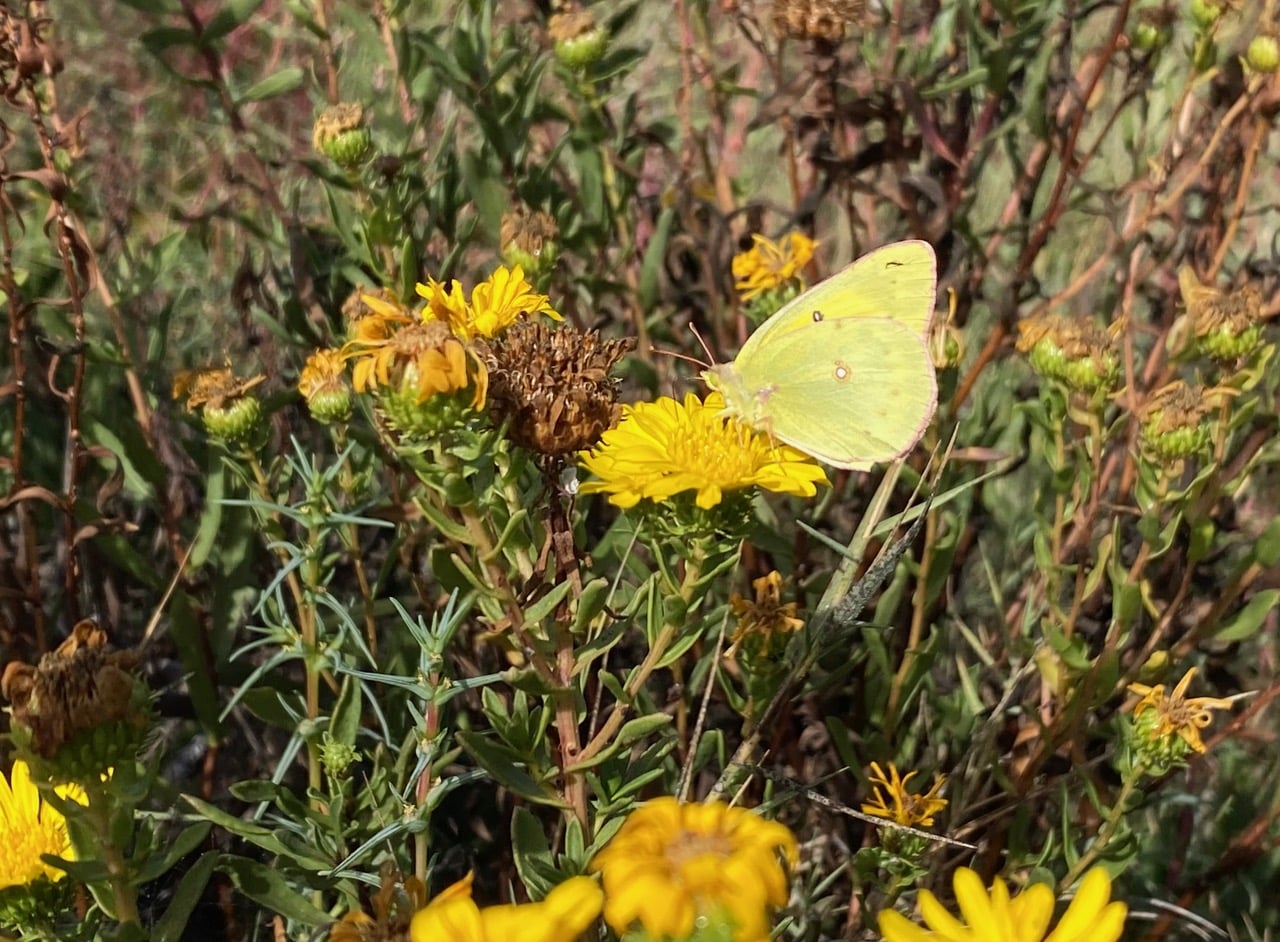
An Orange Sulphur butterfly is taking nectar from a flowerhead of Oregon Gumweed, Grindelia stricta in a field of mostly faded flowers. These butterflies always perch with their wings tightly closed.
The Orange Sulphur, Colias eurytheme is a widespread and common North American butterfly, belonging to the Pieridae family, the “Whites and Sulphurs”. It is medium-sized with a wingspan of about 2 in. Though color may vary among individuals, the wings are typically yellowish and orange, although some females are white and may appear greenish. The top wing surface has dark brown to black edging. Adults fuel up on nectar from a variety of flowering plants. The caterpillars (green with a white side streak) tend to concentrate on pea family plants (family Fabaceae), such as alfalfa, vetch and clover. Males patrol for females, looking for the characteristic female ultraviolet light absorbance on the hind wings. In contrast, the males’ hindwings reflect ultraviolet light instead.
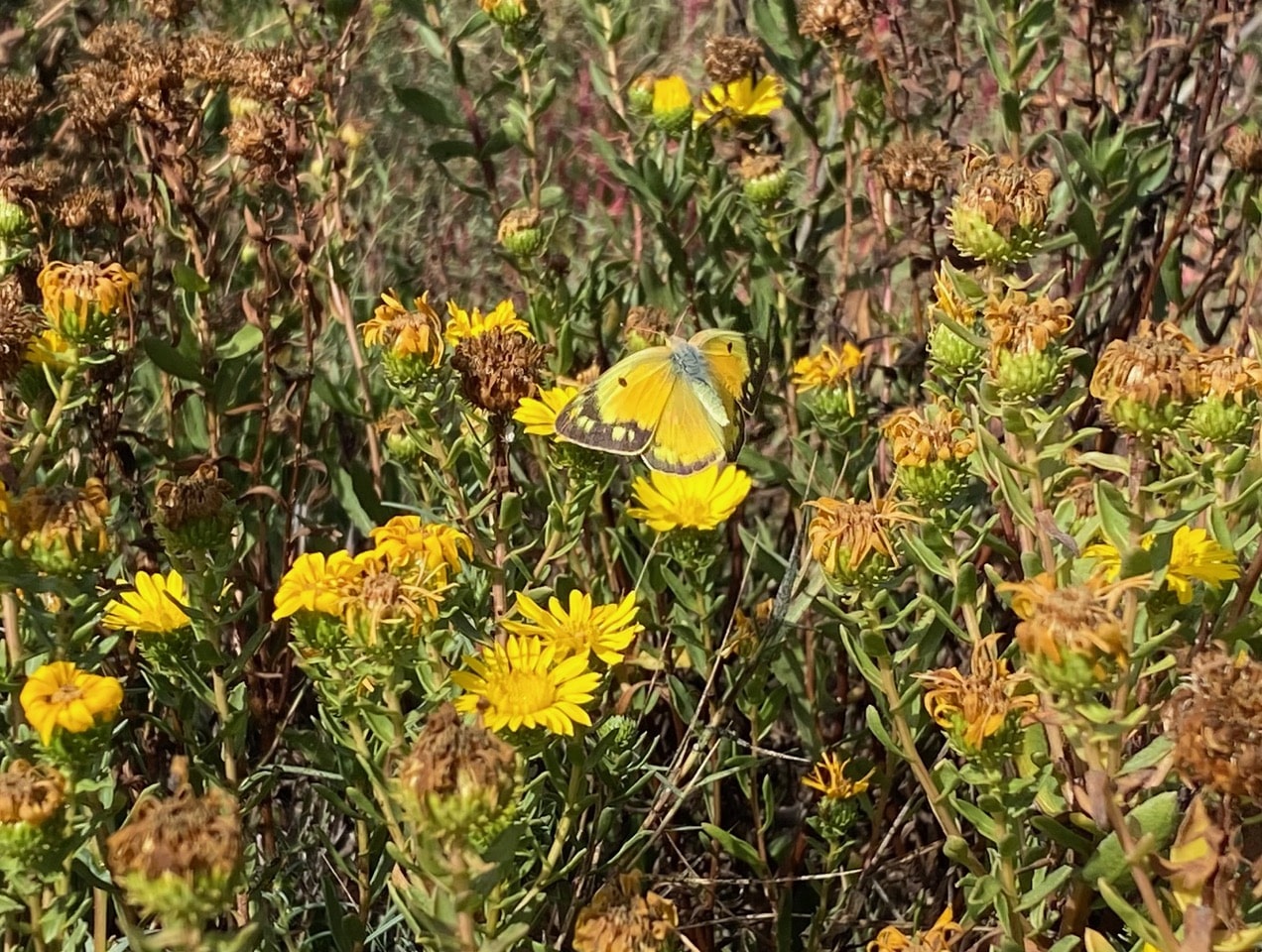
As the Orange Sulphur flies away, I am lucky to catch a fleeting glimpse of the upper surface of its wings. It is a female! Males have solid brown-black wing borders, while female wing borders are somewhat wider and contain a row of yellow spots.
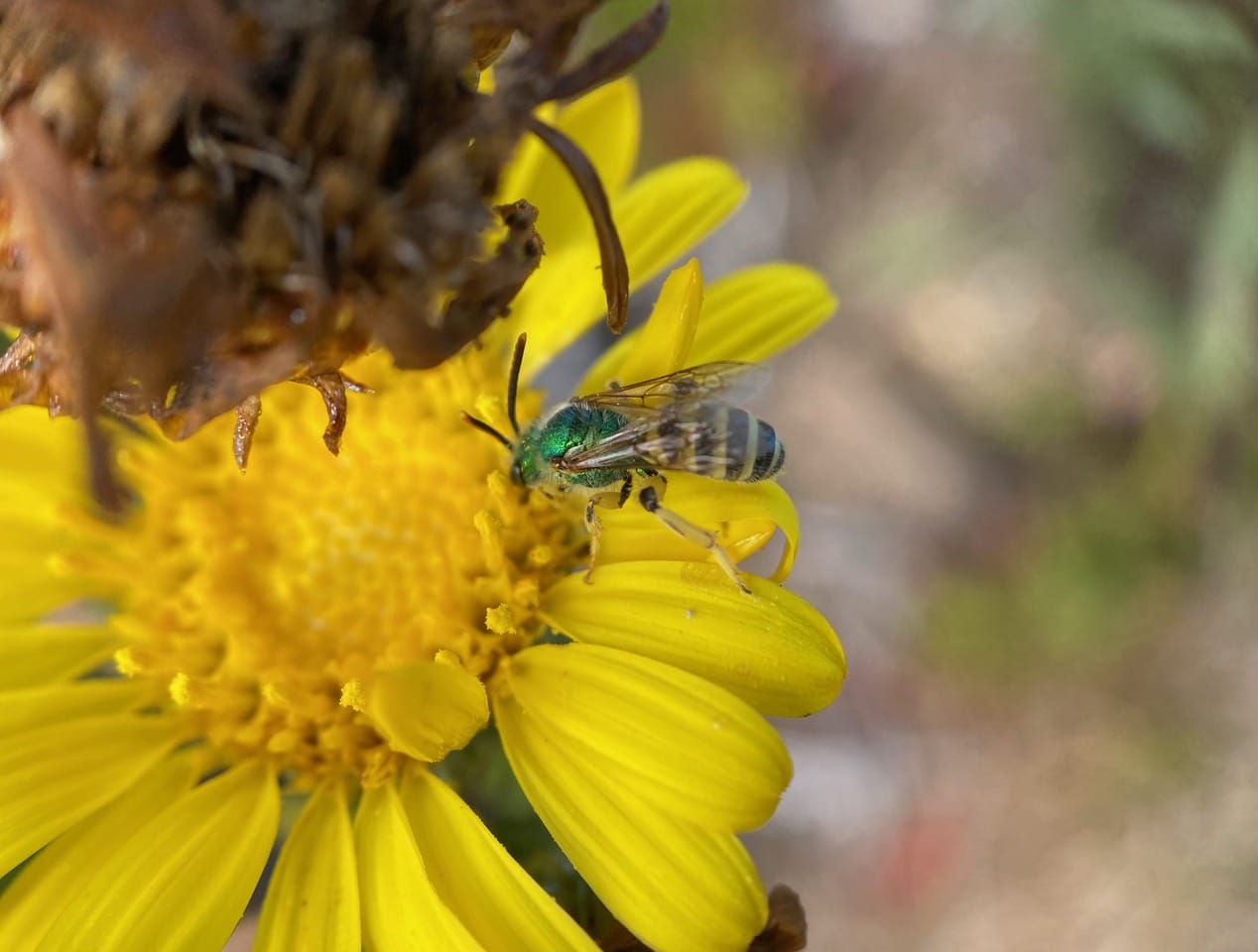
A male Texas Striped Sweat Bee, Agapostemon texanus (family Halictidae) is taking nectar from a Grindelia flowerhead. The species is now the predominant bees visiting the Grindelia flowers, replacing the Summer Longhorn Bees, Melissodes sp. (family Apidae) that are completely absent today.
The genus Agapostemon is widespread and abundant throughout North America. These ground-nesters are most diverse and abundant in temperate regions and southwestern U.S. deserts. Agapostemon are commonly called “sweat bees” because they are closely related to, and resemble bees in the Halictus and Lasioglossum genera. Unlike those bees however, Agapostemon are not attracted to human sweat.
Agapostemon are brightly colored metallic green or blue bees measuring 7 to 14.5 mm long. Most species have a metallic green head and thorax, and black-and-yellow striped abdomen; some females are entirely bright green or blue. Females carry pollen on scopal hairs located on their hind legs. Agapostemon are generalists. Like other members of the family Halictidae, they are short-tongued and thus have difficulty extracting nectar from deep flowers. Males are often seen flying slowly around flowers looking for females. The bees favor flowers with high densities. The bees are active summer to fall.

A Buttonhook Leafbeetle Jumping Spider or Grapevine Jumping Spider, Sassacus vitis (family Salticidae) is hunting on a Grindelia flowerhead.
The spider is native to North America, with a range spanning from Canada to Panama. It is a small jumping spider with iridescent gold abdomen and white ring around the anterior surface of abdomen. Body is covered with golden scales. Males are 3.5 mm long, females 4.5 mm. The name vitis is Latin for “grapevine”. The spider is commonly found on shrubs and vines and in fields. Best known as a common resident of vineyards.
Salticids are free-roaming hunting spiders. They do not weave a web to catch prey. They stalk, then pounce on their prey. Just before jumping, the spider fastens a safety line to the substrate. It can leap 10-20 times their body length to capture prey. Their movement is achieved by rapid changes in hydraulic pressure of the blood. Muscular contractions force fluids into the hind legs, which cause them to extend extremely quickly. Jumping spiders are visual hunters. Their excellent vision has among the highest acuities in invertebrates. Since all their 8 eyes are fixed in place and cannot pivot independently from the body like human eyes can, jumping spiders must turn to face whatever they want to see well. This includes moving their cephalothorax up and down, an endearing behavior.

A female Sugarcane Soldier Fly lands on a faded flowerhead of Bristly Oxtongue.
The Sugarcane Soldier Fly, Inopus rubriceps (family Stratiomyidae) is native to eastern Australia where it infests such crops as corn, pastures, and sugarcane. The fly was accidentally introduced into California over 50 years ago. It is now infesting lawns in San Francisco and other Bay Area counties. Damage to turf and other members of the grass family results from withdrawal of sap from roots of host plants by the larvae and possibly, injection of a toxin into the plant.
In California adults occur in large numbers from late September to early November each year. Eggs are deposited in crevices in the soil. The adults are sexually dimorphic. Females have tiny red heads with eyes set far apart. The smaller males have large eyes that occupy the whole surface of the head.
Sugarcane Soldier Fly (Inopus rubriceps) · iNaturalist United Kingdom
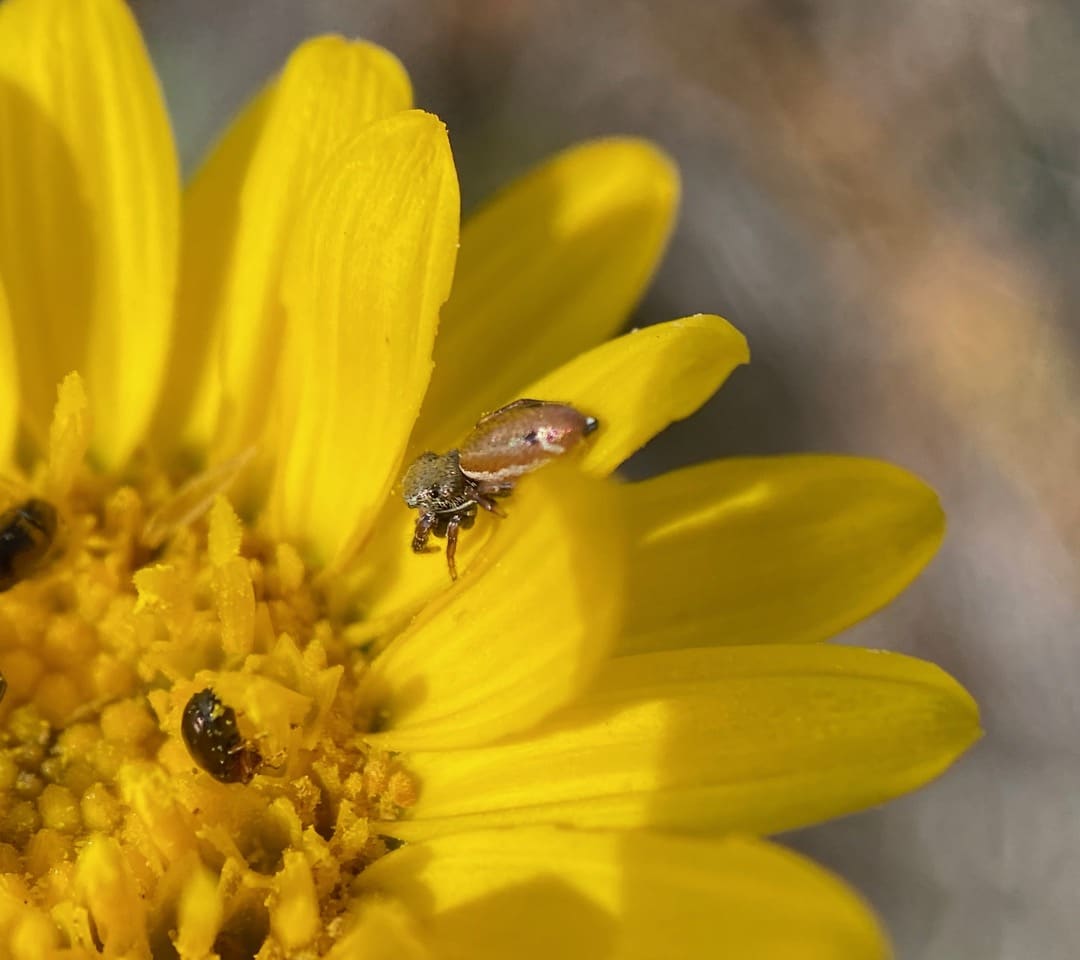
Perched on a ray petal, a Buttonhook Leafbeetle Jumping Spider, Sassacus vitis (family Salticidae) is eyeing some tiny beetles feeding in the middle of a Grindelia flowerhead.
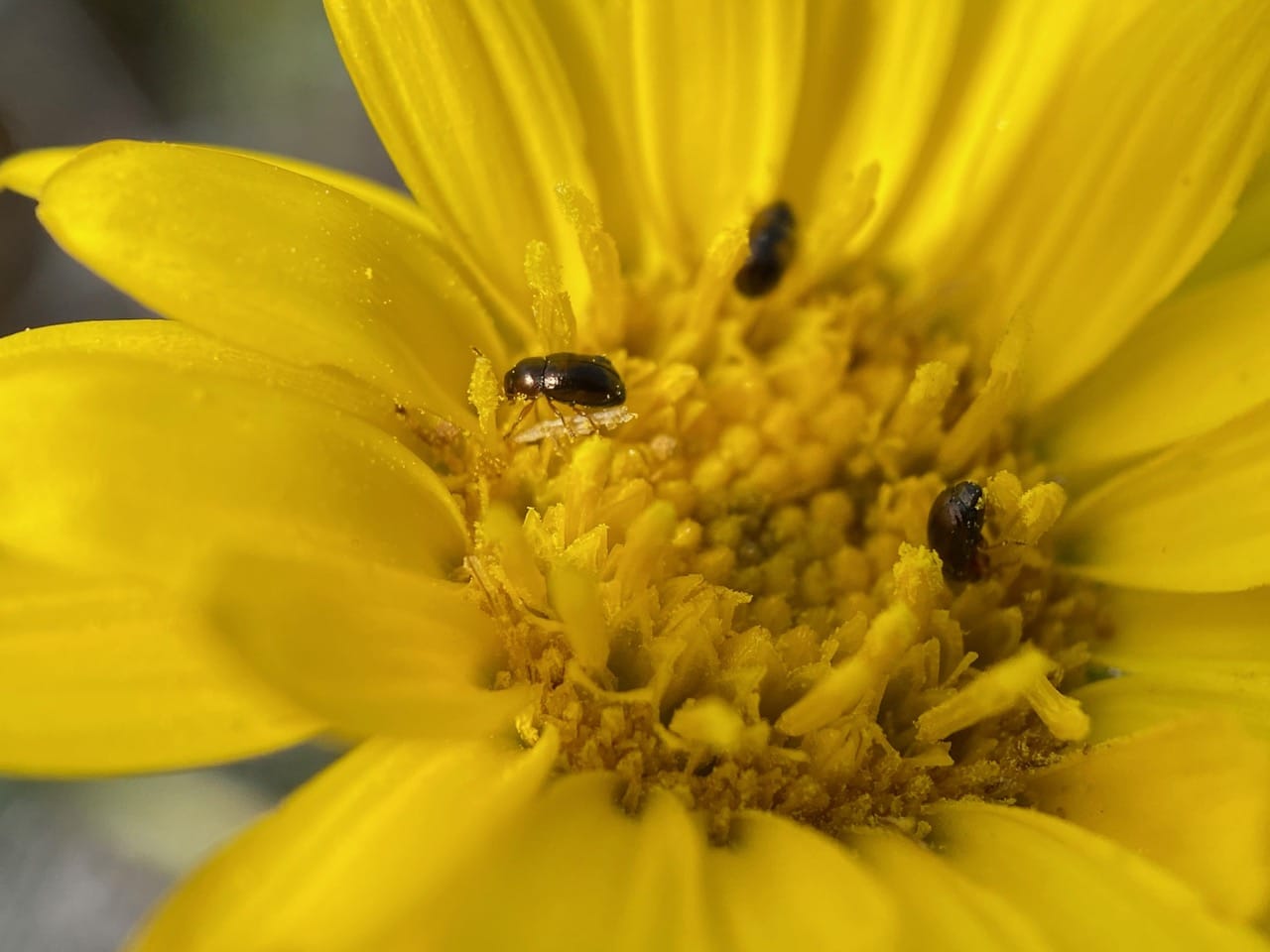
The tiny beetles appear to be Bronze Leaf Beetles, Diachus auratus (family Chrysomelidae). They are feeding on pollen of the florets.
Members of the family Chrysomelidae are commonly known as Leaf Beetles. Adults and larvae feed on all sorts of plant tissues, and all species are fully phytophagous. Many are serious pests of cultivated plants, including food crops. Others are beneficial due to their use in biocontrol of invasive weeds. Chrysomelids are popular among insect collectors, as many are conspicuously colored, typically in glossy yellow to red or metallic blue-green hues, and some have spectacularly bizarre shapes.
The Bronze Leaf Beetle, Diachus auratus is a species of case-bearing leaf beetle in the family Chrysomelidae, subfamily Cryptocephalina. It is found in Australia, the Caribbean, the Americas, Oceania, and Southern Asia. Adults are found on many unrelated plants, especially plants in bloom. Case-bearing leaf beetles are found in two subfamilies within Chrysomelidae. As she lays her eggs, the female case-bearing leaf beetle covers each one with a layer of excrement. After the larvae hatch, they retain this covering (case) as camouflage and add to it throughout their larval life. When disturbed, the larvae pull in their head and legs; because their color and shape resemble caterpillar droppings they are ignored by predators. Eventually the larva seals the case to pupate inside, before emerging as an adult. Some species are myrmecophiles, living near or even inside ant nests.
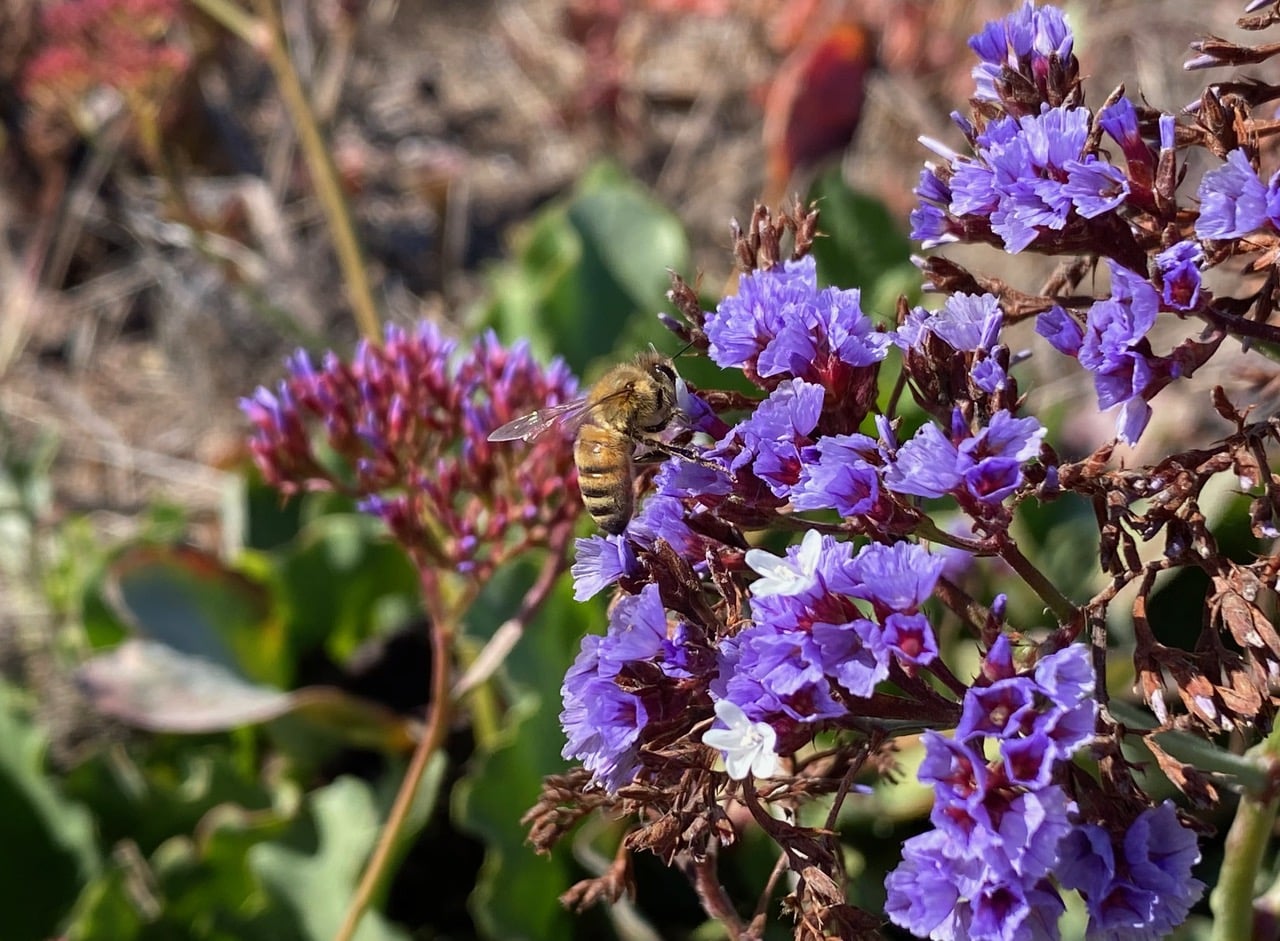 A Honey Bee, Apis mellifera (family Apidae) is reaching deep into a tubular flower of Perez’s Sea Lavender, Limonium perezii for nectar.
For butterflies with a long, flexible proboscis, sipping nectar from these small tubular flowers is a cinch. This is a Fiery Skipper, Hylephila phyleus (family Hesperiidae).
The Fiery Skipper, Hylephila phyleus is a species of butterfly in the family Hesperiidae. The species has a wide range in North and South America. At about 1 inch in length, males are orange or yellow while the females are dark brown. In both sexes, small brown spots are seen on both the hindwings and forewings. Like other skippers, the Fiery Skippers often hold their wings in a “triangle” shape – the forewings held upright, and the hindwing folded flat. This position is thought to better absorb the sun’s rays. The butterfly’s flight is described as rapid and darting. Fiery Skipper larvae are greenish pink-grey with a black head and constricted neck. These caterpillars are often considered pests as they feed on many species of turfgrass.

A male Cabbage White butterfly is taking nectar from the flowers of Perez’s Sea Lavender.
The Cabbage White, Pieris rapae (family Pieridae) was introduced to the US along with European cabbage imports in the 1860’5. The caterpillars feed on plants in the mustard or Brassicaceae family, and occasionally some in the caper family. The butterflies have a darkened, yellowish underside of the hind wings, which enables them to heat up quickly in the sun. The butterfly’s white wings reflect ultraviolet light, which we can’t see but the butterflies can. To our eyes the butterflies seem plain and drab, but to each other, females are a gentle lavender and males shine with a deep royal purple. Brighter males are more attractive to females and the color’s strength reflects the amount of protein the males consumed as caterpillars. During mating, male butterflies transfer nutrients to the females in the form of infertile sperm, a nuptial gift which will enhance the female’s life expectancy and fertility. A male with a higher quality diet can afford to be brighter and to produce bigger and more nutritious nuptial gifts.
Although we can’t see the UV reflectance of the butterflies, we can still tell the gender of the Cabbage White visually in the field. Both sexes have dark wingtips on the forewings. Females have two black spots in the center of the forewings; males have one. The underside is yellow-white. There is a black spot on the upper side of the hindwing that is not easily visible, as it is usually covered by the forewings.

Wow, what happened here? Several Argentine Ants are stuck on the pool of gummy sap on the top of an immature Grindelia flowerhead. All of them appear to be dead.
The Argentine Ant, Linepithema humile (family Formicidae) is native to Northern Argentina, but it has been inadvertently introduced by humans to many countries, and is now an established invasive species in many Mediterranean climate areas worldwide. The success of the species can be attributed to their lack of aggression between the colonies. There is no apparent antagonism between separate colonies of its own kind, resulting in “super-colonies” that extend across hundreds or thousands of kilometers in different parts of the their range. Genetic, behavioral, and chemical analyses show that introduced Argentine Ants on separate continents actually represent a single global supercolony.
The Argentine Ants are ranked among the world’s worst invasive animal species. In its introduced range, the Argentine ant often displaces most or all native ants and can threaten native invertebrates and even small vertebrates that are not accustomed to defending against the aggressive ants. This can, in turn, imperil other species in the ecosystem, such as native plants that depend on native ants for seed dispersal, or lizards that depend on native ants for food.
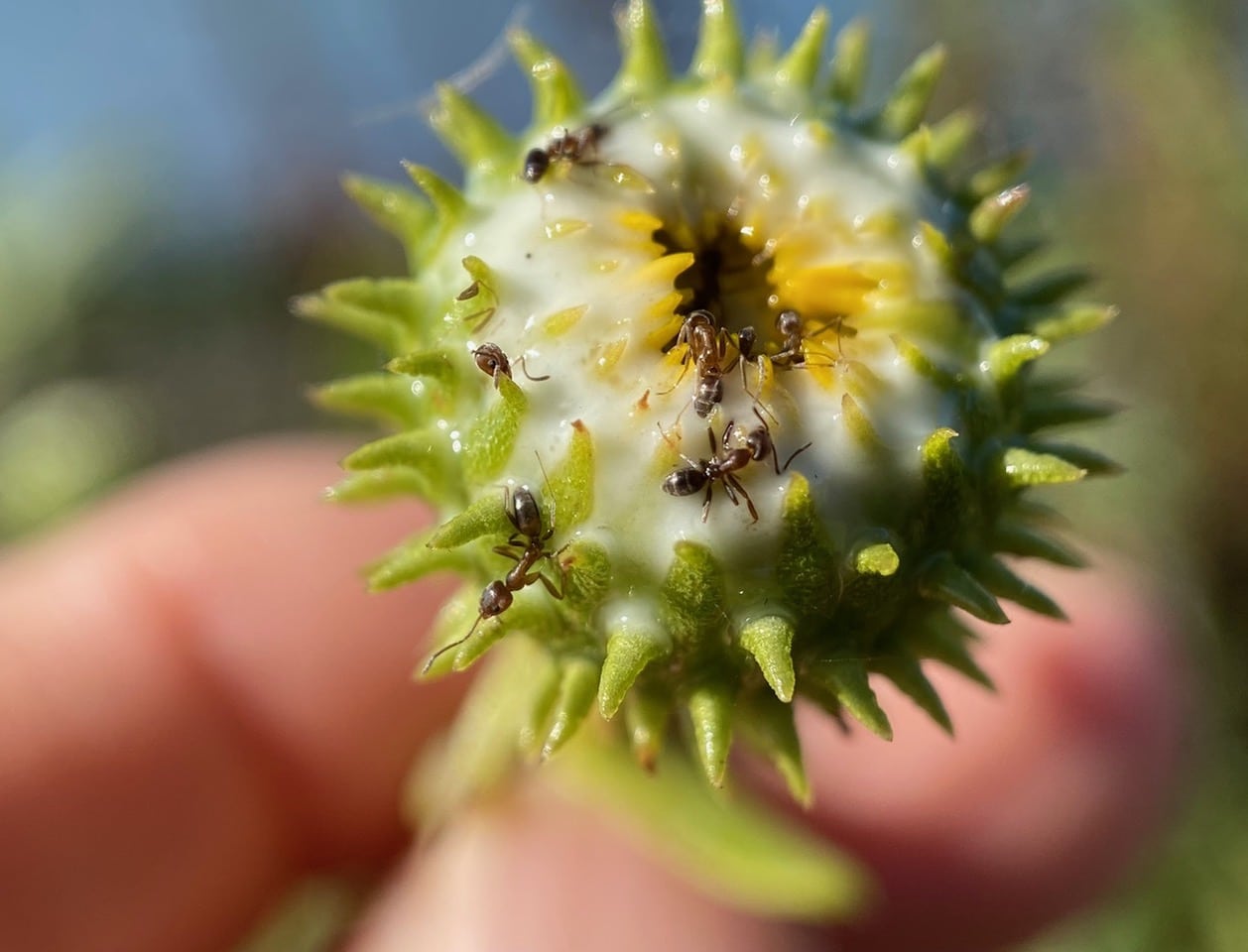
Closing in, I realize that the ants were exploring the opening in the top of the flowerhead when they met their sticky demise. What could they be after in the interior of an unopened flowerhead that is worth risking their lives for? Perhaps Grindelia produces the sticky goo to protect its young flowers from the intrusions of small insects like the ants.
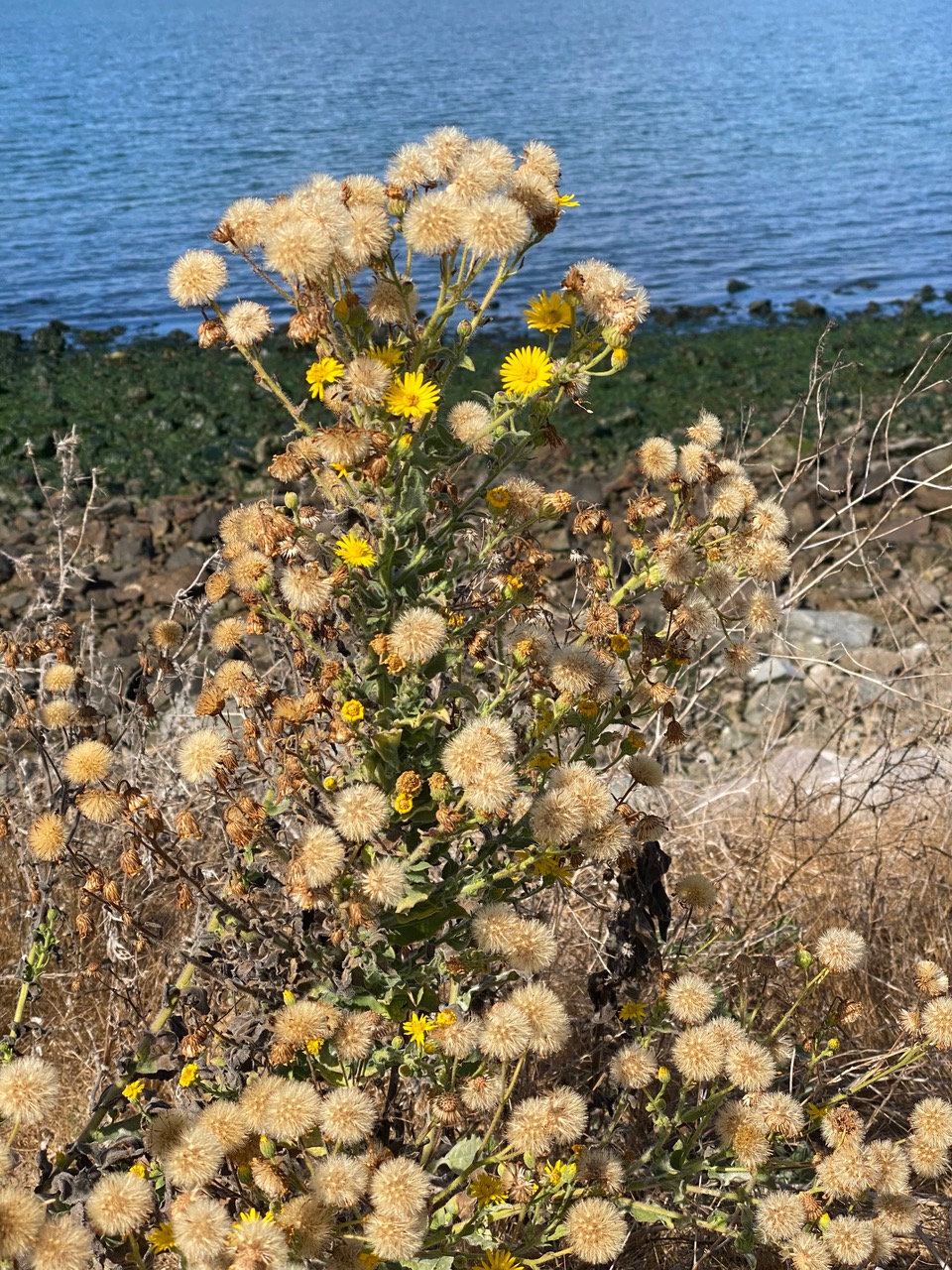
The Telegraphweed, Heterotheca grandiflora on the drier section of the trail have mostly gone to seed.
This hardy native produces two types of seeds as a survival strategy for uncertain environments. The parachute-bearing seeds from the disk florets are transported by the wind and are likely to be carried away from the parent plant to colonize new area. These seeds germinate quickly. The seeds produced by the ray florets on the rim have no parachute and fall close to the parent plant, in an environment where the parent plant has succeeded. Ray seeds are more sensitive to environmental conditions and germinate slowly. Ray seeds ensure the continuation and expansion of the original population. Thus, Telegraphweed distributes its seedlings over both space and time, a strategy that accounts for its successful colonization of disturbed areas.

I seldom see insects visit the flowerheads of Telegraphweed. Surprise! A female Western Leafcutter Bee, Megachile perihirta (family Megachilidae) is foraging on a flowerhead.
Leaf-cutter Bees, Megachile sp. (family Megachilidae) are stout-bodied, usually with pale hair on the thorax and stripes of white hairs on the abdomen. Females usually have a triangular abdomen with a pointed tip, and males’ faces are covered with dense, pale hair. Flight season is from May into September, with peak activity from June to August.
Solitary females construct nests in tubular cavities, including hollow stems, tree holes, and abandoned beetle burrows in wood. Many use holes drilled into wood, straws, or other manufactured tunnels. Females cut pieces from leaves or flower petals for use in the construction of brood cells. Most Megachile females are generalists when foraging for pollen. Pollen is transported in dense scopae on the underside of the abdomen.
Photos of Western Leafcutter Bee (Megachile perihirta) · iNaturalist

Floral resources are fast dwindling. A male Cabbage White butterfly, Pieris rapae (family Pieridae) is taking nectar from the flowers of the Wild Radish, Raphanus raphanistrum.
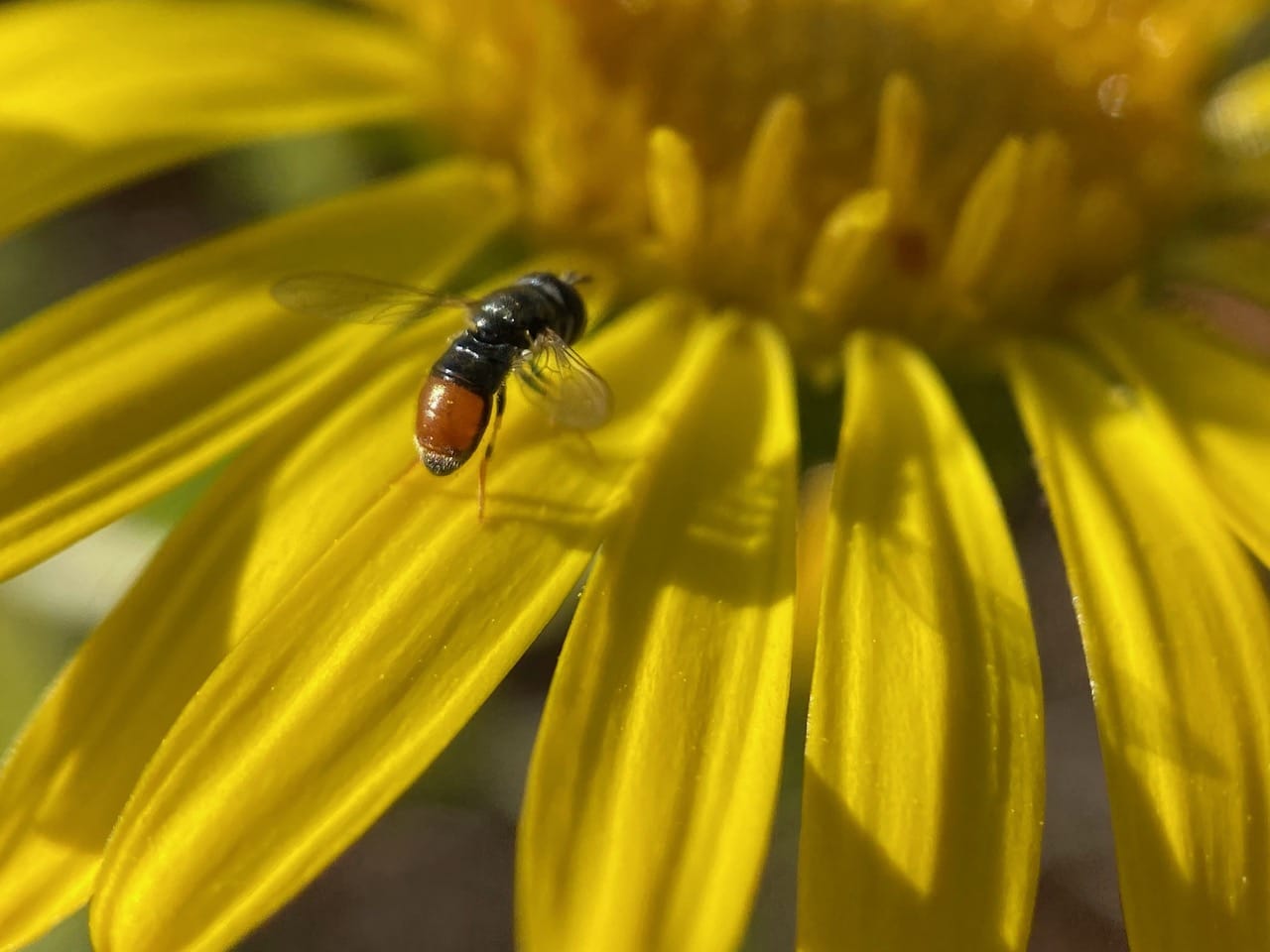
A Common Grass Skimmer, Paragus haemorrhous (family Syrphidae) lands on a ray petal of a Grindelia flowerhead.
The Common Grass Skimmer, Paragus haemorrhous (family Syrphidae) is easily the smallest hover fly I know, measuring only about 4 mm in length. The species has a world-wide distribution, found in unimproved grassland, dune grass, open areas and pathsides in forest, and meadows. Adults visit flowers for nectar and pollen. Larvae feed on aphids on low herbaceous plants.
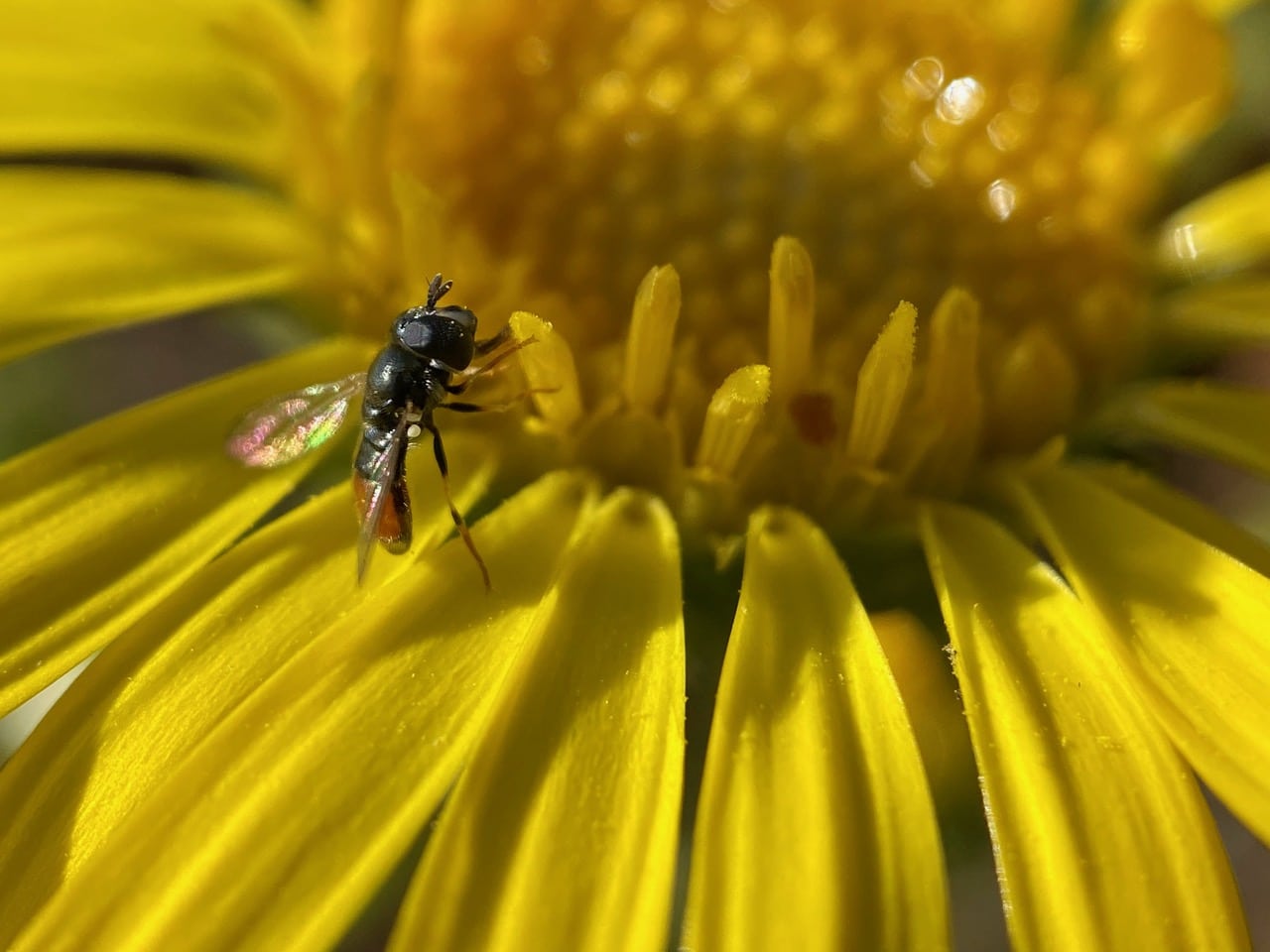
The tiny hover fly proceeds to feed on pollen offered by the stamens of a fresh floret.
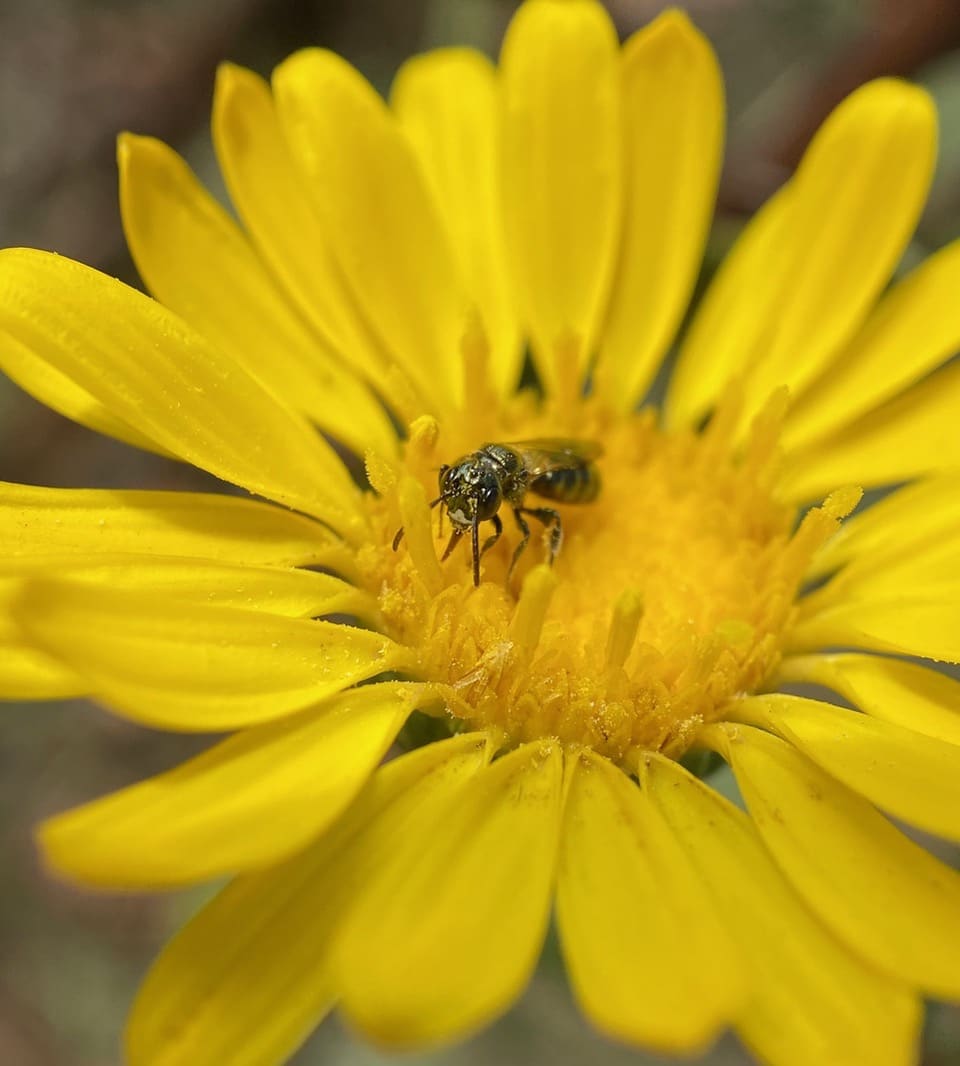
A small, glossy black bee is taking nectar on a fresh Grindelia flowerhead. It has an inverted T-shaped white marking on its face. Wow, this is the first male Small Carpenter Bee, Ceratina sp. (family Apidae) I have encountered! Not all Ceratina species have the facial marking. The females of the marked ones apparently have a Charley Chaplin mustache-shaped marking on their face.
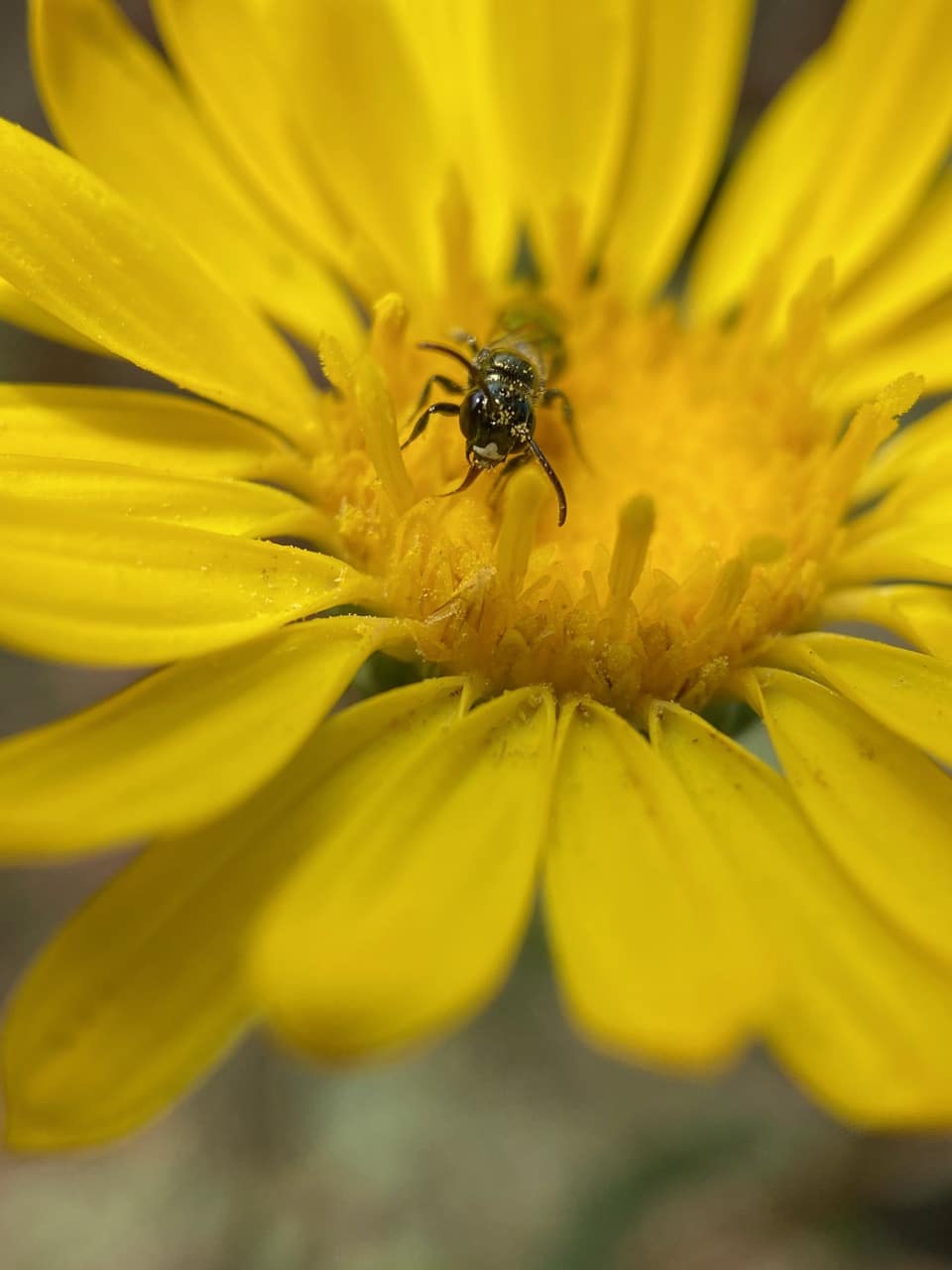
Besides the distinctive facial marking, the male Ceratina also has longer antennae.
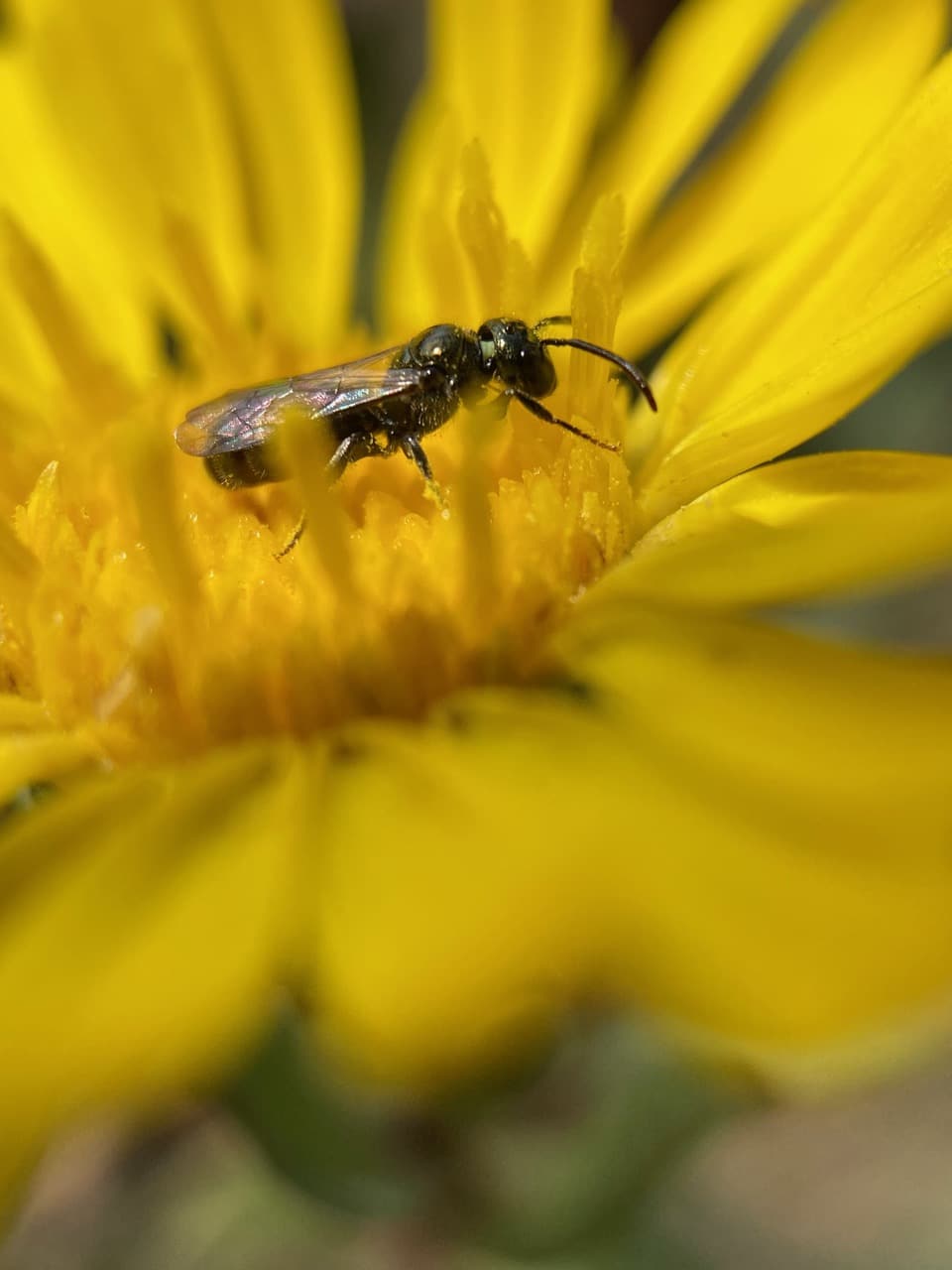
The Small Carpenter Bee genus Ceratina is closely related to the more familiar, and much larger Carpenter Bees (genus Xylocopa). Ceratina are typically dark, shiny, even metallic bees, with fairly sparse body hairs and a weak scopa on the hind leg. The shield-shaped abdomen comes to a point at the tip. Some species have yellow markings, often on the face.
Females excavate nests with their mandibles in the pith of broken or burned plant twigs and stems. While many species are solitary, a number are subsocial. Both male and female carpenter bees overwinter as adults within their old nest tunnels, emerging in the spring to mate. In the spring, this resting place (hibernaculum) is modified into a brood nest by further excavation. The female collects pollen and nectar, places this mixture (called bee bread) inside the cavity, lays an egg on the provision, and then caps off the cell with chewed plant material. Several cells are constructed end to end in each plant stem.

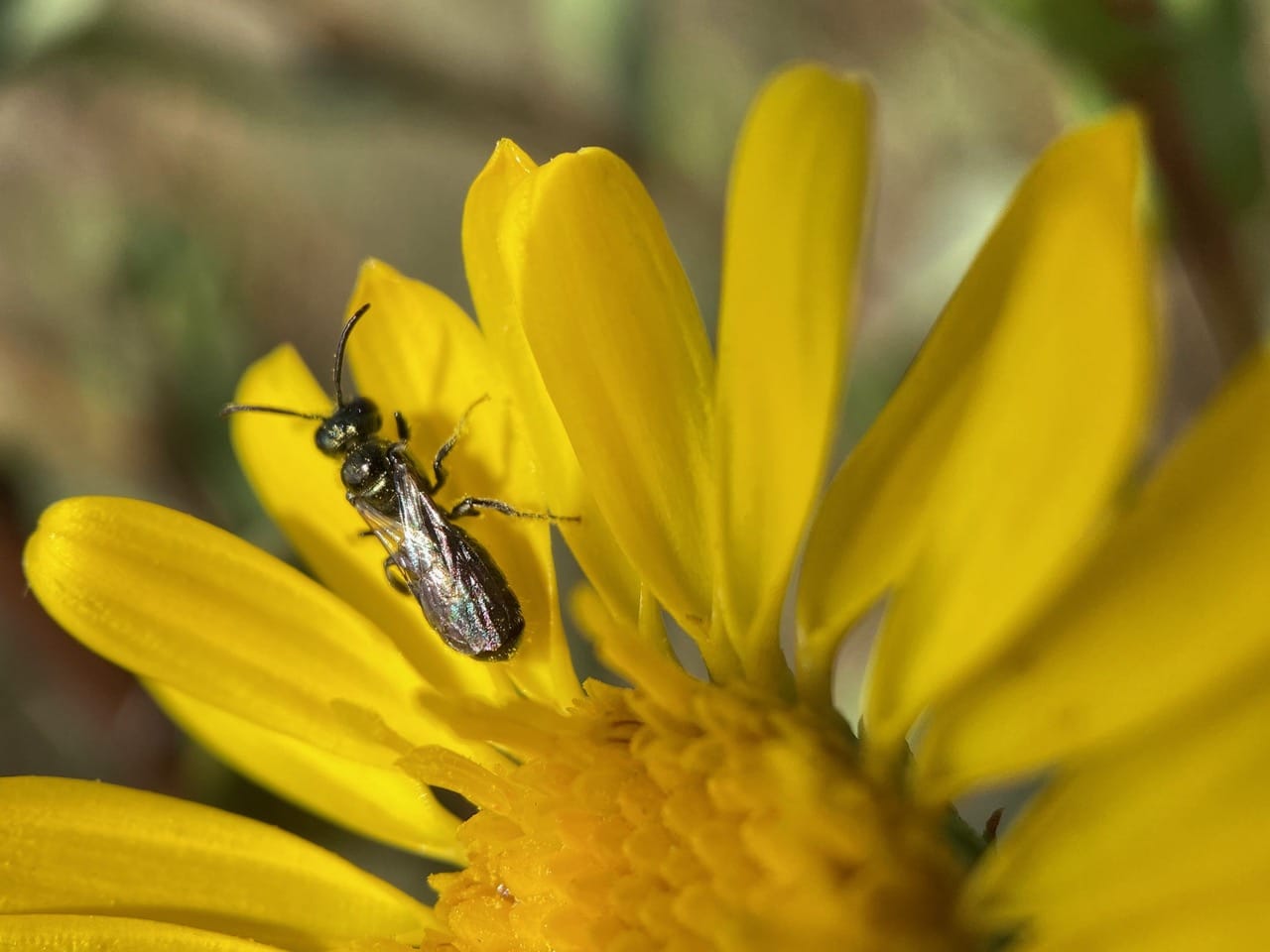
Note the long antennae and absence of scopa on the hind legs of the male Ceratina.
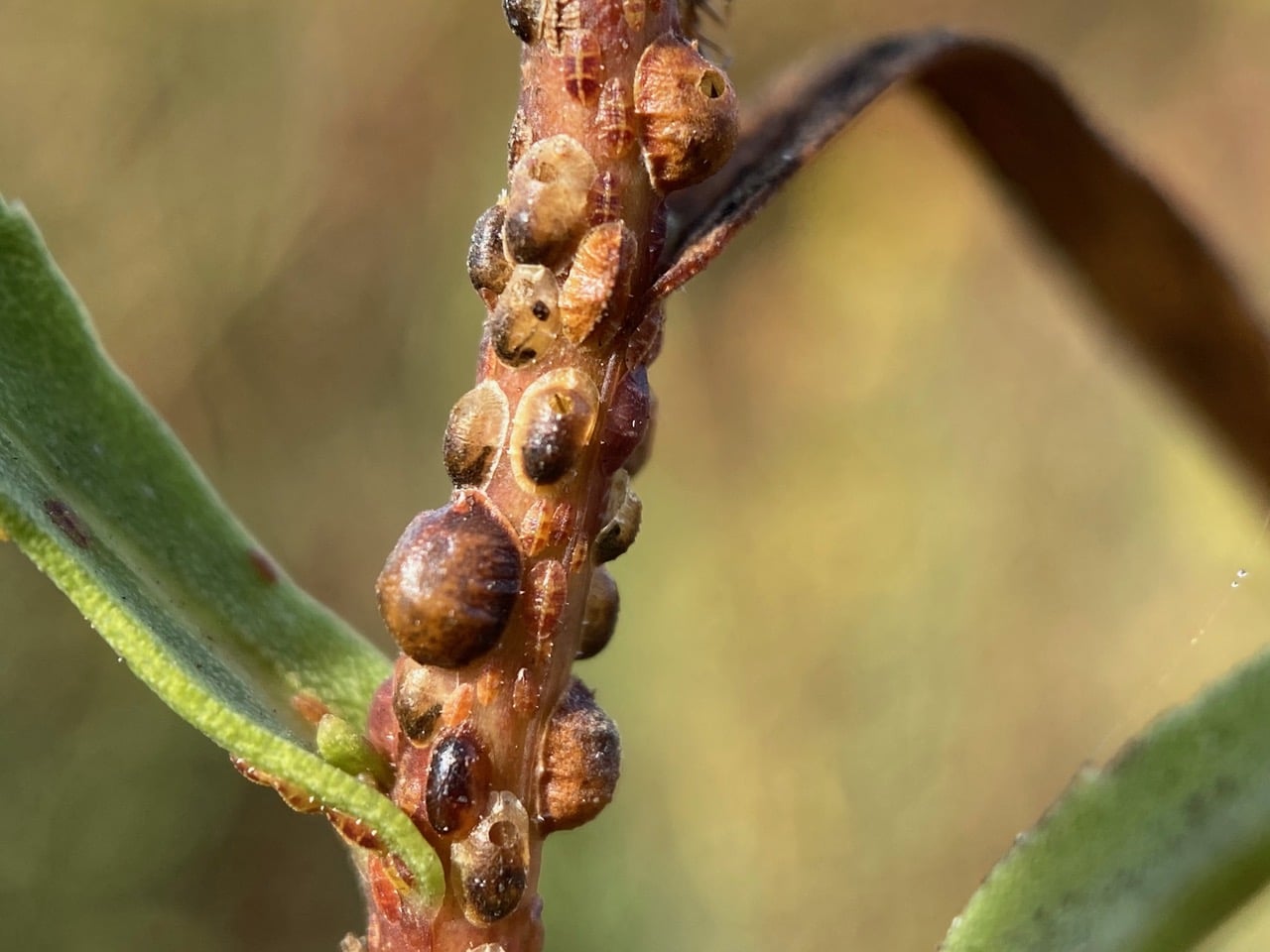
I stop by the Grindelia that is infested with Brown Soft Scales, Coccus hesperidum (family Coccidae). A large percentage of the older scales now have a perfect round hole on their back.
The Brown Soft Scale, Coccus hesperidum (family Coccidae) has a cosmopolitan distribution and feeds on many different host plants – crops, ornamental and greenhouse plants. The adult female scale insect is oval and dome-shaped, about 3-5 mm long. It retains its legs and antennae throughout its life. Males of the species are rarely found. The Brown Soft Scale is ovoviviparous and produces young mostly by parthenogenesis. Over the course of her life, the female may produce up to 250 eggs, a few being laid each day. The eggs are retained inside the insect until they hatch, at which time small nymphs emerge and are brooded for a few hours before dispersing. These first-stage nymphs are known as crawlers and move a short distance from the mother before settling and starting to feed. They have piercing-sucking mouthparts and feed on the host plant’s sap. They are largely sedentary for the rest of their lives and pass through two more nymphal stages before becoming adults. There may be 3-7 generations in a year. Males are occasionally produced and these pass through four nymphal stages before becoming winged adults.
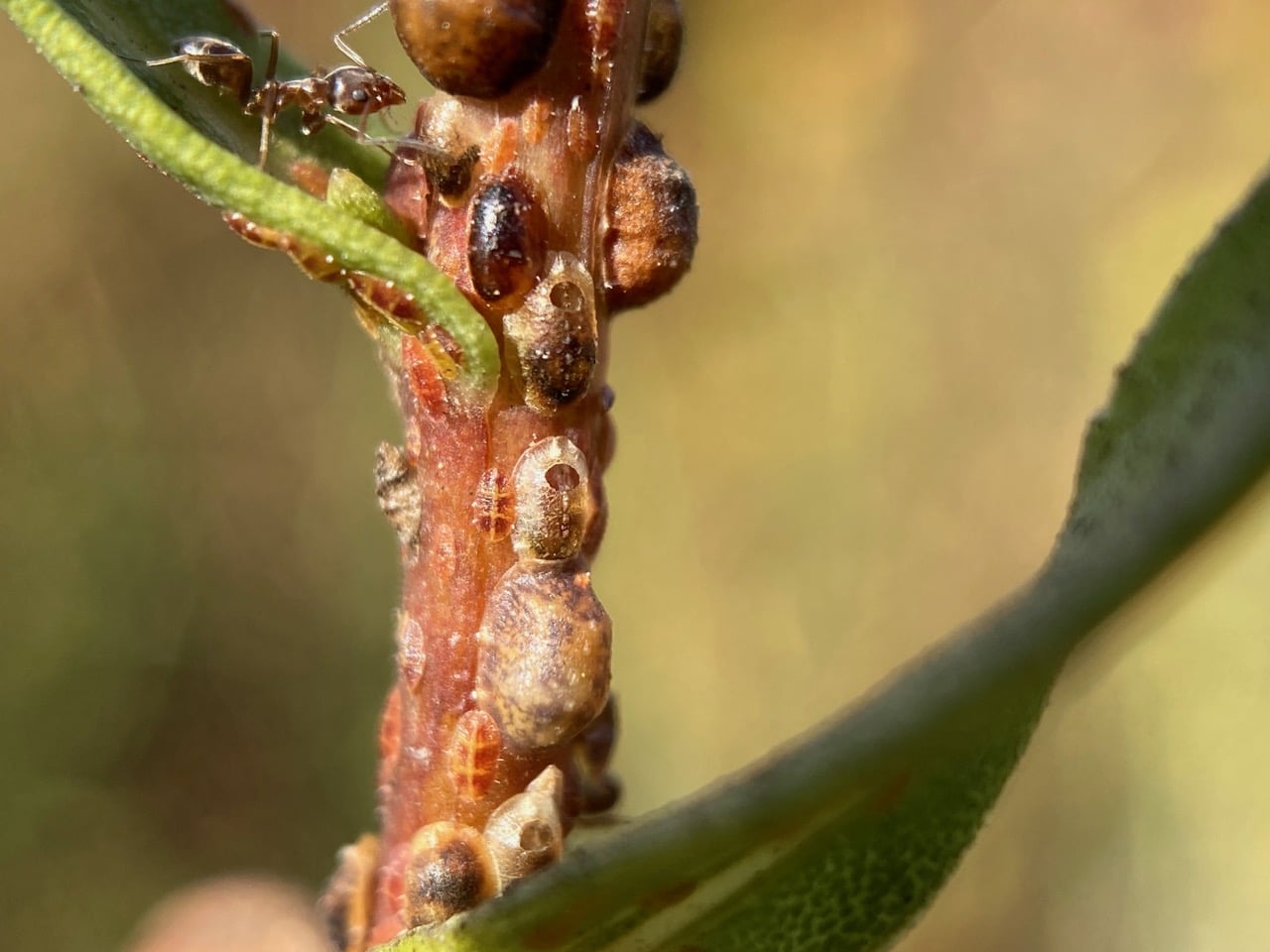
The round openings are probably the exit holes made by a parasitoid wasp, Coccophagus sp.(family Aphelinidae). The most obvious evidence this tiny wasp is present is the blackening of scale nymphs that are normally brown. After the wasp completes its development and emerges as an adult a round hole in the top of the scale remains.
At least 26 Coccophagus species occur in California. Coccophagus lycimnia is the most abundant species, well studied and used as biological control agents against whitefly and scale insect pests in agriculture. The species can occur anywhere plants are infested with its host scales – fruit trees, nut crops, residential fruit and landscape tree, ornamental shrubs, and woody woodland plants. Adult wasps are about 1 mm long. The head and body are black except that adult females have a bright lemon yellow scutellum. Adult females investigate a scale by repeatedly touching it with their antennae. This commonly causes the scale to excrete a honeydew droplet, which the wasp consumes. Consuming honeydew increases adult parasitoid longevity. Eggs are deposited on the dorsal side of the scales at different locations depending on the size of the host. Female Coccophagus lycimnia prefer to oviposit in second instar hosts. Her fertilized eggs produce females and unfertilized eggs produce male wasps. As oviposition takes only a few seconds, the female wasps usually avoid being attacked by the ants tending the scales. The wasp larva feeds on the host from the inside, and pupation takes place inside the scale. The adult wasp emerges by making an exit hole in the scale body. C. lycimnia has multiple generations per year.
Despite being tended by Argentine Ants, this colony of Brown Soft Scale is heavily parasitized by the tiny parasitoid wasps. The scale population is thus kept in check and apparently hasn’t spread much. Only two or three adjacent Grindelia plants in this large patch are infested with the scales. I am impressed by how the interplay of the various species has kept the ecosystem in balance. All this, without human intervention. Most of us are repulsed by the very thought of parasites. In fact, parasitism is rife in nature, part and parcel of a healthy ecosystem.