

Pollinator Post 10/11/23 (1)
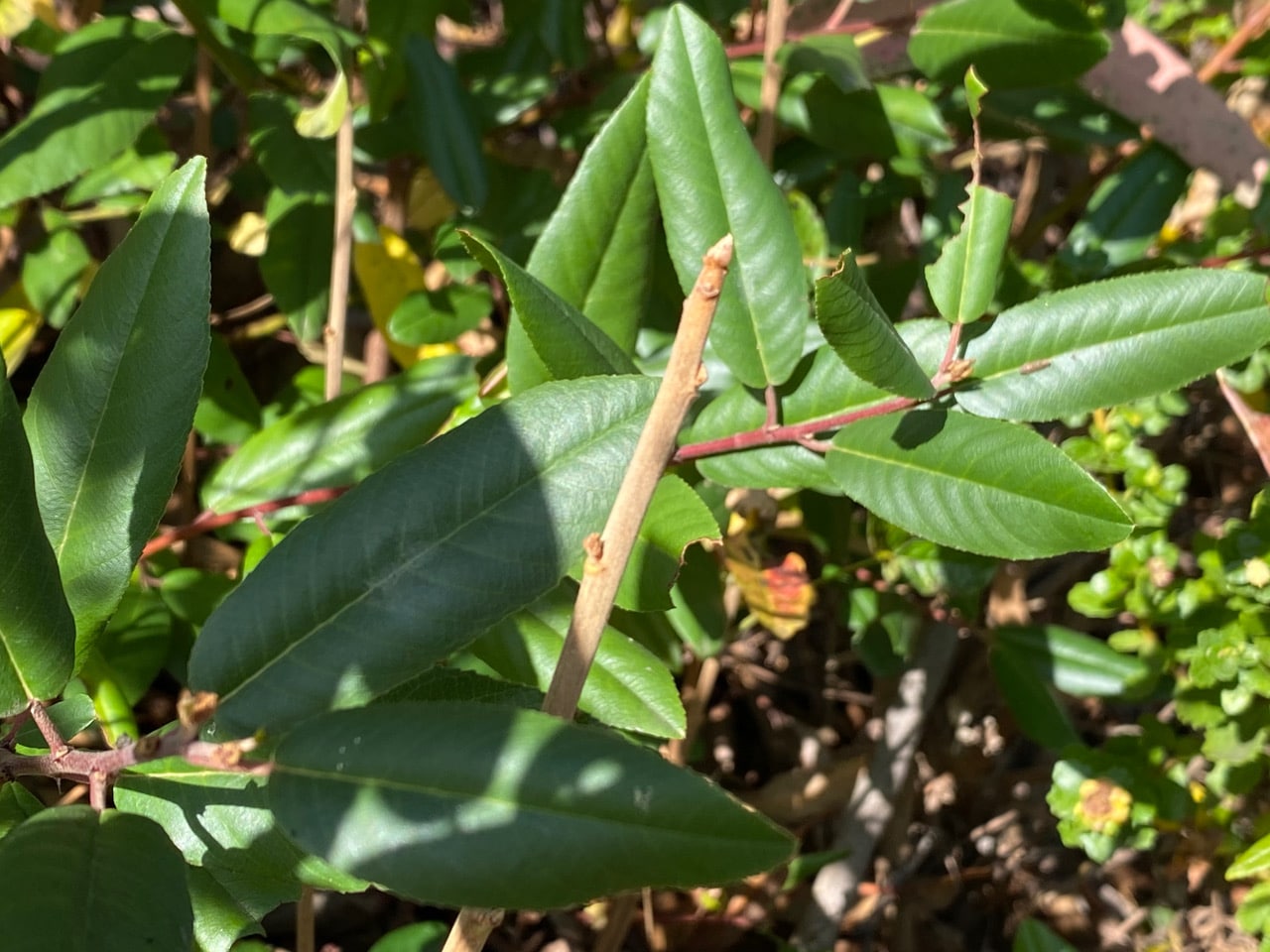
Our Pale Swallowtail caterpillar B2 is no longer on the stem of Poison Oak it was on yesterday. It’s going to be a challenge finding this adventurous caterpillar on the move.



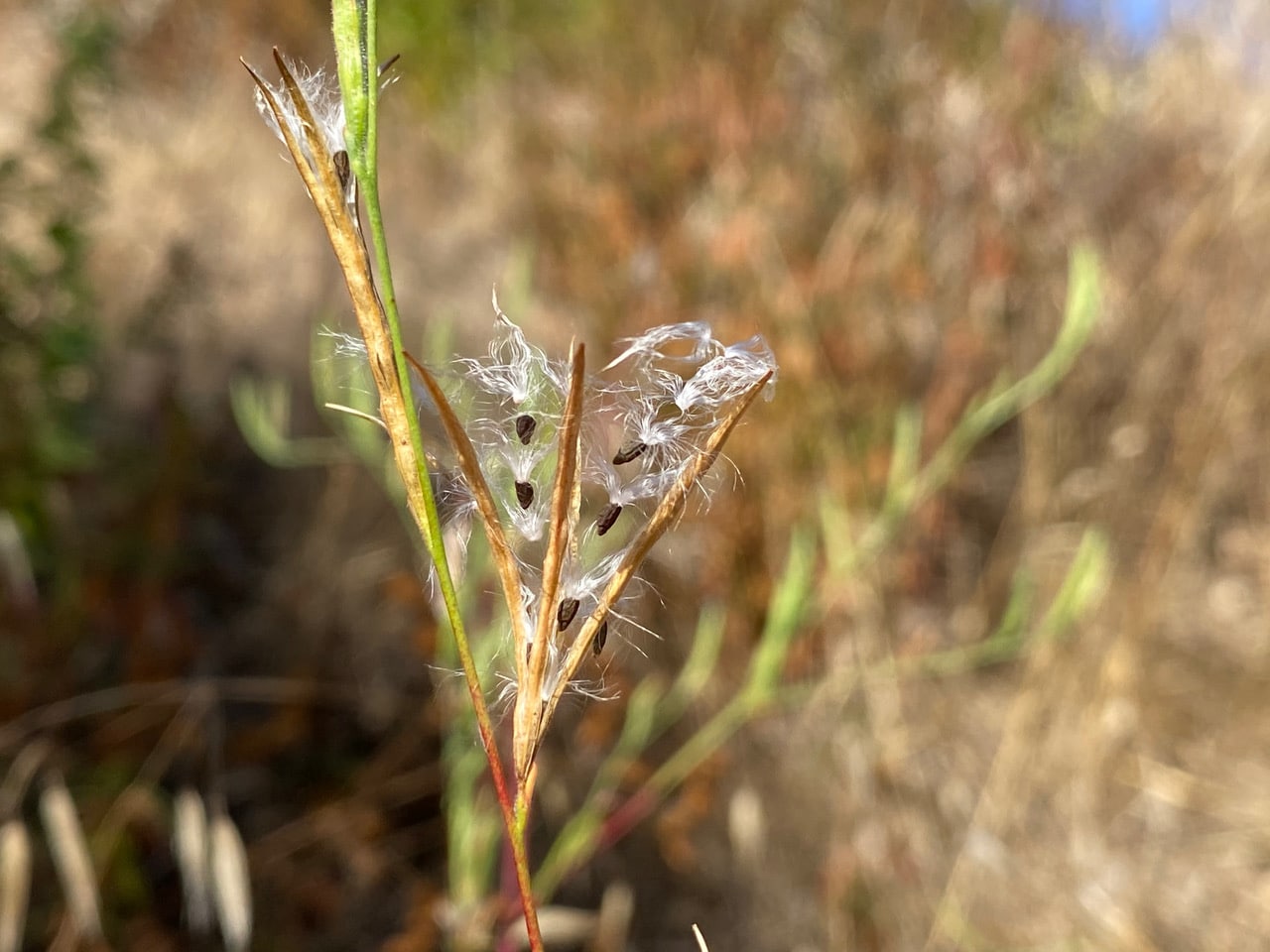 The seed plumes of Willowherbs, Epilobium sp. (family Onagraceae) growing in the underbrush along Skyline Trail shine silvery in the sunlight. I must have failed to notice the plants while they were in bloom! I love how the long seed pods crack open longitudinally to release the neatly stacked seeds to the wind. There are two native species of Willowherb in California. I recall with fondness how these drought resistant plants supported pollinators through the dry summer and fall at the Bridgeview Pollinator Garden. The annuals reseed themselves profusely. Although the Willowherbs may look a little weedy and their flowers are inconspicuous, I consider them good candidates for the native garden for their ecological contributions.



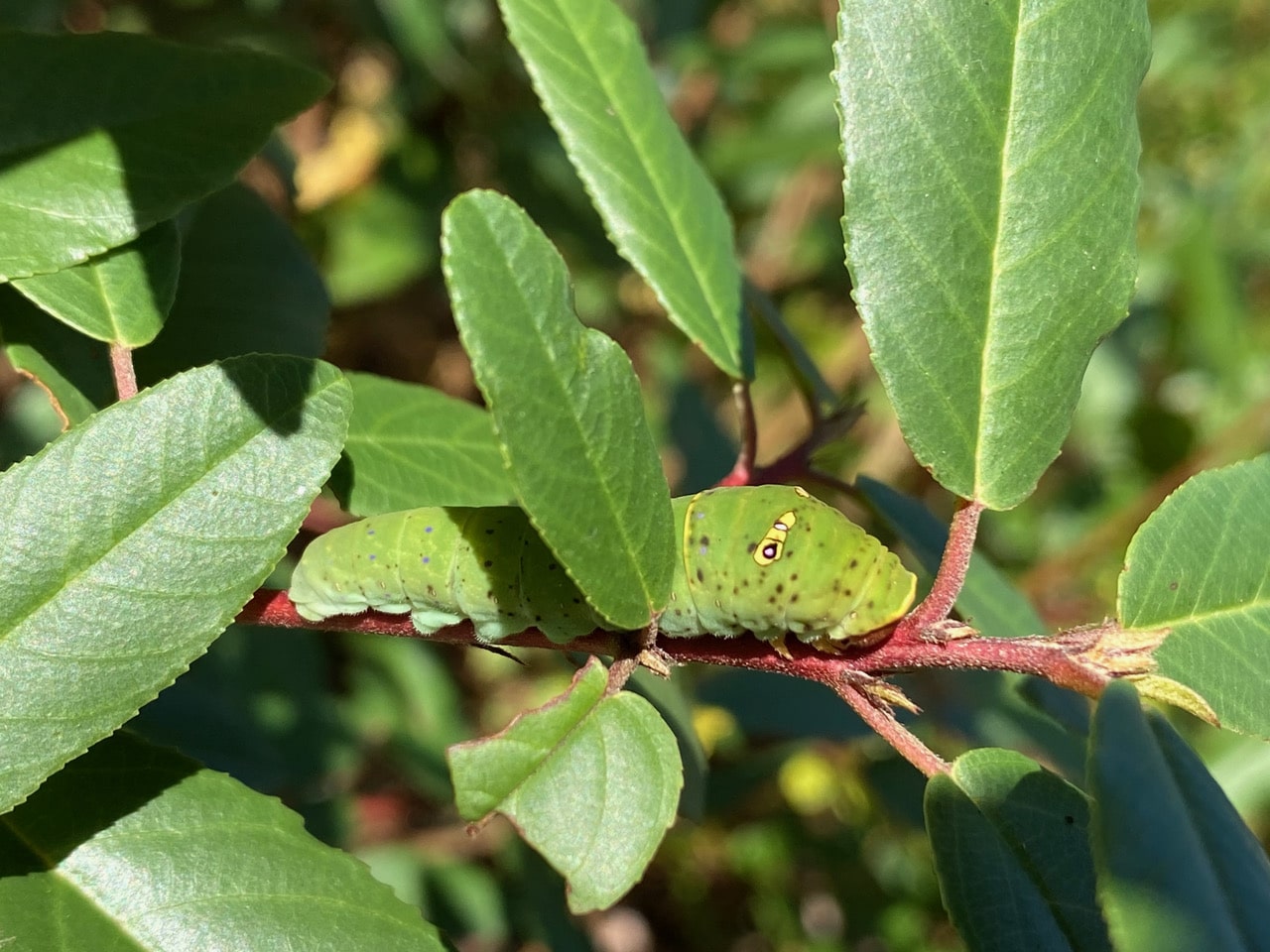
After some serious searching, I finally find B2 on a different branch that is quite a distance from where it was yesterday. I am not sure if it is even the same coffeeberry. There are multiple stems that grew out of the ground, and B2 is on a completely new branch. It must be exhausting for a little caterpillar to travel that distance! Wow, what are all those spots on B2?
B2 looks somewhat shrunken and has dark spots all over, especially on its thorax. I wonder if it is reacting to the poison oak it was on? I immediately consulted Alan, the butterfly expert as soon as I got home. Here’s what he said:
“I noticed in your previous photos that there were already some dark spots developing. They’ve gotten much more severe in today’s photos. I’m fairly positive that invertebrates are not affected by poison oak so that is definitely not the cause. It looks a lot like disease, but this is surprising to me since disease rarely occurs in the wild and is mainly a phenomenon of captive rearing. I see similar dark spots from time to time on the western tiger swallowtails I rear, usually caused from an excessively wet/moist environment and poor ventilation.”
The recent wild swings in our weather (heatwave followed by rain) must have really stressed poor B2 out. I look forward to more stable and sunny conditions in the next couple of weeks. Hopefully B2 is able to recover from the disease. Fingers crossed!
On B2’s Coffeeberry host plant I see that Sharp-nosed Leafhopper, Scaphytopius acutus (family Cicadellidae) again. It seems to enjoy the morning sun. I guess these insects don’t move around much.
Leafhopper is the common name given to true bugs in the family Cicadellidae. The bugs are plant feeders that suck plant sap from grass, shrubs, or trees. Their hind legs are modified for jumping, and are covered with hairs that facilitate the spreading of a secretion over their bodies that act as a water repellent and carrier of pheromones. They undergo partial metamorphosis, and have various host associations, varying from very generalized to very specific.
While sucking the sap of plants, these insects excrete any extra sugar as a sticky liquid commonly called honeydew. This is a serious hazard for small insects, possibly sticking the insect to a leaf, or gluing its body parts together. Some bugs deal with this problem by shooting the waste away from their bodies at high speed. Leafhoppers have a unique solution – they make brochosomes, a proteinaceous material within a special gland in their guts, and secrete them by the billions in a milky anal fluid, and spread them over their bodies using their legs. When the fluid dries, the brochosomes form a powdery coating, and the leafhoppers spread them even further using comb-like hairs on their legs. The brochosomal coat is superhydrophobic, and acts as a water-repellent, non-stick coating protecting the leafhoppers from their own sticky exudates.
That’s a HUGE ant foraging on a female Coyote Brush – it’s almost 3/8 in. long! I immediately suspect Carpenter Ant, Camponotus sp. (family Formicidae).
Carpenter Ants, genus Camponotus are among the largest ants in North America, with workers ranging from 1/4 – 1/2 inch long. They have only one bulge at their narrow “waist” (the single node on their petiole)) and an evenly rounded back, when viewed from the side. In established colonies, two castes of sterile workers develop – major and minor workers. The larger major workers defend the nest and forage for food. Minor workers tend to the young and maintain the nest.
Most carpenter ants build their nests in dead or decaying trees or logs, though they may inhabit wooden structures in people’s homes. Camponotus do not eat wood. They are generalist omnivores, and will forage for honeydew, fruits, plant juices, other small insects and invertebrates. Some herd aphids for their honeydew, and will sometimes carry aphids to new plants. Carpenter ants can’t sting but can inflict painful bites with their powerful jaws and spray formic acid into the wound, causing a burning sensation.
The seed plumes of Willowherbs, Epilobium sp. (family Onagraceae) growing in the underbrush along Skyline Trail shine silvery in the sunlight. I must have failed to notice the plants while they were in bloom! I love how the long seed pods crack open longitudinally to release the neatly stacked seeds to the wind. There are two native species of Willowherb in California. I recall with fondness how these drought resistant plants supported pollinators through the dry summer and fall at the Bridgeview Pollinator Garden. The annuals reseed themselves profusely. Although the Willowherbs may look a little weedy and their flowers are inconspicuous, I consider them good candidates for the native garden for their ecological contributions.Recently a friend sent me a video she has taken of a caterpillar of White-lined Sphinx Moth feeding on her Willowherb. The willow herbs and other members of the Evening Primrose family, such as the Clarkias are primary host plants for the beautiful moth.
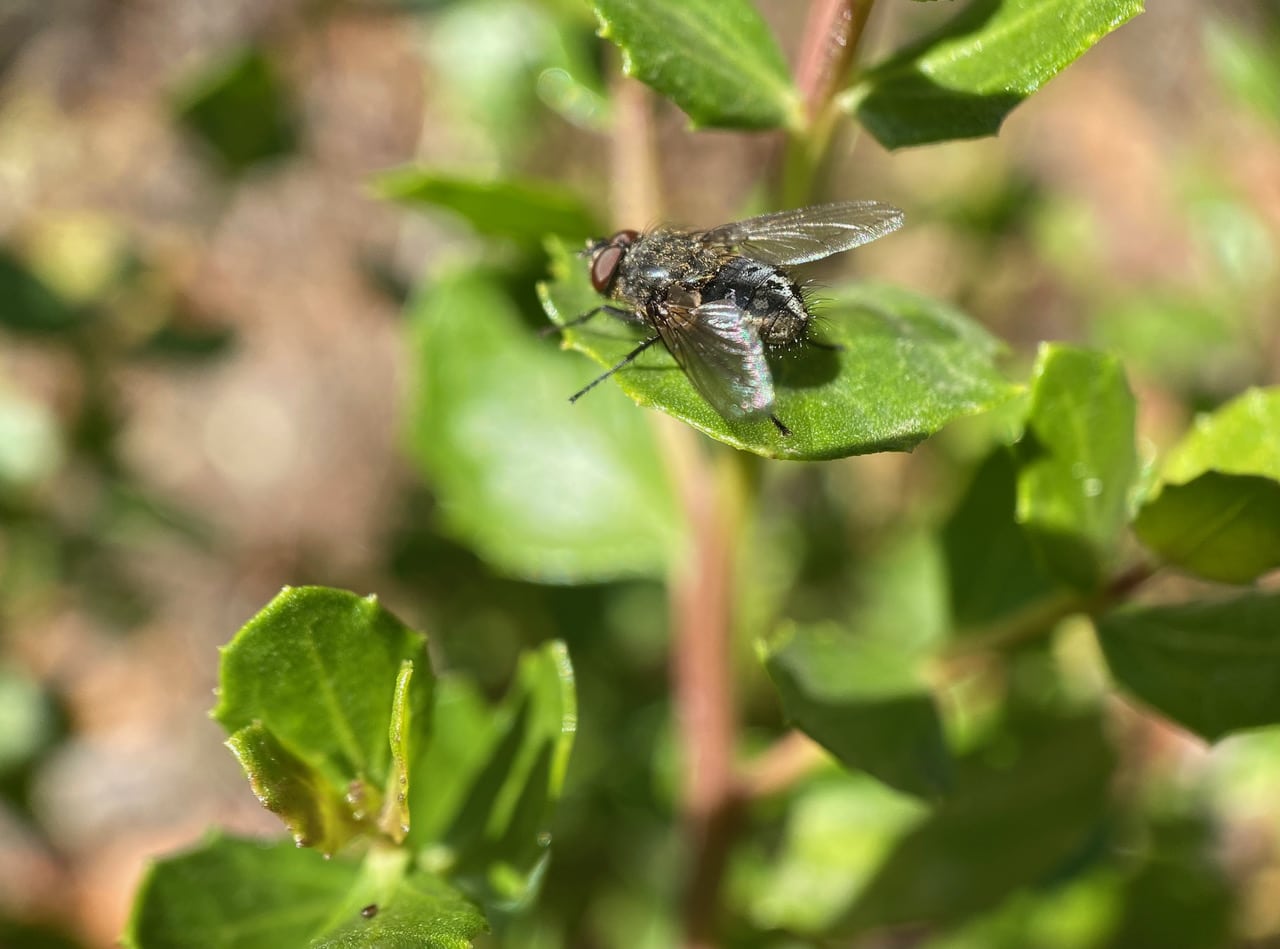
Several Cluster Flies, Pollenia rudis (family Polleniidae) are perched on the sunlit leaves of a California Bay tree. These large flies are alert, and fly noisily when approached.
Called the Common Cluster Fly, Pollenia rudis (family Polleniidae) is slightly larger than house flies. It is dull gray with checkered black and silvery-black abdomens. A newly emerged fly has many golden hairs on its thorax which may be lost throughout the life of the fly. The common name comes from the tendency of the flies to aggregate near windows when they are trapped in human dwellings. The immature stages – eggs and larvae – are seldom seen because they are deposited on the soil where they burrow into earthworms which they parasitize. The Cluster Fly is a European species. They may have found their way to America in the ballast of ships containing soil, probably along with introduced earthworms.
A Common Cluster Fly, Pollenia rudis (family Polleniidae) lands on a Coyote Brush. Here we can see the characteristic checkered black and silvery-black abdomen.
Whoa, that’s a HUGE fly on the Coyote Brush! It is the Purple Bromeliad Fly, Copestylum violaceum (family Syrphidae). Note the unusual “snout” on the face.
Big, and glossy black, this hover fly is easily mistaken for a Carpenter Bee, Xylocopa sp. when in flight. Copestylum females lay eggs in wet rotting plant materials and rot holes in trees. The larvae are rat-tail maggots.
Rat-tail maggots are the larval stage of many species of hover fly (family Syrphidae) in the tribes Eristalini. The maggots are most commonly found in dank and decaying environments such as compost, pond margins, and tree rot holes. The larvae feed on the decomposing material which is poor in oxygen but rich in organic matter. The “tails” are the siphons or breathing tubes that extend from their rear end to enable the larvae to breathe while submerged in the wet substrate. When mature, the larvae climb out to pupate on dry land. The larvae are important decomposers/recyclers and the adult flies are important pollinators. What’s not to love about Syrphids?
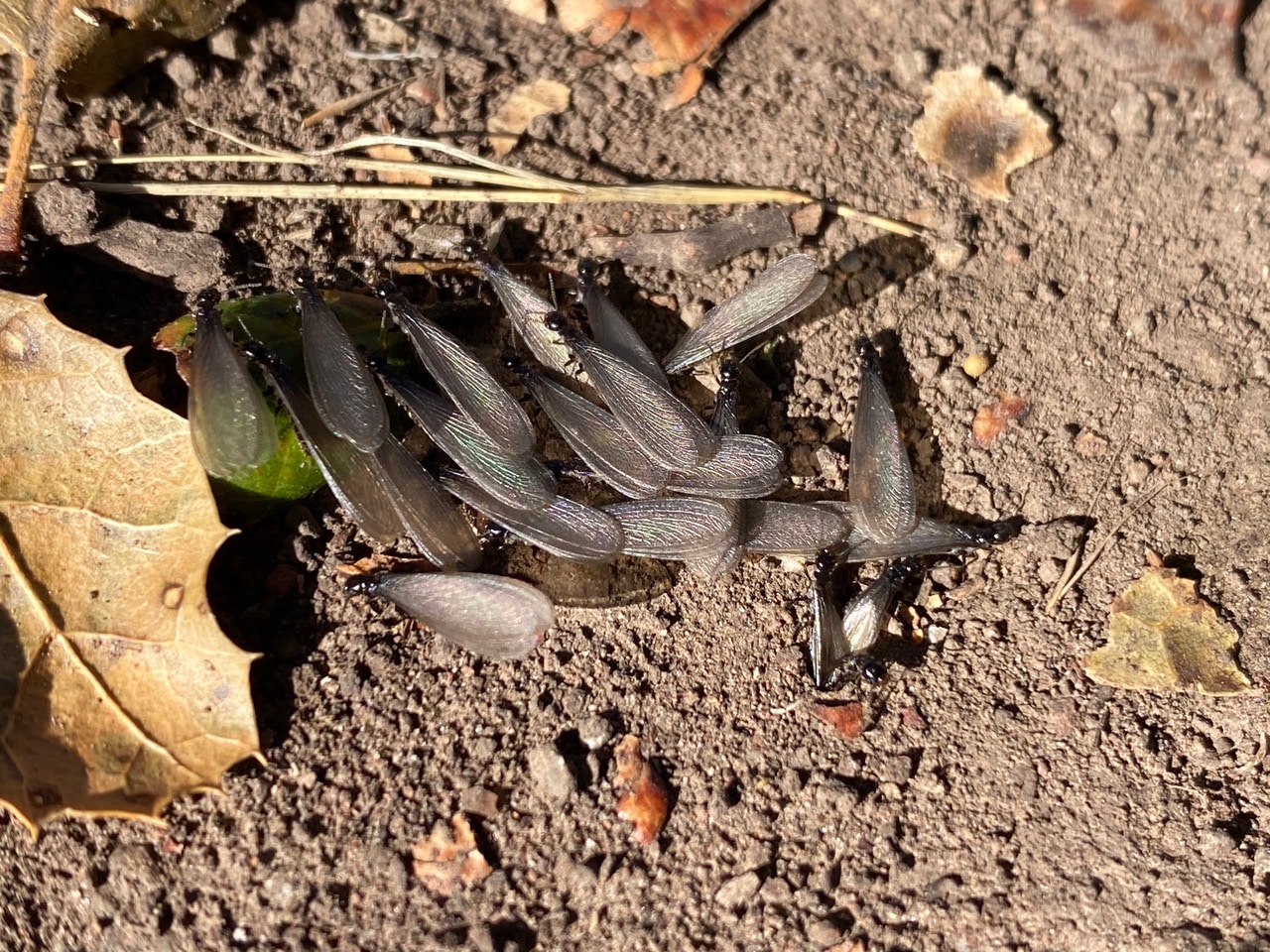
There are glittery movements on the trail ahead of me. They are the wings of the Western Subterranean Termites, emerging from a couple of small holes in the ground. It is a warm, relatively windless autumn day after a rain – conditions considered to be perfect for termite nuptial flight! This is a relatively small eruption, with only about a hundred termites milling around after they emerge from the holes. Note the ones just emerging from the ground on the lower right of the group.
Here’s a fun video to introduce you to the Western Subterranean Termites, Reticuliformes hesperus (family Rhinotermitidae, order Blattodea):
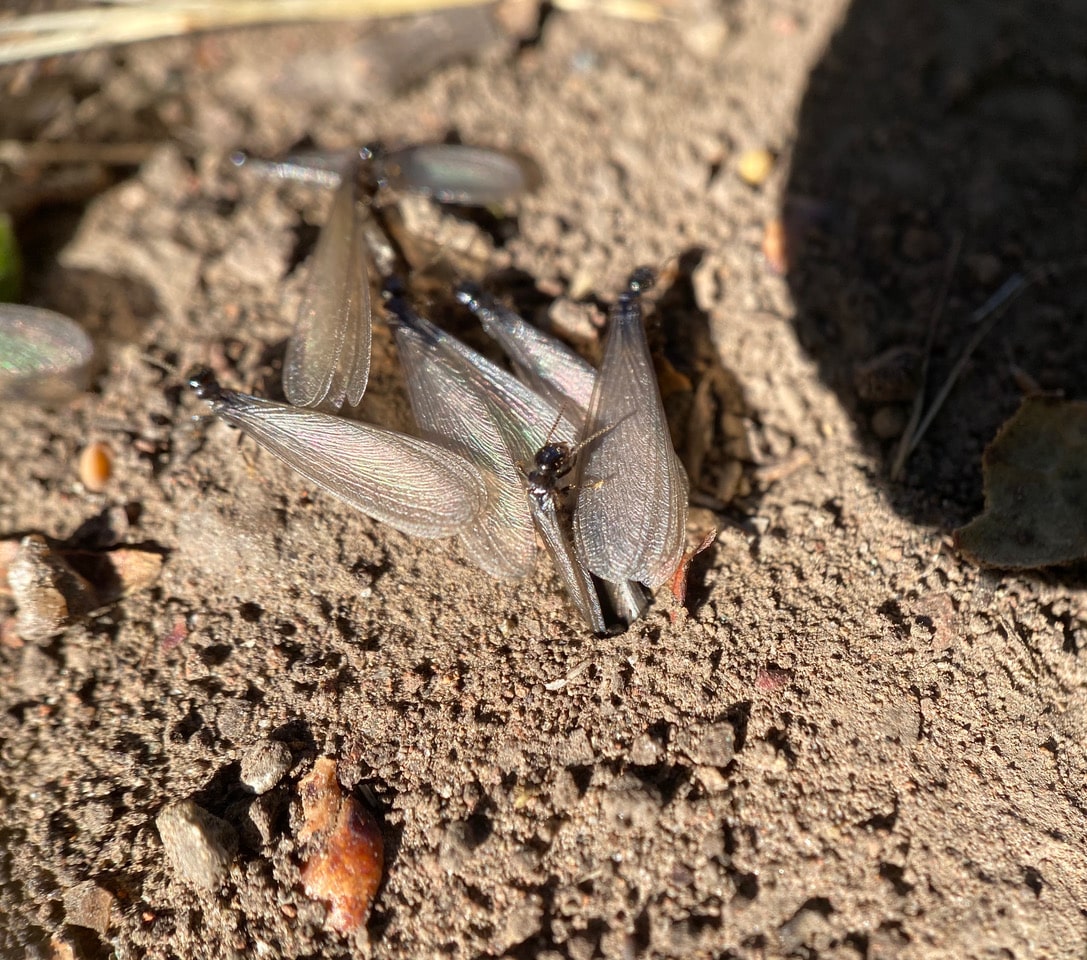
Close-up of an alate (winged reproductive) emerging from a small hole in the ground, only big enough for two to pass through at a time.
I take a video of the alates coming out of the ground. Interestingly, an occasional alate would slip back in. I wonder why? Perhaps the conditions are not ideal for their nuptial flight? Are the termites just testing the air? Only a few actually fly away.
An alate and a soldier termite are peeking through the hole.
Termites have a caste system in their social organization. Worker termites undertake the most labor within the colony, being responsible for foraging, food storage, and brood and nest maintenance. They are tasked with the digestion of cellulose in food and feeding their nest mates in the process of trophallaxis. The soldier caste is anatomically and behaviorally specialized to defend the colony. They have large heads with modified jaws so enlarged that they cannot feed themselves. Instead, like juveniles, they are fed by workers. The primary reproductive caste of a colony consists of the fertile adult female and male individuals, commonly known as the queen and king. These form lifelong pairs where the king will continuously mate with the queen. The queen is responsible for egg production. Alates, or winged reproductives are produced at certain time of year. With the right environmental conditions (usually warm, windless days after a rain), the alates fly off on nuptial flight in search of mates from other nearby colonies.