

Pollinator Post 10/10/23 (2)
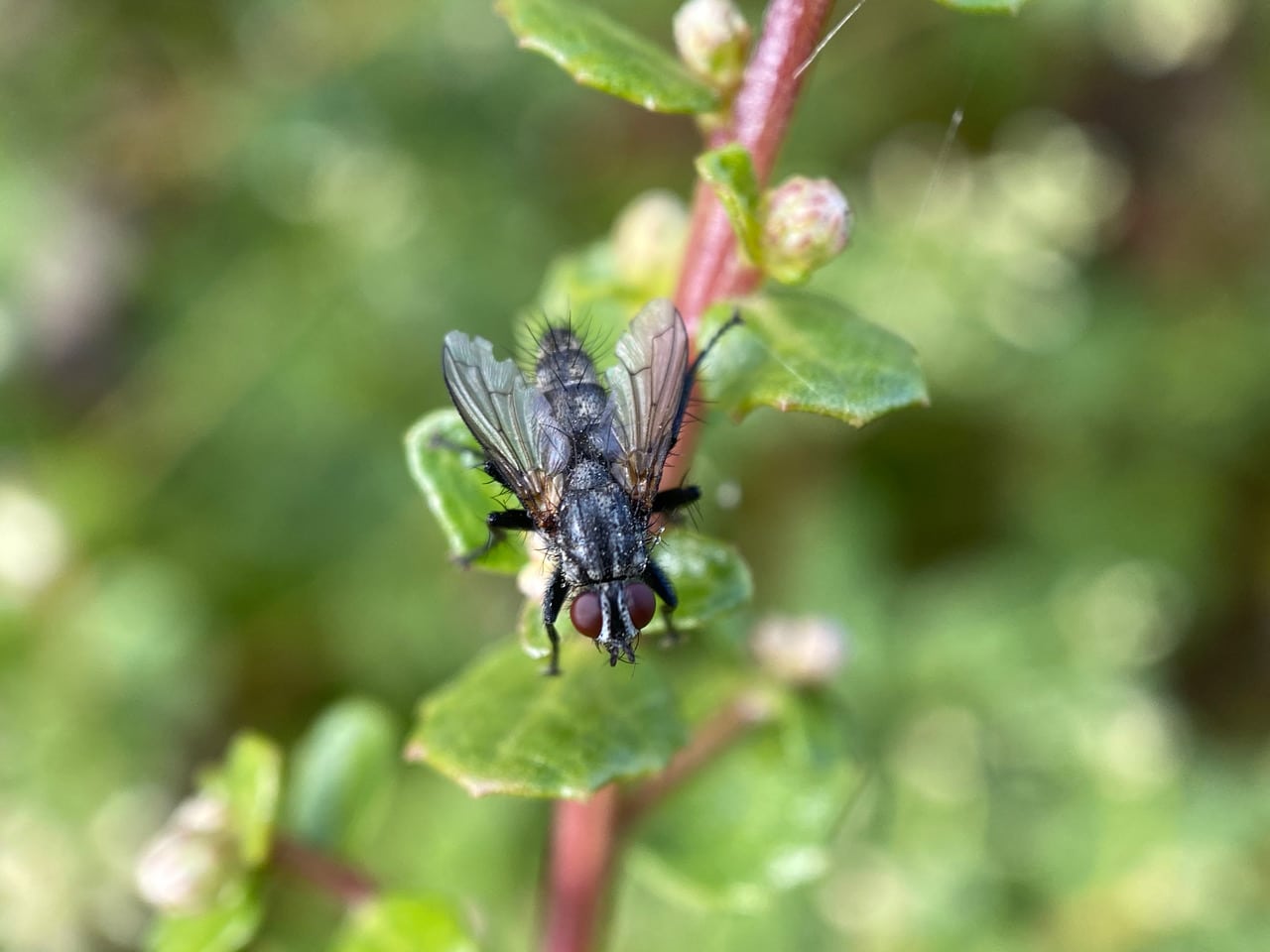
One of the most common flies in the garden, the Woodlouse Fly, Stevenia deceptoria (family Rhinophoridae) visits everything that is in bloom. I encounter these parasitoid flies more often than I see their host, the pill bugs.
These small, slender, black, bristly flies are somewhat related to the Tachinidae. The larvae are mostly parasitoids of woodlice (pill bugs), beetles, spiders and other arthropods, and occasionally snails.
Native to Europe, Stevenia deceptoria is now widespread in the US. The flies are parasitoids of terrestrial woodlice (roly polies) of the order Isopoda (Oniscoidea).


The Yellowjackets are some of the most avid visitors to the flowers of Coyote Brush, Baccharis pilularis.
The diet of adult yellowjackets consists primarily of items rich in sugars and carbohydrates, such as flower nectar, fruits, and tree sap. Larvae feed on proteins derived from insects, meats, and fish. Workers collect, chew, and condition such foods before feeding them to the larvae. Larvae, in return, secrete a sugary substance for workers to eat; this exchange is a form of trophallaxis. Many of the insects hunted by the adult wasps are considered pest species, making the yellowjackets beneficial to agriculture.


I watch as this Yellowjacket flies straight into a spider web festooned with water droplets.
The wasp gets stuck on the fine web and struggles mightily. It finally manages to free itself.

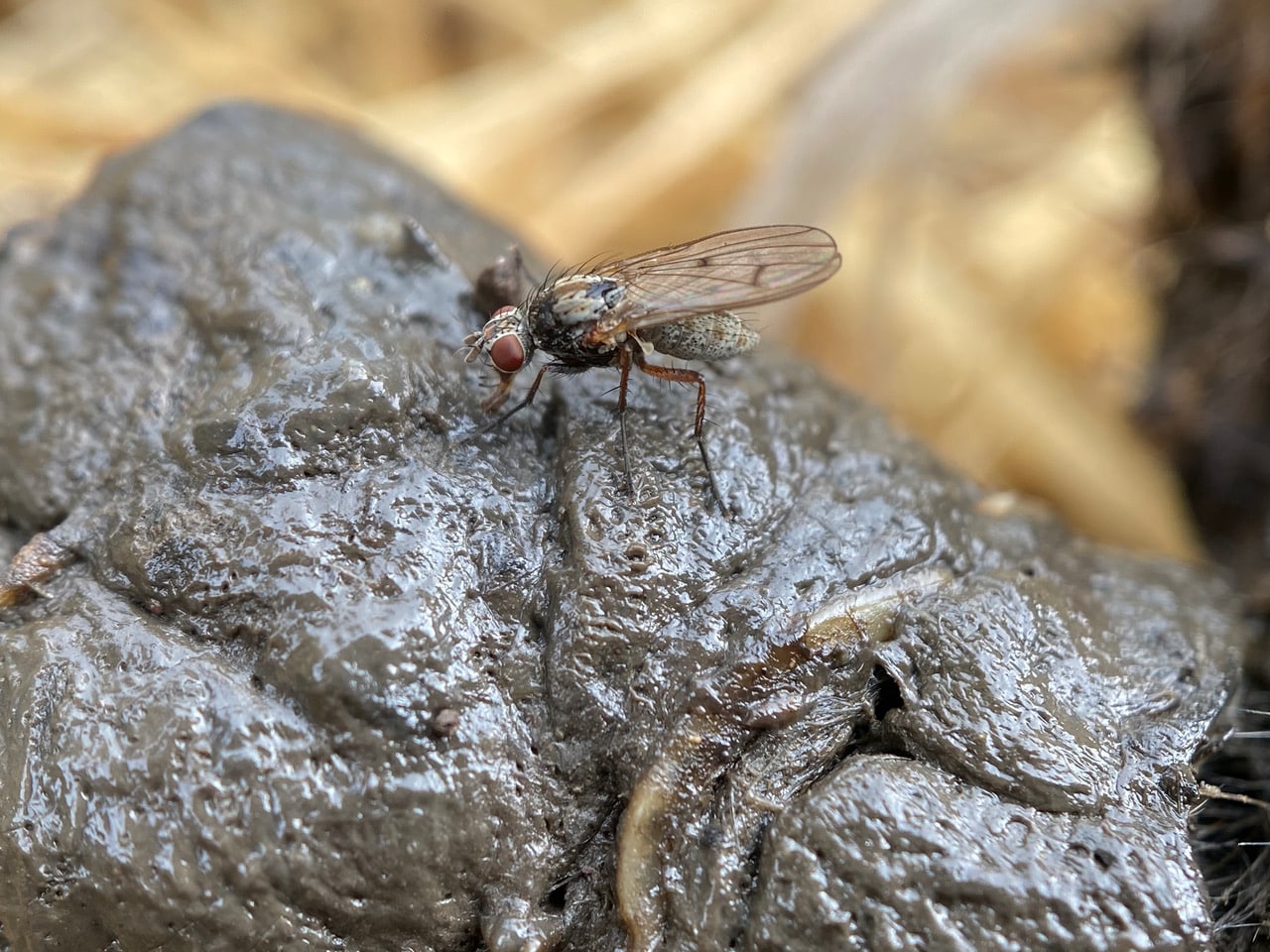
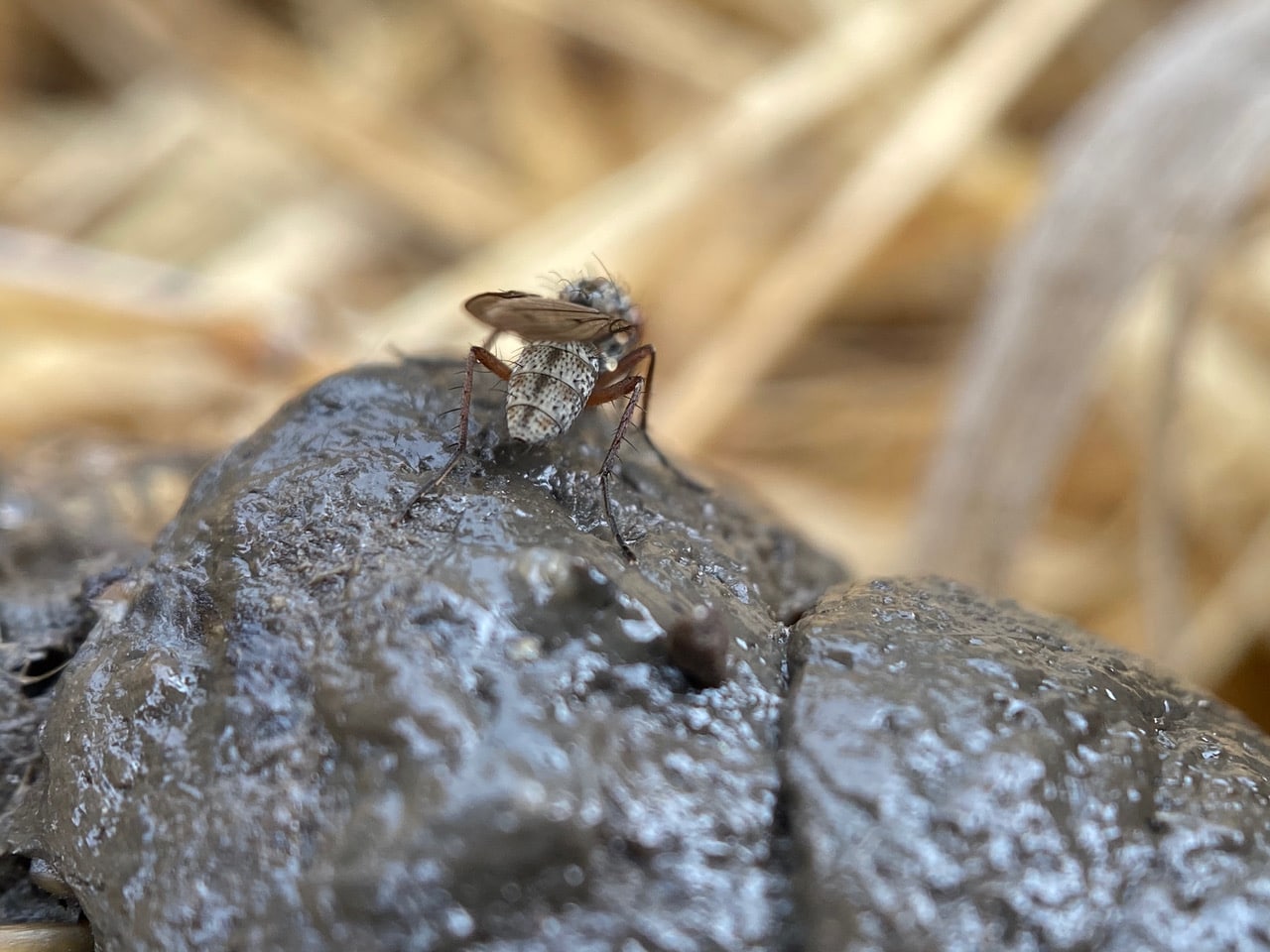

Several small, dull-colored flies are gathered on a pile of scat on the trail. How come not the iridescent blow flies and flesh flies on the dung? It dawns on me that the scat is not fresh, but is only wet from the rain. The blow flies and flesh flies are attracted to fresh scat only?
Our dung visitor has been identified as a, what else, Dung Fly (family Scathophagidae)!
The Scathophagidae are a small family of Muscoidea which are often known as dung flies. The family is almost confined to the Northern Hemisphere. The common name is not totally appropriate, as only a few species in the genus Scathophaga pass their larval stages in animal dung. The Scathophagidae are medium to small flies, about 3 to 12 mm long. The larval biology of this family is rather diverse, including plant feeders (leaf miners, stem borers, or feeding in seed capsules), aquatic predators, and predators on other insect larvae in wet situations – such as piles of rotting vegetable matter, seaweed, or dung. The adults are predators on other small insects. Some species are attracted to dung in great numbers. The flies are commonly seen on flowers, but they are hunting prey there, not feeding on floral resources. They are in fact one of the better predators of blow-flies, and are considered beneficial agents of biological control.
No wonder there are no blow flies here!
A young Crab Spider, Mecaphesa sp. (family Thomisidae) is hiding among the foliage of a California Mugwort. It is unusually pale – maybe freshly molted?
Members of the family Thomisidae do not spin webs, and are ambush predators. The two front legs are usually long and more robust than the rest of the legs. Their common name derives from their ability to move sideways or backwards like crabs. Most Crab Spiders sit on or beside flowers, where they grab visiting insects. Some species are able to change color over a period of some days, to match the flower on which they are sitting.
Mecaphesa is distinguished from the other genera of Crab Spider by the size and arrangement of the eight eyes (in two curved rows of four). Mecaphesa is also often hairy, with tiny hairs protruding from the head, legs, and body.
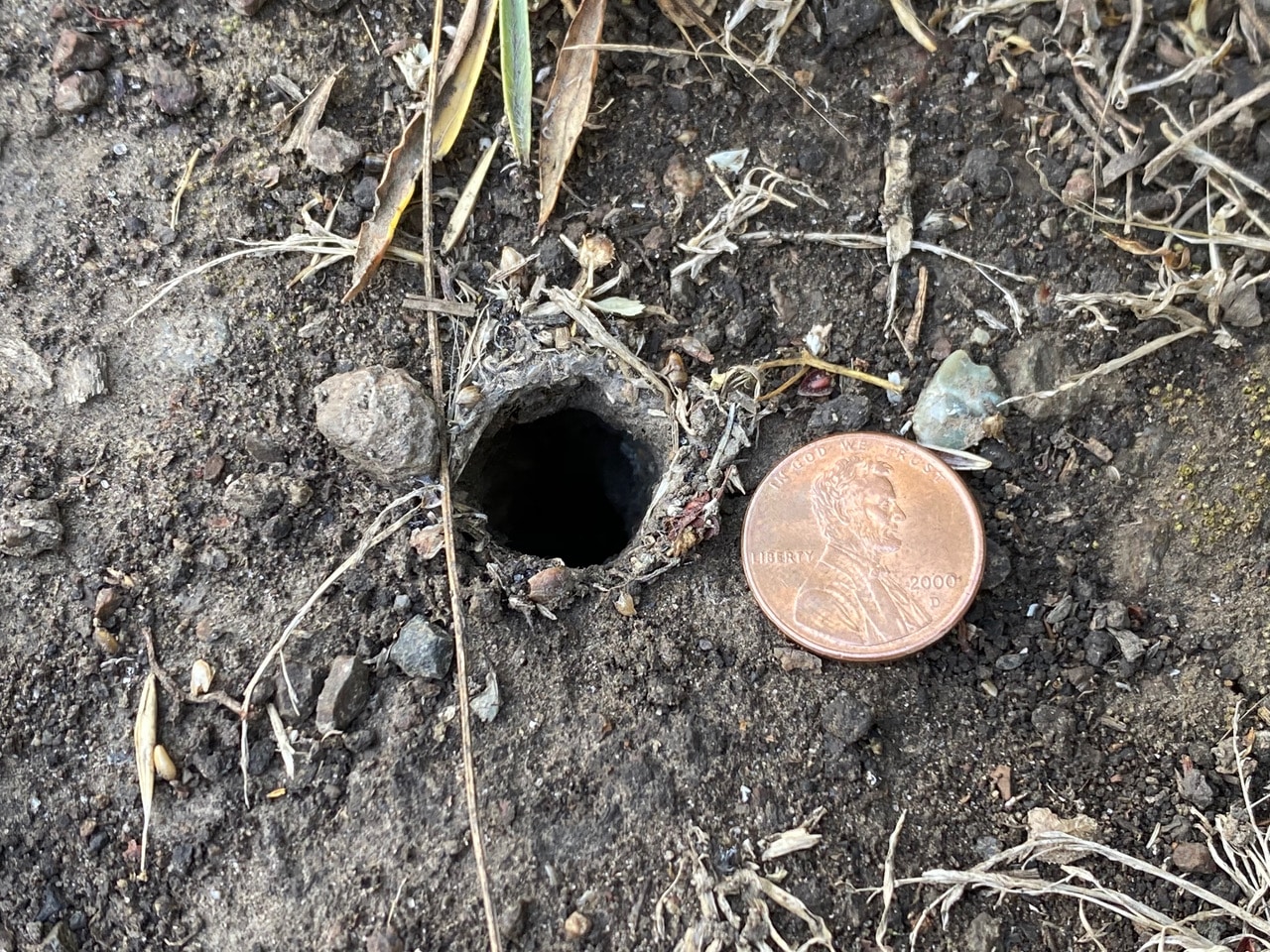
The silk-lined spider burrow near the tree stump by the trail is open today! This burrow has been around for a while, sometimes disappearing without a trace. I marvel that the spider (probably a False Tarantula, Calisoga sp.) is able to conceal the entrance so well. As spider mating season is upon us, I look forward to seeing more spider activity.