

Pollinator Post 10/10/23 (1)
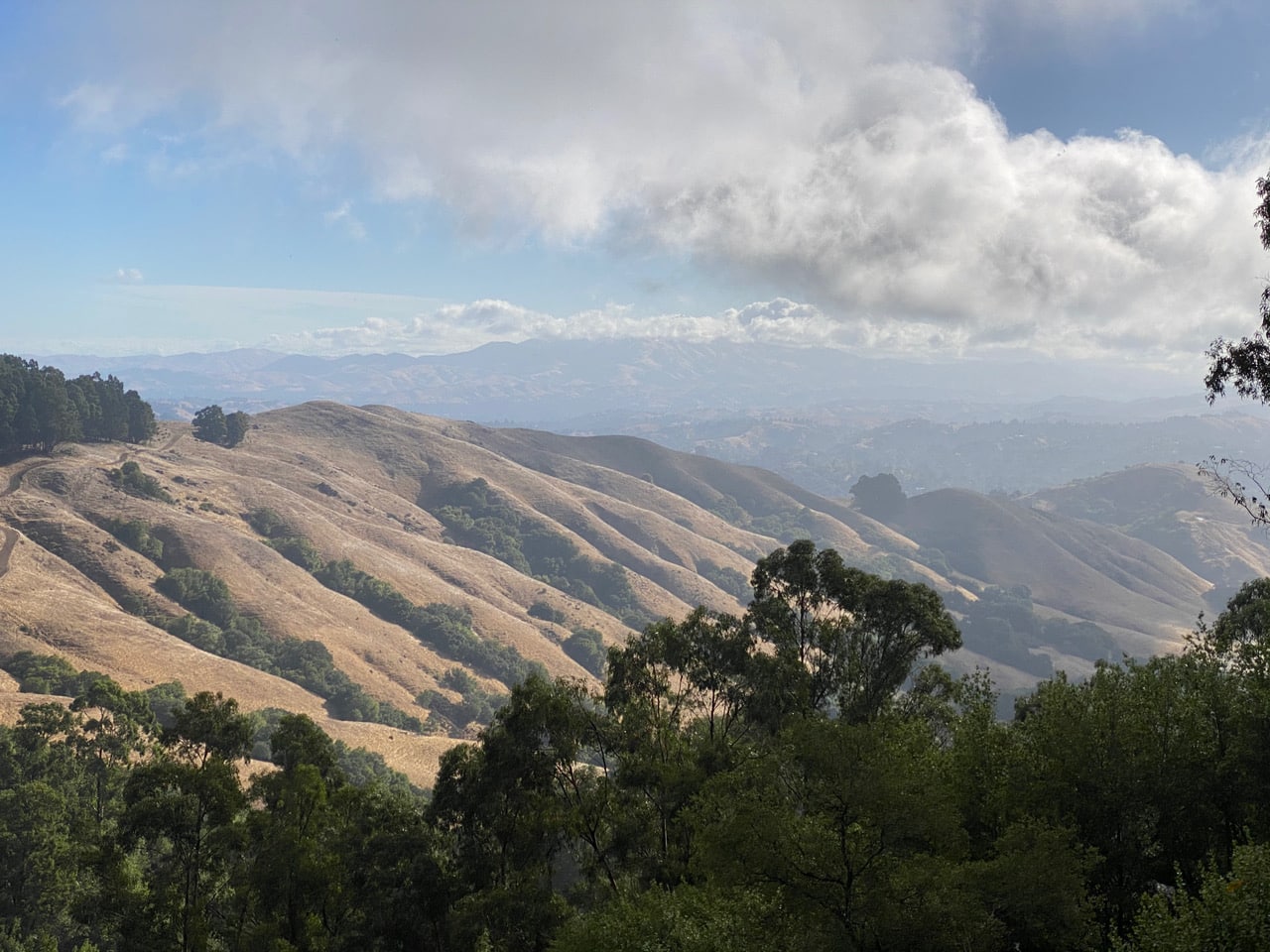
We had a sprinkling of rain last night, taking out every bit of pollution from the air. Aah!






The mosses and lichens on the oak tree trunk have plumped and greened up with the moisture.
A yellowjacket is resting motionless on the terminal leaves of a Coffeeberry. Was it caught off guard by the rain? As I watch, it wakes up, grooms itself briefly and flies away.
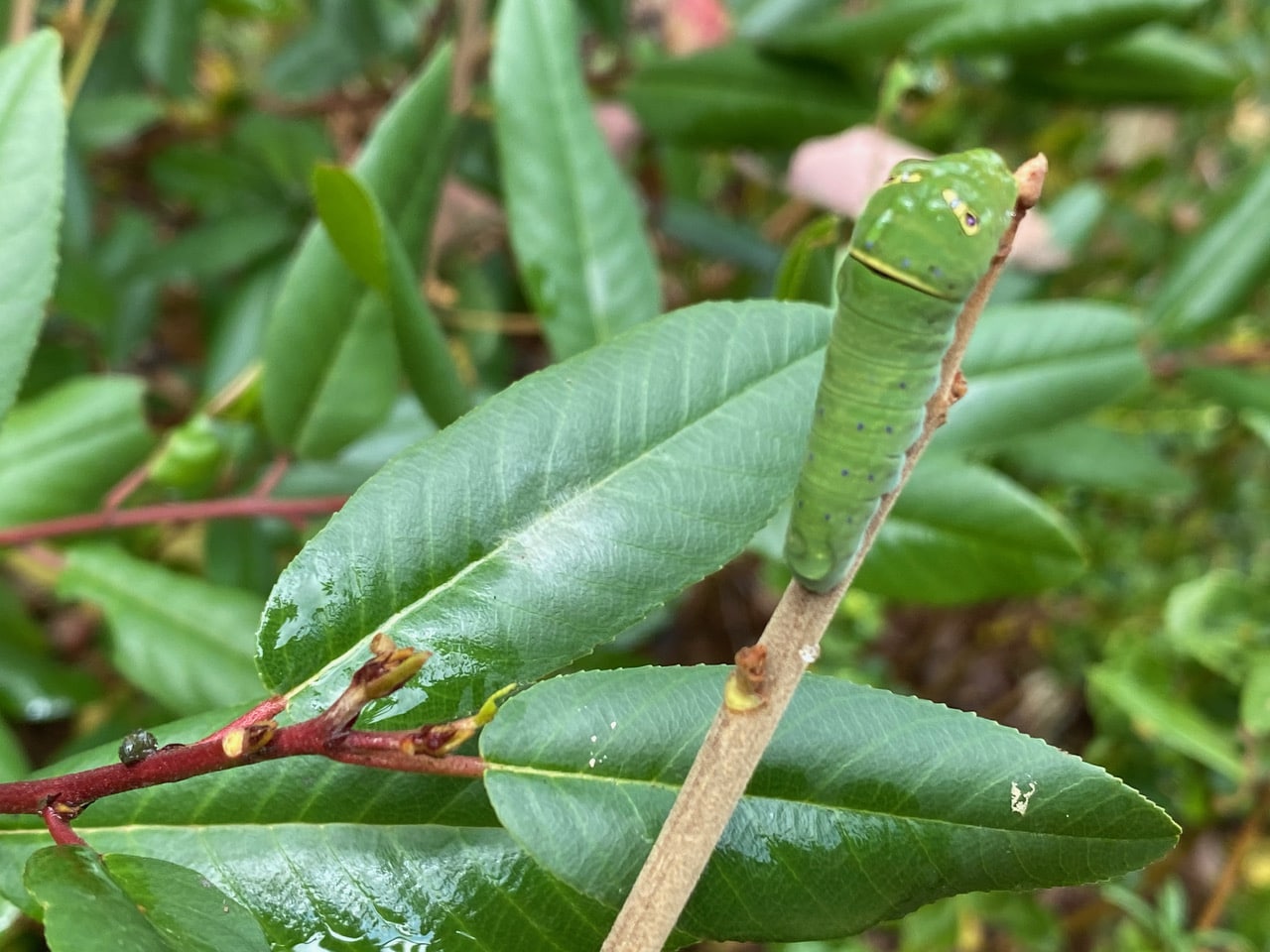
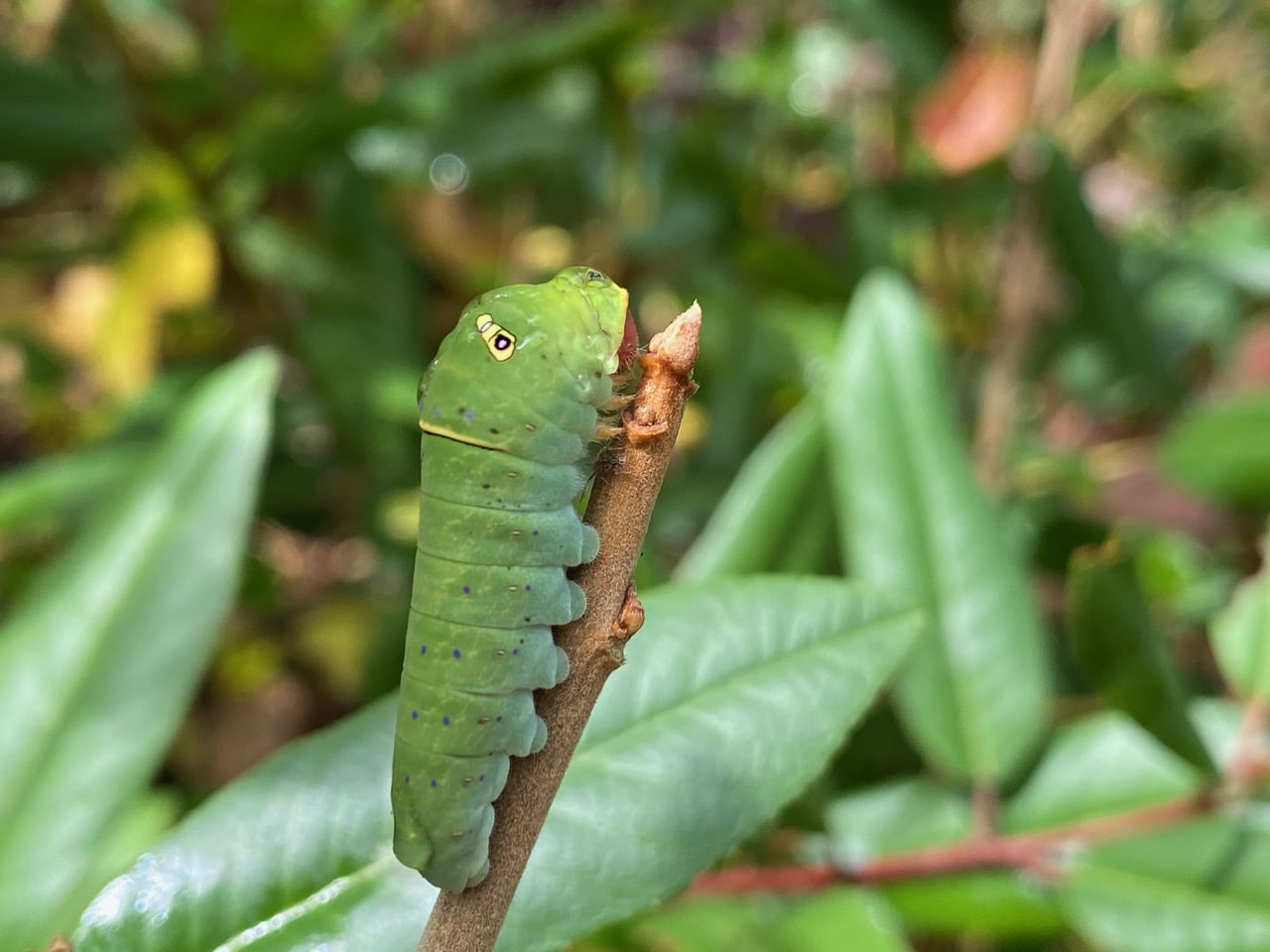
I find our Pale Swallowtail caterpillar, B2 in this position – not on its host plant, but on a vertical Poison Oak stem next to the Coffeeberry stem it was resting on yesterday. A couple of dried Poison Oak leaves have apparently fallen on B2, and it has climbed onto the next sturdy substrate. But that means that B2 didn’t eat for the last 24 hours? It barely moved a couple of inches!
I remove the Poison Oak leaves before taking this picture, so we can see how B2 has moved from its previous perch on the Coffeeberry. I am sure the caterpillar can find its way back to its food plant.
Good luck, B2. Hope you’re not allergic to Poison Oak!
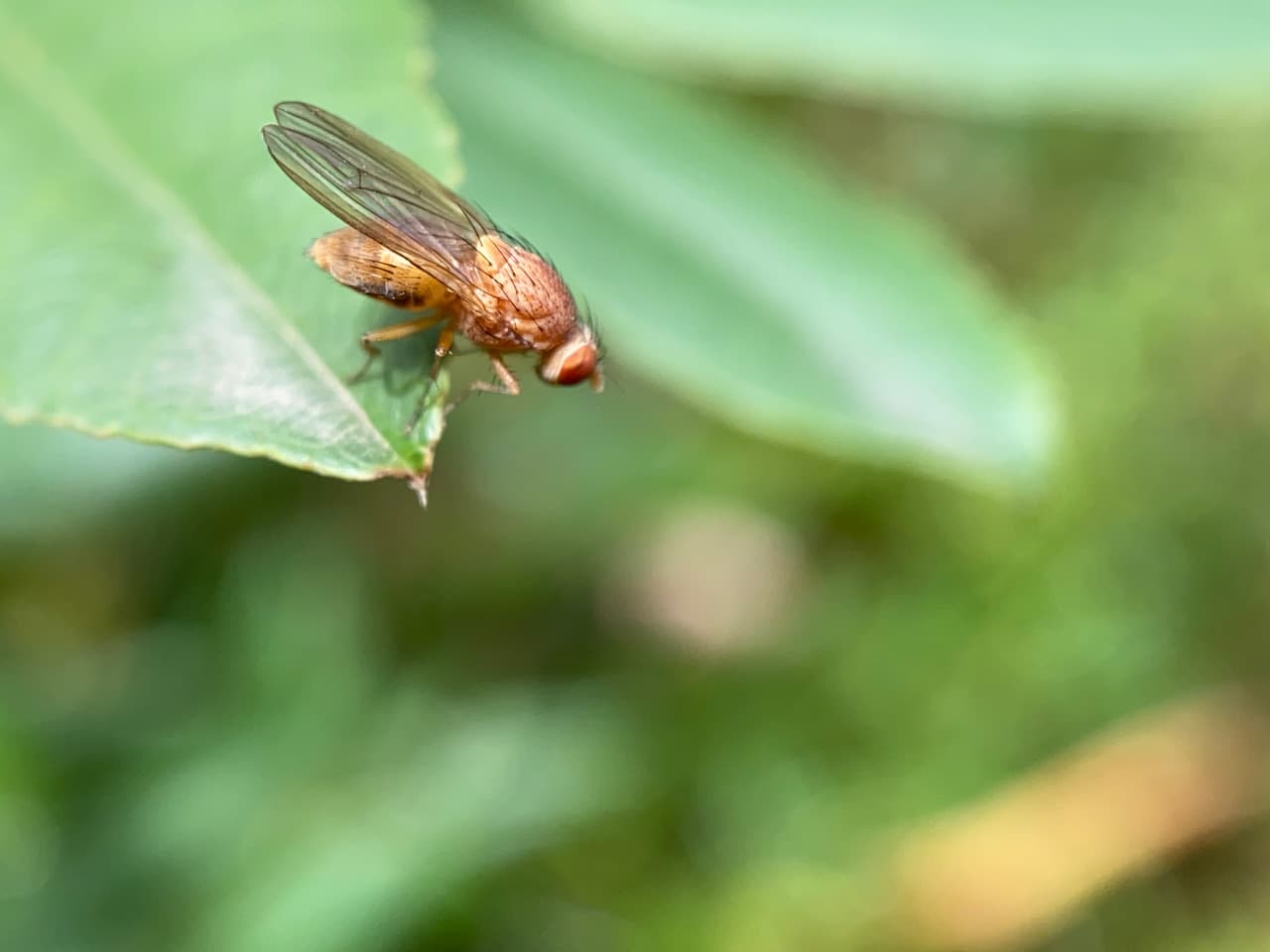
A Lauxaniid Fly peers over a Coffeeberry leaf. These are some of the most common flies in Skyline Gardens.
Lauxaniidae are small flies (2-7 mm in length). They are often rather plump and dull, the body color varying from yellow-brown to black, or with a combination of these colors. They are characterized by strong, backward pointing bristles on the front (top of the head right above the eyes). The larvae are mostly saprophages, feeding in leaf litter, soil, bird nests, etc. Larvae of some mine fallen leaves, others live in rotten wood.
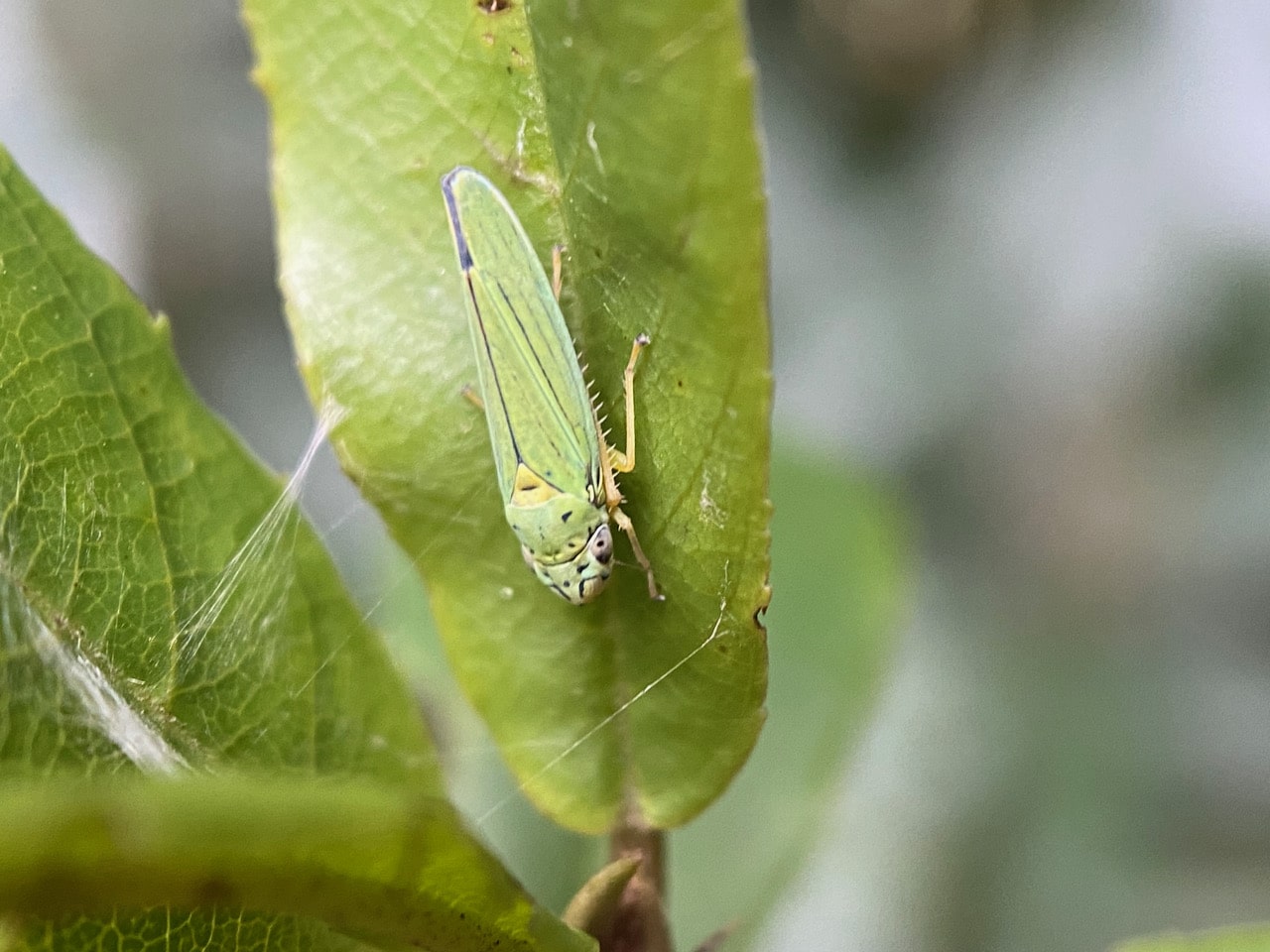
A Blue-green Sharpshooter, Graphocephalus atropunctata (family Cicadellidae) seems to be immobilized by the cold. Usually wary and fast to flee, this one stays still on a Coffeeberry leaf at my approach.
The small insect is a Leafhopper (family Cicadellidae) endemic to California. It is about 0.4 in long with blue or bluish-green color on the upper surface while the head, prothorax, legs and underside are lighter and yellow-green. Adult blue-green sharpshooters are long-lived. Both nymphs and adults share the peculiar habit of running sideways. There is usually only a single generation per year. The females mature during their first winter and lay eggs the following spring. The bugs can be found in the vegetation alongside streams and rivers, in locations with abundant soil moisture and some shade. They can be found on the leaves of native as well as cultivated ornamental plants and crops. More than 150 plants have been recorded as hosts.
Sharpshooters feed on the plant’s xylem, extracting small amounts of nutrients in large volumes of water, forcing them to eliminate up to 300 times their body weight in liquid waste each day. To accomplish this, the sharpshooters employ an energy-efficient mechanism called super propulsion to expel their urine using an anal catapult.
The Blue-green Sharpshooter is notorious as a carrier of Pierce’s Disease, a disease infecting grape vine, among other crops of economic importance. As the bugs feed, they inject plants with a bacteria that causes the disease, blocking the flow of water and nutrients through the xylem.
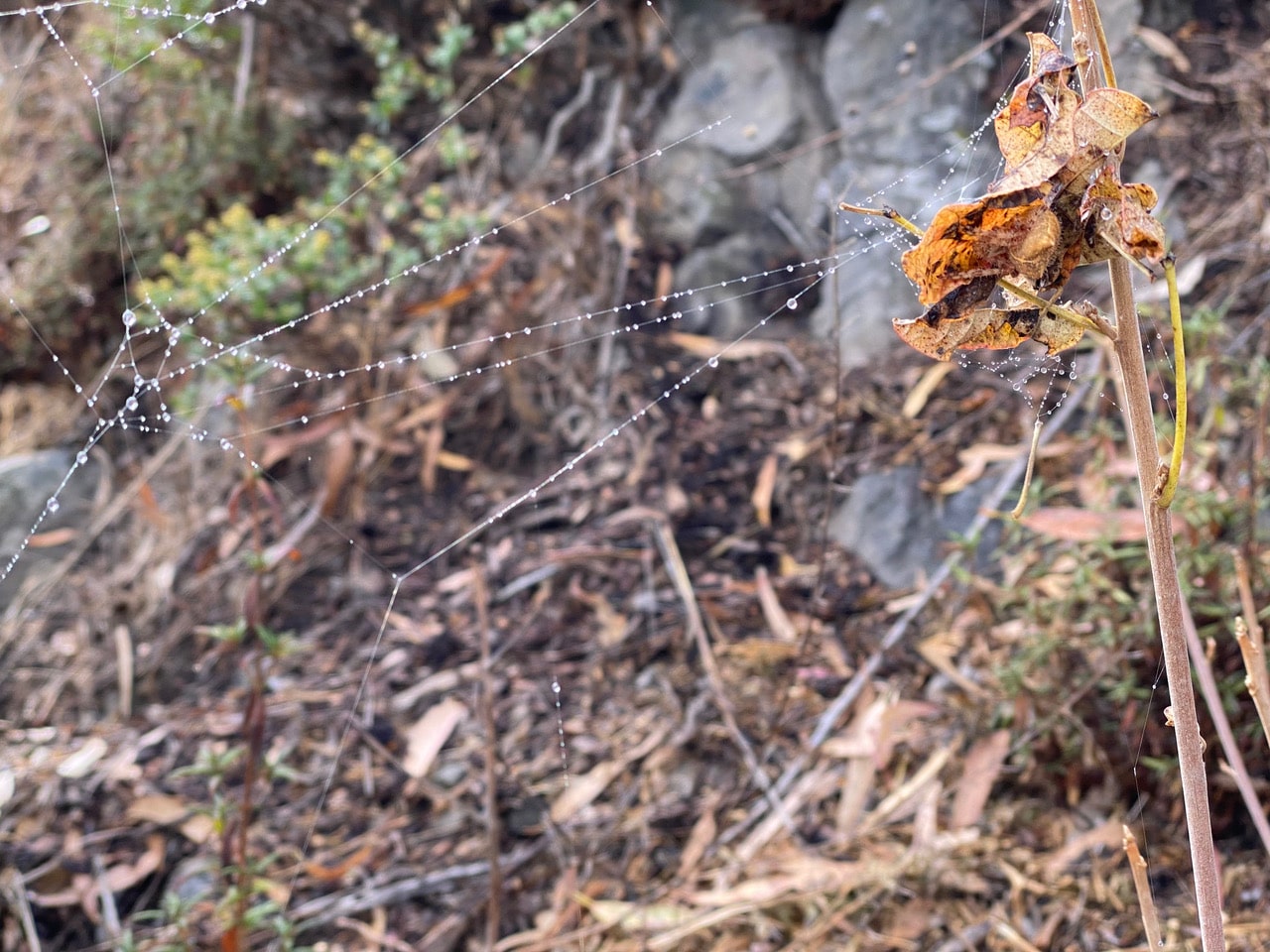
A large orb web is in disarray, missing most of the spirals. Do you see the owner of the web?
Part of the web is anchored to a drying Poison Oak. Among the orange-brown leaves sits a well-camouflaged female Gem-shaped Spider, Araneus gemma (family Araneidae). The rain has ruined her web. She will have to construct a new one if she were to catch any food today.
Araneus gemma, commonly known as Gem-shaped Spider of Cat-faced Spider is a common outdoor orb-weaver spider found in the western North America. The species occurs in varying colors, but is easily identified by the two horn-shaped growths on its relatively large abdomen. Females have a larger abdomen and head. Males have much smaller abdomens and longer bodies. Orb-weaver spiders are well known for sexual cannibalism. Females often kill and consume the males just before, during, or just after mating. The females die within days of laying a single egg sac with hundreds of eggs. Egg sacs can survive over winter, and the emerging spiderlings eat their siblings. The babies ride strands of silk in warm air currents to locations miles away.
The legs of orb-weaver spiders are specialized for spinning orb webs. The webs are built by larger females, which hang head down in the center of the web or remain hidden in nearby foliage, with one claw hooked to a signal line connected to the main orb, waiting for a disturbance to signal the arrival of prey. Prey is then quickly wrapped in silk and bitten, and the prey may hang on the web to be stored for later consumption. The initial bite serves to paralyzed the prey and to prevent injury to the spider from struggling prey. The injected enzymes serve to begin liquefaction of the prey’s internal structures.
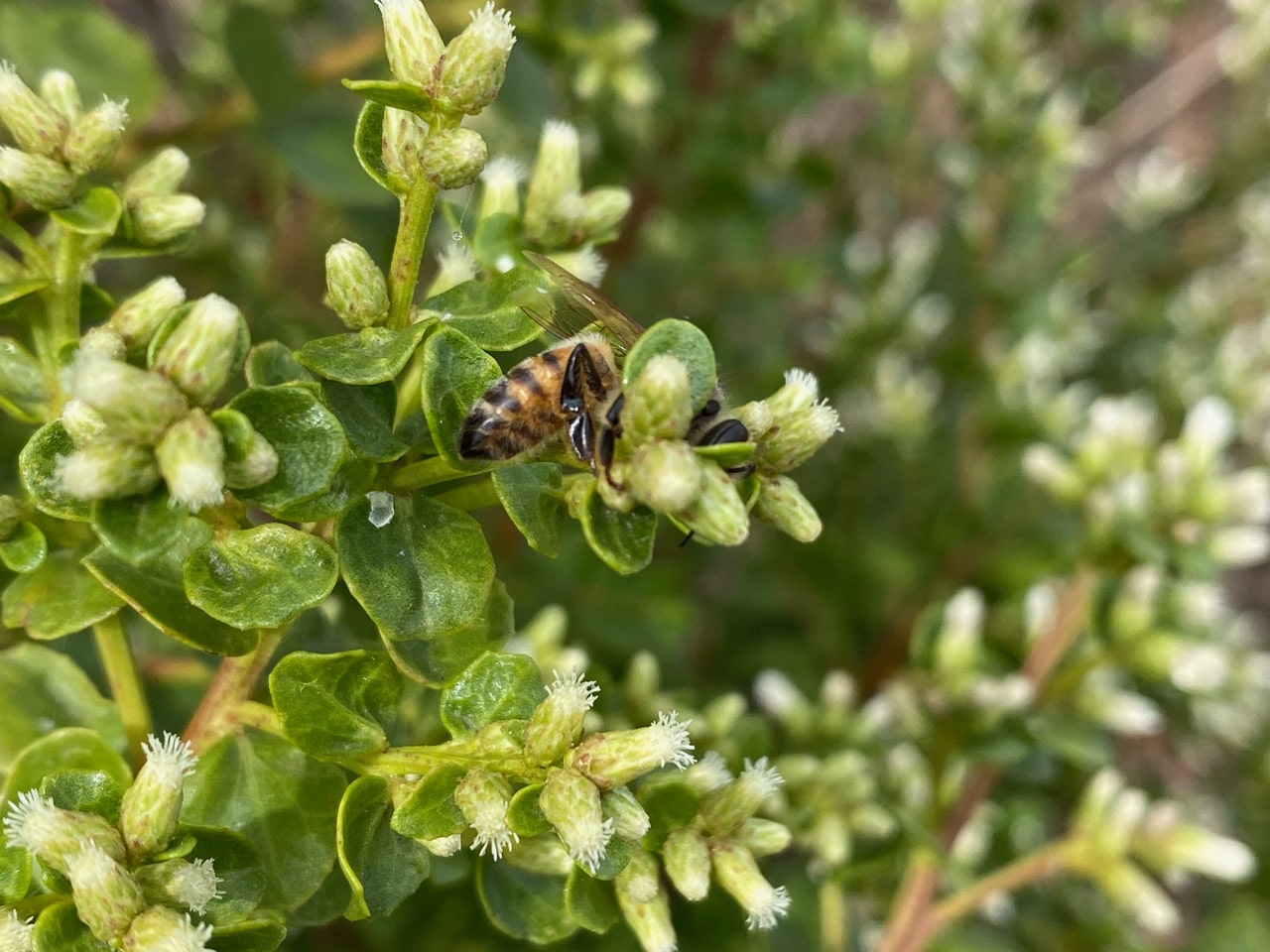
A Honey Bee, Apis mellifera rests motionless on a cluster of female Coyote Brush flowerheads. Was she caught off guard by the rain and didn’t make it home to her hive last night? As I watch, the bee slowly stirs, but is reluctant to move from the flowers. Maybe she is close to the end of her life? Most worker bees out foraging are elderly bees, the oldest among their hive mates. As the worker bee approaches her fourth week of nonstop work, she senses her end of days, and removes herself from the hive, so as not the become a burden to the colony. If she dies in the hive, her hive mates would have to remove her corpse. Such is the devotion and altruism of the colonial honey bee.
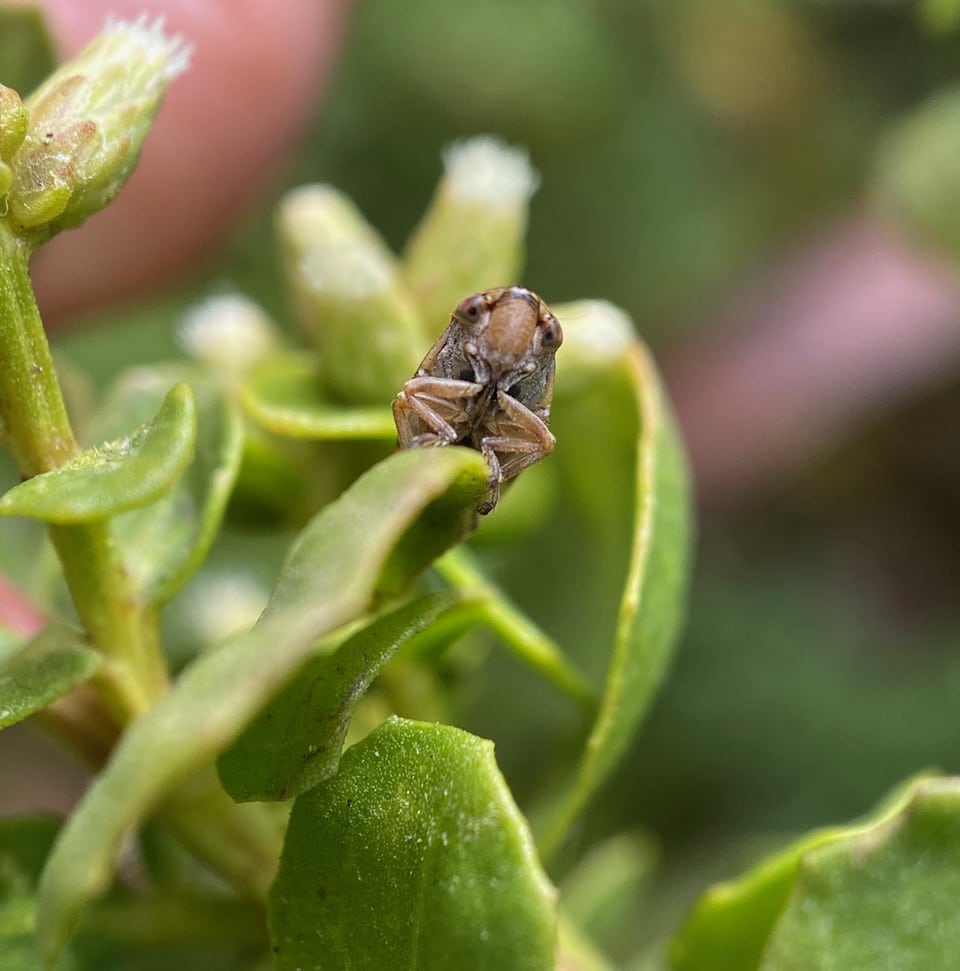
A Meadow Spittlebug, Philaenus spumarius (family Aphrophoridae) is perched on a leaf of Coyote Brush. It is no wonder that these bugs are sometimes called Froghoppers – they do sit like frogs!
The Froghopper is a “true bug” in the order Hemiptera, family Aphrophoridae. Froghoppers are champion jumpers among insects, out-performing even the fleas. The bug can leap the human equivalent of a skyscraper without a running start. It is the highest jumping insect proportional to body size. The muscles in its hind legs act like a “catapult” to release energy explosively.
Athletic prowess aside, the Froghopper is better known for its young, the “spittle bug”. The nymphs produce foamy white masses on plants within which they feed on plant sap. Froghoppers have piercing-sucking mouthparts, and feed on plant sap as both nymphs and adults. A recent report claims, “Froghoppers are the super-suckers of the animal world. The tiny insects produce negative pressures equivalent to people sucking a 100-meter-long straw.” The sucking power is strong enough to suck the water out of a cup at the base of the Statue of Liberty while perched on its crown. To complement that, the Froghopper is also exceptional at urination, excreting the human equivalent of 2,500 gallons of urine a day.
To add to the superlatives of “champion jumper” and “super sucker”, a paper published this month reports a startling number of host plants that the Meadow Spittlebug feeds on – 1,300 species of plants across 117 families – a world record for insects. These plant species include ferns, herbs, shrubs, vines and trees, annuals and perennials, grasses and forms, plants of the tropics, temperate and boreal zones, and conifers. The vast menu might be due to the bug’s preference for sap from the xylem, which is the main water-carrying structure of the plant. Most sap-eating bugs feed from the plant’s phloem, which is the tissue that transports sugar and other metabolic compounds. Unlike sap from the phloem, the liquid in the xylem is similar across a diverse range of host plants. Unfortunately, the vast number of host plants means that the Froghopper is liable to spread a type of bacterium that has devastated crops across the world, including grapevines in California, olive trees in Italy, citrus trees in South America, and almond trees in Spain.
Despite their jumping abilities, I seldom have a Froghopper leaping away while I try to photograph it. These bugs are the sweetest, most long-suffering insects who would sit still for their portraits. The most they will do is to quietly sidle sideways to hide on the other side of the leaf or stem.
Here’s looking at you!
As adorable as a frog!