

Pollinator Post 1/29/23
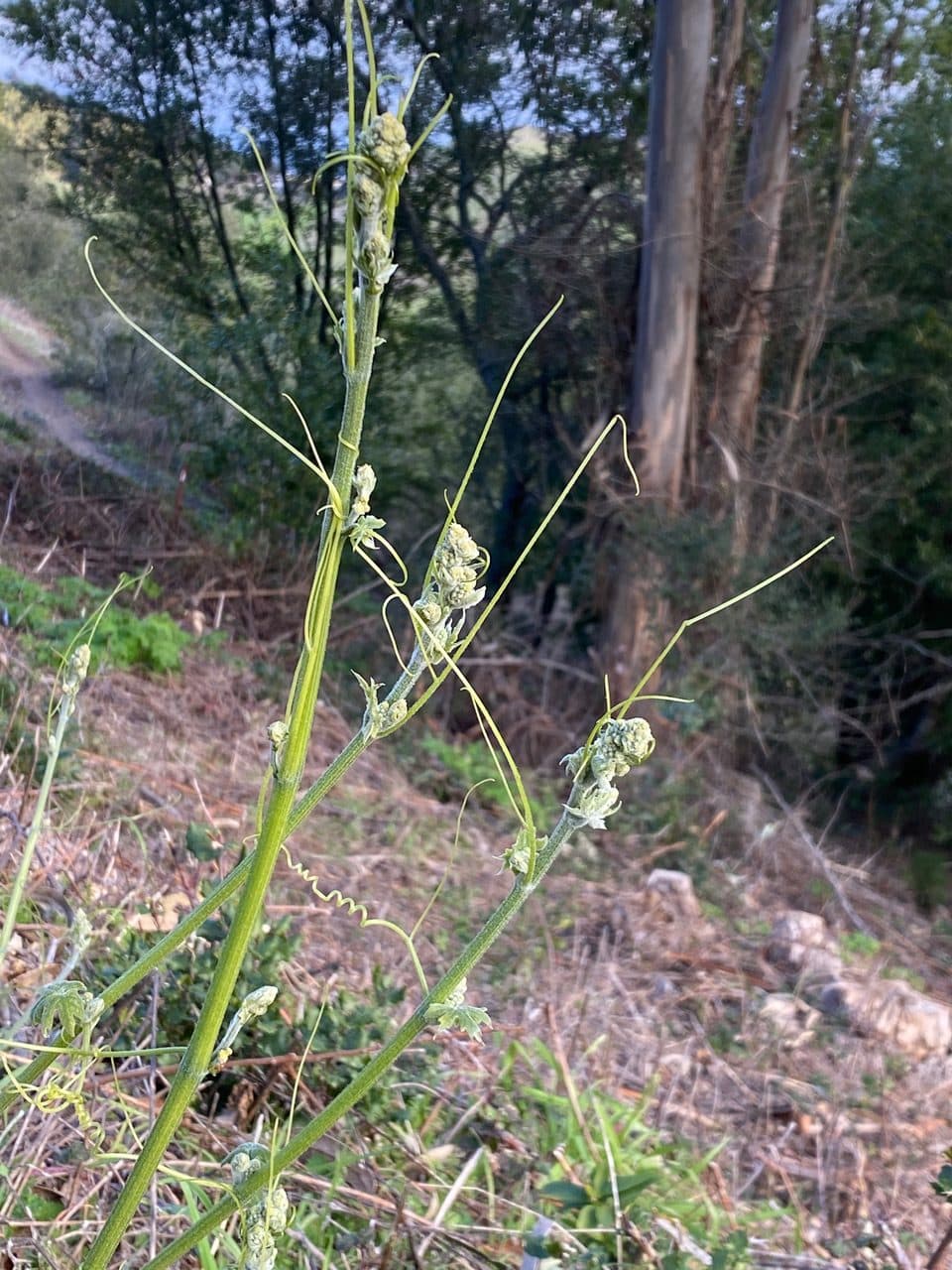
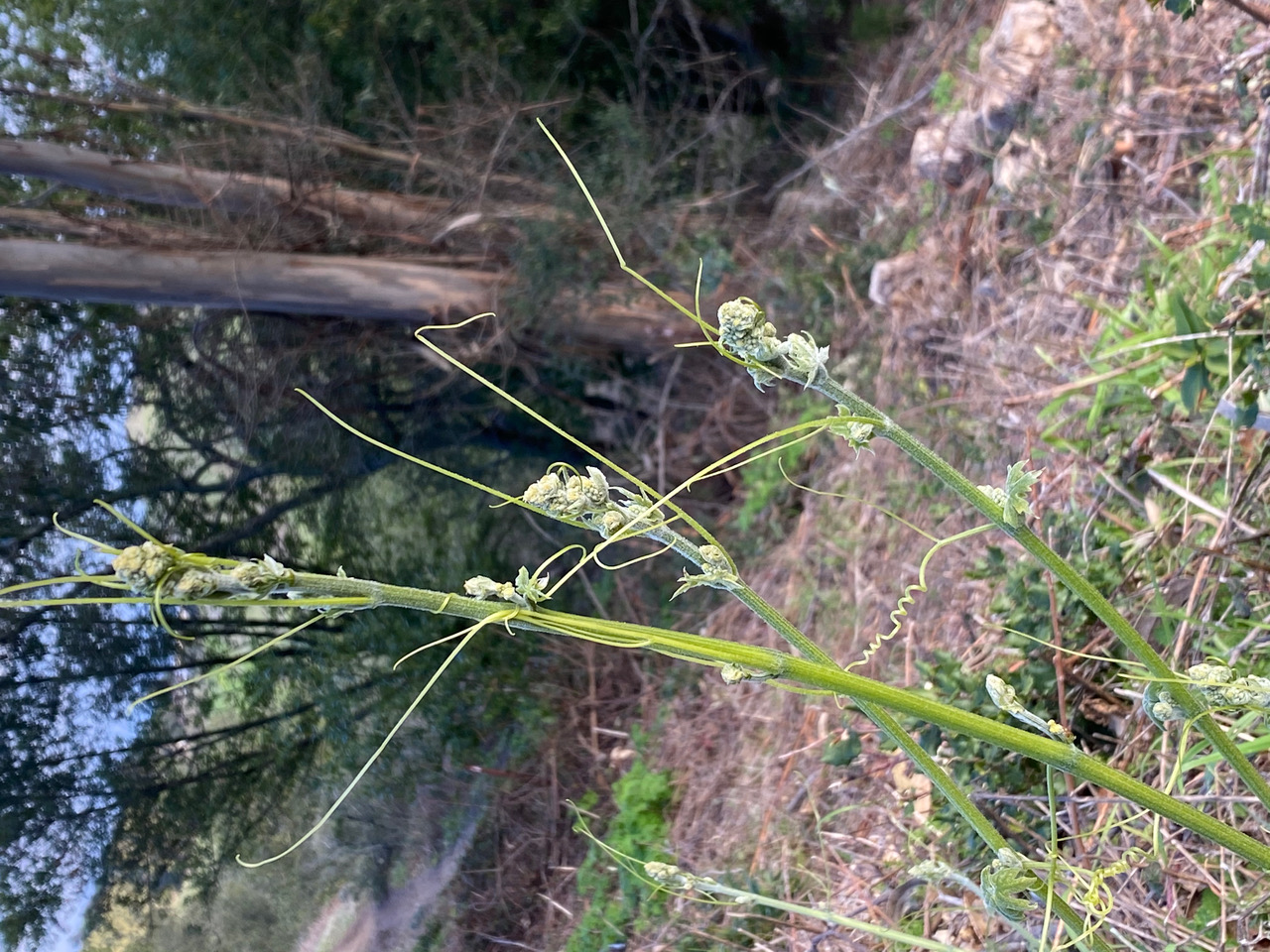
A Wild Cucumber, Marah sp., has sent up robust branches from the ground. For lack of support from the surrounding vegetation (which has been recently weeded), the flexible stems are helping each other stay upright by linking tendrils. A unique form of self-help!

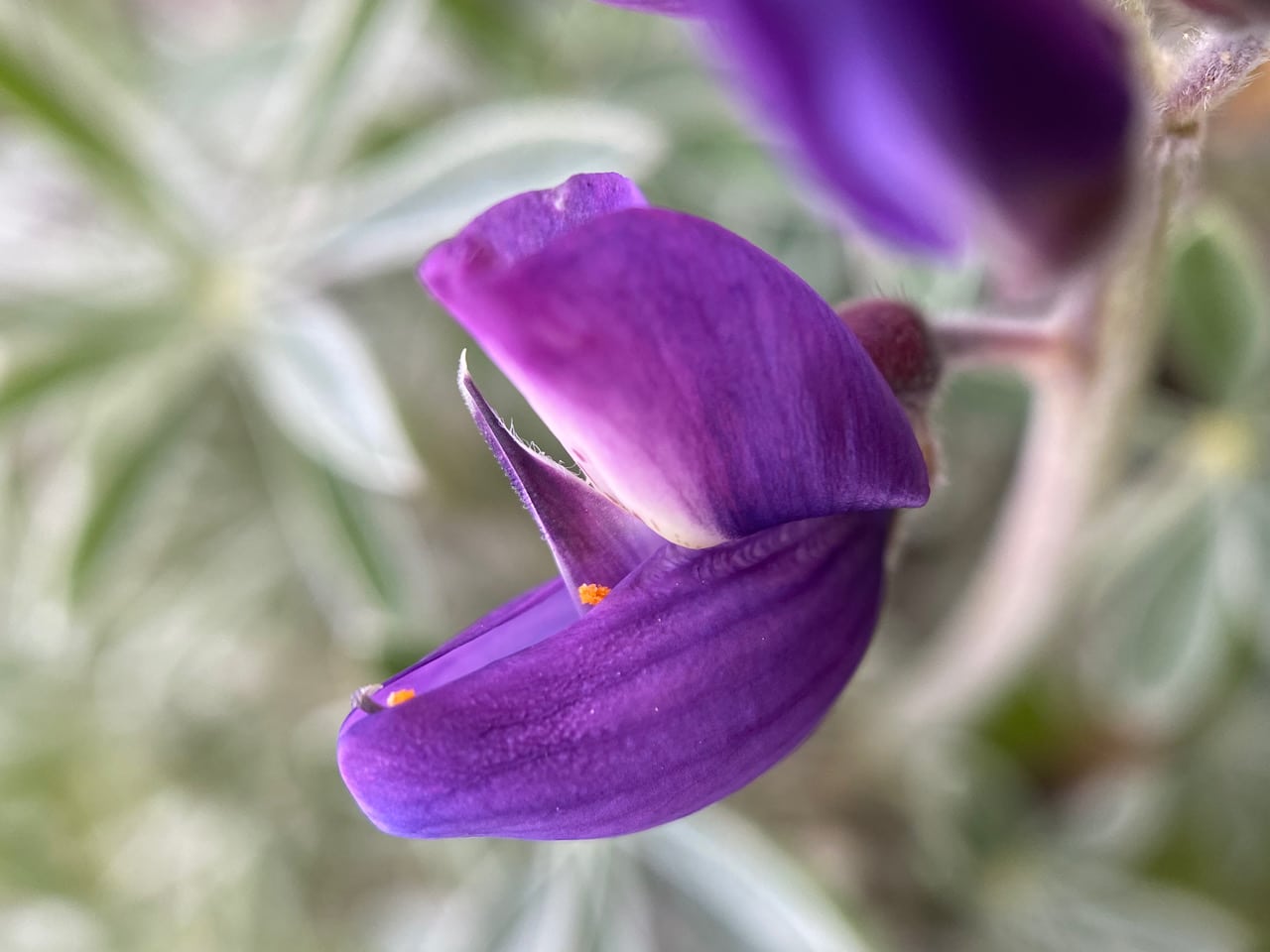

Along Skyline Trail at Diablo Bend, a young Silverleaf Lupine, Lupinus albifrons has started to bloom! Wow, it’s not even February yet!
Closer inspection of the bottom flower reveals that it has been visited by a bee. The sharp-tipped keel is extruded between the wing petals, and some orange pollen has been dislodged from the stamens. Lupines are dependent on heavy-bodied bees for pollination. So the Bumble Bee queens must be out and about already! Among bumble bees, the gynes or queens are the only ones that overwinter. They have mated last fall before going into hibernation. Now they have to establish new colonies on their own. Early sources of nectar and pollen are vital for supporting these single moms.
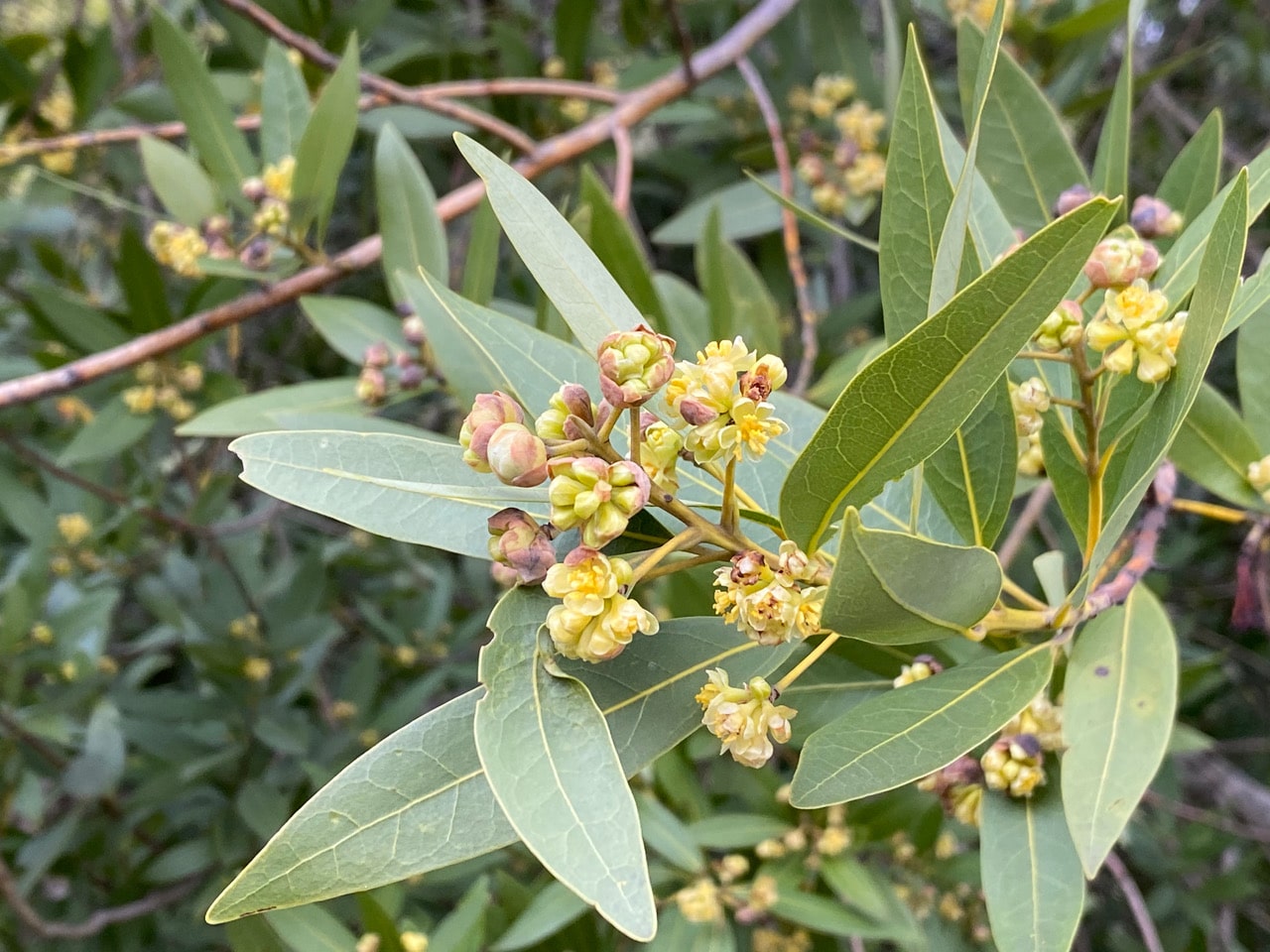
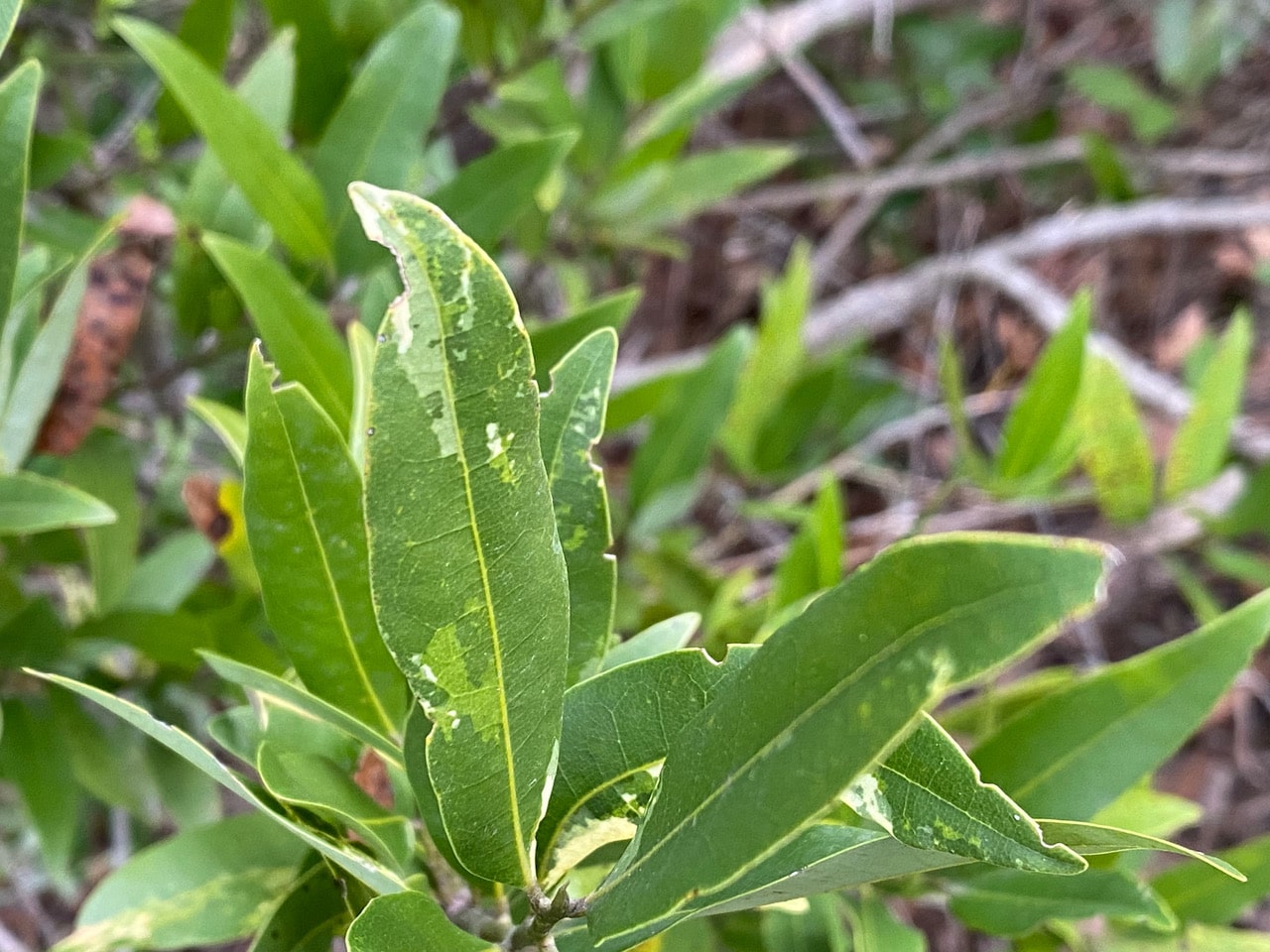
The California Bay trees, Umbellularia californica are blooming profusely, but there’s no insect out today. And it’s no wonder – it’s a chilly 46 F out here.
What happened to these California Bay leaves? There are patches devoid of chlorophyll.
Did some sucking insect cause this damage?
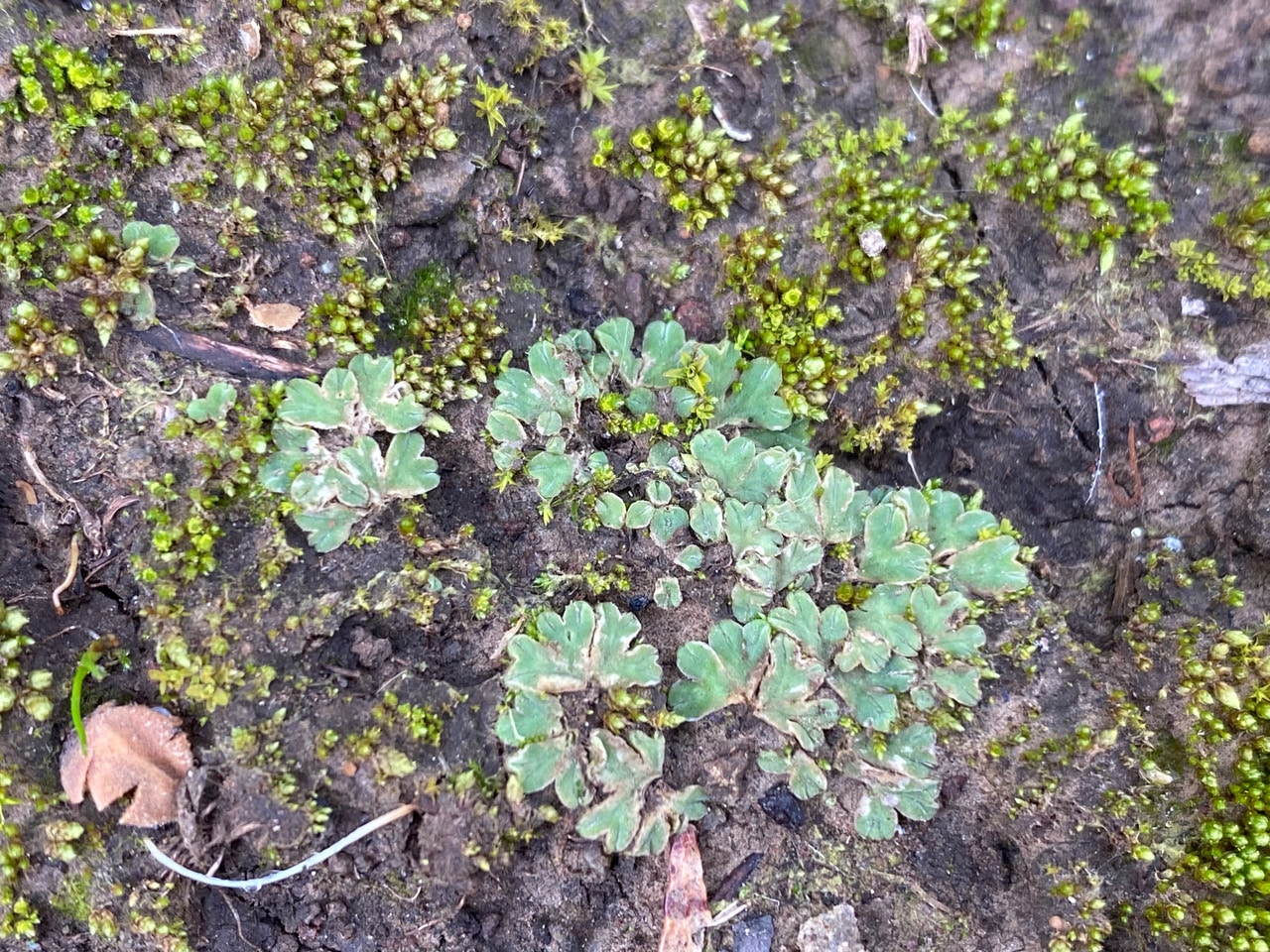
The liverwort called Crystalwort, Riccia sp. has formed spreading rosettes with its thalli among mosses that sprout from the bare soil on the wet margins of the trail.
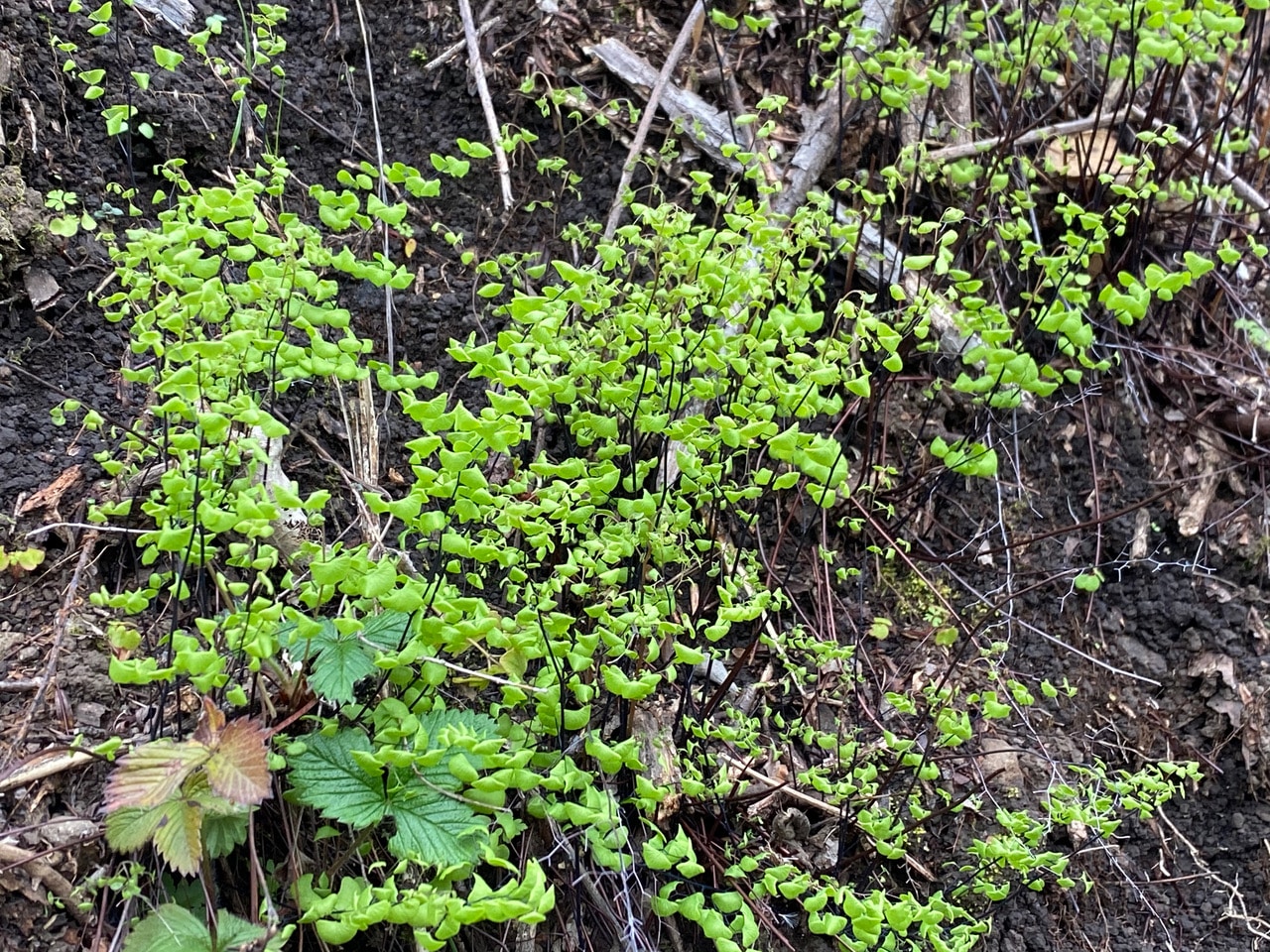
Maidenhair Ferns, Adiantum pedatum are unfurling their tender green leaves.
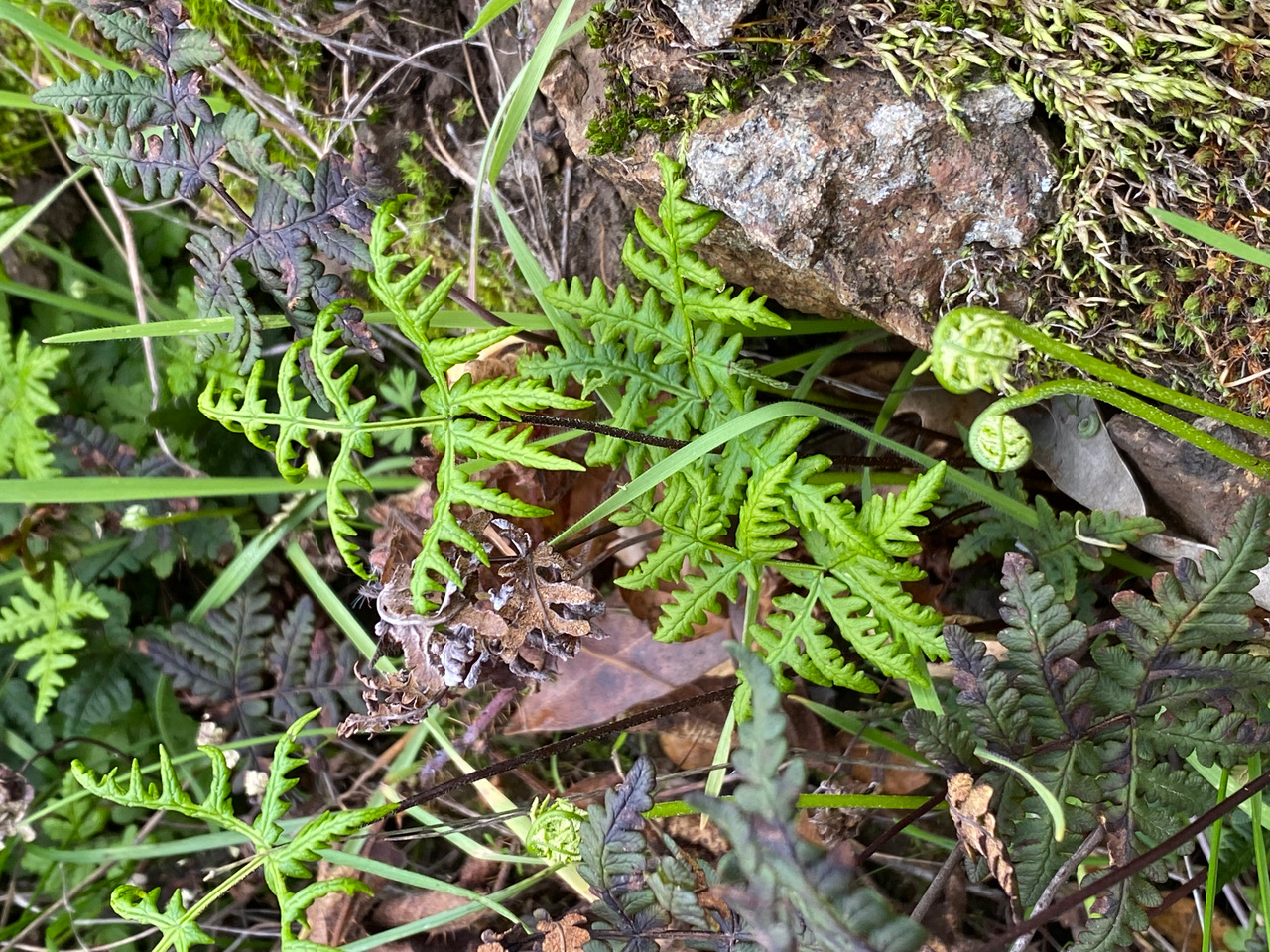
The perennial Goldback Fern, Pentagramma triangularis has unfurled its old leaves. It has also produced some brand new leaves.
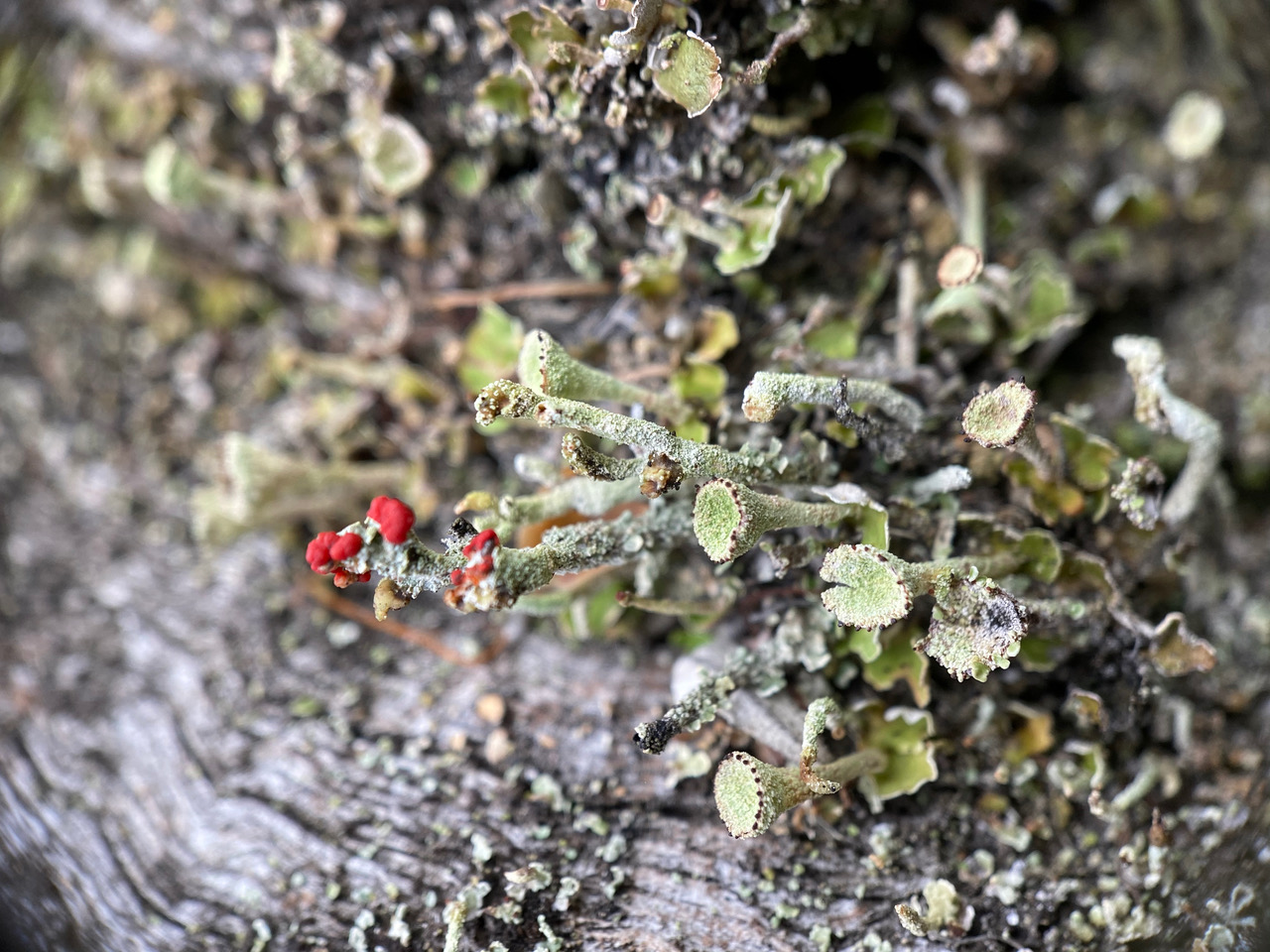
A splash of red entices me into an elfin world of lichens growing on an old tree stump. It is a Pixie Cup Lichen in the genus Cladonia. The leaf-like structures eventually form a stem, or podetium. Podetia topped with some form of cup reminiscent of golf tees characterize many Cladonia species. The cups bear pcymidia or apothecia, the fruiting bodies that produce fungal spores. The red apothecia has given rise to fanciful common names such as lipstick lichen, British soldiers, etc. The lichen is also capable of reproducing asexually by breaking off bits called squamules that grow on hospitable surfaces.
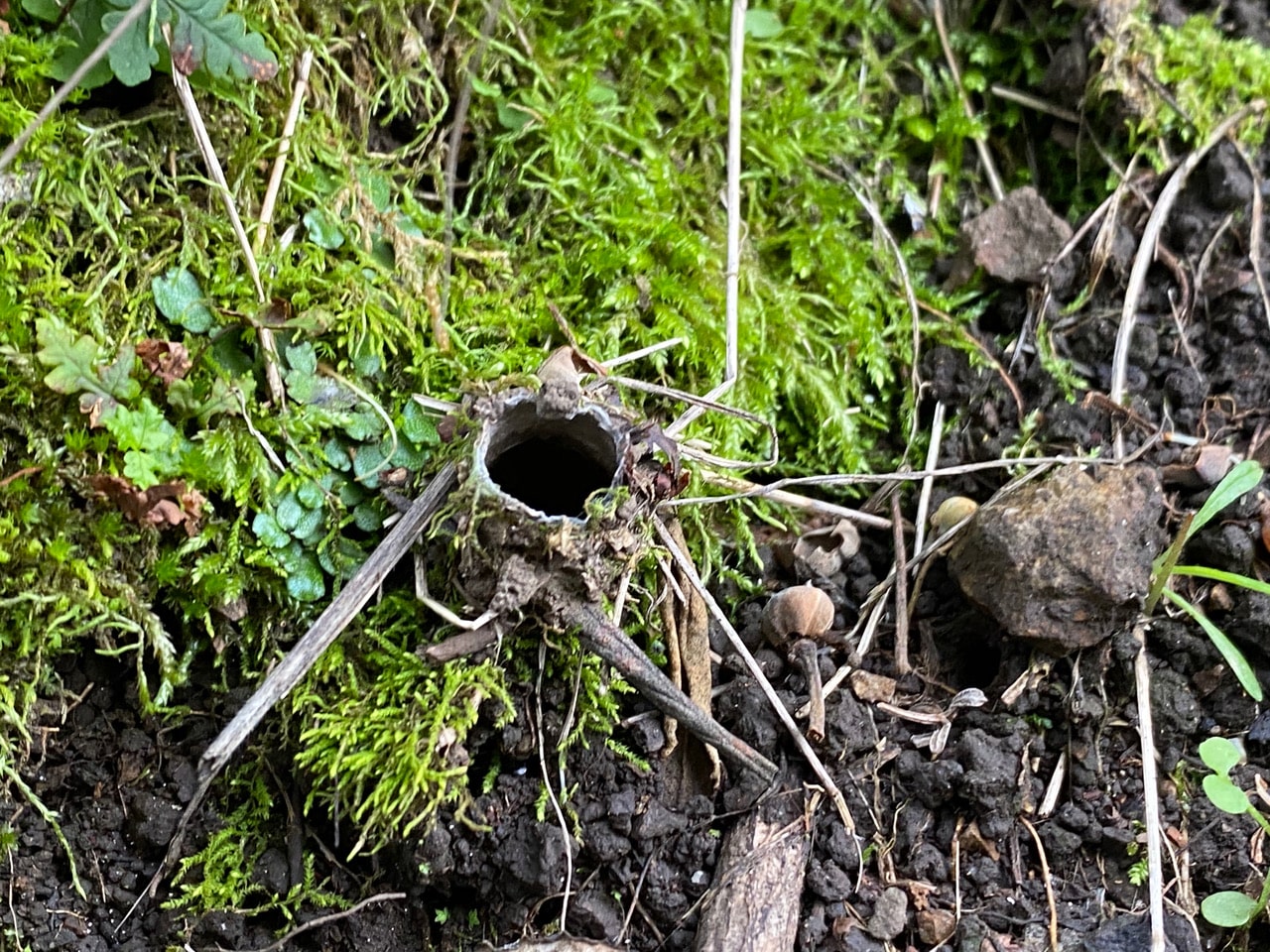
The raised entrance to the underground nest a California Turret Spider, Atypoides riversi is decorated with plant debris. The decorations actually help to extend the spider’s sensory reach while hunting from home. I only spotted this turret because it is now surrounded by green moss. The lucky spider has narrowly escaped burial by an avalanche of soil during the recent rains.