

Pollinator Post 1/28/26 (1)
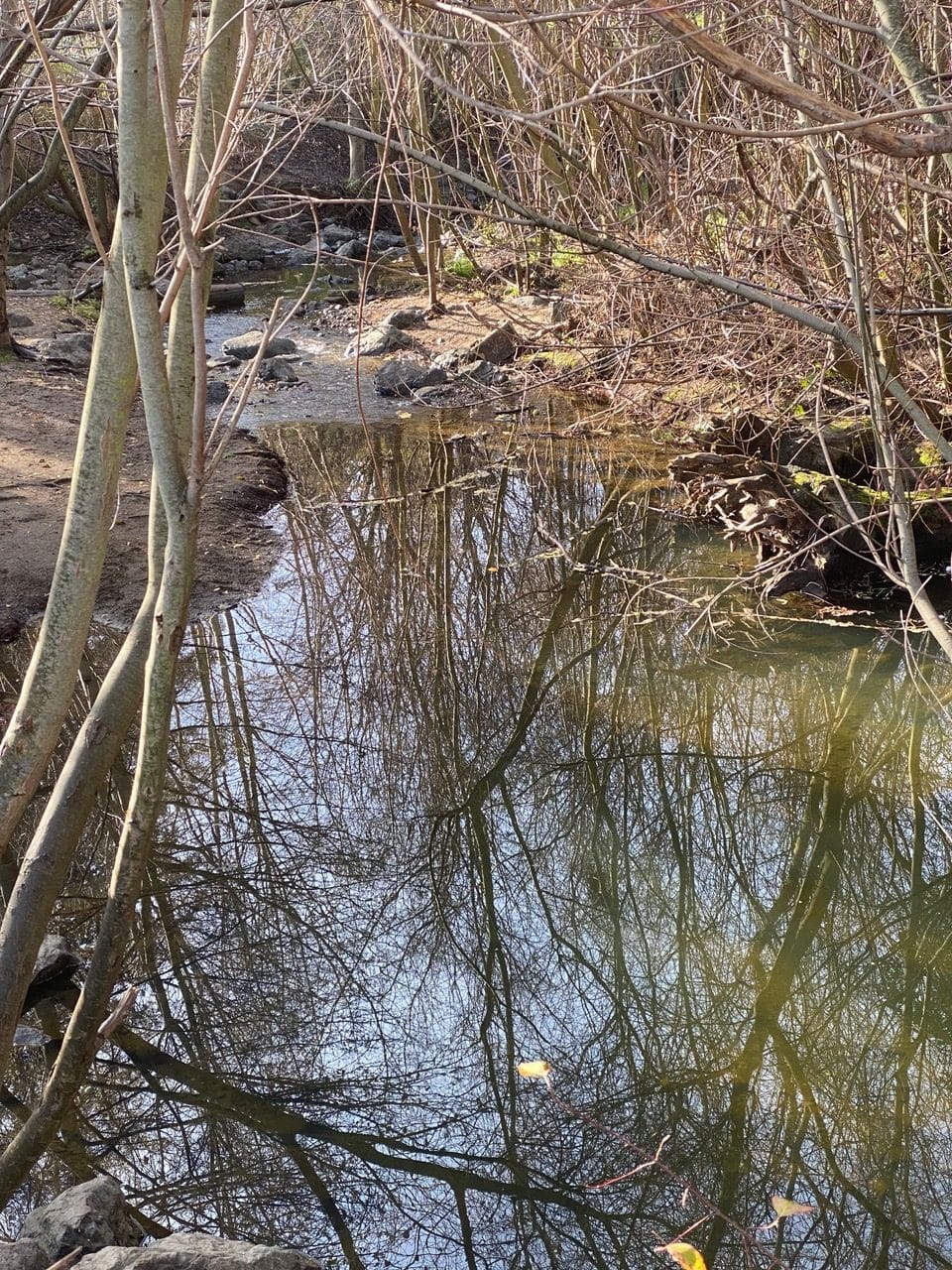
The brief shower last night has cleared the air nicely, even for lowland Oakland. I head for a walk in Dimond Park, entering through the gate at the end of Wellington Street.
Crossing the bridge, I stop to admire the inverted reflections of the bare-branched Arroyo Willows, Salix lasiolepis along Sausal Creek. The scene looks so natural one would never guess that the creek has been through many man-made changes. The Friends of Sausal Creek, a local citizens group is maintaining this day-lit section of Sausal Creek. Once buried in a culvert and covered with soil, this stretch of Sausal Creek was uncovered and replanted with native vegetation in 2016. Since then, the area has gradually supported the return of beneficial insects, birds, and local rainbow trout.
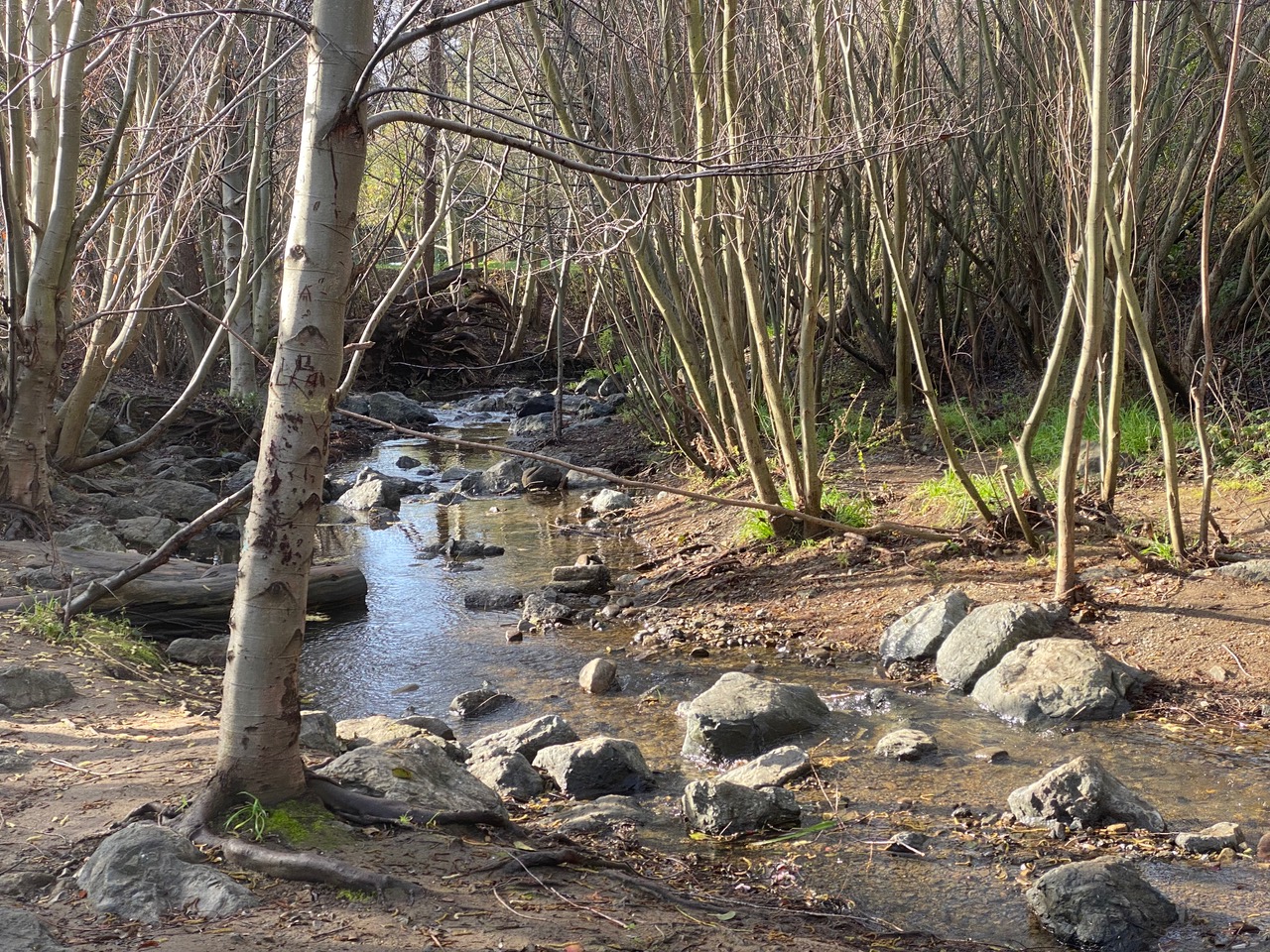
I take a little side path to get down to the creek. Magic lives here!
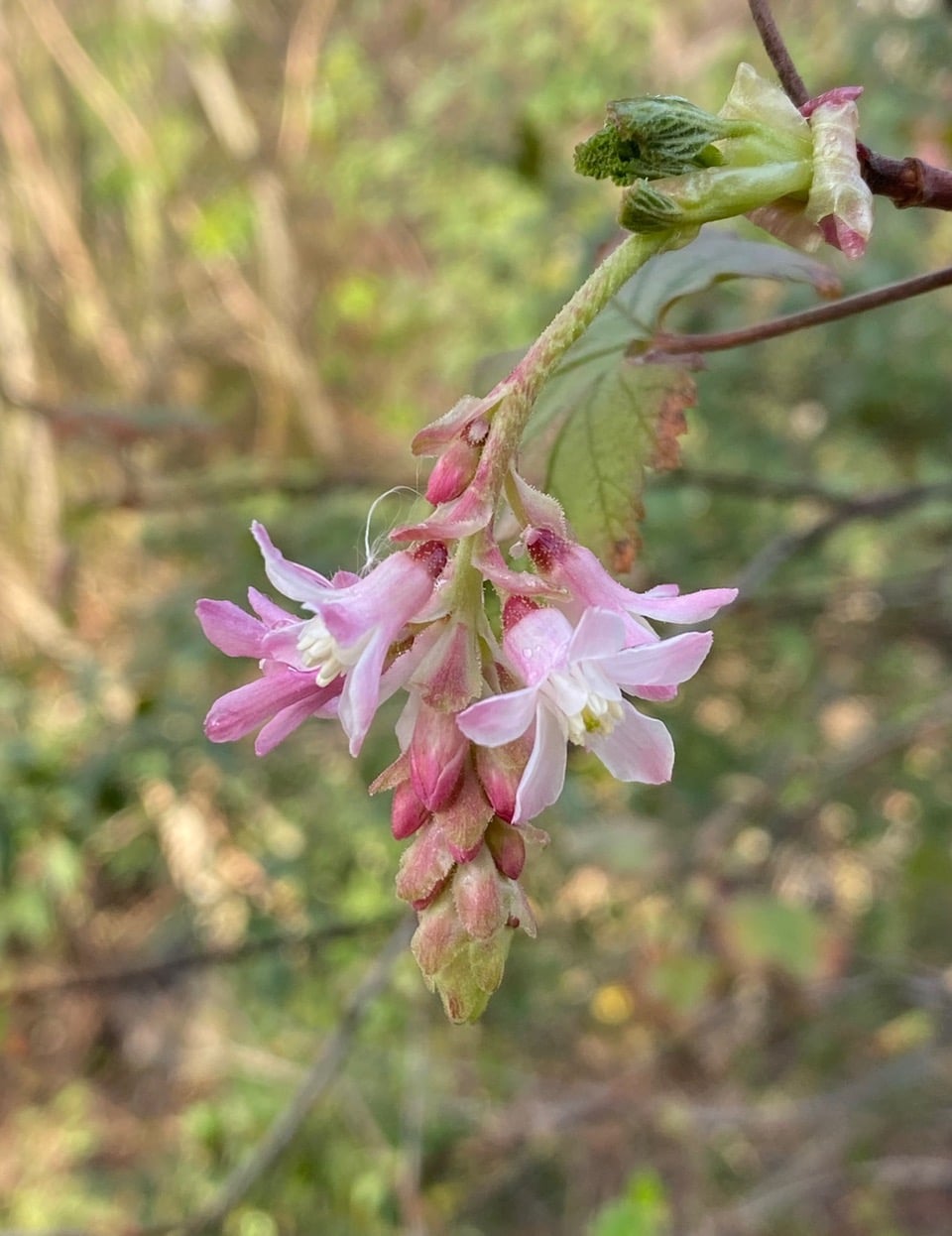
Higher on the bank, in front of the old Scout Hut, the Red-flowering Currant, Ribes sanguineum has started to bloom. My heart swells with pride – these have their origins in my own garden. Ten years ago, I have dug up 200 little seedlings that had sprouted under my Ribes and given them to Michelle Krieg, the then manager of the FOSC Native Plant Nursery. She and the volunteers had nurtured them to healthy plants in gallon pots that were offered during the annual plant sale. Many left-overs from the sale were donated to local school garden projects, and several had found a home here in Dimond Park.
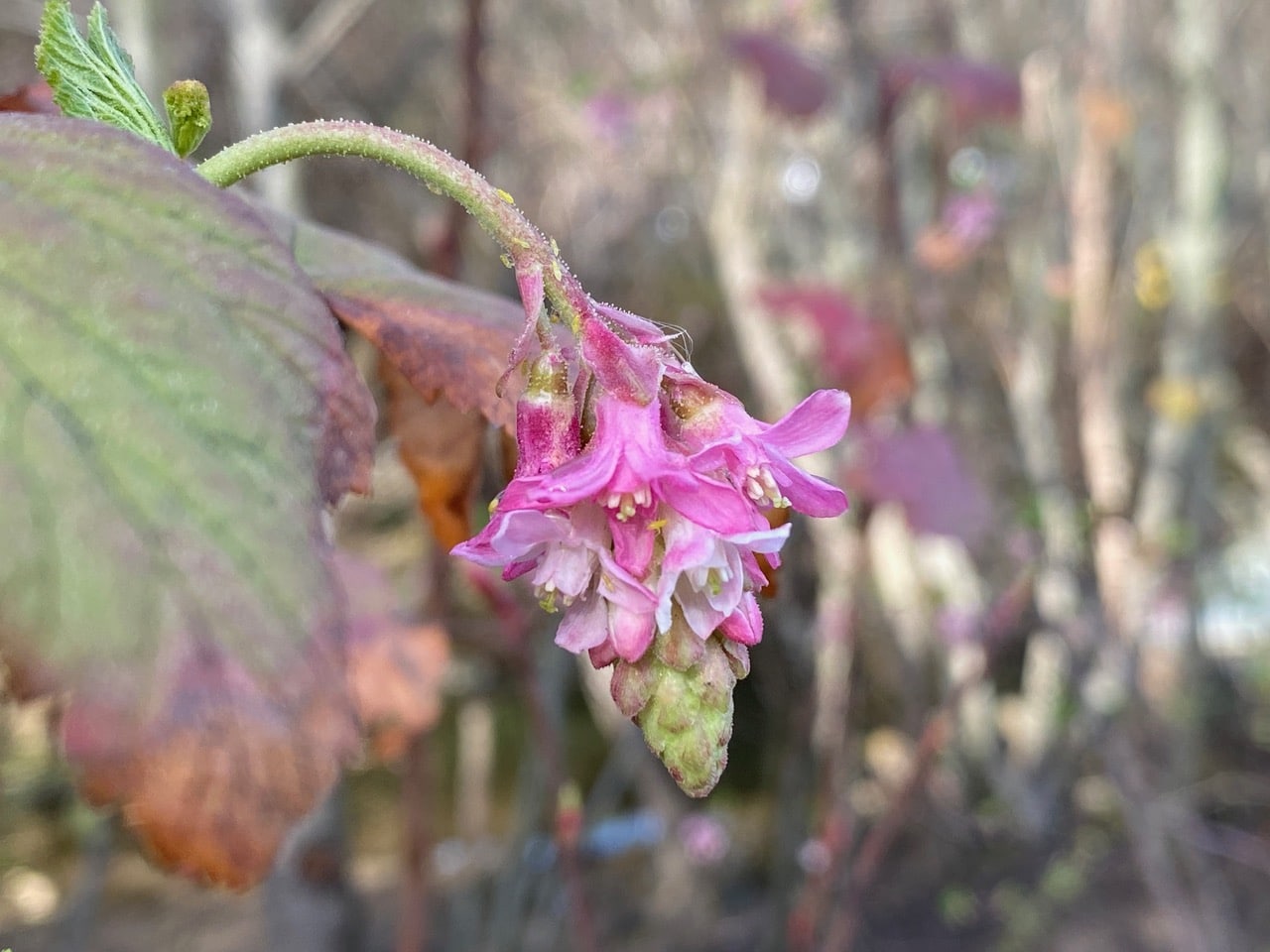
Might there be evolutionary advantage for some of our early blooming natives to have drooping flowers? Currants (Ribes), Gooseberry (Ribes), Manzanita (Arctostaphylos), and Blue Witch (Solanum) come to mind. Perhaps the downward pointing flowers offer protection for the reproductive structures from our winter rains?
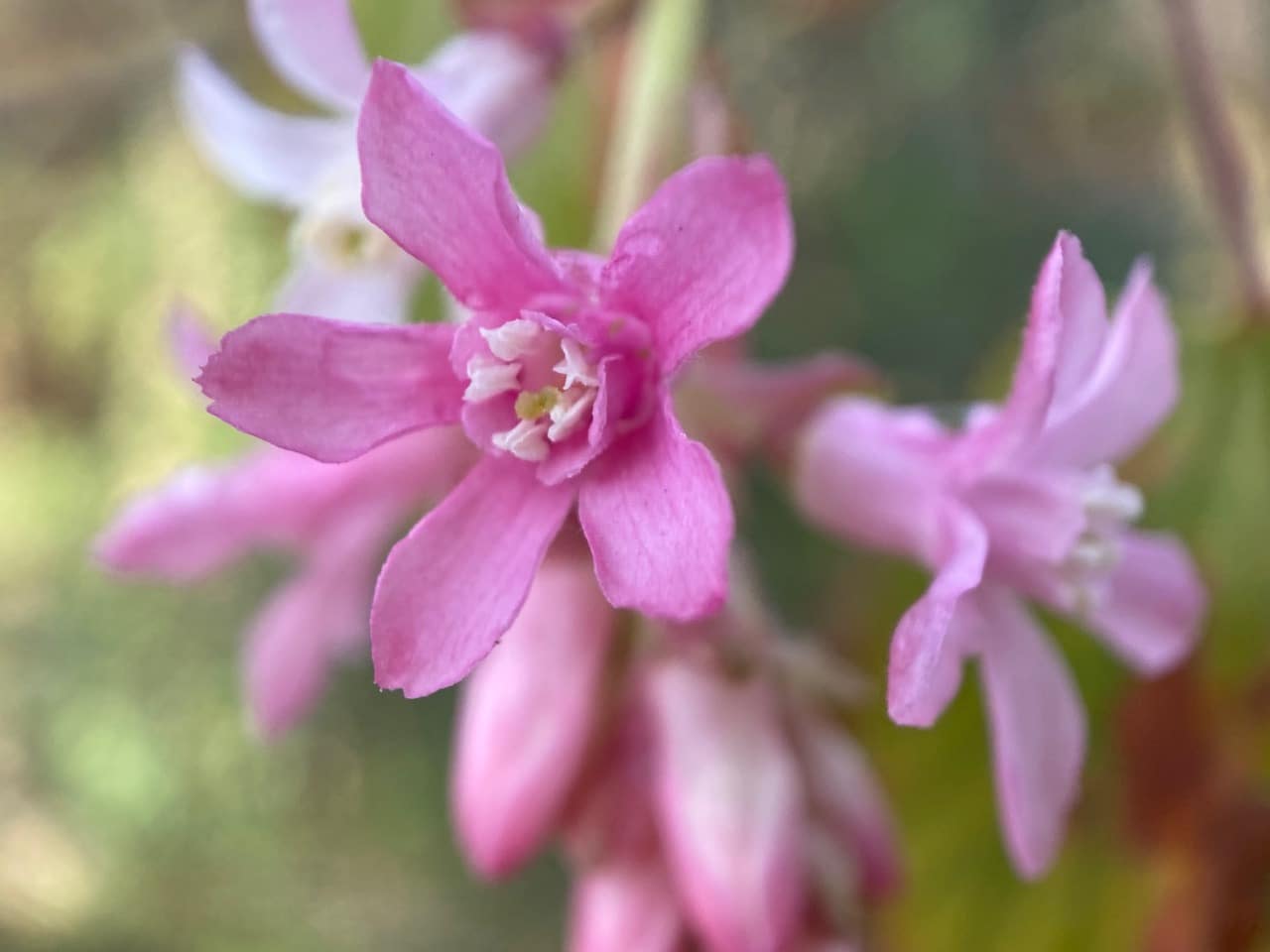
Close-up of a flower on an inflorescence of the Red-flowering Currant. The large pink parts of the flower are actually the sepals that have fused into a tube with flaring tips. The small pink petals stand erect, surrounding the reproductive structures within. Five white, fluted stamens surround a stout, green three-lobed stigma in the center. Rain can be easily diverted by the flaring sepals and downward oriented petals, sparing the reproductive structures within. It is a floral design well-adapted for California’s wet winter. The flowers require pollinators with fairly long tongues to reach the nectar at the base of the tubes. Besides hummingbirds, I have seen Bumble Bees, Digger Bees, and Greater Bee Flies take nectar from R. sanguineum. I have once observed a small Mining Bee (Andrenidae) actually enter a flower. But none of the insects is visiting the Ribes flowers today.
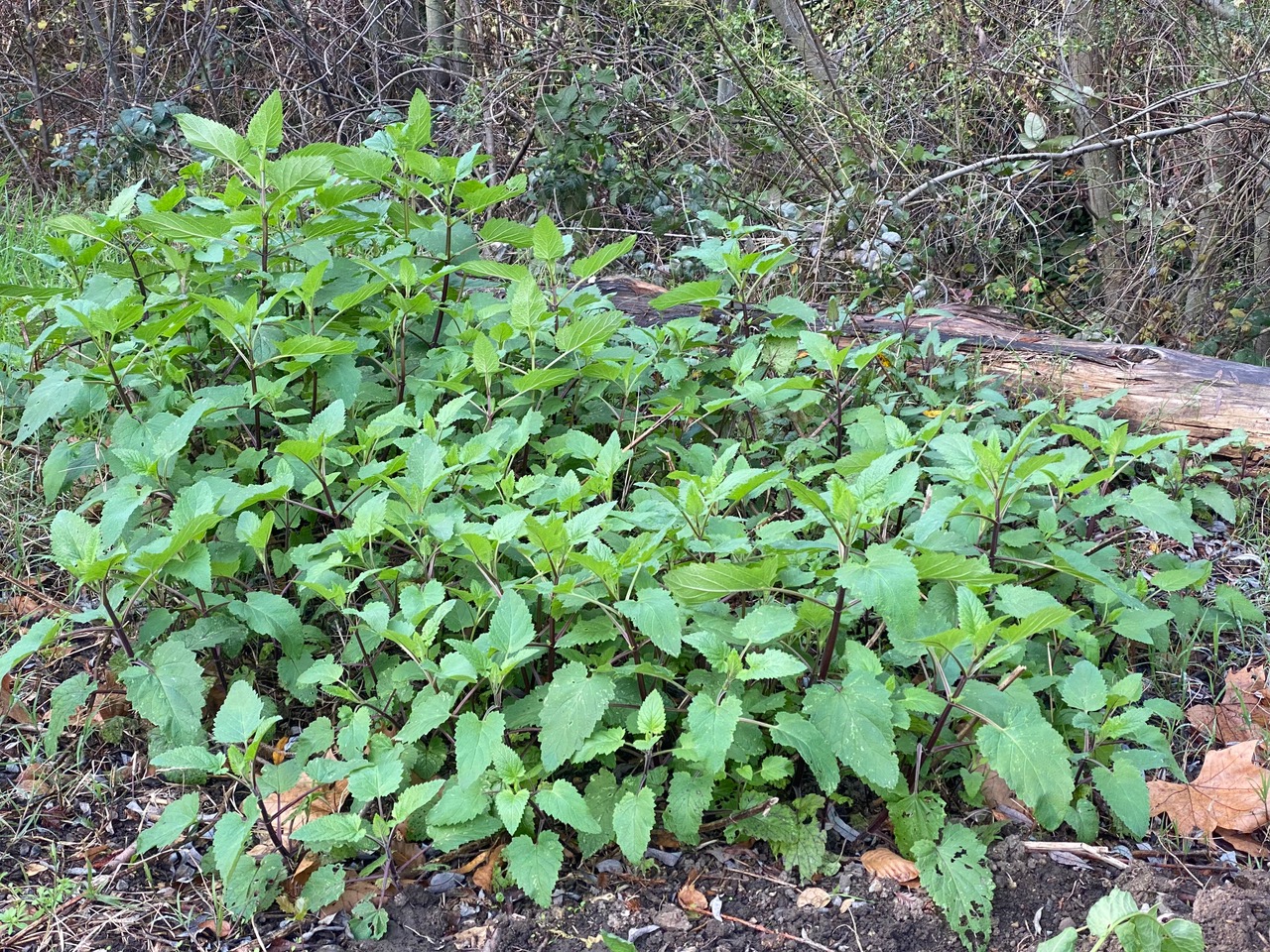
I walk the creekside trail through the Redwood grove. A healthy patch of Bee Plant, Scrophularia californica greets visitors from one of the planted beds. I look for the caterpillars of the Variable Checkerspot butterflies, but don’t find any.
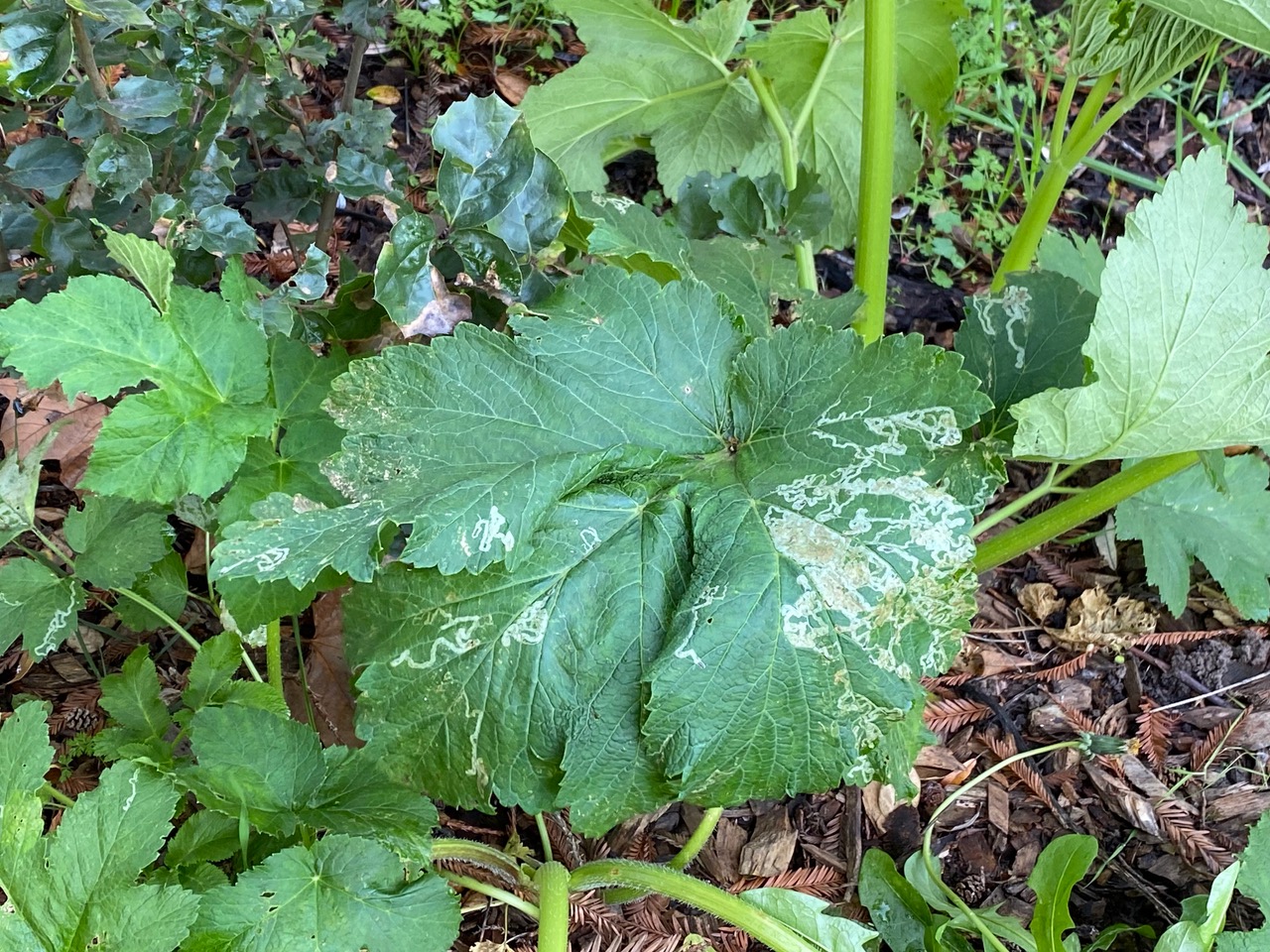
An old leaf of Cow Parsnip, Heracleum maximum is riddled with squiggly white lines, the work of the larvae of Leaf-miner Flies in the genus Phytomyza (family Agromyzidae).
The Agromyzidae are a family commonly referred to as the Leaf-miner Flies, for the feeding habits of their larvae, most of which are leaf miners on various plants. They are small flies, most species in the range of 2-3 mm. Agromyzidae larvae are phytophagous, feeding as leaf miners, less frequently as stem miners or stem borers. A few live on developing seeds, or produce galls. There is a high degree of host specificity. A number of species attack plants of agricultural or ornamental value, so are considered pests. The shape of the mine is often characteristic of the species and therefore useful for identification. Adults occur in a variety of habitats, depending on the larval host plants.
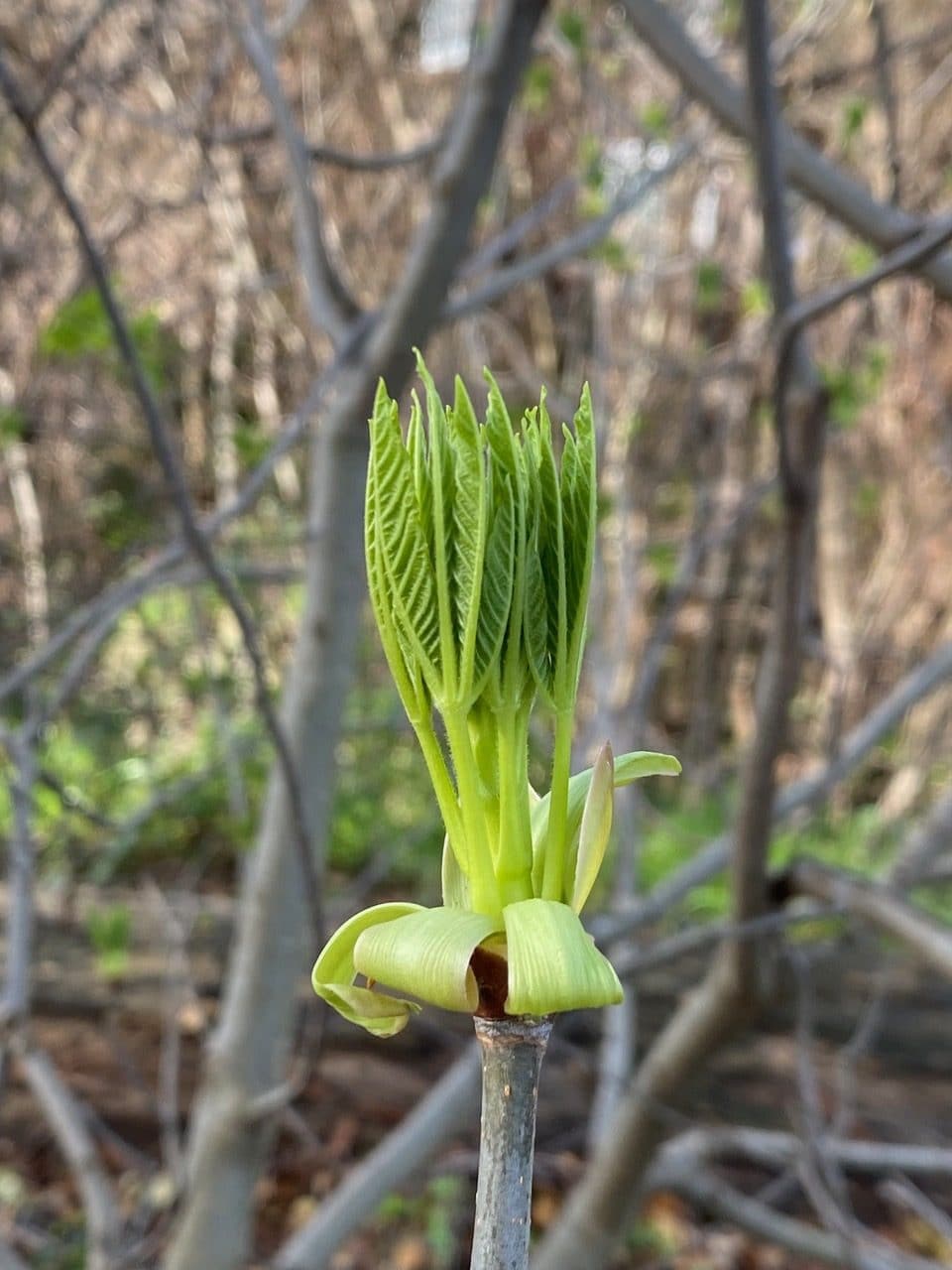
A bud of a California Buckeye, Aesculus californica has opened to reveal a bunch of new leaves yet to unfurl. How does the tree manage to pack so much life in a bud?
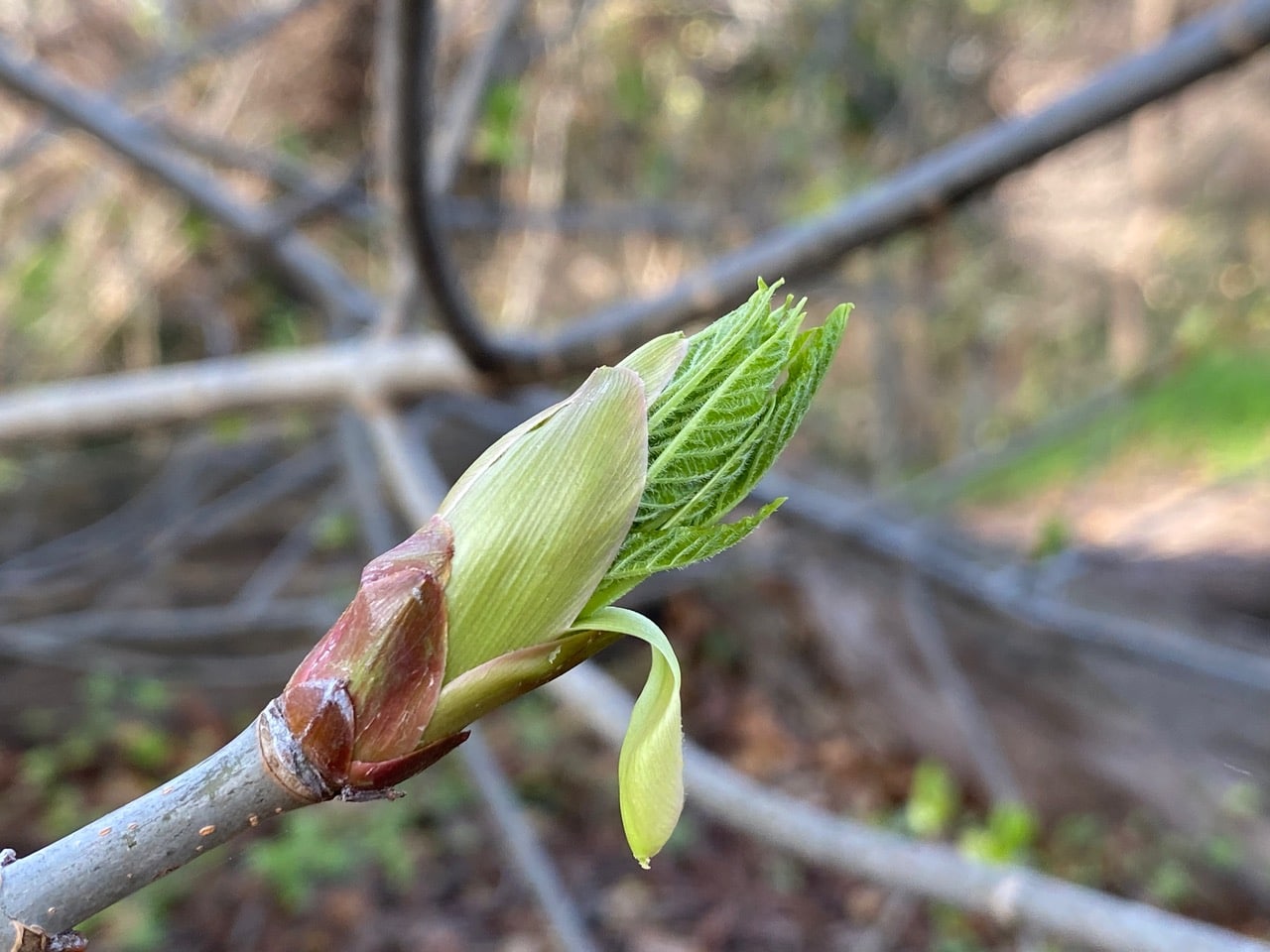
Here’s a younger bud. I cherish this moment of budburst every year. It reminds me of the miracle of life.
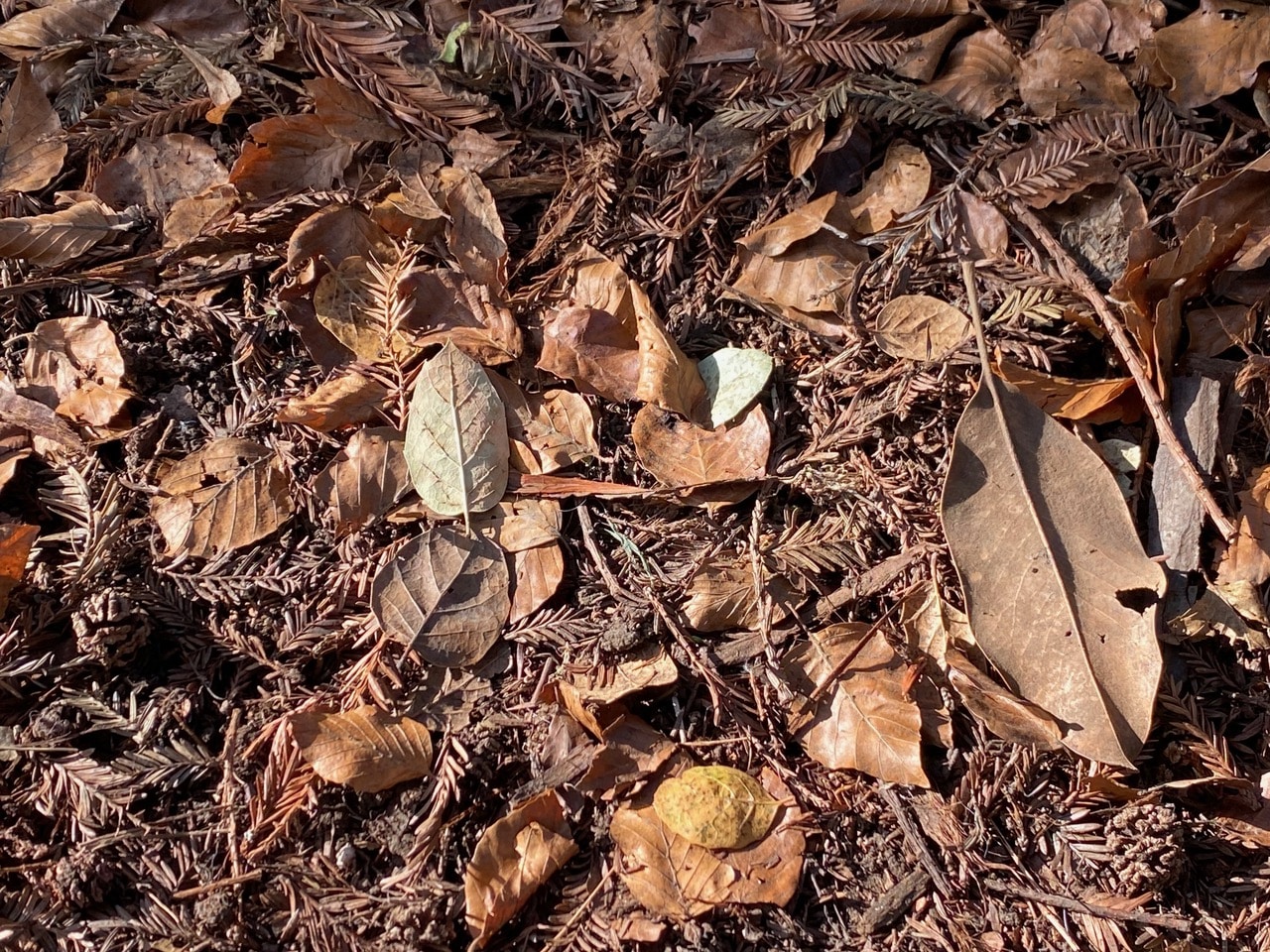
I’m glad that the gardening crew has left the leaf litter on the ground, instead of raking and carting it away.
We have all heard the adage “Leave the Leaves”. Why?
– Leaf litter acts as a natural mulch protecting roots from heat and cold, while preserving soil moisture.
– Fallen leaves support wildlife which use them for both shelter and food. Many insects and other organisms (fungi, earthworms, springtails, microbes, etc.) feed on fallen leaves, breaking down the organic materials and recycling nutrients back into the soil as a natural fertilizer.
– Fallen leaves provide crucial shelter and habitat for insects, amphibians, birds, and mammals. Many moths and butterflies have caterpillars that pupate under leaf litter through the winter.
– Leaving the leaves lightens your yardwork – Duh!