

Pollinator Post 1/28/24 (1)
Counting on no rain today, I set out to explore the northern section of Skyline Trail, hoping to see some early blooms.
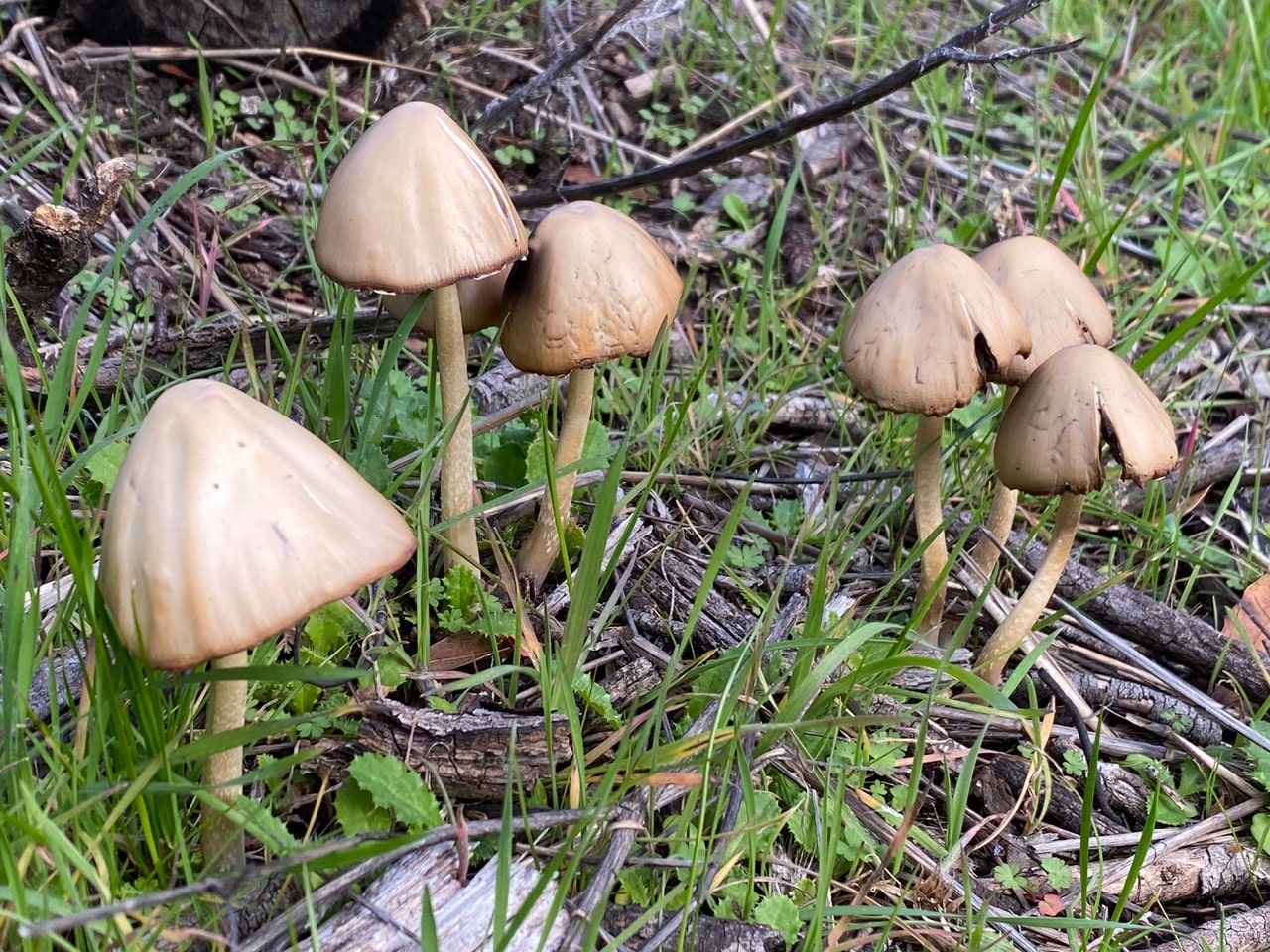
Soon after entering the cattle gate at the Steam Train entrance, I spot this group of tall mushrooms with cone-shaped caps on the grassy meadow. iNaturalist has helped identify the fungus as the Tall Psathyrella, Psathyrella longipes.
The Tall Psathyrella is a species of agaric fungus in the family of Psathyrellaceae and the brittlestem genus Psathyrella. It has an almost world-wide distribution, occurring in most states and provinces of North America. Solitary to scattered in leaf litter and well decayed woody debris, it fruits from after the fall rains to late winter. When fresh, the rim of the caps may bear a veil of creamy-white fragments. The gills are dark-brown to blackish-brown in age.







I am glad to see that the wood rat nest at the base of the multi-trunked Bay tree is still there intact despite the major brush clearing in the area. I wonder how the occupant is faring in this much altered neighborhood.
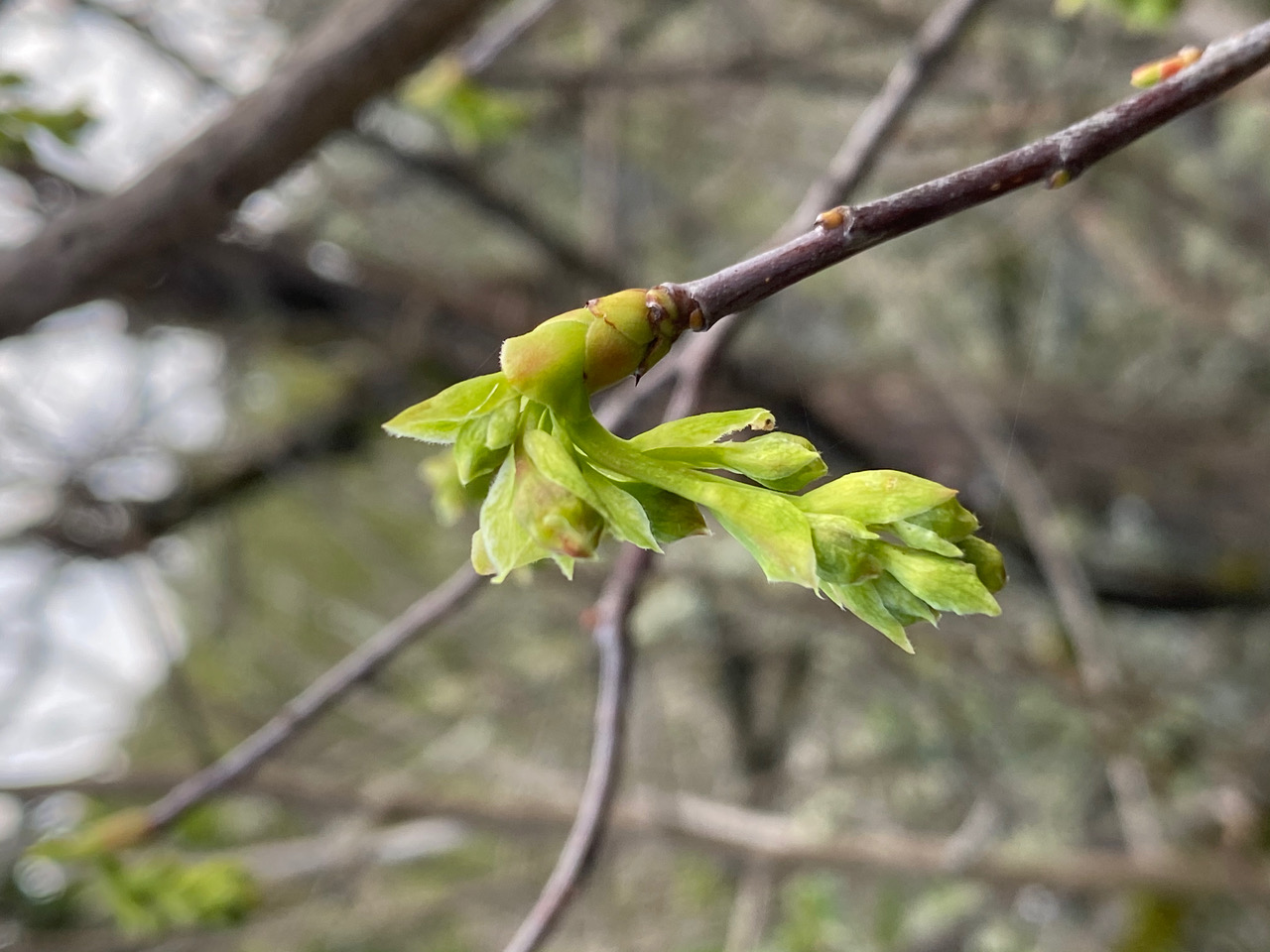
Some of the Osoberry, Oemleria cerasiformis have sent out drooping floral buds. We can look forward to their charming white flowers soon.
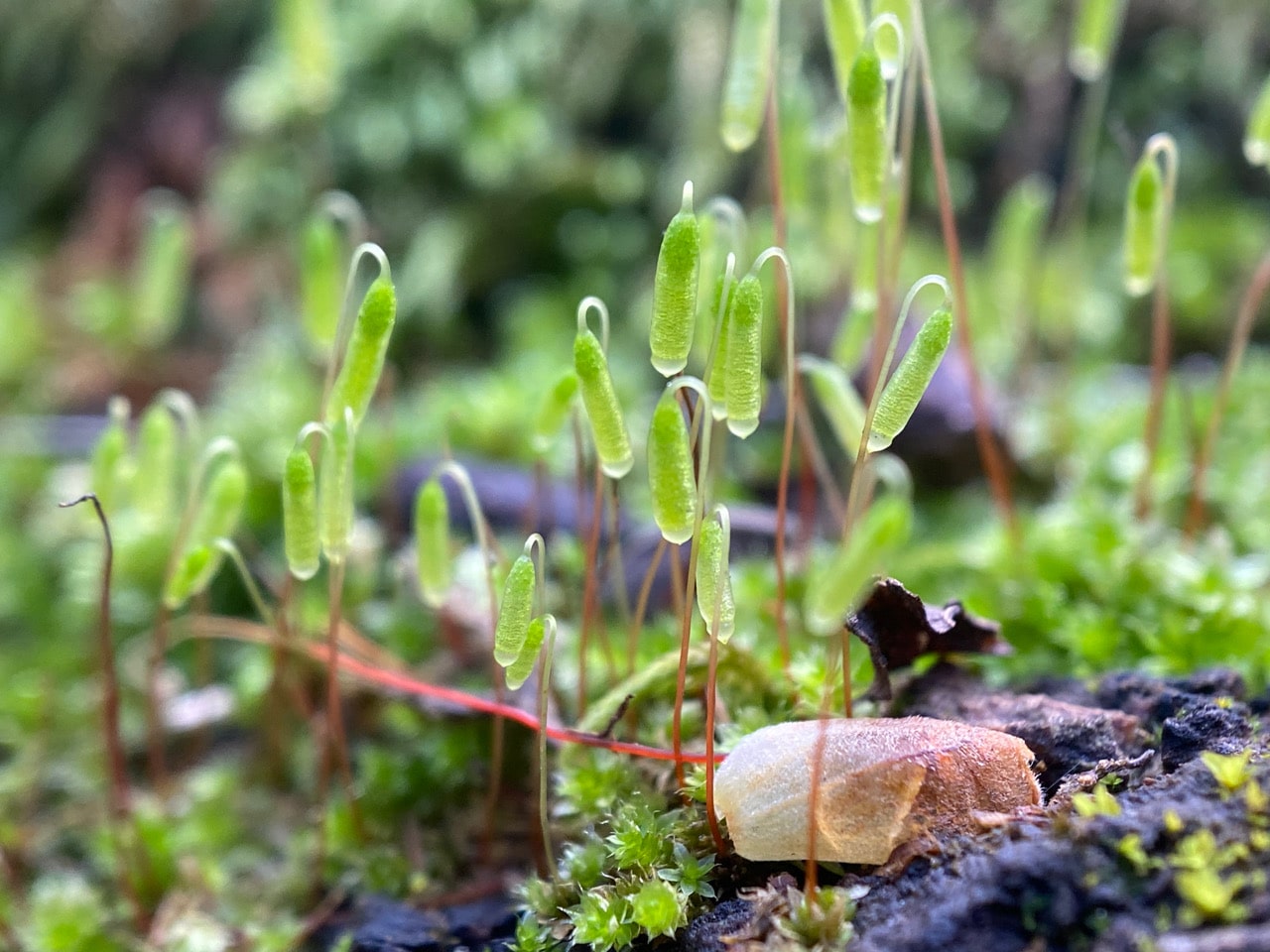
The log is brimming with happy mosses, some with sporophytes.
The sporophytes of these mosses have pendulous capsules where spores are produced.
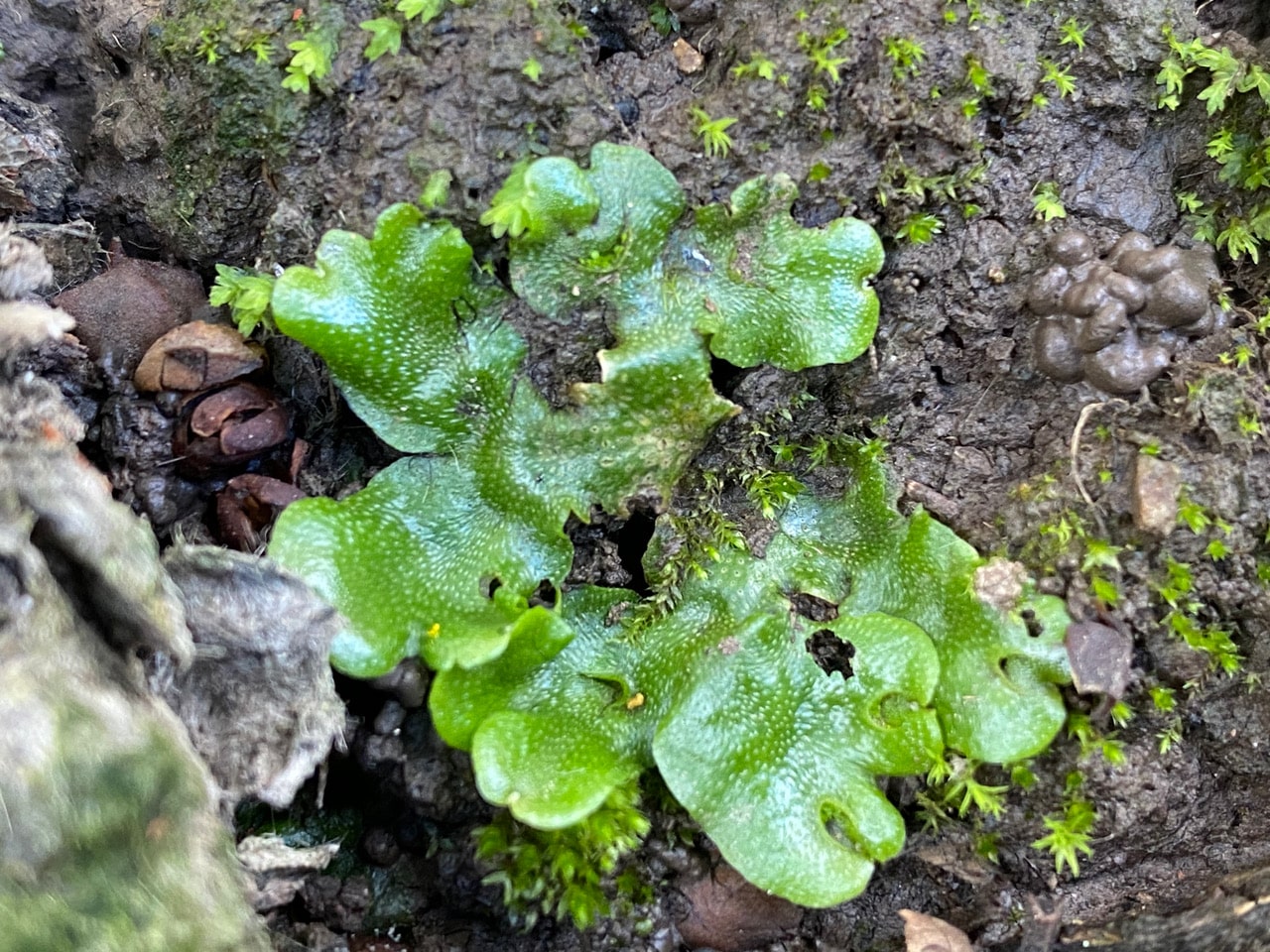
It makes me smile to see the Crescent-cup Liverwort, Lunularia cruciata (family Lunulariaceae) growing on a wet bank by the trail.
One has to look closer at the liverwort to appreciate its common name, Crescent-cup Liverwort. As in other liverworts, the main plant body or thallus is a haploid gametophyte. L. cruciata mainly reproduces asexually with the production of gemmae, which are small vegetative propagules housed in small crescent-shaped gemmae cups. As a rain droplet splashes into the gemmae cup, it propels the gemmae out and away from the parent, where they will germinate. This is probably why the liverwort is such a successful species, with a world-wide distribution.
The yellowish-green moss Homalothecium sp. is spreading on the rock, almost smothering it in a green embrace. One of my moss teachers had a nickname for Homalothecium – the “blonde hugger”!
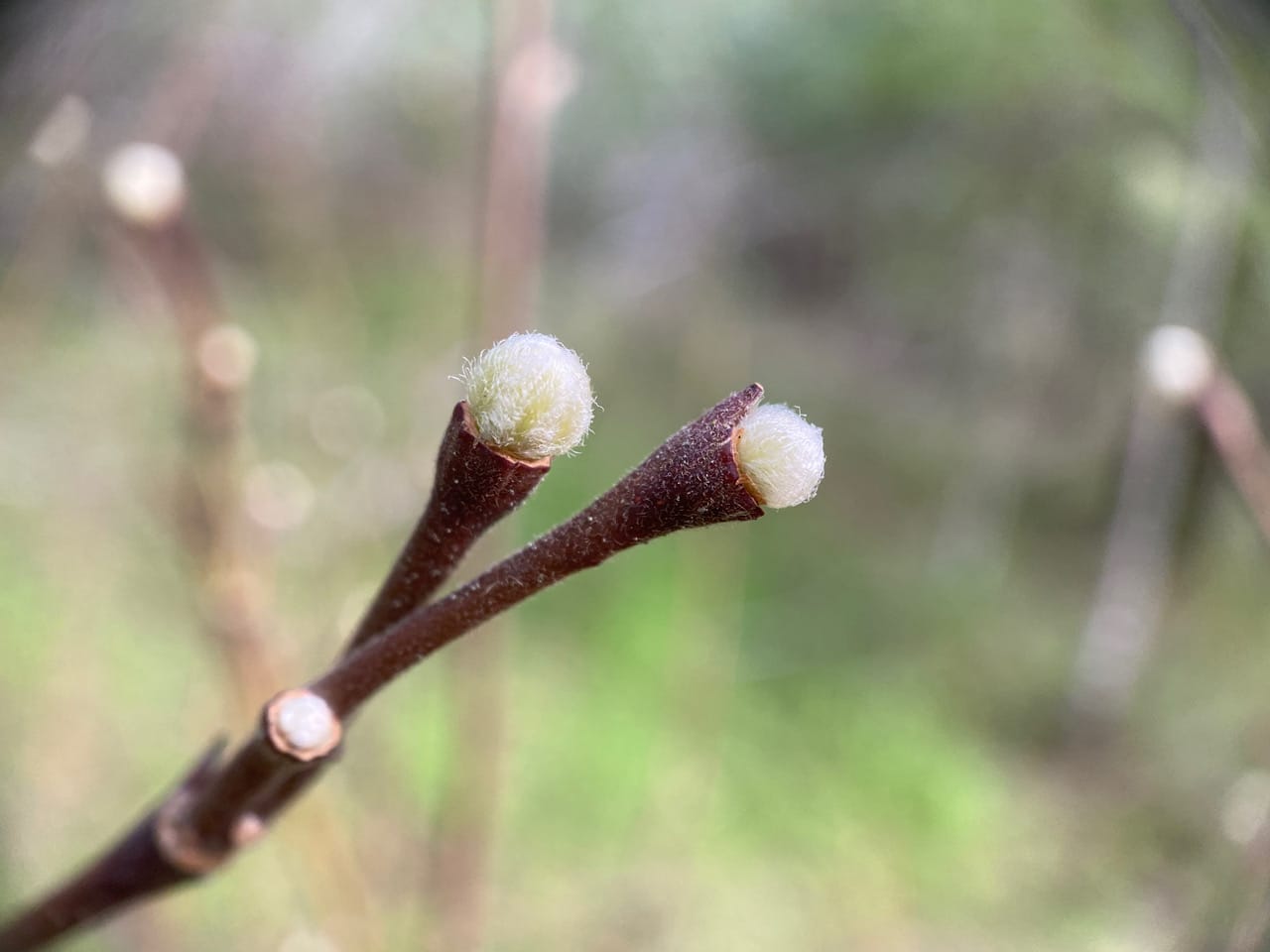
Ooh, the bare branches of this Western Leatherwood, Dirca occidentalis are bearing tiny cottonball-like buds at the tips.
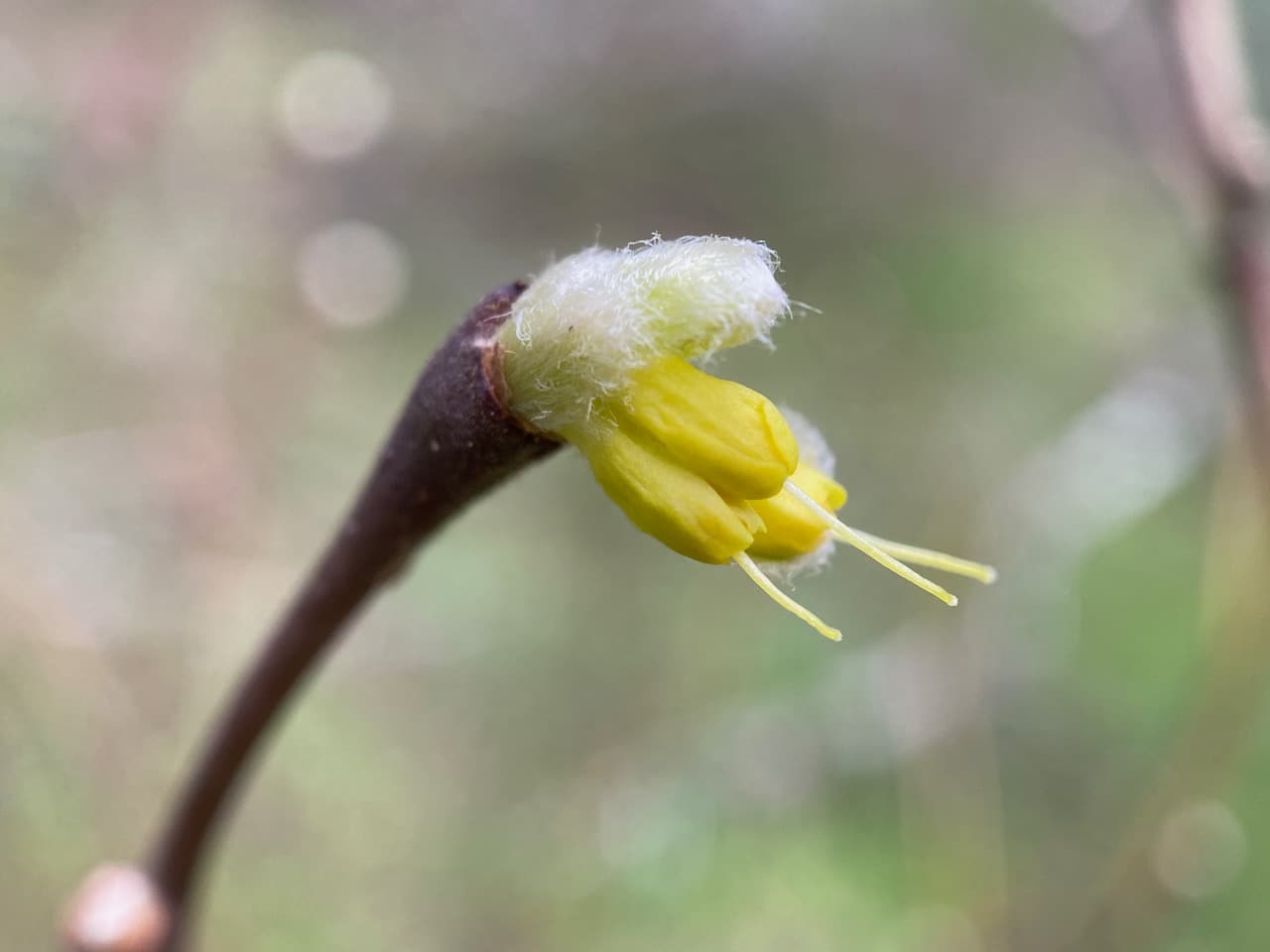
This bud has started to open up, exposing three yellow florets. The long stigmas seem to be the first reproductive structures to make an appearance.
This flower is fully opened. Each inflorescence consists of 1-4 nodding flowers arising from the same leaf axil. The apparent petals are actually bright yellow sepals. Long stamens and pistil extend beyond the calyx, giving the appearance of tassels. From what I read, Anna’s hummingbirds and non-native honey bees frequent the flowers. The common name Leatherwood refers to the plant’s pliable twigs and tough, leathery bark. The branches were historically used by Native Americans for basket making.
The Western Leatherwood, Dirca occidentalis belongs in a rather unfamiliar family Thymelaeaceae. The plant is not only endemic to California, but to the SF Bay Area specifically. There are quite a few of these plants growing in the moist and shaded slopes on the north end of the Skyline Gardens. The flowers emerge prior to leafing in late winter. I have yet to see a pollinator visit these flowers.
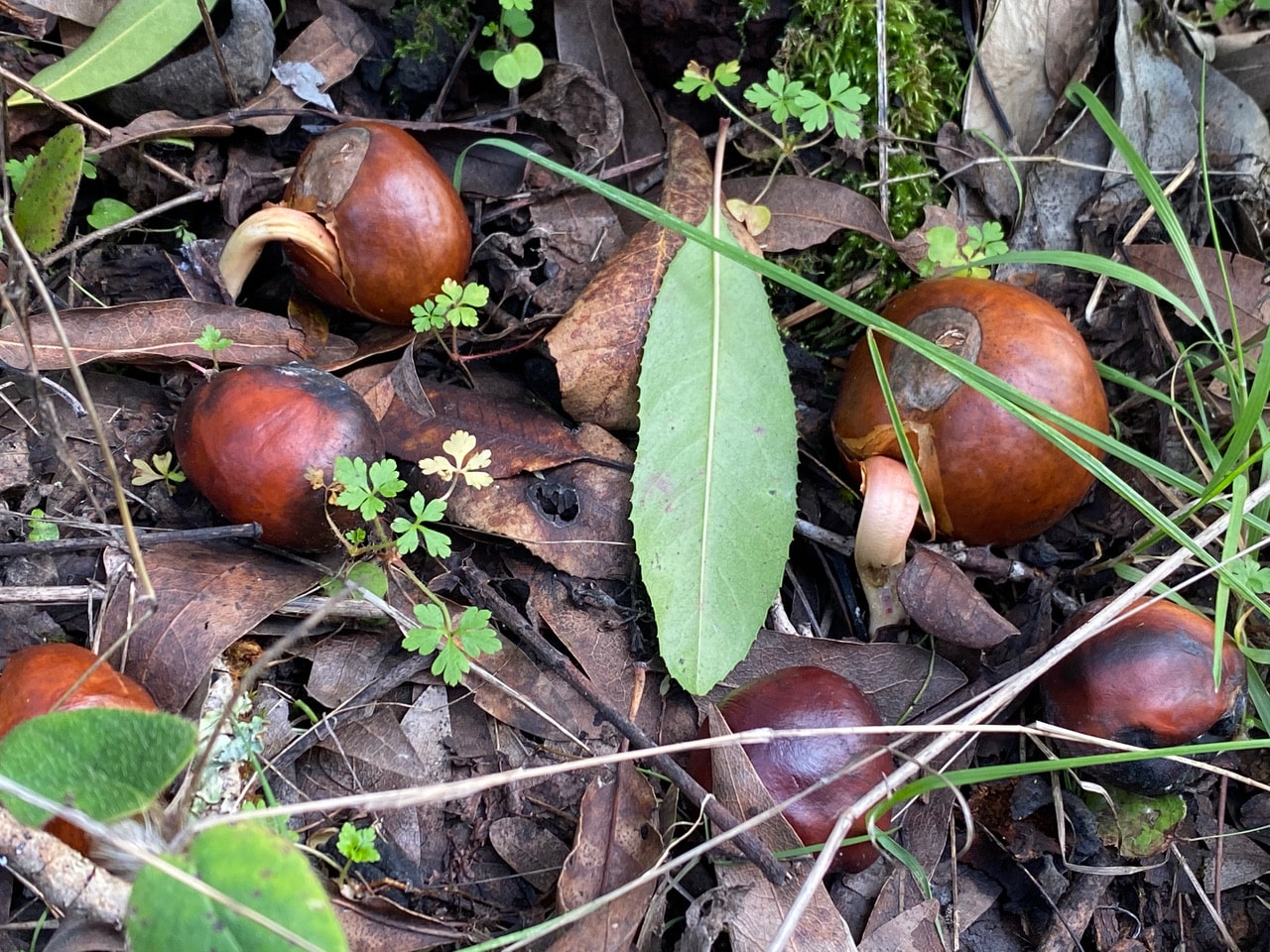
A bumper crop of Buckeye fruits in the leaf litter. Many have started to germinate.
This robust Buckeye fruit has sent its root into the soil. Way to go!
The large mosses growing on the trunk of a Buckeye tree are beginning to dry and curl downwards, appearing like poodle fur. Dendroalsia abietina is one of the most conspicuous and easily recognizable mosses in our area. The moss is common throughout the Pacific Northwest, especially in oak woodlands. It often covers whole tree trunks, leaving little room for competition.