

Pollinator Post 1/27/24
On this overcast winter day after a series of rains, I meet with a couple of friends for a short walk at Leona Canyon Open Space Regional Preserve up in the Oakland hills. The restored creek is running beautifully, and the place smells of damp earth.
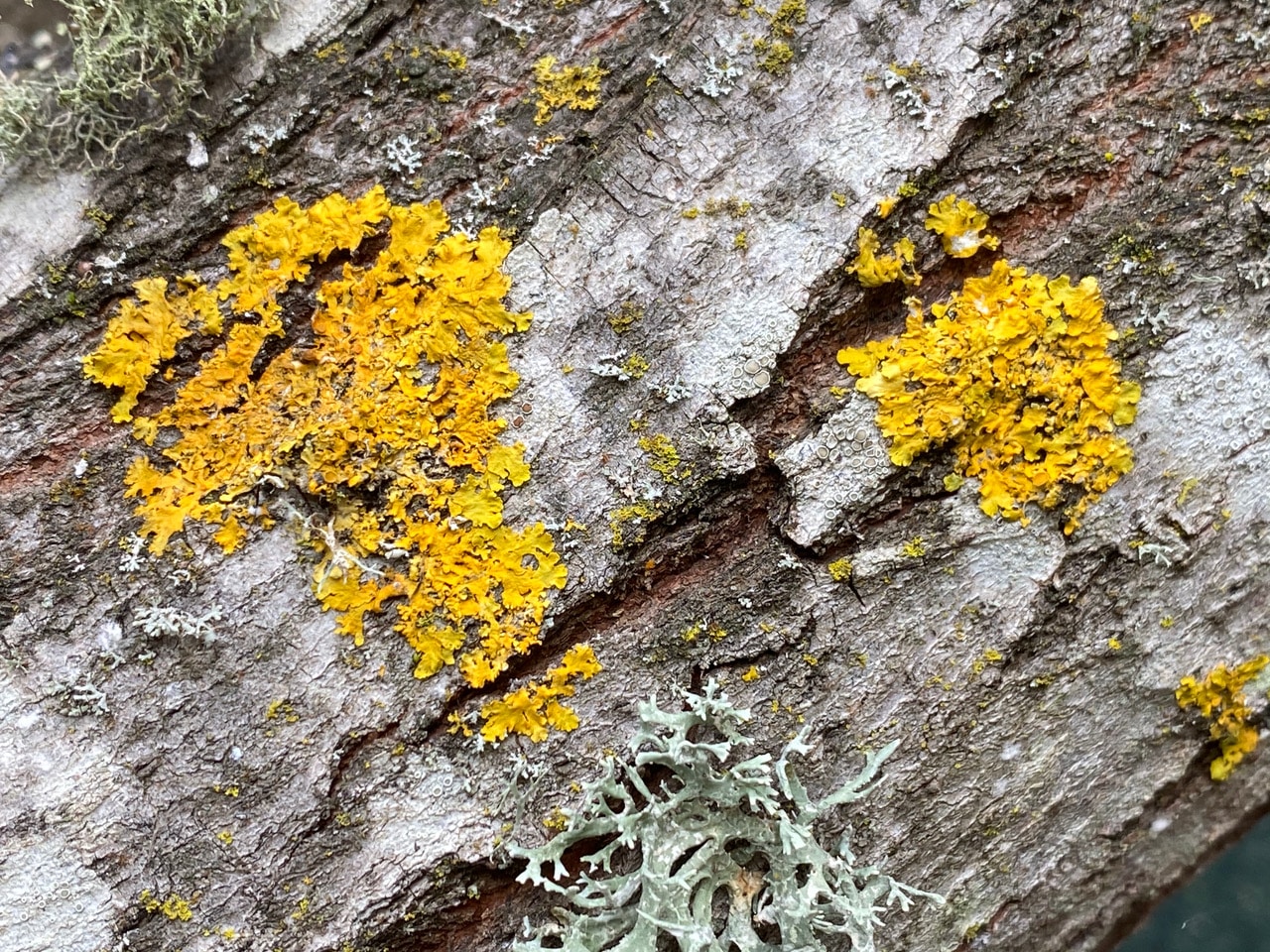
Sunburst Lichens, Xanthoria sp. on a tree bark brighten up the winter scene. They are especially conspicuous now that the deciduous buckeye trees are devoid of leaves.
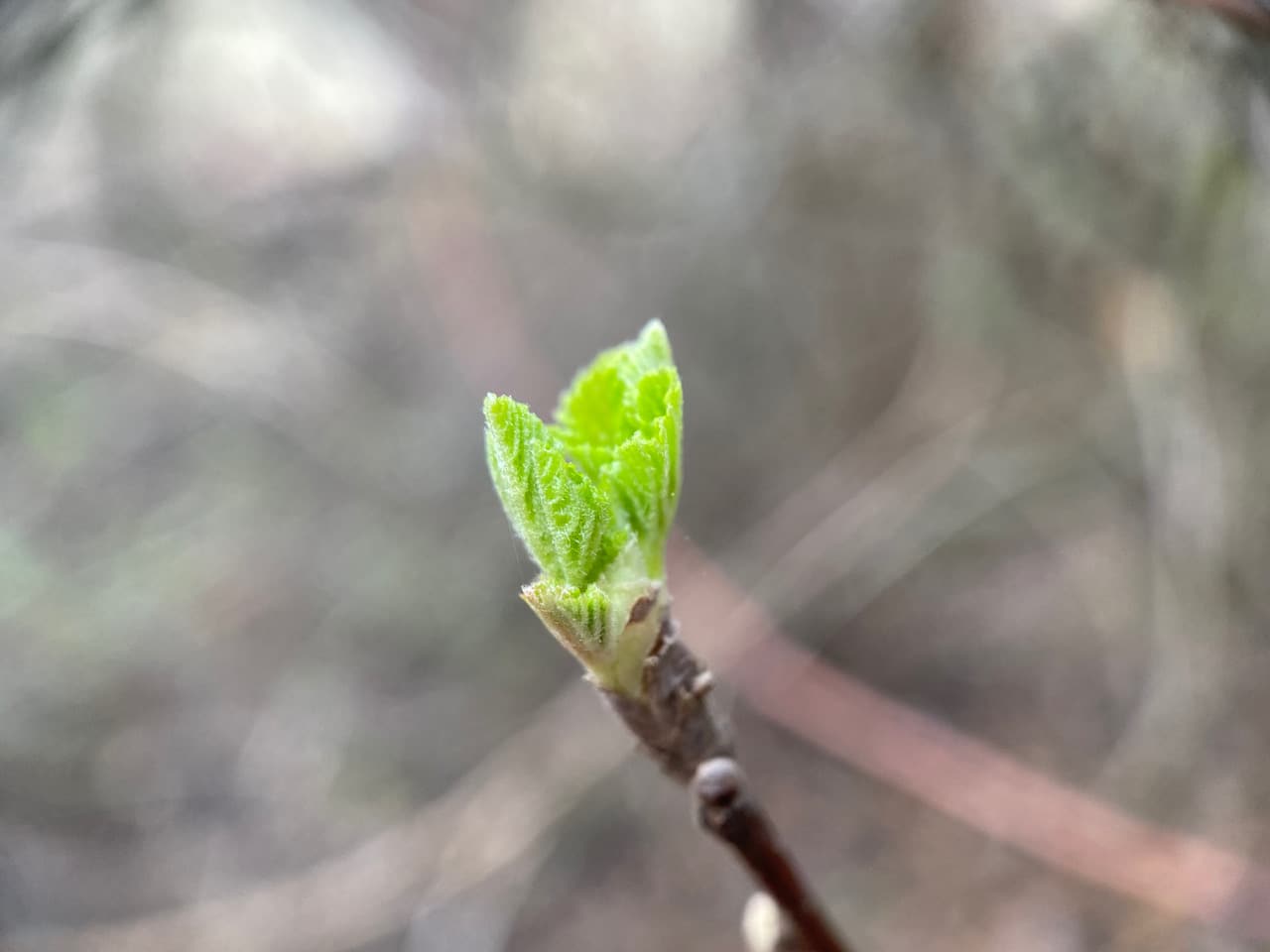
The Ninebark shrubs, Physocarpus sp. along the running creek are starting to leaf out.
 Highlighted by the morning light, tunnels of bark beetles are evident on the wood fencing.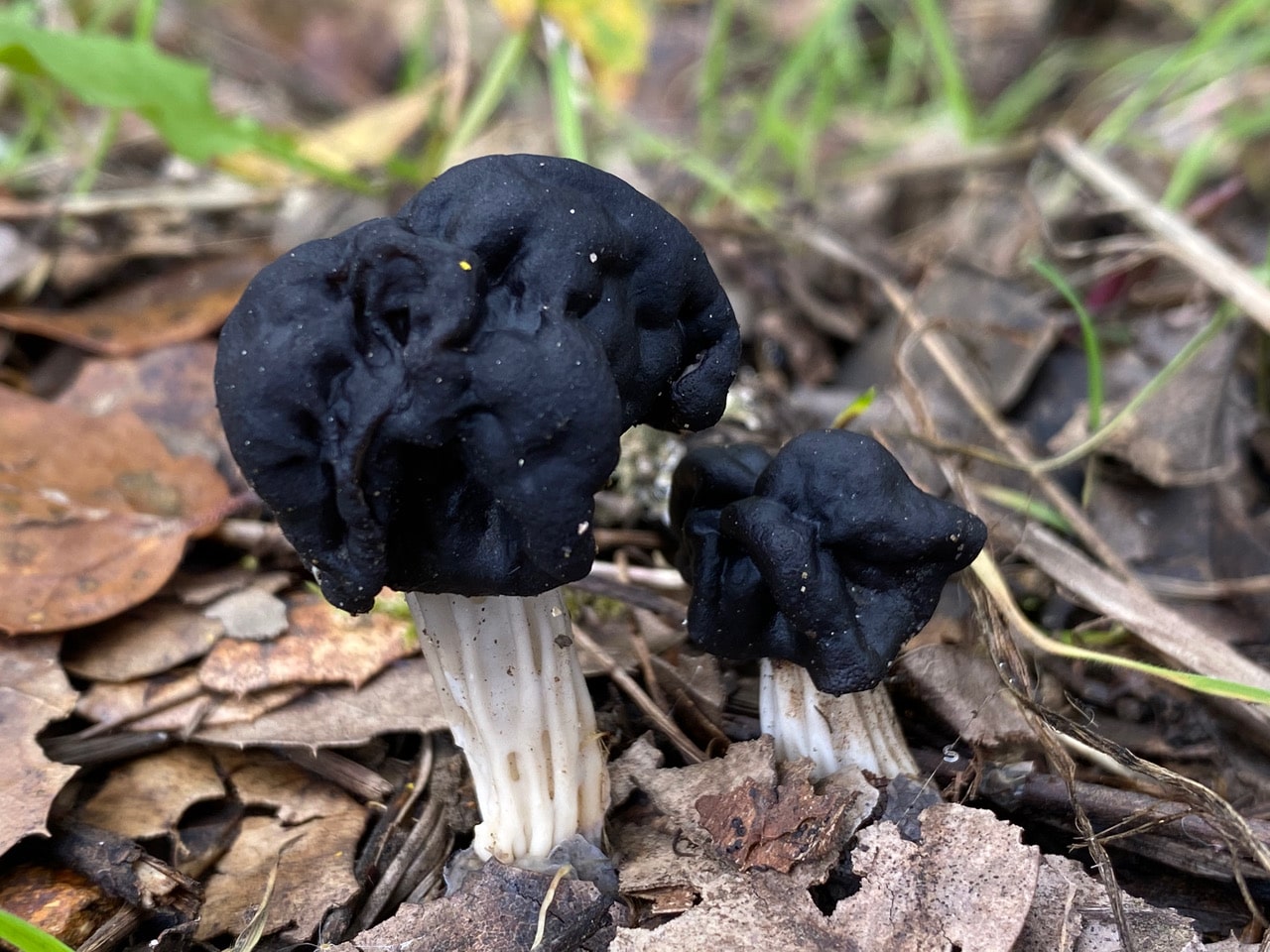
In the leaf litter under an oak tree, I find several of these mushrooms with black, convoluted caps and ribbed white stems. I have always known them as Elfin Saddles, Helvella lacunosa (family Helvellaceae), but recently discovered that the ones in western North America have now been recognized as a separate species, Helvella dryophila. This species is mycorrhizal with coast live oak and other oaks on the West Coast.
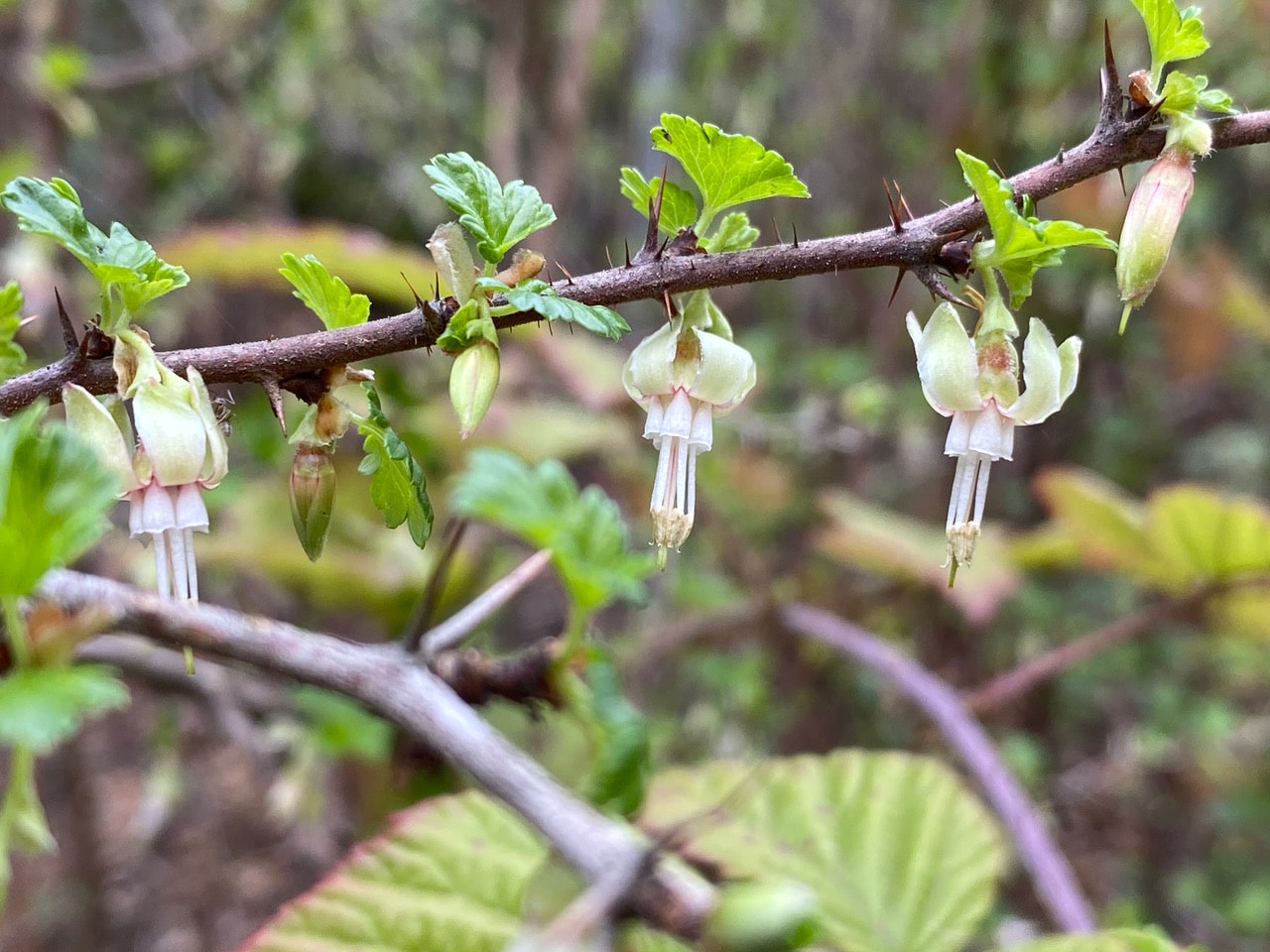
A surprise find – a Gooseberry, Ribes sp. in full bloom in the middle of winter! I have never seen Gooseberry flowers this pale, almost white.
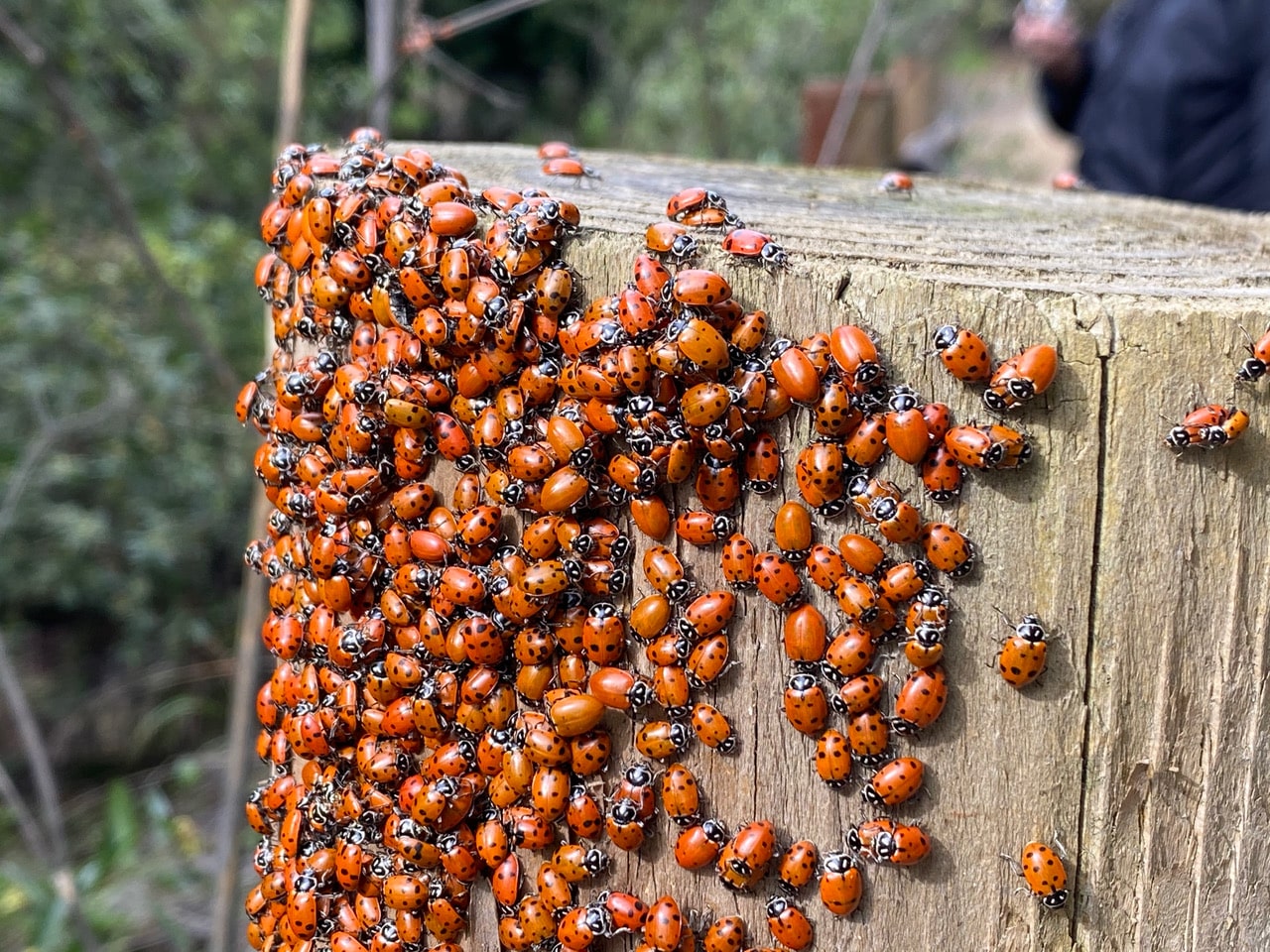
A large aggregation of over-wintering Convergent Ladybeetles, Hippodamia convergens (family Coccinellidae) on a fence post. The beetles seem to be rather active, many have paired up to mate.
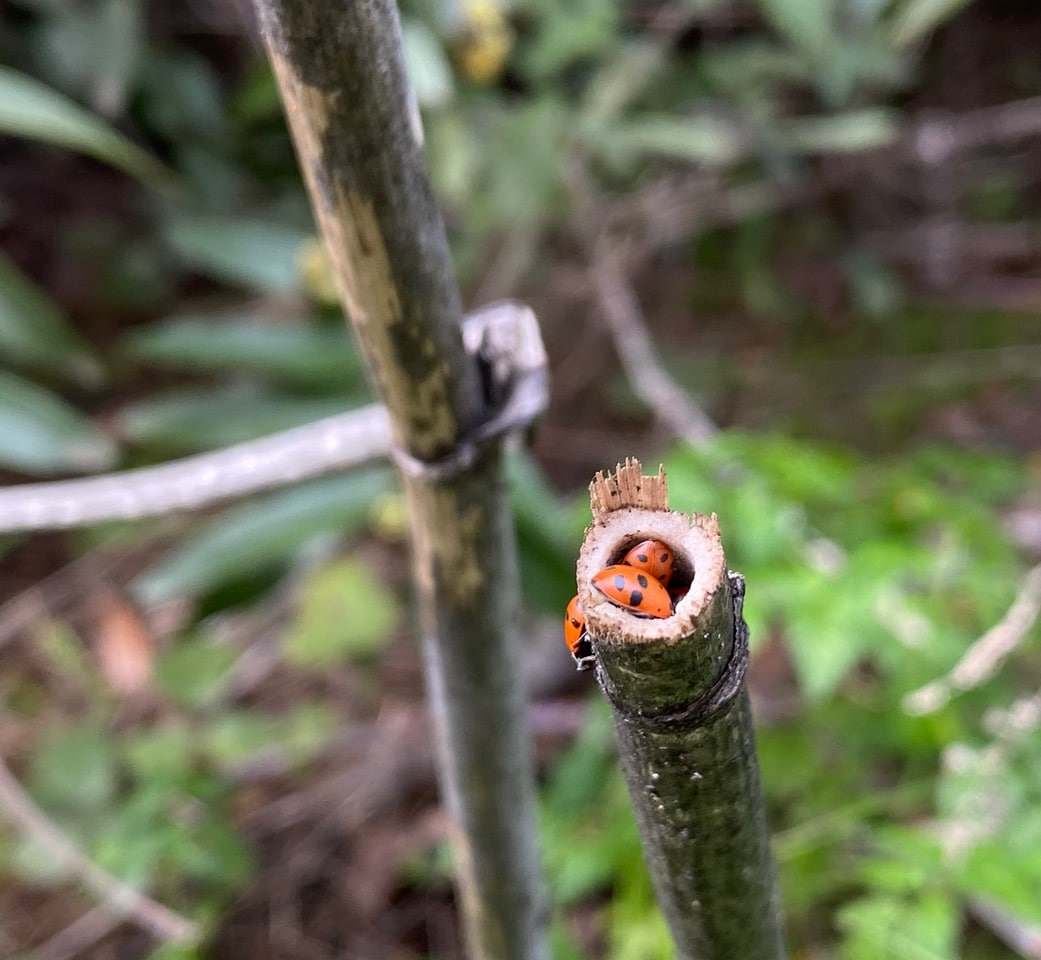
A few Ladybeetles are finding shelter in a broken stem of Poison Hemlock.
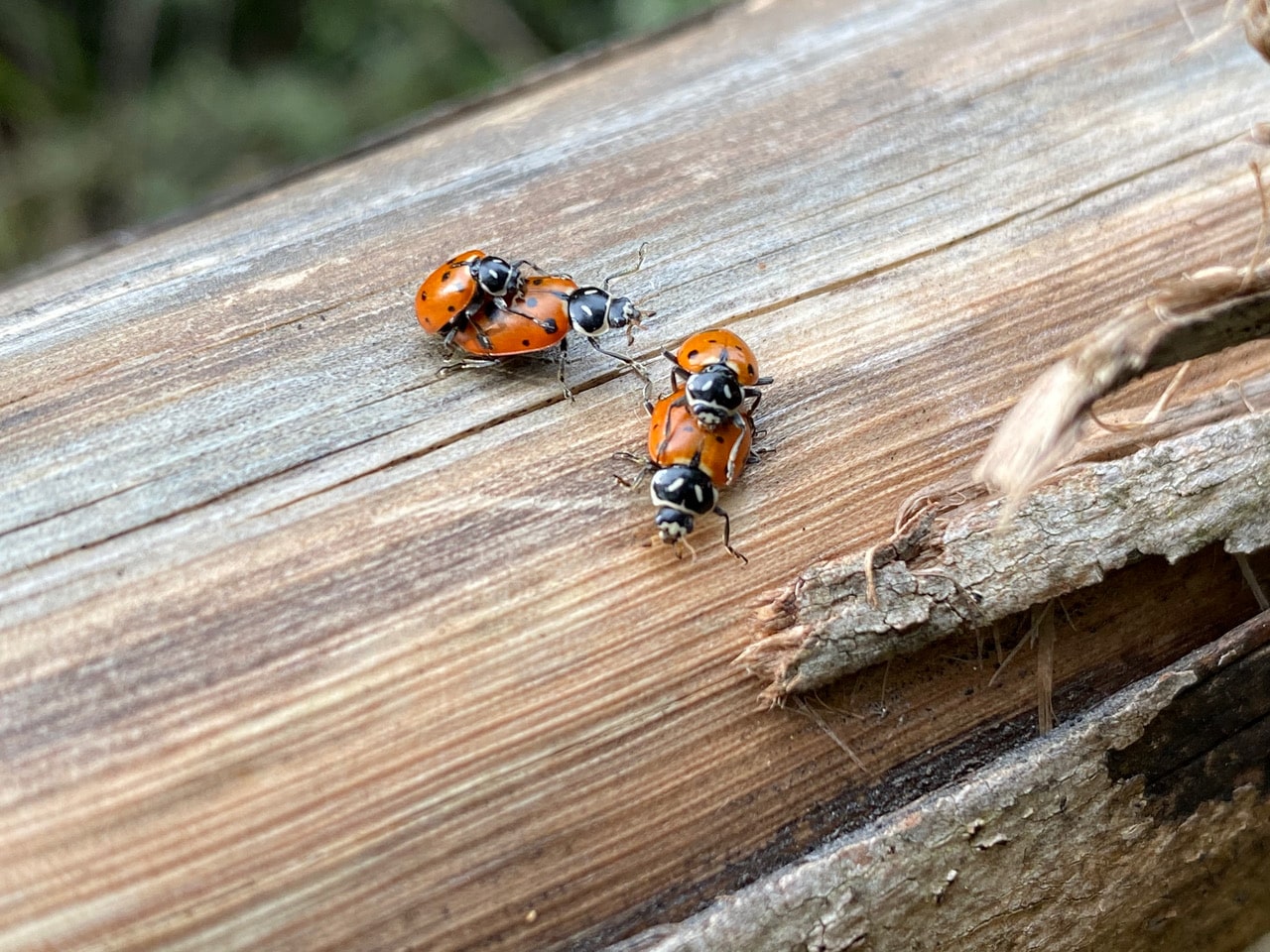
Two mating pairs on the fence railing.
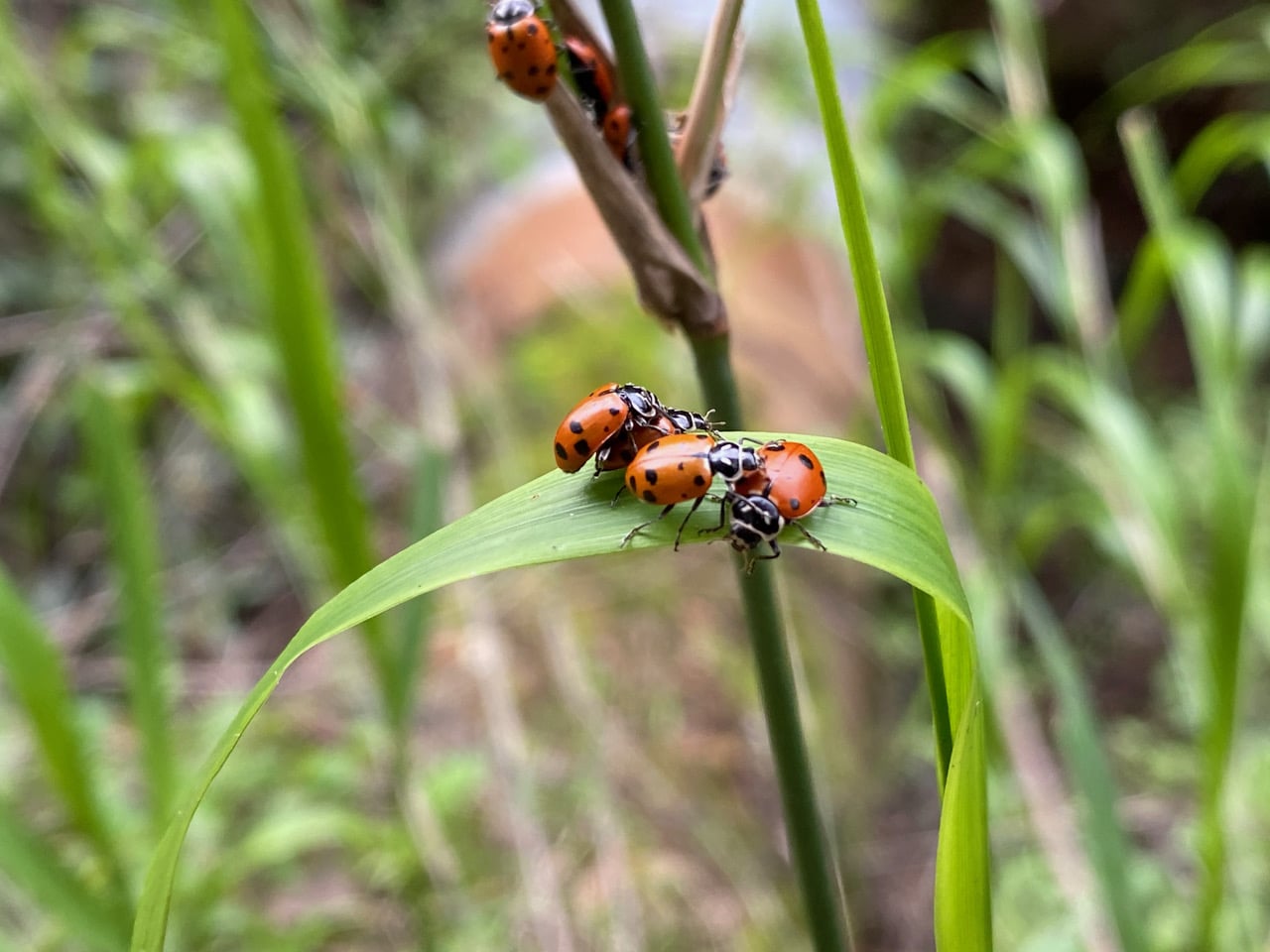
More on the nearby grass.
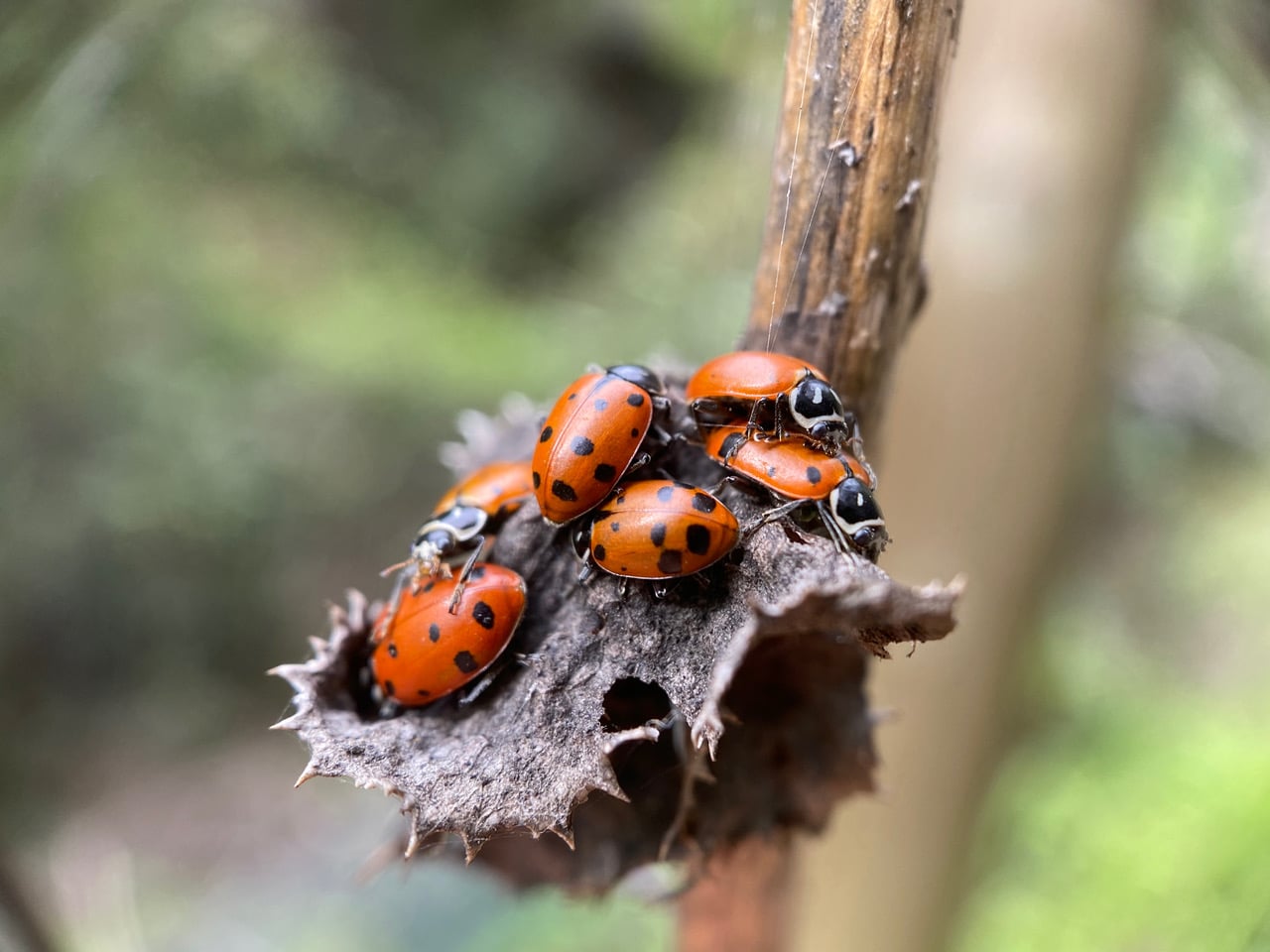
Others prefer the comfort of dried foliage.
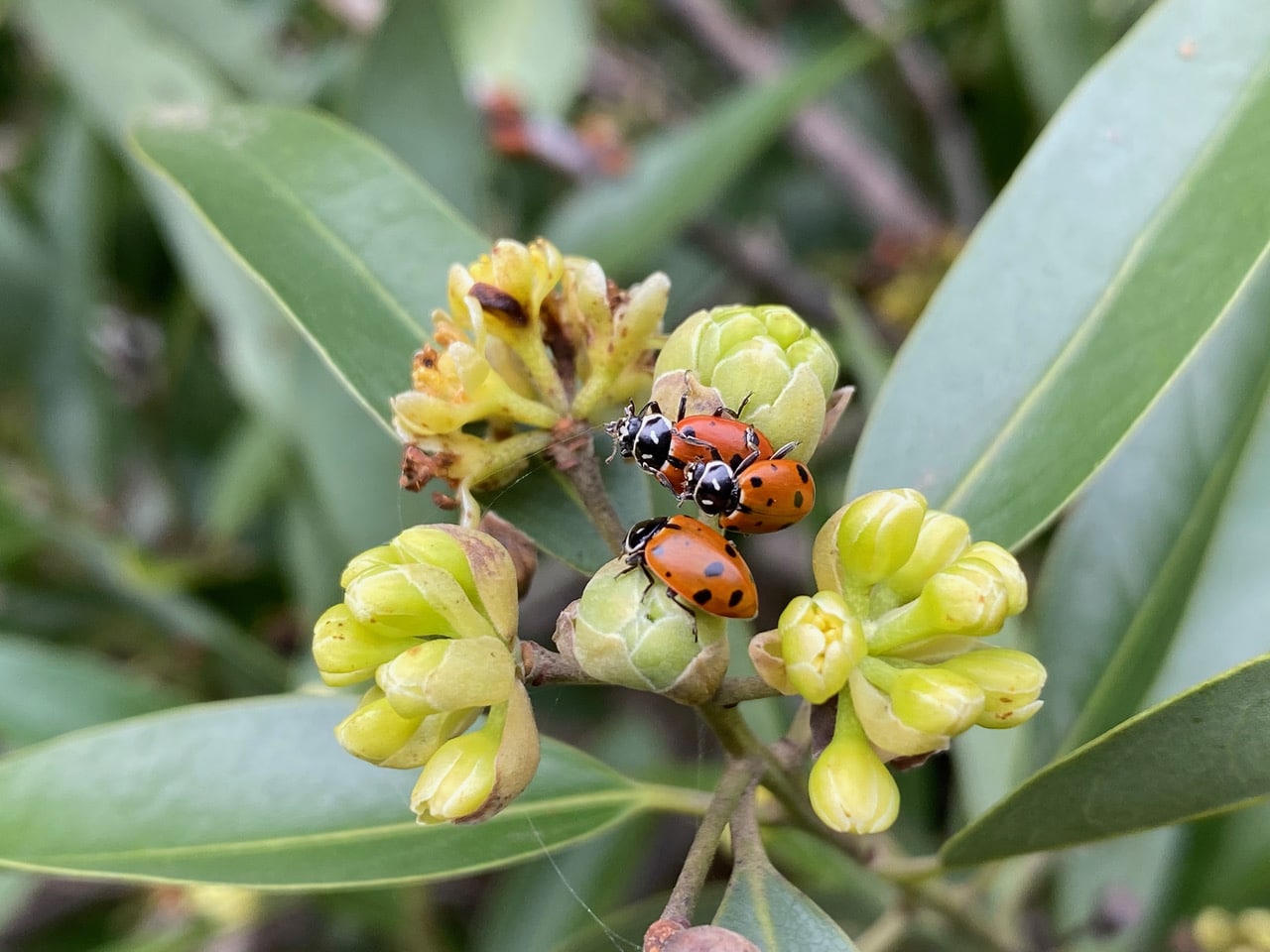
These have found their way to the flowers of a Bay tree. I wonder if the beetles feed when they are active during winter. Surely there aren’t many of their insect prey around this time of year?
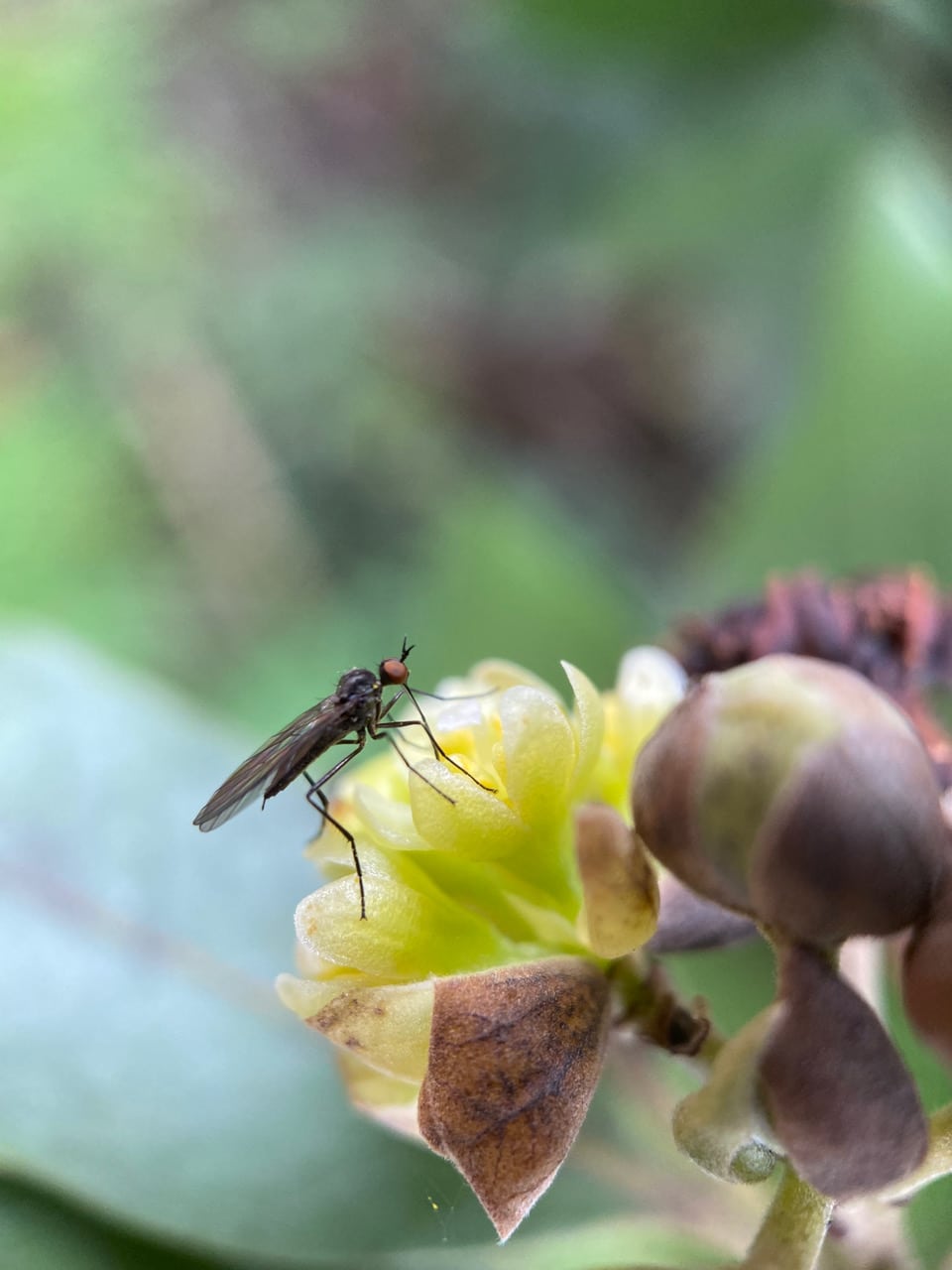
Hey, a Dance Fly (superfamily Empidoidea) on a cluster of Bay flowers! I wonder if these flies are responsible for pollinating the small winter blooms.
Unlike most other Diptera, Dance Flies, or empidid flies typically have long proboscis. Most species are predaceous on other insects, using their proboscis to stab and suck out prey contents. I found this reference to a similar dance fly robbing nectar from Manzanita flowers in the winter in our area:

Some Buckeye fruits are already sprouting in the wet soil under the leafless trees.
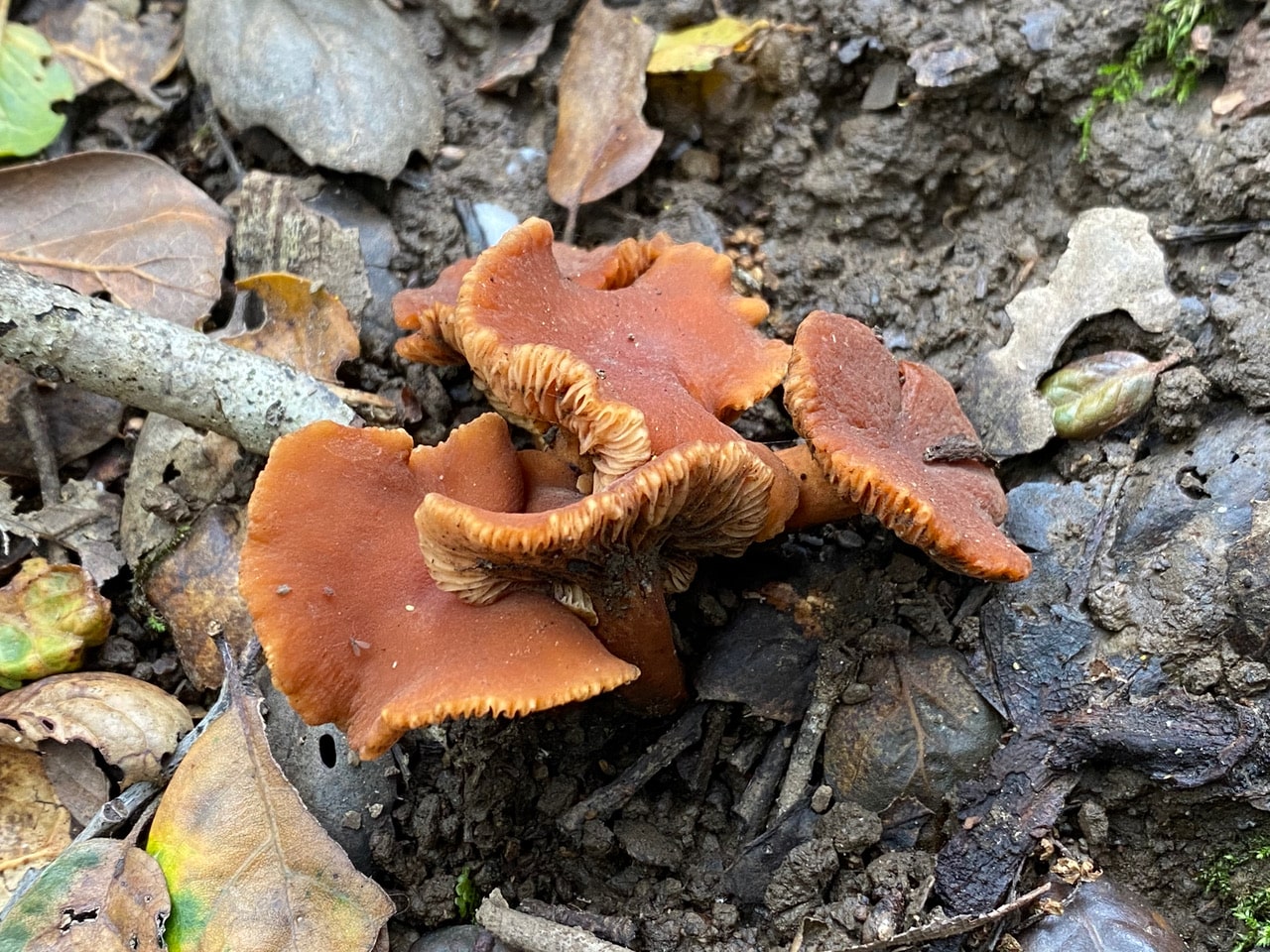
Candy Cap mushrooms, Lactarius rubidus (family Russulaceae) under an oak tree. I break a small piece off a cap and take a sniff – Ah, the sweet smell of maple syrup! The aromatic compound found in the tissue and latex of the mushroom is quabalactone III – one of the main compounds responsible for the aroma of maple syrup. Candy caps are unique among edible mushrooms in that they are often used in sweet and dessert foods, such as cookies and ice cream. They are usually used in dried form, as the aroma intensifies greatly upon drying.
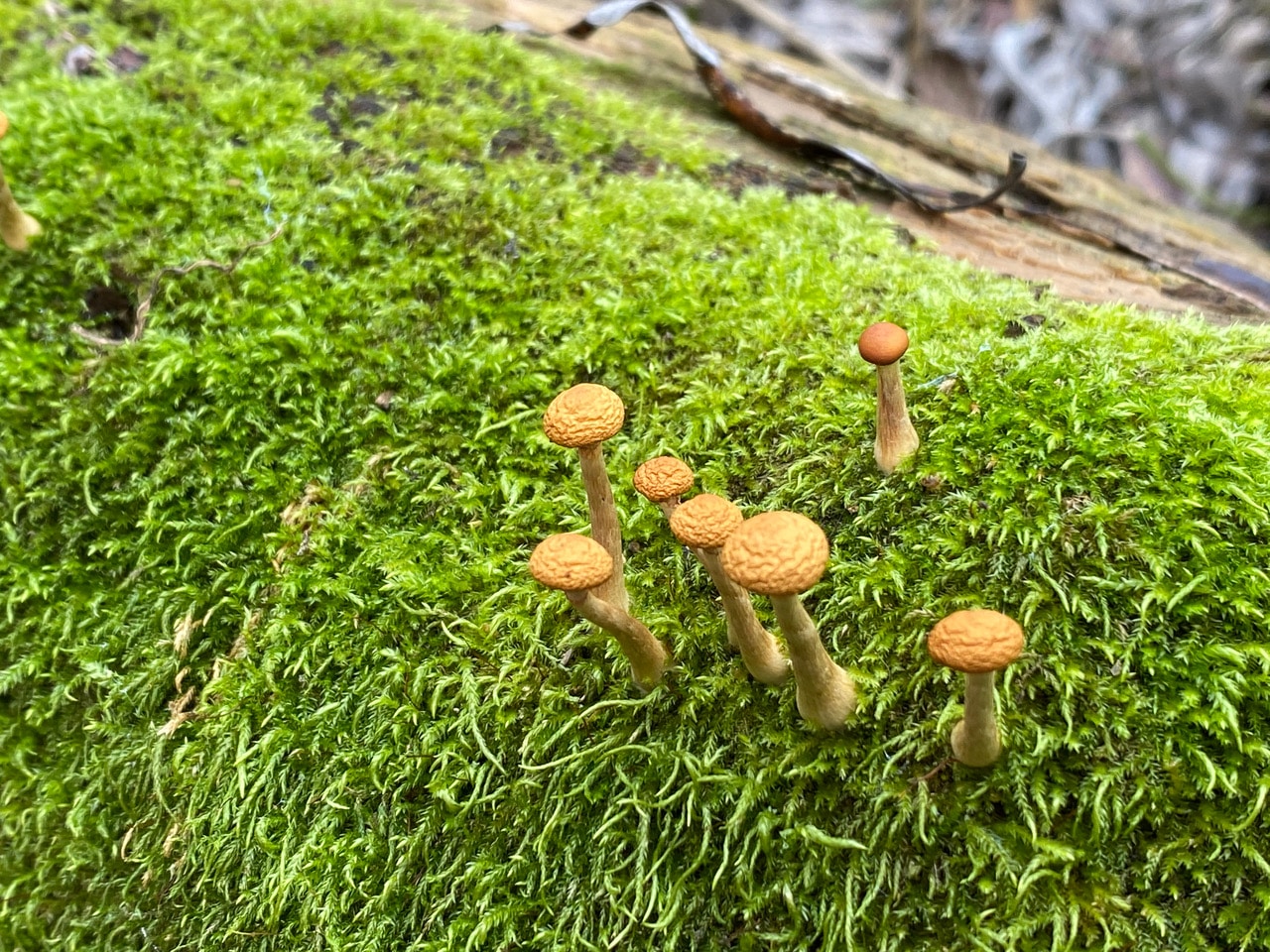
A group of small mushrooms have sprouted in a lush field of moss on a log.
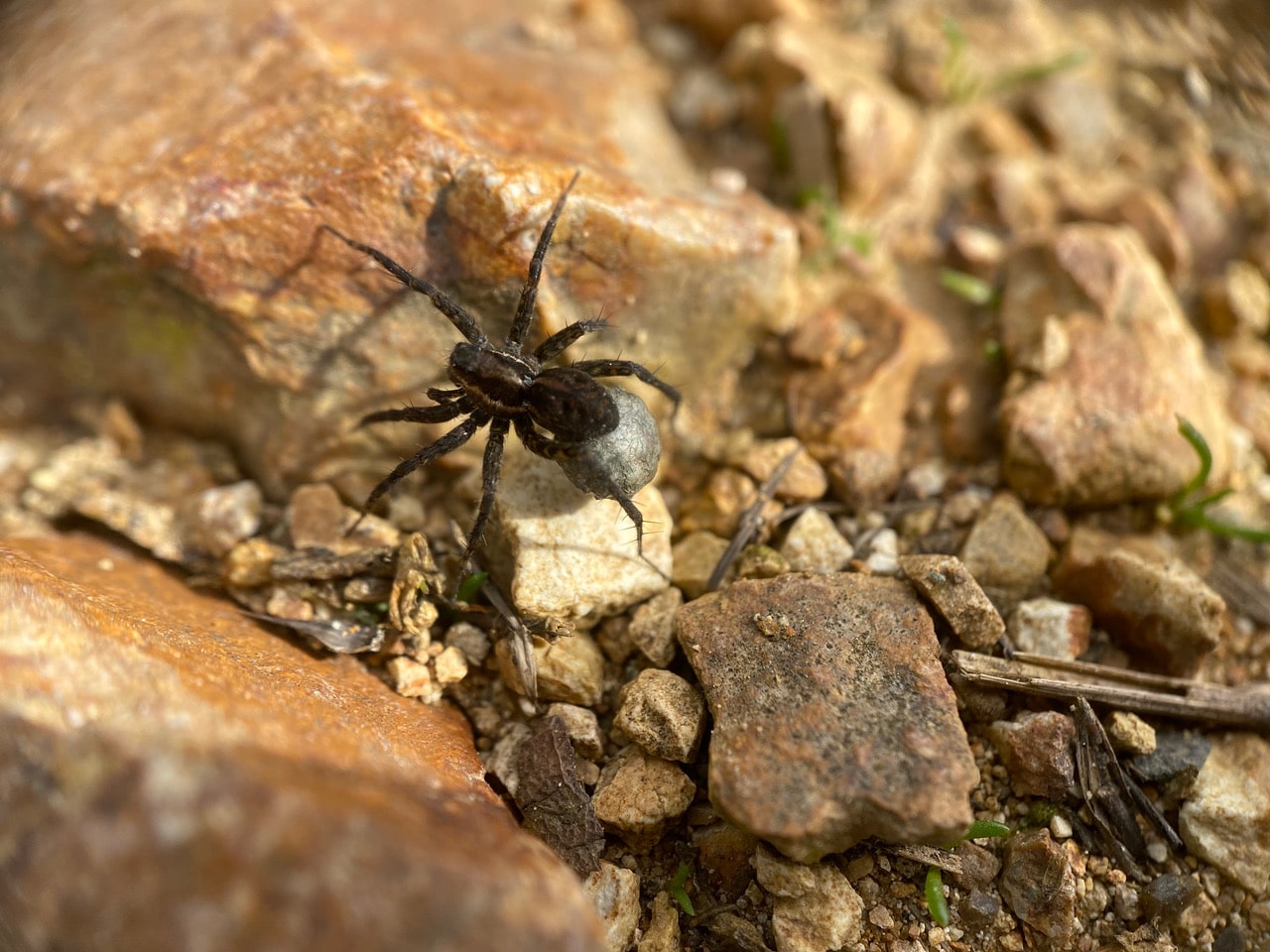
A female Wolf Spider (family Lycosidae) scuttles across the trail, carrying a large, grayish blue egg sac attached to her abdomen. It is amazing that she can run so fast with that load. I didn’t know that these spiders reproduce in winter!
The family name Lycos– derives from Ancient Greek for “wolf”. The spiders are robust and agile hunters. Rather than catching their prey in webs, these solitary hunters chase it down, typically roaming in the night, stalking prey. These spiders spend most of their time on the ground, hunting mostly ground-dwelling insects, such as crickets and other spiders.
After mating, female wolf spiders lay several dozen or more eggs and wrap them in silk, creating an egg sac. The female wolf spider carries her egg sac attached to her spinnerets at the tip of her abdomen. The abdomen must be held in a raised position to keep the egg sac from dragging on the ground. Despite this handicap, the females are still capable of hunting. The wolf spider’s maternal behavior doesn’t stop with the egg sacs. After hatching, the spiderlings climb on their mother’s back. The mother carries her offspring for several days before they are mature enough to disperse and fend for themselves.
