

Pollinator Post 1/25/25
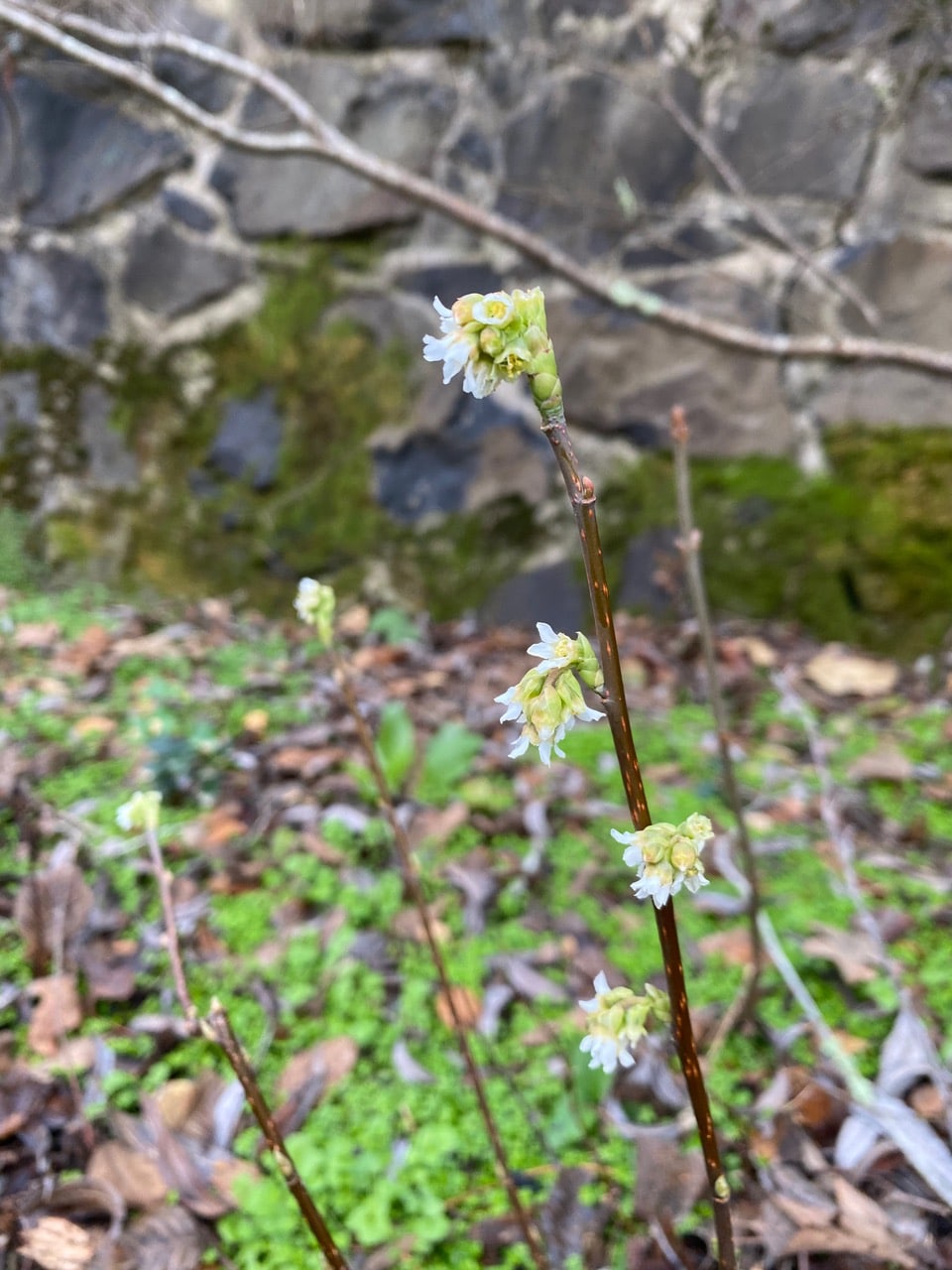
Seeking refuge from air pollution, I find myself at the Regional Parks Botanic Gardens again on this cold, overcast morning, with temperatures in the mid 40s F.
An unfamiliar species of Osoberry, Oemleria sp. has started to bloom in clusters at regular intervals along straight leafless stems.





Closer inspection reveals that these are male flowers bearing large stamens. Osoberry is dioecious – male and female flowers are borne on separate plants. It would be interesting to see if there are female plants in this patch that can facilitate cross-pollination and fruit set.
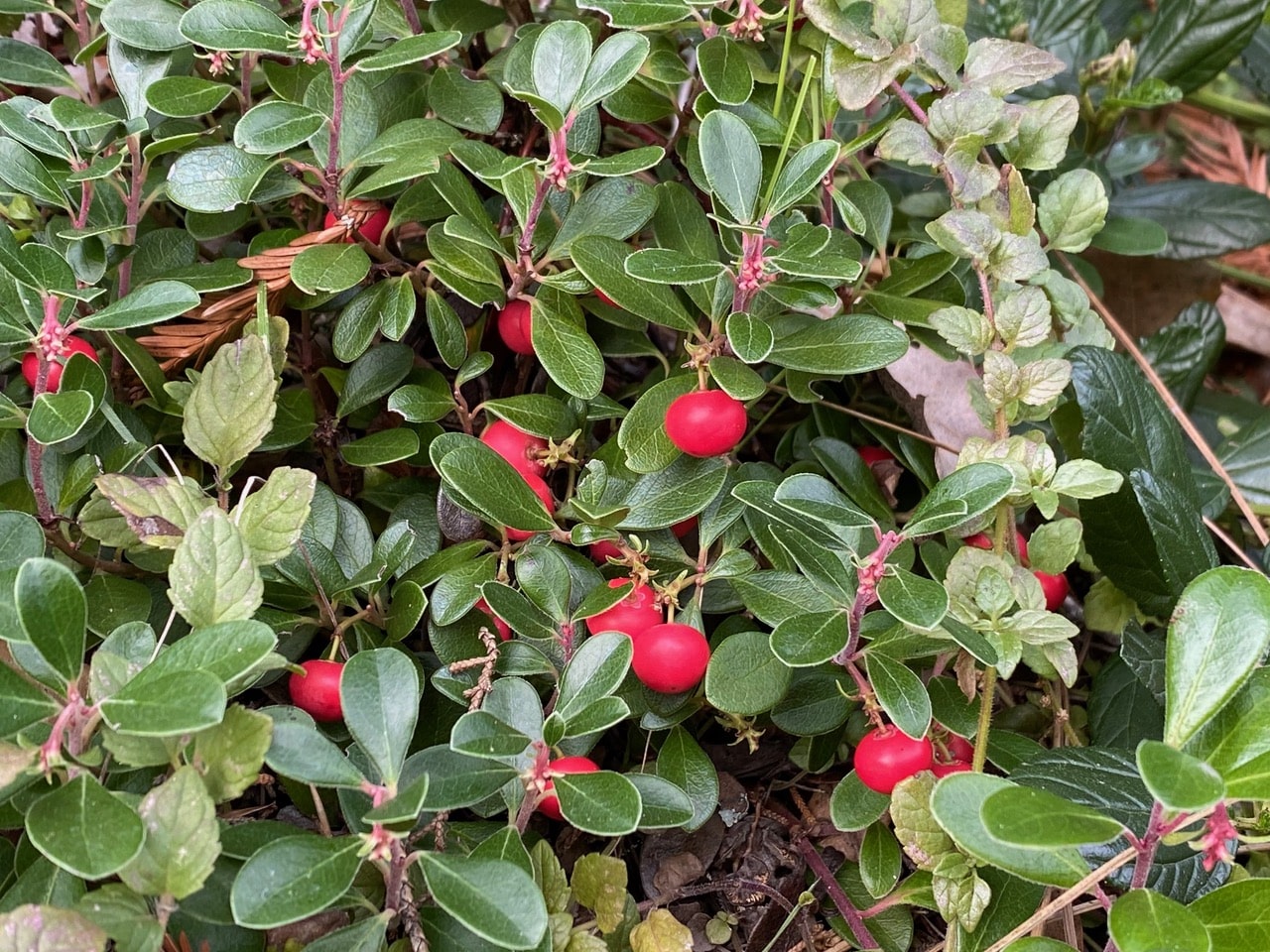
It is a delight to come across cheery red berries in the middle of winter. What is going on here? Are these fruits from last year? The fruits, together with very young flower buds are hanging on this prostrate manzanita, Bearberry (or Kinnikinnick), Arctostaphylos ova-ursi growing at the edge of the redwood forest.
The species is a small procumbent woody groundcover shrub growing to 12 inches high. The leaves are shiny, small, and feel thick and stiff. Terminal clusters of small urn-shaped flowers bloom from May to June. The flowers are white or pink, and bear round, fleshy or mealy, bright red to pink fruits called drupes. Remarkably the red fruits persist on the plant into early winter. Each drupe contains 1-5 hard seeds. Bears and other animals eat the berries.
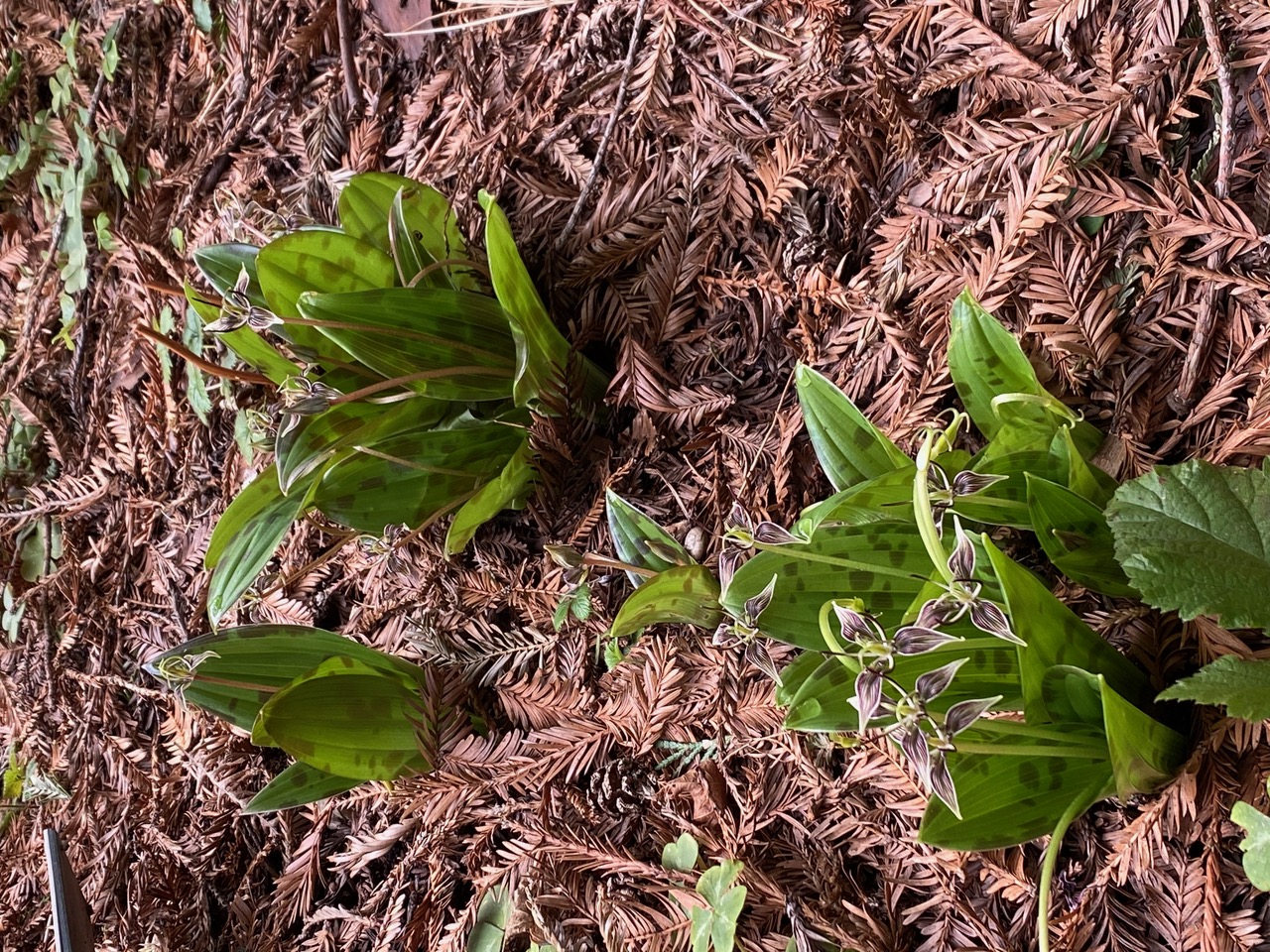
I briefly check on the Fetid Adder’s Tongue, Scoliopus bigelovii under the redwood trees for pollinators, the fungus gnats. No, there are no insects visiting the little flowers.
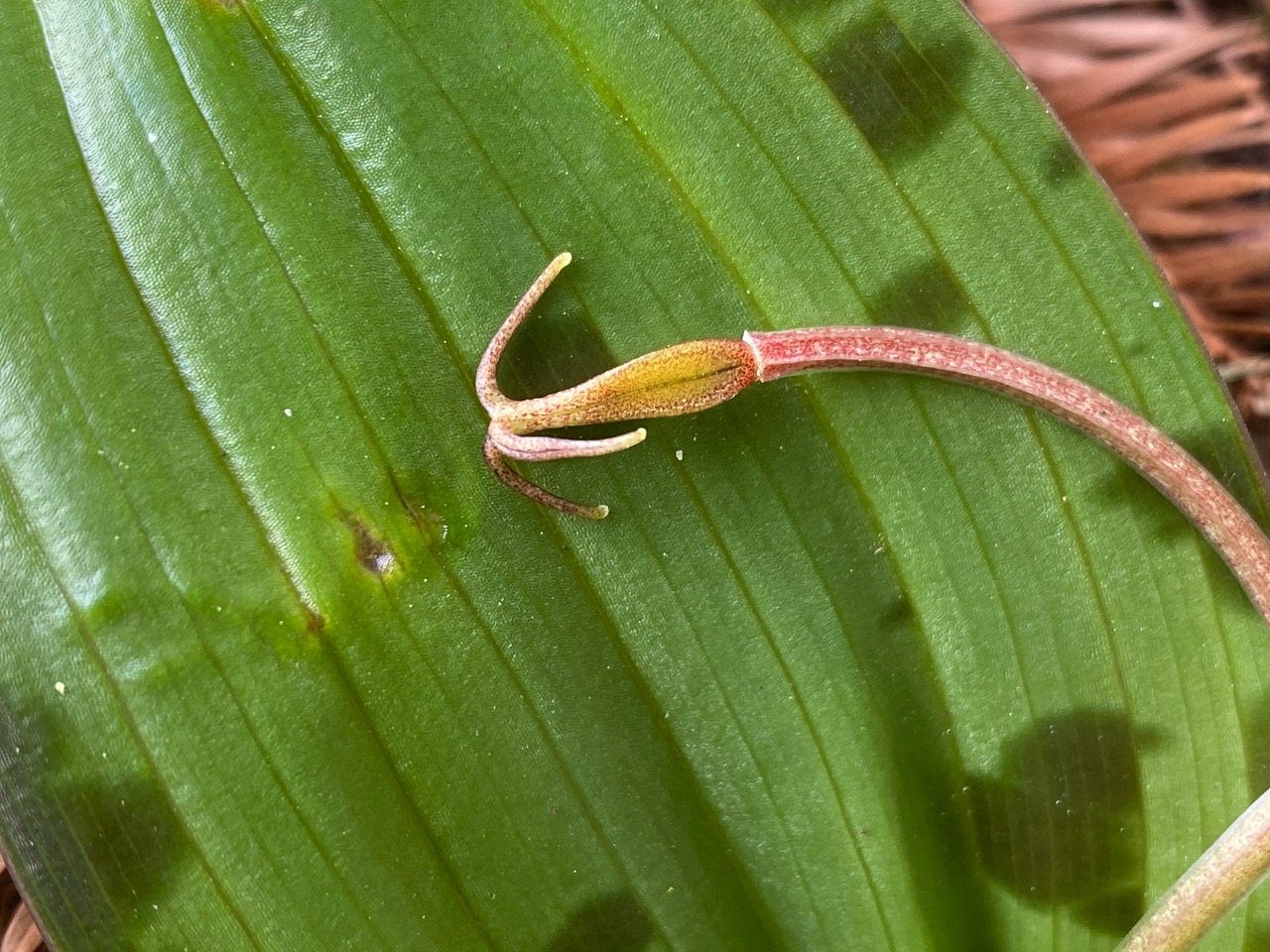
But there are signs that pollination has occurred – fruits. The fruit of Scoliopus bigelovii is a capsule. As it matures, the pedicel that bears it lengthens and twists, causing the capsule to slink onto the substrate. This is the origin of the other common name for the plant – Slinkpod.
This fruit has made contact with the duff. As it ripens, ants in the forest will gather to collect the seeds. The seeds of Fetid Adder’s Tongue have a fleshy part attached called an elaiosome that is rich in lipids and proteins. Ants can’t resist this nutritious snack. They carry the seeds away to their nests, eat the elaiosomes and discard the seeds. Left buried deep underground, safe from forest fires and hungry rodents, the seeds germinate to form new colonies on the forest floor. This mode of seed dispersal by ants is called myrmecochory.
In the partial shade of the redwood forest, the Woodland Strawberry, Fragaria vesca has already started to bloom. More surprising, this plant already has a ripe fruit hanging on it! How did that happen? Who has pollinated the flower in winter?
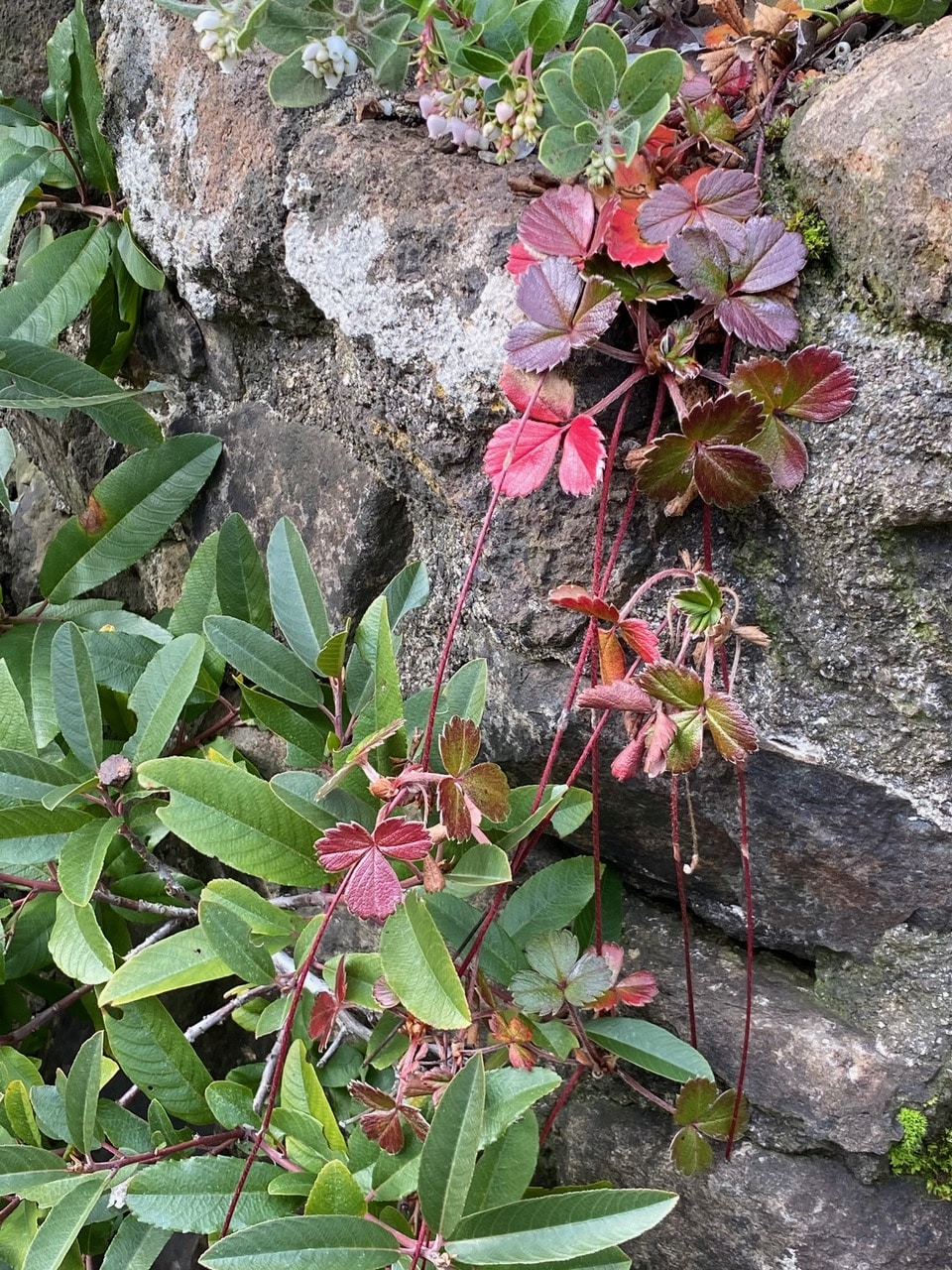
Out in the open area, an older Woodland Strawberry plant with reddish leaves has sent numerous red stolons cascading down a rock wall, with several satellite plants hanging at intervals.
Commonly found across the Northern Hemisphere, in shady woodland and forest habitats, the Woodland Strawberry, Fragaria vasca is a perennial ground cover in the Rose family, Rosaceae. The plant spread by underground rhizomes and stolons (above-ground runners) that produce clones of itself. The white flowers are pollinated by bees and other insects. The small but flavorful fruits are prized both by wildlife and humans.
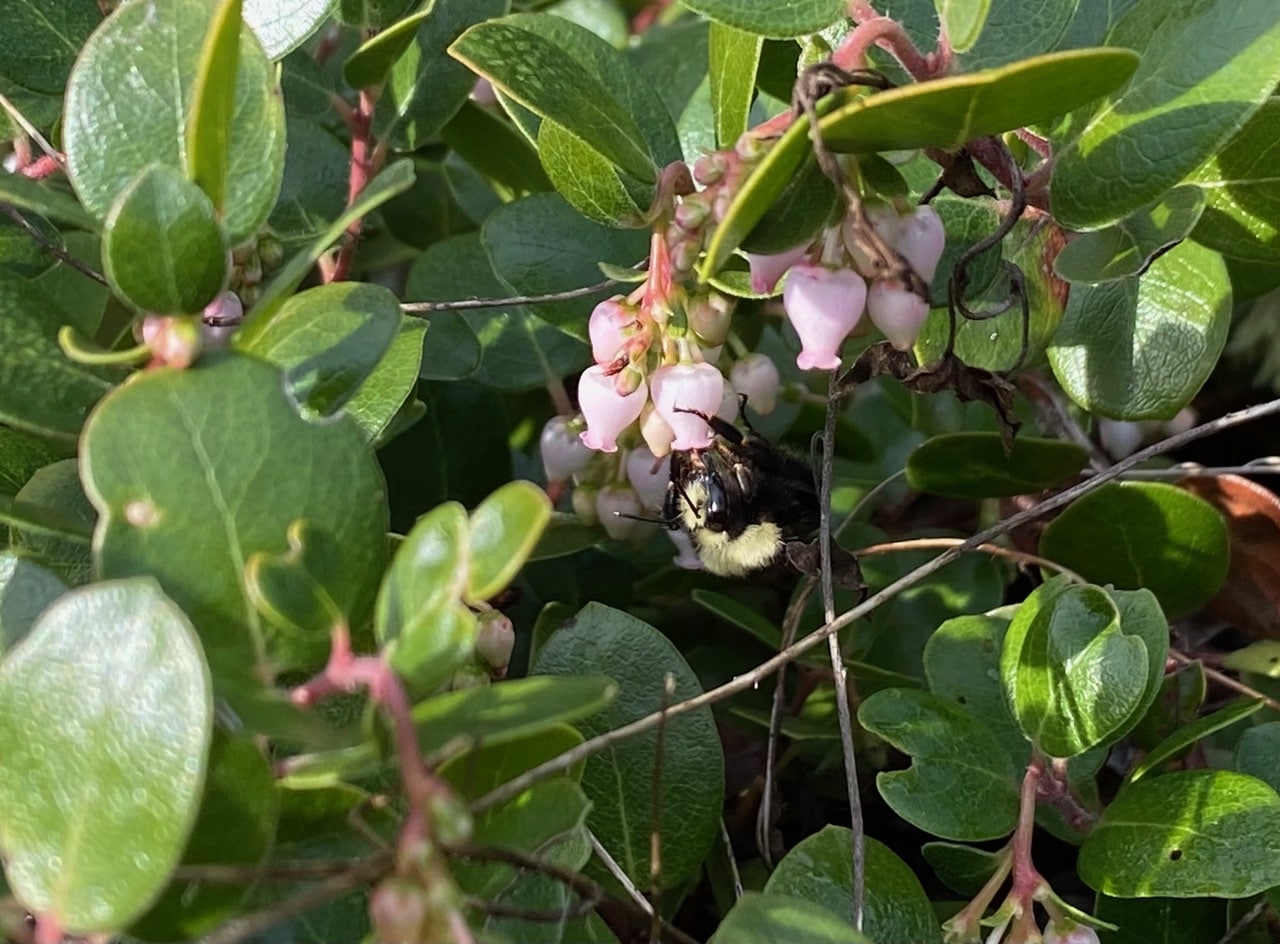
It is unusually quiet around the manzanitas this morning. Is it too cold for the bees? What happened to the boisterous Pacific Digger Bees that were so prominent just a couple of days ago? A queen Yellow-faced Bumble Bee, subgenus Pyrobombus (family Apidae) is approaching a cluster of manzanita flowers. She does not appear to be collecting pollen as her pollen baskets are empty.
Queens are noticeably larger than worker bees, which is one of the easiest ways to distinguish them. Queen bees are fed a more substantial diet during their larval development, contributing to their larger size. The queen’s large size is crucial for her to store enough nutrients to lay a large number of eggs throughout the colony’s lifespan. In the bumble bees, workers do not feed or groom the queen, as is the case in some other social lineages.
The bee lands upside-down from a manzanita flower and sticks her tongue in to sip nectar. Bumble Bees have long tongues that can access the hidden nectar easily.
Bumble bees are social and live in colonial hives. Many of the large individuals seen early in the season are queens. They are the only members of their colony to survive the winter, hibernating until the days begin to warm and their host plants are in bloom. These queens have mated before they went into hibernation. Now their first order of business is to each find a nesting site (usually an abandoned rodent burrow), lay eggs, brood and nurture the first batch of workers. Hence forth, the queens stay behind in the hive to concentrate on laying eggs while the workers take on hive duties and foraging. Bumble bees are among the most cold tolerant bees, and are usually the first bees we see out foraging. This is why it’s important for us to plant early blooming natives to support the queen bumble bees.
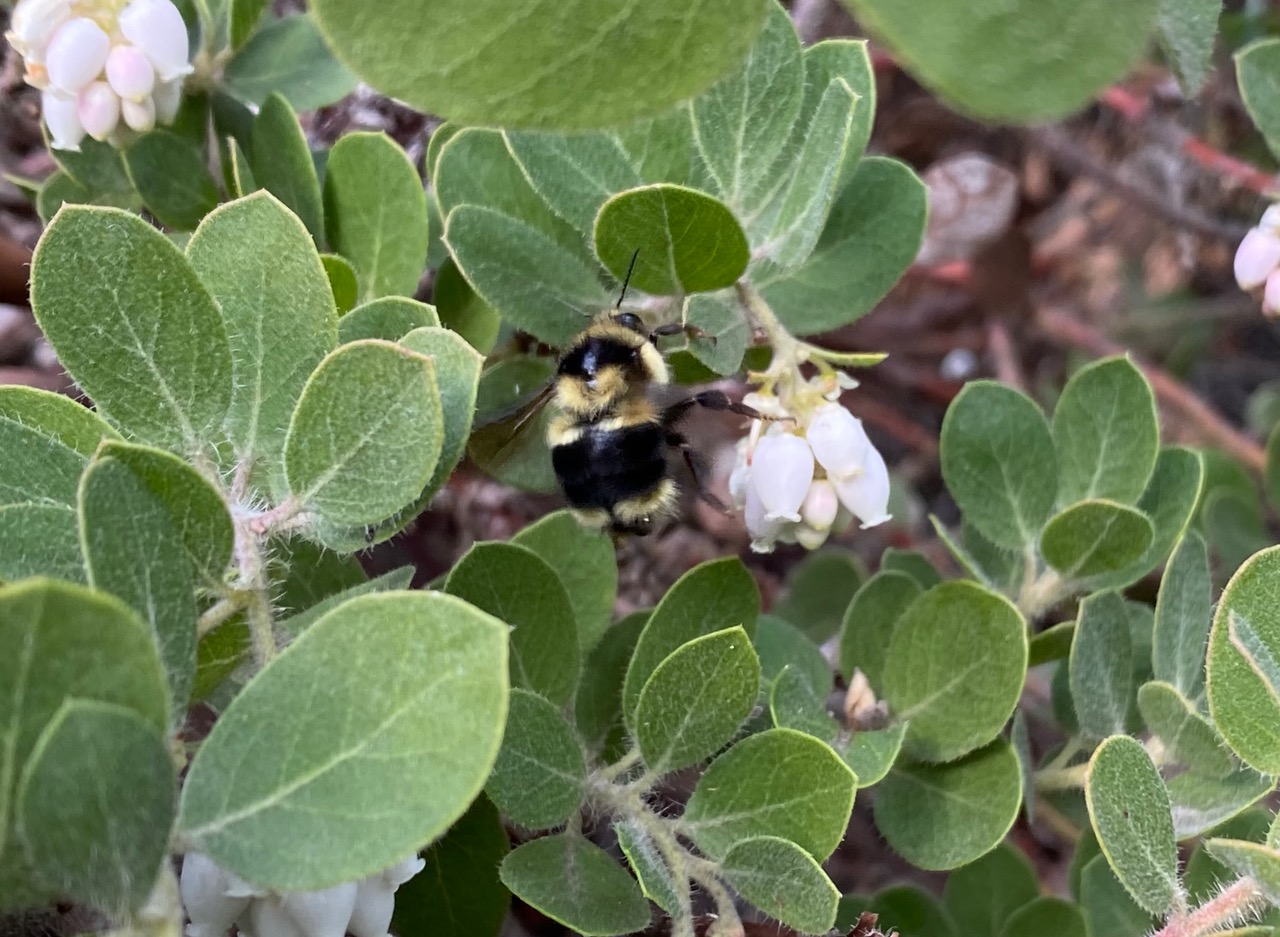
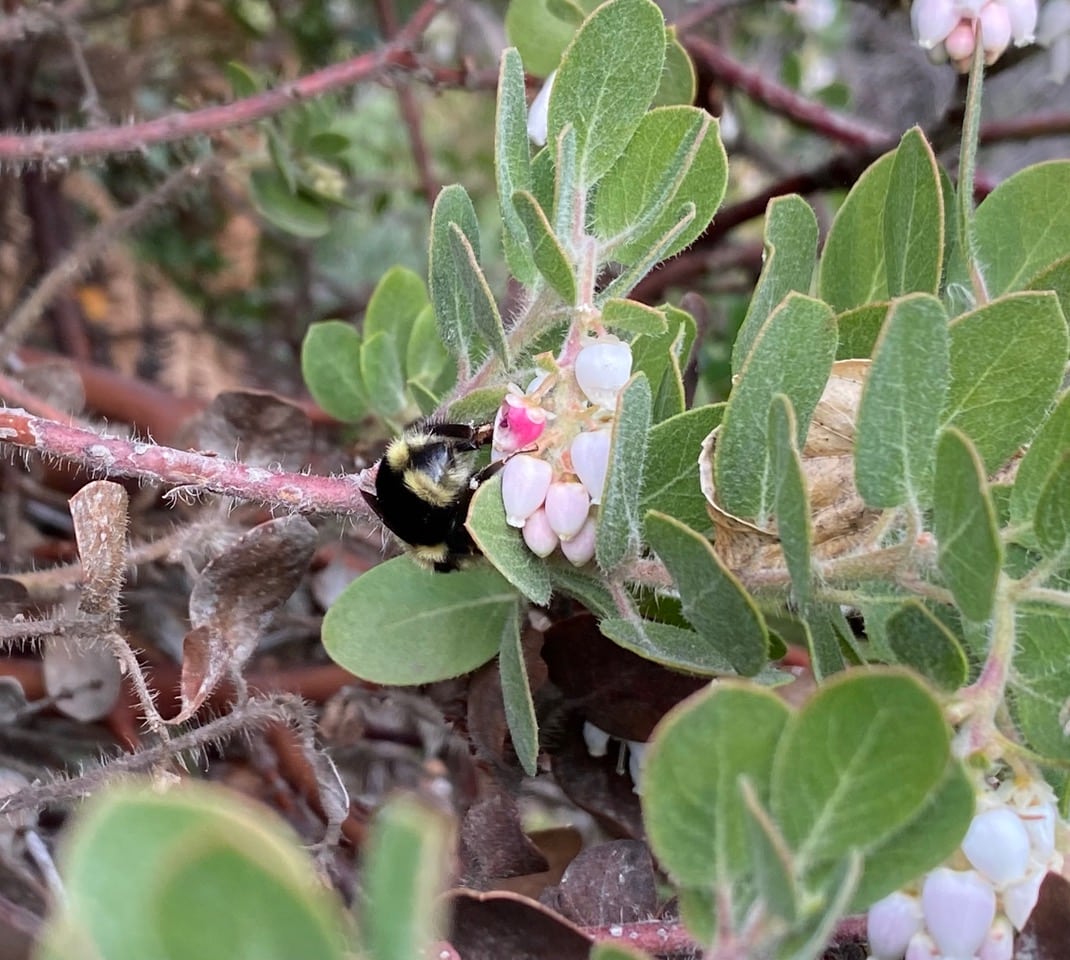
A queen Black-tailed Bumble Bee, Bombus melanopygus (family Apidae) is lifting off from a cluster of manzanita flowers. My heart swells with pride and admiration for these hardy bees out foraging in such cold weather.
We have long been taught that insects are “cold blooded” (poikilothermic), their body temperatures rising and falling with ambient temperature. As it turns out, Bumble Bees are capable of thermoregulation. Their furry coat can insulate their bodies against the cold, but they have various behavioral and physiological adaptations for low temperatures. They can use their large flight muscles to generate heat through shivering, in the same way that they buzz pollinate flowers, allowing them to maintain a relatively stable body temperature even in cold environments. The bees also use behavioral adaptations such as basking in the sun and adjusting their flight speed depending on the ambient temperature. What’s more, Bumble Bees also have a physiological mechanism for thermoregulation, called counter-current circulation. Their circulatory system helps maintain heat by allowing warm hemolymph (insect version of blood) flowing from the thorax to exchange heat with cooler hemolymph returning from the abdomen. In this process, during flight, heat produced in the thorax is transferred to the abdomen where it can be more easily dissipated.
The Black-tailed Bumble Bee, Bombus melanopygus (family Apidae) is a species of bumble bee native to western North America, widely distributed from the Pacific to the Rocky Mountains, and from Alaska to Baja California. The species is found in various habitats, including agricultural and urban areas. The bees feed on many types of plants, including manzanitas, Ceanothus, golden bushes, wild buckwheats, lupines, penstemons, rhododendrons, willows, sages, and clovers. They nest underground or aboveground in structures. I have seen a colony that nested in an abandoned bird’s nest among the vines on a neighbor’s trellis.
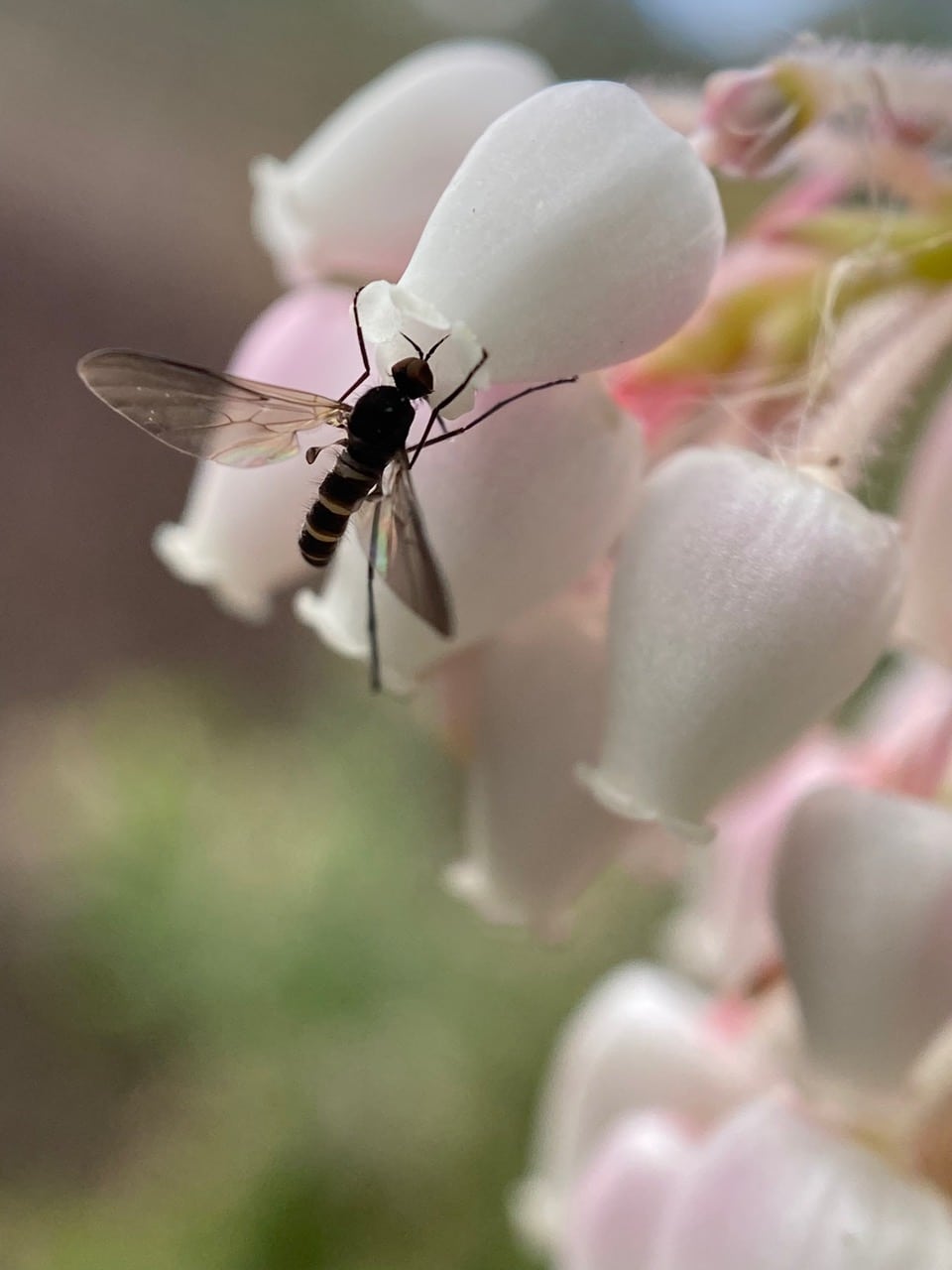
A Dance Fly (family Hybotidae) is hanging motionless from a manzanita flower, its long proboscis not aimed at the opening of the corolla. I think it is dead, even though there is no sign of predation. It’s interesting that the insect would expire in mid-forage like this.
Hybotidae belongs to the superfamily Empidoidea and was formerly included in the Empididae as a subfamily. Empididae generally have a thick beak pointing down, while Hybotidae have a thinner beak, or a thick beak pointing forwards or diagonally. Some crucial wing venation further distinguishes the two families. Precious little is known about the life cycle and biology of Hybotids because they are not considered of economic consequence. Since their forelegs are generally not raptorial, I doubt if they’re predaceous like the Empidids. Some Hybotids are known to eat pollen. I have seen Hybotids visit flowers for nectar and pollen, notably on Soap Plant, Miner’s Lettuce, California Saxifrage, Wild Geranium, Hound’s Tongue and Buttercups, and I believe they may contribute to the pollination of these small wildflowers.
Why the name “dance fly”? This is derived from the mating swarms of males of many species. They gather in clouds over prominent objects, each individual seeming to bounce or “dance” in mid-air. Many other flies do this, notably midges, but the Empidids and the Hybotids got the moniker.
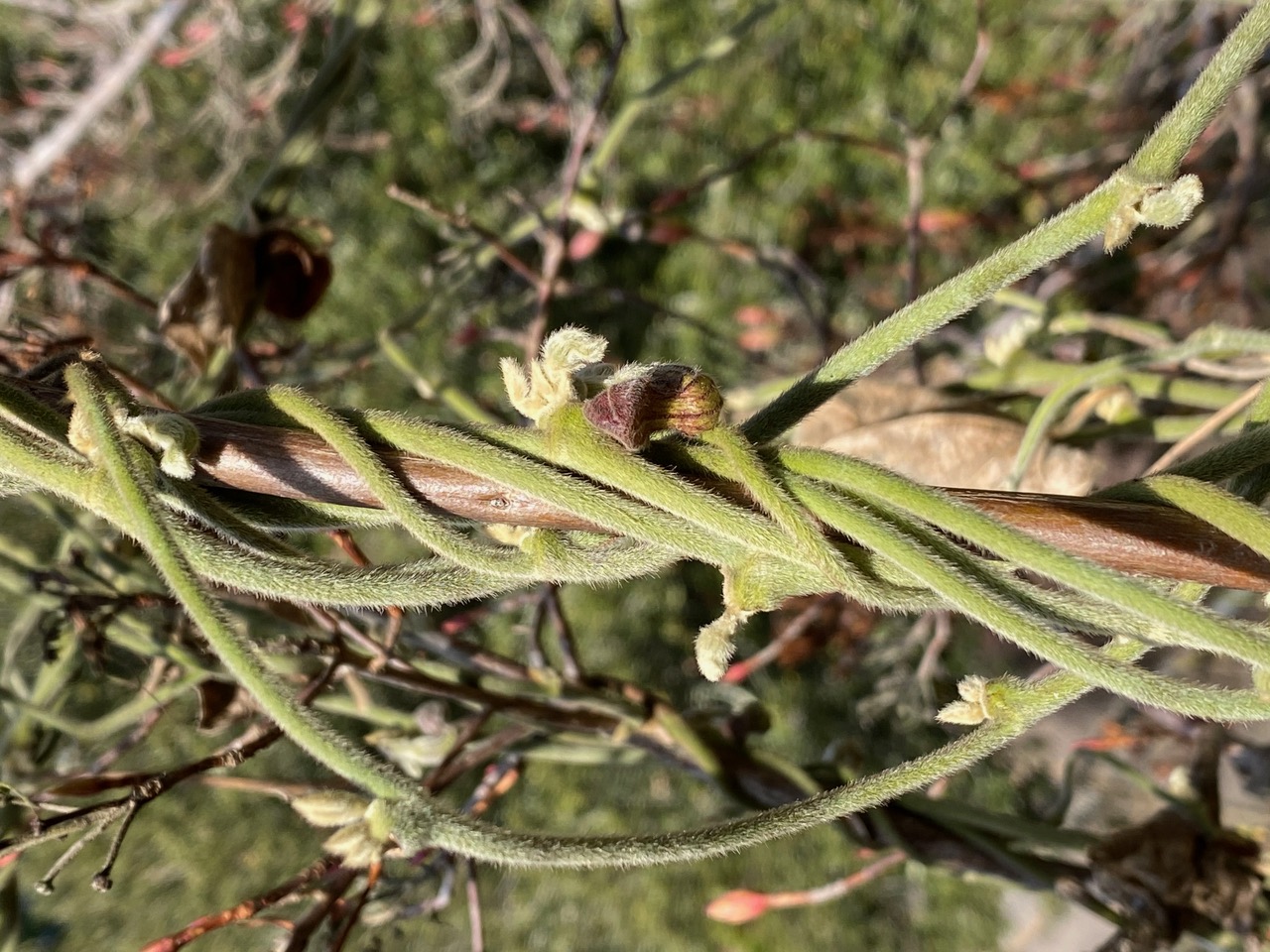
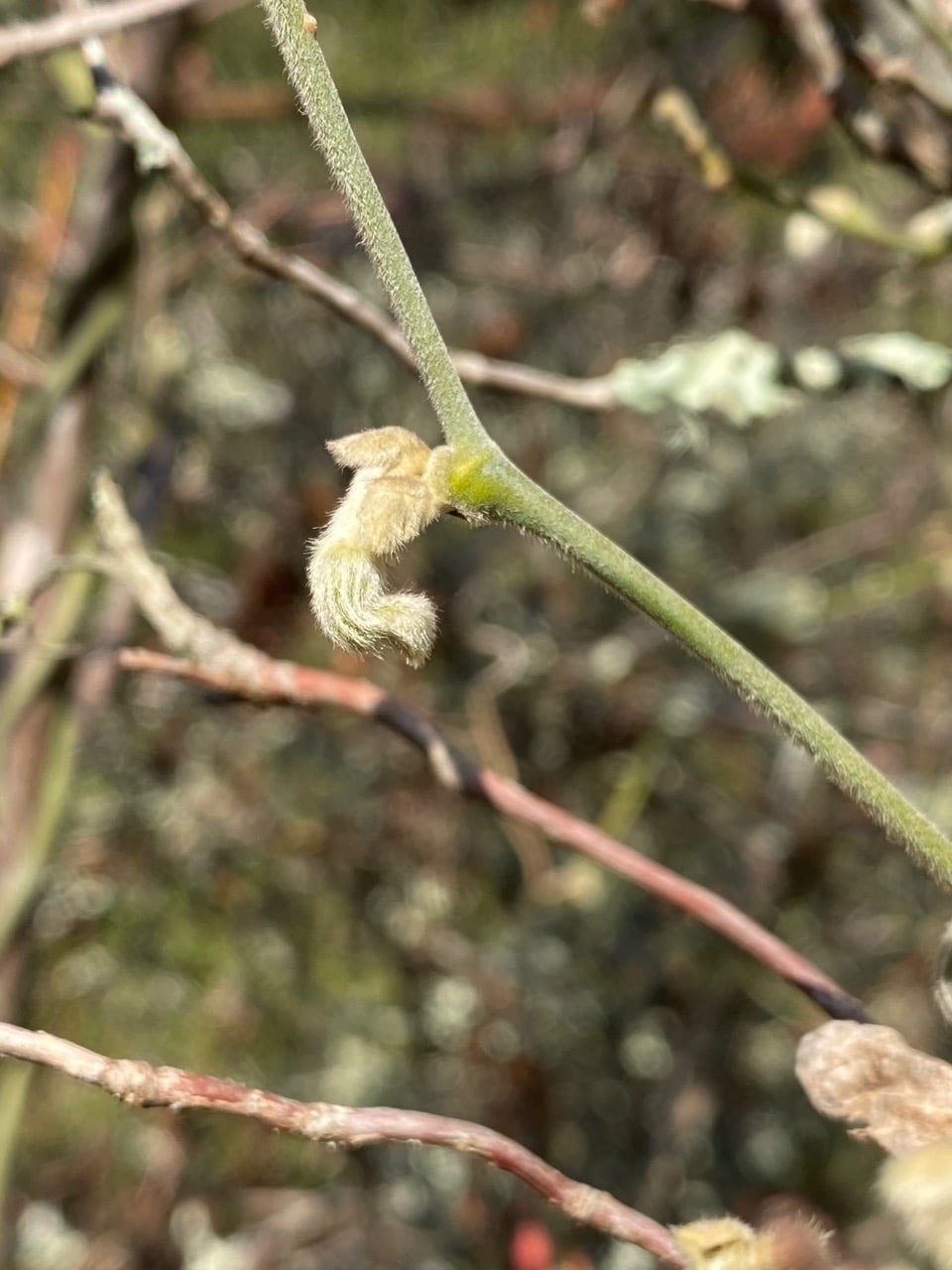
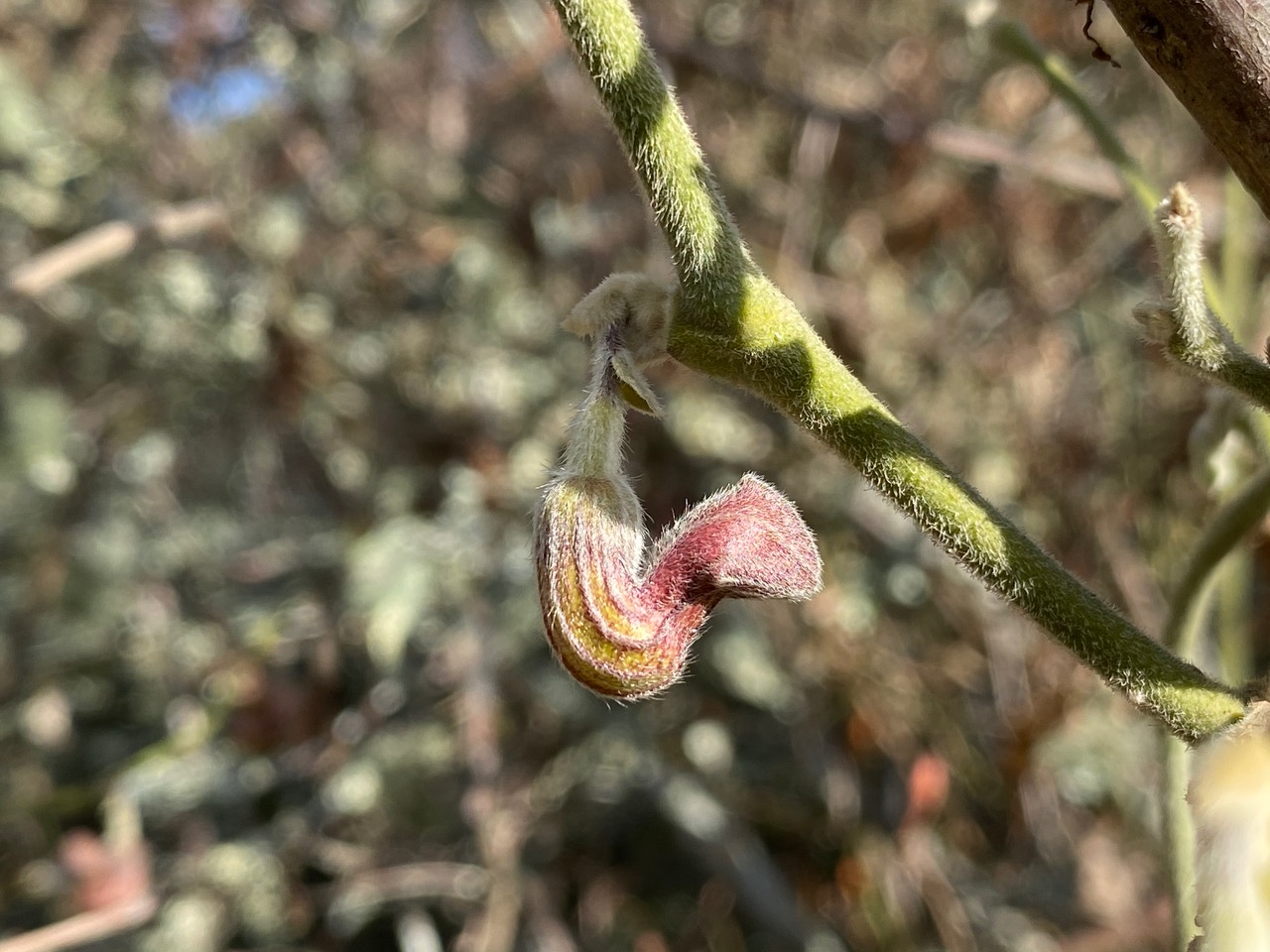
Flower buds are swelling and maturing on the California Pipevine, Aristolochia californica, here twining on a tall dormant Western Azalea.
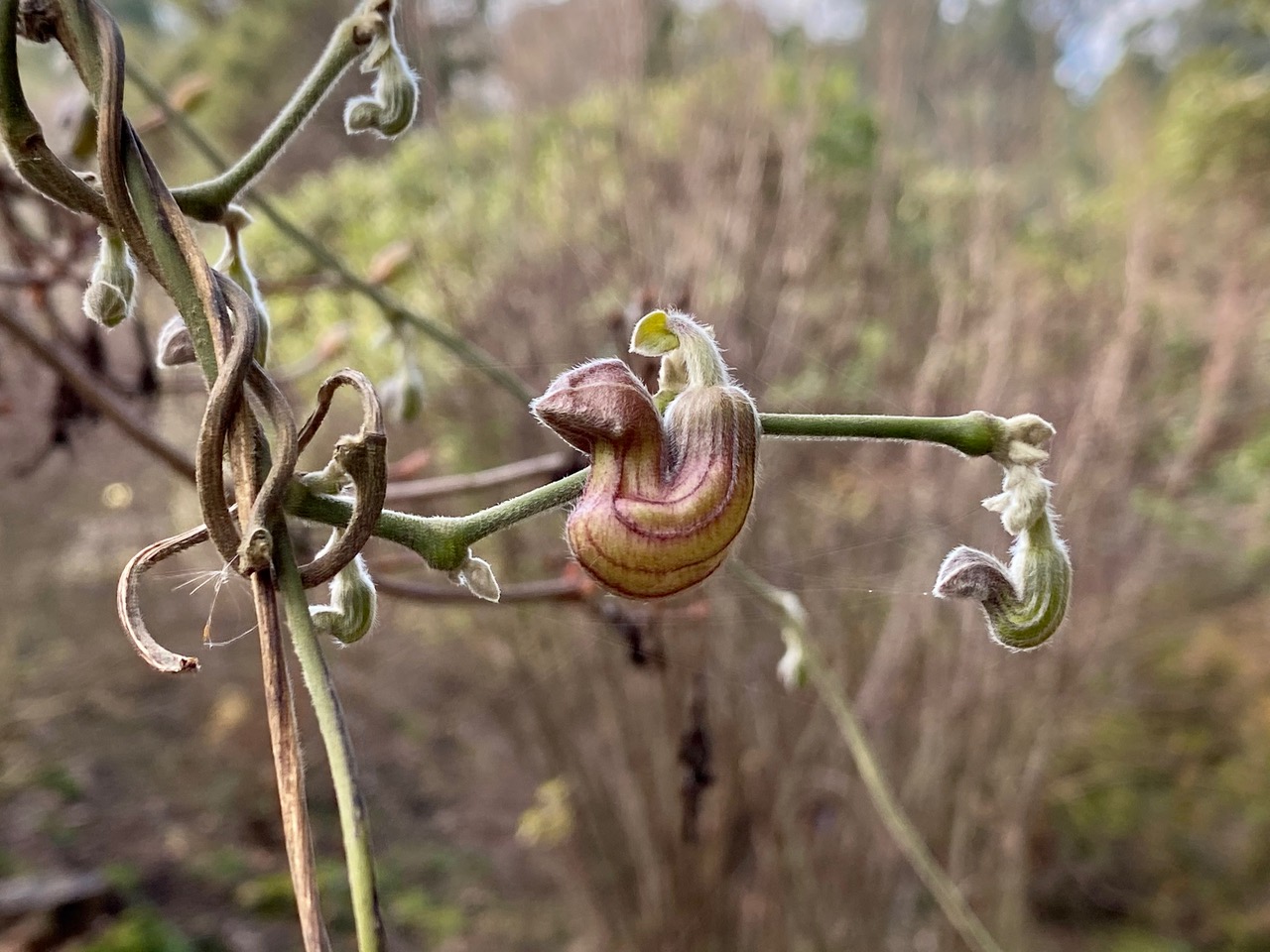
It is fun to watch over time how the little hairy nubbins at the nodes develop into full-blown pipe-shaped flowers…
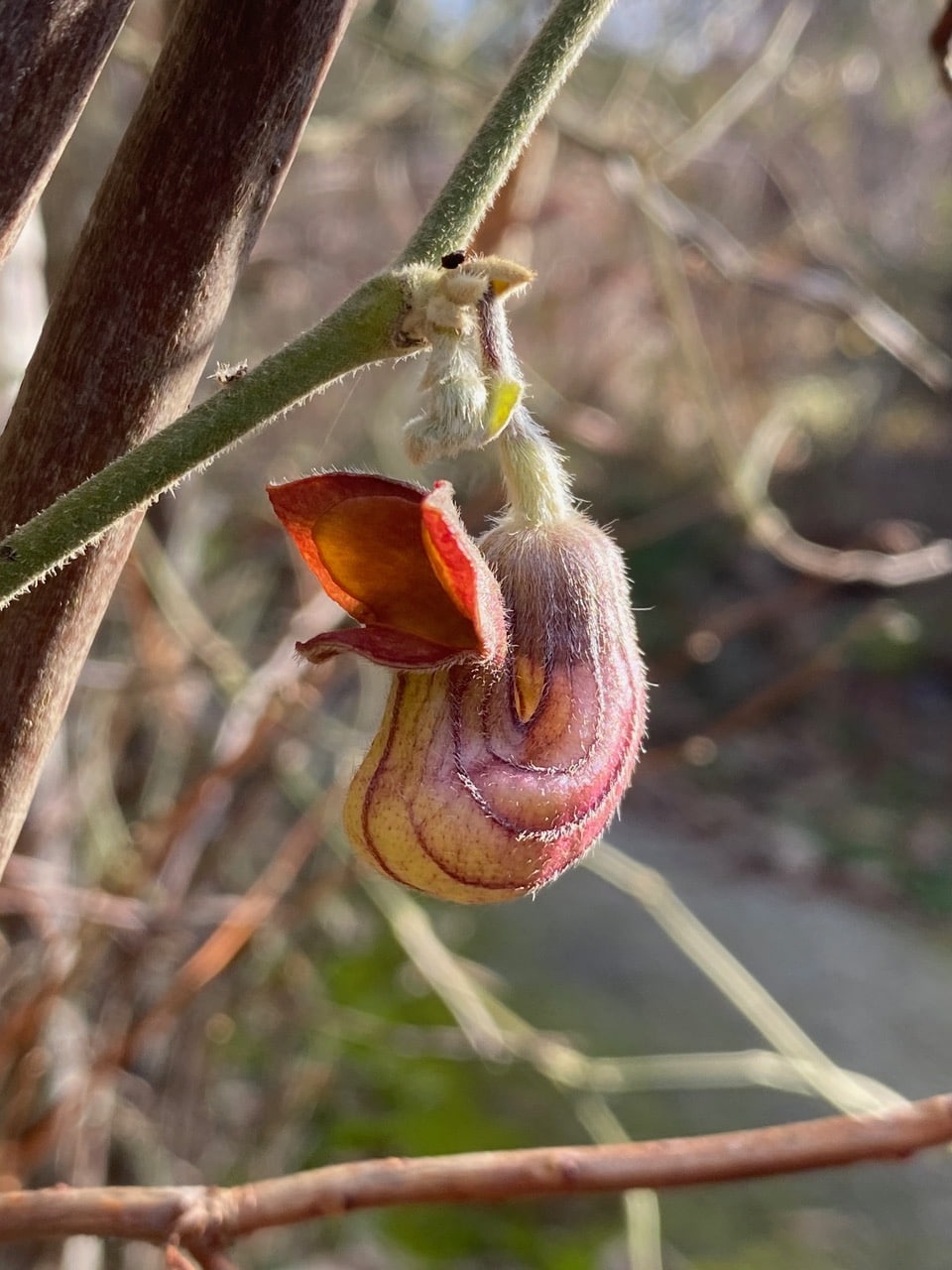
Hey, the lips have parted on this flower – it is fully open! The flower is now emitting an odd scent to attract its pollinators, the Fungus Gnats (family Mycetophilidae). While it would be fun to observe the insect action, most of it is hidden from view in the enclosed structure.
The California Pipevine flower resembles a tobacco pipe and begins to bloom in late winter or early spring. The flowers are actually fused sepals, shaped to protect the reproductive parts within. Many flowers emerge before the bare stems of the deciduous vine begin to leaf out. The flower not only protects its own reproductive parts, it also offers shelter to small insects from the rain and cold. As the flower opens, it emits a foul odor that attracts tiny fungus gnats, a type of flies (family Mycetophilidae). Sometimes when you cut open a flower, some of these gnats would fly out. They look like miniature mosquitoes. They are the primary pollinators for the California Pipevine.
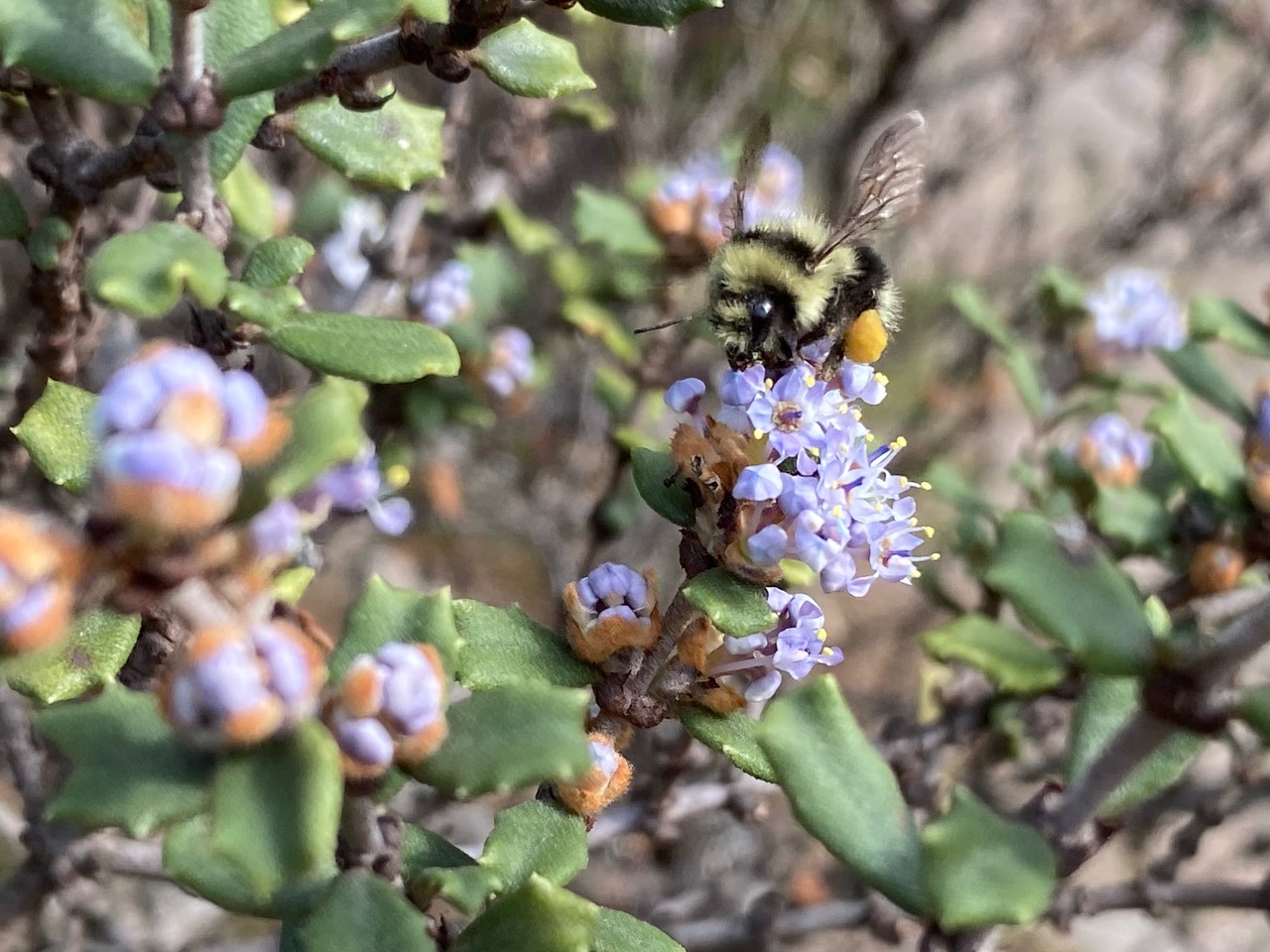
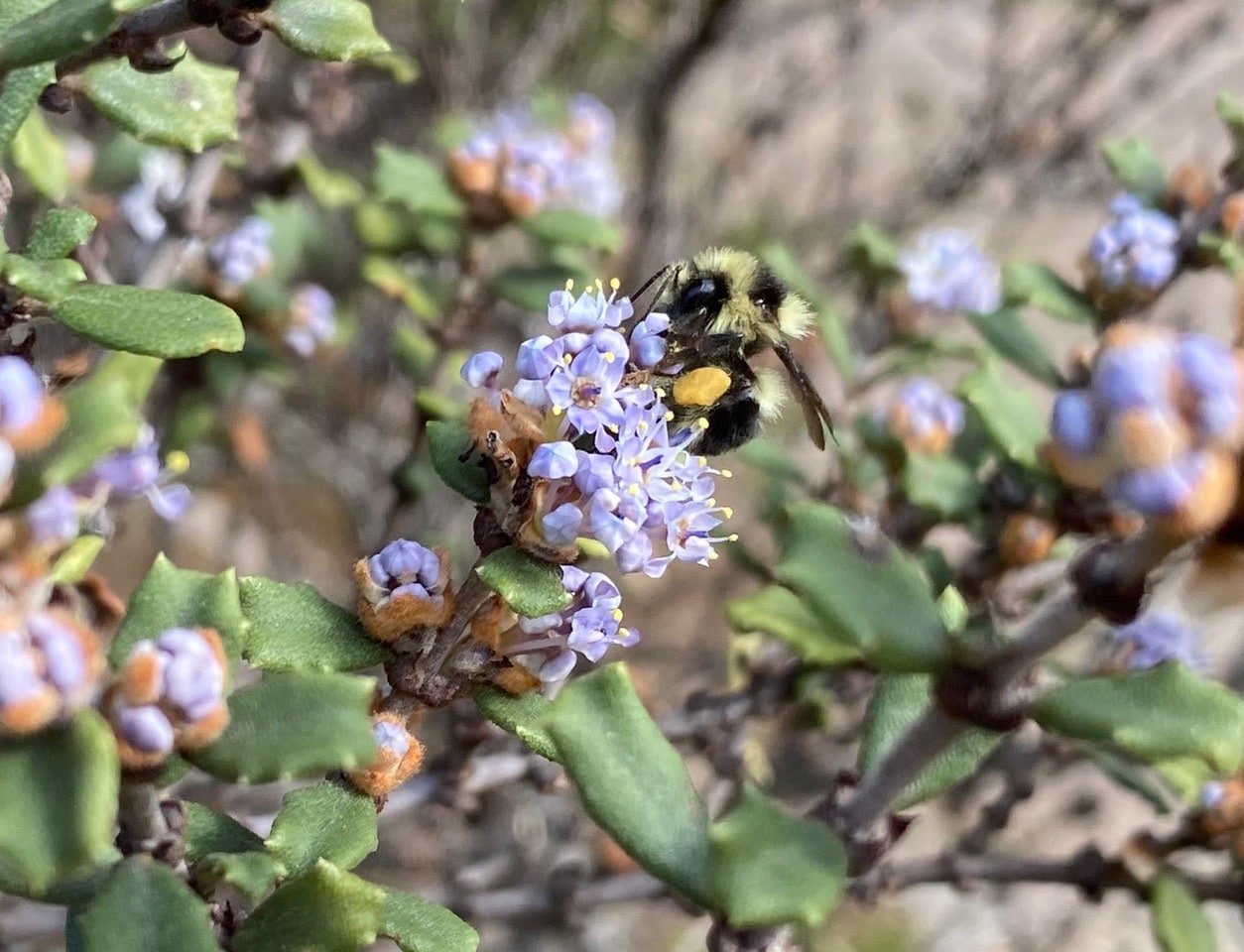
It is almost noon when the sky begins to clear as I head back to the front gate. I am delighted to find the Otay Mountain Ceanothus, Ceanothus otayensis near the front gate already in bloom. A few small worker Black-tailed Bumble Bees, Bombus melanopygus (family Apidae) are busily foraging on the clusters of tiny pale blue flowers. These workers are comically small, barely 1/5 the size of a queen bee. Members of the first brood produced by the bumble bee colony tend to be exceptionally small. Having been raised single-handedly by the queen, a single mom, these workers were probably somewhat under-nourished as larvae. However, what they lack in stature they more than make up for in diligence. Check out the hefty pollen load on this worker’s hind leg!
The pollen collecting apparatus in Apidae bees, which include honey bees and bumble bees, is commonly called a “pollen basket” or corbicula. This region is located on the tibia of the hind legs and consists of hairs surrounding a concave region. After the bee visits a flower, she begins to groom herself and brushes the pollen down toward her hind legs and packs the pollen into her pollen basket. A little nectar mixed with the pollen keeps it all together like putty, and the stiff hairs surrounding the pollen basket hold it in place. Remarkably bees are able to fly while carrying up to a third of their body weight in pollen.
.jpg)
I hear an occasional high-pitched buzz emitted by the bumble bees as they forage on the Ceanothus flowers. They are probably trying to loosen up the pollen by sonication. Sonication involves disengaging their flight muscles from the wings, causing vibrations in the whole body without moving their wings. The bees are also collecting nectar as they go around gathering pollen. Nectar is used to moisten the pollen into a putty-like consistency amenable to being packed into the corbiculae.