

Pollinator Post 1/22/26 (1)
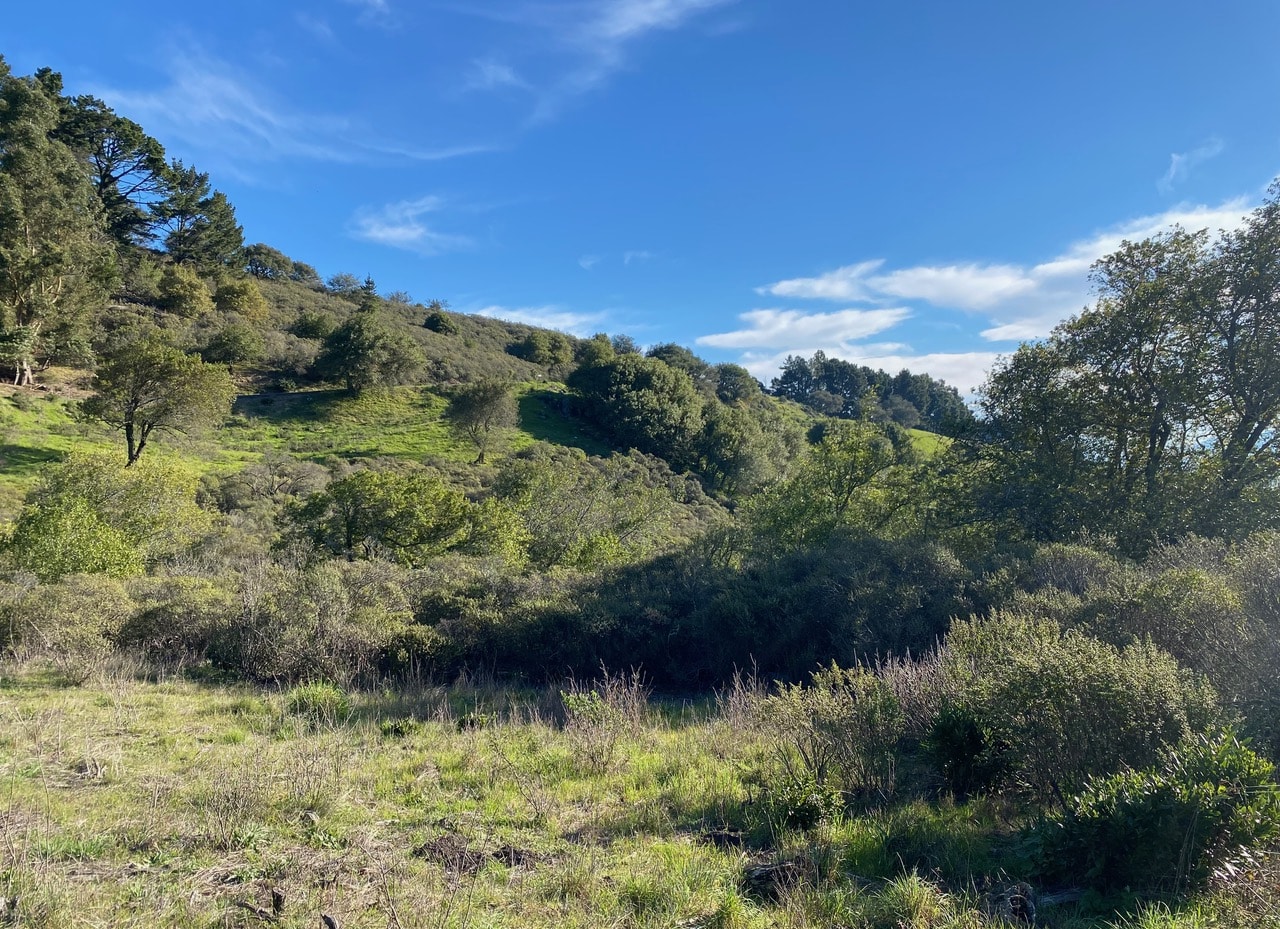
I visit Skyline Gardens in the Berkeley hills this morning. Entering through the Steam Train entrance, I realize how much I have missed this place.
Plants have greened up beautifully. I breathe with ease as the air is clean up here.
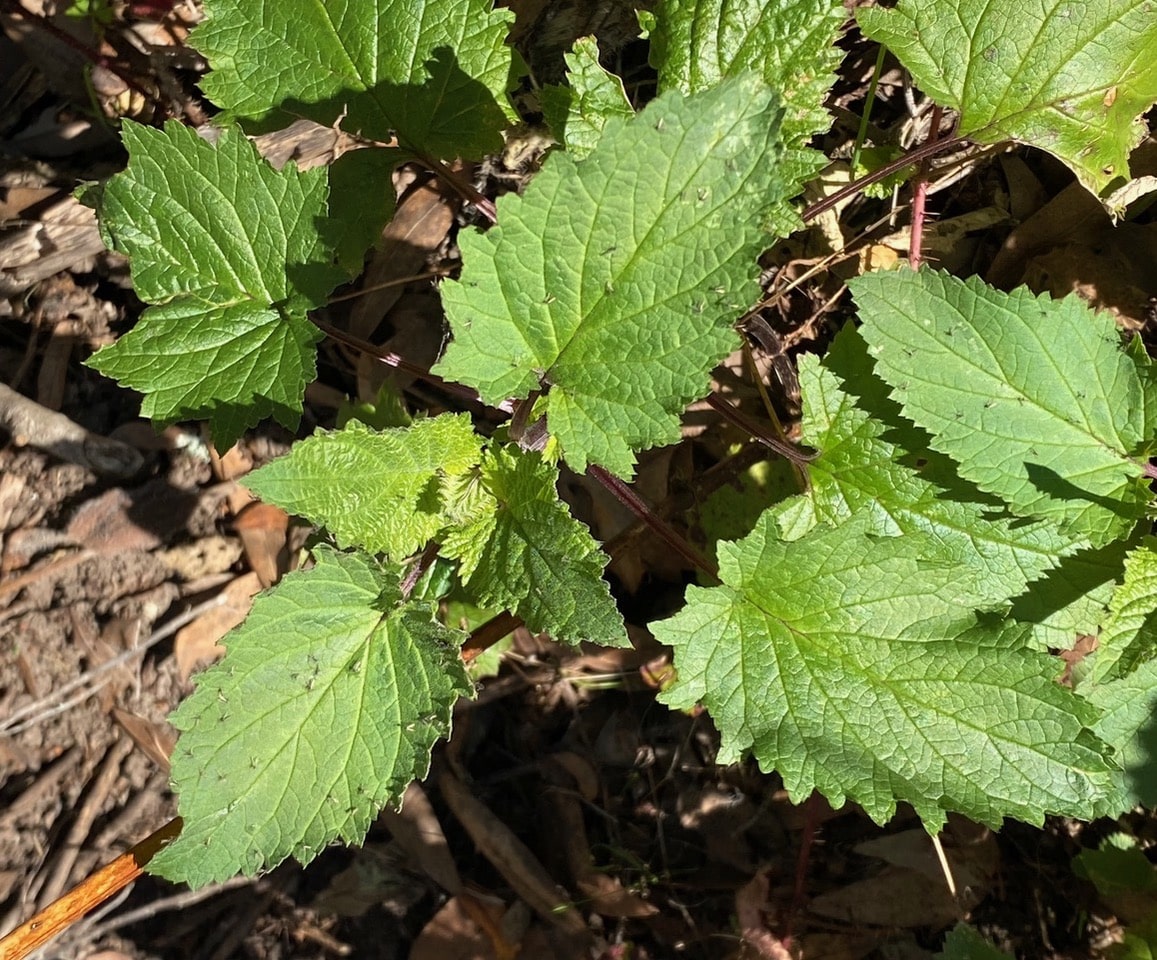
What are those tiny insects on the leaves of Bee Plant, Scropularia californica. They are not moving – are they dead? Why did they aggregate like this?
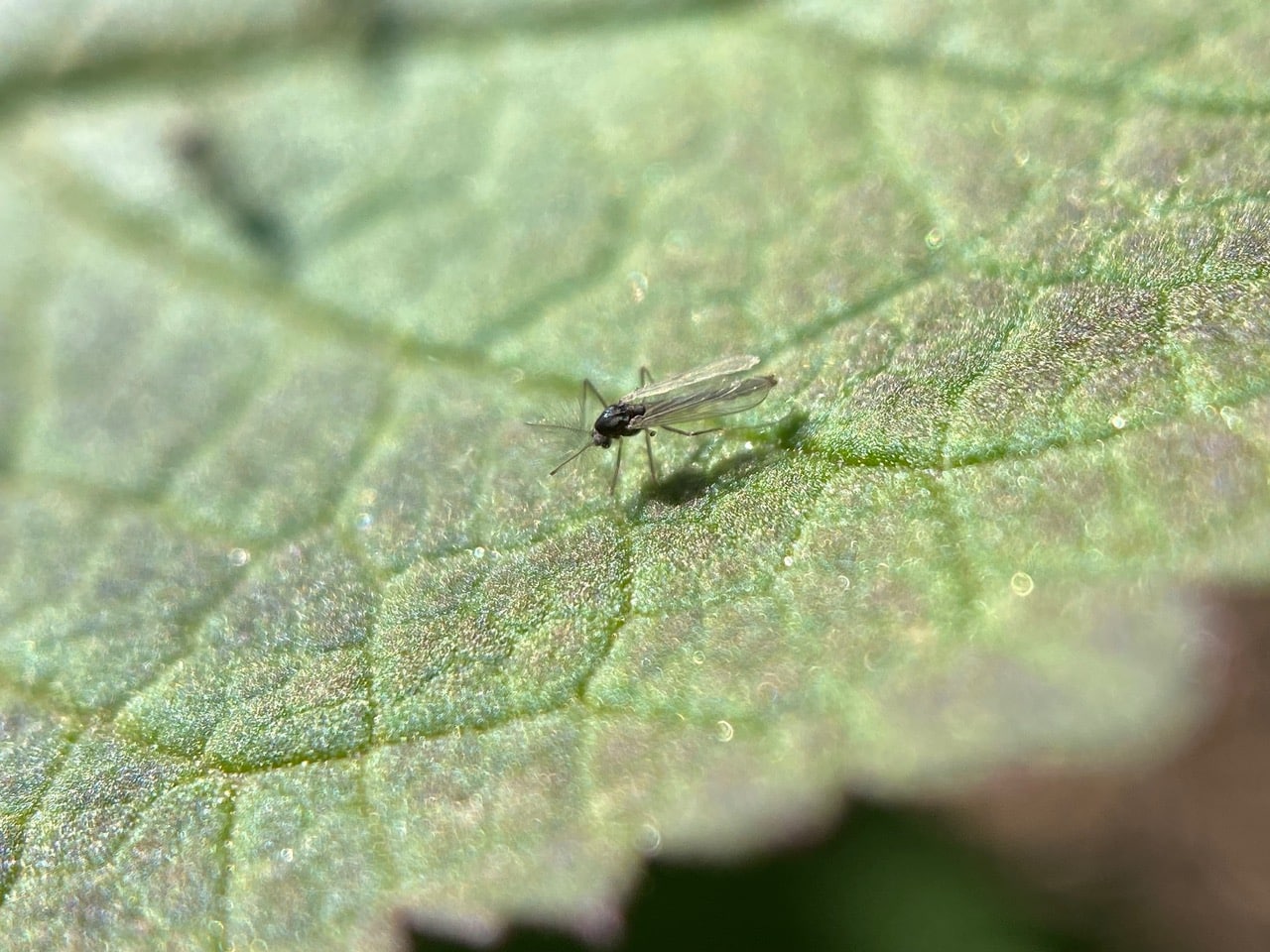
When I take a closer look, I realize that they are Non-biting Midges (family Chironomidae), and apparently all males, as they all have prominent feathery antennae. Did they drop dead en masse from their mating swarm? I have not heard or seen such behavior.
The Chironomidae is a large and diverse family of flies, with over 20,000 species known world-wide. Adult midges are small, most measuring 1-10 mm long, with narrow bodies and long legs. They resemble mosquitos, but do not bite. Males have long, feathery (plumose) antennae. Adults are short-lived. They feed on fly droppings, nectar, pollen, honeydew, and various sugar-rich materials. Larvae are mostly aquatic or semi-aquatic; most occur in freshwater habitats, a few occur in decaying matter, under bark, in moist ground, or tree holes. Larvae are mostly scavengers/detritivores. Collectively, they play a vital role in freshwater ecosystems as primary consumers. They harvest an enormous amount of energy from detritus and are important food items for fish, amphibians, birds, and predatory insects such as dragonflies and dance flies. Adult Chironomids can be pests when they emerge in large numbers, forming mating swarms over water or road surfaces.

Lit up by sunlight, the plumose antennae of this male show up better. The midge appears to be alive, but rather lethargic.
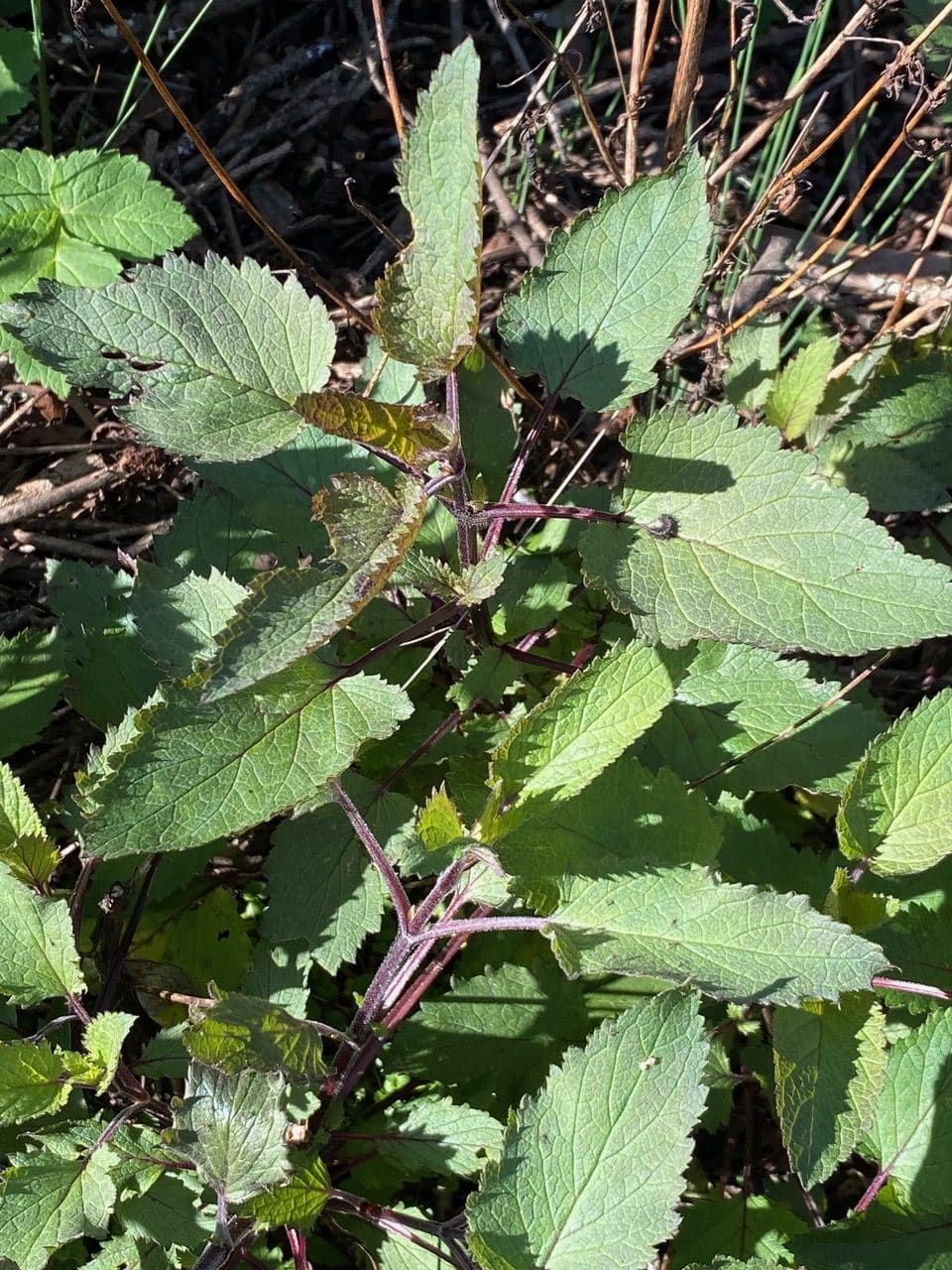
Hey, there’s something else on the Bee Plants. I spy some feeding scars on the tender upper leaves. Look! there’s a tiny caterpillar basking on that leaf, curled in a C-shape!
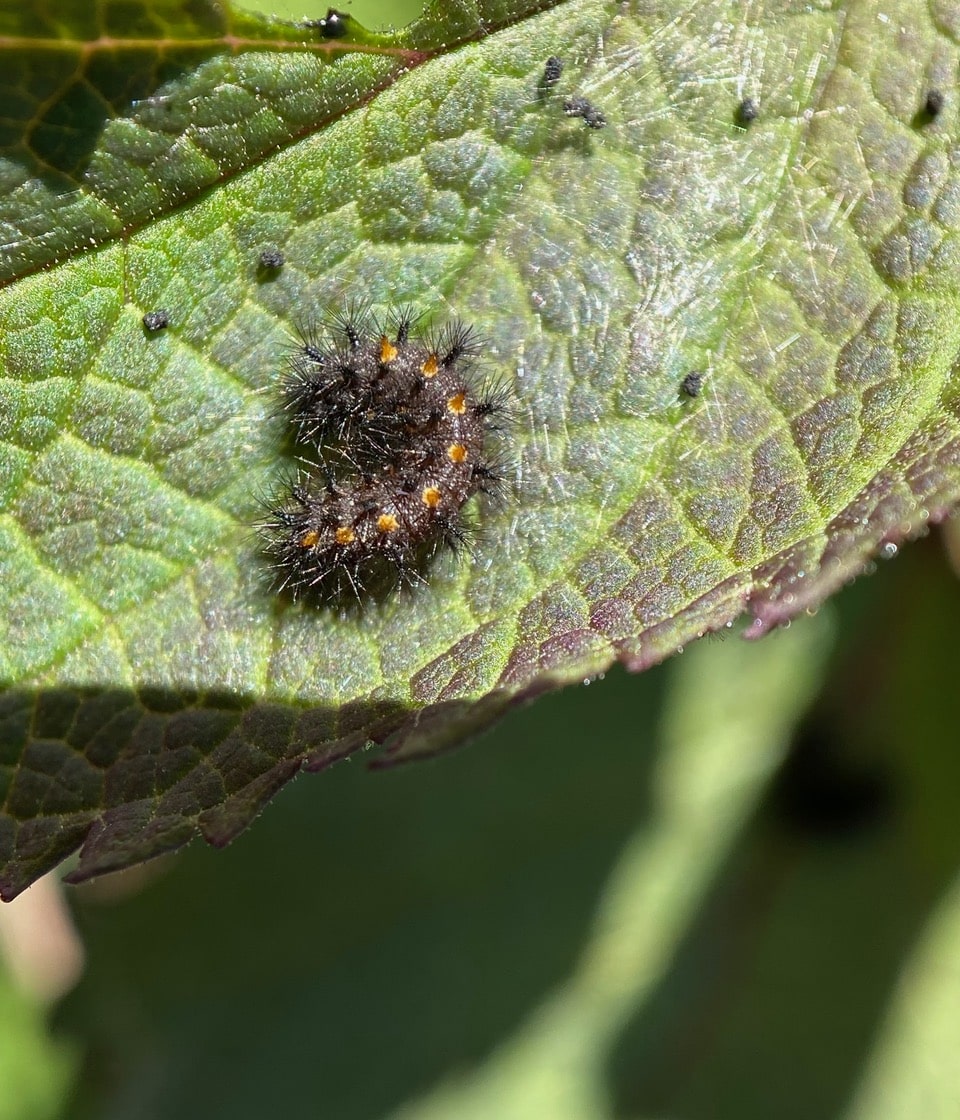
Surrounded by scattered frass (insect poop), this caterpillar, barely 1/4 inch in length, is resting on the silk sheet it has woven on the surface of the leaf. It is a young caterpillar of the Variable Checkerspot butterfly.
The Variable Checkerspot, Euphydryas chalcedona (family Nymphalidae) is found across western North America. The butterfly occupies a wide range of habitats, including sagebrush flats, desert hills, prairies, open forests and alpine tundra. Males perch or patrol around larval host plants to encounter females. Eggs are laid in large groups on underside of leaves of host plants. Host plants include California Bee Plant, Scrophularia californica, and Sticky Monkeyflower, Diplacus aurantiacus. These plants provide the caterpillars with iridoid glycoside, a chemical that imparts unpalatable taste to birds, protecting the caterpillars from predators. Larvae feed in large, loose groups on the host plants. Individuals overwinter (enter diapause or hibernation) as third or fourth instar larvae in sheltered sites under bark or dead branches, in hollow stems and in rock crevices. Pupation begins in early to mid April and the adult flight season begins between mid-April and May and continues into June. The adults feed exclusively on nectar, and have a life span of about 15 days.
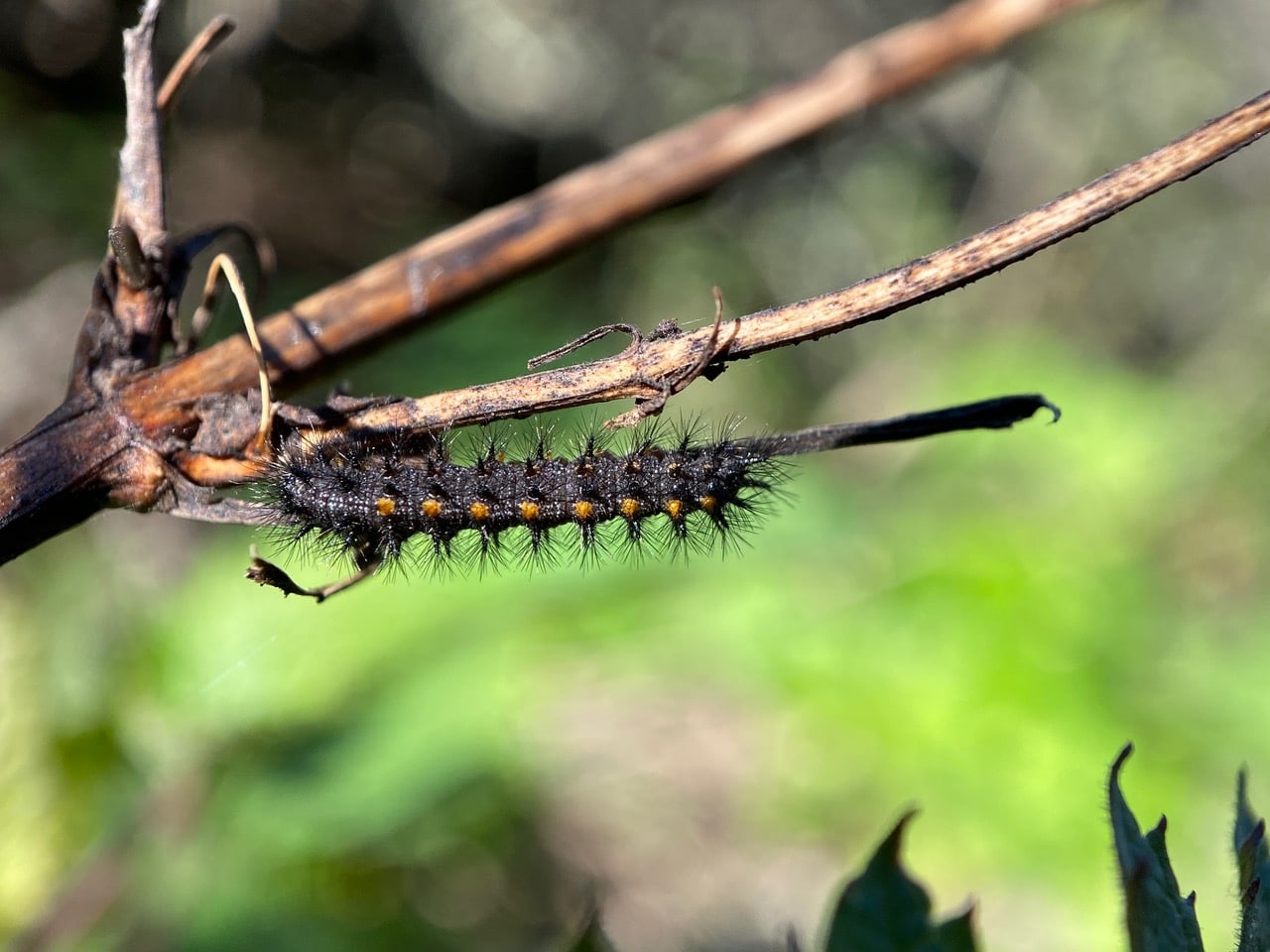
Here’s one resting on the dried stem of a Bee Plant.
Variable Checkerspot caterpillars are generally considered non-toxic to humans. The black, bristly spines are used to deter predators like birds, but they do not contain poison that harms human skin upon contact. However, it is generally advised to leave them alone to avoid potential, though rare, skin irritation, as with any spiky caterpillar. The caterpillars accumulate chemicals called iridoid glycosides from their host plants, making them taste bitter and unpalatable to birds.

This duo is enjoying their siesta, curled up next to each other.
The caterpillars have overwintered as third or fourth instar larvae in sheltered sites under bark or dead branches, in hollow stems and in rock crevices. They have recently emerged from their diapause (insect version of hibernation) to resume feeding and growing. Remarkably, this species of butterfly undergoes an interrupted childhood.
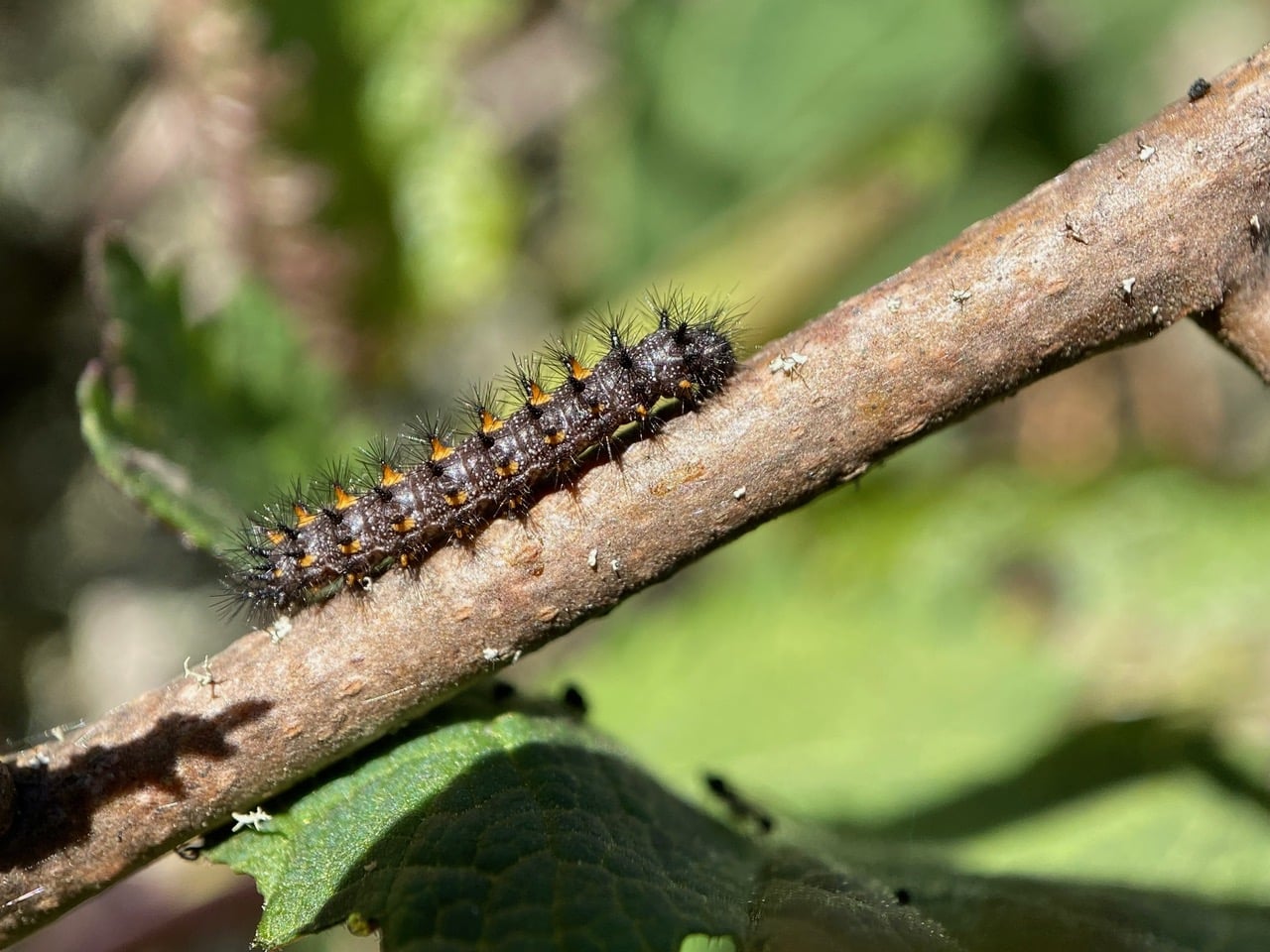
This Variable Checkerspot caterpillar is stretched out on a stem of Poison Oak growing among the Bee Plants.

This caterpillar is actively feeding on the edge of a Bee Plant leaf. It has secured itself to the thin layer of silk on the surface of the leaf.
Caterpillars lay a thin strand or layer of silk wherever they go. The small, hooked claws on the tips of their prolegs, known as crochets, are specifically designed to hook into the silk mat they spin on the leaf surface. This mechanism provides a secure anchor, allowing them to cling to leaves, twigs, and even smooth surfaces, especially during windy or rainy conditions.
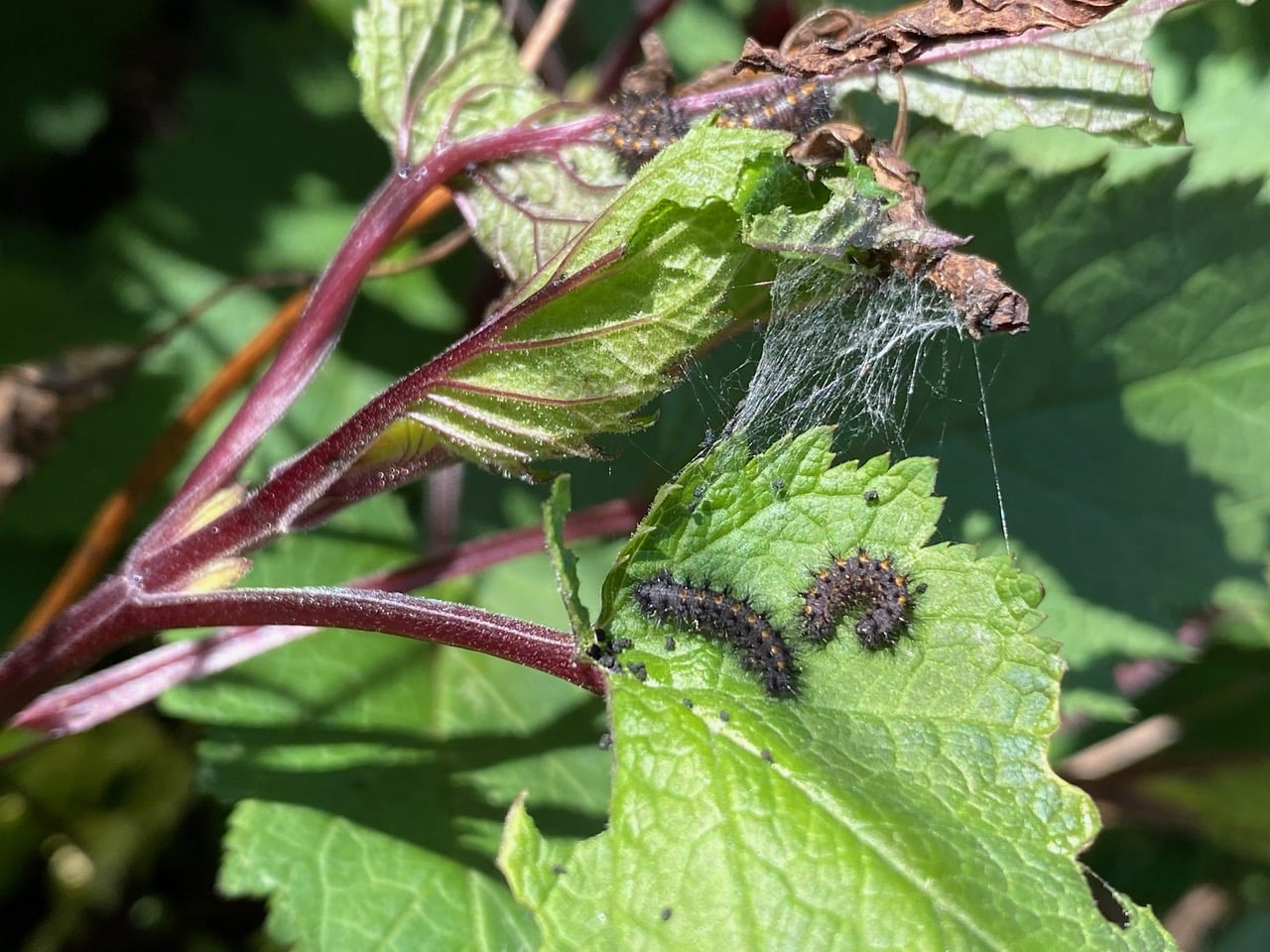
These caterpillars have woven a tent-like structure with silk to secure themselves and the leaf they are feeding on.
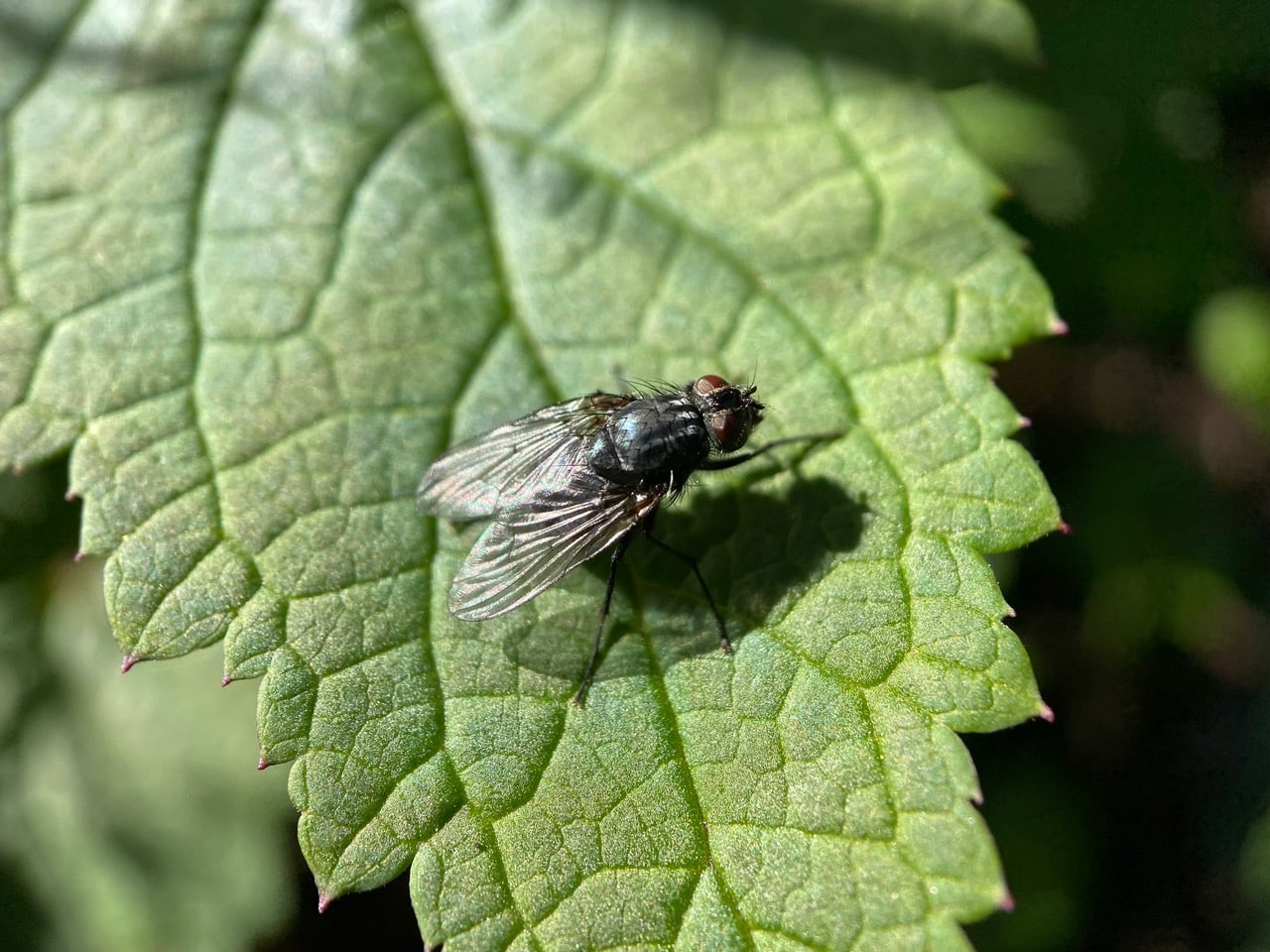
A Blue Blowfly, Calliphora sp. (family Calliphoridae) lands on a leaf of Bee Plant.
The Calliphoridae are variously known as blow flies, carrion flies, greenbottles, and bluebottles. Adults are usually brilliant with metallic sheen, often with blue, green, or black thoraces and abdomens. There are three cross-grooves on the thorax; calypters are well developed. Females visit carrion both for proteins and egg laying. The larvae that hatch feed on dead or necrotic tissue, passing through three instars before pupation. After the third instar, the larva leaves the corpse and burrows into the ground to pupate. Adult blow flies are occasional pollinators, being attracted to flowers with strong odors resembling rotting meat. The flies use nectar as a source of carbohydrates to fuel flight.
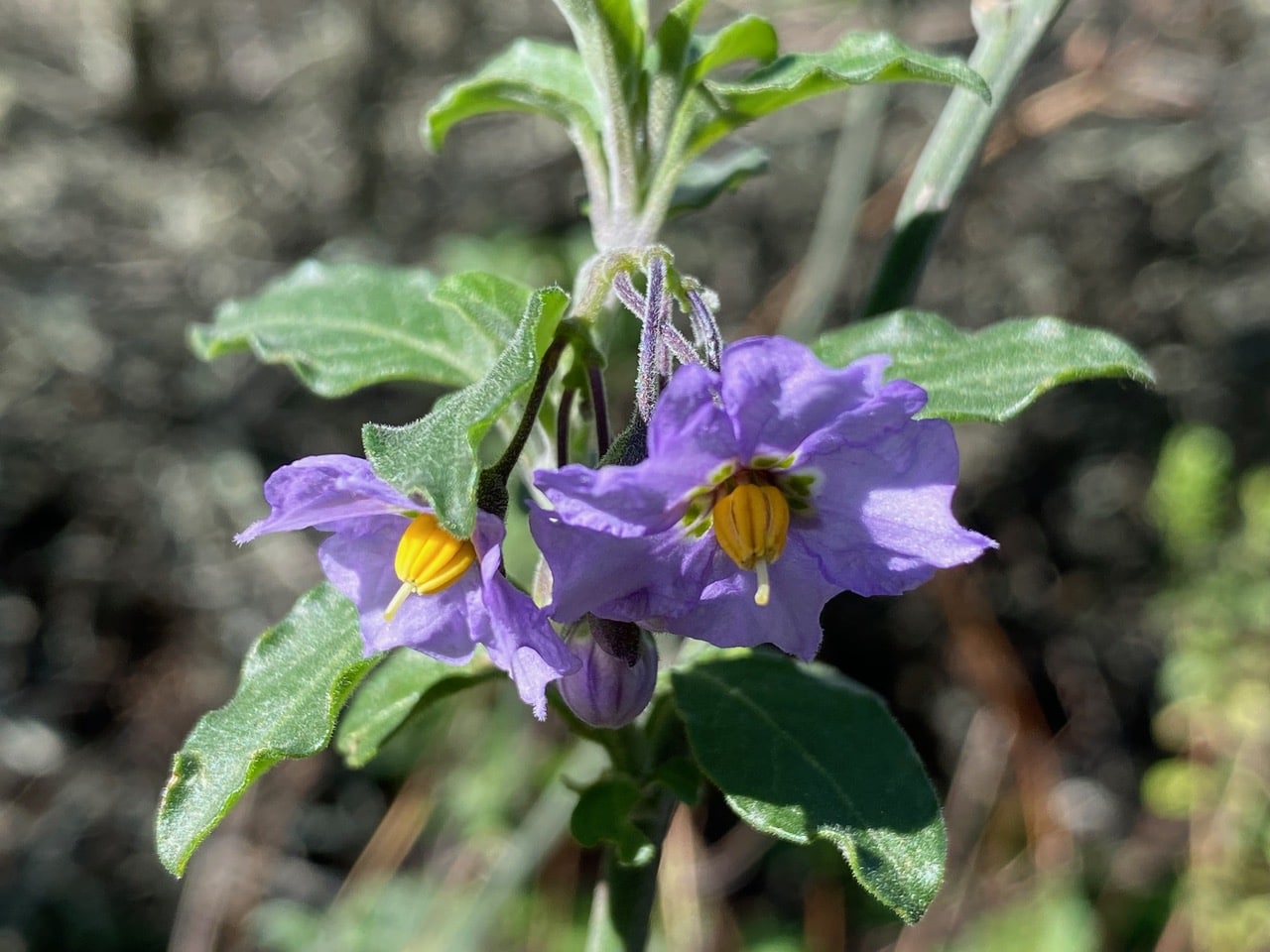
How delightful – the Bluewitch Nightshade, Solanum umbelliferum is in bloom!
The nodding flowers are not the easiest to photograph, as they require kneeling or sitting down. Although there are some green marks at the base of the petals, these are not the usual nectar guides. Solanum flowers do not produce nectar. They do however produce generous amounts of pollen, but it is hidden in special anthers. The prominent yellow anthers are fused into an anther cone in the middle of the flower. The tubular anthers are “poricidal”, meaning they do not split open along the side when mature like most other anthers. Instead, they have a terminal pore from which pollen has to be shaken out, salt-shaker style in a process called buzz pollination.

How does buzz pollination work? When a bumble bee attempts to collect pollen from a Solanum flower, it grasps the anther cone with its legs or mouthparts. Hanging upside down, the bee decouples its wings from its flight muscles in its thorax, so that when it vibrates those flight muscles, the wings don’t move, but its body vibrates violently. The bee’s buzz suddenly shifts from the low hum typical of flight to a fevered high pitch that is audible to a human ear. The vibration shakes the pollen out of the anthers onto the bee’s body. Very efficiently, the bee grooms the pollen into its pollen baskets for transporting to the hive. On subsequent visits to other flowers of the same species, the pollen that remains on its body might rub off on the protruding stigma, effectively pollinating the flower. Honey bees are not capable of buzz pollination. The technique is used mainly by bumble bees, carpenter bees, some digger bees, and sweat bees.
Approximately 6-8% of flowering plants are dependent on buzz pollination, many from unrelated families, representing examples of convergent evolution. The traits shared by these flowers include: pendant flowers, radial symmetry, reflexed petals, prominent cone of stamens with short robust filaments and poricidal anthers, a simple style that protrudes from the tip of the anther cone, and an absence of nectar. A prominent example of a buzz-pollinated flower in our native flora is the shooting star (Primula) in the primrose family.
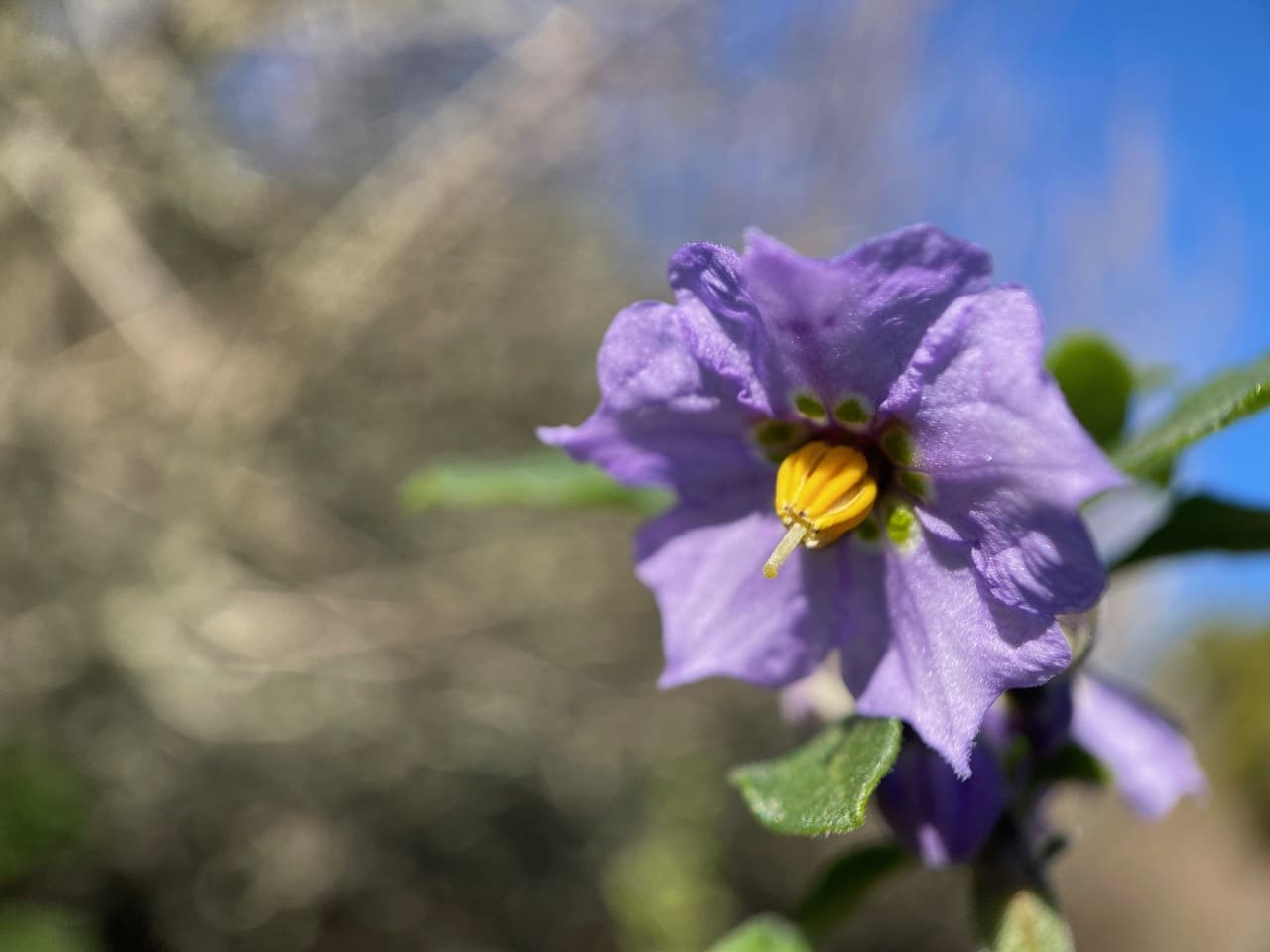
See those green spots at the base of the petals?
While most Solanum lack floral nectar, some species have false nectar glands to attract insects. These appear as small, raised, glossy, green bumps that are highly visible in UV light to bees.
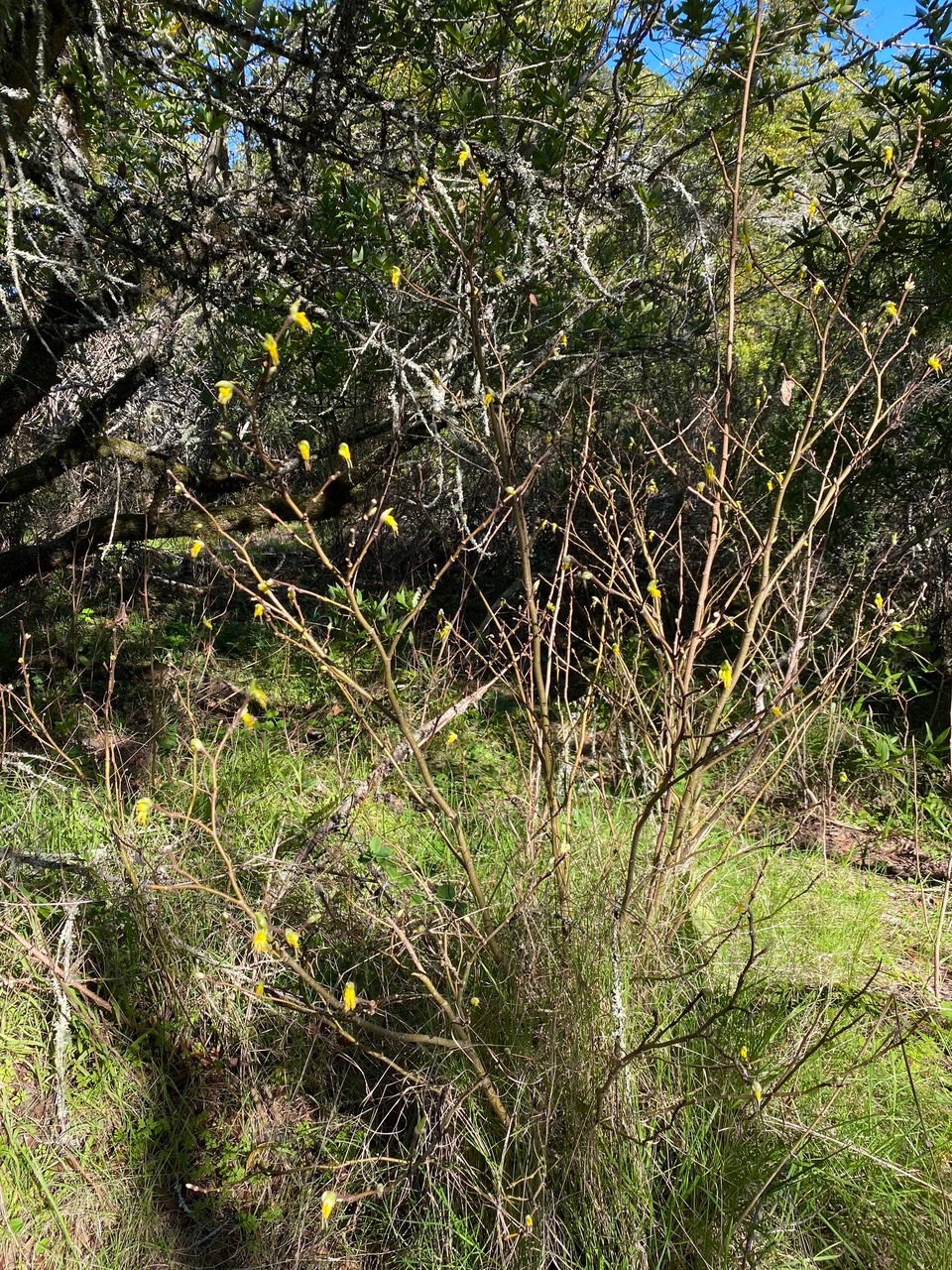
Small yellow flowers have appeared near the ends of the leafless branches of Western Leatherwood, Dirca occidentalis
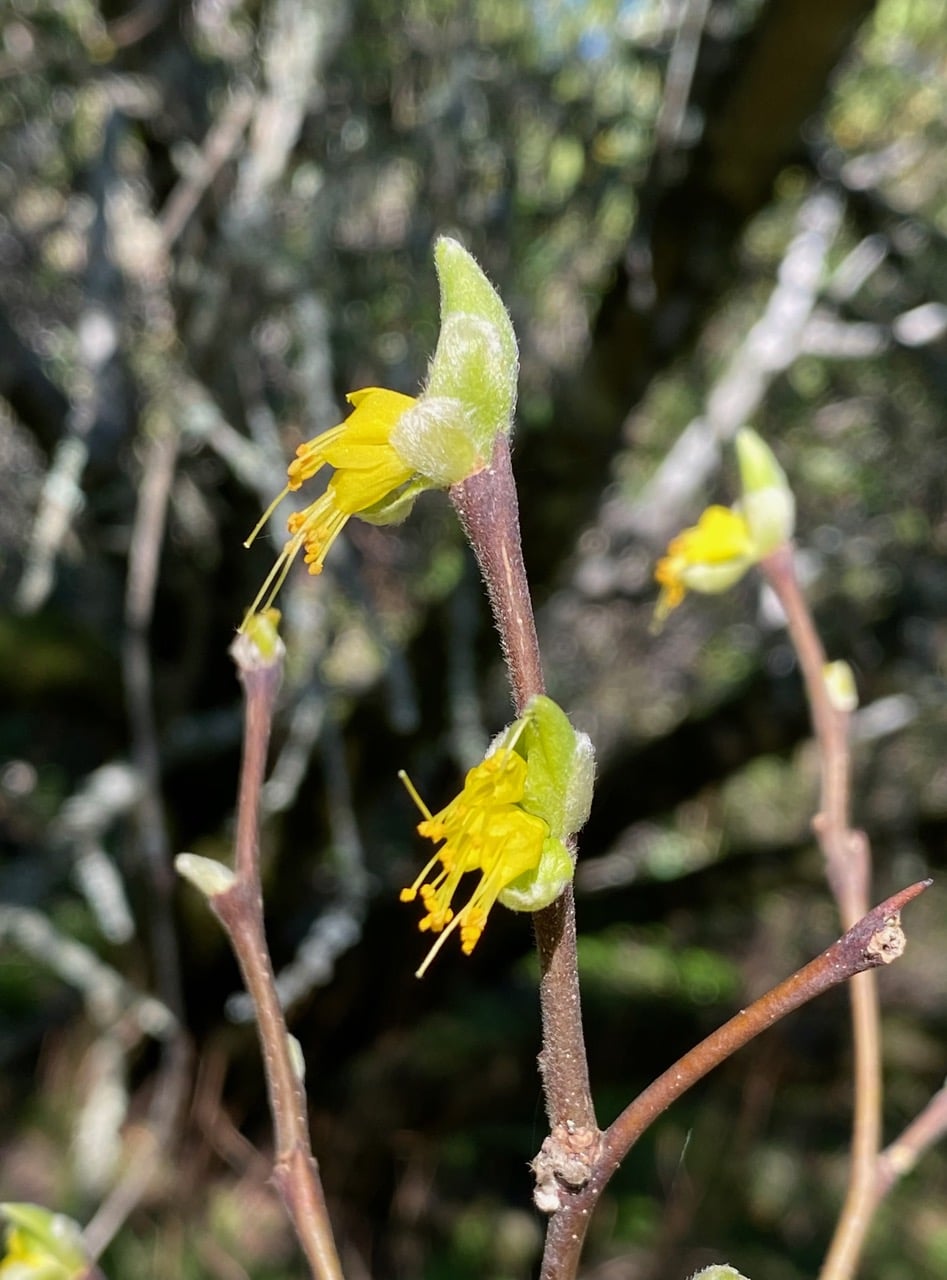
The Western Leatherwood, Dirca occidentalis belongs in a rather unfamiliar family Thymelaeaceae. The plant is not only endemic to California, but to the SF Bay Area specifically. There are quite a few of these plants growing in the moist and shaded slopes on the north end of the Skyline Gardens. The flowers emerge prior to leafing in late winter.
Each inflorescence consists of 1-4 nodding flowers arising from the same leaf axil. The apparent petals are actually bright yellow sepals. Long stamens and pistil extend beyond the calyx, giving the appearance of tassels. From what I read, Anna’s hummingbirds and non-native honey bees frequent the flowers. The common name Leatherwood refers to the plant’s pliable twigs and tough, leathery bark. The branches were historically used by Native Americans for basket making.
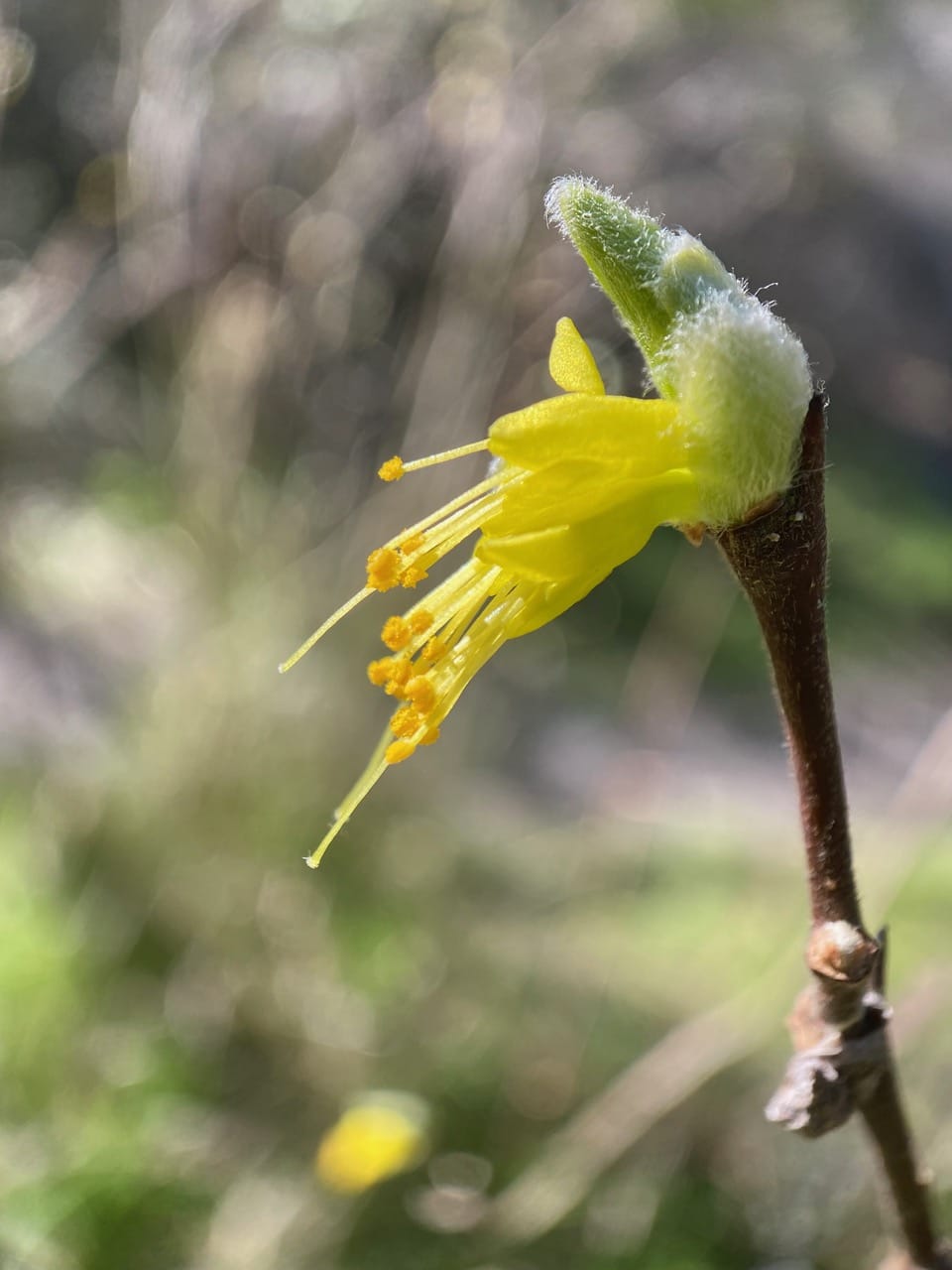
For all these years of observing Western Leatherwood in bloom, I have never seen an insect or bird visit the flowers. Surely, this rare, early blooming (Jan -Mar) shrub must have a very limited number of pollinators? Apparently Dirca occidentalis is primarily pollinated by early season generalists, including Anna’s Hummingbirds, Honey Bees, and various hover flies.